

Lost wonder found underwater? 80 tons of stones revealed the secret of Alexandria’s lighthouse. world News
The discovery under the sea of huge stone blocks weighing 80 tons, considered part of the Lighthouse of Alexandria, one of the wonders of the ancient world, has aroused interest in the study of ancient engineering, maritime archeology and the history of the Mediterranean region. Found on the floor of Alexandria’s eastern port, these massive architectural fragments, including lintels, gateways and paving stones, provide valuable information on the structure, degradation and methods used in the construction of this massive lighthouse. Through research initiatives such as PHAROS, scientists are studying the lighthouse through photogrammetry, computer reconstruction, and stone analysis.
Scientists have discovered 22 huge stones related to this Pharos of Alexandria
The existence of the sunken remains of the Pharos of Alexandria has been known for decades, but only recently has it been possible to make many more discoveries. Dassault Systèmes’ The team managed to find 22 huge stone blocks, each weighing about 70 to 80 tonnes. Details such as the door lintel, threshold stone and huge stones indicate that they formed the entrance to the lighthouse. takes place within the framework of the current investigation Pharos Project Organized by scientists from the Center National de la Recherche Scientifique (CNRS).As Isabelle Héry, the mission’s lead archaeologist, said, the fragments of the lighthouse should be analyzed as puzzle pieces, allowing digital reconstruction of the monument. Thus, the present discovery is considered a breakthrough in underwater archeology as it helps in uncovering the secrets of ancient architecture.
Lighthouse of Alexandria: one of the seven wonders
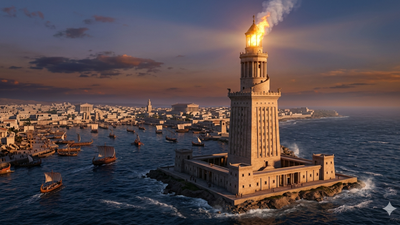
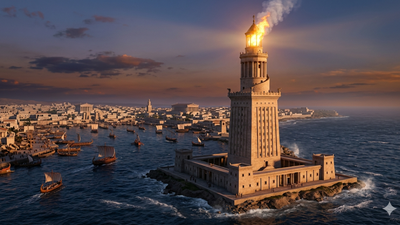
The Lighthouse of Alexandria, called the Pharos, was built during the reign of Ptolemy II Philadelphus in the 3rd century BC. It was over 100 meters high and served as a navigation aid that facilitated the safe docking of ships in the busy Egyptian port. For many years, the lighthouse was considered one of the tallest buildings ever built by man and an example of Hellenistic architectural excellence. It is believed to have three levels, including square, octagonal and cylindrical shapes.However, several earthquakes from the 10th to the 14th century contributed to its destruction, causing much of the building to fall into the water. Thus, the discovery of these huge rocks is related to the written record on the decline of the lighthouse.
Marvels of Engineering: How the Ancient Builders Moved 80 tons of stones
An interesting aspect of this discovery is the weight and precision of the carved stones. Even in modern times, transporting stones weighing approximately 80 tons is a difficult task, raising many questions on the engineering capabilities of ancient civilizations.According to experts, the use of leverage, ramps and manpower would have allowed ancient individuals to transport and install these heavy stones. It also brings to mind architectural elements from Greece and Egypt, an indication that there was fusion between the cultures.The level of precision displayed in the stones, as well as the incorporation of the stones into large-scale structures, shows how sophisticated the engineering skills of ancient civilizations were.
Digital reconstruction and the way forward
Instead of building an exact replica of the lighthouse in reality, the new approach involves building a digital replica of the lighthouse. With modern technology, each stone is scanned and used in a digital reconstruction of the lighthouse.In addition to being useful in determining whether certain theories about the lighthouse’s construction or fall are true, it gives historians and those interested in history the opportunity to see this marvel of engineering in all its glory.To summarize, although the discovery of eighty tons of rocks confirms the existence of the structure, there is another extremely important factor; It’s a reminder that traces of our imagination and innovation lie beneath the surface of the ocean.