Sunrise and sunset times on March 25, 2026; Powerful ways to please Lord Surya.

Sunrise and sunset times on March 25, 2026; Surefire ways to please Lord Surya

In this article, we are going to give you all the information about the sunrise and sunset of March 25 and also give some Surya remedies that you can adopt on this day to make your day auspicious and attract good luck. You can get the divine energy of Lord Surya. Knowing about the correct sunrise can be helpful for you so that you can wake up at the time of sunrise and do all the simple steps to increase spiritual strength and vitality. So, let’s go ahead and look at the timing and some simple yet powerful solutions given below:

Sunrise and sunset time (March 25, 2026 – New Delhi)

  • Sunrise: 06:21 am
  • sunset: 06:34 pm

  • Date: Saptami
  • Party: Shukla
  • Day: Wednesday (Wednesday)

It is very important for people to know the exact time of sunrise and sunset so that people can wake up before that and be ready to perform the remedies at the time of sunrise.

Powerful ways to please Lord Surya:

offer arghya or water

Wake up early in the morning, take a holy bath and then offer water to Lord Surya at sunrise. You should use a copper vessel and if you do not have a copper vessel then you can use any vessel to offer water to the Sun while facing east.

seek your father’s blessings

The first thing you should do after waking up in the morning is to touch your father’s feet and greet him and seek his blessings. This will increase strength, courage and vigor. Sun represents father or father figure so you should take his blessings.

do surya namaskar

You are advised to do Surya Namaskar or Surya Namaskar in the morning as it will improve your health, increase spiritual power and create a connection with the Sun.

Chant these Surya Mantras:

1. Om Suryay Namah..!!2. Om Ghrani Suryay Namah..!13. Om Hram Hrim Hram Sah Suryay Namah..!!

Source link

‘Sharia law is…’: Tucker Carlson says Islamic societies are ‘more advanced’ than Western societies, criticized

'Sharia law is...': Tucker Carlson says Islamic societies are 'more advanced' than Western societies, criticized

A viral clip of American commentator Tucker Carlson caused controversy when he suggested that societies governed by Sharia law are “more advanced” than those in the West.The comment was made during one of his episodes of The Tucker Carlson Show.In the volume, Carlson says: “There is not a single Western city that is prosperous… They are all in moral and physical decline due to self-loathing and a lost will to live.”He further draws the comparison: “Sharia law has made Islamic societies more advanced than those in the West.”Carlson then compared it to his experiences in the Middle East. “I travel a lot in the Middle East. It’s amazing. They’re Muslim. A country governed by Sharia law. And you go there and it’s incredible to be in a place that is proud of itself, that believes in its religion and culture, that thinks ‘We’re doing something.’ It is this kind of confidence that creates stability and hospitality.”The comments sparked backlash, particularly from right-wing and MAGA voices. Laura Loomer accused Carlson of “romanticizing” jihadist societies and claimed that his comments support her long-standing allegation that he effectively “converted to Islam” or became a foreign-influenced “Cutlerson” figure.Social media users also said Carlson’s comments were meant to praise systems that oppress Christians and Jews while attacking Western values.However, Carlson’s supporters and the team rejected those claims. He pointed to the full transcript of the episode, saying none of the quotes were fabricated and that Carlson had not called for the US to adopt Sharia law. Instead, they described his remarks as an observation about why some Gulf countries such as Saudi Arabia, Qatar and the United Arab Emirates appear stable and confident compared to Western capitals.He also emphasized that Carlson has repeatedly described himself as a “fervent Christian” with no intention of proselytizing.The dispute comes amid an ongoing rift in conservative circles over foreign policy, particularly US involvement in the Middle East, support for Israel and the war on Iran.Carlson also visited Qatar a few months ago for the Doha Forum, where he interviewed the country’s Prime Minister. During the program, he announced plans to buy a house in Doha and said that he liked the city and that he was working as an “independent person” choosing where to live.

Source link

मुजफ्फरनगर में ऑपरेशन चक्रव्यूह का बड़ा असर: शातिर वारंटी नौशाद समेत कई वांछित अपराधी गिरफ्तार, पुलिस की सख्त कार्रवाई से मचा हड़कंप

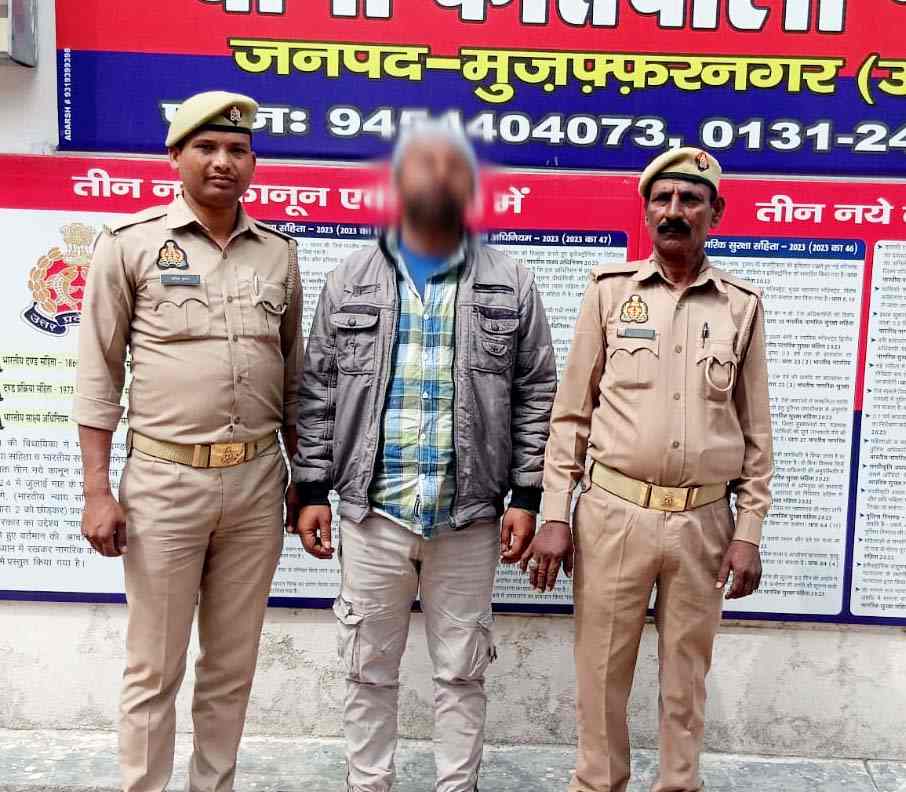
मुजफ्फरनगर पुलिस ने अपराधियों के खिलाफ बड़ी कार्रवाई करते हुए शातिर वारंटी नौशाद समेत कई वांछित अभियुक्तों को गिरफ्तार कर लिया. जिले में चलाये जा रहे इस विशेष अभियान से फरार अपराधियों में हड़कंप मच गया है और कानून व्यवस्था को सुदृढ़ करने की दिशा में पुलिस की सक्रियता साफ नजर आ रही है.

वरिष्ठ पुलिस अधीक्षक के निर्देशन में चलाए जा रहे इस अभियान के दौरान कोतवाली नगर और सिविल लाइन थाने की टीमों ने अलग-अलग स्थानों पर छापेमारी कर कई आरोपियों को गिरफ्तार किया. पुलिस अधिकारियों के मुताबिक यह कार्रवाई जिले में अपराधियों के खिलाफ चल रहे अभियान का हिस्सा है, जिसका उद्देश्य लंबे समय से फरार अपराधियों को पकड़ना और अपराध पर प्रभावी नियंत्रण स्थापित करना है.


कोतवाली नगर पुलिस ने शातिर वारंटी नौशाद को पकड़ा

ऑपरेशन चक्रव्यूह के तहत कोतवाली नगर पुलिस टीम ने सक्रिय कार्रवाई करते हुए वारंटी अभियुक्त नौशाद पुत्र नईम निवासी न्याजूपुरा को गिरफ्तार कर लिया। पुलिस को उसकी लंबे समय से तलाश थी और वह गिरफ्तारी से बचने के लिए लगातार ठिकाने बदल रहा था.

थाना प्रभारी बब्लू सिंह वर्मा के नेतृत्व में गठित पुलिस टीम ने सटीक सूचना के आधार पर कार्रवाई करते हुए आरोपी को पकड़ लिया. गिरफ्तारी के बाद उससे पूछताछ की जा रही है और उससे जुड़े अन्य मामलों की भी जांच की जा रही है.

इस कार्रवाई में प्रभारी निरीक्षक बब्लू सिंह वर्मा, उपनिरीक्षक अभिमन्यु सिंह, कांस्टेबल अमित कुमार व अजय कुमार की अहम भूमिका रही. पुलिस अधिकारियों का कहना है कि इस तरह के ऑपरेशन आगे भी जारी रहेंगे.


वरिष्ठ अधिकारियों की देखरेख में चल रहा विशेष अभियान

वरिष्ठ पुलिस अधीक्षक के निर्देशन में ऑपरेशन चक्रव्यूह मुजफ्फरनगर गिरफ्तारी ऑपरेशन चलाया जा रहा है, जबकि पुलिस अधीक्षक नगर एवं क्षेत्राधिकारी नगर इसके निकट पर्यवेक्षण में सक्रिय भूमिका निभा रहे हैं।

अधिकारियों का स्पष्ट निर्देश है कि जिले में कोई भी वारंटी या वांछित अपराधी को छोड़ा नहीं जायेगा. इसको लेकर थाना स्तर पर विशेष टीमें गठित कर लगातार छापेमारी की जा रही है.

इस अभियान का मकसद सिर्फ गिरफ्तारी तक ही सीमित नहीं है, बल्कि अपराधियों में कानून का डर पैदा करना भी है, ताकि भविष्य में अपराध की घटनाओं को कम किया जा सके.


सिविल लाइन थाना पुलिस की बड़ी कार्रवाई, एक साथ कई वारंटी गिरफ्तार

ऑपरेशन चक्रव्यूह मुजफ्फरनगर अरेस्ट के तहत थाना सिविल लाइन पुलिस ने भी बड़ी सफलता हासिल करते हुए कई वांछित अभियुक्तों को न्यायालय से जारी वारंट के आधार पर गिरफ्तार किया है।

गिरफ्तार आरोपियों में गुलबहार पुत्र हारून निवासी महमूदनगर, शानू पुत्र नसरुद्दीन निवासी मल्हूपुरा, राशिद पुत्र महमूद निवासी केवलपुरी, राशिद पुत्र साहिद त्यागी निवासी सरवट त्यागी चौक, प्रमोद कुमार पुत्र राजवीर सिंह निवासी बधाई कला थाना चरथावल और मसूर सैफी पुत्र नासिर निवासी मॉडल टाउन शामिल हैं।

इन सभी आरोपियों के खिलाफ कोर्ट से वारंट जारी थे और पुलिस काफी समय से इनकी तलाश में जुटी थी. गिरफ्तारी के बाद सभी को नियमानुसार कोर्ट में पेश किया गया.


ऑपरेशन चक्रव्यूह में पुलिस टीम की सक्रिय भूमिका मुजफ्फरनगर गिरफ्तारी

इस कार्रवाई को सफल बनाने में उपनिरीक्षक रेशमपाल सिंह, कृष्ण कपूर, खुशीलाल, उधम सिंह, पुष्पेंद्र सिंह, कांस्टेबल महिपाल, अरविंद तथा हेड कांस्टेबल राजीव नागर व जितेंद्र सिंह की महत्वपूर्ण भूमिका रही.

पुलिस टीमों ने लगातार सर्विलांस, मुखबिर तंत्र और तकनीकी सहायता के आधार पर इन आरोपियों की लोकेशन ट्रैक की और उन्हें गिरफ्तार करने में सफलता हासिल की.


वारंटी एवं वांछित अपराधियों के खिलाफ अभियान तेज हो गया है

ऑपरेशन चक्रव्यूह मुजफ्फरनगर गिरफ्तारी अभियान के तहत जिले में फरार अपराधियों की गिरफ्तारी के लिए विशेष रणनीति बनाई गई है. पुलिस रिकार्ड के आधार पर ऐसे आरोपियों की सूची तैयार की गई है, जो लंबे समय से गिरफ्तारी से बच रहे थे।

पुलिस अधिकारियों के मुताबिक, अभियान का उद्देश्य अदालत द्वारा जारी वारंट का प्रभावी अनुपालन सुनिश्चित करना और अपराधियों को कानून के दायरे में लाना है.


जिले में अपराध नियंत्रण की दिशा में महत्वपूर्ण कदम

ऑपरेशन चक्रव्यूह मुजफ्फरनगर अरेस्ट के तहत लगातार हो रही गिरफ्तारियां जिले में अपराध नियंत्रण की दिशा में महत्वपूर्ण मानी जा रही हैं। पुलिस का मानना ​​है कि इस तरह की कार्रवाई से न सिर्फ अपराधियों पर दबाव बनेगा बल्कि आम नागरिकों में सुरक्षा की भावना भी मजबूत होगी.

अधिकारियों ने स्पष्ट किया है कि जिले में कानून व्यवस्था बनाए रखने के लिए भविष्य में भी इसी तरह की कार्रवाई जारी रहेगी.


स्थानीय स्तर पर पुलिस का विश्वास और सक्रियता बढ़ी

लगातार हो रही गिरफ्तारियों से स्थानीय स्तर पर पुलिस की सक्रियता को लेकर सकारात्मक संदेश गया है. नागरिकों का कहना है कि इस तरह की कार्रवाई से अपराधियों का मनोबल टूटता है और क्षेत्र में शांति व्यवस्था मजबूत होती है.

पुलिस ने आम जनता से भी अपील की है कि किसी भी संदिग्ध गतिविधि की जानकारी तुरंत पुलिस को दें, ताकि समय रहते प्रभावी कार्रवाई की जा सके.


अपराधियों के खिलाफ अभियान आगे भी जारी रहेगा

ऑपरेशन चक्रव्यूह मुजफ्फरनगर गिरफ्तारी अभियान को लेकर पुलिस अधिकारियों ने संकेत दिया है कि आने वाले दिनों में इससे भी बड़ी कार्रवाई की जा सकती है. जिले के विभिन्न थाना क्षेत्रों में विशेष टीमों को सक्रिय कर दिया गया है.

पुलिस का मकसद सभी फरार अपराधियों को जल्द से जल्द गिरफ्तार कर अपराध पर सख्त नियंत्रण स्थापित करना है.


मुजफ्फरनगर में ऑपरेशन चक्रव्यूह के तहत लगातार हो रही गिरफ्तारियां इस बात का संकेत दे रही हैं कि पुलिस अब अपराधियों के खिलाफ पूरी तरह से सख्त रुख अपना रही है. वारंटियों और वांछित अभियुक्तों की गिरफ्तारी से जिले में कानून व्यवस्था की स्थिति मजबूत हो रही है और उम्मीद है कि आने वाले समय में इस तरह की कार्रवाई और तेज होगी.

Source link

Tamil Nadu Assembly Elections: AIADMK released manifesto, Palaniswami made 297 promises. india news

Tamil Nadu Assembly Elections: AIADMK released manifesto, Palaniswami made 297 promises
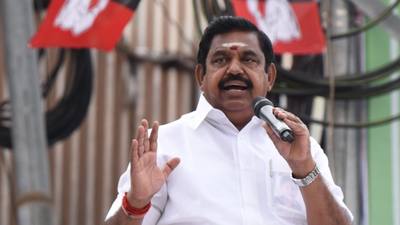
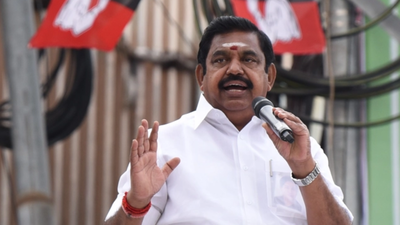
AIADMK General Secretary and Leader of Opposition in Tamil Nadu Assembly

New Delhi: AIADMK general secretary Edappadi K Palaniswami on Tuesday released the party’s Tamil Nadu Assembly election manifesto, revealing 297 promises ahead of the April 23 polls.The manifesto puts welfare measures at the center of the party’s campaign, including a monthly assistance of Rs 2,000 for female heads of households and a special assistance of Rs 10,000 for each family.EPS also promised ‘Kul Vilakku Scheme’ for women. Under the scheme, monthly assistance will be given to all ration card holders and will be deposited directly into the bank account of the female head of the family.“To promote economic balance within the society, a monthly support allowance of Rs 2,000 will be provided to all ration cardholders through the ‘Kul Vilakku Scheme’. This amount will be deposited directly into the bank account of the female head of the family.”The manifesto said the special assistance of Rs 10,000 is to help households cope with rising prices and higher taxes.“Under the administratively incompetent Stalin-led DMK regime – due to its lack of foresight – prices of essential commodities have skyrocketed in the last five years. As a result, the public has been seriously affected. Besides, various taxes including property tax, house tax, electricity charges and water charges have been increased. As a result, the daily financial burden on families has increased manifold. Therefore, with the aim of reducing this burden on the people, a special assistance amount of Rs. Rs 10,000 will be provided to each family,” the manifesto read.Among other promises, the party said ration card holders will also get rice and pulses along with refrigerators. It also promised to extend the free bus travel scheme to men besides women and provide three free cooking gas cylinders a year to every ration cardholder.Tamil Nadu will go to polls in a single phase on April 23 and counting of votes will take place on May 4.Under the NDA seat-sharing agreement, the AIADMK-led alliance will contest on more than 170 seats. BJP has been allotted 27 seats, followed by PMK with 18 seats and AMMK with 11 seats.Meanwhile, the AIADMK is intensifying talks to finalize the alliance with GK Vasan’s TMC(M) and other smaller parties before the end of Tuesday.The main contest is expected to be between the DMK-led secular progressive alliance, comprising Congress, DMDK and VCK, and the AIADMK-led NDA with allies BJP and PMK. Actor-turned-politician Vijay is also set to make his electoral debut with TVK, which is likely to lead to a triangular contest in the elections.

Source link

IPL: When will Kal Somani-led consortium’s purchase of Rajasthan Royals be implemented? | cricket news

IPL: When will Kal Somani-led consortium's purchase of Rajasthan Royals be implemented?

New Delhi: As IPL 2026 approaches, a major off-field development has come into focus Rajasthan RoyalsChampion of the inaugural edition of the Indian Premier League (IPL), US-based entrepreneur Kal is being acquired by a consortium led by Somani for a whopping $1.63 billion. Despite the scale of the deal, the ownership change will only take effect after the conclusion of the 2026 season, meaning the current structure will remain in place for now.Somani is not new to the franchise, having been a minority investor since 2021.

Watch

Is this India’s best white-ball team? Nikhil Chopra on 2027 ODI World Cup

With this latest move, he is set to take full control, which will significantly increase the global valuation of the franchise. Known for his strong presence in the US tech industry, Somani heads companies such as IntraEdge, Truyo and Truyo.AI and Academia, and has gradually expanded his interest in the sports world through investment and ownership roles.What makes this acquisition particularly noteworthy is the high-profile backing behind Somani’s consortium. Among the prominent names is Walmart heir and owner of the NFL’s Denver Broncos Rob Walton, widely considered one of the wealthiest sports owners in the United States. The group also includes the Hamp family, led by Sheila Ford Hamp, owner of the Detroit Lions and part of the Ford Motor Company legacy. Somani has expressed confidence in the future of IPL for a long time. Speaking about his first investment in 2021, he had said, “We see great potential in this investment and we are excited about the future of the IPL.” His continued commitment underlines the widespread confidence in the league’s rapid growth.

Source link

देहरादून: राज्य पैरालंपिक खेल 27 मार्च से महाराणा प्रताप स्पोर्ट्स स्टेडियम में शुरू होंगे

माई सिटी रिपोर्टर, देहरादून

द्वारा प्रकाशित: अलका त्यागी

अद्यतन मंगलवार, 24 मार्च 2026 05:39 अपराह्न IST

पैरा गेम्स के अंतर्गत पैरा एथलेटिक्स, पावरलिफ्टिंग, बैडमिंटन, वॉलीबॉल और टेबल टेनिस की प्रतियोगिताएं आयोजित की जाएंगी।


देहरादून: राज्य पैरा गेम्स 27 मार्च से महाराणा प्रताप स्पोर्ट्स स्टेडियम में शुरू होंगे

– फोटोः अमर उजाला फाइल फोटो


विस्तार

पैरालंपिक एसोसिएशन ऑफ उत्तराखंड की ओर से राजधानी दून में तीन दिनों तक स्टेट पैरा गेम्स का आयोजन किया जाएगा। पैरा खिलाड़ियों को बढ़ावा देने के उद्देश्य से 27 से 29 मार्च तक महाराणा प्रताप स्पोर्ट्स स्टेडियम में आयोजित होने वाले पैरा गेम्स में प्रदेश के 13 जिलों की टीमें भाग लेंगी।

ट्रेंडिंग वीडियो

देहरादून समाचार: अर्थव्यवस्था और सामाजिक सूचकांक में सुधार, विकसित उत्तराखंड के लिए अभी भी बहुत कुछ किया जाना बाकी है।

प्रेस क्लब में पत्रकारों को जानकारी देते हुए आयोजन सचिव प्रेम कुमार ने बताया कि पैरा गेम्स के तहत पैरा एथलेटिक्स, पावरलिफ्टिंग, बैडमिंटन, वॉलीबॉल और टेबल टेनिस की प्रतियोगिताएं आयोजित की जाएंगी. प्रतियोगिता में करीब 150 पैरा खिलाड़ी अपना दमखम दिखाएंगे. खिलाड़ियों के रजिस्ट्रेशन की आखिरी तारीख 25 मार्च तय की गई है.

Source link

When will Iran’s regime fall? What did the Mossad chief say?

ईरान का शासन कब गिरेगा? मोसाद प्रमुख ने क्या कहा?

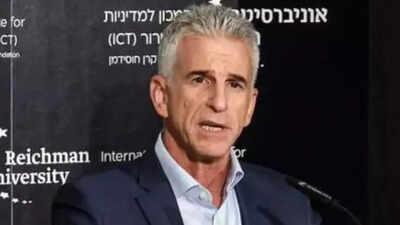
File photo: Mossad chief David Barnia

A recent report claims that Mossad chief David Barnia reportedly told Israel’s cabinet before war with Iran that regime change in Tehran is possible, but it is likely to take about a year, not just days or weeks.According to The Jerusalem Post, Barnia presented several scenarios to Israeli leaders on the eve of war, some of which suggested a few months, but a one-year time frame was considered the most likely estimate.This more cautious assessment has been obscured by recent anonymous attacks, the report said, accusing them of exaggerating the prospects for a rapid collapse of the Iranian regime.

Qualified Assessment, No Guaranteed Prediction

The main point emerging from the report is that Barnea’s position was more meritorious than some later portrayals. According to The Jerusalem Post, he did not present regime change as inevitable, but rather as a possibility dependent on a number of conditions and likely to take a significant amount of time. The report said Barnia was known to attach caveats to major intelligence assessments and that any pitches he made to Israeli Prime Minister Benjamin Netanyahu or US officials would have been strictly controlled and framed as part of a broader government strategy.However, this contradicts earlier reports which claimed that the Mossad expected a rapid coup.According to the New York Times report, Barnia told Netanyahu and senior Trump administration officials in mid-January that within days of the war starting, the Mossad could potentially help unify the Iranian opposition, leading to riots and acts of insurrection that could even lead to the fall of the government. However, the report also noted that no such rebellion had occurred three weeks into the war, and American-Israeli intelligence assessments concluded that the Iranian regime had been weakened but still intact.The Times of Israel, citing Channel 12, similarly reported that Barnia had assessed that overthrowing the Iranian regime would be possible if key military objectives were achieved first, including beheading the leadership, damaging regime institutions and weakening its ability to suppress civilians. But stressed that he also offered “disclaimers and qualifications”, noting that the situation was unstable and it could take a long time to achieve such results.Publicly, both Netanyahu and US President Donald Trump initially indicated that military action could create the conditions for regime change, but both also said that the Iranian people themselves would have to take action. Since then, the message has become more restrained. US Director of National Intelligence Tulsi Gabbard said on Thursday that the US intelligence community assesses that the Iranian regime remains intact but largely degraded.Netanyahu has also stopped short of predicting imminent collapse. He said Israel was working to “create the conditions” for the regime’s collapse, but added, “It may survive, maybe not. If it survives, it will be very weak.”

Source link

On this day in 1977: How Morarji Desai became India’s first non-Congress PM. india news

On this day in 1977: How Morarji Desai became India's first non-Congress PM
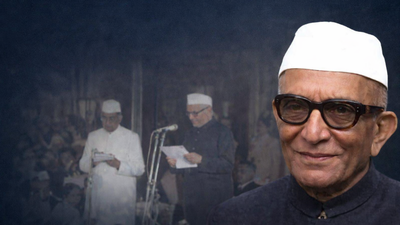
This image is used for representation purpose only (AI-generated)

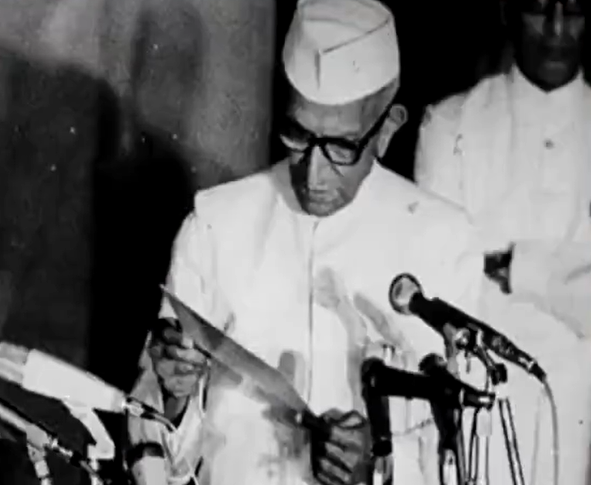
On a cool March morning in 1977, inside the stately halls of Rashtrapati Bhavan, a brief swearing-in ceremony lasting barely three minutes changed the course of Indian politics.When 81-year-old Morarji Desai was sworn in as the country’s first non-Congress Prime Minister on March 24, 1977, it was not just a change of power, it was the first real disruption of a system that had remained largely unchanged since independence.The oath was administered by the then acting President BD Jatti.

Moraji Desai taking oath (Image/X)

At first glance, the ritual seemed routine, a formal transfer of power to the presidential residence. But behind its brevity lies a historic change, the end of almost decades of Congress dominance, the post-Emergency political reckoning and the beginning of coalition politics at the Centre.

1977 elections: the vote that changed everything

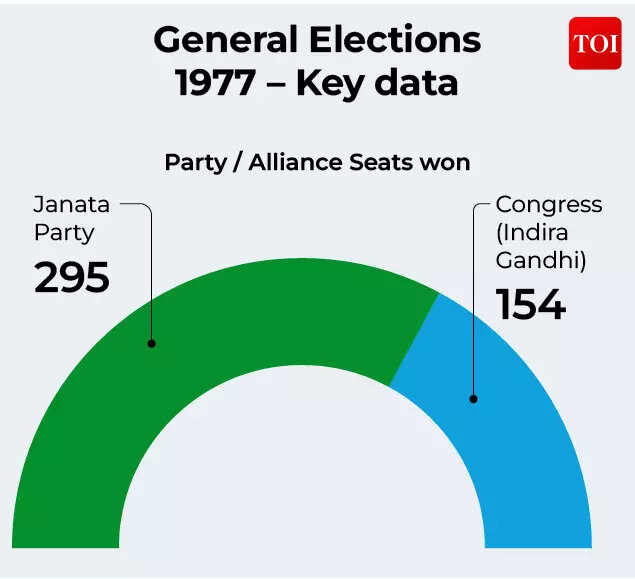
The general elections of 1977 were unlike any election held in India since independence.In the months before the vote, four major opposition factions – Samajwadi, Jan Sangh, Bharatiya Lok Dal (BLD), and Congress (O) came together. Janata Party.This unprecedented unity was driven by a common goal: to challenge the Congress rule under then Prime Minister Indira Gandhi and end the Emergency.The campaign gained momentum from widespread anger over the Emergency – which included forced sterilization campaigns, slum demolitions, arrests of political opponents, and press censorship.Perhaps for the first time, voters in rural and urban India were not just participating – they were abstaining.The result was decisive. Of the 542 seats, the Janata Party won 295 seats, while the Congress was reduced to 154, losing more than 200 seats compared to the last election.
.

.

Morarji Desai emerged as the unanimous choice to lead the new government.A veteran of the independence movement, Desai served as Chief Minister of Bombay (1952–1957) and Deputy Prime Minister (1967–1969).At 81, he became the oldest person to hold office as Prime Minister, a symbol of continuity at a moment of disruption.

Morarji Desai: Experienced politician sitting at the top

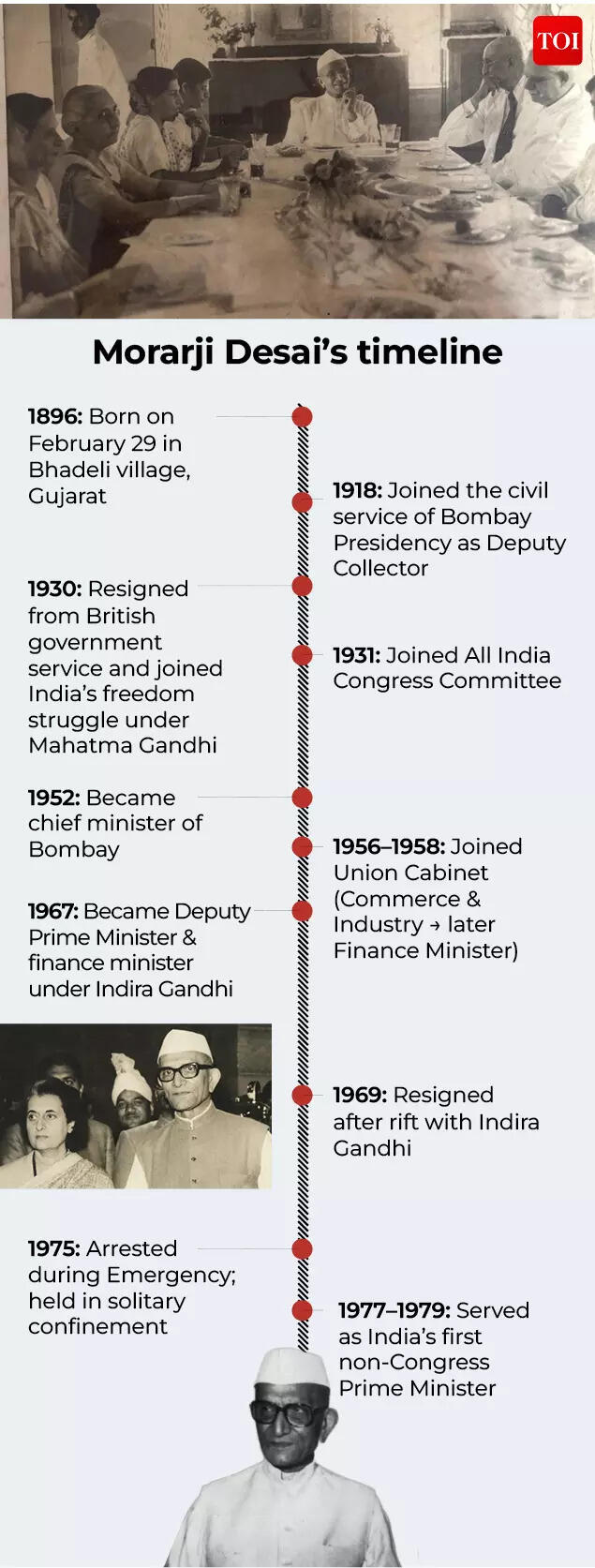
Morarji Desai’s rise was shaped by political currents as well as personal convictions.Born in 1896, he resigned from government service in 1930 to join the independence movement led by Mahatma Gandhi.

Morarji Desai's timeline

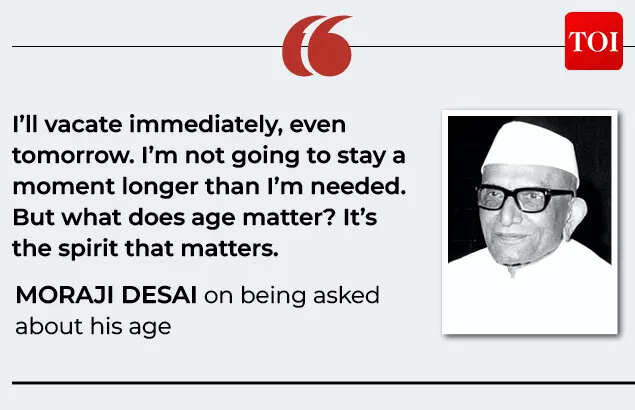
He was sent to jail several times and later played important roles in the Congress.During the Emergency, Desai was arrested on June 26, 1975 and spent several months in solitary confinement.His return from political prisoner to prime minister in 1977 reflects the larger story of the reset.He consistently argued that no one should be above the law, including the Prime Minister.“One must act in life according to the truth and one’s faith,” he had said – a line that defined both his politics and his moment.
.

.

Desai was later awarded the Bharat Ratna in 1991 and Pakistan’s Nishan-e-Pakistan in 1990.

Understanding the 1977 transition: What scholars say

The extraordinary change in Indian politics in 1977 did not happen suddenly. Political scientists and historians have long studied how and why India’s democracy, which appeared intact for decades, suddenly changed.Rajni Kothari: Congress SystemRajni Kothari was among the first scholars to describe the post-independence political system in India as the “Congress system”. in its original work congress system in indiaKothari points out that Indian politics in the 1950s and early 1960s was not dominated by any one party in a simple sense, but by a system in which the Congress functioned as the center of political life.Kothari argued that the Congress system contained a unique internal mechanism of political competition. Opposition parties existed, but played roles similar to pressure groups; There was very little chance of him coming to power directly. Myron Weiner: elections, emergency and democratic reformsIn his influential 1977 analysis, political scientist Myron Weiner examined the parliamentary elections that abruptly ended Congress. Weiner portrayed the 1977 election as a moment when Indian democracy corrected itself following the authoritarian precedent set during the Emergency.Weiner highlights that the Emergency was expected to strengthen Indira Gandhi’s authority. Between 1975 and 1977, the central government under Gandhiji suspended fundamental rights, imposed press censorship and used the state machinery to suppress dissent. Instead, the polls produced resounding congressional disapproval:

  • Many opposition parties united in Janata Party
  • Opposition leaders, many of whom have recently been released from jail, launched a nationwide campaign
  • Voters gave clear majority to Janta alliance

Yogendra Yadav: The era of four party systemBuilding on the work of scholars such as Kothari and others who have tracked Indian politics over decades, Yogendra Yadav has contributed to the understanding of how Indian party systems evolved through distinct stages. Yadav’s framework identifies four broad party-system eras in post-independence India:

  1. First-party system (1952–1967): dominance of congress system
  2. Second-party system (1967–1989): Congress maintains central position amid growing challenges, resulting in brief public intervention
  3. Third-party systems (1989–2014): Marked by coalition politics and fragmented national competition
  4. Fourth-party systems (since 2014): Characteristics of BJP’s dominance

Rift, Emergency and restoration of Congress

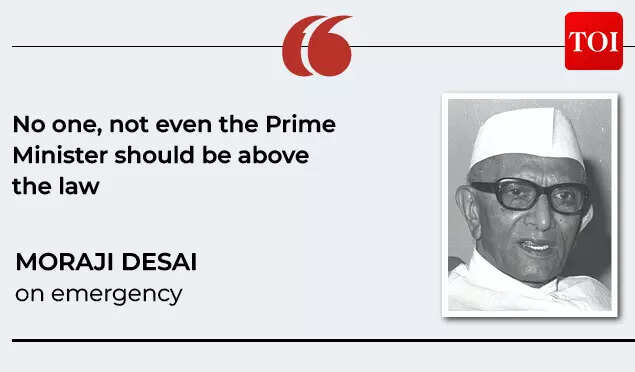
Rift between Morarji Desai and Indira GandhiThe conflict between Morarji Desai and Indira Gandhi was one of the defining power struggles in post-independence India.It began after the succession battle following the death of Lal Bahadur Shastri in 1966, when the party’s traditionalist leadership, the Congress syndicate, supported Gandhi over Desai.Desai, a senior leader and believer in conservative economic and administrative principles, represented the old faction, while Gandhi adopted a new, populist approach that consistently challenged the status quo.Tensions increased further in 1969 when Gandhiji removed Desai from the Finance Ministry. At this moment the Congress split into Congress (R), led by Gandhiji, and Congress (O), an organizational faction led by Desai and other senior leaders. Ideologically, the two leaders diverged sharply: Gandhi embraced socialist measures, including the nationalization of fourteen major banks, while Desai favored limited government intervention. Emergency: The dark chapter of democracyThe Emergency (1975–1977) was the climax of the political conflict between Gandhi and Desai. Following the Allahabad High Court’s decision to invalidate his election to the Lok Sabha, Gandhi imposed a nationwide emergency for 21 months, citing threats to national stability. Opposition leaders, including Desai, were arrested and kept in solitary confinement. During this period, the government took sweeping measures that increased its control over political and social life. Yet, the Emergency also created an unprecedented anti-Congress wave, prompting opposition parties to unite under the Janata Party banner.
.

.

Upon his release in early 1977, Morarji Desai became the face of this coalition, campaigning across the country and taking advantage of public dissatisfaction with authoritarian rule. The general elections of 1977 ultimately gave a decisive verdict in favor of Desai. Restoration of Congress: Return of Indira GandhiHowever, the Janata Party’s tenure proved unstable. Internal divisions, factionalism, and lack of united rule weakened its ability to govern effectively. Meanwhile, Indira Gandhi, although out of power, gradually regained her political base. His resurgence was marked by significant victories in the state assembly elections of Karnataka and Andhra Pradesh.Gandhi’s victory demonstrated his enduring appeal among the rural poor, minorities and women. The general elections of 1980 cemented his comeback. Gandhi’s party won a landslide majority by securing 353 seats out of 529, while the Janata Party’s seat share dropped to 41.

Could 1977 happen again?

The 1977 election remains the most striking example of a united opposition defeating a major ruling party at the national level.Ahead of the 2024 Lok Sabha elections, opposition parties attempted a similar consolidation under the Bharat Alliance.Despite coordination between more than two dozen parties, the BJP returned to power.Nearly five decades after Desai was sworn in, the country has again entered a phase of dominance, this time with the BJP raising a familiar question: Can a fragmented opposition repeat the unity of 1977?History offers both hope and caution. While 1977 proved that electoral waves can topple a strong regime, it also showed that it is not just victory but cohesion that determines longevity.1977 was a reminder that democratic systems can be reset, but only if voters, opposition forces, and institutions unite in a single moment.


Source link

13 साल तक कोमा में रहे हरीश राणा की मौत, सुप्रीम कोर्ट की इजाजत के बाद दी गई इच्छामृत्यु.

गाजियाबाद के रहने वाले हरीश राणा का दिल्ली के अखिल भारतीय आयुर्वेदिक विज्ञान संस्थान में निधन हो गया। वह पिछले 13 वर्षों से कोमा में थे और हाल ही में भारत के सर्वोच्च न्यायालय ने उन्हें इच्छामृत्यु की अनुमति दी थी। हरीश का इलाज एम्स के इंस्टीट्यूट रोटरी कैंसर हॉस्पिटल (आईआरसीएच) में चल रहा था। पिछले एक सप्ताह से उन्हें बिना भोजन और पानी के चिकित्सकीय निगरानी में रखा गया था। इस दौरान उनके माता-पिता लगातार किसी चमत्कार की उम्मीद कर रहे थे। इच्छामृत्यु और मानवीय संवेदनाओं से जुड़ा ये मामला देश में चर्चा का बड़ा विषय बन गया है.

माँ की प्रार्थना और भावुक पल
हरीश के आखिरी दिनों में उनकी मां अस्पताल के गलियारे में बैठकर हनुमान चालीसा का पाठ कर रही थीं। अपने बेटे की हालत देखकर उन्होंने भावुक होकर कहा कि उनका बेटा अभी सांस ले रहा है और उसकी दिल की धड़कन चल रही है. उन्होंने यह भी कहा कि उनका बेटा उन्हें छोड़ रहा है. इस दृश्य ने वहां मौजूद लोगों को भी भावुक कर दिया.

कैसे हुई इच्छामृत्यु की प्रक्रिया?
सुप्रीम कोर्ट से इजाजत मिलने के बाद हरीश राणा को प्रशामक देखभाल वार्ड में रखा गया था. डॉक्टरों की एक विशेष टीम लगातार उनकी निगरानी कर रही थी. करीब एक हफ्ते तक उसे खाना और पानी नहीं दिया गया. इस प्रक्रिया को मेडिकल भाषा में पैसिव यूथेनेसिया कहा जाता है। छह दिन तक चली इस प्रक्रिया के बाद उनकी मौत हो गई.

2013 में हादसे के बाद जिंदगी बदल गई
हरीश राणा ने जुलाई 2010 में चंडीगढ़ विश्वविद्यालय में सिविल इंजीनियरिंग में प्रवेश लिया। वर्ष 2013 में, वह अंतिम वर्ष के छात्र थे। उसी साल रक्षाबंधन के दिन वह अपनी बहन से फोन पर बात करते वक्त पीजी की चौथी मंजिल से गिर गए. गंभीर हालत में उन्हें पहले पीजीआई चंडीगढ़ और बाद में दिल्ली के एलएनजेपी अस्पताल में भर्ती कराया गया। डॉक्टरों ने बताया कि वह क्वाड्रिप्लेजिया से पीड़ित थे, जिसके कारण उनके हाथ-पैर पूरी तरह से निष्क्रिय हो गए थे।

कानूनी लड़ाई और सुप्रीम कोर्ट का फैसला
उसकी पीड़ा को देखते हुए हरीश के माता-पिता ने इच्छामृत्यु की इजाजत के लिए अदालत का दरवाजा खटखटाया। 8 जुलाई 2025 को दिल्ली हाई कोर्ट ने उनकी याचिका खारिज कर दी. इसके बाद परिवार ने सुप्रीम कोर्ट में अपील की. करीब आठ महीने बाद 11 मार्च 2026 को सुप्रीम कोर्ट ने हरीश को इच्छामृत्यु की इजाजत दे दी.

संवेदनशील मुद्दा बना चर्चा का केंद्र
हरीश राणा के मामले ने देश में इच्छामृत्यु जैसे संवेदनशील विषय पर एक नई बहस छेड़ दी है। यह घटना हमें न केवल कानूनी बल्कि मानवीय दृष्टिकोण से भी गहराई से सोचने पर मजबूर करती है।

Source link