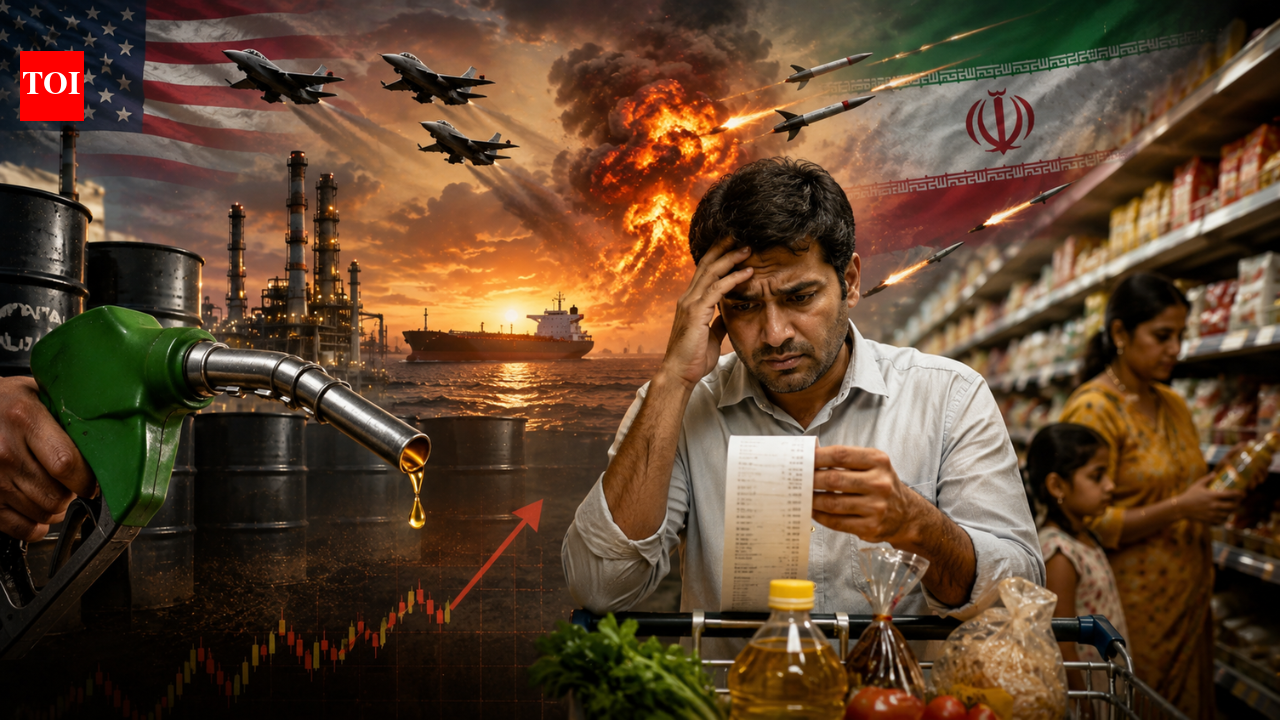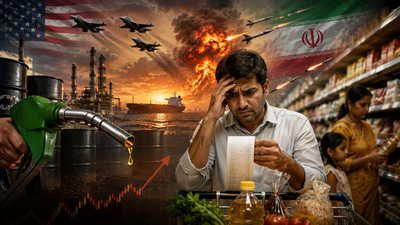
The Middle East war that started as a geopolitical conflict two months ago has gradually become a matter of survival for families, as disruptions in oil supply routes, rising freight rates and high petrochemical prices roil the economy.
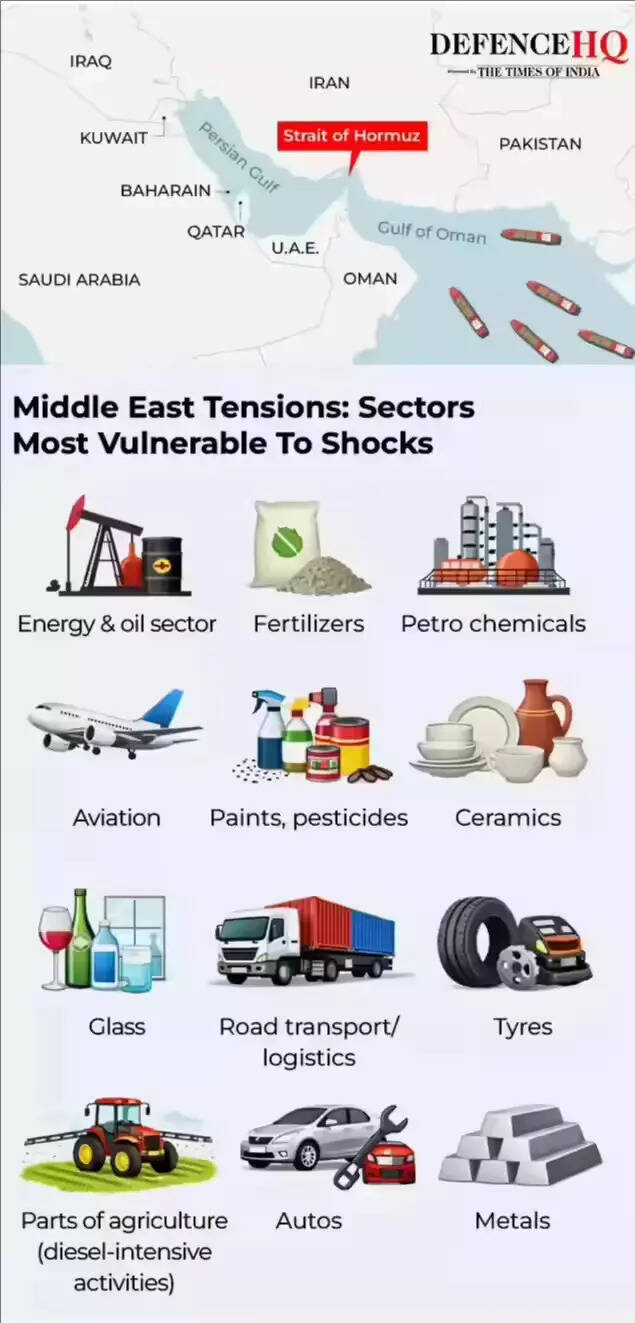
The biggest trigger is the strategically important Strait of Hormuz, the narrow shipping route through which about 20% of global oil and energy supplies pass. As tensions have risen after the US and Israel launched joint attacks on Iran, the country has narrowed the route, causing shipping costs, insurance premiums and crude oil prices to rise.
As a result, everything from LPG cylinder to sofa is now becoming costlier.
kitchen shock
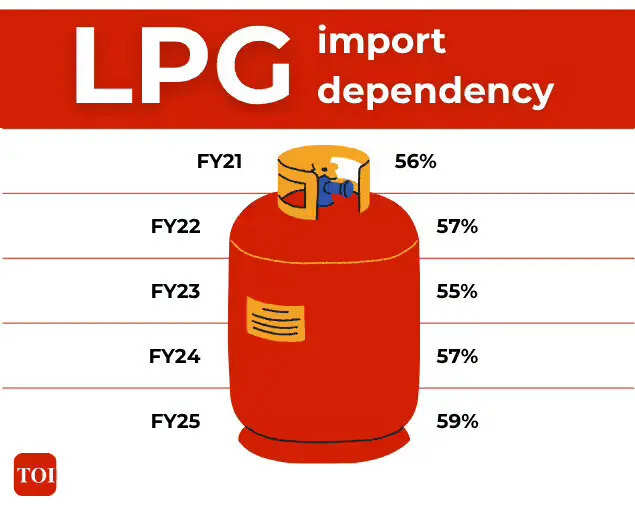
Its first impact is on the Indian kitchen.India is a major importer of LPG. As a result, domestic LPG cylinder prices increased from Rs 853 to Rs 913, while commercial cylinders increased from Rs 1,768 to Rs 3,071.50. Cooking oil has also become costlier, with sunflower oil prices rising by nearly Rs 15 per liter and mustard oil by nearly Rs 10 per liter in many markets.
You may soon feel pressured even on daily routine. India imports about 5-6 million tonnes of pulses annually, and freight and insurance costs are rising due to rerouting of shipments around Africa due to Middle East disruptions. Industry officials have warned that pulse prices may rise further if tensions continue.Dry fruit prices have already seen a steep rise due to supply disruptions from Iran and Afghanistan. Traders told TOI that prices of Mamra almonds have increased from around Rs 1,800 to Rs 2,800 per kg, while those of Irani pistachios have increased from Rs 1,650 to Rs 2,400 per kg. The price of premium Pishori pistachios, used by sweet makers, has increased from Rs 2,600 to Rs 3,400 per kg.Its effect is now visible in sweet shops too, where sellers say that maintaining quality has become more expensive.
The price of your sofa, wardrobe and modular kitchen has now become more expensive
Due to the war, the decoration of Indian homes is also becoming more expensive.Furniture manufacturers say modular furniture and premium interiors could be 10-15% costlier as modern sofas, wardrobes and modular kitchens are heavily dependent on petrochemical products linked to crude oil.Furniture brand Orange Tree said foam prices have increased by more than 45%, while packaging costs have increased by nearly 70%, reported ET. The plywood industry is also under pressure as chemicals such as methanol and resins important for adhesives are imported from the Middle East.This means that even if the sofa or modular kitchen is made in India, the raw materials, chemicals and packaging behind it are becoming expensive due to the conflict.Even painting your home may cost more now. Decorative paint prices are expected to rise by 9-10%, while companies like Berger Paints have already announced hikes in several product categories.
Electronics, clothing and FMCG products are under pressure
Electronics and appliances may also become expensive soon.Industry officials say prices of TVs, refrigerators and air conditioners may rise by about 5-6% as plastic components and petrochemical-based materials become costlier. Godrej Enterprises has already indicated that prices may rise as suppliers are repeatedly increasing rates.The fashion and textile industry is also under pressure.Textile hubs in Ahmedabad and southern India have reported a sharp jump in fuel and chemical costs after industrial gas supplies were cut amid the conflict. According to industry bodies, prices of polyester fiber alone have increased by Rs 12 per kg within a week.Ankit Patel, former president of Vatva Industry Association, said that chemical production has been badly affected due to reduced gas supply. “We have seen a huge increase in the prices of various products like coal, sulfuric acid and phthalic anhydride. This has increased the total production cost. We have been able to make some impact on our dye buyers, but margins have come down significantly,” he said.Processing units say prices of imported coal have increased by about 30%, while chemical prices associated with dyes and fabrics have increased by 25-40%. Experts warn this could ultimately push up clothing prices as manufacturers pass on the cost.This pressure is also on consumer goods of daily use.FMCG companies say the cost of plastics, resins, polymers and packaging materials has increased by up to 25% in recent weeks. It impacts products that consumers buy almost every day – soaps, shampoos, detergents, toothpastes, creams, hair oils and packaged foods.Many companies are already considering increasing prices or smaller pack sizes to save margins.
Flights, fuel and cars are getting expensive
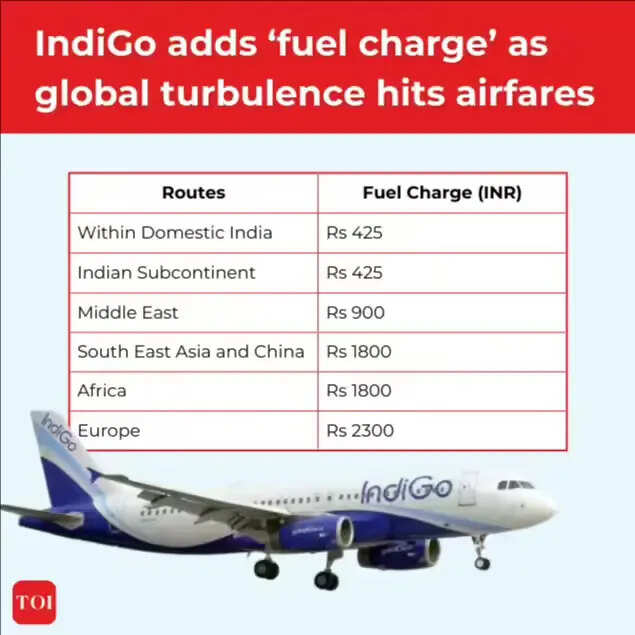
Air travel has become more expensive than before.Airlines have begun adding fuel surcharges after aviation turbine fuel prices increased. After the standoff began, IndiGo imposed surcharges ranging from Rs 425 to Rs 2,300 on flights, while Air India and Air India Express announced an additional charge of Rs 399 on domestic tickets.
Akasa Air has also added surcharge ranging from Rs 199 to Rs 1,300.Industry officials say further hike in fares may be inevitable if fuel prices remain high.The automobile sector is facing similar pressure. Luxury carmakers Mercedes-Benz and Audi have announced price hikes of around 2% each, while mass-market companies are preparing for smaller hikes amid stretched supply chain and input costs.Meanwhile, crude oil prices remain volatile. Brent crude has crossed the $100 per barrel mark, and analysts have warned that prices could rise further if tensions around the Strait of Hormuz increase.Another pressure point is quietly building in the background. The fuel companies themselves are now under severe financial stress. According to a PTI report, state-owned oil marketing companies – Indian Oil, BPCL and HPCL – have collectively incurred losses of over Rs 1 lakh crore in the last 10 weeks as they continued to sell petrol, diesel and LPG below actual market-linked costs despite rising global crude prices.Sources quoted by the news agency claimed that the three companies are currently facing daily under-recoveries of around Rs 1,600-1,700 crore.Even though Brent crude has crossed $100 per barrel, petrol and diesel prices in India have remained broadly stable at Rs 94.77 and Rs 87.67 per liter respectively. Domestic LPG prices were increased by Rs 60 in March, but officials say cylinders are still being sold below cost.It is becoming difficult to bear the financial burden. Government sources said if crude oil prices remain high for a long time, oil companies may need to borrow heavily to maintain fuel supplies and operations.Industry insiders also warned that a hike in petrol and diesel prices may ultimately be inevitable, with the decision now depending more on political timing than economics.This means that the fuel shock may not have been fully felt by households yet. If global oil prices remain volatile and the Hormuz crisis continues, experts have warned that another round of fuel price hikes could ultimately impact transportation costs, grocery prices, logistics and overall inflation in the economy.
Medicines and healthcare services may soon become more expensive
Healthcare is another sector that is beginning to feel the pressure.Medical-grade plastics used in syringes, gloves and surgical products have become 50-60% more expensive since the conflict intensified. Traders told TOI that prices of surgical products like nebulizers, BP machines and glucometers may increase by 10-20%.Nikhil Malang, organizing secretary of Prayag Chemists and Druggists Association (Retail), told TOI, “Sea freight rates have increased sharply, causing delays in the import of raw materials. Also, the operational capacity of major airports in the Gulf region has fallen to 80%, causing delays of several weeks in the movement of critical components.”The pharmaceutical industry has also sought temporary price relief from the government, warning that the cost of key chemicals and solvents used in drug manufacturing has increased by 30-100% in a matter of weeks.According to ET, if the disruption continues, the Center may consider temporarily increasing the prices of select essential medicines by 10-15%.
Invisible effect: Rupee weakens and stock market suffers losses
The war is also weakening the rupee, which has fallen from around 90 to over 95 against the US dollar, making foreign education and travel abroad more expensive for Indian families.The rupee recently slipped to a record low of 95.40 against the US dollar, pushing up the cost of tuition fees, rent and living expenses abroad.Meanwhile, the stock market turmoil triggered by the conflict has wiped out nearly Rs 34 lakh crore of investors’ wealth as of mid-March, hitting mutual funds, retirement savings and household investments.For many middle-class families, this means portfolios suddenly become worth less, forcing people to delay purchases or cut back on discretionary spending.
Why does a war thousands of kilometers away affect India?
India imports a large portion of its crude oil and many petrochemicals. When global shipping routes become riskier or oil prices rise sharply, those costs eventually flow through to the economy.The result is that the conflict in the Middle East gradually appears everywhere in fuel bills, grocery baskets, airline tickets, shopping expenses and household budgets.At present, many companies are still keeping some of the growth for themselves rather than passing it all on to consumers. But if oil prices remain high and shipping disruptions continue, economists have warned that inflation pressures could deepen in the coming months.The war in the Middle East is no longer just a geopolitical story for Indian families. This is fast becoming the monthly budget story.




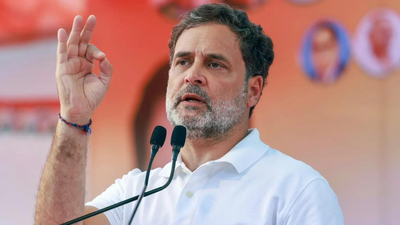
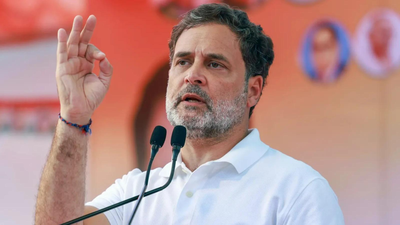 The conversation started when X user Muthukrishnan Dhandapani, in a detailed post, claimed that Gandhi had been his client for mutual fund investments since 2013, when the Congress-led UPA government was in power.Dhandapani, whose bio identifies him as an AMFI-registered mutual fund distributor, said he had publicly supported Prime Minister Narendra Modi and the BJP consistently between 2014 and 2024, but alleged that Gandhi and his staff never let political differences affect their professional relations.“Rahul or his office staff never brought that subject up with me,” he wrote. “Gandhi addressed me with respect and never behaved arrogantly,” he wrote.He also claimed that Gandhi had sought his professional input while selecting a major professor a few years ago.Dhandapani wrote, “I wanted to post this to show how mainstream media and IT cells of parties can completely dehumanize someone.”Responding to the post, Gandhi humorously replied: “Muthu ji, your political views are your own – but please accelerate the returns on my investment. 😃”The reaction quickly gained popularity online. By the time the report was filed, Gandhi’s reply had received over 1.5 million views with over 31,000 likes, 5,600 reposts and over 1,000 comments.Dhandapani later replied, “Pleasantly surprised by your response.”Many users appreciated the civility and humor of this exchange.One user wrote, “I don’t vote for your party, but this tweet made me laugh.”Another commented, “Professionalism transcends politics. People are generally more nuanced than what we see on the screen.”However, some users questioned whether it was professionally appropriate to publicly disclose the client relationship.One user wrote, “Such conversations are very rare in the political circles of new India, but I still believe it was not professional to be the first to share the customer’s name.”Others continued the humor, with one quipping: “Even Rahul depends on Modi supporters for his ‘hard-earned’ investments!”




 The club reignited a debate inside the Progressive Party on ongoing tensions in the Middle East, including the Gaza war and conflict with Iran.Tina Shah is a physician and former White House advisor during the Obama administration. She is running in the Democratic primary for New Jersey’s 7th Congressional District. In an April 26 recording, she said she is a “pro-Israel candidate” who supports “unconditional aid” to Israel, and also said she is “the only candidate” in New Jersey’s 7th Congressional District race who supports Israel unconditionally.The audio clip went viral on social media platforms including X and TikTok, drawing strong reactions from both progressive activists and pro-Israel Democrats and deepening divisions within the party over foreign policy. This comes as the Gaza Health Ministry estimates that 70,000-75,000 Palestinians have been killed since Hamas attacked Israel on October 7, 2023.Shah’s comments come at a time when political debate continues in Washington over the Israel-Gaza conflict as well as rising tensions between Israel and Iran. The war in Gaza has drawn international concern over civilian casualties and humanitarian conditions.This issue has become a major fault line within the Democratic Party. Progressive lawmakers such as Bernie Sanders and Alexandria Ocasio-Cortez have criticized US military aid to Israel and have pushed for greater protections for civilians in Gaza. Sanders has called for a ban on arms transfers, while Ocasio-Cortez has supported efforts such as the “Bomb Block Act”.At the same time, other Democrats have maintained strong support for Israel. John Fetterman has defended continued military aid and opposed an immediate ceasefire, while Senate Democratic leader Chuck Schumer has also supported Israel, calling for increased humanitarian aid.