‘His success will redefine the Test team’: Ashwin sees Shubman Gill as India’s future in red-ball cricket cricket news

'His success will redefine the Test team': Ashwin sees Shubman Gill as India's future in red-ball cricket

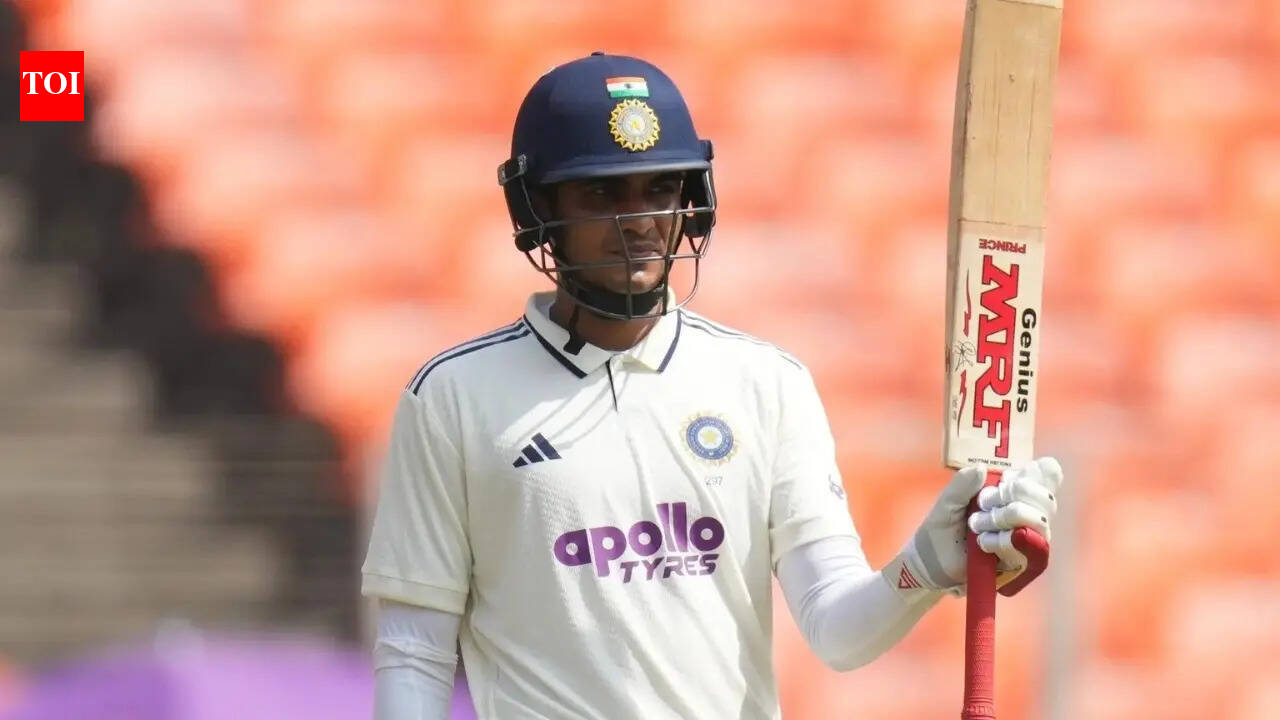
Former Indian off spinner Ravichandran Ashwin has supported the test captain Shubman Gill Set to be a key figure in India’s future in the longest format, he said the batsman’s success can have a big impact on the team’s next phase.Ahead of India’s one-off Test against Afghanistan at the PCA New International Cricket Stadium in New Chandigarh from June 6, Ashwin praised Gill’s captaincy and batting during India’s recent tour of England, where he led the team in a Test series for the first time.“Shubman Gill played a brilliant series in England. As soon as he was made the captain, he went there and performed well both with the bat and with his leadership. He scored runs in difficult situations and handled the pressure of captaincy with maturity. This shows his class and his ability to bat for a long time,” Ashwin told Geo Hotstar.Ashwin said the work done by Gill on his technique has helped him deal with the movement on the pitch better.“He has worked hard on his technique, especially keeping his bat closer to the pad, which has helped him reduce the gap between bat and pad, making him more powerful against the moving ball,” Ashwin said.While Gill is still waiting for the big innings on home soil as Test captain, Ashwin will be hoping to make an impact in familiar conditions.He said, “Yes, he has not done wonders with the bat on home soil as a captain yet, but with this change in his batting technique, I expect him to perform strongly on home soil as well. His success in Test cricket will play a big role in redefining India’s Test team. He is a player who can lead the batting order for years to come.”Ashwin also talked about India’s spin options for the Afghanistan Test if Ravindra Jadeja is unavailable. he hopes -Kuldeep Yadav To lead the spin attack, while Washington provides handsome support.Ashwin said, “In the absence of Ravindra Jadeja, Kuldeep Yadav will lead the spin attack against Afghanistan. He is bowling with great rhythm and confidence. His ability to turn the ball both ways and his experience in home conditions make him a big threat.”He said, “Washington will play a beautiful supporting role. He is more defensive, a bowler who can also bat lower down the order. His accuracy and ability to bowl long spells will be useful on bad tracks. Both will be important for India’s success in this Test match.”Ashwin also said that he is keen to see whether homegrown star Harsh Dubey gets a chance to make his Test debut.He said, “However, I will have my eyes on Harsh Dubey. I am curious whether he will get a chance. We will have to wait and see whether the team goes with Manav Suthar or Harsh Dubey. But I have special interest in Dubey because he has had a good domestic season. He also had a very good IPL season. His performances work in his favour. I am looking forward to seeing him make his debut.”

Source link

12 people died in fire in Sri Lanka nursing home, owner arrested for negligence

12 people died in fire in Sri Lanka nursing home, owner arrested for negligence

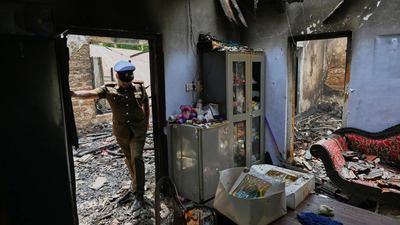
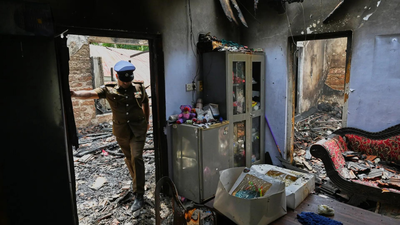
At least 12 residents have been killed and seven others injured in a massive fire at an elderly care home in western Sri Lanka, police said on Thursday.The fire broke out at the Mawapiya Sewana elderly care home in Angurwatota, about 65 kilometers south-east of Colombo in Kalutara district, around 5.30 pm on Wednesday. More than 70 elderly residents were at the privately run facility when the fire broke out.Police said 10 people were found dead at the scene, while two others died later in hospital. A total of 51 residents were rescued and taken to temporary accommodation in a nearby school. Treatment of the injured is continuing.Footage from the scene showed the building extensively damaged, with burnt furniture and equipment scattered throughout the complex. Firefighters, police officers and local residents worked together to control the fire and rescue survivors.Authorities have arrested the owner and director of the home on suspicion of causing the deaths due to negligence. A magistrate inquiry has also been held as investigators continue to investigate the cause of the fire.Initial reports suggest that a gas cylinder explosion may have contributed to the rapid spread of the fire, but police said the exact cause had not yet been established.

Source link

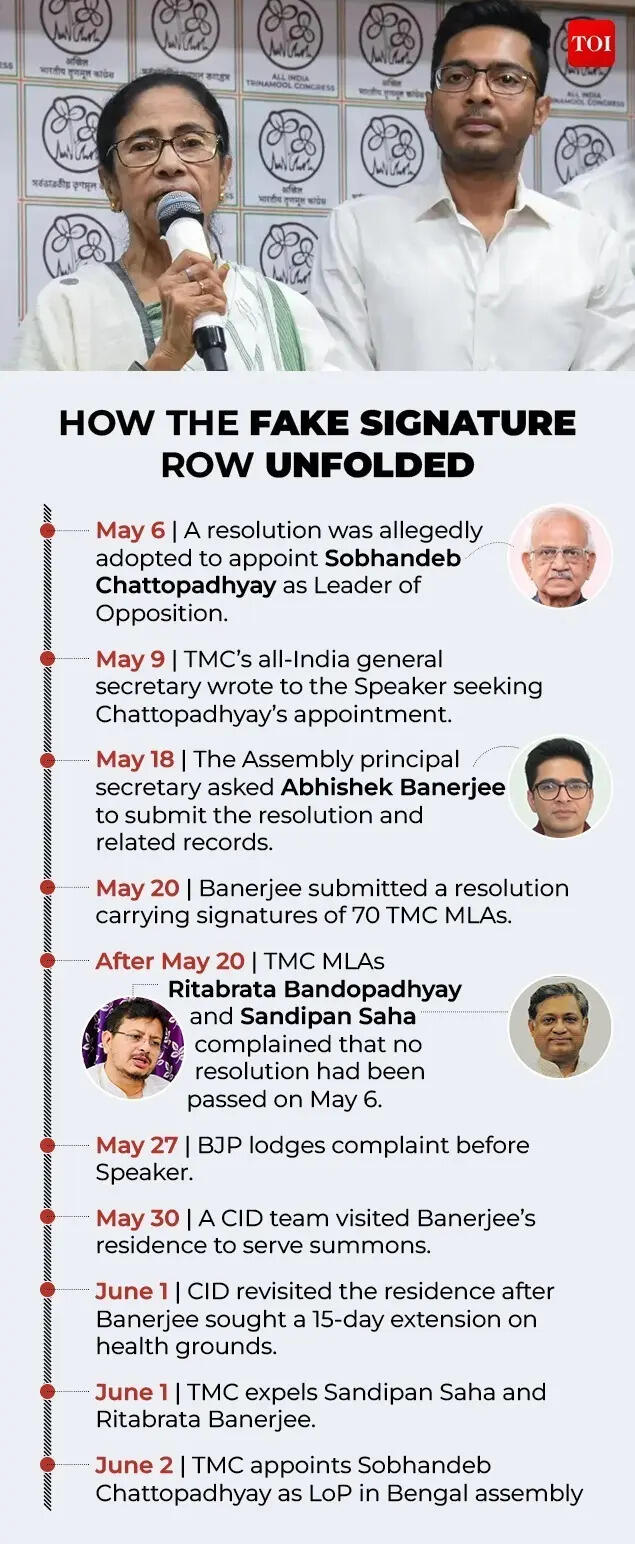
Mamata, Abhishek and 14 days of turmoil: How TMC’s internal fight came to light. india news

Mamata, Abhishek and 14 days of turmoil: How TMC's internal fight unfolded?
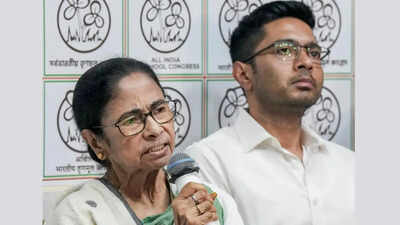
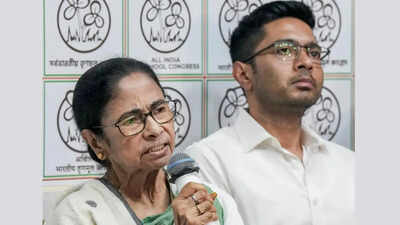
TMC chief Mamata Banerjee with nephew Abhishek Banerjee

New Delhi: What started as a routine conversation in Delhi has resulted in the most serious internal crisis in the history of the Trinamool Congress, resulting in a split that has rocked the party establishment. Mamata Banerjee Almost three decades ago.On Wednesday, a group of 58 rebel MLAs led by expelled leader Ritabrata Banerjee claimed control of the TMC legislature party after seeking recognition from Assembly Speaker Rathindra Bose. The dramatic developments marked nearly two weeks of heightened tension over allegations of forged signatures, resentment over Abhishek Banerjee’s growing influence and an increasingly visible succession battle within the party.The seeds of the crisis were sown after the party’s assembly election defeat on May 4. Dissatisfaction began to surface among a section of the newly elected MLAs, many of whom privately expressed concerns about the concentration of power around Abhishek Banerjee, the party’s national general secretary and Mamata Banerjee’s nephew.Those concerns became more evident during a meeting of MLAs on May 6 when Mamata Banerjee reportedly asked MLAs to appreciate Abhishek for his role in the election campaign. Although it was intended as a sign of appreciation, some members interpreted it as a sign of a family’s increasing prominence within the party structure.Early signs of disagreementThe first public signs of disagreement emerged on 19 May. During a meeting of MLAs, Ritabrata Banerjee and Entally MLA Sandipan Saha questioned why Falta MLA Jahangir Khan did not face disciplinary action despite publicly withdrawing from the re-poll campaign. Given Khan’s alleged closeness to Abhishek, the criticism was widely seen as a challenge to the party leadership.

WhatsApp Image 2026-06-02 at 6.44.11 pm.

line timeline

Senior TMC leader Kunal Ghosh had also raised similar concerns at the time, though he later distanced himself from the rebel camp.turning point A turning point came on May 22 when Ritabrata Banerjee went to Banga Bhawan in Delhi to complete the formalities related to the end of his Rajya Sabha tenure and unexpectedly met Chief Minister Suvendu Adhikari. After the meeting, Ritabrata publicly praised Adhikari’s decision to invite opposition MLAs and MPs to administrative review meetings, triggering intense political speculation.On May 25, the crisis deepened when allegations were made that fake signatures of several MLAs had been put on the documents submitted to the Speaker regarding the leadership of the legislative party.Two days later, Ritabrata and Sandipan lodged a formal complaint with the Speaker. The Assembly Secretariat later contacted the police, prompting a CID investigation.As the MLAs were questioned over the next few days, the controversy quickly escalated into a broader political confrontation. What started as a dispute over signatures became a rallying point for disgruntled MPs and intense lobbying began behind the scenes.brothers in mob attackTension further increased after the mob attacked Abhishek Banerjee during his visit to Sonarpur on May 30. While party leaders publicly condemned the incident, many TMC leaders privately saw the muted reaction from sections of the organization as evidence of growing rift between the leadership and some MLAs.By the next day, the extent of the challenge facing the leadership became clear. The meeting of newly elected MLAs called by Mamata Banerjee at her Kalighat residence reportedly saw lower than expected attendance, undermining efforts to display unity.The decisive crackdown came on 1 June. Soon after the official revealed that a CID probe was initiated following complaints by Ritabrata and Sandipan, the TMC expelled the two leaders.Instead of ending the crisis, the expulsion energized the dissident camp. Ritabrata and his supporters intensified their criticism of Abhishek Banerjee and accused him of centralizing power within the party. This operation became known as “Operation Crown Prince” in rebel circles.legislative revolution?The leadership’s efforts to establish control through new communications to the Speaker regarding the leadership of the legislature party continued on June 2. However, support among legislators continued to swing towards the rebels.The tension reached its peak on Wednesday when 58 MLAs submitted a letter to Ritabrata Banerjee electing him as the legislature party leader and proposing a new leadership structure. The Speaker accepted the claim and effectively recognized the rebel faction as the official legislature wing of the TMC.Soon after, many of the MLAs involved attended a government review meeting called by Adhikari in Nabanna, underscoring the scale of the political realignment.This development is the biggest break in the 28-year history of the party built around Mamata Banerjee’s leadership and political appeal.It also had an ironically personal twist. Former CPI(M) leader Ritabrata had often cited Vladimir Lenin while describing Mamata Banerjee’s ability to connect with the common people and argued that observing her political style helped him understand the Bolshevik leader’s principles of mass mobilisation.On Wednesday, he found himself leading what his supporters call a “legislative revolution” against the same leader he once compared to Lenin.TMC has been revolving around the same leader for almost three decades. The fourteen-day rebellion has now exposed the risks, tensions and unanswered questions that come with Mamata Banerjee.

Source link

England vs New Zealand 1st Test: Why are England players wearing black armbands at Lord’s? cricket news

ENG vs NZ 1st Test: Why are England players wearing black armbands at Lord's?
England players wearing black armbands (screengrab)

England players were seen wearing black armbands on the opening day of the first Test against New Zealand at Lord’s, a special tribute to former cricketers who have passed away since the team’s last home international.Before the start of the game on Thursday, a moment of silence was observed before the national anthem, with players from both sides joining in to pay their respects. The black armband was worn in memory of several former England cricketers, including Kane Shuttleworth, John Jamieson, Barry Knight, Robin Smith, Hugh Morris, Norman Gifford, Eric Russell, Tony Piggott and MJK Smith.The emotional pre-match ceremony also included a tribute to New Zealand great Martin Crowe, marking 10 years since his death. Crowe is one of the most influential figures in New Zealand Cricket History, and the Lord’s multitudes, warmly accepted his legacy. His daughter Emma Crowe rang the traditional five-minute bell before the start of the Test, to applause around the ground.Once the commemorations were over, the focus turned to cricket as New Zealand captain Tom Latham won the toss and elected to bowl in partly cloudy conditions.The visitors fielded a strong pace attack led by Matt Henry, Kyle Jamieson and Will O’Rourke. Jamieson and O’Rourke, both fast bowlers standing at least 1.97 metres, are playing together in a Test for the first time after recovering from long-term back injuries. Nathan Smith, who impressed with eight wickets against Ireland in the recent warm-up match, completed the seam-heavy attack, while Glenn Phillips was preferred over Mitchell Santner.England handed a debut to Durham opening batsman Emilio Gay, who recently represented Italy in T20 Internationals. The hosts also missed Ollie Robinson, whose last Test appearance came in 2024. Robinson joins captain Ben Stokes, Gus Atkinson and Josh Tongue in the pace department.The Lord’s Test is England’s first red-ball outing since the 4-1 Ashes defeat in Australia earlier this year, adding extra significance to the start of the series.

Source link

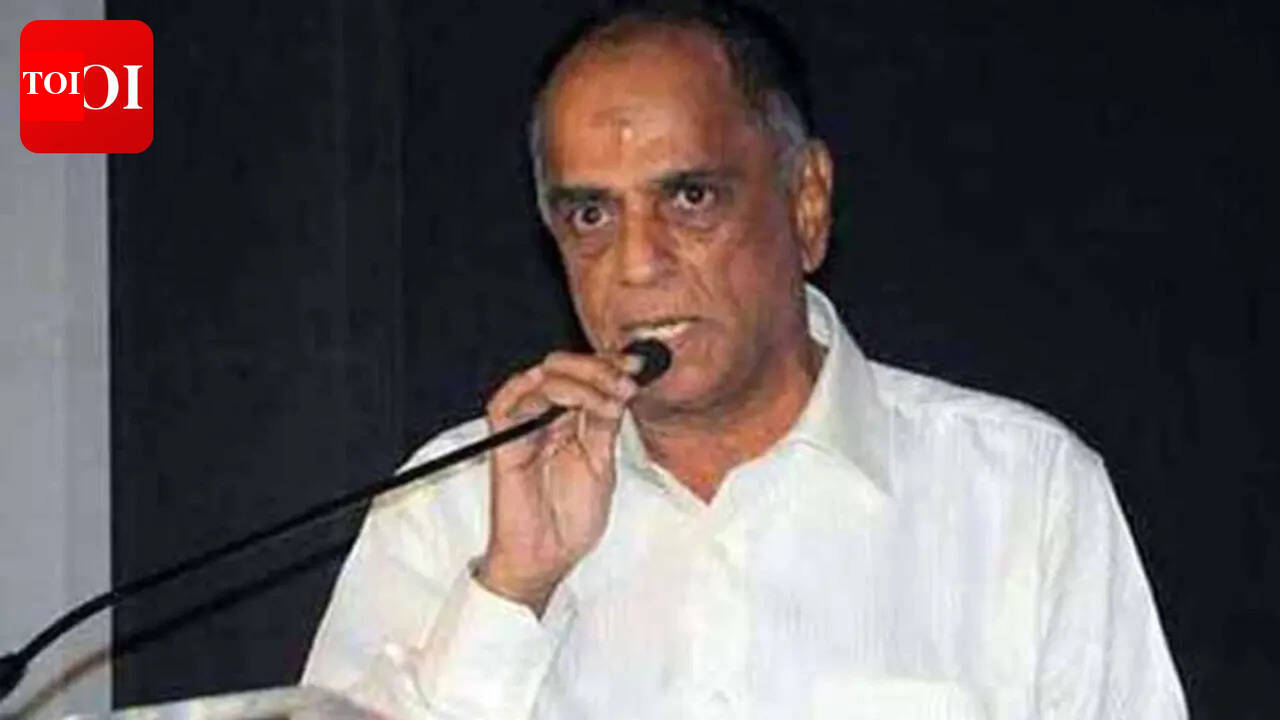
Pahlaj Nihalani: ‘Plucked out of the jaws of death’: Late Pahlaj Nihalani once revealed how one meal caused him to stay in hospital for 28 days. hindi movie news

'Plucked out of the jaws of death': Late Pahlaj Nihalani once revealed how a single meal kept him in hospital for 28 days

As the film industry mourns the demise of veteran producer and former CBFC chairman Pahlaj NihalaniSeveral old interviews of the outspoken filmmaker are resurfacing online. One of them is the shocking details of the health crisis that left him fighting for his life and lying in a hospital bed for almost a month. The producer, who is known for backing films like ‘Ilzaam’, ‘Aankhen’, ‘Shola Aur Shabnam’ and ‘Aag Hi Aag’, had once talked in detail about that horrific incident and how close he came to avoiding it.What started as a routine gathering at home soon turned into a nightmare. Nihalani had recalled that some members of the film unit he was associated with had arrived unexpectedly one evening. Since there was not enough food prepared at home, the group decided to order dinner from a restaurant.Typically someone who preferred home-cooked food, Nihalani reluctantly joined the others. “Chicken is the only non-vegetarian item I eat, so they urged me to join them. Out of politeness I agreed. As soon as I ate the chicken, I knew something was wrong. But others assured me it was fine,” he had shared with Bollywood Hungama. At that time, he put aside his doubts and continued eating.A few hours later, the experienced producer started feeling uneasy. Initially he thought it was a minor stomach problem and once he vomited, he tried to rest. However, the situation escalated dramatically at midnight. “At around 3 am, I vomited a lot of blood. That’s when I panicked and called my son. Luckily, he lives in the same building,” Nihalani recalled. His family immediately arranged for medical attention and took him to the hospital.Doctors admitted him to Nanavati Hospital in Mumbai, where he stayed for 28 days. The experience was particularly difficult because it occurred during the pandemic, when hospital visits were heavily restricted. He had shared, “I was in Nanavati hospital for the next 28 days. Due to the pandemic no one was allowed to meet me. I spoke to my wife on video call.” For someone who had rarely faced major health problems, being in the hospital for a long period of time was physically and emotionally exhausting.

Gratitude to family and doctors

Given the ordeal, Nihalani repeatedly credited her family and medical team for helping her survive. He expressed special appreciation to Dr. Jayant Barve and the doctors who treated him from the moment he reached the hospital. He had said, “Within a few hours all my tests were done. I was lucky. Anyone with a less caring family and a less attentive medical team would have died. I have been pulled out of the clutches of death.” The producer admitted that there were moments when no one knew how the situation would unfold.Since the incident occurred at a time when COVID-19 was dominating the headlines, there was speculation about the cause of his illness. Nihalani had clearly denied those rumors and revealed that he had recovered from COVID-19 months ago. “No, it was not. I contracted Covid in April 2020. I recovered at home. It was much more serious. I was hospitalized for the first time in my life. No one knew whether I would come out alive or not.” I survived because God and my family were with me,” he had said.

A lesson that Pahlaj Nihalani never forgot

The experience left a lasting impression on the producer. Believing that the crisis was caused by the food served that evening, he considered taking legal action against the establishment in question. More importantly, he used this incident as a cautionary tale for others. He warned, “This could have been the last meal of my life. Everyone who ate that night was ill. But I suffered the most. I urge everyone to eat only home-cooked food during these difficult times.”Today, as colleagues, friends and fans remember Pahlaj Nihalani’s contribution to Indian cinema, this remarkable story stands as a testament to his resilience. Long before his passing, the creator had already survived one of the toughest battles of his life, and came out of it with renewed gratitude for family, health, and other opportunities.

Source link

Missing nuclear scientist found dead a year later, skeletonized body with gunshot wounds found in New Mexico woods. world News

Missing nuclear scientist found dead a year later, skeletal body with gunshot wounds found in New Mexico forest

The disappearance of a Los Alamos National Laboratory employee that has puzzled investigators for nearly a year has taken a grim turn after his remains were found in a remote New Mexico forest. Melissa Cassius, 54, disappeared in June 2025 and was the subject of an extensive search effort. Authorities recently confirmed that human remains found in the Carson National Forest were those of Cassias. The report, citing a private investigator hired by his family, claimed that the body was found in a skeletal state with an apparent gunshot wound to the skull, raising new questions over the circumstances surrounding his death.

Remains found almost a year after disappearance

Cassias was last seen on June 26, 2025, after leaving his home in Ranchos de Taos, a community in northern New Mexico. About 11 months later, a hiker found human remains in the McGaffey Ridge area of ​​the Carson National Forest.The location where the remains were found was reportedly about six miles from where Cassias was last seen. New Mexico State Police later confirmed that the remains were those of the missing woman.This discovery ended the search but opened a new phase of investigation into what happened during his final days.According to former homicide detective Thomas McNally, who is investigating the case on behalf of Cascias’ family, the remains were found in skeletal condition.McNally told media outlets that the body appeared to have a gunshot wound to the skull and was found near an abandoned firearm. He also claimed that there were no clear signs that animals had damaged the remains despite the body being exposed in a wooded area for a long time.Authorities have confirmed that a gun was found near the remains, but have not publicly released an official cause of death or ruled on whether any foul play was involved.

Who was Melissa Cassias?

Casias worked at the Los Alamos National Laboratory, a historic New Mexico facility that was originally established during the Manhattan Project and is still involved in U.S. nuclear research and national security programs.She was a married mother of one child and had worked in a laboratory for years. Family members described her disappearance as completely out of character and said there were no clear indications that she had planned to leave voluntarily.His case attracted national attention because of its connection to one of America’s most important scientific institutions.

What happened the day she disappeared?

Investigators pieced together a timeline of Cassias’s last known activities through surveillance footage and witness statements.On the morning of her disappearance, she reportedly took her husband, Mark Cassius, to Los Alamos National Laboratory. She later returned home, where her daughter said she seemed completely normal.Before leaving, Cassias reportedly left behind her identification and mobile phone. Investigators later discovered that records had been erased from the devices.Surveillance footage captured him walking eastbound on State Road 518 near Taos around 2:20 p.m. On June 26, 2025. This was confirmed to be the last time he was seen.

Investigators believe foul play may have been involved

McNally has publicly stated that he believes Cassias’ death was not accidental and that foul play may have played a role.He has questioned aspects of the original investigation and suggested that the family could take legal action against the officials handling the case.However, law enforcement agencies have not publicly supported those findings. Investigators are continuing to examine evidence and have not announced any arrests or identified any suspects.

Part of a broader pattern?

The case has attracted additional attention because several other individuals associated with defense, aerospace, and government research programs have disappeared or died under unusual circumstances in recent years.They include former Los Alamos employee Anthony Chavez, aerospace engineer Monica Reza, government contractor Steven Garcia and retired Air Force Maj. Gen. William Neal McCasland.While the cases have fueled speculation online, authorities have not publicly established any connection between them.

investigation is ongoing

Although the discovery of Cassias’ remains has answered one of the biggest questions of the case, many others remain unresolved.Investigators are awaiting further forensic analysis to determine the exact cause and manner of death. Until those findings are released, the circumstances surrounding the Los Alamos employee’s death remain a mystery.

Source link

BJP hits back at Rahul Gandhi’s ‘economic tsunami’ warning amid Iran war: ‘Stop selling panic’ india news

BJP hits back at Rahul Gandhi's warning of 'economic tsunami' amid Iran war: 'Stop selling panic'

New Delhi: The Bharatiya Janata Party (BJP) on Thursday hit back strongly against Rahul Gandhi’s warning of an “economic tsunami” for India, dismissing it as “classic fear mongering”.The leader of the opposition in the Lok Sabha had expressed concern over the escalating situation in the Middle East and its possible impact on India.Responding sharply, BJP IT cell chief Amit Malviya rejected Rahul’s claims and argued that India is well placed to withstand any economic fallout from the Iran war. Citing several economic and strategic indicators, Malviya stressed that “India is not defenceless” amid the ongoing crisis in the Middle East.In a post on Twitter, Malviya cited a range of economic indicators to refute Rahul’s claims. He said e-way bill generation grew by 12.9% in May 2026, while manufacturing and services activity remained strong with PMI readings of 56.6 and 58.9, respectively. Retail inflation in April stood at 3.48%, below the Reserve Bank of India’s target, while gross foreign direct investment (FDI) inflows reached a record $94.5 billion in FY26.Pointing to the strength of India’s external sector, Malviya said comfortable foreign exchange reserves and strong services exports have been providing stability amid global volatility.“These are not signs of an economy without shock absorbers. These are signs of resilience. The government has also taken direct measures to protect citizens, businesses and jobs,” Malviya said.The BJP leader also highlighted the steps taken by the Center to protect consumers and businesses from global economic shocks.“When global crude oil prices rose, cuts in excise duty on petrol and diesel provided relief to consumers. Supply side interventions and export restrictions were used when necessary to protect domestic availability and control inflation. Through ECLGS 5.0, MSMEs receive 100% guarantee coverage, while non-MSMEs and airlines receive 90% coverage. Additional credit support up to 20% of maximum working capital, Limited to Rs 100 crore, available to eligible borrowers,” he said.“Airlines facing fuel price volatility may get assistance up to Rs 1,500 crore per borrower. The objective is clear: to protect jobs, maintain supply chains and ensure uninterrupted production,” he said.Malviya further said that the Union Cabinet has approved Rs 37,500 crore for surface coal and lignite gasification projects, with an aim to create 75 million tonnes of gasification capacity and attract investments of Rs 2.5-3 lakh crore.“These are not actions of the government eliminating shock absorbers. These are actions of the government actively strengthening them,” he said.Launching his attack on the previous UPA government, Malviya cited economic indicators from 2009 to 2014. He claimed that the rupee depreciated by 36% during this period, while foreign exchange reserves declined from about $294 billion in July 2011 to about $256 billion in August 2013.“Foreign exchange reserves declined from about $294 billion in July 2011 to about $256 billion in August 2013. Import cover declined by more than six months by September 2013, down significantly from 17 months in March 2004,” he said.“The foreign exchange reserves-to-external debt ratio declined from 95.8% in FY2011 to 68.8% in FY2014. The RBI was forced to open the FCNR (B) window and offer attractive incentives to attract dollar deposits. India ultimately raised $26.6 billion through the scheme, almost twelve times the size of the 1991 IMF bailout.”Malviya urged Rahul to “stop spreading terror”, claiming that India’s economic security had weakened during the UPA era, long before any external shocks emerged.His comments came in response to Rahul’s warning that India was heading towards an “economic tsunami” due to the BJP government allegedly dismantling the country’s economic “shock absorbers” amid ongoing tensions in the Middle East.Rahul had said, “An economic tsunami is coming. The reason for this is that the BJP government has removed India’s safety net, which was the shock absorber from the international economy. A dangerous economic tsunami is coming, prices are rising and this is just the beginning.”

Source link

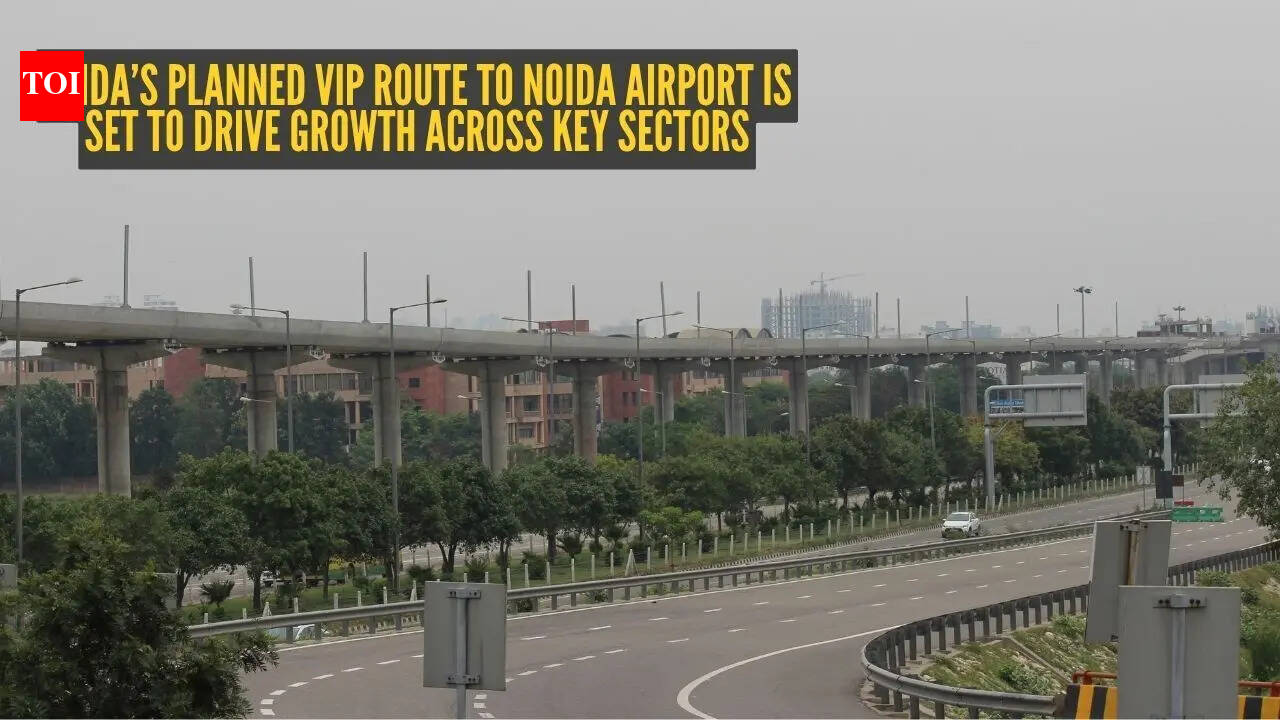
Yamuna Expressway Industrial Development Authority’s planned VIP route to Noida Airport is set to boost development in key areas

Yamuna Expressway Industrial Development Authority's planned VIP route to Noida Airport is set to boost development in key areas

The Noida International Airport in Jewar is already reshaping the real estate landscape along the Yamuna Expressway. Now, the 120-metre-wide VIP route proposed by the Yamuna Expressway Industrial Development Authority (YEIDA) is expected to further strengthen the investment appeal of the region by improving connectivity to the airport and surrounding economic hubs. Planned as part of YEIDA’s Master Plan 2041, the approximately 15 kilometer corridor will provide a direct access route to the airport while connecting to major road networks including the Delhi-Mumbai Link Expressway. As the infrastructure around the airport continues to take shape; The new road is expected to become a major driver of property demand in many residential, commercial and industrial areas.

Better connectivity is likely to increase demand for property

Connectivity remains one of the strongest factors influencing real estate development and the proposed VIP route is expected to significantly increase accessibility in the YEIDA area. Faster travel to the airport can increase the attractiveness of areas around Noida for home buyers, investors and businesses. Sectors 22A to 22F, which are witnessing residential and institutional development, may benefit from increased interest among buyers looking for well-connected locations near a major international airport. Better infrastructure often translates into better livability, making these areas increasingly attractive to both end users and long-term investors.Also, increased connectivity can encourage the development of supporting infrastructure such as retail centres, educational institutions, health care facilities and hospitality projects, thereby creating a more self-sustaining urban ecosystem. This will help in the overall development of the surrounding areas.

Noida

Image Credit: Canva

Industrial and commercial sectors will benefit

The impact of the new route is not limited to residential development. Industrial areas like 24 and 24A are expected to benefit from easier movement of goods and better access to regional transport corridors. Improved logistics infrastructure could attract additional industrial investment; Strengthening the region’s role as a manufacturing and trade destination.Commercial areas including 23A to 23E are also expected to see increased activity as businesses seek locations closer to the airport. Better road connectivity often encourages corporate offices, warehouses, retail developments and service-oriented enterprises to establish presence in emerging growth corridors.The combination of airport-led development and upgraded road infrastructure could create new opportunities for commercial real estate developers and investors looking to meet future demand.

A long-term catalyst for real estate appreciation

Historically major infrastructure projects have played a significant role in increasing land values ​​and property prices. With connectivity projects to Noida Airport moving forward simultaneously, the Yamuna Expressway area is steadily emerging as one of the most promising real estate destinations in the National Capital Region (NCR).The proposed VIP route is expected to directly benefit more than 13 areas in the Yamuna Expressway region. These include Sectors 24, 24A, 25, 22A-22F and 23A-23E, which include residential, institutional and mixed-use industrial developments. Better connectivity is likely to increase accessibility in these emerging growth areas.This VIP route is expected to improve accessibility, reduce travel bottlenecks and aid future urban expansion. This will help in real estate development as well as daily commuters in Delhi NCR. As a result, areas located along and around the corridor may experience increased buyer interest and strong long-term appreciation potential.For investors, developers and home buyers; The project represents another step in the transformation of the Yamuna Expressway belt from a developing corridor into a major residential, commercial and industrial hub supported by world-class infrastructure.(Source: Information compiled from recent Magicbricks report.)

Source link

Bees helped scientists create tiny drones that navigate without GPS and find their way home

Bees helped scientists create tiny drones that navigate without GPS and find their way home

Most drones rely on GPS and powerful computers to find their way. This makes them heavy, expensive, and power hungry, which is basically not practical for anything small. But bees? They navigate perfectly with brains smaller than a grain of rice. Now, scientists at Delft University of Technology have discovered their secret and have created drones that do the same thing. The system, called B-Nav, allows small drones to fly hundreds of meters away and still find their way home without using almost any computing power. It all started with a simple question: If bees can do it with almost nothing, why can’t our robots? The answer always turned out to be hidden in nature, just waiting for someone to look closely enough.

How bumblebees find their way home: the inspiration behind B-Nav

Here’s what happens when a bee leaves its hive for the first time. It doesn’t fly and fly away just to find flowers. Instead, it takes a short learning flight right near home, memorizing the landmarks and the layout of its neighborhood. After those initial scout flights, the bee can fly far along winding, winding paths and still return almost straight home. It’s like stepping out of your house for the first time, walking down some streets, remembering what they look like, and then being able to walk back out of nowhere in the city.Scientists have understood its basics for years. Bees use something called odometry; They keep track of how far they have gone and in what direction, such as counting steps while walking. But odometry gets messed up over time. Small measurement errors add up. So bees also remember what their environment looks like in important places, especially around the house. They combine these two methods: approximate distance and direction estimation and visual memory. And it works brilliantly.The challenge was to discover what and how bees learn visually. That was the gap that needed to be filled. Researchers led by Guido De Kroon at Delft University wanted to know whether imperfect distance and direction estimation could still be enough for a machine to learn to come home. Could a small neural network store only visual memories without the need for detailed maps? This became the basic idea behind the B-Nav.

Building drones that think like bees: the Bee-Nav system explained

The research team included roboticists from Delft University and biologists from Wageningen University in Germany and Carl von Ossietzky University of Oldenburg. Together, they created something that mimics the actions of bees, in the same order that bees do it.First, the drone makes a short learning flight near its starting point. When it flies, it uses a tiny omnidirectional camera to capture 360-degree images of everything around it. These images are not stored in much detail. They’re processed by a compact neural network, basically a stripped-down AI brain that learns how the house looks from different angles and distances.Once the drone has completed its learning flight and collected its visual memories, it is ready to explore. The drone flies away from home on whatever path is available, using odometry to track its speed. But like the bee, the drone doesn’t rely solely on odometry. As it approaches a familiar area, it begins to use its learned visual memories to correct errors it made during its journey. The visual network says “Hey, I recognize this place” and guides the drone back home.according to Nature paper published in May 2026The system works remarkably well. The drone returned within 0.5 meters of home in 100 percent of flights between 30 and 110 meters. Even on long flights between 200 and 600 meters it was successful in 70 percent of the cases. These are solid numbers for something so light and simple.

The memory trick that makes everything work: why 42 kilobytes is enough

Here’s the part that blows people’s minds: The entire neural memory required for this system is only 42 kilobytes. This is not a typing error. It’s about the size of a small email attachment from the 1990s. For short flights in controlled environments, the memory requirement drops to only 3 kilobytes.Most autonomous drone systems use large-scale computers and continuous mapping systems. They require powerful processors, huge memory storage and lots of power. Bee-Nav does the same thing with a smaller fraction of the same. The philosophy is simple: don’t store what you don’t need. Store only what is important for navigation.This difference means everything when you’re trying to build a really small, lightweight drone. The whole approach assumes you can solve navigation with less hardware and better thinking. This is the kind of insight that only comes from carefully studying biology. Bees did not evolve brains specifically to navigate; They developed brains for many tasks. But somehow they are incredibly skilled at this particular task.

Real-world uses: Where these drones actually work

The most obvious application is greenhouse and agricultural monitoring. Lightweight drones can inspect tomato crops, detect diseases or pests early and help farmers increase yields while reducing wastage. These drones should be safe for people working nearby. You can’t move heavy machines around workers. Bee-Nav makes this possible.Disaster areas are another area where GPS fails. Search and rescue teams working after earthquakes or floods can use these drones to explore areas before sending people. Warehouse inspections, building surveys and even exploring caves where GPS signals don’t reach are all made practical with truly autonomous, lightweight drones.Scalability is also interesting. Researchers say that today you can easily install B-Nav on a drone weighing 30 to 50 grams. Ultimately, they want to reach true bee-sized drones, although this will require solving other problems such as small batteries. But the intelligence part? He is ready to go.

Why this matters for the future of robotics and autonomous systems

This research proves something important: You don’t need massive computational power and detailed maps to achieve autonomous navigation. You need clever algorithms and inspiration from nature. It’s a lesson the robotics field is learning again and again: The best solutions sometimes come from looking at what nature has already figured out.For a world that wants smaller, cheaper, safer autonomous robots, Bee-Nav is a step forward. This shows that small drones can be really smart without being expensive or dangerous. They can explore, learn and return home. It’s the foundation of everything engineers want to build on top. It turns out that bees were doing advanced robotics millions of years before humans invented computers.

Source link

Kerala welcomes monsoon: Rainy season begins amid concerns of El Nino. india news

Monsoon arrives in Kerala, signals beginning of rainy season in India

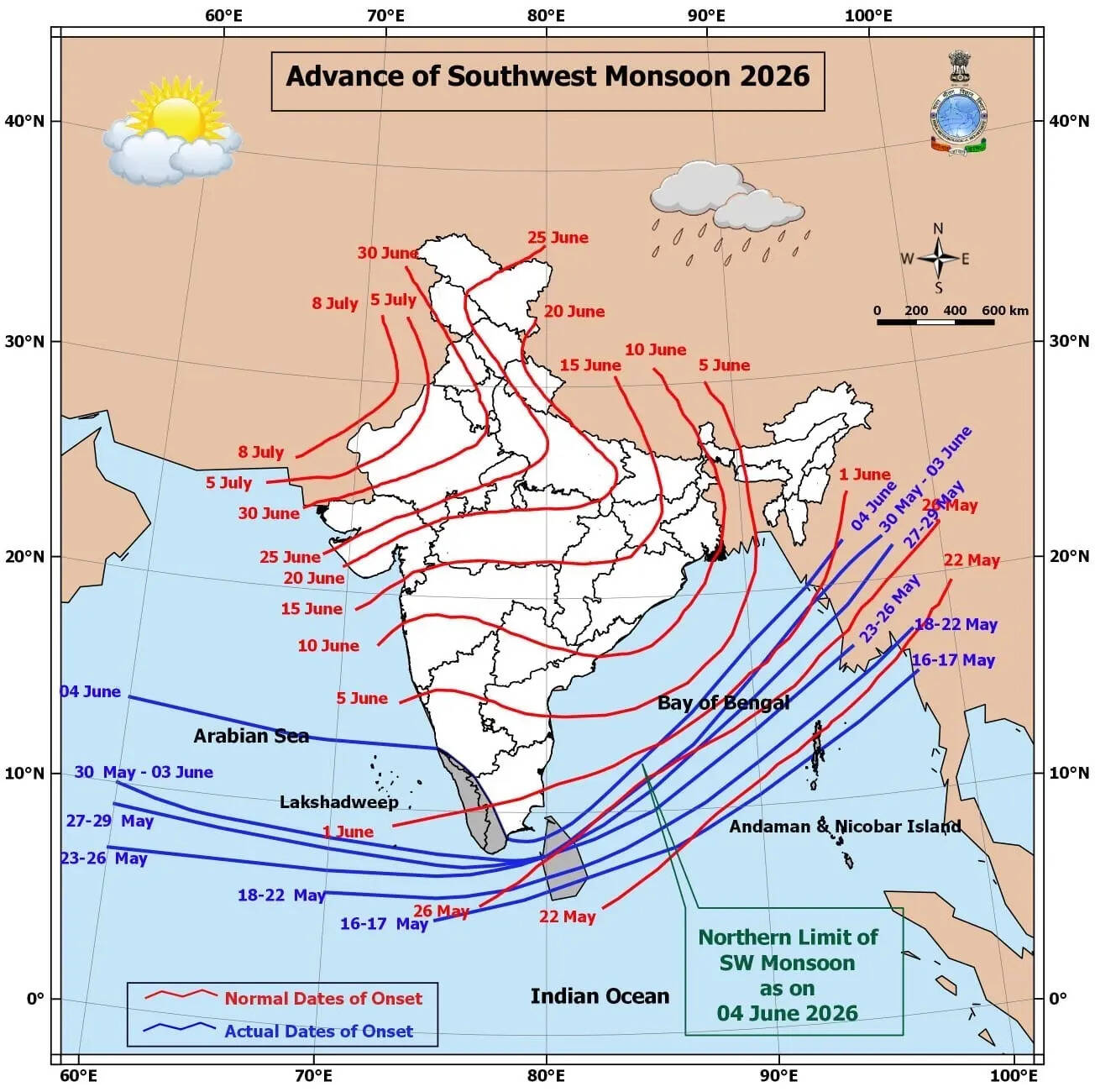
New Delhi: The IMD said the south-west (summer) monsoon reached Kerala on Thursday, three days later than its normal date. Monsoon generally enters Kerala on June 1, marking the beginning of the rainy season in India as well as sowing operations.Last year, the monsoon reached Kerala eight days earlier, on May 24. However, the early or late arrival of the monsoon has nothing to do with the overall quantitative or spatial rainfall during the four-month rainy season. The overall position of the monsoon and its progress depends on many climatic factors.Amid the growing threat of El Nino, the IMD has already predicted that monsoon rainfall this year will be ‘below normal’ with a 60% chance of it being ‘deficient’, raising fears of drought.

.

Announcing the onset of monsoon over mainland India, the IMD said, “Southwest Monsoon will advance over remaining parts of southwest and southeast Arabian Sea, parts of west-central and east-central Arabian Sea, entire Lakshadweep Islands, Kerala and Mahe, parts of Karnataka and Tamil Nadu, remaining parts of Comorin area, southeast Bay of Bengal and some more parts of southwest, west-central, east-central and northeast Bay of Bengal on June 4.” Has increased.”“Conditions are favorable for further advance of Southwest Monsoon into some more parts of central Arabian Sea, entire Goa, parts of Maharashtra and Andhra Pradesh, some more parts of Karnataka, remaining parts of Tamil Nadu, southwest Bay of Bengal, some more parts of west central, east central and northeast Bay of Bengal, some parts of northeast states during next 2-3 days,” it said.The IMD had earlier predicted the arrival date of monsoon in Kerala as May 26 (+/- with a model error of 4 days). However, the forecast made on 15 May did not prove correct.The Meteorological Department has been issuing operational forecasts for the onset date of monsoon in Kerala since 2005. An indigenously developed state-of-the-art statistical model with a model error of ± 4 days is used for this purpose.

Source link