‘Part of the process’: RSS downplays cockroach Janata Party talk, says Gen Z has tremendous faith in India india news

'Part of the process': RSS downplays cockroach Janata Party talk, says Gen Z has tremendous faith in India

RSS publicity chief Sunil Ambekar has dismissed concerns over the “cockroach Janata Party” (CJP), saying open debate and differing views are normal in a democratic society.Speaking to reporters, Ambekar said India is a conscious society that functions through democratic processes with transparent elections, free media and active public debate. He said that there is open discussion every day and different views should be seen as a natural feature of a democratic system.“We are a conscious society and we follow the democratic process. Within that democratic process, we have transparent elections, an open media and now social media too. Open houses happen every day. Therefore I believe that in a democracy any kind of discussion and expression of different opinions by people should not be taken as a shock. “They should be considered part of the normal process,” Ambekar said on Friday.Asked whether the RSS should react to such discussions, Ambekar said the country’s institutions, media and political parties are capable of handling such issues on their own.“These are all negotiations, and the people involved will deal with those issues themselves. I believe the media is independent enough to handle these. Political parties are capable, and none of our institutions are weak. They are capable of handling matters, and our system is also capable. So, I don’t think the organization (RSS) needs to rush into matters immediately,” he said.Ambekar also praised the youth of the country and said that they are optimistic about the future of India and are contributing to the country’s progress through constitutional means.He said, “Our young generation, sometimes called Gen Z, is very optimistic. They have tremendous faith in India. Whatever they do is under the constitutional process. Their contribution is to take India forward. The youth of our country have put all their energy into it and that is why the country is progressing in every field.”Cockroach Janata Party (CJP), a satirical online movement that has gained popularity among young users since its launch this month, has sparked widespread discussion.

Source link

‘If street namaz is wrong, then ban all festival celebrations’: Owaisi points out ‘double standards’ india news

'If street namaz is wrong, then ban all festival celebrations': Owaisi points out 'double standards'
AIMIM chief Asaduddin Owaisi

New Delhi: AIMIM chairman Asaduddin Owaisi Friday said if praying on the streets is considered wrong, the ban should apply equally to religious activities of all religions, citing Article 25 of the Constitution, which guarantees freedom of religion and the right to freely practice and profess one’s faith.Addressing the Eid Milap event, Owaisi argued that the public’s objection to namaz amounted to double standards and questioned why similar concerns were not raised over religious processions and celebrations organized by other communities.“Remember Article 25. If it is wrong to offer Namaz on the road, then it is wrong to come on the road during the festival of every religion. If you say that meat shops should be closed during someone’s festival, then close liquor shops for 30 days of Ramzan.” Close liquor shops for 30 days,’ Owaisi said.Alleging double standards, Owaisi said that people have no objection to Prime Minister Narendra Modi’s speeches, but have objection to Azaan and Namaz. He also questioned the restrictions imposed on the sale of eggs, meat and chicken during Hindu festivals and asked, ‘What kind of law is this?’He said, “Your hatred is purely for Muslims. And your hatred clearly shows that you want to suppress the followers of this religion and marginalize them. You want to make them second class citizens.”The AIMIM president alleged that whenever major Muslim festivals like Ramzan or Bakrid come, issues related to azaan and namaz are deliberately raised.“Problem with Azaan, problem with Namaz. What has happened to you guys?” he asked.The comments come amid the ongoing political debate over prayers in public places and recent directions from authorities in several states aimed at ensuring that religious gatherings do not disrupt traffic or public movement.Recently, Uttar Pradesh Chief Minister Yogi Adityanath said that namaz should be performed in a regulated manner and, if necessary, can be organized in multiple shifts to avoid inconvenience to the public. He said officials will seek compliance through persuasion before taking further steps to enforce public order norms.The Suvendu Adhikari-led West Bengal government decided not to allow the traditional Eid congregation on Kolkata’s Red Road and shifted the gathering to the Brigade Parade Ground to prevent spillover of prayers onto public roads.Continuing his criticism, Owaisi compared it with religious processions and processions, saying that during such events the streets are often occupied and similar objections are not raised.On prayers being offered on the streets, he said that this happens only for Friday or Eid prayers and not every day. He said, “In India, festivals of every religion happen on the street, right? You don’t see them; you become blind to them.”(With inputs from ANI)

Source link

AI giants create India’s aggressive pitches. india news

AI giants make India's aggressive pitches

Mumbai: India heads AI world’s arch rival Anthropic and OpenAI Here they took the stage at the annual Tech Week and presented their line of products to a room full of developers and founders.“What makes India really important in OpenAI’s journey is the opportunity focused on access, adoption and agency,” said Pragya Mishra, head of strategy and global affairs for OpenAI in India. He said the company will build out its capabilities here while reducing the cost of use to boost adoption.Anthropic, after recently raising $65 billion in funding, overtook OpenAI to become the most valuable AI startup. “We are making things from India, for India…reaching the last mile and creating a test case for the rest of the world,” said India MD Irina Ghosh.

Source link

There has been a decline in early marriages and cases of violence between husband and wife have also reduced. india news

There has been a decline in early marriage, as well as cases of marital violence.

New Delhi: Even though it may have indicated a decline in early marriage, data released as part of the National Family Health Survey-6 (2023-24) showed that 20.1% of women in the 20-24 age group surveyed were married before the age of 18, which is the legal age of marriage for women. This marks a decline of more than three percentage points compared to NFHS-5 (2019-21), when it was 23.3%.For men – aged 25–29 – 15.9% had married before the legal age of marriage was 21.This represents a decline of 17.7% from the 2019-21 survey.On gender-based violence, the report said the percentage of married women aged 18-49 who experienced marital violence declined from 29.2% in 2019-21 to 22.3% in 2023-24. However, a much higher percentage of rural women (24.4%) experienced spousal violence compared to 17.5% urban women. In 2019-21, this figure was 24.2% for urban and 31.6% for rural.Meanwhile, the prevalence of early marriage, now at 20%, has seen a decline over the NFHS round – it was 26.8% in 2015-16 (NFHS-4) and 47.4% in 2005-06 (NFHS-3).The 2023-2024 survey showed a wide gap in terms of percentage of early marriage between women in rural and urban India – 23.3% for rural and 11.4% for urban. In the 2019-21 survey, it was 27% for rural India and 14.7% for urban India. The difference – rural and urban – was also apparent for men.While 19% of men in rural India were married before the age of 21, the figure was 9.7% in urban India.In 2019-21, it was 11.3% for men in urban areas and 21.1% in rural areas.The report also focused on the percentage of women aged 15–19 who were already mothers or pregnant at the time of the survey. This was about the same as the previous survey’s 6.7%. In terms of gender-based sexual violence, the data showed that women aged 19-29 who had experienced such violence by the age of 18 were 0.7% of those surveyed, and this was down from 1.2% in 2019-21.

Source link

SC denies fresh investigation in Vantara cattle transfer case. india news

Supreme Court refuses fresh investigation in Vantara cattle transfer case

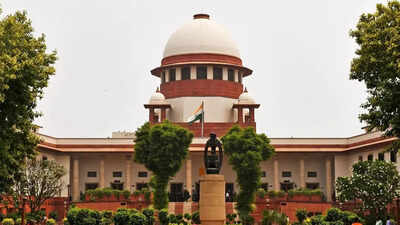
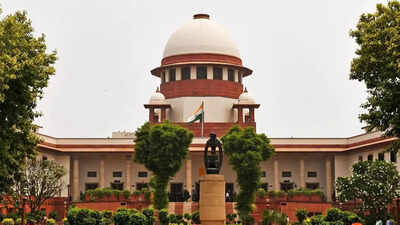
New Delhi: The Supreme Court has rejected a plea seeking a fresh probe into the international acquisition and transfer of animals at Vantara (Greens Zoological Rescue and Rehabilitation Centre) in Gujarat’s Jamnagar, saying the apex court-appointed SIT headed by retired SC judge J Chelameswar has already given a clean chit and found no violation of law.A bench of Justices PK Mishra and NV Anjaria said the terms of reference of the SIT were of wide dimension, covering every aspect of Vantara’s cases right from the beginning and nothing wrong was found.Dismissing the petition, the bench said, “On consideration, we are of the clear opinion that none of the directions prayed for can be granted.”The Court found no substance in allegations that inquiries, investigations or prosecutions in Brazil, the United Arab Emirates, Uganda, Peru, Malaysia and Venezuela had uncovered material that could have a bearing on the international acquisition and transfer of animals. The Supreme Court said that now all the issues raised have already been addressed by the SIT and there is no need for a fresh investigation.“The process adopted by the SIT was thorough. It held several meetings, conducted site inspections, gave opportunity to all concerned to submit information and documents, examined foreign donor zoos and institutions,” the court said.The Supreme Court said the SIT “inter alia called for and considered the responses of the CITES management authorities of UAE, Venezuela, Democratic Republic of Congo etc. and obtained information from all concerned, namely, CBI, ED, DRI, Customs Commissioner at Jamnagar, WCCB and the District Police.” “Notices were issued to the complainants, journalists and environmentalists who had published or made allegations, including those on whose reports the applicant/petitioner now relies and each person who appeared before the SIT was heard,” it said.In view of the SIT report, accepted by this Court by an order dated 15th September, 2025 and confirmed by an order dated 9th March, 2026, the respondent “cannot be investigated, interrogated, much less prosecuted in respect of the transfers investigated therein, no direction can be issued to any domestic authority in respect of the samples so transferred, and the matter cannot be referred to any body, global or otherwise.” But cannot be reopened,” it said.

Source link

66% of births in 2024 were preterm; Birth gap for majority now 36 months india news

66% of births in 2024 were preterm; Birth gap for majority now 36 months

New Delhi: Nearly two-thirds of all live births in India – 66.4% – were first-borns, while births to the fourth child and beyond remained at barely 3.5%, the 2024 Sample Registration System statistical report showed. On birth spacing, which is an important factor for maternal health and child development, the data shows that 53.5% of second or subsequent births occurred 36 months or later after the previous birth.According to 2024 data, about 23% of births were second-order births, a term used to refer to a second child, and 7.3% were third-order births.In terms of urban and rural trends, the data shows that 65.4% of live births were first-order births in rural India and the percentage was 69% for urban areas. Among larger states and union territories, Telangana has the highest percentage of first-order births at 82.7%, while Kerala has the lowest at 47.9%. Interestingly, Kerala had the highest percentage of second order and third order births at 34.9% and 13.3%.While Kerala had the highest percentage of second-order and third-order births, Telangana had the lowest at 13.4% and 2.9% respectively, the 2024 Sample Registration System statistical report showed.Madhya Pradesh has the highest percentage of fourth or higher order births at 6.5%, while Andhra Pradesh ranks lowest at 0.5%.Data on birth order and the interval between consecutive live births have been collected under the Sample Registration System (SRS) since 1990.Birth order – the chronological order of child births within a family – and birth intervals are key indicators of spacing between children and fertility levels.

Kerala is at second place in child birth rate, Tagana is at the bottom.

The trend in terms of birth order in 2024 is in line with previous years.In 2023, first-order births were 66%, and fourth or higher order births were 3.6%.In 2022, 64% of live births were first-order births and fourth or higher-order births were 4.7%.As far as spacing of births is concerned, 53.5% of second and higher order births occurred 36 months or more after the previous live birth and only 1.4% of live births occurred within 10–12 months of the previous live birth. According to the data, 19.3% of births occurred within 12–24 months and 25.8% occurred within 24–36 months of the previous live births. The percentage distribution varies considerably across states and union territories. For example, the percentage of second and higher order live births occurring 36 months or more after the last live birth ranged from 32.8% in Andhra Pradesh to 79% in Assam.Previous research drawn from government data such as the National Family Health Survey has repeatedly underlined the urgent need for better birth spacing methods in family planning. He highlighted that pregnancies less than a year apart increase the risk of diarrhoea, respiratory infections and stunting among children under five in India.The report also points to a strong relationship between women’s education and fertility rates. While India’s total fertility rate is 1.9, which remains below the replacement level of 2.1 in 2024, illiterate women recorded a much higher fertility rate of 3.2 compared to 1.8 among literate women.

Source link

High courts will have to pronounce verdict within 3 months of reserving verdict: Supreme Court. india news

High courts will have to pronounce verdict within 3 months of reserving the verdict: Supreme Court

New Delhi: To curb the habit of “hesitate and forget” among some high court judges, Supreme Court On Friday, it set a deadline of three months for the high courts to pronounce their decisions, and also said that orders in bail cases should be passed immediately.As a series of appeals against convictions in criminal cases are pending indefinitely, a bench of Chief Justice Surya Kant and Justice Joymalya Bagchi said the high courts should show extra diligence in deciding cases related to personal liberty, regular and anticipatory bail.CJI Kant said, “Bail petitions should be heard and the order should preferably be pronounced and uploaded on the same day. If it is reserved, it should be narrated the next day and uploaded on the website.”Mere prompt announcement of the order of grant of bail will no longer suffice as the Supreme Court has ordered that the jail authorities should also be informed with equal promptness so as to ensure that the undertrial prisoner/convict is released from custody immediately, preferably on the same day or certainly by the next day, unless there is a need to keep him behind bars in other cases or there is failure to furnish the bail bond.The Supreme Court asked the trial courts concerned to report compliance with the bail order to their high courts.However, the SC gave some leeway to the HC and said that if a bench is of the opinion that giving a reasoned judgment will take time in cases where the order is urgently required, then it can pronounce the operative part immediately and follow it in the next 15 days. However, it added that high courts must upload all judgments within 24 hours of the judgment being delivered.CJI Kant and Justice Bagchi said the HC registry will have to give a monthly report on the number of reserved judgments to the Chief Justice, who can confidentially inform the judges concerned about cases in which judgments were reserved for two months.If the judge or bench concerned fails to deliver the judgment in three months, the HC CJ shall request them to do so in the next two weeks, otherwise the matter may be assigned to another judge/bench for fresh hearing and speedy decision, the SC said while accepting or modifying several suggestions made by amicus curiae Fauzia Shakeel.Apart from the steps to be taken by the CJ, the Supreme Court gave freedom to the parties in such situations to file applications for transfer of their cases to some other bench. It says that every judgment should mention the date on which the judgment was reserved.

Source link

60% chance of weak monsoon, IMD reduces rain forecast. india news

60% chance of weak monsoon, IMD reduces rain forecast

New Delhi: Even though India is facing energy disruptions due to the West Asia crisis, there could be more troubles for the economy. The IMD on Friday confirmed its forecast of ‘below normal’ monsoon rainfall this year, while further lowering the rainfall threshold during the June-September season, which has a high probability of ‘deficit’ rainfall, also known as a dry year.According to the IMD, rainfall during the season is likely to be 90% of the long period average (LPA) – revised down from 92% estimated in April – with a 60% chance of ‘deficient’ rainfall (less than 90% of the LPA), a situation that could not only impact the agriculture sector but also negatively impact water reservoirs, groundwater recharge and hydropower potential, leading to a crisis at multiple levels.

60% chance of weak monsoon, IMD reduces rain forecast

The IMD attributed the monsoon decline to the possible development of strong El Nino conditions – a climate phenomenon characterized by warming of ocean waters in the central and eastern equatorial Pacific – which is often associated with harsh summers and weak monsoons over India.Accordingly, the IMD has also indicated a hot June in the country, and has predicted ‘above normal’ heatwave days in June over many parts of UP, Haryana, Punjab, Bihar, Odisha, Chhattisgarh, Gujarat and Andhra Pradesh and parts of Maharashtra, Telangana, Himachal Pradesh and Tamil Nadu. However, Rajasthan and Jharkhand may experience ‘below normal’ heat wave days during the month.The latest climate model forecasts indicate that El Nino conditions are likely to develop during the southwest monsoon season,” IMD chief Mrityunjay Mohapatra said, noting that it is expected to move from weak in June to moderate in July-August and strong in September, impacting the entire rainy season.In such a scenario, there is a possibility of a slight delay in the onset of monsoon over Kerala compared to the normal date of June 1 and its subsequent progress over the rest of the country, as well as a delay in commencement of sowing operations, as more than half of India’s cultivated area remains rain-fed.Although the IMD had a few days ago predicted the onset date of monsoon over Kerala as May 26 (+/- with a model error of four days), it now expects it to be any day within the next seven days. Since the ‘monsoon core zone’ – an area encompassing most of central and western India, which largely depends on rain for farming operations – is also predicted to receive ‘below normal’ rainfall, its impact will be felt on the total area of ​​kharif crops and their final production.The risks to the country’s agriculture sector may further increase due to the crisis in West Asia, which has already put pressure on the availability of inputs (diesel and fertilizers) and their costs, thereby impacting the rural economy and ultimately India’s economy in the current financial year.

Image (10)

However, Union Agriculture Minister Shivraj Singh Chouhan said the country is fully prepared to deal with any situation and is prepared with contingency measures in terms of other interventions such as selecting drought-tolerant and climate-resilient crop options (such as low-water-intensive varieties of millet and paddy, other crops) in vulnerable districts and providing adequate inputs (seeds and fertilizers) to farmers.Contingency measures include promotion of drought-tolerant crop varieties on a large scale, weather-based agro-advisory services, efficient water management and location-specific adaptation strategies to reduce agricultural losses and protect farmers’ livelihoods.Chouhan asked state governments to be prepared for challenging weather conditions in view of the threat of El Nino and assured them of all possible help from the Central government, adding that there is adequate availability of seeds and fertilizers to meet the demand during the upcoming sowing season.The minister also asked states to prepare their agricultural roadmap based on agro-climatic conditions, available resources and local capacity during the concluding day of a national conference on Kharif preparedness on Friday amid increasing risks to agricultural operations due to El Nino.

Source link

Arms, IED smuggling network under investigation, NIA conducts raids in four states. india news

Arms, IED smuggling network under scanner after NIA raids in four states

New Delhi: The National Investigation Agency (NIA) on Friday conducted searches at a dozen locations in four states in connection with the alleged smuggling of arms, ammunition and IEDs into the country from across the India-Pakistan border as part of a conspiracy to carry out terrorist attacks in Punjab, Delhi and other parts of India. The searches included four places in UP, two each in Rajasthan and Bihar and three in Maharashtra. An NIA spokesperson said that during the coordinated operation by the NIA teams, several digital devices were seized which will be forensically analyzed to unravel the entire terror conspiracy in the case. A case was registered by the Special Operations Cell of Punjab Police in Amritsar in February this year after the arrest of a man after he was found with IEDs packed in a metal box along with a remote control set, a mobile handset, a foreign-made .30 bore pistol with magazine and 20 live cartridges. Various sections of the Indian Justice Code (BNS), Unlawful Activities (Prevention) Act, Arms Act, Explosive Substances Act and NDPS Act were invoked in the FIR. After taking over the investigation, NIA found that the purpose of cross-border smuggling was to carry out IED blasts at various places in Punjab, Delhi and other parts of India to cause widespread damage to life and property and disrupt the peace and stability of the country. Investigation further revealed that the arrested accused was in contact with several people in different parts of the country to carry out terrorism, arson and other violent activities. The NIA said efforts are on to identify other Indian and international elements involved in the conspiracy.

Source link

After the retirement of Sameer Kamat, Defense Secretary Rajesh Kumar Singh got the additional charge of DRDO Chairman. india news

After the retirement of Sameer Kamat, Defense Secretary Rajesh Kumar Singh got the additional charge of DRDO Chairman.
Rajesh Kumar Singh and Sameer Kamat

New Delhi: Defense Secretary Rajesh Kumar Singh Has been given additional charge of the post of Secretary and Chairman, Department of Defense Research and Development Defense Research and Development Organization (DRDO) because current DRDO chief Sameer V Kamat is retiring.Singh will assume additional responsibilities from May 31 as the Appointments Committee of the Cabinet (ACC) issued the order on Friday evening.During Kamat’s tenure as DRDO chairman from August 2022, the research organization focused on structural reforms, advancing cutting-edge technologies like quantum computing and stealth unmanned combat aerial vehicles, and accelerating indigenous systems for the armed forces.Kamat emphasized on advancements in Electromagnetic Aircraft Launch System (EMALS), indigenous electric propulsion for warships and space-based intelligence, surveillance and reconnaissance (ISR). His tenure also saw the expansion of 15 DRDO Industry Academy Centers of Excellence to pursue translational research.Rajesh Kumar Singh, a 1989 batch IAS officer of Kerala cadre and current Defense Secretary, took over as Defense Secretary in South Block on November 1, 2024. Before assuming the post, he had taken charge as OSD (Defence Secretary-designate) on August 20, 2024. Before his appointment as Defense Secretary, Singh served as Secretary in the Department for Promotion of Industry and Internal Trade from April 24, 2023, to August 20. 2024. Earlier, Singh had held several key positions including Director (Works and Urban Transport) in the Ministry of Urban Development, Commissioner (Land) in DDA and Joint Secretary in the Ministry of Petroleum and Natural Gas.

Source link