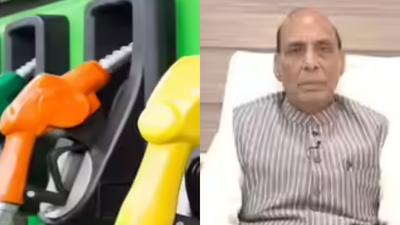
Evening News Wrap: Government cuts fuel duty, Rajnath to lead Middle East crisis group and more | india news
Evening News Wrap: Government cuts fuel duty, Rajnath to lead Middle East crisis group and more
  • The government reduced special additional excise duty on petrol to Rs 3 per liter and diesel duty to zero (from Rs 10).
  • Rajnath Singh was set to lead an inter-ministerial panel on the Middle East crisis, with members Amit Shah, Nirmala Sitharaman and Hardeep Singh Puri.
  • Elbridge Colby concluded his visit to India and emphasized on deeper military cooperation under the Defense Strategy 2026.
  • Former cricketer Yograj Singh has supported MS Dhoni, urging him to stay in the IPL and rejecting retirement calls.
  • As Tehran continued missile activity, questions were raised about advanced systems like Qasim Basir and Fatah-2.

Here are the top 5 news of the day:

Amid tensions in the Middle East, the government reduced excise duty on petrol to Rs 3 per liter and on diesel to zero.

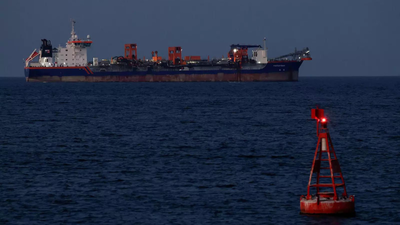
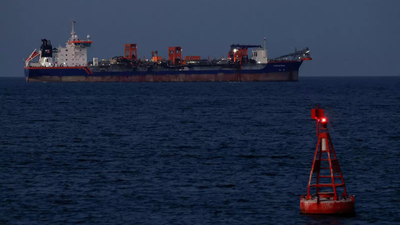
The government has revised its fuel duty structure, reducing special additional excise duty on petrol to Rs 3 per liter while completely removing it on diesel. The decision comes against the backdrop of ongoing disruptions to global oil supply chains due to the conflict in the Middle East, where Iran continues to tighten control over the Strait of Hormuz. “The additional excise duty on petrol was reduced to Rs 3 per liter from the earlier Rs 13 per litre. Meanwhile, the excise duty on diesel was reduced to Rs 0 from the earlier Rs 10 per litre,” according to a government order on Thursday. Read the full story

Rajnath Singh to head inter-ministerial group to monitor issues arising from Middle East conflict

Union Minister Rajnath Singh is set to lead an inter-ministerial group to monitor issues arising from the ongoing conflict in the Middle East. According to ANI sources, while Rajnath will lead, the group will include other ministers including Union Home Minister Amit Shah, Union Finance Minister Nirmala Sitharaman and Union Petroleum Minister Hardeep Singh Puri. Read the full story

India-US defense partnership: US envoy concludes New Delhi visit, calls for closer military cooperation

US Under Secretary for War Policy Elbridge Colby concluded his official visit to India on Thursday. The visit focused on advancing the India-US defense partnership and key elements of the 2026 National Defense Strategy. The official visit, which began on Tuesday, included high-level consultations with senior Indian officials and strategic discussions on defense cooperation. Read the full story

‘Hats off to him’: Yograj Singh has rare praise for MS Dhoni, criticizes retirement calls

In a surprise change of stance, former India cricketer Yograj Singh has come out in strong support of MS Dhoni, urging the legend to continue playing in the IPL, while also hitting out at those who are calling for his retirement. Yograj, who has been a vocal critic of Dhoni in the past, struck a different tone ahead of IPL 2026. In an interview with InsideSport, he praised Dhoni’s longevity, discipline and commitment to the game, and stressed that age should not be a factor in judging a player’s future. Read the full story

From Fatah-2 to Qasim Basir: Where are Iran’s top missiles and why Tehran is blocking them

As the Middle East is rocked by almost daily missile attacks from Tehran, an important question looms: What happened to Iran’s most advanced missiles? Like Qasim Baseer, Etemad and Fattah 2. According to a report in the Financial Times, Iran’s Defense Ministry unveiled its latest missile, the Qasim Basir, in May last year, claiming it could attack enemies “wherever they are and whenever necessary.”“With a 500-kilogram warhead and an optically guided “terminal seeker” that cannot be electronically jammed, it is considered one of the most sophisticated weapons in Iran’s arsenal. Read the full story
Source link

No shortage of oil and gas, will not impose restrictions: Government. india news

'India is an oasis of energy security': Government said, no shortage of fuel, warned against misinformation

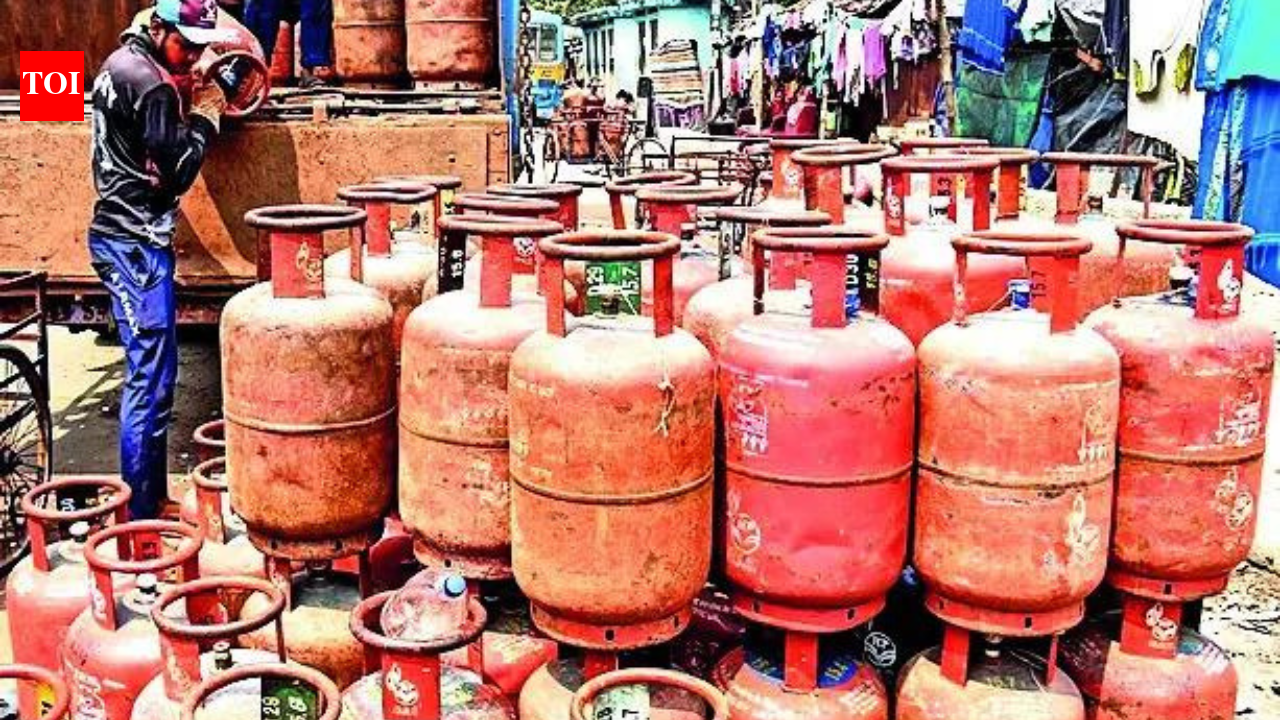
New Delhi: The government on Thursday refused to ban the sale of petrol and diesel, saying there is no shortage of oil and gas and refiners are importing the excess.Calling India an “oasis of energy security”, which supplies refined fuel to over 150 countries, the government said the availability of domestic petrol and diesel is structurally assured. “All over one lakh retail fuel outlets are open and distributing fuel without any interruption,” it said. Not a single outlet has been asked to ration supplies,” it said, adding that two months’ oil supply and one month’s LPG requirements are already available.

Watch

‘India is an oasis of energy security’: Government said, no shortage of fuel, warned against misinformation

“India’s petroleum and LPG supply situation is completely safe and under control. There is no shortage of petrol, diesel or LPG anywhere in the country,” the Petroleum Ministry said.The clarification comes amid global moves to curb fuel use and speculation that India may also follow suit. Reports of shortages and rumors of a lockdown led to queues at filling stations, but the ministry said these were isolated incidents arising from “deliberate misinformation”.The government said that alternative arrangements have been made to reduce dependence on imports, especially from West Asia. India imports about 90% of crude oil, 60% of LPG and more than half of natural gas. As against the reserved capacity of 74 days, the actual availability is around 60 days.“There is approximately two months of stable supply available to every Indian citizen, irrespective of what happens globally,” the ministry said. The next two months of crude oil procurement have also been secured.” It said oil companies have increased credit to petrol pumps from one day to three days to prevent disruptions.India has diversified its crude oil supplies to 41 countries, with the bulk of crude oil being supplied from the Western Hemisphere to compensate for any disruption in the Strait of Hormuz. Domestic LPG production has been increased by 40% to 50,000 tonnes per day, meeting about 60% of demand, while 800,000 tonnes of incoming cargo is on the way. More than 50 lakh cylinders are being distributed daily.The government said switching of LPG connections to PNG is part of the strategy to move towards cheaper fuel and it had started well before the current situation.

Source link

Middle East crisis: Rajnath Singh to head inter-ministerial group to monitor conflict-related issues. india news

Middle East crisis: Rajnath Singh to head inter-ministerial group to monitor conflict-related issues
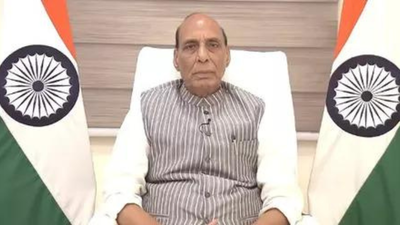
Rajnath Singh (file photo)

New Delhi: Union Minister -Rajnath Singh Set to lead an inter-ministerial group to monitor issues arising from the ongoing conflict in the Middle East.According to ANI sources, while Rajnath will lead, the group will include other ministers including Union Home Minister Amit Shah, Union Finance Minister Nirmala Sitharaman and Union Petroleum Minister Hardeep Singh Puri.This comes at a time when concerns are rising over energy security, domestic LPG supply and disruption to the overall global order. Earlier this week, PM Narendra Modi Announced the creation of seven empowered groups to evaluate the impacts of the ongoing military conflict on energy supplies, essential commodities and supply chains in West Asia and formulate strategies to mitigate its impact on the Indian economy.Speaking in the Rajya Sabha, the Prime Minister said the conflict has destabilized economies around the world and warned that it will take time to recover from the disruptions. Taking lessons from the government’s response during the COVID-19 pandemic, he said the groups will act as rapid response teams, focusing on critical sectors including petrol and diesel, fertiliser, gas, supply chain and inflation.Meanwhile, especially on fuel supplies, the government has imposed export duty on diesel and turbine fuel with an aim to improve the availability of these products in the domestic market, the CBIC chairman said on Friday. Meanwhile, the government earlier in the day also reduced special excise duty on petrol and diesel to address low realizations by oil marketing companies (OMCs). The move was said to be aimed at providing relief to consumers, with officials indicating that retail prices of key fuels would remain unchanged.Read more: Government imposes export duty on diesel, turbine oil; Eye on collection of Rs 1,500 crore

Source link

India has started the process of leapfrogging from 5G to 6G: Scindia | india news

India has started the process of leapfrogging from 5G to 6G: Scindia

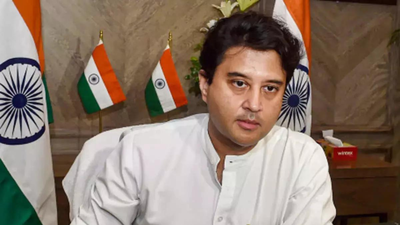
New Delhi: Communications Minister, India has started the process of leapfrogging from 5G to 6G Jyotiraditya Scindia Said on Thursday.“This process is being started today with respect to global standards of technology, interoperability. This is being done in the International Telecommunication Union and 3GPP (Third Generation Partnership Project), both of which are standard-setting bodies for the world. We see standards and implementation taking place only by 2030. So, we are still in a state of discussion. But the difference is that India was nowhere at the table with regard to global standard setting for telecommunications on 3G or 4G. “We made our first foray into 5G when we presented a proposal for ubiquitous connectivity around the world,” he said.This time, as far as 6G is concerned, “we are partners on that roundtable”, he said. “This is the first time in the history of independent India that the country is at the standard-setting table for the telecom technology that is being launched. We have established the India 6G alliance in 2024, implementing PM Modi’s early vision when 5G was not even fully launched post-Covid in 2023,” he said.He said that the India 6G alliance started with 14 members and now it has grown to 85 members. tnn

Source link

PM Modi prayed to Lord Ram, observed Surya Tilak ceremony virtually at Ram temple in Ayodhya. india news

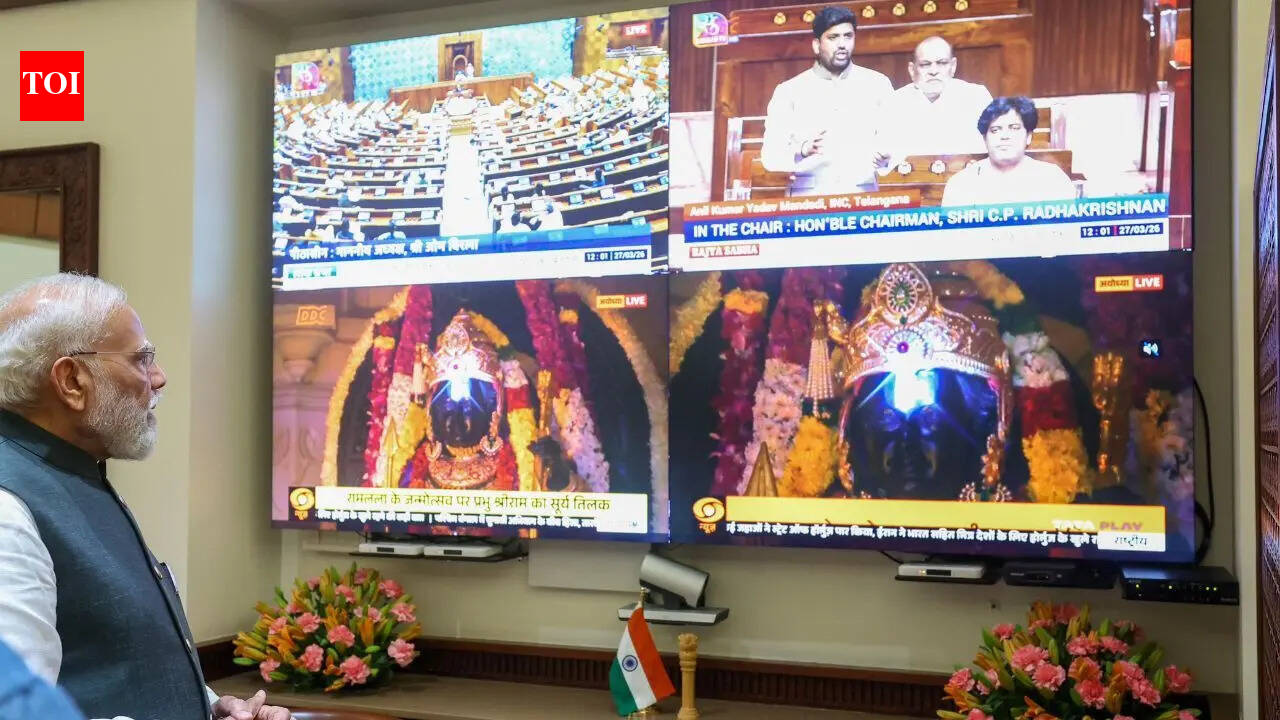
 PM Modi offers prayers, attends Surya Tilak ceremony at Ayodhya Ram temple

.

New Delhi: Prime Minister Narendra Modi Worshiped Lord Ram on Friday and virtually participated in the Surya Tilak ceremony AyodhyaRam temple of.Earlier in the day, he greeted the nation on the occasion of Ram Navami and wished that the festival brings new energy and enthusiasm in people’s lives.

Watch

PM Modi offers prayers, attends Surya Tilak ceremony at Ayodhya Ram temple

Addressing X, he said, “Warm wishes of Ram Navami to all the countrymen. May this holy and sacred occasion of the birth anniversary of Lord Shri Ram bring new consciousness and new enthusiasm in the lives of all of you and continuously provide new energy to the determination of a strong, prosperous and capable India. Jai Shri Ram!”President Draupadi Murmu also congratulated and wrote, “Hearty congratulations and best wishes to all the countrymen on the holy festival of Ram Navami. This festival gives the message of religion, justice and duty. Maryada Purushottam Lord Shri Ram has presented high ideals of sacrifice, commitment, harmony and bravery for mankind.”The President said, “His concept of good governance i.e. Ram Rajya is considered ideal. I wish that on this auspicious occasion all the countrymen resolve to work together to build a developed India.”Huge crowds of devotees gathered at temples across the country including Ayodhya to celebrate the occasion. Authorities have imposed stringent security measures, including drone surveillance and zoning arrangements, to manage the influx of pilgrims.Ram Navami is celebrated every year on the last day of Chaitra Navratri to commemorate the birth of Lord Ram. On this day, gifts and offerings are given to young girls representing the nine forms of Goddess Durga.

Source link

Kharge again cornered the government on women’s reservation, demanded an all-party meeting after the elections. india news

Kharge again cornered the government on women's reservation, demanded an all-party meeting after the elections.
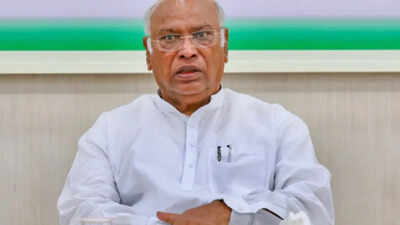
Congress President Kharge (file photo)

Congress President hints at supporting Center in 2029New Delhi: Rejecting the Centre’s latest offer of a meeting to discuss amendments to the Women’s Reservation Bill, Congress president Mallikarjun Kharge on Thursday wrote to the Modi government saying the opposition is “extremely busy” in the assembly election campaign and reiterated the demand that the government call an all-party meeting after April 29 when polling for the elections will close.However, for the first time since talks of amending the quota bill began, Kharge has indicated the opposition’s readiness to facilitate the implementation of 33% women reservation in legislatures from 2029. Also, it is learned that the government has formally told Kharge that it wants to separate the census and delimitation from the women’s quota issue.Parliamentary Affairs Minister Kiren Rijiju on Thursday wrote a letter to Kharge demanding a meeting to discuss the issue. In response, Kharge rebuked the government for being “too hasty” in “amending a constitutional amendment act 30 months after it is passed”, and asked to wait till the end of the elections.“We are all extremely busy with the election campaign. That is why we had suggested that the meeting be held after the campaign is over,” he wrote.

Watch

‘Married to Modi ji’: PM Modi laughed when Mallikarjun Kharge made fun of Deve Gowda in Rajya Sabha

On Tuesday, except TMC, the opposition India Bloc wrote to the government saying it should call an all-party brainstorm on amendments to the landmark bill. It demanded that the government circulate its proposal for amendments in advance for better discussion. Kharge has twice before rejected the government’s appeal for only Congress meeting and asked to discuss the issue with the entire opposition camp.Attacking the government, Kharge wrote, “During the debate in the Rajya Sabha on September 21, 2023, I myself had demanded immediate implementation of the Nari Shakti Vandan Act, 2023, but the government did not agree to my demand.”Congress spokesperson Jairam Ramesh said the implication of the government’s latest petition is that it wants to amend Section 334-A(1), which is sudden as this section of the Constitution was passed only two years ago. Pointing to the ongoing elections, he said, “The Election Commission’s model code of conduct has been changed to the Modi campaign code. Convening a special two-day session on any day in April would be a violation of one MCC but in line with the other.

Source link

Watch: Huge uproar in Jammu and Kashmir Assembly due to NC MLAs’ protest over the killing of Iran’s Ali Khamenei. india news

Watch: Huge uproar in Jammu and Kashmir assembly due to protest by NC MLAs over the killing of Iran's Ali Khamenei

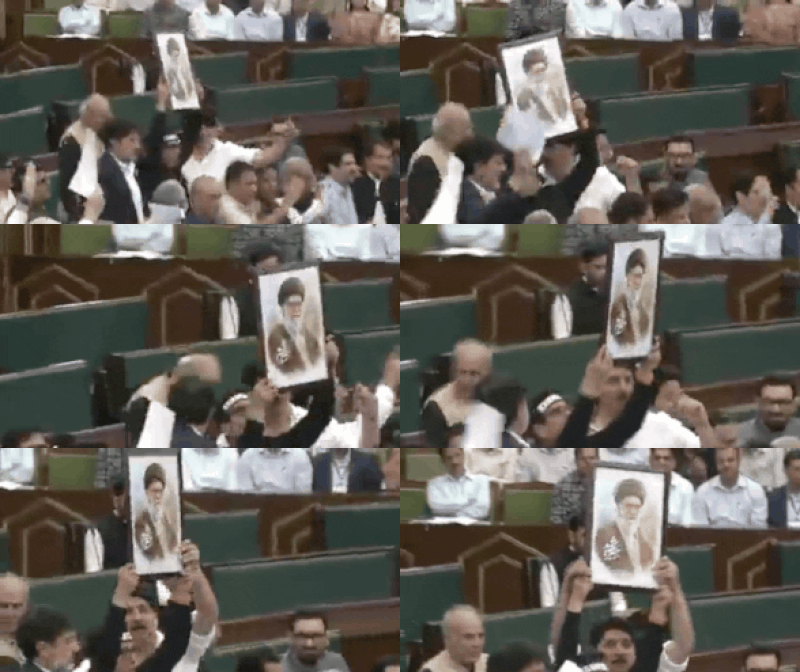
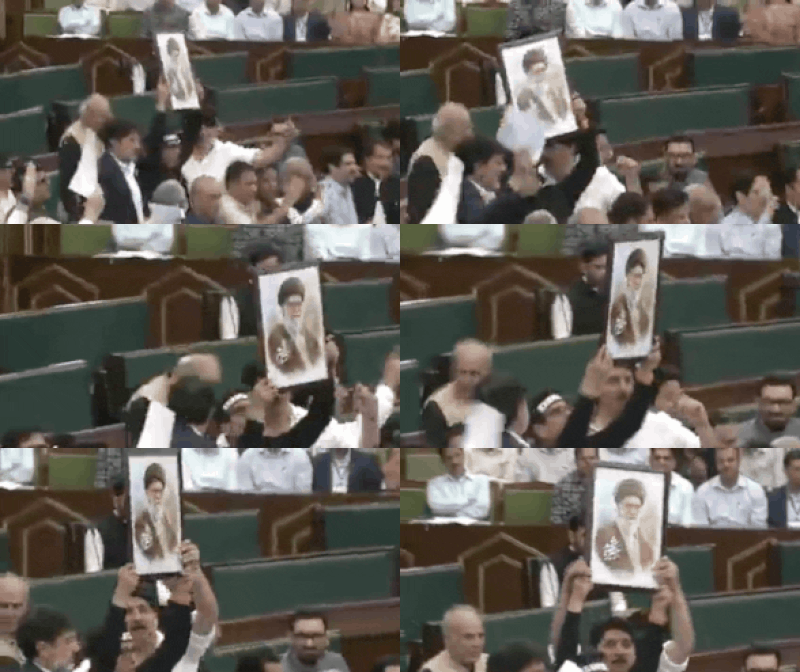
New Delhi: A major clash broke out in the Jammu and Kashmir Assembly on Friday when National Conference (NC) MLAs protested against the assassination of former Iranian supreme leader Ayatollah Khamenei and the ongoing US-Israeli military actions in Iran.Video footage from the assembly showed NC MLAs raising slogans and holding pictures of Khamenei inside the House. Police later arrived to restore order as tension increased between the members. BJP MLAs responded with protest, following which a scuffle broke out between Congress MLA Irfan Hafiz Lone and BJP MLA Yudveer Sethi. To calm the situation, the assembly proceedings were adjourned for some time.The protests were led by NC leaders who expressed solidarity with Iran. Party MLA Tanveer Sadiq said, “We stand in solidarity with Iran. The entire National Conference and the Jammu and Kashmir government stand with them. No country has the right to attack another country and the top leadership of India should condemn it.” Sadiq stressed that the party supports the people of Iran in light of Khamenei’s assassination.Earlier, Jammu and Kashmir Chief Minister Omar Abdullah condemned the ongoing conflict in West Asia, saying regime change cannot be achieved through military bombing. Abdullah said, “The only people who have the right to choose their regime are the citizens of that country. Regime change cannot happen through aerial bombing.” He described Khamenei’s killing as a “gross abuse of force and a violation of international law.”Tensions in the region increased following joint US-Israeli military strikes on Iran on 28 February, which killed Khamenei and several senior leaders of the Islamic Republic. In retaliation, Iran attacked American bases in the Gulf countries and Israel.

Source link

Vaishnav Flags Harm to children due to social media. india news

Vaishnav told about the harm caused to children by social media

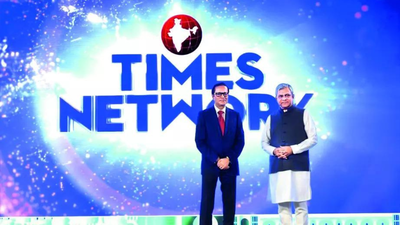
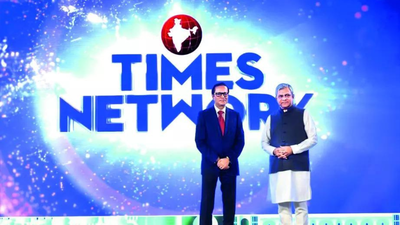
New Delhi: Acknowledging widespread concerns over the adverse impact of social media on children, IT Minister Ashwini Vaishnav on Thursday said that it has become a big issue everywhere and the time has come for all stakeholders to come together and create a consensus to deal with this challenge.At the Times Now summit, Vaishnav, who also holds the Information & Broadcasting and Railways portfolios, said this is a matter of concern across the world, including India. He said a judgment in the US states that the addictive algorithms used by these platforms are harming children.To a question about the fallout of the West Asia conflict, he said it would have significant ramifications across the world, but stressed that the Indian economy is in a better shape than many others.He said India’s balance sheet is “healthy” in terms of debt to GDP ratio, even compared to some rich countries, which stands at 57%. “Our growth story will deliver consistent 6-8% real growth for the next five years…We have not started a war. We are facing collateral damage,” he said.Hitting out at opposition parties, especially Congress MP Rahul Gandhi, for their attacks on the government, he said India has never seen such a “low level” of opposition. He blamed frustration over repeated defeats in elections and a sense of entitlement for his sarcasm at Prime Minister Narendra Modi.Referring to the shirtless protest by Youth Congress members at the AI ​​Summit, he said, “We have never seen this low level of protest at any time in history. It hurt our demo.”

Watch

Information and Broadcasting Minister Ashwini Vaishnav issues big alert on cyber crime, emphasizes on fair revenue for creators

Source link

Iran handed over Hormuz Pass to India, Pakistan, Russia, China, Iraq. india news

Iran handed over Hormuz Pass to India, Pakistan, Russia, China, Iraq

In what could potentially be a major relief, Iran has said it will allow India to use the Strait of Hormuz, not only clearing the way for 20 Indian-flagged cargo ships stuck to its west to pass through the choke point, but also raising hopes that another 18 empty LPG tankers could pass through the conflict-hit 52 km strait to load cargo.According to Iranian state TV, Iranian Foreign Minister Seyed Abbas Araghchi said, “We have allowed some countries, which we consider friendly, to transit through (the Strait of Hormuz). We have allowed transit to China, Russia, India, Iraq and Pakistan.” At the same time, he clarified that ships belonging to Iran’s adversaries will not be allowed to transit through the strategic waterway. “This area is a war zone and there is no reason to allow ships of our enemies to pass through here,” he said.

Watch

Iran, one of India’s allies, allows safe passage through Strait of Hormuz amid war zone crisis

TOI has learned that a dozen India-bound ships west of Hormuz – including five ships loaded with 2.3 lakh tonnes of LPG – are waiting to cross the strait and head towards Indian ports. “The smooth passage of all Indian-flagged vessels will improve the availability of LPG, LNG and crude oil in India,” said an official closely following the developments.India’s inclusion in Iran’s list of ‘friendly countries’ is a surprise.Once these ships reach Indian ports and offload cargo, they can be sent to take fresh consignments.” Of the 20 Indian-flagged ships in the region, some are not bound for India but for other ports, the official said.Officials said 18 LPG tankers are waiting to enter the strait to pick up cooking gas from Gulf countries.Iran’s decision to flag off ships bound for India marks the success of New Delhi’s diplomacy, with PM Modi holding two rounds of talks with Iranian President Massoud Pezhekian. Modi had stressed that the blockade of the strait (by Iran) is unacceptable. External Affairs Minister S Jaishankar had also contacted his Iranian counterpart Araghchi with the same request.India’s inclusion in the group that Tehran had described as “friendly” came as a surprise. Two of the five “friendly countries” mentioned – Russia and China – are viewed by Iran as partners in its fight against the US and Israel. The remaining two Islamic countries are Turkey and Pakistan, which are eagerly trying to play the role of mediator between the Trump administration and the Iranian leadership.In normal times, India gets around 27-30 LPG tankers every month to meet domestic requirements as it imports 60% of its LPG, of which 85-90% comes from Gulf countries including Saudi Arabia and UAE. To meet the shortage, the government is supplying LPG from the US, Argentina, Norway, Canada and Russia, and some cargo has already reached Indian ports through other sea routes.Two LPG ships – Shivalik and Nanda Devi – reached India last week, while Pine Gas and Jag Vasant are likely to arrive this week.According to Kpler, only 138 ships passed the energy choke point between March 1 and 23, including 87 oil and gas tankers. This means 5-6 ships a day, a 95% drop in crossings since the war began. Reports also suggest that more than 1,900 ships are unable to navigate around the Strait of Hormuz.

Source link

Too many medications in old age? It may be safe to cut back. india news

Too many medications in old age? it may be safe to cut back

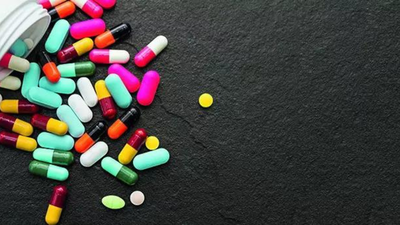
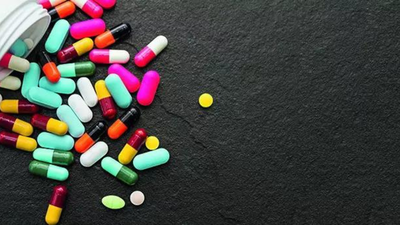
New Delhi: For many elderly people, a typical day starts with a handful of pills – for blood pressure, diabetes, cholesterol and heart disease. But a new global review suggests that in very frail older adults, it may not always be necessary to continue all long-term medications – and in many cases, it may be safe to stop some of them cautiously.The findings, published in the journal ‘BMC Geriatrics’, come from an analysis of patients with advanced frailty, dementia or limited life expectancy – a group often prescribed multiple medications despite unclear long-term benefits. The researchers found that reducing or stopping such medications did not increase deaths or major complications in most cases.Many of these medications are meant to prevent problems years later. But for weak or seriously ill patients, those benefits may never be realized. Instead, taking multiple medications can increase the risk of dizziness, weakness, confusion, and falls, often leading to hospitalization.This pattern of “polypharmacy”, where patients take multiple medicines simultaneously, is becoming increasingly common among the elderly in India, doctors say. “They often see multiple specialists and prescriptions are not always reviewed together. In frail older adults, over-treatment can do more harm than good – for example, aspirin should be avoided for primary prevention, excessive blood pressure control can lead to deterioration, and drugs such as diuretics, insulin or sulfonylureas can cause electrolyte imbalance or hypoglycaemia. “The focus should be on reducing medications where the risks outweigh the benefits,” said Dr Pulin Gupta, professor in the department of medicine at Ram Manohar Lohia Hospital.“In frail elderly patients, stopping some preventive medications is generally safe if done carefully, although those with a prior heart attack or stroke need to exercise caution,” said Dr Rommel Tikku, director of internal medicine at Max Hospital, Saket. Commonly overused medications include statins, controlled diabetes medications like insulin or sulfonylureas for primary prevention, many blood pressure medications, sleeping pills, long-term acid suppressants, and anticholinergics, he said.“The prescription should be structured — based on goals of care, frailty and life expectancy — with careful tapering and monitoring,” he said, adding that reducing medications often results in fewer falls, better cognition and improved energy levels.Families often believe that more medications means better care, but the opposite can also be true. Each added drug increases the risk of interaction. The review reflects a shift from aggressive prevention to patient-centred care, where treatment is tailored to health and preferences. Experts caution that medications should not be simply stopped; Depletion should be monitored, with each medication reviewed as required.

Source link