Operation Urja Suraksha: Navy deploys 5 warships to guide cargo ships exiting the troubled Strait of Hormuz. india news

Operation Urja Suraksha: Navy deploys 5 warships to guide cargo ships transiting the troubled Strait of Hormuz

New Delhi: Amidst the ongoing conflict in West Asia Indian Navy Sources in the defense establishment confirmed that “more than five frontline warships have been deployed under a mission called Operation Urja Suraksha” to ensure safe movement of India-bound cargo ships after exiting the Iran-controlled choke point in the Strait of Hormuz. times of India.The operation focuses on securing vital sea lanes and protecting ships carrying essential supplies such as LPG, LNG and crude oil to India. Currently, 20 India-bound cargo ships are stranded near the strait due to the conflict.

Watch

India builds a naval network but misses key Red Sea chokepoint

“Once an India-bound cargo ship crosses the strait, naval warships in the Gulf of Oman escort the ship away from the troubled region towards the Arabian Sea,” a DG Shipping source said. times of India.“It appears that Iran is selectively allowing ships to transit the Strait of Hormuz after the verification that occurs when ships transit inside Iranian waters,” said senior risk analyst Martin Kelly, head of advisory at EOS Risk Group, a Gulf-based security firm.The Navy remains in constant touch with India-bound cargo ships preparing to exit the Persian Gulf. Once a cargo ship moves out of the chokepoint with Iran’s consent, Indian Navy destroyers and frigates capture them and escort them out of the danger zone through a layered security arrangement.This effort is being supported by the increased Indian naval presence in the Gulf of Oman, where substantial warships are deployed for escort missions.

voting

What worries you most during global conflicts?

According to media reports, US intelligence agencies have alleged that Iran has deployed underwater mines in and around the strait. Capable of causing serious damage, these mines endanger shipping vessels. By guiding Indian flagged ships on carefully identified safe routes, the Navy helps the ship’s crew, who are mostly Indians, chart a safe navigation path towards the Arabian Sea.The mission has already achieved significant successes, with LPG carriers Pine Gas and Jag Vasant safely passing through the strait under naval protection. Altogether, these ships are carrying around 92,000 tonnes of LPG and are expected to reach Indian ports within a few days.

Source link

NMC boards are lying vacant as it directs states to deal with teacher vacancies. india news

NMC boards vacant as it directs states to deal with teacher vacancies

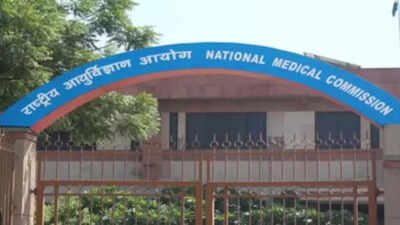
In a highly ironic matter, the National Medical Commission (NMC) has been asked to direct state governments to fill the large number of vacant posts in the Medical Teaching Service in a time-bound manner, while three-fourth of the posts in the four autonomous boards of the NMC are lying vacant.The Board of Undergraduate Medical Education, the Board of Postgraduate Medical Education and the Board of Ethics and Medical Registration each have only one part-time member. Each board should have five members including the chairman. The Medical Assessment and Rating Board alone has a Chairman and a part-time member, while the remaining three posts are vacant.When contacted, NMC president Dr Abhijat Sheth, while confirming that the process to fill the vacancies in the board is currently under consideration by the government, told TOI that the NMC is fully functional, with 28 out of 33 members currently serving. “All statutory requirements, including quorum, are being duly met, and the functioning of the Commission and its boards is unaffected,” he said.Dr Sheth said, “Policy-level decisions continue to be taken at the Commission level. For matters related to autonomous boards, the Chairman is empowered to constitute expert committees under the Act, and all work is being done through these duly constituted mechanisms.”Even though the NMC boards are full of vacancies, the Patna High Court has asked the Commission to direct the states to fill the teaching vacancies within six months. The court asked the NMC to “take appropriate action in directing the state government to initiate appointment/recruitment drive to fill the large number of vacant posts in the medical teaching service within a time bound period.” The court was hearing a plea challenging the Aadhaar-enabled biometric attendance system in medical colleges.Keeping the order in mind, NMC has directed all the states and union territories to take necessary steps.

Source link

Space company Agnikul successfully tests 3D-printed ‘Agnite’ booster engine. india news

Space company Agnikul successfully tests 3D-printed 'Agnite' booster engine

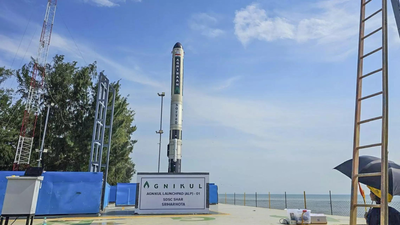
New Delhi: Indian space company Agnikul Cosmos on Wednesday announced that it has successfully tested its 3D-printed booster engine, ‘Egnite’, which can reduce production complexity and turnaround time for missions.The engine, which is a single-piece architecture, can be completely printed within a week, unlike traditional booster engines which contain thousands of parts and can take months to build.“Humbled to announce the successful firing of our single piece Agnite engine. Agnite engines power the booster stage of Agnibaan. These engine chambers are a full meter long, completely 3D printed as a single piece of hardware and made of Enal. The Agnite engines are powered by pumps that are controlled and driven by electric motors. Thank you to ISRO and INSPACE for their continued support and to IIT Madras Thank you for being our home region from where such technology is created,” Agnikul posted. Wednesday at X.This milestone is significant as it completes an end-to-end cycle of design, manufacturing, assembly and testing of our large engines, the company said. With the successful testing of Egnite, the company will now focus on manufacturing more such engines by setting up a production line.

Source link

Middle East crisis: Amit Shah leads informal GoM on ‘overarching strategic issues’ india news

Middle East crisis: Amit Shah leads informal GoM on 'overarching strategic issues'

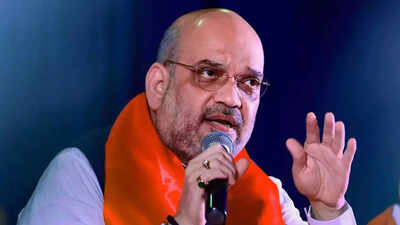
New Delhi: Home Minister Amit Shah He is leading an informal group of ministers (GoM) dealing with “overall strategic issues” arising from the ongoing conflict in West Asia, including the decline in the supply of LPG and LNG, the primary feedstock for urea production.Shah has already held a meeting with other ministers, including Fertilizer Minister JP Nadda and External Affairs Minister S Jaishankar, to assess the situation of fertilizer and petroleum gas supplies.TOI has learned that another informal GoM has been constituted under the chairmanship of power and urban affairs minister Manohar Lal to deal with matters related to energy supply. The group held a meeting on Wednesday in which issues related to “piped gas supply to households” were discussed in detail. Food and Renewable Energy Minister Pralhad Joshi, Heavy Industries Minister HD Kumaraswamy and Petroleum Minister Hardeep Singh Puri participated in it. This is important as the government is focusing on using PNG in place of LPG in more and more households.While presiding over the meeting of the Cabinet Committee on Security on Saturday. PM Modi Had directed that a group of ministers and secretaries be formed to work dedicatedly with a whole of government approach. He also called for regional groups to work in consultation with all stakeholders.On Tuesday, Modi announced the setting up of seven empowered groups of secretaries to deal with various issues arising from the crisis; Some groups held their first round of meetings on Wednesday. “There will be more clarity on the course of action in the next few days,” an official said.

Source link

‘LPG charge’ is not legal, action will be taken, CCPA warns eateries. india news

'LPG charge' is not legal, action will be taken, CCPA warns eateries

New Delhi: The Central Consumer Protection Authority (CCPA) on Wednesday warned of action if hotels and restaurants are found charging extra under heads like “LPG charges,” “Gas surcharge” and “fuel cost recovery” in food bills.The authority issued an advisory invoking the provisions of the Consumer Protection Act, stating that such charges are being levied by default to circumvent the existing guidelines on service charges. It added that any such charges would not be imposed automatically, and warned that violations could be subject to “stringent action” as it amounts to “unfair trade practice”.CCPA said complaints received on the National Consumer Helpline (NCH) and media reports revealed that some hotels and restaurants were charging such charges by default in consumer bills in addition to the price of food and beverages displayed in the menu and applicable taxes. The authority said input costs such as fuel, LPG, electricity and other operating expenses are part of the cost of running a business and should be included in the pricing of menu items. It states that the price displayed in the menu will be the final price, exclusive of applicable taxes. Consumers should not be misled or forced to pay any additional charges that are not voluntary in nature. The CCPA said consumers who encounter such practices can request the hotel or restaurant to remove the charge from the bill; Register a complaint by calling 1915 or through its app and can also file a complaint before the appropriate consumer commission through the e-Jagruti portal.

Source link

‘It is not necessary’: SC dismisses plea against Vande Mataram circular. india news

'It is not necessary': SC dismisses plea against Vande Mataram circular

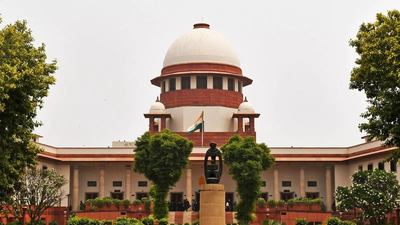
New Delhi: Mumbai-based Raza Academy Chairman Muhammad Saeed Noori on Wednesday challenged Supreme Court The Centre’s recent order is that all schools can start the day’s work with community singing of the full version of the national anthem.Vande Mataram‘, which invokes the motherland as Hindu deities, because it hurts the constitutionally guaranteed religious freedom and secularism of Muslims.Senior advocate Sanjay Hegde, appearing for Noori, told a bench of Chief Justice Surya Kant, Justice Joymalya Bagchi and Justice Vipul M Pancholi that India is a multi-religious country where the Constitution guarantees freedom to practice any religion, and those who do not want to sing the national anthem cannot be forced to do so. “The effect of the impugned instructions is to place citizens, particularly those belonging to minority religions or monotheistic beliefs, in an untenable position at the risk of participating in expressions contrary to their conscience/belief/religion or showing disrespect to the national symbol,” he said.The bench asked Hegde to show any part of the direction which made it mandatory for schools to sing the national anthem in its full version and asked whether there was a provision for consequential penalty for violating it.Hegde said that the Supreme Court had given a similar direction in 2018, in which singing of the national anthem in films was made mandatory. “Because of that directive, I and like-minded people stopped watching films. Patriotism cannot be forced. If the Constitution is to have any meaning for an individual, individual conscience must be protected.”The bench said the plea was premature as the instructions stated that the day’s work in school “may commence” with the singing of the national anthem. “It does not violate the right to speak because it does not force anyone. When you are forced (to sing the national anthem) you can approach the court,” it said.

Source link

Do you have PNG access but not switched? Government will stop LPG refills. india news

Do you have PNG access but not switched? Government will stop LPG refills!

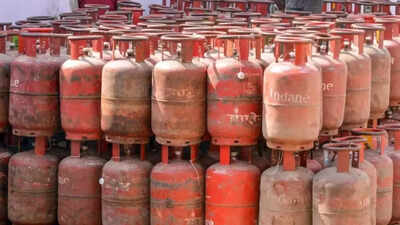
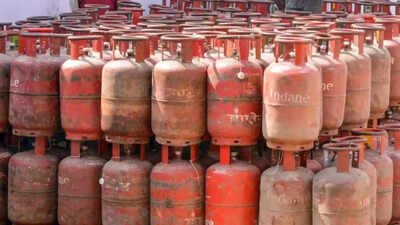
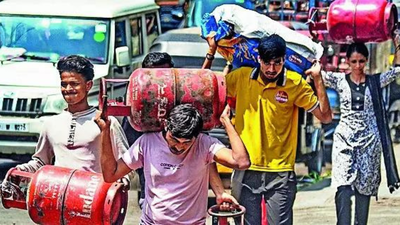
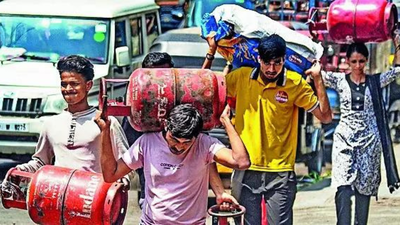
New Delhi: In an effort to wean consumers away from LPG, the government has decided to stop supply of cylinders after three months to households that have access to piped natural gas but are reluctant to take connections. India imports about 60% of its LPG requirement, of which about 90% comes through the Strait of Hormuz. Although about half the requirement of LNG – which is converted into PNG and CNG and also used by industries and power plants – is also imported, officials said its supply remains comfortable. Even in rented houses where tenants currently use LPG, they will have to switch, a senior official said. If the authorized body issues NOC stating that it is not technically possible to provide PNG connection, LPG supply will not be stopped. Officials said city gas distribution (CGD) companies will send messages to LPG consumers who can switch to PNG. Timeline has been set for granting right of way or permission to CGD firmsWith an eye on the rapid expansion of piped gas network, the government has made it mandatory for officials to grant right of way or permission to CGD companies within the prescribed timeline, failing which the approval will be deemed to have been granted. The order, issued under the Essential Commodities Act, focuses on reforms to ensure fast-track approvals and time-bound permissions for laying pipeline infrastructure.

Source link

Pak infiltrator caught on the international border in Samba, Jammu and Kashmir. india news

Pak infiltrator caught on international border in Samba, Jammu and Kashmir

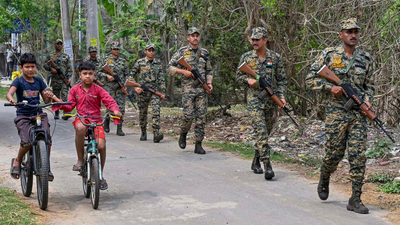
Jammu: Border Security Force (BSF) troops on Wednesday detained a Pakistani infiltrator along the International Border in Ramgarh sector of Samba district of Jammu and Kashmir. Later in the day, Kathua SSP Mohita Sharma conducted a comprehensive security review and inspection of the border areas of Kathua.BSF personnel patrolling the border spotted a suspect near Bhaller border post in Ramgarh, officials said. “The Pakistani national surrendered after being challenged and preliminary inquiry revealed that he had crossed the border unknowingly,” an official said. He said that nothing objectionable was found from him.Officials said that the matter is being investigated for further action.Meanwhile, Kathua SSP Mohita Sharma conducted a comprehensive review of the border areas to strengthen security and increase policing in the district. He along with top police officials inspected the Border Police outposts, nurseries and surrounding areas in Kathua.The SSP reviewed the existing security grid and assessed the ground preparedness to ensure effective coordination between various agencies deployed at the border. Sharma stressed on strengthening the surveillance mechanism and directed to install CCTV cameras at all border police posts and naka points to increase real-time surveillance.After this the officers patrolled Hariya Chak Nursery area, which is considered sensitive from security point of view. On-the-spot instructions were issued to conduct frequent, thorough searches of nursery areas to detect the presence or movement of suspects. The SSP also stressed the need to maintain close coordination with the residents to ensure timely flow of information.

Source link

Transgender Persons Amendment Bill: Parliament passes bill to amend transgender law; Two members of the council for TG persons resigned in protest. india news

Parliament passes bill to amend transgender law; Two members of the TG Persons Council resigned in protest

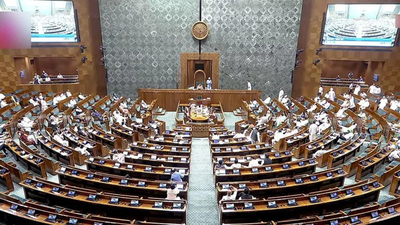
New Delhi: On the day Parliament gave its seal of approval to the Transgender Persons (Protection of Rights) Bill 2026 amid opposition MPs demanding that the bill be sent to a standing committee for wider consultation, two National Council for Transgender Persons members of the community sent their resignations to the social justice minister. Virendra Kumar To register our strong protest against the Bill and the lack of consultation. The bill provides a more precise definition of “transgender persons”, making it clear that it will not include persons with “diverse sexual orientations and self-perceived sexual identities”.“From the NCTP, some of us tried to reach out to you as the voice of the community and we felt that we were not heard,” Rituparna Neog, council member from the North-East region, said in her resignation letter addressed to Kumar, who is the president of the statutory body. The body is believed to have around 10 members representing the transgender community.The other member who resigned, Kalaki Subramaniam, representative of the southern region, lodged a strong protest over the lack of consultation with the community who sees the bill as “regressive” and “a step back for their fundamental rights to self-identity and dignity”. “I cannot continue to have a seat at the table where our collective voice has been silenced,” she said.The Transgender Persons (Protection of Rights) Bill, which was passed in the Lok Sabha on Tuesday, was passed by voice vote in the Rajya Sabha on Wednesday. Congress party’s Renuka Chaudhary initiated the discussion and raised a provocative question – “If no one asks us – men and women – to prove our gender before a medical board, then who are we to question the identity of trans people?”At the end of the discussion, Minister Virendra Kumar reiterated that the Bill aims to provide protection only to those who face serious social discrimination because of their biological status. He sought to counter the opposition to the removal of the clause on self-identified identification and the introduction of a Medical Board, saying that the objective was to secure the rights of TG individuals by removing the scope for any ambiguity and to enable delivery of benefits to genuine individuals through administrative clarity. BJP members also joined the voice in support.The amendment, which will now become law after the assent of the President of India, marks a significant departure from the existing law as it removes the clause that allows “self-perceived gender identity” to be the basis for approval of transgender certificate by the District Magistrate for Self-Determination and Recognition.A medical board chaired by the Chief Medical Officer has been introduced, and the District Magistrate will issue a certificate of transgender identity, after examining the recommendation of the medical board, cited as an “authority” constituted by the Central or State Governments.The Bill proposes to create specific offenses with graded penalties that reflect the seriousness of the harm, the irreversibility of the injury and the particular vulnerability of child victims.DMK’s Tiruchi Siva, who brought a private member’s bill “The Rights of Transgender Persons Bill, 2014”, reflected the struggles of the community to get their rights and sought consultation with stakeholders, legal experts, civil society, transgender community as well as a review by the select committee. Manoj Kumar Jha (RJD), Saket Gokhale (TMC), CPI (M) MP John Brittas, NCP-SCP leader Fauzia Khan, Jaya Bachchan (SP), Shiv Sena-UBT’s Priyanka Chaturvedi, Sanjay Singh And AAP’s Sandeep Pathak, IUML’s Abdul Wahab, among others, strongly opposed the bill.Even YSR Congress Party’s Gola Babu Rao and BJD’s Subhashish Khuntia joined the chorus of other opposition members and demanded that the bill be sent to a parliamentary committee for stakeholder consultation.The first sign of reaction from the community came when two NCTP members resigned soon after the bill was passed in the Rajya Sabha. Also the community members, who have been agitating through press conferences and outreach campaigns since the introduction of the Bill, are now planning to take to the streets through demonstrations in the states. In her resignation letter addressed to the Minister of Social Justice and Empowerment, Kalki Subramaniam said, “Till February 2026, my experience of working with officials of the Ministry was one of mutual respect and a shared vision for an inclusive India. However, the recent introduction and passage of the Transgender Persons (Protection of Rights) Bill 2026 has created an untenable situation for me.”“As a statutory representative, my primary duty is to advise the government on legislation that affects our lives. “The decision to pursue this bill without any formal consultation with me or other community representatives of the NCTP undermines the very purpose for which this council was established,” he said. Registering her protest over the bill passed by Parliament, Rituparna Neog in her resignation letter said, “While I understand my responsibility as an NCTP member to represent the voice of my community before the competent authority, however, in view of the present circumstances, I do not wish to continue as a member.”At a hastily called meeting by senior ministry officials on Saturday, four NCTP members Abhinaa Aher, Vidya Rajput, Raveena Bariha and Subramaniam had strongly reiterated that “self-affirmation of transgender identity, as upheld in the NALSA decision, must remain the foundation of transgender identity”.After the meeting, members highlighted the absence of Social Justice Minister Virendra Kumar, who was reported to be chairing the meeting. “We were informed that the minister is unable to attend due to ill health and alleged family emergency,” Aher said.According to Aher, at the meeting led by Joint Secretary Yogita Swarup, senior economic advisor in the ministry, government officials raised concerns about identifying “genuine” transgender persons and mentioned biological markers such as chromosomal combination (XX/XY). She added, “NCTP members clarified the concept of gender incongruence/dysphoria, mental health aspects and the impact of stigma, although they felt there was a gap in understanding of transgender issues among officials.”The TG Council members also stressed at the meeting that the definition of transgender person in the Bill is not inclusive and should clearly include transgender men and transgender women; Use respectful terminology and recognize diverse regional identities such as Nupi Manabi and Nupi Manba (Manipur).On the provision in the Bill to introduce screening by a medical board, NCTP members initially called for the removal of this provision. Aher said, “However, considering the government’s position, members proposed that any assessment should be limited to mental health support, should not involve invasive physical examinations, and should maintain dignity and be consistent with NALSA decisions.” The need for gender-neutral laws to address violence against transgender persons was also strongly raised.Now that the bill has been passed in Parliament without heeding any suggestions from NCTP member representatives, the community has announced to launch protests and demonstrations from Thursday.


Source link

PDP MLA’s bill proposing new divisions, districts in Jammu and Kashmir faces criticism from NC, BJP India News

PDP MLA's bill proposing new divisions, districts in Jammu and Kashmir faces criticism from NC, BJP

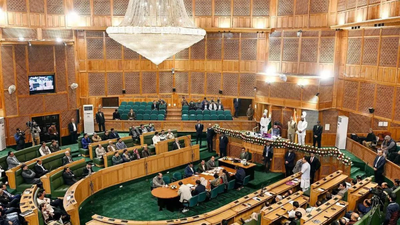
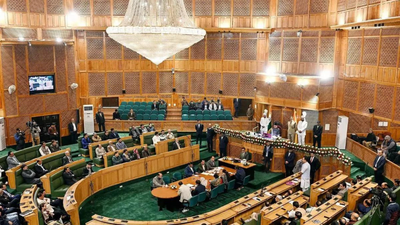
Srinagar: PDP MLA Waheed Para’s private member’s bill proposing creation of 16 new districts in Jammu and Kashmir and two additional divisions in Jammu has drawn sharp criticism from the ruling NC as well as the opposition BJP, who have questioned the intention behind the proposed law.The NC said the bill was “a deliberate attempt to subvert the government’s intention of awakening public opinion and empowering the sub-sectors”. The BJP described the proposal as divisive and alleged that it was in line with Pakistan and ISI’s plan to create ‘Greater Kashmir’.Parra presented the Jammu and Kashmir Territorial Administrative Reorganization Bill to the Assembly Secretariat, which proposes new administrative divisions and districts in the union territory to “improve governance and administrative accessibility”.The bill seeks to create two new divisions in Jammu – Chenab and Pir Panjal. There is also a proposal to create eight additional districts each in Kashmir and Jammu. At present, Jammu and Kashmir has two divisions, Jammu and Kashmir, each consisting of 10 districts.The bill has gained popularity on social media, sparking debate and forcing political parties to respond. NC spokesperson Imran Nabi Dar said the PDP’s move to bring the resolution, while the government is working towards empowerment of the sub-regions, shows a different intention. Alleging that this was indicative of an attempt at sabotage, he questioned why the Mehbooba Mufti-led party was discussing new districts and divisions despite lacking the legislative strength to carry out the proposals.During the PDP-BJP tenure in 2016-17, similar recommendations made by an expert committee were rejected by the government. “Now when the NC government is planning to empower the sub-regions, the PDP is bringing such bills to create distrust among the people,” he said, terming it a “sabotaging bill”.BJP alleged that the proposals given in the bill are related to the agenda of ISI. “The bill proposes two additional divisions for Jammu – one comprising Kishtwar and Doda, and the other Rajouri and Poonch. They are referring to these as the Chenab Valley and Pir Panjal regions. We do not accept these terms. This was part of the ISI design in the 1990s to merge these Muslim-majority areas with Kashmir and create ‘Greater Kashmir’.” The PDP is working on the same agenda. We will not allow this,” said BJP spokesperson Altaf Thakur.Pointing out that Kashmir traditionally has three regions called Maraz (South Kashmir), Kamaraj (North Kashmir), and Central Kashmir, he asked: “Why don’t they create three divisions here too? Why do they want to break only Jammu?”However, Thakur said there could be a case for creating three new districts in Kashmir and if needed, the three existing police districts in the Valley could be upgraded to full districts.

Source link