Breaking News
500 judges on SIR duty, cases pile up in Bengal courts. india news

500 judges on SIR duty, cases pile up in Bengal courts

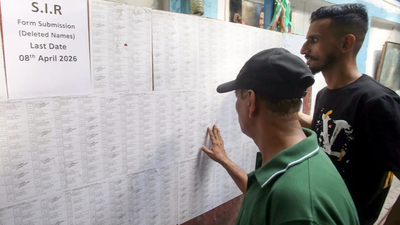
KOLKATA: The involvement of nearly 500 judicial officers – judges of lower courts from across Bengal – in adjudicating doubtful cases marked in the voter list published in February has sharply slowed down the disposal of cases in the state’s courts.The overall “clearance rate” of cases in the lower courts of Bengal was 62% in 2025. This March, the monthly rate was just 42%. According to the “virtual justice clock” of the district judiciary, 90,685 cases were registered across the state in March, of which 38,527 were disposed of.Kolkata’s March settlement rate was even lower, at 39%. Of the 42,687 cases registered in the city’s lower courts, 16,717 were disposed of. At 19%, West Burdwan had the lowest rate.On 20th February a Supreme Court A bench led by CJI Surya Kant had decided to entrust judicial officers with an “extraordinary” responsibility – scanning the documents of around 60 lakh persons placed under adjudication during the special intensive revision (SIR) of the voter list and deciding whether their voting rights can be restored.The bench had directed “an interim arrangement to transfer cases of interim relief or urgent nature to alternate courts for a week or 10 days, within which the entire process is to be completed”.However, the decision has been pending for more than a month. Judicial officers will now face a deadline of April 6 and 9 for the two phases of assembly elections scheduled for April 23 and 29.Special public prosecutor Biwas Chatterjee said involvement of so many judicial officers in SIR duty was hampering hearing of rape, murder and POCSO cases as well as bail petitions. “One fast-track court judge has now been made in-charge of four to five other courts whose judges are on SIR duty. As a result, it has become difficult to get dates for cases. The pendency of cases is increasing because it is impossible to handle so much work,” he said.

Source link

The siege of judicial officers in Malda is proof of jungle raj, Modi said in Bengal. india news

The siege of judicial officers in Malda is proof of jungle raj, Modi said in Bengal

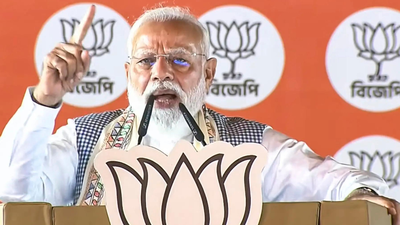
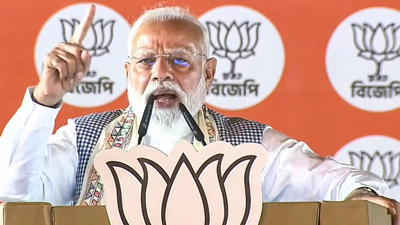
Kolkata: PM Modi on Sunday cited the imprisonment of seven judicial officers on SIR duty in Malda district as evidence of the deteriorating law and order situation in Bengal, intensifying his attack. Trinamool Congress At BJP’s election rally in Cooch Behar.“Citizens across the country are shocked at how judicial officers were taken hostage in Malda. What kind of government is this where even judges and constitutional authorities are not safe? If they are not safe, how can the common people feel safe?” Modi said.Describing the situation as “jungle raj”, Modi said the situation has become “so bad that the Supreme Court had to intervene.” He said the purpose of the SIR of the voting list is to identify “illegal settlers”.

.

.

Malda in North Bengal became the epicenter of political confrontation after judicial magistrates gheraoed a block office in Kaliachak sub-division last week during protests related to voter list revision.Turning to cross-border infiltration, PM Modi said the purpose of the SIR of the voter list is to identify “illegal residents” and remove their names.He said, “There has been an alarming change in the demography of Bengal in the 15 years of the TMC government. TMC has allowed infiltrators to enter Bengal and absorbed them into its syndicate network. That is why the Government of India is identifying the infiltrators and taking steps to remove them.” He accused the TMC government of opposing the SIR and “threatening to scrap” the CAA to “protect infiltrators”, alleging that the “rights of Hindu citizens legally settled here” were being curtailed.Modi questioned TMC’s decision to name its manifesto as Ishtehar. “Instead of using the word Bengali, they have used the word ‘ishtehaar’, which raises questions about how they are representing the identity of Bengal,” he said. He warned TMC functionaries, saying, “You should trust the law on the day of voting… Ebar Bangla Theke Bhay Palabe (This time fear will disappear from Bengal). After this election, there will be full accountability for their actions… They will be held to account.”In Malda, district authorities initiated action against an additional district magistrate over alleged dereliction of duty during the Kaliachak siege, while the NIA continued its investigation.

Source link

HC allows married teenager to live with man of her choice. india news

HC allows married teenager to live with man of her choice

Bhopal: A 19-year-old married woman has got legal nod to live “freely” with a man of her choice after she told the Gwalior bench of the Madhya Pradesh High Court that her husband – of 40 years, more than twice her age – was abusing her and she did not want to go back to her parents as they too did not wish her well.The April 2 order by a division bench of Justice Anand Pathak and Justice Pushpendra Yadav came on a habeas corpus petition filed by the woman’s husband, who had alleged that his wife was being held captive by a young man.The woman testified in the presence of her husband, parents and the man she was living with that the man gave her the freedom she wanted and there was no question of returning to people who “were not my well-wishers”.When asked where she wanted to live in the future, the woman said she wanted to live with the person accused of keeping her in captivity.

.

.

Government lawyer Anjali Gnani, who was appointed by the court to personally counsel the woman, told the judges that she stood by her stance of walking out of her marriage with an older man after experiencing “discord rather than harmony”.The court also interrogated the young man with whom she had come to live. He admitted his feelings for her, saying he wanted to marry her after her divorce and pledged that he would take care of her and “not bother her in any way”.The court order said that since the woman was acting of her own free will, the habeas corpus petition had “defeated its purpose”. Before allowing her to live with a man other than her husband, the judges directed that the woman be kept under the state’s Shaurya Didi framework for six months.Gyanani and a female constable named Bhavana, who had produced the woman in the court, were appointed as her Shaurya Didi.The concept, developed by the Gwalior bench in the 2024 case of Harchand Gurjar versus State of Madhya Pradesh, envisages a woman police officer or a qualified person under the Juvenile Justice Act as a mentor and support person for women and girls in vulnerable situations, especially girls who are victims of sexual offences, girls in need of care and protection and children in conflict with the law.

Source link

Responding to AAP’s Punjab unit’s allegations, Chadha said, Punjab is ‘my soul’. india news

Responding to AAP's Punjab unit's allegations, Chadha said, Punjab is 'my soul'

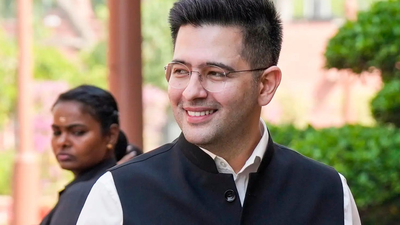
New Delhi: “Punjab is not a topic of discussion for me. It is my commitment. It is my soul,” AAP parted ways with MP Raghav Chadha On Sunday, he responded to the allegations made by AAP’s Punjab unit leadership a day earlier, saying he failed to raise issues affecting the state in Parliament despite repeated communications.The controversy started when AAP removed Chadha, Rajya Sabha MP from Punjab, from the post of deputy leader of the party in the Upper House on Thursday. Since then both the sides have been targeting each other.Chadha released a video message onHe highlighted several Punjab-related issues raised in the Upper House and described the allegations being made against him as “baseless and maliciously motivated” and “directly contradicted by the official parliamentary record”.Chadha also issued a written statement. “One of the main allegations against me is that I did not raise the issue of Punjab’s pending funds from the Centre. This is completely false. I had clearly raised this demand on July 31, 2024 and the record is available on Sansad TV,” Chadha said.Chadha said he raised the issue of pending RDF dues and spoke against the financial injustice being done to Punjab. He listed issues ranging from the worrying groundwater depletion crisis; farmers’ distress, including MSP concerns, rising input costs and agrarian distress; Need for more support for Punjab’s agricultural economy; Issues related to the drug menace and the need for a strong institutional response and border state security.He said, “My role as an MP has never been to indulge in noise, theatrics or demonstrative outrage. I have come to Parliament to create impact, not to create uproar.”“No smear campaign can suppress my voice or weaken my resolve. Truth will prevail. Facts will prevail. And every lie will be exposed,” the Rajya Sabha MP warned.

Source link

In Kashmir, porcupine pushed saffron to the brink. india news

Porcupine pushes saffron to the brink in Kashmir

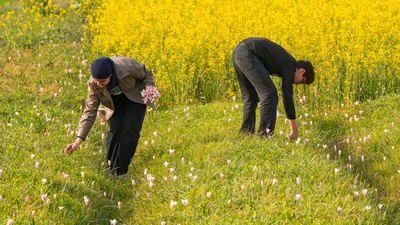
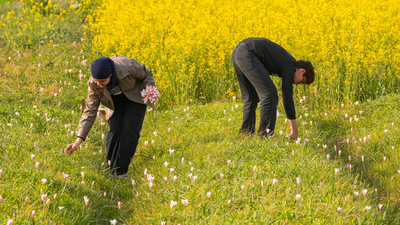
Srinagar: A thorny insect is hovering over the “red gold” of Kashmir. Farmers in Pampore now live on pins and needles.In the saffron highlands of Pampore – about 15 km south-east of Srinagar in Pulwama district – an unusual hunter is feasting on one of the region’s most prized crops. The burrowing Indian crested porcupine, a nocturnal rodent, has begun to eat the saffron thorns beneath the soil, hollowing out the crop before it has even bloomed.The corm is the underground, bulb-like stem of the Crocus sativus plant that produces autumn-blooming purple flowers and the precious red stigma used for the spice saffron – kong in Kashmiri, kesar in Hindi, zafran in Persian.National Conference’s Pampore MLA Hasaniyan Masoodi said the pace of destruction could wipe out the saffron of Kashmir in the coming years. “Porcupines are eating the saffron roots. Production has dropped from around 22,000 kg a decade and a half ago to around 1,000 kg now,” he said.The crisis came to the fore in the Jammu and Kashmir Assembly on Saturday, where Forest Minister Javed Ahmed Rana outlined measures after Masoodi raised concerns. He said wildlife and forest department teams are assessing the damage and mapping sensitive areas in the Kesar plateau of Pampore.Masoodi hit back saying the ground reality was very serious. “There has been no wildlife survey. I don’t know how these porcupines came to Kashmir, but now they are here and destroying crops,” he said.For many farmers, the losses are enormous. Some report up to 80% damage to fields.Production has almost disappeared in Khrew, a saffron-growing area within Pampore, about 20 km south-east of Srinagar. “Khrew once contributed about 4,000 kg of the total yield of 22,000 kg, but the fields there are now largely unproductive,” said Masoodi, who lives in the area.Wildlife experts and officials attribute the increase to a mix of ecological changes. Deforestation has reduced natural habitats, causing porcupines to move into cultivated lands. The decline in the numbers of predators – particularly leopards – has removed a significant check on their populations. Warm winters have increased foraging windows, allowing rodents to be active for longer periods of time year-round.Yet control options are limited. As a protected species under wildlife law, porcupines cannot be killed, turning crop damage into a raging human-animal conflict.Rana’s advice to farmers reads like a defensive manual: clear caves and bushes that harbor rodents, erect mesh barriers buried 1.5 meters deep to prevent burrowing, paint tree trunks white or wrap them in gunny bags to prevent movement at night, spray pepper-based biological repellents, place naphthalene near dens.Priority should be given to the most affected plots, he said.Masoodi said, farmers cannot bear this burden alone. “A roadmap has been outlined, but who will implement it?” he asked. “People lack resources. Without state action in the fields, farming will be abandoned.”This prospect weighs heavily on the Karewa suburbs of Pampore near Jhelum, long known as the “saffron heart” of the valley, where the spice has shaped livelihoods and identity for centuries. If the quills continue to winnow underground, flowers may stop growing above it.

Source link

Amidst the fear of Trump’s 48-hour threat, Foreign Minister Jaishankar received a call from Iran’s Foreign Minister Araghchi. india news

Amid fears of Trump's 48-hour threat, External Affairs Minister Jaishankar received a call from Iran's Foreign Minister Araghchi.
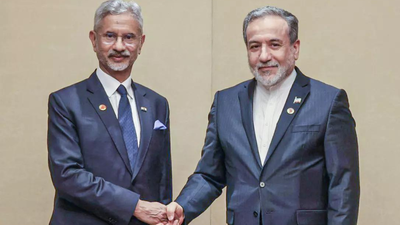
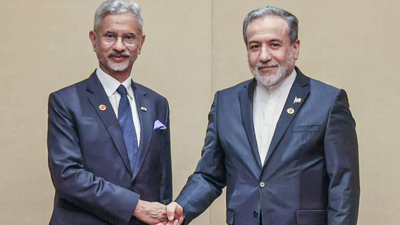
Jaishankar with Iran’s Foreign Minister Seyed Abbas Araghchi (file photo)

New Delhi: Foreign Minister S Jaishankar The call came from Iranian counterpart Abbas Araghchi on Sunday as tensions continued in the Middle East. “Received a call from Iran’s Foreign Minister Abbas Araghchi. Jaishankar said, “Discussed the current situation.” Although specific details of the call have not been released, the Iran Embassy in India also confirmed the call, saying the two leaders discussed bilateral relations and the regional, international situation. “Sayyid Abbas, Foreign Minister of the Islamic Republic of Iran, spoke by phone Subramaniam JaishankarThe Foreign Minister of India is discussing bilateral relations as well as regional and international developments,” the embassy on X said.

Watch

‘Come out solid’: S Jaishankar flags global risks, says India emerged resilient amid crisis

Before disclosing the call with Araghchi, Jaishankar revealed conversations with various leaders of Middle Eastern countries, namely- UAE Deputy PM, FM Abdullah bin Zayed Al Nahyan, Qatar PM Mohammed bin Abdulrahman bin Jassim Al Thani. Description of these call havens; Or released.This comes as Iran faces a 48-hour deadline from Trump to open the Strait of Hormuz following which the US President threatened to target the country’s power plants and bridges. Trump also issued a ‘humiliating’ warning to Iran on Sunday. He threatened serious military action, saying Tuesday would be “Power Plant Day and Bridge Day.” “Tuesday will be Power Plant Day and Bridge Day in Iran, all wrapped into one. Nothing like it will happen!!! Open the f*****’ straight, maniacs, or you’ll be in hell – just stay tuned! Praise Allah.Said the US President on Truth Social.Later, in an interview with Fox News, Trump said he saw a “good chance” that a deal could be reached with Iran by Monday. However, he made a threat, saying that if they did not reach an agreement, he would “blow everything up” and “take over the oil”.

Source link

‘Chabahar work will expand even more rapidly in post-war era’: Iran envoy india news

'Chabahar work will expand even more rapidly in post-war era': Iran envoy
File photo- Chabahar Port

New Delhi: Amid bombings and sanctions across West Asia, Iran has said its economic engagement with India will remain stable during the war and will grow rapidly once the situation stabilises. Iran’s Ambassador to India Mohammad Fatahli indicated this times of India The wartime disruptions are “mere speed bumps” and Tehran’s “outlook on the future of Iran-India economic relations – even during the war and especially in the post-war period – remains positive and broad”. “The economic cooperation between our two countries is built on mutual interests and trust and has significant potential for further development,” Fathali said. put spotlight on Chabahar Port The project, he said, is an important project in this relationship. “In this regard, Chabahar port, as a strategic project, plays an important role in strengthening trade and transit relations between Iran, India and the region,” he said.

Watch

‘Chabahar port… symbol’: Iranian envoy Fatahli’s strong message on India-Iran partnership

Located on Iran’s southeastern coast, Chabahar has long been a strategic bypass for New Delhi to landlocked Afghanistan and Central Asia, bypassing Pakistan’s blockade points, which do not allow land transit for Indian goods. The 10th-century Persian scholar and writer al-Biruni, in his book Tarikh al-Hind (History of India), described the coastal region near the city of Chabahar, then known as Tiz or Tis, as “the entry point or beginning of coastal India”.For Tehran, the port is a lifeline for global reintegration, countering decades of Western isolation. Fatahli stressed its regional pivot, saying, “We believe that Chabahar can become an important hub connecting Central Asia with open waters.”The Chabahar port project dates back to the 1970s, when Iran’s last Shah, Mohammad Reza Pahlavi, proposed it as a deep-sea hub in the Gulf of Oman. During the 1979 Islamic Revolution in Iran and the subsequent leadership change, work on the project slowed down. In the 1980s, when the Iran–Iraq War made Iran’s Persian Gulf routes unsafe, Iran doubled its focus on relocating its trade and expanding Chabahar.When India began talks to develop the port around 2003, its main objective was to provide access to Afghanistan and Central Asia, bypassing Pakistan. But it was also in response to initial construction in Pakistan’s Gwadar under Beijing’s flagship $62 billion China-Pakistan Economic Corridor (CPEC).The partnership was formalized with an MoU in 2015, in which India committed up to $500 million during PM Narendra Modi’s 2016 visit to Tehran. The agreement, renewed for 10 years in 2024 (previously renewable annually), promises to give India a direct sea-land corridor to Central Asia and beyond – vital for trade in minerals, grains and energy.Through Chabahar, goods can be shipped from Indian ports to Iran and then moved inland by road and rail and to Russia, Central Asia, Europe.India has invested in port equipment and operations, while Iran has worked on increasing connectivity from the port to its internal transportation network. Progress has been uneven due to sanctions on Iran and delays in infrastructure development.In the current phase of the port, India has committed over $350+ million in core investment as well as credit lines including equipment, berths, and the proposed next phase includes additional berths and rail connectivity, and it is anticipated that additional funds will be required. The Iranian envoy’s statement comes at a time when India is considering its options under US sanctions on Iran. The waiver deadline of April 26, 2026 is approaching.Amid ongoing uncertainty in the regional security environment, Fatahli’s comments signal optimism and assurance that the project will remain on track and gain momentum after its completion, despite ongoing geopolitical tensions.

Source link

Missing competition: Why the 2026 election is not about PM Modi and Rahul Gandhi. india news

Indira, Rajiv or Rahul Gandhi need 7 lives to arrest me: Himanta Sarma takes dig at Congress' 'Pappu'

file photo

About 17.4 crore voters in Assam, Kerala, Tamil Nadu, West Bengal etc. are preparing to cast their votes. Puducherry In the coming weeks, familiar motifs of election campaigning will be visible – Prime Minister Narendra Modi’s high-decibel rallies and Rahul GandhiIdeological messages in electoral states.Still, the election discussion remains far away from both the national leaders. The 2026 assembly election battle decisively focuses on regional leadership, local welfare models and state-specific political equations rather than PM Modi versus Rahul Gandhi.

Watch

Indira, Rajiv or Rahul Gandhi need 7 lives to arrest me: Himanta Sarma takes dig at Congress’ ‘Pappu’

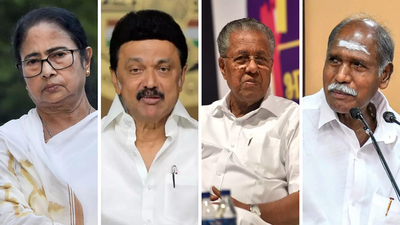
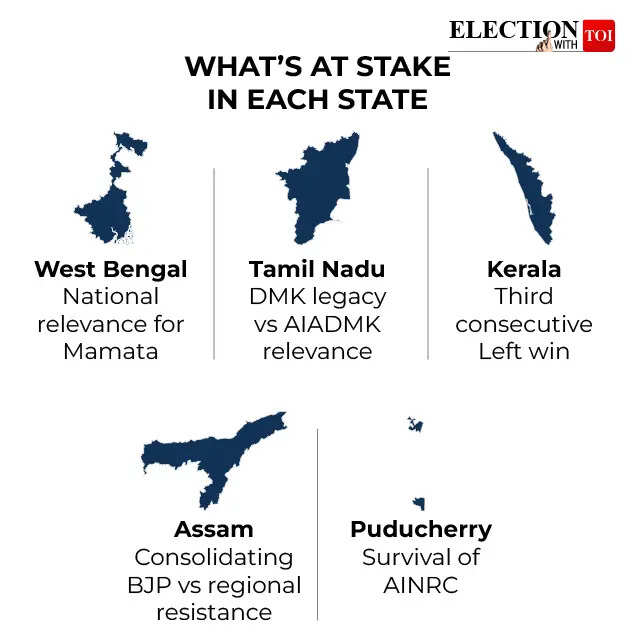
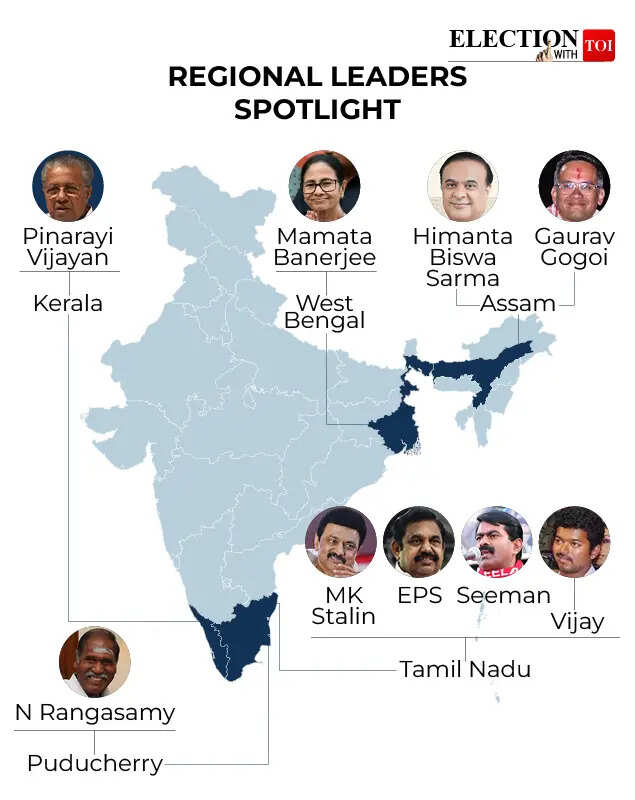
Strength test of regional satrapsIn the upcoming elections, all eyes are on Mamata Banerjee in West Bengal and MK Stalin in Tamil Nadu. At the same time, the competition between Pinarayi Vijayan and Himanta Biswa Sarma is expected to be equally intense in Kerala and Assam.Although these battles are unfolding in different political arenas with different players, they are linked together by a common theme: it is do or die for regional leaders.For the BJP, these elections present an opportunity to expand its footprint in states that have traditionally opposed it. However, the stakes are much higher for regional parties. The election this time is not just about retaining power, but will also decide his influence within the Indian bloc at the national level.Mamata BanerjeeIn West Bengal, the contest once again focuses on Mamata Banerjee’s strong political base, including the strong support of Muslim voters, who form about a third of the electorate, along with support from other sections.For Mamata Banerjee, Bengal is not just a state – it is the basis of her core political identity and power.TMC has very little presence outside Bengal. Losing here would mean losing national relevance overnight. After years of resisting the BJP’s rise, another strong challenger is testing whether its grip remains intact or is beginning to loosen.The low mandate, even if not a loss, also weakens Mamata’s stature in the opposition sector. The BJP, despite being firmly established as the main challenger, is struggling to convert its earlier advantage into a decisive one.mk stalinFor MK Stalin and his Dravida Munnetra Kazhagam (DMK), the 2026 Tamil Nadu election is no routine electoral test – it is a defining moment that will define both political longevity and legacy.Having come to power in 2021 with a strong mandate, Stalin now faces the burden of governance. This election is less about promises and more about performance. Welfare distribution, administrative control and economic management will be closely examined. Even a reduced majority could indicate early signs of voter fatigue, altering the perception of DMK dominance.This threat is heightened by Tamil Nadu’s political history of alternative governance. A second consecutive victory will help the DMK break its illusion of being in power continuously.For the DMK, this time it is not just about winning the elections but also performing with a high strike rate to maintain the lead. Congress In alliance. Edappadi K PalaniswamiEdappadi K Palaniswami has made matters more complicated for Stalin. and All India Anna Dravida Munnetra Kazhagam (AIADMK) which remains a major challenge. But for EPS, the choice is about being relevant.Since the death of J Jayalalithaa, the AIADMK has struggled to retain its former dominance. EPS has gradually consolidated control within the party, but this election is his first full test as the undisputed face of the organisation, especially as his arch rival O Panneerselvam has joined hands with MK Stalin.A strong performance will validate his leadership and re-establish AIADMK as a credible alternative to the ruling DMK. However, a weak performance could reopen internal fault lines and leadership questions.

regional leader2

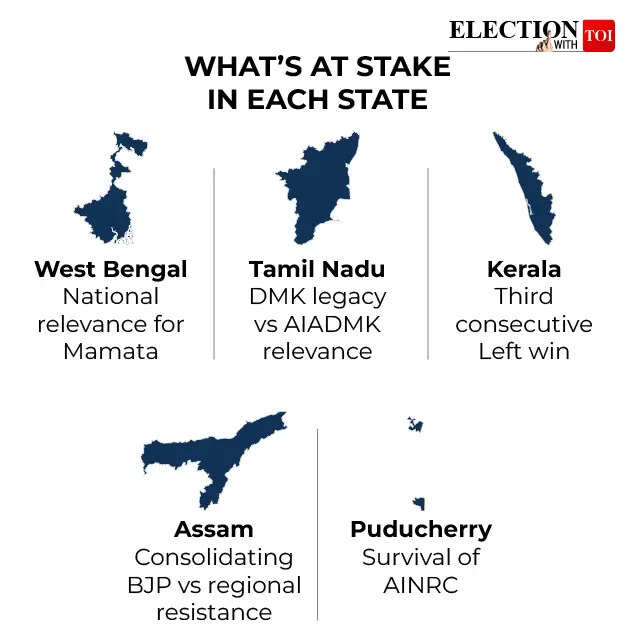
What’s at stake in each state

seamanFor Seeman and Naam Tamilar Katchi (NTK), this election is not about immediate power, but about breaking the bounds of relevance.In the last few elections, NTK has carved out a distinct political identity rooted in Tamil nationalism. However, this support largely remains vote share without seats. NTK got 6.6% vote share in the 2021 elections, which is more than BJP and Congress. The central question this time is whether that support will ultimately translate into seats.For Seaman, the stakes are intensely personal and political. His appeal as a motivator, especially among youth and first-time voters, has kept NTK visible. But its repeated failure to win seats risks creating a perception of the party as a permanent outsider, strong on rhetoric but weak on electoral conversion.Pinarayi VijayanFor the Left Democratic Front led by Pinarayi Vijayan and the Communist Party of India (Marxist), the 2026 Kerala elections are a decisive test of stability rather than emergence.Vijayan created history in 2021 by breaking the long-standing pattern of changing governments in Kerala and securing a rare consecutive term for the Left. That win raised the stakes for 2026. A third consecutive victory will not only strengthen his leadership but also signal an unprecedented political shift in a state known for cyclical mandates.This election is also a referendum on the governance system. Vijayan’s tenure has been marked by an emphasis on welfare delivery, infrastructure and crisis management, but it has also faced criticism over issues ranging from financial stress to allegations of administrative overreach. With the possibility of an accumulated anti-incumbency wave over two consecutive terms, the margin of error is significantly reduced.Beyond Kerala, the result holds symbolic significance. Vijayan is one of the most prominent Left leaders in the country and a victory will strengthen the relevance of Left politics in India’s current political scenario. On the other hand, defeat means the end of Left rule in India, ironically on the eve of Karl Marx’s birthday.N RangasamyFor N Rangasamy and the All India NR Congress (AINRC), the 2026 Puducherry elections are about political survival and relevance in a tightly contested Union Territory.Rangasamy, often seen as Puducherry’s most recognizable regional face, has built his appeal on a governance-first image and personal credibility. However, leading a relatively small regional party, his political position is naturally fragile.A strong mandate will confirm his position as the central lynchpin of Puducherry politics; A poor performance can quickly destroy that position.Dependence on alliances has further increased the challenge. AINRC’s partnership with the BJP has been crucial to forming and maintaining a government, but it also strikes a delicate balance. While the alliance consolidates votes, it raises questions about how much independent political ground the AINRC retains.Therefore, for Rangasamy, a victory would strengthen the viability of a regional power in a politically fluid region. However, a defeat or lower numbers may reduce AINRC to a dependent player in the alliance with the BJP rather than a leading one.

regional leader

Keep an eye on regional leaders

BJP’s focus: expansion without any urgencyFor the BJP, this election is not a make or break moment but an exercise in strategic maneuvering.In West Bengal, despite sustained political and institutional pressure on TMC, Mamata Banerjee’s grassroots network is limiting the BJP’s chances of a decisive success. Similarly, in Tamil Nadu, the party has shifted from short-term electoral ambitions to long-term political repositioning as it seeks to expand its base and potentially displace AIADMK as the major opposition force over time.In Kerala, the BJP’s objectives remain incremental. Gains in vote share or marginal seat expansion would be interpreted as progress in a historically resistant political landscape.Importantly, the BJP’s stable position at the Center reduces the immediate political costs of poor performance in these states. This turns the elections into a low-risk, long-horizon investment cycle rather than an existential contest.Congress and concern for national revivalFor the Congress, the 2026 elections underline its continued dependence on regional alliances rather than an independent resurgence.In Tamil Nadu, the party’s electoral viability is closely linked to the DMK-led alliance. In West Bengal, it is organisationally marginalised, sandwiched between the TMC and the Left Front. The only state where the Congress has retained the primary leadership role is Kerala, where the UDF’s fight against the ruling LDF is largely driven by cyclical anti-incumbency and governance issues.This points to an important limitation of the piece: even where Congress performs well, the results are unlikely to translate into a broader national revival narrative. The elections reinforce the party’s current position as a junior partner within the anti-BJP opposition rather than the central pole of national politics.piecesA key feature of the 2026 elections is the increasing prominence of sub-regional and non-traditional political actors, further reducing the influence of national leaders like PM Modi and Rahul Gandhi.In Tamil Nadu, the emergence of actor Vijay has brought a new spin to the already complex competition. By foregrounding the themes of regional identity and governance reforms, such entrants move the discourse away from national ideological dualism.In Kerala, the contest is structured around the LDF-UDF polarity, but voter preferences rest firmly on local governance issues, welfare delivery and state-specific controversies. In this context, national narratives operate at the margins.In Assam, although both the national parties are fighting with prominent regional faces – Himanta Biswa Sarma and Gaurav Gogoi – the issues and campaigning are focused on state-level issues rather than national issues.Far from being a PM Modi versus Rahul contest, the 2026 elections are a test of regional resilience. Despite the presence of both national leaders in the campaign, neither is the deciding factor in these contests. Instead, the real battle is being fought by state satraps to protect their territory or regain relevance and the outcome will depend on regional leadership, local coalitions and governance records.

Source link

Excise case: Kejriwal, others file petition in High Court; Former Delhi Chief Minister will debate in person. india news

Excise case: Kejriwal, others file petition in High Court; Former Delhi Chief Minister will debate in person

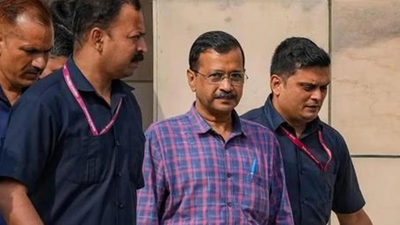
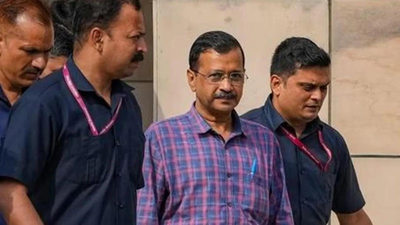
Former Chief Minister of Delhi Arvind Kejriwalalong with other former accused, filed a plea to recuse themselves before Justice Swarn Kanta Sharma on Sunday Delhi High Court In the alleged liquor scam.according to Aam Aadmi PartyKejriwal will appear on Monday and present his side.Just a few days before this, the High Court had given Kejriwal and others the last opportunity to present their side on a petition. Enforcement Directorate To remove “unfair” observations made against it by the trial court while acquitting him in the liquor policy case.

Watch

‘I am not corrupt’: Arvind Kejriwal breaks down in tears after court acquits him, Sisodia in excise policy case

On 11 March, Kejriwal led an appeal to Chief Justice Upadhyay to assign the case to another “impartial” judge. In the representation, Kejriwal claimed that he had a “serious, bona fide and reasonable apprehension” that the trial in the case would not be fair and impartial.He has also challenged Justice Sharma’s March 9 order, in which he had stayed the trial court’s direction to investigate the CBI officer investigating the excise policy case.

Source link

National Maritime Day: India’s oil lifeline churns through conflict waters | India News

National Maritime Day: India's oil lifeline churns through conflict waters

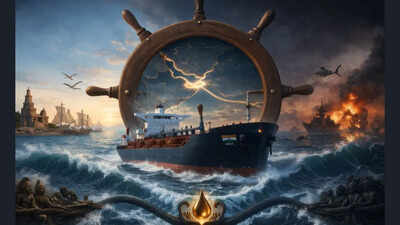
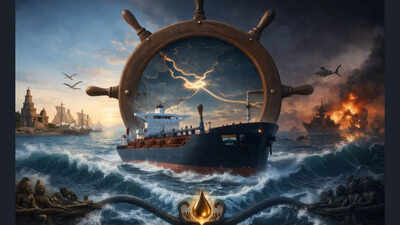
On National Maritime Day, when India pauses to mark the historic voyage of its first modern merchant ship and celebrate a legacy that stretches back to ancient seafarers, the focus is usually on pride. This year, however, it may also be a moment to look harder at the seas that sustain it. In many ways, the turbulence in global sea lanes resembles a modern samudra manthan, a churning of the oceans where both risk (poison) and opportunity (nectar) surface together, testing how nations respond.

Watch

Indian Navy Boosts Nuclear Deterrence With INS Aridhaman Submarine, Enforces Undersea Strike Power

The churn is no longer distant as the circumstances are edged with urgency. Far from ceremonial speeches and commemorative events, India’s maritime reality is unfolding in some of the world’s most volatile waters, where tankers and cargo ships navigate not just distance but danger! The challenge is not only to shield these lifelines, but to turn this churn into advantage, extracting strategic and economic gains from a crisis that cannot be wished away.On most days, India’s economic heartbeat is invisible. It does not pulse through stock exchanges or policy corridors but across vast, restless waters where ships move quietly between continents. Yet, when conflict erupts in narrow choke points like the Strait of Hormuz, that invisible system becomes the country’s most visible vulnerability.
Five Pillars & Subcategories of the Sagarmala Programme6

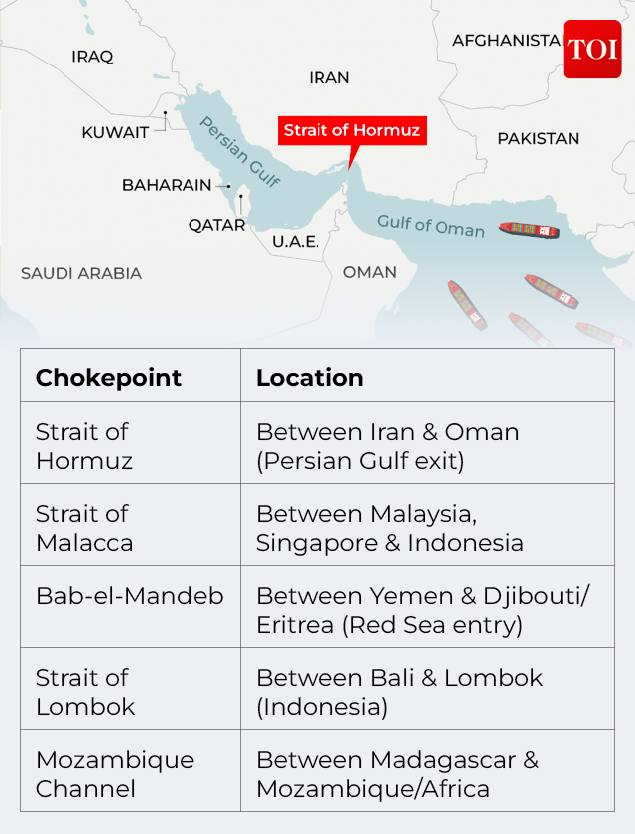
Major chokepoints

The ongoing tensions have done exactly that, forcing India to confront a reality it has long managed but rarely foregrounded.Its growth, its energy security and its strategic autonomy are all tied to sea lanes that run through some of the most volatile regions on the Earth.A narrow strait that powers a giant economyThe Strait of Hormuz is not just another maritime passage. It is the artery through which nearly a fifth of the world’s oil flows, and for India, its importance is even more acute. Around 80 per cent of India’s energy imports pass through this corridor, making it a single point of failure for a country that is among the world’s largest energy consumers. The recent escalation involving Iran, Israel and the United States has demonstrated how quickly this artery can constrict.
Five Pillars & Subcategories of the Sagarmala Programme5

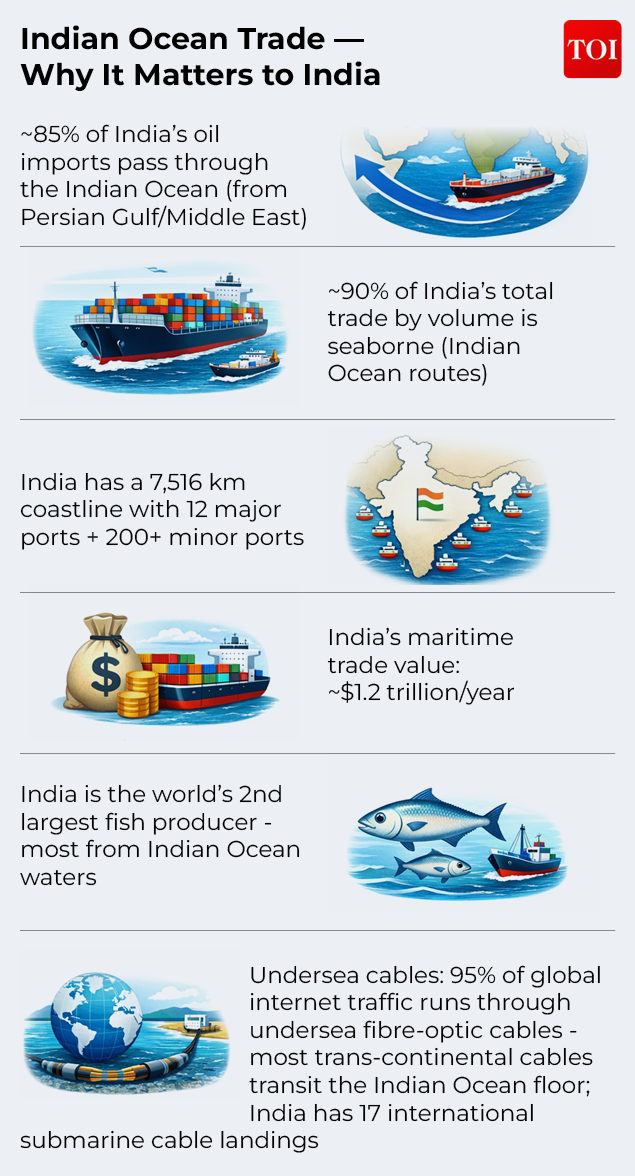
Importance of Indian ocean

Tanker traffic has slowed, vessels have been stranded and insurance costs have surged. For India, this has translated into immediate concerns over supply disruptions, rising crude prices and broader macroeconomic stress.The numbers strikingly reflect the scale of exposure. India imports more than 85 per cent of its crude oil and a significant share of its natural gas. Nearly half of that crude and over 60 per cent of LNG and LPG have historically moved through Hormuz. This is not just an energy issue but a systemic one. When oil flows are disrupted, inflation rises, the rupee weakens and industrial costs climb.Operation Sankalp and the navy’s silent watchAs tensions escalated, India responded not just through diplomacy but through deployment. Under Operation Sankalp, Indian naval warships have been maintaining a constant vigil in the Gulf region, escorting merchant vessels and ensuring safe passage through high-risk waters.At any given moment, dozens of Indian seafarers and vessels operate in and around the Persian Gulf. During the current crisis, several India-bound ships carrying crude oil and LPG were stranded or forced to alter routes. The navy’s role has been to provide a security umbrella, deterring threats ranging from missile strikes to drone attacks.The deployment of advanced warships such as INS Surat reflects a broader shift in India’s maritime posture. The navy is no longer confined to coastal defence. It is increasingly tasked with protecting sea lines of communication that stretch from the Gulf of Aden to the western Pacific.Trade rides the wavesEnergy is only one part of the story. Nearly 95 per cent of India’s trade by volume moves by sea. From crude oil and LNG to coal, fertilisers and electronics, the country’s economic lifeline is maritime.The Strait of Hormuz is central to this network, but it is not the only chokepoint. The Red Sea and the Suez Canal form another critical corridor linking India to Europe. Disruptions in these regions create a double vulnerability, forcing ships to take longer routes around the Cape of Good Hope, increasing costs and delays.
Five Pillars & Subcategories of the Sagarmala Programme8

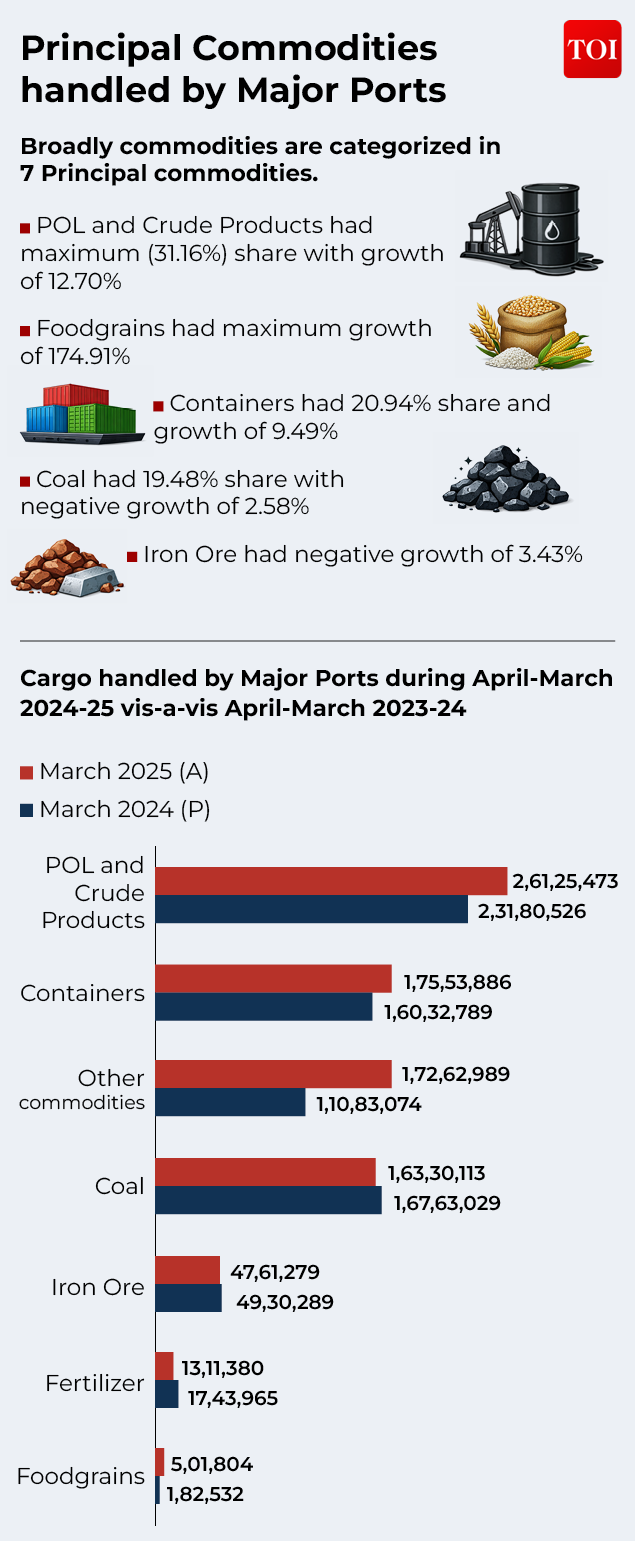
Principal commodities handled by major ports

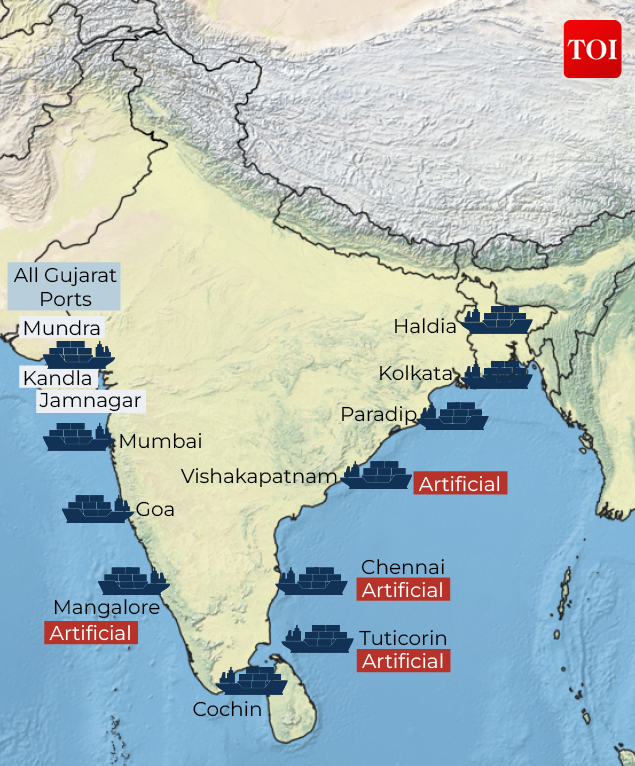
India’s trade exposure to Gulf economies is also significant. About 16 per cent of its total trade is linked to this region, making any disruption not just an energy crisis but a broader economic challenge.Ports as gateways to prosperityIndia’s coastline stretches over 7,500 kilometres and hosts a network of major and minor ports that serve as gateways to global trade. Ports such as Mumbai, Kandla, Visakhapatnam, Chennai and Kochi handle millions of tonnes of cargo every year.
Five Pillars & Subcategories of the Sagarmala Programme2

Ports in India

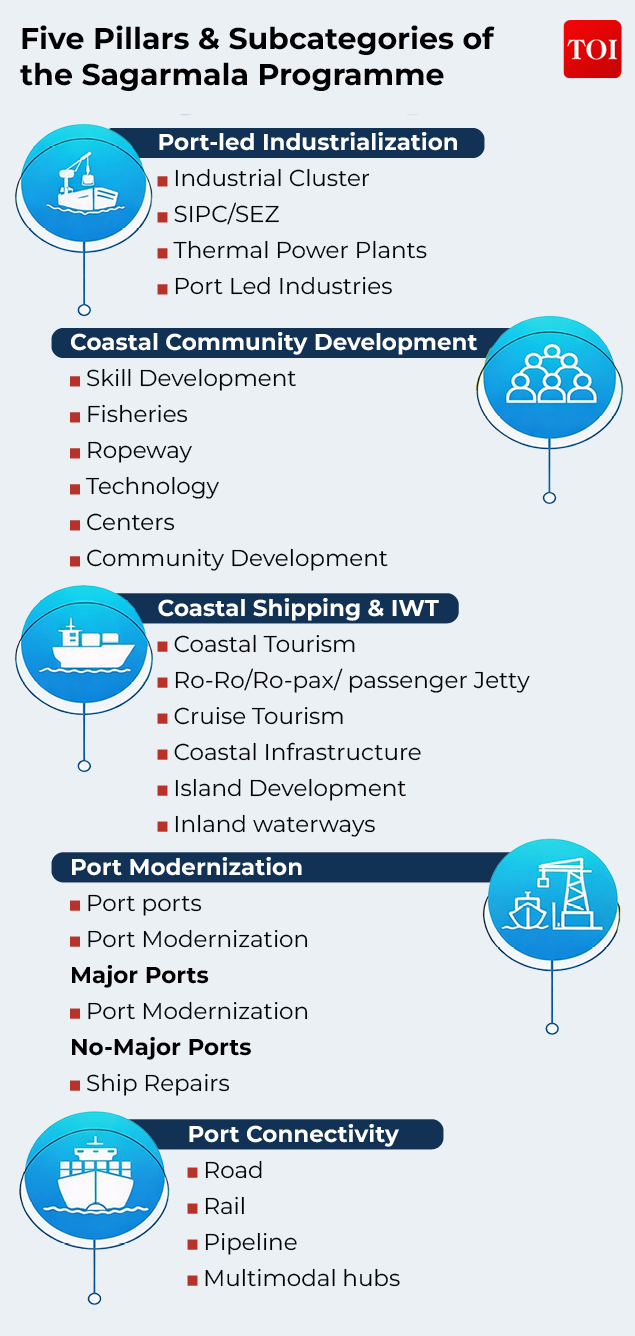
Each port has its own specialisation. Western ports like Kandla and Mumbai handle large volumes of crude oil and petroleum products due to their proximity to the Gulf. Eastern ports such as Paradip and Visakhapatnam are crucial for coal and mineral exports. Southern ports like Chennai and Tuticorin play a key role in container traffic and industrial goods.The principal commodities moving through these ports reflect the structure of India’s economy. Crude oil, LNG, coal, iron ore, fertilisers and containerised goods dominate the cargo mix. This heavy reliance on imported energy and raw materials further amplifies the importance of secure maritime routes.Government initiatives such as Sagarmala aim to modernise ports, improve connectivity and reduce logistics costs. While these efforts enhance efficiency, they do not eliminate the risks posed by external chokepoints like Hormuz.
Five Pillars & Subcategories of the Sagarmala Programme

Sagarmala Programme

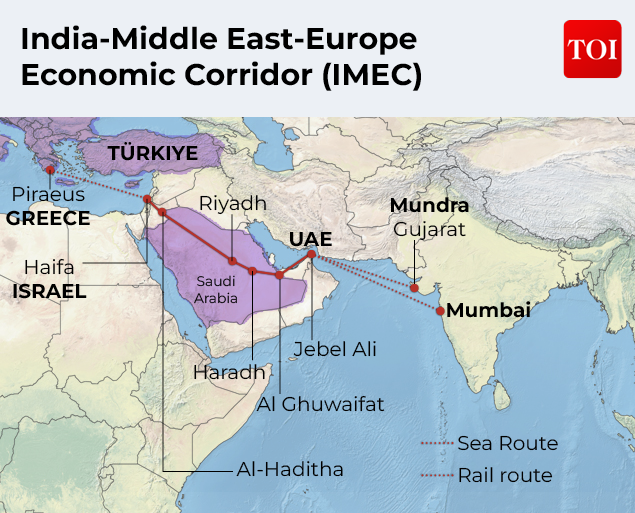
The IMEC factor and the search for alternativesThe India-Middle-East-Europe Corridor (IMEC) has emerged as a strategic response to some of these vulnerabilities. By combining maritime and overland routes, it aims to create an alternative pathway linking India to Europe through the Middle East.The corridor is significant not just for trade but for geopolitics. It reduces dependence on traditional routes and offers a framework for deeper economic integration with Gulf and European partners. However, it is not a complete substitute for existing sea lanes. Maritime routes will continue to dominate due to their scale and cost efficiency.
Five Pillars & Subcategories of the Sagarmala Programme3

IMEC

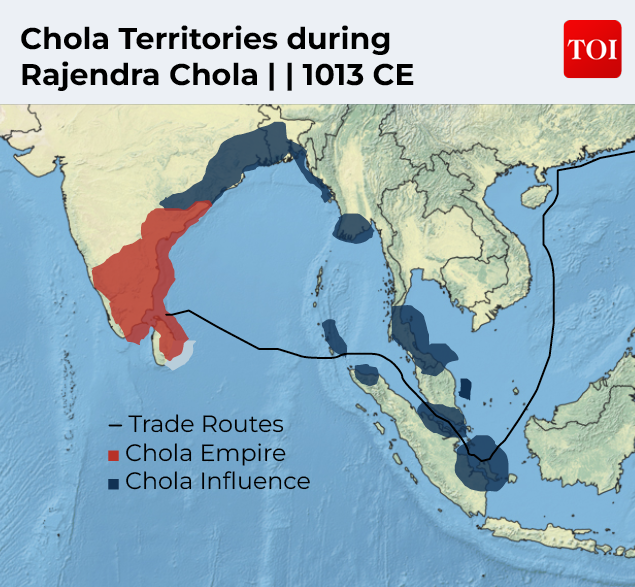
What IMEC does offer is redundancy. In a world where chokepoints can be disrupted by conflict, having multiple pathways becomes a strategic necessity rather than a luxury.A legacy written in the wavesIndia’s maritime story did not begin with modern trade or globalisation. It stretches back thousands of years to the Harappan civilisation, where ports like Lothal served as hubs of international commerce.Archaeological evidence shows that Harappan traders navigated the Arabian Sea, exporting goods such as carnelian beads to Mesopotamia. The construction of a sophisticated dockyard at Lothal demonstrates an advanced understanding of tides and maritime engineering.Ancient texts further reinforce this legacy. The Rigveda contains references to ocean voyages and ships with multiple oars. The Arthashastra describes administrative structures for managing maritime trade, including officials responsible for overseeing navigation and taxation.Prime Minister Narendra Modi on Sunday highlighted India’s maritime heritage and lauded the contribution of those associated with the sector on National Maritime Day.In a post on X, Modi said the dedication of people linked to the maritime sector plays a vital role in strengthening the country’s economy, trade and connectivity.“On National Maritime Day, we recall India’s maritime heritage and the invaluable contribution of all those associated with this sector. Their dedication strengthens our economy, trade and connectivity,” he said.Empires that ruled the seasIndia’s maritime prowess continued through successive empires. The Mauryas maintained a structured naval administration, while the Satavahanas facilitated trade with the Roman world. Roman coins found in India testify to the scale of this exchange.The Cholas represent the high point of India’s naval power. Their fleets dominated the Bay of Bengal and extended influence into Southeast Asia, conducting expeditions that were both military and commercial. Their maritime networks connected India to China and beyond, shaping trade and cultural exchange across the region.
Five Pillars & Subcategories of the Sagarmala Programme4 (1)

Chola Territories during Rajendra Chola

This long history signifies a crucial point. Maritime activity has always been central to India’s economic and strategic identity. The oceans were not barriers but bridges.From decline to resurgenceIndia’s maritime power declined during the colonial period, as European powers established control over sea routes. Indigenous shipbuilding and naval capabilities were gradually eroded, and India became dependent on foreign-controlled maritime systems.The post-independence period marked a slow but steady resurgence. The Indian Navy evolved into a modern force capable of operating across the Indian Ocean. Anti-piracy missions in the Gulf of Aden and humanitarian operations have reinforced its role as a net security provider in the region.Today, initiatives such as SAGAR and MAHASAGAR reflect a broader strategic vision. They emphasise security, cooperation and sustainable development across the Indian Ocean region, positioning India as a key maritime actor.The new age of maritime riskThe Hormuz crisis has highlighted a fundamental shift in the nature of maritime threats. Unlike piracy, which involves non-state actors, the current risks stem from state-level conflicts involving advanced weaponry such as missiles and drones.This changes the calculus of maritime security. Protecting sea lanes now requires not just naval presence but also intelligence, coordination and international cooperation. It also demands integration with economic and diplomatic strategies.India’s response has already begun to reflect this shift. Enhanced monitoring systems, regulatory measures and multi-agency coordination have been put in place to manage the crisis.Building resilience in uncertain watersThe immediate response to the Hormuz disruption has been diversification. India has expanded its pool of energy suppliers, reducing reliance on a single region. This is a necessary but not sufficient step.Long-term resilience requires a broader strategy. Expanding strategic petroleum reserves can provide a buffer against short-term disruptions. Investing in alternative routes and infrastructure can reduce dependence on chokepoints. Strengthening naval capabilities can enhance the ability to secure sea lanes.Equally important is integrating maritime considerations into economic planning. Energy security, trade policy and foreign relations must all account for the risks associated with maritime routes.National Maritime Day is often seen as a celebration of India’s seafaring heritage. This year, it carries a more urgent message. The seas that have enabled India’s rise are also its most significant vulnerability.The Hormuz crisis is not an isolated event but a glimpse into a future where maritime disruptions may become more frequent. In such a world, the security of sea lanes is not just a naval concern but a national priority.India’s journey from the docks of Lothal to the modern ports of Mumbai and Visakhapatnam reflects a continuity of maritime engagement. The challenge now is to adapt that legacy to a new era of uncertainty.When the oceans are secure, India’s economy flows smoothly. When they are disrupted, the consequences ripple across every sector.In the end, the story of India’s maritime lifeline is not just about ships and routes. It is about resilience, strategy and the ability to navigate a world where the calmest waters can suddenly turn turbulent.

Source link