Cyprus’s desire to buy BrahMos, Kamikaze drones from India has worried Turkey. india news

Cyprus's desire to buy BrahMos, Kamikaze drones from India has Turkey worried

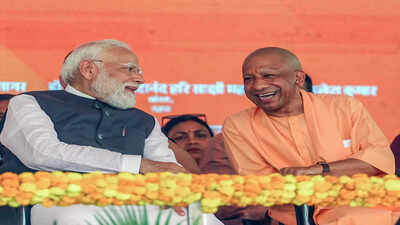
New Delhi: Cyprus has shown keen desire to purchase Brahmos Cruise missiles and unmanned aerial vehicles from India. The recent visit of Cyprus President Nicos Christodoulides to New Delhi has set the stage for this possible takeover. However, the possibility of Cyprus acquiring BrahMos missiles has already raised alarm bells in Turkish strategic and security circles.Apart from BrahMos, Cyprus is also interested in purchasing kamikaze drones like India’s Nagastra-1 and Skystriker. If these defense deals are finalized, the agreements would be a major strategic blow to Turkish President Recep Tayyip Erdogan, given Ankara’s decades-long occupation of Northern Cyprus. If the deal is signed, it will also mark the first deployment of Indian-made weapons systems in the Eastern Mediterranean.Turkey’s move to secretly send hundreds of drones to Pakistan during the height of the India-Pakistan conflict in May 2025 and its repeated controversial comments on Kashmir on various platforms had already created a rift between New Delhi and Ankara.Defense analysts in Ankara fear that deploying these supersonic missiles or kamikaze drones in the Mediterranean Sea could fundamentally alter the regional military balance and threaten Turkey’s security.Countries around the world have already seen how India used BrahMos missiles to destroy key military targets of Pakistan during the conflict in May. Some reports claim that the potential BrahMos purchase for Cyprus would be made under the EU’s SAFE program as part of a defense package of approximately 1.2 billion euros allocated to the Greek Cypriot administration.During Christodoulides’ visit, PM Modi and the President welcomed the conclusion of the Roadmap for Bilateral Defense Cooperation (2026-2031) between the Defense Ministries. They underlined the potential for significant cooperation in the defense sector and also welcomed the signing of a technical arrangement for the establishment of official coordination and cooperation on Search and Rescue (SAR) matters.“These will provide an institutional framework to promote defense industrial cooperation and technology partnership, build on the momentum of the India-EU Defense and Security Partnership signed on January 27, 2026, as well as facilitate exchanges, training and capacity building.

Source link

Tribal people demand stop of tiger safari, eviction from forests of South India. india news

Tribals demand stop of tiger safari, eviction from forests of South India

TOI correspondent from London: Save the tiger. Sell ​​the forest. Destroy people. to stop. Tribal communities from Karnataka, Kerala and forests spread across the country Tamil Nadu There has been a pushback against wildlife tourism and tiger reserve expansion, accusing forest officials and conservation groups of turning ancestral homelands into a commercial safari “spectacle”, while indigenous families are evicted and forced into marginalization.More than 35 tribal villages under the Nagarhole Adivasi Jamma Pale Hakku Sthapana Samiti of Kodagu and Mysuru in the forest region of Karnataka, about 220 km southwest of Bengaluru, on Thursday issued a joint “Nagarhole Declaration” demanding an immediate stop to all transfers from the forests, saying none were voluntary.The announcement came after a marathon community dialogue held at Balekavu village inside the Nagarhole forests from May 5 to 7, where tribal activists from Wayanad in northern Kerala, the Muthanga Wildlife Area near the Kerala-Karnataka border, the Sathyamangalam tiger landscape in western Tamil Nadu and the Mudumalai Reserve in the Nilgiris gathered to form a common front in the Western Ghats tiger belt.Their charge was clear: forests once visited, hunted, worshiped and buried by indigenous communities are being fenced, branded and monetized through tiger safaris and conservation projects without the forest dwellers’ consent.The manifesto accused the forest department and the National Tiger Conservation Authority of usurping customary land and turning it into a “commercial spectacle”. It says, “What the forest bureaucracy calls core areas or critical tiger habitat is our ancestral land, our sacred space.”It says the Forest Rights Act of 2006, designed to address historical injustice against forest communities, has failed to protect them on the ground. Instead, “the injustice continues” through safari jeeps driving on lands where “our ancestors walked and are buried”, through conservation schemes imposed on villages and through generations trapped in bonded labor on tea and coffee plantations.“It is unconscionable that in states like Karnataka, Kerala and Tamil Nadu that proclaim themselves as champions of social justice, thousands of tribal families remain trapped in conditions that can only honestly be described as slavery,” the manifesto said.The document portrays the conservation fight in historical contexts, arguing that the violence unleashed under colonial forest laws never ended after independence, but only “put on a green uniform under the mask of conservation”.Tribal people alleged that notifications declaring national parks and tiger reserves were put forward without following legal procedures. He demanded that the ancestral areas be recognized as “Scheduled Areas” under the Constitution, giving stronger self-governance rights to tribal communities.The declaration claimed that forest and tourism departments in the three states have “no legitimate authority” to operate, license or commercialize wildlife safaris on traditional tribal lands without the informed consent of village councils. It demanded immediate suspension of all safari operations until such consent was obtained.The sharpest words were aimed at wildlife NGOs supporting a fortress-style conservation model. “Conservation that requires us, the indigenous people, to be evicted from the land is not conservation. This is colonization,” the declaration said.Activists said the fight over forests is no longer just about wildlife conservation. It is about whether ancient indigenous footprints will survive under the tire tracks of rapidly expanding safari tourism. Jenu Kuruba activist JK Thimma said, “We are the first people of this land. We are not encroachers.” “There is no conflict between us and the animals in the forest.”The declaration said that the rights guaranteed under the Forest Rights Act – which recognizes forest dwellers as custodians of forest resources – have allegedly been ignored, rendering many tribal communities “constitutionally invisible”.

Source link

Government’s warning to industrial consumers: The government has warned industrial consumers against purchasing from retail pumps. india news

Government has warned industrial consumers against purchasing from retail pumps

New Delhi: Issuing a stern warning to industrial consumers buying diesel from retail outlets due to differential pricing and creation of artificial shortage of fuel in some parts of the country, the government on Wednesday said there is “more than enough” supply of petrol and diesel to meet the demand.The government said industrial consumers are shifting their purchases to retail pumps, leading to local shortages at the expense of ordinary citizens, and urged industry associations to make them aware of the consequences of such violations. It also asked states and union territories to form special squads and take strict action against bulk consumers purchasing from retail shops, hoarders and black marketeers under relevant provisions of the Essential Commodities Act and control orders.According to the government, about 29% of the bulk diesel volume of public sector oil retailers shifted to retail outlets in the current month, while sales volumes at fuel stations run by private oil marketing companies declined by 38%.While the price of diesel for retail consumers in Delhi is Rs 95.2 per litre, bulk consumers like industries get it at Rs 134 per litre. Private oil retailers also sell diesel at more than Rs 130 per litre.Officials said there were continuous reports of shortage at retail outlets from different parts of the country, following which an assessment was conducted by both the petroleum ministry and oil marketing companies. The assessment found that wholesale consumers were purchasing from retail stores.While Petroleum Minister Hardeep Singh Puri was coordinating with public sector OMCs, states and industry bodies to ensure uninterrupted supply of petrol and diesel to all, Petroleum Secretary Neeraj Mittal also held a review meeting with Chief Secretaries of states and UTs, which was attended by industry bodies FICCI and CII.“The picture that emerges from the field is consistent. There is no shortage of any petroleum product. There is a pattern of arbitrage in pockets which is creating an appearance of disarray,” the petroleum ministry said in a statement.Amid the disruptions in West Asia, state-run OMCs have deliberately kept petrol and diesel prices low to protect retail customers – families, two-wheeler commuters and farmers at the pump – while incurring a loss of around Rs 550 crore per day on sales of petrol, diesel and domestic LPG. “This does not extend to industrial procurement, where pricing tracks international actual data as a matter of permanent policy,” the government said.

Source link

Siddaramaiah is out, but troubles may begin for Shivkumar and Rahul Gandhi. india news

Siddaramaiah is out, but trouble may begin for Shivkumar and Rahul Gandhi

New Delhi: Outgoing Chief Minister of Karnataka Siddaramaiah Looks like he left a ticking bomb as a farewell gift to his successor DK Shivakumar And Rahul Gandhi Before deciding to step down from his post on Thursday.A day before resigning as chief minister, Siddaramaiah on Wednesday accepted the long-delayed educational survey report of the Karnataka State Backward Classes Commission, known as the caste census.Read this also Siddaramaiah’s resignation, Shivakumar’s top post decided: Will Congress’ ‘drama’ end in Karnataka or will it continue as before?The report on Karnataka’s first caste survey has been prepared since 2017, during Siddaramaiah’s previous tenure as chief minister. After returning to power in 2023, Siddaramaiah ordered a fresh caste survey, the report of which was to be prepared in 2025.Siddaramaiah’s decision to accept the report just before leaving office is being seen as an important political message.Critics had alleged that successive governments refrained from acting on the first report due to fear of reaction from Lingayats and Vokkaligas, politically influential communities in the state.With the revised report now formally submitted, the focus turns to the next chief minister and cabinet, who will have to decide whether to implement its recommendations.why it mattersThe Karnataka government’s 2025 Caste Survey is one of the most comprehensive exercises conducted by the state to find out the socio-economic status of backward classes, other castes, scheduled castes and scheduled tribes.Read this also Siddaramaiah rejects Congress high command’s Rajya Sabha proposal: Pressure strategy or long-term strategy?However, the report is politically sensitive as it has the potential to disrupt Karnataka’s carefully balanced caste equations. Reports suggest that the number of backward communities may exceed that of Lingayats and Vokkaligas – the two dominant communities that have traditionally shaped the state’s politics for decades.Siddaramaiah’s Ahinda politics – an alliance of minorities, backward classes and Dalits – was designed to challenge that dominance by uniting numerically strong but politically fragmented groups. The caste census report is now being seen as an empirical validation of the social strength of the AHINDA block and could restart that political battle on a larger scale.

.

Due to this DK Shivkumar is in a difficult situation. Shivakumar is not only the most prominent Vokkaliga leader of the Congress in Karnataka, but is also credited with rebuilding the organizational structure of the party in the state.If the government led by him goes ahead with presenting or implementing the report, it risks a backlash from the influential Lingayat and Vokkaliga communities. On the other hand, delaying the report or shelving it could erode AHINDA’s support base that Siddaramaiah has carefully built up over the years to the Congress.In fact, Siddaramaiah has pushed DKS into a difficult position.Rahul Gandhi’s credibility at stake?Karnataka’s caste census also poses a political challenge at the national level for Rahul Gandhi, the leader of the opposition in the Lok Sabha.Rahul Gandhi has made caste census a central pillar of the national politics of the Congress Party. He has argued that accurate caste data is essential to ensure social justice, fair representation and targeted welfare policies for OBCs, Dalits and minorities.It was Rahul Gandhi who strongly pressured Congress-ruled states to conduct caste surveys to show the party was serious about implementing its politically supported social justice agenda.Under Revanth Reddy, Karnataka and Telangana emerged as the biggest testing grounds for that strategy.If the next government led by Shivakumar refrains from implementing or presenting the report, it could undermine Rahul Gandhi’s larger national narrative on social justice. This will give the BJP an opportunity to accuse the Congress of demanding a caste census at the national level, while being hesitant to act on it in states where it faces political resistance.

Source link

Government may use IAF aircraft to transport question papers for NEET re-exam: Report india news

Government may use Air Force aircraft to transport question papers for NEET re-exam: Report

New Delhi: The Center is considering the possibility of using the Indian Air Force to transport the NEET-UG paper to ensure foolproof conduct of the re-exam on June 21, news agency PTI reported citing sources.This comes after a high-level meeting chaired by Defense Minister Rajnath Singh. Interestingly, Education Minister Dharmendra Pradhan and Communications Minister Jyotiraditya Scindia also attended the meeting.The meeting focused on the entire examination process, from setting and printing of question papers to transportation and security arrangements.“Ministers and senior officials discussed whether IAF aircraft could be used to transport NEET-UG exam papers,” sources told PTI.“However, no final decision has been taken yet and the option will be placed before Prime Minister Narendra Modi for final consideration,” he said.Meanwhile, Prime Minister Narendra Modi is also believed to be personally monitoring the preparations for the June 21 re-examination, and is being updated on every detail related to the exam process.The National Eligibility cum Entrance Test (Undergraduate), or NEET-UG, was conducted on May 3 across 551 Indian cities and 14 overseas centres. Around 23 lakh candidates had registered for the examination conducted by NTA.According to NTA, information about the alleged malpractice was received on the evening of May 7, four days after the examination was conducted.The NTA said the inputs were shared with central agencies the next morning for “independent verification and necessary action”.NTA had canceled NEET-UG on May 12 amid allegations of paper leak. The exam has been scheduled again on June 21.The CBI registered the case based on a written complaint by the Department of Higher Education under the Education Ministry.The Central Investigation Agency formed special teams to investigate the case, conducted searches across the country and made prompt arrests.So far, 13 accused have been arrested in the case from Delhi, Jaipur, Gurugram, Nashik, Pune, Latur and Ahilyanagar.The investigation conducted so far has revealed the real source of the question paper leak, the CBI had earlier said.

Source link

Siddaramaiah’s resignation, Shivakumar’s top post decided: Will Congress’ ‘drama’ end in Karnataka or will it continue as before? | india news

Siddaramaiah resigns as Karnataka Chief Minister, DK Shivakumar likely to take charge

Siddaramaiah is out, Shivakumar’s time has come

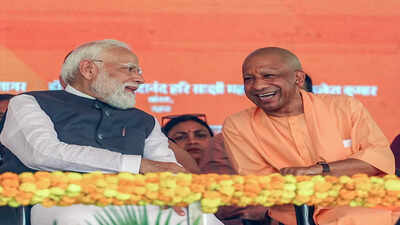
The process of change of power in Karnataka has finally started. Siddaramaiah has resigned from the post of Chief Minister, taking the first formal step towards the much-awaited change of power in the state.Standing shoulder to shoulder with DK shivkumar And Karnataka Home Minister G Parameshwara In a major show of unity, Siddaramaiah announced his resignation on Thursday, ending months of speculation over a change of leadership in the state. Announcing his resignation, Siddaramaiah said he was stepping down after the Congress high command directed him to do so two days ago.

Siddaramaiah (1)

What did Siddaramaiah say while announcing his resignation?

DK Shivakumar is set to get the top post eventually, unless Siddaramaiah and his supporters have a “last-minute surprise comeback plan”.In the breakfast meeting called by the Chief Minister before leaving the post, both the leaders gave a good display of cordiality by hugging each other. Shivakumar touched Siddaramaiah’s feet to seek the blessings of the senior leader. So far all is good.

Images (34)

Bonhomie at the breakfast meeting

But the big question is, has the Congress ‘drama’ finally ended in Karnataka? Or will the struggle for power continue in Karnataka? Rajasthan Where did Congress lose power to BJP in 2023 amid infighting between Ashok Gehlot and Sachin Pilot camps?

the bumpy road to armistice

The fact that the process of this ceasefire agreement has been full of ups and downs may cause considerable concern to the central leadership of the Congress. The power struggle between Siddaramaiah and Shivakumar hangs over the Congress government like the sword of Damocles, ever since the party’s landslide victory in the 2023 assembly elections.DK Shivakumar, who played a key role in the 2023 election victory as state Congress president, wanted the chief minister’s chair from the beginning. However, Siddaramaiah, armed with immense governance experience and having the support of a clear majority of newly elected MLAs, was in no mood to accept defeat. After an intense post-result standoff, during which Shivakumar aggressively remained in touch, a compromise was eventually reached. Shivkumar bowed down and accepted the post of Deputy CM.

1000082772.

Karnataka power struggle: timeline

This was armistice agreement number 1. Siddaramaiah got the throne and Shivakumar made a compromise.However, this initial ceasefire did absolutely nothing to end factional fighting. While Shivakumar’s supporters left no opportunity to claim that a strict 2.5-year rotational system was in place, Siddaramaiah’s supporters contested the claim with all their might. In fact, Siddaramaiah himself has repeatedly and publicly said on several occasions that he will complete his five-year term.All the while, the Congress high command looked the other way, choosing to allow these fundamental differences to fester until they inevitably reached a tipping point.And that turning point came when Siddaramaiah completed his two and a half year tenure as Chief Minister. The simmering tensions came to the fore again. Shivakumar made the idea of ​​rotational CM public for the first time and targeted Siddaramaiah for reneging on the deal. He did not take names directly but the message was loud and clear. After this, there was an open war of words between the two leaders, due to which the Congress leadership had to face embarrassment.Shivakumar started the duel on X with a cryptic message: “Word power is world power. The greatest power in the world is to keep your word. Be it a judge, the President or anyone else including me, everyone has to obey. The power of words is world power.”Siddaramaiah immediately reacted and used the same words to target his deputy. “A word is not power unless it makes the world better for the people. The mandate given by the people of Karnataka is not a moment, but a responsibility that lasts for five full years. The Congress Party, including me, is speaking for our people with compassion, consistency and courage. Siddaramaiah wrote on Twitter, ‘Our word for Karnataka is not a slogan, it means the world to us.Siddaramaiah then listed out the promises he had fulfilled in his two terms as chief minister, leading to an open social media “war of words” between the two top leaders of the state.And this brings us to compromise number 2. This time Shivakumar has benefited and Siddaramaiah has had to compromise. But even though the transition process has formally begun, there are signs that the outgoing chief minister has not completely given up the fight.Siddaramaiah had reportedly insisted on calling a Congress Legislature Party (CLP) meeting to formally choose his successor, which was widely seen within the party as an attempt to slow down Shivakumar’s rise.There was also talk in Congress circles that formal CLP elections could potentially project Karnataka Home Minister G Parameshwara as a compromise candidate, especially if a section of MLAs mobilizes behind the senior Dalit leader. Such a development will not only prevent Shivakumar’s rise, but will also give Siddaramaiah an opportunity to take credit from the Congress for facilitating Karnataka’s first Dalit Chief Minister.

HJZ0wvmaEAIXBdV

DK Shivakumar, Siddaramaiah and G Parameshwara

Central to the Siddaramaiah camp’s argument was the claim that the outgoing chief minister enjoyed overwhelming support within the legislature party. Congress leaders familiar with the discussions indicated that Siddaramaiah had submitted the list of 108 MLAs to underline his political strength within the party.Siddaramaiah may have agreed to step down, but he is too politically influential within the Karnataka Congress to be easily sidelined. Perhaps this remains the biggest challenge for the Congress high command.Sandeep Shastri, political commentator and vice-president of Nitte University, believes that the Congress delayed the change perhaps more than it should have.“I have been saying for the last six months that change in Karnataka is not a question of ‘if’ but a question of ‘when’,” Shastri said. He argued that if the Congress had worked only on the two-and-a-half-year target, it could have avoided the tension and uncertainty of the last few months.Shastri also suggested that despite stepping down, Siddaramaiah was unlikely to disappear completely from Karnataka politics. “He will remain an important power center in Karnataka and the new chief minister will have to deal with that,” he said.According to Shastri, Shivakumar finally got the post he was promised, but managing the internal dynamics of the Congress and balancing competing interests within the party will remain his biggest challenge going forward.

show of unity

In a huge show of unity, standing shoulder to shoulder with DK Shivakumar and Karnataka Home Minister G Parameshwara, Siddaramaiah announced his resignation.

However, political commentator Professor Harish Ramaswamy argued that the Congress high command would have acted at the right time to ensure a smooth transition.Ramaswamy said, “The current developments in Karnataka are a timely step taken by the Congress high command, which benefits from the generational change in the party.”He also rejected speculations that the change could weaken the Congress government or automatically benefit the BJP. “Although there may be some deviations, the transition is likely to be smooth,” he said. He said Shivakumar may emerge as a more “innovative” chief minister than many expected.

Rajasthan experience of Congress

The problem for the Congress is that Siddaramaiah is not only a mass leader with a strong support base in the state, but he is also the party’s biggest OBC face in Karnataka. If Siddaramaiah decides to be careless, it could harm Congress’s prospects in the 2028 assembly elections.The Congress will remain cautious over the election results in Rajasthan due to the prolonged leadership battle between its two state stalwarts ahead of the 2023 assembly elections. The crisis there was similar in many ways. Sachin Pilot, as the then Rajasthan Congress chief, had played a key role in the party’s victory in 2018 and was expected to be rewarded with the chief minister’s post. But Ashok Gehlot had both administrative experience and the support of a large section of MLAs. The Congress, as it did in Karnataka in 2023, supported the senior leader and Pilot was asked to wait.After a long wait, Pilot rebelled along with his supporters and a bitter public war broke out between the two camps as the Congress high command struggled to contain the crisis. Reports at the time revealed that Shivkumar and Priyanka Gandhi played a key role in ensuring that Pilot did not leave the party. Pilot then, like Shivakumar now, may have lacked numbers among the MLAs, but he was too important politically for the Congress to ignore.But unlike Pilot, Shivakumar eventually managed to garner the support of the Congress high command, in which Priyanka Gandhi reportedly played a key role. Eventually Congress lost power in Rajasthan and Pilot is still waiting for a bigger role in the state.The Congress high command will hope that the transition in Karnataka is smooth and that the ceasefire lasts till the next assembly elections in 2028.

Challenge ahead…

There were indications that Rahul Gandhi had long been reluctant to replace Siddaramaiah despite pressure from sections within the party who believed a change of leadership could benefit the Congress politically. According to reports, Siddaramaiah told Rahul Gandhi that he has no ambition to enter national politics. However, Rahul is understood to have stressed that he wants the experienced OBC leader to play a bigger role at the national level and strengthen the Congress at the national level.There is a possibility that Siddaramaiah may eventually be sent to the Rajya Sabha. Such a move could potentially bring changes at the national level as well, with many within the party seeing Siddaramaiah as a potential contender for Leader of the Opposition in the Rajya Sabha as the Congress looks to strengthen its OBC reach at the national level.Thus, the challenge for Congress is not just to change the Chief Minister. It is also about maintaining harmony between the two power centres, balancing caste equations and regional loyalties and ensuring that the roadmap for the 2028 election battle in Karnataka does not remain bumpy.

Source link

Cockroach Janata Party: A meme that’s trying to be serious – 4 mistakes keeping it in the shade india news

Cockroach Janata Party: A meme trying to be serious - 4 mistakes keeping it in the shade

Cockroach Janata Party on 16 May 2026 (CJP) was launched as a satirical political group on social media, sparked by widely misquoted remarks by Chief Justice of India Surya Kant.

cockroach eligibility

His comments went viral out of context, morphing into a viral line about “unemployed youth being like cockroaches,” which quickly became a rallying cry for a generation already struggling with jobs, cost of living, and perceived elitism in power.

From meme to mass movement

CJP began life as a cheeky “party” with a cheeky online manifesto declaring it to be “the voice of the lazy and unemployed,” but its timing and aesthetic—rough-cut graphics, dark humor, and razor-sharp Gen-Z memes—struck a chord.Within five days of its launch, CJP’s Instagram account garnered over 21 million followers, far more than Congress’s 13 million followers and BJP’s 9 million followers.Its X account reached over 200,000 followers before it was blocked in India, while founder Abhijit Dupke’s personalInternational media outlets immediately presented the event as a digital-age protest movement, and described it as a “frustrated and disillusioned” expression of India’s youth, who are grappling with record-high unemployment, rising education-loan burdens and a feeling that traditional politics ignores their concerns.The CJP brands itself as an anti-establishment, “roach-squad” movement that mocks the self-seriousness of mainstream parties while channeling genuine discontent – ​​unemployment, credit inflation, and a sense that “the system is stacked against the average young person.”

How did BJP react?

Domestically, the BJP responded with a hostile, conspiratorial narrative, labeling the CJP a “cross-border influence operation” aimed at destabilizing India’s institutions.Senior leaders, including several BJP MPs and Rajya Sabha members, floated the idea of ​​an official inquiry into the movement, accusing it of being linked to external actors and “shadow” networks.Kerala BJP president Rajiv Chandrasekhar argued that the party was being “helped by elements opposed to us” to target both the Modi government and India.

BJP's reaction

Meanwhile, Union Minister Sukant Majumdar alleged that almost half of the organisation’s social media support was from Pakistan and less than 10% from India.Speaking to reporters, Majumdar claimed, “49 percent of the followers of ‘Cockroach Janata Party’ on social media are from Pakistan.”Union Minister Kiren Rijiju also added to the controversy through a post on Instagram. In one post he wrote: “I pity those who look for followers on social media from Pakistan and the George Soros gang.”The digital pressure intensified when Ax blocked CJP’s official account in India.The platform’s actions triggered a separate reaction, with critics accusing the government of using legal tools to mute a satirical outlet that, while being inflammatory, largely operated within the bounds of online political parody.

Awkward dance of opposition

Opposition parties took a more subtle, damage-control-plus-opportunity approach.Prominent leaders of the Congress, Trinamool Congress (TMC) and Samajwadi Party (SP) publicly joined the CJP in mockery, posting memes and cheeky membership cards, while they used the moment to criticize the BJP’s job-creation record and youth-policy failures.Congress MP Shashi TharoorThe self-described “member” of the CJP praised the movement’s ability to tap into youth frustration, but also warned that the energy should be channeled into real-world politics.

Shashi Tharoor

In a widely shared thread, Tharoor wrote that he was “incredibly astonished by the rise of the #CockroachJantaParty”, noting that it reflects the real disillusionment among young Indians who feel “discounted, ridiculed and ignored” by the establishment. Yet he urged them to “bring this energy into mainstream politics or at least into their vote”, arguing that the only way to become “impossible to ignore” is through organized participation, not mere viral symbolism.Many opposition commentators have supported him, suggesting that if traditional parties fail to listen to the same grievances that the CJP raises, they risk losing another generation to apathy or to the next online movement.

How to turn ‘reel’ rebellion into real change?

At the grassroots level, the CJP remains entirely virtual – a meme-driven, Instagram-centric collective with no registered structure, no candidates, and no formal engagement with the electoral machinery.Its over 21 million Instagram following, thousands of memorable posts, and an ecosystem of fan-run Yet the question remains whether such a satirical “reel” movement can survive – or transfer its momentum into the real world.Political analyst Sajjan Kumar said, “An online viral movement requires a trustworthy face as the anchor, a set of concrete issues that cater to the frustrations and concerns of different sections of the people, and a willingness to take the initiative to set up a concrete organization to translate online solidarity into tangible political action.”As of now, the CJP has no manifesto beyond parody, no policy options, and no clear roadmap for electoral or civic participation; Its strength lies in criticism, not in governance.

4 sticking points

For a movement claiming to represent disillusioned youth waiting for change, the gap between meme culture and actual political change is dangerously wide.Lack of formal structure, no stability plan, weak response to allegations of foreign influence, vague political participation stance, and sensitivity to opposition tools – may prevent CJP from becoming anything more than a viral moment.“First and foremost, the CJP must clearly declare what it wants. Merely reactive mode in a jocular tone will not take them very far. Second, the leader must come out in the open and make clear that the party stands with everyone, irrespective of their ideological leanings, so as to avoid being dismissed as being partisan and working for anti-BJP organisations. Here, she must make clear her stand on the opposition parties in general and the Indian National Congress in particular. Should. Ultimately, transparency on the issue of funding and narrative arc is a prerequisite to gain popular legitimacy,” Kumar said.

  1. Lack of formal organizational structure: CJP remains an unregistered satire group rather than a legitimate political party. While this works for memes, it loses credibility when the movement tries to be serious. Without formal registration, legal status or a clear leadership hierarchy beyond Abhijit Dip, the movement cannot convert online support into real political power or policy influence.
  2. Overreliance on virility without sustainability plan: The movement gained 22 million Instagram followers in five days, but there is no clear roadmap for maintaining engagement beyond meme culture. Comments from political analysts suggest that CJP’s popularity reflects “the growing resentment of Generation Z”, but lacks mechanisms to convert frustration into organized action.
  3. Ambiguous stance on genuine political participation: CJP describes itself as “India’s most honest political party for lazy people” and is also planning a “virtual Gen-Z conference”. This dichotomy – being both proudly lazy and politically active – creates confusion about whether the movement seeks real political change or remains content as online protest theater.
  4. Underestimating the instrumentalization of the opposition: Shashi Tharoor’s call to “bring this energy to mainstream politics” shows how opposition parties view the CJP as a tool rather than a genuine movement. The quick “joining” of TMC, Congress and AAP politicians shows that the movement is running the risk of becoming a pawn of the anti-BJP strategies of the established parties rather than maintaining independent credibility.

For traditional parties, however, the CJP serves as both a warning and an invitation: a reminder that youth anger is no longer confined to occasional rallies or election-time sloganeering, but is now a 24/7 digital force that can siphon money from official accounts, mobilize millions, and, if mishandled, embarrass the state on the global stage.Some supporters have drawn comparisons to AAP, but Kumar points out: “The Anna Hazare-led anti-corruption movement may have a strong online component, but it began on the ground by uniting the middle class, civil society and professionals around the issue of widespread corruption that informs all established political parties.”“However, the CJP lacks all the elements: a credible anchor, a willingness to stay on the ground, a broad disconnect with all established political parties and putting forward an anchor issue that could bring unity to the people, especially Gen-Z, despite the existing political embeddedness.”

A call of caution for Gen Z

The explosive online popularity of the Cockroach Janata Party, coupled with its complete inability to translate digital virality into real-world political impact, serves as a warning to the ambitious, disaffected Gen Z.Giving likes on social media, turning your WhatsApp display picture into a cockroach meme, and using AI to create hilarious content that draws out deep despair is not enough.Boots on the ground are required.If CJP has any chance of becoming a real political force, its supporters will have to come out of their comfortable rooms and take to the streets. As Congress MP Shashi Tharoor said, youth must “bring this energy into mainstream politics” or express it through voting for it to become “impossible to ignore”.Protests, demonstrations and grassroots conversations with a population that is not online-savvy are absolutely necessary. India’s unemployed youth represent a huge demographic that cannot be reached through memes alone.Rural voters, older generations and working-class families who aren’t scrolling through Instagram won’t be swayed by viral hashtags alone.For Gen Z seeking real change, the lesson is clear: digital activism must be combined with physical presence.The future of the movement depends on whether supporters can evolve from virtual boasting to real-world organizing, from cozy rooms to crowded streets, from choice to legitimate political pressure.

Source link

The ‘Always Married’ Trap: Reasons why she can’t get away from it. india news

The 'Forever Suhagan' Trap: Reasons She Can't Get Away With It

“Our girl is gone… no voice comes out of her mouth… she remains scared,” Tvisha Sharma’s relatives joke as the newlywed waits for her husband after the “kanyadaan”. It’s the kind of familiar “girly” humor heard at countless Indian weddings – a performative assurance to the groom’s family that their daughter is soft-spoken, accommodating and, above all, not troublesome. Tvisha smiles and plays along. Little did they know that these words would come back to haunt them months later, when the silence they had laughed at became permanent. Samarth Singh wanted more cash. Hrithik Nagar was not happy with the car and cash he already got, so he wanted a better car and more cash. Ompal also wanted more cash. Ankur Chaudhary was not happy with bullets, cash and gold, he wanted more.Tvisha, Deepika, Pushpendri, Kajal and thousands of other women allegedly died at the hands of men who wanted marriage more than a partner. At least, that’s what his family and the FIR claim. And the one thing that remained common in all these cases was the constant abuse and cries for help.So why do so many women stay in marriages they fear? Why do families continue to negotiate with violent families instead of breaking up? At what point does “adjustment” become abandonment? And why, even now, are women expected to survive marriage so long only for someone else to eventually decide they’re worth saving?

anatomy of a dowry death

Dowry deaths are often reported as the final act – a woman found hanged, burnt, poisoned or dead under “suspicious circumstances”. But experts say the real violence begins long before death.“It starts with emotional abuse, financial pressure and social isolation within the marriage,” says Aditi Verma, a lawyer who has handled many dowry and domestic violence cases. “Soon after marriage, trivial demands start coming from the husband and in-laws. Violence gradually escalates through cycles of oppression, reconciliation, and renewed abuse.According to Verma, this pattern is troubling in all cases, regardless of class or education. Women are controlled, monitored and constantly criticized. In many cases, in-laws impose strict behavioral expectations and also humiliate the woman for failing to meet them.Sometimes the abuse becomes extremely personal. In the case of Twisha Sharma, the allegations made by her family and included in the investigation show that allegations were made against her regarding her character and alleged extramarital affairs.“What is particularly disturbing is how normalized abuse has become in the marital home. Women are repeatedly asked to adjust, compromise or keep quiet in order to protect the family’s reputation,” Verma says.This normalization often delays intervention until violence has escalated irreversibly.

asks for help before dying

Hours before her death, Deepika Nagar called her father crying and told him that she was being assaulted again over dowry demands. Her family went to her marital home in hopes of calming the situation. Later that night, he received another call: Deepika had reportedly fallen from the terrace.19 year old Pushpendri Devi had also called home before she died.According to his family, he told his father, “Papa, they will kill me.”Before he could reach her, she was dead.and then he came Kajal Chaudhary – The SWAT commando was allegedly murdered by her husband with a dumbbell earlier this year.“I am killing your sister,” the deceased’s brother recalled saying over the phone as Kajal screamed in the background. The call got disconnected after some time.Tvisha Sharma was also reportedly contacting her family about the ill-treatment she faced before her death.What connects these women is not just the allegation of dowry harassment, but the fact that they attempted to be informed about the danger before the fatal moment arrived. Parents were informed. Relatives intervened. The families tried mediation. But the abuse continued.Lawyer Aditi Verma says that these warning signs are common in dowry death cases.“Before death, there are often warning signs such as repeated distress calls to parents, prior complaints, threats of suicide, prior attempts to leave, unexplained injuries, or statements such as ‘They won’t let me live in peace,'” she says.The tragedy, she says, is that these signs are often treated as routine marital conflict rather than indicators of escalating violence.

-

why women live

The question that arises after almost every dowry murder is very simple – why didn’t she go away?But experts say women often stay in abusive marriages, not because they fail to recognize the violence, but because leaving comes with its own social punishment.“One of the most heartbreaking patterns is when women understand the abuse, know the legal remedies available to them, and yet return because they feel they have nowhere else to go,” Verma says.The sentence that sticks most in his mind is painfully familiar: “I know it’s wrong, but if I leave, everyone will blame me, not him.”Dr Sapere Rohit, consultant psychiatrist at Sparsh Hospital, Bengaluru, says that “hope” inside abusive marriages often survives through temporary affection, forgiveness and promises of change.“Many women believe things will get better because marriage in India is deeply linked to family honour, children and social acceptance,” he says. “They are taught that relationships can be repaired with patience and sacrifice.”That emotional conditioning begins long before the abuse.Women are socialized to secure a marriage, tolerate discomfort, and prioritize family stability over personal safety. Parents, often unknowingly, reinforce that expectation.“Yes, many parents unknowingly put pressure on daughters to stay in unsafe marriages,” says Rohit. “Advice such as ‘adjust’, ‘every marriage has problems’, or ‘think about the children’ are often given with concern rather than harmful intent. However, this can leave women feeling unsupported and trapped.”

That pressure cuts across the classroom.

Tvisha Sharma was educated, professionally accomplished and socially distinguished. Deepika Nagar came from a financially strong family. Yet the two reportedly remained in a marriage their families say had already become abusive.“Even highly educated and financially independent women continue to suffer abuse due to emotional conditioning, fear of stigma, concerns about children or pressure to maintain the marriage at all costs,” says Verma.Divided by class, united by abuseOne of the most prevalent myths about dowry violence is that it pertains only to rural or economically marginal areas.The cases of Twisha, Deepika and others complicate that notion.Tvisha’s marriage took place in a legally prestigious family of Bhopal. Her husband was a lawyer, her mother-in-law a retired district judge. Deepika’s marriage represents upward social mobility among economically stable families. In these cases the alleged abuse arose not from social invisibility, but from an environment associated with status, education, and respect.“As a lawyer, I have noticed that abuse today is not always visible in the traditional sense,” says Verma. “In many educated and economically stable families, the violence is psychological – isolation, threats, manipulation, surveillance and sustained emotional degradation.”Rohit says the emotional cost of being considered a “good wife” in India is very high.“Many women are expected to prioritize family stability over their own emotional well-being,” she says. “Society often praises women for enduring suffering rather than encouraging healthy relationships.”Over time, that conditioning reshapes women’s understanding of abuse.“Continued abuse often makes them feel guilty, inadequate, or responsible for the breakdown of the relationship, even if they are the victims,” ​​Verma says.

What do the statistics tell?

The scale of the crisis extends far beyond individual cases.According to NCRB’s Crime in India 2024 report, India recorded 5,737 dowry deaths last year – an average of about 16 women every day.Uttar Pradesh reported the highest number of cases at 2,038, followed by Bihar at 1,078. Madhya Pradesh reported 450 cases, Rajasthan 386 and West Bengal 337. Among metropolitan cities, Delhi recorded the highest number of cases at 111.But the numbers reveal much more than prevalence. They highlight the persistence of dowry in changing social realities.Dowry did not end with urbanization. Dowry did not end with education. Economic mobility did not eliminate dowry. Instead, dowry adapted itself to aspiration and situation.The demands became more expensive.

-

waiting to be rescued

What the statistics don’t fully capture is the emotional makeup of these marriages – the waiting, the bargaining, the hope that things will improve before they turn fatal.Women wait to change husbands. Families wait for the tension to end. Parents wait for the “right time” to intervene more forcefully. Society waits until violence becomes impossible to deny.And by then it is often too late.“Many women continue to stay in abusive marriages, not because they don’t recognize the abuse,” Verma says, “but because they fear being blamed for leaving the marriage more than the violence itself.”Perhaps that’s what makes these deaths particularly horrifying: Most of these women did not die quietly. He said. He warned. He asked for help. But somewhere between social standing, family honor, fear of stigma, and the endless pressure to “adjust,” their warnings became assimilated into the normal rhythms of marriage – until it became impossible to escape. A few days before her death, Tvisha Sharma reportedly summarized that entrapment in a message that would later sound like a warning against the institution:“I’m stuck brother. Just don’t get stuck.”

Source link

FSSAI tightens food safety rules for gram flour, seafood and seed oil. india news

FSSAI tightens food safety rules for gram flour, seafood and seed oil

New Delhi: From gram flour and edible oils to shrimp and cold-pressed seed oils, India’s food regulator is tightening safety standards across a wide range of food items consumed daily in households amid growing concerns over contamination, adulteration and chemical residues.Food Safety and Standards Authority of India (FSSAI) has issued revised and draft rules covering heavy metals, toxins, antibiotic residues and quality standards for both commonly used food items and emerging food products.Under the revised rules to come into effect from December 1, 2026, FSSAI has expanded the lead and cadmium-related contamination standards to also include pulses, including pulse flour and packaged mixes like besan.The regulator has also updated the limits for aflatoxins – toxins produced by certain fungi – in oils, oilseeds and ready-to-eat oilseed products. It has additionally revised the testing criteria for arsenic in fish oil and updated the standards for safrole, a naturally occurring substance found in foods and beverages containing nutmeg and mace.In another significant change, amid growing global concern over antimicrobial residues entering the food chain, FSSAI has introduced residue limits for antibiotics such as trimethoprim and oxolinic acid in seafood products including shrimp, prawn and fish products.Monita Gehlot, a dietician at AIIMS Delhi, said strict contamination standards were important as chronic exposure to heavy metals like lead, arsenic and cadmium can increase the risk of kidney damage, neurological disorders and cancer over time. He said expanding surveillance from pulses to pulse flour is important as products like gram flour are now widely used in packaged snacks, ready-to-cook foods and home cooking.Gehlot also warned that if antibiotic residues persist in seafood for long periods of time, it could lead to antimicrobial resistance, allergies and reduced effectiveness of life-saving drugs.In a separate draft notification, FSSAI has proposed quality and safety standards for underutilized edible oils made from chilli, tomato, melon and okra seeds as demand for cold-pressed oils, seed-based snacks and plant-based nutrition products is increasing.The proposed norms require these oils to be kept free from adulteration, harmful impurities, rancidity and mineral oil contamination, while limits are also set for moisture, acidity and metal content.According to experts, the popularity of cold-pressed and specialty seed oils has grown rapidly in urban India, but regulation has not kept pace with market growth, leading to concerns over adulteration, misleading labeling and inconsistent nutritional quality.The draft rules also include edible seeds such as watermelon, cucumber, pumpkin, sunflower, sesame and flax sold in raw, roasted or salted form, which are required to be cleaned and free from insects, fungus and visible contamination before sale.FSSAI has invited public comments for 60 days before finalizing the draft rules.

Source link

Haifa Port: A strategic maritime link for India amid Middle East tensions india news

Why has Israel's Haifa port become important for India's trade and strategic ambitions?
Haifa Airport (Image Source: ANI)

As tensions continue to escalate across the Middle East, Haifa port is being seen as a vital link in India’s growing strategic and economic engagement with the region.Located in a natural, protected bay in northeastern Israel, the Port of Haifa is one of Israel’s three major international ports and handles the transportation of goods, cargo, and tourists.Officially opened in 1933, the port has the capacity to handle approximately 30 million tons of cargo annually, including 1.5 million TEU (twenty-foot equivalent units) shipping containers.Why does Haifa Port matter to India?In 2023, industrialist Gautam Adani meets Israeli Prime Minister Benjamin Netanyahu during the official handover ceremony of Haifa Port. Adani Group. A consortium of Adani Ports and Special Economic Zone (APSEZ) and Israel’s Gadot Group won the bid to privatize Haifa Port for US$1.18 billion, with Adani Group holding a 70 percent stake in the consortium.The acquisition was widely seen as one of India’s most significant foreign infrastructure investments and a major strategic move in West Asia.Despite the uncertainty, operations at the port are reportedly continuing uninterrupted, highlighting its importance not only to Israel’s economy, but also to India’s long-term connectivity and trade ambitions.In March 2026, Adani Group said in a statement that its Haifa port in Israel is completely safe and in working order amid the escalating military conflict in Iran. Adani Ports and Special Economic Zone said all port assets and infrastructure are completely safe.Major exports between India and IsraelAccording to the Indian Embassy in Israel, while bilateral trade has traditionally been dominated by diamonds, petroleum products and chemicals, cooperation in sectors such as electronic machinery, high-tech products, communication systems and medical devices has been growing in recent years.India also remains a major focus country for Israel’s trade expansion efforts.1. India’s major export to IsraelThese include pearls and precious stones, automotive diesel, chemicals and mineral products, machinery and electrical equipment, plastics, textiles and apparel, base metals, transport equipment and agricultural products.2. Israel’s main export to IndiaThis includes diamonds and precious stones, chemicals and fertilizers, machinery and electrical equipment, petroleum oils, defence-related products and transport equipment.Could further escalation of tensions affect Israel’s trade with India? For India, stability in the Middle East is directly linked to trade, energy security and regional connectivity.Haifa Port is also expected to become one of the most important hubs in the India-Middle East-Europe Economic Corridor (IMEC).Under the proposed corridor, goods from Indian ports would travel by sea to the UAE and then travel through a railway network in West Asia before reaching Haifa, creating a faster trade route connecting India to Europe.Any prolonged conflict in the region could disrupt shipping routes, impact maritime movements and slow down IMEC-related strategic projects.linked to india through historyIn 1918, Indian cavalry soldiers fought in the Battle of Haifa during World War I and helped liberate the city from Ottoman control.Haifa is strategically important because of its port and railway connections. Its capture would allow the Allied forces to maintain supply routes while continuing their advance deeper into Ottoman territory.India also celebrates Haifa Day on 23 September every year to honor the Indian soldiers who participated in the war.Statues and monuments associated with Indian cavalry regiments exist in both countries, while Indian Army units tracing the lineage of those regiments continue to preserve the memory of the battle.

Source link