
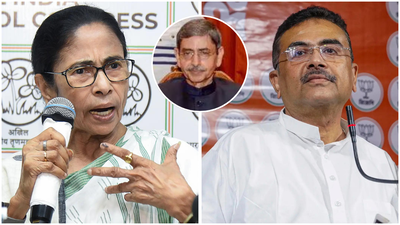

West Bengal: Governor RN Ravi dissolves Mamata cabinet; The way is clear for the formation of new BJP government. india news
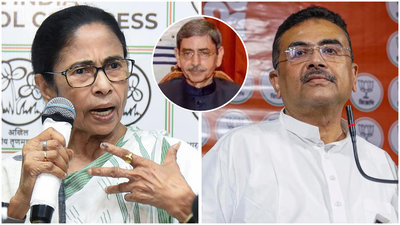
West Bengal Governor RN Ravi dissolves Mamata cabinet; The way is clear for the formation of new BJP government.
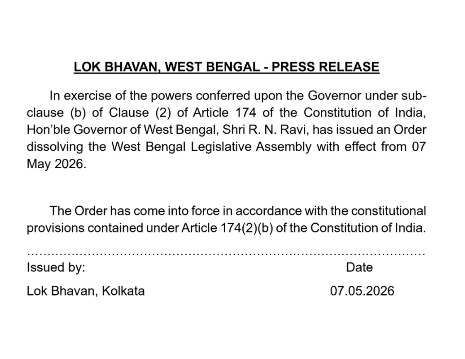
New Delhi: West Bengal Governor RN Ravi on Thursday dissolved the state assembly as well as the Mamata government cabinet ahead of the formation of the new government after the recently concluded assembly elections.According to a government release issued from Lok Bhavan, Kolkata, the Governor exercised powers under sub-clause (b) of clause (2) of Article 174 of the Constitution of India to dissolve the Assembly with effect from May 7.“The order has come into force in accordance with the constitutional provisions contained under Article 174(2)(b) of the Constitution of India,” the release said.
The dissolution comes after the BJP won a landslide victory in the assembly elections and formed its first government in the state.
BJP has intensified preparations to form government
BJP has intensified preparations for the swearing-in ceremony. According to news agency ANI, party sources said that Union Home Minister Amit Shah is expected to reach Kolkata on Thursday.Sources said that a meeting of newly elected BJP MLAs is also likely to be held on Friday to elect the leader of the legislative party.The assembly has been dissolved amid increased political tension in the state after the election results.
Mamta refuses to resign, alleges irregularities in elections
Outgoing Chief Minister Mamata Banerjee on Wednesday addressed a meeting of newly elected Trinamool Congress MLAs and said she would not resign from her post regardless of the election results.“I will not resign. Let them fire me. I want this to be a dark day. We have to be strong,” Banerjee said, according to ANI quoting party sources.He alleged that Trinamool Congress candidates were “forcefully defeated” and claimed that more than 1,500 party offices were “captured”.According to ANI, Banerjee accused the Election Commission, CRPF and parts of the state machinery of bias, saying, “This was not an election but a tyranny.”He further claimed that the Trinamool Congress has defeated the BJP “morally” and claimed that the Indian faction has emerged more united after the Bengal election results.Banerjee’s refusal to step down had created an unprecedented political situation and raised concerns of a constitutional crisis in the state.

‘TMC thief’: Mahua Moitra faces anti-Trinamool slogans on flight, blames ‘BJP culture’ india news

New Delhi: Trinamool Congress (TMC) MP Mahua Moitra shared a video on Thursday showing a group of men on a plane raising anti-TMC slogans against him and urging Civil Aviation Minister K Ram Mohan Naidu to put him on the no-fly list.Moitra said that after the Sanghis made the video viral on social media, someone forwarded this video to them. The incident occurred after the Indigo flight from Kolkata to Delhi landed in the national capital.“Alert! I went to Delhi today on official work to attend the meeting of the Parliamentary Standing Committee on Defence. Was on seat 1F on 6E 719. 4-6 people boarded in a group and took a peek at me and went to the back of the plane. When the flight landed and before the doors opened they did the same and filmed it. This is not “civil anger”. This is harassment and a violation of my safety on the plane. There is no way these beasts can escape this harassment inside the airplane. @IndiGo6E Find your crew reports, name and shame them and don’t put them on any flylist @RamMNK please take action,” he posted on X.The TMC MP said, “This is the culture of BJP. Why is anyone surprised? I ignored it and went to my MTNG from the airport. Then people sent me the video, which Sanghis were making “viral”. That’s when I called it out. @IndiGo6E told me they need a formal complaint. Which I am sending.”In the video, a group of men can be heard raising slogans like “Jai Shri Ram”, “TMC thief”, “Pishi chor”, “Bhaipo chor” and “Trinamool sab chor”. Moitra was seen collecting her luggage near the front of the plane.These slogans were apparently raised targeting the TMC supremo Mamata BanerjeeOutgoing Chief Minister of West Bengal and her nephew and Trinamool MP Abhishek Banerjee.The Trinamool Congress, which was in power in West Bengal since 2011, failed to secure a fourth consecutive term and won 80 seats in the 294-member assembly. The BJP secured 207 seats and is set to form its first government in the state.Although Mamata Banerjee has refused to resign accusing the Election Commission of irregularities, Governor RN Ravi dissolved the Assembly on Thursday, ending the five-year tenure of the previous House.Union Home Minister Amit Shah is scheduled to visit Kolkata on Friday to announce the BJP’s chief ministerial pick for West Bengal, ahead of the grand swearing-in ceremony the next day.Suvendu Adhikari, once a close aide of Mamata Banerjee, has emerged as the frontrunner for the post after defeating her in both the 2021 Nandigram contest and the recent elections from her Bhawanipur stronghold.The West Bengal Assembly elections were held on 23 and 29 April, while the counting of votes took place on 4 May.
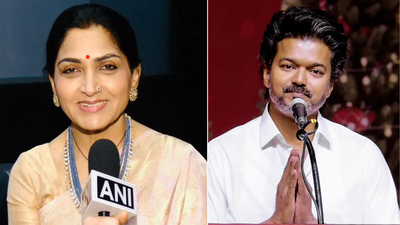
‘He should lead’: BJP state vice president Khushboo Sundar supports TVK chief Vijay for CM | india news
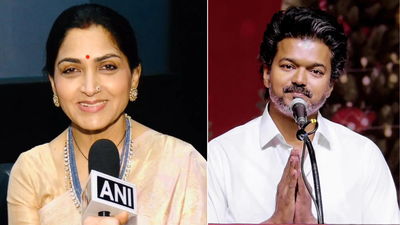
New Delhi: Bharatiya Janata Party’s Tamil Nadu state unit vice-president Khushboo Sundar has expressed her support for TVK chief Vijay for the post of Chief Minister as Vijay’s 5 MLAs falling short of majority has hampered government formation in the state.“As a citizen of the state of Tamil Nadu, when the people have elected their CM, he should lead,” Khushboo Sundar said in a post on X.BJP has won one seat in alliance with AIADMK in Tamil Nadu. The Congress has alleged that the delay in inviting Vijay to form the government is a deliberate move by the BJP-led Centre, and termed it an “undemocratic” attempt to weaken the people’s mandate.Governor Rajendra Vishwanath Arlekar called Vijay twice in two days and asked him to submit letters of support from fellow MLAs and other colleagues to effectively establish a working majority before being invited to form the government.Neither the DMK nor the AIADMK managed to gain a majority, resulting in a hung assembly. Smaller parties like Viduthalai Chiruthigal Katchi, Pattali Makkal Katchi, Communist Party of India, Communist Party of India (Marxist) (CPM), Indian Union Muslim League (IUML), Desiya Murpokku Dravida Kazhagam and Amma Makkal Munnetra Kazhagam are now being seen as potential kingmakers in the government formation process.

Death of four members of a family in Mumbai not due to watermelon consumption but rat poison ingredient: Officials india news

The death of four members of a family in south Mumbai last month was caused by zinc phosphide, a chemical commonly used in rat poison, and not by consumption of watermelon, as initially suspected, PTI reported on Thursday, quoting officials.The matter came to light in April when a Muslim family, consisting of husband, wife and their two daughters, died due to suspected food poisoning.Earlier, Deputy Commissioner of Police (Zone 1) Praveen Munde had said that investigation into the deaths was underway and food and body samples had been collected for examination after post-mortem.In a self-recorded video statement released last month, Munde said the family had invited relatives for a meal at their residence on April 25.He said, “A report of unnatural death has been lodged at JJ Marg police station. Four members of a Muslim family – husband, wife and their two daughters – died. On April 25, he called some relatives to his home and had dinner with them. After the meal, around 10-10.30 pm, the relatives left.”Munde said, “The family ate watermelon at around 1-1.30 in the night. At around 5-6 in the morning, they started complaining of vomiting and diarrhoea. They were taken to a nearby hospital and all four of them died yesterday.”He had also said that post-mortem was conducted and samples were collected as part of the investigation.He had said, “Postmortem was conducted and food samples and samples were also taken from his body. Further investigation is underway.”Earlier on Wednesday, officials said post-mortem had been conducted and the viscera of the deceased had been preserved for chemical analysis. As part of the investigation, the microbiology department of JJ Hospital had submitted a preliminary report to the police stating that no bacterial infection was found in the victims.An official had said, “As per reports, no bacterial infection has been found in the bodies of the victims so far. No bacteria were found in their blood.”Officials said the exact cause of death will be determined after the forensic science laboratory submits its final report. “The report will also clarify whether there was anything poisonous in any of the food items consumed by the family members during the day,” the official said.
Tamil Nadu government formation: Deputy CM’s proposal on the table? ‘TVK is talking to AIADMK MLAs camping in Puducherry’. india news
New Delhi: Tamilaga Vetri Kazhagam (TVK) is reportedly in talks with a section of the All India Anna Dravida Munnetra Kazhagam.AIADMK) The political fight over government formation in Tamil Nadu intensified on Thursday as MLAs weighed in on a possible power-sharing arrangement. The development came after 28 AIADMK MLAs were shifted to a private resort in Puducherry.The MLAs staying at the resort in Puranakuppam are supporters of senior AIADMK leader CV Shanmugam. His transfer has fueled speculation that sections within the AIADMK may consider supporting Tamilaga Vetri Kazhagam (TVK) chief Vijay in the ongoing government formation exercise, ANI reported, quoting sources.Follow live updates on Tamil NaduHe claimed that a possible power-sharing formula is also being discussed, under which CV Shanmugam could be offered key ministerial portfolios as well as the post of Deputy Chief Minister. Former Tamil Nadu minister and TVK candidate KA Sengottaiyan is reportedly involved in the talks.However, the AIADMK leadership itself appears divided on the issue. Party general secretary Edappadi K Palaniswami has not agreed to the proposal of extending support to TVK, leading to differences in some sections of the party.At the same time, leaders including CV Shanmugam and OS Manian are believed to be in favor of supporting TVK in exchange for key posts in the possible coalition government. Sources cited by ANI also indicated that some senior leaders have advised TVK to explore legal options, including approaching the Supreme Court or High Court, over the government formation process. Others are said to have suggested the possibility of fresh elections if the deadlock continues.Despite emerging as a major force in the Tamil Nadu Assembly elections, TVK is still 5 MLAs short of the majority mark. Vijay has already secured the support of five Congress MLAs, but still needs the support of five more MLAs to cross the majority mark in the Tamil Nadu Assembly.
Operation Sindoor: 1 year of Operation Sindoor: PM, his cabinet team changed the DP of their social media handles. india news
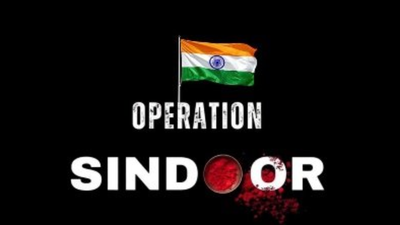
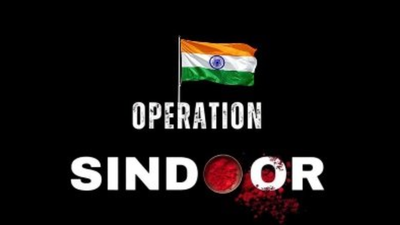
New Delhi: PM Narendra Modi Changed the display photos on its social media handle on Thursday to mark the completion of one year of Operation SindoorAnd asked everyone to do so as a mark of respect for the armed forces and their success.Profile picture of PM Modi Their handles on Facebook, Instagram and WhatsApp channels have been replaced with an image with the text ‘Operation Sindoor’ on a black background. The picture shows a tricolour, with an ‘O’ of ‘Sindoor’ filled with sindoor or sindoor – a symbol of married Hindu women.
Defense Minister -Rajnath SinghExternal Affairs Minister S Jaishankar, Home Minister Amit Shah and other top ministers on Thursday changed their protest photos on their social media profiles following PM Modi’s call.In a post on X, PM Modi had said during Operation Sindoor a year ago indian armed forces Displayed their bravery and gave a strong reply to those who attacked our people and every Indian is proud of the armed forces of the country. “In honor of our forces and their success during Operation Sindoor, let us all change our display pictures on social media including X, Facebook, Instagram and WhatsApp to the picture shared below,” he said, referring to the image uploaded on his social media handle.Operation Sindoor was conducted by three defense forces along with BSF on the western border targeting terrorist and military facilities in Pakistan and Pakistan-occupied Kashmir from May 7-10, 2025.Rajnath Singh said on social media ‘X’, “On the anniversary of Operation Sindoor, we salute the valor and sacrifice of our armed forces, whose courage and dedication continue to protect the nation. Their actions during the operation demonstrated unmatched precision, seamless jointness and deep coordination across services, setting a benchmark for modern military operations.”He further said, “Operation Sindoor is a powerful symbol of national resolve and preparedness, demonstrating that our armed forces are always ready to act decisively when it matters most. It is also a testament to India’s continued progress towards enhancing capability, achieving self-reliance while strengthening resilience.”
Bhagwant Mann: ‘Attempt to malign party’s image’: BJP sends defamation notice to Bhagwant Mann over Punjab blast allegations. india news
New Delhi: BJP national general secretary Tarun Chugh sent a legal notice on Thursday. Chief Minister of Punjab Bhagwant MaanDemanding an apology over his remarks allegedly linking the saffron party to the recent blast incidents in Punjab, accused him of attempting to “tarnish the reputation, credibility and public standing” of the saffron party.The BJP leader demanded that Mann immediately withdraw the statement and issue a public apology on print, electronic and social media platforms, and refrain from making any “derogatory or inflammatory” comments against the BJP or its leaders.The notice also warned that failure to comply within seven days would result in criminal prosecution for defamation, proceedings relating to the dissemination of false information and civil action seeking compensation for reputational loss.The move comes a day after back-to-back blast incidents in Amritsar and Jalandhar triggered panic in the state and triggered a political clash between the ruling AAP and the BJP.Reacting to Wednesday’s incidents, Mann had alleged that the BJP creates unrest in the states before the elections. Mann had said, “BJP’s modus operandi is that in whatever state they want to contest elections, they first create riots, small explosions and divide people on the basis of religion and caste.”He said, “This is BJP’s election preparation… Law and order will be maintained and the culprits will be given strict punishment. I want to tell BJP that Punjab has seen many dark days and now Punjabis will not tolerate this.”In a legal notice issued through lawyer Sanket Gupta, Chugh described the comments as “highly irresponsible, false, defamatory and inflammatory” and accused Mann of making the allegations “without any credible evidence”.The notice said Mann’s statement directly or indirectly accused the BJP of instigating violent incidents and this was “the most serious allegation made with reckless disregard for the truth”.It further said that the CM’s comments are in contrast to the stand taken by the Punjab Police and the state Director General of Police, who had indicated that the incidents appear to be linked to a larger “proxy war” involving foreign hostile elements and alleged ISI-backed networks.The notice defended the BJP as a “nationalist political party committed to the sovereignty, integrity and security of India” and said the party has consistently maintained a “zero-tolerance policy against terrorism.”It also claimed that Mann’s statement had caused “severe reputational damage” to the BJP and hurt the party’s “lakhs of supporters and workers” across the country.The notice accused Mann of spreading misinformation and attempting to disrupt democratic discussion. “Your statement is clearly false, politically motivated, defamatory and tarnishing the reputation, credibility and public standing of the BJP and its leadership,” it said.Also read: Bhagwant Mann blames BJP for the blasts, party threatens legal action to remove CMChugh also alleged that the remarks could incite public unrest and attract punitive consequences under the Indian Code of Justice (BNS), 2023.Controversy erupted in Punjab after two separate incidents came to light on Wednesday. A suspicious explosion was reported late night near Khasa Cantonment area in Amritsar. Hearing the explosion, police and army teams reached the spot.Amritsar SP Aditya S Warrier said bomb disposal and forensic teams have been deployed to investigate the incident site. Officials are still confirming the exact number of blasts and the cause of the incident, while samples have been sent for forensic analysis. There is no report of anyone being injured.Security agencies including forensic teams, bomb squad and dog squad cordoned off both the locations and launched a detailed investigation.These incidents came just days after an attempted blast on a railway track at Rajpura in Patiala district on April 27, in which the accused had died during the attempt. The back-to-back incidents have raised new concerns about security in the border state.
voting
According to you, how effective is the AAP government in maintaining law and order in Punjab?
Opposition parties targeted the AAP government over the law and order situation in Punjab. Shiromani Akali Dal leader Bikram Singh Majithia described the incidents as “serious” and accused the government of drawing political conclusions before the investigation was completed.BJP and Congress leaders also questioned the state government over security lapses and demanded strong steps to restore public confidence. Police said both incidents are under investigation and more clarity is expected after examining the forensic reports.
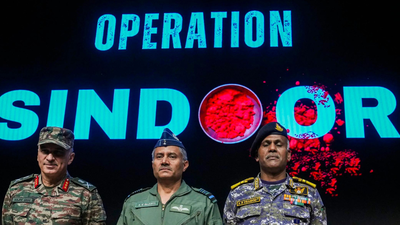
‘My intention is not just to create ruckus…’: Army’s sharp message to Pakistan on the anniversary of Operation Sindoor. india news
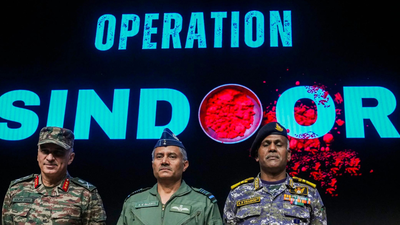
Lieutenant General Rajiv Ghai said on Thursday Operation Sindoor Highlighting the role of indigenous defense systems and coordinated multi-agency operations during the conflict, it demonstrated that “Atmanirbhar is not just a slogan, it is truly a force multiplier”.Addressing a press conference to mark the first anniversary of the operation, Ghai said more than 65 percent of India’s defense equipment is now manufactured domestically, and described the military response as a calibrated operation that achieved its objectives without escalating the conflict into a prolonged conflict.He said, “Operation Sindoor proved that Aatmanirbhar is not just a slogan, it is actually a force multiplier. Today, more than 65% of our defense equipment is being manufactured domestically.”Ghai said Operation Sindoor marked the beginning of India’s continued fight against terrorism, adding that the country will defend its sovereignty and security “decisively, professionally and with the utmost responsibility”.He also cited poet Dushyant Kumar’s poetry to claim that the operation was not the end, but just the beginning.Ghai said, “It is not my intention to just create a ruckus. My effort is to change this. Operation Sindoor was not the end. It was just the beginning. India’s fight against terror will continue. One year later, we remember not only the operation but also the principle behind it. India will defend its sovereignty, its security and its people decisively, professionally and with utmost responsibility.”Speaking about the strategy of the operation, he said India had adopted a measured approach that included decisive military action coupled with escalation control.“In an era of protracted conflicts around the world, we worked hard, achieved clearly defined objectives and then when the Pakistanis were forced to negotiate and requested us to stop, they decided to cease hostilities,” Lt Gen Ghai said.Also read: How Operation Sindoor began, one attack at a timeHe said, “The objectives were achieved through a calibrated shot and sharp blow, which altered the enemy’s risk appetite and disrupted its operations. Operation Sindoor was one attack at a time and contained India without locking it into a long-term war or conflict, the consequences of which we are seeing in ongoing conflicts around the world.”Ghai also underlined the role played by diplomatic and internal coordination as well as intelligence, cyber and electronic warfare units during the operation.
.
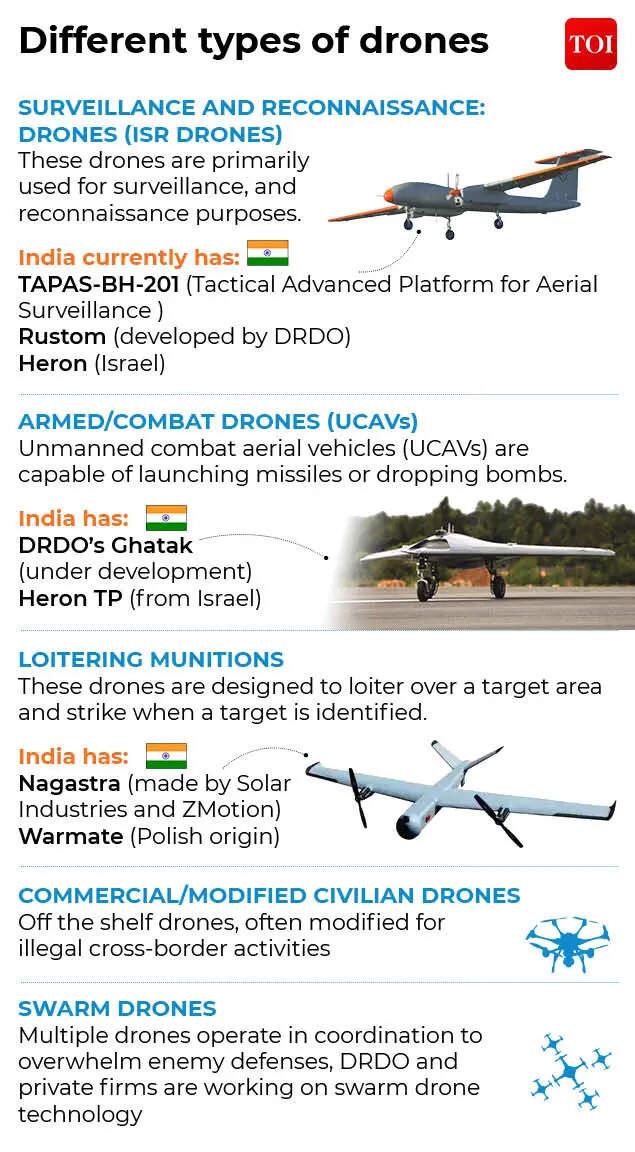
“Intelligence agencies provided accurate information which is very important for precise targeting. Cyber and electronic warfare units maintained information dominance. The government managed the international environment as well as internal security and public assurance,” he said.The armed forces executed the operation with precision and limited damage, he said, adding that the coordinated effort across multiple agencies and domains will serve as a model for future operations.Operation Sindoor was launched on May 7, 2025, in response to the Pahalgam terror attack in which 26 people were killed.As part of the operation, indian armed forces Attacked terrorist launchpads in Pakistan and Pakistan occupied Jammu and Kashmir.Indian forces targeted and destroyed nine terrorist launchpads linked to Lashkar-e-Taiba, Jaish-e-Mohammed and Hizbul Mujahideen, killing more than 100 terrorists during the operation.
Operation Sindoor: From the first missile to the ceasefire call: How Operation Sindoor began, one attack at a time india news
“A short while ago, the Indian Armed Forces launched Operation Sindoorattack on terrorist infrastructure Pakistan and Pakistan-occupied Jammu and Kashmir,” the Defense Ministry said in a statement issued at 1.44 pm on May 7, 2025.“In total, nine (9) sites have been targeted,” the statement said, while clarifying that no Pakistani military installation was attacked and that the operation was “focused, measured and non-tense in nature.”Today marks one year of ‘Operation Sindoor’ in India and it is still seen as a defining moment in the country’s counter-terrorism doctrine, which was a rapid military response launched after the April 22 Pahalgam terrorist attack in which 26 people were killed. The operation, conducted in a quick span of 25 minutes between 1.05 am and 1.30 am on May 7, targeted terrorist infrastructure linked to Lashkar-e-Taiba, Jaish-e-Mohammed and Hizbul Mujahideen.April 22: Pahalgam attack shocked the countryThe series of incidents started on April 22, 2025 in Baisaran Valley of Pahalgam. What is usually known as a beautiful tourist meadow became the site of one of the deadliest terrorist attacks in Kashmir since Pulwama in 2019.Militants affiliated with The Resistance Front (TRF), an affiliate of Pakistan-based Lashkar-e-Taiba, entered a civilian area, reportedly separated victims on the basis of religion and killed 26 people, including a Nepalese national. The attack sparked outrage across India and was condemned by world leaders.23–24 April: India downgrades ties with PakistanExternal Affairs Minister S Jaishankar, Foreign Secretary Vikram Misri and External Affairs Ministry spokesperson Randhir Jaiswal briefed the media about New Delhi’s measures.India downgraded diplomatic ties with Pakistan, suspended the Indus Water Treaty, sealed the Attari-Wagah border, declared Pakistani diplomats persona non grata and suspended visas for Pakistani citizens. India also conducted naval missile tests and large-scale Indian Air Force exercises.A day later, during a rally in Madhubani, Bihar, Prime Minister Narendra Modi vowed action, saying, “India will identify, trace and punish every terrorist and their supporters.” Pakistan retaliated diplomatically by suspending visas for Indians, closing its airspace to Indian-operated aircraft, freezing trade and suspending the Simla Agreement.April 27–30: War clouds loomAddressing the nation during Mann Ki Baat on 27 April, Modi said, “Today as I speak to you in Mann Ki Baat, there is deep pain in my heart. The terrorist attack in Pahalgam on 22 April has pained every citizen of the country.” On April 30, Pakistan claimed that India was preparing military action. Pakistan’s Information Minister Ataullah Tarar said that Islamabad had “credible intelligence” that India intended to launch a military operation within 24–36 hours.
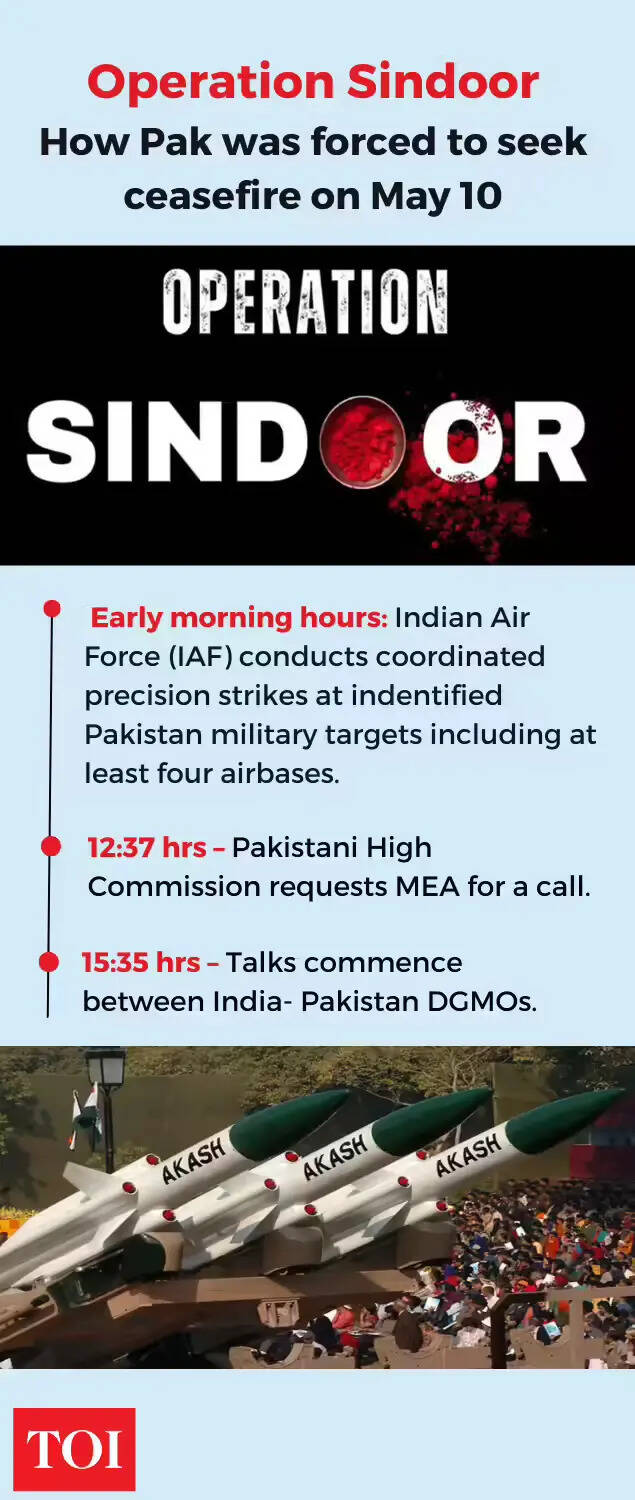
7 May: Operation Sindoor beginsIn the early hours of 7 May, India launched Operation Sindoor from Indian soil, targeting nine terrorist camps in Pakistan and Pakistan-occupied Kashmir. The tri-service operation conducted from Indian soil targeted nine terrorist camps linked to Lashkar-e-Taiba (LeT), Jaish-e-Mohammed (JeM) and Hizbul Mujahideen in Pakistan and Pakistan-occupied Kashmir (PoK).Foreign Secretary Vikram Misri, Wing Commander Vyomika Singh and Lieutenant Colonel Sophia Qureshi later briefed the media and reiterated that the strikes were “concentrated and non-tense”.Wing Commander Vyomika Singh said, “nine terrorist camps were targeted and destroyed” in direct retaliation to the Pahalgam attack. “The targets of Operation Vermillion were based on credible intelligence and locations were selected to avoid damage to civilian infrastructure and loss of civilian life,” he said.The operation was carried out in a quick period of 25 minutes between 1.05 am and 1.30 am.Lieutenant Colonel Sophia Qureshi later elaborated on the nine terror sites affected:
- Shawai Nala Camp, Muzaffarabad (PoK): A LeT training facility linked to the Sonamarg and Gulmarg attacks as well as the Pahalgam attack in 2024.
- Muridke, Pakistan: A key terror center where 26/11 attackers Ajmal Kasab and David Headley were trained.
- Sarjal Camp, Sialkot: A Lashkar-e-Taiba hideout located about 6 km inside Pakistan, linked to attacks on Jammu and Kashmir police personnel.
- Markaz Ahle Hadith, Barnala (PoK): A center for weapons, IEDs and jungle warfare training.
- Markaz Abbas, Kotli (PoK): Camp used for training suicide bombers.
- Mahmuna Joya Camp, Sialkot: A Hizbul Mujahideen control center linked to operations in the Kathua-Jammu belt and the Pathankot airbase attack.
- Markaz Subhan Allah, Bahawalpur: Headquarters of Jaish-e-Mohammed.
- Syedna Bilal Camp, Muzaffarabad: A Jaish weapons and explosives training facility.
- Maskar Raheel Shahid Gulpur Camp, Kotli: A LeT camp linked to the 2023 Poonch attack and 2024 pilgrimage bus attack.
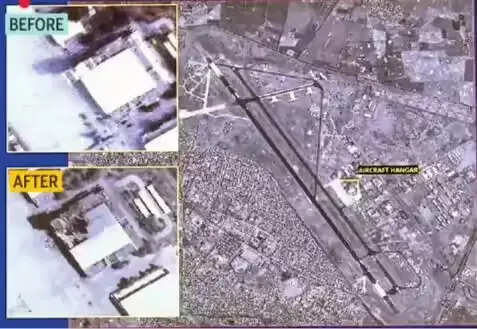
Mock drills were also conducted in several Indian cities including Delhi, Chandigarh and Varanasi to prepare citizens for any stress.In the days that followed, India intercepted Pakistani drones at 36 locations from Jammu and Kashmir to Gujarat. Prime Minister Narendra Modi later described the operation as the “new normal” and said India would continue to respond to terrorism “in the language they understand”.7-8 May: Pakistan’s drone attack and India’s responsePakistan responded with drone strikes and heavy shelling along the Line of Control (LoC), leading to a sharp rise in tensions between the two countries.On the night of 7 and 8 May, Pakistan attempted multiple airspace violations along India’s western border and launched about 300–400 drones at 36 locations, targeting military infrastructure. Indian forces intercepted and neutralized several drones using both kinetic and non-kinetic systems.Foreign Secretary Vikram Misri said India’s response had been “precise” and “non-tense”, emphasizing that only terrorist infrastructure was targeted. He also condemned Pakistan’s attacks which killed 16 civilians in Jammu and Kashmir.Lieutenant Colonel Sophia Qureshi explained the scale of the Pakistani attack during a media briefing. He said, “On the night of May 7 and 8, the Pakistani Army violated Indian airspace several times along the entire western border with the intention of targeting military infrastructure. Not only this, the Pakistani Army also opened fire with heavy caliber weapons along the Line of Control.”“Around 300 to 400 drones were used for infiltration attempts at 36 locations. Indian armed forces shot down many of these drones using kinetic and non-kinetic means,” he said.Qureshi said the purpose of the large-scale air intrusion appears to be to test India’s air defense network and gather intelligence.“The probable purpose of such large-scale air infiltration was to test air defense systems and gather intelligence. Forensic investigation of the drone debris is being done. “Initial reports suggest they are Turkish Assisgard Songer drones,” she said.May 9: India increased retaliatory actionIndia launched a major retaliatory strike on 9 May after Pakistan targeted Indian military positions. IAF drone strikes destroyed Chinese-origin HQ-9 surface-to-air missile and radar system in Lahore. Other locations targeted include Rawalpindi, Gujranwala, Attock, Bahawalpur, Miyano and areas near Karachi.Earlier in the day, Pakistan attempted to attack Indian Air Force bases in Awantipora, Srinagar and Uttarlai as well as Army installations in Jammu, Amritsar, Jalandhar, Bathinda and Chandigarh. India’s multilayered air defense network, led by the S-400 ‘Triumph’ missile system, intercepted the attacks.Lt Col Qureshi said Pakistan “used drones, long-range weapons, munitions and fighter aircraft to attack Indian military sites.” “Pakistan tried to intrude by air at more than 26 locations and they damaged our equipment and personnel at air force bases in Udhampur, Bhuj, Pathankot and Bathinda,” he said.“They used high-speed missiles at 1:40 am to target the airport in Punjab. They also attacked health facilities and schools,” he said. He further said that Pakistan targeted army hospitals in Srinagar, Avantipur and Udhampur.Meanwhile, the Border Security Force (BSF) said Pakistan initiated “unprovoked firing” on BSF posts in Jammu sector. BSF said, “Terrorist launch pad at Luni, District Sialkot opposite Akhnoor area was completely destroyed by BSF. Our resolve to protect India’s sovereignty remains unwavering.”May 10: Declaration of ceasefire, then violationIndia confirmed that the Directors General of Military Operations (DGMOs) of the two countries have agreed to stop all military activities on land, air and sea.Foreign Secretary Vikram Misri said Pakistan’s DGMO contacted his Indian counterpart at 3.35 pm on May 10, following which both sides agreed to stop all firing and military operations from 5 pm IST.But after a few hours, explosions were heard again in Srinagar and surrounding areas. Jammu and Kashmir Chief Minister Omar Abdullah reacted sharply on social media, posting, “What happened to the ceasefire? Explosions heard all over Srinagar!!! This is not a ceasefire. Air defense units have just been opened in the middle of Srinagar.”Complete blackout imposed in Rajasthan’s Barmer and Jaisalmer; Firozpur, Pathankot, Moga, Fazilka and Patiala in Punjab; Ambala in Haryana; And Jammu, Kathua, Nagrota, Rajouri and Anantnag in Jammu and Kashmir.The situation has become normal in the states bordering India-Pakistan. The armed forces caused significant damage to Pakistani military assets during the three-day confrontation. DGMO Lieutenant General Rajiv Ghai said that 35-40 Pakistani army personnel were killed. Defense Minister Rajnath Singh later said that more than 100 terrorists were killed during Operation Sindoor.May 12-13: PM Modi addressed the nationOn 12 May, Prime Minister Modi addressed the nation for the first time since the operation began, and dedicated Operation Sindoor to “every mother of our country, every sister of our country.” A day later, Pakistan confirmed that 11 of its military personnel were killed and 78 injured in the Indian strikes.One year later: a new theoryMonths after the operation, Army Chief General Upendra Dwivedi described the military phase of Operation Sindoor as an “88-hour” campaign and warned Pakistan against repeating “something so barbaric” again.A year later, the Indus Waters Treaty remains suspended, reflecting India’s firm position that “terrorism and talks cannot go together”.In his Independence Day speech in 2025, PM Modi had said, “India has now decided that blood and water will not flow together.” The suspension of the treaty is one of the biggest strategic shifts in India-Pakistan relations in decades. This agreement, signed in 1960, governed the sharing of the waters of the Indus River System, including the Indus, Jhelum, Chenab, Ravi, Beas and Sutlej rivers.As India marks one year of Operation Sindoor, the operation is being seen as a turning point in New Delhi’s approach towards cross-border terrorism, establishing what the government has repeatedly described as the “new normal” in India’s security doctrine.
Operation Sindoor: ‘Pakistan is not as isolated as it was after the Mumbai attacks’: Congress takes a jibe at the government on completion of one year of Operation Sindoor. india news
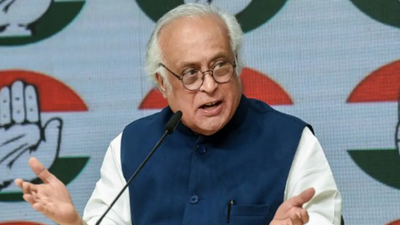
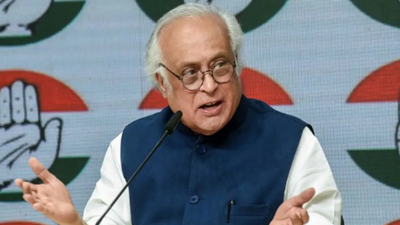
New Delhi: Congress on Thursday targeted the government over its handling of the incident and its aftermath. Operation SindoorHe claimed that despite India’s diplomatic outreach after the military action, Pakistan did not become isolated globally, as was the case after 2008. mumbai terrorist attack.Addressing the gathering, Congress general secretary in-charge of communications Jairam Ramesh also sharply criticized the government’s handling of the military operation and its diplomatic consequences.“As we celebrate the first anniversary of the launch of Operation Vermillion and salute the achievements of our armed forces, it would be useful to recall the following: The first announcement of the ceasefire that unexpectedly halted Operation Vermillion on May 10, 2025 at 5:37 pm IST was made by US Secretary of State Marco Rubio, who claimed that it was made possible due to the intervention of President Trump,” Ramesh said on X.“After this, the US President has repeated this claim more than a hundred times in different countries, while his good friend Prime Minister Narendra Modi has not refuted it even once,” he said.Ramesh also referred to the statements made by senior military officers after the operation. He said Chief of Defense Staff General Anil Chauhan, speaking in Singapore on May 30, 2025, had said that India suffered initial losses due to tactical errors, but later reviewed and corrected those mistakes with precision strikes inside Pakistan.He further reminded that at a seminar in Jakarta on June 10, 2025, the Defense Attache at the Indian Embassy in Indonesia had admitted that India had lost the aircraft on May 7, 2025, due to constraints imposed by the political leadership.Citing another statement, Ramesh said Vice Chief of Army Staff Lieutenant General Rahul Singh had highlighted China’s deep involvement in Pakistan’s response to Operation Sindoor on July 4, 2025, through equipment, ammunition, satellite imagery and real-time targeting support.“Yet, the Modi government’s measured capitulation towards China continues unabated, including loss of traditional patrolling rights in Ladakh, record sugar imports, relaxation of FDI norms, etc.,” Ramesh alleged.He said, “Despite India’s extensive diplomatic efforts, Pakistan has not been isolated as it has been since the Mumbai terror attacks in November 2008. On the contrary, its army chief Field Marshal Asim Munir has been embraced with extraordinary warmth by President Trump since June 2025 and Pakistan, the world’s leading sponsor of cross-border terrorism, has been praised by the US military establishment.”Ramesh also reminded that after the Kargil war ended in July 1999, the Vajpayee government appointed strategic affairs expert K. A four-member Kargil Review Committee was formed under the chairmanship of Subramaniam.Operation Sindoor was launched by India on May 7, 2025, in response to the April 22 Pahalgam terror attack that killed 26 people, mostly tourists. India carried out air strikes on nine terrorist infrastructure targets in Pakistan and Pakistan-occupied Kashmir.These attacks led to a sharp increase in tensions, with Pakistan launching retaliatory attacks which were largely thwarted by the Indian Army. Hostilities ended on 10 May after military officials of the two countries agreed to halt military action following hotline talks.