Kilometer allowance for train crew increased by 25%. india news

Kilometer allowance for train crew increased by 25%

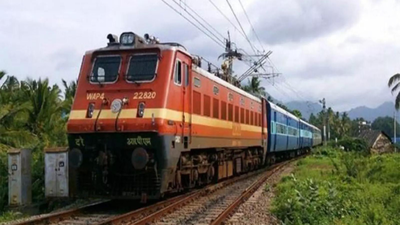
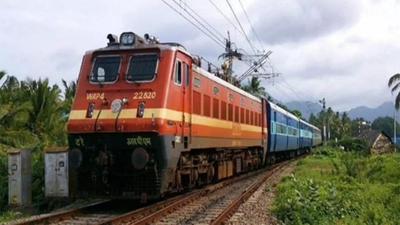
New Delhi: Effective from January 2024, Indian Railways has increased the rates of Kilometer Allowance and Allowance in lieu of Kilometer Kilometer (ALK) by 25% for all running staff in its system. The updated rates will benefit more than two lakh railway personnel, including loco pilots, assistant loco pilots, firemen, guards and other running staff. This decision has been taken after the 50% increase in dearness allowance.While other Indian Railways employees had earlier received an increase in traveling allowance, the kilometer allowance had remained stagnant till now, leading to dissatisfaction among the affected personnel. The issue was raised by All India Loco Running Staff Association and Railway Federation.“The amendment will benefit the running staff of Indian Railways by ensuring better compensation in line with the existing dearness allowance levels. It reflects Indian Railways’ continued commitment to the welfare and financial well-being of the running staff, who are the backbone of its operations,” an official statement said. news network

Source link

With 7th Regiment, Army expands Pinaka fleet. india news

With 7th Regiment, Army expands Pinaka fleet

New Delhi: With the security threat on the western and northern borders increasing, especially after last year’s conflict with Pakistan, Indian Army It is learned that one more Pinaka regiment has been inducted and preparations are being made to induct one more by the end of the year.

With 7th Regiment, Army expands Pinaka fleet

With another regiment operating, the Indian Army Now seven Pinaka rocket launcher regiments are deployed on the borders with Pakistan and China. “The 8th Regiment has received more than half the equipment. It should become operational before the end of 2026,” a source said.Two more regiments are likely to become operational next year, taking the total number of Pinaka regiments in deployment to 10. The Army has a long-term goal of equipping 22 regiments with the new, longer-range guided versions. In August 2020, the Army signed contracts with Bharat Earth Movers Limited (BEML), Tata Power Company (TPCL) and Larsen & Toubro for the supply of six Pinaka regiments at an estimated cost of Rs 2,580 crore. Developed by DRDO, Pinaka is India’s major indigenous multi-barrel rocket launcher. While early versions had a range of 40 km, newer variants such as the Guided Pinaka and Long-Range Guided Rocket have increased the range to 120 km, making the system a vital asset for deep strike operations.

Source link

EPFO reaches out to customers with unclaimed balance. india news

EPFO reaches out to customers with unclaimed balance

New Delhi: The Employees’ Provident Fund Organization is focusing on helping customers withdraw unclaimed money lying in dormant accounts.Nearly a quarter of inactive accounts, which are Aadhaar verified, may soon be freed from inactive balance as EPFO ​​is working on developing an auto-settlement feature that will allow account holders to get unclaimed money in their bank accounts without filing a claim, an official told TOI. The facility is set to deal with about 8.1 lakh Aadhaar verified inactive accounts amounting to Rs 5,200 crore, of which about 14,000 have more than Rs 5 lakh lying unclaimed. Another 38,000 Aadhaar-verified dormant accounts have Rs 1-5 lakh lying unclaimed, and 41,000 accounts have between Rs 50,000 and Rs 1 lakh. “In the last meeting, the Central Board of Trustees (CBT) had approved automatic settlement of such inoperative accounts with unclaimed balance of Rs 1,000 or less into registered bank accounts. Based on the learning from this project, a separate initiative has been planned to formulate a strategy for other accounts. Preference will be given to members joining after October 2017,” the official said. An inactive account in EPFO ​​is one which has stopped earning interest and it mainly belongs to those members who have retired after the age of 55 and have not made any contribution for three years. However, for those below 55 years of age, the account will continue to earn interest until the customer turns 58 years of age. As of February 2026, there were 31.8 lakh inactive accounts, with Rs 10,181 crore lying unclaimed. Of these, about 7 lakh accounts are more than 20 years old, while 1.8 lakh accounts are between 10-20 years old. About 13 lakh inactive accounts are 5-10 years old.

Source link

CAFE 3.0 rollout: Penalty recovery remains a gray area for carmakers. india news

CAFE 3.0 rollout: Penalty recovery remains a gray area for carmakers

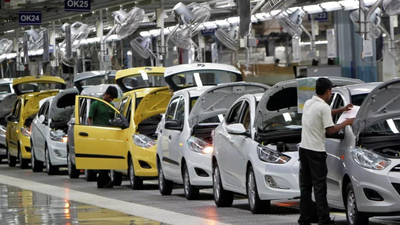
New Delhi: Clarity has been sought from the power and road transport ministries on recovery of penalty imposed on carmakers for failing to meet Corporate Average Fuel Efficiency (CAFE) norms. CAFE, a mandatory regulatory standard, sets average CO2 emissions or fuel consumption limits for the entire fleet of vehicles sold by a car manufacturer.It is learned that the PMO has asked the stakeholder ministries to address this issue keeping in mind that the next phase of CAFE (CAFE 3.0) will have strict norms for compliance.On March 17, TOI had reported that as per the presentation given by the power ministry to the PMO, only Tata Motors among the top five carmakers (80% market share) will be able to meet the target for all five years – FY28 to FY32. Officials had also said that high fines would be imposed in case of non-compliance with the proposed system.“In such a situation, the responsibility for assessment, approval and recovery of penalty should be properly defined. The PMO’s concern is valid given that there has been no recovery of penalty from companies not meeting CAFE 2.0 requirements,” an official said.A fine of around Rs 8,800 crore has been imposed on 10 major carmakers for failing to meet CAFE 2.0 targets by FY23. Officials said while the Bureau of Energy Efficiency has calculated the penalty for each carmaker, they can be recovered by the adjudicating officer under the State Electricity Regulatory Commission, as per the Energy Conservation Act, 2001.“Ideally, the ministry or department that enacts an Act, formulates criteria for assessment and formulates the penalty formula should enforce the task of collecting the fine,” said a person familiar with the developments.

Source link

Misuse of UAPA not ideal for developed India: Supreme Court judge india news

Misuse of UAPA not ideal for developed India: Supreme Court judge

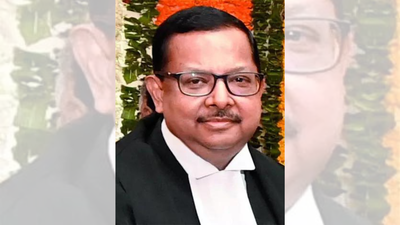
New Delhi: Supreme Court Justice Ujjwal Bhuyan on Sunday said the political executive’s goal of a developed India by 2047 needs more space for debate and dissent without criminalizing it, and erasing “deep social fault lines” reflected in caste-based discrimination and atrocities on Dalits. Addressing the first national conference of the SC Bar Association in Bengaluru, Justice Bhuyan said indiscriminate arrests with nominal punishment under the anti-terrorism law Unlawful Activities (Prevention) Act cannot be a model of developed India. He said, “My model of developed India is equitable distribution of wealth and elimination of extreme inequality… which is also the goal set out in the Directive Principles of State Policy in the Constitution.” He said in developed India, “the judiciary must remain the judiciary…it cannot be an eternal critic or cheerleader.”‘Low sentences under UAPA reflect overuse, if not misuse, of the law’Presenting the data of people arrested under UAPA from 2019 to 2023, he said that thousands of people have been arrested, but the average conviction rate remained around 5%. He said, “This reflects persistent under-convictions. What does this indicate – (overuse if not misuse of the law) and its impact on the criminal justice system. How much burden does it put on the courts? This shows that the vast majority were arrested but could not be convicted. This indicates that many arrests were made prematurely and in the absence of sufficient evidence.”“With a general conviction rate of 5% or less and acquittal in over 95% of UAPA cases, why should an accused be kept in jail without a charge sheet being filed against him? This cannot be the model of developed India,” Justice Bhuyan said, adding that the plethora of such cases leads to backlog, pendency and delay in justice delivery, along with impacting the general principle of ‘bail is the norm and jail is the exception’.He said that in developed India there should be more space for debate and disagreement. He said, “Debate should not be criminalized. There should be more tolerance towards diverse views. Different views should be respected. There should be more tolerance towards diverse views and criticism.”Justice Bhuyan said that the political executive has set a goal for a developed India. “With the good performance of all key players in the economic and social sector, this is certainly an achievable goal. After all, why will India not remain a developed country for so long? But, he said it is ultimately a political statement, reminding that the political executive had coined catchy slogans like ‘Garibi Hatao’ in the 1970s.“I doubt whether the judiciary, though an organ of the state, but separate and distinct from other organs, should join this bandwagon. Without any disrespect, the appropriate target year for the judiciary should be 2050.”“By then, both our Constitution and the SC will have completed 100 years, which is an important milestone to look back and take stock of how we have traveled here and what is the roadmap ahead,” he said.Referring to the August 1986 SC judgment in the Bijo Emmanuel case, in which the court had ruled in favor of children of the Jehovah’s Witness sect who refused to sing the national anthem in school, Justice Bhuyan said only a courageous judge like O Chinnappa Reddy could have given such a judgment. He said tolerance, which is taught by our tradition and Constitution, should be practiced.On the social imbalance caused by caste-based discrimination as well as atrocities on Dalits, Justice Bhuyan said, “There are deep social fault lines. Developed India cannot tolerate such fault lines.”“Parents cannot insist that their children will not eat food prepared by a Dalit woman. This cannot be a developed India model. We cannot have a developed India when Dalit people are made to stand in corridors and people urinate on them. This cannot be a model of development. The dignity of the individual must be protected.”

Source link

Kotak sells stake in capital markets lending arm. india news

Kotak sells stake in capital markets lending arm

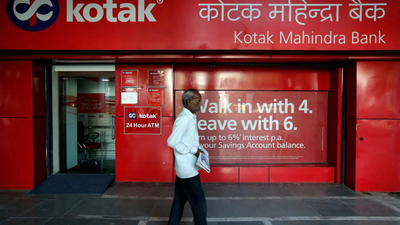
MUMBAI: Kotak Mahindra Bank on Saturday said its wholly owned subsidiary Kotak Mahindra Capital Company (KMCC) will sell approximately 31% stake in Infina Finance – a capital markets lending arm – to a group of investors including Aryaman, Aryaveer and the estate of Rakesh Jhunjhunwala through Nishtha Jhunjhunwala Discretionary Trust, Deriv Trading & Resorts, Bright Star Investments and KF Trust for approximately Rs. For Rs 1,293.9. crore, its share dropped from about 50% to 19%.Before the transaction, KMCC held 49.99% stake in Infina Finance, while the Kotak family held 50.01% through various entities and trusts, including KF Trust. Following completion of the transaction on or before March 31, 2026, the Kotak family and related trusts are expected to hold approximately 59% stake, KMCC will hold 19%, Jhunjhunwala Estate will hold 12.1% and Deriv Trading and Bright Star Investment will hold 9.9%.

Source link

Abdul Basit: If America attacks us, we should attack Indian cities like Delhi and Mumbai: Former Pak envoy india news

If America attacks us then we should attack Indian cities like Delhi and Mumbai: Former Pak envoy

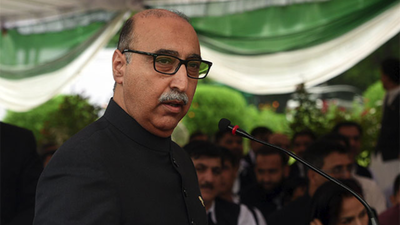
Said in a very provocative statement, Abdul BasitPakistan’s former High Commissioner to India has said that attacking Indian cities like New Delhi and Mumbai should be Islamabad’s “default move” if the country is attacked by the US.Basit said in an interview to a local Pakistani channel, “The US will not attack Pakistan’s nuclear arsenal. Even if we assume that in a hypothetical situation the US attacks Pakistan, we will not be able to retaliate because the US does not come within our nuclear range. (Asking a TV anchor) What do you think will be our option then? India.” He told ABN News, “If anyone casts an evil eye on us, we will attack Mumbai and New Delhi in India without thinking. We will see whatever happens later.”The former envoy turned defense strategist further said, “At the moment, neither the US nor Israel is under our nuclear range. But the world should know that if we come under attack, we will in turn attack India wherever we wish.” Basit made this controversial comment while reacting to US Director of National Intelligence Tulsi Gabbard’s recent statement before the Senate Intelligence Committee, in which she had said that Pakistan’s long-range ballistic missile program could pose a threat to the US homeland.Some media reports also quoted Basit as saying that Gabbard’s “anti-Pakistan” worldview was a known fact. He reportedly said, “Pakistan’s deterrence capability is India-specific. Tulsi Gabbard saw our missiles, but not India’s Agni-5 and Agni-6. They are intercontinental missiles.”Presenting the Annual Threat Assessment to 2026 before the House Intelligence Committee, Gabbard had said that Pakistan is among the countries that are “researching and developing a range of new advanced or conventional missile delivery systems with nuclear and conventional payloads that keep our homeland within range”.According to the Center for Arms Control and Non-Proliferation, Pakistan has six types of nuclear-capable ballistic missiles. Its overall arsenal consists primarily of short- to medium-range ballistic missiles, but it is making significant progress in strengthening its cruise missile capabilities. Its ground arsenal consists of 106 land-based missiles with a capacity of 5-40 kt. Pakistan’s roadmobile ballistic missiles include the short-range Abdali, Ghaznavi, Shaheen-1 and NASR as well as the medium-range Shaheen-2 and Ghauri. The Shaheen-3 and Ababil medium-range ballistic missiles (MRBMs) are currently under development.The longest range Shaheen-3 can hit targets up to 2,750 km. But Shaheen-3 is not an ICBM. For a ballistic missile to be called an ICBM, it must have a minimum range of more than 5,500 km. The distance between America and Pakistan is more than 11,200 km.Reacting sharply to Basit’s statement, BJP national spokesperson Tuhin Sinha said on Sunday, “Abdul Basit’s threat that Delhi and Mumbai will be bombed by Pakistan shows that Pakistan is still shaken by the attacks during Operation Sindoor.” He has lost his mental balance.”Shortly after Gabbard’s statement, Pakistan Foreign Ministry spokesman Tahir Andrabi said, “Pakistan categorically rejects the recent claim by a US official alleging a potential threat from Pakistan’s missile capabilities.” Pakistan’s strategic capabilities are “exclusively defensive” in nature, he said, and are aimed at “protecting national sovereignty and maintaining peace and stability in South Asia”.

Source link

Datta Meghe: Veteran BJP leader Datta Meghe passes away at the age of 89; Big loss for Vidarbha, Gadkari said. india news

Veteran BJP leader Datta Meghe passes away at 89; Big loss for Vidarbha: Gadkari

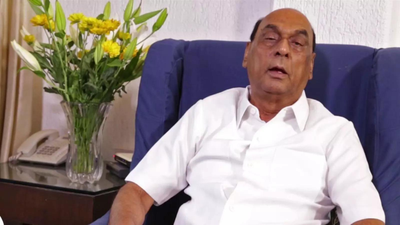
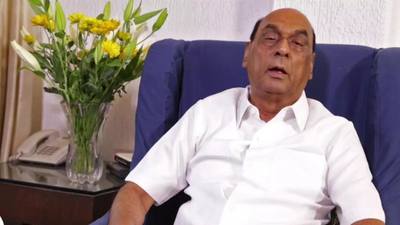
Nagpur: Veteran BJP leader Dutta Meghe died on Sunday evening at the age of 89, said his close aide and former Nagpur deputy mayor Raghunath Malikar.Meghe is the father of Hingna MLA Sameer Meghe and former MLC Sagar Meghe.Dutta Meghe was a four-time Congress Lok Sabha MP from Nagpur, Ramtek and Wardha and was also a Rajya Sabha member between 2002 and 2008. He was part of the Sharad Pawar-led (undivided) NCP when it was formed in 1999 and was a minister of state.He joined the Bharatiya Janata Party in 2014. He is survived by his wife, two sons, two daughters and grandchildren.Union Minister Nitin Gadkari said that Meghe was like his elder brother and the news of his demise is heart-breaking.He said, “My heartfelt tribute to him. Dattabhau’s demise has caused a great loss to the political and social sphere of Vidarbha. Such a leader with a generous heart, broad and pure mind will not come again. Dattabhau’s contribution to the educational and medical fields in Vidarbha is remarkable and significant.”From Gadchiroli to Melghat, in the tribal areas, Meghe made immense efforts to improve the health of the tribal brothers through free medical camps, Gadkari said, adding that in Sawangi Meghe, he provided free medical treatment to the poor.The Union Minister said, “He built educational institutions to provide higher education opportunities to the youth of Vidarbha. May God rest his soul in peace and give strength to his family and all to overcome this loss.”

Source link

‘Fighter Didi’ teaser projects Mamata as Bengal’s lone shield, hints at TMC’s fight for the polls india news

'Fighter Didi' teaser shows Mamata as Bengal's lone shield, hints at TMC's battle pitch for elections

Kolkata: The battle lines for the 2026 West Bengal Assembly elections continue to sharpen. Trinamool Congress An animated teaser titled ‘Fighter Didi’ was released on Sunday, featuring the Chief Minister Mamata Banerjee As the last line of defense of Bengali identity against what the party calls “external forces”.The 16-minute video, divided into episodes, released on the party’s social media platforms, blends political messaging with cinematic symbolism – dark clouds loom over Bengal, anxious citizens look towards the sky, and a looming silhouette holding a saffron flag, an unmistakeable dig at the BJP.

Watch

Eid politics heats up in Bengal: Mamata Banerjee attacks BJP, Suvendu Adhikari takes Sanatan Katha forward

If the opening frames depict a state in danger, the closing sequence is designed to deliver the punchline – a determined Banerjee emerges as a fighter, flanked by images of Goddess Durga and a Royal Bengal Tiger, before the slogan ‘Fighter Didi’ flashes across the screen.The teaser is the second installment of TMC’s campaign video series and comes days after the party unveiled its “10 pledges” and released the list of candidates for 291 seats, signaling that the ruling party has started shifting gears for what promises to be one of the fiercest electoral battles in the state’s recent political history.At the heart of the teaser is a theme that TMC has increasingly pursued in recent years – the defense of Bengali identity.In one striking frame, a giant hand stamps the word “Bangladeshi” on official-looking documents and Bengali text flashes on the screen, warning against attempts at “identity snatching.”The picture is widely seen as a dig at the BJP’s push for the National Register of Citizens (NRC) and the Citizenship Amendment Act (CAA) – issues the TMC has repeatedly highlighted as an existential threat to Bengalis and migrants in the state.The teaser also delves into the cultural psyche of Bengal – a region where Banerjee often tries to counter the BJP’s aggressive Hindutva narrative with a mix of regional pride and cultural symbolism.Animated scenes show portraits of Bengal icons like Rabindranath Tagore and Netaji Subhash Chandra Bose being vandalized, while a statue of Tagore is shown collapsing – an apparent reference to previous political flashpoints that the TMC has used to accuse the BJP of disrespecting Bengal’s heritage.Another character, resembling a prominent BJP leader with glowing eyes and shadowy enforcers behind him, appears as the antagonist in the sequence – reinforcing the narrative of an outside political force threatening the cultural fabric of the state.Political observers said the teaser outlines a campaign template that has served Banerjee well in the past – turning the elections into a binary contest between the “daughter of Bengal” and “outsiders from Delhi”.This formula played a decisive role in the 2021 assembly elections, when Banerjee challenged the BJP’s massive campaign to secure a third consecutive term, riding on the wave of Bengali sub-nationalism and welfare politics.With the BJP once again projecting itself as the major challenger in the 2026 contest, the TMC appears keen to revive that narrative at the start of the campaign cycle.Within the party, the pitch of ‘Fighter Didi’ is being seen as more than just campaign branding.Strategists said the idea is to frame Banerjee not just as an incumbent seeking re-election, but as a combative defender of Bengal’s political and cultural autonomy — a narrative aimed at strengthening TMC’s core support base while energizing cadres ahead of a long election campaign.The message is clear: the upcoming elections are not just another electoral contest but, at the behest of TMC, a fight to save Bengal.If the teaser is any indication, the 2026 assembly elections are likely to be fought not just on governance and welfare but also on the emotional terrain of identity, culture and regional pride themes that have shaped the state’s political battles time and again.And in that story, TMC is making it clear who it wants to cast as the hero.

Source link

Owaisi announces alliance for Bengal elections: AIMIM to contest elections with Humayun Kabir’s AJU party. india news

Owaisi announces alliance for Bengal elections: AIMIM will contest elections with Humayun Kabir's AJU party

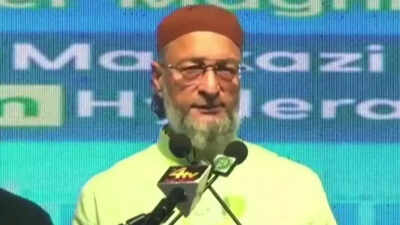
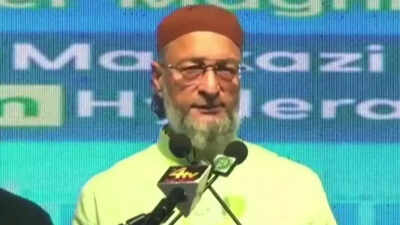
All India Majlis-e-Ittehadul Muslimeen (AIMIM) chief Asaduddin Owaisi announced on Sunday that the party will contest the upcoming West Bengal Assembly elections in alliance with Humayun Kabir’s Aam Janata Unnayan Party (AJUP).Announcing the alliance, Owaisi said, “AIMIM has decided to form an alliance with the Janata Unnayan Party for the West Bengal elections. We want to strengthen AIMIM and ensure that our candidates are successful in every corner of the country, and raise the voice of the poor and the oppressed in the Assembly… In West Bengal, 5 lakh backward class certificates have been cancelled, most of which belong to Muslims. There are also many stories of harassment. They They secure votes in the name of secularism but when the Majlis advocates equity and representation, they do not like it…”He also said, “I will hold a press conference in Kolkata with Humayun Kabir on March 25.”

Watch

‘A pack of lies’: Bengal election war intensifies as BJP and Congress attack TMC’s election manifesto claims

Kabir, a former All India Trinamool Congress leader and AJUP founder, had earlier said that his party would contest 182 seats in the 2026 West Bengal assembly elections. “I had already announced 15 candidates. Now, Humayun Kabir will contest from Rani Nagar; he is also doing an additional job. Then, another businessman named Humayun Kabir will contest from Bhagwangola. Also, Manisha Pathak Pandey will contest from 64-Murshidabad seat. So, with the 15 announced earlier and now these three candidates, we have opened a list of 18 candidates today,” he said.He said, “My party, along with the alliance we are in, will contest elections on 182 seats. All India Majlis-e-Ittehadul Muslimeen (AIMIM) will be a partner and will contest on about 8 of those seats.According to the Election Commission of India, the West Bengal Assembly elections will be held in two phases on April 23 and April 29, 2026, with counting taking place on May 4. The first phase will cover 152 constituencies, while the second phase will cover 142 seats.West Bengal has a total of 294 assembly seats and over 6.45 crore voters, including over 5.23 lakh first-time voters in the age group of 18 to 19 years.The main contest is expected to be between the ruling Trinamool Congress led by Mamata Banerjee and the opposition Bharatiya Janata Party.In the 2021 assembly elections, Trinamool Congress retained power with a decisive victory, while Congress and the Left Front failed to win any seats.

Source link