Breaking News
‘Surviving and protesting’: MP turns 100 in Janata rule. india news

'Survive and protest': MP turns 100 in Janata rule

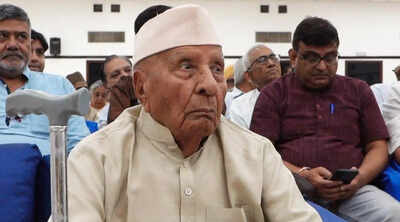
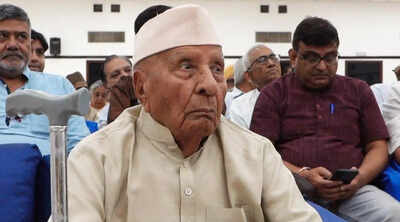
New Delhi: A month ago, Pandit Ramkishan sat on a dharna in Rajasthan demanding better quality water for his home district Bharatpur. One of India’s oldest former MPs (he was in Parliament in 1977) told TOI on Friday, a day before he turned 100, that he will always remain a socialist. “This is what I have learned from Ram Manohar Lohia.”Sitting in his Bharatpur home, the veteran, “Lohia’s oldest disciple”, as he likes to call himself, speaks with the authority of a man who has not only witnessed history, but shaped it. Until recently he was briefly hospitalized due to a fall, he was attending three meetings a week.What keeps him going is the unfinished business.He asserts, “The day I stop thinking about a better India is the day I stop living. I am alive now and my voice will be heard.” “The values ​​we fought for – equality, integrity, dialogue – are under pressure. We need to speak out.” This is exactly what is said in his autobiography published last year – I am alive.

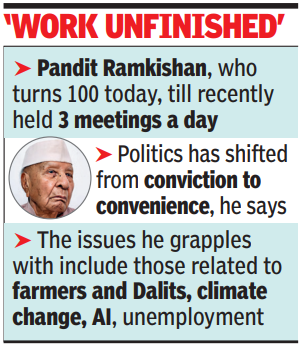
'work incomplete'

The first part of life was defined by ideology, the second part saw its erosion: PanditjiBut why continue this physically excruciating movement, sitting in the sun, sometimes without food and water, on knees and carrying the weight of a century behind you? “It comes natural to me,” says Pandit Ramkishan simply.a partner in Quit India Movement In 1942, “and shaped by Lohia and Jayprakash Narayan”, Panditji, as people fondly call him, went to jail during the Emergency, from where, they say, he came out sane.Not born into politics, he was the son of a farmer, for whom independence meant “freedom from fear, freedom from ‘lagaan’ and want, and freedom from a system that marginalized the common man”.He remembers searching for Mahatma Gandhi in his youth. As a student in Bharatpur, he traveled to Delhi by collecting some coins among friends in the hope of hearing Gandhiji one day. Panditji was not impressed. “We went looking for revolutionary ideas.”He believes that the very idea of ​​freedom is untenable today. If the first half of his life was defined by ideology, he says the second half saw its erosion. He argues that politics has shifted from conviction to convenience.When the Samajwadi faction split, Panditji left the Congress – and never returned. He recalls that repeated attempts were made to bring him on board, including an offer to lead the state of Rajasthan. He refused. “It was difficult – but necessary… Opportunity or pressure should never outweigh principle.”So, what modern issues is he grappling with these days? “Quite a few,” he says. “From problems related to farmers and Dalits to climate change, unemployment and artificial intelligence.” However, what troubles him is “what politics has lost now”. He tells a story. “I was contesting against Union Minister Babu Raj Bahadur, who once stopped midway to help me during my campaign when my vehicle broke down. We were contesting elections, but there was no enmity.Today, he says, the rival is treated not as a part of the regime but as the enemy. “Criticism is meant to strengthen democracy – not to invite hostility.”Is he hopeful?Panditji stopped. There is pessimism when he talks about communal polarization and political opportunism. But also a refusal to accept defeat. He said, “The solution will not come from political parties. It will be up to common people to understand what impacts the country’s progress, and in turn their own.”

Source link

NCERT reset, AI push: Pradhan outlines education roadmap. india news

NCERT reset, AI push: Pradhan outlines education roadmap
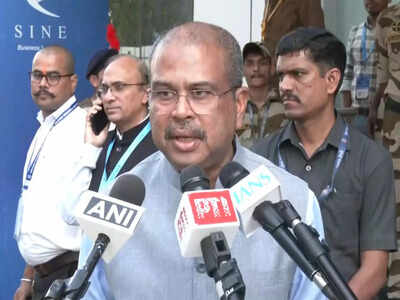
Dharmendra Pradhan (file photo)

New Delhi: Union Education Minister Dharmendra Pradhan said the Center will revise a controversial NCERT textbook chapter on judiciary under the supervision of a committee led by former Supreme Court judge Indu Malhotra.The minister said that this step has been taken following the guidance of the Supreme Court and the aim of this effort is to ensure transparency and balance in school education.On the recent controversy involving UGC rules aimed at maintaining standards, quality and equity in Indian higher education, Pradhan refrained from commenting in detail, noting that the matter is sub-judice. He said, “The responsibility of the government is to ensure that no one faces injustice or discrimination. We will follow whatever directions the court issues.”Outlining the broader priorities of the ministry, Pradhan said the education system currently serves around 30 crore students, which places significant responsibility on policy makers. He stressed on increasing access to quality resources including technology-driven education, better infrastructure and strong research ecosystem.Highlighting recent trends, the minister said India’s presence in global university rankings has grown rapidly over the past decade, with the number of institutions included in the QS rankings increasing from 54 before 2014 to about 290 now. He attributed this growth to continued policy focus on higher education reforms.Pradhan also emphasized the role of emerging technologies, noting that artificial intelligence will be integrated into learning systems both as a subject and a tool. “Students should be prepared for future challenges through modern technologies,” the minister said.

Source link

To protect consumers and oil companies, the government reduced excise duty on petrol and diesel. india news

Government cuts excise duty on petrol, diesel to save consumers, oil companies

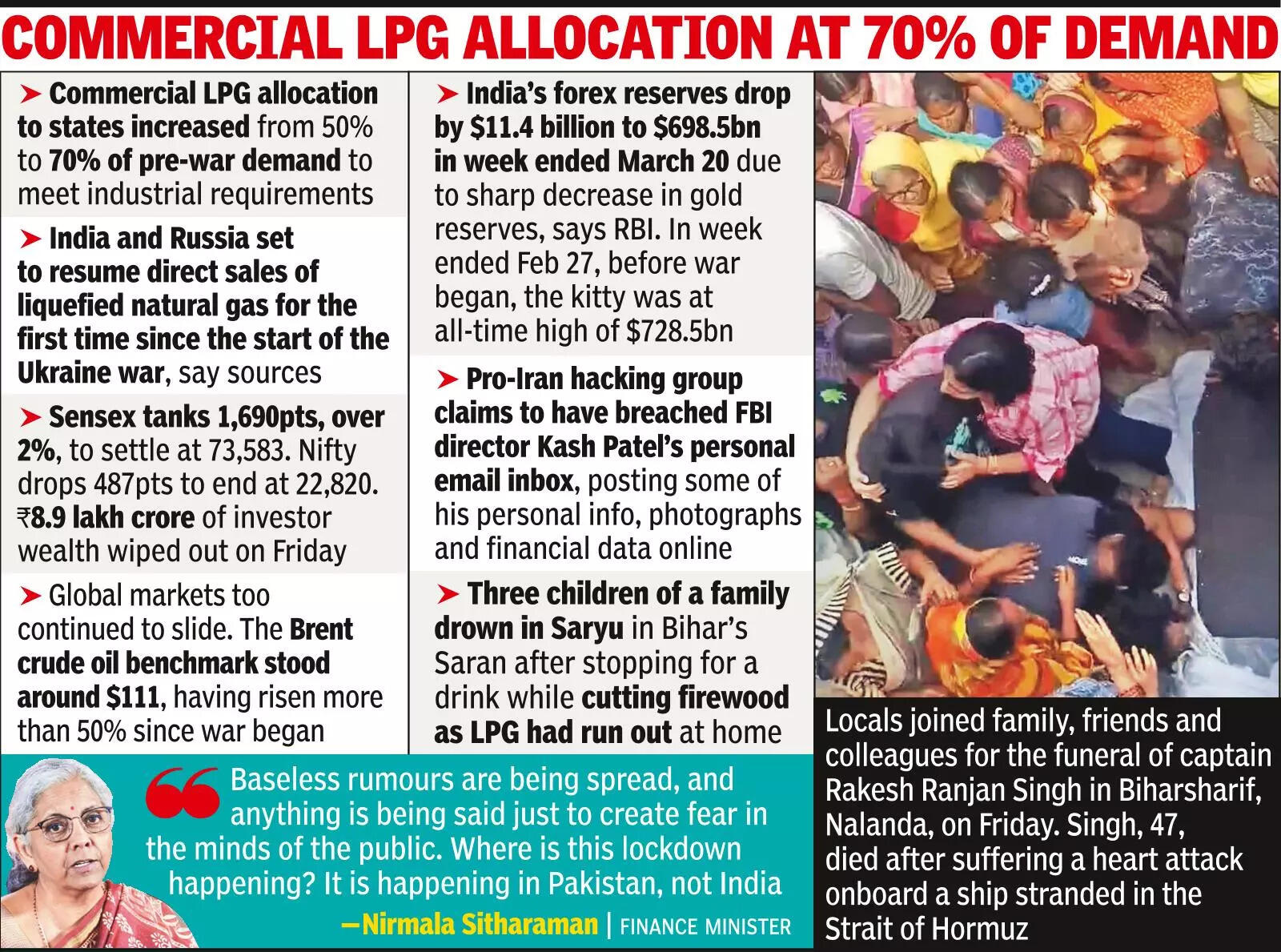
New Delhi: The Center has stepped in to protect consumers and oil companies from the impact of higher crude prices – which have surged 62% this month in February for Indian refiners – and cut excise duty, a move that will put a burden of Rs 1.3 lakh crore on the exchequer.With fuel retailers including Indian Oil, Hindustan Petroleum and Bharat Petroleum losing nearly Rs 24 per liter of petrol and Rs 30 on diesel sold by them, the government cut the special additional excise duty on both auto fuels by Rs 10. Also, it imposed export duty of Rs 21.5 per liter on diesel and Rs 29.5 per liter on aviation turbine fuel (ATF) to prevent windfall gains as the fuel is in short supply in international markets after China imposed a ban on exports.The windfall tax will also help the Center partially offset the impact of the excise duty cut. Central Board of Indirect Taxes and Customs Chairman Vivek Chaturvedi said the windfall tax on exports will yield around Rs 1,500 crore in the first fortnight, while the government will have to forego revenue of over Rs 7,000 crore due to the excise duty cut. He said that the export tax will be reviewed fortnightly.

Excise duty on petrol and diesel reduced, giving relief to consumers

Government imposes tax on export of ATF, diesel to prevent windfall profits

Government will have to forego revenue of more than Rs 7,000 crore on duty cut.The windfall tax will help the Center partially offset the impact of the excise duty cut. The government will have to forego revenue of over Rs 7,000 crore due to the excise duty cut.Chaturvedi said the export tax will be reviewed fortnightly to align the duty with the existing rates, as was the case in 2022. This levy will not be applicable on fuel exported by public sector oil companies to Nepal, Bhutan, Bangladesh and Sri Lanka. This will also not apply to ATF supplied to foreign-bound aircraft.Finance Minister Nirmala Sitharaman said in the Rajya Sabha, “In view of the ongoing and evolving situation in West Asia, our government has resolved to provide relief in the form of significant reduction in excise duty on petroleum and diesel to ensure stable prices…Going forward, we will continue to intensify our efforts in raising additional non-tax revenues and our government will continue to carefully manage the country’s fiscal position.” The average cost of crude oil for Indian refiners has increased from $69 in February to $111.93 so far in March as a result of rising global energy prices. While most countries have increased pump prices, Indian refineries were being hit after several months of making profits.“The government has taken a huge hit to its taxation revenues to ensure that the huge losses of oil companies are reduced at this time of skyrocketing international prices. Export tax has been imposed because international prices are skyrocketing and any refinery exporting to foreign countries will have to pay export tax,” Petroleum Minister Hardeep Puri said on Thursday.People-centric governance, says Amit ShahThe BJP and its allies on Friday lauded the government’s decision to cut excise duty on petrol and diesel to bring down rising input costs.Minister Amit Shah said it underlines “people-centric governance and decision-making based on sensitivity”.Shah said that while the world is facing fuel shortage due to the West Asia conflict, fuel prices are increasing globally, but the decision of the PM Narendra Modi-led government has provided much-needed relief to the citizens. Defense Minister Rajnath Singh called it timelyAnd the move is decisive, given that it comes amid rising fuel prices in many countries.“This step underlines our government’s proactive approach and strong commitment towards public welfare,” he said.This is a ruse till assembly elections: CongressQuestioning the Centre’s decision to reduce excise duty on petrol and diesel, the Congress on Friday said the Modi government did not reduce oil prices when global crude oil prices were low for several years, warning that it was just a sham till the assembly elections.Congress general secretary Jairam Ramesh said, “When global crude oil prices fell on seven separate occasions in the last 12 years, consumer prices in India did not fall. Today’s announcement was due to the assembly elections. Wait till 30th April.”Party MP Manish Tewari said the government’s revenue comes from people who pay taxes, and ministers are not paying from their own pockets to reduce petrol prices, as “Petroleum Minister Hardeep Puri is trying to pretend”.AICC spokesperson Pawan Kheda said that the government has been earning money from cheap crude oil for the last 12 years by not reducing the prices of petrol and diesel.

Source link

Many vehicles buried in avalanche at Zojila Pass, 7 killed. india news

Many vehicles buried due to avalanche at Zojila Pass, 7 killed

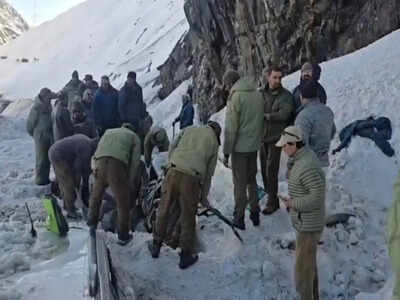
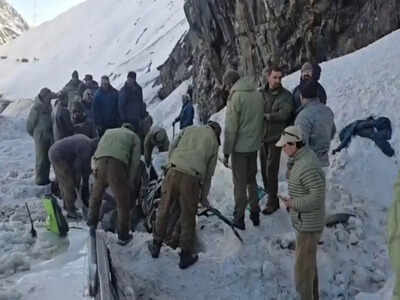
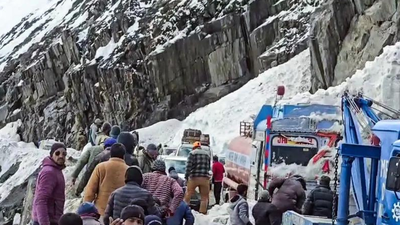
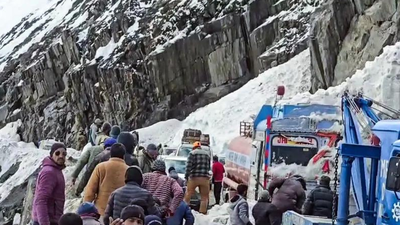
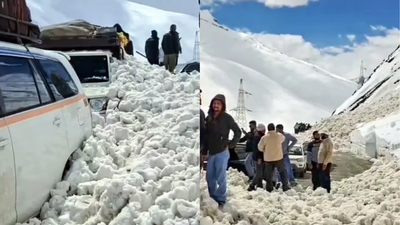
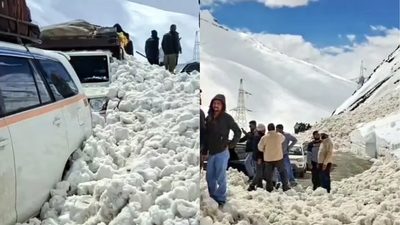
Srinagar: At least seven people were killed and five others injured after several vehicles were buried under snow due to an avalanche at Zojila Pass, zero point in Jammu and Kashmir’s Ganderbal district, about 70 km north of Srinagar.A senior police officer said the vehicles were moving from Srinagar towards Kargil when the avalanche occurred around 3 pm on Friday. Police and rescue teams used JCBs to clear snow and rescue the stranded passengers, including five injured. Rescue workers recovered seven bodies, while two people were still missing when last reports came in. All seven deceased were residents of Kargil district in Ladakh, an official said.On receiving the information, senior officials of Ladakh including Executive Councilor of Ladakh Autonomous Hill Development Council Mohammad Jafar Akhun reached the spot.Zojila Pass previously remained closed for about five months during winter, leaving Ladakh cut off from the rest of the country. However, with better technology, advanced snow-clearing equipment and better planning, the pass remained open throughout this winter, except for four days, which the Border Roads Organization described as a significant strategic and logistical achievement.

Source link

Mirwaiz met Iranian envoy, called Kashmir ‘Small Iran’. india news

Mirwaiz met Iranian envoy, called Kashmir 'small Iran'
Mirwaiz Umar Farooq (ANI/file photo)

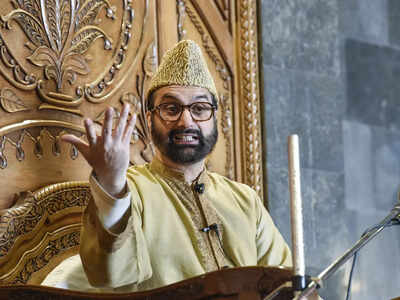
Srinagar: kashmirChief Maulvi of, Mirwaiz Omar FarooqIran on Friday met Iran’s Ambassador to India Dr Mohammad Fatahi and expressed condolences over the death of its top leaders in the Israel-US attacks.According to a statement issued by Mirwaiz, he led a delegation of Muttahida Majlis-e-Ulema, a group of religious organizations from Kashmir, and expressed his condolences on the assassination of Iran’s Supreme Leader Ayatollah Ali Khamenei, his family members and other leaders and expressed “deep solidarity with the people of Iran in their hour of difficulty”.The delegation condemned the war, which it said was “imposed” on Iran, and expressed hope that diplomatic efforts would be successful and peace and stability would be restored. Others included in the delegation included Mufti Nasir-ul-Islam, Agha Syed Hassan Al-Mosawi and Agha Syed Hadi Almosavi, Agha Syed Mujtaba.During the meeting, Mirwaiz also highlighted the “deep cultural, historical and religious ties between Kashmir and Iran”. He said Kashmir has long been called “Iran-e-Sagheer” (Little Iran), stressing that this reflects the enduring bond between Kashmiris and the people of Iran.Earlier this month, thousands of people in Kashmir gathered at Srinagar’s Lal Chowk and later in Budgam to condemn Khamenei’s killing. The valley also witnessed a massive donation drive following an appeal by the Iranian Embassy, ​​with people contributing cash, gold, traditional copper utensils, household items, vehicles and even livestock.Former CM and PDP chief mehbooba mufti He was the first political figure from Jammu and Kashmir to visit the embassy to express solidarity with Iran, followed by the National Conference MP. On 10 March, NC Chairman Farooq Abdullah visited the Iranian diplomatic mission and signed a condolence book on Khamenei’s death.

Source link

Maharashtra: 10-year-old boy dies after being hung upside down overnight, father arrested. india news

Maharashtra: 10 year old child dies after being hung upside down overnight, father arrested

A 10-year-old girl in Maharashtra’s Sangli district died after she was allegedly hanged upside down in their home by her father and kept in that position overnight, police said on Friday. The man had allegedly tortured the girl on suspicion that she had stolen money from a relative.The accused farmer Dadu alias Nana Yamgar has been arrested. Police said he also subjected the girl’s 11-year-old sister to similar torture. The elder sister is currently undergoing treatment in the hospital.The incident came to light on Thursday when doctors informed the police in Atpadi taluka about the death of the girl named Rutuja.Police said other family members, including Yamgar’s father, tried to intervene and save the girls, but he allegedly threatened them with the sickle. The result was that both the girls remained hanging upside down throughout the night. Police said that even Rutuja’s repeated requests for water had no effect on her.“Yamgar hanged his two daughters – Rutuja and Anuja – upside down by tying their hands and legs to an iron angle fixed to a wall under the roof of their house. He was angry as he suspected that the two girls had stolen money from a relative’s house at Banpuri in Atapadi,” a police officer was quoted as saying by PTI.Police said both the girls were found unconscious in the morning and were brought down by family members. After this the sisters were taken to the government hospital, but Rutuja’s condition deteriorated.Police said he died on the way to a hospital in Pandharpur in Solapur district. His elder sister Anuja is currently undergoing treatment in a hospital.The matter came to light when hospital authorities informed the police, following which the girls’ father was taken into custody. Police said the accused is suspected to be mentally unstable.A case has been registered against Yamgar under relevant sections of the Indian Justice Code (BNS) and further investigation is underway.

Source link

7 killed, several vehicles stuck in snow as avalanche hits Srinagar-Leh National Highway – Top Events | india news

7 people killed, many vehicles stuck under snow after multiple avalanches on Srinagar-Leh National Highway

New Delhi: Multiple avalanche A severe storm hit the Srinagar-Leh national highway on Friday, killing seven people and injuring five others, officials said.He said an avalanche occurred between Zero Point and Minimarg in the afternoon, trapping many vehicles under snow and debris.Officials said rescue teams were immediately rushed to the spot and rescue operations were launched. Efforts are underway to clear snow and locate and rescue people trapped in the affected area.

Union Minister Jitendra Singh Seven deaths confirmed

In a post on Twitter, Union Minister Jitendra Singh confirmed that seven people had died in the incident.“Saddened to learn about the tragic death of 7 people and injuries to 5 when their vehicle was hit by an avalanche at Zojila Pass. My deepest condolences to the bereaved families. All necessary assistance is being provided to the injured,” Singh said through a post on Twitter.

Ladakh LG says relief and rescue efforts underway

Ladakh Lieutenant Governor Vinay Kumar Saxena said that he has directed the Kargil Deputy Commissioner and Senior Superintendent of Police to reach the spot and monitor relief and rescue operations.In a post on Twitter, he said, “…I have directed the DC and SSP of Kargil to immediately rush to the spot and carry out relief and rescue operations. All government agencies including disaster relief forces and BRO have been put on high alert. I am personally monitoring the situation.”

Source link

Avalanche at Zoji La Pass: 7 killed, 5 injured in Ladakh; Srinagar-Leh highway blocked. india news

Avalanche at Zoji La Pass: 7 killed, 5 injured in Ladakh; Srinagar-Leh highway blocked

New Delhi: At least seven people died and several others were injured after an explosion avalanche Zoji La in Ladakh was attacked on Friday.He said that an avalanche occurred between Zero Point and Minimarg, due to which many vehicles were trapped under the debris. Due to this the Srinagar-Leh highway was also blocked.Rescue and relief efforts are ongoing after the incident.“Heard the unfortunate news of avalanche in Zoji La. I have directed the DC and SSP of Kargil to immediately rush to the spot and carry out relief and rescue operations. All government agencies including disaster relief forces and BRO have been put on high alert. I am personally monitoring the situation,” the Lieutenant Governor of Ladakh said in a post on Twitter.Jammu and Kashmir CM Office also expressed deep grief over the tragic loss of lives and expressed heartfelt condolences to the bereaved families and prayed for the speedy recovery of the injured.

Source link

Coordination, spirit of Team India: What was discussed in the important meeting of PM Modi-Chief Ministers amid Iran war. india news

Coordination, Team India spirit: What was discussed in the important meeting of PM Modi-Chief Ministers amid Iran war?

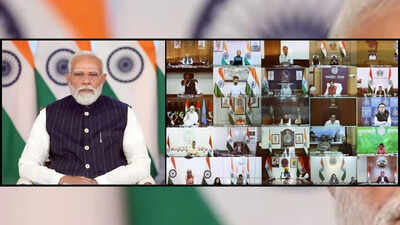
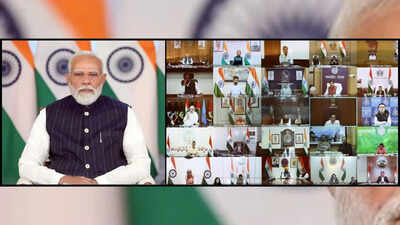
New Delhi: Prime Minister Narendra Modi on Friday chaired a virtual meeting with chief ministers to review the impact of the ongoing conflict in the Middle East, with discussions focusing on fuel supply, inflation and logistics amid rising global tensions.The meeting focused on ensuring coordinated action between the Center and states to manage potential disruptions arising from the crisis, especially in energy supply and supply chains. The Prime Minister is chairing a meeting with Chief Ministers as part of efforts to assess preparedness in essential sectors and maintain stability.The discussions also included a review of states’ preparedness to handle any fallout from the conflict, including contingency planning for fuel availability and price pressures. With the global energy market already under stress, the Center stressed the need for close coordination and timely response mechanisms.Officials indicated that the aim of the talks was to strengthen the “Team India” approach, ensuring that both the central government and states work in synergy to address emerging challenges.Due to the Model Code of Conduct, Chief Ministers of election-bound states did not participate in the meeting. A separate meeting will be held for Chief Secretaries of poll-bound states through the Cabinet Secretariat to ensure administrative coordination without violating election norms.

Source link

No Retakes, No Filters: Why Our Souls Crave the Raw Power of Theatre. india news

No Retakes, No Filters: Why Our Souls Crave the Raw Power of Theater
Photo Credit: Instagram/@nsd_official_

On any given evening, the footpaths around Delhi’s cultural hub begin filling up long before the curtains go up. Outside the auditoriums at Mandi House, a crowd has gathered, students, families, regular theatre-goers, some holding tickets, others waiting to collect them. Nearby, theater actors stand in small groups, going over lines, jotting down last-minute ideas with cups of tea in hand. There is an artistic air about this place, a sense of something extraordinary coming together quietly. There is conversation amongst the crowd, past performances debated, excitement over the evening’s game, whispered recommendations passed from one enthusiast to another.Among them is an elderly woman who returns to see the same play again and again, taking something different with her each time. A young enthusiast stands nearby, watching intently, seeing not just a performance on stage but something he hopes to one day be a part of. And somewhere in the crowd, a man finds himself reconnecting with a kind of insecurity that everyday life often asks him to hide.There’s collective anticipation, but also an unspoken understanding. What they are about to see will be revealed only once, raw and unfiltered.. no retakes, no editing. Just a moment that is fleeting, delicate and alive, and demands all your senses. Just like life.

An ancient art form rooted in time

Theater is one of humanity’s oldest art forms, a place where stories come alive, emotions are shared, and society reflects itself. Long before cinemas or digital screens, people gathered to watch myths, histories, and human dilemmas unfold in real time. In ancient Greece, theater served not only as entertainment but also as a civic ritual, performed in vast amphitheaters to explore questions of morality, destiny, and the human condition. Plays such as Oedipus Rex by Sophocles and Medea by Euripides examined themes of destiny, power, and social order with surprising intensity, and their legacy was carried forward by modern classics such as the Prime Minister of the Theater of the Absurd. waiting for godot and the famous memory play the glass Menagerie.In India, theatrical traditions go back more than two millennia, with their most influential foundations found in the sage Bharat Muni’s Natyashastra, an ancient Sanskrit treatise on the performing arts that provides a rich and exceptionally detailed framework for performance, codifying every aspect of theater from stage design and music to gesture.currency) and expression (acting). At its core lies the deep concept of RasaThe aesthetic experience or emotional essence evoked in the audience makes Indian theater not just an act of storytelling, but a deeply immersed and philosophical art form.Based on these principles, classical Sanskrit drama flourished and reached remarkable artistic heights through playwrights such as Kalidasa and Shudraka. Kalidasa’s Abhigyanshakuntalam And Vikramorvasiyam Celebrated for his lyrical beauty and exploration of love, nature and destiny, while Shudraka’s mrichchakatikam(small clay cart) is known for its depictions of virtue, social justice, and political intrigue. Over time, Indian theater evolved into a rich tapestry of regional folk forms, such as Ramleela in Uttar Pradesh, Nautanki in North India, Bhavai in Gujarat, Swang in Haryana and western Uttar Pradesh, and Yakshagana in Karnataka, each deeply rooted in local culture and language, yet united by a shared devotion to storytelling through music, movement, and dialogue. These public demonstrations were not limited to formal forums. They flourished in the open fields, temple courtyards and village squares, bringing theater directly to the people and making it an integral part of everyday life.

modern drama

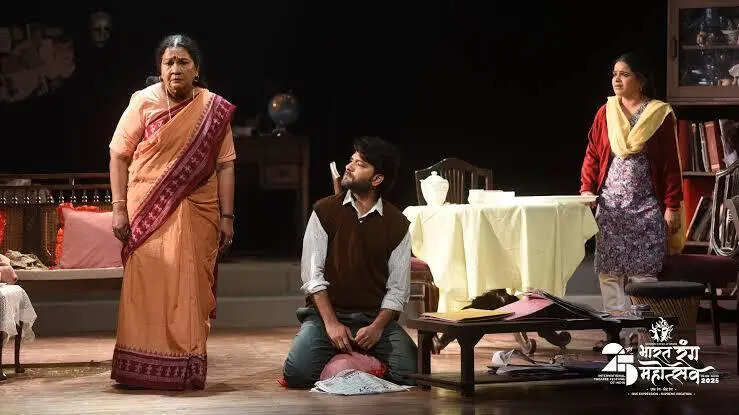
Modern Indian theater continues this legacy, dealing with social, political and personal themes. Some of the most famous plays include Girish Karnad’s Tughlaq, which uses the 14th century Sultan Muhammad bin Tughlaq to explore idealism, ambition and disillusionment, while Mohan Rakesh’s Aadhi Adhoora brilliantly portrays the quiet tension, unspoken expectations and emotional pulse of a middle-class family, exploring dysfunction, economic struggle and the emptiness that often underpins domestic life. Does. Ashadh Ka Ek Din is the story of poet Kalidas torn between love and ambition, while Dharamveer Bharati’s Andha Yug, based on the last day of the Mahabharata war, depicts total destruction, moral degradation and the deep cost of human struggle.
IMG_0004 (1)

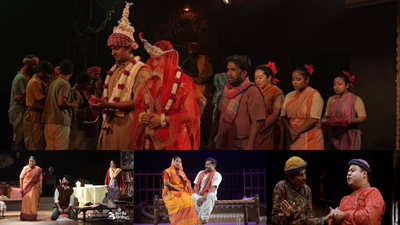
The famous Hindi play ‘Aadhe-Adhure’ being presented on stage (Photo credit: @nsd_official_)

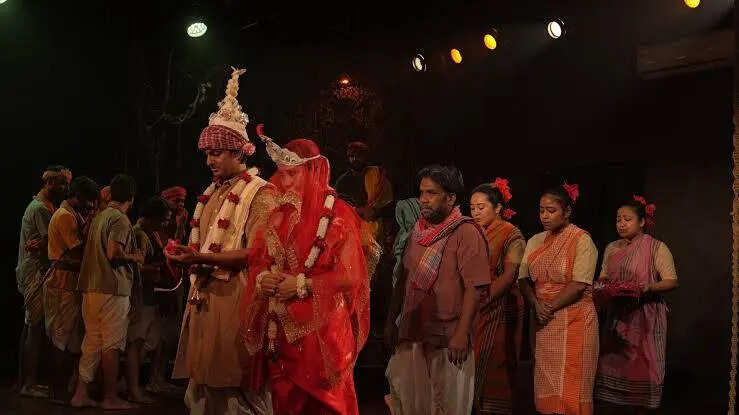
Saadat Hasan Manto’s Toba Tek Singh, set against the partition of India, captures the absurdity, horror and deep trauma that came with the upheaval, and Mahasweta Devi’s Bayen brings to life the harrowing story of Chandi Dasi, a woman ostracized as a “witch” while facing superstition, patriarchy and social exclusion. Each of these works demonstrates how theater not only entertains but also challenges, provokes and invites reflection on society and the human condition.
IMG_0003

‘Beyen’ by Mahasweta Devi (Photo Credit: @nsd_official)

More than just entertaining, these plays question, provoke and endure. Theatre, at its core, remains a mirror of society.

Places that keep theater alive and nurture the art

All over India, venues dedicated to theater are nurturing this art form. From the National School of Drama and Shriram Center for Performing Arts, with renowned groups like Asmita Theater Group and Act One, to Mumbai’s Prithvi Theatre, which is home to influential groups like Prithvi Theater Company and Ekata, and Bengaluru’s Rangashankar, which is closely associated with groups like Ranga Shankar Repertory and Indian Ensemble, these spaces are more than just performance spaces, they are cultural ecosystems where stories are rehearsed, refined, and The characters are brought to life.Yet, what unfolds on the stage is only the visible tip of a much larger process. Behind every performance lies a world of discipline, struggle and tireless preparation.

Behind the Scenes: Life Backstage

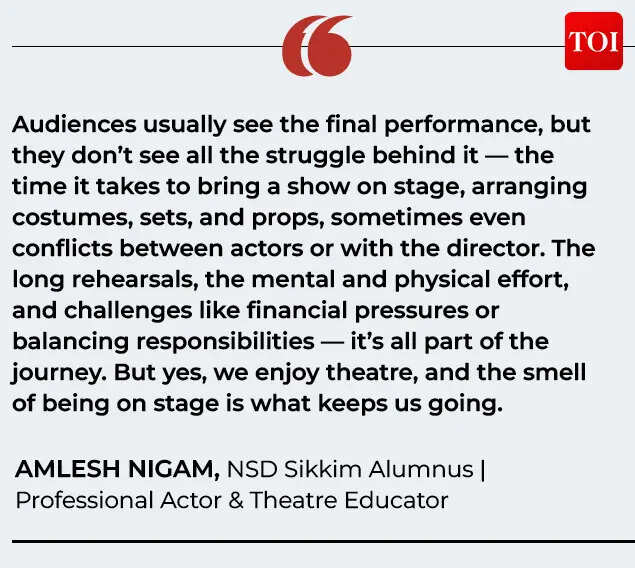
Viewers often only see the final act, unaware of the hours of work that make it possible. NSD Sikkim alumnus and theater teacher Amlesh Nigam explains that putting together a production involves more than memorizing lines. From arranging costumes and props to overcoming creative disagreements and enduring physically and mentally grueling rehearsals, the journey to the stage is layered and intense. The challenge of balancing financial instability and personal responsibilities adds stress, especially for emerging artists. Yet, despite these setbacks, the allure of theater remains irresistible, with the energy of the stage, the immediacy of the performance, and even the distinctive smell of the space bringing performers back.
Quote-3(1)

For many performers, the most exciting moment comes at the end, the curtain call. The applause, enthusiasm, approval of the audience confirms his choice. But the quiet moments beyond the headlines are just as meaningful. An artiste recalls how, as a school teacher associated with theatre, parents would talk about the changes they saw in their children, their growing confidence, their evolving personalities. Moments like these reinforce theater’s deep impact, which extends far beyond the stage.

What does theater demand from an artist?

Craft also gives a new shape to the artist. Theater demands observation of people, behavior and emotions. Over time, artists become more observant of the world around them, more empathetic, and more aware of themselves. As an actor reflects, observation becomes second nature; The person begins to see details in others and begins to uncover aspects of themselves that might otherwise remain hidden.At its core, theater is a collaboration of the senses. It is not just acting, but a synthesis of voice, movement, rhythm, music and silence, which becomes loud and all-consuming for some time. A pause can speak louder than dialogue; A look can tell more than words. Once the curtain opens, the boundary between actor and audience disappears. Taking one last look in the mirror before stepping out on stage isn’t just about adjusting a dress, it’s about stepping into another life. An actor’s character is formed over many weeks of rehearsals, shaped by choices, failures, and discoveries. And when the light comes, there is no looking back.For NSD Varanasi alumnus and theater teacher Sagar Vashishtha, the practice of theater lies in this ongoing process of becoming. A typical day, he explains, balances routines and moments of improvisation, voice work, movement practice, rehearsals and creative exploration. But there is a deeper demand beyond the routine: theater requires psychological, physical and even spiritual stamina. It is a discipline based on honesty, where the artist has to constantly learn, unlearn and re-learn. Mastery is never complete; Following becomes the craft.He also shows the impact theater leaves on its audiences. He suggests that entertainment is only superficial. The real work of theater happens internally, within the audience. A gesture, a pause, or a subtle change in lighting can trigger something deeply personal, an emotion or realization that persists long after the performance is over. When an audience member takes home an emotion that they can’t fully express but can’t forget, that’s when theater achieves its purpose.

Theater in the digital age

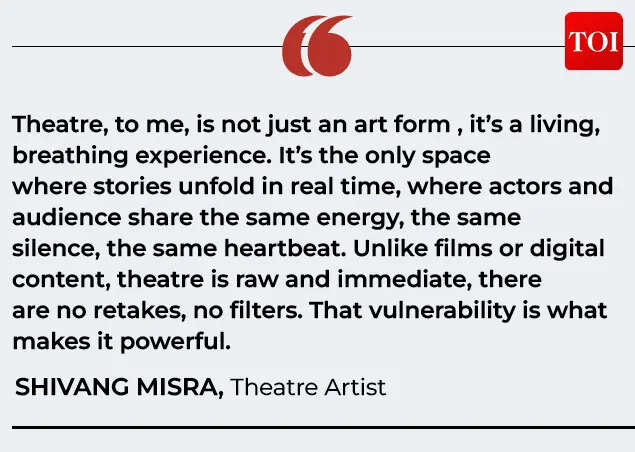
In today’s digital age, this immediacy makes theater uniquely powerful. While screens dominate entertainment, offering polished, edited and repeatable content, live theater exists only in the present moment. As Amlesh Nigam says, the experience of sharing space with an actor, his voice, presence and energy cannot be replicated on screen. Theater is raw and unfiltered. It demands attention and offers no second chances. There are no retakes.Theater is raw, unfiltered, and demands the complete presence of both performer and audience. As Shivang Mishra, a young theater artist, says, “Theatre, for me, is not just an art form, it is a living, breathing experience. It is the only place where stories unfold in real time, where actors and audience share the same energy, the same silence, the same heartbeat. Unlike films or digital content, theater is raw and immediate, there are no retakes, no filters. “That vulnerability is what makes it powerful.”
Quote-1

From stage to silver screen

For many of India’s most famous film actors, this rawness was their starting point. artists like irfan khanManoj Bajpayee, Shah Rukh Khan, Naseeruddin Shah, Om Puri, Shabana Azmi, Paresh Rawal, Neena Gupta, Ratna Pathak Shah, Nawazuddin Siddiqui, Amol Palekar and Piyush Mishra all honed their craft on stage before venturing into cinema. Theater gave him the discipline, presence and emotional authenticity that define his performances even today.

lasting legacy

World Theater Day, observed every year on March 27, celebrates this enduring art form and its ability to bring people together and provide a collective experience that is, at the same time, deeply personal. It is a reminder of theatre’s role in fostering dialogue, questioning norms and reflecting society. But it is also a call to preserve it, ensuring that it does not turn into a relic of the past.As Oscar Wilde once reflected, “I consider theater to be the greatest of all art forms, the most immediate way in which one human being can communicate with another what it means to be a human being.”And maybe that’s why, even today, the platform is breathing, why people are still standing in queues, waiting to step into a world that is simultaneously unfamiliar and deeply their own, and remains relevant, resonating with large audiences and reflecting the society we live in like a social X-ray.Just like life, the dynamic and fleeting nature of theater leaves no room for one-twos. As the lights dim and the curtain falls, only memories remain, which last long after the stage has gone dark, the applause has faded and silence has fallen.

Source link