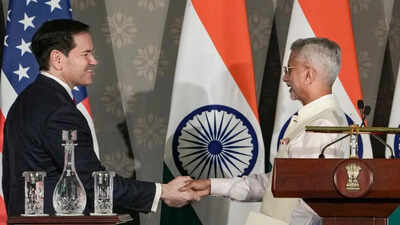
‘India one of the most important strategic partners’: Marco Rubio tells External Affairs Minister Jaishankar india news

'India one of the most important strategic partners': Marco Rubio tells External Affairs Minister Jaishankar
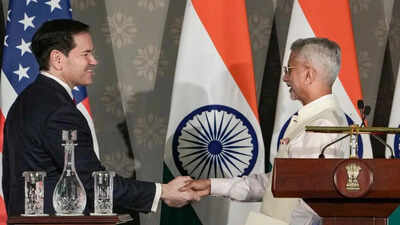
S Jaishankar with Marco Rubio

New Delhi: United States Secretary of State marco rubio On Sunday, he described India as one of the most important strategic partners of America and said that relations between the two countries go far beyond traditional diplomacy.Speaking at a joint press conference with External Affairs Minister S Jaishankar, Rubio said the India-US partnership is based on common interests and cooperation on many global issues.“Strategic partnerships are a very different thing,” Rubio said. “A strategic partnership is when your interests as two nations align, and you work together strategically to solve those problems,” he said.Rubio said the wide range of areas in which the two countries cooperate reflects the strength of relations between Washington and New Delhi.“The breadth of the list of issues on which we work closely with India highlights the fact that India is an important strategic partner to the United States, one of our most important strategic partners in the world,” Rubio said.Rubio also mentioned the democratic values ​​shared by both countries.“Democracy answers directly to its people and you have to answer consistently,” he said.On terrorism, Rubio said both India and the US have suffered losses due to global terrorist networks and they have developed strong cooperation on counter-terrorism.“On the issue of terrorism, both our countries have suffered direct and indirect losses due to the global terrorist network. This resulted in a strong anti-terrorism alignment,” he said.He also talked about cooperation in emerging technologies and innovation and said both countries agreed on managing opportunities and risks in this area.“We have a tremendous strategic alliance between our countries and there is agreement on that point,” Rubio said.Rubio further said that India and the US are working together to ensure free movement of global trade, especially in international waters and airspace.“Similarly, the same is true in the Indo-Pacific on the unimpeded flow of commerce, particularly in international airspace and international waters, ensuring that there is a free and open Indo-Pacific, but it extends beyond the Indo-Pacific,” he said.Earlier, Jaishankar and Rubio held delegation-level talks at Hyderabad House in New Delhi as part of the ongoing high-level engagement between the two countries.Senior officials from both sides participated in the meeting. Jaishankar was accompanied by Foreign Secretary Vikram Misri, State Department spokesperson Randhir Jaiswal and other officials, while Rubio was accompanied by US Ambassador to India Sergio Gore and members of the US delegation.During the meeting, Rubio described the first day of his visit to India as “fantastic” and said the US and India are not just allies but “strategic partners”.“It’s already been a wonderful day. We look forward to our visits today and our conversations and learning more about the country… As you mentioned, the United States and India are not just allies; we are strategic allies, and that is of vital importance. We obviously work with countries around the world and throughout the region on a variety of issues as they emerge, but our strategic partnership is what sets this relationship apart, because it’s not limited to just one region. “It expands opportunities to collaborate globally across different regions of the world, and that potentially includes the Western Hemisphere and places like that,” he said.Rubio said there was still “a lot of work to do” between the two countries and described India and the US as the two “largest democracies” in the world.He said it had laid a strong foundation for “incredible cooperation” and said the visit aimed to “continue to build on what is already a very solid and strong strategic partnership.”

Source link

Amidst the increasing outbreak of Ebola, India immediately sent Ebola relief material to Africa CDC. india news

'Committed to support': India sends urgent Ebola relief material to Africa CDC
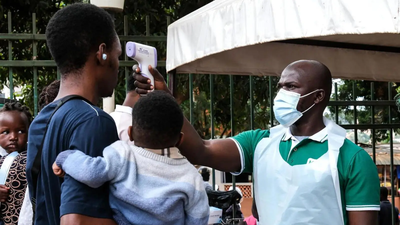
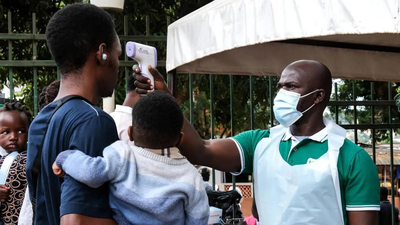
Ebola outbreak (Image credit: AP)

Hours after the Indian government issued a travel advisory asking citizens to avoid non-essential travel to the Democratic Republic of Congo, Uganda and South Sudan, the External Affairs Minister S Jaishankar has announced that India has sent emergency medical assistance to Africa Centers for Disease Control and Prevention.In a post on Twitter, Jaishankar wrote, “🇮🇳 sent the first tranche of urgent medical supplies and protective kits to @AfricaCDC today.”Jaishankar also said India is committed to supporting Africa in its response to the emerging Ebola public health emergency.Ebola outbreak spread across central AfricaThe Ebola outbreak in Central Africa continues to grow, with about 867 suspected cases and 204 deaths in Congo as of Saturday, according to the health ministry.The outbreak has now spread to three provinces in the Democratic Republic of the Congo, with the first confirmed case found in South Kivu.Two Ebola cases, including one death, have also been confirmed in neighboring Uganda following travel by infected individuals from the DRC.WHO declares Ebola a ‘public health emergency’On May 17, 2026, the World Health Organization declared the ongoing Ebola outbreak a public health emergency of international concern (PHEIC) under the International Health Regulations, 2005.The outbreak is caused by the rare Bundibugyo strain, for which there is no specific vaccine.WHO Director-General Tedros Adhanom Ghebreyesus described the outbreak as “particularly challenging”, citing ongoing fighting, displacement of people, the makeshift population of miners and significant distrust of external authorities among the local population.

Source link

Tvisha Sharma’s father expressed hope for justice as AIIMS team arrived in Bhopal for the second autopsy. india news

'They will bring justice': Tvisha's father expressed hope, AIIMS team reaches Bhopal for second autopsy
‘They will bring justice’: Tvisha’s father expressed hope

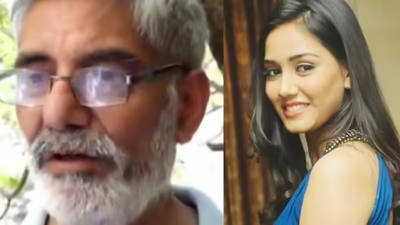
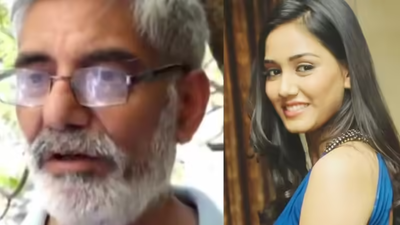
Tvisha Sharma’s father Navnidhi Sharma on Sunday expressed confidence in the investigation and said that the truth will be revealed by the medical team’s investigation. AIIMS Reached Bhopal for the second time for post-mortem.The fresh autopsy is being conducted following instructions issued earlier by the Madhya Pradesh High Court.The case attracted nationwide attention after Twisha’s family protested and demanded an independent investigation, alleging attempts at a “posthumous character test” of the deceased.Speaking to ANI, Navnidhi Sharma said, “The AIIMS team has arrived, and we are confident that they will get us justice. Discrepancies will come to light.” We were called for body recognition protocol. Thanks to everyone including the Chief Minister, who took cognizance and recommended CBI. This case will become a lesson and anyone will think twice before doing such a thing with their daughter.Supreme Court will hear the case on MondayThis development has come to light amid the growing investigation after the Supreme Court on Saturday took suo motu cognizance of Twisha Sharma’s death.The case has been registered under the title ‘Alleged institutional bias and procedural anomalies again in the unnatural death of a young woman in the marital home’.A bench headed by Chief Justice Surya Kant is likely to hear the case on Monday.Also read: SC takes suo motu cognizance of Twisha Sharma death case; CJI-led bench will hear the case on MondayHusband sent to police custodyEarlier, a local court in Bhopal had sent Twisha’s husband and prime accused Samarth Singh to seven-day police custody from May 23 to May 29 for further questioning.Noida-based model-turned-actress Twisha Sharma was found dead at her in-laws’ house in Katara Hills area of ​​Bhopal on May 12, just a few months after marrying lawyer Samarth Singh.Her family has accused her husband and in-laws, including retired district judge Giribala Singh, of dowry harassment and mental torture.Also read: Timeline of Tvisha Sharma case: Marriage, mysterious death, FIR and court battle

Source link

Center pushes Bengal to speed up PM-JAY, HPV vaccination. india news

Center pushes Bengal to speed up PM-JAY, HPV vaccination

New Delhi: The Center on Friday exhorted West Bengal to accelerate Ayushman Bharat PM-JAY, HPV vaccination and TB eradication programmes, while assuring full support to strengthen the state’s healthcare infrastructure.In a virtual review meeting chaired by Union Health Minister Jagat Prakash Nadda with West Bengal Chief Minister Suvendu Adhikari, the Center released ₹527.58 crore as the first tranche of the state’s ₹3,505.59 crore National Health Mission allocation for 2026-27.Nadda stressed on rapid implementation of TB-free India campaign, measles-rubella eradication campaign and HPV vaccination campaign, saying preventive health care and early intervention were important to reduce the burden of the disease. He also called for stronger monitoring and surveillance of maternal and child health indicators, especially in border districts.The Union Health Minister urged the state to expedite the signing of MoUs for the implementation of PM-JAY and said that around 1.45 crore families, including senior citizens, will benefit from the scheme. He also said that the Center is ready to provide technical assistance, expert team and training support for health care capacity building in the state.The meeting also reviewed preparedness against vector-borne diseases, expansion of Ayushman Arogya Mandirs, rapid testing of non-communicable diseases and availability of medicines and diagnostics at public health facilities.Seeking greater central support, the official proposed expansion of Jan Aushadhi Kendras, establishment of additional medical colleges in deprived districts and establishment of AIIMS in North Bengal to improve tertiary health care access in the region. He also stressed the need for stronger preparedness against monsoon-related diseases like malaria and dengue.

Source link

Now only 6 states have fertility rates above replacement level. india news

Now only 6 states have fertility rates above replacement level

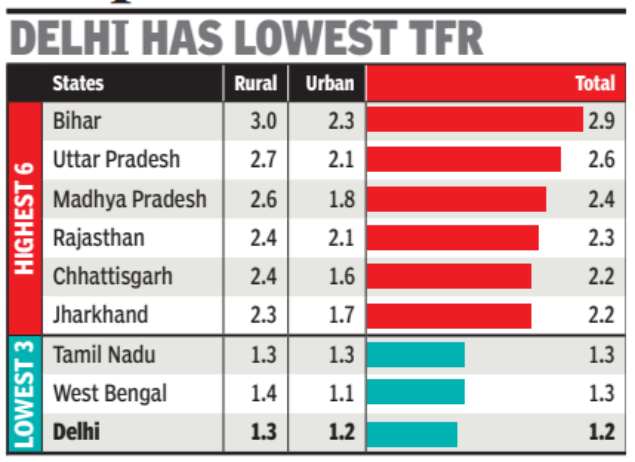
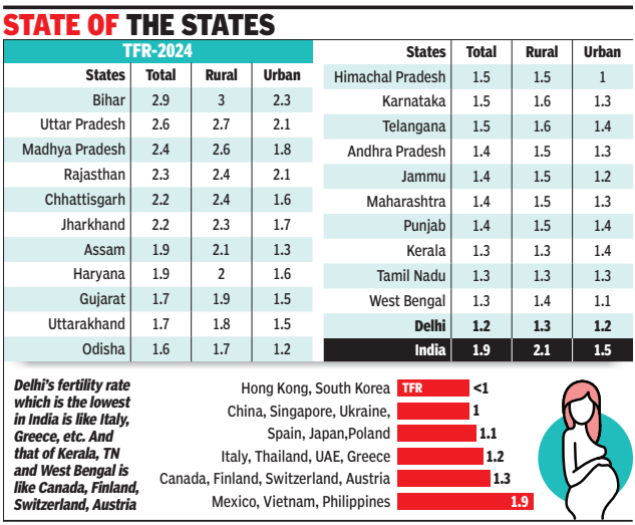
India’s total fertility rate (TFR), or the average number of children a woman has, has fallen further to 1.9 from 2.1, according to the latest Sample Registration System (SRS) report for 2024. Except for six states – Bihar, Uttar Pradesh, Madhya Pradesh, Rajasthan, Chhattisgarh and Jharkhand – the TFR in all other states has fallen below the replacement level. Delhi (1.2) is the lowest, followed by Kerala, Tamil Nadu and West Bengal where the TFR is 1.3.When the TFR is 2.1, it is called replacement level because a woman who has about 2.1 children in her lifetime will, on average, replace herself and her spouse. When fertility remains below this level over time, population growth slows and may eventually become negative, depending on the age profile of the population and the increase in life expectancy.A look at the percentage change over the decade before the report shows that Bihar has seen the lowest decline in TFR, with a mere 9.4% decline from a TFR of 3.2 in 2012-14 to 2.9 in 2022-24. Chhattisgarh and Assam are also two high-TFR states, which have seen a relatively smaller decline of 11.5% and 13%, respectively. Over the same period, Delhi and Tamil Nadu, which already had a very low TFR of 1.7, fell by 29.4% and 23.5% respectively. States where the average number of children born to a woman fell below replacement level more than a decade ago also have the lowest proportion of the 0-14 age group in their total population.

-

Working population is increasing despite decline in fertility In Tamil Nadu the 0-14 age group constitutes only 18% of the population whereas in Bihar it is 31.5%. In Andhra Pradesh, Jammu and Kashmir and Punjab this ratio is around 19%. Almost one in four people (24%) in India is in the 0-14 age group.India’s working age population (15–59 years) is still growing even in very low fertility states, indicating that the demographic window for India is not yet closed. The 15–60 age group constitutes 66.4% of India’s population (up from 64% in 2014) while the dependent population of 0–14 years is (24%) and the population above 60 years is less than 10%.However, this window is expected to close soon as the working age population peaks as can be seen in states like Tamil Nadu where the proportion of working age population has increased by barely 0.6 percentage points from 67.2% to 67.8% in the decade before this report.The proportion of people over 60 in India has increased from 8.6% to 9.7% and this has increased in all states. The state with the highest proportion is Kerala (15%) and the state with the largest jump in the proportion of 60+ population between 2014 and 2024 is Tamil Nadu – from 10.6% to 14.2%. Assam has the lowest proportion, at 7.6%.

-

“We can expect an acceleration in fertility decline and we still have high mortality rates, especially infant mortality, and our total mortality rate is also comparatively high. But we are far from reaching zero population growth or population stabilization because a very large population of young people is still in the reproductive age group. So despite the decline in fertility rates we will continue to see considerable growth because of this pace,” said fertility and population expert Professor Arokiasamy Periyanayagam.

Source link

Social media is making children addicted like drugs: Nishikant Dubey. india news

Social media is making children addicted like drugs: Nishikant Dubey

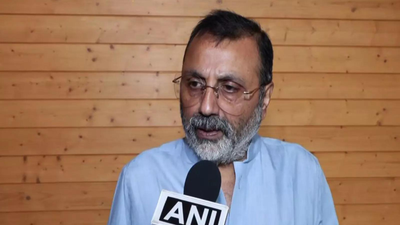
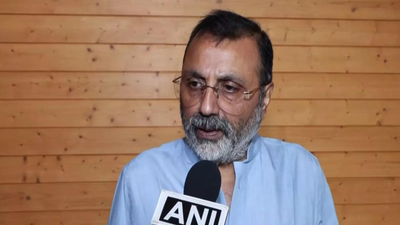
in conversation with TOI’s Manas Gohain BJP MP and Chairman of the Parliamentary Standing Committee on Communications and Information Technology, Nishikant Dubey Speaks on digital addiction, AI risks, fake news, cyber fraud, exam stress, online gaming, deepfakes and why India may need stronger digital guardrails for children and youth. Part:your committee has spoken KYC Verification, age restrictions and AI regulation. Why did the committee find these recommendations necessary?As we traveled across constituencies and talked to people, one thing became crystal clear – uncontrolled digital exposure is becoming dangerous, especially for children and teens. See online gaming. Children were secretly using parents’ bank accounts, losing large sums of money, and in some cases families were pushed to extreme distress and even suicidal situations. AI-generated advertising and manipulative digital content are making these platforms even more addictive and difficult to regulate. At the same time, Indian laws were made in a completely different era. When the Press Council Act or the cable TV laws were made, no one had imagined today’s digital ecosystem, where anyone can run a YouTube channel, Facebook channel or digital platform without any accountability. A newspaper faces restrictions in print, but the same content online often escapes institutional oversight. The committee felt that there should be a line somewhere. Countries around the world – including Australia, Singapore and parts of Europe – are already discussing or implementing age-based restrictions for children online. Another concern was how AI is beginning to blur the line between fact and fiction. I personally experienced a situation where fake content generated through digital platforms got mixed into a genuine discussion and the credibility of the entire conversation was compromised. Today, even the courts are facing concerns over AI-generated fake references and fabricated judgments. The Chief Justice of India himself has repeatedly warned about blind reliance on AI tools in legal work. Therefore, when it comes to children and students, the concern naturally becomes even greater. India’s biggest strength is its young population. If future generations turn away from reading, research and critical thinking, it will ultimately affect innovation, productivity and the long-term development ambitions of the country. You used a wonderful comparison – social media is like a drug. why do you say that?Because it works like an addiction. Social media provides a constant psychological “kick.” After some time, children lose interest in studies, books, research and even general human interaction. I’m not saying that kids should be completely cut off from technology. Phones are useful in libraries, online classes and learning. But social media is a different issue. Today, detox classes are being organized globally, in which people are being taught how to stay away from phones. This problem is no longer limited to children only – even adults and elderly people have become victims of its addiction. Just as countries impose age restrictions on alcohol or clubs, the world is beginning to realize that unrestricted social media exposure can also have serious consequences for minors. There is now growing concern around the world about screen dependence, decreasing attention span and digital fatigue. Is artificial intelligence making misinformation and fake news worse?Absolutely. AI is making fake content frighteningly credible. Recently, courts also faced situations where fake AI-generated legal references appeared in filings. Deepfakes can destroy reputations overnight. Fake screenshots, fake newspaper clippings and fake videos spread faster than the truth. The danger is not just political misinformation. It impacts students, women, financial systems and public trust. Our parliamentary committee had also recommended stronger safeguards, AI literacy and structured regulation as India cannot leave these issues wide open. The problem is that technology is advancing much faster than social awareness and legal safeguards. That gap is becoming dangerous. Are you worried that AI tools may undermine students’ learning habits?Yes. Earlier, students and researchers had to spend time reading books, verifying facts and studying subjects in depth. Many people now rely on AI tools for instant answers. The concern is not only about technology. The concern is whether future generations will stop developing critical thinking, research habits and patience. You cannot build a knowledge economy on shortcuts alone. Students still need curiosity, discipline, and the ability to analyze information independently. India’s demographic dividend can become India’s greatest strength, but only if you people remain productive, efficient and mentally focused. Students today are facing immense stress due to fake paper leaks and rumors Telegram And social media. How serious is it?Very serious. Many fake question papers are circulated several weeks before the examinations. Students panic, families owe money, stress levels rise – and often the papers are fake. It has become an organized ecosystem. Social media rumors can make millions of students psychologically destabilized in a matter of hours. We have seen how fake answer keys, manipulated screenshots and fabricated leaked claims spread rapidly during competitive exams. Even when papers are not leaked, rumors still create fear and anxiety among students. Therefore, PM Narendra Modi’s initiative to discuss the exam is important. Students should learn not to fall into the rumor trap or digital panic cycle. The bigger challenge is that fake information spreads much faster than official explanations. This creates emotional pressure on the students. Which class is most vulnerable to the dark side of social media?Women, children and economically vulnerable users are among the biggest victims. Fake videos, morphing, blackmail, pornography and cyber harassment can destroy lives. A fake clip that goes viral for a few hours can permanently damage one’s reputation and mental health. Children are also exposed to disturbing material very quickly. Without safety measures, the psychological impact can be severe. That’s why digital security can no longer be considered just a technical issue – it’s also a social and mental health issue. The most harmful effects of unregulated digital platforms are often seen among those who are least equipped to protect themselves. Your committee also laid emphasis on KYC verification. Is it related to cyber security?Yes. India is witnessing large-scale cyber fraud through mule accounts and fake digital identities. Misappropriation worth thousands of crores is taking place. Technology is advancing rapidly, but security measures are not keeping pace. Previously, opening a bank account involved community verification and accountability. Today, it has become extremely easy to remain anonymous online. We are not against technology. We’re asking: How can we make technology safer for society? If stronger verification systems are not introduced, cyber fraud, financial scams and identity misuse will continue to increase. Do existing laws adequately protect citizens online?There are serious flaws. Social media has evolved much faster than legal systems. Stronger legal accountability may ultimately be necessary in cases involving fake news, cyber fraud, child safety threats and national security concerns. Without prevention and fear of punishment, organized digital abuse will continue to grow. There is also debate on whether some legal provisions that have been weakened by court decisions need to be revisited in the context of new-age digital threats. The challenge is to maintain a balance between freedom of expression and safety of citizens. What should schools do immediately?Digital literacy and AI literacy must start much earlier. The parliamentary committee had recommended AI education from KG to PG. Children must learn:

  • How does fake news spread?
  • How algorithms gain attention,
  • Cyber ​​security,
  • Responsible AI use,
  • digital discipline, and
  • Mental health awareness is linked to screen addiction.

Technology is like nuclear energy. It can cure cancer or destroy cities. Social media and AI are similar – they can empower or harm society. The challenge is of balance. The focus should not just be on restricting technology, but also on teaching children to use it responsibly. Do you expect India to bring in stronger social media rules soon?Continuous discussions are taking place with ministries, states, forums and stakeholders. The government is actively investigating concerns over child safety, AI-induced harm and misinformation. But I don’t believe in mere restrictions or prohibitions. The real goal should be controlled, responsible and safe use of technology. The benefits of AI and social media are immense. But where the negative impact is greatest – on children, students, women and vulnerable groups – societies and governments must step up with safeguards. The objective should be to balance: encouraging innovation and digital growth while protecting society from addiction, manipulation, fraud and psychological harm.

Source link

‘94% of viewers from India’: Cockroach Janata Party founder rejects BJP’s Pakistani-followers allegation. india news

'94% of viewers are from India': Cockroach Janata Party founder rejects BJP's allegation of Pakistani-followers

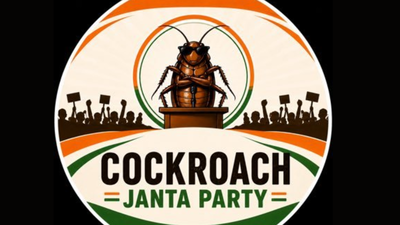
New Delhi: Cockroach Janata Party founder Abhijit Dubke on Saturday rejected BJP leaders’ claims that almost half of the party’s social media followers are from here. Pakistan. The internet-based movement, which recently went viral and gained popularity among young users, has now become the center of a political controversy.Cockroach Janata Party quickly emerged as one of the country’s latest online sensations, garnering attention through memes and comments around unemployment, education policy and alleged exam paper leaks.Refuting BJP’s allegations, Dupke shared a screenshot of audience analytics on X and wrote, “This is the screen recording of our audience demographic that we shared with the media before our account was hacked.”Claiming that most of the viewers were Indians, he said, “More than 94% of the viewers are from India.” After this he asked, “Why is there a Union Minister?” Kiran Rijiju Terming Indian youth as Pakistani?”Earlier, in a strongly worded post, Union Minister Kiren Rijiju had targeted the cockroach Janata Party and wrote, “I pity those people who look for their followers from Pakistan and George Soros gang on social media.”BJP leader and Union minister Sukanta Majumdar also alleged that there was significant Pakistani participation on the stage. Speaking to reporters, he claimed, “49 percent of the followers of ‘Cockroach Janata Party’ on social media are from Pakistan, while only 9 percent are from India.”BJP’s comment comes amid the growing controversy over the digital campaign, which went viral last week. Kerala BJP president Rajeev Chandrasekhar alleged that the CJP was part of a “classic cross-border influence operation” aimed at destabilizing India and targeting Prime Minister Narendra Modi and his government.“In the age of social media, bots, AI, and its weaponization, influence operations are dangerous, effective ways to destabilize by creating fake, seemingly organic narratives,” Chandrasekhar said in a post on X.He further alleged that some sections of the opposition were pushing the campaign and claimed that India’s rise under PM Modi has led to resentment among “foreign vested interests”.He said, “I have always said that India’s rise and modernization under the leadership of Prime Minister Narendra Modi will be anathema to many countries and will create many obstacles in our continued rise.”Chandrashekhar also defended the record of the Modi government during the global crisis. “No cockroach, no petty Indian opposition politician, no Modi-hating clown, no foreign vested interest can stop India’s resolve for a developed India,” he said.The trend of ‘Cockroach Janata Party’ came to light after the controversy over remarks allegedly made by Chief Justice of India Surya Kant during the hearing of a petition seeking senior designation for a lawyer. Abhijit Dubike has alleged that the movement has faced a coordinated crackdown on multiple social media platforms.

Source link

TOI shines with multiple honors at 57th ABBYY Awards india news

TOI shines with multiple honors at 57th ABBYY Awards

Panaji: The Times of India emerged with multiple honors at the 57th edition of the ABBY Awards held in Goa from May 20 to 22, reaffirming the power of print-based storytelling and purpose-driven campaigns in the rapidly evolving media landscape. The festival received over 4,000 entries from over 300 participating organizations spanning creative, media and publishing disciplines.times of India The campaign ‘Systemic Intelligence Plan’ won the Gold Medal in the Print: Corporate, Media, Entertainment and Other category. Keeping in mind the familiarity of SIPs or systematic investment plans among the young audience, the campaign positioned newspaper reading as a daily investment in sharp thinking and informed decision making. Through impactful print creatives and visual metaphors, the campaign addressed issues such as doomscrolling, fake news and echo chambers, while advocating conscious media consumption over endless scrolling.Publisher ABBYY category for best marketing of printed newspaper/edition, times of India ‘I am Kolkata, Amar Para’ won silver. The campaign celebrated Kolkata’s neighborhood culture by highlighting the city’s touchstones – hyperlocal communities that define its social and cultural identity. The evocative print storytelling initiative combined with digital engagement, grassroots activism and community engagement encouraged Kolkatans to reconnect with the stories and spirit of their neighbourhood.times of India Also won Bronze in the Sustainable Development Goals ABBYY category for Diversity, Equity and Inclusion with ‘Cancel Patriarchy’. In partnership with Khaitan & Company, the initiative provided women anonymous access to legal guidance on issues such as domestic violence, inheritance, child custody, workplace bullying and dowry harassment through a dedicated online platform.Another bronze came in Print: ‘Colors of India – Independence Day 2025’ for the FMCG – Personal Care, Home Care, Healthcare & Others category, where a times of India The jacket ad transformed the Asian Paints shade card into a tribute to the colors that unite India.

Source link

Crack down on fake education institutions, HC tells Centre. india news

Crack down on fake educational institutions, High Court tells Center

New Delhi: Delhi HC has asked the Center to take action against the rapidly growing number of fake higher education institutions, noting that they harm the prospects of genuine students. Chief Justice DK Upadhyay and Justice Tejas Karia recently said, “Such a request has been made by the Court for the reason that students attracted towards such institutions, if they pursue their course, will ultimately face wastage of time, energy and resources as they will acquire degrees and qualifications which will not make them employable.” Affidavit sought from Central Government in a PIL ugcAnd AICTE To indicate the steps taken by them to prevent the increasing number of such institutions. It also demanded criminal prosecution against all institutions identified as “fake universities” as well as a CBI investigation into those involved in their creation. The court also urged the ASG to draw the attention of the authorities and “press them to take necessary action”. news network

Source link

217 Indians joined Russian army, 49 died, Center tells SC. india news

Center tells SC, 217 Indians joined Russian Army, 49 died
Russian Army soldiers (Image credit: AP)

New Delhi: The Central Government has told the Supreme Court that 217 Indians joined the Russian Army during the Russia-Ukraine war, out of which 49 died and six are missing. As Dhananjay Mohapatra reports, the government said the Indian Embassy is making efforts to bring back 139 people who have been released from military service. Representing the Ministry of External Affairs, Additional Solicitor General Aishwarya Bhati told a bench led by CJI Surya Kant that while Russia has confirmed that six Indians are missing, the status of 23 others remains unknown. When relatives of some of these Indians serving in the Russian army complained that the Indian government was not facilitating repatriation, Bhati said: “The Indian Embassy is in constant touch with Russia for verification and confirmation of the remaining cases of reported deaths and is actively assisting their repatriation to India.”Also read: In the video of a party presser, the Army said, ‘An attempt to tarnish the image of the force’ Russia lured foreigners into its army by luring them with rich facilities: Government So far, 48 air tickets have been provided under the Indian Community Welfare Fund,” Bhati said.Explaining why a large number of Indians are joining the Russian Army despite the ongoing war with Ukraine, the Center told the Supreme Court that Russia lured foreigners into its army with attractive packages, social security, compensation, offer of citizenship and relaxation in jail term.Bhati said, “It appears that some Indian nationals have voluntarily signed contracts to join the Russian Army lured by attractive salary packages, which include an advance signing bonus of approximately US$5,000 and a monthly salary of US$2,500, besides the promise of Russian citizenship, social benefits and a compensation of $1,68,000 in case of death.”He said that two Indian students, Kishore Saravanan and Sahil Mahamadhusen Majothi, had signed military contracts to avail amnesty while serving jail sentences in narcotics cases. While Saravanan was released from the armed forces upon the intervention of the Indian government, he remained in Russia and took up citizenship there.Mazothy had reportedly surrendered to Ukrainian forces and the government was taking up his case with that country, he said, adding that Russian authorities had refused to recruit Ashim Kumar Chatterjee from Kolkata over the intervention of the Indian government.Although the status report was given to the petitioner’s counsel more than a week ago, the lawyer told the bench that the report was given to him on Thursday, a day before the hearing in the court. Bhati condemned the lawyer’s attempt to sensationalize this serious issue and said that necessary assistance is being provided to the families of the deceased to claim compensation from the Russian authorities.One of the four compensation claims submitted to the Russian authorities through the Indian Embassy has received compensation from the family. He said three other independently submitted claims had also been approved and the families had been compensated by the Russian government.“To facilitate the tracing of missing persons and identification of mortal remains, DNA reports of immediate family members of 21 persons have been collected and forwarded to the Russian authorities with the active facilitation of the Indian government,” he said.The government informed the Supreme Court that of the 26 individuals referred to in the petition, 14 are dead, 11 are reported missing in action by Russian authorities and one has been jailed for eight years after being convicted on molestation charges – the man was arrested in April last year and sentenced in February this year. It said Russian authorities have informed the Indian government that recovery/removal of remains of Indians from the conflict zone is not possible at present.Also read: Major General posed for selfie, Leh helicopter crash, pilot showed victory sign

Source link