Supreme Court: Tvisha Sharma case in Supreme Court: Suspicious death, dowry allegations, CBI investigation – what happened so far. india news

Tvisha Sharma case in Supreme Court: Suspicious death, dowry allegations, CBI investigation - what has happened so far?

New Delhi: The Supreme Court Now, it has taken suo motu cognizance of the death of Noida-based model-turned-actor Tvisha Sharma, a development that has elevated the case from a local criminal investigation to a national judicial inquiry. The case, which began with the 26-year-old’s death under suspicious circumstances at her in-laws’ house in Bhopal on May 12, has since snowballed into allegations of dowry harassment, competing claims of suicide and murder, forensic controversies, protests, arrests, court battles and demands for a CBI probe.The CJI-led bench is expected to hear the case on Monday as investigators are probing whether Tvisha died by suicide or whether her death was linked to dowry-related abuse and dishonesty.

How did the matter begin?

Tvisha Sharma married a lawyer Samarth Singh in December 2025 after an engagement ceremony held at a flat in Noida in May that year. After marriage, she moved to Katara Hills, Bhopal, where Samarth lived with his family. Samarth is the son of retired district judge Giribala Singh.The matter came to light on May 12, when Tvisha was found dead in her in-laws’ house. Almost immediately, conflicting versions emerged about what happened in the final hours before his death.CCTV footage of the house became one of the earliest and most closely examined pieces of evidence. The footage reportedly shows Twisha walking up towards the terrace. About an hour later, three people were seen attempting CPR before he was taken down. However, the footage did not capture what happened on the rooftop, leaving a significant gap in the timeline.That missing period became the focus of the investigation.

Suicide claim vs dowry death allegation

While the accused family’s side maintained that Twisha died by suicide, her family alleged that she was made a victim of dowry harassment and that her death was not natural or voluntary.Tvisha’s relatives said that they saw injury marks on her body and believed that she was mentally and physically abused after the marriage. He rejected the suicide story and demanded that the police investigate the case as a dowry death.“We have filed an application for a second postmortem of Tvisha before the concerned magistrate in Bhopal,” her lawyer said.The family also alleged that Twisha was under constant pressure since her marriage and claimed that dowry-related demands were made.As public attention to the case increased, the investigation increasingly revolved around three questions: whether Twisha died by hanging, what caused the injuries found on her body, and whether the sequence of events described by the accused family matched the forensic evidence.

Those messages which deepened the suspicion

The case drew widespread attention over Twisha’s alleged final messages, which her family and supporters described as evidence that she was in distress before her death.One message repeatedly highlighted in reports reads: “I’m trapped brother. Just don’t get trapped.”This message became one of the defining lines of the case and was widely quoted by those who alleged that Twisha was facing emotional pressure inside her marital home.Her family argued that the message reflected her fear and desperation in the days before her death.

Medical findings and first postmortem

The initial postmortem was conducted at AIIMS Bhopal. Doctors said that the cause of death appeared to be hanging. However, reports also mention injuries on Twisha’s body, complicating the picture.Later reports stated that the autopsy observed multiple antemortem injuries and that samples were preserved for toxicology and forensic examination. Investigators were also looking into blunt-force injuries.The existence of injuries became the main basis for the family’s demand for a second autopsy. Questions were raised about whether the injuries were consistent with suicide or whether they pointed to an attack before death.

FIR, CBI investigation and police investigation

On May 15, the police registered an FIR against Samarth Singh and his mother Giribala Singh under provisions related to dowry death and harassment.A day later, a six-member Special Investigation Team (SIT) was formed to investigate the case. The investigators began analyzing CCTV footage, digital evidence, mobile phone records and communication exchanges.Police also investigated the final hours before Twisha’s death and attempted to reconstruct the activities inside the house.Samarth Singh remained missing for several days during the investigation. Police later announced a reward for information leading to his arrest, which increased public attention to the case.On Friday, the Madhya Pradesh government recommended the case to the CBI. Investigators are expected to independently examine both versions through hospital records, consultation documents, WhatsApp conversations and witness statements to establish the exact circumstances surrounding the alleged MTP (medical termination of pregnancy) and whether it coincides with any change in Twisha’s emotional state.

what did the in-laws say

Tvisha’s mother-in-law Giribala Singh, a retired district judge, strongly denied all allegations of dowry harassment.Responding to the allegations, he had said, “Her allegations are completely baseless. Why would we ask for a dowry of Rs 2 lakh when we ourselves had given her Rs 7.5 lakh? It makes no sense.”He also questioned the speed and direction of the police investigation.“I think the police acted hastily under pressure from these people and because of all these WhatsApp messages and allegations, which have no real basis,” he said.In another statement he said, “Our lawyers will explain everything. Where have the charges been framed? The case is still at the discharge stage.”The accused family said the case was motivated by public pressure and emotional reactions rather than verified evidence.

Court proceedings and demand for second autopsy

As the investigation progressed, the case rapidly reached the court.Giribala Singh got anticipatory bail, but Bhopal sessions court rejected the bail plea of ​​Samarth Singh. Around the same period, Twisha’s family intensified their campaign for a second autopsy, arguing that the first postmortem had left important questions unanswered.Later the Madhya Pradesh High Court directed that a second postmortem be conducted as soon as possible.AIIMS Delhi constituted a four-member medical board to conduct the second autopsy in Bhopal. The move was considered significant because it brought an outside medical panel into the highly contested forensic controversy.

Demonstration outside CM residence and demand for CBI investigation

Tvisha’s family also protested outside the Madhya Pradesh Chief Minister’s residence after they were reportedly unable to meet him.The protests focused on two demands: a second postmortem and an independent investigation by the Central Bureau of Investigation (CBI).Family members argued that the investigation required external monitoring due to the stature and legal background of the accused family.As the case gained popularity, it also sparked widespread public debate about dowry laws, protection of women within marriage, and the treatment of alleged victims in public discussion after death.

Samarth Singh’s surrender and police remand

Another major twist in the investigation came when Samarth Singh was taken into custody after reaching the court premises in Jabalpur.Later he was sent on seven-day police remand for questioning.His detention marked a significant development as investigators were now able to directly interrogate the main accused, while awaiting further forensic findings from second postmortem and laboratory examinations.

Second postmortem and cremation

Following directions from the High Court and the involvement of the AIIMS Delhi Medical Board, the second autopsy was conducted in Bhopal.Twisha’s father expressed hope that a second investigation would help uncover the truth behind his daughter’s death.After the second postmortem was completed, Tvisha’s body was cremated in Bhopal.The findings of the second autopsy are expected to play a key role in determining whether the prosecution moves forward primarily on the dowry death theory, allegations of abetment of suicide or claims related to possible murder.

Supreme Court took suo motu cognizance

The latest and most significant development came when the Supreme Court took suo motu cognizance of the case.The move elevated the case from a state-level criminal investigation into a nationally watched judicial proceeding. The Supreme Court’s intervention comes amid persistent questions over forensic evidence, allegations of dowry harassment, police management of the case and demands for an independent investigation.

where does the matter stand now

Tvisha Sharma’s case currently rests on three competing pillars.The first family alleges that Tvisha was tortured for dowry and died under suspicious circumstances after being pressurized by her in-laws.Second, the accused family’s categorical denial that any dowry demands or abuses have occurred, as well as their claim that the allegations are baseless and motivated by external pressure.Third, there is the ongoing forensic and judicial process, which has already resulted in an FIR, formation of an SIT, bail proceedings, a second autopsy ordered by the court, police custody of the husband and now the intervention of the Supreme Court.The central unanswered questions remain the same: what exactly happened in the final hours before Tvisha Sharma’s death, how the injuries to her body came to be, and whether the evidence ultimately supports the theory of suicide, dowry death, or something more serious.


Source link

India can always count on me: Donald Trump india news

India can always count on me: Donald Trump

New Delhi: India and the US have never been closer, US President Donald Trump told Sergio Gore amid the US Independence Day celebrations, ‘Freedom 250’, which was also attended by the Secretary of State. marco rubio and External Affairs Minister S Jaishankar, and asked the ambassador to tell PM Narendra Modi that he is a “big fan”.Gore’s direct access to the US President as an inner circle loyalist was evident as he managed to call Trump in the middle of the program in which AR Rahman performed his chartbusters.“India can count on me 100%. If they ever need help, they know where to call. Right here they call. We’re doing well. We’re setting records. We have a record economy, a record stock market and everything India wants to achieve. I’m a big fan of Prime Minister Modi,” Trump said in his call with Gore.When Gore asked Trump if he had a message for Rubio, Trump said, “He’s the greatest. He’s going to be the greatest Secretary of State in American history… Say hello to PM Modi and tell him I’m a big fan of his.”Rubio later said that although the US had many great ambassadors, he was not aware of anyone who was a better event planner.Gore said an interim trade agreement between the countries would be signed in a few weeks. “Since I arrived in New Delhi just five months ago, we have announced an interim trade agreement, which we hope will be signed in the next few weeks. India has been invited, accepted and included in Pax Silica, and commercial diplomacy is at a record high,” he said.

Source link

How a con woman used Sharia law to defraud investors of Rs 6,000 crore. india news

How a con woman used Sharia law to swindle investors of Rs 6,000 crore

New Delhi: A case has come before the ED, where the main targets of the scam were Muslims following Sharia law, which prohibits earning interest on investments. The criminals targeted unsuspecting individuals by promising them returns of up to 36% per year on their investments and collected over Rs 6,000 crore in a few years.The conspiracy behind this scam was hatched by a woman named Nauhera Shaikh from Hyderabad. He was arrested in a Gurgaon hotel last week after being on the run for over a month after the Supreme Court canceled his bail and asked him to surrender.The fraud woman also cheated the courts and enforcement agencies many times. He also tried to mislead the Supreme Court by saying that he had surrendered before the Hyderabad Police but they refused to take him into custody. Assets worth over Rs 400 crore under their beneficial ownership and control have been seized and the process of returning them to the victims is underway.“Nowhera Shaikh, her family members and other associates lured lakhs of people to invest in their Ponzi schemes,” a senior ED official said. Early investors made huge profits, but 1.7 lakh others lost their deposits. An inquiry was ordered by the SC and later all the properties attached by the ED were ordered to be seized and disposed of as compensation.The woman and her associates filed several affidavits and claims, which further delayed the sale of the property. One of his associates, calling himself ‘Kalyan Banerjee’, impersonated a PMO official to derail the Supreme Court order on the sale of properties and their compensation. He was arrested in January. The agency had seized 12 vehicles, including a BMW, a Mercedes Benz, a Mahindra Scorpio, several Toyota Fortuners and cash worth Rs 92 lakh during searches at his residence in 2024.

Source link

Australian Foreign Minister to visit India for Quad FMM. india news

Australian Foreign Minister to visit India for Quad FMM

Canberra: Australian Foreign Minister Penny Wong announced that she will visit India to attend the Quad Foreign Ministers’ Meeting and hold the Australia-India Foreign Ministers’ Framework Dialogue.Wong said, “In these uncertain times, the Quad is a vital partnership – four countries working together to shape a peaceful, stable and prosperous future for the Indo-Pacific region. Together, Australia, India, Japan and the United States are delivering concrete results on shared interests, including maritime security, critical mineral supplies, infrastructure development and disaster relief.”She said, “While in India, I will be holding the 17th Australia-India Foreign Ministers Framework Dialogue with my counterpart, Foreign Minister Dr. S. Jaishankar. The partnership between Australia and India has never been more important.”Wong’s office further said that Australia and India are deepening cooperation.“As comprehensive strategic partners, Australia and India are deepening cooperation in trade and investment, defense and maritime security, climate and energy transition, strategic technology, and education and skills, with an enduring social relationship at the heart of our partnership. The Albany Government will continue to strengthen Australia’s relationship and work even harder in new and existing alliances such as the Quad as we build Australia’s future in an increasingly less stable world.”At the invitation of External Affairs Minister S Jaishankar, Ms Penny Wong, Foreign Minister of Australia; Japan’s Foreign Minister, Toshimitsu Motegi; and United States Secretary of State Marco Rubio will pay an official visit to New Delhi to attend the Quad Foreign Ministers’ Meeting on 26 May 2026.Keeping in mind the Quad’s vision for a free and open Indo-Pacific, the Ministers will take forward the discussions to be held in Washington, DC on 1 July 2025. They will exchange views on advancing Quad cooperation in priority areas, review progress on ongoing Quad initiatives, and consider recent developments in the Indo-Pacific region and other international issues of mutual concern.

Source link

‘Holding centres’ for illegal immigrants in districts of West Bengal. india news

'Holding centers' for illegal immigrants in West Bengal districts

Kolkata: The BJP government in Bengal has started “holding centres” in all 23 districts for illegal Bangladeshi, Rohingya and other immigrants awaiting deportation, resuming a process halted for a year by the previous Mamata Banerjee-led TMC government in defiance of Home Ministry guidelines, report Debashish Konar and Srishti Lakhotia.The order, issued by the state home department to all district magistrates over the weekend, came 72 hours after CM Suvendu Adhikari told reporters that the government will follow the “detect, remove and deport” principle in all cases of illegal immigration. There will be a holding center in each district where prisoners can be kept for 30 days.“Police cannot harass or detain those entering India before December 31, 2024. Those who are not covered under CAA are illegal immigrants and infiltrators. The state police will detain them and hand them over to the BSF, who will liaise with the BDR (Bangladesh Rifles, now known as Border Guard Bangladesh) and deport them, the official said.

TMC government had challenged the Center on immigrant holding centers

The previous Bengal government had refused to implement the Union Home Ministry’s guideline issued on May 2, 2025, alleging it was part of the Centre’s plan to snatch citizenship of a section of Indians. Trinamool had indicated that this was an extension of NRC, CAA and ultimately SIR. Former CM Mamata Banerjee had announced that as long as her party is in power, no one will be sent to the detention center in Bengal. Parallels were drawn with “transit camps” in Assam, where detainees identified for deportation by the NRC tribunal were kept.The government defines holding centers as special facilities, distinct from prisons, where individuals suspected of entering or remaining in the country illegally are held while their nationality is being investigated, as well as foreign nationals who have completed a prison sentence but must remain in detention until they receive deportation or repatriation clearance. The NCRB report for 2024 says that 905 people were arrested in Bengal that year under the Foreigners Registration Act and Foreign Nationals Act. According to last year’s NCRB report, foreigners constituted 9% of the population of 25,774 in Bengal’s jails. Bangladeshis constitute the largest number, comprising 778 convicts and 1,440 undertrials.

Source link

Government calling experts from IITs and PSBs to fix glitches in CBSE portal India News

Government brings in experts from IITs and PSBs to fix glitches in CBSE portal

New Delhi: With Union Education Minister Dharmendra Pradhan seeking a detailed report from the Central Board of Secondary Education (CBSE) following widespread complaints from students and parents over technical glitches during the post-result revaluation process, the Center has called in experts from IIT-Madras and IIT-Kanpur and roped in four public sector banks to stabilize the system and strengthen the digital infrastructure of the board.Meanwhile, CBSE has extended the last date to apply for scanned answer sheets for re-checking after the disruptions till midnight of May 25.Sources said Pradhan took serious cognizance of repeated reports of server downtime, payment gateway failures, login disruptions, blurry scanned copies of answer sheets and operational lapses faced by candidates who had applied for verification and revaluation of Class XII board papers.Officials have been asked to explain the reasons behind the technical failures, preparedness measures adopted before opening the reassessment window, and accountability of the agencies and vendors managing the digital infrastructure.The Education Minister directed that a team of professors and technical experts from IIT-Madras and IIT-Kanpur be appointed to assist CBSE in ensuring a glitch-free revaluation process following reports of technical challenges in the post-examination service portal of the board.According to the ministry, expert teams will implement focused technical improvements in systems and technical workflows and will specifically check portal stability, server performance and overall IT infrastructure robustness. The IIT teams will also assist CBSE in taking corrective measures to ensure that the login authentication system, user access mechanisms and payment gateways function smoothly and accurately.Pradhan also spoke to Union Finance Minister Nirmala Sitharaman on technical and payment related issues faced by students during the process. After discussions, it was decided that four public sector banks – State Bank of India, Bank of Baroda, Canara Bank and Indian Bank – will assist CBSE in strengthening its payment gateway infrastructure and integration with the post-examination service portal.Banks are expected to help the Board in setting up robust payment protocols to ensure timely transactions, resolve payment irregularities and facilitate automatic refunds in cases of overpayments. Pradhan also issued instructions to CBSE to completely overhaul its payment gateway system.“Student interests are paramount and all necessary corrective measures need to be taken by CBSE on priority basis to ensure a transparent, efficient and student-friendly system,” Pradhan said in the statement.

Source link

1.5 lakh fake AI citations enter scientific records by 2025: Study | india news

1.5 lakh fake AI citations entered scientific records by 2025: Study
Suggest that many researchers are copying without checking

Bengaluru: As a flood of AI-generated fake citations enter the scientific literature, a new study estimates nearly 1.5 lakh fabricated references entering the record by 2025, with the majority moving from preprints to peer-reviewed journals.This is the central finding of a large-scale study by researchers at Cornell University, UCLA and UC Berkeley, which analyzed 111 million citations in 2.5 million research papers published between 2020 and 2025 on arXiv, BioRxiv, SSRN and PubMed Central. The study, titled ‘LLM Hallucinations in the Wild’, tracked citations whose titles could not be verified against major academic databases including Semantic Scholar, OpenAlex and Google Scholar. By comparing trends after 2022 with a pre-ChatGPT error baseline, the researchers isolated the potential contribution of AI-generated hallucinations to the increase. The fastest growth began in mid-2024, about 18 months after ChatGPT’s public release, as AI tools evolved from writing assistants to citation-generation engines. The contamination is clearly not concentrated in the fraudulent papers. The researchers found that fake references are generally sparsely sprinkled into otherwise legitimate manuscripts, suggesting that many researchers are copying AI-generated citations without verifying them. Existing security measures are failing. Approximately 78.8% of duplicate citations passed arXiv moderation, and 85.3% of the duplicate citations in bioRxiv preprints subsequently published in PubMed Central-indexed journals made it into the final published versions. Researchers warn that the problem may now be self-reinforcing: As fabricated references embed themselves in open-access repositories and citation databases, future AI models trained on that corpus risk absorbing and reproducing the same hallucinations.Study in Lancet also warns In a separate study titled “Fabricated citations: an audit across 2.5 million biomedical papers,” published in The Lancet, researchers found a sharp increase in fabricated citations in biomedical research papers. The study, conducted by researchers at Columbia University and other institutions, analyzed biomedical papers published between 2023 and early 2026. It found 2,810 peer-reviewed papers contained more than 4,000 fabricated references. The audit found that the rate of fabricated references had increased dramatically over a three-year period. In 2023, approximately one in 2,828 papers contained at least one fabricated citation. By 2025, this figure had worsened to one in 458 papers, and by early 2026, it had reached one in 277 papers. One of the most striking examples cited in the study involved a 2025 paper in an open-access oncology journal on ureteral surgical techniques. The researchers found that 18 of the paper’s 30 verified references (60%) were fabricated. The authors link this increase partly to the widespread adoption of LLMs that are known to “hallucinate” fake citations. Warning that fabricated citations could compromise clinical guidelines and systematic reviews, researchers urged publishers to introduce automated reference verification systems before accepting papers for publication. The study said that about 98% of the affected papers did not face any publisher action at the time of the audit.

Source link

Six policemen, including a sub-inspector, suspended in connection with the discovery of explosives on the route of PM Modi’s convoy in Bengaluru. india news

Sub-inspector, one of the six policemen suspended after explosives were found on the way to PM Modi's convoy in Bengaluru

Bengaluru: Six police officers, including a sub-inspector, have been suspended for security lapses during Prime Minister Narendra Modi’s visit to the Art of Living (AOL) Foundation in the Karnataka capital on May 10. The action comes nearly two weeks after explosives were found near Kuppareddy Kere, about 2 km from the AOL center on Prime Minister’s Road.Bengaluru South SP R Sinivasa Gowda, who ordered the suspension, did not disclose his name.The explosives, including two gelatin sticks, match sticks, camphor, batteries, wires, a real-time clock and an LCD display, were packed in a carton box found near the compound wall of a private property, about 25 feet away from the main road.A constable had found a suspicious box one and a half hours before the Prime Minister’s convoy passed through this route.The police have not yet achieved any success in the case. Police sources initially said that only two gelatin sticks and a matchbox were found in the carton box. But after a few days, when NIA collected details, other items present in the box came to light.Initially, teams were sent to neighboring districts of Tamil Nadu and Andhra Pradesh, as well as Karnataka. NIA and IB officials also visited the spot and collected details.The forensic lab report submitted to the police stated that there was no threat from the explosives found in the carton box, stating that the gelatin sticks were about three years old, the timer was defective and there was no detonator in the box.

Source link

Congress denies entry of AIADMK into Tamil Nadu government. india news

Congress denies entry of AIADMK into Tamil Nadu government

New Delhi: Amid the ongoing controversy over the fate of the rebel AIADMK faction in Tamil Nadu and the close figures given to the TVK alliance, Congress MP Manickam Tagore said the AIADMK will not join the Vijay government and the mandate in the state is against any kind of “backdoor” politics by the BJP.Tagore, an early supporter of the Congress’s move to TVK from the DMK camp, told TOI that the numbers in the state are not close to destabilizing the Vijay government, and the arrangement will work well.Asked about the VCK’s threat to leave the government if the AIADMK faction is given ministerial berths, Tagore said, “AIADMK is not joining the government. So, the question does not arise. We are clear. We are against the BJP.” BJP’s behind the scenes politics should not be allowed. The Vijay government fell short of the majority mark by only 10 seats. All parties – Congress, VCK, IUML, Left – gave numbers. Therefore there is no need to take help from any other party. The government is safe.”Tagore argued that the numbers were not as close as were being reported, and that “TVK’s floor managers will deal with the issue.”Tagore said the rebellion in the AIADMK happened because the party never entered into an alliance with the DMK, but party chief Edappadi Palaniswami planned to form a government with the DMK after it returned a hung assembly in the state elections.He said, “The reason they (AIADMK faction) gave was that they could not go with the DMK because the party was founded against the DMK. These 25 MLAs were against the move, and instead sided with the TVK. The Speaker has to decide about their membership. The issue is on the Speaker’s table.”Expressing confidence about the future of a “secular progressive government”, Tagore said the TVK regime is the first coalition government in TN since 1957. He said, “We hope that a new era of alliance has come in TN, and we feel that we will fight the politics of hate that is trying to enter TN.”

Source link

Delhi Gymkhana Club members and employees to move court to challenge government eviction order; GC wants clarity on alternative storyline. india news

Delhi Gymkhana Club members and employees to move court to challenge government eviction order; GC seeks clarity on alternative storyline

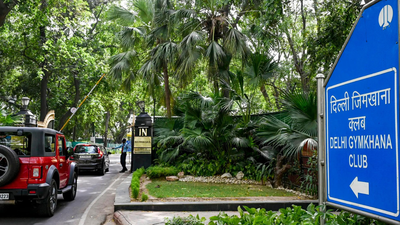
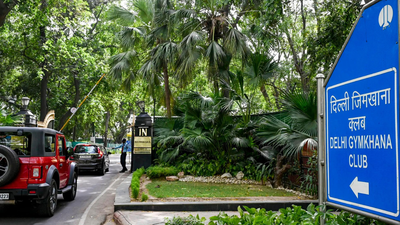
New Delhi: The Delhi Gymkhana Club (DGC) is gearing up for a series of legal battles in the Delhi High Court challenging the Centre’s order to hand over 27.3 acres of the club’s valuable land to its permanent members and employees. Many members rejected the government’s argument that the club is located on a “highly sensitive and strategic area” and that it would be used in the future to “strengthen and secure defense infrastructure and other critical public security objectives”.Club members said senior lawyer and Congress MP Abhishek Manu Singhvi has been appointed to represent the members of the DGC, which has been at 2, Safdarjung Road for over 113 years. Two petitions are likely to be filed – one by the members and the other by the club’s approximately 600 employees.A day after the Land and Development Office (L&DO), which comes under the Ministry of Housing and Urban Affairs, had directed the DGC to hand over its entire premises – all its buildings, structures, lawns and fittings – the permanent members of the club held a marathon meeting on Sunday evening to decide on the legal course of action. L&DO has asked DGC to vacate the premises by June 5 by prematurely terminating the “permanent lease”.On Saturday, a government-appointed general committee (GC) had informed club members that it would meet ministry officials and seek clarity on issues of interest to members and employees. However, a person involved in the deliberations said, “What will the government-appointed committee say to the government against its order? Therefore, the only option we have is to approach the court. There is a lack of transparency and ethical issues related to the future of the employees.” We also resolved to tell the people at large that most of the members are pensioners.Meanwhile, it is learned that the GC had written to the L&DO on Sunday urging it not to consider any disestablishment until there is clarity about the issues – if there is any plan to allot a replacement plot, consider the investment made in improving the infrastructure and facilities and the safety of all staff and employees of the club.General PK Sehgal (retd), who has been associated with the club since 1972, said the members have unanimously decided to legally challenge the expulsion order. The “sudden decision” to take back the land has raised concerns among members about the future of the club and where the club will be relocated, he said.Expressing concern about the future of the club and its staff, given the risk of losing livelihoods, public figures including Kiran Bedi, India’s first female IPS officer and former Lieutenant Governor of Puducherry, called the government’s move “sad and unfortunate”, while some members alleged that the official reasons mentioned in the order were “frivolous”.A former DGC general secretary said, “The club has been there since the 1930s and the PM residence was shifted to the present location in 1984. If there was any security issue, the PM residence would not have been shifted. There have been no problems in the last 42 years.”On Sunday, Gymkhana Employees Welfare Association also protested against the government’s decision. “Our slums are already being demolished, we have been working here for 25-26 years, our only source of income is being taken away, where will we go now?” asked an employee. Association president Nandan Singh Negi said, “The employees are in despair, they are worried about their families.”Nitin Verma, a member, said the government wanted to close the club on “hypothetical” grounds. He said, “The utmost discipline is maintained here… everyone is checked… now even the Prime Minister’s residence is being shifted. What is the security concern in this? Because nothing has happened till now. I think it is just imaginary.”In a post on X, Kiran Bedi said she hoped the proposal would be reconsidered and said that late Finance Minister Arun Jaitley had built a new pool during his lifetime and excellent tennis matches have been played here. “So much history, so many memories and generations of sporting excellence are linked to this place. The DGC is not just a property – it is part of our institutional and sporting heritage. Change may be necessary, but the history and legacy deserve thoughtful preservation. We may also plan to add something new there,” he said.Some members also accused the government of not giving enough time and not paying attention to the future of the club’s employees. Sehgal said that 600 employees are in danger of losing their jobs due to the government order without any prior warning or advance notice. However, ministry officials said proper procedure has been followed and the order has been issued giving two weeks’ time.Former diplomat KC Singh said it was “unsustainable” to “destroy” the club. He said the club is also famous for its tennis and squash facilities apart from its other services. Tagging Kiran Bedi, he said that DGC is a storehouse of sports, services and cultural memories.Former club president and former RAW chief AS Dulat said the members are disappointed with the development and have decided to file a petition against the move, signatures for which are being collected.Historian Swapna Liddle said that until 1945 the club was essentially a British club only for officers and a certain class. He said that Indians started getting admission into the club in 1945 and after independence its identity developed a lot. “One of the interesting things that happened around independence was that parties were being organized in the club for bureaucrats and armed personnel who were going to Pakistan. These were people who were in the same service, and now they were all moving apart. A lot of the parties held at that time were farewell parties for people going to Pakistan,” she said.

Source link