Ladakh women’s group condemns approval of liquor sale, warns of agitation. india news

Ladakh women's group condemns approval of liquor sale, warns of agitation

Srinagar: The women’s wing of the Ladakh Buddhist Association (LBA), one of the region’s largest religious organizations with a strong grassroots presence, has criticized the Union Territory’s move to allow the sale of liquor, arguing it could lead to social problems and warning of protests if it is not reconsidered.The women’s wing of the LBA called for strengthening efforts against drug trafficking by targeting supply chains rather than expanding legal alcohol access. The sale of liquor was allowed under a new excise policy approved by Lieutenant Governor Vinay Kumar Saxena on May 31 to curb “the increasing dependence on narcotics and drugs in the Ladakh region and to give people a wider choice of liquor with lower alcohol content”.Till now only beer, wine and ready-to-drink beverages were allowed to be retailed through shops, except in Leh where there was no partial restriction. Under the new policy, 20 liquor shops will be opened, which are now only two in Leh.The LBA women’s wing pointed out that there are limited entry and exit points into Ladakh – mainly Leh airport, Manali-Leh highway and Srinagar-Leh highway. “Increased surveillance can curb the inflow of narcotics and illicit substances into the area to a great extent,” the wing said in a statement.The LBA wing argued that the argument that increased availability of alcohol could serve as a substitute for drugs is illogical and that one social problem cannot be solved by introducing another.The LBA wing said the increased availability of alcohol would have serious long-term social and economic consequences on Ladakh, especially its youth. It warns of increase in domestic violence, increase in road accidents, greater pressure on law enforcement agencies, adverse effects on the psychological well-being of children, increase in crime rates and increase in rehabilitation and health care costs for the government if the sale of liquor is allowed.According to the LBA wing, women have been at the forefront of preserving the social fabric of Ladakh by preventing the dowry system from taking root in the region, campaigning against plastic bags and creating awareness against drugs and alcohol. The LBA wing said that if liquor concerns were ignored, women would launch peaceful protests, including rallies and voluntary market closures, to thwart a policy detrimental to the social and cultural well-being of the region.A government statement on the new policy said its approval followed meetings with civil society organisations, NGOs, religious organisations, medical experts, public representatives and officials in recent months. Under the policy, liquor consumption has also been allowed within hotels, while guest houses and homestays can get licenses to sell liquor for the first time.

Source link

Houses damaged due to cloud burst, flash flood in Jammu and Kashmir’s Reasi India News

Houses damaged due to cloud burst, flash flood in Jammu and Kashmir's Reasi

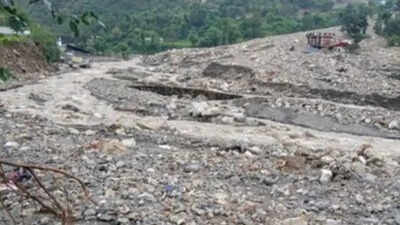
Jammu: A cloudburst triggered floods in Jammu and Kashmir’s Reasi district, damaging at least half a dozen houses and blocking roads due to landslides on Thursday. There is no news of any injury or casualty in this incident which took place in Bathoi village of Gulabgarh. This is the fifth cloudburst in Jammu region in the last three days.“Spoke to DC Reasi to assess the situation after the cloudburst incident in Bathoi village. While several houses were damaged, fortunately, no casualties have been reported. I have directed the DC to provide immediate assistance and relief to the affected families,” Lieutenant Governor Manoj Sinha posted on Twitter.Due to adverse weather conditions in Kishtwar district on Friday, the administration had to postpone the pilgrimages of Shri Machail Mata and Shri Mindhal Mata.

Source link

TMC’s gathering at Mamata Banerjee’s residence: 8 out of 80 MLAs arrived amid concerns of party split. india news

TMC's gathering at Mamata Banerjee's residence: 8 out of 80 MLAs arrived amid concerns of party split

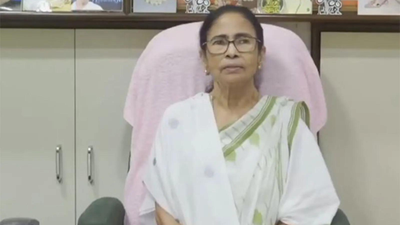
New Delhi: Amid concerns of internal rift in Trinamool Congress (TMC), only 8 out of 80 MLAs and 6 MPs attended the meeting at Mamata Banerjee’s residence on Friday, ANI reported.Those present at the residence included MLAs Bina Mandal, Ashima Patra, Madan Mitra, Kunal Ghosh, Firhad Hakim, Shobhandeb Chattopadhyay, Biman Banerjee and Ashok Kumar Deb. The participating MPs included Dola Sen, Mala Roy, Kalyan Banerjee, Abhishek Banerjee, Derek O’Brien and Sudip Bandyopadhyay. “We have decided that the LOP appointed by the Speaker is illegal. We are approaching the court against it on Monday. We will file a petition before the High Court,” ANI quoted Kalyan Banerjee as saying after the meeting. He said, “We will fight against the way BJP is killing TMC workers and filing false cases against them. Banerjee said, we will fight on the streets, we will fight in the court.Moreover, Mamata announced a major organizational reshuffle in TMC as the party faces internal rebellion. The new leadership team includes many experienced leaders and loyalists.Abhishek Banerjee retained his position as national general secretary, while Derek O’Brien and Dola Sen were appointed national joint secretaries. Senior minister Chandrima Bhattacharya replaced Subrata Bakshi as state president of the party.The change comes days after TMC dissolved all its committees and frontal organizations across West Bengal.The TMC meeting took place against the backdrop of growing political unrest within the party, triggered by claims by a group of rebel MLAs, including expelled leaders Ritabrata Banerjee and Sandipan Saha. The dissidents have claimed that they have the support of 58 MLAs in the West Bengal Assembly and have opposed the party leadership’s decision to appoint Shobhandeb Chattopadhyay as the Leader of the Opposition (LOP).

Source link

NTPC to set up flexible coal based units to ensure reliable power supply. india news

NTPC to set up flexible coal based units to ensure reliable power supply

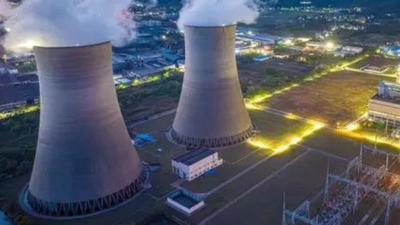
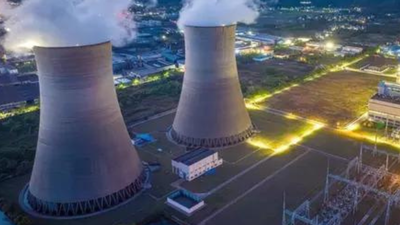
New Delhi: Amid concerns over the impact of intermittent renewable energy generation on grid stability, state-run NTPC has decided to install flexible coal-based thermal power units to provide balancing support and ensure reliable power supply.The power giant said the rapid expansion of renewable energy capacity is transforming the power sector and driving the country’s clean energy ambitions, but its growing share is also driving the need for flexible power sources that can respond quickly to changing grid conditions.NTPC has invited expressions of interest for sub-critical thermal power units of 150-250 megawatt (MW) capacity that can operate in two shifts and run at a minimum technical load of 25% of their installed capacity. These units are intended to balance fluctuations in electricity demand and renewable energy production rather than operating continuously at full load.“Through this initiative, NTPC aims to identify technology providers and EPC (engineering, procurement and construction) partners to develop highly flexible thermal generation solutions that strengthen their commitment to grid reliability, sustainability and India’s growing energy transition needs,” the company said.NTPC said its entire thermal fleet was currently operating at a technical minimum load of 55% during low demand periods and providing various grid-support services that help maintain frequency, keep reserve power available and adjust generation in response to fluctuations in renewable energy generation, thereby improving grid resilience and reliability.With limited hydropower capacity, gas-fired generation and large-scale energy storage systems to balance the grid, thermal power plants continue to play an important role in supporting the electricity supply.While solar energy contributes about 25% of the daytime electricity demand, its intermittent nature due to weather conditions, seasonal variations and geographical factors requires continuous support from thermal plants to maintain stable power supply and grid frequency. The role of thermal plants increases at night when solar energy is not available.Stating its preference for the technology, NTPC said its operational experience shows that sub-critical thermal units can provide greater flexibility than supercritical and ultra-supercritical technologies for certain grid-balancing requirements due to lower operational stress due to smaller parameter variations. The company said their ability to operate efficiently at low loads and adapt to frequent start-stop cycles could make them an important enabler for higher renewable energy integration in the future.

Source link

‘Carry the tricolor, apply sunscreen, stay hydrated’: Cockroach Janata Party shares protest itinerary; Appealed to PM Modi. india news

'Carry the tricolor, apply sunscreen, stay hydrated': Cockroach Janata Party shares protest itinerary; Appealed to PM Modi

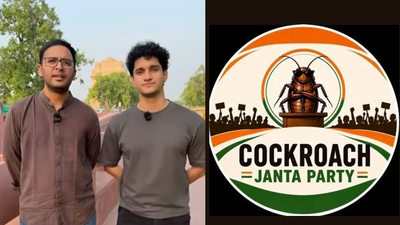
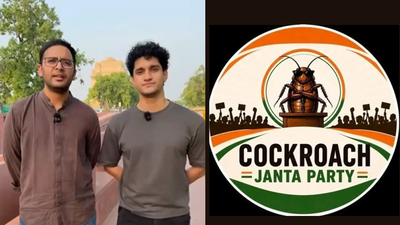
New Delhi: Cockroach Janata Party released a list of do’s and don’ts for the protest to be held at Jantar Mantar in Delhi on June 6. The organization which started as a “small joke” and has gained over 22 million followers on Instagram, more than any other political party in the country, has called on people to express their disagreement over alleged irregularities in NEET, CBSE, CUET and SSCDG. In a video posted on Twitter, CJP spokespersons repeatedly appealed to Prime Minister Narendra Modi to sack Union Education Minister Dharmendra Pradhan, calling him an “incompetent” leader, citing the paper leak.“June 6, 9am – See you tomorrow, fellow cockroaches. We won’t stop until we get Dharmendra Pradhan’s resignation! It’s time to turn this little joke into a revolution. Get ready to roam the streets of Delhi with peaceful and loving dissent. But remember the do’s and don’ts. All eyes are on us!” CJP said in a post on X.

The task list includes:

  • carry the tricolor and a book
  • record everything
  • report miscreants
  • Wear sunscreen, wear a hat, stay hydrated

Not in list:

  • Don’t come alone if you can help it
  • Don’t throw flowers, offer them.
  • Do not engage trolls and instigators
  • don’t act hungry

Source link

How affordable is India’s public transport: Fuel savings, rising costs: Is public transport affordable enough? | india news

Fuel savings, rising costs: Is public transport economical enough?

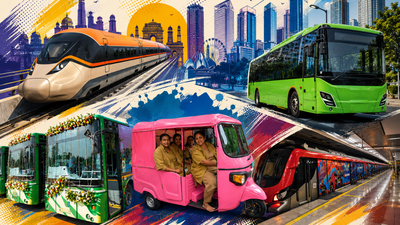
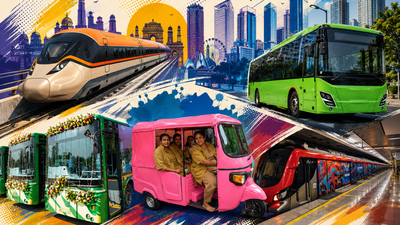
As fuel prices remain sensitive to global events and governments continue to urge citizens to use public transport, a practical question arises: how affordable is public transport in India today?While buses, metros and local trains are generally much cheaper than private vehicles, commuters often face additional costs such as last-mile connectivity, multiple transfers and longer travel times.An examination of fares in major Indian cities shows that public transport is the most affordable option on paper, but affordability varies greatly depending on where people live and how they travel.

Public transport is still the cheapest option

At a purely fare-based level, public transport remains the most affordable mode of urban mobility in India. A commuter traveling 10 to 15 kilometers per day in most major cities typically spends a fraction of what a private vehicle owner would spend on fuel alone.For example, a simple baseline look at a 10km trip reveals a clear difference in the different modes:This gap becomes even wider when vehicle ownership costs such as maintenance, insurance, parking, depreciation and financing are included.The challenge is not whether public transport is cheap or not. This happens almost always.

The hidden cost of last-mile connectivity

In many cities the fare for a metro ride can range from just Rs 20 to Rs 50. Still, reaching the metro station may add another Rs 20 to Rs 100 to the total journey. This “first mile and last mile problem” is one of the biggest barriers to public transport adoption.Consider a commuter whose home is three kilometers away from the nearest metro station. If an auto-rickshaw ride costs Rs 40 to Rs 80 each way, a passenger may spend more on reaching the metro than on a metro ride.In cities where feeder buses, e-rickshaws, bicycle-sharing systems or pedestrian infrastructure are weak, public transport affordability deteriorates rapidly. Transportation economists often argue that affordability should not be measured by ticket price but by total door-to-door cost. Using that metric, some travelers found that the savings on private vehicles paled in comparison to headline fare comparisons.

Buses remain the backbone of India’s strength

Despite the rapid expansion of metro rail systems, city buses continue to carry the largest share of urban public transport users. Buses remain the most affordable option for low-income and lower-middle-income families.Many state governments continue to subsidize bus operations, keeping fares below market rates. However, with the onset of new challenges, schemes like Delhi Pink Ticket, which made travel in buses absolutely free for women across Delhi, have been cancelled.And while subsidies have strengthened affordability, they have also increased the financial burden on state transport undertakings, many of which are already facing rising losses.

Metro: speed but not always lowest cost

Metro systems have transformed commuting in cities like Delhi, Bengaluru, Hyderabad, Mumbai, Kochi and Chennai. They are generally faster, more reliable and less affected by road congestion than buses. However, metro travel is not always the cheapest option. Bus fares are often low for short distances.For middle-class travelers, there is often a compromise between time and money.A bus journey costing Rs 15 may take 70 minutes, while a metro journey costing Rs 40 may take only 30 minutes.The value of time therefore becomes a major factor in determining whether passengers consider public transport economical or not.

Airport trips highlight the biggest drawbacks

The clearest example of urban transport affordability can be seen in airport connectivity. The difference between public transport and private transport costs is often dramatic.In many cities, airport cabs can cost five to ten times more than public transportation options.Yet many passengers continue to choose cabs due to luggage concerns, limited operating hours, or inadequate last-mile connectivity after reaching the metro or bus station.

travel share of income

Affordability isn’t just about rent. It’s about how much of a person’s income is spent on transportation. Globally, transportation planners often assess affordability by calculating transportation expenditures as a share of household income.Using that approach, the picture becomes more nuanced. For an employee earning Rs 20,000 per month, a monthly commuting bill of Rs 2,000 represents 10 per cent of income. For a person earning Rs 60,000, the same commute bill comes to only 3.3 per cent.A city-wise macro comparison shows how these costs measure up against estimated middle-to-lower-middle class income metrics:This metric often shows that public transportation may be relatively affordable for higher-income commuters while it may remain a significant expense for lower-income workers.

How do private vehicles compare?

The government’s appeal to save fuel inevitably raises a broader question: how much does private transport really cost? At current fuel prices, where petrol ranges between Rs 95 to Rs 105 per liter and CNG around Rs 77 to Rs 83 per kg in metros, a two-wheeler remains relatively affordable compared to a car, but it is generally more expensive than buses and suburban rail.Cars are quite expensive. A typical car traveler has to face the following expenses:

  • fuel: Cost per kilometer for petrol hatchback/sedan is Rs 7 to Rs 10.
  • Parking: Daily commercial parking charges range from Rs 50 to Rs 200.
  • Maintenance & Insurance: Fixed annual costs that add thousands to the bottom line.
  • Depreciation and Loan Repayment: EMI of most private vehicles on the road has become a silent monthly drain.

Once these costs are combined, public transportation often becomes dramatically cheaper. This is especially true in metropolitan areas where indirect costs increase significantly due to parking fees and congestion.

Why do many people still not switch?

If public transportation is cheap, why do many commuters continue to use private vehicles? The answer lies in other factors beyond fares. Commuters often cite convenience, reliability and time savings as the main reasons for continuing to use private vehicles.Common concerns listed by these travelers include:

  • Excessive overcrowding (for example, “super dense crush load” in suburban trains)
  • Long wait times and poor reliability
  • Safety and structural accessibility concerns, especially for women and senior citizens
  • Lack of predictable last-mile connectivity
  • Insufficient integration between transportation modes (e.g., separate ticketing for buses and metros)
  • Limited service in suburban and peripheral areas

The persistence of private vehicle use suggests that many travelers are willing to pay a premium for greater reliability, comfort and shorter travel times. As a result, affordability alone does not determine transportation choices.

How affordable is public transportation?

India’s public transport system is significantly cheaper than private transport for most urban journeys. On paper, the government’s appeal to use public transport instead of fuel-guzzling private vehicles makes economic sense.Yet affordability is more complex than bus tickets or metro fares. For millions of commuters, the real costs include the auto-rickshaw ride to the station, the time spent waiting for a connection, the reliability of services and the percentage of monthly income devoted to travel.Evidence suggests that public transport in India is generally affordable, but not equally affordable everywhere. In cities with strong networks and efficient last-mile connectivity, the savings can be substantial. In places where passengers have to pay heavily to access the main mass transport system, the economic benefits are significantly reduced.As governments encourage citizens to leave their vehicles at home amid global energy uncertainty, the success of that message may depend less on appeals to save fuel and more on whether public transportation can truly provide affordable, seamless door-to-door options.


Source link

‘Public anger forced Congress to change CM in Karnataka’: PM Modi india news

'People's anger forced Congress to change CM in Karnataka': PM Modi

New Delhi: Prime Minister Narendra Modi on Friday said the Congress was forced to change its chief minister in Karnataka due to public anger against the state government.The Prime Minister made the remarks while making a broader point on India moving away from “negative politics”.He was speaking at an event in Surat, his home state Gujarat.Prime Minister Narendra Modi said, “There is a huge resentment among the people of Karnataka against the Congress government and that is why the party had to change its Chief Minister there.”He described India as a country of citizens “full of aspirations”.“India has moved far beyond negativity; it is a nation defined by optimism and driven by extraordinary aspirations. Its citizens are full of dreams and determination and are committed to turning that determination into reality. When the collective will of the nation is strong, it can achieve any goal and this is the real strength of India.In Karnataka, DK Shivakumar on Wednesday succeeded rival Siddaramaiah as chief minister, ending the long-running leadership struggle that had been going on since the Congress returned to power by defeating the BJP in May 2023.The Congress leadership had initially chosen veteran Siddaramaiah as the chief minister, while Shivakumar was appointed deputy chief minister with the understanding that he would take over during the second half of the five-year term.The controversy escalated after Siddaramaiah did not step down on completing 2.5 years in office in November last year.In late May, the party leadership resolved the issue by convincing Siddaramaiah to step down and installing Shivakumar in the top post.

Source link

Evening News Wrap: India’s GDP growth in the last quarter was better than expectations; K Annamalai started a new political movement and much more. india news

Evening News Wrap: India's GDP growth in the last quarter was better than expectations; K Annamalai starts new political movement and more
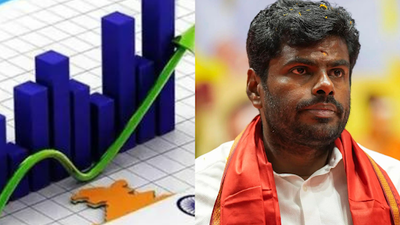
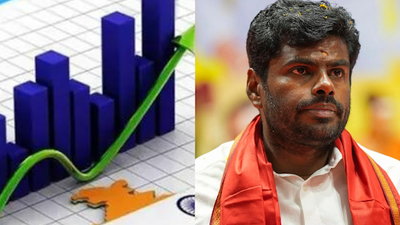
  • India’s economy grew 7.8 percent in the last quarter of FY26, taking the full-year growth rate to 7.7 percent and exceeding estimates.
  • Former Tamil Nadu BJP chief K Annamalai has launched a new political movement, signaling a change in his political journey after quitting the BJP.
  • Expelled TMC leader Ritabrata Banerjee has claimed that support for his rebel faction is increasing, increasing political uncertainty in West Bengal.
  • Iranian Foreign Minister Abbas Araghchi has said he was present during the attack that killed former supreme leader Ali Khamenei, giving new information about the early days of the conflict.
  • Russian President Vladimir Putin has renewed his offer to jointly develop and produce Su-57 fighter jets with India, highlighting defense cooperation between the two countries.

Here are the top stories of the day

India’s GDP growth in the last quarter of FY 2026 was better than expectations

India’s economy grew 7.8 percent year-on-year in the January-March quarter of FY26, beating expectations and taking the full-year growth rate to 7.7 percent. Strong performance in the services, manufacturing and construction sectors contributed to the expansion, cementing India’s position as one of the world’s fastest growing major economies. Read the full story

Annamalai started a new political movement after leaving BJP

Former Tamil Nadu BJP chief K Annamalai has launched a political movement called “We the Leaders”, inviting people interested in education, health care, sustainability and youth leadership to participate. He said the initiative aims to promote a development-oriented political culture and has outlined a governance model focused on community engagement and data-driven decision making. Read the full story

Ritabrata Banerjee claims growing support for TMC rebel faction

Expelled Trinamool Congress leader Ritabrata Banerjee has claimed that support for the rebel group he leads will continue to grow within the West Bengal Assembly. His comments come amid the ongoing turmoil in the state’s political landscape with competing claims to leadership positions and changing political alliances. Read the full story

Araghchi referred to the attack that killed Iran’s former supreme leader

Iranian Foreign Minister Abbas Araghchi has said he was inside former supreme leader Ali Khamenei’s office when it was attacked during the initial wave of US-Israeli attacks on Tehran. He then described the uncertainty surrounding Khamenei’s fate and reiterated Iran’s position on regional security and the broader consequences of the conflict. Read the full story

Putin revives proposal for joint India-Russia Su-57 fighter program

Russian President Vladimir Putin has said that Moscow is ready to jointly develop and advance the fifth generation fighter jet Su-57 with India without any restrictions. The proposal comes as India evaluates future air combat requirements while pursuing its indigenous advanced multirole combat aircraft program and comprehensive defense modernization plans. Read the full story

Source link

‘I am leaving with my head held high’: Mamata’s aide Firhad Hakim resigns from the post of Kolkata Mayor. india news

'Leaving with my head held high': Mamata's aide Firhad Hakim resigns as Kolkata Mayor

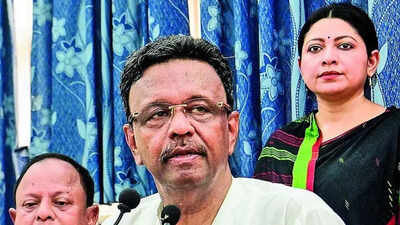
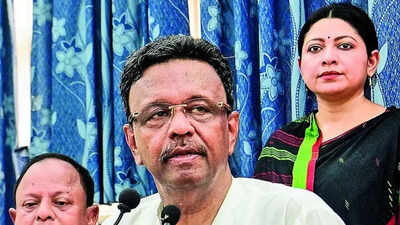
New Delhi: Senior Trinamool Congress (TMC) leader Firhad Hakim on Friday resigned from the post of mayor of Kolkata Municipal Corporation (KMC), citing his “inability to function properly”.He stepped down “with his head held high” after getting the consent of the Trinamool supremo and former West Bengal chief minister. Mamata Banerjee.At a press conference before the resignation, the Kolkata Port MLA reflected on his nearly 7.5-year tenure as mayor, and thanked KMC officials and Kolkata residents for their support during major crises including cyclone Amphan and the COVID-19 pandemic.“With the cooperation of KMC officials and city citizens, we successfully overcame these challenges,” Hakim told reporters.He said, “I wanted to go with my head held high. I asked permission from my leader and she (Mamata Banerjee) gave me permission.”Recalling his appointment as Mayor of Kolkata in November 2018, Hakim noted his initial uncertainty about matching the legacy of previous civic leaders including Netaji Subhash Chandra Bose and Deshbandhu Chittaranjan Das.He said, “I never thought that I could become a worthy successor to stalwarts like Netaji Subhash Chandra Bose and Deshbandhu Chittaranjan Das, who once held this chair.”A key minority face of the TMC and a key figure in its urban organisation, Hakim’s resignation came amid continuing political unrest within the party following its defeat in the West Bengal assembly elections, which saw it lose power in the state after 15 years.His exit comes at a time when there is organizational tension within Trinamool and a wave of councilors’ resignations in recent weeks, adding to the uncertainty in the party’s civilian structure.The corporation, under TMC control since 2010, remains one of its most important institutional bases.Hakim also created history as the first Muslim mayor of Kolkata after independence.(With PTI inputs)

Source link

Another regional power is breaking: How TMC is going the way of Shiv Sena, NCP. india news

Another regional power is breaking: How TMC, Shiv Sena are going the way of NCP

New Delhi: When BJP leader JP Nadda had said in 2023 that “regional parties promoting dynasticism and corruption are certain to be wiped out”, no one would have thought that his prediction would come true so soon.In the last three years, many regional satraps have not only lost power but also their influence. In Bihar, Nitish Kumar resigned as Chief Minister, paving the way for the BJP to take power in the state for the first time. Lalu Yadav’s son and RJD’s Tejashwi Yadav were literally wiped out in the assembly elections. In Delhi, Arvind Kejriwal’s dream of remaining in power ended in February last year when he lost the 2025 assembly elections to the BJP.The 2026 assembly elections added two more names to the list – DMK’s MK Stalin and TMC’s Mamata BanerjeeTwo regional giants who lost power in their strongholds. But while Stalin has just lost power, Mamata also faces the possibility of losing her party.There is a strange feeling about the ongoing political developments in West Bengal, where Mamata has lost power after 15 years of rule. His Trinamool Congress bursting and seems to be on the way Shiv Sena.Shiv Sena involved in alliance with Congress in 2022 NCP Under Maha Vikas Aghadi, saw rebellion against its leader Uddhav ThackerayWho was the Chief Minister of Maharashtra at that time. This rebellion came from within the party and was led by Eknath Shinde, who was once Uddhav’s trusted lieutenant. Most of the party MLAs came together and ensured that Uddhav not only lost power but also ultimately lost complete control over his party. It was no coincidence that Shinde joined hands with BJP and became the Chief Minister. It is a different story that after two and a half years the BJP is back in power and Shinde is struggling to counter the influence of his key ally. The rebellion started by Shiv Sena MLAs soon spread to the party’s MPs as well.Ironically, months later another party in Maharashtra – the NCP – went through a similar sequence of events that saw Sharad Pawar lose control of his party. The beneficiary was his nephew, the late Ajit Pawar, who later became deputy chief minister in the NDA’s grand alliance government.While the BJP needed Shinde’s support to return to power in Maharashtra and also to take revenge on Uddhav, who had joined hands with the Congress and NCP to keep the saffron party out of power in the state, the NCP split served to weaken the opposition’s position in Maharashtra by reducing Sharad Pawar’s clout.Now, cut to 2026.BJP wins comprehensively in West Bengal. The Trinamool Congress was virtually destroyed, reduced to 80 seats from the 212 it had won five years ago. Mamata herself lost her stronghold to her arch rival Shuvendu Adhikari – her trusted aide turned bitter political rival.But before Mamata could recover from this crushing defeat, her 28-year-old Trinamool Congress was on the way to its end. Here too, as in Maharashtra, it was the party MLAs who came together (or perhaps were brought together) to challenge Mamata’s leadership. While on the surface the rebellion was against Mamata’s nephew and powerful No. 2 in the party, Abhishek Banerjee, the real target was Mamata herself.58 out of 80 MLAs came together to challenge Mamata’s leadership and overturn her decisions. He used the numbers to appoint his own nominee as leader of the opposition in the state assembly.The fact cannot be denied that there was pent-up frustration and anger among the people against Abhishek Banerjee. Mamata’s nephew was a strong power center in the party and his every word was like an order to its leaders.Now there are reports that some Trinamool MPs are also ready to join the rebels and create trouble. Veteran Rajya Sabha MP Sukhendu Shekhar Roy has hinted that the rebellion that rocked the party’s legislature wing may eventually resonate among its MPs as well.Roy said, “I have never seen nearly 60 MLAs quitting in such a short period of time. What I am saying is that a similar reaction is likely to happen in the Lok Sabha also.” TMC currently has 28 members in the Lok Sabha and 13 in the Rajya Sabha.Similarly, 4 years ago there was rebellion between Shiv Sena and NCP in Maharashtra. It started in the Assembly, spread to Parliament and ultimately led to a split in both the parties.Therefore, it would not be surprising if in the near future Mamata loses complete control over the Trinamool Congress and is forced to start from scratch once again.And while Mamata is battling an existential crisis, MK Stalin, the other regional satrap who suffered a shocking electoral defeat in the 2026 assembly elections, has been luckier and perhaps wiser too. It is fortunate because BJP currently does not have as much stake in Tamil Nadu as in West Bengal. Wise because there are reports that the DMK is open to a positive relationship with the ruling BJP at the Centre. If this indeed happens going forward, perhaps it would be a way for the DMK to catch up with its former ally Congress, which left the Dravidian party soon after the assembly results were announced.One regional leader who will be keeping a close eye on all the developments is Samajwadi Party’s Akhilesh Yadav – who faces a tough electoral battle with the BJP in Uttar Pradesh next year.For starters, Akhilesh has already scrapped his party’s contract with the Indian Political Action Committee (I-PAC) – the political consultancy firm that was linked to Mamata’s Trinamool Congress and has been in the government’s crosshairs.Akhilesh is aware of the importance of taking the right steps ahead of next year’s assembly elections – lest he find his name in the list of defeated regional satraps.

Source link