Breaking News
‘Situation worrying’: PM Modi clarifies India’s stand on Iran war, shows impact of Hormuz standoff. india news
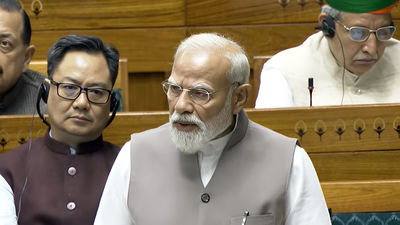
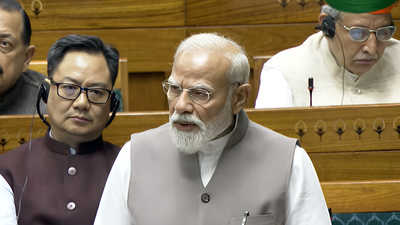
'Situation worrying': PM Modi clarifies India's stand on Iran war, reflects impact of Hormuz standoff
Prime Minister Narendra Modi

New Delhi: Prime Minister Narendra Modi On Monday addressed the Lok Sabha on the ongoing crisis in West Asia, which began on February 28 when the United States and Israel launched joint strikes on Iran, leading to turmoil in the Gulf region.In his address, the Prime Minister said that the ongoing bombings and attacks in the oil-rich region have posed serious challenges to the global economy. He also highlighted the large presence of Indian nationals in the region and assured that the government is providing them full support.He said Indian missions are in constant touch with the Indian diaspora in the affected areas.

Here are the key quotes from PM Modi’s address on West Asia:

  • “The crisis in West Asia has had a negative impact on the global economy and people.”

  • “The West Asia war has also created unprecedented challenges for India.”

  • “The situation in West Asia is worrying. Over the last 2-3 weeks, External Affairs Minister S Jaishankar and Union Minister Hardeep Puri have briefed the House. This conflict has been going on for more than three weeks and is having a serious impact on the global economy and people’s lives. That is why the world is urging all parties to seek an early resolution.”

  • “India has extensive trade relations with war-torn and conflict-affected countries. The region where the conflict is taking place is also an important route for our trade with other countries around the world, especially for a large part of our crude oil and gas needs. The region is important to us for another reason too.”

  • “Approximately 1 crore Indians live and work in the Gulf countries. Commercial ships operate there. The number of Indian crew members is also very high. For these various reasons, India’s concerns are naturally high. Therefore, it is essential that a unified voice and consensus from the Parliament reach out to the world regarding this crisis.”

  • “Since this war started, assistance has been provided to every Indian in the affected countries. I have spoken on phone to the heads of state of most of the West Asian countries in two rounds. All have assured the safety of Indians. During the conflict, some people have lost their lives, and some have been injured.”

  • “Our missions in the affected countries are continuously engaged in helping Indians. Be it Indians working there or tourists visiting there, all possible assistance is being provided. Our missions are issuing advisories regularly. 24/7 outreach rooms and emergency helplines have been set up in India and other affected countries. Latest information is being provided to all affected people through these. In times of crisis, the safety of Indians in India and abroad is important.”

  • “3.75 lakh Indians returned home safely since the beginning of the West Asia War.”

  • “More than 3,75,000 Indians have returned safely to India since the war began. Around 1,000 Indians have so far returned safely from Iran, of which more than 700 are medical students.”

  • “In view of the situation, CBSE has canceled Class 10 and 12 examinations in schools in the Gulf countries and is taking necessary steps to ensure that the education of students continues without any disruption.”

  • “Large quantities of crude oil, gas, fertilizers and many essential commodities come to India through the Strait of Hormuz. Since the start of the war, movement of ships through the Strait of Hormuz has become very challenging.”

  • “Despite this, our government has made efforts to ensure that the supply of petrol, diesel and gas is not seriously affected. As we all know, the country imports 60% of its LPG requirement. Due to uncertainty in supply, the government has given priority to domestic LPG consumers.”

  • “Also, domestic production of LPG is also being increased. Continuous efforts have also been made to ensure smooth supply of petrol and diesel across the country.”

  • “India’s role in diplomacy is clear. We have expressed our deep concern about this conflict from the very beginning. I have personally spoken to all relevant leaders of West Asia. I have urged everyone to de-escalate and end this conflict.”

voting

According to you, what is the biggest challenge for India arising from the West Asia war?

  • “India condemns attacks on civilians, energy and transport infrastructure. Attacks on commercial vessels and blockage of international waterways such as the Strait of Hormuz are unacceptable. India continues to make efforts through diplomacy to ensure the safe passage of Indian ships even in this war-like environment.”

  • “India has always advocated the welfare of humanity and peace. I reiterate that dialogue and diplomacy is the only solution to this problem. All our efforts are aimed at reducing tensions and ending this conflict. It is not in the interest of humanity to risk anyone’s life in this war. Therefore, India’s effort is to encourage all parties to reach a peaceful solution as soon as possible. When such crises arise, some elements try to take advantage of them.”
Source link

Some women are able to overcome the collegium’s subjective assessment: Supreme Court judge. india news

Some women can overcome subjective assessment of collegium: Supreme Court judge

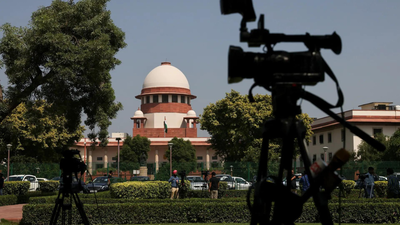
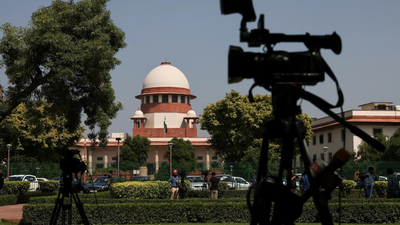
New Delhi: Supreme Court judge Justice Ujjwal Bhuyan on Sunday said that in merit-based selection, women secure more than 50% of the posts of judicial officers in states, but in the collegium’s subjective assessment criteria, only very few women are selected as judges of high courts and SCs.Addressing the first national conference of the Supreme Court Bar Association in Bengaluru, Justice Bhuyan said there is a very good representation of women in the judicial services in the states, with some even crossing the 50% mark. “But has it been replicated in constitutional courts? That is the question. This is where the scrutiny of the collegium system comes in. Why is it that when evaluation becomes subjective, women do not make the grade? Out of 287 SC judges since 1950, we have had only 11 women judges overall. Why? Starting with Fatima Beevi and now Justice Nagarathna, it is about 2%,” he said.Justice Bhuyan said women constitute only 14% of HC judges. “Of the 25 HCs, we have only two women chief justices (CJs) – Gujarat and Meghalaya. Another will become CJ in a month’s time. This is also highly inadequate, three out of 25 HCs,” she said. “My research shows that whenever the recruitment process is purposeful, more women enter the judicial field. When India becomes a developed nation (Developed India by 2047), there should be more parity in gender representation in the judiciary. The SC should be a rainbow institution, which truly reflects the diversity of the country,” Justice Bhuyan said.Former CJI BR Gavai said there are several Supreme Court judgments which have stated that if the name of a person recommended for judgeship in the HC is returned by the government for reconsideration and reiterated by the collegium, the government has no option but to appoint him. “But there are many instances where even after repeated requests, persons have not been appointed,” he said. “The collegium is not a perfect system, but at least for the time being, it is the best fit for the country,” he said.He said the judiciary has been criticized mainly for its inability to deal with arrears and backlog, delays in disposal of cases at various levels, lack of transparency in administrative decision making (appointment of judges), long holidays and lack of diversity, especially women’s representation in the constitutional courts.The former CJI said that the Supreme Court has made mistakes in many cases, including the first major decision related to right to life in the AK Gopalan case and the Emergency-era ADM Jabalpur case. “Criticism is important for any institution, including the judiciary,” he said.He recalled the maiden speech of the first CJI, Harilal Jacisandas Kania, who had said that the Supreme Court should function independently of the legislature and the executive, interpreting the Constitution as a living document.Justice Bhuyan said, “The SC must earn the respect of citizens, not demand it… Judicial power depends not just on law but on trust and legitimacy. Accountability, integrity and transparency must be made essential for the judiciary to function effectively in a democratic society. The judiciary has neither a purse nor a sword. Its only asset is the goodwill of the people, which is the core of judicial strength.”He said that institutions in a developed nation should have functional autonomy. “The investigating agencies as well as the media should be able to perform their duties without any political interference or control. Development should be in accordance with the Directive Principles of State Policy and no one should be deprived of development, especially those who have been historically neglected.”

Source link

AI can never do the main job of writing judgments: Supreme Court judge india news

AI can never do the main job of writing judgments: Supreme Court judge

New Delhi: Justice Vikram Nath, the senior-most judge of the Supreme Court, on Sunday said artificial intelligence can be a facilitator for the justice delivery system, but it can never replace the core function – writing judgments – which will always remain with the judges.Speaking on ‘Challenges, Innovation and Role of AI in Judicial Administration’ at the first national conference of the Supreme Court Bar Association in Bengaluru, Justice Nath said, “AI can be used as a tool to enhance the judicial system, but it cannot replace the judgment or the mind of judges in deciding what is to be decided.” Justice Nath said, “There cannot be any fixed data set in the millions of cases dealt with by the courts. For example, matrimonial cases, disposal of commercial cases, equity balancing – the court can understand the nuances of each case by reading the papers and listening to the lawyer, which is factually different from the other. Only judges know how to strike a balance in family partition suits.”He said, “AI cannot decide cases involving constitutional issues. There are innumerable complexities in criminal cases – how to appreciate the evidence, when to grant bail; there can be 10 accused in a single FIR, the court can grant bail to nine but reject one. AI cannot deal with all of these. AI is there to help us in many aspects – collecting data, classifying cases, translation etc. But the decision will remain only with the judges.Justice Nath also appreciated the initiative taken by SCBA President Vikas Singh in the conference.Supreme Court judge AG Masih said, “AI is not here to replace lawyers and judges. Data-driven intelligence cannot replace human conscience. The function of courts depends on public trust to deliver justice by carefully balancing rights and liabilities and assessing the factual circumstances with a human heart.” Emotions cannot be replicated by AI, which can facilitate judicial activities but not replace them.The judge said there appears to be a need to institutionalize guidelines for court technology and, perhaps, create a judicial-tech oversight board to maintain and check AI tools for bias and review an automated draft. Senior advocate Sajan Poovayya said that hallucination is inherent in mankind and mankind has created AI. Therefore, AI also contained hallucinations and this was what made it dangerous for the judiciary as it presented case law and logic that was non-existent or imaginary, he said.Delhi HC Chief Justice DK Upadhyay raised the issue of the use of AI-assisted judgment drafting software in countries like Brazil, Argentina, Singapore, UK, UAE and China. “Collectively, AI is becoming increasingly integrated into multiple domains of judicial administration, from administrative efficiency to substantive support functions, while also raising important questions about accountability, fairness, and the limits of automation in the judicial system,” he said.Justice Upadhyay said, “AI-manipulated images, deepfakes undermine the integrity of maliciously deployed evidence and adversely impact the administration of justice. Courts may have to re-examine the traditional reliance on photographs and videos… The burden on parties to establish authenticity will increase and the judiciary will have to rely more on forensic tests of such evidence.”

Source link

Martyrs’ Day: How India honors soldiers who sacrificed their lives for the country. india news

Martyrs' Day: How India honors soldiers who sacrificed their lives for the country

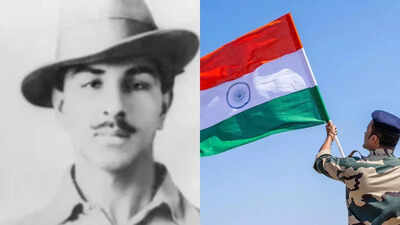
In the collective consciousness of India, a soldier killed in the line of duty is not seen simply as a war casualty, but as a shaheed, a ‘martyr’ whose sacrifice becomes part of the nation’s identity.On Martyrs’ Day observed on March 23, India remembers the sacrifice of Bhagat SinghSukhdev and Rajguru, who were killed by the British in 1931. Their legacy continues today in the sacrifices of soldiers serving the country, and Martyrs’ Day is an opportunity to understand how India honors their acts of bravery.Over time, India has created a system to honor its fallen soldiers, including official ceremonies, support for families, and public commemoration.From the Amar Chakra at the National War Memorial to pension and education schemes reaching families in remote areas, India tries to ensure that no soldier who died for the country is forgotten.The most serious event is the arrival of a martyr’s body in his hometown. The coffin is often draped in the national flag and given a guard of honor accompanied by local politicians, police and civil society leaders.In many cases, the local community organizes a procession and a brief ceremony, showing that the martyr belongs not only to the regiment, but also to the village, the city, and the nation.

gallantry award

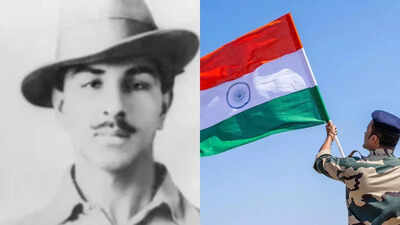
India’s gallantry awards are among the highest honors bestowed on members of the armed forces and, in some cases, civilians.The families of recipients are invited to formal ceremonies, often at the Rashtrapati Bhavan, where the medal is presented, and the story of the soldier’s valor is told.The highest wartime award is the Param Vir Chakra, awarded for “most conspicuous gallantry” in the presence of the enemy. This is followed by the Mahavir Chakra and Vir Chakra, which recognize acts of gallantry during military operations.In peacetime, the country awards the Ashoka Chakra, Kirti Chakra and Shaurya Chakra for acts of bravery including counter-insurgency operations and rescue operations.

.

.

These awards are announced on Republic Day and Independence Day, ensuring national recognition for acts of courage.

National War Memorial

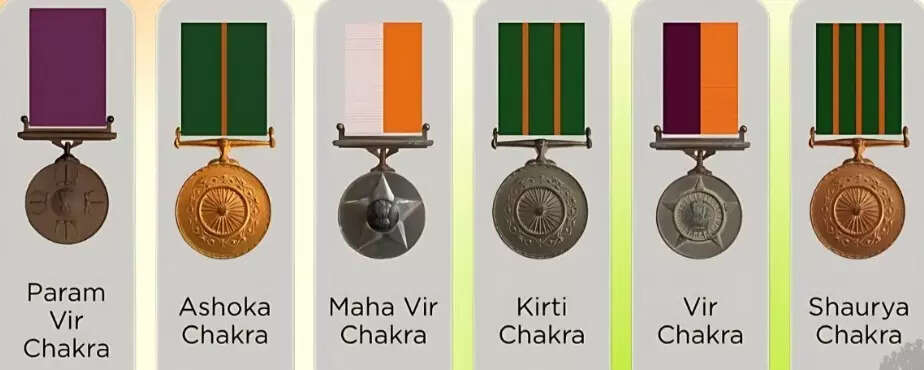
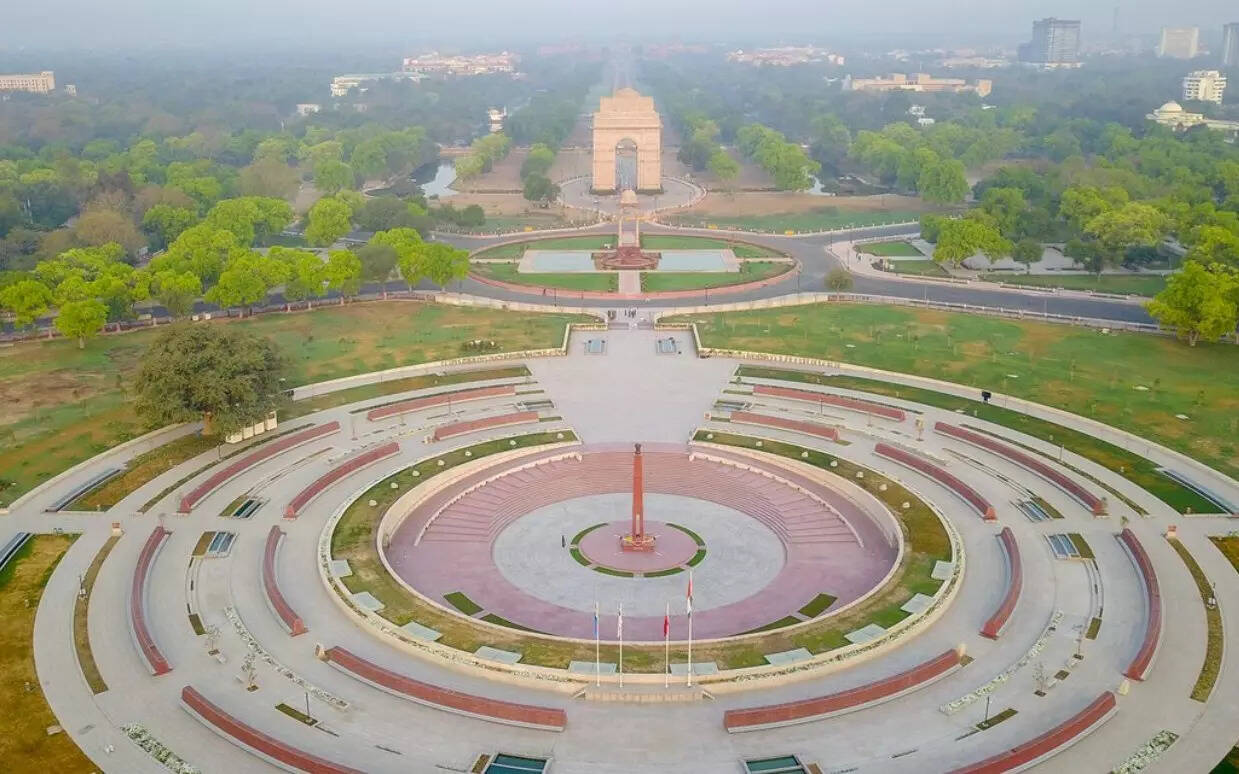
The National War Memorial in New Delhi stands as a central place in memory of the soldiers who died in service after independence.This monument stands with an eternal flame called Amar Chakra (Whirl of Immortality) at its centre. Before the National War Memorial, the Amar Jawan Jyoti at India Gate served as the main site to pay homage to soldiers, especially those killed in the 1971 war.Around Amar Chakra, concentric “Walls of Honour” are inscribed with the names of over 26,000 soldiers, each slab symbolizing the ancient battle formation of ‘Chakravyuh’, and each soldier’s name is inscribed in granite to signify permanence and dignity.Every evening, a retreat ceremony is held at the National War Memorial, where the national flag and the flags of the Army, Navy and Air Force are lowered before sunset as the last post is sounded.On Sundays and special occasions, the change-of-guard ceremony, accompanied by military band performances, attracts schoolchildren, tourists and veterans.Flower laying ceremonies by the Prime Minister and senior officials are held here on important national occasions.This memorial reflects India’s effort to create a permanent place of honor for its fallen soldiers.

National War Memorial, Delhi

National War Memorial, Delhi

assistance to families

Apart from memorials, India also honors its soldiers through a strong welfare and support system for their families.It is both a moral responsibility and social security for families who have lost a member in service.The families of martyrs receive central ex-gratia payments as well as pension schemes that provide long-term financial support.Pension for war-bereaved families is usually set at 100% of the soldier’s last drawn basic pay along with other components, helping widows and children maintain financial stability.Additional assistance includes education allowances covering tuition and hostel fees for children, cashless medical care under the Ex-Servicemen Contributory Health Scheme (ECHS) and benefits related to housing and small business assistance.Some state and central schemes also provide interest subsidy on home loans as well as financial assistance for marriage of daughters or remarriage of widows to help families rebuild their lives.Employment assistance is another important measure, in which the government reserves some jobs for the next of kin of martyred soldiers.

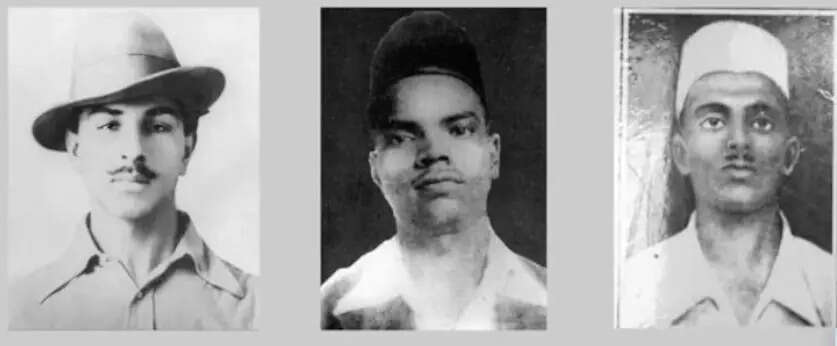
Martyr’s Day: Bhagat Singh, Sukhdev and Rajguru remembered

Bhagat Singh, Rajguru, Sukhdev

Bhagat Singh, Rajguru, Sukhdev

On March 23, 1931, three young revolutionaries, Bhagat Singh, Sukhdev Thapar and Shivram Rajguru, were hanged, becoming enduring symbols of courage and defiance against British colonial rule. He was sentenced to death in the Lahore Conspiracy Case. The spark for their action came after the brutal death of Lala Lajpat Rai. While leading a protest against the Simon Commission, Rai was beaten by Superintendent of Police JS Scott and later died of his injuries on 17 November 1928. Enraged, Bhagat Singh, Rajguru, Sukhdev and Chandra Shekhar Azad conspired to avenge his death. In a case of mistaken identity, they shot another officer, Saunders, instead. Initially, the British were unaware of the criminals. It was a handwritten poster by Bhagat Singh explaining the motive behind the murder that linked him and his comrades to Saunders’ death. Later, Bhagat Singh’s dramatic protest in the Central Legislative Assembly on 8 April 1929, where he threw a bomb against two repressive bills, brought him to the attention of the authorities. Even when facing execution, all three showed no fear. They walked proudly to the gallows in Lahore Central Jail, shouting slogans of “Inquilab Zindabad”. Bhagat Singh famously sang Mera Rang De Basanti Chola – “O Mother! Color my robe in the colors of spring”, turning his death into a celebration of freedom rather than despair. Despite appeals for clemency and widespread public support, all three were hanged, leaving a lasting legacy. Today Martyr’s Day is a tribute to their bravery, self-sacrifice and patriotism. His courage will continue to inspire generations of Indians.Therefore, Martyrs’ Day reminds us of the value of freedom and the responsibility of every citizen. It honors those who fought for the country and inspires people to uphold the values ​​of courage, commitment and selflessness.

Source link

Manipur: Mob attacks Kuki Zo Council Chairman’s residence in Churachandpur, firing reported. india news

Manipur: Mob attacks Kuki Zo Council Chairman's residence in Churachandpur, firing reported

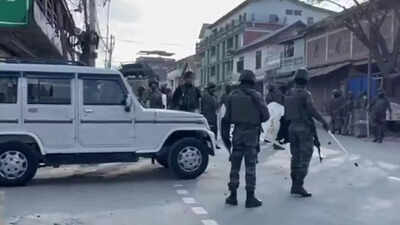
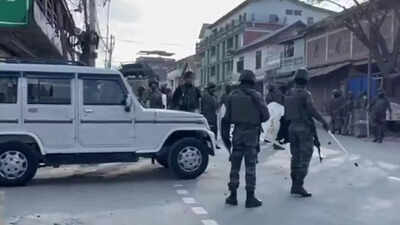
Imphal: A mob tried to enter the residence of Kuki Zo Council Chairman H Thanglet ManipurOfficials said armed men opened fire to disperse them in Churachandpur town.The incident took place on Sunday night when youth protested against the alleged presence of terrorists at the chairman’s house in the district headquarters.

Watch

First talks after clashes: Manipur CM meets Kuki-Zo Parishad to ease tension

They pelted stones at their residence in the afternoon and also tried to enter there, but security forces stopped the youth by firing tear gas shells to disperse them, officials said.However, on Sunday night, the youth again attempted to enter the chairman’s residence, following which armed men opened fire to stop them, he said.Officials said some agitators also burnt tires in Tuibong area near Churachandpur town, but security forces dispersed them by firing tear gas shells.

Source link

TVK went solo in Puducherry elections, fielded its candidates in all constituencies. india news

TVK will go alone in Puducherry elections, will field its candidates in all constituencies

Puducherry: Tamil actor-led political party Tamilaga Vetri Kazhagam (TVK). Victoryhas announced its candidates for the upcoming Puducherry Assembly elections and will contest independently in all 30 constituencies.The list includes two women candidates who have been fielded from Mangalam and Kadirkamam in the Puducherry region.According to a PTI report, AK Sai J Saravanan Kumar has been named as the party’s candidate from the Thirubhuvanai reserved constituency. He recently resigned from the BJP after not getting the ticket to contest re-election from the Osudu reserved seat.The party has also included experienced leaders from other political backgrounds. Former AIADMK MLAs KAU Asan and L Periyasamy will contest from Karaikal (South) and Nettapakkam (Reserved) respectively. Besides, former Puducherry BJP president V Saminathan has been fielded from Lospet constituency.Other prominent candidates include former Deputy Inspector General of Police VJ Chandran and former Indian National Congress MLA N Dhanavelou.Completing its entire program for the elections, the party has also announced candidates for the remaining constituencies.

Source link

Maoist end game near, but no political fanfare. india news

The end of Maoists is near, but there is no political fanfare

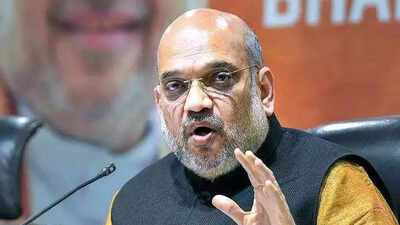
New Delhi: The March 31 deadline set by Home Minister Amit Shah to eliminate Left Wing Extremism (LWE) from the country is likely to pass without any change, having served its objective of creating the right psychological mindset among all stakeholders – security and police forces, local administration, political officials of the affected states, Maoist leadership and cadre and common people.Sources said even though the March 31 deadline has dominated the discussion on Left Wing Extremism for the last one-and-a-half year, there is unlikely to be any victory march or chest-beating on the actual date. At most, there may be references to it in political speeches and public addresses of dignitaries, especially during visits to states that were once affected by Left Wing Extremism.

Watch

Amit Shah described 2014-2026 as the golden age for India’s internal security, pledged to eradicate Maoism.

“The objective of the deadline was to set a definite target… so that all hands are ready and the anti-Naxal machinery can work in mission mode, as well as time-bound planning of operations to eliminate the leadership and launch initiatives aimed at rehabilitation of former Maoists and reconstruction of villages…” said a central government official.The results are clear for all to see: the entire CPI (Maoist) leadership – except for one Politburo member, Misir Besra, and a key commander, Papa Rao – has either been neutralized or surrendered. The CPI (Maoist) is no longer a united entity but a loose group hiding in the forests.Chhattisgarh Police Inspector General (Bastar Range) P Sundarraj told TOI, “Apparently, the deadline created psychological pressure to decide between facing bullets and taking the chance to live a normal life… As soon as senior colleagues got hit by bullets, the remaining Politburo and Central Committee members started leaning towards the latter option.”

Source link

Kilometer allowance for train crew increased by 25%. india news

Kilometer allowance for train crew increased by 25%

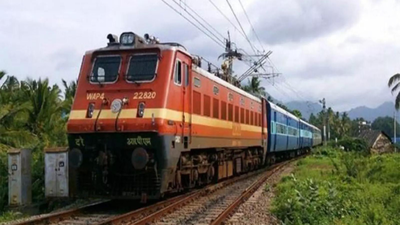
New Delhi: Effective from January 2024, Indian Railways has increased the rates of Kilometer Allowance and Allowance in lieu of Kilometer Kilometer (ALK) by 25% for all running staff in its system. The updated rates will benefit more than two lakh railway personnel, including loco pilots, assistant loco pilots, firemen, guards and other running staff. This decision has been taken after the 50% increase in dearness allowance.While other Indian Railways employees had earlier received an increase in traveling allowance, the kilometer allowance had remained stagnant till now, leading to dissatisfaction among the affected personnel. The issue was raised by All India Loco Running Staff Association and Railway Federation.“The amendment will benefit the running staff of Indian Railways by ensuring better compensation in line with the existing dearness allowance levels. It reflects Indian Railways’ continued commitment to the welfare and financial well-being of the running staff, who are the backbone of its operations,” an official statement said. news network

Source link

With 7th Regiment, Army expands Pinaka fleet. india news

With 7th Regiment, Army expands Pinaka fleet

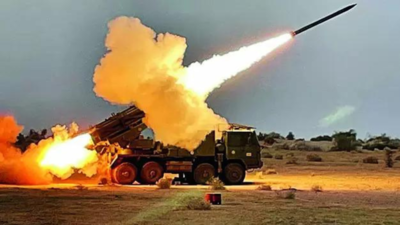
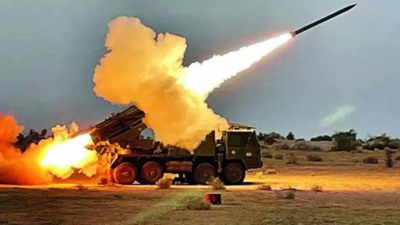
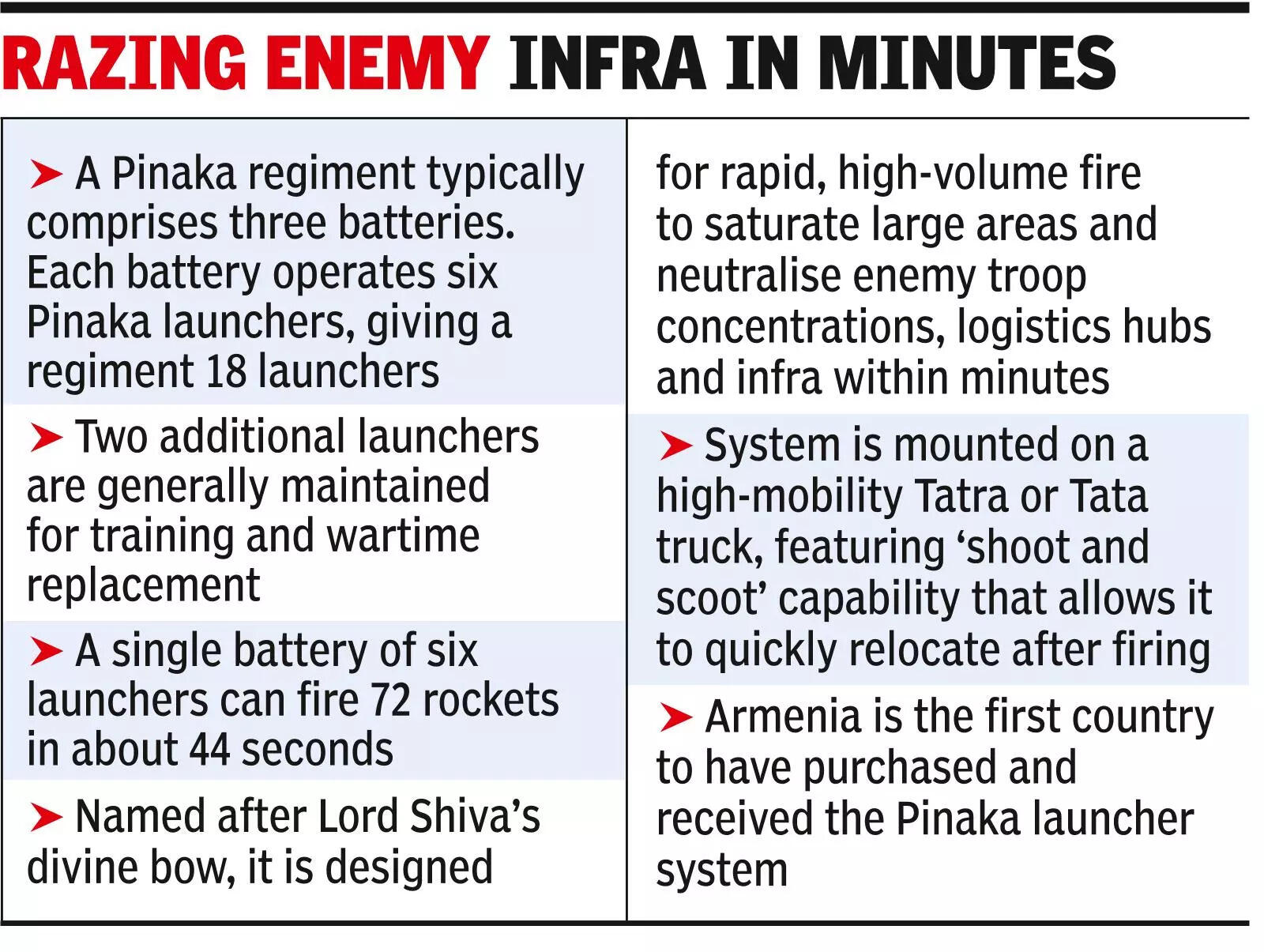
New Delhi: With the security threat on the western and northern borders increasing, especially after last year’s conflict with Pakistan, Indian Army It is learned that one more Pinaka regiment has been inducted and preparations are being made to induct one more by the end of the year.

With 7th Regiment, Army expands Pinaka fleet

With another regiment operating, the Indian Army Now seven Pinaka rocket launcher regiments are deployed on the borders with Pakistan and China. “The 8th Regiment has received more than half the equipment. It should become operational before the end of 2026,” a source said.Two more regiments are likely to become operational next year, taking the total number of Pinaka regiments in deployment to 10. The Army has a long-term goal of equipping 22 regiments with the new, longer-range guided versions. In August 2020, the Army signed contracts with Bharat Earth Movers Limited (BEML), Tata Power Company (TPCL) and Larsen & Toubro for the supply of six Pinaka regiments at an estimated cost of Rs 2,580 crore. Developed by DRDO, Pinaka is India’s major indigenous multi-barrel rocket launcher. While early versions had a range of 40 km, newer variants such as the Guided Pinaka and Long-Range Guided Rocket have increased the range to 120 km, making the system a vital asset for deep strike operations.

Source link

EPFO reaches out to customers with unclaimed balance. india news

EPFO reaches out to customers with unclaimed balance

New Delhi: The Employees’ Provident Fund Organization is focusing on helping customers withdraw unclaimed money lying in dormant accounts.Nearly a quarter of inactive accounts, which are Aadhaar verified, may soon be freed from inactive balance as EPFO ​​is working on developing an auto-settlement feature that will allow account holders to get unclaimed money in their bank accounts without filing a claim, an official told TOI. The facility is set to deal with about 8.1 lakh Aadhaar verified inactive accounts amounting to Rs 5,200 crore, of which about 14,000 have more than Rs 5 lakh lying unclaimed. Another 38,000 Aadhaar-verified dormant accounts have Rs 1-5 lakh lying unclaimed, and 41,000 accounts have between Rs 50,000 and Rs 1 lakh. “In the last meeting, the Central Board of Trustees (CBT) had approved automatic settlement of such inoperative accounts with unclaimed balance of Rs 1,000 or less into registered bank accounts. Based on the learning from this project, a separate initiative has been planned to formulate a strategy for other accounts. Preference will be given to members joining after October 2017,” the official said. An inactive account in EPFO ​​is one which has stopped earning interest and it mainly belongs to those members who have retired after the age of 55 and have not made any contribution for three years. However, for those below 55 years of age, the account will continue to earn interest until the customer turns 58 years of age. As of February 2026, there were 31.8 lakh inactive accounts, with Rs 10,181 crore lying unclaimed. Of these, about 7 lakh accounts are more than 20 years old, while 1.8 lakh accounts are between 10-20 years old. About 13 lakh inactive accounts are 5-10 years old.

Source link