PM Modi and Meloni enhance strategic ties; Fathers ‘selling’ daughters in Afghanistan and much more

Evening News Wrap: PM Modi and Meloni take forward strategic ties; Fathers 'selling' daughters in Afghanistan and much more
  • PM Modi and Italian PM Giorgio Meloni appreciated the bilateral relations between the two countries.
  • Kerala Cabinet Minister Two days after taking the oath, the departments were divided.
  • WHO said that the risk of Ebola spreading in Congo and neighboring Uganda remains high.
  • Police asked Tvisha Sharma’s family to take the body, warned of decomposition
  • Economically weak Afghan families are selling their young daughters to be able to make ends meet

Here are the top 5 stories of the day

India, Italy elevate ties to special strategic partnership; PM Modi highlights AI, space cooperation

India and Italy on Wednesday announced the elevation of ties to a special strategic partnership during the Prime Minister Narendra ModiDuring the visit to Rome, the two countries unveiled a joint strategic action plan for 2025-2029 focused on trade, technology and innovation. “Technology and innovation are the engines of our partnership. PM Modi said, there are endless possibilities for our partnership in the fields of AI, quantum, civil nuclear energy and space. Follow live updates

Kerala Portfolio Allocation: CM Satheesan has 35 ministries

Kerala Governor Rajendra Arlekar approved the portfolio allocation recommended by Chief Minister VD Satheesan, Lok Bhavan said, two days after the Congress-led United Democratic Front (UDF) government was sworn in. The UDF returned to power in Kerala after a decade, defeating the Left Democratic Front (LDF) in the April 9 assembly elections. Satheesan, who served as the leader of opposition in the previous assembly, will oversee 35 departments including finance, law, general administration and ports. Read the full story

‘Pandemic not emergency’: WHO warns of high local Ebola risk, says global threat low

WHO said the risk of Ebola spreading in Congo and neighboring Uganda remains high nationally and regionally, although the global risk is currently considered low. WHO also said the Ebola outbreak does not currently meet the threshold to be declared a pandemic, although the agency warned that the spread of the virus suggests the outbreak may have started several months earlier. Read the full story

‘Stored at -4°C, need -80°C’: Police ‘request’ family to take Twisha Sharma’s ‘decayed’ body

Bhopal Police has urged Tvisha Sharma’s family to take possession of her body, warning that prolonged storage at AIIMS Bhopal could lead to decomposition as the mortuary lacks minus 80-degree preservation facilities. The family has refused to accept the body alleging irregularities in the initial autopsy and has moved court demanding a second post-mortem. Read the full story

As Afghanistan is ravaged by hunger, families ‘sell’ their young daughters for food

Disturbing incidents have emerged from economically impoverished Afghanistan, where families are selling their young daughters to be able to afford food, medical expenses and debt relief. Fathers struggling with extreme poverty and unemployment said they have been forced to make “impossible choices” as hunger deepens across the country, according to a BBC report from Afghanistan’s Ghor province. Read the full story

Source link

Drinking more water alone cannot prevent kidney stones from recurring: Lancet study

Drinking more water alone cannot prevent kidney stones from recurring: Lancet study

New Delhi: For years, people suffering from kidney stones have been advised to drink more water to prevent recurrence of this painful condition. But now a major study published in The Lancet shows that hydration alone may not be enough.The researchers found that despite regular reminders, counseling and encouragement to encourage more water intake, kidney stones continued to recur at the same rate.The study included 1,658 participants aged 12 and older who had a history of urinary stones and low urine output, a known risk factor for stone formation. One group received standard medical advice, while the other received a behavioral program designed to increase fluid intake through coaching, reminders, and personalized hydration goals.After two years of follow-up, symptomatic stone recurrence occurred in 19% of participants in the intervention group and 20% of participants in the standard-care group, showing no major difference.The researchers said that participants who received the intervention increased their urine output, meaning they were drinking more fluids. However, it did not significantly reduce the incidence of new stone formation, stone growth, or painful stones.Dr Manoj Kumar Singhal, director of nephrology and kidney transplant at Medanta Super Specialty, said the findings reflect what doctors have seen in clinical practice over the years.He added, “Hydration alone rarely tells the whole story. Kidney stone recurrence is fundamentally a metabolic disorder, not simply the result of low water intake.”According to Dr. Singhal, many patients who continue to develop stones despite drinking enough water may have underlying factors such as high salt intake, high animal protein consumption, abnormal calcium or uric acid levels in the urine, or a specific type of stone that requires targeted dietary correction.He said, “In many cases, a 24-hour urine analysis is far more informative than simply advising to drink more water. Patients with recurrent stones require a comprehensive metabolic assessment and individualized prevention strategy.”Experts said the findings do not mean hydration is unimportant, as low urine volume remains a major risk factor for kidney stones. Instead, studies suggest that fluid intake alone may not be enough for many patients and that factors such as diet, obesity, genetics, and metabolic disorders may also contribute significantly.The study also found that people who increased fluid intake reported greater urinary frequency, urgency, and nighttime urination during the early months of follow-up. No major safety concerns associated with increased hydration were reported.Kidney stones are becoming increasingly common around the world, including India, especially during extreme heat when the risk of dehydration increases rapidly. Doctors say adequate hydration is important, but patients with frequent kidney stones may need comprehensive prevention strategies, including dietary changes, medical evaluation and treatment of underlying risk factors.

Source link

Supreme Court issues notice to Center on petition against sale of liquor in tetra packs

Supreme Court issues notice to Center on petition against sale of liquor in tetra packs

New Delhi: The Supreme Court issued notice to the Center and other respondents on Wednesday on a plea seeking an immediate ban on the sale of liquor in tetra packs and sachets citing concerns over drunk driving and easy access. A bench headed by Chief Justice Surya Kant, along with Justice Joymalya Bagchi and Justice Vipul M Pancholi, agreed to hear the petition filed by the organization ‘Community Against Drunken Driving’.Advocate Vipin Nair, appearing for the petitioner, argued before the court that the definition of “bottle” under the excise duty regime remains “vague” and requires standardization.“They are confusing fruit juice with alcohol. They use the picture of an apple and the pack contains vodka,” he said, stressing that it is the state’s responsibility to protect the health of citizens.The petition seeks direction to the Center to make a uniform policy for all states and union territories and immediately ban the sale of liquor in packaging formats like tetra packs and pouches.Prince Singhal, a road safety expert and founder of Community Against Drunken Driving (CADD), said, “It is the moral duty of the state to improve nutrition, standard of living, improve health, but in this case it appears that the state is only focusing on increasing revenue by exposing the public to excessive consumption of alcohol, especially the youth. The state government is prioritizing revenue over public health.”He said, “Selling liquor in tetra packs is profitable for the producers due to low cost of production, less wastage, easy portability. It is also beneficial for the government as it increases sales, it is also attractive for the customer along with increase in revenue. But in all this the population is drinking more.”The plea also sought directions to the Center to formulate a policy requiring states to amend their respective excise laws, rules and policies to adopt a uniform definition of “bottling”, restricting it to glass containers or other clearly distinguishable containers.

Source link

How bees sustain food systems and why their decline should alarm us all

Beyond the honey jar: How bees sustain food systems and why their decline should alarm us all

What comes to your mind when you think of bees?These buzzy insects may remind you of a painful childhood sting or the sweet honey they produce. But did you know that apart from honey, with its remarkable antibacterial properties, bees also give us beeswax used in candles, cosmetics, and pharmaceuticals, and propolis, often called “bee glue,” which has strong antimicrobial and anti-inflammatory benefits?But their importance goes far beyond what they produce.Beyond these familiar products, bees have a far more critical role to play.They are among nature’s most efficient and tirelessly laboring pollinators, quietly holding together ecosystems, agriculture, and ultimately, human survival.“In India, people know only two things about bees,” says Pune-based beekeeper and conservationist Amit Godse. “One is that they produce honey, and the second is their sharp sting.”That simple perception, he argues, hides a far more important ecological truth that bees are foundational pollinators, silently sustaining global food systems and biodiversity.Fondly known as Pune’s “Bee Man,” Godse has spent over a decade observing what he describes as a slow but steady ecological decline across the Indian landscape. Speaking to TOI, he emphasizes that while public awareness has improved slightly over the years, it still remains remarkably shallow. “People still don’t connect bees with agriculture or food security,” he says.This limited public understanding coincides with a time when bee populations are under growing biological, chemical, and environmental stress.

Why bees matter more than we realise

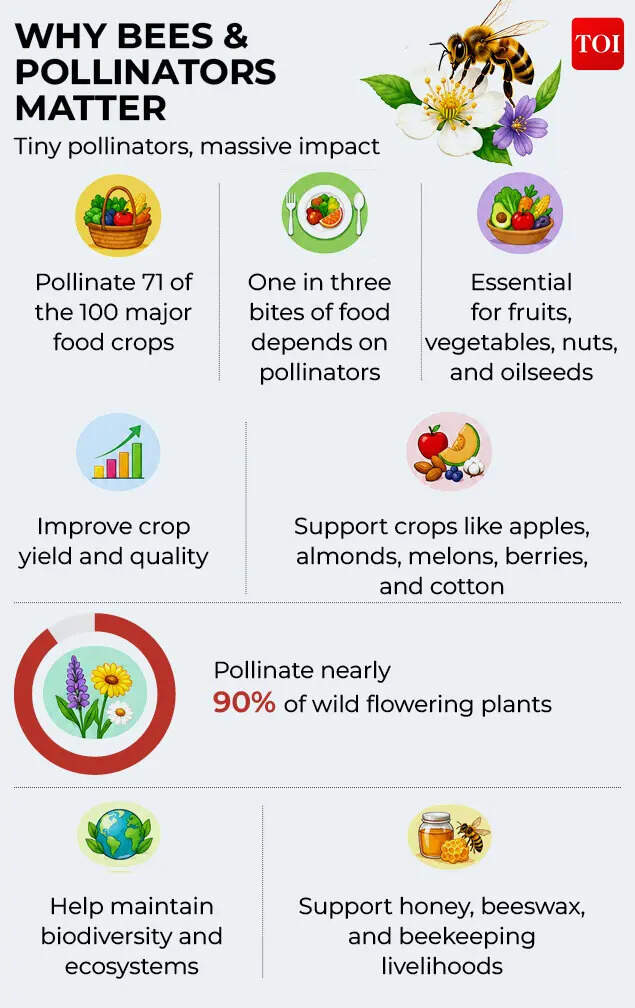
To understand the sheer scale of what is at stake, TOI spoke to Dr. K T Vijayakumar, a leading scientist at the University of Agricultural Sciences (UAS), Bengaluru. He explains that bees are among the most vital contributors to Earth’s baseline ecosystems and the global food supply.About one-third of all human food depends directly or indirectly on animal pollination, and bees do the heavy lifting. They are responsible for pollinating over 70 of the world’s top 100 food crops. When bees visit flowers to collect nectar and pollen for food, they act as the primary, unintentional drivers of plant reproduction.
-

Daily staples and high-value crops including apples, almonds, cucumbers, berries, pumpkins, and even essential beverages like coffee rely heavily on their constant labor. This natural partnership does not just trigger fruiting, it also significantly improves both the final crop yield and the physical quality of the produce.Without this invisible service, Dr Vijayakumar warns, wild plant diversity would rapidly weaken, triggering a devastating chain reaction across the entire food web. Entire ecosystems would become less healthy, less resilient, and deeply unstable.The impact is equally profound on a macroeconomic scale. Insect pollination adds billions of dollars in value to global agriculture each year by boosting the efficiency and value of agricultural outputs without human capital or cost.

Major threats facing bees today

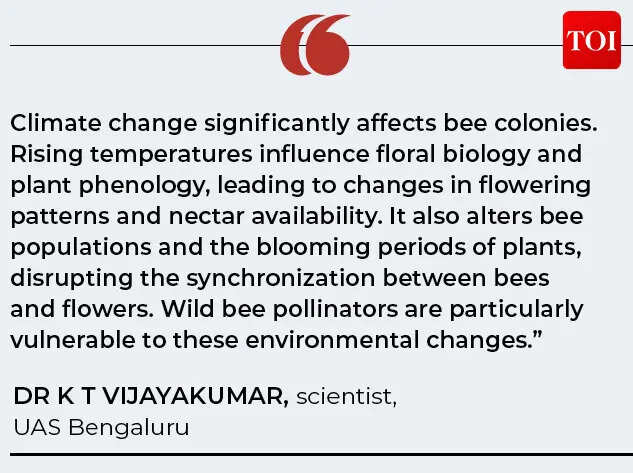
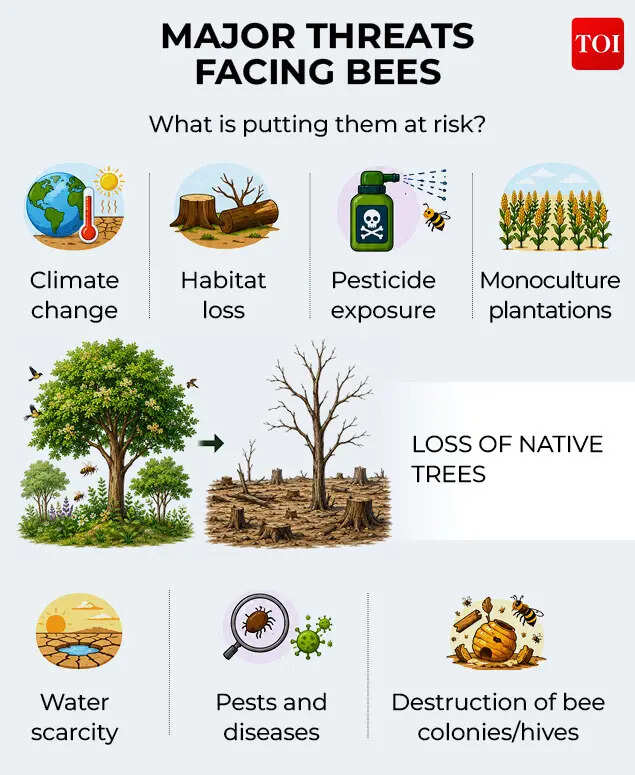
To map out exactly why these vital creatures are struggling to survive, scientists and conservationists point to an interconnected web of modern environmental, biological, and human-made pressures:Climate change and shifting phenology: Dr. Vijayakumar says climate change is significantly affecting bee colonies by disrupting long-standing synchronisation between bees and plants. Rising temperatures are altering plant phenology, shifting flowering times, shortening bloom periods, and reducing nectar availability. Bees, unable to adjust their life cycles quickly, often emerge after peak flowering has passed, leading to poor pollination and food stress.
-

The rise of agricultural monocultures: Amit Godse notes that diverse cropping systems are increasingly being replaced by monocultures. Crops like mustard offer abundant forage for a short period but leave long gaps with no floral resources. Bees require continuous pollen sources and suffer nutritional stress when this is absent, weakening their immunity.Systemic agrochemical poisoning: Neonicotinoids and similar pesticides are a major cause of colony decline. Absorbed into nectar and pollen, they damage bees’ nervous systems, affecting memory, navigation, and flight. Many worker bees fail to return to the hive, contributing to colony collapse.Emerging biological diseases and pests: Bee colonies are also under pressure from diseases and pests, including foulbrood, wax moths, mites, wasps, and the expanding small hive beetle in India. These threats damage colonies, contaminate stores, and can force hive abandonment.Habitat fragmentation and loss of native trees: Urban expansion and deforestation are reducing natural nesting habitats for wild bees. Old canopy trees are disappearing, while replacement plantations like eucalyptus and acacia offer poor nesting and limited forage for native species.The urban “death trap” phenomenon: In cities, discarded sweet liquid waste in plastic and paper cups attracts bees. Once inside, they become trapped and die in large numbers, turning urban spaces into accidental hazards for pollinators.Human fear and defensive eradication: Limited awareness leads to hostility toward bees. Instead of safe relocation, colonies found in homes or public spaces are often destroyed using chemicals or fire, causing avoidable mass deaths.
-

The overlooked bee species

When the average citizen visualizes a bee, they almost always picture a managed hive of European honeybees (Apis mellifera) or the native Indian honeybee (Apis cerana indica). However, scientists emphasize that there are over 20,000 bee species globally, comprising a vast, hidden tapestry of wild and solitary pollinators that look and behave nothing like domestic hive bees. These include: Bumblebees: Large, robust, and heavily furred, these bees are capable of a unique physical mechanism called “buzz pollination.” By vibrating their flight muscles at a specific frequency, they can dislodge firmly trapped pollen from deep-throated wild flowers and greenhouse crops like tomatoes.Carpenter Bees: Carpenter bees belong to the genus Xylocopa in the subfamily Xylocopinae, which includes around 500 species across 31 subgenera. The common name comes from their nesting behavior, as most species burrow into hard plant materials such as dead wood or bamboo to construct individual nests.Stingless bees (tribe Meliponini) are ancient, highly social insects widely kept in tropical and subtropical regions for specialized pollination and their prized, medicinal pot-honey. Solitary Bees: Accounting for the vast majority of all wild plant reproduction, these bees do not form communal colonies, live in hives, or answer to a queen. Every single female is a fertile queen who constructs an independent nest in sandy soil or hollow stems, quietly maintaining the plant diversity of their local micro-climates.Dr. Vijayakumar notes that these wild, unmanaged pollinators are by far the most vulnerable to human disruption. Unlike commercial honeybees, which receive human intervention, supplementary feeding, and shelter from beekeepers during lean seasons, wild bees depend entirely on undisturbed natural habitats.

What is Colony Collapse Disorder?

In recent decades, localized population drops have escalated into a structural, systemic failure known as Colony Collapse Disorder (CCD). First reported in the United States in 2006, CCD is a devastating phenomenon marked by the sudden, clean disappearance of an entire hive’s worker bee population. Mysteriously, they leave behind an intact queen, the immature brood, and plentiful food reserves, effectively rendering the hive a ghost town incapable of functioning.A 2025 study titled Buzzing into silence: A geographical analysis of Colony Collapse Disorder published in the International Journal of Ecology and Environmental Sciences by researchers Vijaylaxmi and Dr. H. N. Koli, emphasizes that CCD is not merely a freak biological anomaly. Instead, it is a complex socio-ecological crisis heavily shaped by regional agricultural policies, rapid land-use changes, and extreme chemical dependencies.According to the global synthesis of environmental data presented in their research, the primary drivers pushing bee colonies into silence are divided by distinct impact levels: neonicotinoid pesticides lead the crisis at an estimated 35%, followed by varroa mites at 20%, habitat loss and monocultures at 15%, climate variability at 15%, and the remaining share comprised of localized pathogens and urban pollution.

“Bees were everywhere, now they are disappearing”

This ecological decline is not an abstract statistical model; it is an observable reality on the ground. “Twenty years ago when I traveled to farms, you used to see bees everywhere,” Amit Godse recalls. “Today, the pollination is so down. It is difficult to find a bee on the farm, and it is disappearing even in the forest areas. Bees are not safe anywhere now, whether you go to a farm, a forest, or a city.”The empirical findings from Vijaylaxmi and Dr. Koli’s 2025 study confirm this worrying decline in India’s pollinator infrastructure. Over a 13-year trailing period, India’s total number of estimated active bee colonies has plummeted by nearly 40 per cent.In 2010, the nation possessed 1.50 million active colonies. This fell to 1.30 million in 2015, representing a 13.3% drop. The annual decline rate peaked significantly around 2020 with a massive 19.2% single-period loss, a window characterized by extreme regional climate anomalies and heavily intensified chemical inputs. By 2023, the number dwindled further to 0.92 million colonies, reflecting a persistent downward trajectory.

Uneven decline across India: Agrochemical density vs. resilience

The 2025 geographical analysis shows a clear link between pesticide intensity and colony loss, with high-input agricultural regions suffering significantly higher bee declines than diversified systems.Punjab (1.33 kg/ha pesticide use) reports about 25% hive loss, driven by intensive wheat and cotton cultivation. Maharashtra (1.18 kg/ha) records around 21% loss in horticulture and cash-crop zones. Rajasthan (0.72 kg/ha) shows a comparatively lower 15% loss across mustard and bajra regions.In contrast, states with lower chemical use and more diverse cropping patterns demonstrate greater resilience. Overall, higher pesticide intensity and monocultures consistently correspond to higher bee losses.

Urban vs rural: A shifting ecological paradox

This widespread urban hostility has created a bizarre and ironic ecological paradox. Godse reveals that there is a complex divide between urban and rural settings, and bee populations are increasingly being observed nesting in cities as compared to certain heavily degraded farmlands or rural forest areas.Rural ecosystems across India have undergone profound, negative ecological transformations. “Earlier, water was available throughout the year in forests and rivers,” Godse explains. “Now streams are drying up, groundwater levels are falling, and flowering plant diversity is disappearing.”Paradoxically, urban areas, despite their concrete density, often feature a continuous patchwork of home gardens, public parks, and ornamental flowering trees that offer a steady, year-round supply of nectar and water. However, this accidental urban sanctuary remains highly dangerous for bees due to human fear, resulting in frequent colony destruction driven by a systemic lack of public awareness.The field observations logged from the urban “death trap” studies, where up to 48 bees die every 10 minutes at high-traffic sugary waste disposal sites, prove that cities are a double-edged sword for the insects.

Path forward: What farmers and citizens must do

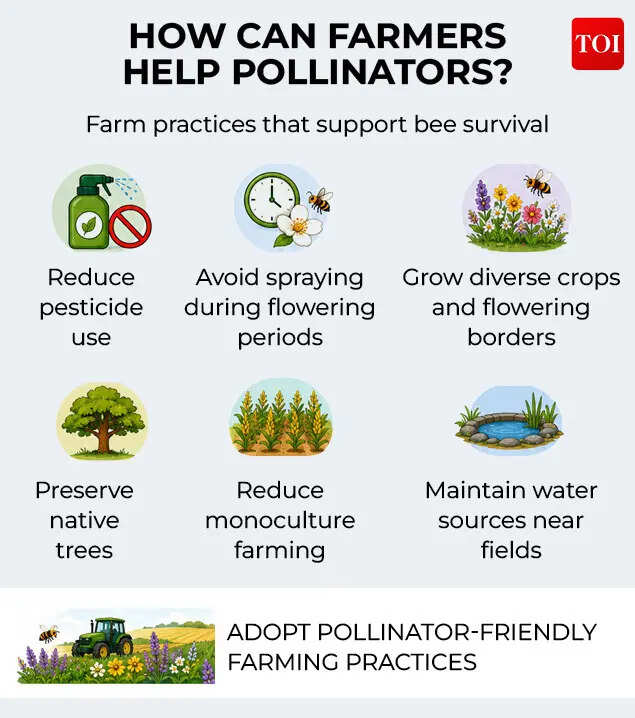
The crisis facing India’s pollinators is severe, but experts agree it is entirely reversible through deliberate behavioral, technological, and systemic adjustments. Vijaylaxmi and Dr. Koli advocate for a shift away from uniform national policies toward region-specific, targeted agricultural strategies.
-

For the agricultural sector:

  • Implement Integrated Pest Management (IPM): Transition away from chemical-heavy reliance, adopt biological pest controls, and reduce dependence on bee-toxic neonicotinoid variants, mirroring successful international stabilization frameworks.
  • Establish dedicated floral corridors: Farmers must reject absolute monocultures by planting different, nutrition-diverse crops and maintaining wild floral boundaries to ensure bees have a continuous, year-round supply of forage between main harvests.
  • Practice smart spraying timing: Training smallholders to avoid applying any necessary chemical treatments during peak daylight foraging hours will minimize active chemical contact with visiting colonies.

For urban citizens:

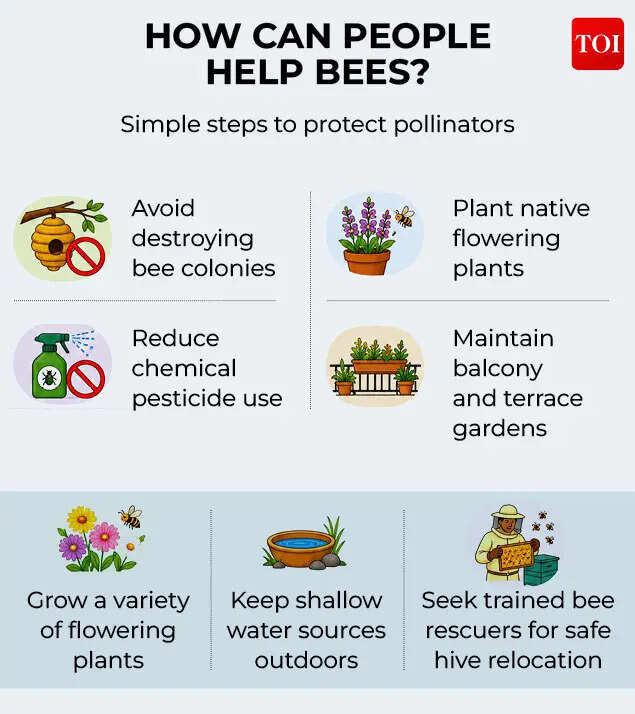
  • Halt destructive eradication: Communities must completely ban the practice of using pest control chemicals or fire to remove urban bee colonies, opting instead to contact trained conservation groups to safely relocate hives discovered in residential zones.
  • Manage sugary waste: Ordinary citizens can actively help by rinsing and crushing disposable sweet beverage cups before disposal, removing the “death trap” effect from roadside stalls.
  • Cultivate native flora: Transform balconies, terraces, and community public parks into safe foraging havens by planting a diverse array of native flowering plants.
-

As World Bee Day draws global attention to the plight of pollinators, the message from India’s scientific and conservation communities is clear, simple, and incredibly urgent.As Amit Godse succinctly puts it, “Bees are our friends, not enemies.

-

Bees are not aggressive pests or “enemies” to be feared, nor are they simply insects that produce honey. These hard-working architects are key pollinators that support food production, agricultural productivity, and ecosystem stability. Their survival is essential for global food security and food chain dynamics, as well as for maintaining crop yields, biodiversity, and overall ecological balance. Greater public awareness and reduced human-induced threats are crucial to their conservation.


Source link

PM Modi, Donald Trump may face each other at the G7 summit in France next month

PM Modi, Donald Trump may face each other at the G7 summit in France next month

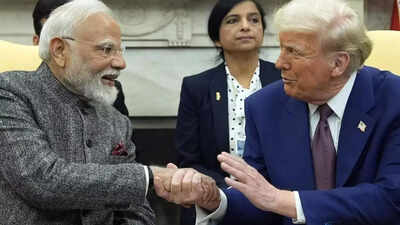
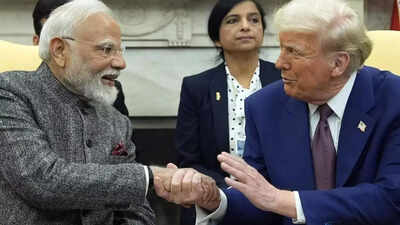
New Delhi: Prime Minister Narendra Modi and US President donald trump Expected to face each other in France next month g7 summit.The White House told news agency AFP that Trump would visit France despite tensions between Washington and its allies over issues ranging from Iran to tariffs.The summit, to be held from June 15 to 17 in Evian-les-Bains in southeastern France, is expected to cover issues including artificial intelligence, trade, critical minerals, immigration and global security.Reducing regulatory barriers and increasing energy production, especially fossil fuels, are also likely to be discussed. Iran is expected to feature prominently in comprehensive talks amid ongoing tensions in West Asia.Trump has repeatedly criticized NATO allies, including Britain, France, Germany and Italy, accusing them of failing to provide adequate support to Washington during the ongoing conflict with Iran.Strategic tensions have also prompted a change in rhetoric from major European capitals. German Chancellor Friedrich Merz recently reaffirmed the importance of trans-Atlantic relations, calling the United States “Germany’s most important partner in the North Atlantic alliance,” days after criticizing Trump’s handling of the Middle East conflict.Trump’s attendance at the summit, scheduled for the meeting of the Group of Seven major economies in the French Alpine resort town, was not previously confirmed.Meanwhile, French President Emmanuel Macron had extended the invitation during his visit to India in February PM Modi. Although India is not a permanent member of the G7, it regularly participates in the annual summit as a special invitee.The last meeting of PM Modi and Trump took place in February after returning to the Oval Office in Washington.In the high-profile meeting held against the backdrop of tariff tensions, Trump described Modi as a “great friend” while the two leaders pledged to double India-US trade to $500 billion by 2030.The expected meeting in France will be closely watched for signals on trade talks, energy cooperation and broader strategic alignment between New Delhi and Washington amid rising global geopolitical tensions.

Source link

TVK advocates unity amid tension in alliance over AIADMK rebels

'Wants to work like a family': TVK pitches for unity amid tensions in alliance over AIADMK rebels

New Delhi: Tamil Nadu minister Adhav Arjun on Wednesday said Chief Minister Vijay wants his cabinet to “work like a family” as cracks appear in the alliance over the possibility of including rebel AIADMK MLAs in the government.Speaking to reporters, Arjun said that Vijay wanted the parties supporting the government to get representation in the cabinet.“The CM wants the cabinet to work like a family. He wants the supporting parties to get representation in the cabinet. The DMK and AIADMK attempted to form an alliance which went against the people’s decision,” the minister said.Read this also ‘I think they will not go to that extent’: Shanmugam warns CPM to reconsider support if TVC inducts AIADMK rebels into cabinet.“During the elections, DMK said that AIADMK is under the control of BJP, but later it forgot its ideology and negotiated an alliance with AIADMK. Congress and Left parties united on one front to protect the constitutional system. We will travel together with AIADMK in the spirit of friendship.The comments come a day after CPM said it would reconsider its support to the Vijay-led government if it accommodates the rebel AIADMK faction in the cabinet.Read this also 2 Congress MLAs will join Vijay government, currently no AIADMK rebelAddressing a press conference, CPM leader Shanmugam said the basis for supporting the TVK was to stop the imposition of President’s rule and prevent “backdoor entry into BJP rule”.Shanmugam said the purpose of this arrangement is to ensure governance by a party elected by the people. However, he said the inclusion of rebel AIADMK members in the Council of Ministers would be against the party’s stand on mandate and clean governance.He said, “No party got the majority and TVK emerged as the largest party, and hence only they had the scope to form the government. With the idea of ​​facilitating governance by a party elected by the people, the Left parties and the VCK extended outside support to the TVK, enabling it to form the government.”“I think the TVK will not go to that extent (of including the AIADMK rebel group in the cabinet). In case the TVK takes such a stand, the CPI(M) will reconsider its support to the TVK,” he said.TVK had passed the floor test in the Assembly on May 13 with the support of AIADMK rebels, expelled AMMK MLA Kamaraj, Left parties, VCK and IUML.

Source link

Left vs BJP in Kerala over full ‘Vande Mataram’ singing at Satheesan’s swearing-in ceremony

Left vs BJP in Kerala over full 'Vande Mataram' singing at Satheesan's swearing-in ceremony
VD Satheesan’s oath (Image/PTI)

New Delhi: Following the controversy over the order of songs played during the swearing-in ceremony of Tamil Nadu CM Vijay, a fresh political controversy has erupted in Kerala after the singing of the full version of ‘Vande Mataram’ during the swearing-in ceremony of the new UDF cabinet led by VD Satheesan. CPM has strongly criticized this move and termed it inappropriate in a pluralistic society.The CPM state secretariat on Tuesday said the decision to present the full version of the national anthem goes against the earlier stand taken by the Congress Working Committee, which had recommended deletion of certain parts in 1937.The party also cited the discussions of the Constituent Assembly in 1950, which it said showed the acceptance of only the first eight lines of ‘Vande Mataram’ as the official national song.In its statement, the CPM argued that parts of the song reflected specific religious beliefs and said their inclusion in official ceremonies was not in line with India’s pluralistic traditions. It alleged that the function included sections that had previously been excluded from official use.The party also pointed out that even in BJP-ruled West Bengal, full presentations were not given during the swearing-in ceremony and said governments should avoid actions that could “weaken the pluralistic character of the society” or weaken secularism.The CPM further said that the time was sensitive, as efforts to polarize the society on communal lines were becoming more active, and urged all governments to maintain the secular structure of India.However, the BJP strongly criticized the CPM and accused it of ‘insulting’ the national anthem and attempting to appease ‘vote-bank forces’ like Jamaat-e-Islami and SDPI. State BJP president Rajeev Chandrashekhar said the Left was distancing itself from Indian traditions and termed their stance as ‘dangerous appeasement politics’.“In an attempt to hide the embarrassment of being completely rejected by the people, the CPI(M) has now come forward to question Vande Mataram,” he said.The Kerala BJP chief said, “Insulting the nation for mere political survival can never be called secularism. A developed Kerala requires unity, harmony and a secure society.” Amid the political war of words, sources in the newly formed Kerala government clarified that they had no role in the selection of the programme, PTI reported, adding that the program was entirely organized by Lok Bhavan.CPIM leader PA Mohammad Riyas expressed concern on social media, saying that traditionally only selected parts of ‘Vande Mataram’ are performed, to which BJP leaders reacted sharply and questioned the party’s objections.

Tamil Nadu protocol controversy adds to parallel controversy

The debate in Kerala has also been compared to a similar political and protocol controversy in Tamil Nadu, where questions were raised over the order of songs at the swearing-in ceremony of Chief Minister Vijay.CPI state secretary M Veerapandian had objected to the order of presenting the songs, saying it was against long-standing state tradition. In a letter released after the ceremony, he said that instead of having ‘Vande Mataram’ at the beginning of the program as per the traditional protocol in Tamil Nadu, the Tamil invocation song should be played first, followed by the national anthem.Read this also ‘Play Tamil song before Vande Mataram’: Controversy over national anthem erupts at TVK chief Vijay’s swearing-in ceremony“As per the instructions issued by the Raj Bhavan, giving priority to the song ‘Vande Mataram’ and keeping Tamil at the third position in the program program of the swearing-in ceremony organized by the Tamil Nadu government is in violation of the established tradition,” he said.He further argued that the issue has historical and ideological significance, pointing out that during the freedom struggle itself, it was decided that ‘Vande Mataram’ could not serve as the national anthem in its full form due to objections over certain religious references.“The Tamil Nadu government should issue a public clarification identifying those responsible for this error,” he said.The CPI leader also urged that the Tamil invocation song should be restored to its traditional position at the beginning of official functions, while the national anthem should conclude the ceremonies as per established practice.

Source link

Car ride, dinner and tour of the Colosseum before the conversation

PM Modi, Meloni in Rome: Car ride, dinner and Colosseum visit before talks

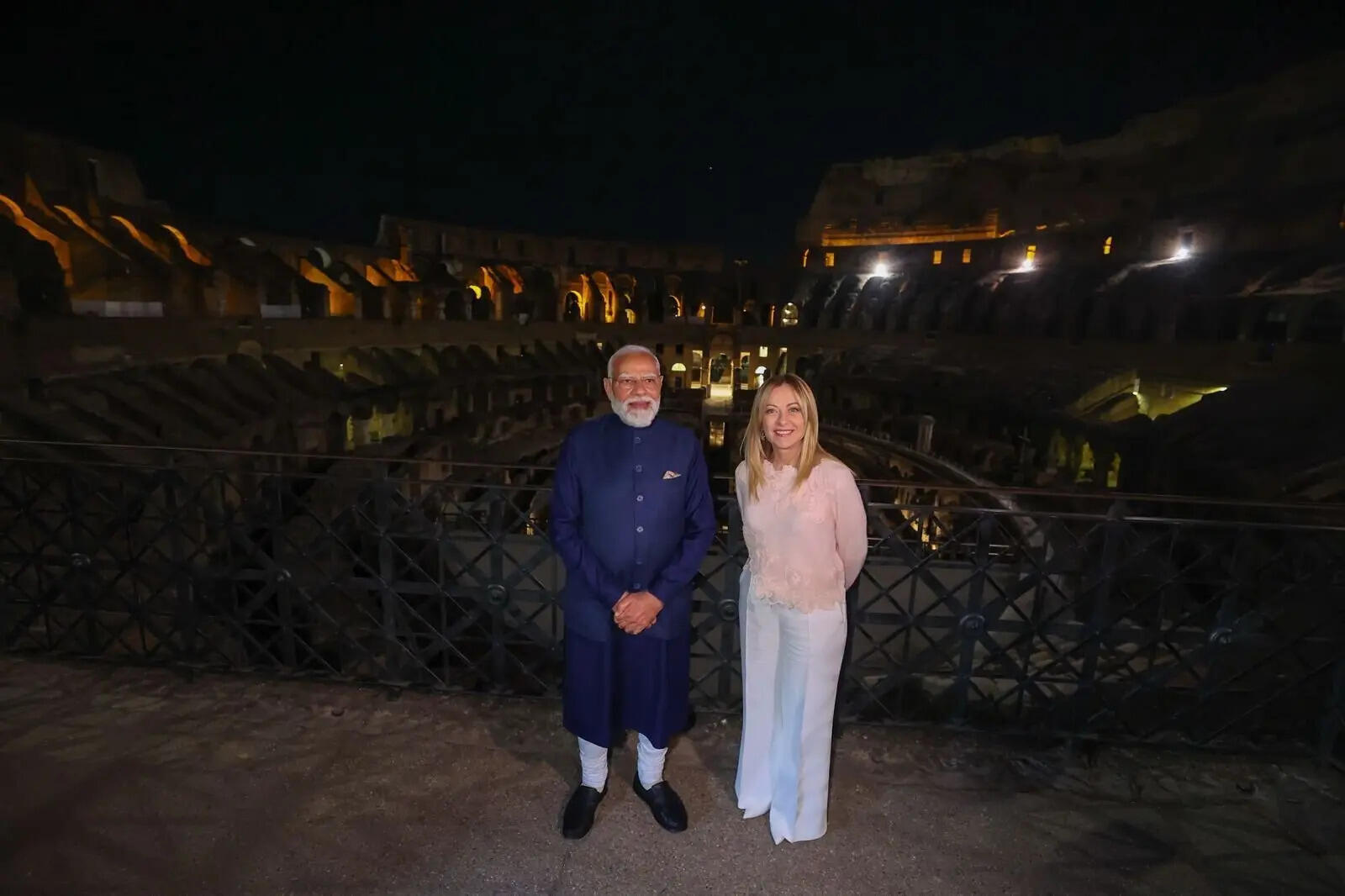
New Delhi: Prime Minister Narendra Modi He met his Italian counterpart Giorgia Meloni over dinner shortly after arriving in Rome on Tuesday for the final leg of his five-nation tour, before the two leaders took a late evening stroll through the iconic Colosseum.Sharing photos from the evening on Instagram, PM Modi wrote, “Upon landing in Rome, had the opportunity to meet PM Meloni over dinner followed by a tour of the iconic Colosseum.”“We exchanged views on a wide range of topics. Looking forward to our talks today, where we will continue the conversation on how to promote India-Italy friendship,” he said.The two leaders were also seen sharing a ride through Rome, offering a glimpse of informal “car diplomacy”.

,

Italian Prime Minister Giorgia Meloni also warmly welcomed PM Modi on social media, sharing a photo with him on Instagram and writing, “Welcome to Rome, my friend!”In a photo shared by PM Modi, the two leaders are standing together inside the Colosseum at night. Against the dimly lit backdrop of an ancient Roman amphitheater, the two leaders were seen engaged in a long conversation overlooking the historical monument.

,

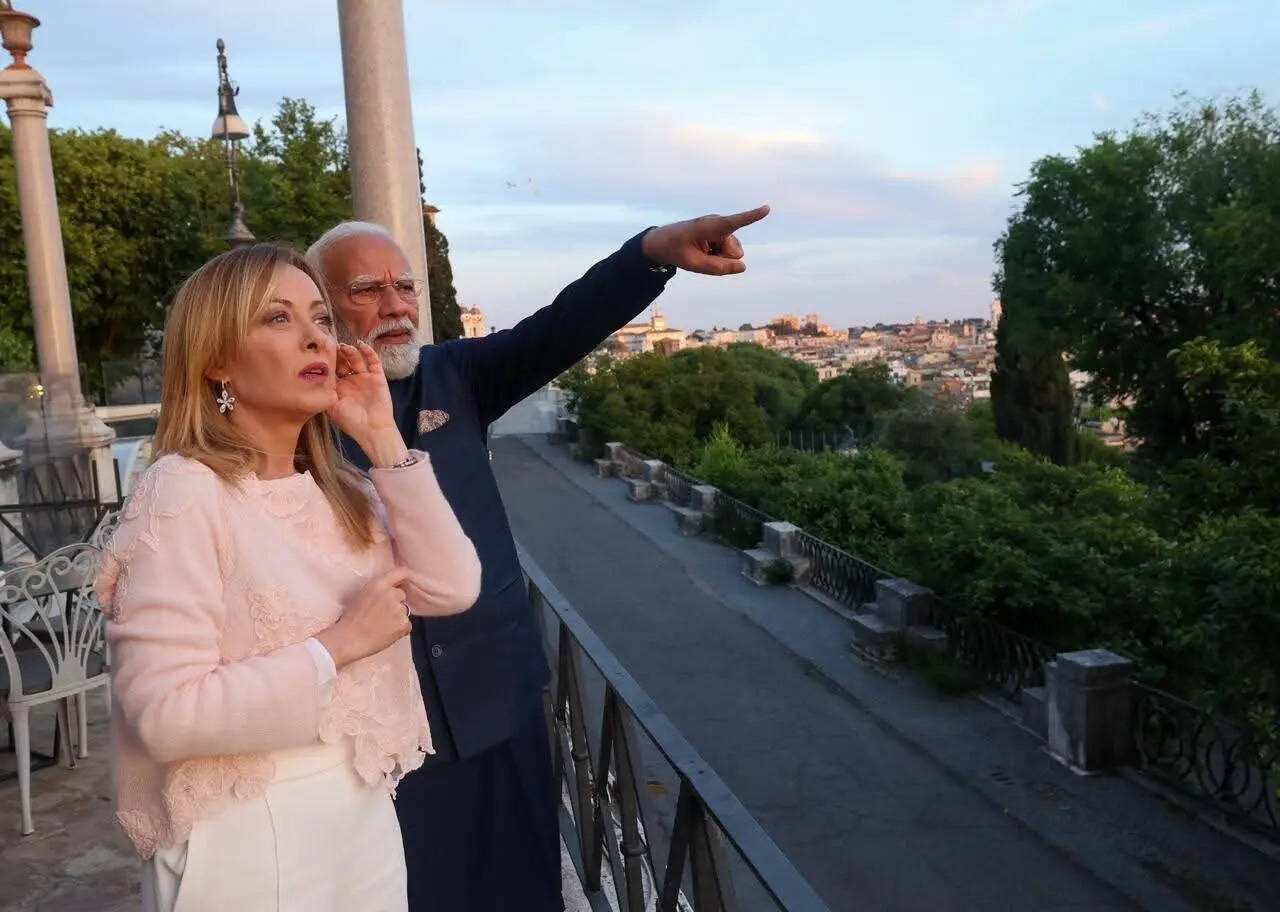
In the video circulating online, PM Modi is shown wearing a dark navy blue bandhgala suit with white churidar trousers and black shoes, while Meloni is wearing a light pink embroidered top with white trousers.In another candid moment PM Modi and Meloni are seen leaning against a railing overlooking the Rome skyline during sunset, and appear to be in deep discussion. Meloni is also seen adjusting her hair while listening attentively, while PM Modi points towards the city below.

,

The Prime Minister also shared the works of Italian painter Giampaolo Tomasetti, particularly his paintings inspired by Varanasi and Indian spiritual traditions. Tomasetti’s association with Indian culture goes back more than four decades.Earlier, on reaching Rome, PM Modi was warmly welcomed by the Indian community. The Indian diaspora gathered outside the Prime Minister’s hotel with Indian flags, cultural displays and chants to welcome him during the last leg of his diplomatic tour.PM Modi in Italy: Meloni meeting, IMEC, trade, FAO – what’s on his agenda?The Prime Minister interacted with community members, greeted children and even signed an autograph for a young fan who presented him with a portrait. “I am extremely grateful to the Indian community in Italy for the warm welcome extended to me in Rome yesterday evening,” PM Modi said in another post on Twitter.He said, “Their deep affection for India and commitment towards strengthening India-Italy relations is truly commendable. The Indian diaspora is making our country proud across the world.”PM Modi’s visit to Italy comes at a time when bilateral relations between the two countries are witnessing new momentum under the India-Italy Joint Strategic Action Plan 2025-2029, which focuses on enhancing cooperation in sectors including trade, defence, technology, clean energy and connectivity.The Rome visit is the last stop of PM Modi’s five-nation diplomatic tour. Before reaching Italy, the Prime Minister visited Norway, Sweden, Netherlands and the United Arab Emirates.Also read: PM Modi’s Italy visit live updates

Source link

Abhishek Banerjee’s ‘demolish my house’ message amid probe into property empire

Abhishek Banerjee's 'demolish my house' message amid probe into property empire

New Delhi: Trinamool Congress MP Abhishek Banerjee On Tuesday he said his “fight against the BJP” would continue after Kolkata civic authorities launched a probe into the “legality” of properties owned by him.During a press conference, Abhishek opened a front against West Bengal Chief Minister Suvendu Adhikari and said that he will not bow down even if the government demolishes his house.The TMC MP said, “There have been many Chief Ministers in our state, but no one like the present Chief Minister. The one who was seen taking money on camera was made the CM. Let him do whatever he wants.”He said, “Demolish my house, send a notice. I will not bow down to these things. Whatever happens, my fight against the BJP will continue.”The notice is the first step KMC takes when it starts investigating alleged irregularities in a property. “We have pasted notices on several properties owned by different persons, including Abhishek Banerjee,” a KMC official said. The civic board has been under Trinamool control since 2010.Senior TMC leaders told TOI that KMC’s move has upset the Banerjee family, which has decided to fight it legally. Sources said that many party leaders are in touch with the family and are planning the next steps. “The process of collecting all the necessary legal documents and examining them has begun. Lawyers are being consulted and preparations for a legal battle have begun. This is not politics, but politics of vengeance,” a senior party senior said.A KMC source said that after receiving no response from the Diamond Harbor MP, officials pasted a notice under Section 401 of the KMC Act 1980 on the wall of the building.Such a notice is issued when at least a part of a building has been constructed without the approval of the municipal body.“Giving such a notice also paves the way for demolition. Here too we will strictly follow the rules.” If major violations are seen, we may need to start the demolition process,” said a KMC official.Chief Minister Suvendu Adhikari said the properties of Banerjee and three others were under investigation. He insisted that the government would jail “corrupt people”.Addressing a rally at Vardaan Market, the CM talked about action against persons “accused in corruption cases” and mentioned the names of persons whose properties are being investigated in the city.“Abhishek Banerjee has 14 properties in his name in Leaps and Bounds, four in his name and six in his father’s name. Raju Naskar (promoter) in Beleghata has 18 properties. Sona Pappu has 24 properties, Javed Khan’s son has 90 properties,” the official said.“Santanu Sinha Biswas (DC of Kolkata Police) and Sujit Bose (former minister) have been arrested. The BJP government will put every corrupt person behind bars,” the official claimed.

Source link

Nordic leaders condemn Pahalgam attack

Nordic leaders condemn Pahalgam attack

In a joint statement on Tuesday, PM Narendra Modi and Nordic leaders expressed concern over the Ukraine war, saying it is causing enormous humanitarian suffering and will have global consequences. “They will continue to support efforts to achieve a comprehensive, just and lasting peace through dialogue and diplomacy based on the principles of the UN Charter and international law,” the statement said. The leaders also expressed deep concern over the situation in West Asia and its global implications and welcomed the ceasefire announced on 8 April. They also called for freedom of navigation and global flow of commerce through the Strait of Hormuz in line with the provisions of UNCLOS. On Palestine, the leaders called on all parties to respect the ceasefire and maintain their obligations under international law. He stressed the need for safe, continuous and uninterrupted humanitarian assistance throughout Gaza. The leaders condemned terrorism and extremism in all its forms. “They condemned in the strongest terms the terrorist attack in Pahalgam, Jammu and Kashmir on April 22, 2025, and the terrorist incident near the Red Fort, New Delhi on November 10, 2025,” the statement said. news network

Source link