
When medical care fails: What the Supreme Court’s passive euthanasia ruling means india news

In a landmark ruling that revisits one of medicine’s toughest ethical questions, the Supreme Court on Wednesday allowed the withdrawal of artificial life support — or passive euthanasia, as it is commonly called — for a 31-year-old man who had been in a coma for more than 13 years. The judgment in the Harish Rana case is the first time that the court has directly allowed passive euthanasia for a patient in a permanent vegetative state. Dr. Sushma Bhatnagar Former AIIMS chief and professor of onco-anesthesia and palliative medicine explains times of India What does this mean in medical practice, and how do doctors decide when to withdraw life support?What does passive euthanasia mean in medical practice?In simple terms, it involves withdrawal of life support, stopping some types of artificial support that prolong life without improving the patient’s condition. For example, doctors may discontinue artificial nutrition, fluids, or other life-sustaining measures when they are no longer beneficial. The aim is not to actively end life, but to prevent treatments that only increase suffering, and allow the disease to continue its course when recovery is not possible.
In what situations do doctors consider withdrawing life support?Doctors consider this when the treatment is not providing any benefit to the patient and his suffering is only increasing. In such cases, continuing aggressive medical support may not be in the best interests of the patient. Conditions may include permanent vegetative state, severe and irreversible brain injury, terminal cancer, end-stage kidney failure where dialysis is no longer effective, or advanced heart disease where treatment options have been exhausted. This may include withdrawal of ventilatory support, stopping medications that artificially maintain blood pressure, dialysis, artificial feeding through tubes, or other interventions that maintain physical functions without improving the patient’s condition.
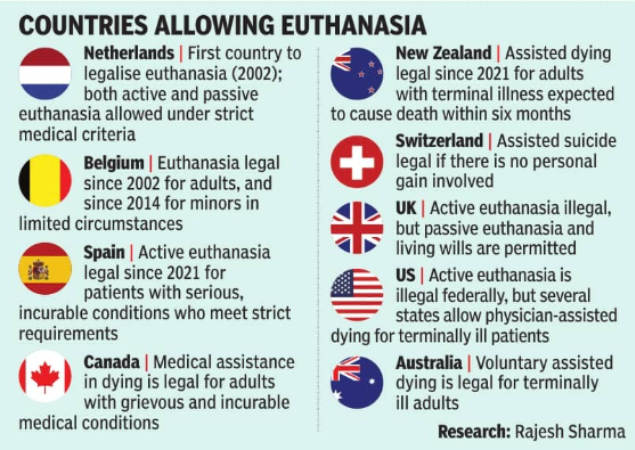
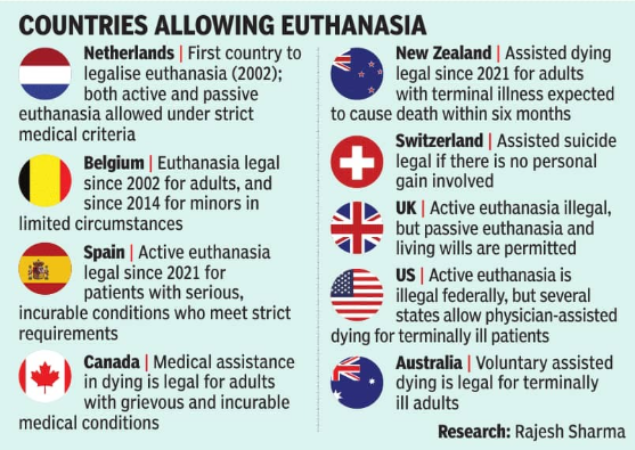
How do doctors determine whether a patient has no chance of recovery, and what safety measures should be followed before withdrawing life support in India?There are established medical criteria and tests. For example, specific instruments are used to confirm conditions such as coma or vegetative state. In incurable diseases such as advanced cancer, prognosis and chances of cure are assessed using evidence-based medical guidelines. In India, review is usually done by primary and secondary medical boards before any decision is taken. In some cases, hospital ethics committees may also be involved to ensure that the procedure follows medical ethics and legal guidelines set by the Supreme Court. These measures ensure that the decision is medically appropriate and ethically correct.How important are living wills or advance directives?They are extremely important. If a patient has clearly stated in advance what type of treatment they would or would not like in such circumstances, the doctor and family may follow their wishes. Respecting patient autonomy is a fundamental principle of medical ethics.How often do doctors in India receive requests to withdraw life support?It is still relatively rare in India.Awareness of advance directives is limited. Culturally, many families find it difficult to accept death as a natural part of life.What is the difference between active and passive euthanasia, and how does the latter differ from assisted suicide or assisted death?Active euthanasia involves deliberately administering drugs that cause death. Passive euthanasia refers to the withdrawal or stopping of treatments that artificially maintain life and includes stopping medical interventions that are no longer beneficial. Assisted suicide involves actively helping a person end their life, usually by providing medication that the person takes themselves.What are some common misconceptions about passive euthanasia?Many people believe that this means that doctors are actively trying to end the patient’s life. In fact, it usually involves stopping medical interventions that are no longer useful, and focusing on comfort, care, and respect at the end of life.From a medical ethics perspective, why are these practices treated differently?Medical ethics emphasize doing no harm and avoiding treatments that provide no benefit. When treatment only increases suffering with no real possibility of cure, it may be considered morally justified to withdraw it.