
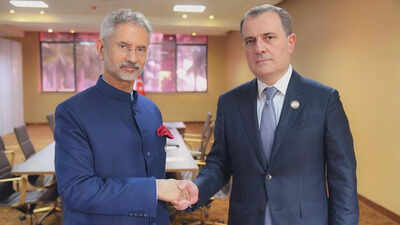

After Pakistan dispute, Delhi, Baku are working on repairing relations. india news
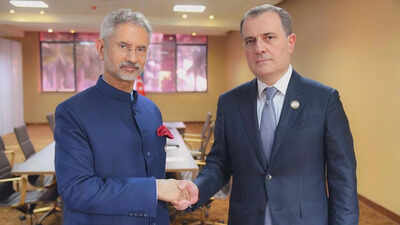 The sixth round of India-Azerbaijan Foreign Office Consultations was also held in Baku, co-chaired by George and Deputy Minister of Foreign Affairs Elnur Mammadov. “They comprehensively reviewed the current state of bilateral relations covering areas of mutual interest. The issues discussed included trade, technology, tourism, pharmaceuticals, energy, culture, people-to-people exchanges and the fight against cross-border terrorism,” the Ministry of External Affairs said in a statement.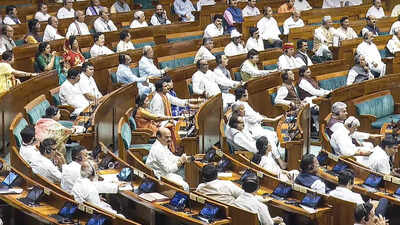
Congress claims, violation of special session election code of conduct. india news
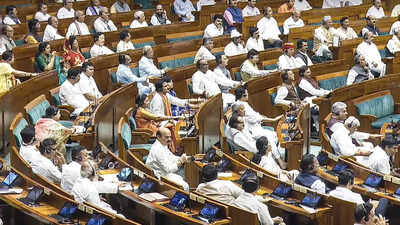 AICC spokesperson Jairam Ramesh criticized the “hastily made proposal” for a “proportional” increase in parliamentary seats, saying the Congress opposes “any change in the relative strength of states” in the Lok Sabha. He said such a move would permanently harm southern states like TN and Kerala compared to northern states, while also hurting north-eastern states, north-western states like Punjab and smaller states. Ramesh said that there has been informal information that the Modi government is planning a new delimitation law with a 50% increase in the seats of all states in the Lok Sabha and Assemblies.Citing Uttar Pradesh and Kerala, Ramesh said the seats in UP may increase from 80 to 120, while in Kerala the number may increase from 20 to 30. The Congress leader argued that the difference of 60 seats would increase to 90.“The opposition will take a united stand and the government’s strategy of dividing political parties will not succeed,” he said. Ramesh also rejected the government’s argument linking quotas and delimitation, citing the statement of the Registrar General of India that the census results would be available in 2027.
Raghav says not afraid, AAP leader says he is indulging in ‘soft PR’ India News
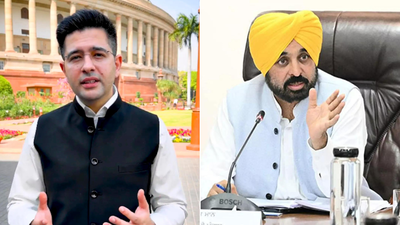
New Delhi: A day after AAP removed him as the party’s deputy leader in Rajya Sabha, Raghav Chadha announced that he will not be intimidated by attempts to silence him, drawing sharp reaction from his colleagues.Senior AAP members accused Chadha of being afraid of PM Narendra Modi and not raising issues related to the party’s stand. He referred to his failure to sign the notice demanding removal of CEC Gyanesh Kumar and his disregard of the party line on walkouts over issues in the House. Chadha was accused by Punjab CM Bhagwant Singh Mann, party leader in Rajya Sabha Sanjay Singh and leader of opposition in Delhi and Atishi in Parliament of indulging in “soft PR”. Asked by a journalist whether he believed Chadha had been compromised, Mann replied, “Yes”.
Mann questions Raghav’s focus: ‘Samosa on serious issues?’
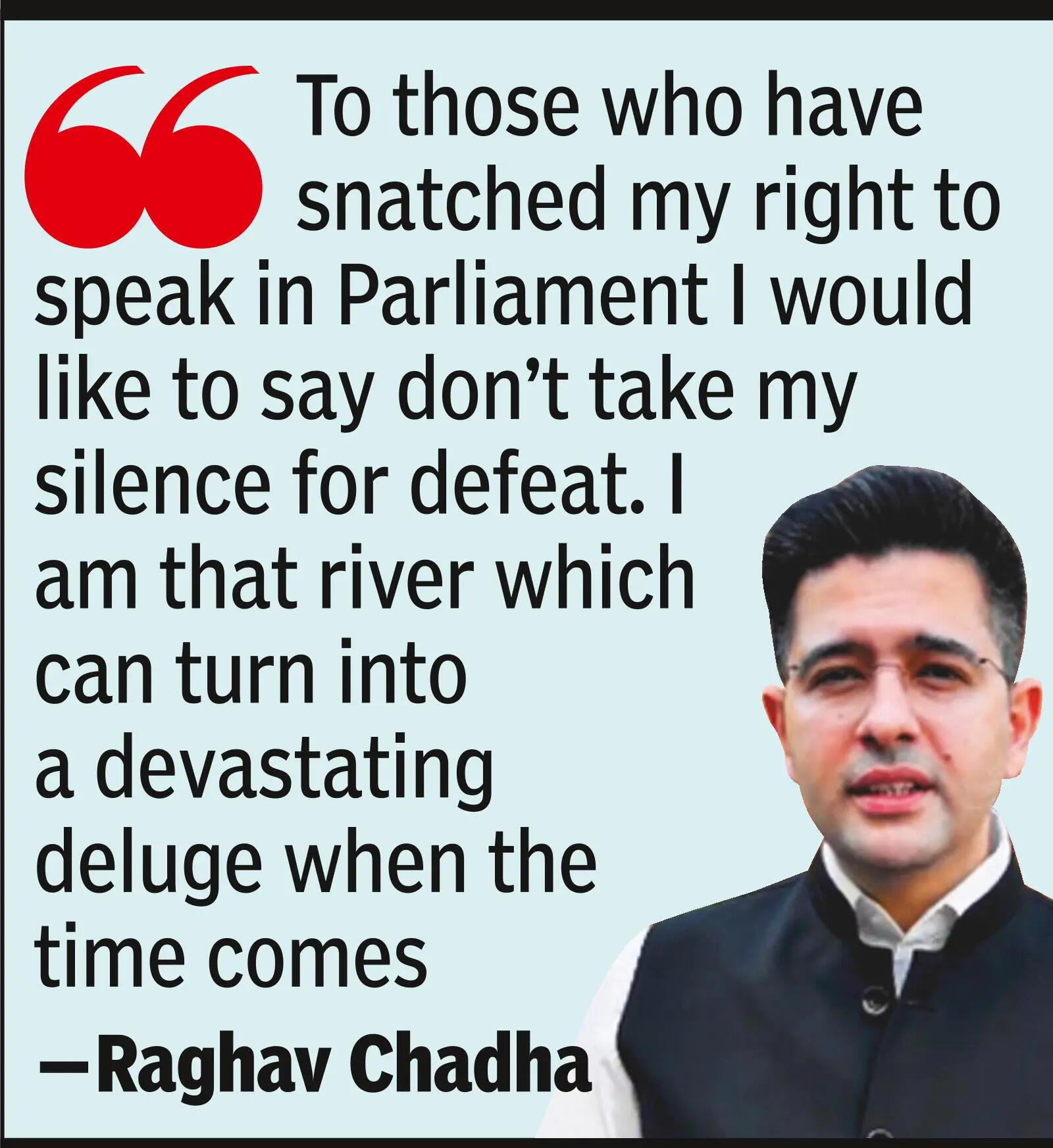
Mann criticized Raghav Chadha for raising issues like the price of samosas at airports while ignoring core issues prioritized by AAP and accused him of deviating from the party line.Mann said, “If the party gives a line to raise specific issues, like valid votes were deleted (in West Bengal), 160 AAP leaders and volunteers booked in Gujarat, or Punjab issues, like attempts to polarize communities, MSP, Center stopping GST fund or rural development fund, but someone raises the issue of samosa or pizza delivery time at airports, will it not raise suspicion that he is talking from a different station?” ‘Jo Darr Gaya Samjho Mar Gaya’ jibe (Those who live in fear are as if dead), the AAP leaders taunted their estranged colleague.The controversy started when Chadha, a Rajya Sabha MP from Punjab since 2022, posted a video message on Instagram. He warned, “To those who have taken away my right to speak in Parliament, I want to say that do not consider my silence as a defeat. I am a river which can turn into a devastating flood when the time comes.”The Rajya Sabha MP asked whether it is a crime to speak about the problems of the common man in Parliament. “Today, I am asking this because AAP has told the Rajya Sabha Secretariat that Raghav Chadha should not be given time to speak in Parliament. Now, why would anyone want to stop me from speaking?” He asked and listed the various issues he raised, including expensive food at airports, problems faced by food delivery riders, taxes on the middle class.Sanjay Singh questioned Chadha’s silence on several issues – from LPG cylinders to vote manipulation in West Bengal, attack on rights in Punjab and atrocities on AAP volunteers in Gujarat. “Raghav Chadha remains silent on all these issues. I would like to tell him that we are the foot soldiers of Arvind Kejriwal, who has taught us to fight against Modi fearlessly.”Referring to Kejriwal’s arrest in March 2024, former Delhi CM Atishi said questions were raised over Chadha’s absence when the party leader was protesting on the streets and facing detention. “We had defended you then…but today, I also want to ask that when Kejriwal was arrested, were you scared of the BJP and hence ran away to London out of fear?” She got furious.

Center asks states to curb fuel related rumours. india news
 He said, “…rumors continue to spread in some areas, causing…panic…States/UTs are requested to intensify proactive and regular public communication.”
Supreme Court upheld tough punishment for top officials. india news
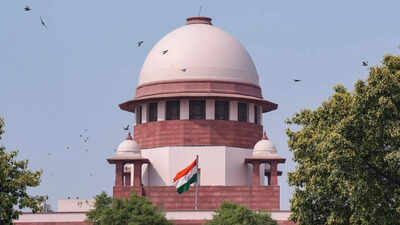
New Delhi: Linking punishment with rank in the office hierarchy, the Supreme Court has said a higher authority carries higher responsibility and the consequences for any service misconduct would be so harsh, upholding separate penalties imposed on a senior manager, an officer and a gunman in a bank who were found guilty of misappropriating customers’ money.While the manager was dismissed, the officer was forcibly retired and the gunman’s salary was cut.The SC set aside a Delhi HC order that said there cannot be discrimination in punishment for the same offense and reduced the manager’s punishment from dismissal to compulsory retirement.
Supreme Court: Courts should show restraint in interfering in disciplinary action
A bench of Justices Dipankar Datta and Satish Chandra Sharma said the difference in rank as well as the responsibility and trust attached to the position are compelling grounds for harsher punishment on higher ranked officials.The bench said, “The position of the respondent was not merely nominal; it brought with it an increased degree of responsibility and integrity. The role of the respondent required not only personal obedience but also supervision of the actions of subordinates. An accomplice with limited powers and authority could not be equated with the respondent.” “The seriousness of the misconduct must necessarily be measured with the nature of the misconduct. Thus, giving the benefit of parity to the defendant by the High Court merely because the co-offenders were given lighter punishment was completely misconceived,” it said while reinstating differential punishments.The bench also said that courts should exercise restraint while interfering in sentencing orders and said that generally, no court should interfere with the order of punishment imposed on an offender as a disciplinary action by a competent authority in the exercise of its power of judicial review. “This is based on the reason that the disciplinary authority is the best judge of the situation, and the requirements of maintaining discipline within the workforce...Judicial scrutiny of disciplinary action by way of punishment can take place only when the circumstances are such that no reasonable person would impose the punishment in question…” it said.

Earthquake of 5.9 magnitude in Hindu Kush region of Afghanistan, tremors felt in North India. india news

New Delhi: An earthquake of 5.9 magnitude hit Delhi-NCR on Friday, whose tremors were felt across North India.According to the USGS, the epicenter of the earthquake was near Kurm in Afghanistan.As soon as the earthquake struck, residents of Jammu and Kashmir, Delhi and the surrounding National Capital Region came out of their homes.No casualties or damage to property has been reported so far.According to the Red Cross, earthquakes occur frequently in Afghanistan, especially in the Hindu Kush region, which is located in a highly active seismic zone.Afghanistan’s susceptibility to earthquakes is linked to its location along the collision zone between the Indian and Eurasian tectonic plates. A major fault line also runs through parts of the country, including the Herat region.The United Nations Office for the Coordination of Humanitarian Affairs (UNOCHA) says Afghanistan remains extremely vulnerable to natural disasters, including earthquakes, landslides and seasonal flooding. Repeated shocks worsen the situation of communities already reeling from decades of conflict and limited development, leaving them with the least capacity to withstand multiple shocks.
Bombay High Court comes to the rescue of couple with Australian citizenship, three years after adopting a child in India India News
Mumbai: The Bombay High Court has come to the rescue of a couple facing legal hurdles in taking their adopted daughter to Australia despite the adoption being a valid one under Indian law. The couple, both now 44, adopted the third child of a relative under the Hindu Adoption and Maintenance Act (HAMA) in April 2023. At that time the child was 45 days old, the wife was an Indian citizen while the husband had acquired Australian citizenship only two months earlier. The wife later became an Australian citizen.However, Australian authorities do not recognize the adoption as an “intercountry adoption”, stating that children adopted outside the Hague Convention on Intercountry Adoption are not automatically accepted. This meant that mother and child remained stranded in India for 3 years. On March 30, Bombay HC Justices Ravindra Ghuge and Abhay Mantri, disposing of a petition filed by the couple last year seeking judicial intervention, directed the couple to approach the district magistrate to get the adoption certified. The court invoked the 2022 rules governing adoption and directed that once the district magistrate issues the verification certificate in 30 days, the Central Adoption Resource Authority (CARA) must issue its No Objection Certificate (NOC) within 15 days. The HC said CARA approval is important for inter-country adoption and would then be communicated to the immigration authorities of India and Australia. Children adopted overseas in circumstances outside the Hague Convention process do not automatically have their adoption recognized in Australia, Australian authorities informed the couple and pointed to specific Australian migration requirements relating to special visas and citizenship pathways for adopted children. The HC said: “It is clear that the (Australian) authorities require the appropriate authority in India to conduct the investigation and indicate its approval. That authority is CARA.” The mother wrote to CARA in August 2025, which was emailed to her by the Australian Ministry of Home Affairs. CARA, in turn, said that since the adoptive father was an Australian citizen with Overseas Citizen of India (OCI) status, section 68 of the Adoption of Adoptions Regulations, 2022 (Rules Governing Inter-Country HAMA Adoptions) applies. A reply of CARA before the HC said it cannot regularize any aspect of a couple’s adoption unless they comply with the requirements under the 2022 rules for transferring a child adopted under HAMA to a foreign country. Senior advocate Anil Anturkar, appearing for the adoptive parents, said this was not a case of inter-country adoption and questioned the objections raised by CARA. He said Regulation 69 of the Adoption Regulations, which deals with HAMA adoptions, would apply to the couple. Australian authorities said it was a “migrant adoption”. The HC said, “There is no provision in the Juvenile Justice Act or the Adoption Regulations 2022, which define migrant adoption,” but noted that the adoption was legal under HAMA. The HC, after also hearing Centre’s counsel YR Mishra, said that in specific facts, the process under Section 69 would be initiated. “Regulation 69 sets out the procedure for adoption and considers the case of parties to an adoption already concluded under HAMA. This regulation should be read as applicable to the case,” the HC said, citing prior SC judgments. “Ideally the petitioners should have followed Regulation 68 (Procedure for Inter-Country Adoption),” the court said. But now the process cannot be reversed, the HC said, adding that it also has to consider “the future of the adopted child”. The HC judgment, made available late on Thursday, also said the mother had filed petitions twice before “in an ill-advised manner”, leading to nowhere. “If the child is not allowed to be taken to Australia due to technical reasons, the adoption will fail,” the HC said.Justice Ghuge, who wrote the judgment, noted the dedication of the adoptive parents. The HC said “the case proceeded through complex laws to ensure that the adopted child is blessed with the love and care of the adoptive parents”, noting “the sincerity and purity of the feelings of the adoptive parents”.
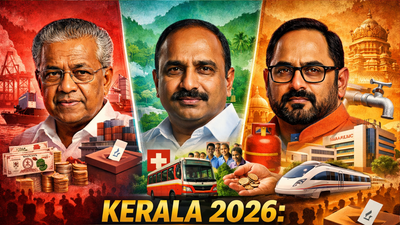
Battle of promises and big promises: Decoding the manifestos of parties in Kerala. india news
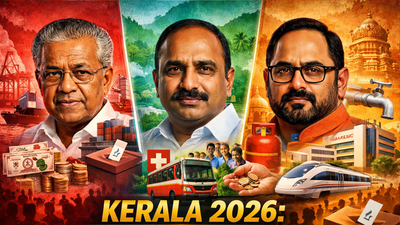
New Delhi: A.S. Kerala In the 2026 assembly elections, the contest is no longer just about ideology or leadership, it is increasingly a battle of promises. From welfare payments and free services to large-scale infrastructure and economic transformation plans, all three major fronts – led by the LDF, UDF and BJP NDA – Issued detailed manifestos with the aim of wooing politically aware and welfare conscious voters.The scale and scope of the commitments mark a sea change in Kerala’s electoral politics. Welfare is no longer discriminatory; This is the baseline. What differentiates the parties is scale, delivery mechanisms and credibility of execution. In a state known for high human development indicators and strong public participation, voters are now weighing not just promises but also sustainability and governance capacity.All three alliances have united on key themes, social protection – employment, healthcare and infrastructure – while competing to outdo each other in quantity and coverage. The result is an intense, high-stakes policy competition where every section of society, from youth and women to farmers and senior citizens, has been targeted with tailored offers.
LDF: The ruling party’s bet is distribution, not disruption.
Ruling LDF under the leadership of Chief Minister Pinarayi Vijayanhas framed its manifesto as a continuation of its governance model, combining welfare expansion with long-term economic growth.At its core is the promise of eliminating absolute poverty with a targeted plan to uplift about five lakh families. There is a proposal to increase the welfare pension to Rs 3,000 per month along with expanded care systems for the elderly and bed-ridden.
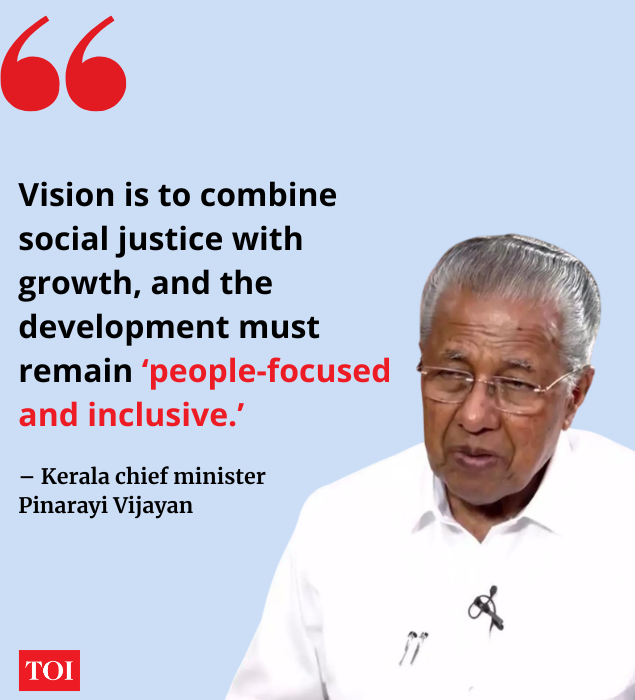
The LDF has emphasized employability and skills, promising campus placements, expanding training programs and “back to campus” initiatives to bridge the employment gap. The target is to reach 50% of women’s participation in the workforce, supported by support systems such as child care, safe mobility and skills development.On the economic front, the Left has outlined an ambitious plan to attract investments worth Rs 2 lakh crore over five years, develop industrial corridors and promote innovation hubs. Public sector units will be modernized with a target of increasing the turnover to Rs 10,000 crore by 2031.Tourism, agriculture and infrastructure also feature prominently. The manifesto targets bringing in 5 crore domestic tourists by 2031, better support prices for major crops and expansion of transport networks including metro and water-based systems. Speaking after releasing the manifesto, Vijayan said the vision was to combine social justice with development, adding that development must remain “people-centric and inclusive”.
UDF: Comeback Pitch – Welfare with Accountability
The Congress-led UDF has countered with a manifesto mixing welfare guarantees with governance and institutional reforms. The document, released in Kochi, was presented by Telangana Chief Minister Revanth Reddy and handed over to Leader of Opposition VD Satheesan. The main attraction is the “Indira Guarantee” announced by Rahul Gandhi. These include:
- free bus travel for women
- Rs 1,000 monthly assistance for college girls
- Rs 3,000 welfare pension
- Free health insurance up to Rs 25 lakh per family
- Interest free loan up to Rs 5 lakh for young entrepreneurs
The UDF has also promised to legally guarantee welfare pensions, saying they are “not a charity but a right.”Economic proposals include expansion of mission seas, aviation infrastructure and creation of 10,000 high-revenue enterprises to create a port-based economy. A “Job Watch Tower” is proposed to monitor employment trends.On social welfare, the alliance has promised food security through Indira canteens, free ration for vulnerable groups and a “Nav Ashray” housing scheme targeting five lakh beneficiaries.Health care and labor reforms include free dialysis for BPL patients, higher wages for Asha workers and subsidies for sectors like fishing and transportation.The manifesto also emphasizes social harmony, proposing a Ministry of Tolerance and a Department of Social Harmony to address communal tensions and political violence.
NDA: Breaking the monopoly – recognition, benefits and large-scale projects
The BJP-led NDA, whose manifesto was released by party president Nitin Nabin, has combined direct welfare benefits with infrastructure and governance-centric proposals.Among the key promises:
- Rs 3,000 monthly pension for women heads, widows and senior citizens above 70 years of age
- Bhakshya Arogya Suraksha Card with Rs 2,500 monthly assistance for essential commodities
- Two free LPG cylinders annually (on Onam and Christmas)
- 20,000 liters of free water per household
The NDA has also promised to set up AIIMS in Kerala and expand healthcare coverage under Ayushman Bharat to all residents.
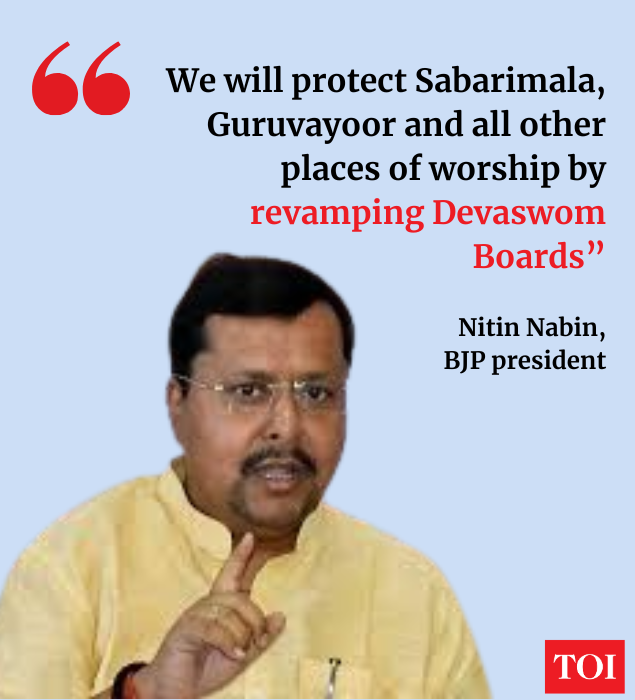
On infrastructure, the alliance has proposed a high-speed rail corridor connecting Thiruvananthapuram and Kannur, expansion of the metro network and developing Vizhinjam port as a major industrial hub.The manifesto includes a strong focus on religious and institutional reforms, including a commitment to revive Devaswom boards and ensure “greater participation of devotees” in temple management.“We will protect Sabarimala, Guruvayur and all other places of worship by reforming the Devaswom Board,” Nabeen said.It also promises a time-bound CBI probe into the Sabarimala gold theft case and a dedicated infrastructure mission for the temple.On the economic front, the NDA aims to transform cities into regional hubs, establishing Thiruvananthapuram as an IT capital, Kochi as a shipbuilding hub and Kannur as a defense innovation hub.Nabin criticized both the LDF and UDF, accusing them of “negligible industrial growth, economic stagnation and fiscal misgovernance” and claiming that voters were seeking change.
Common ground: welfare as the political centerpiece
Despite sharp political differences, a clear pattern emerges in the manifestos, with welfare remaining central to Kerala’s electoral politics.The three alliances have:
- Social security pension of Rs 3,000 level promised
- Focused more on women centric schemes
- Health care expansion prioritized
- Targeted Youth Employment and Entrepreneurship
This convergence reflects both the expectations of Kerala’s voters and the competitive nature of its politics, where incremental gains can decide the outcome.
Beyond promises: the real test
Although the manifestos are comprehensive, the main question is one of implementation. Kerala’s fiscal constraints, rising debt and structural economic challenges pose significant obstacles to meeting large-scale commitments.Additionally, the overlap in promises raises the credibility stakes. Voters are likely to evaluate not only what is being promised, but also who is in the best position to deliver on it.As the campaign gathers pace, the 2026 elections are shaping up to be not just a contest of parties, but a referendum on competing models of welfare, development and governance.(with inputs from agencies)
Tamil Nadu Elections: Why Annamalai was not given ticket, Tejasvi Surya told. india news
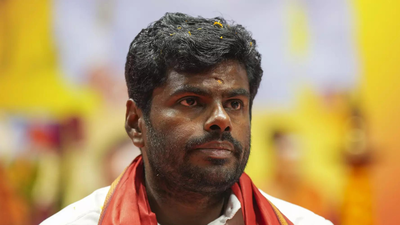
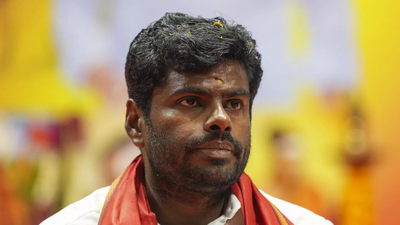
New Delhi: Hours after the Bharatiya Janata Party dropped K Annamalai from the list of candidates for the upcoming elections, the party MP from Karnataka stunning surya on Friday described the former Tamil Nadu BJP chief as the “most popular leader” and claimed that the party has made him responsible for campaigning for all the candidates.Campaigning for the BJP in poll-bound Kerala, Surya said, “Annamalai is the most popular leader of the BJP, he has huge supporters not only in Tamil Nadu, but across the country. He has been given the responsibility to campaign for all the candidates in Tamil Nadu.”“Even today, he is in Keralam where he has a huge following. He is also campaigning in Puducherry, where people are crazy about him. I am confident that Annamalai’s popularity across Tamil Nadu and her campaign will translate into victory for BJP candidates across the state.”Earlier in the day, the BJP released its list of 27 candidates for the upcoming Tamil Nadu Assembly elections after talks within the NDA alliance.While Tamilisai Sundararajan (Mylapore), Vanathi Srinivasan (Coimbatore North), and Union Minister L. While senior leaders like Murugan (Avinashi) have been fielded, Annamalai’s name is nowhere in the list.However, K Annamalai termed it his “responsibility” and said that he would continue to campaign for the upcoming assembly elections despite being absent from the party’s list of candidates in Tamil Nadu.Speaking to media persons after a public meeting in Kannur, Kerala, Annamalai described campaigning in Puducherry, Kerala and Tamil Nadu as his “role” for the BJP in the upcoming elections.He said, “In this election, my role is to campaign for the candidates all over Tamil Nadu. Right now, the party has given me the responsibility to campaign in Puducherry and Kerala till the 7th (April). From the 7th to the 23rd, I have to campaign for all the BJP and NDA candidates across Tamil Nadu. The party has given me this responsibility. I will fulfill that responsibility.”It is noteworthy that former IPS officer Annamalai is a key figure in the party’s aggressive expansion strategy in South India. He is often seen as a direct representative of Prime Minister Narendra Modi’s vision, often appearing with him at major rallies.A total of 234 constituencies in the state will go to polls in a single phase on April 23 in Tamil Nadu. Counting of votes is to take place on May 4.

‘Wanted a boy’: Telangana man drowns pregnant wife, two daughters in swimming pool india news

New Delhi: “He wanted the baby to be a boy, but when he came to know that it was a girl, he tried to get an abortion, which his wife opposed. He then planned to kill his wife and took his two daughters with him to a swimming pool and threw them into the water.” We have registered the case and are investigating. Special teams are searching for the accused.”The horrific details, shared by a police officer, outline Azharuddin’s alleged actions in Hanamkonda, Telangana, where he is accused of murdering his pregnant wife and two young daughters. The accused is still absconding, police teams are searching for him.According to investigators, Azharuddin, who had a love marriage, was upset after learning that the child in his womb was a girl. Police said he had earlier attempted a forced abortion, but his wife objected. Authorities believe this led to the alleged crime, in which he took his family to a swimming pool and pushed them into the water.The case has been registered and investigation is ongoing.