Iran and UAE expected to attend BRICS cultural conference amid tension in West Asia. india news

Iran and UAE expected to attend BRICS cultural conference amid tensions in West Asia

New Delhi: Amid ongoing tensions in West Asia, Iran and the United Arab Emirates are expected to join fellow BRICS members at the bloc’s second Cultural Working Group meeting in Varanasi on June 4-5. The conference will discuss the theme “Building Resilience, Innovation, Collaboration and Sustainability” with Artificial Intelligence and the repatriation of cultural property among the priority areas for discussion and consensus building.The Varanasi meeting is being considered important to pave the way for the ministerial talks to be held in Bhopal in August, with the Culture Ministry hoping that the members will be able to reach a consensus and give a statement on the thematic areas. The upcoming Working Group meeting assumes significance in the current geopolitical context, as it is taking place in the backdrop of the West Asia crisis. The first BRICS Culture Working Group meeting was held in virtual mode on 29-30 April. After the second meeting of the grouping in Varanasi, the third meeting of the CWG will be held in Bhopal on August 5-6, followed by the BRICS Cultural Fest on August 6-7 and the BRICS Culture Ministers’ Meeting (CMM) on August 7 and 8, also in Bhopal, Culture Secretary Vivek Aggarwal highlighted at a press conference. He also shared the roadmap and priority areas. The deliberations of the 2026 BRICS Culture Working Group are structured around three key thematic priorities: ‘Creative economy, cultural and creative industries, copyright and artificial intelligence’, ‘Cultural heritage protection and return of cultural property’ and ‘Culture, climate and sustainable development’.“These priorities reflect a commitment to innovation, ensuring ethical use of technology in cultural sectors, preserving cultural diversity, advancing heritage conservation and restoration cooperation, and engaging with the post-2030 global sustainable development agenda,” the culture ministry said in a statement.India has consistently played an active role in advancing cultural cooperation within BRICS. The Ministry of Culture hosted the BRICS meetings of Culture Ministers under the Indian chairmanship in Goa in 2016 and New Delhi in 2021, and is again playing a leading role in this strategic role in 2026.The BRICS Culture Working Group, which derives its mandate from the Agreement between the Governments of BRICS member states on cooperation in the field of culture signed in 2015, has over the years expanded cooperation in cultural heritage, creative industries, films, museums, archives and digital cultural ecosystems.BRICS brings together Brazil, Russia, India, China, South Africa, Egypt, Ethiopia, Iran, Saudi Arabia, the United Arab Emirates and Indonesia as full members, with 10 partner countries joining in 2025. The Group represents a platform for multilateral cooperation across the political and security, economic and financial, and cultural and people-to-people pillars, collectively advancing a more inclusive and equitable international order.

Source link

Fuel-efficiency test: ‘AC-on, AC-off’ mileage test mandatory for new cars from next April | india news

'AC-on, AC-off' mileage test mandatory for new cars from next April

New Delhi: From next April, all car manufacturers will be required to conduct fuel-efficiency and mileage tests for new vehicle models in two conditions: with the air conditioning system on and with it off, according to a notification issued by the road transport ministry on Sunday.TOI has learned that for existing models, manufacturers may be given a few additional months to comply with the new testing requirements.The move aims to provide more realistic and accurate mileage figures to customers, thereby improving transparency, helping buyers make better purchasing decisions. The testing criteria will be applicable to both internal combustion engine (ICE) vehicles and electric vehicles (EVs). Currently, car manufacturers in India declare fuel-efficiency figures based on tests conducted with the AC system off.Earlier, the ministry had proposed to implement the new testing regime from October this year. However, after consultation with the automobile industry, revised timelines for the new models have now been notified. Industry insiders said manufacturers have asked for additional time for existing models, and timelines for those vehicles are expected to be announced soon.After conducting the test, car manufacturers and importers will have to provide details of mileage with AC on and without AC in the vehicles’ user manual and on their website.Carmakers were citing European norms where only mileage without AC is taken into account, but Indian conditions are different and this has prompted the government to bring in new norms.

Source link

‘Hard work, not sycophancy, will help Congress reconnect with people at the grassroots’: Rahul Gandhi tells party leaders. india news

'Hard work, not sycophancy, will help Congress reconnect with people at the grassroots': Rahul Gandhi tells party leaders

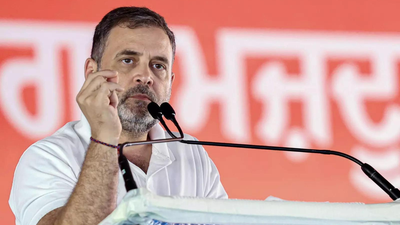
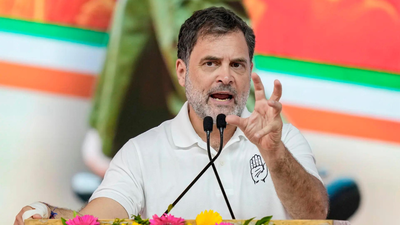
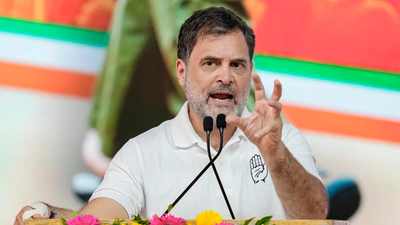
New Delhi: In an effort to revive the organizational strength of Congress, party leaders Rahul Gandhi Party sources on Monday told district presidents that hard work and direct public engagement rather than sycophancy will help the party grow, as they urged party leaders to reconnect with people at the grassroots level.Addressing the concluding session of the 10-day training camp of Congress district presidents of Rajasthan and Delhi in Pushkar, Gandhi praised mutual coordination. Rajasthan Congress Congress leaders described the working relationship between the State Congress Committee leadership and the opposition leader as a positive example for the party, PTI reported.He described Rajasthan Congress chief Govind Dotasara and leader of opposition in the state assembly Tikaram Juli as the “Jai-Viru duo”.Internal discord was seen in the Congress camp in Rajasthan Ashok Gehlot And Sachin Pilot Before his defeat in the 2023 assembly elections.The leader of opposition in the Lok Sabha said party workers should remain connected to public issues and stand with the poor and marginalized people in cases of injustice.Sources said he spent more than five hours in the camp and held dialogue sessions on organizational strength, teamwork, ideology and public outreach.Gandhi urged the district presidents not to limit themselves to organizational roles but to have direct contact with the citizens. He said that it is necessary to restore public confidence to strengthen the Congress and increase its support base.He said growth within the party should be based on commitment and service rather than personal loyalty to senior leaders. Gandhi also called for a focus on issue-based politics and strong engagement with the people, which he described as the BJP’s story.Rajasthan Congress President Govind Dotasara gave a presentation on organizational work and efforts to strengthen the party at the grassroots level.Leader of Opposition Tikaram Julie said that the 10-day camp under the “Organization Creation Campaign” will infuse new energy into the organization in Rajasthan.District presidents and senior Congress leaders from Rajasthan and Delhi participated in the training camp.

Source link

India-Myanmar relations: PM Modi raises border security, refugee concerns in talks with President Min Aung Hlaing. india news

India-Myanmar relations: PM Modi raises border security, refugee concerns in talks with President Min Aung Hlaing

New Delhi: Prime Minister Narendra Modi Expressed concern over the activities of armed groups operating near the India-Myanmar border and the impact of Myanmar’s internal conflict on Indian border communities during talks with Myanmar President Min Aung Hlaing in New Delhi on Monday.Speaking at a special briefing after the high-level bilateral meeting, Foreign Secretary Vikram Misri said PM Modi highlighted the impacts of the conflict in Myanmar, including cross-border security challenges and the influx of refugees into India.“The Prime Minister raised this issue in the conversation today and he emphasized that these groups, their activities continue around our borders. And in response, Myanmar Army actions against them also take place very close to the borders,” Misri said.He said military operations and activities of armed groups near the border have affected people living on Indian territory.“On this side, it has a huge impact on people living on the Indian side of the border. So sometimes, there may be some damage there, or as you also said, a lot of refugees come to our side from that side of the border,” he said.

Prime Minister urges protection of Indians living near the border

Misri said PM Modi urged Myanmar authorities to ensure that military operations near the border do not harm civilians living in India.According to the report of news agency ANI, “The Prime Minister said that the Myanmar Army and the officials in Myanmar should pay attention to this and this action should be taken in such a way that it does not cause any harm, especially to the people living on the Indian border.”The refugee issue also figured prominently in the discussion. Misri acknowledged that people fleeing conflict in Myanmar have entered India’s northeastern state of Mizoram.“We all know that refugees have come to Mizoram for some time for this very reason,” he said.According to Misri, the process of returning refugees is complex but mechanisms are already in place between the two countries. “There is a system to send back refugees, there is a mechanism for that. And officials from both the countries are in touch with each other on how they will be sent back,” he said.He said Myanmar authorities do not view the people who have come to India as permanent refugees and expect them to return once the situation improves.Misri said, “The Myanmar government also believes that these people have not come as permanent refugees. And as soon as the situation on the other side of the border becomes normal, these people will go back to their own side.”

Connectivity projects and solutions to cyber scams discussed

The border issue was discussed during detailed talks between PM Modi and Min Aung Hlaing at Hyderabad House.The President of Myanmar is on a four-day visit to India from May 30 to June 2.Both sides also reviewed a range of bilateral issues including trade, security cooperation, border management and connectivity projects.Misri said Myanmar has assured India that it will make “every possible” effort to advance the delayed Kaladan Multi-Modal Transit Transport Project and the India-Myanmar-Thailand Trilateral Highway, both of which are affected by the ongoing conflict in Myanmar.The Foreign Secretary said active hostilities involving the Myanmar military, ethnic armed groups and the People’s Defense Forces have hampered work on both projects, forcing the timelines to be adjusted.Separately, Misri said India has brought back 2,411 nationals from cyber scam complexes in Myanmar in the last one and a half years, while more than 150 Indians are still feared stranded there, according to ANI.He said New Delhi is working closely with Myanmar authorities to ensure the return of those still stranded.Misri said the talks also covered cooperation in trade, investment, development assistance, health, education, energy, artificial intelligence and space.

Source link

Shivakumar: Siddaramaiah’s influence, Caste census: What can make or break DK Shivakumar’s reign in Karnataka | india news

Siddaramaiah's impact, caste census: What can make or break DK Shivakumar's reign in Karnataka

New Delhi: Karnataka Congress Leader DK Shivakumar Long known for his firefighting skills. Whenever things went bad, Congress turned to him. But now, as he prepares to assume the top post in Karnataka, the test will be not only of his fire-fighting skills (in his own backyard) but also of his governance skills.shivkumarAlso known as DKS, will be sworn in as the Chief Minister of Karnataka on June 3, completing a political journey that has defined the revival of the Congress party in the state. For nearly a decade, he has been the party’s troubleshooter, strategist, fund raiser, negotiator and organizational anchor. He helped keep Congress MLAs united in moments of crisis, revived the party after electoral setbacks and played a central role in its decisive victory in Karnataka in 2023.His transition from deputy chief minister to chief minister comes after months of speculation, bargaining and careful choreography by the Congress high command. Siddaramaiah’s resignation on May 28 under the party’s power-sharing arrangement finally opened the door for Shivakumar. Yet the swearing-in ceremony may be the easiest part of the new assignment for DKS.

DK Shivakumar Profile

Complex factional tensions within the Congress, caste expectations, fiscal pressures from the state and the relentless demands of governing India’s most economically important southern state await him.Here are the top challenges for DK Shivakumar as he prepares to take over the top post in Karnataka:

Siddaramaiah’s shadow

The first challenge before Shivakumar is also the most immediate: Former CM Siddaramaiah.The outgoing Chief Minister may have vacated the office, but he remains the most influential mass leader in the Karnataka Congress. Over the past three years, he has strengthened a powerful network of MLAs and social groups, especially through the Ahinda alliance of backward classes, minorities and Dalits in the state.In theory, the chief ministerial change is systematic but in practicality, political changes are still visible.Many of the MLAs whose political rise was due to Siddaramaiah remain influential within the party. Many ministers are expected to seek continuity across departments and policy priorities. There is already pressure from Siddaramaiah’s camp regarding representation in the new cabinet, which also includes demands related to his son Yatindra Siddaramaiah.

siddaramaiah profile

The challenge for Shivakumar may not just be to accommodate the supporters of the outgoing CM. He will have to establish dominance among the Siddaramaiah camp MLAs and, at the same time, assert independence without provoking factional war.For Shivakumar, the task is particularly delicate as the Congress government cannot afford visible instability and infighting. BJP and Janata Dal (Secular) will keep a close watch on any sign of rift between the two camps.BJP has already opened a front against the change. BJP national spokesperson Shehzad Poonawalla said the leadership change reflects Congress’s admission that Siddaramaiah’s rule has failed on many fronts.“After two and a half to three years of ‘Game of Thrones’, ‘Battle of the Chair’ and ‘Who will be the Chief Minister’, Karnataka Congress has elected a new CLP leader in the form of DK Shivakumar and replaced Siddaramaiah. It means they are admitting that the Siddaramaiah regime has been a complete failure on all fronts – economy, law and order and infrastructure,” Poonawalla said.“Therefore, they had to change them. Otherwise, 2028 (assembly elections) will go,” he said.Former Karnataka CM and BJP MP Basavaraj Bommai also said that Siddaramaiah’s decision to remain active in state politics would act as a “hanging sword” on Shivakumar, while he also said that whenever elections are held in the state, the BJP will return to power on its own.For Shivakumar, the success of his first six months may depend on whether he is able to keep Siddaramaiah loyalists on his side.

cabinet puzzle

If there is one political test every CM has to face soon after assuming office, it is cabinet formation.Shivakumar’s version of that test may be particularly difficult.Each allocation is likely to send a political message.Who gets the houses, who controls the finances, who oversees Bengaluru development? A single boycott can lead to months of resentment.Meanwhile, Siddaramaiah himself is in talks with the high command to get a cabinet ministerial berth for his son and loyalists after his resignation.It will be interesting to see how much space Shivakumar leaves to accommodate the former CM’s loyalists.

Karnataka’s new boss

Shivakumar’s challenge is further heightened by another looming decision: the selection of the new Karnataka Pradesh Congress Committee president.As state party chief, Shivakumar built one of the most effective political organizations in the state. His departure from that role creates a void. Whoever succeeds him will inherit a powerful political machine.This selection will shape not only the future of the party but also Shivakumar’s own authority. A loyal organizational ally can strengthen their position. On the other hand, an ambitious successor could eventually emerge as an alternative power centre.

caste equation

Shivakumar’s rise to this position is significant as he is the most prominent Vokkaliga leader in the Congress. The community remains one of the most influential political groups in the state, especially in southern Karnataka.Yet Congress’s 2023 victory was not built solely on Vokkaliga support. It all depended on the Ahinda alliance carefully crafted by Siddaramaiah. That alliance now faces a moment of uncertainty.Many Dalit, backward class and minority leaders will be closely watching to determine whether the leadership change changes the government’s priorities. Shivakumar may need to reassure them that power has changed but political representation has not.At the same time, influential leaders from other communities are likely to push for greater prominence in the new system.According to reports, the demand is already being made for several Deputy CMs representing different social groups. Senior Dalit leaders, Lingayat leaders and regional power brokers all have claims that cannot be easily dismissed.

Ticking bomb of caste census

Shivakumar is also inheriting another politically sensitive issue from Siddaramaiah: the caste census. Before leaving office, Siddaramaiah accepted the findings of the socio-economic and educational survey and supported its implementation, positioning it as a tool for greater social justice and representation.However, the decision drew sharp reaction from influential Vokkaliga and Lingayat leaders, who questioned the methodology of the survey and the population figures given to their communities. Several organizations called for a fresh survey or a review of the findings.As Vokkaliga leader, Shivakumar faces a delicate balancing act. Reversing or weakening Siddaramaiah’s position may dismay the non-aligned groups that form the Congress’ core social coalition, but moving forward aggressively with the census recommendations risks alienating sections of key communities whose support is crucial to both the Congress and Shivakumar’s own political base.

Clash over Congress CM chair in Karnataka

Welfare versus development dilemma

The Congress government came to power on the strength of its guarantee schemes.Free electricity, free bus travel for women, cash assistance programs and other welfare initiatives helped build a powerful electoral coalition. While these schemes are popular among the beneficiaries, they are also expensive.Shivakumar inherits a government that must deliver on welfare commitments as well as invest in infrastructure, urban development and economic growth.This stress can affect his tenure to a great extent.Guarantees have become politically non-negotiable, withdrawing them would risk alienating key supporters. Yet continuing these indefinitely without expanding revenues creates fiscal constraints.Therefore, the challenge is not whether to continue the schemes or not, but how to sustain them.Can Karnataka maintain its welfare architecture while maintaining its reputation as one of India’s most investment-friendly states?This question is likely to become more acute as the next elections in the state approach.

countdown to 2028

Perhaps the biggest challenge facing Shivkumar is time. Shivkumar is holding the post of CM in the second half of his tenure.Meanwhile, the clock is already ticking towards the next assembly elections in 2028. This leaves him about two years to establish an independent record, deliver visible results and convince voters that Congress deserves another term.Anti-incumbency is already a factor.And for Shivakumar, this creates a unique political dilemma.Even if the government performs well, most of the credit can be given to Siddaramaiah as many key policies originated under his leadership.If the government struggles, the blame will probably fall on the new CM as he was in charge during the last phase before the elections.In this sense, Shivakumar has inherited both the benefits and burdens of power.For decades, Shivakumar had built his reputation as a political operator with extraordinary skill. He became indispensable to the Congress leadership. Also fondly called ‘Kanakpura Bande’ – the granite rock of Kanakapura (his constituency) – the 64-year-old leader has steadily established himself as the key Vokkaliga strongman of the Congress party. However, the troubleshooter now faces a different challenge.The qualities that make him a successful political manager may or may not result in successful governance. It will be known in the coming months whether Shivkumar will be able to make this change or not.And the results could decide not only the future of his government but also the future of the Congress in one of its most important states.After the oath taking ceremony on Wednesday, Congress’ crisis manager will be in charge of Karnataka and soon after this his real test will begin.

Source link

Bellatrix partners with Korean firm for next generation EO satellite. india news

Bellatrix partners with Korean firm for next-gen EO satellite

Bengaluru: South Korean space AI company Telepix has signed an MoU with Bengaluru-based space propulsion firm Bellatrix Aerospace to jointly develop a next-generation Earth Observation (EO) satellite designed to operate in very low Earth orbit (VLEO), with a technology demonstration mission targeted for launch in 2028.The partnership will combine Telepix’s high-resolution optical payload, Chouet, with Bellatrix’s VLEO satellite platform, powered by its proprietary air-breathing electric propulsion (ABEP) system. The companies said the collaboration aims to develop a satellite capable of continuous operation at altitudes between 150 km and 250 km, enabling continuous high-resolution EO and geospatial data collection.“The MOU was signed at Telepix’s SpaceLab facility in Daejeon, South Korea. Under the agreement, Bellatrix will provide the satellite bus, including propulsion, power, thermal control and attitude control systems, while Telepix Chouet will supply optical payload and support system integration,” it said in a statement issued on Monday.VLEO satellites operate much closer to Earth than traditional Low Earth Orbit (LEO) satellites, providing significantly higher imaging resolution. This segment is expected to see increasing demand in defence, disaster response, environmental monitoring and precision observation applications.However, operating at such low altitudes presents a major technical challenge due to atmospheric drag, which can rapidly degrade satellite orbits. The companies said Bellatrix’s ABEP technology, which uses atmospheric particles as propellant, will help enable long-duration operations in VLEO environments.Telepix said its Chouette payload is designed specifically for VLEO missions and has a wide-swath imaging system capable of covering more than twice the observation width than comparable satellites currently on the market. The payload will also take advantage of the company’s artificial intelligence-based image processing capabilities.“Beyond the planned 2028 demonstration mission, the two companies will collaborate on launch operations, early-orbit activities and overall mission management. According to the statement, they will also explore future constellation deployment and commercial VLEO mission opportunities following in-orbit validation.Describing VLEO as a key pioneer in next-generation Earth observations, Telepix CEO Seongik Cho said the partnership will help Telepix extend its optical payload technology into new operational domains while expanding its global footprint. Bellatrix CEO Rohan M Ganapathy said that a commercially viable VLEO constellation could provide a “game-changing” improvement in imaging resolution compared to conventional EO observing systems operating in higher orbits.

Source link

‘Better off without them’: Mamata Banerjee’s message to TMC rebels and ‘Hitler’ jibe at BJP india news

'Better off without them': Mamata Banerjee's message to TMC rebels and 'Hitler' jibe at BJP

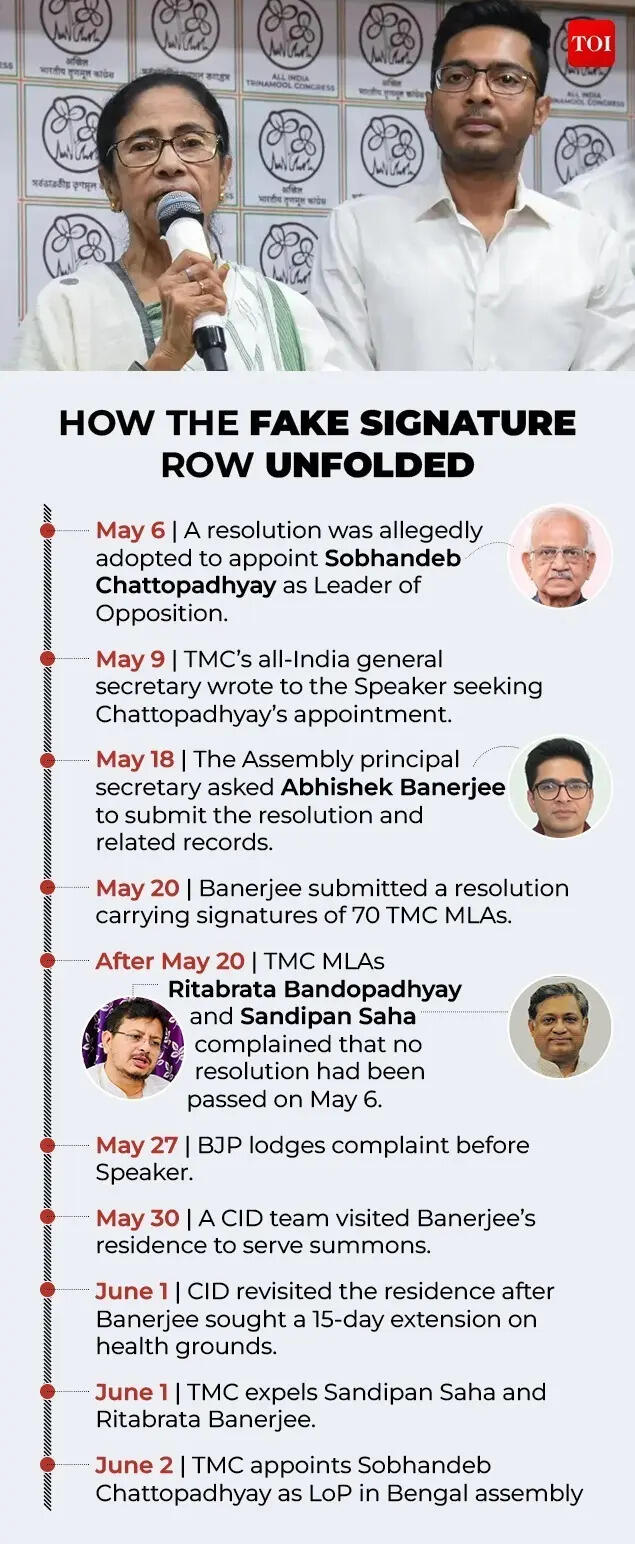
New Delhi: Amidst reports of internal strife TMC Supremo and former CM of West Bengal Mamata Banerjee Hitting back at the rebel leaders, he said the party was “not for its leaders but for its workers”. Speaking hours after TMC expelled two MLAs for ‘anti-party activities’, Mamata said the party is “better off” without the rebel MLAs.“There may be some people who take advantage of the circumstances, but those who thought such people were their property are gone and we are better off without them. We will build the party afresh. TMC is not for its leaders; it is for its workers. As long as the workers stay with us, that is what matters. For so long, a few people enjoyed power, and now that we have lost, it seems they have,” he was quoted as saying by news agency ANI. “Immediately reached an agreement with the other party.”Read this also Missing TMC MLAs, statewide arrests and protest plans: What’s happeningHe said, “TMC will become even stronger. Today, those who are making tall claims that party leaders are not standing with the workers are spreading misinformation. Complete anarchy is prevalent – even Hitler did not do such things. There are no words left to describe this situation, because when language itself fails, it means harassment has crossed all limits. You cannot intimidate or bribe some MLAs and MPs. cannot weaken TMC; in fact, it is only strengthening the party.”Stepping up her attack on the Suvendu Adhikari-led West Bengal government, Mamata claimed that TMC workers were not being allowed to go out, and alleged that party offices were being vandalized.Terming the attack on party MP and her nephew Abhishek Banerjee as “shocking”, the former Bengal CM alleged that doctors, hospitals were “instructed not to treat.”He said, “The way you attacked the MP of the second largest opposition party is shocking. Doctors were called, yet hospitals were reportedly instructed not to treat. What kind of absurd and authoritarian behavior is this?… The people of Belle Vue bowed at my feet. You had close relations and dealings with the Birla and Lodha families, and you bowed before them… Our mayor took care of everything. Six months ago, we renewed Apollo’s license,” he said.Mamata urged students to protest, alleging “numerous anomalies” in the NEET exam.“There were many anomalies in the NEET exam, students are the backbone of the society and they should protest against it,” he said.Mamata’s comments come as TMC is facing its biggest crisis in a decade following its defeat in the West Bengal Assembly elections and internal discord in the party.Additionally, party leaders Abhishek Banerjee and Kunal Ghosh were attacked in Bengal, with the TMC alleging BJP’s involvement.

Source link

‘Our first task is to remove the ‘garbage’ and start the process of reconstruction’: West Bengal Cabinet Minister Swapan Dasgupta | india news

'Our first task is to remove the 'garbage' and start the process of reconstruction': West Bengal Cabinet Minister Swapan Dasgupta

New Delhi: Newly appointed West Bengal Cabinet Minister Swapan Dasgupta made a scathing attack on Monday. Trinamool Congress (TMC) alleged that the party has left the state in a “completely devastated” state. He said the immediate priority of the newly formed BJP-led government was to remove the “garbage” left by the previous administration and begin the process of rebuilding the state.After taking oath as minister, Dasgupta said the administration’s priorities would focus on education, industry, infrastructure and restoring law and order.“TMC has left Bengal a completely devastated area. Our first task is to remove the ‘garbage’ and start the process of reconstruction and planning. Priorities have been set in education, industrial sector, establishment of infrastructure and bringing back law and order,” he said.Dasgupta also highlighted the challenge of restoring investor confidence and improving governance and alleged that many sectors of public life had become badly corrupt during the TMC tenure in the state. “We also have to bring back the confidence of the entire investor community. Trying to bring back a degree of honesty in the system will be a big challenge because there are many areas of public life that have become badly corrupt,” he said.On the possibility of opposition leaders joining the BJP, Dasgupta said the party has decided not to include TMC members for the foreseeable future.“Our policy in BJP in Bengal is that we will not take any person from TMC in the near future,” he said.Responding to questions about the alleged forgery of signatures of MLAs in the West Bengal Assembly, which is being investigated by a five-member Special Investigation Team (SIT) of the CID, Dasgupta said the case should be handled through established procedures.“It is for the Speaker to find out whether there is any forgery in the signatures. Let the law take its course,” he said.West Bengal on Monday expanded its cabinet and 35 new ministers took oath at Lok Bhawan in Kolkata. Governor RN Ravi administered the oath, taking the strength of the Council of Ministers under Chief Minister Suvendu Adhikari to 41.

Source link

Cockroach Janata Party: Cockroach Janata Party founder Abhijeet Dubke announced protest at Jantar Mantar. india news

'Meet me at the airport': Cockroach Janata Party founder ready to return to Delhi; Jantar Mantar protest plan
Image Source: CJP Website

New Delhi: Cockroach Janata Party founder Abhijit Dubke on Monday announced that he will return to India on June 6 to launch peaceful protests demanding the resignation of Union Education Minister Dharmendra Pradhan over exam-related glitches.In a video posted on Twitter and Instagram, Dupke called on supporters and students to join him in Delhi.He said, “The time has come that we all come together following the path of the Constitution of India and peacefully raise our voice to demand the resignation of Dharmendra Pradhan. If we raise our voice together, he will definitely have to listen to us.”Dubke linked his demand to repeated failures in the country’s examination system, citing controversies related to NEET, CBSE, CUET and SSCGD.He said, “Today, there are 22 lakh NEET students, 17 lakh CBSE students, 16 lakh CUET students and 40 lakh SSCGD students – more than 1 crore students whose lives have been made a mockery of the system. Because of this, students are very worried and worried about their future. Someone has to take responsibility for this.”“If the Education Minister does not resign even after such a big mistake, it means that there is no accountability left in this country. It seems that the system can make as many mistakes as it wants and there are no consequences. The entire consequence falls on the students.”Deepke urged supporters to join him at the airport on June 6. “I have decided that I will come to Delhi on Saturday morning, June 6. Please join me at the airport and together we will go to the Sansad Marg police station to seek permission to hold a peaceful protest at Jantar Mantar.”He said the movement would remain non-violent and focus on raising concerns through democratic channels rather than confrontation.He said, “The Constitution of India gives us the right to raise our voice against wrongdoings in a peaceful manner. We will raise our voice only according to that Constitution.”Addressing concerns about his return, Dipke said that his family members, particularly his parents, were concerned that he could face legal action or be arrested after landing in the country. Despite those concerns, he said he was committed to returning and hoped authorities would allow the protests to proceed peacefully in accordance with democratic norms.

Source link

‘India has a much bigger role to play’: Israel on New Delhi’s growing influence in West Asia india news

'India has a much bigger role to play': Israel on New Delhi's growing influence in West Asia

New Delhi: Israeli Ambassador to India Reuven Azar praised India’s growing influence in West Asia, saying New Delhi has a “big role” in bringing stability to the region amid geopolitical tensions and economic uncertainty.Speaking about India’s role in the current West Asia crisis, Azar said India’s growing economic power and trade partnership could transform the region if stability is maintained and extremist threats are controlled.“India has a huge role to play in this because India is the fastest growing economy in our region and as a result of the agreements made with all the major trade blocs, we will see trillions of dollars of goods moving forward, a lot of investment moving forward and our region, West Asia, can enjoy that, if we have stability,” Azar said.“So we have to achieve stability, we have to neutralize the radical elements, and then I think both India and us and all the countries in the region will be able to enjoy the prosperity that is going to come from India to our region.”The comments come at a time when Israel is increasingly highlighting its strategic and diplomatic ties with India, while positioning New Delhi as an important economic and political partner in the broader Middle East region.Israeli Prime Minister Benjamin Netanyahu last week underlined the strength of bilateral ties, saying Israel enjoys strong public support from India even as it faces criticism in other parts of the world.“We have a unique relationship with a great power called India. In India, there is support for Israel,” Netanyahu said during a public address.“We face illegalization in most parts of the world – but not in India,” he said.Netanyahu also commented on the widespread public affection for Israel among Indians, saying, “In India, there is absolutely crazy love for Israel, really crazy. I think I have more followers from India than anywhere else.”The Israeli leader’s comments reinforce the growing warmth between New Delhi and Tel Aviv, especially under the government of Prime Minister Narendra Modi, which has steadily expanded cooperation with Israel in areas ranging from defense and technology to trade and agriculture.During Prime Minister Modi’s visit to Israel earlier this year, Netanyahu also recalled his personal relationship with India while addressing a joint press conference.Netanyahu said, “I have to say at the end of this visit that I am indebted to India – I don’t know if I told you this or not, Narendra – but I owe a huge personal debt to India. You see, when I met Sara for the first time, I think our first or second date was in an Indian restaurant in Tel Aviv.”The visit further strengthened symbolic ties between the two countries, with Modi being awarded the “Speaker of the Knesset Medal”, considered Israel’s highest parliamentary honour.India and Israel have deepened engagement over the past decade, with both governments often emphasizing cooperation on security, innovation, connectivity and regional stability. Israel’s latest comments show that New Delhi is being viewed not only as a bilateral partner, but also as a potential stabilizing power in the broader West Asian region.

Source link