Breaking News
Libra Horoscope Today, March 23, 2026: Drive slowly and delay taking any major decisions

Libra Horoscope Today, March 23, 2026: Drive slowly and delay taking any major decisions
Libra, the financial burden is going to be lightened by letting old debts go into the background, but be prepared for unexpected disappointments. Emotions will run high in family relationships, prompting you to take a step back before making any decisions. Clear and honest conversations will strengthen your relationships. Professionally, focus on small improvements that are within your means.

Libra, old money may finally come back to you today, and it feels like you’ve got your breathing back. The Moon highlights your resources, and Jupiter supports recovery, so blocked payments or long-pending dues can be cleared. Still, you may feel dissatisfied with some results. One area improves, another slows down. This is the mix of today, not an individual failure.Your emotions are running high. Venus makes you sensitive to tone, and you may make emotional decisions, especially in family matters. pause. Ask yourself, will I feel the same way tomorrow morning? If the answer is unclear, wait.

Watch

Chant this mantra to attract wealth, fame and success. Dushyant Sridhar

Love and Relationship:You want reassurance today, but you may not ask for it directly. Instead, you may test people, stay quiet, or act upset. No. Speak clearly. Couples do better when they keep conversations simple and practical, such as planning the week’s expenses or discussing a family trip. It forms the basis of mood.Children will perform better and you will get support from them. Their good news, better behavior or help at home may soften your heart. Let that warmth spread into your partnership as well. Single people should avoid making hasty statements today. The heart is soft, the decision is not completely stable.Education and Career:At work, you may feel unhappy with an outcome, perhaps feedback that was not what you expected, or approval that may have been delayed. Saturn asks you to accept the momentum and fix what is within your control. Double-check documents, update your resume, or refine your project notes. A careful correction can change the next result.Students should focus on revision and practice rather than new chapters. You’ll do better when you build on what you already know. Keep your study leave on time, otherwise your mind will be busy in thinking excessively. If you have classes or coaching, reach on time. Avoid rushing on the road at the last minute.Money and Finance:This is a good time for speculation, but only if you keep your emotions out of it. You can expect to feel better by awakening the feelings of Venus. No. Use logic. If pending money comes, first repay the dues, then save, then spend. That order will keep you safe.Also help the needy people. Donation is in line with your zodiac sign and today’s chart, and it can be as simple as paying for someone’s meal, donating stationery, or supporting a genuine cause. Give within limits. Don’t show off.health and wellbeing:Be careful while driving on the road. The chart shows distraction and haste. Wear your helmet, use your seat belt and put your phone away. Today there is a need to pay attention even while crossing the road. Physically, stress may show up as acidity or stiffness in the shoulders. Eat light meals, drink water and avoid too much coffee.Rest your eyes in the evening. Today the screen will tire you fast.Tip for the day: Drive slowly, and put off any major decisions until after a good meal.

Source link

CCS recognizes ‘significant impact’ of West Asia conflict. india news

CCS recognizes 'significant impact' of West Asia conflict

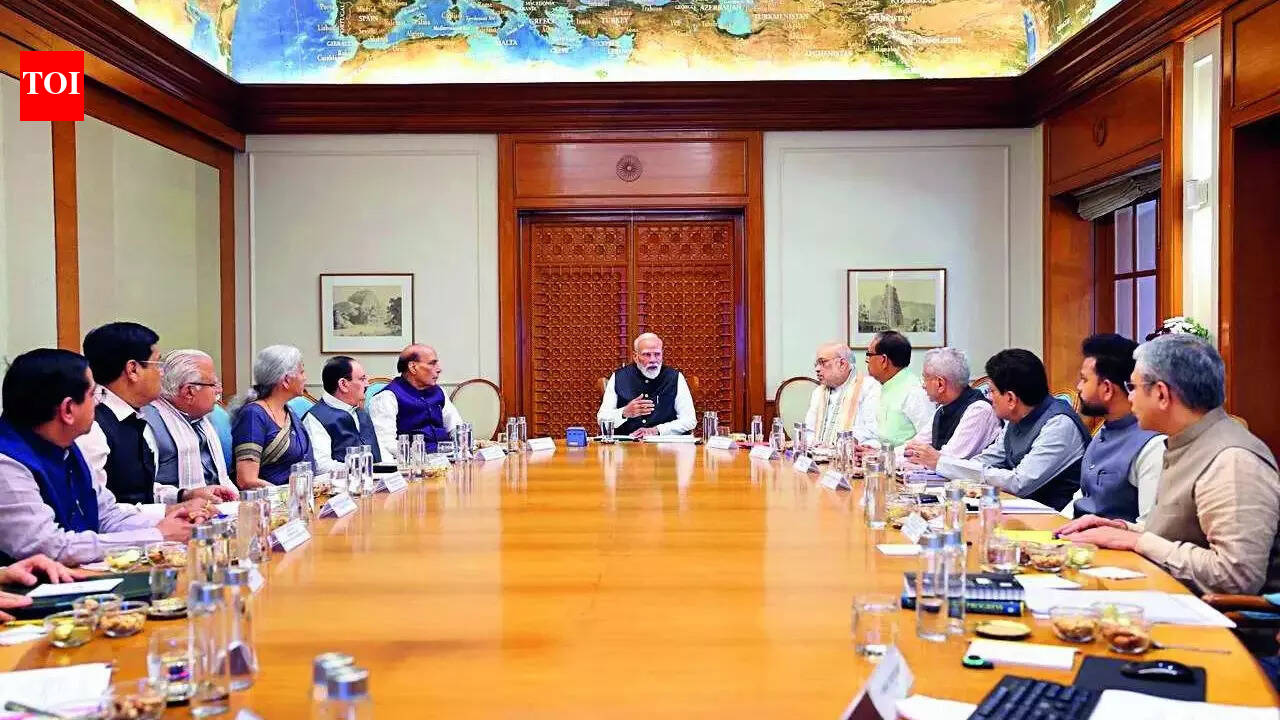
New Delhi: Recognizing the “significant impact” of the conflict in West Asia on the global economy and its impact on India, the PM Narendra Modi-led Cabinet Committee on Security on Sunday discussed steps to diversify sources of imports for chemicals, pharma, petrochemicals and other industrial sectors, while relieving fertilizer and coal stocks.“We discussed extensively on short, medium and long-term measures, including ensuring continued availability of fertilizers for farmers, diversifying import sources for key sectors, promoting exports to new destinations and more. We are committed to protecting our citizens from the impact of conflict,” the PM posted on Twitter after the meeting of the panel comprising Home, Defence, Finance and External Affairs ministers.The assessment was that there may not be any significant domestic impact in the immediate term, but there is a need to prepare for the medium and long term. The challenge before policy makers at present is that there is no clarity on when and how the conflict will end.“The ongoing conflict in West Asia will have significant short-, medium- and long-term impact on the global economy and its impact on India was assessed and both immediate and long-term measures were discussed,” an official statement said. Sunday’s meeting was also attended by other ministers, including agriculture, health, chemicals, power, shipping, civil aviation, commerce and industry, I&B, food and civil supplies and railways.While Modi has been in talks with his counterparts from other countries, particularly the Gulf region – which is home to a large Indian diaspora and the source of a large portion of energy imports – this was the first meeting at the CCS level to formulate strategies with an assessment that the impact of the conflict is likely to last for some time.The Prime Minister has suggested a dedicated group of ministers and a panel of secretaries to deal with the issue, which will include detailed stakeholder consultations through regional groups. He has also asked the Center to coordinate with the states to stop black marketing and hoarding.The PM said that conflict is an evolving situation and the entire world is affected in some way or the other. In such a situation, all efforts should be made to protect civilians from the effects of this conflict. An official statement said the PM directed that all organs of the government should work together to ensure minimum inconvenience to citizens.It said that several measures proposed by various ministries will be formulated and implemented in the coming days.At the meeting, Cabinet Secretary TV Somanathan gave a presentation on the global situation and the mitigation measures taken so far and those being planned by various departments. “The expected impact on sectors such as agriculture, fertiliser, food security, petroleum, power, MSMEs, exporters, shipping, trade, finance, supply chain and all affected sectors and measures taken to address it were discussed. “The overall macroeconomic scenario in the country and further measures to be taken were also discussed,” the statement said.

Source link

Jose Medina-Medina, Venezuelan illegal who killed 18-year-old Sheridan Gorman in Chicago, entered US during Biden: DHS

Jose Medina-Medina, Venezuelan illegal who killed 18-year-old Sheridan Gorman in Chicago, entered US during Biden: DHS

The Venezuelan migrant who shot and killed 18-year-old Sheridan Gorman as she walked at night to view the northern lights has been identified as Jose Medina-Medina. The name of the 25-year-old suspect was not previously released because he had not yet been charged.DHS announced Sunday that ICE has filed an arrest detainer, asking “sanctuary politicians” not to release Jose Medina-Medina, a Venezuelan criminal illegal alien arrested for the murder of 18-year-old Sheridan Gorman in Chicago, Illinois.According to local reports, Sheridan Gorman, an 18-year-old Loyola University student, was shot dead around 1:00 a.m. Thursday while she was walking in a park with friends. Medina-Medina is accused of approaching them wearing a mask and armed with a gun. As he tried to run away, he opened fire with his gun. Gorman was shot and pronounced dead at the scene.DHS said Medina-Medina was apprehended by the U.S. Border Patrol on May 9, 2023, and released into the country under the Biden administration. He was released again on June 19, 2023, following his arrest for shoplifting in Chicago, Illinois.Acting Assistant Secretary of State Lauren Biss said, “Sheridan Gorman had her perfect life before this brutal killer decided to end her life. She was failed by open border policies and sanctuary politicians, who twice released this illegal alien before he committed this heinous murder.” “We are calling on Governor JB Pritzker and Chicago’s sanctuary politicians to commit to not releasing this criminal illegal alien from prison back into American neighborhoods.Her family wrote in an online obituary for the teenager, “Sheridan was everyone’s cheerleader in every sense of the word. She had a way of making people feel valued, appreciated and believed.” The obituary said, “She radiated something even greater – a rare and unmistakable warmth, a spirit that was vibrant, kind and full of life. She was funny, kind and deeply loving, with a heart that made room for everyone.”

Source link

AI Fruit Love Island: AI ‘Fruit Love Island’ TikTok gets 3.1 million followers in just 9 days, the internet can’t look away

AI 'Fruit Love Island' TikTok gains 3.1 million followers in just 9 days, the internet can't look away

A TikTok account sharing funny AI videos about love with fruits is gaining a lot of attention online. The account started on March 13, 2026, and in just 9 days, it has gained nearly 3.1 million followers. Each video gets around 10 to 20 million views, which is a huge number. People watch videos again and again because they’re weird, hilarious, and different from anything they’ve seen before.In the video, fruits like bananas and strawberries behave like humans. They talk to each other, flirt with each other, fight with each other, fall in love with each other, and many other things, just like humans do in reality shows. Although it is ridiculous, users find watching the video quite fun. Some people are amazed, while others say they can’t stop watching. This mix of weird and funny is what is making the account grow so fast.

AI fruit love videos go viral as TikTok account crosses millions in days

Each short video feels like a short episode of a reality show. banana names have letters like “Bennanino” And other fruits who pair up, fight and create drama. The style is similar to popular dating shows, but everything is created using AI. This gives a different look to the video and sometimes even a very funny look.TikTok’s algorithm is also contributing to the growth of the account. If people watch, like, and share videos, they reach a large number of people. Later, a large number of people start watching the same video. Hashtags related to these videos have already been used thousands of times, which shows how big this trend has become.Many creators are also giving their feedback on these videos. Some are making fun of him and some are copying this idea. This is also contributing to the growth of this trend. Experts have called this the power of AI content. It is easy to create, share and reach a large number of people in a short period of time.At the end of the day, the viral TikTok account shows how easily a new and unique thing can take over the internet. Even simple and humorous concepts like fruits in a love story can become a big trend when combined with AI technology and social media.

Source link

Drug smuggler arrested with heroin worth Rs 1.5 crore. india news

Drug smuggler arrested with heroin worth Rs 1.5 crore

JAMMU: Jammu Police on Saturday arrested a drug smuggler and seized about 262 grams of heroin, worth about Rs 1.5 crore in the international market, along with Rs 1.5 lakh in cash, a cellphone and a weighing machine from him.A police naka team led by PSI Rajan Chaudhary was deployed at Tutre Chowk Ring Road and sighted the suspect around 7.40 pm. The accused tried to run away but was caught. Police identified him as Harpal Singh, a resident of Kathua district.Police registered a case under the NDPS Act at Meeran Sahib police station. Police said further investigation is underway to ascertain the antecedents and links of the nexus.

Source link

Three more arrested in Dhenkanal rape-murder case. bhubaneswar news

Three more arrested in Dhenkanal rape-murder case

Bhubaneswar: A day after the arrest of the prime suspect in the alleged rape and murder of a Plus II student in Dhenkanal district, police on Sunday arrested three of his associates in connection with the case.All four – prime accused Jagga alias Gangadhar Patra (38), and his associates Chandan Kumar Naik (26), Rasanand Naik (64) and Madan Mohan Patra (40) – were produced in the court on Sunday, where their bail pleas were rejected and they were sent to judicial custody.The 16-year-old girl had gone missing on March 18 and her body was found near the gram panchayat office the next day. Dhenkanal SP Abhinav Sonkar said, “Prima facie, it appears that she was raped and murdered. The exact cause of death will be confirmed by the post-mortem report. Patra single-handedly sexually assaulted the minor girl, while others helped in disposing of her body.”According to police sources, Patra, who is a bus driver, lured the victim and took her to his residence, where he allegedly abused her. He then sought the help of his associates to dump her body near the Gram Panchayat office. Police suspect that the murder may have been preceded by murder. Two of the accused are reportedly relatives of Patra.Police have seized a white SUV used to transport the body, three mobile phones, the victim’s college bag and blood-stained clothes. On Saturday, police officials recreated the crime scene and sent important evidence for forensic examination.This incident has sparked outrage and opposition parties are criticizing the government regarding women’s safety. However, the BJP highlighted the swift police action and called it evidence of the government’s zero-tolerance policy against perpetrators of sexual violence.SP Sonkar said, “The case is under investigation. We are waiting for the forensic and post-mortem reports to establish the complete sequence of events. Chargesheet will be filed against the accused soon.”

Source link

7-year-old boy with Canadian mother arrested by ICE, stepfather says he has legal status until 2030

7-year-old boy with Canadian mother arrested by ICE, stepfather says he has legal status until 2030

Seven-year-old Canadian girl Ayla Luca, originally from British Columbia, has been arrested by ICE along with her mother and sent to a notorious detention center in Texas. According to reports, they have been told that they will be released if they self-deport. Luca is autistic and came to the United States five years ago when his mother, Tania Warner, married American citizen Edward Warner. Edward said that they have legal paperwork with validity till 2030. He is in shock, Warner said, adding that his wife was whispering on the phone so officers could not hear their conversation. “She says she’s shocked…they’re no good. She said the border patrol agents are complete bullshit,” the husband said. The family lives in Kingsville, Texas, and were on their way home from the birth of a child in Raymondville on March 14 when they were stopped at a Border Patrol checkpoint in Sarita. Tania’s cousin Amber Sinclair told the Guardian that Tania has a Social Security card and a functional visa. The family is now raising money for legal help. Vicente Gonzalez, Democratic Congressman for Texas’s 34th Congressional District, said in a statement that his office is working to secure the family’s release. He said, “Tania has a work permit and is part of our Kingsville community; she or her 7-year-old daughter Ayla, who has autism, should not be detained.” “We must bring them home and reunite yet another family torn apart by this administration’s vicious immigration enforcement campaigns,” he said.The mother-daughter duo were initially held at the Rio Grande Valley Central Processing Center in McAllen, Texas, but on Friday morning they were moved to the Dilly Immigration Processing Center in South Texas. Dili is notorious for disease outbreaks, poor medical care, etc. It was originally opened under Barack Obama and closed during Joe Biden. It reopened in early 2025 to house detained families together. Global Affairs Canada, the federal ministry that handles consular services and diplomatic relations, said Thursday it is “aware of multiple cases of Canadians currently or previously held in immigration-related detention in the United States.”A spokesperson said, “Consular officers advocate for Canadian citizens abroad and raise concerns with local authorities about legitimate and serious complaints of abuse or discrimination, but cannot exempt Canadians from local legal processes.” “Due to privacy considerations, no further information can be disclosed.”

Source link

‘Pop a pill and carry on’: The workplace silence on India’s menstrual leave debate | India News

'Pop a pill and carry on': The workplace silence on India's menstrual leave debate

Is it that time of the month? No issues. Pop a pill and get to work with a hot water bag! It sounds casual, almost harmless. But behind this everyday remark lies a deeper reality, one that millions of women silently go through every month.Modern work life is designed around a predictable, almost mechanical rhythm, but a woman’s body doesn’t follow the clock.A typical day for a man begins with waking up, moving through structured hours of productivity, peaking somewhere in the middle, and gradually winding down before sleep. The cycle repeats, day after day, with little room for deviation.But for women, the body does not always comply with this uniform pattern.Instead, it operates on a hormonal cycle that fluctuates across the month with energy levels rising and falling. Physical strength and emotional resilience ebb and flow. And yet, the expectation remains unchanged.Show up, perform, deliver. There is no pause button!Fatigue, mood shifts, and slight discomfort during menstruation are often considered natural. But intense, debilitating pain? That is not supposed to be “so normal.”And yet, it has become so common that it is often dismissed. Still, the response society expects is remarkably simple. Pretend nothing is happening!

What is menstruation?

Menstruation is a biological process in which the inner lining of the uterus sheds when an egg released during ovulation is not fertilised. This leads to the discharge of blood and tissue through the cervix and vagina, typically at monthly intervals.The first menstrual cycle, known as menarche, usually occurs between the ages of 8 and 15. On average, cycles repeat every 28 days, though variations are common.For some women, menstruation is not just a few days of discomfort, but also conditions like PCOD (Polycystic Ovarian Disease) or PCOS (Polycystic Ovary Syndrome) can lead to severe cramps, irregular cycles, prolonged bleeding, and hormonal imbalances.As Sneha Srivastava noted, “Every woman’s body is different. While some may experience minimal discomfort, others go through intense pain, nausea, and fatigue.” On a personal note, she added, “I have experienced significant discomfort due to PCOS. My periods can last for more than three weeks… managing this while working can be extremely challenging.”Tithi Pramanik from Odisha echoes the reality saying, “I have PCOD and experience severe cramps during my periods.” Yet workplaces rarely accommodate this spectrum of experience.

The menstrual leave debate in India

Most working women already know the unspoken rules.You go to work despite cramps that make it difficult to sit upright. You continue meetings through waves of nausea. You push through fatigue that clouds your concentration.Because acknowledging the pain feels risky.Ask for leave, and you may be seen as unreliable. Take time off, and you might miss opportunities. Speak openly about menstrual symptoms, and you risk being labelled “difficult.” So the safer option becomes silence.The idea of menstrual leave, time off granted to women during their periods has increasingly entered discussions around workplace rights, gender equality, and employee welfare.But India still does not have a nationwide law mandating menstrual leave.On March 13, the Supreme Court of India declined to entertain a public interest litigation seeking a uniform policy for menstrual leave across workplaces and educational institutions.The court did not dismiss the issue outright but raised concerns about potential unintended consequences.The bench observed that making menstrual leave compulsory could discourage employers from hiring women. As Chief Justice Surya Kant noted during the hearing, “Voluntarily given is excellent. The moment you make it compulsory in law, nobody will give them jobs.”The court also warned that such a policy might reinforce stereotypes, portraying women as less productive or less reliable.Another point raised was that such decisions fall within the domain of policymakers, not the judiciary. The court suggested that the government should examine the issue after consulting stakeholders.

Will such a policy make employers hesitant?

For some, the solution may not lie in a strict leave policy.Ranjit, a Delhi-based entrepreneur, suggests flexibility saying, “I do not fully agree with the Supreme Court’s decision. Companies should at least be made to offer options like work from home and flexible working hours.”Ajit, a college professor from Gujarat, questions the logic of making such support optional. “How can a legal right be optional? Does that make sense? Women should have a choice whether to take the leave or work.”“Discrimination comes in all forms and sizes in society. Some employers might hesitate to hire women, at least initially, but I believe it’d quickly become clearer to them that better employee care translates into better output,” he added.Raveena Newatia, a communications manager from Gurugram, said, “There might be a widespread belief that this would affect work so employers might,” acknowledging the hesitation that often surrounds such policies.“Although on the basis of right judgements and awareness, this could be changed in the longer run,” she added, suggesting that mindset shifts, not just policies, will shape the future of workplace inclusion.Recalling her own experience and discomfort, Raveena said, “I have faced discomfort working and sitting on a chair in the office, and not being able to lay my back on a hot water bag even when desperately needed.” “I still believe that Work from Home norms or mobility flexibilities could be considered by the Supreme court in issuing some mid-solution law so that even the work doesn’t compromise and the females also don’t have to suffer at least physically,” she added.Further addressing concerns that such policies might discourage employers from hiring women, Biswarupa Das, a PhD scholar in HR studies pushed back firmly, saying “honestly, in a time when organisations are implementing measures towards sustainable workplaces and acknowledging diverse needs, this shouldn’t even be a question.”“The focus should shift from seeing this as a ‘cost’ to responding with empathy and understanding. Women already take leave when the pain becomes physically and mentally overwhelming, it was just not always acknowledged openly.”“I don’t believe employers will hesitate, because an employee’s calibre cannot be judged on the days she is struggling with something she hasn’t chosen, it’s simply a part of biology,” she added.But. Not everyone is convinced that menstrual leave as a labelled policy is the right approach.Pankaj Jha, senior manager at an insurance firm said, “I think the idea of menstrual leave sounds progressive on the surface, but it’s worth asking why it hasn’t been widely adopted in developed countries like the US, UK, or Germany.”He points to a deeper issue: privacy. He said, “There is still significant stigma around menstruation, especially in smaller towns and cities. In such an environment, formally labeling a leave as “menstrual leave” could unintentionally expose women to judgment or ridicule.”“I’ve personally observed situations where women taking such leave became the subject of insensitive remarks by male colleagues behind their backs,” he added.Jha also noted that there are practical challenges in the implementation of such laws. “How do you define eligibility? What about women who have reached menopause, or those who experience only mild discomfort?” he said.He suggested a more nuanced approach by integrating menstrual leave within existing sick leave policies rather than creating a separate category.“Instead of introducing a separate, labeled category, I believe a more inclusive and respectful approach would be to incorporate it within existing sick leave policies, give women a couple of extra sick leaves per month,” he added.But on the ground, the reality is different. For many women, the debate is not theoretical, It is physical!As Tithi Pramanik said, “In my previous company, my manager said he would not hire women because of these issues.”“That’s why I feel making menstrual leave mandatory could increase bias and discourage employers from hiring women,” she added.While, Sneha Srivastava argued that leaving menstrual leave optional often defeats its purpose. “When something is optional, many women hesitate to avail it, often fearing judgment or being perceived as less committed at work,” she said.

A medical perspective: Do women really need leave?

Adding another layer to the debate, obstetrician and gynaecologist Nimmi Rastogi offers a clinical viewpoint.“Menstruation is a normal biological process. It is not a disease. It is not even a period of incapacitation. It is simply a reflection of how a woman’s physiology works,” Dr Nimmi said.While acknowledging that some women experience severe symptoms, she cautions against generalising, saying “It is true that some women experience PMS, pain, dysmenorrhea, clotting or heavy bleeding, but this is not the case for everyone. So, I don’t think it is a good idea to mandate menstrual leave.”Her advice is counterintuitive to many: stay active!“Medically, staying active actually helps ease most symptoms. We usually encourage patients to remain active and not refrain from work, school or studies. Even simple movements like walking can reduce pain,” she said. “If you lie down or remain sedentary during periods, it can be counterproductive for your health,” she added.For her, work itself can help. “Working is a good distraction. Symptoms like mood swings, PMS and irritability can be relieved through physical activity and engagement,” she said.

What most men think?

Iqbal Singh said, “Leave must be there because I have seen my wife bearing lots of pain and cramps. The story is different for every girl, but also seen some people are not cooperating towards it, when women really need a policy decision like this.”Hadi Khan echoes the same sentiment and said, “I’ll be honest, I do think menstrual leave is necessary. For women, periods aren’t just a minor inconvenience. They can be physically draining, sometimes even debilitating.”Yet, he also acknowledges the dilemma saying, “Yes, I do think that’s a real possibility that employers might hesitate to hire women if such a policy is enforced.”“Even if it’s not openly admitted, some employers might quietly factor it into their hiring decisions. In competitive or cost-sensitive industries, there’s often a tendency to view anything that could affect productivity or increase compliance requirements as a drawback,” he added.Shubhanshu Dwivedi frames it more sharply saying, “Menstrual leave is a basic workplace support measure and not a privilege.”“The argument that such a policy may discourage hiring rests on accepting discrimination as a given. That is a slippery position,” he added.

The cultural silence and stigma

The challenge is not just policy, it is also cultural. But how can one go and seek menstrual leave when we don’t even speak about menstruation in the open!In many parts of India, menstruation remains a taboo subject. Women are often discouraged from speaking about it openly. In some households, restrictions still exist.Pari (name changed) from Assam describes her reality, “On the three days of my period, I sit and sleep on the floor. I eat on a separate plate as I am not allowed to enter the kitchen or touch any utensil or other furniture. I do not touch any male member be it my father, brother or husband. These customs have been followed for a very long time in my household and me, my mother and sister have applied the same in our lives.”Yash Sonkar further points to a lack of awareness, saying, “Menstruation isn’t even properly explained in our school curriculum… teachers skip the chapters at times.”Even basic products like sanitary napkins are often wrapped discreetly, reinforcing the idea that menstruation is something to hide.Interestingly, menstruation was not always viewed this way.In ancient India, it was often associated with fertility, renewal, and the cycles of nature. Some traditions even treated it as a time for rest and reflection.Over time, however, colonial influences, patriarchal interpretations, and cultural shifts transformed this perception into one of impurity and shame.What was once a period of care became a period of silence.

Global and Indian policy landscape

Globally, countries like Japan, Spain, South Korea, and Indonesia have menstrual leave policies.But even there, challenges remain.As Pankaj Jha points out, “Even in places like Japan, menstrual leave is often unpaid, which raises questions about how effective or empowering it truly is.” In India, efforts are scattered. Some states and companies have introduced policies, but there is no unified national framework.

The productivity paradox

There is a growing body of research suggesting that workplaces with better gender inclusion perform better overall. Companies with more diverse leadership often show stronger financial and governance outcomes.In simple terms, when women are supported, they deliver. So the real question is not whether menstrual leave reduces productivity.It is whether ignoring biological realities is sustainable in the long run.

Rethinking the workplace?

Imagine a different system. A workplace that acknowledges biological differences instead of ignoring them. One where women can align tasks with their natural energy cycles, high-focus work during peak phases, lighter tasks during physically demanding days.A system where taking care of health is not seen as a weakness, but as part of being human. Biswarupa captures this sentiment saying, “Menstrual leave is absolutely necessary. Such leaves would be a meaningful step towards acknowledging what all the women go through silently.” The debate on menstrual leave is not just about policy. It is about recognition. Recognition that biology is not uniform.Recognition that equality does not always mean sameness. Recognition that support systems need to reflect real human experiences.For now, the Supreme Court of India has left the matter to policymakers. But the conversation is far from over.Because every month, across offices, classrooms, factories, and homes, millions of women continue to work through pain, quietly, invisibly, and without acknowledgment. And perhaps the real question is not whether menstrual leave should exist.It is why, even today, it still needs to be debated!


Source link

Iran’s missile map decoded: Who falls within its extended strike range?

Iran's missile map decoded: Who falls within its extended strike range?
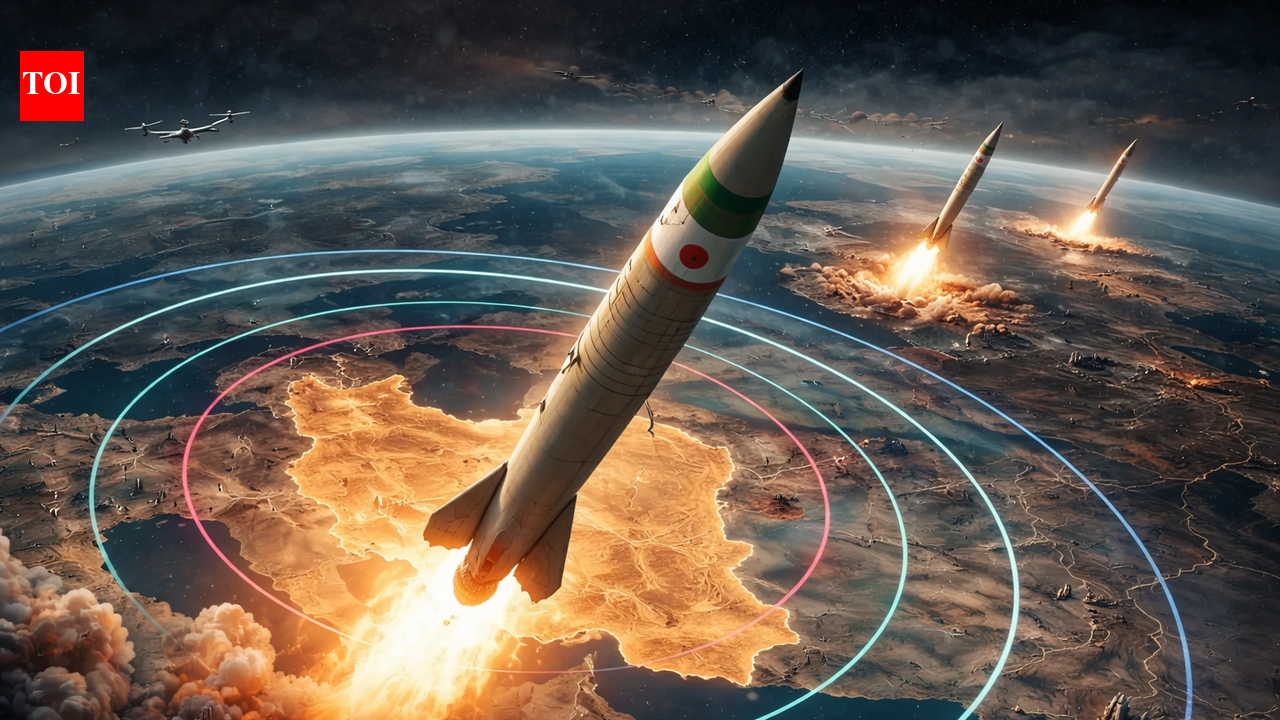
Representative Image (AI Generated)

New Delhi: Iran’s missile arsenal has emerged as a cornerstone of its military doctrine, giving Tehran the ability to project power across the Middle East and shape the trajectory of any conflict. Built steadily over the past three decades, the program spans short-range tactical systems to long-range ballistic and cruise missiles, creating a layered strike capability that complements the country’s aging air force.The range of these missiles is not just a technical detail. It defines the geography of the conflict, sets out potential targets and outlines Iran’s strategy of deterrence. From nearby Gulf bases to Israel and beyond, the range of Iranian missile reach continues to influence military calculations throughout the region.

Short-range missiles: immediate battlefield dominance

At the lower end of the spectrum are short-range ballistic missiles, which typically have ranges between 300 km and 800 km. These systems form the first layer of Iran’s strike capability and are designed for rapid deployment against nearby targets.Missiles like Fateh-110, Zolfagher, Qiyam-1 and Shahab-1 and Shahab-2 fall in this category. Their relatively short range provides a tactical advantage. They can be launched quickly, often in large numbers, reducing warning time for adversaries and increasing the possibility of overwhelming air defense systems.This class of missiles is particularly suitable for targeting US military bases, naval assets, and regional infrastructure in the Gulf. Their role is to deliver the “first punch” in any stress situation, giving a signal while causing immediate damage.Iran demonstrated this approach in January 2020, when it launched ballistic missiles at Iraq’s Ain al-Asad airbase following the assassination of General Qassem Soleimani. The attack caused significant damage and injuries, demonstrating Iran’s ability to deliver precise strikes without relying on conventional air power.

Medium-range missiles: expansion of the strategic map

The second layer of Iran’s missile arsenal consists of medium-range ballistic missiles, which typically have a range between 1,000 km and 2,000 km. This category marks the shift from tactical warfare to strategic deterrence.Major systems include Shahab-3, Imad, Ghadar, Sejjil and Khorramshahr. These missiles significantly expand Iran’s strike range, bringing a wide network of military facilities linked to Israel and the US within reach. All bases in Qatar, Bahrain, Kuwait, Saudi Arabia and United Arab Emirates come under this scope.Among these, the Sejjil missile stands out due to its solid-fuel propulsion. Unlike liquid-fuel missiles, which require more time to prepare, solid-fuel systems can be launched more quickly, increasing survivability in a conflict where pre-emptive attacks are a constant threat.This layer effectively turns any conflict with Iran into a regional issue. This ensures that escalation cannot be limited to a single battlefield, as multiple countries fall within the range of retaliation.

Long distance systems: outer limits of reach

Iran’s longest-range missiles are estimated to reach between 2,000 km and 2,500 km, forming the outer limits of its publicly known capabilities. Advanced versions of the Shahab series, systems such as the Sejjil and Khorramshahr operate in this range band.Apart from ballistic missiles, Iran has developed cruise missiles like Soumar, which can cover a range of up to 2,500 km while flying at low altitude. These missiles are difficult to detect and intercept, especially when used in conjunction with drones or ballistic systems.The geographical implications of this category are very deep. The 2,000 km radius from Iran covers not only Israel and the Gulf but also parts of Southeastern Europe, Central Asia and North Africa. This allows Tehran to put at risk a broad spectrum of military and economic targets, including ports, energy infrastructure and airbases.However, despite reach, Iran’s missile capability does not extend to the continental United States. This limitation underlines that Tehran’s strategy focuses on regional dominance rather than global strike capability.

Attempt to attack Diego Garcia: testing the limits

However, a recent development has raised questions about the upper limit of Iran’s missile reach. Reports of an attempted attack on Diego Garcia – a remote island in the Indian Ocean that is home to a major US-UK military base – suggest that Tehran may be experimenting with long-range capabilities.Located approximately 4,000 km from Iran, Diego Garcia is well beyond the established range of Iran’s missile systems. According to available information, two missiles were reportedly fired towards the island, although neither successfully hit the target.Although this effort was not successful, its implications are important. This points to either an experimental expansion of Iran’s missile technology or a strategic signaling effort aimed at deterring Western forces by demonstrating intent rather than proven capability.If Iran develops reliable systems capable of reaching such distances, it would fundamentally alter the strategic balance, giving it access to the Indian Ocean and potentially parts of Europe and the Indo-Pacific.

Geography of Threat: A Layered Coverage

Image of Iran’s missile range shows a layered pattern of concentrated reach. Short-range systems dominate the near-neighborhood, covering the Persian Gulf and adjacent states. Medium-range missiles extend this reach to Israel and deep into West Asia, while long-range systems push the range outward to cover an even wider arc.This layered structure ensures that Iran can respond simultaneously at multiple ranges. It also complicates defense planning for adversaries, who must account for threats coming at different ranges, trajectories, and speeds.In practical terms, this means that no major US military installation in the Gulf region is beyond Iran’s reach. Energy infrastructure, shipping lanes and urban centers are also at great distances throughout the region.

Volume and Survival: Beyond Limits

While range defines reach, Iran’s missile strategy is equally dependent on quantity and survivability. The country has invested heavily in underground facilities, often referred to as “missile cities”, where weapons are stored and prepared for launch away from surveillance.Mobile launch platforms further increase flexibility, allowing missiles to be fired from multiple locations. This dispersion makes it difficult for adversaries to neutralize Iran’s arsenal in a single preemptive strike.Joint tactics—the use of ballistic missiles, cruise missiles and drones—adds another layer of complexity. Drones can be used to satiate air defenses, while cruise missiles fly low to avoid detection, and ballistic missiles strike at high speed.This integrated approach increases the likelihood that at least some weapons will penetrate defensive systems, thereby ensuring that Iran will retain a credible retaliatory capability.

Strategic Implications: Resistance and Escalation

Iran’s missile range is central to its deterrence strategy. By demonstrating the ability to strike across a wide geographic area, Tehran wants to discourage adversaries from launching attacks or escalating conflicts.Additionally, this capability increases the risk of any collision. The broader the scope, the wider the pool of potential targets, increasing the risk of a regional conflict escalating into a major war.The attempted attack on Diego Garcia, although unsuccessful, underscores this dynamic. This indicates that Iran may be willing to expand the geographic scope of its operations, challenging perceptions about the limits of its reach.Iran’s missile program is not just about weapons – it is about shaping the battlefield. From short-range systems designed for immediate impact to long-range missiles that define regional power projection, the extent of Iran’s arsenal determines how conflicts unfold.As tensions persist, this limit ensures that any military involvement involving Iran will not remain limited. Instead, it would apply across a vast and interconnected region, where distance offers little protection and escalation has far-reaching consequences.

Source link

One dead, another injured in land dispute in Nalanda. patna news

One dead, another injured in land dispute in Nalanda
One person was killed and another seriously injured in two separate incidents of firing over a land dispute in Bihar’s Nalanda district. An earthmover operator was shot dead on Saturday evening, followed by an attack on a property dealer during his morning walk on Sunday. Police are investigating both the incidents, with initial findings suggesting a land dispute.

Patna: In the last 24 hours, criminals opened fire on two people in Hilsa police station area of ​​Nalanda district over a land dispute, in which one died and the other was seriously injured.Kuldeep Yadav (30), an earthmover operator from Chatra district of Jharkhand, was shot dead on Saturday evening. He was engaged in construction work.On receiving information about the murder, Hilsa SDPO-1 Shailja reached the spot. He said, “Preliminary investigation and statements of people nearby revealed that there was a clash between two groups in a nearby village over a land dispute. The criminals had come to interrogate him about the incident following which a clash broke out. During the clash, the criminals opened fire, due to which Kuldeep died on the spot.” The matter will be resolved soon.In another incident, three assailants shot Bhushan Yadav (35), a property dealer, when he was on a morning walk in the West Bypass area on Sunday.Family members took him to the sub-divisional hospital, from where doctors referred him to Patna Medical College and Hospital (PMCH).Bhushan is the son of Nandlal Yadav, resident of Belwa Bagh of Hilsa police station area. Hilsa additional station in-charge Rakesh Kumar said, “Police have started investigating the incident. Bhushan’s family has taken him to Patna. Prima facie the matter seems to be related to a land dispute as Bhushan is a property dealer. The situation will become clear after receiving the written application from Bhushan’s family.”

Source link