CBI arrests retired NTA panel professor who set NEET paper

CBI arrests retired NTA panel professor who set NEET paper

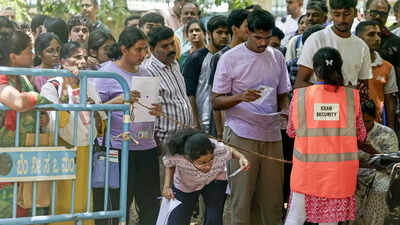
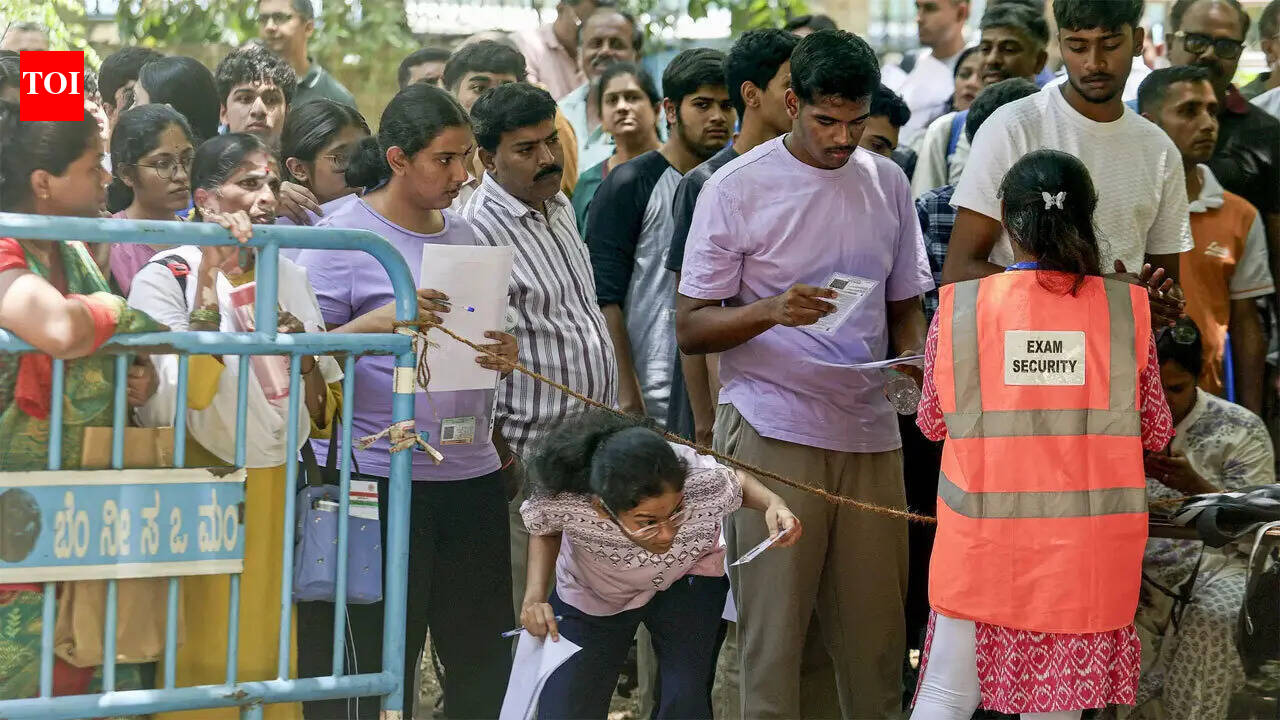
New Delhi/Chhatrapati Sambhajinagar: The CBI on Friday said it has arrested a retired chemistry professor in Latur, whom it has identified as the main accused in the NEET-UG 2026 paper leak case.PV Kulkarni, who spent more than three decades in academia, was associated with the National Testing Agency (NTA) as part of the question paper setting panel. TOI had reported on Friday that the CBI was searching for those who had prepared the questions.Officials claimed that Kulkarni first attempted to sell the newspaper locally, but turned to a wider network after failing to convince buyers of its authenticity. “In the last week of April, Kulkarni, with the help of another accused named Manisha Waghmare, gathered students and conducted special coaching classes for them at his residence in Pune,” a CBI spokesperson said.Kulkarni reportedly set questions with options and correct answers during these special classes. “The questions were handwritten by the students in their notebooks and exactly matched the actual question paper of the examination held on May 3,” the CBI said.CBI sources said that the agency is now interrogating more people related to asking the questions.This leak is different from the leaks that surfaced earlier. The investigation into the first leak revealed people outside the main chain of access who were part of an organized gang and violated the integrity of the exam such as paper distribution at exam centers in the later stages.Coaching institutes have also been brought under the ambit of investigation. The CBI questioned the director of a Latur-based coaching center with units across Maharashtra. Officials conducted searches at his residence, seized his cellphone and issued a notice to the agency’s Pune office for further questioning.As earlier reported by TOI, the CBI has sought detailed information from the NTA about each stakeholder who had access to the question papers before it was sealed: the people who set the questions, the subject experts, and the professors and teachers on the panel who prepared the questions, besides details of the entire paper preparation process.Kulkarni is the eighth arrest in this case. Waghmare was earlier arrested by the CBI along with six others. Officials said Waghmare had received money from around 21 bank accounts before the examination held on May 3. She runs a beauty parlor in Pune and was acting as a mediator for co-accused Dhananjay Lokhande, who is a BAMS graduate and runs a consultancy in Pune.In New Delhi, special CBI judge Ajay Gupta sent Lokhande to six days’ police custody, with the CBI saying it was necessary to identify “the NTA officials involved in the paper leak”.

Source link

Allies can count on secure commerce, Araghchi said after meeting the foreign minister; Welcomes any positive role of India for peace

Allies can count on secure commerce, Araghchi said after meeting the foreign minister; Welcomes any positive role of India for peace

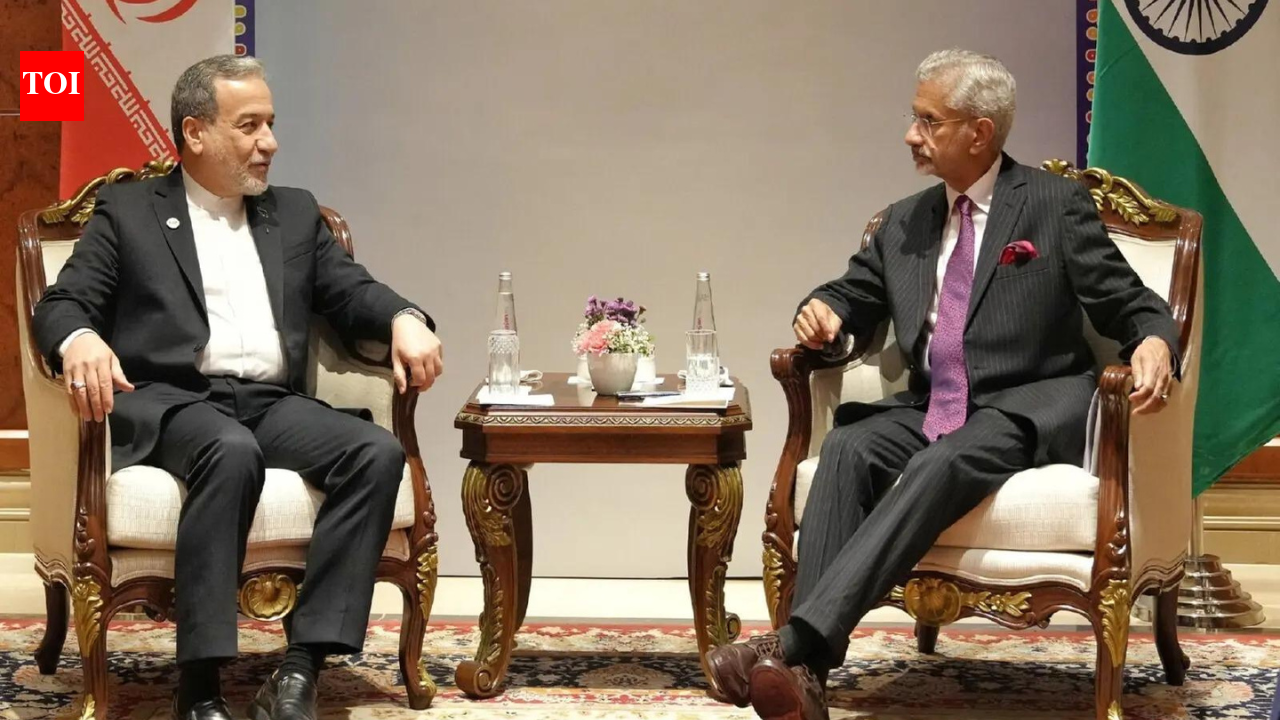
Foreign Minister S Jaishankar and his Iranian counterpart Seyyed Abbas Araghchi discussed the Middle East conflict and its implications, including the situation in the Strait of Hormuz, in their first bilateral meeting since the US-Israeli-Iran war began in February. Araghchi later said that his talks with Jaishankar were fruitful, discussing regional developments and clarifying that Iran will always fulfill its “historic duty as protector of security in Hormuz”.Seeking to address India’s concerns over disruption in energy supplies due to the Hormuz blockade, the Iranian minister said, “Iran is a reliable partner of all friendly nations, which can count on the security of commerce.” Iranian officials had said ahead of the BRICS meeting that Tehran would work with friendly countries such as India to facilitate the movement of commercial ships through the strait.Speaking at a press conference later, Araghchi also said India can play a bigger role in the region to help diplomacy and promote peace and security. The External Affairs Minister blamed the US for the economic consequences of the conflict, saying, “India is a friend of almost all the countries in the Persian Gulf, the northern and southern part of this Gulf. Therefore, we appreciate any positive, constructive role played by India in the region.” The Iranian Foreign Minister’s remarks are similar to those of his Russian counterpart Sergei Lavrov, in which he had said that India can contribute to diplomatic efforts for long-term peace. “Pakistan is helping to establish dialogue between the US and Iran to resolve urgent problems. If they look for a long-term mediator between Iran and its Arab friends, this role can be played by India given its vast diplomatic experience,” Lavrov had said. Asked about the situation in the Strait of Hormuz, Araghchi further said that the strait is open and all ships can pass through except ships from countries at war with Iran. “We have allowed many Indian ships to pass. Safe passage of all ships is our policy and in our interest. At the same time, we have a blockade by the US and there is insecurity in the region because of their aggression,” the Iranian minister said. Many Indian LPG tankers are still awaiting approval from Iran, with India diplomatically engaged with Tehran on the issue. It is said that Jaishankar stressed the need for freedom of navigation in the meeting. Araghchi also said that the talks mediated by Pakistan have not failed but added that the situation is difficult. The minister said, “There is still hope. When we met in Islamabad we could not reach any agreement, mainly because of the maximalist stance adopted by the US and their famous behavior of shifting the goalposts. Therefore, we are familiar with those tactics, and we cannot accept anything beyond a fair and balanced agreement.”

Source link

His New Jersey mansion had a saltwater pond surrounded by imported sand

Super-rich NRI who called himself 'recession-proof' sent to jail in 2008: His New Jersey mansion had a saltwater pool surrounded by imported sand
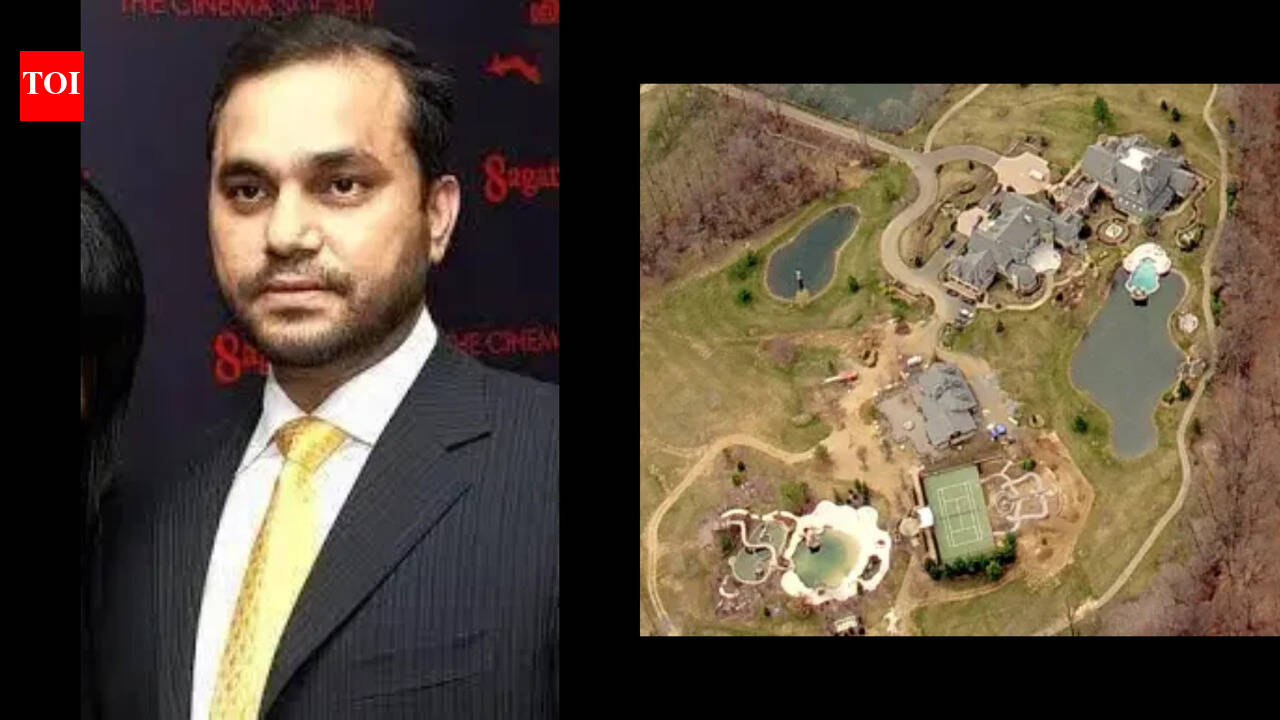
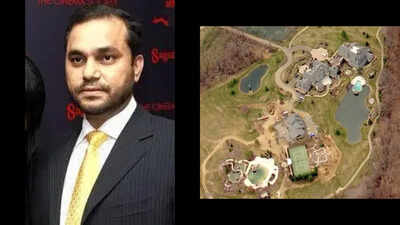
Super-rich NRI Paul Parmar was once known for his lavish lifestyle, including a 39,000 sqft New Jersey mansion.

Indian-origin investor Paramjit “Paul” Parmar, who once described himself as recession-proof as he continued to spend money in 2008, has been sentenced to five years in prison. Parmar pleaded guilty to conspiracy to commit securities fraud, which involved inflating revenues, falsifying bank records and misleading investors in the publicly traded health care company where he served as CEO. It is estimated that more than $212 million was involved in fraud.

39,000 square foot mansion in New Jersey

Parmar was known for his lavish lifestyle and his 39,000-square-foot mansion was widely featured in the media. An account from the time describes how his mansion had an underground tunnel connecting the main house to the entertainment building. The annex had an indoor pool, bowling alley, wine cellar, gym, mini theater, bar. One of the many ponds on the property was a saltwater pond surrounded by imported sand.In 2008, at the height of the global financial meltdown, Parmar gave interviews and declared that the recession had no effect on him and claimed that he was helping the economy by continuing to spend heavily on luxury goods. He told reporters that he had recently purchased a $110,000 BMW for his girlfriend and a Bentley for himself.However, by 2011, Parmar’s financial fortunes had reversed. The mansion entered foreclosure proceedings with approximately $26.3 million owed primarily to Deutsche Bank.

self made entrepreneur

In his previous interviews, Parmar had said that he grew up in India and came to the United States at the age of 19. He started out on his own without the support of his family. At the age of 25, he founded Pegagus Consulting Group and then ventured into several businesses.

Fraud

Court documents show Parmar’s legal troubles stemmed from his leadership at a health care company. He and others allegedly created fake customer lists, prepared financial statements and used fake documents to attract investors.“From May 2015 to September 2017, Parmar and his coconspirators, including Sotirios Zaharis, alias “Sam Zaharis,” and Ravi Chivukula, perpetrated an elaborate scheme to defraud a private investment firm and others of millions of dollars in connection with the financing of a transaction to take a publicly traded healthcare company private on the London Stock Exchange. To fund the transaction, the private investment firm invested approximately $82.5 million and a consortium of financial institutions invested an additional $130 million, for a total of approximately $212.5 million. “The conspirators used fraudulent means to inflate the company’s value excessively and cause others to believe that it was worth significantly more than its true value,” the court document said.

Source link

Chief Minister handed over subsidy checks and toolkits to the beneficiaries in Maharajganj Lucknow News

CM hands over subsidy cheques, toolkits to beneficiaries in Maharajganj

Lucknow: Chief Minister Yogi Adityanath On Friday, acceptance letters, cheques, toolkits and house keys were distributed to the selected beneficiaries of various public welfare schemes in Maharajganj district.Yogi also performed Annaprashan Sanskar for some children and gave them gifts. He also visited an exhibition at the venue.The CM distributed the toolkit to Angad under the ODOP scheme of the Industries Department, while Seema Kannaujiya received the toolkit under the Vishwakarma Shram Samman Scheme. Rajkumar Kushwaha was handed a check of Rs 30 lakh under the Panchayat Incentive Award Scheme. Bijna Devi received a check of Rs 10 lakh under the Gram Pradhan Panchayat Welfare Fund Scheme.Surendra Kumar, director of APO Kanchan Maurya Farmer Producer Company Limited, was given a subsidy check for distribution of agricultural equipment. Dwarka was handed over the keys of the agricultural machine (tractor) purchased with grant assistance. Pratibha Jaiswal received a project check worth Rs 5 lakh under the Chief Minister Youth Entrepreneur Scheme.Avtari Devi was handed over the keys of the house under the Mukhyamantri Awas Yojana, while Vinod got the Ayushman card from the health department. Under the Chief Minister Farmer Accident Welfare Scheme, a check of Rs 5 lakh was given to Urmila Devi as financial assistance.Meanwhile, the CM inaugurated several projects including providing clean drinking water through pipeline network in rural areas under Jal Jeevan Mission, installation of a transformer at 33/11 KVA power substation at Brijmanganj, construction of drinking water facilities, libraries and toilets in seven government schools under Project Alankar, integrated tourism development of Lehra Devi temple in Pheranda at a cost of Rs 4.90 crore.The projects for which foundation stones were laid include construction of 14 roads and three small bridges in Nautanwa and Pharenda, construction of 21.5 km Madari-Mahdedya-Chakdah-Shahpur Dhoti Ahwa-Kajri road at a cost of Rs 55 crore, construction of CM Model Composite School in Mudila village of Nautanwa at a cost of Rs 28 crore, construction of bridge over Rohin river in Semarhwa Gram Panchayat. Renovation work of Shiva temples in Lakshmipur development block and Bhagwanpur and Amodha at a cost of Rs 27 crore.

Source link

According to ADR report, almost half of the ministers have criminal cases, 48% ministers have criminal cases Patna News

According to ADR report, almost half of the ministers have criminal cases, 48% of the ministers have criminal cases.

Patna: A report by the Association for Democratic Reforms (ADR) and Bihar Election Watch has revealed that almost half of the ministers in the reorganized Bihar cabinet have declared criminal cases, while an overwhelming 90% are ‘crorepatis’. The findings were released on Friday after analyzing the self-affidavits of 31 of the 35 ministers, including CM Samrat Chaudhary, following the cabinet reshuffle on May 7.The affidavits were filed ahead of the 2025 Bihar Assembly and Legislative Council elections. According to the report, out of the 31 ministers analyzed, 15 or 48% have declared criminal cases against themselves. Nine of these ministers, or 29%, are facing serious criminal charges.The ADR clarified that the two ministers—JD(U)’s Ashok Chaudhary and BJP’s Pramod Kumar—are not required to submit affidavits as they are nominated members of the Legislative Council. The report also excludes RLM’s Deepak Prakash and JD(U)’s Nishant Kumar, as both do not currently belong to either house of the legislature.The wealth profile of the cabinet also came into sharp focus. Of the 31 ministers probed, 28 were found to be ‘crorepatis’, with average declared assets of Rs 6.32 crore. BJP minister Rama Nishad emerged as the richest among them, declaring assets worth Rs 31.86 crore. At the other end, Sanjay Kumar of LJP (RV) reported the lowest assets at Rs 22.30 lakh.On education, eight ministers or 26% stated qualifications between Class 10 and Class 12. Twenty-two ministers, or 71%, were graduates or held higher degrees, while one minister declared a diploma qualification.The age profile revealed that six ministers were in the age group of 30 to 50 years, while 25 were in the age group of 51 to 80 years. With only five ministers in the 35-member cabinet, women remained under-represented at only 14%.

Source link

The revolutionary canopy bridge enables western hoolock gibbons to cross the railway line. guwahati news

Success in ape conservation: Western Hoolock gibbon observed using new canopy bridge; An important step towards reuniting the fragmented population

Guwahati: For decades, the railway tracks passing through Hollongapar Gibbon Sanctuary (HGS) in Jorhat district of Assam did more than just carry trains. It bisected the forest canopy, turning tree-lined highways into dead ends and dividing families of India’s only ape species, the western hoolock gibbon, inside their only home in the country.Hoolock gibbons live almost entirely above ground, moving through the upper canopy with brachiation – swinging by their arms in long, fluid arcs. Where the trees stop, their world stops. The railway corridor created a gap that they could not safely cross, leaving groups on either side isolated and a small section of families trapped away from the larger population.But the story changed on Friday when a male gibbon was recorded crossing newly installed canopy bridges with safety nets on the railway line, bringing a ray of hope not only to the apes but also to many other canopy-dwelling animals.The Wildlife Institute of India (WII) said, “This is the first confirmed use of a gibbon in the sanctuary – and the first documented use of a canopy bridge structure on a railway line anywhere in the world!”WII said that while this is a moment of pride for all stakeholders and a ray of hope to reduce the impact of linear infrastructure on India’s only ape species, careful infrastructure planning, eco-conscious settings and creating repurposed corridors to connect disparate populations is especially important for the long-term survival of threatened species like arboretums and gibbons.The bridges were designed and deployed during February–March 2025 on the single-track Lumding-Dibrugarh railway line, which has been passing through Hollongapar since 1887. In a technical report released in May 2023, WII said that the approximately 1.65 route-km ​​long broad-gauge, electrified single track divided the sanctuary into two unequal parts.Listed as Endangered on the IUCN Red List, the Western Hoolock Gibbon faces constant threats – shrinking forests, tea cultivation, human encroachment and illegal trade.The report said, “Over time, the sanctuary has become a ‘forest island’, disconnected from the surrounding forest areas. Since gibbons are exclusively arboreal animals living in the upper canopy of the forest, they are particularly sensitive to canopy gaps. Thus, the gibbon families on both sides of the railway track have effectively become isolated from each other, compromising their population genetic variability and their already intact population in the HGS. “The threatened existence has become more threatened.”The sanctuary is spread over an area of ​​20.98 km², consisting of tropical semi-evergreen type forests and is home to about 125 gibbons. Hoolock gibbons are primarily monogamous and live in small family groups of six closely related individuals.WII has highlighted how fragmented the gibbon population in the Hollongapar Sanctuary has become. About 26 family groups live within the sanctuary, but the railway line passing through it has divided the habitat into two unequal compartments. On the one hand, in very small, only four to five gibbon families remain. With no adequate canopy connectivity across the tracks, these families have been effectively isolated from the larger population on the other side for decades.The sanctuary also harbors wild mammals like the Bengal slow loris, the only nocturnal animal found in the northeast, stump-tailed macaques, northern pig-tailed macaques, eastern Assamese macaques, rhesus macaques and capped langurs, Malayan giant squirrels and parti-coloured flying squirrels, which depend on the dense canopy.Efforts to bridge the canopy gap had been made earlier also. In 2015, the railways built an artificial canopy bridge made of iron at a location across the railway track, but the structure was used by arboreal mammals, including gibbons, because many of its design aspects were not compatible with the gibbons’ specialized form of movement in the canopy, known as brachiation or swinging by the arms or forelimbs.Earlier in 2006, a natural canopy bridge was developed through long-term plantation activities on both sides of the railway track through the joint efforts of Aaranyak (a Guwahati-based conservation NGO) and the state forest department. WII reported that this natural canopy bridge was established and used only by gibbons until 2019, but this natural connectivity did not survive as the railway regularly cuts trees and branches as part of track maintenance activities.Union Environment Minister Bhupendra Yadav lauded the effort, calling it “technology-based conservation” and proof that “even small-scale science-based efforts can help greatly in biodiversity conservation.”“A happy moment from Holongapar. A year after installing the arboreal canopy bridge, the Hoolock gibbon is now using it to cross the railway track safely,” Assam CM Himnata Biswa Sarma said in a post on Instagram.

Source link

NECF demands immediate intervention from DC on dam on Falguni river

NECF demands immediate intervention from DC on dam on Falguni river
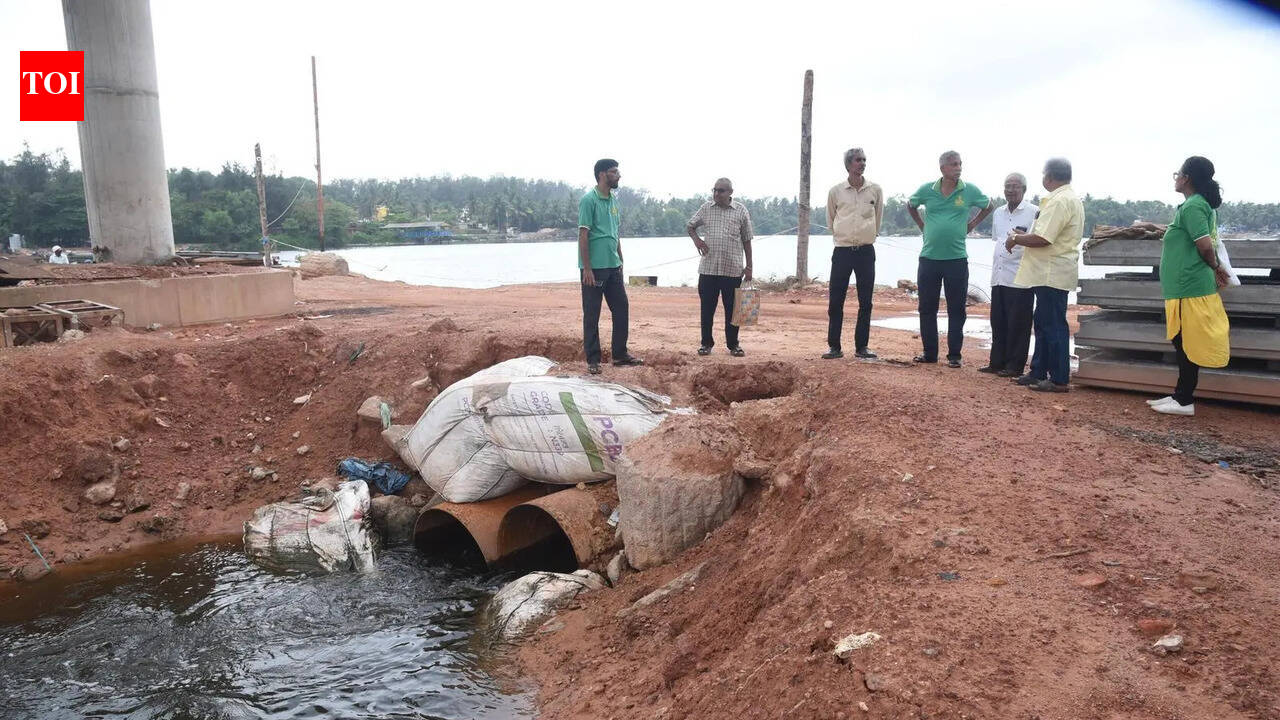
Members of the National Environment Care Federation inspecting the temporary dam built on the Phalguni river as part of the ongoing overbridge construction project between Sultan Battery and Tannirbavi in ​​Mangaluru on Thursday.

Mangaluru: Seeking immediate intervention, the National Environment Care Federation (NECF) has written to the Deputy Commissioner of Dakshina Kannada over the coffer dam built on the Phalguni river as part of the construction of an overbridge between Tannirbhavi and Sultan Battery.The appeal is as follows: Site inspection by NECF environmentalistswho described the structure as a “gross violation of environmental laws”. In its letter, the organization alleged that Mangaluru Smart City Limited’s “earthen dam” has blocked the river and warned that, with the south-west monsoon expected within a few weeks, the blockage could prevent discharge of upstream rainwater and cause severe backwater flooding in downstream areas.NECF also pointed to threats to aquatic life due to stagnation caused by the dam, which it said traps industrial effluents and sewage from Kullur, Baikampady and Malvur areas. It says the resulting toxic build-up threatens fishing communities and residents by increasing the risk of waterborne disease and groundwater pollution.According to the organisation, the reduction in tidal flow has led to reduced dissolved oxygen levels, leading to fish kills and violation of the Water (Prevention and Control of Pollution) Act, 1974. It also alleged violation of national waterways norms.NECF urged the administration to open the dam before the first week of June, conduct a joint inspection with KSPCB, revenue and minor irrigation departments, remove the dumped soil and debris to restore the depth and carrying capacity of the river and submit an action taken report within 10 days.Separately, the organization has demanded immediate site inspection for CRZ compliance from the Regional Director (Environment) and filed a complaint against MSCL with the Karnataka State Pollution Control Board.

Source link

China says Xi will visit America on September 24 at Trump’s invitation

China says Xi will visit America on September 24 at Trump's invitation
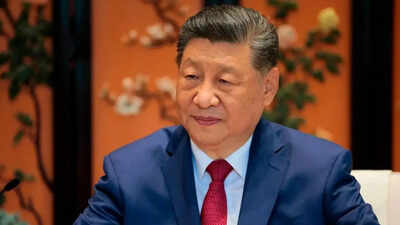
Xi on US tour (Image credit: AP)

Chinese President Xi Jinping will pay a state visit to the United States in the autumn at the invitation of US President Donald Trump, China’s top diplomat Wang Yi said on Friday.Wang made the announcement while briefing reporters on the recently concluded meeting between Xi and Trump in Beijing. He called on both sides to make full preparations, create a conducive environment, and work together to produce greater results for future talks and exchanges between the two leaders.Trump concluded a two-day visit to China on Thursday, during which he held talks with Xi and attended several official events in Beijing. During the visit, Trump said he had invited Xi for a mutual visit to the White House on September 24, and the White House described the meeting between the two leaders as “good”, saying they discussed ways to enhance economic cooperation.

Source link

Fatah-3 Vs Brahmos: Fatah-3 vs BrahMos: Why Pakistan can’t match India’s missile edge

Fatah-3 vs BrahMos: Why Pakistan can't match India's missile edge

For years, India’s BrahMos missile occupied a near-mythical space in South Asia’s military balance, fast enough to terrify adversaries, precise enough to hit the smallest of targets and difficult enough to intercept that it fundamentally changed how India executed critical tasks during Operation Sindoor.Pakistan, meanwhile, largely relied on a mix of ballistic missiles, subsonic cruise systems and nuclear deterrence to balance India’s growing military edge.Being at the receiving end of such a weapon, now Islamabad too appears eager to show that it too has entered the supersonic precision-strike club.Pakistan’s recent Fatah-3 missile test is being projected by several commentators as the country’s closest answer yet to BrahMos. But beneath the military optics and patriotic messaging lies a more complicated reality. South Asia’s missile race is now about far more than just India and Pakistan.It is increasingly about China’s growing military footprint inside Pakistan’s defence ecosystem, from fighter jets and radars to missiles and air-defence systems.And that raises the bigger question: Is Fatah-3 truly a Pakistani technological leap, or simply the latest example of Islamabad borrowing strategic parity through Chinese hardware, designs and support?Islamabad’s Fatah-3 test has also reignited debate over whether Pakistan is finally developing a credible answer to India’s BrahMos and whether New Delhi’s long-held monopoly in precision stand-off warfare is beginning to face a serious challenge.The answer matters because missiles today are not merely weapons. They are instruments of signalling, deterrence and escalation control. Their performance can shape battlefields within minutes and alter regional power balances for years.The timing is also significant. The discussion around Fatah-3 comes a year after Operation Sindoor, during which India reportedly used BrahMos missiles and other precision weapons to strike Pakistani military infrastructure with remarkable accuracy while successfully nullifying much of Pakistan’s retaliatory missile and drone fire.That operational contrast now forms the backdrop against which Pakistan’s new missile ambitions are being judged.

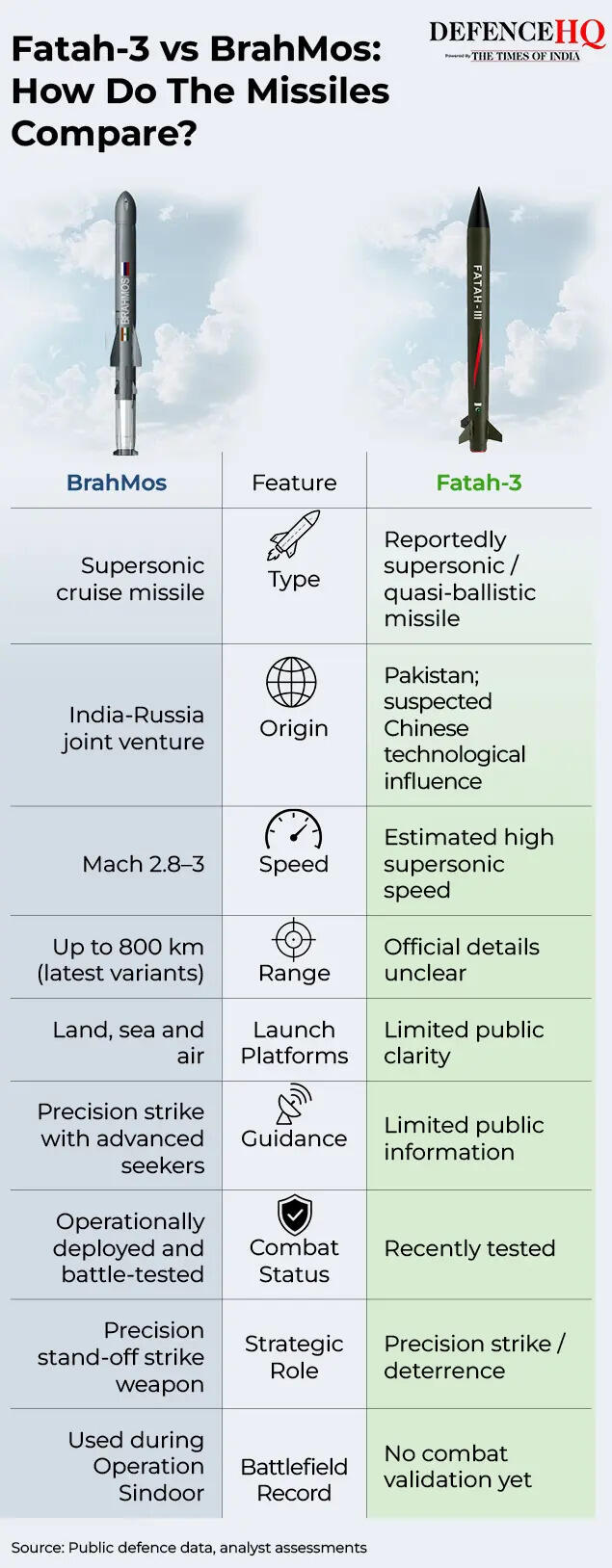
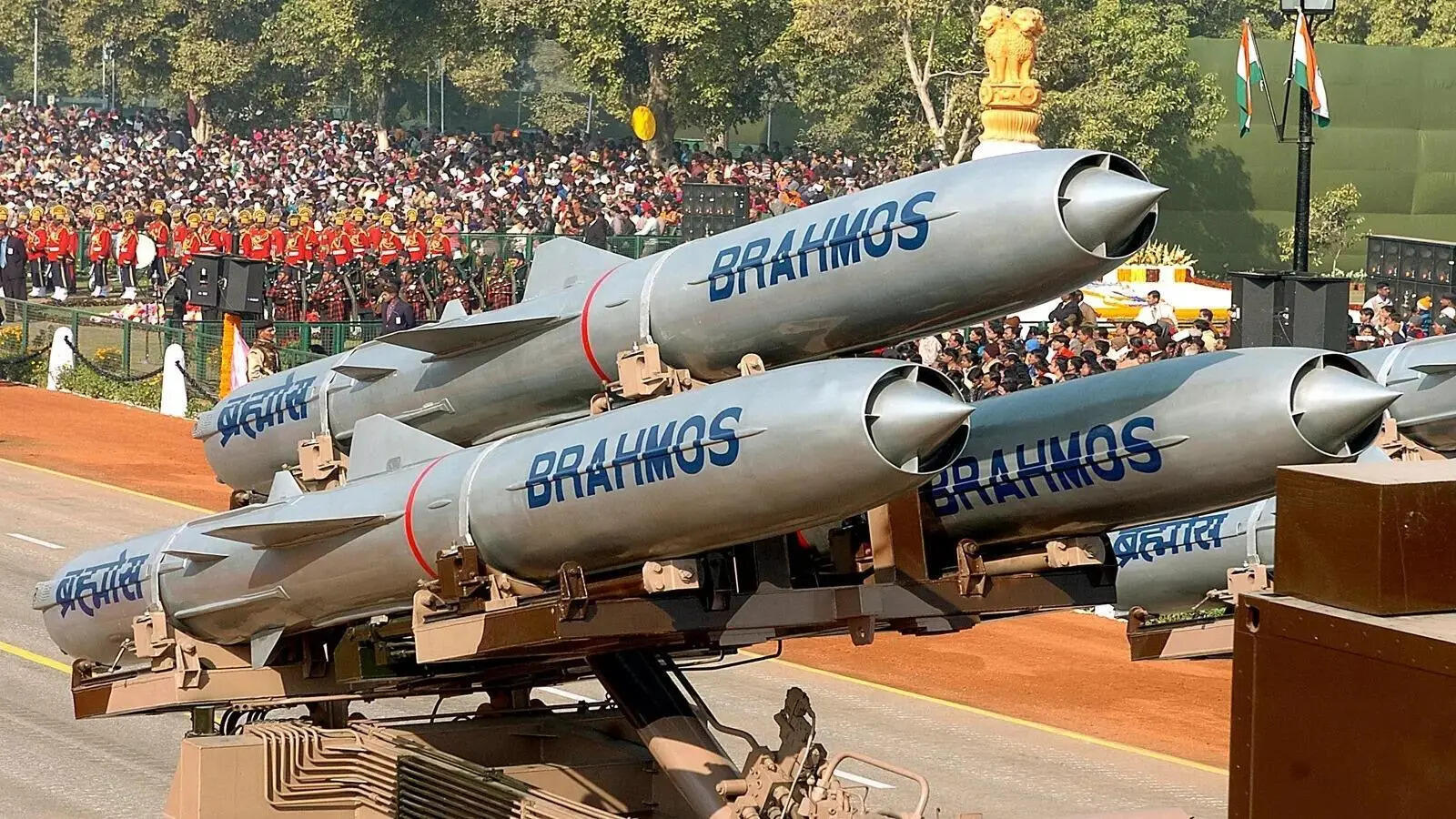
BrahMos vs Fatah-3

What exactly is Pakistan’s Fatah-3?

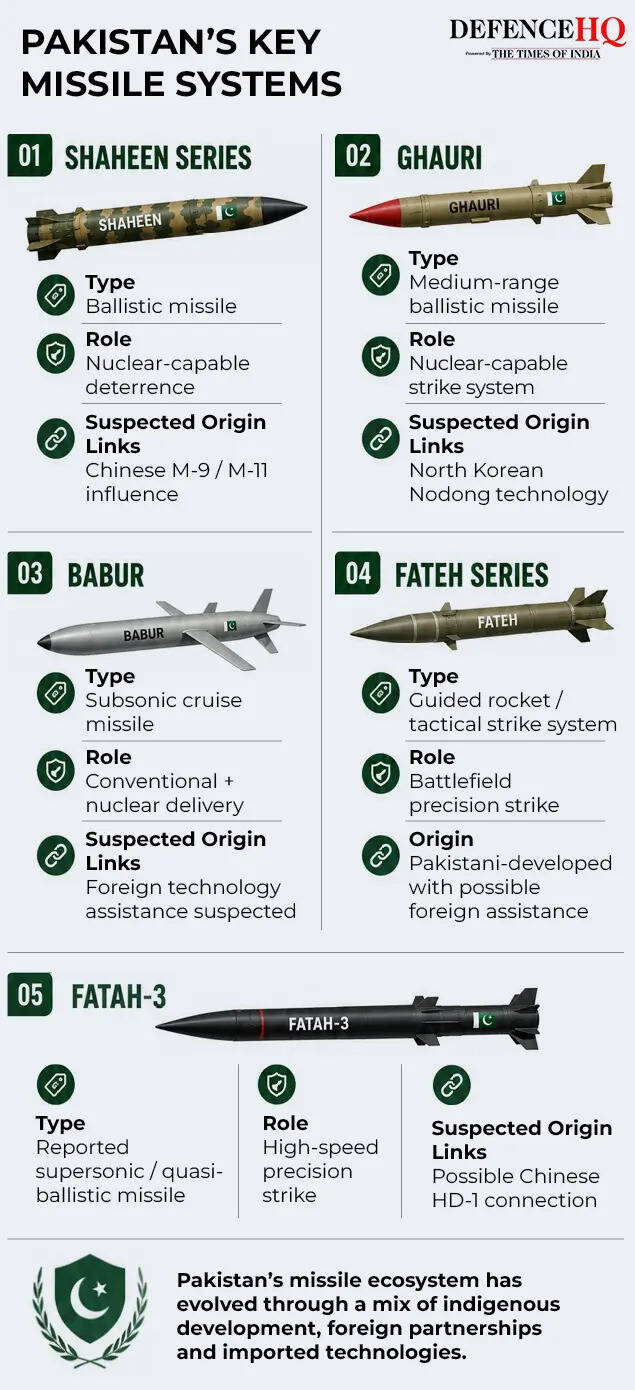
Pakistan has officially revealed little about the Fatah-3 beyond broad claims of precision-strike capability and extended ranges. That ambiguity itself is telling.Unlike India’s BrahMos programme, whose specifications, deployment patterns and operational roles are relatively well documented, Fatah-3 remains shrouded in uncertainty.Defence analysts believe the missile may either be a guided quasi-ballistic weapon or a supersonic cruise missile inspired by China’s HD-1 missile, a system developed for both anti-ship and land-attack roles.Reports from defence-focused publications and regional military analysts have pointed to visible similarities between the launcher systems and missile architecture associated with China’s HD-1 programme.Pakistan has neither confirmed nor denied those claims publicly.If those assessments are accurate, Fatah-3 would represent a major upgrade in Pakistan’s conventional warfare strategy. Islamabad has historically relied on ballistic missiles like Shaheen and Ghauri, alongside subsonic cruise missiles such as Babur or Fateh-series of guided rockets.These older systems primarily served deterrence, battlefield strike capability and nuclear delivery roles.

Pakistan's key missile systems

Fatah-3 appears aimed at something more ambitious, which is high-speed precision warfare designed to compress India’s reaction time during conflict.That is exactly the niche BrahMos carved out for India and gave it a decisive edge for years.

Why BrahMos changed the balance in South Asia

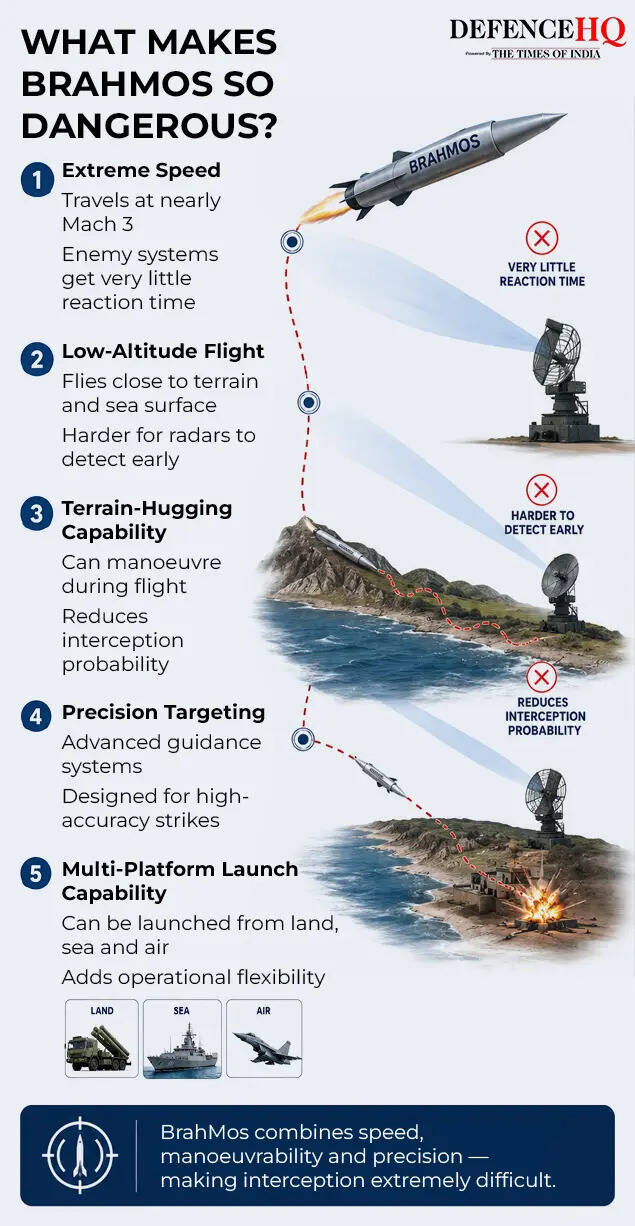
Developed jointly by India and Russia, BrahMos fundamentally altered India’s conventional strike doctrine.One of the world’s fastest supersonic cruise missiles has become one of New Delhi’s most potent conventional strike weapons.With speeds approaching Mach 2.8 to 3, the missile dramatically compresses enemy response time. It can be launched from land, sea and aircraft, making it one of the most versatile weapons in India’s arsenal.Unlike slower cruise missiles, supersonic systems are far harder to intercept because air defence systems have very limited time to detect, track and neutralise them.

What makes BrahMos dangerous?

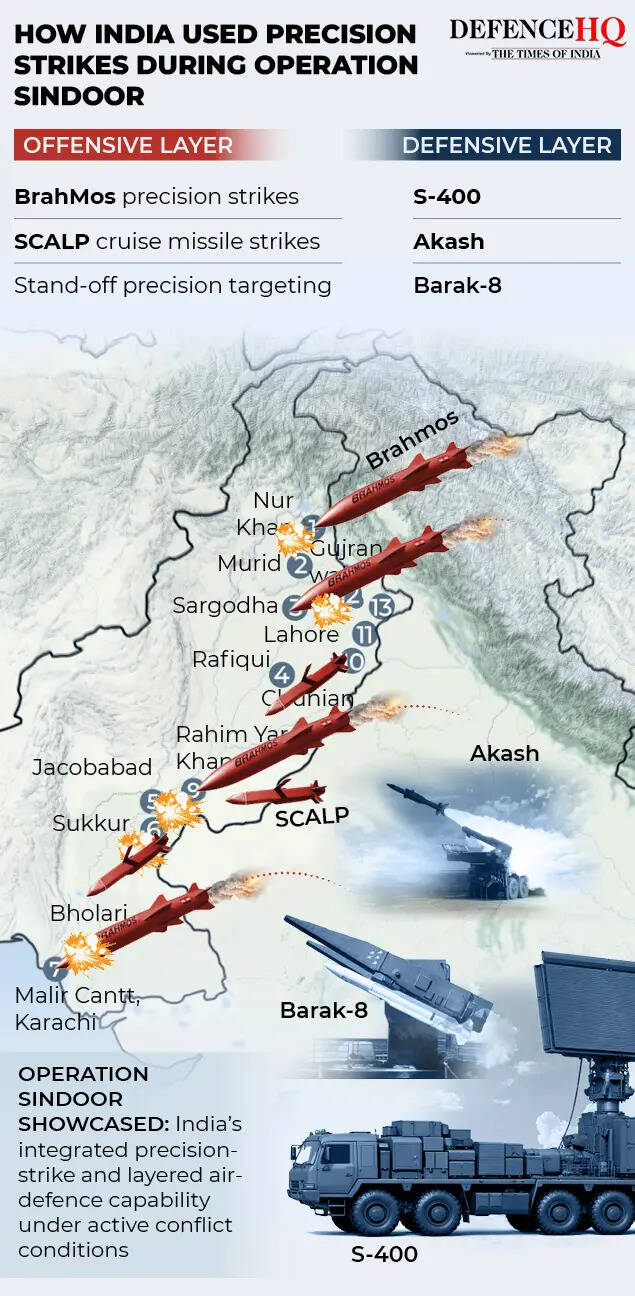
India has steadily expanded BrahMos deployment across the Navy, coastal batteries, frontline airbases and the Army’s strike formations.The missile has also become central to India’s strategy against both Pakistan and China, especially in high-intensity short-duration conflicts.The strategic value of BrahMos was demonstrated most visibly during Operation Sindoor in 2025.For years, BrahMos was viewed as a formidable weapon largely because of its technical capabilities. Operation Sindoor changed that perception by providing a real-world demonstration of how India’s precision-strike ecosystem functions during active conflict.BrahMos missiles were used in precision strikes against Pakistani military infrastructure and high-profile airbases such as Nur Khan.Indian strikes targeted multiple Pakistani airbases and command infrastructure using a combination of BrahMos missiles, SCALP cruise missiles and other stand-off weapons.The missile strikes were able to bypass Pakistan’s Chinese-origin air-defence systems and achieved high levels of precision.Moreover, Islamabad’s retaliatory missile and drone attacks were largely intercepted by India’s layered air defences, which include systems such as S-400, Akash and Barak-8.

How India used precision strikes during Operation Sindoor

As a result, the overall perception after Operation Sindoor was unmistakable. India’s offence appeared mature as it demonstrated operationally integrated precision-strike capability at scale, while Pakistan struggled to inflict comparable strategic damage.That real-world gap is important because missile programmes are ultimately judged not just by tests, but also by battlefield performance.“India’s precision strike capability and operational capability of the BrahMos were tested under fully operational conditions in Operation Sindoor. The Indian systems came through brilliantly,” Chatterji said.“Our multi-layered air defence also ensured our assets hardly faced any punishment from Pakistani platforms, including aircraft, drones and missiles”, he added.And that experience may partly explain why Islamabad now appears keen to strengthen its own precision-strike arsenal.

Is Fatah-3 really Pakistan’s “BrahMos”?

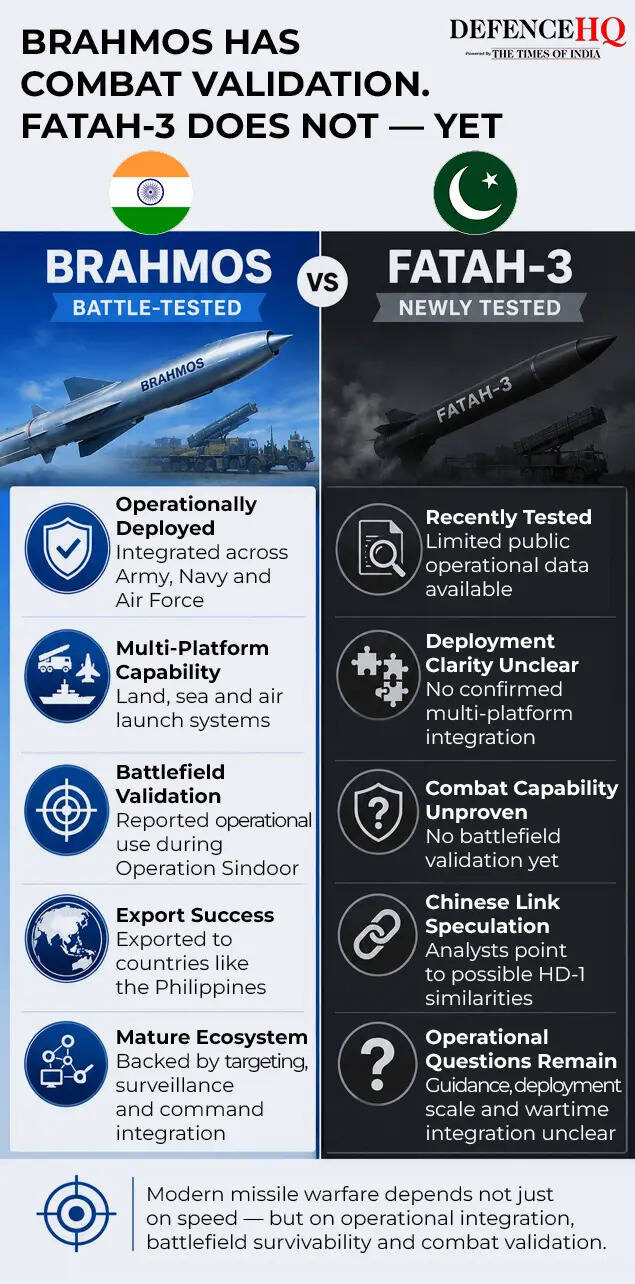
Technically, Pakistan may field a credible supersonic precision-strike missile. But matching the capabilities of the BrahMos involves more than just replicating speed or range. This is where the comparison becomes clearer as we delve into the details.On paper, Pakistan appears to be pursuing similar goals such as high-speed precision strikes, reduced interception windows and long-range conventional deterrence.But matching BrahMos requires far more than building a fast missile.Brigadier SK Chatterji (Retd), former DDG, Strategic Communication, Indian Army, author and strategic analyst, told TOI that BrahMos and Fatah-3 could appear “near peers” based on publicly available information, but stressed that India’s missile enjoys a major operational advantage.India has spent years integrating the missile into its Army, Navy and Air Force.“The BrahMos is a versatile system that has been tested operationally. It can be launched from land, ships and submarines, and also from fighter jets like the Su-30MKI,” he said.“Fatah-3 is a ground-based mounted system based on twin canister transporter erector launchers. It will take a lot of time to be transformed into a system as versatile as BrahMos”, he added.Also, Brahmos remains one of the few missiles globally that combines high speed, low-altitude flight and multi-platform deployment with a long and credible operational record, a major advantage that many rival systems still lack.

BrahMos

It has also undergone upgrades involving extended range, improved seekers and steeper terminal attack profiles.India’s advantage also lies in the ecosystem built around the weapon, which includes:

  • satellite-backed targeting
  • airborne surveillance
  • integrated command systems
  • multi-platform deployment
  • large-scale manufacturing capability

BrahMos is not just a missile, it is part of an integrated missile program that is woven into a warfighting architecture.Chatterji also argued that the supporting ecosystem around a missile is often more important than the weapon itself.“A missile is of little value until the entire support infrastructure, including detection, tracking, targeting, communications and command integration, is complete and efficient,” he said.Meanwhile, Pakistan may still be some distance away from replicating that ecosystem.Chatterji also noted that while Pakistan would certainly seek systems comparable to BrahMos, much would depend on the extent of advanced technology Beijing is willing to transfer directly.Moreover, its Fatah-3, at least publicly, has not yet demonstrated comparable deployment depth.There are still major unanswered questions regarding its production scale, guidance sophistication, resistance to electronic jamming, terrain-following capability and actual operational readiness.Even if Fatah-3 is heavily derived from Chinese technology, integrating such systems effectively into wartime doctrine is an entirely different challenge.Operation Sindoor reinforced this gap between acquisition and integration. Pakistan possessed Chinese-origin air-defence systems during the conflict but Indian strikes still managed to get results every time.In contrast, BrahMos has already undergone years of deployment, upgrades and operational integration.This difference between “testing capability” and “operational maturity” is critical.

BrahMos vs Fatah 3

Pakistan’s missile programme and the China factor

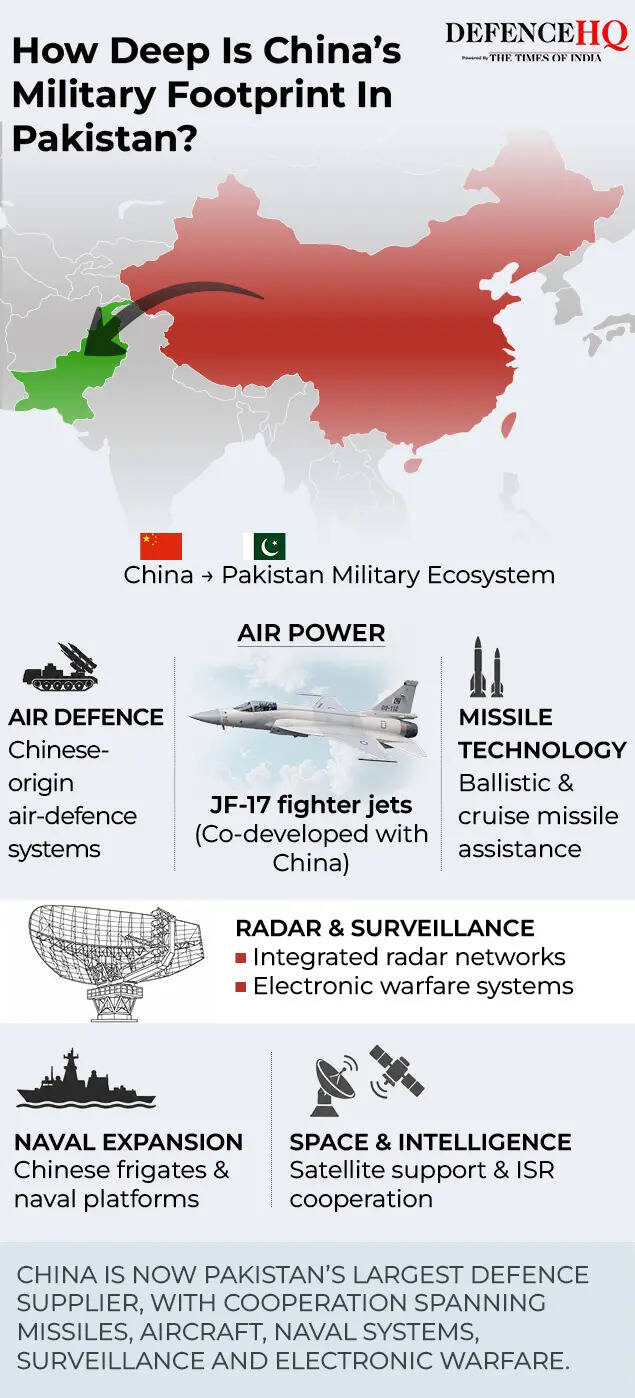
One of the most important angles in the induction of Fatah-3 is not the missile itself, but the long-standing pattern behind Pakistan’s military modernisation.Interestingly, Pakistan’s defence arsenal, especially missiles, has almost nothing indigenous, except for the paint that they use to rebrand and change the original names. Even their rebranded names are not of Pakistani origin but of invaders who plundered the same land where it is situated today.Pakistan has had a long history of external technological dependence. Its missile ecosystem has historically evolved through foreign partnerships, technology transfers and reverse engineering rather than fully indigenous development.For years, several Pakistani missile programmes have been linked to Chinese and North Korean origins.“Chinese assistance is crucial to the Pakistani defence sector making any progress using upstream technology. Pakistan’s missile programme has been supported by the Chinese all along,” he said, adding that Islamabad had also received significant assistance from North Korea.The Shaheen missile family, for instance, has often been compared to China’s M-9 and M-11 missile systems. Pakistan’s Ghauri missile has long been associated with North Korea’s Nodong missile technology.Its JF-17 fighter programme was co-developed with China. Even Pakistan’s naval expansion, radar architecture and air-defence systems now make the largest chunk of Chinese defence exports.Today, China is Pakistan’s largest defence exporter and Pakistan is the largest importer of Chinese defence systems..This military relationship has expanded beyond hardware into surveillance systems, satellite support, integrated radar networks, electronic warfare and air defence ecosystems.

How deep is China's military footprint in Pakistan?

Fatah-3 appears to fit into that broader pattern. That is why it is less likely to be an isolated Pakistani breakthrough and more as part of a wider China-Pakistan strategic alignment aimed at counterbalancing India.However, Operation Sindoor also intensified scrutiny of Chinese systems deployed in Pakistan.The failure of Chinese air defence systems raised uncomfortable questions not just for Pakistan, but also for China’s defence exports and military credibility.For Beijing, Islamabad serves as a strategic partner against New Delhi and a real-world testing ground for Chinese military technologies.Another important point to note is that even if Fatah 3 has Chinese imprints, it does not necessarily diminish the missile’s military value. Many countries build successful weapons using foreign technology partnerships. But it does weaken the narrative of Pakistan independently matching India’s missile innovation ecosystem.India’s BrahMos itself is a joint Indo-Russian programme, but New Delhi has steadily indigenised components, expanded manufacturing capability and integrated the missile across multiple combat platforms.Pakistan, by contrast, remains heavily dependent on external technological support for much of its military hardware.That distinction becomes important in prolonged conflicts where production scale, upgrades, battlefield integration and logistical independence often matter more than headline-grabbing missile tests.

Can India counter Fatah-3?

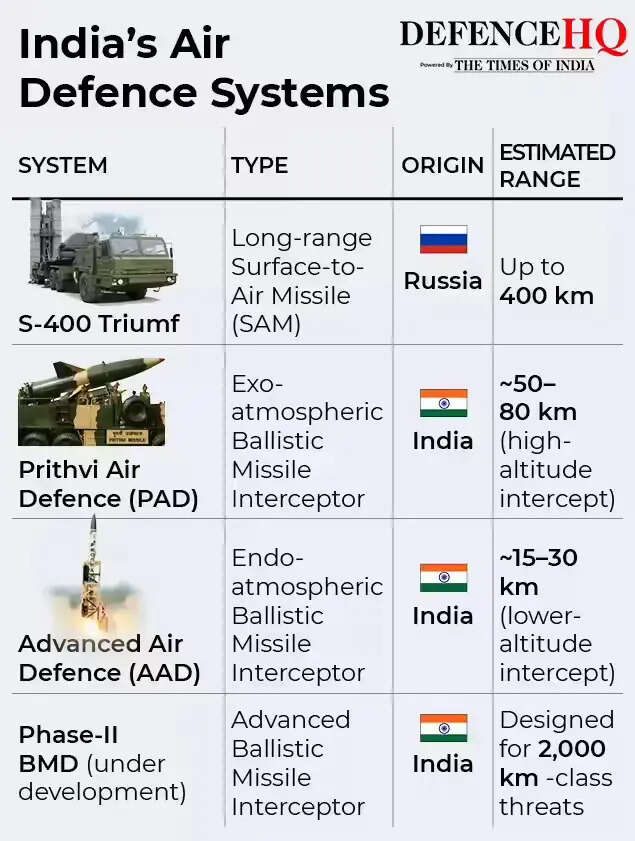
The uncomfortable reality is that even an imperfect supersonic missile can complicate battlefield calculations significantly.Supersonic missiles remain extremely difficult to intercept. These high-speed missiles reduce interception windows dramatically. Their combination of manoeuvrability and low-altitude flight places enormous pressure on radar and air-defence systems.However, even if Pakistan succeeds in operationalising a credible supersonic precision-strike missile, India is not entirely unprepared.India already possesses a layered battle proven air-defence architecture that includes:

  • The Russian S-400 system
  • Akash missile batteries
  • Barak-8 systems
  • indigenous missile defence projects
  • extensive radar coverage
India's air defence systems

Operation Sindoor itself was presented by Indian authorities as proof that India’s air-defence network could successfully intercept incoming Pakistani missiles and drones.Yet no defence system is foolproof.As a result, South Asia may now be entering an era where both sides increasingly prioritise stand-off precision strikes, rapid retaliation, electronic warfare and air-defence saturation tactics.Future India-Pakistan conflicts could become shorter, faster and far more difficult to control politically. Decision-making windows during crises may shrink even further.That raises escalation risks considerably, especially in a region where both countries possess nuclear weapons.

Strategic impact on India

The implications of this missile race go beyond defence alone.An intensifying India-Pakistan-China military competition could push India towards higher defence spending, faster procurement cycles, expanded domestic missile production and deeper investment in defence manufacturing.It could also strengthen India’s push for indigenous defence systems under the “Atmanirbhar Bharat” framework.Operation Sindoor already boosted confidence around Indian missile systems and precision warfare capabilities as BrahMos missiles achieved highly accurate strikes against fortified targets and airbases.That operational validation may further increase export interest in BrahMos and other Indian systems, especially among countries looking for battle proven high-speed precision weapons.India has already signed BrahMos export deals with countries like the Philippines and is exploring additional markets in Southeast Asia and the Middle East.Pakistan, meanwhile, appears to be trying to narrow the deterrence gap through Chinese-supported capability upgrades.

The bigger story is China

Ultimately, the successful test of Fatah-3 may not be about whether Pakistan has built a perfect BrahMos equivalent.The bigger story is that China increasingly appears to be helping Pakistan narrow specific military gaps with India, whether through fighter aircraft, air-defence systems, naval platforms or missile technology.For Beijing, Pakistan functions as a pressure point against India. For Islamabad, Chinese support offers a faster and cheaper route to military modernisation.But Operation Sindoor also exposed the limits of that strategy. Possessing advanced weapons is one thing; integrating them into a sophisticated, battle-ready military ecosystem is an entirely different ballgame.India currently retains advantages in operational integration, deployment scale, defence manufacturing and combat-tested precision warfare.Pakistan’s Fatah-3 may represent an attempt to reduce that gap, but it does not erase it overnight.Whether it can truly alter the strategic balance, however, will depend not just on missile tests or military parades, but on whether Islamabad can build the broader technological, industrial and operational ecosystem needed to sustain modern precision warfare.Still, the direction of travel is clear.The region is entering a new era of missile competition where speed, interception capability and networked warfare will increasingly define deterrence.In many ways, the real contest may no longer be about who builds the faster missile first. It may increasingly be about which country can integrate sensors, surveillance, targeting, air defence and strike systems into a seamless network capable of functioning under real combat conditions.And in that contest, the invisible hand shaping the battlefield may not belong to Islamabad alone, but to Beijing standing quietly behind it.

Source link