


UK weather forecast: April heat highlights climate change in UK; Seasonal temperatures are expected to rise again with changes in weather patterns

UK weather forecast: April heat highlights climate change in UK; Seasonal temperatures are expected to rise again with changes in weather patterns
Britain experienced unseasonably warm weather, peaking in mid-week when readings reached 26.6°C among the trees at Kew Gardens, one of the hottest early Aprils ever seen. Despite the prickles of sunshine, meteorologists say Atlantic waves are expected to bring wet skies, strong winds and a cool breeze through Saturday. The Met Office said Wednesday was hotter than any other day this year, making it the second hottest day of early April in history. Shortly before, Mona observed that the mercury had reached 24.8 degrees Celsius, which was unusually hot for April 7, breaking its own previous figure. Records show that places across the UK were hotter than places like Rome or Ibiza at the same time. That kind of heat surprised even experienced weather observers.According to Ben Rich of the Met Office, winds from southern areas of continental Europe brought unseasonal heat towards the UK, resulting in temperatures up to 10 degrees Celsius above normal in many places. While such patterns have occurred before, he said, today’s baseline warming, which is being shaped by long-term changes, is making the extremes more pronounced. Rather than isolated anomalies, current conditions reflect a broader trend where past temperature limits are being rapidly exceeded. Due to changed global systems, even simple seasonal movements now have stronger consequences than decades ago. While natural variability plays a role, underlying changes increase how cold it can get, and increase altitude even more. Weather predictions show clear changes ahead. From the Atlantic, westerly winds blow, bringing low temperatures and widespread rainfall to the British Isles. Although temperatures could reach 22°C by Thursday in parts of south-east England, the heat quickly dissipates. As cold air spreads, many areas adjust towards normal levels between 10°C and 14°C. This pattern will continue in the coming days. From the west, rain bands move forward without stopping, reaching wide areas. By Friday afternoon, heavy rain begins to fall across Northern Ireland, with winds reaching 50 to 70 mph across coastal areas there and western Scotland. Where cold air meets wet systems, the highlands of Scotland experience wintry weather, with sleet or snow possible. Despite light flows elsewhere, altitude brings changes. Conditions keep changing gradually as moisture persists. The air is coldest in northern areas and parts of the west at night, falling rapidly after dark. While the sky remains clear till Friday morning, the lower places experience severe cold. Under the empty clouds the warmth of the ground is quickly lost, making the morning seem brighter than before. Expect the weather to remain variable over the weekend, alternating between gloomy stretches and clear moments. In the northern regions, powerful winds blow from time to time, interrupting calm periods. In many places it continues to rain, often in the form of brief showers rather than steady rain. Meanwhile, southern regions see extended breaks without precipitation, with occasional sunlight filtering through. The eastern districts remain relatively free from cloud cover, although interruptions occur when systems move through the upper regions. A slow increase in temperature is expected after the coolness subsides in the beginning of the week. After this, spring-like patterns are likely to appear again. Despite a short period of unusual heat, seasonal rhythms appear to be resuming. That change reveals how local weather dances around long-term changes in Earth’s climate system.

‘How about a ban on the Indian caste system’: Controversy over Ann Coulter’s response to ban on Sharia law in Florida

Ann Coulter’s comments on the Indian caste system have sparked a new controversy.
Florida Governor Ron DeSantis signed a bill this week that blocks Florida courts from applying foreign laws, including Sharia law. orthodox writer Ann CoulterHis comments on this created a huge controversy because he did not say anything about the law or the bill; He talked about the caste system in India. “How about banning the Indian caste system? This is even more incompatible with America,” wrote Ann Coulter, reacting to a post that said Sharia law is incompatible with America. “Today in Tampa, I signed HB 1471 to protect the constitutional rights of Floridians from the application of foreign and religious laws, including Sharia law. This legislation also establishes a framework to combat terrorist organizations and ensure greater accountability for our education system. Millions for education and public safety, but not a cent for jihad!” Ron DeSantis declared. Social media users noted how Ann Coulter again aired her anti-India hatred where it had nothing to do with India. One wrote, “Anti-India hate is definitely a coordinated action with influential people this time. Everyone is doing it at once.” Some users told him that there is no practical Indian caste system, while some thanked him for raising the issue. Responding to Coulter, Suhag Shukla, executive director of the Hindu American Foundation, wrote, “I keep telling you all… the radical academic left and the xenophobic far right are exactly on the same page when it comes to targeting Hindus. The reasons are different, but the methods are the same.”In 2024, Coulter told Vivek Ramaswamy that she could never vote for him, because Ramaswamy is an Indian. At that time Ramaswami was a presidential candidate. In view of the controversy over this racist comment, Coulter said that it is not racist. “Blacks have been here longer than most whites. It has nothing to do with race. It has to do with being citizens for at least three generations. I think that’s a good rule of thumb.”“That’s why the Founders wanted the president to be natural-born — who Ted Cruz is not,” Coulter said. “President is different from any other position. I told him (Ramaswamy) he can be a Secretary of State, can be a Supreme Court judge, can be a Governor. But President, I think we have to wait for the third generation.”
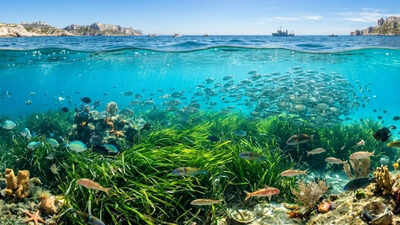
Marseille miracle: how reducing pollution brought the ocean back to life world News
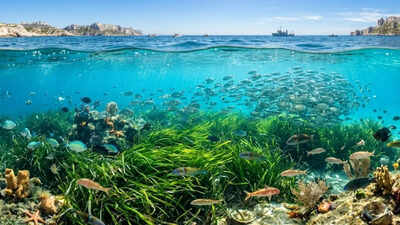
The regeneration of Posidonia oceanica seagrass meadows in Marseille represents an important example of marine resilience, demonstrating nature’s ability to recover when pressures imposed by humans are reduced. Over the years, the city’s untreated wastewater has destroyed large sections of Posidonia oceanica grasslands, which provide important ecosystem services such as carbon storage and habitat for many marine species. Following the construction of a new major waste water treatment plant in 1987, as well as the introduction of several industrial use restrictions, researchers have shown that recovery rates have been ‘extraordinary’. The grasslands were able to expand on their own at low cost by using a method called passive restoration, as opposed to the more expensive method of planting seagrass seedlings. Underwater forests (grasslands) now cover large areas of the ocean floor, creating a global model for coastal protection and demonstrating the long-term success of implementing strict pollution control policies.
How pollution cuts brought seagrass back to life in Marseille, France
The research, published in Marine Environmental Research, highlights that the primary driver of the return of Neptune grass was a drastic reduction in organic matter and industrial pollutants. By 1987, the city of Marseille transferred its sewage system to use a treatment plant, which, as a result, produced less filth in the area. As a result, light can penetrate to the sea floor and allow the natural expansion of existing seagrass beds that had been dormant or declining for about 100 years.
Why did nature defeat human intervention?
The study in Marseille showed that passive restoration, such as in removing the source of degradation, was far more effective than human-directed planting efforts. Active restoration often results in very low success rates and high costs, but the natural restoration of Posidonia oceanica within the Gulf of Marseille demonstrates that once water clarity and sediment quality are restored, the species has considerable resilience.
How do seagrass support the Mediterranean climate?
The ‘lungs of the Mediterranean’ are extremely important in providing essential services of shoreline protection and carbon storage. The European Environment Agency has considered the recovery of these meadows as important for achieving ‘Good Environmental Status’ (GES) under the Marine Strategy Framework Directive, particularly along the coast of France. Seagrass recovery near Marseille is an important contributor to regional biodiversity, providing habitat for hundreds of different marine species.
How EU directives protect Marseille’s marine life
The current health of the seagrass is strongly linked to compliance with the EU Urban Wastewater Treatment Directive, as confirmed by regular monitoring carried out by the French Water Agency (Agence de l’Eau). Regular sampling of coastal waters near Marseille indicates a reduction in levels of heavy metals and nitrogen, which were previously causing algal blooms (eutrophication) that were suppressing seagrass populations.

ICE releases newlywed wife of US soldier arrested from military base, equips her with GPS monitor

The wife of Army Sergeant Matthew Blank was arrested by ICE as soon as he reported to their Louisiana base.
Immigration and Customs Enforcement released Annie Ramos, 22, the wife of Army Sergeant Matthew Blank, who was arrested on April 2 after Matthew reported to his military base a few days after their wedding. Ramos was brought to the US as a child from Honduras and is undocumented, but her green card application was in the process when she was arrested. A DHS spokesperson said that Ramos will wear a GPS monitor as long as she remains free and that the government will continue removal proceedings against her. Ramos is eligible for DACA (Deferred Action for Childhood Arrivals) but the program is on hold for new applicants due to legal hurdles. Ramos received a scholarship from TheDream.US, which helps undocumented youth pay for school. Undocumented immigrants married to U.S. citizens are eligible for marriage-based green cards. Relatives of soldiers are also eligible for other benefits and her husband said he was registering his wife’s name for this purpose when authorities asked him for US ID proof which he did not have – and he was ultimately arrested. Sergeant Blank said in a statement after Ramos’s arrest, “I never imagined that trying to do the right thing – registering my wife so she could get her military ID, getting the benefits she is entitled to as my spouse, and starting the process for her green card – she would be taken away from me.” “Instead of preparing for our future together, I’m now fighting for her freedom.”“I’m proud to serve this country. I’m proud to be her husband.” And I will stand by him, no matter what it takes,” Blank said of Ramos.DHS said the arrest was made under existing regulations as an undocumented individual attempted to enter a military base. A DHS spokesperson said, “He has no legal status to be in this country and was issued a final order of removal by a judge. This Administration will not ignore the rule of law. He crossed the southern border illegally and entered the US in February 2005. After failing to appear for his immigration hearing, he was issued a final order of removal by a judge on April 7, 2005.” She was 20 months old at that time.

Taste the Soil: London’s Edible Earth Museum invites visitors to eat soil from around the world world News

At first glance, it seems like a stunt, but in central London, visitors are being invited to do something surprisingly rooted in human history: taste the soil. The Edible Earth Museum, currently on display at Somerset House, brings together Edible Earth specimens from around the world and transforms them into a sensory, educational experience. Far from gimmicky, the exhibition explores geophagy, the practice of eating soil, through science, anthropology and art. By combining tasting sessions with research-backed context, it challenges modern notions about what is considered food and opens deeper conversations about humanity’s relationship with the Earth.
What is the Museum of Food Earth?
The Edible Earth Museum is an interdisciplinary project created by artist and researcher Masharu. It houses a growing collection of over 600 edible soil samples collected from over 40 countries, each documented with cultural, historical and chemical context.Rather than presenting clay as a strange or taboo object, the exhibition presents it as a meaningful material. Visitors experience the clay not only visually, but also through smell, texture and taste, turning the exhibition into a completely immersive experience, blending art installation with scientific investigation.
Global History of Eating the Earth
Eating soil may seem unusual in modern urban environments, but geophagy has been practiced for centuries in Africa, South America, Asia, and parts of Europe. Anthropologists have documented its use in traditional medicine to soothe digestive problems, as a source of minerals such as iron and calcium, and in cultural rituals or pregnancy-related cravings.In some areas, specially prepared soil is also sold in markets as a consumable product. The exhibition highlights these traditions to show that clay consumption is not a marginal behavior, but a culturally embedded practice with historical depth.

What does mud really taste like?
One of the most interesting aspects of the exhibition is how it presents clay as a sensory experience. Different types of soil impart different flavors. Clay may taste greasy and slightly metallic, chalky clay may feel dry and mineral-heavy, and volcanic clay may have a smoky or earthy depth.Each sample is accompanied by tasting notes similar to those used for wine or coffee, encouraging visitors to engage with the soil in a structured and thoughtful way.Scientific research has revealed why humans and animals consume soil. Some explanations suggest that some clays provide essential nutrients, while others may help bind toxins and pathogens in the digestive tract. Clay can also act as a protective layer against irritants in the gut.However, scientists warn that not all soil is safe. Contaminants such as heavy metals, bacteria and parasites can pose risks, which is why the exhibition uses carefully obtained and prepared samples.
is it safe eat soil ?
Organizers emphasize that the tasting experience is controlled and optional. Visitors are guided through the process, and the soil provided is selected with safety in mind.That said, health experts don’t recommend casually eating soil outside of such curated settings. The exhibition aims to educate and inspire thought, not to encourage everyday consumption.
A living collection of human experience
One of the most unique elements of the exhibition is its participatory nature. Visitors are invited to leave their own tasting notes and responses, contributing to a growing collection of how people view the soil.This turns the exhibition into a collaborative project where science, culture and personal experience intersect, creating a broader understanding of how humans relate to something as fundamental as the ground beneath their feet.
Sustainability and environmental reflection
The exhibition also conveys a strong environmental message. Many of its elements are made using recycled materials, including compost and organic waste recovered from previous establishments.By focusing on soil, the exhibition draws attention to the foundations of ecosystems and agriculture. It encourages visitors to think about soil not as dirt, but as a vital resource that supports life, food systems, and environmental balance.The idea of eating soil has generated widespread curiosity online, leading to conversations on social media. While the shock factor draws people in, the deeper appeal lies in the exhibition’s ability to connect science, culture and everyday experience.It challenges deeply held ideas about hygiene, food and nature, causing visitors to question assumptions they might never have thought about before.The Edible Earth Museum is more than an unusual attraction. It is a thoughtful exploration of history, science and sustainability that uses a simple yet provocative idea to engage audiences. By inviting people to taste the soil, it transforms an overlooked material into a powerful lens through which to examine culture, health, and humanity’s relationship with the planet.

Pacific Ocean temperatures rising: NOAA warns: Super El Nino could form in 2026 amid unusual temperature rise in Pacific region and growing threat of extreme global weather patterns | world News

Climate forecasts for the region around the Pacific Ocean point to the emergence of changes in the global climate. At present the La Nina situation seems to be weakening. In such a situation, there is speculation that the latter half of the year 2026 may witness the emergence of El Nino phenomenon. Reports from climate experts and organizations such as the National Oceanic and Atmospheric Administration show gradual changes in ocean conditions, including warming trends. Currently, the system is still in neutral state and awaiting further development.These forecasts are made using traditional techniques employed to monitor ENSO activity.according to NOAAA transition from La Niña to ENSO-neutral is expected within the next month, with ENSO-neutral conditions likely to persist until May–July 2026 (55% probability). By June–August 2026, El Niño is projected to develop (62% probability) and is expected to last until at least the end of the year.
super el nino 2026 : early signs of a potentially violent event
What makes predicting the future interesting is the high probability of the event occurring. Some forecasts suggest that the climate is likely to shift from neutral ENSO conditions to El Niño conditions in the mid to late 2026s. There is some speculation that warming in significant areas could exceed the limits associated with strong events or even super events. In the past, such events included the strong El Niño episodes of 1982–83, 1997–98, and 2015–16.One of the predictive factors of interest is model stability. It often means something when multiple models start showing the same forecast trend. However, it should be noted that seasonal forecasting is uncertain.
Super El Nino 2026 global weather impacts
El Nino affects the jet stream. This change can alter rainfall, temperatures and the path of storms in different regions. In parts of the southern United States, wet and cool conditions are often seen during strong El Niño events. Meanwhile, northern areas may experience a mild winter. These patterns vary from year to year depending on intensity and timing.Globally, the effects may be mixed. The risk of rainfall and floods has increased in some areas. Others may see dry conditions or thermal anomalies. Agriculture, water resources and ecosystems can all feel the impacts.
Super El Niño 2026 and its impact on the Atlantic hurricane season
One area that is often discussed is the Atlantic hurricane season. El Nino conditions increase wind shear over the Atlantic Basin. That shear can make it harder for storms to form and intensify.Historical data suggests fewer hurricanes during strong El Niño years, although exceptions exist. Even in calm weather, a single major hurricane can cause significant damage if it reaches land. For 2026, the early outlook indicates that ENSO conditions may remain neutral for parts of the summer before El Niño strengthens later in the year. Hurricane activity in the early season may not be greatly affected, while late season patterns may change.
Understand the term ‘El Nino’
According to USA Today, El Nino is a component of a larger climate system called the El Nino-Southern Oscillation (ENSO). The term “El Nino” refers to unusually high sea surface temperatures in the eastern region of the Pacific Ocean.When this happens, the trade winds weaken, and warm currents that normally move west begin to move east. The rise of cold current has also reduced. As a result, ocean warming affects atmospheric circulation, affecting weather systems around the world. This occurs every few years, usually for nine to twelve months, although sometimes for longer periods.
Why is “Super El Nino” being mentioned?
The phrase “Super El Niño” is not an official classification used by agencies such as NOAA. It is a descriptive term used when anomalies in sea surface temperatures become exceptionally high. According to Forbes, some researchers and commentators reportedly use it when anomalies in major Niño regions exceed the average by about 2.5 degrees Celsius. That level has been associated with some of the strongest events historically recorded.
what to expect next
Forecast confidence generally improves as the year progresses. Spring is considered a difficult period for ENSO prediction due to changing atmospheric conditions. Currently, the general outlook suggests a gradual transition from neutral conditions to El Niño by mid-2026, with strong potential by late 2026. Whether it will reach “super” status remains uncertain.Models will continue to be updated. Observations will guide direction. Ocean temperatures, wind patterns and atmospheric reactions will all play a role. But the signals are strong enough that scientists are keeping a close eye, and global weather systems may begin to respond if warming trends continue.

British pastor charged with murder after man drowned during his own ‘born again’ baptism

A baptism being streamed to a small online congregation ended in a death that is now the subject of a criminal case, after a 61-year-old man drowned during the ceremony in Birmingham.Grandfather-of-seven Robert Smith, from Brixton, south London, died at a property on Slade Road in Erdington on October 8, 2023, while attending a baptism conducted by pastor Cheryl Bartley, the BBC reports. Bartley, 48, has been charged with manslaughter by gross negligence and is due to appear at Birmingham Magistrates’ Court on May 14.The ceremony took place in a small paddling pool set up in the garden of the address and was broadcast live Facebook Through Life Changing Ministries, the church Bartley is involved with. The livestream was cut short as the incident unfolded and later deleted.

Life Changing Ministries, led by Pastor Cheryl Bartley, live-streamed the baptism and hosted the ceremony Robert Smith/ Image: Facebook
Smith, who suffered from Parkinson’s disease, was described as a longtime member of the congregation in a Facebook post shared by the church after his death. The post indicated that he had been part of the church for four years and had traveled to Birmingham specifically for the baptism. Although he had previously been baptized as a teenager, he sought a second ceremony after being described by the church as a “born-again believer”.

Robert Smith, a 61-year-old grandfather of seven from Brixton, suffered from Parkinson’s disease and worked as a barber/ Image: Facebook
Emergency services responded to the scene and administered advanced life support, but Smith could not be revived and was pronounced dead before he could be taken to hospital. After being born in Jamaica, he had been living in Britain for more than 25 years and worked as a barber. At the time of his death, he was preparing to welcome his eighth grandson.The Crown Prosecution Service confirmed charges against Bartley following an investigation by West Midlands Police. Malcolm McHaffie, head of the CPS Special Crime Division, said: “We have decided to prosecute Cheryl Bartley, 48, with manslaughter by gross negligence in relation to her role as a priest during a baptism.”They added: “This follows the death of Robert Smith, 61, of Brixton, south London, who died by drowning in Slade Road, Erdington on 8 October 2023.”“Our prosecutors have worked to establish that there is enough evidence to bring this case to court and that it is in the public interest to pursue criminal proceedings.”

Cheryl Bartley is due to appear at Birmingham Magistrates’ Court on May 14 charged with manslaughter/Image: Facebook
McHaffie also stressed the legal sensitivities associated with the case, saying: “We remind all relevant parties that criminal proceedings against this defendant are active and he has a right to a fair trial. It is important that no reporting, comment or information be shared online that could in any way adversely affect these proceedings.”The circumstances of how the drowning occurred during the baptism have not been described in court, and the case will now proceed through the judicial process

Kuwait flight cancelled: Kuwait’s Jazeera Airways cancels flights to 9 Indian cities till May 15, offers refund. world News

Jazeera Airways has suspended its services to nine Indian cities for more than a month, with the changes taking effect from April 10, citing operational reasons.The airline confirmed that flights to Coimbatore, Goa, Kannur, Kozhikode, Lucknow, Madurai, Mangaluru, Tiruchirappalli and Vijayawada will remain canceled till May 15.Passengers affected by the cancellation will be given a full refund. However, those who booked tickets through travel agents will receive the amount in the form of a credit shell. For direct bookings made through the airline’s website or app, refunds can be processed through the same platforms.Jazeera Airways Chief Executive Officer Barathan Pasupathi acknowledged the disruption and said the airline regretted the inconvenience caused. “We sincerely apologize to our customers for the inconvenience caused by this cancellation. These decisions are never taken lightly and are driven by operational circumstances beyond our control,” it said.Despite the temporary suspension, the airline continues to operate services to eight Indian destinations from its base in Dammam, he said. “Our commitment remains unwavering. We continue to serve our eight destinations in India through our operational base in Dammam, supported by approximately
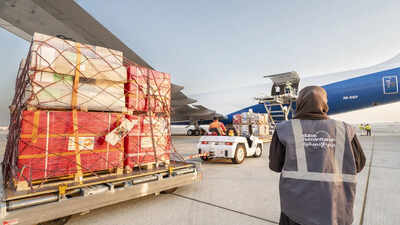
Dubai News: Dubai Humanitarian Aid delivers 96 tonnes of medical aid to Afghanistan: UAE-led effort to aid 250,000 beneficiaries | world News
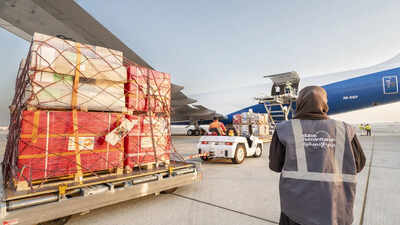
Dubai has strengthened its role as a global humanitarian hub; Dubai Humanitarian airlifted 96 metric tons of critical medical supplies to Afghanistan.The shipment departed from Al Maktoum International Airport and arrived in Kabul as part of a coordinated response including key international agencies. World Health OrganizationMédecins Sans Frontieres and UNICEF.The cargo includes emergency health kits, essential medicines and primary health care supplies designed to maintain hospitals and clinics operating under severe constraints. Officials confirmed that the shipment is expected to support more than 250,000 people for three months, helping to maintain continuity of care in critical areas.
UAE led operation
The airlift represents a highly coordinated logistics effort involving government officials, humanitarian agencies, and supply chain partners. Dubai Humanitarian acted as the central hub, enabling the consolidation, storage and dispatch of supplies within a short operational period.According to Giuseppe Saba, CEO and board member of Dubai Humanitarian, the mission demonstrates how integrated logistics platforms can ensure fast, reliable and uninterrupted delivery of aid even in complex and high-risk environments.Dubai’s infrastructure allows humanitarian partners to pre-arrange supplies and deploy them quickly as the crisis escalates. The hub currently connects approximately 80 international organisations, including UN agencies and global NGOs, making it one of the largest humanitarian logistics hubs worldwide.For Gulf audiences, it highlights how the UAE is not only a donor, but also a major enabler of global relief operations, linking supply chains between continents.
Afghanistan crisis explained
The latest shipment comes as Afghanistan faces a deep and prolonged humanitarian crisis, with its health care system under sustained pressure.Medical facilities across the country are dealing with:
- Shortage of essential medicines and medical consumables
- Limited funding and operational capacity
- Increase in patient load due to economic hardship and displacement
In many areas, access to health care remains inconsistent, making external assistance critical. Without regular supply flow, hospitals risk a reduction in services, which has a direct impact on vulnerable populations, including women, children and the elderly.Humanitarian agencies emphasize that timely delivery of medical supplies is critical not only for emergency care but also for routine treatment, vaccination, and disease control efforts.
Dubai’s humanitarian response
The Afghanistan airlift is part of a broader surge in activity led by Dubai. Over the past two weeks, Dubai Humanitarian has helped deliver more than 140 metric tons of aid to several areas facing crisis.These operations include:
- Air Cargo Mission to Afghanistan
- Overland medical aid delivery to Gaza
- Ground convoy support to Lebanon
This multi-channel approach ensures that support continues to flow even if some routes are disrupted. By combining air, land and logistics coordination, Dubai maintains continuous humanitarian access into unstable areas.The scale and speed of these efforts underline Dubai’s growing importance as a global logistics gateway for emergency response, capable of providing life-saving assistance within hours of mobilization.
What does this mean?
The latest operation reflects a broader shift in humanitarian response towards faster, more coordinated and logistics-driven interventions that can adapt to rapidly evolving crises.Dubai’s model is built on speed and scale, where pre-emptive supplies, centralized coordination and multi-agency partnerships come together to ensure assistance without delay. This approach is becoming increasingly important as conflict, climate events and economic instability place pressure on traditional supply chains.As global crises become more complex, the ability to deliver aid within hours rather than days is no longer an advantage, but a necessity. Dubai’s expanding humanitarian network shows how strategic infrastructure and international cooperation can translate that urgency into action on the ground.For the UAE and the wider Gulf region, this goes beyond relief efforts. It signals a deeper, more influential role in shaping how humanitarian aid is delivered around the world faster, better, and with far greater reach.

NASA tracks ‘house-sized’ asteroid 2026GD as it passes 156,000 miles from Earth: Why scientists are watching closely and the potential threat

This “house-sized asteroid” is scheduled to come close to Earth on April 9. Named 2026 GD, it is said to arrive at a lower altitude than the Moon. On the surface, this may seem quite worrying. Well, in most cases it is because when we talk about distances in space like this, it can be somewhat alarming. However, NASA It has been made clear that there is no threat to the Earth from this flyby. The asteroid will pass about 156,000 miles, or about 251,000 kilometers, from the planet, which may be close but is quite safe.
NASA tracks asteroid 2026 GD close to Earth’s orbit
Asteroid 2026 GD measures approximately 54 feet in diameter and is thus classified as one of the smaller near-Earth space objects. Its size can be compared to a normal house. Space objects of this magnitude are frequently found in near-Earth space and are included in many tracking programs. This space object falls under a more general category called near-Earth objects, which includes asteroids and comets whose trajectories are close to Earth’s. Near-Earth objects range in size from tiny specks of cosmic dust to giant asteroids, but very few objects pose a threat to our planet.The minimum approach distance of 156,000 miles for the asteroid falls within the Moon’s average orbital radius of approximately 239,000 miles. Therefore it will be considered to pass between the orbits of the Earth and the Moon. Although the distance between the two bodies seems relatively small in comparison, the difference between them is still quite large.
Is asteroid 2026 GD a threat to Earth during its close flyby?
There is no threat from asteroid 2026 GD. NASA has not classified it as a hazardous object, and its orbit does not coincide with Earth’s. For an asteroid to be considered potentially dangerous, it typically must be very large and follow a path that brings it very close over time. Such events are not uncommon, and most go unnoticed until they produce visible streaks of light in the sky.
Importance of constant monitoring of such objects
The monitoring of asteroid 2026 GD takes place in the context of a larger effort to understand and track near-Earth space. Observations help improve orbit predictions. Each such body adds another set of information for the development of protective systems against any potential threat to Earth in the future. The aim of such measures is to detect any such threats long before they come close to us. It also has the scientific objective of understanding the history of the Solar System, where many asteroids formed.