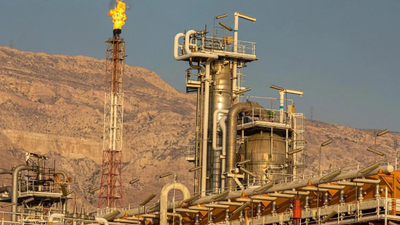
Iran Israel War: Israel bombs South Pars: Why is this gas field so important to Iran and the world?
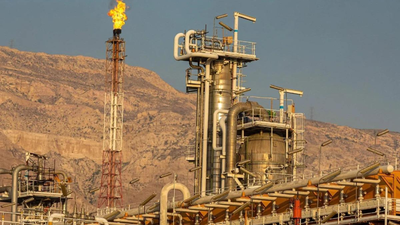
Israel bombs South Pars: Why is this gas field so important to Iran and the world?
South Pars Natural Gas Field (Agencies)

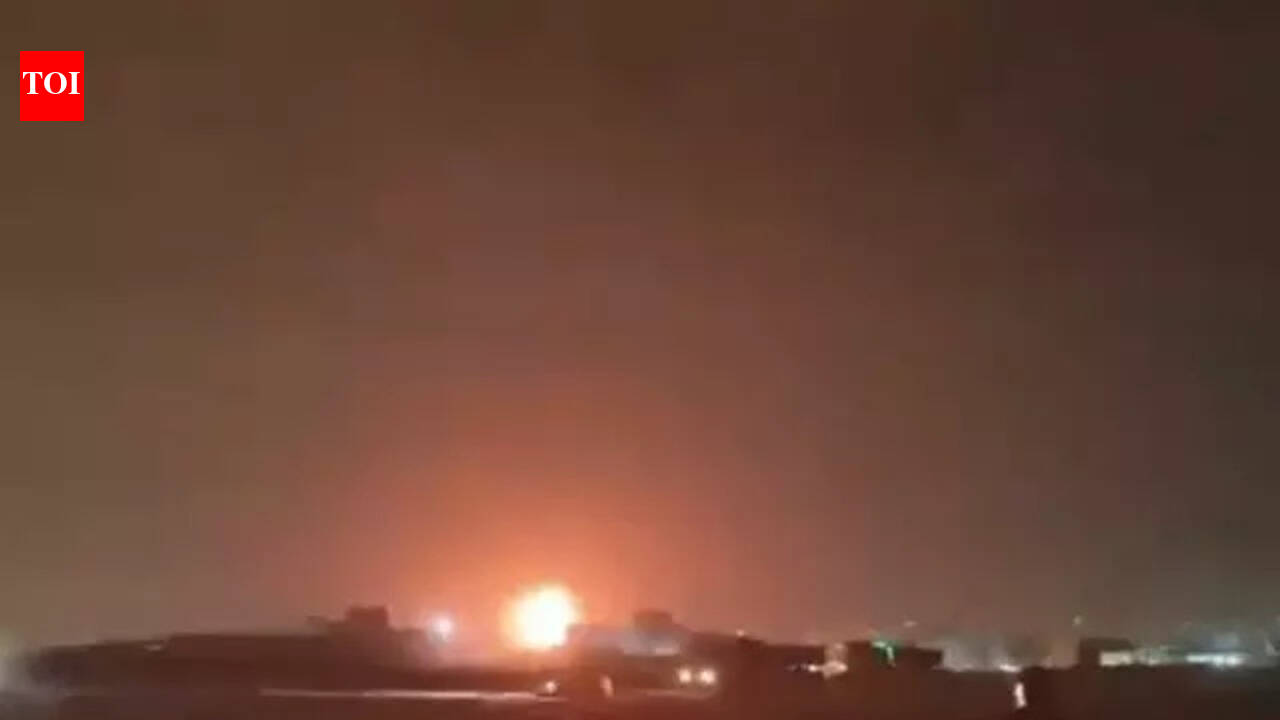
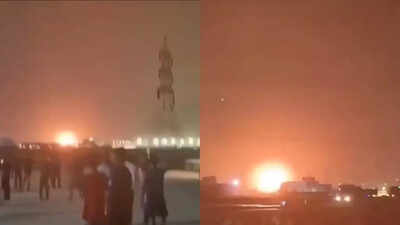
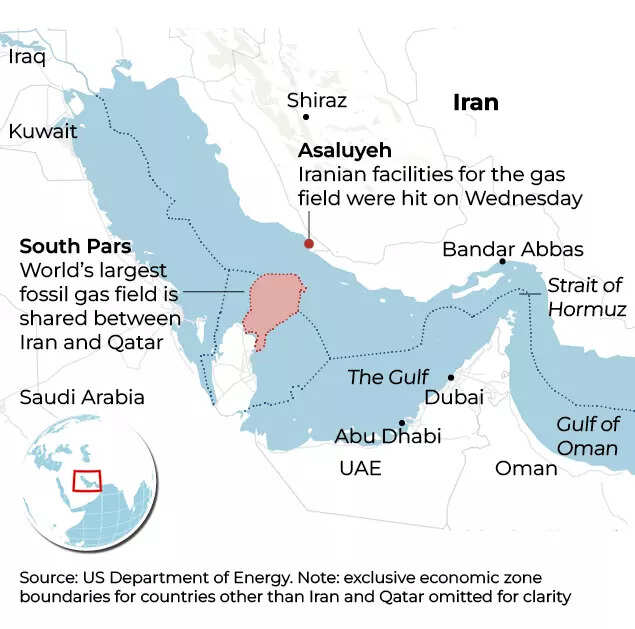
The already tense situation in the Middle East escalated sharply on Wednesday when Israel attacked an Iranian production facility in the South Pars gas field, which Iran shares with Qatar in the Gulf. The attack comes amid a broader regional crisis sparked by a joint US-Israeli military operation in late February that killed Iran’s longtime leader Ayatollah Ali Khamenei.South Pars, the world’s largest gas field, is a major source of domestic energy for Iran, which already suffers from frequent gas and electricity shortages.

Watch

Angry Iran bombs Saudi oil refineries in response to attack on Israel-US gas facility

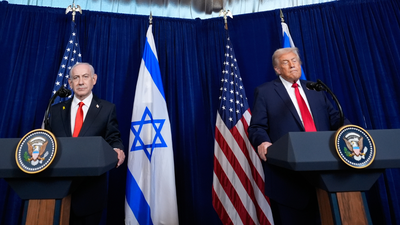
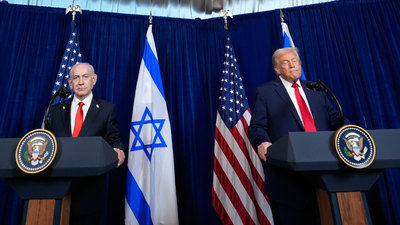
US President Donald Trump expressed surprise at the attack, saying “the United States knew nothing about it,” and denied any involvement. However, according to AP reports, Washington was informed in advance of Israel’s plan to target the offshore gas facility, but did not take part in the operation.
-

“The United States knew nothing about this particular attack, and the country of Qatar was not involved in it in any way, shape, or form, nor did it have any idea that it was about to happen,” Trump wrote on Truth Social.

voting

Should the international community intervene in the conflict between Israel and Iran?

Since launching a large-scale military campaign on February 28, Iran has expanded its retaliation beyond military targets to include oil and gas infrastructure across the region, raising global concerns given the Gulf’s importance to energy supplies.Watch: Iran’s missile hits Qatar’s Ras Laffan, the world’s largest LNG hubThe attack on South Parc is the first time in this conflict that a major fossil fuel production facility has been directly targeted.

What has been targeted in recent days?

On Tuesday, an Iranian drone attack led to the suspension of operations at the Shah gas field in Abu Dhabi. The site produces about 1.28 billion standard cubic feet of gas per day and supplies about 20 percent of the UAE’s gas and 5 percent of the world’s granular sulfur used in fertilizers.On Wednesday, Israel attacked Iran’s South Pars gas field. The field is the largest in the world and is the backbone of Iran’s energy system.

Why does the South Park strike matter?

The South Pars gas field, the largest known in the world, covers approximately 9,700 square kilometers in the Persian Gulf.The damage to South Pars could worsen Iran’s already severe energy shortage. The field contributes up to 70 percent of Iran’s gas production. Initial reports suggest that sections contributing about 12 per cent of total production may have been affected.The attack has also raised fears of wider tensions, with both sides now targeting critical energy infrastructure. Experts have warned that such attacks could have long-term consequences for global energy markets.Oil prices have already risen on concerns of supply disruptions following the strike. Analysts say if production facilities suffer major damage, recovery could take years.According to Guinness World Records, it is estimated to contain approximately 51 trillion cubic meters of gas.Oil prices have already surged following news of the strike, with Brent crude rising more than 5 percent to more than $110 a barrel.The field is shared by Iran and Qatar, with the Qatari side first exploring it in 1971.The attack is also the first reported attack on Iran’s main energy infrastructure.

How is the sector responding?

Iran has warned of further retaliation and listed major oil and gas sites in Saudi Arabia, the United Arab Emirates and Qatar as potential targets. An explosion was later reported in Riyadh.Qatar blamed Israel for the attack, calling it a “dangerous and irresponsible” escalation that threatens global energy security. The UAE also warned that the attack threatened both regional stability and global energy supplies.

Why can’t the repairs be done quickly?

Once damage occurs, repair is never easy and the consequences can be lengthy and devastating. Despite its scale and importance, the key question still remains: can the South Pars gas field be repaired quickly?

Watch

Iran blows up ship near UAE for violating Hormuz sanctions; IRGC shuts down oil, gas facilities in three countries

Past experience suggests that recovery may take longer than expected. It fell after the 2003 invasion of Iraq. Saddam HusseinRebuilding the damaged energy infrastructure proved to be a slow and complex process.The Bush administration pledged that reconstruction would be funded through oil revenues. However, despite access to facilities and nearly $2 billion spent on oil projects, it took more than two years for production to return to pre-war levels.Recently, efforts to repair Ukraine’s electricity infrastructure following Russian attacks have also faced major delays, with equipment shortages and logistical bottlenecks slowing progress.These examples highlight that restoring large-scale energy systems after conflict is a difficult and time-consuming task, raising concerns about how quickly South Pars can recover.

Big impact beyond energy

Energy production in the Gulf is not just about economics – it plays an important role in political stability and regional relations. Countries depend on energy revenues to support their economies and maintain social balance.The South Pars region has also served as a bridge between Iran and Qatar in the past. The latest attack has raised concerns that deepening conflict could not only disrupt energy supplies but also weaken regional ties.With continued attacks and counter-attacks by both sides, the situation risks further escalating, putting critical global energy infrastructure at risk.
Source link

UAE, Saudi Arabia, Kuwait, Qatar and Bahrain announce official start date of Eid Al Fitr 2026 world News

UAE, Saudi Arabia, Kuwait, Qatar and Bahrain announce official start date of Eid Al Fitr 2026
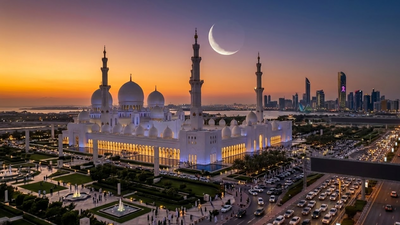
The UAE has confirmed that Friday, March 20, 2026, will be the first day of Eid Al Fitr/Representative Image

Eid Al Fitr 2026 will be celebrated on Friday, March 20 in the UAE and several Gulf countries because the Shawwal crescent was not sighted, which marks the completion of the 30-day Ramadan. The UAE confirmed the date on Wednesday after observations by the Moon Sighting Committee reported no confirmed sighting of the crescent moon on Wednesday evening. As a result, the holy month of Ramzan will be completed on Thursday, March 19, with Eid starting the next day. The sighting of the Shawwal crescent traditionally signals the end of Ramadan and the beginning of Eid al Fitr, one of the most important festivals in the Islamic calendar. Similar announcements were made throughout the Bay Area. saudi arabia After reviewing reports submitted by courts and observatories throughout the state, it was confirmed that the crescent moon was not sighted. In a statement, the Saudi Royal Court said there had been no confirmed sightings, despite Friday, March 20, being the first day of Eid. KuwaitThe Shariah Vision Authority also confirmed that Ramadan will be completed on Thursday, with Eid al Fitr falling on Friday. Bahrain and Qatar issued similar confirmations, with both countries declaring March 20 as the first day of Eid after the crescent moon was not sighted. In Qatar, the Ministry of Endowments and Islamic Affairs (Awqaf) said Thursday marked the 30th and final day of Ramadan, in line with a broader regional declaration. Earlier, the UAE had already outlined the Eid holidays for both public and private sector employees. According to the Federal Authority for Government Human Resources, the public sector holidays will last from Thursday, March 19 to Sunday, March 22, with work resuming on Monday, March 23. For the private sector, the Ministry of Human Resources and Emiratisation announced a holiday from Thursday, March 19 to Saturday, March 21. The ministry said that if Ramzan completes 30 days, the holiday will extend till Sunday, March 22. With the date now confirmed, preparations for Eid celebrations have begun across the region, as families and communities come together to mark the end of Ramadan.

Source link

Qatar News: Iran missile hits world’s largest LNG hub Ras Laffan – watch

Iran attacked Ras Laffan, the site of the world's largest LNG facility. gas plant damaged

.

Iran on Wednesday attacked Qatar’s Ras Laffan industrial city, one of the world’s largest gas export hubs, causing massive damage to the key facility.QatarEnergy said in a statement on Thursday morning that “several of its liquefied natural gas (LNG) facilities were the subject of missile attacks, causing large fires and widespread damage” after the first attack.

Watch

Iran attacked Ras Laffan, the site of the world’s largest LNG facility. gas plant damaged

After the attack, Donald Trump warned that if Iran targeted Qatar again, the United States would retaliate and bomb the entire region on a massive scale.“I do not want to approve this level of violence and destruction because it will have long-term consequences for the future of Iran,” Trump said, adding that he would “not hesitate to do so.”The attack came after Israel attacked Iran’s key South Pars gas field. Trump also said that he had no prior knowledge of the Israeli operation and said that Israel had committed not to launch further attacks on the site.Following the attack on South Pars, Iranian President Massoud Pezeshkian condemned the attack and warned of “uncontrollable consequences” that “could engulf the entire world.”

Source link

‘Israel attacked violently’: Trump says US knew ‘nothing’ about South Pars gas field attack; Iran warned after Qatar LNG hub affected

'Israel attacked violently': Trump says US knew 'nothing' about South Pars gas field attack; Iran warned after Qatar LNG hub affected
‘Sharp criticism of Israel’: Trump kept America away from gas field attack; Iran warned after Qatar LNG hub hit (AP Photo)

us President donald trump The attack on Iran’s South Pars gas field was carried out by Israel, with no involvement of either the United States or Qatar, it said late Wednesday.In a social media post, Trump said Israel had targeted a part of a major gas facility “out of anger” over developments in the Middle East, insisting that Washington had no prior knowledge of the attack and that Qatar was not involved “in any way.”

Watch

Iran attacked Ras Laffan, the site of the world’s largest LNG facility. gas plant damaged

He claimed that Iran responded without full information, which he described as an unjustified attack on part of Qatar’s LNG infrastructure.Trump warned that unless Iran moved forward targeting Qatar again, Israel would refrain from further attacks on the South Pars region. In such a scenario, he said, the United States would retaliate against the facility with overwhelming force, even without Israeli involvement.While warning that he did not want to authorize destruction on such a large scale because of its long-term consequences, Trump said the US would take decisive action if Qatar’s LNG assets were attacked again.Trump wrote, “Enraged by what has happened in the Middle East, Israel has violently attacked a major facility in Iran called the South Pars Gas Field. A relatively small portion of the total was affected. The United States knew nothing about this particular attack, and the country of Qatar was not involved in it in any way, shape, or form, nor did it have any idea that it was about to happen.”“Unfortunately, Iran was not aware of this or any relevant facts related to the South Pars attack, and it inappropriately and wrongly attacked a portion of Qatar’s LNG gas facility. There will be no further attacks by Israel on this extremely important and valuable South Pars field, unless Iran makes a foolhardy decision to attack the very innocent, in this case Qatar – in this case the United States, with or without Israel’s help or consent, in full force “The South Pars gas field has such power and strength that Iran has never seen or seen before,” he said. Trump said, “I do not want to authorize this level of violence and destruction because of its long-term impact on Iran’s future, but if Qatar’s LNG is attacked again, I would not hesitate to do so. Thank you for your attention to this matter.”Attacks on energy infrastructure have escalated the conflict, with Israel targeting Iran’s South Pars gas field – the world’s largest natural gas reserve – leading to intense tensions with Tehran.Iran condemned the attack, warning of “uncontrollable consequences” and responded by launching missile attacks on energy facilities across the Gulf. Qatar said Iranian missiles struck its liquefied natural gas sites, causing major fires and widespread damage, although no casualties were reported. The country had already halted production in the conflict, and further damage could delay its return to global energy markets.Iran also targeted major oil and gas facilities in the UAE, including the Habshan gas plant and the Bab field, with Abu Dhabi calling the action a “dangerous escalation”. In return, Qatar ordered the Iranian embassy officials to leave within 24 hours.The increasing attacks have increased pressure on Gulf countries such as Qatar, the United Arab Emirates, Saudi Arabia, Kuwait and Bahrain, which have so far focused on defense despite repeated attacks on their energy assets, military bases and civilian infrastructure.Global energy markets reacted sharply. Oil prices have surged, with Brent crude up nearly 50% since the conflict began, amid disruptions in the Strait of Hormuz – a vital shipping route for about a fifth of the world’s oil. Iran has imposed restrictions on transit through the strait, further increasing supply concerns.Meanwhile, Israel has continued to target senior Iranian leadership, including the alleged assassination of Intelligence Minister Ismail Khatib and other top security figures. Iran has retaliated with missile attacks on Israel, including attacks that caused casualties in the occupied West Bank.

Source link

iShowSpeed ​​faced unexpected situation as team ruled NBA AI ad during Kings vs. Spurs broadcast illegal

iShowSpeed ​​faced unexpected situation as team ruled NBA AI ad during Kings vs. Spurs broadcast illegal
iShowSpeed ​​faced an unexpected situation as the team ruled NBA AI advertising during the Kings vs. Spurs broadcast illegal (Image via Getty)

IShowSpeed ​​is in an awkward position after an ad featuring his face aired during an NBA game without his team’s approval. The ad reportedly ran during the Sacramento Kings vs. San Antonio Spurs game on March 17, 2026, and viewers immediately knew something was up. The clip, which was first shared by X user @BalaPattySZN, featured the streamer in an ad with a QR code asking people to scan it. Many fans said they saw the same ad on TV and Twitch.Very soon, his cameraman and team member Slipz responded publicly. He made it clear that the team has nothing to do with it. They described the ad as “illegal” and said they were already looking into the issue. His response came directly on X on March 17, where he first thanked the user for sharing the clip and then addressed the growing number of questions from others online.

iShowSpeed ​​team member Slipz calls alleged AI ad illegal because it creates confusion over NBA broadcasts

As the clip spread online, more users began asking if Darren Eyeshowspeed had given permission to use his likeness, especially since some creators have signed AI deals before. A user, @TheAnaIytics, asked if this could be a similar case. Slipz immediately shut it down. He replied bluntly, “No, this ad is illegal and will be addressed!” (Source: X).The situation became even more confusing when another user @feelspov said he saw the same ad while watching another stream. Responding to this, Slipz was surprised, saying, “LMAO yo how does a company make a mistake like that so publicly thank you for letting me know.” (Source: X).While this issue was growing, Darren IShowSpeed ​​was live on YouTube a day earlier on March 16, 2026, and he was doing what he does best – interacting with fans. During the stream, he watched a video imagining different versions of himself from around the world. He joked in his conversation and asked funny “smash or pass” questions about those versions.At one point, he said, “What if IShowSpeed ​​was born in other countries? Jamaican speed. Yo, Chat, y’all love Jamaican speed?” He continued to respond on various versions, including the Australian and Korean versions, while speaking directly to the audience.Later in the stream, he looked at an Indian version of himself and said, “Are you all destroying Indian momentum? Yes or no? I’m destroying Indian momentum.” He kept the mood playful, but also got a little serious when the chat comments crossed lines, and reminded viewers to be respectful.Ultimately, he said that he found the video “crazy” and that he had no idea how it was made. While their livestreams remained light and fun, the concurrent advertising issue has raised serious questions about the use of AI and content rights.

Source link

Dubai’s Green Corridor with Oman LIVE: UAE opens new route for faster sea and air cargo shipments

Dubai's Green Corridor with Oman LIVE: UAE opens new route for faster sea and air cargo shipments
Dubai-Oman Green Corridor launched: a game-changer for global trade

In a move that could redefine logistics across the Gulf, Dubai has unveiled a “green corridor” with Oman for sea-air cargo shipments, promising faster, more efficient and streamlined trade between Asia and the Pacific. middle east and beyond. At a time when global supply chains are under pressure and speed has become a competitive advantage, this corridor signals a bold shift towards integrated, multi-modal transportation solutions.More than just a logistics upgrade, this initiative positions the UAE as a central hub in the next generation of global trade routes, connecting continents with unprecedented efficiency.

What is Dubai-Oman Green Corridor?

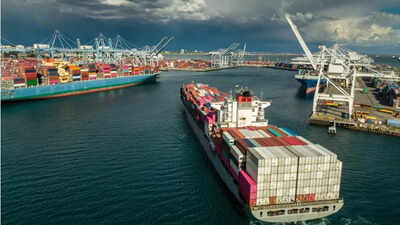
The Green Corridor is a dedicated logistics channel that connects maritime and air transport networks between Dubai and Oman, allowing cargo to move seamlessly between ports and airports with minimal delays and short processing times. In practical terms, this means that goods arriving by sea, especially from Asia, can be quickly transferred to air cargo and delivered to their final destination, bypassing traditional barriers.The corridor is designed to significantly reduce cargo transit times, streamline customs and clearance processes, and enable faster re-export to global markets. This hybrid model, often referred to as sea-air logistics, is gaining popularity globally but the UAE-Oman partnership brings it to the forefront in the Gulf.The timing of this initiative is important. Global supply chains have faced repeated disruptions in recent years, from pandemic-era shutdowns to geopolitical tensions affecting shipping routes. Businesses are now prioritizing speed, flexibility and flexibility over the traditional cost-only logistics model. The Dubai-Oman Corridor directly addresses these needs:

  • Fast option for long distance sea shipping
  • More cost effective option than full air freight
  • More credibility amid global uncertainty

In short, it creates a middle ground between speed and cost, which is what modern business demands.

Dubai’s green corridor with Oman: a strategic trade advantage

Dubai has long established itself as a global logistics powerhouse, equipped with world-class infrastructure including Jebel Ali Port and Dubai International Airport, two of the busiest hubs in their respective categories. By joining forces with Oman, the UAE is expanding its reach and creating a regional logistics network rather than a single hub.

Dubai-Oman Green Corridor to boost global supply chain

Dubai-Oman Green Corridor to boost global supply chain

Oman’s ports, strategically located along major shipping routes, provide additional capacity and connectivity, allowing cargo to flow more efficiently across the UAE’s air freight ecosystem. Together the two countries are building a system that:

  • handle higher cargo volume
  • Reduce congestion at major ports
  • Provide alternative routing options

This cooperation reflects a broader Gulf trend toward regional integration in trade and infrastructure.

Speed ​​is the new currency for Dubai’s green corridor with Oman

The biggest advantage of green corridors is time. Traditional sea freight transport from Asia to Europe can take several weeks. Air freight is faster but significantly more expensive. Sea-air corridors provide a hybrid solution, cutting transit times while keeping costs relatively manageable.For industries where time is critical, such as e-commerce, electronics, pharmaceuticals and perishable goods, this could be a game-changer. Fast delivery time means:

  • Reduction in inventory costs
  • better customer satisfaction
  • Greater competitiveness in global markets

In today’s economy, where consumers expect almost instant delivery, logistics speed has become a decisive factor.

Dubai’s Green Corridor with Oman a boost for e-commerce and SMEs?

The influence of this corridor extends to large corporations. Small and medium-sized enterprises (SMEs), as well as e-commerce businesses, will significantly benefit from faster and more reliable shipping options. With the rise of cross-border online shopping, the demand for efficient logistics solutions has increased.Green corridors enable businesses to:

  • Reach international customers faster
  • Manage inventory more effectively
  • Compete with the big players

Dubai-Oman Cargo Corridor will benefit SMEs greatly

Dubai-Oman Cargo Corridor will benefit SMEs greatly

For Dubai, which is rapidly emerging as a regional e-commerce hub, this is a significant development. Another key feature of the corridor is its emphasis on process efficiency. Traditionally, moving goods between sea and air involves numerous checkpoints, paperwork and delays. Green corridors aim to eliminate these friction points through the following:

  • pre-clearance system
  • digitized documentation
  • coordinated customs procedures

This not only increases speeds but also reduces the risk of errors and delays. In an industry where time equals money, such efficiencies can have a significant economic impact.

Why is it called the “green” corridor between Dubai and Oman?

The term “Green Corridor” is not just about speed, it also focuses on sustainability and efficiency. By optimizing routes and reducing idle time, corridors can help:

  • low fuel consumption
  • reduce carbon emissions
  • Improve overall environmental performance

As sustainability becomes a priority for global businesses, logistics solutions that balance speed with environmental responsibility are gaining importance. This initiative represents a visionary approach towards logistics in a rapidly changing world. It strengthens regional ties as cooperation between the UAE and Oman highlights the growing economic integration in the Gulf. This is not just a regional story, this corridor also has implications for international supply chains. Hybrid logistics models, digitalization and sustainability are all major industry trends.The launch of the Green Corridor is part of a major change in the movement of goods around the world. Linear, slow and rigid traditional supply chains are being replaced by dynamic, multi-modal networks that prioritize speed and adaptability. In this new scenario, geography matters less, connectivity matters more and efficiency is everything. Dubai’s latest move shows that the Gulf is not only adopting these changes, but actively shaping them.The Dubai-Oman Green Corridor is more than a logistics initiative, it is a strategic leap in global trade connectivity with faster cargo movement, seamless sea-air integration and stronger regional cooperation. At a time when the world is rethinking supply chains, this corridor offers a glimpse of the future, where goods move faster, smarter and more efficiently than ever before. As businesses race to keep up with increasing demand and changing global dynamics, the fastest routes will define the future of trade and Dubai is ensuring it stays ahead of the curve.

Source link

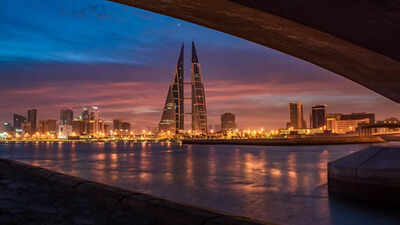
Bahrain: ‘Sirens sounded’: Bahrain urges residents to seek shelter as Iran vs US-Israel war escalates

'Sirens sounded': Bahrain urges residents to seek shelter as Iran vs US-Israel war escalates
Why are sirens sounding in Bahrain? Residents urged to seek shelter amid Iran vs US-Israel war

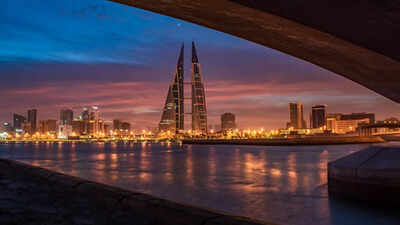
Panic and urgency spread across Bahrain as warning sirens echoed across the country, with authorities issuing urgent advisories urging residents to seek shelter. alertIssued by the Interior Ministry, it called on citizens and residents to remain calm and move to the nearest safe place without any delay, signaling another escalation in the rapidly escalating Iran vs. US-Israel war.The development marks a continuation of a worrying pattern across the Gulf, where emergency alerts, missile intercepts and air threats are rapidly increasing, turning once distant geopolitical tensions into an immediate, tangible reality for citizens.

What happened in Bahrain amid Iran vs US-Israel war?

According to official statements, Bahrain’s Ministry of Interior activated the national siren system, warning residents of potential danger and advising them to take precautionary measures. The warning was clear and urgent: remain calm, avoid open areas and move to a safe place immediately.“Sirens have been sounded. Citizens and residents are urged to remain calm and move to the nearest safe location,” Bahrain’s Ministry of Interior said on its official This was not an isolated incident. Reports indicate that sirens have been sounded several times in recent days, highlighting the frequency and severity of the situation as regional tensions continue to rise. In an already distressed area, the sound of the siren has become a powerful symbol signaling not only a warning but also the possibility of imminent danger.

Bahrain and other Gulf countries in danger amid Iran vs US-Israel war

Bahrain’s alert comes amid a widespread wave of military tensions across the country middle east. Since late February this year, the conflict between Iran, the United States and Israel has escalated dramatically, with missile and drone attacks spreading beyond traditional conflict areas. Tehran’s retaliatory strikes reportedly targeted multiple locations across the region, including areas containing strategic infrastructure and military assets.For Gulf countries like Bahrain, which is home to major installations and located close to major flashpoints, the risk is no longer theoretical. It is immediate. Activating sirens is one of the most serious steps the government can take in a civil context. Unlike mobile alerts or advisories, sirens signal immediate and real-time danger, are designed to reach people immediately regardless of connectivity and often signal incoming threats or nearby events.In Bahrain, the siren system follows a structured protocol:

  • Initial siren means warning to seek shelter
  • Follow-up signal means all-clear notification

The fact that such systems are being used repeatedly underlines the seriousness of the current situation. What makes this moment particularly important is how quickly alerts are turning into real-world consequences. Across the Gulf in recent days:

  • Missile threats trigger emergency phone alerts
  • Air defense systems intercepted incoming projectiles
  • Explosions and sonic booms have been reported in major cities

Bahrain’s sirens fit this pattern as the region is moving from heightened vigilance to proactive threat response.

Timeline of rising tensions between Iran vs. US-Israel war

To understand how fast things have progressed –

  • At the end of February: America-Israel attack on Iran
  • Beginning of March: Iran started retaliatory attacks
  • mid March: Gulf countries face frequent alerts and blockades
  • Now: Sirens sound in Bahrain, immediate shelter urged

Each step has brought the conflict closer to civilian life. The sound of sirens in Bahrain is a clear reminder that the Iran vs. US-Israel conflict is not far away; This is happening in real time, across borders and within civilian spaces.

A new normal in the Gulf amid Iran vs US-Israel war?

The frequent activation of sirens raises a serious question: Is this becoming the new normal? In a short period of time, Bahrain has raised the alarm several times, neighboring countries have issued emergency advisories and the civilian population is being trained to respond immediately. This marks a shift from sporadic incidents to a sustained period of instability, where preparation is no longer optional. The warnings are becoming more frequent, the threats are becoming more immediate and citizen preparedness is now critical. As sirens continue to wail across the Gulf, the region is clearly entering a phase where warning systems are no longer precautionary, but necessary.Authorities have issued clear guidelines to those in Bahrain to remain calm, move to the nearest safe or enclosed space, avoid open areas and only follow official updates. Emphasizing calmness is especially important because in a crisis situation, panic can be just as dangerous as danger. Bahrain’s sirens are not just about a warning, they are part of a bigger story unfolding across the Middle East. The region is currently facing military escalation (missiles, drones, counter-attacks), civilian risks (alerts, sirens, security advisories) and economic uncertainty (energy markets, infrastructure risks). Together, these elements point to a conflict that is expanding in both scope and impact.

Source link

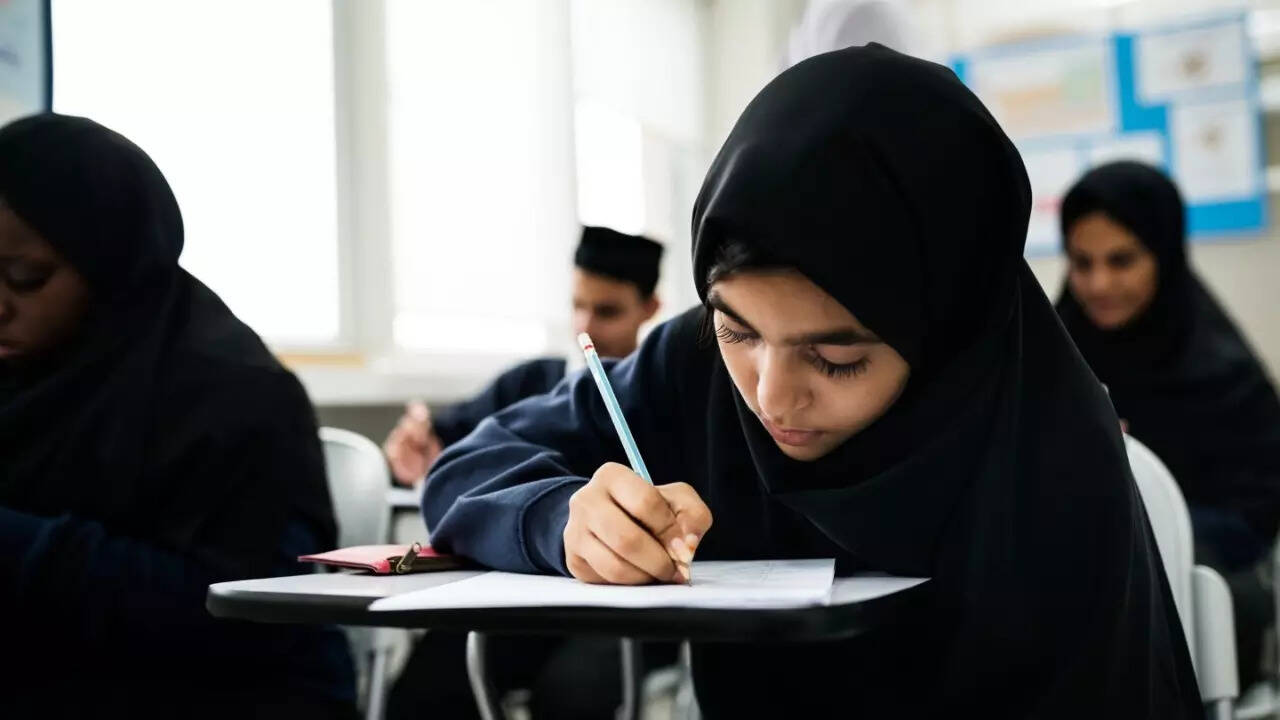
No exam? CBSE announces new assessment rules for Gulf students amid Iran vs US-Israel war

No exam? CBSE announces new assessment rules for Gulf students amid Iran vs US-Israel war
CBSE announces new marking scheme for Class 10 students in the Middle East after exams were canceled amid Iran vs US-Israel war

In a major educational shift arising from the ongoing geopolitical tensions between Iran versus the US–Israel war, the Central Board of Secondary Education (CBSE)CBSE) has launched a revised assessment scheme for class 10 students middle eastThis is fundamentally changing how thousands of students will be assessed this year. The move comes after unprecedented cancellation of board exams in major Gulf countries, leaving students, parents and schools grappling with uncertainty, but now, with clarity emerging, the focus has shifted from exams to assessment and its implications are significant.

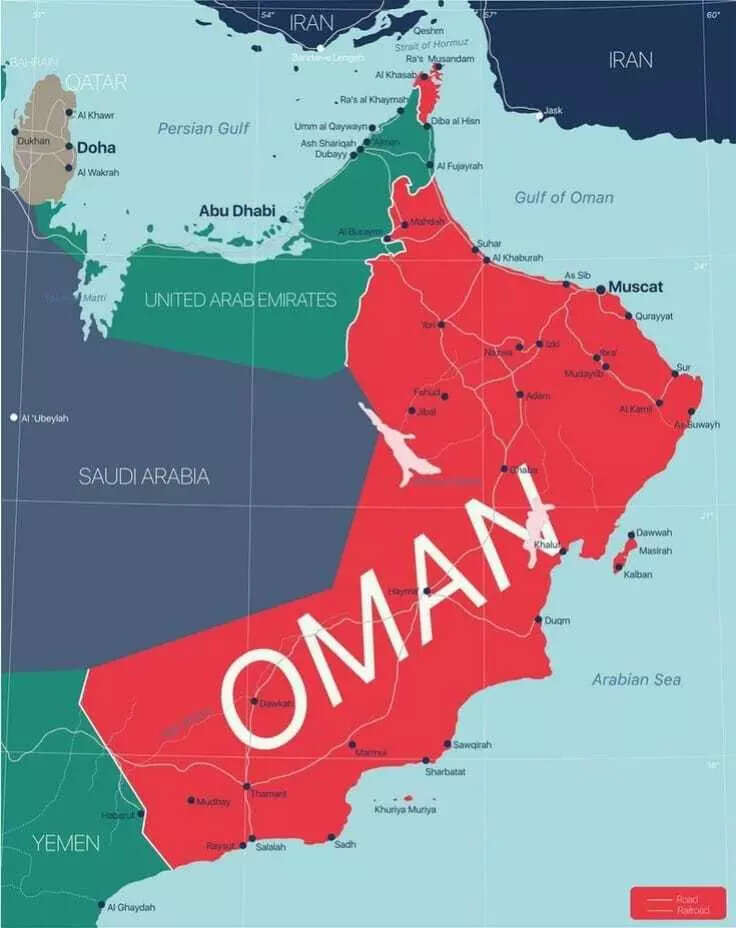
Why did CBSE change the rules for these? united arab emirates, saudi arabia, Queueoman, Kuwait, bahrain and iran

The revised plan follows the complete cancellation of the remaining Class 10 board exams in countries including the UAE, Saudi Arabia, Qatar, Oman, Kuwait, Bahrain and Iran due to the worsening regional security situation amid the US-Israel war. What started as a temporary postponement in early March soon turned into complete cancellation, as tensions related to the Iran versus US-Israel conflict made it unsafe to hold the exams.The decision has affected over 50,000 students from over 150 CBSE-affiliated schools in the region, making it one of the biggest disruptions in foreign CBSE examinations in recent history. Since exams are no longer an option, CBSE had to take immediate action to ensure that the academic future of students is not derailed.

How the new CBSE evaluation scheme works

The revised assessment model of CBSE is designed to fairly evaluate students on the basis of their actual performance in the examinations already conducted, rather than an average calculated for the missed papers.This is how it works:

  • Students who appeared in all the examinations – Their results will be completely based on their performance in those papers.
  • Students who appeared in the examination of 4 subjects – The marks for the remaining subjects will be calculated using the average of their best three subjects.
  • Students who appeared in the examination of 3 subjects – The remaining subjects will be marked on the basis of the average of their best two subjects.
  • Those students who appeared in the examination of only 2 subjects – Their remaining marks will be calculated from the average of those two papers.

The purpose of this structured formula is to maintain objectivity while adopting incomplete examination data. Apart from exam performance, internal assessment marks submitted by schools will play an important role in the final results. This includes periodic tests, pre-board examinations and projects and coursework. These components, which were often ignored in normal years, now hold immense importance and have effectively become important determinants of the final score.

Middle East exams cancelled: Here's how CBSE will calculate marks now

Middle East exams cancelled: Here’s how CBSE will calculate marks now

The most notable aspect of the new scheme is that no special re-examination will be conducted beyond the existing framework of CBSE. However, students will still have the opportunity to appear for a second board exam and improve their scores under the standard CBSE policy. This ensures that although the current results will be considered final, students will not be deprived of improving their performance.

CBSE results will be declared with global group

CBSE has confirmed that students from the Middle East will receive their results along with all other candidates globally, ensuring parity and avoiding delays in higher education applications. This is especially important for:

  • college admission in india
  • Applying for International Universities
  • Competitive Examinations and Admission Process

In a year full of disruption, maintaining consistency in deadlines is a great relief.

The Iran vs. US-Israel crisis that reshaped education in the Middle East

This policy change cannot be viewed in isolation. It is part of a wider crisis that has disrupted education across the Gulf. In recent weeks:

  • Exams postponed again and again
  • Schools shifted to distance learning
  • Entire exam cycles canceled

The rapid escalation of conflict in the region forced authorities to prioritize student safety over academic programs, a decision echoed across many education boards. What makes this situation unique is that it is not a pandemic or natural disaster but a geopolitical conflict that is directly affecting educational systems. For students, the sudden shift from exam halls to algorithm-based assessment has been emotionally complex. Many had prepared for months, had already given exams in some key subjects and were expecting the traditional marking system. Now, their results depend partly on averaging formulas and internal assessments, raising concerns about fairness and transparency.Additionally, there is relief from the stress of exams ahead, less pressure in an already stressful environment and greater focus on safety. This dual reality of relief mixed with uncertainty defines the student experience this year. The revised assessment scheme is more than just a temporary fix, it represents a structural shift in the way educational systems respond to crises. For decades, board exams were considered non-negotiable. This decision proves that they can be changed if needed. School-based assessment has moved from secondary to central importance. Education systems are being forced to adapt quickly to unexpected global events. The current scheme is similar to the COVID-19 assessment model, where CBSE relied on internal assessments and past performance to calculate results.

Iran vs US-Israel war impact: CBSE cancels exams, starts new assessment in Gulf

Impact of Iran vs US-Israel war: CBSE cancels exams, starts new assessment in Gulf

However, the context is very different because then, it was a global health crisis whereas now, it is a regional geopolitical conflict. This makes the current situation even more unpredictable, with safety concerns and not health driving decisions.

What should CBSE students in the Middle East do now

With clarity on assessment, students are being advised to stay in touch with their schools, ensure that internal assessment records are accurate, prepare for improvement examinations if necessary and focus on the next academic steps (admissions, entrance exams). Now instead of focusing on what was lost, the emphasis is on moving forward.CBSE’s revised assessment scheme for Class 10 students in the Middle East marks a watershed moment in modern education policy, with examinations canceled, assessments restructured and academic timelines preserved. In a region facing unprecedented volatility, the Board has attempted to strike a balance between fairness, flexibility and student welfare. However, the bigger point is that education systems are no longer running in isolation. They are deeply influenced by global events and must evolve as rapidly as the world around them.

Source link

US to require $15,000 bond from visa recipients from 12 more countries

अमेरिका को 12 और देशों के वीज़ा प्राप्तकर्ताओं से 15,000 डॉलर के बांड की आवश्यकता होगीThe expanded visa bond program, which requires those foreign nationals to pay $15,000 for a B1 or B2 visa for business and tourism, will go into effect April 2. The aim is to prevent visitors from overstaying their visas, the official said. The new nations included in the Visa Bond Program are Cambodia, Ethiopia, Georgia, Grenada, Lesotho, Mauritius, Mongolia, Mozambique, Nicaragua, Papua New Guinea, Seychelles and Tunisia.The official said the bonds will be refunded to visa recipients who return home, or do not travel for the first time, in compliance with the terms of the visa and bond. The State Department official said the program has cut down on the number of people who overstayed their visas. (This is a Reuters story)
Source link

Missile attack on Qatar gas hub, fire at key LNG facility: Ras Laffan attack jolts global energy markets amid Iran vs US-Israel war

Missile attack on Qatar gas hub, fire at key LNG facility: Ras Laffan attack jolts global energy markets amid Iran vs US-Israel war
Missile attack on Qatar gas facility amid Iran vs US-Israel war raises fears of global energy crisis

A missile attack on the Ras Laffan complex, one of Qatar’s most important gas facilities, has shocked the entire country. middle east And global energy markets are signaling a dangerous escalation in the ongoing Iran vs. US-Israel war. The incident follows Israel’s attack on Iran’s Pars gas field, after which Tehran warned Saudi Arabia, the United Arab Emirates and Qatar that its oil and gas facilities would be targeted in the coming hours.According to reports, Iran’s attack caused a fire and structural damage to a major gas installation in Qatar, raising fears that the war is no longer limited to military targets but now directly threatens the world’s most critical energy infrastructure. This development comes at a time when the region is already under threat, with frequent alerts, interceptions and counter-attacks becoming an almost daily reality.

What happened at Qatar’s Ras Laffan complex amid Iran vs US-Israel war?

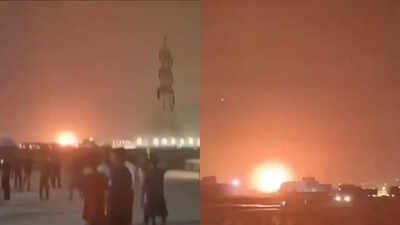
Qatar confirmed that an Iranian missile attack hit a key gas facility, causing a fire and damage to parts of the site. While emergency systems prevented a catastrophic explosion at the Ras Laffan complex, the incident underlines how close the region is to a full-scale energy crisis.QatarEnergy confirmed on Wednesday that missile attacks on the Ras Laffan industrial city, one of the world’s most important LNG hubs, caused “extensive damage”. The company said all personnel had been located and no injuries were reported, although emergency teams worked quickly to control the situation. The attack came just hours after Iran issued a sweeping warning that it could target oil and gas facilities across the Gulf, naming key sites in Qatar, Saudi Arabia and the United Arab Emirates, including the Mesaieed Petrochemical Complex, Ras Laffan Refinery, Jubail Petrochemical Complex and Al Hosn Gas Field as potential targets amid rising tensions following Israeli attacks on Iran’s South Pars gas field. Qatar’s Foreign Ministry strongly condemned the attack, calling it a “brutal” act and a “gross violation” of the country’s sovereignty and national security, while warning that such an escalation threatens broader regional stability and international peace. The ministry stressed that Qatar has consistently called for restraint and protection of civil and energy infrastructure, but accused Iran of adopting an irresponsible approach that is pushing the region toward crisis. Meanwhile, civil protection teams confirmed that the fire at Ras Laffan had been brought under initial control, preventing a potentially catastrophic outcome at the facility vital to global energy supplies.The targeted facility is part of Qatar’s vast gas network that connects to the North Field, the world’s largest natural gas reserve, which is shared with Iran (where it is known as South Pars). This alone makes the attack particularly dangerous because it targets a shared global energy lifeline, risks disrupting supplies across multiple continents and raises the risk of retaliation across the Gulf. Officials confirmed that defense systems stopped parts of the attack, but not before damage was caused, which appeared to result in fires and disruption to operations.

Why is this attack on Qatar’s Ras Laffan Complex a big deal amid Iran vs US-Israel war?

This is not just another missile attack, it marks a strategic shift in the conflict. Until recently, most of the fighting focused on military installations, command centers and political targets. Now, the focus seems to be shifting towards economic warfare, with energy infrastructure becoming the primary target. Reports indicate that Iran had already warned that it could target oil and gas facilities across the Gulf in response to earlier attacks on its infrastructure. That threat has now materialized.

Timeline of escalation between Iran vs. US-Israel war

To understand the significance of this attack, it is important to look at the rapid increase in recent weeks –

  • At the end of February 2026: US-Israel strikes hit Iranian military and energy sites
  • Beginning of March: Iran responded Freelancer and missile attacks across the Gulf
  • 2 March: Qatar halts LNG production after previous attacks hit facilities
  • mid March: Israel attacks Iran’s South Pars gas field shared with Qatar
  • Now: Iran retaliates with missile attack on Qatar’s gas infrastructure

Each step has raised the stakes and broadened the impact of the war. The UAE Foreign Ministry has strongly condemned Israel’s attack on Iran’s South Pars gas field, calling it a “dangerous escalation” in the ongoing conflict. In a rare rebuke since the US-Israeli war over Iran began, the UAE warned that targeting energy infrastructure is a direct threat to global energy security as well as regional stability, urging all sides to exercise restraint. The ministry stressed that critical facilities should not be targeted under any circumstances and stressed the importance of adhering to international law to prevent further incidents.

Global energy markets are on edge amid Iran vs US-Israel war

The implications of this attack reach far beyond Qatar. Qatar is one of the world’s largest exporters of liquefied natural gas (LNG), supplying energy to Europe, Asia, India, Japan and South Korea. Even small disruptions can have a big impact. Already, earlier strikes and shutdowns have caused gas prices to rise sharply, increasing volatility in oil markets and raising fears of prolonged supply shortages. Analysts warn that continued attacks on energy infrastructure could destabilize global energy supply chains, especially if key routes such as the Strait of Hormuz are further disrupted. While the latest attack caused a fire, the consequences could have been much worse. Experts point out that gas facilities are highly sensitive environments, where even small disruptions can lead to massive explosions, long-term shutdowns and environmental disasters.In this case, emergency systems contained the fire and a catastrophic loss was avoided but the potential for operational disruption remains. Still, the message is clear that the sector is operating on a knife’s edge.

A new phase in the Iran vs. US-Israel war: targeting infrastructure

The strike signals that the conflict is entering a new and more dangerous phase. Energy infrastructure is difficult to fully protect, it is economically vital and globally interconnected. This makes it an attractive but extremely risky target. Reports suggest that Ras Laffan, home to the world’s largest LNG facilities, has already suffered damage in recent attacks, highlighting the vulnerability of even the most advanced systems.The incident has made global headlines, and for good reason. Energy disruptions in Qatar do not remain local, they affect global fuel prices and economies. The shift from military to economic goals is a major turning point. From emergency alerts to visible fires, the crisis is no longer abstract, creating fear of what will happen next. If gas facilities are unsafe, what happens next? Oil terminal? Shipping route? Complete energy corridor? The Gulf now faces a multi-layered crisis of military escalation, civilian security concerns, economic instability and energy insecurity. Countries across the region have already issued emergency alerts, increased air defense preparedness, tightened security around infrastructure, and yet the attacks continue.At its core, this incident is about much more than just an attack. This reflects a broader reality that the Iran versus US-Israel war is no longer over, economic systems are now directly in question and global consequences are no longer hypothetical; They are opening up. With oil prices rising and gas supplies at risk, the world is watching closely.The missile attack on Qatar’s gas facility marks a significant escalation point in the US-Israel war versus Iran. Fires have broken out, infrastructure has been damaged and global markets are reacting but perhaps most importantly, the war has entered a phase where energy itself has become a battlefield.

Source link