Cyber ​​threats: UAE News: Wiper malware risks rise as authorities warn of one of the ‘most devastating’ cyber threats | world News

UAE News: Viper malware threat grows as authorities warn of one of the 'most devastating' cyber threats
UAE residents urged to remain vigilant as authorities flag rising wiper malware attacks / Image: File

The UAE has issued a new cyber security alert, warning residents, businesses and organizations about the increased risk of “wiper malware”, one of the most destructive forms of malicious software capable of permanently deleting data and corrupting systems.The warning was issued by the UAE Cyber ​​Security Council, which urged users across the country to remain vigilant and strengthen basic digital security practices as cyber threats continue to evolve globally.Unlike many cyberattacks that aim to steal information or demand ransom payment, wiper malware is designed with a single goal: complete destruction of data and disruption of digital services.

Wiper Malware: ‘Delete All’ Virus

Cybersecurity experts describe wiper malware as highly destructive malicious software that intentionally erases files, damages systems, and disrupts operations. Instead of encrypting files and demanding money like ransomware, this malware destroys data completely, often leaving victims unable to recover the system unless they have a backup.Once it has infiltrated a device or network, malware can:

  • Delete or corrupt files
  • damage to the operating system
  • Disable system boot processes
  • Spread across the network and erase connected devices

In severe cases, damage can shut down entire organizations, as systems become unusable and critical data is permanently lost. Due to its destructive nature, experts say wiper malware is often used in cyber warfare, large-scale sabotage or politically motivated cyber attacks.

UAE issues alert for individuals and businesses

The UAE Cyber ​​Security Council stressed the importance of vigilance in protecting digital infrastructure and personal data, warning that the threat could target both individuals and organizations. Officials said awareness and preparedness are key to ensuring the resiliency of digital services and reducing the risk of large-scale cyber disruption.The alert comes as global cyber activity has intensified, with governments warning about increasingly sophisticated malware attacks targeting infrastructure, companies and digital platforms.

How can you protect your data?

To reduce the risk of becoming a victim of devastating cyber attacks, the Council shared several essential cyber security practices.Users and organizations are advised to:

  • Regularly update software and systems to fix vulnerabilities
  • Avoid clicking suspicious links or attachments in emails or messages
  • Securely backup important data and store backups separately
  • Fix security vulnerabilities quickly to prevent exploitation
  • Be alert for unusual system activity or unknown downloads

According to cybersecurity officials, these steps may seem simple but are considered the first line of defense against major cyber threats.

broader context

Cyber ​​threats are growing in scale and sophistication around the world, and the UAE has emphasized cyber security as a key national priority. Officials have already warned that the country faces hundreds of thousands of cyber breaches every day, targeting everything from businesses to critical infrastructure.Experts say destructive malware like Wiper represents a new level of cyber risk because recovery is often impossible without strong backup systems and quick response measures.For this reason, officials are urging organizations and residents to take cybersecurity as seriously as physical security, especially as more services and daily activities are moving online.
Source link

Saudi Arabia: Filipino domestic worker arrested in Medina after stabbing child to death at home. world News

Saudi Arabia: Filipino domestic worker arrested in Medina after stabbing child to death at home
Security patrol in Medina arrested a Filipino domestic worker for murder of a child/Representative Image

A tragic incident in the Medina area of ​​Saudi Arabia has led to a Filipino domestic worker being arrested for murdering a child inside her home. Authorities say the suspect was taken into custody immediately after the attack and the case has now been referred to the public prosecution for further legal action. According to Saudi Arabia’s Public Security, security patrols in the Medina area arrested a housemaid of Filipino nationality after she allegedly stabbed a child to death inside her home. The suspect was captured and taken into custody shortly after the incident, officials said. Officials confirmed that legal procedures were initiated against the woman following her arrest. The case has since been transferred to the Public Prosecution, which will investigate and handle legal proceedings related to the incident. Public Security also confirmed the development in a statement posted on social media platform X, adding that the suspect was detained by security patrols and referred to prosecutors as part of the legal process.

Source link

Jidji Ayokwe: France returns African talking drum: the sacred instrument that once ‘talked’ to entire villages and warned of danger. world News

France returns African talking drum: the sacred instrument that once 'talked' to entire villages and warned of danger

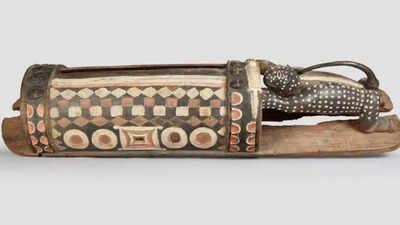
A sacred drum that once served as a powerful communication tool for communities in Ivory Coast has returned home, more than a century after it was confiscated during French colonial rule. This massive wooden instrument, known as the Jidji Ayokwe, was taken by French authorities in 1916 and later taken to France, where it remained in museum collections for decades. Its recent return is an important moment for cultural restitution and historical justice. For the Abri people, the drum is more than an artefact. It represents a living symbol of identity, tradition and authority, once capable of sending messages across entire communities through sound alone.

Return of the sacred talking drum

Djidji Ayokwe was officially returned to Ivory Coast after the French Parliament approved a special law allowing the removal of artifacts from France’s national collections. The sacred drum was displayed in Paris for decades, first in the former Trocadero Museum and later in the Musée du quai Branly.It arrived in Abidjan aboard a specially chartered plane and was welcomed by traditional dancers, local chiefs and cultural officials at Félix Houphouët-Boigny International Airport. The drum was placed inside a large wooden box marked “fragile” as part of careful efforts to protect the historic object during transportation.Ivory Coast’s Culture Minister François Remarque described the moment as extremely emotional and historically significant.“It’s a historic day with a lot of emotions,” he said. “We are living through a moment of justice and remembrance that ultimately marks the return of Jidji Ayokwe to his native land.”

A traditional dancer welcomes the return of Djidji Ayokwe in Abidjan.

A traditional dancer welcomes the return of Djidji Ayokwe in Abidjan.

What is Jidji Ayokwe Talking Drum?

The Jidji Ayokwe, sometimes translated as “Panther Lion”, is a giant wooden speaking drum measuring over three meters in length and weighing approximately 430 kilograms. It is made from Iroko wood, a durable hardwood that is widely used in West African craftsmanship.Unlike the smaller talking drums used by musicians, this instrument was designed for long distance communication. Its powerful sound could travel across large areas of land, allowing messages to reach many villages.This drum belonged to the Abri people, an ethnic group historically based around the area that is now Abidjan, Ivory Coast’s largest city. The drum was considered sacred within Abri society and was closely associated with leadership and community authority.

Why is it called talking drum?

The name “talking drum” comes from the way the instrument can mimic the rhythm and intonation patterns of human speech.Many West African languages ​​are tonal, meaning that the pitch and rhythm of words can change their meaning. Skilled drummers learned how to reproduce these tonal patterns through carefully controlled beats. By adjusting rhythm, speed, and pitch, they can transmit recognizable phrases and signals.For communities living in forests and lagoons, the drum served as an early communication system.Through specific rhythmic patterns it can announce gatherings, broadcast important messages, warn of danger or summon people for gatherings and emergencies. Villagers familiar with the pattern could understand what the drum was saying even from a distance.

Ceremony marking the return of the Jidji Ayokwe Talking Drum.

Ceremony marking the return of the Jidji Ayokwe Talking Drum.

a drum that had authority

Beyond its practical use, the Jidji Ayokwe also has a deep symbolic meaning. It represented authority within the community and was closely associated with traditional leadership.Drums were generally used by designated drummers who were tasked with communicating important messages on behalf of chiefs and elders. Because of its sacred status, the instrument was not treated as an ordinary musical instrument but as a cultural object associated with identity and rule.Its presence in a village indicates unity and organization within the Abri community.

How were drums taken up during colonial rule?

The removal of the drums dates to 1916, during the period of French colonial administration in Ivory Coast. French authorities reportedly confiscated the device because they feared its ability to organize communities and spread messages rapidly.After being confiscated, the drum was eventually taken to France in 1929. There it became part of museum collections documenting African cultures during the colonial era.For decades Jidji Ayokwe remained away from the community that built it.

Part of a broader movement to return cultural artefacts

The return of the talking drums is part of a broader international debate about the restitution of cultural objects taken during colonial rule.In recent years France has begun returning many important artefacts to African countries. The process accelerated in 2017 after French President Emmanuel Macron announced that African heritage should be able to return to the continent.Ivory Coast has requested the return of more than a hundred cultural objects currently held in European museums. Jidji Ayokwe is the first of these artefacts to be repatriated.Similar returns have already happened elsewhere. France had previously returned royal treasures and a Senegalese leader’s historic saber from Abomey to Benin.

A new home for the sacred drum

Following its return, the Djidji Ayokwe will be displayed at the Museum of Civilization in Abidjan.According to museum director Francis Tagro, the instrument will remain in a central location in the institution’s galleries so that visitors can learn about its cultural significance.“We are extremely happy and proud to receive this sacred drum,” Tagro said. “It means a lot to us, and it will enhance the younger generation’s sense of culture.”For many Ivorians, the drum’s return represents much more than the recovery of a historical artifact. It restores a symbol of collective memory and reconnects a community with a piece of its cultural heritage that was absent for more than a century.

Source link

Dubai News: ‘Vacate the office?’ Standard Chartered reacts to viral rumors in UAE emirates amid Iran vs US-Israel war

Dubai News: 'Vacate the office?' Standard Chartered reacts to viral rumors in UAE emirates amid Iran vs US-Israel war
Have banks started leaving Dubai? Standard Chartered issues urgent statement amid Iran vs US-Israel war

The intensifying geopolitical conflict between Iran, the United States and Israel is beginning to roil global financial markets, prompting international banks to reevaluate operations in the Gulf. At the center of the latest developments is Standard Chartered, which has moved to clarify reports that it has furloughed staff from its offices in Dubai.The London-headquartered bank said reports of its Dubai offices being completely evacuated were false. Instead, the bank confirmed it had already extended work-from-home arrangements as a precautionary measure, stressing that its regional operations remain active and business continuity measures are working as normal.The clarification comes after several international media reports that several global financial institutions are vacating offices in the emirate amid growing security concerns linked to the Iran vs US-Israel war.

Rumors of withdrawals spread in Dubai’s banking sector amid Iran vs US-Israel war

Earlier reports indicated that some international banks had begun pulling their staff out of physical offices in Dubai after Iranian officials warned that economic and financial targets linked to the US and Israel could become potential targets in a conflict. The warnings came after an attack on a Tehran administrative building linked to Bank Sepah, one of Iran’s major state-owned banks historically linked to military networks.Iranian officials later warned that economic infrastructure linked to American and Israeli interests in the region could face retaliation. As a result, financial institutions operating in the Gulf began activating contingency plans designed to protect employee safety and maintain operations even if the security environment deteriorates.Many banks have reportedly advised employees to temporarily work remotely or avoid office buildings in major financial districts. However, Standard Chartered quickly moved to clarify that the measures were precautionary rather than an emergency evacuation.

Work from home extended amid Iran vs US-Israel war

According to the bank’s statement, employees in Dubai and wider middle east Work was already being carried out under the flexible remote-working framework introduced during the early stages of the regional crisis. The extension of the arrangement was therefore described as a security measure rather than a response to any specific threat to the Bank’s facilities.Standard Chartered also stressed that its operations in the Gulf are fully functional and the UAE remains a key market for the bank’s global strategy. The clarification is intended to reassure clients and investors that the institution’s regional presence remains stable despite the volatile geopolitical environment.

Why does Dubai matter to global banks?

Dubai has become one of the most important financial centers in the Middle East over the past two decades, attracting global banks, investment firms, hedge funds and wealth managers. Much of this growth has been driven by the rise of the Dubai International Financial Centre, often referred to as DIFC.Established in 2004, the DIFC has transformed Dubai into a regional financial powerhouse. By the end of 2025, there were more than 290 banks, more than 100 hedge funds, nearly 500 wealth management firms, and more than 1,200 family offices and related institutions in the district.For international lenders such as Standard Chartered, the UAE plays a strategic role in connecting markets in Asia, Africa and the Middle East. The bank generates a significant portion of its income from operations in the region and has appointed a number of senior executives to Dubai to oversee regional business expansion.

Widespread corporate precautions across the Gulf amid Iran vs. US-Israel war

Standard Chartered is not alone in implementing precautionary measures. Other international firms and financial institutions have also taken steps to protect employees as regional conflicts escalate. Some companies have directed employees to work remotely, while others have allowed employees to temporarily relocate outside the area.Meanwhile, many global banks have reviewed business continuity plans to ensure that even if physical offices become inaccessible, operations can still continue. In some cases, banks temporarily closed branches or limited on-site operations while shifting services to digital platforms. These measures highlight the increasing sensitivity of multinational corporations to geopolitical risk in the Middle East.The current crisis stems from the escalating confrontation between Iran and the US-Israel alliance, which has triggered missile attacks, drone strikes and military exchanges across the region. The conflict has already disrupted aviation routes, shipping lanes and energy markets. Financial institutions, especially those with large regional operations, are closely monitoring the situation to ensure the safety of employees and customers.Analysts say such precautionary measures are common during geopolitical instability and do not necessarily indicate an imminent return of investment. Nevertheless, the situation has raised concerns about how prolonged instability could affect Dubai’s reputation as a stable global financial centre.

Dubai’s safe haven status comes under scrutiny amid Iran vs US-Israel

For years, Dubai has marketed itself as one of the safest and most business-friendly environments in the Middle East. Its political stability, world-class infrastructure and international regulatory framework have attracted hundreds of multinational companies. However, regional conflict has sometimes tested that reputation.Reports suggest that global banks are emptying offices, sparking debate over whether geopolitical tensions could undermine the city’s position as a safe haven for global finance. Experts say that while short-term precautionary measures remain in place, the long-term fundamentals supporting Dubai’s financial ecosystem remain strong.As the Iran vs. US-Israel war escalates, multinational corporations operating across the Gulf are likely to step up security protocols. Remote work policies, contingency planning and employee relocation options are expected to remain part of corporate strategies until the geopolitical outlook stabilizes.For now, Standard Chartered’s clarification highlights an important difference: precautionary measures should not necessarily be interpreted as a corporate withdrawal from the sector. Instead, they reflect the careful balancing act that global companies must perform when operating in a region experiencing sudden geopolitical shocks. Despite the uncertainty, Dubai’s financial sector continues to operate and major institutions are committed to maintaining operations while prioritizing the safety of employees.

Source link

Why is the US sending attack ship USS Tripoli, thousands of Marines, to the Middle East and what does it mean for the Iran vs. Israel war?

Why is the US sending attack ship USS Tripoli, thousands of Marines, to the Middle East and what does it mean for the Iran vs. Israel war?
US expands military presence in Middle East amid Iran-Israel tension, USS Tripoli deploys marines

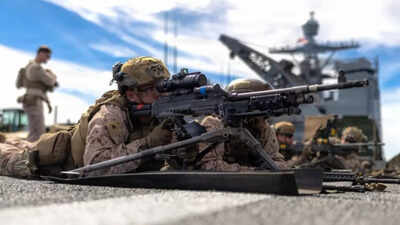
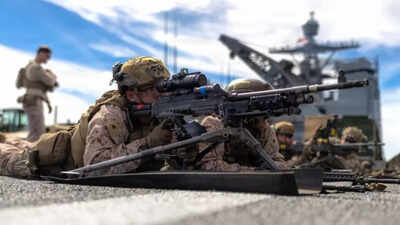
The United States is significantly expanding its military footprint middle eastThousands of marines and a powerful amphibious assault ship are being sent to the region as tensions rise with Iran. The deployment comes amid a rapidly escalating conflict between the United States, Israel and Iran, which has already led to missile attacks, drone strikes and regional instability across the Gulf.According to reports, the Pentagon has ordered the deployment of the amphibious assault ship USS Tripoli (LHA-7) and its Marine Expeditionary Unit to the region, bringing thousands of combat-ready troops and advanced military equipment closer to the conflict zone. The move signals that Washington is preparing for a broader confrontation, while also trying to protect strategic shipping lanes and US assets in the Middle East.

Rapid US military buildup amid Iran vs Israel war

The deployment reportedly includes approximately 2,000-2,500 Marines as well as additional Sailors and naval assets who will operate from the USS Tripoli and accompanying ships. A Marine expeditionary unit is designed to be a highly flexible force capable of conducting a wide variety of missions, including:

  • amphibious assault
  • evacuation of civilians
  • raid on enemy positions
  • manual operations
  • Securing strategic infrastructure.

Because these units operate from amphibious ships rather than land bases, they allow the U.S. military to respond quickly to crises without relying on host country permission. Officials say the deployment was requested by the United States Central Command, which oversees US military operations throughout the Middle East. The goal is to give commanders more options as tensions with Iran continue to rise.

Why is America sending marines now amid Iran vs Israel war?

The decision comes against the backdrop of a rapidly escalating regional conflict due to US-Israeli attacks on Iranian military and nuclear targets in late February 2026. Those attacks reportedly killed several senior Iranian leaders and damaged key military facilities, prompting Tehran to launch retaliatory missile and drone attacks on Israel and US bases across the Gulf. Since then, the conflict has spread on several fronts:

  • Iranian missiles and drones are targeting Israel and Gulf countries
  • Attacks on shipping routes near the Strait of Hormuz
  • Drone and militia attacks on US targets in Iraq and Syria
  • Rocket attacks by Iran-backed groups in Lebanon.

The deployment of the Marines is widely seen as a precautionary move to prevent Iranian escalation, while also ensuring the US can respond quickly if the conflict escalates.

Strategic importance of Strait of Hormuz between Iran vs US-Israel war

One of the main concerns over the deployment is the security of the Strait of Hormuz, one of the world’s most important energy chokepoints. About one-fifth of global oil shipments pass through this narrow waterway, making it a vital artery for the global economy.Recent Iranian actions in the area, including threats to shipping and increased naval activity, have raised fears that the strait could be disrupted or temporarily closed. Such a move would jolt global energy markets and could trigger a major international military response.The advent of amphibious ships and marines therefore serves two purposes:

  1. protecting commercial shipping routes
  2. Preparation for possible military increase

What USS Tripoli brings to the battlefield amid Iran vs US-Israel war

The USS Tripoli, an American-class amphibious assault ship, operates almost like a small aircraft carrier.It can take:

  • more than 1,600 marines
  • Helicopters and tilt-rotor aircraft
  • Advanced fighter aircraft like F-35B
  • Landing craft and armored vehicles.

This combination allows the ship to launch air strikes, amphibious landings and rapid-reaction missions from the sea. Since it does not require a nearby airbase, the ship allows US forces to operate in the Persian Gulf, Arabian Sea and surrounding areas. The Marine deployment is part of a broader U.S. military buildup in the Middle East that is expanding through the early 2026s. The buildup includes:

  • aircraft carrier strike group
  • Fighter aircraft like F-35s and F-22s
  • missile defense system
  • Additional naval warships.

Analysts say the scale of the deployment is the largest in the region since the Iraq War. The buildup reflects Washington’s growing concern that the conflict with Iran could escalate into a regional war involving multiple countries and armed groups.

Regional conflict is already escalating amid Iran vs. US-Israel war

The war between Iran and the US-Israel alliance has already had ramifications across the Middle East. According to reports:

  • Iranian retaliatory strikes have targeted US bases and regional allies
  • Hezbollah rockets have been launched from Lebanon
  • Shipping disruptions have raised fears of a global economic downturn.

Civilian casualties are also rising in many countries, while governments in the region fear even greater increases. Meanwhile, international leaders, including European and Middle Eastern governments, have called for de-escalation and diplomatic dialogue.

What will happen next between Iran vs US-Israel war?

Military analysts say the naval deployment does not mean a ground attack on Iran is imminent. Instead, the move offers the US several strategic options:

  • evacuation of civilians from conflict areas
  • Protecting key infrastructure and shipping routes
  • Launching limited raids or operations
  • Preventing Iranian attacks on US forces.

However, the presence of thousands of additional US troops also increases the threat dramatically. If Iran were to directly target U.S. forces or allies, the conflict could quickly escalate into a broader regional war.For now, the deployment underscores how volatile the Middle East has become in recent weeks. With missile exchanges, drone strikes and naval confrontations increasing across the region, the arrival of the USS Tripoli and its Marines signals that Washington is preparing for the possibility that the conflict could escalate.It remains to be seen whether this move acts as a deterrent or becomes a prelude to a broader war. However, one clear message is that the Middle East is once again at the center of a geopolitical crisis that could reshape global security and energy markets for years to come.

Source link

WH divided: Trump aides debate exit vs escalation

WH divided: Trump aides debate exit vs escalation

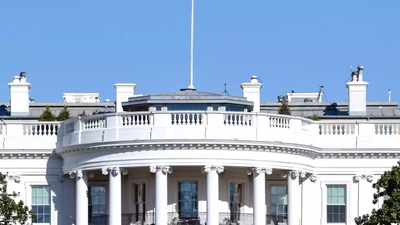
Washington: A complex tug of war inside the White House is troubling America. President Donald Trump’s changing public statements amid the Iran war have left allies debating when and how to declare victory as the conflict spreads across the Middle East.Some officials and advisers are warning Trump that rising gasoline prices could come at a political cost, while others are pressuring him to continue an aggressive stance against Iran, according to interviews with a Trump adviser and others familiar with the talks. His comments offer a previously untapped glimpse inside White House decision-making as it adjusts its approach to the largest US military operation since the 2003 Iraq War.Economic advisers and officials, including the Treasury Department and the National Economic Council, have warned Trump that oil shocks and rising prices could rapidly erode already weak domestic support for the war, the adviser said. Political advisers, including chief of staff Susie Wills and her deputy, James Blair, are making similar arguments, the sources said.More hawkish voices urging Trump to maintain military pressure on Iran include Republican lawmakers such as U.S. senators Lindsey Graham and Tom Cotton and media commentators such as Mark Levin, according to people familiar with the matter. They argue that the United States should prevent Iran from acquiring nuclear weapons and respond forcefully to attacks on American troops and shipping.The third force comes from Trump’s populist base and people like strategist Steve Bannon and television personality Tucker Carlson, who are publicly and privately pressuring him and his top aides to avoid getting drawn into another conflict.Asked for comment, White House press secretary Carolyn Leavitt said: “This story is based on gossip and speculation from unnamed sources who have not even been in the room for any discussion with President Trump.” reuters

Source link

Cheese Ritual: Inside the 660-year-old Dutch market where men dressed in white race with giant cheese wheels world News

Cheese ritual: Inside the 660-year-old Dutch market where men dressed in white race with giant cheese wheels

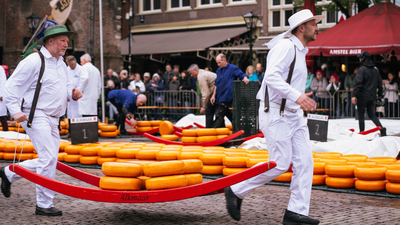
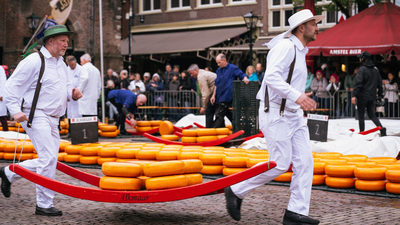
On a summer Friday in the Dutch city of Alkmaar, the air is filled with the smell of the old dairy and the rhythmic movement of wooden stretchers across the cobblestone square. exactly at 10 amA bell rings above the historic Wagplein and the show begins. Dozens of men wearing immaculate white uniforms and straw hats break into a fast, synchronized trot, balancing heavy stretchers filled with bright yellow wheels of cheese. It seems dramatic, almost surreal. Yet what unfolds each week is not a show staged for tourists, but the continuation of a business ritual that has persisted for centuries.For Alkmaar, cheese is more than food. It is identity and history. The city’s connection with the dairy trade dates back to 1365, when Alkmaar first gained the right to weigh cheese in the city. Over time, farmers, merchants and guild members turned the weekly market into one of the Netherlands’ most recognizable traditions. Every Friday from April to September the market relives the old rituals of bargaining, weighing and transporting cheese that have shaped the city for more than six centuries.

A medieval cheese market born of trade

Long before it became a famous cultural attraction, the Alkmaar Cheese Market was an essential center of commerce. Farmers from nearby villages brought their cheese to the city to sell to merchants who exported Dutch dairy throughout Europe. The appearance of an official weighing scale in 1365 allowed merchants to trade under the supervision of city officials, ensuring that all transactions were fair.By the beginning of the seventeenth century the cheese trade had become so large that Alkmaar operated several scales. The square known as Waagplein became the focal point of this bustling market. During the Dutch Golden Age, thousands of cheese wheels passed through Alkmaar each year as the Netherlands emerged as one of the leading trading nations of Europe. Cheese produced in the region was transported by traders and ships to markets throughout the continent.Today the market recreates these age-old practices. What visitors see on Friday morning is a carefully preserved reflection of how business once worked.

Association of Cheese Carriers

At the center of the ritual stands the historic Cheese Carriers’ Guild, known locally as Kasdragersgilde. Founded in 1593, the guild is responsible for the transportation of cheese to market. Membership is limited and the organization still follows a strict hierarchy that reflects its long history.The carriers wear white uniforms with straw hats decorated with colorful ribbons. The ribbons represent four traditional teams, each identified by its own color. Each team has its own foreman and they work together to move the heavy load across the square.The entire operation is overseen by the formal head of the guild, often called the Cheese Father. Every Friday before the market opens he calls the carriers together, confirms attendance and announces the start of the trading day. Only after this ritual the bell is rung and the market officially begins.The guild also enforces long-standing traditions of discipline. Carriers who arrive late or fail to properly maintain their uniforms may be fined. These rules help preserve the historical character of the event.

Association of Cheese Carriers

Famous Cheese Carriers Race

The most important moment in the market is the activity of the carriers themselves. Working in pairs, they lift wooden stretchers loaded with stacks of cheese wheels. Each stretcher can hold eight large cheeses and the total weight can reach approximately 160 kg.To transport the load, bearers move with fast, rhythmic movements across the square. This specific activity allows them to keep the stretcher balanced while moving through the busy market. This proposal is both practical and formal. This ensures that the cheese remains stable while also creating a spectacle that attracts visitors from all over the world.Watching the bearers move in perfect coordination gives the impression that time has briefly reversed and the square has returned to the rhythm of previous centuries.

The strange art of bargaining by clapping hands

Before any cheese can be taken to the crossroads it must first be sold. The traditional bargaining ritual used in Alkmaar is known as Handeklap, which roughly translates as hand clapping.During negotiations, buyers and sellers frequently clap together while quoting prices. Each clap represents a new proposal or counterproposal. The rhythm continues until both parties agree on a price, and the final clap seals the deal.This lively negotiation method once determined the price of large quantities of cheese each market day. Although trading today is largely symbolic, rituals are still performed to maintain the spirit of the historical market.

guardian of the weighing house and impartiality

Once the sale has been agreed, the cheese carriers take the wheels to the historic weigh house known as the Wag. This building dominates the Waagplein and for centuries served as the official location where cheese was weighed and recorded.The weigh master inside the building monitors the process to ensure that the correct weight is recorded. This step was necessary in previous centuries because merchants paid for cheese by weight. Therefore accuracy and honesty were important to maintain confidence in the market.Expert cheese inspectors also played an important role. Using metal tools they would remove small samples of the cheese to test its quality, texture and taste before confirming that it met commercial standards.

the thing that built a nation

The cheeses displayed at the market are classic Dutch varieties like Gouda and Edam. These cheeses became global symbols of Dutch food culture and helped build the country’s reputation as a center of dairy production.Over the centuries Dutch farmers improved the techniques of aging and preserving cheese, allowing it to be transported over long distances without spoiling. During the height of the Netherlands’ trading power, cheese from Dutch cities traveled throughout Europe and to foreign markets.Even today cheese remains deeply ingrained in the Dutch diet and culture. The country produces millions of tonnes of cheese every year and exports it around the world.

A tradition that has survived for centuries

Like many historical traditions, the Alkmaar cheese market has faced disruptions. During World War II the market was temporarily suspended due to wartime conditions and food shortages. It reopened after the war, restoring the tradition that had defined the city for generations.In modern times the market has evolved into a cultural event rather than a purely commercial event. Large crowds gather at the square each week to watch the carriers, the bargaining rituals, and the ceremonial weighing process.The city itself has become a vibrant community of over a million residents, yet the market remains a symbol of its historical roots.

more than a market

Today the Alkmaar Cheese Market is a living reminder of the Netherlands’ mercantile past. The uniforms, the hand-clapping, the movement of the carriers and the ringing of the bell that starts the market each Friday morning all preserve a tradition that has lasted for more than six hundred years.For visitors, the event offers much more than the opportunity to buy cheese. It offers a glimpse of a time when markets were the heart of European cities and when a simple wheel of cheese could represent the prosperity of an entire region.And every Friday morning, when the bells ring above the Wagplein and the bearers begin running across the square, Alkmaar returns for a while to the rhythm of the Middle Ages.

Source link

‘Putin can help them’: Trump hints Russia could help Iran

'Putin can help them': Trump hints Russia could help Iran

chairman donald trump On Friday he said he had confidence in the Russian leader Vladimir Putin The United States was helping Iran in its war against Israel.Trump’s comments came in a radio interview with Fox News host Brian Kilmeade, and one week after the president criticized Fox News reporter Peter Doocy for asking at the White House about reports that Russia is aiding Iran.Kilmeade asked Trump on Friday, “Do you think Putin is helping him?”Trump responded, “I think he might be helping them a little bit, yes.”“I think, and he probably thinks we’re helping Ukraine, right?” Trump continued.“Yes, we are helping them too,” Trump said, referring to Ukraine, which has been at war with Russia since its invasion in early 2022.“So he [Putin] Says it, and China will say the same thing, you know,” Trump told Kilmeade.“It’s like, ‘Hey, they do this, and we do this,’ in all fairness,” Trump said. “They do this, and we do this.”Trump spoke to Putin on Monday.During that call, “the Russians said they were not sharing intelligence with Iran,” US special envoy Steve Witkoff told CNBC in an interview on Tuesday.“So, you know, we can take their word for it,” Witkoff said that day. “Let’s hope they’re not sharing.”

Source link

£150 fine for feeding pigeons? Woman shocked by penalty in Manchester Park

£150 fine for feeding pigeons? Woman shocked by penalty in Manchester Park

A woman has spoken about the “shocking” moment she was fined £150 after feeding a small tortilla wrap to a pigeon.Sam Elkin, 23, from Southport, was in Manchester with her partner to celebrate her birthday on March 9 when she was fined for “littering” in the city’s Piccadilly Gardens, the BBC reports.Sam told BBC Manchester that she was eating a McDonald’s wrap while sitting with her partner. He tore off a piece and placed it on the floor for a visiting pigeon and was almost immediately fined £150 by a council enforcement officer.“The food was literally gone – the pigeons ate it and went away – before it actually got to us,” Sam said. “It was shocking; I got really upset.”Sam said he had no idea it was a crime when he fed the pigeons in the city center on Monday. Sam said that she is feeling very unsafe due to this incident that happened on Monday.“It was quite scary, to be honest, because I’m only short and the guy who came up to me was 6 feet tall – and my partner was in a wheelchair, so I felt quite vulnerable in that moment,” she said.She said she “didn’t think twice” about tearing off a piece of its cover for the bird because she did not know it was a crime.Sam said, “I tried to explain to the officer that it was our first time out in the city properly – and I didn’t know it was an offense to feed a bird.”“I didn’t think twice about it because I always fed the birds in Southport.”Sam also said he did not think the fine was fair, as by the time officers reached him, the offending “trash” had disappeared, having been eaten by pigeons.“A little bit of the tortilla was actually gone,” she said. “I pointed it out to him and said, ‘Look at the floor, that discarded food you’re talking about has already disappeared.’Sam said he didn’t know he was being fined when he gave the officer his ID.“I thought he said he would just warn us and then he asked for my ID and obviously I gave it to him without thinking, but then as soon as he got my details, that was it – and it was a £150 fine.”Sam said he and his partner, who is disabled, were living on a “low budget” after recently moving to a new house in Huddersfield.“We recently moved – like, we still haven’t got our furniture – this kind of fine would be fined, especially for something as simple as feeding a bird…” she said.“I mean, there are big things going on in the world.”

Source link

British man went to gym after killing his wife, held mysterious voices responsible for the murder. world News

In Britain, a man went to the gym after killing his wife, held mysterious voices responsible for the murder

A man in Britain murdered his estranged wife before she went to take a shower at a leisure center and later claimed mysterious voices in his head had ordered the murder, a court has heard. The victim, 37-year-old Pariya Vessey, was stabbed multiple times at her husband Alireza Askari’s home in Cardiff after the couple had separated and she had moved out less than two weeks earlier. Prosecutors said the attack appeared to have been planned, with Askari having purchased kitchen knives earlier that day. After the murder, she allegedly attempted to conceal the crime with the help of a relative, burying Vesey’s body in a makeshift grave in the garden and sending messages from her phone to make it appear that she had left the country.Cardiff Crown Court heard that Vesey went to Askari’s home on Foster Drive in Penylan on April 12, 2025, following a phone call between the pair. Soon after her arrival, Ascari stabbed her multiple times in the neck and upper chest inside the home’s conservatory, prosecutors said.A witness sitting in a car outside the property at the time told investigators that they heard a scream that sounded “like something out of a horror movie.” Prosecutors believe Vesey screamed at the moment she was attacked.Vessey, originally from Iran, had recently left home and started renting a new property in Cardiff while working as a hairdresser at a salon in Canton.Instead of immediately reporting the incident, the court heard Askari left the property immediately after the attack and headed towards the David Lloyd leisure center in Cardiff. There, he reportedly took a bath while a man who was with him earlier waited nearby.During that time, Askari also called a woman in Iran who prosecutors believe was his girlfriend. The unusual sequence of events, including going to the gym immediately after the murder, became a key detail in the prosecution’s case.Prosecutors said Askari then contacted his aunt, Mary Delawari, who flew from London to Cardiff to help him clean the house and dispose of the body.The pair used bleach and cleaning materials to remove blood from the conservatory floor before digging a hole in the backyard garden. Vesey’s body was buried in a makeshift grave in an area that was previously a pond. Soil, concrete patio slabs, and newly purchased flowers were placed over the burial site to conceal it.To create the impression that Vessey had gone voluntarily, Askari reportedly sent messages from his phone claiming that he had traveled to Iran for medical reasons. His car was also removed from its usual place.Concerned friends eventually reported Vesey missing, prompting a police investigation. Officers later searched the Foster Drive property and found her body buried in the garden.Askari was arrested while returning from a trip to Birmingham, where he had purchased caustic soda, a highly corrosive chemical prosecutors say he planned to use to destroy the remains.Delawari was arrested separately in London for his role in helping to conceal the crime.During police interrogation, Askari claimed to suffer from schizophrenia and said that voices in his head had told him what actions to take. He also told investigators that an unknown person named “Hassan” had instructed him to take steps that would conceal the crime.Prosecutors rejected the explanation, arguing that the evidence showed planning and deliberate efforts to conceal the murder.Ascari later admitted to murdering Vesey, while DeLavery pleaded guilty to perverting the course of justice. It is expected that the court will pronounce the sentence after hearing further arguments.

Source link