
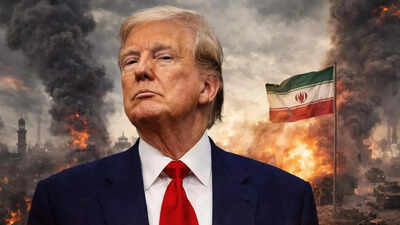

Iran: Is Donald Trump’s triumphalist tone on Iran holding up to a reality check?
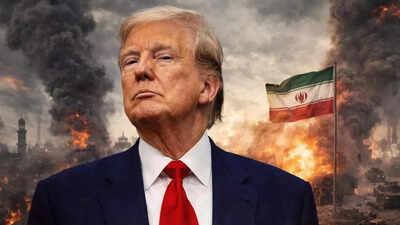 “We have defeated and completely destroyed Iran,” Trump declared in his first live address to Americans on the war on Wednesday. “They have been destroyed militarily and economically and in every way,” he said. Trump also said that Iran’s “radar has been 100% destroyed” and claimed, “As a military force we are invincible.”But those sweeping claims were quickly challenged by events on the ground.
Two plane incidents crippled the triumphant tone
An American fighter plane was shot down in Iran on Friday in the first such incident since the war began. One crew member was rescued, while another went missing, prompting a US search and rescue operation.In a separate incident, Iranian state media claimed that a US A-10 attack plane crashed in the Persian Gulf after being hit by Iranian security forces. News agency AP quoted a US official speaking on condition of anonymity as saying it was not clear whether the plane had crashed or was shot down.The developments come just days after Trump said Iran has “no anti-aircraft equipment,” making the incidents particularly damaging to his effort to project total military dominance.Trump did not appear publicly on Friday as battlefield setbacks cast doubt on his earlier triumphant characterization of the war.
Trump decides to launch ‘America alone’ into conflict
Trump’s trademark political style – built on certainty, individual authority and unilateral action – is clashing with the unpredictability of war.Trump’s decision to enter war with Israel, without consulting Congress or key allies, has left Washington increasingly isolated.Julian Zelizer, a Princeton University historian, summarized the dilemma in comments to the AP, saying, “You can be the most outspoken, aggressive president in the world but you can’t control what happens abroad.”As the war enters its sixth week, these tensions are becoming even more apparent.
As Trump struggles to garner support, allies are pulling back.
Some of America’s traditional allies are now openly distancing themselves from Washington’s decision to go to war.French President Emmanuel Macron said this week that the US “can hardly complain after this about not being supported in an operation they decided to carry out alone.”“This is not our operation,” Macron said.British Prime Minister Keir Starmer has also refused to get involved in the conflict despite sharp criticism from Trump. Britain and France are instead focusing efforts on helping reopen the Strait of Hormuz after the fighting ends.Trump’s former national security adviser John Bolton, now a critic, said the administration made a “serious mistake” by not building an international coalition before the war.“If you don’t build your coalition before the war, it’s much harder to build it while it’s in it,” Bolton said.Still, Bolton warned European leaders against opposing Trump simply because they are frustrated by his lack of consultation, calling that approach “juvenile and irascible.”
Strait of Hormuz pressure deepens economic decline
Trump is also struggling to contain the broader economic consequences of the conflict.Iran has largely closed the Strait of Hormuz, blocking global oil and gas flows, disrupting energy shipments and sending gasoline prices sharply higher in the United States.The war is destabilizing economies around the world as Iran targets Gulf energy infrastructure and tightens its grip on oil and natural gas transit through the strait.Trump has reportedly asked world leaders for help in reopening the vital waterway, but those offers have been rejected. Some allies want the fighting to end before the issue is dealt with, while others are openly critical of the war Trump has chosen to start.
Mediation efforts continue as Iran signals conditional openness
Despite the fighting, diplomatic channels have not been completely closed.Mediators from Pakistan, Türkiye and Egypt are still trying to bring Washington and Tehran back to the table. Two regional officials quoted by AP said an agreement to stop the war and reopen the Strait of Hormuz was being explored, potentially paving the way for talks in Pakistan.Iranian Foreign Minister Abbas Araghchi said on Saturday that Tehran “has never refused to go to Islamabad”, but stressed that Iran “wants a decisive and permanent end to the illegal war imposed on us.”He also reiterated that position in a separate social media post.The broader regional picture of the latest developments in the war shows how far the conflict has spread.The United Arab Emirates said its air defenses intercepted 23 ballistic missiles and 56 drones from Iran on Saturday. Bahrain, which hosts the US Navy’s 5th Fleet, reported eight drone attacks in 24 hours, bringing the total to 188 missiles and 453 drones hit since the war began.Debris from the captured drone damaged the exteriors of two buildings in Dubai, including that of Oracle, an American tech firm. There is no report of anyone being injured.Iran has also indicated to increase maritime pressure. Parliamentary Speaker Mohammed Bagher Qalibaf made an indirect threat regarding another major global shipping chokepoint, the Bab el-Mandeb Strait. Any disruption there would force ships to reroute around southern Africa, making driving costs even higher.
Trump’s pervasive loner style also faces limits domestically
The Iran war reflects a broader pattern in Trump’s presidency: acting first, often alone, and believing that political force can overcome institutional resistance.Trump also said this week that congressional approval was “not necessary” for the White House ballroom project despite the judge’s ruling. He signed an executive order to create a national list of verified eligible voters and restrict mail-in voting, and even made an unprecedented appearance at the Supreme Court as his administration defended an executive order restricting birthright citizenship.But the strategy is also hitting domestic hurdles. The Supreme Court struck down his sweeping tariff program, Democrats immediately challenged his voting order, and judges appeared skeptical of his effort to curb birthright citizenship.Trump mocked the limitations of his office in a revelation during an Easter luncheon at the White House.“I’m a king who can’t get a ballroom approved,” he said, drawing laughter from Cabinet members and religious leaders. “I’m doing a lot. But I could do a lot more if I were king.”

‘I’m not suicidal’: US congressman says he knows UFO secrets that could keep Americans ‘up at night’ and ‘keep the country untouched’ world News

A sitting member of Congress has claimed that classified briefings on unidentified aerial phenomena contain so much destabilizing information that, if released, it would fundamentally shake public confidence. The comments, made in a television interview, add to a growing chorus of political voices demanding greater transparency about what the US government knows, and raise new questions about why this information is withheld.
What Tim Burchett Said, and Didn’t Say
Tim Burchett, a Republican congressman and member of the House Task Force on Declassification of Federal Secrets, said this week that he has been briefed in detail by federal agencies on matters related to UFOs and extraterrestrial activity.talking to newsmaxBurchett did not disclose specifics, but described the content of those briefings in clear terms. He said he had been “briefed by every Alphabet agency that is out there,” adding that if the material were made public, “you would be up at night, worrying, thinking about this thing.”He further stated that the recent briefing he received “would have sent the earth into chaos, I think if they had heard what I heard, this country would have been completely liberated,” and that such a release would have caused the public to demand immediate answers.Despite repeatedly asking for “full disclosure”, Burchett made clear that he would not share what he knew. In the same interview, he suggested there could be consequences for those who speak out, saying, “For the record, I’m not suicidal.”
Privacy claims, and risk signals
Burchett also noted what he described as a pattern of unexplained incidents involving individuals involved in sensitive research. Although he acknowledged that he had no definitive explanation, he said that “there are no coincidences in this city”, pointing to reports of scientists and officials who “disappeared or died mysteriously.”“These people mysteriously disappeared or died and the only thing that ties them together is the fact that they worked on things that are related to outer space,” he said, adding, “Overall, I think there’s a connection there. And I don’t think we’ll ever know.”
The comments fail to present evidence, but they reflect a broader narrative, becoming increasingly common in parts of the American political discussion, that information about UFOs is being actively suppressed.Also read: Eight nuclear and space scientists behind America’s best-kept secrets have disappeared or died
Pressure for disclosure, and very little has been released so far
Burchett said he personally urged donald trump He called for government records to be made public, “release it all.” Earlier this year, Trump indicated that he would direct federal agencies to begin the process of identifying and releasing files related to “alien and extraterrestrial life, unidentified aerial phenomena (UAPs), and unidentified flying objects (UFOs).”In a statement posted on social media, Trump wrote: “Based on the tremendous interest shown, I will direct the Secretary of War and other relevant departments and agencies to begin the process of identifying and releasing government files relating to alien and extraterrestrial life… and any and all information relating to these highly complex, but extremely interesting and important matters.”Despite that promise, no wide release has occurred.The Office of the Director of National Intelligence has said the documents will be made public “soon”, while the US Cybersecurity and Infrastructure Security Agency registered the domains “alien.gov” and “aliens.gov” in March. As of now, no sites are active. Asked about the domain, White House Principal Deputy Press Secretary Anna Kelly told USA TODAY: “Stay tuned!”
Other voices, and conflicting views
Burchett is not alone in raising questions about extraterrestrial life, although views within the American leadership vary widely.For example, during a recent appearance on The Benny Show, JD Vance said he is “obsessed” with UFOs, although he admitted that he “hasn’t spent enough time on it to understand it.” He says, “We’re working on it” and that he will “get to the bottom of the UFO files,” noting that he still has “three more years as Vice President.” He also offered his own explanation, saying, “I don’t think they’re aliens. I think they’re monsters.”“Also read: JD Vance denounces UFOs as ‘monsters’ and vows to reveal government secrets on unexplained phenomenaBarack Obama has described considering this question directly while in office, recalling that the first thing he asked after becoming president was whether “there’s a laboratory somewhere where we’re keeping alien samples and spacecraft,” and that officials “did a little research and the answer was no.”He later said in a podcast with Brian Tyler Cohen: “They’re real, but I haven’t seen them, and they’re not being kept in Area 51.” That comment was criticized by Donald Trump, who said Obama “gave away classified information” and “made a big mistake.”Obama later clarified that while the scale of the universe makes the existence of life elsewhere plausible, “the likelihood of aliens visiting us is slim,” adding that he had seen no evidence during his presidency that extraterrestrials had made contact with Earth.
Between speculation and evidence
There has been renewed attention to UFOs amid changing terminology and policy over the years. What were once broadly referred to as UFOs are now often labeled Unidentified Aerial Phenomena (UAP), reflecting an effort within government and scientific circles to treat such sightings as a matter of systematic investigation rather than speculation.Congress has held hearings in recent years, commissioned reports and pressured intelligence agencies to disclose more information. Some military footage of unexplained aerial encounters has been made public, but these releases have not yielded definitive answers.
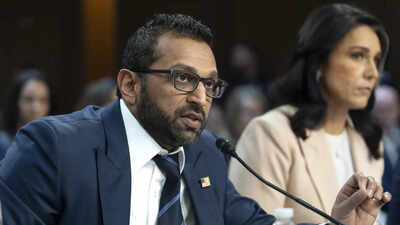
Trump considering firing FBI Director Kash Patel, according to White House officials: Report
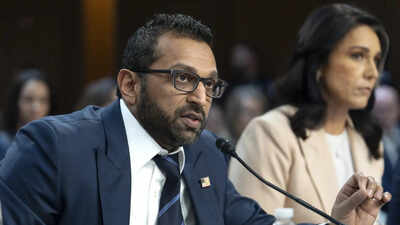
The Trump administration is discussing the possible departure of several senior officials, including FBI Director Kash Patel. According to a report by The Atlantic, people familiar with White House planning have told the magazine that discussions are underway about whether some top officials could step down.Names mentioned in these discussions include FBI Director Kash Patel, Army Secretary Daniel Driscoll and Labor Secretary Lori Chavez-DeRemer. The Atlantic’s sources said these talks are taking place inside the GOP administration, but no final decision has been made by US President Donald Trump. The timing of any possible departure is also unclear.The report does not say whether any of these officers have actually been fired or whether any formal resignations have been submitted. It only says that their names are being discussed by senior people in the White House.The discussion comes at a time when the Trump administration has already seen several high-profile changes. Recently, Attorney General Pam Bondi was removed from her post by Trump, and Homeland Security Secretary Kristi Noem was also replaced. This was a major change from what was already in the MAGA base. The Atlantic report did not identify the individuals who spoke to the magazine, but it said they were familiar with the planning at the White House. He described the situation as ongoing, meaning the President and his advisers are still considering options. Trump himself has not publicly confirmed these discussions.Officials like Kash Patel take on roles that typically require close cooperation with both the White House and other parts of the federal government. The position of FBI Director is particularly important because it involves oversight of the nation’s premier domestic law enforcement agency. Patel was appointed to that post in 2025.Patel is an Indian-American and his appointment to such a high-level position has been criticized by some conservative Republicans and “America First” supporters. Several white supremacist figures have also voiced their opposition to having an Indian-American serve as FBI director instead of a white American.Kash Patel’s tenure as FBI Director has been surrounded by many controversies. He was criticized for using the FBI plane for travel, including trips to events involving his girlfriend, singer Alexis Wilkins. Reports also stated that FBI agents were assigned as his security, which is unusual as partners of senior officials do not typically receive long-term security. In the Charlie Kirk murder case, Patel was questioned for announcing that a suspect was in custody before it was confirmed. Additionally, three former FBI agents also filed a lawsuit saying they were wrongfully fired when he was director. More recently, a pro-Iran hacking group reportedly targeted Patel’s personal emails, releasing old personal photos and documents.

Russia attacks Ukraine with drone: 5 killed, 19 injured in Nikopol market attack

At least five people killed and 19 others injured in Russian drone strike market in the Ukrainian border city of Nikopol on Saturday morning, Ukraine’s Prosecutor General’s Office said.Earlier, regional governor Oleksandr Ganja said in a Telegram post that three women and two men were killed. He said that a 14 year old girl is also included among the 19 injured and her condition is critical.“This is another war crime committed by the Russian Federation,” the prosecutor’s office said in a post on Telegram.
Nikopol, which lies close to Russian-occupied territory across the Dnipro River, has been regularly targeted by attacks.Russia has been carrying out regular attacks on Ukraine since its 2022 invasion, mostly at night, but in recent weeks, it has increased attacks during the day.Meanwhile, Russia’s night-time attacks on Ukraine injured 14 people, while air strikes in Russia killed one person and injured four others.
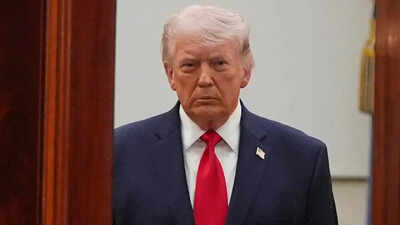
Trump: Donald Trump considering major Cabinet changes as reaction to Iran war deepens: Report
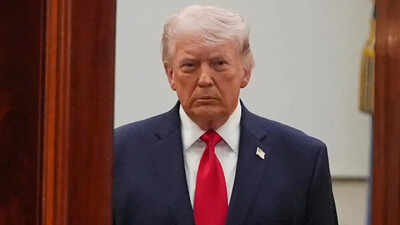
File photo: US President Donald Trump (Photo credit: AP)
US President Donald Trump is considering a sweeping Cabinet reshuffle after firing Attorney General Pam Bondi this week amid growing concern inside the White House over the political fallout from a war with Iran.According to news agency Reuters, internal White House discussions have turned to whether more senior officials should be replaced as Trump grows frustrated with rising fuel prices, falling approval ratings and growing Republican anxiety ahead of the November midterm elections.The potential change follows Bondi’s ouster this week and the departure of Homeland Security Secretary Kristi Noem last month. Although no final decision has been taken, several senior officials are said to be under investigation.According to Reuters, the five-week-old war has created a politically difficult situation for the administration, with gas prices rising and Trump’s position slipping. The report said some aides felt Trump’s televised address to the nation on Wednesday, which a senior White House official described as an effort to show control and confidence, “failed,” increasing pressure for changes in messaging or personnel.A White House official told Reuters, “A change to show action is not a bad thing, right?”
Gabbard and Lutnick are among the names being monitored
Director of National Intelligence Tulsi Gabbard and Commerce Secretary Howard Lutnick are among those potentially at risk.According to Reuters, Trump has recently expressed displeasure with Gabbard, and a source with direct knowledge said he had asked aides for ideas on a possible replacement for his intelligence chief. Gabbard, who has long criticized US military intervention abroad, reportedly upset the White House last June when she released a video attacking “political elite war supporters” ahead of Trump’s first military action against Iran.Lutnik is also facing renewed pressure. Some of Trump’s high-profile allies are privately pushing for his removal. New files released earlier this year show that Lutnick had lunch with late sex offender Jeffrey Epstein on Epstein’s private Caribbean island in 2012, the report said. Lutnick has denied any serious affair, saying he “barely had anything to do” with Epstein and that the lunch occurred only because he was on a boat near the island.According to news outlet Politico, Trump has become frustrated with Lutnick and is considering changes involving him. “He’s very angry and he’s going to fire people,” an administration official said.
Labor Secretary also under threat of dismissal
Labor Secretary Lori Chavez-DeRemer is also being discussed as part of potential Cabinet changes.According to Politico, Trump’s review focuses on officials whom he believes have “performed poorly or who have attracted too much negative attention”. The report said no final decision has been made on Chávez-DeRemer or Lutnick, and added that Trump had considered firing his aides before withdrawing.Removing Lutnick could signal economic accountability to Trump, with one administration official suggesting it would help the president “say, ‘I’m turning the economy around.'”Chávez-DeRemar is also under additional pressure due to the inspector general investigation into the Labor Department. The investigation included allegations that she drank alcohol on the job, had an affair with a security officer and that staffers may have used official programs to help facilitate private travel. Chávez-Deremer has denied wrongdoing and the White House has previously defended him.
The White House publicly stands behind key officials
Despite the speculation, the White House has publicly defended several of the officials named in media reports.White House spokesman Davis Ingle said Trump retained “full confidence” in Gabbard and Lutnick. In an email statement quoted by Reuters, Ingle said, “The President has assembled the most talented and influential Cabinet ever, and they have collectively achieved historic victories on behalf of the American people, from Director Gabbard’s role in ending the Maduro narco-terror regime to Secretary Lutnick’s role in securing major trade and investment deals.“A spokesperson for the Office of the Director of National Intelligence also pointed to the White House Ex Post, which quoted Communications Director Steve Cheung as saying that Trump has “complete confidence” in Gabbard.White House spokesperson Taylor Rogers said that Chavez-DeRemer and Lutnick “are both doing a great job standing up for American workers, and they have the full support of President Trump.”Speaking to POLITICO on Lutnick’s behalf, a separate White House official said, “Everyone is thrilled with the job Howard has done — on trade deals, pharmaceuticals, Japan, tariffs, all of that… He’s also taken a tough stance on Canada from day one, which POTUS appreciates.”
Speech on Iran seen as a misstep inside the West Wing
Trump’s speech Wednesday night was aimed at reassuring voters, after his aides had for weeks urged him to directly address the nation on the U.S. role in Iran.But the speech failed to provide the political reset that some in the White House had hoped for. Trump offered no clear path out of the war that began on February 28 and instead left the impression that the conflict could continue indefinitely. Instead of directly addressing economic concerns, he said the pain would be temporary and blamed Tehran.“The speech did not achieve what it was supposed to,” a White House official told Reuters. He said that although Trump’s core supporters are still supporting him on the war, they are also feeling economic pressure.The same official said: “Voters tolerate the ideological message, but they feel the fuel prices immediately.”
Voting and midterms increase urgency
The political background appears to be driving the internal debate.Only 36% of Americans approve of Trump’s overall job performance in the latest Reuters/Ipsos poll, the lowest rating of his current term. It also said that 60% of respondents disapproved of the US-Israeli decision to start a war with Iran.Any broad Cabinet reset would be aimed at helping Republicans maintain their hold on Washington in November. Some of Trump’s supporters believe now is the best time to make changes, especially with concerns that Senate confirmation next year could be more difficult if Democrats make gains in the midterms.A person close to the White House told POLITICO that Trump is also considering the difficulty of confirming future executive appointees if Democrats improve their standing after the election.A senior White House source said that Trump now wants to make some major changes before the midterms.
Trump may choose limited changes, not dramatic changes
Trump may ultimately decide against sweeping changes.Several people close to the president said he is wary of recreating the sense of chaos that occurred during his first term, when frequent staffing changes often made headlines. A White House official described the potential approach as “targeted churn” rather than a “big, dramatic reset.”Still, some aides believe doing nothing now could be just as risky as taking any high-profile move.A White House official expressed the mood bluntly, telling Reuters: “Based on what I’ve heard, don’t assume Bondi is the last.”Meanwhile, discussions have already taken place as to who might fill the void left by Bondi.Trump met with Environmental Protection Agency head Lee Zeldin on Tuesday to discuss last year’s California wildfires and the possibility of Zeldin stepping into Bondi’s former role, Politico reported, citing a person close to the White House familiar with the conversations.However, Trump has currently nominated Todd Blanche as acting attorney general, with an administration official describing Blanche as “the main horse.”
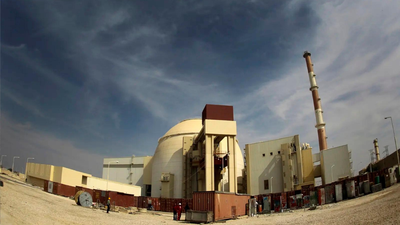
US-Israeli strike hits Iran’s only functioning nuclear facility in Bushehr
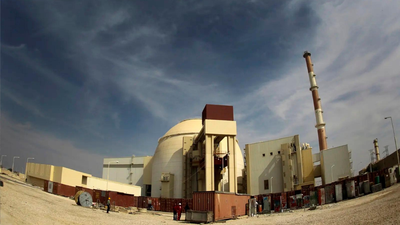
A projectile struck Iran’s Bushehr nuclear power plant on Saturday, killing a security staffer and damaging a nearby building, the latest attack on the country’s only functioning nuclear facility.The projectile hit the perimeter of the plant, causing damage to structures close to the site, Reuters said, citing Tasnim news agency. Key facilities were not affected and power generation continued without disruption, the report said.The incident is the fourth time the Bushehr site has been targeted since the conflict began, with several projectiles reported landing in the surrounding area earlier this month.The International Atomic Energy Agency (IAEA) confirmed that it had been informed about the strike by Iran with a projectile close to the plant complex. In a post on Twitter, the agency said a member of the site’s physical security staff was killed by a projectile fragment, while a building suffered damage from the shockwave and debris.“No increase in radiation levels was observed,” the IAEA said.Iranian officials reiterated that the attack did not affect the plant’s core infrastructure, stressing that operations remain unaffected despite repeated incidents in the area around the Bushehr facility.

‘Fiction of imagination’: Pakistan rejects reports of failure to launch US, Iran talks

Pakistan on Saturday rejected media reports that claimed its efforts to facilitate talks between the United States and Iran to resolve the ongoing conflict in West Asia have hit hurdles after an initial exchange of peace proposals.“We have seen several reports in the media, including social media, citing so-called official government sources about the ongoing conflict in the region and Pakistan’s efforts to promote peace and dialogue,” Foreign Office spokesperson Tahir Andrabi said, PTI reported.
“We categorically reject these false allegations reported by purported official sources as baseless and a figment of the imagination. Any allegation given to official sources in this regard is false,” he said.The Dawn newspaper reported that, according to an unnamed official, some progress had been made through an exchange of messages between Washington and Tehran, but the lack of a clear response from Iran has slowed progress at this crucial stage.Pakistan moved forward rapidly after the conflict began, motivated in part by its obligation to protect saudi arabia In case of Iranian attack.Although it has so far been unable to broker a ceasefire, it has managed to stay out of direct involvement in the war.The United States and Israel launched joint strikes on Iran on February 28, reportedly killing Supreme Leader Ayatollah Ali Khamenei along with several senior commanders. In response, Iran expanded its retaliation throughout the Gulf region, with the conflict significantly disrupting energy supply chains, particularly around the Strait of Hormuz.
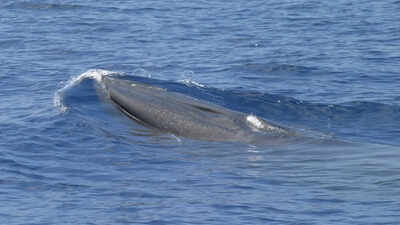
Why Trump’s ‘God Squad’ decision to expand oil drilling in Gulf of Mexico is a vote for a whale’s extinction | World News
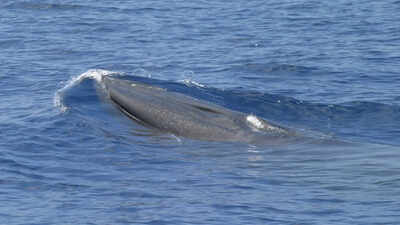
A rarely used federal panel with the authority to override endangered species protections has approved a request from the Trump administration to expand oil and gas drilling in the Gulf of Mexico, as the White House moves to accelerate domestic production in line with its “drill, baby, drill” agenda, with officials pointing to geopolitical tensions and energy supply risks. Scientists and environmental groups say the decision could push already vulnerable marine species closer to extinction, including the Rice’s whale, a species with fewer than 50 individuals remaining.
A rarely used power invoked
The body at the centre of the decision is the Endangered Species Committee, more commonly referred to as the “God Squad” because of its ability to permit projects that could determine the survival of protected species. Created in 1978 under the Endangered Species Act, a 1973 law designed to prevent the extinction of at-risk plants and animals, the committee can grant exemptions when it determines that a project serves national or regional interests and that there are no reasonable alternatives. Its decisions effectively allow activities that would otherwise be prohibited because they could harm or kill endangered species.
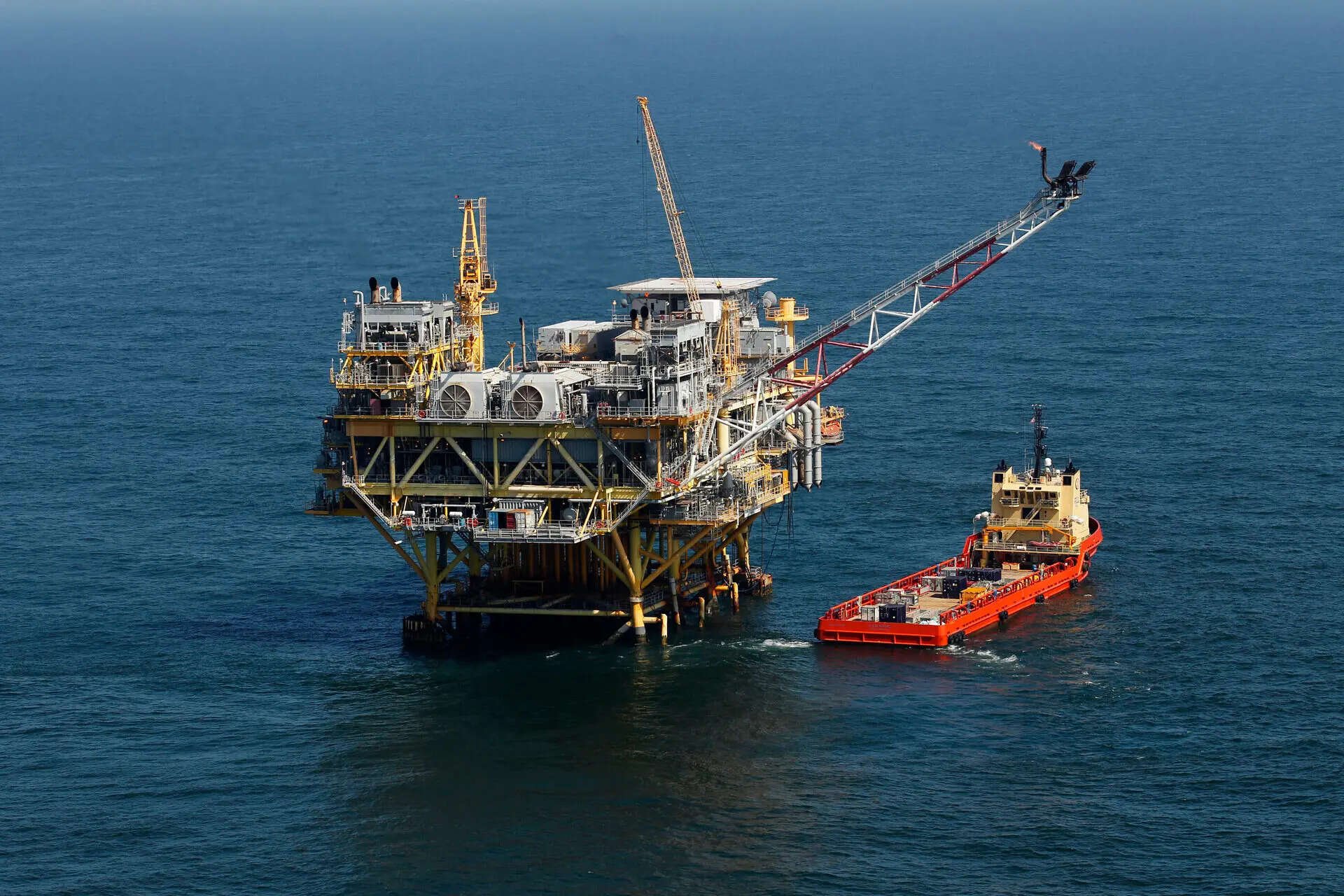
FILE – A supply vessel boat sits near an oil rig in the Gulf of Mexico, off the coast of Louisiana. April 10, 2011. (AP Photo/Gerald Herbert, File)
The committee is composed of senior federal officials, chaired by the Secretary of the Interior, with representation from agencies including agriculture, the army and the Environmental Protection Agency, as well as a vote shared by affected states. A minimum of five votes is required to approve an exemption. Until this week, it had done so only twice in more than five decades. On Tuesday, it voted unanimously to approve an exemption for expanded oil and gas activity in the Gulf of Mexico, the third such decision in its history.
National security framing and geopolitical pressure
The request was submitted by Pete Hegseth, who argued that domestic oil production had become a matter of national security in the context of escalating tensions with Iran. In remarks to the committee, Hegseth pointed to disruptions in global oil supply following military escalation in late February, when US and Israeli strikes on Iran were followed by Tehran effectively closing the Strait of Hormuz, one of the world’s most critical energy corridors.The closure of the strait has already disrupted global supply chains, constraining oil shipments and pushing prices higher across markets. In the United States, average gasoline prices have climbed above $4 per gallon for the first time in nearly four years, highlighting the immediate impact on consumers.The exemption request itself predated the escalation with Iran, but Defense Secretary Pete Hegseth framed the situation as evidence of the risks of relying on external supply.This comes as US President Donald Trump downplayed the stakes, insisting the country does not rely on the Strait of Hormuz. “We don’t need it. We haven’t needed it, and we don’t need it,” he said, while also claiming, “We produce more oil & gas than Saudi Arabia & Russia combined, & that number will soon be substantially higher.” At the same time, Hegseth told the committee that ongoing litigation by environmental groups had slowed energy development, and that the exemption would allow what he described as the “integration of oil and gas production with responsible endangered species protection.”
A fragile ecosystem with a recent history of catastrophe
The Gulf of Mexico, where the expanded drilling is expected to take place, is one of the most biologically diverse marine regions in the United States. It is home to at least 20 threatened and endangered species, including sea turtles, corals, manta rays, manatees and multiple species of whales. It is also a region with a well-documented history of environmental damage linked to oil extraction. On April 20, 2010, the Deepwater Horizon oil spill began when an offshore drilling rig exploded roughly 52 miles off the Louisiana coast. Over the following 87 days, an estimated 134 million gallons of oil were released into the Gulf, making it the largest marine oil spill in US history.
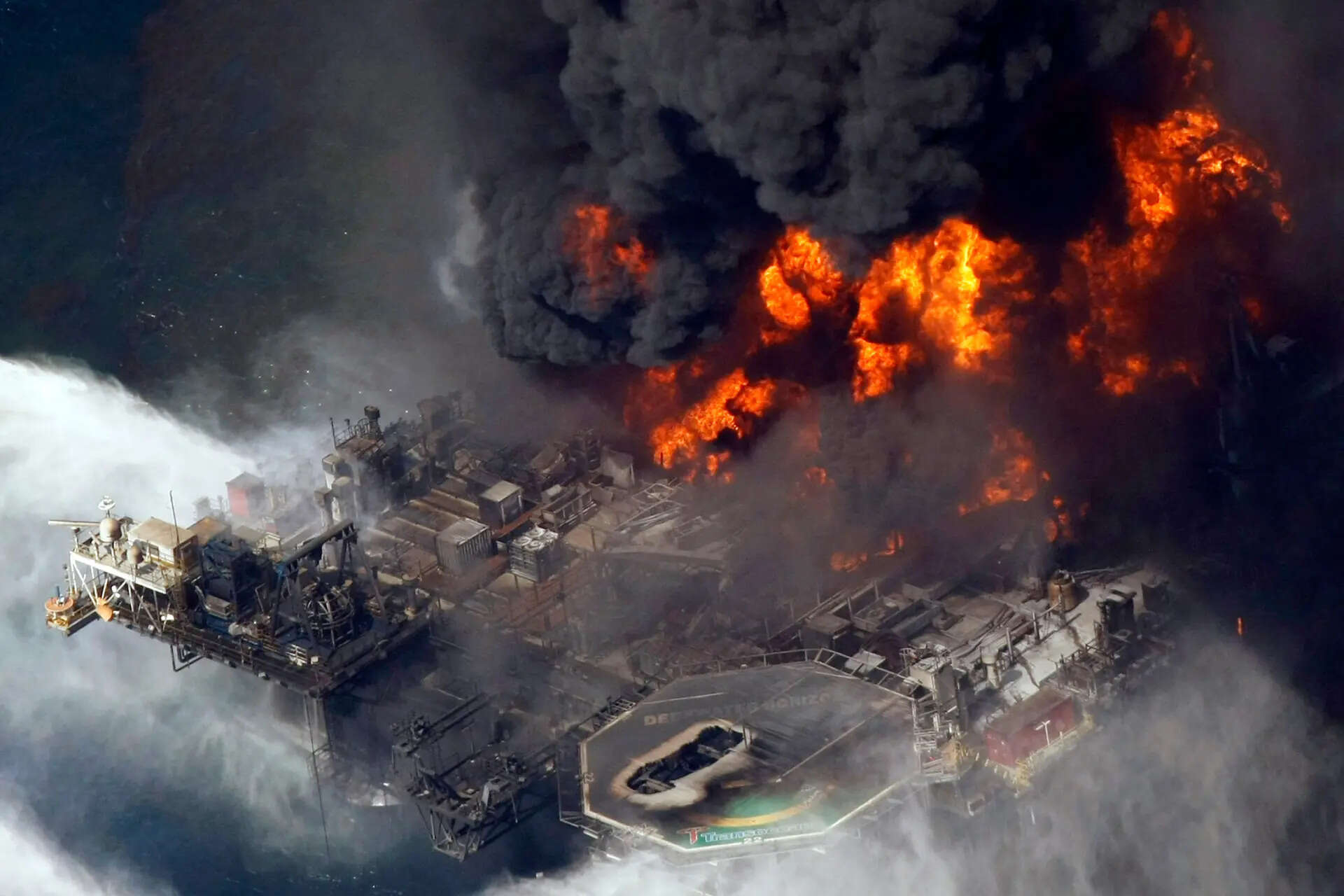
FILE – The Deepwater Horizon oil rig burns, April 21, 2010, in the Gulf of Mexico more than 50 miles southeast of Venice, La. (AP Photo/Gerald Herbert, File)
The effects were immediate and widespread. Tens of thousands of marine animals died, including dolphins, whales, sea turtles and seabirds. Every species of cetacean in the Gulf, a group that includes whales, dolphins and porpoises, was exposed to oil. While the scale of the damage was visible at the time, scientists have continued to assess its longer-term consequences, particularly for species that were not yet fully understood.More recently, the region has seen fresh incidents that underscore the persistence of such risks. In late March, a large oil spill spread more than 373 miles (600 kilometres) across waters off Mexico’s Gulf coast, seeping into seven nature reserves and disrupting coastal ecosystems. According to reporting by the Associated Press, the spill originated from a vessel, yet to be identified, anchored near the port city of Coatzacoalcos in Veracruz state, along with two “natural seepages.”
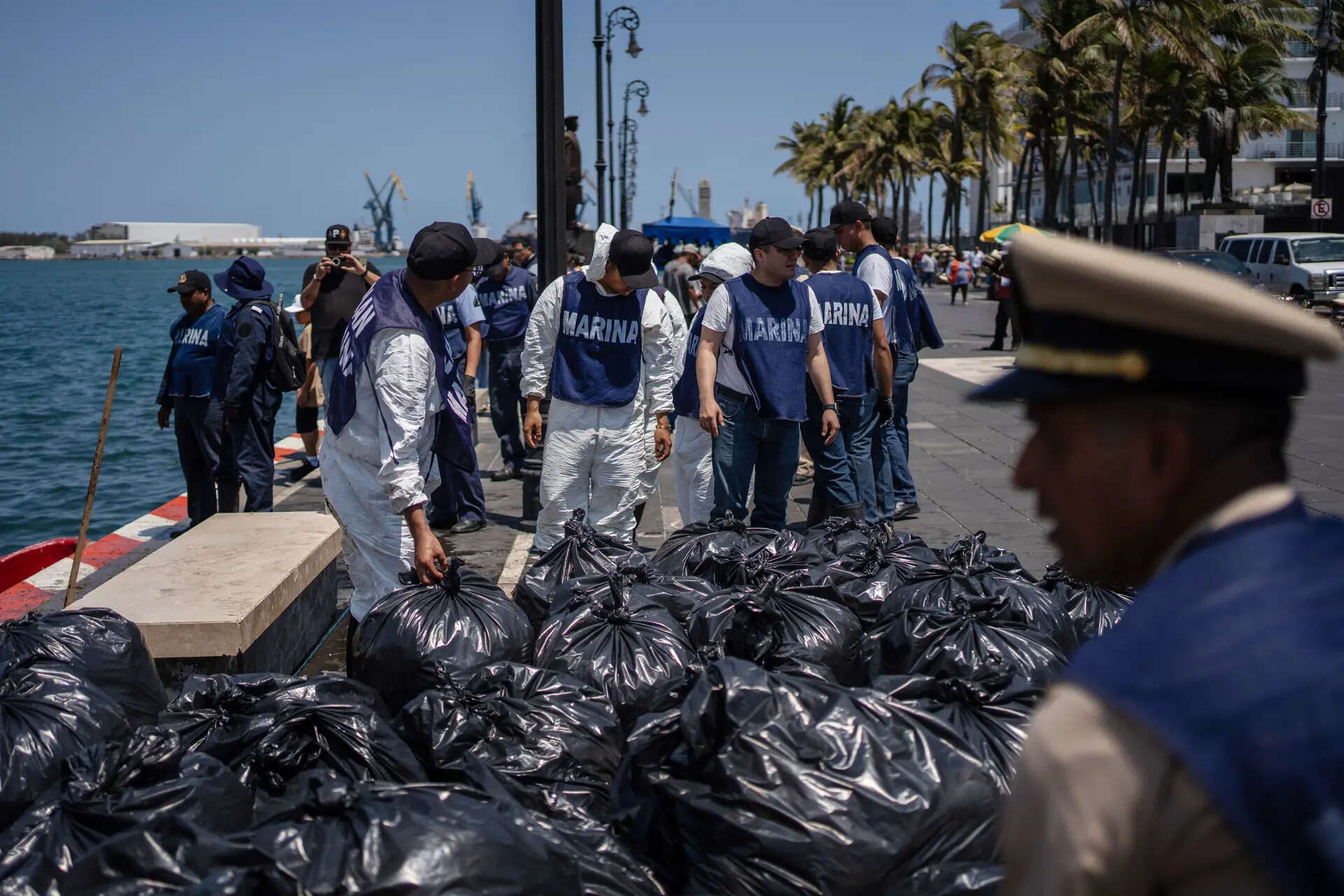
Bags filled with oil-stained sargassum collected by Mexican Navy sailors sit at a port in Veracruz, Mexico, Thursday, March 26, 2026, after Mexican authorities said an oil spill in the Gulf of Mexico originated from an unidentified vessel and two natural oil seeps. (AP Photo/Felix Marquez)
Authorities said around 430 tonnes of hydrocarbons had been collected along the coasts of three Mexican states and ruled out severe environmental damage, but local reports and images showed dead turtles, eels and fish washing up on beaches and near shorelines, while fishing activity in Veracruz, typically at its peak ahead of Holy Week, was sharply affected.
The whale discovered too late
Among those species is the Rice’s whale, a large baleen whale that lives exclusively in the Gulf of Mexico. Although whales of this type had been observed for decades, they were only formally recognised as a distinct species in 2021, following genetic and anatomical analysis of a stranded individual found in the Florida Everglades in 2019. The species was named after marine biologist Dale W. Rice, who in 1965 was the first to write about the presence of what was thought to be Bryde’s whales in the Gulf. Rice’s whales can grow to around 40 feet in length and are believed to inhabit a narrow band of waters in the northeastern Gulf, typically at depths between 100 and 400 metres. Their behaviour makes them particularly vulnerable: they dive to the seabed during the day to feed on specific prey such as silver-rag driftfish, and return closer to the surface at night, where they are more exposed to vessel strikes.
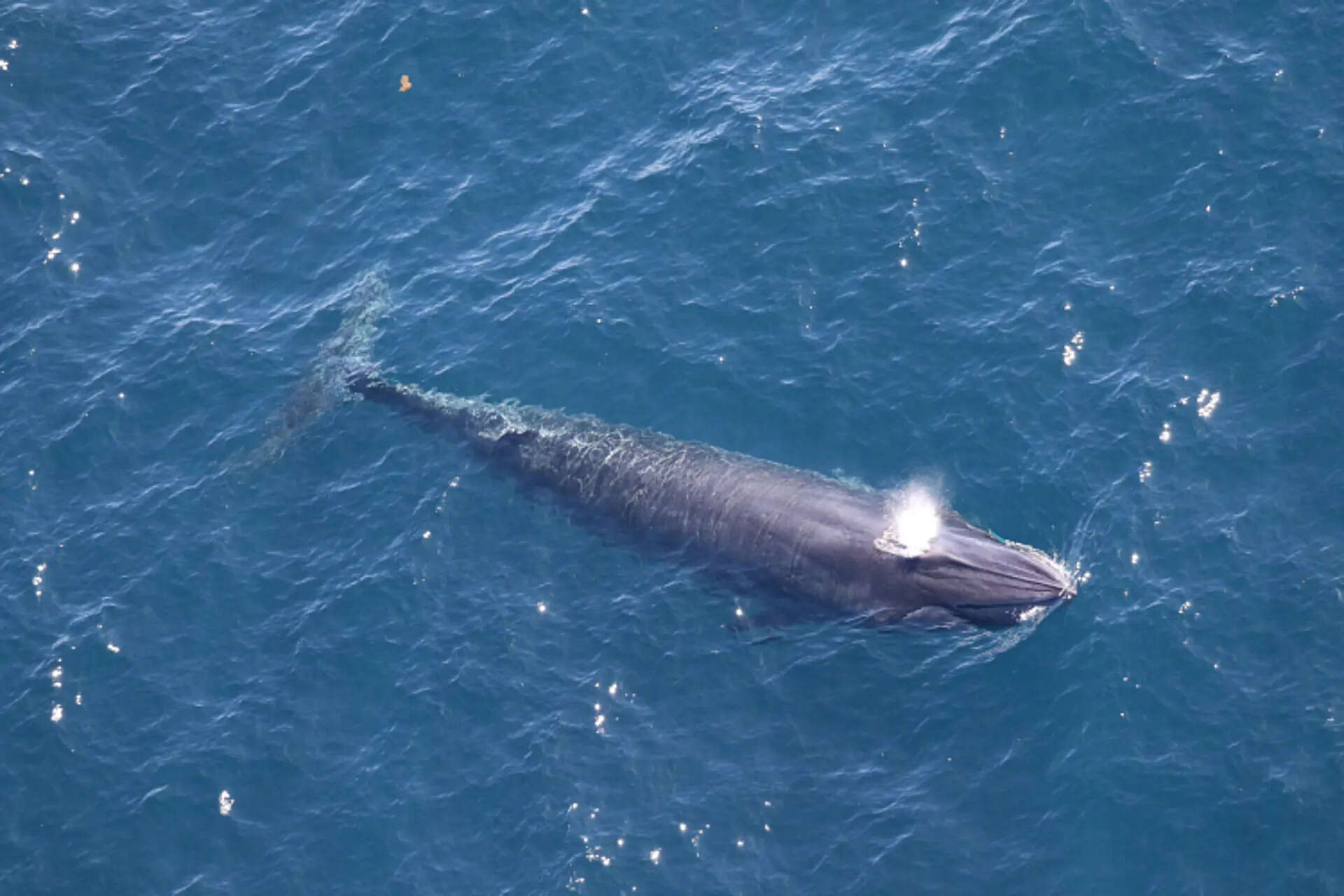
In this 2024 image provided by NOAA Fisheries, a Rice’s whale is visible from onboard the NOAA Twin Otter aircraft off the coast of Texas in the Gulf of Mexico. (Paul Nagelkirk/NOAA Fisheries (Permit #21938) via AP)
Their population is critically small. Scientists estimate that fewer than 100 individuals remain, with some assessments suggesting the number could be closer to 50. The impact of the Deepwater Horizon spill on this species has only become clear in recent years. According to the National Oceanic and Atmospheric Administration, exposure to oil contributed to a decline of more than 20% in the population. Jeremy Kiszka, a biological sciences professor at Florida International University, told PBS that the species is “quite living on the edge,” noting that its restricted habitat, specialised diet and exposure to human activity leave little margin for additional stress.
How expanded drilling could affect marine life
Scientists and conservation groups have outlined several ways in which increased oil and gas activity could affect the Gulf’s ecosystem. Direct risks include the possibility of new spills, which could replicate or compound past damage. Even without a major incident, routine operations introduce noise, vessel traffic and pollution into the environment. Noise from drilling and exploration can interfere with whales’ ability to communicate and forage. Increased ship traffic raises the likelihood of collisions, particularly for species like Rice’s whales that spend time near the surface at night. Changes associated with fossil fuel extraction also contribute to broader environmental shifts. As ocean temperatures and conditions change, the distribution of prey species can shift, affecting animals that rely on specific food sources.
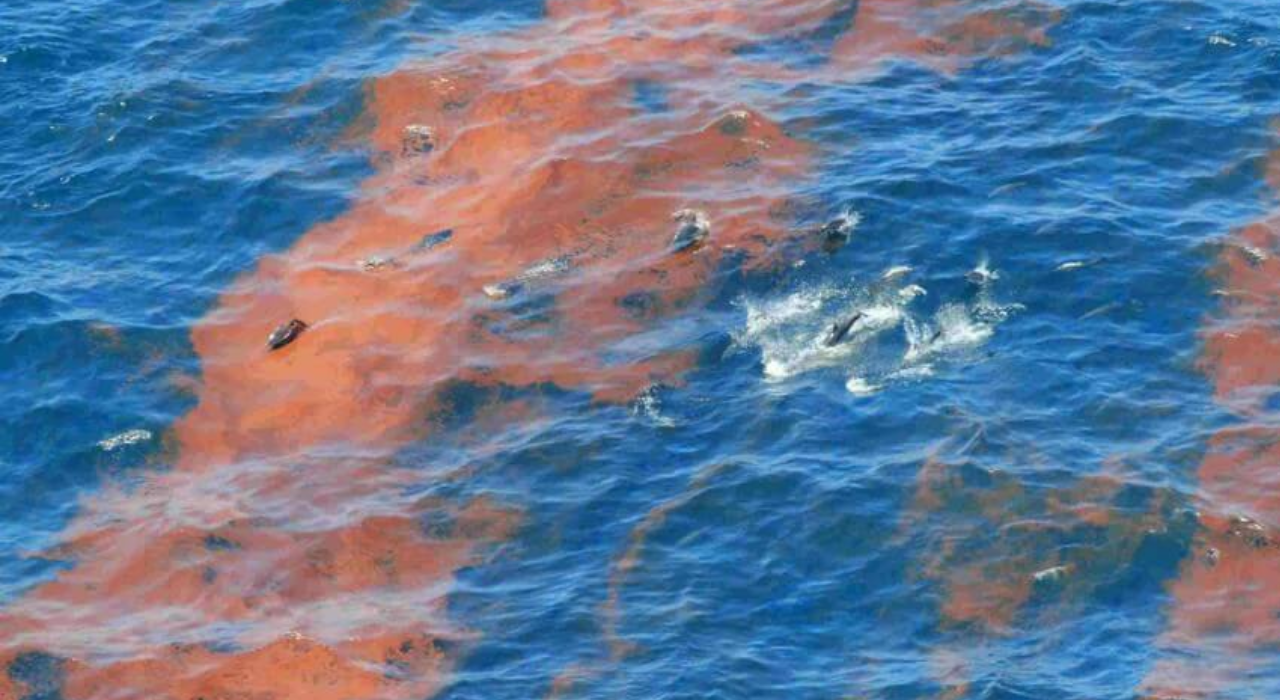
Dolphins swimming in oiled waters in the Gulf (Source: NOAA)
Letise LaFeir, chief of conservation and stewardship at the New England Aquarium, told PBS that many of the broader impacts of climate change are already “baked in,” but added that the expansion of drilling is “just compounding the immediate risks locally and the longer-term risks.” The effects are not limited to whales. Michael Jasny, who directs the marine mammal protection project at the Natural Resources Defense Council, told PBS that the consequences extend across species, listing “sea turtles, manatees, whooping cranes, various seabirds, Rice’s whales, sperm whales” and “endangered corals,” and adding that “it is every endangered or threatened species in the Gulf of Mexico.”
Protections set aside
Prior to the exemption, federal agencies had assessed the impact of oil and gas activity on the Gulf’s ecosystem. In 2025, the National Marine Fisheries Service concluded that such activity would likely lead to the extinction of the Rice’s whale and recommended measures to reduce harm, including limits on vessel speeds. Those measures will no longer apply under the exemption. The decision has drawn strong criticism from environmental organisations, some of which attempted to block the vote through legal action before it was held.
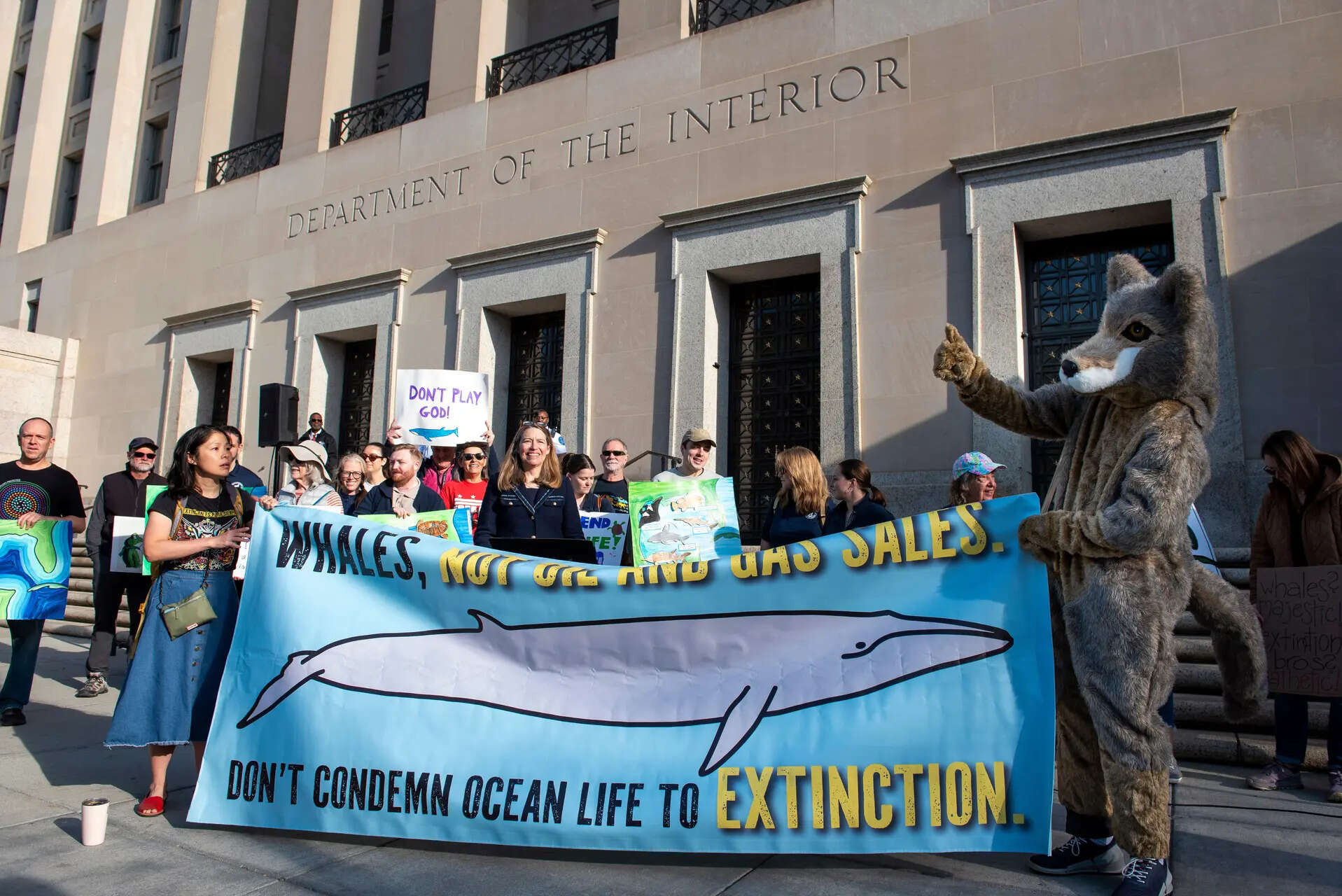
Conservation groups rally to oppose the Trump administration’s convening of the Endangered Species Committee, at the Interior Department in Washington, Tuesday, March 31, 2026. (AP Photo/Cliff Owen)
Brett Hartl, government affairs director at the Center for Biological Diversity, told the BBC that “Americans overwhelmingly oppose sacrificing endangered whales and other marine life so the fossil fuel industry can get richer.”There are also concerns about the precedent set by the decision. Michael Jasny warned that if exemptions can be granted in this context, it raises the possibility of similar decisions elsewhere.Jasny said the Trump administration could “turn this … into a thing that could be invoked at any time, almost for any purpose,” questioning, “If it can be done for drilling in the Gulf, why not California? Why not Alaska?”
Industry response and next steps
Industry representatives have defended the decision, arguing that offshore energy development can be carried out alongside environmental safeguards. Andrea Wood, a spokesperson for the American Petroleum Institute, told the BBC that the industry has “a long track record of protecting wildlife while developing offshore energy responsibly,” adding that there needs to be a balance between “science-based protections” and “meeting growing energy demand.” Environmental groups have said they intend to pursue further legal action in response to the exemption.

Saudi Arabia: Planning for Hajj 2026? Key updates, visa rules, Nusuk registration and important deadlines you shouldn’t miss. world News

saudi arabia Preparations for Hajj 2026 (1447 AH) have been accelerated, with earlier visa processing, strict timelines and a fully digital system introduced to manage millions of pilgrims.According to the official timeline, the Hajj is expected to take place between May 24 and May 29, 2026, with international arrivals scheduled from April 18 to May 21.In a major change, the Haj and Umrah ministry started issuing visas from February 8, 2026, a few months before the pilgrimage. This initial rollout is intended to improve coordination and avoid last-minute travel chaos.Saudi authorities have also imposed strict booking deadlines, instructing governments and private operators globally to finalize arrangements well in advance to secure accommodation and transportation.
Nusuk registration, and new Saudi rules
For Hajj 2026, Saudi Arabia has made the Nussuq platform the central system for the entire pilgrimage process. This integrated digital platform now handles everything from visa applications to on-ground services, eliminating the need for multiple intermediaries.Through Nusuk, pilgrims can not only register but also book and manage key components of their journey. These include accommodation and guided service packages in Mecca and Medina intercity transportation. One of the most sought-after features is the ability to book Rawdah (Riyaz ul Jannat) travel permits to the Prophet’s Mosque in Madinah, which are issued in limited slots and must be reserved in advance.The platform also allows pilgrims to:
- Choose official Hajj packages with approved service providers
- Arrange airport transfers and internal transportation between holy sites
- Permission to access major ritual sites
- Track application status, payment and documentation
Officials say the system improves transparency and prevents fraud, especially after taking action against about 1,800 foreign travel agencies for service violations.As per the latest available updates, more than 1.2 million pilgrims globally have already registered or started applying, indicating strong demand. Final participation is expected to surpass 2 million, similar to pre-pandemic levels.Pilgrims can access Nusuk through its official website (nusuk.sa) or mobile app, and are advised to rely only on authorized channels for booking.
strict deadlines
Saudi Arabia has tightened rules for the transition from Umrah to Hajj in an effort to better manage crowds and prevent unauthorized migration. The government has clearly defined cut-off dates for Umrah pilgrims, ensuring that only registered Hajj participants remain in the country during peak days.Authorities stressed that these measures are necessary to maintain security in Mecca and Medina, where millions of people gather within a short period of time. The focus this year is on strict enforcement, with officials closely monitoring entry, exit and accommodation records through an integrated digital system.Broader regulatory efforts also include improved licensing rules for hotels and transportation providers, ensuring that only approved operators serve pilgrims during the season.
Travel, Flights and Hotels
From a travel perspective, Hajj 2026 is expected to be better organised, but slightly more complicated due to tighter controls and global uncertainties. Airlines in the Gulf and South Asia have already begun adjusting schedules to accommodate the initial travel window, with additional Hajj flights likely to begin operating closer to the departure dates.However, ongoing tensions in the region, particularly between the United States and Iran, have led to some airspace adjustments. Aviation experts say flights are unlikely to be cancelled, but there could be route changes and minor delays, especially on routes crossing sensitive areas.Hotel accommodation in Mecca and Medina is also undergoing strict regulation this year. Saudi authorities have introduced a seasonal licensing system to ensure quality standards, which may lead to limited availability and slightly higher prices in prime areas near the Grand Mosque.Pilgrims are advised to finalize bookings early, stick to authorized platforms and be flexible in travel plans. Those traveling from Gulf countries such as the UAE, Qatar and Oman are expected to benefit from reduced travel times, but will still have to follow the same strict documentation and scheduling requirements.
What does it mean?
For Gulf-based pilgrims, the 2026 Hajj season offers better planning tools but demands tighter discipline. Early visa rollouts and digital systems make the process more efficient, but missing deadlines or failing to meet the requirements may result in disqualification.Saudi Arabia’s approach reflects a broader shift toward a technology-driven, tightly regulated pilgrimage system aimed at improving safety and managing record participation levels. Additionally, changing geopolitical circumstances mean travelers should remain mindful of advisories and plan with extra caution.
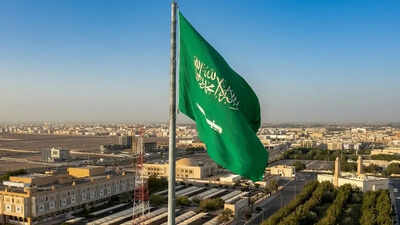
Saudi Arabia travel rules: Saudi Arabia travel ban: Fine up to SR30,000, 5-year ban for banned countries in new ministry rules | world News
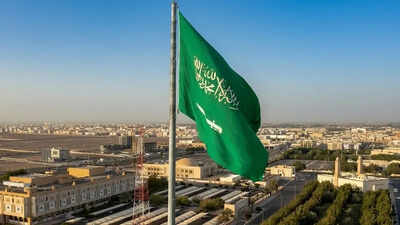
saudi arabia Introduced new travel rules for its citizens, imposing financial fines and travel bans on those traveling to restricted countries without official approval. The updated rules fall under the Kingdom’s Travel Document Law, which was implemented through executive regulations approved by Interior Minister Prince Abdulaziz bin Saud bin Naif.Under these rules, the Ministry of the Interior is responsible for identifying and updating the list of prohibited sites based on security, political or health considerations.Officials say the move is aimed at tightening compliance and protecting citizens from traveling to high-risk or conflict-affected areas.
Saudi travel penalties explained
The new framework clearly outlines penalties for violations. Citizens traveling to restricted countries without permission face fines of up to SR30,000 and a travel ban of up to two years.However, the punishment becomes much harsher for repeat offenders. In such cases the fine may double to SR60,000, while the travel ban may extend to five years.Officials also indicated that penalties for travel to conflict zones or high-risk areas could increase further, reflecting the seriousness of such violations.In parallel provisions under the same law, misuse of travel documents, including forgery or allowing others to use them, can result in a fine of up to SR100,000 and a travel ban of up to five years, with such cases being referred to the public prosecution.
Why are countries banned?
Saudi Arabia’s travel restrictions are primarily motivated by security, political and public safety concerns, with authorities regularly updating the list of prohibited destinations.According to the Saudi Interior Ministry, citizens are currently barred from traveling to several countries without prior official approval. These typically include nations facing ongoing conflict, political instability or fragile security situations.In recent advisories, the banned list has included countries like Iran, Afghanistan, Yemen, Syria, Lebanon and Somalia, which have been flagged by the authorities from time to time.Officials have clarified that the list is not static and may change depending on global developments, including geopolitical tensions or health emergencies. Travel to these destinations is permitted only in exceptional circumstances and requires prior government approval.The ministry emphasizes that these restrictions are preventive, designed to protect Saudi citizens from entering high-risk environments and avoid legal, diplomatic or security complications abroad.
impact on citizens
The rules are enforced through official travel systems, meaning violations can result in immediate consequences, including being stopped at departure points or flagged upon return.Although the law is strict, limited exceptions may apply. Authorities have noted that penalties may be reduced in specific cases, such as family ties in the destination country, short transit stays of more than 48 hours, or travelers over 60 years of age.Additionally, additional penalties exist for related violations. Providing false information in travel documents can result in a fine of up to SR5,000, while more serious offenses involving document tampering or misuse can be escalated to legal authorities.Authorities have urged citizens to check official advice before traveling and obtain necessary approvals, warning that ignoring the law will not give violators immunity.