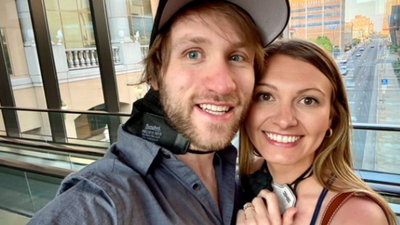
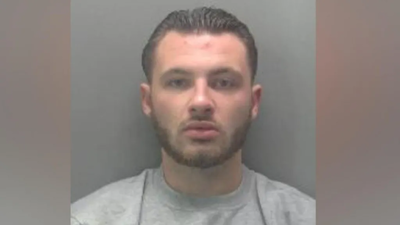
Jesse Ridgway: YouTuber Jesse Ridgway says he and his wife made a difficult choice after their fetus was diagnosed with Down syndrome.

YouTuber Jesse Ridgway says he and his wife made a tough choice after their fetus was diagnosed with Down syndrome

YouTuber and filmmaker Jesse Ridgway shared a very emotional update with his followers. He and his wife Ashley learned during their pregnancy that their unborn child had trisomy 21, or Down syndrome. This information changed his plans and left him deeply saddened. Jessie explained it all in a post on X, letting everyone know how much this decision has hurt her.Jessie said in her message that this decision was not easy at all and was taken after much deliberation. He thanked fans for supporting him during this painful time. She also shared that many people sent personal stories and kind messages, which helped her feel less alone. Although the situation is very emotional, they said they are trying to stay strong together as a family.

YouTuber Jesse Ridgway opens up about emotional decisions after fetal Down syndrome diagnosis

Jesse Ridgway wrote that he and Ashley were “devastated” After knowing about the diagnosis. He said Ashley had undergone the procedure earlier in the week and is now recovering. Jessie said, “The choice was not made lightly,” And said they appreciated the fans’ support, no matter what decision they made.When he heard this news for the first time, he also expressed his thoughts. Jessie said, “When I first encountered this news, I was shocked but optimistic.” He admitted that at first he did not fully understand what Down syndrome entailed. Later, after learning more, they realized that the medical challenges could be serious for the child and the family.He listed several health issues associated with Down syndrome, including heart problems, hearing and vision problems, learning delays and weakened immune function. He also said that many children with the condition may require full-time care throughout their lives. Jessie explained that these factors made it even more difficult for her to cope.The YouTuber also shared concerns about the risks during pregnancy, saying there was a possibility of miscarriage and also potential health risks for Ashley. For all these reasons, the couple decided to move forward with the difficult medical option.Jesse said that although some people may feel upset or disappointed by his decision, he felt it was the right one for his family. “Thankfully, we had a choice,” he wrote, reflecting on how complex and painful the experience has been.He ended his message by saying that it would take time for him to recover emotionally. However, he also shared hope for the future and said that he would like to try again when the time is right. The couple is now focusing on recovery and supporting each other during this difficult moment.

Source link

Dubai prince’s ex-wife and 3 kids ‘kidnapped’ amid bitter custody battle, lawyer raises concerns: ‘She just disappeared’

Dubai prince's ex-wife and 3 kids 'kidnapped' amid bitter custody battle, lawyer raises concerns: 'She just disappeared'
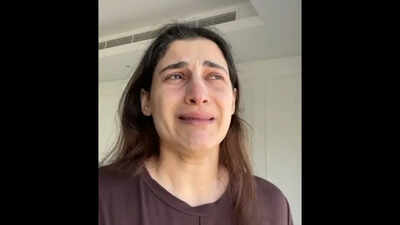
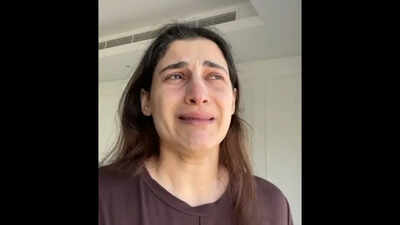
Zeinab Javadli, the ex-wife of the Dubai prince, was reportedly kidnapped along with her three children.

Dubai’s prince’s ex-wife and three children have allegedly been “kidnapped” by Emirati police in a surprise nighttime raid, a British lawyer has claimed, raising concerns over the mysterious disappearance of 34-year-old Zeinab Javadli and her children. Javadli was married to Sheikh Saeed, 49, the nephew of the ruler of Dubai. Javadal and her ex-husband were in the middle of a bitter custody battle. Two months ago he was ordered to hand over the children.Javadli’s British lawyer David Haigh said he last spoke to her on Tuesday night and then she disappeared. He said the authorities did not provide a single answer as to what might have happened to him.Jawdali’s mother, who came to visit Dubai, found the house locked and empty. She was in contact with Dubai police and the consulate of Javadli’s home country Azerbaijan, the BBC reported.The estranged couple are in an ongoing custody battle and the latest update is that the ex-husband has filed a complaint accusing Javadli of kidnapping their daughters. The children have already faced several changes in custody.

Former international gymnast, but who is Javadali, a criminal in the UAE?

Javadali is an Azerbaijani former rhythmic gymnast. He faces possible arrest for online crimes because he livestreamed the last time Dubai Police visited his home. “I knew it was my last chance to be with my kids because they would never let me see them again. I really believed it was my last chance, so I just opened a livestream and asked for help,” she said at the time.

Source link

Chip Roy’s new bill targeting H-1B seeks to end the lottery OPT: Put America’s white-collar workers first

Chip Roy's new bill targeting H-1B seeks to end the lottery OPT: Put America's white-collar workers first
Chip Roy has proposed a new bill against the H-1B visa program

Republican Chip Roy, Texas Rep., has introduced a new bill to end H-1B visa abuses, called the American White-Collar Worker Jobs Act. Chip Roy said, “It’s time to end this lottery-based pipeline and replace it with a system that prioritizes merit, enforces real pay standards and puts America’s white-collar workers first.” This joins the list of several other similar bills that Republican politicians brought to control H-1B visa The system is far from being passed and implemented.Chip Roy’s bill would require labor market testing to determine whether employers made good faith efforts to hire local workers before hiring H-1B visa holders, the Daily Caller reported. Department of Labor and United States Citizenship and Immigration Services.“Throughout its nearly forty-year history, the H1-B visa has been abused, allowing employers to routinely sideline American STEM workers in favor of cheaper foreign labor, while layoffs and wage suppression are disguised as ‘shortages,'” Roy told the Caller.“It’s time to end this lottery-based pipeline and replace it with a system that prioritizes merit, enforces real pay standards, and puts America’s white-collar workers first,” Roy said.

Chip Roy’s bill pushes to end OPT

While Roy’s bill does not seek to end H-1B, he is in favor of ending optional practical training, which has served as a pipeline for college students to enter the job market. Roy wants to end the OPT program.Recently, US authorities, including US Immigration and Customs Enforcement and US Citizenship and Immigration Services, announced an investigation into alleged OPT-related fraud. Authorities said they have identified more than 10,000 students linked to employers they consider suspicious, with investigators reporting cases involving vacant offices, shell companies and unverified employment claims.

Source link

Vikram Digva’s grandmother breaks silence on Henry Novak murder, defends killer’s mother’s decision to hide weapons: ‘Any parent would have…’

Vikram Digva's grandmother breaks silence on Henry Novak murder, defends killer's mother's decision to hide weapons: 'Any parent would have...'

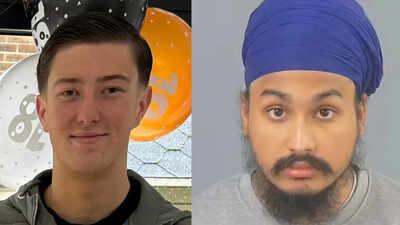
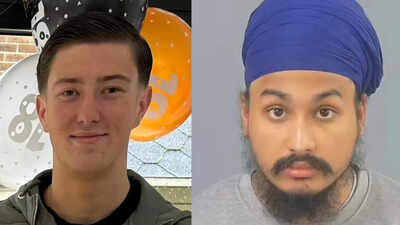
The grandmother of convicted murderer Vikram Digva has defended his mother’s actions after she helped hide the weapon used in the murder of Henry Novak, saying she “just did what any parent would do.”Speaking publicly for the first time since Digwa was sentenced to life imprisonment on Monday, Bimla Kaur, 75, said the case has devastated both families and her relatives live in fear.“This whole affair has destroyed two families – Henry’s and mine,” she told the Daily Mail.Digva, 23, was convicted of murdering Novak using a kirpan, the Sikh ritual blade, in Southampton on December 3 last year. His mother, Kiran Kaur, 52, was later found guilty of assisting a murderer after hiding a knife at her son’s request. He is currently on remand and will be sentenced later this month.Kaur defended her daughter-in-law, saying, “She did what any mother would do.”The grandmother described Kiran as a devout Sikh and a devoted housewife, whose entire focus was on raising her children in a traditional family environment.“Now he will be punished for this,” he said.Kaur expressed sympathy for the victim’s family and clarified that she does not condone her grandson’s actions.He described DeGwa as a “difficult boy”, saying, “He’s done a lot of bad things – there’s no debate on that.”According to Kaur, her family fears for their safety following the outcome of the case. Following DeGwa’s conviction and the release of police body camera footage, violent protests broke out in Southampton. Some protesters traveled towards the road where the Digwa family lived.Kaur said her son, Moga, and grandson, Gurpreet, have left their home and are staying with relatives at an undisclosed location.“It is not safe for them to stay in their home because it was targeted last night and it is only a matter of time before it is attacked again,” he said.Although she is at home in central Southampton, Kaur said the family has also received threats.She said: “We are all living in fear because we have also received some threats and we are worried that we too might be attacked. But we have been in this city for a long time, our whole family is here, and we have nowhere else to go.”Kaur also spoke about her family’s connection to the Nihangs, a centuries-old Sikh warrior order known for carrying traditional weapons and protecting the Sikh religion. He said several male members of Digva’s family, including his father and brother, belonged to the order.“It’s an important part of our faith and I’m proud of it,” he said.However, he insisted that his grandson’s actions went against those values.He added, “These weapons are not meant to be used on innocents, so something has gone wrong.”During the trial, Degawa was described as “obsessed with weapons” and was found to be in possession of several illegal weapons in addition to ceremonial sabres.People of the Sikh community have also kept distance from him. Jas Singh of the Sikh Federation UK said: “He is a fake Nihang. Yes, weapons are important to us, and we learn to use them, but it is clearly stipulated that they can only be used to defend the faith, maintain justice and protect the innocent, not to kill them. Nihangs are an honest and noble people, but Digwa was none of these. He was a common thug, no different from any other you would normally see on the streets of Britain Are.

Source link

Sherpa survived 6 days of tough challenge on Everest, crawled down for 12 km from a height of 25 thousand feet without food and oxygen.

Sherpa survived 6 days of tough challenge on Everest, crawled down for 12 km from a height of 25 thousand feet without food and oxygen.
Dawa Sherpa, a mountain guide missing for several days in the Everest region, is treated by doctors after arriving at HAMS Hospital in Kathmandu, Nepal, Thursday, June 4, 2026. (AP Photo/Niranjan Shrestha)

In what climbers are calling a miracle, a 52-year-old Sherpa guide, who was presumed dead after he went missing while descending Mount Everest on May 29, was found alive near base camp on Thursday morning, six days later.Dawa ‘Hillary’ Sherpa – who earned the nickname for her mountaineering expertise – climbed more than 12 km from the Yellow Band (25,000 ft) to Crampon Point (17,000 ft) in difficult weather without food, water or supplemental oxygen, crossing the dangerous Khumbu Icefall after the climbing season ended and ropes and ladders were removed on the route.His family, having lost hope, were reciting prayers for his funeral when they were told that Dawa had survived, searching for food, water and remnants of discarded bottled oxygen from the surviving tent.Dawa was descending after climbing Everest at 5 pm on May 28 with a group that included British climber Chris Thrall, a former Royal Marine and a Polish climber, when he was last seen near the Yellow Band on May 29. Reports state that the Polish climber reached base camp, but claimed not to be reached. Thrall also “paid tribute” to Dawa on social media, saying “RIP… Mero Dai”. Rest in peace, my big brother.In a 13-minute video posted on Instagram on Wednesday, Thrall said, “Dawa sat down to rest with his backpack. These guys carry heavy stuff…” He added that he examined Dawa before moving on. “I turned to him and said, ‘Hillary, are you okay brother?’ He said, ‘Yes, yes, I’m fine, Chris.’ Please go.”Thrall said that as he descended, he saw a Polish climber from his team who “had frostbite and was out of supplemental oxygen”. He said, “I come from the British Royal Marines – we are taught to never leave anyone behind… I only have half a tank of oxygen left. Do I take the Polish climber who has frostbite, or go back for the Sherpa who will likely recover and do just fine as he has done hundreds of times before? His account of events has not been independently verified.Thrall said he shared oxygen with the Polish climber and descended with him, and later reported Dawa missing after reaching lower camps. After mounting online criticism over why he did not return for the claim, Thrall said he was tired of being called a “killer” on social media. Once Dava was found alive, Thrall said he was “overjoyed and happy for her and her wonderful family”.The Sagarmatha Pollution Control Committee (SPCC) cleaning team, which was removing root equipment, spotted Dawa near Crampon Point and brought him down before he was taken to a Kathmandu hospital due to frostbite and other complications. “He is in intensive care but out of danger,” a doctor at Kathmandu’s HAMS hospital said.Dawa’s family had already begun funeral prayers when news of the rescue arrived, but the first call brought disbelief rather than relief. “We couldn’t be sure that the man was really our father,” said his daughter Mhendo Lhamo Sherpa. “We asked to send pictures and only then were we convinced and very happy.” After meeting him in hospital, Mhendo said, “He recognized me… is well and speaks. We are happy.”For the climbers and guides, what was most important was not only that Dawa survived for nearly six days without supplies, but that he passed through active crevasses and broken areas. Nima Tenzing Sherpa, an independent high-altitude guide, told times of India“Two days in a crevasse deep below Camp I after a whole week in the death zone? Surviving on ice and a packet of biscuits at that altitude is an incredible feat of mental strength. Most people would lie down and accept the end, but Dawa chose to fight. He is the tiger of the mountains.”Many guides and climbers have raised questions about the delay in search and rescue response to the claim. Mingma Si Sherpa, an independent high-altitude porter, told TOI that climbers often make “dangerous assumptions” about Sherpas because of their experience and achievements at altitude. “Foreign climbers believe we are invincible – a dangerous mentality but a normal mentality. When a client is led by a specific guide so they can relax, they trust that expertise. Thrall made a textbook choice of survival in brutal circumstances.Others accused the Kathmandu-based agency that hired Dawa of “negligence and indifference”. Pasang Geljen Sherpa, an independent expedition logistics coordinator, told TOI, “It is absolutely shameful that Himalayan Traverse overtook him in the race to the finish. This is the dark side of commercial Everest – when the clock runs out, commercial teams disappear, and guides become disposable. Dawa saved himself; his agency gave him no chance.Attempts were made to reach Himalayan Travers through text messages and calls for comment on the allegations, but his phones remained switched off.

Source link

Indian-Americans behind $96 billion startup in America, new study challenges growing hatred

Indian-Americans behind $96 billion startup in America, new study challenges growing hatred
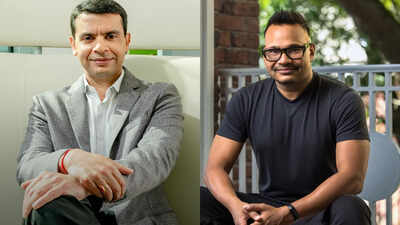
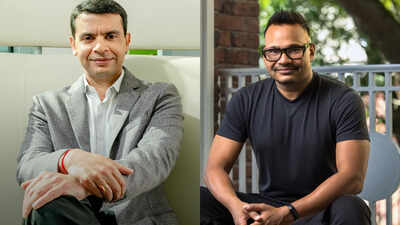
Indian-Americans have established startups worth $96 billion in America. Mohit Aron (left) and Jyoti Bansal founded multi-billion dollar companies.

A new study from the National Foundation for American Policy has revealed that India provides the largest number of founders to the US – more than any other country as Indian founders have launched $96 billion worth of startups in the US. Israel is in second place with 60, followed by the UK with 47, China with 41 and Canada with 30. The report details these immigrant founders and their backgrounds – whether they came to the US as students or for jobs, etc.The report said immigrants founded or co-founded 59% (455 of 775) of America’s privately held startup companies valued at $1 billion or more, up from 55% in NFAP reports released in 2018 and 2022. Two-thirds (66%) of US billion-dollar companies (unicorns) were founded or co-founded by immigrants or children of immigrants. about 80%America’s unicorn companies (privately held, billion-dollar companies) have an immigrant founder or an immigrant in a key leadership role, such as CEO or vice president of engineering.The report comes at a time when hatred towards India is at its peak on social media, with H-1B visa holders being portrayed as the main culprits who, according to MAGA commentators, enter the US fraudulently, steal American jobs, create a housing crisis in American cities.But as the report silenced critics, many commentators praised the Indian-American community.Commentator Richard Hanania wrote, “India has sent 96 people to the US who have started billion-dollar companies. No one is even close to them. There are only 5 million Indians in the US. About one in 50,000 of them is a unicorn founder! What pure, special, beautiful people. I will always fight for them.”“Time to use the old American phrase: “You ain’t seen nothing yet..!” Despite the challenges, Indian Americans will remain as entrepreneurial as ever. But the new phase will take place right here in India where the startup boom has just begun. And it will surprise the world…” wrote Indian business tycoon Anand Mahindra.

Main findings of the study

  • The founders of $183 billion companies studied at American universities as international students.
  • With 25,700, SpaceX has the most employees among billion-dollar companies with an immigrant founder.
  • India, with 96 companies, is the leading country for immigrant founders of billion-dollar companies.
  • The combined valuation of 455 US unicorns founded by immigrants is $5 trillion.
  • Immigrant female founders of billion-dollar companies include Rihanna (Barbados), Sherry Wei (China), Jane Rubio (Philippines), Joanna Kochniak (Poland), Wei Dong (China).

List of Indians who founded two or more billion dollar companies

Mohit Aaron: Nutanix and CohesityJyoti Bansal: AppDynamics and HarnessAshutosh Garg: Bloomreach and Eightfold.aiArvind Jain: Rubrik and GlanSachin Nayyar: Securionics and SavientAjit Singh: Nutanix and ThoughtSpot

Source link

Briton jailed for life for ‘cocaine-inspired’ murder of Saudi student Mohammed Algasim in Cambridge world News

Briton gets life imprisonment for 'cocaine-inspired' murder of Saudi student Mohammed Algasim in Cambridge

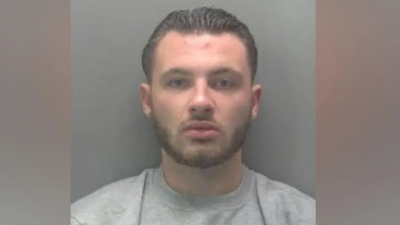
A 22-year-old British man has been jailed for life for the murder of Saudi Arabian student Mohammed Algasim, who was stabbed to death outside student accommodation in Cambridge.Chas Corrigan was sentenced to life imprisonment with a minimum of 22 years and six months at Cambridge Crown Court. The sentence comes after he pleaded guilty to the murder of a 20-year-old student in August 2025, reports BBC.The court heard that Algasim had traveled from Saudi Arabia to study English at a language school in Cambridge. On the night of the attack, he was sitting with friends near Cambridge railway station when Corrigan approached the group.Prosecutors said Corrigan had spent the evening drinking and taking drugs before carrying out the attack. During the trial, he admitted to drinking several alcoholic beverages and taking cocaine before heading to the station.Corrigan told jurors that he was carrying a kitchen knife for protection because he had been attacked before. He claimed that he initially approached the group to ask for a lighter and later returned after hearing shouting. According to his account, Algasim had stood up moments before the stabbing.However, prosecutors argued that the attack was unprovoked. CCTV footage shown during the trial showed Corrigan, wearing a high-visibility top, approaching the group moments before stabbing Algasim in the neck.Corrigan denied murder and claimed that he had only brandished the knife to scare people rather than to hurt them. Jurors rejected his account and found him guilty after deliberating for about two hours.During the sentencing hearing, Algassim’s father, Youssef Al Qassim, described the devastating impact of his son’s death.“Instead of looking at his achievements, I was faced with the unbearable reality of receiving his lifeless body,” he told the court.The judge also heard a statement from Algasim’s sister, Shatha Al Qassim, which was read in court by a family member.Corrigan’s father, Peter Corrigan, 50, was sentenced to two years in prison after pleading guilty to assisting an offender.Cambridgeshire Police said CCTV footage showed them removing a blood-stained high-visibility jacket worn by their son on August 2, 2025 and placing it in a wheelie bin. Investigators also said he helped his son avoid arrest by allowing him to hide in a property on Holbrook Road.Detective Chief Inspector Dale Mapstead, who led the investigation, said the sentence reflected the seriousness of Corrigan’s actions.“Mohammed was a young man with his whole life ahead of him and his death has had a deep impact on everyone who knew him,” he said.Following the conclusion of the case, Algasim’s family said that losing Mohammed had left a “deep void” in their lives and that nothing could bring him back, however.

Source link

Former US Ambassador called Indians corrupt, said- fraud generally does not happen in America

Former US Ambassador called Indians corrupt, said- fraud generally does not happen in America
Former US Ambassador Carla Sands said Indians earn more in the US because they are cheaters.

Former US Ambassador to Denmark Carla Sands has created a major controversy as she said that Americans are superior to Indians because they believe in the Ten Commandments and are not deceitful. Speaking on President Donald Trump’s aide Steve Bannon’s show, Sands said Indians as a group earn almost twice the per capita income than US citizens, and that’s because Americans come from a high-faith society and Judeo-Christian background. The former ambassador said, “There is generally no fraud in America. People follow the Ten Commandments and we treat others as we would have them treat us.”Sands said that foreign cultures bring with them corruption. “These visa holders often have to pay 5 or 10% of their salary forever to the person who gets them the job. They cheat and have fake diplomas. They pay for them in India. Recently a ring was busted that sold hundreds of thousands of fake degrees, mostly in STEM,” Sands said, accusing India of giving medical degrees to students who had not even studied medicine.This comment sparked a major controversy as immigration policy expert Daniel Di Martino, a fellow at the Manhattan Institute, condemned Sands’s sweeping statement on Indians.Martino posted, “Indian immigrants succeed because they are educated, work hard, and follow the law. These are conservative values. It is shameful for anyone to say that Indians succeed through fraud. This poor excuse is no better than the leftist that says white people oppress black people.”Martino argued that fraud does not work in the long run and that Silicon Valley is not being run by Indian fraud. “Fraud doesn’t work long term. Google, Apple and Silicon Valley aren’t hiring thousands of fraudsters, and neither are hospitals. In fact, Indians are discriminated against by the leftist DEI regime. So stop lying,” Martino said.Martino said, “There is some fraud in every group, in everything and everywhere. He (Sands) is wrong to claim that Indians (in America) are exceptionally cheaters or that they earn more because of it, that is extremely wrong. They earn more for the same reason that white people earn more than blacks on average.”

‘American companies should hire Americans’

This is not the first time that Sands has expressed such strong opinions. Recently, he wrote an op-ed for The Washington Times with Samantha Flanigan arguing that Disney, Meta, Amazon should only hire Americans. “One example is the widespread network of India-based fraud that has devalued American skilled STEM labor. This fraud has also come at the expense of vulnerable Indian workers who are trying to pursue the American dream through legitimate means. Last year, Forbes reported that H-1B work-arounds have been used to avoid paying fair wages to Indian workers. Other accounts suggest employer exploitation through visa controls, as visas are tied to an employer,” he wrote.

Source link

Indian national Gurpinder Singh arrested for attempting to steal gold bars worth $495,000 from elderly Florida woman

Indian national Gurpinder Singh arrested for attempting to steal gold bars worth $495,000 from elderly Florida woman

A 20-year-old Indian national in Florida has been arrested after attempting to collect gold worth about $495,000 from an elderly woman in Gainesville as part of a sophisticated scam, WCJB reports.Gurpinder Singh was taken into custody Sunday after deputies and the FBI conducted a sting operation to capture those involved in the scheme, according to the Alachua County Sheriff’s Office.The scam started when the woman received an email claiming there was an issue with her credit card. The message warned that his bank account and Social Security number had been “compromised” and instructed him to keep his money safe by converting it into gold bars. Believing the claims, the woman bought gold worth more than $101,000 from the Coin and Jewelery Gallery.The fraudsters then tried to convince him to hand over an additional $400,000 worth of gold. Before the transaction could take place, FBI and IRS agents became aware of the situation and contacted the woman. Police and federal agents worked with the woman to come up with a plan to capture the man who came to take the gold. The arrest report said Gurpinder Singh traveled from California to Florida in May to help carry out the fraud.Singh arrived at the Chevron petrol station at 12200 SW Archer Road to complete the handover. Instead of receiving the gold, deputies met him and he was arrested at the scene. Police say Singh was involved in a massive scheme aimed at stealing millions of dollars from the victim. He is currently being held in the Alachua County Jail without bail.

Source link

Magnetic wall that can replace drilling: 29-year-old man’s breakthrough invention

Magnetic wall that could replace drilling: a 29-year-old man's breakthrough invention

Most people do not like to make holes in the walls. Noise, dust, anchors that don’t work, and then months later, patches that never match the paint. It’s annoying and repetitive, something we all accept as a part of life. Argentine inventor Marco Agustín Secchi, 29, looked at that problem and decided it was ridiculous. What if walls could hold things using only magnets? So they created IronPlaque: a magnetic cement-based material that turns ordinary walls into a surface that holds magnet-backed objects without the need for nails or screws. It sounds simple until you realize it can change the way we organize our homes, offices and workshops. It is being tested right now. But if it works on a large scale, picture hanging can ultimately prevent damage to your walls.

The problem no one thought there was a solution: why magnetic walls matter

Think about how often you move things around on your walls. A picture frame needs adjustment. You may want to hang a mirror in a different location. Your child’s artwork needs to be rearranged. A tool rack gets moved. Cabinets change. In a rental apartment, every hole is a damage that will cost you money. In your own home, it’s just a mess that you never really feel happy fixing.Despite all the talk about innovation, the construction industry hasn’t changed much in decades. Walls are still passive surfaces. You drill. You cause harm. You patch. That’s the process, and it’s basically the same for generations. Secchi’s frustration came from exactly this point. Why are we still doing this? Why hasn’t anyone solved it?IronPlak works on a simple concept. Add special mineral and iron fillers to finishes such as cement or plaster. Apply it on the walls just like you apply any traditional coating. The result looks and feels like a normal wall, but it becomes magnetic-receptive. Objects with magnets stick to it. You can move them around endlessly. no holes. no damage. Just reinstalling.

How Ironplaque actually works: It’s not a powered system

Here’s an important difference that most people misunderstand: IronPlaque is not an active magnet system. It doesn’t stay “on” like a powered tool, constantly sucking away whatever metal is nearby. That misconception usually makes people lose interest until they understand what it actually does.The wall itself becomes paramagnetic. This does not generate any fields. Instead, when an object carrying a magnet comes in contact with the wall, it reacts. Materials have magnetic properties. Think of it like how a magnet sticks to the fridge. There is no electricity in the refrigerator. It is just steel that reacts when a magnet is applied.For wet construction, builders may apply Ironplaque as a final skim coat. Mix it with water, apply it like you would regular plaster. For dry construction systems, it works with boards and panels. This flexibility matters because it means the material can fit into existing building workflows without completely changing the way construction works.The iron components in the material give it a magnetic response. Research published in results in engineering While investigation of cementitious composites made from magnetic sand and magnetite powder shows that this underlying materials science is real, previous studies were aimed at infrastructure applications including wireless power transfer and magnetic sensing. What makes Ironplaque different is taking that proven materials science and pointing it at something like every day, the problem of hanging things on walls.

What can you really do with a magnetic wall

In demonstrations, Secchi has shown walls holding heavy objects such as tools, picture frames, knives, panels, and even shovels. Whatever you’re hanging has magnets on the back of it. You simply press the object against the wall, and it stays put. Does it need to be moved? pull it off. No hole left behind. No patch required. Organize your kitchen, rearrange your bedroom, remodel your home office, all without causing any damage.For workshops, this could be revolutionary. Equipment organization becomes flexible rather than static. Hang a wrench, use it, shake it. It’s the same with shelving systems. Teachers can use magnetic walls to organize classrooms without drilling. Rental apartments become less stressful because moving things doesn’t have to mean informing your landlord about wall damage.There is also a practical weight lifting question. How much weight can it hold for a long time? What happens if you change place again and again? Can it handle changes in humidity or fluctuations in temperature without deteriorating? These are the practical questions that decide whether a clever prototype actually becomes something people use.

Environmental angle: less waste, more adaptability

Construction generates large amounts of waste globally. According to environmental reports, buildings will account for 34% of global energy demand and 37% of energy-related carbon emissions in 2022. Construction and demolition debris alone reached 600 million tons in 2018 across the United States.A single magnetic coating won’t solve this. But more adaptable interiors could reduce unnecessary rework. If you can rearrange your space without damaging the walls, you’ll be less likely to need repairs, re-painting, or replacement materials. Multiply this across millions of homes and buildings, and waste reduction becomes real. It’s a small change in the way we think about walls, but the environmental impact could add up.

Where it stands now: Still being tested, moving towards product

Ironplaque is not on store shelves yet. Secchi said the project is in the pilot-testing phase. Photos show the material being tested in real construction settings, in both wet and dry systems. This formula is moving through the Patent Cooperation Treaty system managed by the World Intellectual Property Organization, which shows that the inventor is serious about protecting the technology internationally.That’s clever. If it works on a large scale, it’s valuable. But the path from prototype to product requires continuing to prove performance. Builders and architects won’t adopt something new unless it performs predictably, fits into standard workflows and provides clear value. Weight capacity, durability over time, price point, ease of application all these factors will determine whether it remains a clever demo or becomes part of how construction is done.The bigger picture is that the construction industry is slowly starting to change. 3D printing, modular buildings, prefabrication and new materials are all pushing the sector to do something different. Ironplaque doesn’t seem like a revolution in itself. But it represents a shift in thinking, looking at how we actually use buildings and asking why we are still accepting inconvenient, outdated solutions. For anyone who has ever punched a hole in a wall and regretted it, this change can’t come soon enough.

Source link