US judge invalidates travel and visa ban on 39 countries: what’s next?

US judge invalidates travel and visa ban on 39 countries: what's next?
A federal judge invalidated Donald Trump’s ban on 39 countries.

A US federal judge ruled Friday that an immigration ban imposed by the Donald Trump administration on 39 countries following last November’s DC shootings was unlawful. Chief US District Judge John McConnell in Providence, Rhode Island ruled that US Citizenship and Immigration Services had adopted a number of unlawful policies targeting people from 39 African, Asian, Latin American and Middle Eastern countries.The Obama-appointed judge said those policies have put the lives of countless immigrants living in the United States in uncertain legal jeopardy. He wrote, “USCIS’s hold on the decisions cannot be attributed to anything that these individuals have done wrong; rather, it arises entirely from the phenomenon of their birth.” “But the rule of law must apply equally to everyone, and as is clear here, USCIS neither ‘followed the law’ nor ‘did things the right way,'” McConnell wrote in the 135-page decision. “In fact, the agency has violated the same immigration laws that Congress has charged it to enforce, as well as the administrative laws that govern the agency’s actions.”The Department of Homeland Security did not immediately comment on the decision. The administration can appeal the decision and if they do not want the ban to be lifted, they can appeal for an immediate stay of the decision.The policies barring immigrants from any of the list of countries from receiving any immigration benefits, visas, green cards, travel visas were announced after two National Guard members were shot in Washington by an Afghan national, Rahmanullah Lakanwal. Lakanwal pleaded not guilty.The judge wrote, “The Court is reminded of an oft-repeated line in discussions of immigration policy: If people want to immigrate to the United States, they must ‘obey the law’ and ‘do things the right way.'” “This case is a perfect example of immigrants doing just that.”

list of 39 countries

full suspension: Afghanistan, Burkina Faso, Burma, Chad, Republic of the Congo, Equatorial Guinea, Eritrea, Haiti, Iran, Laos, Libya, Mali, Niger, Sierra Leone, Somalia, South Sudan, Sudan, Syria, YemenPartial suspension: Angola, Antigua and Barbuda, Benin, Burundi, Côte d’Ivoire, Cuba, Dominica, Gabon, Gambia, Malawi, Mauritania, Nigeria, Senegal, Tanzania, Togo, Tonga, Turkmenistan, Venezuela, Zambia, Zimbabwe

Source link

Indian student battling for life after falling 25 feet at subway station in Chicago, family seeks help

Indian student battling for life after falling 25 feet at subway station in Chicago, family seeks help
A major accident happened with an Indian student in Chicago, when she slipped and fell 25 feet at a subway station.

Spandana Lagishetti, an Indian student studying at Elmhurst University, Illinois, suffered a major accident after she reportedly fell 25 feet at a metro station. According to a fundraising organization set up by his family to seek help, the accident occurred on May 30. “Spandana suffered a fatal fall from a great height and suffered multiple life-threatening injuries. She was rushed to Advocate Lutheran General Hospital, where she remains in the intensive care unit (ICU) and is receiving critical care,” the fundraiser said.“The extent of her injuries is heartbreaking. She suffered traumatic brain injuries, including bleeding around the brain, severe contusion to the brain, skull fractures and injuries to the blood vessels supplying the brain. Several ribs were broken, leaving both lungs partially collapsed and requiring emergency chest tube placement. The impact caused injuries to his liver and spleen, internal bleeding, fractures to his spine and lower back, and multiple fractures to his pelvis. “He is unconscious while doctors are struggling to recover.”“Unfortunately, her medical expenses are not covered by insurance, and the costs of her critical care continue to rise every day. Her family is facing an enormous financial burden during an already heartbreaking time. Her parents in India are desperately trying to travel to the United States to be with their daughter, while also grappling with the financial challenges posed by this sudden tragedy.”According to reports, Spandana came to America for her master’s degree after completing her B.Tech from Chennai. His father works as a cab driver.

Source link

Unicorns in the United States: Indians are not stealing American jobs; They’re Building the Entire Human Resources Department

Unicorns in the United States: Indians are not stealing American jobs; They're Building the Entire Human Resources Department

TOI correspondent from Washington: For a country currently engaged in a vigorous debate over whether immigrants are stealing jobs, taking away opportunities, overrunning the system and generally causing the decline of Western civilization, the United States has produced a strange statistic.According to a new policy from the National Foundation for American Policy (NFAP), immigrants have founded or co-founded 455 of America’s 775 unicorns – the term for a private startup company valued at more than $1 billion – accounting for 59% of all US billion dollar start-ups. While about two-thirds of America’s unicorns were founded by immigrants or children of immigrants, about 80% have either an immigrant founder or an immigrant in a key leadership role. Notably, at a time of intense xenophobia directed at Indians by MAGA extremists, the report states that people of Indian origin (PIOs) own $96 billion worth of startups, more than any other immigrant group. This is far ahead of second place Israel (60), Britain (47) and China (41). In terms of startups, Indians are not only leading the league tables, they are batting on a different pitch, an achievement reflected in their median household income that is now above $150,000 – meaning Indian families in the US bring home about 80% more than the typical American family ($83,730) – a fact that runs contrary to the MAGA narrative that Indians are low-paid hard workers breaking out of the system. The timing of the report is excellent, coming amid one of the most intense outbreaks of anti-immigrant sentiment in recent American memory, much of it focused on Indians because of the never-ending political battle over H-1B visas. In recent months, especially since the return of President Trump for a second term, Indians in technology have been accused of taking over jobs, suppressing wages, monopolizing engineering departments and apparently committing the unpardonable crime of being good at science, technology, engineering and mathematics (STEM).While immigration advocates acknowledge that there are indeed many wrinkles in the immigration system and sporadic examples of scams in the job market, the NFAP study presents a remarkably positive picture of immigrant enterprise and contribution. The report found that immigrant-founded unicorns employ an average of 833 employees per company and that 455 immigrant-founded billion-dollar companies are collectively valued at $5 trillion. Add in the immigrant-founded unicorns that have gone public since 2016 and the figure exceeds $5.8 trillion. The NFAP report reads like an inventory of modern American innovation. Immigrant-founded unicorns dominate artificial intelligence, cybersecurity, biotechnology, healthcare, defense technology and enterprise software. Among the most valuable are OpenAI, Anthropic, Databricks, Stripe and SpaceX. One of the most interesting stories comes from Munjal Shah, co-founder and CEO of Hippocratic AI. According to NFAP, Shah’s father arrived in the United States with just $16 in his pocket to attend graduate school at Berkeley. Decades later, Shah’s company is valued at $3.5 billion and employs about 200 people.Another disconcerting NFAP finding for MAGA relates to international students. About 24% of American unicorn founders are those who first came to the US as an international student. An example cited in the report is Ashutosh Garg, who immigrated from India in 1998, earned a doctorate at the University of Illinois and went on to co-found both Bloomreach and Eightfold AI, with the two companies having a combined value of more than $4 billion and employing about 1,700 people. He also holds over 50 patents and thousands of research citations.While founding a company worth $1 billion is a remarkable achievement in itself, the NFAP has also identified at least 15 immigrants who have founded companies worth two or more billion dollars. Six of the 15 were born in India before immigrating to the US: Mohit Aaron, Jyoti Bansal, Arvind Jain, Ashutosh Garg, Ajit Singh and Sachin Nayyar. Others on the list include Noubar Affian (born in Lebanon), Al Goldstein (Uzbekistan), Michael Grönager (Denmark), Ignacio Martínez (Spain), Elon Musk (South Africa), Christopher Wray (France), Ion Stoica (Romania), Ilya Sutskever (Canada) and Vlad Tenev (Bulgaria). Of course, immigrants aren’t just sending resumes. They’re building entire human resources departments. For decades, American universities have served as the world’s largest talent magnet. The formula was simple: attract talented students from around the world, educate them, allow many of them to stay, and then watch them build companies. That model, which has served America well in every way, is now being challenged by MAGA radicals who believe that immigrants, including foreign students and guest workers, are stealing “American jobs.” Coincidentally, the same people who complain about foreign workers are many of them deeply invested in companies created by immigrants through their stock market portfolios and retirement accounts. “The collective value of immigrant-founded unicorn companies is set to grow by $168 billion to $5.0 trillion between 2016 and 2026, an increase of 2876% in just a decade. This does not include the more than $837 billion in combined market capitalization for unicorn companies with at least one immigrant founder that have gone public since 2016. These and other publicly traded companies benefits the pocketbooks of retirees and other Americans, including individual stock investments and mutual fund holdings,” the NFAP study notes.

Source link

New rules for work permits in America: Asylum seekers may lose jobs under DHS proposal

New rules for work permits in America: Asylum seekers may lose jobs under DHS proposal
The US has proposed new rules for work permits targeting asylum seekers.

The Department of Homeland Security has come up with a new proposal, under which it will be restricted who can work legally in America and for how long. The offer is for non-citizens, but not skilled workers; The new proposal specifically targets those seeking humanitarian parole, non-DACA deferred status, and those facing possible deportation.The proposal states, “The Department of Homeland Security proposes to limit and clarify eligibility for discretionary employment authorization for aliens temporarily released on parole to the United States for immediate humanitarian reasons or significant public benefit, who have been granted deferred action, or against whom a final order of removal exists and who have been temporarily released from custody on an order of supervision.”But if the new proposal is implemented, it could be devastating for asylum seekers working in the US. “I think the argument is to discourage people from seeking asylum in the United States,” attorney Gordon Kwan said, “because if they can’t work to support their families, they’ll have to work illegally or go hungry.”Under the proposal, DHS would sharply limit eligibility for “discretionary” employment authorization, requiring applicants to prove economic need, pass enhanced background checks and meet stringent case-by-case criteria. One of the new rules states that non-citizens seeking to renew their work permits must work for an employer that uses the E-Verify system. The changes will also reduce the duration of many work permits to no more than one year and require renewal applicants to work for employers enrolled in the federal E-Verify system.

What did DHS say about the new proposal?

  • DHS estimates that this proposed rule will result in a reduction in the number of deferred action aliens, paroled aliens, and aliens with final orders of removal who are eligible for employment authorization.
  • This could result in reduced earnings for foreigners who are no longer eligible for employment authorization, while also ensuring and strengthening protections for American workers.
  • Lost earnings may result in transfers from the alien to his or her support network, which includes family members, community groups, non-profits or third-party organizations that provide for the alien and any dependents.
  • DHS anticipates that the proposed rule will increase the filing burden for aliens who remain eligible for employment authorization, while ensuring economic need for employment and allowing DHS to verify criminal history and biometrically verify an alien’s identity before issuing employment authorization, and demonstrating to the satisfaction of USCIS that the alien warrants a favorable exercise of discretion.
  • U.S. businesses that currently employ alien workers, who would no longer be eligible to renew their employment authorization under this proposed rule, may incur new costs due to employee turnover or compliance with the proposed E-Verify requirement that would ensure aliens’ authorization to work.
  • Ultimately, the proposed rule could result in a loss of tax revenue.

Source link

Henry Novak case: How Sikh man’s handcuffed murder of UK student sparked national outrage – Timeline of events

Henry Novak case: How Sikh man's handcuffed murder of UK student sparked national outrage - Timeline of events
Henry Novak (left) was killed by Vikram Singh Digwa (right)

The murder of 18-year-old Henry Novak by Sikh man Vikram Singh Digwa sparked national outrage after police bodycam footage showed the Southampton student being handcuffed after he was stabbed. The incident sparked protests across the UK and led to reactions from prominent figures ranging from Prime Minister Keir Starmer to billionaire Elon Musk.Novak, a first-year University of Southampton student, was stabbed by 23-year-old Vikram Singh Digwa on December 3, 2025, while walking home after a night out with friends.Moments after the attack, DeGwa reportedly claimed she was racially abused and attacked. When officers arrived, they handcuffed Novak, despite him repeatedly stating that he had been stabbed and could not breathe.The release of police bodycam footage, Degua’s subsequent murder conviction and nationwide protests turned the case into a national confrontation over policing, race and public trust.

Timeline of events in the Henry Novak case

3 December 2025

  • Henry Novak, 18, encountered Vikram Singh Digwa while walking home in Southampton.
  • After the confrontation, DeGava stabbed Novak five times.
  • DeGwa claimed racial abuse; Police initially handcuffed Novak.
  • Bodycam footage captured Novak saying, “I’ve been stabbed” and “I can’t breathe.”
  • Officers later realized he had suffered serious stab wounds and began CPR.
  • Novak died shortly after midnight.

4 December 2025

  • The police searched the house of the Digva family.
  • Officers recovered several offensive weapons, including swords, knives, knives and knuckledusters.
  • Investigators alleged that Digva’s mother Kiran Kaur had removed and hidden the murder weapon.

8 December 2025

  • Hampshire Police charged Vikram Digva with murder and possession of a sharp object.

early 2026

  • More than 650 mourners attended Novak’s funeral at Brentwood Cathedral in January.
  • Prosecutors alleged that DeGwa fabricated claims of racial abuse to portray herself as a victim.
  • Investigators accused Kiran Kaur of helping to remove and hide the murder weapon.
  • The secretly recorded conversations allegedly show Digva discussing the stabbing and agreeing to claim self-defense.

May 2026

  • Degawa’s murder trial began at Southampton Crown Court.

28 May 2026

  • The jury found Digva guilty of murder.
  • He was also convicted of carrying a sharp weapon in a public place.
  • Kiran Kaur was convicted of assisting an offender.
  • Jurors rejected DeGava’s claims of racial abuse and self-defense.

1 June 2026

  • Digwa was sentenced to life imprisonment with a minimum term of 21 years.
  • The judge described Novak as unarmed and defenseless.
  • Hampshire police have apologized for handcuffing a teenager after he was stabbed.

2 June 2026

  • Digwa appeared in court on separate weapons charges.
  • His father, Moga Singh, and brother, Gurpreet Digwa, also faced weapons-related charges.

June 2026

  • Bodycam footage from the night of the murder was released.
  • The footage caused widespread outrage across Britain.
  • “Justice for Henry Novak” rallies were held in Southampton.
  • Protesters demanded accountability for the police response.
  • Disorder broke out during some protests, resulting in injuries to police officers.

after punishment

  • The Attorney General’s Office received requests to review Degawa’s sentence under the inappropriately lenient sentencing scheme.
  • Prime Minister Keir Starmer met with Novak’s family and described the case as “horrific” and “shocking”.

How did the opposition emerge?

Public anger intensified after details of the case and bodycam footage came to light. In the footage, the teen can be seen lying on the ground as officers handcuff him and try to make him sit. He repeatedly tells police that he has been stabbed and is having trouble breathing.“You’ve been stabbed? Where?” an officer can be heard asking. The other replies: “Don’t think you have to, friend.”Hundreds of people gathered at “Justice for Henry Novak” rallies in Southampton demanding accountability and greater investigation of the police response.The matter soon entered the political arena. Nigel Farage and Rupert Lowe repeatedly raised concerns about the handling of the incident, while Prime Minister Keir Starmer met with Novak’s family members and pledged that lessons would be learned.Tech billionaire Elon Musk also commented on the matter on social media, helping draw international attention to the controversy.As the protests intensified, the Novak family urged supporters to seek justice through legitimate means and not let Henry’s death become a source of division.

Source link

UAE Sports Betting: UAE makes history with the launch of the first licensed sports betting and iGaming platform. world News

UAE makes history with launch of first-ever licensed sports betting and iGaming platform
UAE opens doors to regulated sports betting with first licensed online platform / Image – file

The United Arab Emirates has taken an important step in developing its regulated gaming industry by licensing its first online sports betting and internet gaming platform, marking a major milestone in a sector that has grown rapidly since the creation of the country’s gaming regulator.The platform, known as Play971, has been approved by the UAE General Commercial Gaming Regulatory Authority (GCGRA), the federal body responsible for overseeing and regulating all commercial gaming activities across the country. The launch marks the first time that a fully licensed online sports betting and iGaming operator has been authorized to operate within the UAE’s new regulatory framework.

UAE’s new gaming stage

GCGRA was established in September 2023 to create and oversee a national framework for commercial gaming, including lotteries, internet gaming, sports betting and land-based integrated gaming resorts. Since then, the regulator has gradually created a licensing system designed to ensure consumer protection, responsible gaming and regulatory oversight.Play971 is operated by Coin Technology Projects LLC, an Abu Dhabi-based company that is officially listed by the regulator under both the “Internet Gaming” and “Sports Wagering” license categories. The company is headquartered in the Yas Creative Hub in the twofour54 district of Abu Dhabi. Industry observers see this approval as one of the clearest signs yet that the UAE is moving forward with a tightly regulated commercial gaming ecosystem under federal supervision.

What sports and betting options are available?

According to GCGRA, Internet gaming includes online activities conducted through websites and mobile applications that involve chance, skill, or a combination of the two. Examples cited by the regulator include bingo, poker, blackjack, roulette, baccarat, slots, fantasy sports, eSports competitions, peer-to-peer games and skill-based gaming products.The sports betting category allows licensed betting on sporting events and athlete performances. The regulator says sports betting can include football, cricket, basketball, tennis, horse racing and other recognized sports. The launch therefore introduces both sportsbook services and casino-style online gaming products under a regulated environment to eligible users in the UAE.

Rules for UAE residents

The Platform operates under a number of restrictions set out in its terms and conditions.Users must be at least 21 years of age and physically present in the UAE to create an account, deposit funds or participate in games. The platform also prohibits the use of virtual private networks (VPNs) and other methods used to hide a user’s location or identity. According to published rules, the platform may withhold winnings if users violate these requirements.Play971 also notes that access may be restricted in certain “sensitive geographic areas” identified by the regulator. The company says it has implemented responsible gaming tools, player safety measures, safeguards against underage participation, and access to support services designed to promote responsible play.GCGRA has repeatedly stressed that only licensed operators can legally conduct commercial gaming activities in the UAE and that participating in unauthorized gaming activities can result in fines.

UAE’s comprehensive gaming strategy

Play971’s approval comes amid a massive expansion of the UAE’s regulated gaming sector.According to GCGRA, the license is one of a growing number of approvals to be issued since the regulator’s inception. Earlier licenses included The Game LLC, operator of the UAE Lottery, and a license awarded to Wynn Al Marjan Island in Ras Al Khaimah, which is developing the region’s first integrated gaming resort. Several gaming-related technology and service providers have also received regulatory approval. Analysts consider the launch of the country’s first licensed online betting platform as another milestone in the UAE’s carefully managed approach to commercial gaming. Rather than wide open the market, regulators have focused on a phased rollout based on strict licensing, inspection and responsible gaming requirements.For the UAE, the arrival of Play971 is much more than the launch of a new website. This signals the continued development of an entirely new regulated industry that, only a few years ago, did not formally exist within the country’s federal structure.

Source link

‘Give me one last chance’: Indian man faces trial in UK for allegedly abusing 14-year-old girl

'Give me one last chance': Indian man faces trial in UK for allegedly abusing 14-year-old girl
Indian man being confronted by a group

A viral video circulating on social media shows an Indian man being confronted by a group of self-styled “British patriots” in the United Kingdom over allegations that he attempted to have online sex with a 14-year-old girl.During the encounter, the man is seen apologizing and repeatedly asking for a second chance.In the footage, the man, identified as 27-year-old Praveen Bhatt, is seen apologizing and repeatedly pleading for forgiveness during the confrontation.In the video, which has been widely shared on social media platforms, Bhatt can be heard saying, “This is the first time I have done this, and it will be the last time. Please give me one last chance.” “According to media reports, Bhatt had moved to Britain three years ago on a student visa and later remained in the country on a post-study visa after completing his education at the University of Leeds.During the confrontation, Bhatt appears to admit to sending the messages on the account. The authenticity of the exchanges could not be independently verified.The group that confronted him also alleges that he attempted to arrange a meeting and asked for money from the girl to book a hotel room.In several moments captured on camera, Bhatt is seen distressed and asking the group not to involve the police. It is unclear whether any formal complaint has been filed or whether UK authorities are investigating the matter.The video does not establish whether the account belonged to a genuine minor or was part of a fraudulent operation. No official statement was immediately available from the police regarding the incident.The video has sparked online discussion over similar cases that have emerged in Britain in recent months. Earlier this year, another viral video showed an Indian national, Gurit Jitesh, being confronted by police in Coventry over alleged online conversations with underage individuals before being arrested.

Source link

Today’s Quote from Chinese Philosopher Confucius: “Instead of being attacked, attack the evil within you…” | world News

Today's quote from the Chinese philosopher Confucius:
Confucius (Image: Wikipedia)

Some quotes remain relevant because they describe a habit that seems almost timeless. Words related to Confucius do exactly that. Long before social media, televised debates, or modern politics existed, Confucius was pondering something that still sounds familiar today: people often find it easier to find faults in others than to examine their own faults.The quote does not deny that wrongdoings exist in the world. This is not to suggest that people should ignore harmful behavior or pretend that injustice is acceptable. Instead, it shifts the focus to a different starting point. Before looking outward, it asks people to look inward.This idea seems simple. In practice, this may be difficult.Most people can identify habits, decisions, or attitudes of others that they dislike. It is a natural part of being human. The hardest thing is to apply the same level of scrutiny to yourself. Personal weaknesses are often less visible on the inside. They come up with explanations, excuses, and justifications that don’t always extend to other people.Perhaps that’s why this quote continues to circulate centuries after it was first attributed to Confucius. It touches on a trend that is visible in everyday life, whether in families, workplaces, friendships or public discussions.The challenge it presents is not about perfection. It’s about honesty.

today’s thought by confucius

“Instead of attacking the evil in others, attack the evil within yourself.”

Understand the meaning behind Confucius’ quotes

Basically this quote is about introspection.=Confucius is drawing attention to a general imbalance. People often spend significant energy identifying the problems of other individuals while spending little time examining their own behavior. The quote suggests reversing that order.The phrase “the evil within you” is not necessarily referring to dramatic wrongdoing. It can also be understood as personal flaws, harmful habits, prejudice, dishonesty, arrogance or other traits that negatively influence behavior.Most people have blind spots. They may become impatient when criticizing someone else for being rude. They may expect understanding from others while offering little of themselves. These contradictions are common because humans generally judge themselves and others by different standards.The quote encourages a different approach.Instead of focusing first on what others are doing wrong, it suggests starting with personal responsibility. This does not solve every problem, but it changes the direction of attention. The emphasis moves from accusation to contemplation.There is a quiet discipline in that thought. It asks people to spend less time blaming and more time understanding their role in situations.

Looking inward is often harder than looking outward

Most people do not wake up with the intention of avoiding introspection.The difficulty is that examining individual flaws can be inconvenient. It requires admitting mistakes, recognizing weaknesses, and accepting that some problems may originate closer to home than we want to admit.It is usually easy to find fault in others.The evidence appears to be external. The conduct is someone else’s. There is no need to question personal assumptions or face inconvenient truths.Self-examination works differently.This requires honesty that is often difficult to maintain consistently. People must ask questions that they may not enjoy answering. Was that reaction appropriate? Was that criticism fair? Could the situation have been handled differently?These questions rarely produce immediate comfort.Yet they often provide insights that criticism alone cannot provide.Perhaps this is one reason why Confucius gave so much importance to self-cultivation. Personal growth begins when people become willing to evaluate themselves with the same seriousness that they apply to others.

Everyday life provides constant examples

The wisdom of the quote becomes apparent when viewed through common experiences.Consider differences between friends. One person may focus entirely on what the other did wrong. They replay observations, decisions, and mistakes in their mind. The other person’s behavior becomes the center of the story.Sometimes that assessment is partially correct.Yet conflicts are rarely shaped by one person alone. Misunderstandings, assumptions, and reactions often come into play on both sides.The same pattern is visible in workplaces too. Employees can complain about managers. Managers can complain about employees. Colleagues may criticize each other’s decisions.In some cases, the criticism is justified.Yet, meaningful improvement often begins when individuals ask what they themselves could do differently. This question does not erase responsibility elsewhere, but creates room for progress.Without it, the conversation can become an endless exchange of blame.

Confucius placed character at the center of life

The quote reflects themes that appear in the teachings associated with Confucius.He had a keen interest in character, conduct and personal responsibility. Rather than focusing solely on laws or punishments, he stressed the importance of developing moral habits within individuals.His thinking suggested that strong communities begin with strong character.If people develop honesty, humility, respect, and self-discipline, the benefits extend beyond the individual. Families function more effectively. Communities become more stable. Relationships improve.This perspective explains why self-improvement holds such an important place in Confucian thought.The goal is not self-criticism for its own sake. The goal is continuous improvement.A person who recognizes weaknesses can work to overcome them. The person who refuses to accept weaknesses often remains trapped in them.

The quote reflects that idea directly and memorably.

Modern culture often rewards criticismOne reason this quote feels surprisingly current is that modern life provides endless opportunities to judge others.People comment on public figures, coworkers, neighbors, and strangers online. Opinions are shared instantly. Decisions come quickly.Criticism itself is not a problem. Holding people accountable can be important. Healthy societies depend on inquiry and discussion.The challenge arises when criticism becomes easier than reflection.It is possible to spend hours analyzing the mistakes of others while paying little attention to individual behavior. In that situation, the balance advocated by Confucius begins to disappear.The quote almost acts like a reminder to stop and reconsider priorities.Before asking if someone else needs to change, it asks if there is something within ourselves that deserves attention first.This question remains relevant regardless of the era.

Self-improvement is rarely dramatic

Popular culture often presents personal growth as a dramatic transformation.Reality is calm.People get better with small adjustments repeated over time. They become more patient. They learn to listen more carefully. They identify habits that cause problems and gradually work to change them.These changes are rarely dramatic enough to attract attention.Yet they often have a significant impact on daily life.The quote is consistent with that slow understanding of reform. It does not encourage big announcements. This encourages ongoing effort.The focus remains on what individuals can control rather than what they cannot.That perspective can be surprisingly insightful. People may have limited influence on the behavior of others, but they generally have greater influence on their own actions.Confucius draws attention to that area of ​​responsibility.

Why does this quote still resonate today?

There’s a reason these words continue to appear centuries after Confucius was alive.They address a habit that remains deeply human.Most people can remember moments when they were quick to notice flaws in someone else while ignoring similar issues in themselves. The experience is so common it almost feels universal.The quote does not imply accusation or condemnation. Instead, it provides a different starting point.Look inside first.Examine individual behavior before rushing to judge others. Focus on the weaknesses in your character before focusing exclusively on weaknesses elsewhere.That approach does not eliminate conflict or disagreement. It doesn’t solve every problem. This can create a strong foundation for understanding, accountability, and growth.Maybe that’s why this quote has stuck around for so long.The world changes. Technology changes. Societies change.Human nature, at least in some respects, remains remarkably familiar.

Other famous quotes from Confucius

  • “The man who moves a mountain begins by picking up small stones and moving them.”
  • “When we see people with opposite characters, we must turn inward and examine ourselves.”
  • “Our greatest glory lies not in never falling, but in getting up every time we fall.”
  • “The will to win, the desire to succeed, the urge to reach your full potential are the keys that will unlock the door to personal excellence.”
  • “Real knowledge is to know the extent of one’s ignorance.”

Source link

Was there a hidden river beneath Egypt’s Great Pyramid of Giza: New evidence rewrites history. world News

Was there a hidden river beneath Egypt's Great Pyramid of Giza: New evidence rewrites history

It’s easy to imagine the Great Pyramid of Giza standing isolated against the sand and heat, as if it always belonged to a desert that never changed. That image has shaped how the monument has been discussed for centuries, particularly the question of how such heavy stone blocks reached the plateau. The Nile River today lies several miles away, separated from the site by dry land that seems too wide to be practical for ancient transportation. Nature Studies changes that distance in quiet but unsettling ways, revealing that the landscape was not always arranged this way. Traces buried in the soil point to a waterway that has long since disappeared, something that once flowed much closer to the pyramids than a modern river.

Traces of hidden wetlands beneath the sand of the Great Pyramid of Giza

Beneath the baked surface to the east of the Giza Plateau, layers of sediment hold fragments of the old environment. A team working through these deposits identified microscopic plant remains that do not fit present desert conditions. They included species that are typically tied to marshes and slow-moving water, to species that inhabit the banks of river systems rather than open sand.According to the study published titled ‘Nature’The now abandoned Egyptian pyramid series Ahramat was built along the Nile branch‘, the presence of these remains is consistent with the idea that an ancient branch of the Nile River once passed near the pyramid areas. In modern research it has been named the Khufu Branch, although at the time it may have been another part of the river system. The suggestion is not that the Nile River was entirely separate, but rather that one of its channels has since shifted or disappeared, leaving only faint geological traces behind.

What tiny pollen grains tell us about a forgotten branch of the Nile

The work behind this photo doesn’t rely on anything dramatic at first glance. Instead, it comes from narrow cores dug into the ground, pulling up columns of sediment thousands of years old. Inside those thin specimens are pollen grains that are small enough to be missed without careful sorting.What stands out is not a single plant type but a mixture that is related to wet conditions. Papyrus, sedge-like plants and other vegetation associated with river banks appear together in a way that suggests the presence of continuous water rather than a brief flood event. Pollen taken alone tells very little. Gathered together in layers, they begin to sketch a changing environment. In this case, that points to a functioning waterway near the pyramid complex during the eras of Khufu, Khafre, and Menkaure.

Ancient logs suggest easy water transport to Giza

The second thread comes not from clay but from papyrus. Fragments of records kept by an official named Merer, found in the Red Sea region in Wadi al-Jarf, describe teams carrying limestone under organized supervision. The writing is practical, almost routine in tone, concerned with delivery and transportation rather than ceremony or politics.What makes it relevant is the passage contained in those notes. Stones quarried at Tura are recorded being transported by boat to the Giza area. This simply means only if navigable expanses of water reach close enough to the pyramid site to be useful. Logistics have their own implications. Heavy blocks, barges, a working water corridor that connects the mine and construction lands without the need for long land haulage.When juxtaposed with environmental evidence, the writing begins to feel less like an isolated administrative record and more like a snapshot of a working landscape whose shape has changed.

what was the climate doing in the background

The existence of the now extinct indigo branch is a result of widespread environmental change. North Africa did not always have the arid character that it has today. During a wetter phase thousands of years ago, much of what is now the desert was supported by grasslands, lakes, and seasonal water systems.That period gradually ended as long-term changes in solar patterns altered precipitation across the region. Water sources retreated, vegetation diminished, and channels that once had steady flows began to weaken or disappear. The Khufu branch appears to have been part of a slow return to pyramid-building over the centuries before becoming extinct.There is no sharp break visible in the record. It feels like a drawn-out contraction, a river system gradually losing strength until only the main Nile channel remains dominant.

How waterways may have shaped pyramid building

The image of pyramid construction often assumes a fixed background, as if the geography of Giza had always been stable. What this evidence suggests instead is a setting that was still in transition when the monuments were built.The nearby water route may have changed the practical rhythm of construction. Stone arriving by boat rather than being dragged over long desert trails changed not only efficiency but the entire scale of what was possible. The plateau would have been less isolated, more directly tied into the functioning river network.

what lives under the sand

Today, the Nile River is far from the pyramids, and the space between them seems fixed. Yet the subsurface record tells a different story, where water once reached deep and then slowly retreated. The pollen grains and papyrus fragments are not dramatic evidence in themselves, but together they outline a landscape that no longer exists in visual form.The pyramids remain where they were placed, but the river that would have aided in their construction no longer runs through them.

Source link

UK student visa rules: UK tightens student visa rules as universities face ban over abuse of international student visas World News

UK tightens student visa rules as universities face ban over abuse of international student visas
UK targets student visa abuse with tough new rules for universities / Image: File

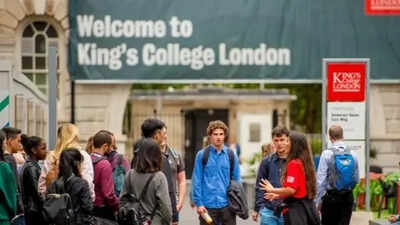
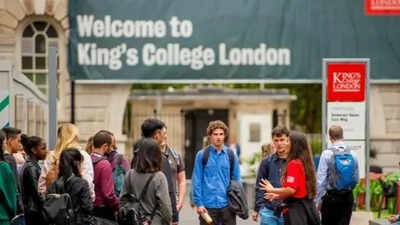
Universities in England could face restrictions on recruiting foreign students or even lose their sponsorship licenses under new government plans aimed at tackling abuse of the student visa system.The measures, announced by the UK Home Office on Wednesday, are part of a wider immigration strategy unveiled by the Labor government as it seeks to reduce net migration while maintaining Britain’s position as a leading destination for international education.Under the proposals, universities sponsoring foreign students would be required to meet strict compliance standards. Ministers argue that institutions should take more responsibility for ensuring that students entering the country on study visas actually complete their courses.

UK visa compliance rules

The Home Office said universities would face stricter performance requirements under the revised sponsorship framework.Currently, institutions must maintain a visa refusal rate below 10%, ensure that at least 90% of sponsored students enroll in their courses and achieve at least an 85% course completion rate.Under the new plans, the visa refusal threshold will be reduced to 5%, while the enrollment rate will increase to 95% and the course completion rate to 90%.Universities that fail to meet these standards may face Home Office intervention and, in the most severe cases, restrictions on their ability to admit international students.The department said the reforms aim to strengthen confidence in the student visa route and prevent abuse by individuals using study visas for purposes other than education.

Visa abuse and asylum claims

The announcement comes amid increased political focus on migration levels and concerns about individuals entering the UK through legal routes before later claiming asylum.According to the Home Office, a significant proportion of asylum claims in recent years have come from people who originally arrived on work, study or visitor visas.Migration and Citizenship Minister Mike Tapp said Britain would continue to welcome genuine international students but stressed that the immigration system must remain strong.“We welcome international students and recognize their enormous contributions to our universities, communities and economy,” he said.“But institutions that benefit from international recruitment must also play their part in ensuring that the system is not abused.”The government argues that stronger oversight will help protect the integrity of both the immigration system and the UK higher education sector.

New rating system for universities

As part of the reforms, ministers plan to introduce a new traffic-light style assessment system for universities that sponsor international students.Institutions will be graded according to their compliance performance, allowing regulators to identify providers that may require additional monitoring or intervention.Universities falling into the lowest performing category may be required to implement improvement plans and may face limits on future foreign recruitment if standards do not improve.The Home Office said the new approach is designed to increase transparency and encourage institutions to maintain strong recruitment and monitoring practices.Officials say the system will not affect universities that consistently meet sponsorship requirements.The proposals have drawn a cautious reaction from university leaders, who broadly support efforts to combat cheating but warn against policies that could deter genuine students. Professor Malcolm Press, Chairman of Universities UK and Vice-Chancellor of Manchester Metropolitan University, said that institutions are committed to maintaining the integrity of the student visa system.He said international students make a significant contribution to the UK economy and academic sector, driving research, innovation and supporting local communities across the country.Universities UK has previously estimated that international students contribute tens of billions of pounds annually to the British economy through tuition fees and wider spending.The region is already facing financial pressure after the number of foreign students fell following previous immigration reforms, which along with most international students included a ban on dependents.

What will happen next?

The government says more details on implementation will be published in the coming months, with the new framework expected to be phased in over the next academic cycles.For prospective students, the immediate impact is likely to be limited. However, education experts say universities may be more selective in recruitment as institutions seek to meet strict compliance targets.The announcement underlines the challenge facing ministers as they attempt to balance two competing objectives: reducing abuses of the immigration system while preserving one of Britain’s most successful export sectors.For now, the message from the Home Office is clear, international students are welcome in the UK, but universities will face greater scrutiny over how they recruit and support them.

Source link