


“Over the years, the people who have seemed to me the most happy, fulfilled, and fulfilled have always been the people who lived the most friendly and selfless lives.”
 This quote from Queen Elizabeth II sounds exactly the same.At first glance these words seem benign. Almost the same advice that an elder person in the family might give after observing people for decades. But then you realize something interesting. After a few years of experience, Queen Elizabeth was not speaking. He spent more than seventy years on the throne, met thousands of people from different countries, cultures, backgrounds and professions and saw many generations grow and change.This gives the quote a slightly different significance.Because these are not words based on a moment or an emotional reaction. They seem like observations collected gradually over a lifetime.And perhaps this is the reason why people are still connected to it.
Quote of the Day by Queen Elizabeth
“Over the years, the people who have seemed to me the most happy, fulfilled, and fulfilled have always been the people who lived the most friendly and selfless lives.”
An idea that came from observing people for decades
What makes this quote interesting is that Queen Elizabeth did not say that the happiest people are necessarily the richest, most famous, or most successful. He did not even mention power.Instead, he focused on something more serene.Selflessness.This choice is obvious because modern life often sends very different messages to people. Success today is often measured in visible things. Wealth. Topic. Follower. Attention. Achievements people can display publicly.Of course, none of these things are automatically bad. Yet, many people eventually discover that external success and personal satisfaction do not always go together.A person may appear successful and still feel cut off or unhappy.Another person may live a relatively normal life and seem really content.Queen Elizabeth appears to be talking about that difference.She seems to suggest that satisfaction often increases through connecting with others rather than a constant focus on the self.
Why does this quote feel surprisingly relevant today?
Interestingly, the words spoken by someone born in 1926 can still be felt closely related to modern life.Today’s world often feels extremely individual-centered. Social media in particular encourages people to constantly think about personal image and visibility. People create online identities, count followers, compare achievements and sometimes feel pressure to present the perfect version of themselves.After a while, it can get tiring.There’s always another milestone. Another comparison. Another goal.Queen Elizabeth’s quote quietly takes a different turn.She’s not talking about accumulating more things or becoming more important than everyone else. She is talking about people who live “selfless and unselfish lives”. There is something almost refreshing about that wording because it shifts the focus outward.“What am I getting?” not towards“What am I giving up?” more towardsIt may seem simple, but the difference can be surprisingly big.
The Meaning Behind “Outgoing and Selfless”
People sometimes misunderstand the word “outgoing” and immediately think of extroverts or highly social personalities.This does not appear to be necessarily the meaning of the quote.Being outgoing here seems to be closer to engagement with life. Pay attention to other people. Be curious about the world. Being willing to participate rather than completely withdrawing into personal concerns.This does not require one to be the loudest person in every room.Quiet people can also live deeply connected and generous lives.Then comes the second word: selfless. That part probably reflects the real heart of the quote.Selflessness does not mean completely ignoring personal needs. It’s about recognizing that life becomes greater when people care about others too. Sometimes it means helping someone. Sometimes this means listening properly. Sometimes it means giving time, support, or kindness without expecting an immediate reward.Many people have experienced such small moments.Helping someone unexpectedly.Checking on a friend.To do something deliberately for no real reason other than that it feels right.The strange thing is that people often remember those moments for years.
Queen Elizabeth spent most of her life around service
This quote becomes more interesting when viewed alongside Queen Elizabeth’s own life.Elizabeth II spent decades talking about service and duty. During public speeches and national addresses, those views appeared again and again. His role brought great attention to him personally, yet much of his public messaging focused on service to communities and responsibilities beyond himself.People sometimes considered that approach traditional or old-fashioned.Nevertheless, many individuals respected the continuity.Throughout the changing decades, political changes and social changes, the language of Seva remained present in most of his public life.This does not mean that people agreed with everything related to the monarchy. Public opinion about institutions can vary widely.Yet many people still view Queen Elizabeth as a woman strongly attached to personal duty and stability.His quote clearly reflects those values.
Why do people often pursue happiness in difficult places?
One reason this quote continues to resonate may be that people often look for fulfillment in places where it never quite lasts.People say things like this to themselves:“I will feel happy when I earn more money.”“I will feel accomplished after reaching the next goal.”“I’ll finally rest after achieving one more thing.”Then they reach those moments.Sometimes satisfaction comes for a while.Then another goal appears.And then one more.Many people recognize that bicycle.Queen Elizabeth’s observation appears to be moving from an endless chase to something stable. Rather than directly telling people to seek happiness, she seems to suggest living generously and letting satisfaction grow naturally from it.There’s something interesting about that idea because happiness often seems hard to capture when people pursue it so aggressively.
Why kindness still matters more than people care about
Modern culture sometimes softens or subordinates kindness to ambition and competition. Yet people usually remember kindnesses long after other details have disappeared.Think about ordinary life for a moment.People remember the teacher who encouraged them. The neighbor who helped in difficult times. The friend who stayed. The person who appeared unexpectedly.Very few people look back years later and think, “I wish someone had been more influential.”They often remember how someone made them feel.Perhaps Queen Elizabeth reflected on this repeatedly during her lifetime.
Other famous quotes from Elizabeth II
- “Suffering is the price we pay for love.”
- “It has always been easy to hate and destroy. It is much more difficult to build and cherish.”
- “We all need to strike the right balance between action and reflection.”
- “Small steps taken with faith and hope can overcome long-standing differences.”
- “Each day is a new beginning.”
- “The lessons from the peace process are clear; whatever life throws at us, our individual responses will be stronger when we work together.”
Why do these words persist among people?
Some quotes survive because they sound clever. Others survive because people continue to recognize the truth within themselves.Queen Elizabeth’s words feel like sober advice gleaned from years of observing human life closely. She does not claim that happiness comes from wealth, position or recognition. Instead, she points to something smaller and more human: paying attention to others and being generous.Perhaps it seems worthwhile because many people eventually discover something similar themselves.Life often becomes complete when it ceases to revolve entirely around our own desires and concerns.And maybe that’s why this quote still feels relevant. Decades change. Technology changes. The world becomes fast and noisy.People, in many ways, remain remarkably similar.

Redditor shares one year’s experience of living in India after spending 12 years in America

Deciding to return to India after spending years abroad is always difficult as there are many aspects to consider. No two people’s situations are ever the same, but NRIs share tips and insights on social media channels that can help others in a similar predicament. One Redditor shared his experience living in India for a year after returning in 2025, and many social media users found the takeaway relevantThe Redditor lived in the US for 12 years but suddenly decided to return to India due to his mother’s health. “I took the decision to return suddenly. I remember my father telling me about my mother’s health problems and I was so overwhelmed with grief that I booked my return ticket for February 15, 2025, and 3 months later, I was in India,” the Redditor said.“In hindsight, I should have planned my move well in advance. My initial thought was to hire a CA after returning to India – I should have hired a CA before returning to India. I also came to know about several forms like W8BEN that have to be filed with US banks after returning to India.”

4 Indians arrested in extortion-kidnapping case in Canada, policeman says he has never seen such a case before

A man was kidnapped but he was not the target. The kidnappers took the man to the house of his friend who was the real target. The first man was just a bait to get the second man out of his house, which did not happen. The failed kidnap-extortion attempt ended in the release of the first person and the police were called and all the drama that unfolded in Calgary, Canada stunned the police as they had never seen such an elaborate plan before. The kidnappers and the targets are all from the city’s South Asian community, he said.Four people have been arrested and a fifth person has been charged. The incident is of 6th May.The suspects first attacked the man at gunpoint at an Edmonton residence between 6:30 and 7:30 p.m. and threatened to kidnap him. They then drove to Calgary to the next victim’s home where additional suspects were waiting.The kidnappers asked the first man to call the second man who was their intended target. He refused and police said he was attacked again.The second man and his wife, fearing for their lives, attempted to leave their home but the suspects threatened them with firearms. They went back inside and called the police.The suspects drove the man back from near his home early the next morning. He also called the police.Calgary Police Superintendent Jeff Bell said the man suffered minor injuries, but it was “obviously a very traumatic situation for him and it will take him some time to recover mentally and physically.”Police arrested two people during a traffic stop on the night of the alleged kidnapping, and arrested two more people on May 12.
None of the suspects are Canadian
Although all of the suspects are from Calgary, none of them are Canadian. Daksh Gautam, 25, Taranvir Singh, 24, Pradeep Singh, 24, and Akashdeep Singh, 18, are all charged with kidnapping with a gun, unlawful imprisonment, assault and assault with a weapon.Police are searching for Gagandeep Singh, 29, of Calgary, who is wanted on warrants for kidnapping with a firearm, assault with a weapon, assault and unlawful imprisonment. Police say he has a tattoo of a woman on his right arm and a blue and red eagle on his left arm.Their immigration status varied and included expired work visas, or refugee claimant status. A privately manufactured firearm, sometimes referred to as a “ghost gun”, was seized as part of the investigation.Bell said this is the first time Calgary police have seen an alleged extortion-related kidnapping like this. “This is a significant increase in the violence in extortion incidents that we have seen so far in Calgary,” he said.
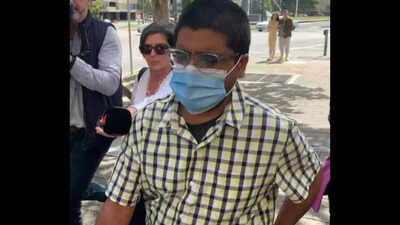
39-year-old Indian man jailed in Australia, diagnosed with voyeuristic disorder
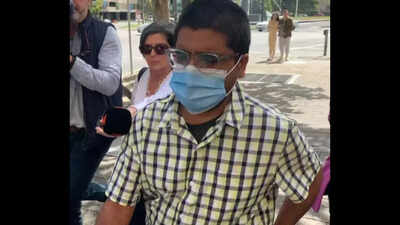
Sumit Satish Rastogi, 39, an Indian man in Adelaide, Australia, has been sentenced to 13 years and 10 months in prison after pleading guilty to 97 offences, including multiple charges of aggravated indecent assault and indecent filming, involving 61 victims.Rastogi was working in a massage parlor, although he was not qualified for this work. And he committed the crimes between October 2021 and July 2022 when he was arrested.According to ABC News, Judge Carmen Mateo detailed each of the 97 crimes Rastogi committed over nine months during his sentencing. “One way or another, you violated 61 women who were trusted, without suspicion, and entitled to safety, respect and dignity,” he said.“You abused her trust and treated her with a complete lack of dignity and respect when you touched her sexually and or took photographs, which knowingly captured parts of her body that she had a right to keep private and unpublished.“Your abusive conduct was routine and, at times, prolific.”
Crime made worse by confidence
The judge said that as Rastogi became more confident in filming women, his crimes became worse. “All of your conduct in sodomizing your victims was serious, but it became particularly serious when you developed the confidence to intervene inappropriately to get direct access to their underwear,” he said.“Each of the offensive images you took involved a gross breach of trust and were completely unacceptably exploitative and when you combine that conduct with physical sexual interference, your conduct takes on another level of humiliation and disgrace to your victims.“By June and July 2022, I will characterize your crimes against client victims as being out of control and showing no signs of restraint until caught.”The judge said he took into account Rastogi’s psychiatrist’s diagnosis that he had voyeuristic disorder. He said, “His opinion is that you meet the diagnostic criteria for voyeuristic disorder because over a six-month period you experienced concurrent and intense sexual arousal by randomly viewing semi-nude women.”“[He] Says that your voyeuristic disorder is a medically plausible explanation for your abusive behavior, but that it does not absolve you of responsibility for your conduct. “There is no suggestion that you were unable to control your conduct or that you were unaware of its wrongness,” the judge said.Rastogi will be deported from Australia after serving his entire sentence.

8 people injured after driver rams car into pedestrians in Modena
 Modena Mayor Massimo Mazzetti said four people were seriously injured, while two victims were reported to be in critical condition, Reuters reported. The driver, described as a man in his thirties and an Italian national of North African origin from the Bergamo region, reportedly deliberately drove onto the sidewalk before crashing into a shop window.“It appears the driver deliberately drove onto the footpath, hit several people and crashed into a shop window. He then got out of his car and brandished a knife,” Mazzetti said.A person who attempted to stop the driver suffered minor injuries during the incident. Witnesses told local media that they heard people falling and saw the car speeding toward the pedestrians, with one witness claiming the driver was under the influence of alcohol or drugs, although authorities have not officially confirmed this.Italy’s Prime Minister Giorgia Meloni expressed solidarity with the victims and their families in a post on Twitter, describing the incident as ‘extremely serious’. Police are continuing to investigate the motive behind the attack.“I express my closeness to the injured people and their families. I also thank the citizens who bravely intervened to stop the perpetrator and thank the law enforcement agencies for their response,” she wrote.
Indian-origin gas station owner becomes first Indian-American elected to Texas city council

Yash Asarsa arrived in the United States more than two decades ago with $950. On May 14, 2026, he was sworn in as a member of the Rusk City Council, becoming the first person from India to hold elected office in the small East Texas city. Assarsa, owner of the TruCarz gas station in Rusk, won the District 3 seat unopposed in the May 2, 2026 election. His victory is a milestone in the community of about 5,000 residents in Cherokee County, about 130 miles southeast of Dallas.Born in India, Asarasa said he was attracted to Texas western culture and cowboy imagery. What kept him at Rusk, he said, were the people there. After operating and growing his business for more than 15 years, he has become a familiar face behind the counter at TrueCare, interacting daily with residents from all walks of life.“This community embraced me,” Asarasa told CBS19. “This community made me who I am, so I think I’m very grateful to this community.”After seeing the division in the community he decided to contest the elections. Asarasa said, “I believe God has given us two ears and one mouth, so listen twice and speak once.” “I’m a good listener and that’s what makes me different. I can understand people’s problems.”He believes his experience in retail has prepared him well for public service. “You see people from all walks of life and you learn how to understand people better,” he said.As a new council member, Assarsa has outlined several priorities: fixing roads, hiring a police chief, addressing the city’s budget deficit, and revitalizing Downtown Rusk. Most of all, he wants residents to feel heard. He also sees his role from a broader perspective. “I feel like I am a representative of India – an ambassador of India,” Asarasa said.The election of an Indian-origin man to a city council in Texas comes at a time when the state is angry over Indian takeover. Dallas and Frisco have become centers of anti-India sentiments. But Asarasa doesn’t care. “If you work hard and have passion, all dreams are possible in this wonderful country,” Asarasa said.Assarsa ran unopposed for the seat and will work closely with other council members as the city tackles local challenges. His swearing-in took place at Rusk City Hall. In the city where he started out as an immigrant business owner, Asarsa’s choice reflects the community that embraced him more than 15 years ago. From the gas station counter to the council chamber, his story is rooted in service to the very people who embraced him.

King Charles ‘shocked and saddened’ by soldier’s death after falling from horse at Royal Windsor Horse Show

A member of King Charles III’s ceremonial artillery unit has died after falling from a horse during the Royal Windsor Horse Show on Friday evening.The soldier, serving in the King’s Troop Royal Horse Artillery, collapsed after leaving the field around 7pm BST, the BBC reports. Despite receiving immediate medical attention, he suffered fatal injuries and was declared dead at the scene.Thames Valley Police said the death was being treated as “unexplained but not suspicious” and confirmed there was no evidence of foul play.The investigation is continuing in coordination with the Ministry of Defense and event organizers at the Royal Windsor Horse Show.According to the BBC, a Buckingham Palace spokesperson said King Charles was “deeply shocked and saddened” by the news and would offer his personal condolences to the soldier’s family.Members of the royal family were present at the event but were not informed about the seriousness of the incident until later.The Army also issued a statement expressing deep regret and sympathy, while confirming that the soldier’s family has been informed.Organizers said the show would continue as scheduled, but the King’s Troupe display had been removed from the program.Authorities are appealing for witnesses or anyone with information to come forward as an investigation into how the incident happened continues.

Kash Patel is not worried about new controversies

FBI Director Kash Patel is unfazed by new controversies over his previous visits, where he allegedly mixed work with pleasure on the FBI dime. A new report claims that when Patel went on a duty tour in the South Pacific last summer, he stopped in Hawaii and went on a ‘VIP snorkel’ at one of the military’s top-secret sites – the underwater grave of the USS Arizona – which holds the remains of more than 900 Navy sailors killed at Pearl Harbor.According to Navy records, Patel swam around the grave for 30 minutes. There were nine people with Patel on snorkeling.VIP tours are common off Arizona but there is no public record available of how many VIPs are allowed to snorkel. They were also told not to touch the sunken ship in any way.The FBI said top regional commanders hosted Patel at Joint Base Pearl Harbor-Hickam “as they typically do with U.S. government officials on official visits.” The Pearl Harbor visit, the spokeswoman said, was “part of the director’s public national security engagements with counterparts in New Zealand, Australia, our Honolulu Field Office, and the War Department last August.”“It’s like having a bachelor party in a church. It’s sacred ground,” Hank Albertson, a Marine veteran, told AP News. “It should be treated with the seriousness it deserves.”Now another private trip has been reported where Patel went to Philadelphia to attend a country music festival with his girlfriend Alexis Wilkins. They arrived on the Gulfstream V government jet and were treated to a private suite, which cost more than $35,000. He watched the show from his private suite. FBI spokesman Ben Williamson said Winkins was an invited guest to the event, the NYT said.Patel appears unfazed by the onslaught of controversies and rumors that he has upset President Trump. The FBI director posted about the agency’s success in bringing Iraqi terrorist Mohammed Baqer Saad Dawood al-Saadi to the US to face justice.

Do’s and Don’ts for your next immigration application

The US Department of Homeland Security has issued an interim rule on how it will reject applications if officials deem certain signatures invalid. Published in the Federal Register on May 11, 2026, the rule gives USCIS broad authority to deny or deny immigration benefit requests if signature problems are identified even after the application has been accepted for processing. The interim rule is now open to receive public comments as it will come into effect from July 10, 2026.The rule is not new, but DHS said it was previously enforced inconsistently and applicants did not clearly understand how USCIS handles defective signatures.
New signature rule: what to do
- Handwritten signatures remain the gold standard.
- Scanned copies of the original wet-ink signature are also acceptable.
- It is fine to fax photocopied versions of originally signed documents.
- Some electronic signatures are valid only in limited USCIS-authorized online filing situations.
what not to do
- copy-paste signature
- digitally generated signature
- signature stamp
- Signature of someone other than the requestor (yes, including attorney)
- automatically generated signature
- Signature generated by software
Rules are small but effect is big
It’s a small rule, but immigration experts draw applicants’ attention to this small change because it can have a huge impact if USCIS rejects a case after processing has begun. Applicants risk losing the filing fee and having their due dates delayed if they have to re-file. The agency clarified that there is no ‘cure’ for erroneous signatures other than refilling which will delay the case.
Who does the new signature rule apply to?
Everyone who falls under the immigration framework falls under the new signature rule. Experts warn that in cases that have statutory deadlines, such as H-1B cap cases, PERM-supported I-140, if a signature rejection is detected after 18 months, the entire filing window expires.
5 things employers should do
Immigration attorney Kirsten Crovello said employers should follow these five things from now on:
- Verifying all required signature fields before filing
- Maintaining records of original wet-ink signatures
- Avoiding signature software unless explicitly authorized
- Carefully reviewing the USCIS form instructions for each filing type
- Training employees on signature compliance standards
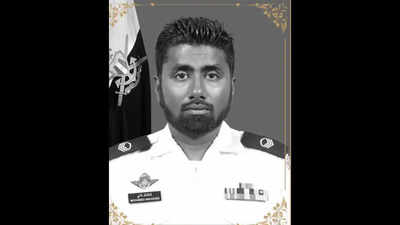
Diver dies searching for five Italian tourists who drowned in underwater cave
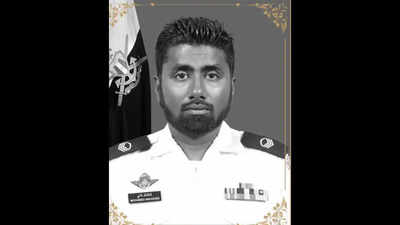
The death toll in the Maldives scuba tragedy rose after officials reported that a Maldivian diver who was searching for the bodies of five Italian tourists who died in an underwater lake earlier this week has also died. According to The Sun, Sergeant Major Mohammed Mahudhi fell ill on the third day of the recovery operation in Vaavu Atoll, which translated to an ex-post by the Maldivian Army.“His courage, sacrifice and service to the nation will always be remembered. Our deepest condolences go out to his family and colleagues,” the Army reportedly said, according to the outlet.Mahudhi was one of eight divers deployed to find the bodies of Monica Montefalcon, a professor of marine biology at the University of Genoa, and her 20-year-old daughter Giorgia Somacal, who disappeared during a 160-foot dive into the Underworld Cave.Muriel Odenino of Turin, Gianluca Benedetti of Padua, and Federico Gualtieri of Borgomanero also failed to recover from the fatal dive.Authorities said only Benedetti’s body had been recovered.The causes of death of the divers are still under investigation, although some experts have theorized that oxygen toxicity and extreme panic are possible factors that led to the deaths of the five scuba divers.
‘Something must have happened…my wife is one of the best divers’
Montefalcon’s husband, Carlo Somacal, doubted that “something might have happened” in the cave, saying that his wife, a professor at the University of Genoa, was such an experienced diver that he did not take the risk. “The only certainty I have is that my wife is one of the best divers on Earth. And she has always been conscientious. She would never have endangered the lives of our daughter or the others with them,” he told La Repubblica on Friday.“Something must have happened there,” the retired scientist said. He said, “Maybe someone was in trouble, maybe there was a problem with the oxygen cylinder, I have no idea. But I am ready to swear on anything about Monica’s behavior.”
Oxygen poisoning behind death?
Although the cause of deaths is not yet known, experts suspect oxygen toxicity which occurs when too much oxygen becomes dangerous. Humans are made to breathe air containing approximately 21% oxygen. But according to UMass Memorial Health, when someone breathes oxygen in unusually high concentrations or under intense pressure for too long, it can be toxic to the body.This happens because excess oxygen creates an overload of unstable molecules called “free radicals.” Normally, the body can neutralize them with antioxidants. But when too many build up too quickly, they begin to damage cells and tissues.