Polish EU MP Dominik Tarzynski threatens legal action against Starmer over ‘hate and division’ remarks at London rally

Polish EU MP Dominik Tarzynski threatens legal action against Starmer over 'hate and division' remarks at London rally

Polish member of the European Parliament Dominik Tarzynski has threatened legal action against British Prime Minister Keir Starmer after the British leader accused organizers of the controversial London rally of promoting “hate and division”.The controversy began ahead of the “Unite the Kingdom” march in London, an event associated with anti-immigration activist Tommy Robinson and expected to focus on issues of immigration and policing.In a video message posted on Twitter, Starmer defended the peaceful protests but sharply criticized those behind the demonstrations.“Yesterday’s march in London is a stark reminder of who we are up against in the fight for our values,” Starmer said.“Organizers, including convicted thugs and racists, are spreading hatred and division. Quite frankly.”He said his government would continue to take action against individuals accused of promoting extremism and violence.“We will ban people coming to Britain who want to instigate this, as we have already done,” Starmer said.Tarczynski, a member of Poland’s right-wing Law and Justice party, responded to Starmer’s post following reports that his UK electronic travel authorization had been canceled ahead of the rally.Tarczynski wrote, “I am a democratically elected member of the European Parliament. I represent the European Union.”“You will have to pay the price for calling me a hate agitator.”The Polish politician also claimed that he would personally take legal action against Starmer after the next UK election.He wrote, “I will wait patiently until the British throw you on the ash heap of history. Then I will come to court to defend my honor and the honor of my voters.”The exchange came as British authorities moved to block several foreign right-wing figures from entering the country ahead of the demonstration.Starmer argued that Britain remains “a country built on decency, fairness and respect” and insisted that the majority of people in Britain rejected divisive politics.

Source link

Trump on accepting 500,000 Chinese students in America

'I can tell them I don't want any students but...': Trump on accepting 500,000 Chinese students into US
Trump says it is beneficial for America to admit 500,000 good Chinese students.

US President Donald Trump has talked about accepting 500,000 Chinese students into the US at a time when his administration has also cracked down on legal immigration, saying it is an insult to a country to say “I don’t want any students”. These are good students and America will give them green cards, Trump said, adding that this is not just about China but also about students from other countries.“As far as students, it’s 500,000 students. They come, good students. I can tell them, “I don’t want any students.” That’s a very insulting thing for a country to say. Then they’ll immediately go out and start building universities all over China. But if you don’t have those students – well, good students – if you don’t… And another thing we do is, you know, if they’re good and they want to live in America, we’ll give them green cards and things like that. You know, I am, and it’s not just them but other countries,” Trump told Sean Hannity in his interview for Fox News.“But if you want to see a university system die, take five million people out of it. And you know, the ones that won’t be hit are the top schools. The top schools will do well. But your bottom schools, your bottom… students who don’t perform well… they’ll be dying all over the place.”“I obviously think it’s good that people come from other countries and they learn our culture, and many of them want to live here. I think it’s good. Not everyone agrees with me. And it doesn’t seem like a very conservative position. And I’m conservative… I’m a conservative guy. I’m really a common sense guy, I think more than a conservative guy. I think MAGA is common sense. You know, people understand that we want strong borders, we want strong military, we want good education, we want low interest rates, we want...You know,” Trump continued.

This isn’t common sense: MAGA angry at Trump’s soft stance

Former Congresswoman Marjorie Taylor Greene said it is not common sense to admit Chinese students over American students. “Trump says it’s outrageous to tell China their students can’t go to our universities, imagine being an American student and getting rejection letters while 500,000 Chinese students are coming in! And no, it’s not okay for China to buy our farmland!!! And no, that’s not common sense!!!” Green said.James Fischbach, who is running for governor of Florida, said he would raise tuition fees if Trump brought in 500,000 Chinese students. Fischbach posted, “I respect President Trump, but if he brings 500,000 Chinese students to Florida colleges, I will raise tuition on them to $1,000,000 a year. As governor, I refuse to let the limited admissions spots in our taxpayer-funded colleges be stolen by foreigners.”

Source link

British student dies of meningitis, expert warns the disease can be ‘very fatal’

ब्रिटेन के छात्र की मेनिनजाइटिस से मौत, विशेषज्ञ ने चेतावनी दी है कि यह बीमारी 'बहुत घातक' हो सकती है

A UK college student has died of meningitis, while two others are being treated/Image: Getty Images

Health officials said a college student in Britain has died of meningitis, while two others are being treated, the BBC reports.The UK Health Protection Agency (UKHSA) has identified the student who died as a student at Henley College in Oxfordshire. Officials said close contacts of the affected people were being given antibiotics as a precaution.The agency confirmed one case as meningitis B, commonly known as MenB, while further testing was ongoing on the remaining cases.In a statement, the college confirmed that the student died earlier this week.“Our thoughts and sincere condolences are with the student’s family and friends at this extremely difficult time,” the college said.“We are supporting those affected within our college community and are following the advice and guidance provided by the UK Health Protection Agency.”Health officials stressed that the overall risk to the broader public is low, although the investigation is ongoing.Dr Shamez Ladhani, consultant epidemiologist at the UKHSA, told the BBC it was “really unfortunate” to see multiple outbreaks reported within a short period.“This is a very rare disease but when it strikes it can be very fatal,” he said.Ladhani said investigators had identified a social connection between the three cases linked to Reading and believed they were likely linked to the same strain.He said authorities are tracing contacts and providing preventive antibiotics and vaccines where necessary.The development follows recent meningitis outbreaks in England, including cases in Kent linked to a nightclub in Canterbury and another cluster reported in Dorset earlier this year.According to health officials, meningococcal disease affects about 300 to 400 people a year in England and is most common in infants, teenagers and young adults.Symptoms may include high fever, severe headache, stiff neck, vomiting, confusion, seizures, and a rash that does not go away even with pressure.The UKHSA has urged young people to ensure they keep up to date with vaccinations, including the MenACWY vaccine available through the NHS for people up to the age of 25.

Source link

22-year-old Indian pleads guilty to people smuggling at US-Canada border; $100 per person

Yes, I did it: 22-year-old Indian pleads guilty to people smuggling at US-Canada border; $100 per person
Indian man pleads guilty to illegally smuggling Indians from Canada to the US.

Shivam, a 22-year-old Indian man, pleaded guilty in the US to conspiracy in a scheme to smuggle Indians across the US-Canada border. He was convicted in 2025 and will now be sentenced on September 4 after pleading guilty. According to US law, Shivam faces a mandatory minimum of five years in prison and a maximum of 15 years in prison. His status in the US – when he arrived or whether he is illegal or not – is not known.According to court documents, Shivam directed smuggling operations from October 2024 to June 2025. He coordinated with drivers to pick up Indians from specified locations on the border and drop them at safe houses in northern New York.The court document states that his role was to coordinate drivers to pick up aliens at the border and transport them further into the United States, specifically to hide in homes around Northern New York and hotels in Plattsburgh, New York.

Shivam was the mastermind, he paid his co-conspirators $100 per head for the smuggling

While Shivam was paid for his role, he ran a ring in which he paid his drivers for each person they smuggled. On January 25, 2025, Shivam directed a co-conspirator to smuggle 12 aliens from India and the United Kingdom from Canada to the United States. Court documents say he paid his co-conspirator $100 for each alien he smuggled.The gang was busted by border agents following a chase near the border when two cars became suspicious. On January 26, 2025, U.S. Border Patrol agents attempted to stop two vehicles traveling together near the U.S.–Canada border. Both vehicles sped up to avoid the agents, leading to a pursuit. One vehicle left the road and became immobile, while the other was later stopped in Moores, New York. There were a total of 12 illegal foreigners in the vehicles.

Source link

Iran’s Foreign Minister Araghchi says US wants to continue peace talks

'संदेश प्राप्त हुए': ईरान के विदेश मंत्री अराघची का कहना है कि अमेरिका शांति वार्ता जारी रखना चाहता है

Iran’s Foreign Minister Abbas Araghchi addressing the media in Delhi.

Iranian Foreign Minister Abbas Araghchi said on Friday that Tehran had “received messages” from the United States to continue talks.Click here for live updates on US-Iran warAraghchi made the remarks at a press conference in New Delhi, where he is attending the BRICS foreign ministers’ meeting.“What was said about the United States rejecting Iran’s proposal or Iran rejecting the US proposal is related to a few days ago, when Mr. Trump tweeted that this is unacceptable,” Aragchi told reporters, referring to Tehran’s reaction to a US proposal.“But after that, we got messages again from the Americans that they are willing to continue dialogue and maintain engagement,” the Islamic Republic’s top diplomat said.Rejecting Iran’s response, Trump called it a “piece of garbage” and said ceasefireAs of April 8, he was “extensively on life support” and “incredibly weak.”“I would call it the weakest right now, after reading that piece of garbage they sent us. I haven’t even finished reading it,” Trump told reporters earlier this week.Also read: Trump says US-Iran ceasefire on ‘life support’; Tehran’s latest proposal called a ‘piece of garbage’Meanwhile, Araghchi commented that Iran “has no confidence in the Americans”, accusing Washington of turning to diplomacy only after failing to achieve its objectives through military pressure.He said, “Now, after 40 days of war, when America despaired of achieving any goals in its aggression against Iran, he offered talks.” “We have no confidence in the Americans. This is the main obstacle in the way of any diplomatic effort. We have every reason not to trust the Americans, while they have no reason not to trust us.”Describing the ceasefire as “very unstable”, Araghchi said Tehran was nevertheless trying to preserve it to make room for diplomacy.“We are now in a ceasefire situation, although it is very unstable. But we are trying to maintain it to give diplomacy a chance,” he stressed. He said, “There is no military solution to anything related to Iran. They have tested us time and again. We never bow to any pressure or threats. We also oppose any sanctions. The Iranian people respond only with the language of respect.”The Middle East war began on February 28 with joint US-Israeli attacks on Iran. The two sides later met in Islamabad, Pakistan on 11–12 April for high-level talks, but failed to achieve any breakthrough.

Source link

Why did Bill Gates and Warren Buffett willingly swap the boardroom for a fast food counter?

विनम्रता की आदत: क्यों बिल गेट्स और वॉरेन बफेट ने स्वेच्छा से फास्ट फूड काउंटर के लिए बोर्डरूम की अदला-बदली की

Top leaders like Bill Gates and Warren Buffett learned an important lesson by working behind the Dairy Queen counter. This practical experience revealed operational realities often ignored by senior management, highlighting how distance from the ground floor can compromise decision making.

One of the basic principles of career advancement in any field is that the higher one rises in the management hierarchy, the more removed he becomes from the ground reality. No longer does one have to deal with customer complaints, poor quality software or operational inefficiencies. Rather, one begins to view one’s organization through the prism of neatly structured tables, presentation slides, and executive briefs. Although such distance may seem like an understandable privilege earned by one’s accomplishments, it creates an occupational shortsightedness that is potentially dangerous. When a person ceases to understand the nature of the work done on the front lines, his or her ability to make informed decisions becomes compromised.But when the two richest men in the world, Bill Gates And warren buffettSpotted entering a Dairy Queen branch in Omaha as part of Berkshire Hathaway shareholder weekend, one couldn’t help but think this was nothing but corporate promotion at its finest. Two men wearing red aprons took up positions behind the counter for the feel of a quick-service job. A case was recorded in them Gates Notes Blog and on youtube Saw them learning how to use a cash register, take orders, and even flip blizzard dishes without damaging them.While the scenes were certainly funny, the behavior showed a lesson in the closeness of operations. Instead of acting as formal visitors giving speeches, they were acting as new apprentices learning how to handle the flow of customers. By allowing himself to be trained in the techniques and led through the experience of restaurant staff, he learned an important leadership lesson: leave the comfort zone behind and look at reality firsthand.Why summary data can be misleading even for the best leaders?This is precisely why this particular exercise was so important, because as data scales up within an organization, details become increasingly obscure. In one case, a regional manager may say that the operation is running smoothly; In another, a technology director may claim that the update has been completed efficiently. But those statements fail to capture all the little inconveniences, awkward processes, and problems that employees face every day.This corporate disengagement is a well-documented phenomenon. In a comprehensive executive study published in Harvard Business Review titled Why do leaders lose their way?The researchers analyzed how disengagement begins as managers become more senior. The study highlights that organizational filters often surround those in power. Subordinates tell them what they want to hear, and metrics are often collected to highlight successes while removing daily operational friction.By stepping behind the fast-food counter, Gates and Buffett were able to completely bypass the entire system of organizational filters. They found themselves in a situation where people with lower formal status knew exactly what was going on. Approaching such a situation without trying to display superiority is a way to reframe your perspective so that your company’s optimistic ideals don’t blind you to reality.

Warren Buffett and Bill Gates say this 'one word' defines their billion-dollar success

Senior leaders often lose touch with daily operations. This disconnection can lead to difficulty in taking decisions. Maintaining proximity to front-line work helps leaders understand the real challenges.

Bringing Surface back to your calendarYou don’t need to own a fast-food chain or organize some grand event to develop this special habit in your professional life. The practical application of front-line proximity is incredibly simple and does not require any tricks. All it takes is a determined effort to spend time observing a task or job that you wouldn’t normally do yourself.By seeing firsthand the finer details of everyday work, leaders can avoid the blind spots that come with seniority. Managers who maintain an active, direct understanding of customer-facing or back-end operations consistently make faster, more accurate strategic adjustments. They catch emerging problems months before those issues ultimately show up as negative trends on corporate spreadsheets.To turn this into a routine, set aside time once every quarter to completely step out of your normal workspace. You can sit in a customer service queue, get turned over to a new employee, or take the exact digital or physical steps a customer took to purchase your product. The secret to making this exercise successful is to ask the same question afterward: What slows down our people in a way that has become completely invisible to the upper office? Once you identify that point of friction, choose a small piece of it and fix it immediately. The swift action proved that this exercise was not just an empty exercise of corporate sympathy, but a genuine effort to improve the workflow.In short, the main learning within the Dairy Queen experience is that success breeds exactly the same distance that will one day destroy it. Humility cannot be achieved in a professional environment by making grand claims about corporate culture from an office far removed from actual business realities. It should keep you based on your instincts, connected to reality, and too close to manipulate your understanding of it.

Source link

How New York’s busiest library swapped worn-out shelves for a civic meeting room

$55 मिलियन का खाका: कैसे न्यूयॉर्क की सबसे व्यस्त लाइब्रेरी ने नागरिक बैठक कक्ष के लिए पुरानी अलमारियों की अदला-बदली की

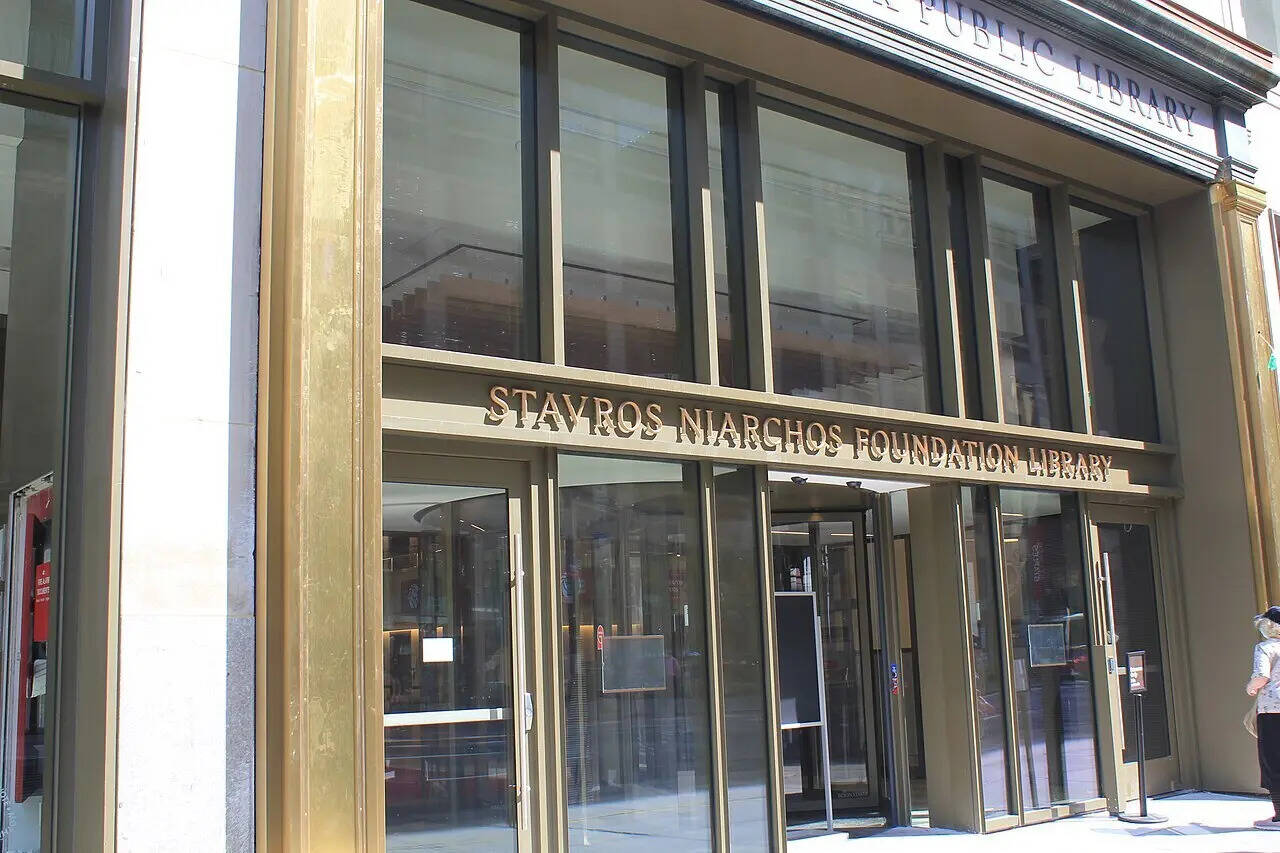
A significant $55 million donation revitalized the Mid-Manhattan Library, transforming it into the Stavros Niarchos Foundation Library. Image Credit: Wikimedia Commons

It is natural to conclude that in the emerging world of information technology, the traditional library as the central hub of urban life has become less relevant than ever. These libraries are romanticized in our minds as quiet halls of dusty books and studious scholars. However, in the context of urban life, the public library is one of the key elements without which day-to-day activities as well as professional development and networking would be significantly hampered. The issue with contemporary public libraries lies not in the lack of interest from the public at large, but in the physical structure that was designed many years ago.When the New York Public Library announced a massive contribution of fifty-five million dollars from the Stavros Niarchos Foundation, it seemed like another standard entry in the ledger of high-profile cultural philanthropy. The target of this funding was the Mid-Manhattan Library, a branch located just across the street from the main research building’s famous stone lions. For decades, this specialized branch served as the true workhorse of the city’s library system. It was a place where ordinary residents actually went to look for books, look for work, or find a quiet desk.As mentioned in official press release Topic A historic gift of $55 million by the Stavros Niarchos FoundationThe building continued to struggle due to its success. Before the renovations were made, the branch was visited by one million and seven million people each year and the library distributed two million items. Simply put, the library infrastructure suffered wear and tear due to the high amount of human activity occurring in the building. Thus, in this example, the donation was less about creating a need than about meeting an already substantial demand.

Mid_Manhattan_Library_July_2020_11

This renovation shifted the focus from book storage to community needs, creating dynamic spaces for learning, interaction and professional development. The redesigned Library now serves as a vital, free democratic center for ordinary New Yorkers. Image Credit: Wikimedia Commons

Why do modern civic spaces need a complete structural overhaul?With funding provided by donors, the library system was able to redesign its entire space and build an entirely new building focused on fostering media, education, and interaction between people. During the renovation, the branch was transformed into the Stavros Niarchos Foundation Library, fundamentally changing the way the modern library interacts with people. The building no longer prioritized shelves over the needs of human visitors – the renovated architecture includes wide open spaces, designated teaching areas, technical laboratories and an outdoor terrace for visitors to freely use.The immediate return on this structural change became apparent very quickly. according to One Year Impact Report Topic The New York Public Library’s completely transformed Central Circulating Library celebrates one yearThe reimagined building recorded hundreds of thousands of visits and massive circulation numbers within its first twelve months of operation. The facility hosted thousands of free public events, adult learning courses, and computer sessions, proving that the place had evolved into a highly functional public engine rather than a static architectural monument.This was reflected in creating separate floors for different demographics, including the creation of a special facility for youth and a large library for those looking for jobs. The new design demonstrated the potential of a contemporary form of giving, which can make a big difference in terms of unlocking resources and creating a large indoor area in which anyone can live, work, or learn absolutely free of charge.Democratic potential of free public spaceThe real meaning of this transformation goes beyond any reward or acknowledgement. In an expensive city centre, it is quite difficult to find a vacant area nowadays. All public spaces in urban contexts function according to the principle of consumption; To get the chance to sit and work with a laptop, you have to buy coffee or pay for access. This new library is a departure from the norm because it bills itself as a truly democratic facility.By installing this massive structural update to a permanent circulating branch, the project ensured that the daily lives of ordinary New Yorkers were enhanced. The change provided a streamlined, modern space where a student studying for an exam sits right next to an immigrant practicing English or an entrepreneur starting a business.The takeaway from all this spending is that the best way to give is one that reaches exactly where people are already meeting. This shows that if you provide a community with a place where their education and civic needs are respected, they will fill that place to the rafters. The real value of a library lies not in the large sums of money visible on the donation slip, but in the hundreds of thousands of individual eureka moments that occur every day within its walls.

Source link

54-year-old imam who claimed to have ‘jinn powers’ jailed for life for abuse crimes against women and girls

54 वर्षीय इमाम, जिन्होंने 'जिन्न शक्तियों' का दावा किया था, उन्हें महिलाओं और लड़कियों के खिलाफ दुर्व्यवहार के अपराधों में आजीवन कारावास की सजा हुई

London imam, 54, jailed for life for abuse against women and girls / Image: File

A former east London imam who used claims of “supernatural powers” to molest and sexually abuse women and children has been jailed for life in one of Britain’s most disturbing abuse cases in recent years.Abdul Halim Khan, 54, was sentenced at Snaresbrook Crown Court after pleading guilty to 21 sexual offences, including multiple counts of rape and child rape committed over almost a decade. Prosecutors said the attacks occurred between 2004 and 2015 and involved seven victims, some of whom were as young as 12 years old.The former imam, who lives in Bethnal Green, abused his position as a trusted religious figure within the Muslim community to target vulnerable women and girls. Investigators said he convinced some victims that he had supernatural powers and claimed he could be disguised as a “jinn”, a spirit referred to in Islamic tradition, during the attacks.Judge Leslie Cuthbert sentenced Khan to life imprisonment with a minimum of 20 years for what he described as a “monstrous” abuse of trust. At sentencing, the judge said that Khan “behaved as if you were untouchable” while exploiting victims who had trusted him because of their religious status.

How do the Imams claim to control the victims?

The case shocked prosecutors because of the manner in which Khan allegedly molested the victims.According to the Crown Prosecution Service and the Metropolitan Police, Khan persuaded the women and children to meet him alone in flats, isolated areas and secluded locations. Once there, he sexually assaulted or raped them, claiming supernatural forces were involved.Some victims were reportedly told that they could be harmed through “black magic” if they spoke publicly about the abuse. Others feared that if they came forward they would face social stigma or that their families would be harmed within the community. Prosecutors said those fears allowed Khan to continue crimes for years without being detected.Police described the former imam as a “violent criminal” who deliberately used religion, fear and emotional control to silence his victims.During the trial, jurors heard how Khan systematically targeted women and girls who trusted him as a faith leader. Prosecutors argued that his respected public image allowed him to operate without suspicion for years.The crimes include:

  • nine cases of rape
  • Five cases of rape of a girl below 13 years of age
  • Two cases of sexual assault of a child under 13 years of age
  • Four cases of sexual harassment
  • one count of assault by penetration

Police laud victims for breaking silence

Investigators said the case depended largely on the courage of the victims, who finally decided to talk to police after years of trauma and silence.The Metropolitan Police said that many victims had suffered the emotional effects of abuse for years before being able to report what happened. Detectives praised him for helping to ensure a conviction despite the difficulty of reliving deeply traumatic experiences.The case has once again reignited a wider conversation in Britain about abuses by authorities and the dangers of unchecked power within religious or community institutions.Child protection experts say perpetrators in positions of authority often rely on fear, shame and community pressure to prevent victims from speaking out. The Khan case has also reignited discussion over how allegations of abuse are handled within close-knit communities and whether victims receive adequate protection and support when they come forward.Online reactions following the sentencing showed widespread anger, with many social media users expressing surprise at the scale of the abuse and the length of time it allegedly continued unchecked.

Trust, Power and Community Safety

Abdul Halim Khan’s sentencing is likely to be one of Britain’s most high-profile abuse cases involving a religious figure this year.For many observers, the case goes beyond an individual conviction. It has become part of a broader national debate about safeguarding failures, abuses of authority and the barriers victims still face when reporting sexual violence.Across the UK, several landmark abuse scandals over the past two decades have exposed how predators exploit positions of trust, including religious authority, education, community leadership and care systems, to manipulate vulnerable victims while avoiding investigation, sometimes for years.In Khan’s case, prosecutors said the abuse continued for years as victims were left feeling isolated, frightened and powerless.The life sentence handed down at Snaresbrook Crown Court brings criminal proceedings to a close, but for survivors, the emotional impact of the abuse is likely to last.

Source link

Buckingham Palace hosts historic meeting between King Charles and New Zealand’s Maori Queen

बकिंघम पैलेस ने किंग चार्ल्स और न्यूजीलैंड की माओरी रानी के बीच ऐतिहासिक बैठक की मेजबानी की

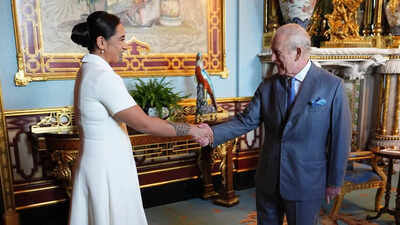
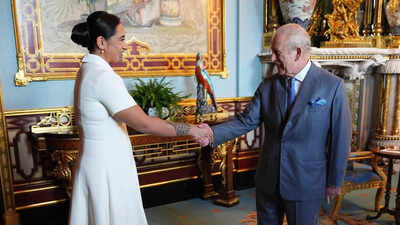
The world watches the Māori Queen meet King Charles during a historic visit to London / Image: @TheRoyalFamily

Buckingham Palace witnessed an extraordinary royal moment this week when New Zealand’s Maori Queen, Ngā Wai Hono i Te Puu, met King Charles III during a historic visit to London that is now capturing the attention of the entire Commonwealth.The audience marked the first official Buckingham Palace meeting between the British monarch and the young Māori queen since she ascended the Kingitanga throne in 2024 following the death of her father, King Tuhetia. At just 29 years old, she has quickly become one of the world’s most-watched indigenous leaders, and her appearance with King Charles has sparked huge interest in both New Zealand and the UK.Photos released from the palace showed the two leaders chatting warmly during a week packed with royal events in London. Although formal on the surface, for many watching closely this meeting holds a much deeper significance.For Māori communities, it represents a continuation of a centuries-old relationship between indigenous leaders and the British Crown. For royal audiences in Britain, it offered a brilliant glimpse of how the modern monarchy is increasingly engaging with Indigenous voices, youth leadership and environmental issues.The meeting comes at a time when discussions over colonial history, treaty rights and representation have become more prominent in the Commonwealth.

Why does the Maori Queen’s visit matter?

The Māori Queen’s visit was not just about royal tradition or formal photographs.Behind the palace walls, discussions reportedly focused on issues shaping the future of younger generations, including climate challenges, indigenous leadership, economic opportunities and youth empowerment.According to representatives of the Kingitanga movement, Ngā wai Hono i Te Po used the visit to highlight how indigenous knowledge and modern global leadership can work together in tackling major world issues.This message appears to closely match King Charles’s long-term interests. Long before he became monarch, Charles spent decades advocating for environmental protection, sustainability, and interreligious dialogue. Palace observers noted the apparent overlap between the king’s priorities and the Māori queen’s growing international platform.The time of the meeting is also important.New Zealand is approaching the 200th anniversary of Te Tiriti o Waitangi in 2040, the treaty signed between Māori chiefs and representatives of the British Crown that still shapes political and social debate today. Questions of indigenous rights, treaty obligations and national identity continue to dominate public conversation in New Zealand, giving the Buckingham Palace meeting additional symbolic importance.

Prince William meets young Maori entrepreneurs

The Māori Queen also chatted with Prince William at Windsor Castle in another historic moment during her UK visit, before meeting King Charles.Their discussions reportedly focused on young people, environmental action and indigenous-led initiatives, topics that were becoming central to the younger generation of royal diplomacy.Four Māori young entrepreneurs were invited to Britain along with the Queen to events involving The King’s Trust, the charity founded by King Charles almost 50 years ago. Using the opportunity to showcase Māori innovation and community-driven businesses, the group attended high-profile events at Buckingham Palace and the Royal Albert Hall.The presence of young Māori business leaders added a modern edge to the royal visit and reflected the Māori Queen’s broader focus on creating opportunities for younger generations rather than relying solely on formal tradition.The generational shift is one reason the Queen has attracted global attention since taking over the throne last year. In contrast to older royalists primarily concerned with protocol, Ngā wai Hono i Te Po represents a youthful leadership style that blends indigenous tradition with modern activism, diplomacy and global outreach.

future commonwealth relations

Many people in Britain found the photographs of Buckingham Palace different from those of ordinary royal visitors.There was history in the room, but there was also a sense of change.The meeting reflected how relations between the Crown and Indigenous communities are evolving in the modern era. In countries belonging to the Commonwealth, debates over colonial history, reparations, cultural recognition and indigenous representation continue to rage. Against that backdrop, the sight of King Charles welcoming the Māori Queen had both symbolic and political significance.This moment also highlighted the changing face of imperial diplomacy.Rather than focusing solely on kingship and ceremony, modern royal engagements are increasingly centered around social impact, climate issues, youth opportunities, and cultural identity. The Māori Queen’s visit to London brought all those themes together in one of Britain’s most historic royal settings.For Buckingham Palace, it was another reminder that the monarchy’s global relevance depends on how it engages with the rapidly changing Commonwealth.For the Māori Queen, it was a defining international moment, placing her firmly on the world stage.

Source link

Why does a Bill Gates-backed insect factory release 30 million mosquitoes every week?

Why does a Bill Gates-backed insect factory release 30 million mosquitoes every week?

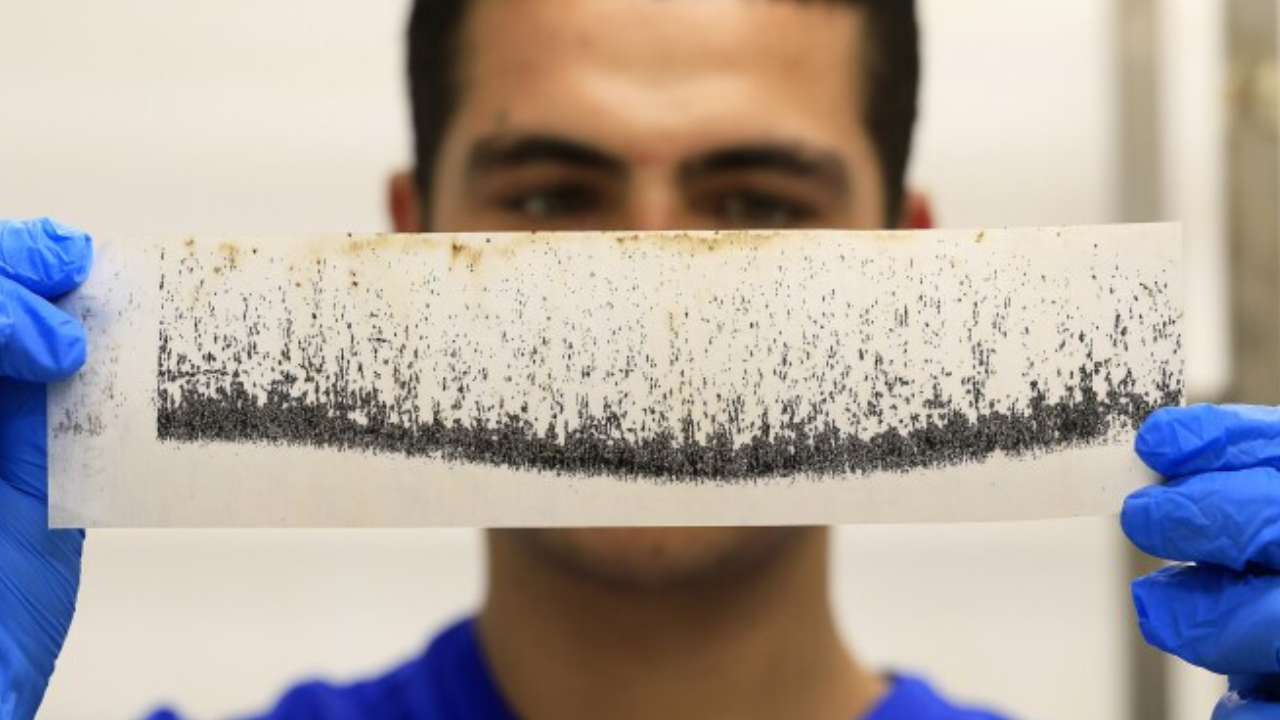
Inside Medellín, Colombia, scientists are breeding millions of mosquitoes every week and then deliberately releasing them into the environment. At first, this may seem strange, especially since mosquitoes are known to spread dangerous diseases. But researchers say these insects are actually being used to prevent the spread of diseases like dengue, Zika, chikungunya and yellow fever. The project, partially supported by the Bill & Melinda Gates Foundation and supported by the World Mosquito Programme, produces approximately 30 million mosquitoes every week. These mosquitoes carry a harmless bacteria called Wolbachia, which makes it very difficult for the virus to spread from mosquitoes to humans.

Inside the world’s largest mosquito factory backed by Bill Gates

The Medellin facility is one of the largest mosquito breeding centers in the world, producing millions of mosquitoes every week as part of an unusual public health mission. Scientists there mainly breed the Aedes aegypti species, which is known to spread diseases like dengue, Zika and chikungunya. Inside temperature-controlled laboratories, researchers carefully monitor every stage of the insects’ life cycle, from eggs and larvae to adult mosquitoes, before preparing the insects for release into nearby communities.What makes these mosquitoes different is a naturally occurring bacteria called Wolbachia. Scientists found that when Aedes aegypti mosquitoes carry Wolbachia, they are much less likely to spread the dangerous virus to humans. Mosquitoes are not genetically modified. Instead, researchers introduce the bacteria into mosquito eggs under laboratory conditions and then breed future generations with the same traits.Once released into the wild, these mosquitoes begin to mate with local mosquito populations, allowing the Wolbachia bacteria to spread naturally over time. As more mosquitoes carry the bacteria in an area, fewer are able to spread viruses like dengue. Researchers say the goal is not to eliminate mosquitoes completely, but to gradually replace populations of more dangerous mosquitoes with less harmful ones. That’s why scientists consider this program different from traditional pesticide spraying, which focuses on killing insects directly.Mosquitoes are released using several methods. In some neighborhoods, residents find small containers filled with naturally occurring mosquito eggs. In other areas, adult mosquitoes are released from vehicles or special containers. The local community is also extensively involved in the program, with residents helping scientists monitor mosquito populations and installing mosquito nets around their neighbourhoods.The project gained worldwide attention after Bill Gates visited the facility and later described it as one of the most promising new approaches to fighting mosquito-borne diseases. Today, the Medellín mosquito factory has become a symbol of how scientists are trying to fight global disease outbreaks by using biology rather than relying solely on chemicals and pesticides.Researchers say the goal is not to increase mosquito populations forever, but to gradually replace disease-carrying mosquitoes with less harmful ones.

Inside the world's largest mosquito factory backed by Bill Gates

The project has shown promising results

Studies from different countries have revealed encouraging results. In Indonesia, areas where Wolbachia mosquitoes were released showed a large reduction in dengue infections and hospital visits.Researchers in Colombia have also noted a sharp decline in dengue cases since the program began in Medellín in 2015.Scientists believe this method could become an important tool for countries where mosquito-borne diseases affect millions of people every year.

Conspiracy theories surrounding the Mosquito Project

The mosquito release program has also become the subject of online conspiracy theories, with viral social media posts claiming that the insects are “mutant mosquitoes”, part of secret experiments, or linked to population control efforts. After video and photos from the Colombian facility circulated online, some posts also suggested that the mosquitoes were deliberately genetically engineered to spread diseases.Scientists and health organizations involved in the program reject those claims. Researchers say the mosquitoes are not genetically modified and instead carry Wolbachia, a naturally occurring bacteria that is already found in many insect species. Experts say that this project is designed to reduce the spread of diseases like dengue and Zika.

A hope for global disease control

Mosquito-borne diseases infect millions of people every year, especially in tropical countries. Traditional methods such as chemical spraying and fumigation have struggled to completely stop outbreaks.Researchers believe that Wolbachia-based mosquito control could offer a safe and long-lasting solution. Rather than eliminating mosquito populations entirely, this method aims to make them less dangerous to humans.That’s why the Medellín mosquito factory has become an important symbol of a new approach to public health, where scientists are using biology to fight some of the world’s fastest-spreading diseases.


Source link