Breaking News
Afghanistan Pakistan conflict: Afghanistan carried out drone attack on Pakistan’s Kohat military fort in retaliation

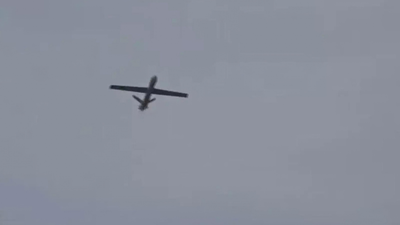
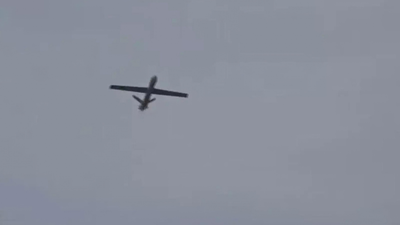
In retaliation, Afghanistan carried out a drone attack on Pakistan's Kohat military fort.

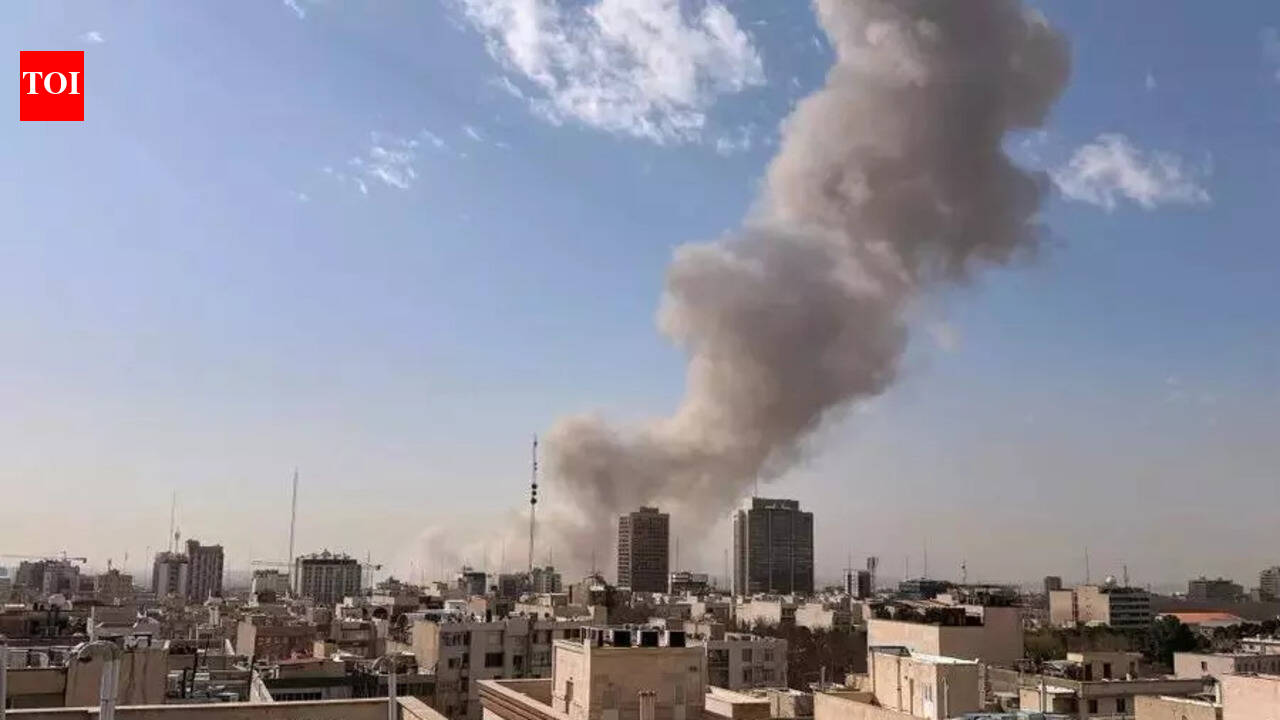
Afghanistan responded strongly to Pakistani attacks on Friday that targeted the country’s two largest cities, the capital Kabul and Kandahar, killing six people, as claimed by Taliban officials. The escalation comes amid renewed tensions between the two Islamic neighbours, which Islamabad described as an “open war” a few weeks ago.Taliban-ruled Afghan authorities reportedly targeted strategic military centers and installations of their nuclear-armed neighbor in response.

‘Gross violation…’: India criticizes Pakistan at UNSC over air strikes in Afghanistan

A handle on X, identified as Afghanistan’s Ministry of National Defence, claimed that Pakistan’s “night-time” violation on the Durand Line, the disputed border between the two countries, was appropriately responded to by Afghan forces.“In response to the night-time violation of the Durand Line by the Pakistani military regime, the Afghan Air Force this morning targeted strategic military centers and Pakistani military installations in the Kohat region of Khyber Pakhtunkhwa,” the handle wrote.

voting

Should the international community intervene to mediate conflict?

It further claimed, “In the strikes, Kohat Military Fort was destroyed and near the same fort, within two kilometres, the command center for the Durand Line conflict and the office of the Commander of the Military Fort were also precisely targeted.”Earlier, Pakistan had launched attacks on Afghanistan targeting Kabul and Kandahar. The Islamabad strikes also targeted homes in the Afghan capital and destroyed a fuel depot at Kandahar airport.

Source link

Japan still haunted: 80% fear another disaster, 15 years after deadly 2011 earthquake world News

Japan still haunted: 80% fear another disaster 15 years after deadly 2011 earthquake

More than a decade after one of the worst natural disasters of our time, people in Japan are still living under the threat of another such disaster hitting their country. A recent survey shows that the memories of the Great East Japan Earthquake of 2011 are still alive in the minds of the people of this country.A recent survey conducted by the Japanese Red Cross Society showed that more than 80% of respondents believe that such a disaster, which occurred in 2011, could happen again in the near future. On the other hand, about 70% of these respondents admitted that they had not done enough to prepare for such a disaster.

The disaster that changed Japan

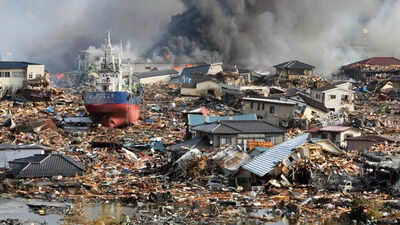
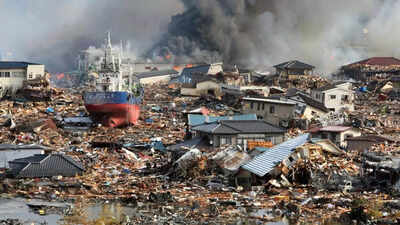
On March 11, 2011, a major earthquake measuring 9.0 on the Richter scale struck off the northeastern coast of Japan. The earthquake caused a massive tsunami, causing widespread devastation in coastal cities in the Tohoku region of Japan. This natural disaster resulted in widespread destruction in the Iwate, Miyagi and Fukushima prefectures of Japan. It resulted in approximately 20,000 deaths or disappearances and forced hundreds of thousands of people to flee their homes.The intensity of the tsunami was extremely high in parts of Japan, destroying cities and infrastructure. This natural disaster also led to the nuclear accident at Fukushima Daiichi, which has become a major environmental and social challenge for Japan. UNESCO’s Intergovernmental Oceanographic Commission States that the 2011 disaster has become the most significant reminder in modern history that communities along the coast are vulnerable to earthquakes and tsunamis. This natural disaster has forced governments and organizations around the world to improve the effectiveness of tsunami warning systems, disaster education and preparedness.

Survey reveals widespread concern about future disasters

In the lead up to the 15th anniversary of the 2011 disaster, the Japanese Red Cross Society conducted a national survey to determine how people view the threat of disasters today.The results of an online survey of 1,200 people aged 10 and older in Japan showed that 80.3% believed that a serious disaster such as the Great East Japan Earthquake would happen again in the near future.The country is located on the Pacific Ring of Fire, an area of ​​the Earth’s surface that is vulnerable to earthquakes.Earthquakes are common in Japan. Scientists have been saying for years that serious earthquakes are possible.

The gap in preparedness remains a major concern

Despite the high level of awareness about disaster risks in the country, the survey found that a large number of people are unprepared to face a disaster. “About 70 percent of the respondents said they had not taken adequate measures to prepare for a large-scale disaster. Such measures may include the preparation of supplies needed during an emergency or the acquisition of skills needed to respond to a disaster.This is not a problem unique to Japan. Experts have described how people often underestimate how quickly a disaster will strike or think they will have time to respond if needed. However, earthquakes and tsunamis can occur without warning.

Why does remembering past disasters matter?

Another important conclusion that can be drawn from the survey is the need to remember past disasters. The survey revealed that more than 80% of people believe that the lessons of the 2011 earthquake should not be forgotten when discussing disaster preparedness. It is at this point that public awareness campaigns and memorial services become relevant.The younger generation may not be aware of the events that occurred in 2011. They need to be aware of the events that occurred in 2011 so that they can be prepared for future disasters. Japan has invested significantly in disaster education. Practices and measures exist to reduce the effects of earthquakes.

Living with the reality of natural disasters

The earthquake and tsunami experience in Japan has created a culture that prides itself on being resilient and prepared. Yet such surveys show that such a situation can be achieved only with sustained efforts.Natural disasters are difficult to predict. Still, the effects can be minimized with planning and awareness.It has been fifteen years since the Great East Japan Earthquake. The memories of that day are a poignant reminder of the strength and weakness of those who experienced it.The message for many in Japan is that the next disaster will not be one that can be prevented. Still, being prepared for it can make a big difference.

Source link

‘We are completely destroying the terrorist regime’: Trump issues ‘watch what happens today’ warning

'We are completely destroying the terrorist regime': Trump issues 'watch what happens today' warning
US President Donald Trump gave a big warning to the Iran regime (AP Photo)

Amid Middle East chaos, US President donald trump On Friday he took another tough tone against the hostile Iran regime and issued an almost declaratory warning against what he called “deranged scoundrels.” Referring to the US military’s massive campaign against the Islamic Republic, he said Washington was carrying out strikes military, economic and otherwise to “destroy Iran’s terrorist regime”, while also taking a dig at The New York Times’ “failed” reports on the war.While professing confidence in the “unparalleled” power of the US military and boasting of widespread success in the campaign against Tehran’s establishment, Donald Trump took to Truth Social to deliver a characteristically blunt message. In the post, he declared: “We are completely destroying Iran’s terrorist regime militarily, economically and otherwise, yet, if you read the failing New York Times, you would be mistaken to think we are not winning.” Taking a dig at the New York Times, he said Iran’s “navy is gone, their air force is no more,” while its missiles, drones and other capabilities are being continuously “destroyed,” with key leaders “wiped off the face of the earth.”

‘Trump is screwing America’: Chuck Schumer’s speech against Iran war rocks US Senate | Watch

voting

Do you support President Trump’s tough stance against Iran?

Trump, in a triumphant tone praising the US military, also issued a stern warning to Iran’s power centers, hinting at possible further action under the country’s new Khamenei leadership. He wrote, “We have unparalleled firepower, unlimited ammunition and ample time – see what happens to these deranged scoundrels today.” He said: “They have been killing innocent people all over the world for 47 years, and now I, as the 47th President of the United States, am killing them. What an honor it is to do that!”Meanwhile, reports emerging from the ongoing conflict in the Middle East suggest that Iran may have attempted to attack the US aircraft carrier USS Abraham Lincoln. Tehran has also claimed responsibility for shooting down another US jet during a refueling mission, although Washington has described the incident as an accident. Trump, who has long maintained a tough stance against Iran, used the moment to double down on his warning to the Islamic republic’s leadership.

Source link

Pakistan attacks Afghanistan again, 4 killed; Attack on houses in Kabul

Pakistan attacks Afghanistan again, 4 killed; Attack on houses in Kabul
Pakistan attacked Afghanistan (AP file photo)

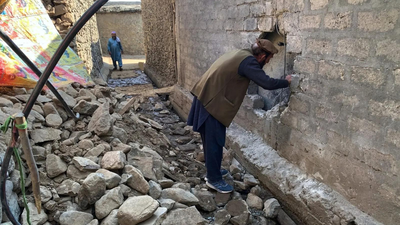
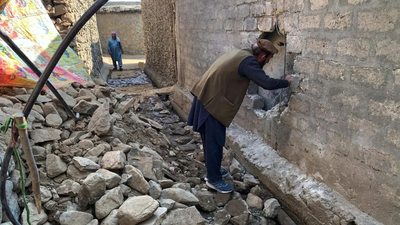
Pakistan again attacked neighboring Afghanistan’s capital Kabul early Friday, killing four people, according to city police.Kabul police spokesman Khalid Zadran confirmed the Pakistani bombing, saying the attacks from Islamabad hit homes in the city. Writing on X, he said that “four people were killed and 15 others were injured” in the attack.The Taliban official also said that women and children were also killed in the Pakistani attacks.However, according to a Taliban spokesman, the attacks in Islamabad also hit Afghanistan’s second-largest city, Kandahar, including its airport.Pakistan bombed a fuel depot of private airline Kam Air near Kandahar airport, a Taliban spokesman said on Friday, as tensions between the South Asian neighbors escalated into the worst conflict in years.Pakistan’s military did not immediately respond to a request for comment.The latest attack comes amid renewed tensions between the two Islamic neighbors who have long been at loggerheads over territorial issues. Islamabad has justified its attacks by accusing Kabul of playing a role in several terrorist incidents inside Pakistan.Tensions between Pakistan and Afghanistan have increased primarily because Islamabad accuses the Afghan Taliban government of harboring the Tehreek-e-Taliban Pakistan (TTP), also known as the Pakistani Taliban. Despite breaking away from the Afghan Taliban, the TTP shares ideological ties with the group and has stepped up attacks into Pakistan from Afghan territory.

Source link

Pentagon tells Congress: America spent more than $11.3 billion in the first 6 days of the war

American victory just a fantasy? 11 billion dollars were burnt in 6 days, Iran is defiant and fighting. Watch

Pentagon officials told US lawmakers in a closed-door briefing on Capitol Hill on Tuesday that they estimated the cost of the war against Iran to exceed $11.3 billion in the first six days alone, according to three people familiar with the briefing.The estimate did not include many costs associated with the operation, such as the build-up of military hardware and personnel before the first attacks. For this reason, lawmakers expect that number to increase significantly as the Pentagon continues to calculate the costs accrued in the first week.

American victory just a fantasy? 11 billion dollars were burnt in 6 days, Iran is defiant and fighting. Watch

Still, it appears to be the most comprehensive assessment yet received by Congress amid growing questions about the war’s objectives, scope, and timeline. The New York Times and The Washington Post previously reported that defense officials said in a recent congressional briefing that the military had used $5.6 billion worth of munitions in the first two days of the war.This is far greater than the publicly reported quantity and rate of munitions being burned. The Center for Strategic and International Studies estimated that the cost of the first 100 hours of operation was $3.7 billion, or $891.4 million each day.The first wave of bombings used weapons including AGM-154 glide bombs, which can cost $578,000 to $836,000. The Navy bought 3,000 of them about two decades ago. Since then, the US military has said it will begin using much less expensive bombs such as the Joint Direct Attack Munition. The smallest size weapon costs about $1,000, and the guidance kit costs about $38,000.Some Republicans – including Senator Mitch McConnell of Kentucky, chairman of the subcommittee that funds the Pentagon – have urged during several administrations that the United States increase its spending on munitions production.But other Republicans have been hesitant to increase military funding and in recent days have questioned the idea of ​​approving costly supplemental funding for a conflict they worry it could open. And Democrats have expressed considerable skepticism about his willingness to support an emergency funding measure for the operation.

Source link

UAE News: No new permits required, special entry rules for residents with expired visas amid Iran vs US-Israel war

UAE News: No new permits required, special entry rules for residents with expired visas amid Iran vs US-Israel war
UAE takes surprise visa step for expatriates stranded abroad amid Iran vs US-Israel war

Aiming to minimize travel disruptions and support thousands of residents stranded abroad, the Federal Authority for Identity, Citizenship, Customs and Port Security (ICP) has announced a temporary measure, allowing expatriate residents whose UAE residency visas have expired to return to the country without having to apply for a new entry permit. The policy will remain in effect until March 31, giving affected residents a crucial window to re-enter the country and regularize their immigration status.The decision comes at a time when widespread flight disruptions and regional tensions have left many expatriates unable to travel back to the UAE before their visas expire. Officials say the measure reflects the country’s flexible administrative approach during extraordinary circumstances and is aimed at reducing the burden on residents caught up in travel disruptions.

united arab emirates One month relaxation granted for residents stranded amid Iran vs US-Israel war

According to the ICP, the temporary rule applies to residents who were outside the UAE when their residence permit expired on or after February 28, 2026. Instead of going through the normal process of applying for a new entry visa, eligible individuals can now travel directly back to the UAE within the specified period. The measure will be valid until March 31, effectively giving migrants a one-month grace period to return and ascertain their visa status after arrival. Once back in the country, residents can complete the necessary procedures to renew or regularize their residence through the relevant immigration authorities. Immigration officials stressed that the initiative is designed to simplify procedures for residents who were previously unable to return due to circumstances beyond their control.

Airspace closure and travel disruption behind UAE’s decision amid Iran vs US-Israel war

Officials indicated that the policy was introduced partly in response to regional airspace closures and flight suspensions, which prevented many residents from traveling back to the UAE before their residence permits expired. The wider Middle East has faced significant aviation disruptions in recent weeks due to rising regional tensions, forcing airlines to cancel or divert flights to several Gulf countries.These disruptions left many expatriates stranded abroad, unable to renew their visas or return home in time. By allowing residents to re-enter without a new permit, authorities hope to reduce the administrative hurdles that typically accompany expired residence permits.

No penalty for UAE residents affected by extraordinary circumstances amid Iran vs US-Israel war

Another important aspect of the policy is the waiver of penalties for residents whose visas expired while they were outside the country due to these extraordinary travel conditions. Authorities confirmed that eligible individuals will be able to return and regularize their residence status without incurring penalties related to overstaying abroad, provided they enter the UAE during the grace period. The relief measure is expected to benefit thousands of migrants who work in sectors ranging from finance and technology to construction and hospitality. Officials said the decision is also aimed at helping families reunite. Many residents who traveled abroad earlier this year were unable to return due to flight cancellations and border restrictions, leaving family members isolated for weeks.ICP said the initiative is in line with broader government efforts to ensure that residents can continue their lives and contribute to the country’s economy without unnecessary immigration barriers. The United Arab Emirates is home to the world’s largest expatriate population, with foreign nationals making up approximately 90% of the country’s residents. Therefore, policies that ease immigration processes during emergencies are important to maintain economic stability and workforce continuity.

A pattern of flexible immigration measures by the UAE

The latest decision is part of a series of flexible visa policies introduced by the UAE in response to unexpected travel disruptions. In recent weeks, authorities have also announced measures such as visa grace periods, waivers on overstay fines and extended time limits for travelers affected by airport closures. These policies are designed to ensure that residents and visitors are not penalized for circumstances beyond their control. Immigration analysts say such measures reflect the UAE’s broader strategy to maintain its reputation as a global hub for talent, business and expatriate communities.

What immigrants need to know

There are some key points residents planning to return to the UAE under this policy should keep in mind:

  • This rule only applies to residents whose visa expired while they were outside the country.
  • The grace period runs till March 31, 2026.
  • Travelers are not required to apply for a new entry permit during this period.
  • Once back in the UAE, they must complete residence renewal or status improvement processes through official channels.

Immigration officials have encouraged affected residents to return within the stipulated time frame to avoid complications after the temporary policy ends. This announcement sends a clear signal about the UAE’s approach during a period of uncertainty. Instead of imposing strict immigration rules during exceptional circumstances, the government has opted for practical solutions that prioritize the welfare of residents.For thousands of migrants who feared losing their residency status due to expired visas while abroad, the new policy offers a lifeline and a chance to return home without bureaucratic hurdles. As travel conditions across the region gradually stabilize, officials say the temporary measure should help restore normal immigration processes, while also ensuring that no residents are unduly harmed by disruptions beyond their control.

Source link

UAE News: Hotels refuse to raise prices for stranded tourists as flights in the emirate are canceled amid Iran vs US-Israel war.

UAE News: Hotels refuse to raise prices for stranded tourists as flights in the emirate are canceled amid Iran vs US-Israel war.
UAE hotels promise stable prices despite Middle East travel chaos amid Iran vs US-Israel war

Air travel is being disrupted around the world due to Iran vs US-Israel war middle eastUAE hotels are moving to reassure guests that prices will remain stable and that assistance will be provided to travelers affected by flight cancellations and delays. Hospitality groups say they are focused on guest safety, flexible booking and maintaining confidence during one of the region’s most challenging aviation disruptions in years.The assurances come as airlines are canceling flights and governments imposing temporary airspace restrictions in parts of the Gulf. These disruptions have left thousands of travelers stranded or forced to change travel plans, prompting hotels to adapt their operations to support both stranded tourists and transit passengers in crisis.

united arab emirates Hotels prioritize security and guest assistance amid Iran vs. US-Israel war

Hotel operators across the UAE say the safety and well-being of guests remains their top priority as the regional situation evolves. Industry leaders emphasize that hospitality brands are closely monitoring developments and ensuring that hotel operations continue smoothly. Executives from major hotel groups say the hospitality industry is fundamentally about taking care of people, especially during unexpected disruptions. Many properties have introduced flexible booking policies, extended stays and assistance services for travelers whose flights were canceled or delayed. Hotels are working closely with authorities and airlines to accommodate stranded passengers, especially those who cannot immediately leave the country due to airspace closures or flight rescheduling.

Room rates remain stable in UAE despite travel chaos amid Iran vs US-Israel war

One key message from the UAE’s hospitality sector is clear: hotels are not taking advantage of the disruption to raise prices. Instead, many hotels have opted to keep room rates stable, reassuring guests that the industry is committed to transparency and fairness.

Travelers stranded in UAE getting aid as hotels freeze room rates amid Iran vs US-Israel war

Travelers stranded in UAE getting aid as hotels freeze room rates amid Iran vs US-Israel war

Hospitality operators say it is important to maintain trust with travelers during times of uncertainty. This approach differs from the situation sometimes encountered during global travel disruptions, when increased demand can drive up hotel prices. However, in the UAE, many hotels have deliberately fixed rates and avoided sudden price increases to maintain confidence among visitors.

UAE government’s support for stranded travelers amid Iran vs US-Israel war

The UAE government has also taken steps to ensure that travelers affected by the crisis are taken care of. Officials announced that hotel stays, meals and assistance can be provided for passengers stranded due to canceled or delayed flights, ensuring that passengers are not left without accommodation or assistance.This coordinated response involves airlines, airports and hotel partners working together to manage passenger flow and ensure people have a safe place to stay while they wait for flights to resume. Such measures have helped the UAE maintain its reputation as a reliable travel hub even during times of regional instability.

UAE tourism faces sudden blow amid Iran vs US-Israel war

Despite a supportive response from the hospitality industry, the ongoing conflict has inevitably affected tourism throughout the region. Airspace closures and security concerns have led to an increase in travel cancellations and a slowdown in new hotel bookings, particularly from European and Asian markets.Industry analysts say the broader Middle East tourism sector could lose millions of dollars per day due to reduced travel demand and disrupted flights. In Dubai alone, thousands of holiday bookings have reportedly been canceled in the wake of the conflict, highlighting tourism’s sensitivity to geopolitical shocks.

UAE hotels boost stays to fill rooms amid Iran vs US-Israel war

To cope with the decline in international arrivals, many hotels have begun targeting local residents with discounted stay packages. Luxury properties in Dubai and Abu Dhabi are offering special promotions, dining deals and spa packages aimed at encouraging residents to spend weekends at city hotels. Some hospitality analysts say these offers are helping maintain occupancy levels while international travel remains uncertain. Such campaigns have become a common strategy in the UAE during periods of global disruption, including the pandemic years.

UAE’s reputation as a safe haven

Despite regional tensions, officials and industry leaders insist that the UAE remains a safe and stable destination for residents and visitors. The country has taken several steps to stabilize travel and maintain connectivity, including establishing controlled “safe air corridors” to gradually restore flights.These measures aim to balance security concerns with the need to keep international travel running through one of the world’s busiest aviation hubs. The current situation is not the first time that the UAE’s tourism sector has suffered a major blow. The industry previously demonstrated resilience during the COVID-19 pandemic and has since bounced back with record-breaking visitor numbers. In 2025, Dubai is expected to welcome approximately 20 million international visitors, reflecting the city’s strong global appeal and rapidly growing hospitality infrastructure. Industry experts believe the sector will eventually recover once regional tensions ease and air travel stabilizes.For now, the message from UAE hotels is reassuring. Hospitality operators say guests can expect stable pricing, flexible policies and strong support systems if travel disruptions impact their plans. In a region where geopolitical tensions could rapidly reshape travel patterns, the UAE’s hospitality industry is betting that trust, reliability and guest care will help it weather another storm in global tourism.

Source link

Who was Old Dominion University shooter Mohammed Jalloh? An ISIS supporter, released from prison in 2024

Who was Old Dominion University shooter Mohammed Jalloh? An ISIS supporter, released from prison in 2024

The shooter at Old Dominion University in Virginia has been identified as Mohammed Baylor Jallow, 36, a former Army National Guard soldier who was previously convicted of supporting ISIS. In 2017, Jallow was sentenced to 11 years in prison and five years of supervised release for attempting to provide material support to ISIS. Jalloh walked into a classroom inside ODU’s Constant Hall on Thursday and asked if it was an ROC (Reserve Officer Training Corps) classroom. As soon as someone confirmed, he started shooting and killing the professor. After Jalloh murdered the professor, who was a retired military officer, an ROTC cadet sprang into action and stabbed Jalloh to death. The shooting is being investigated as terrorism related. Jallow left the National Guard and became a follower of Anwar al-Awlaki, the slain leader of the branch of al-Qaeda in the Arabian Peninsula. He once linked up with ISIL members during a six-month stay in Africa. The DOJ said that during a meeting during the trip, unknowingly observed by an FBI informant, Jalloh mentioned a desire to launch his own terrorist attack.Jalloh told the FBI source that he believed it was better to plan the attack during the month of Ramadan – which runs from mid-February to mid-March – because it was “100 percent the right thing” according to the DOJ.When he returned to the United States, Jalloh tried and failed to obtain firearms in North Carolina. He then went to a gun dealership in his native Northern Virginia, which sold him an assault rifle but it was deactivated before he could leave. Jalloh was arrested the day after purchasing the assault rifle and released in 2024. It is not known why his sentence was reduced. Jalloh was from Sierra Leone and a naturalized US citizen. FBI Director Kash Patel said, “Earlier today, an armed man opened fire at Old Dominion University, killing one person and injuring two others. The attacker has now died thanks to a group of brave students who stepped in and subdued him – with law enforcement’s quick response undoubtedly saving lives.” Patel said, “The FBI is now investigating the shootings as an act of terrorism. Our Joint Terrorism Task Force is fully engaged with local authorities and providing all necessary resources to the investigation.”

Source link

Qatar News: Travel influencer drives from Doha desert to Riyadh, viral video shows escape route amid Iran vs US-Israel war

Qatar News: Travel influencer drives from Doha desert to Riyadh, viral video shows escape route amid Iran vs US-Israel war
Qatar News: Travel influencer flees Doha with 12-hour desert drive to Riyadh amid Iran vs US-Israel war chaos

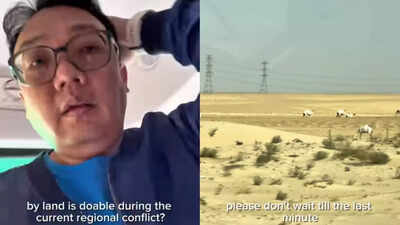
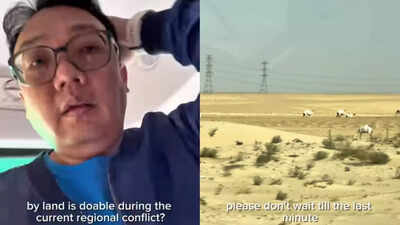
As the Iran vs. US-Israel conflict continues to disrupt air travel throughout the Middle East, one travel influencer’s desert trip from Doha to Riyadh has gone viral On social media. Singapore-based digital creator SuperAdrianMe shared a video documenting his experience of leaving Qatar by road after flights were disrupted, offering a first-hand glimpse of how travelers are improvising escape routes during the regional crisis.The creator posted the video on his social media handle and captioned it, “Leaving from Doha to Riyadh by land. Here’s my experience crossing by land. It was safe and smooth, but much longer than Google Maps suggests.” He advised travelers to prepare for a 10 to 12-hour journey, obtain a Saudi e-Visa before boarding and expect delays at border checkpoints before arriving. saudi arabia.He added, “Arriving in Riyadh and finally having a confirmed flight home felt like a real relief. For Saudi visas visit https://visa.visitsaudi.com/ #Middle EastWar #IsraelIranConflict #IranWar #doha #diyadh (sic).”

Travel chaos across the Gulf amid Iran vs. US-Israel war

The video immediately attracted attention as it reflected a broader trend of thousands of passengers stranded across the Gulf due to widespread airspace closures and flight suspensions due to the war. Airlines across the region have been forced to cancel or divert flights as security risks increase and governments tighten aviation restrictions. Major hubs such as Doha, Dubai and Abu Dhabi have faced unprecedented disruptions, leaving travelers scrambling for alternatives, including land routes through neighboring countries. In many cases, travelers are choosing to cross the border into Saudi Arabia to catch flights from cities such as Riyadh, where few international routes are operational.

Desert route from Doha to Riyadh

The route shown in the viral video generally starts from Doha and heads south towards the Abu Samarra border crossing, which is Qatar’s primary land gateway to Saudi Arabia. From there, travelers enter Saudi territory near Salwa before continuing the long drive through desert highways towards Riyadh.Under normal circumstances, the journey takes about six to seven hours but travelers say border formalities and security checks can stretch the journey to 10 hours or more, especially during the current crisis. SuperAdrianMe described the crossing as safe but slow, advising travelers to be prepared for long waits and to ensure all visa documents are ready before attempting the journey.

Trend rising among travelers stranded amid Iran vs US-Israel war

The Singapore manufacturer is not the only traveler on this path. Similar stories have emerged in recent days of stranded passengers trying to escape the disrupted flight network. In one widely reported case, an Indian traveler whose flight was stopped in Doha walked across the desert to Riyadh to continue his journey to Europe.The story immediately attracted global attention as an example of the travel chaos caused by the conflict. Governments and airlines are also arranging limited repatriation flights, but the scale of the disruption means many travelers are still looking for alternative routes out of the region. In the absence of reliable flight schedules, social media posts like SuperAdrianMe’s video are becoming an unlikely source of information for stranded passengers. Travel influencers and ordinary travelers alike are sharing border crossing tips, visa requirements, road trip experiences and real-time updates at checkpoints.Such material has helped many passengers understand the realities of navigation in the Gulf during the crisis. For example, the influencer’s video highlights practical advice such as applying for a Saudi eVisa before departure, allowing extra time for border processing, preparing for long drives on desert highways. These details can make the difference between crossing easily and getting stuck at the border.

The Iran vs. US-Israel war is reshaping travel in the Middle East

The viral journey also shows how the Middle East conflict is reshaping travel patterns across the region. With many air corridors closed and security alerts issued in several Gulf states, travelers are being forced to rethink traditional routes. Some are flying through alternate hubs, while others are using land routes to reach airports that are still operating international flights. Experts say such travel improvements are likely to continue as long as the conflict disrupts aviation networks. For SuperAdrianmi, the long journey through the desert finally ended with relief. After crossing the border and completing the extended drive, the influencer said reaching Riyadh and securing a fixed flight home was a “real relief” after hours of uncertainty on the road. His story reflects the emotional reality faced by many travelers during the crisis: uncertainty, long detours and the hope of eventually reaching home.The viral video may seem like a simple travel vlog but it represents a much bigger story taking place in the Middle East. As geopolitical tensions continue to rise, ordinary travelers are being forced to navigate an increasingly unpredictable travel landscape, relying on creativity, flexibility and sometimes a long road through the desert to reach safety. At the moment, trips like the Doha-to-Riyadh escape route are becoming one of the most talked-about travel experiences of the current Middle East crisis.

Source link

Why is it called ‘Middle East’: The story of 1902 most people don’t know world News

Why it's called the 'Middle East': The story most people don't know from 1902

Everybody sayin’ itmiddle east‘, whether it’s in a book or on television. But no one paid attention to why it was ‘East or West’. There is a history behind it that is important to know when this particular phrase is spoken at a high level. This term was popular during the British Empire. As reports suggest, this phrase was first used in 1902 by an American naval strategist, Alfred Thayer Mahan. That time. He described the land between India and the Persian Gulf as the ‘Middle East’. What happened was, Europe centered the map, measuring identity by distance from London. In this Eurocentric worldview the “Middle” East was strategically located between the Near East (Balkans) and the Far East (China and Japan).

The man behind the name ‘Middle East’: Alfred Thayer Mahan

Right after that day in 1902, when Alfred Thayer Mahan popularized the phrase ‘Middle East’, it became a global headline. He did this because he wanted to describe the land between India and the Suez Canal that the British Navy had to control to protect its empire. Currently, many scholars and popular political leaders debate about the phrase ‘Middle East’.

Why does India officially use the term ‘?west asia

according to Middle East Institute (MEI)Former Indian Prime Minister Jawaharlal Nehru was the first to suggest naming it ‘West Asia’, indicating that the term is geographical and does not depend on London as the center of the map. By using ‘West Asia’, India places the region precisely within the Asian continent. This policy was established to promote Asian solidarity and to view the region through a post-colonial lens rather than a British strategy.

How the Phrase ‘Middle East’ Changed During World War II

According to Britannica and meiIn 1939 the definition of this word expanded significantly. The British established the phrase ‘Middle East’ in Cairo, which accounted for a vast region stretching from North Africa to Iraq. Because this military command was so successful and its reports were published around the world, the term “Middle East” began to be used by the general public to describe the entire region, eventually completely replacing the older “Near East” in American and British English.

What is the change from ‘Middle East’ to ‘MENA’

As soon as India favored the term ‘West Asia’, globally people started adopting the acronym ‘MENA’, which stands for Middle East and North Africa. According to Britannica and world bankThis shift recognizes that the cultural and economic nexus of the region extends from the Sinai Peninsula to Africa. By using ‘MENA’, organizations attempt to move beyond the colonial ‘middle’ label while recognizing the interconnected nature of the modern Arab world. However, like the phrase coined by Alfred Thayer Mahan, even ‘MENA’ is criticized for being a ‘Western-centric’ group that prioritizes trade and security over local indigenous identity.Ultimately, the phrase ‘Middle East’ is a colonial map still in transition. While the label remains a global standard, the rise of ‘West Asia’ and ‘MENA’ signals a shift towards geographical sovereignty.

Source link