3 things OPT employers should check as ICE announces crackdown on 10,000 foreign students

3 things OPT employers should check as ICE announces crackdown on 10,000 foreign students
Immigration attorney Emily Newman explains what F-1 students and OPT employers need to know as ICE announces a major crackdown on the program.

Immigration and Customs Enforcement announced a major crackdown on foreign students working in the Optional Practical Training Program alongside their studies, and said they have uncovered a major fraud going on with fake companies, non-existent companies offering OPT jobs to students. Immigration attorney Emily Newman said what ICE described is absolutely true. Vacant buildings are listed as workplaces for hundreds of students, with no actual employees ever working.Newman said most companies do not engage in these misconducts, but now with ICE announcing this action, they should be vigilant that they are doing everything necessary, as there will be more site visits.Newman listed three things that HR and in-house counsel at companies hiring OPT students should check immediately.

  1. Is your Form I-983 current? If the workplace, supervisor, or training description on file does not match what the student is actually doing today, that difference is the first thing an investigator will notice.
  2. Are supervisors of your STEM OPT students aware that they are responsible for the training described on that form? At the site visit, the supervisor’s answers are compared with the form that was signed.
  3. Are you giving notice of termination within five business days? This is a regulatory deadline, not a guideline.

Overall OPT Checklist

  • The student applies for the OPT by filing Form I-765 and employers do not need to submit a petition for the standard, non-STEM OPT.
  • The work should be directly related to the student’s field of study and the relationship should be such that it can be explained in writing on demand.
  • The student must provide employment information to the Designated School Officer (DSO) of the school that issued the Form I-20.
  • Employers should expect to provide a written offer letter, a job description, and, if asked, a letter explaining the connection between the role and the degree.
  • When OPT is over, the student has to inform the same to the DSO.

What irregularities did ICE find?

  • Empty buildings, locked doors and residential addresses are serving as listed work sites for hundreds of students.
  • Coordinated employer groups in shared office premises, where different employers allegedly operated almost identical websites and management personnel denied any business relationship with each other.
  • A sole proprietor allegedly sets up multiple OPT employer entities to structure income, avoid taxes, and obscure the true employment relationship.
  • International financial patterns spanning multiple countries and bank accounts, missing employment records and offshore (mostly India) human-resources or payroll arrangements.
  • OPT employees never come to work.

Source link

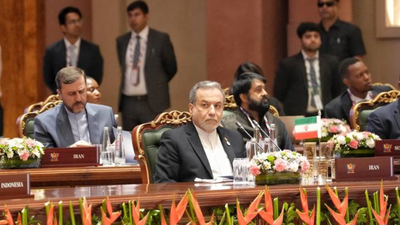
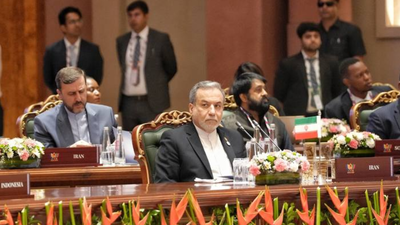
Iran asks UAE to ‘accept responsibility’ as tensions rise at BRICS meeting in New Delhi

'एक आक्रामक': नई दिल्ली में ब्रिक्स बैठक में तनाव बढ़ने पर ईरान ने यूएई से 'जिम्मेदारी स्वीकार करने' को कहाThe sharp increase came a day after the UAE refuted the Israeli Prime Minister’s claim benjamin netanyahu That he had visited the Gulf country during the Iran war. Iranian Foreign Minister Abbas Araghchi had earlier warned that “those who are trying to create division by colluding with Israel will be held accountable.” “I did not name the UAE in my (BRICS) statement for unity. But the truth is that the UAE was directly involved in aggression against my country,” Reuters quoted Iranian state media as saying. “When the attacks started they didn’t even condemn,” he said.“We must live together in peace and this requires peaceful relations and full understanding between the two countries,” Araghchi said.Additionally, Kazem Gharibabadi, Deputy Foreign Minister for Legal and International Affairs, later issued an even more forceful statement, accusing the UAE of helping facilitate attacks against Iran and stressing that Abu Dhabi “must accept responsibility for its actions.”“The UAE played a key role in supporting and facilitating military aggression against the Islamic Republic of Iran,” Gharibabadi said during the BRICS meeting. “Therefore, the party which itself has contributed to creating and escalating tensions has no legitimacy to make political allegations and claims against Iran,” he said, quoting the Iran Embassy in India.“The UAE is an aggressor, not just a participant in aggression,” he added, citing a 1974 UN General Assembly resolution.Gharibabadi claimed that Iran had warned Gulf countries, including the United Arab Emirates, before the conflict escalated that any assistance to US or Israeli operations would be met with retaliation. “We had no choice but to target all U.S. bases in the United Arab Emirates, or any facilities and installations in the United Arab Emirates in which the United States had a role or involvement,” he said, calling the attacks an act of “legitimate self-defense.”“You must accept responsibility for your actions,” he told the Emirati side directly, adding that Iran had presented more than 120 diplomatic notes and extensive documents to the UN Security Council, including alleged records of “every warplane that flew from the UAE.”Recalling their early efforts to reach out and warnings, he said, “Let me remind you that several days before the aggression began, because we had information about the possibility of attacks by the Israeli regime and the United States, we sent official messages to regional countries, including the United Arab Emirates. We warned them that if they assisted the aggressors and made their territories and facilities available to them, Iran would have exercised its legitimate right of self-defense by targeting those facilities in defense of its own country. There will be no option but to do it.The Iran War began with US and Israeli attacks on Iran on February 28, followed by Iranian missile and drone attacks on US bases and bases in the Gulf countries.The renewed war of words also threatens to complicate the consensus at the BRICS Foreign Ministers’ meeting in India. Iranian media cited Deputy Foreign Minister Gharibabadi as saying that there were already “problems and communications” in efforts to finalize the joint communiqué due to tensions with the United Arab Emirates.

Source link

Former Indian-origin CEO sentenced to 5 years in jail, asked to pay $125 million in $212 million fraud case in New Jersey

Former Indian-origin CEO sentenced to 5 years in jail, asked to pay $125 million in $212 million fraud case in New Jersey
Ultra-rich NRI Paul Parmar has been sentenced to five years in jail in a fraud case in New Jersey.

Paramjit Parmar, a 55-year-old Indian-origin man from New Jersey, has been sentenced to five years in prison, followed by three years of supervised release and payment of $125 million for his involvement in a large-scale conspiracy to defraud investors in connection with the purchase or sale of company securities. Parmar, also known as Paul Parmer, pleaded guilty in 2025.According to court documents, the fraud was committed between May 2015 and September 2017. Parmar and his conspirators, including Sotirios Zaharis alias, ‘Sam Zaharis’ and Ravi Chivukula, orchestrated an elaborate scheme to defraud a private investment firm and others of millions of dollars in connection with the financing of a transaction to take private a publicly traded healthcare company on the London Stock Exchange’s Alternative Investment Market.To fund the transaction, the private investment firm invested approximately $82.5 million and a consortium of financial institutions invested an additional $130 million, for a total of approximately $212.5 million. The co-conspirators used fraudulent means to greatly inflate the value of the Company and cause others to believe that it was worth much more than its true value.Parmar and the conspirators allegedly tried to raise millions of dollars from the public markets to finance the acquisition of various operating subsidiaries of the company. In reality, many of those entities either did not exist or had only a fraction of the operating income. Court documents state that the conspirators spent the proceeds of these secondary offerings through bank accounts they controlled and used the money for various purposes that had nothing to do with achieving the alleged goals. The conspirators made great efforts to make it appear that these funds were revenue, fabricating fake customers and altering bank statements to make it appear that the funds were coming from customers.The court said Parmar and his co-conspirators also manipulated and fabricated the bank records of subsidiaries to create a false picture of revenue streams and made misrepresentations and omissions to the private investment firm and others.Due to the actions of Parmar and his conspirators, the victims valued the company at more than $300 million for the purpose of financing a transaction to take the company private. The scheme was exposed in September 2017, when Parmar and his coconspirators resigned or were fired from their positions at the company. On March 16, 2018, the company and several of its affiliated entities filed for bankruptcy, attributing the company’s financial condition to a massive fraud scheme.

Source link

Court order to bring back 55-year-old Colombian woman, sent to DRC

Big blow to Trump's deportation to third country: Court order to bring back 55-year-old Colombian woman, sent to DRC
A judge ordered the US to bring back a Colombian woman who was deported to the DRC despite Congo refusing to accept the 55-year-old woman.

The Donald Trump administration’s third country deportations, a new policy he came up with where a migrant is sent to a third country where he has no ties, suffered a major setback after a federal judge on Wednesday ordered the administration to bring a Colombian woman back to the US. Adriana María Queiroz Zapata, 55, was deported to the Democratic Republic of Congo, although the DRC refused to accept her. US District Court Judge Richard J. Lyons for DC ordered the woman to be brought back as soon as possible and ordered the Trump administration to provide a status update by 5 pm Friday on steps taken to facilitate her return, The New York Times reported.Queiroz Zapata entered the United States in August 2024 after fleeing Colombia and his former partner, a man bound by the Colombian National Police. She received a court order not to send her back to Colombia because she might face abuse at home. The Trump administration sought a third country to deport Queiroz Zapata, but the DRC refused to formally admit him in April because the country could not adequately guarantee the necessary medical assistance, the document said. The woman has diabetes, hyperlipidemia and hypothyroidism.Two days after the DRC’s denial, Queiroz Zapata was placed on an expulsion flight from the US to the DRC on April 16, where he remains today.“The government deported him to the DRC anyway,” the judge wrote. He added, “Therefore, sending the plaintiff to the DRC was probably illegal.” The judge said Queiroz Zapata was “likely to succeed” in his argument that deporting him to the DRC was “likely to violate the Immigration and Nationality Act.”The judge wrote, “There is no question that Plaintiff meets the irreparable harm standard. She has been deported to a country that refused to accept her because they could not provide adequate medical care.” “As a result, he faces daily risk of medical complications, up to and including death.”

Source link

Indian man confronts Texas whistleblower Sarah Gonzales over H-1B allegations, calls her unemployed

'You're talking nonsense': Indian man hits back at Texas whistleblower Sarah Gonzales over H-1B allegations, calls her unemployed
Indian man silences Sara Gonzales for H-1B attack, calls her unemployed.

Texas journalist Sarah Gonzales, who started ‘exposing’ H-1B fraud in her state, which even resulted in some action from the government, took aim at ‘Great America Technologies’ for her latest video. But it turned into a fight between Gonzales and Nagarjuna Reddy Sakam, who is listed as the director of the company – Nagarjuna patiently talked to Gonzales and answered all his questions and also identified her as the woman who visits H-1B establishments and creates nuisance.Gonzales said the company was founded in 2017 and at that time, Lakshmi Chaitanya Bogula was named as the director. Later her husband Nagarjuna became a director. But they do not have an office at their address, their telephone number does not work and there is no information on their website, Gonzales claimed before surprising Nagarjuna at his home address.Nagarjuna told that his company is small and it is going through a change in address. It does not have many H-1B workers and they work for different clients. He told Gonzales that he is not doing business on H-1B but that he is a green card holder and has the rights to it.Nagarjuna called out Gonzales for talking nonsense targeting the Indian community and told him that USCIS and the government are there to investigate if any fraud has occurred. “Don’t you have a job?” Nagarjuna asked, saying he would file a lawsuit against Gonzales because he was not doing anything illegal.After the controversy, Gonzales visited the new address that Nagarjuna had provided him, and said that it was a co-working space and there was no one there. Gonzales again called Nagarjuna and pressed him for the public access files. The phone conversation also turned into a fight as Nagarjuna said he had called 911 and the police were coming.

US entrepreneur says company is doing nothing wrong

American entrepreneur James Blunt, who frequently comments on immigration issues, said he investigated the company and found nothing wrong. The company is a consultancy that recruits people for clients. Blunt said that if a self-proclaimed whistleblower like Gonzales shows up on private property, the owners should first ask for identification, deny entry and then record the conversation.Sara defended what many on social media called ‘invasion’ and said that Nagarjuna talked to her for 15 minutes and turned away after “he realized he was trapped, then he asked us to leave, and we did”.

Source link

5 snake-filled waters in Queensland surrounded by rainforests and wetlands

5 snake-filled waters in Queensland surrounded by rainforests and wetlands

Queensland’s waterways run through rainforests, floodplains, mangrove systems and heavily populated coastal areas, creating habitats where the snakes are active year-round. Warm temperatures and frequent rainfall support large populations of fish, frogs and small mammals, which naturally attract predators to rivers, lakes and tidal channels. Some species live close to freshwater environments while others move between estuaries and coastal waters. Sightings are not uncommon in northern parts of the state, especially after storms or in humid conditions when the reptiles become more active near the surface. Although many snakes avoid people whenever possible, some of Queensland’s waterways have developed a reputation for frequent encounters due to their surrounding environments and the wildlife they support.As reported worldatlas, Check out the list below of 5 snake-filled bodies of water in Queensland.

5 snake-filled rivers and wetlands in Queensland that look beautiful but hide danger

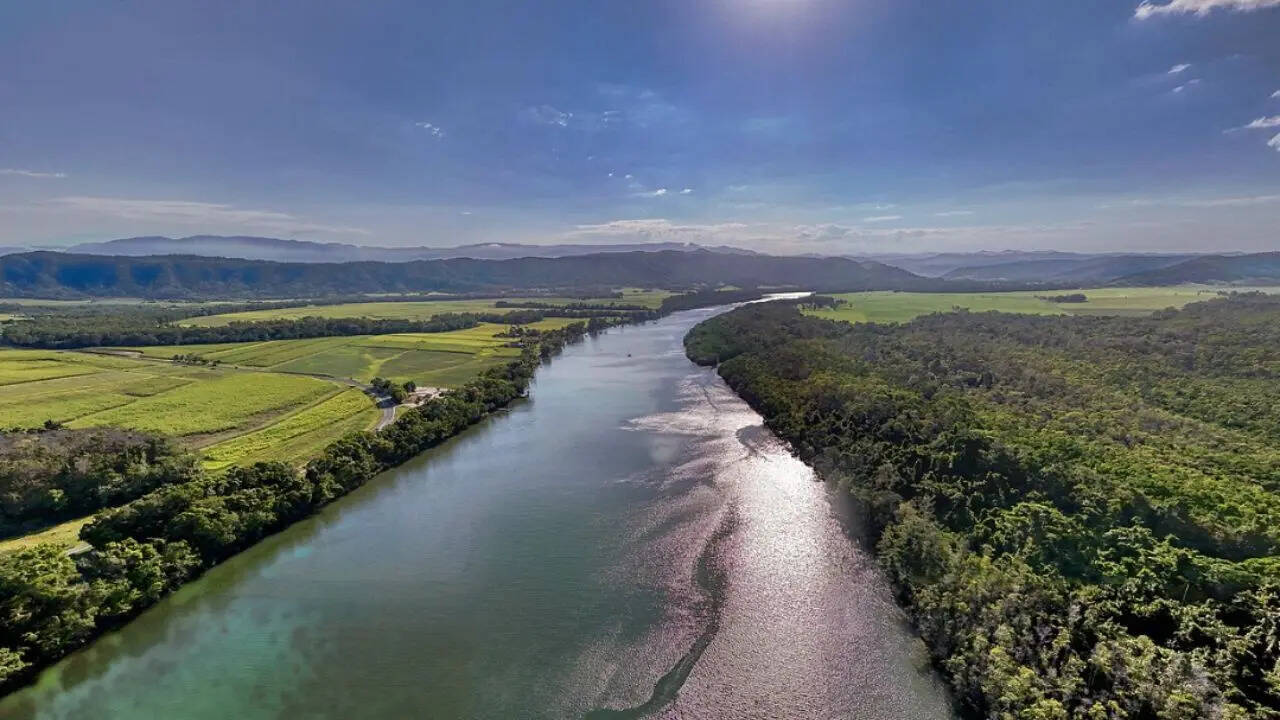
1. Daintree River

Daintree River

PC: Wikipedia

The Daintree River flows through dense tropical rainforest where dense vegetation extends right to the water’s edge. Fallen branches, mangrove roots and shady banks create suitable shelter for the many snake species that hunt near waterways. During the wet season, snakes are often seen wandering along muddy banks or resting close to low branches above the river. Conditions become even busier after rainfall when rising water levels drive animals to new areas. Tour operators in the area regularly mention sightings of snakes along with crocodiles, especially during the warmer months when reptile activity increases in the rainforest and surrounding wetland systems.2. Lake Placid

Lake Placid

PC: Wikipedia

Lake Placid near Cairns appears calm for much of the year, although the surrounding environment supports a steady presence of reptiles. The warm shallows attract frogs and fish, providing reliable hunting areas for snakes that live close to freshwater habitats. Dense vegetation around parts of the shoreline allows them to move quietly without much risk. People using quieter parts of the lake for fishing or walking sometimes report seeing snakes crossing narrow stretches of water or resting near the reeds. Visibility increases during the wet season when humidity increases, and wildlife in nearby connected waterways becomes more active.3.Brisbane River

brisbane river

PC: Wikipedia

The Brisbane River flows through urban areas, although in many stretches there are still mangroves, wetlands and high river banks that support native reptiles. It is more common to see snakes in quiet areas away from busy pedestrian areas, especially after periods of flooding. Heavy rains may force snakes from hiding places into parks, drains and residential areas adjacent to river systems. Different habitats exist along the river depending on distance from the coast, allowing many species to occupy different areas. Residents living near bushland corridors or flood-prone areas sometimes encounter snakes roaming in backyards following storms and hot seasonal conditions.4. Hinchinbrook Channel

Hinchinbrook Channel

PC: Wikipedia

Hinchinbrooke Channel lies between the mainland and Hinchinbrooke Island, which is surrounded by mangroves, tidal flats and tropical vegetation. The warm coastal waters support marine life that attracts sea snakes to the channel throughout the year. Unlike land species, sea snakes spend most of their lives in water and are made to swim through tidal currents. People usually encounter them accidentally near fishing areas, boat ramps or nets rather than along the shoreline. Despite being highly venomous, they rarely approach humans intentionally. Their presence reflects the healthy marine ecosystem that continues to support fish populations within the channel.5. Fitzroy River

fitzroy river

PC: Wikipedia

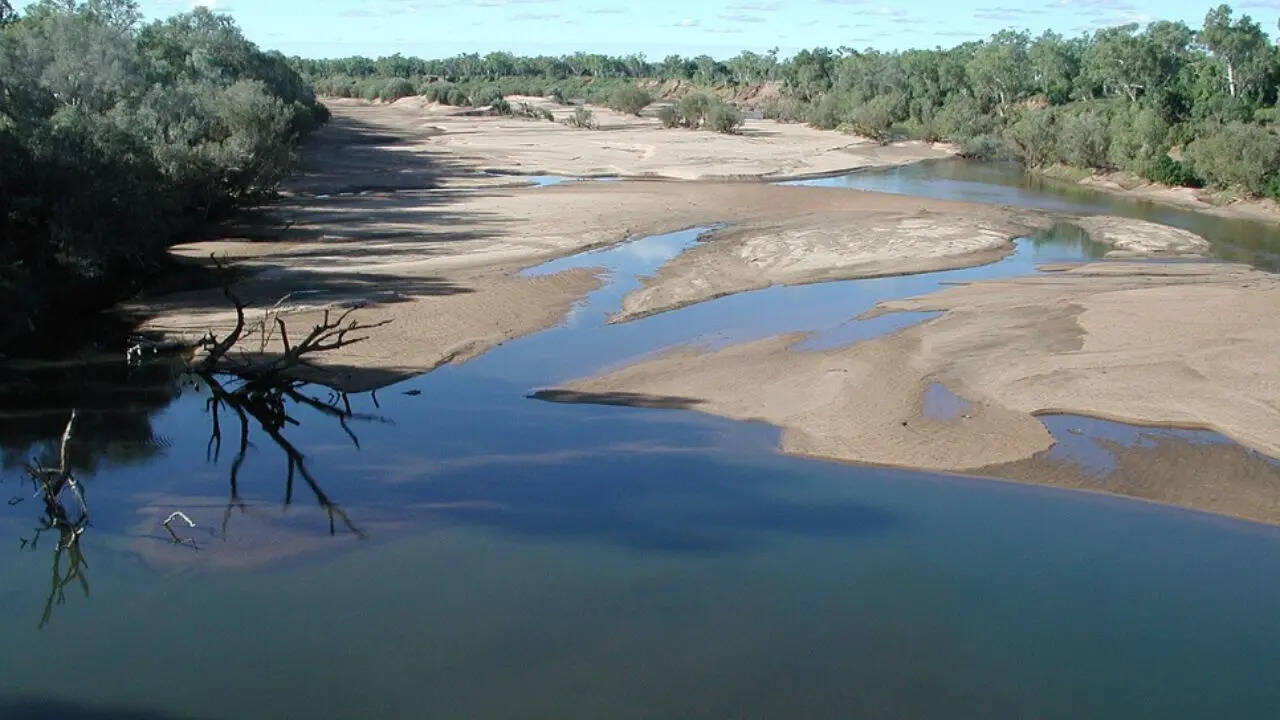
The Fitzroy River system extends across central Queensland and passes through wetlands, agricultural fields and floodplain environments where reptiles are common. Seasonal rains alter the river dramatically, forming temporary ponds and flooding grasslands that attract frogs and small animals. Snakes often pursue these feeding opportunities in shallow water and low vegetation along river banks. During warm evenings, movement becomes more noticeable around isolated patches of dense plant cover. Residents and farmers near the river sometimes report an increase in the number of sightings after storms, when rising waters push wildlife into surrounding lands. The large river system allows different snake species to inhabit different habitats throughout the region.

Source link

12 skeletons found in Petra tomb hidden under treasury

इंडियाना जोन्स जीवित हो गया: राजकोष के नीचे छिपी पेट्रा कब्र में 12 कंकाल मिलेUnlike most areas of the ancient city, which were troubled by looters or natural forces over the centuries, this safe was found in an exceptionally rare, untouched state. The discovery of these skeletons provides a transformative look at Nabataean burial customs, as the remains offer a unique, unrecorded biological record.

12 skeletons found in petra which reveals the secrets of ancient Nabataean life

Researchers made this discovery using ground penetrating radar. As stated in a report national public radio (NPR), For years, people speculated that more chambers might exist beneath the treasure, after two tombs were discovered to the left of the monument in 2003. To investigate, the researchers turned to radar to check if there was symmetry on the right side as well. Radar picked up physical features similar to known graves. With this evidence, the Jordanian government approved the excavation.

story of petra jug

When the excavation team saw a porcelain jug in the hand of a skeleton, they could not believe their eyes. As Warner Bros. Discovery noted in a report, the treasury was the set for the climax of Indiana Jones and the Last Crusade, so finding a chalice in this secret tomb was like seeing ‘art imitating life.’ Even though the archaeological significance of the ship was immense, researchers pointed out how ironic it was to find a cup resembling the cinematic ‘Holy Grail’ in the same place where they filmed that famous scene.

A rare glimpse into the lives of desert architects

Dr. Cressman called the discovery a ‘time capsule’ because he found the skeletons along with their personal belongings still intact. This gives us a special opportunity to learn about the Nabataeans, who carved Petra out of sandstone but left few written records. The remains include men, women and children. Experts will test DNA and analyze organic sediment from the grave to learn more about how these ancient people lived, what they ate and where they came from.

A major change in Petra’s archaeological record

The discovery is considered a significant turning point in the archaeological history of Petra because, unlike most tombs in the area, which contain only fragmentary remains due to looting or re-use, this chamber contains 12 articulated bodies. Professor Richard Bates of the University of St. Andrews tells NPR that by analyzing skeletal material, including teeth and bones, researchers can now reconstruct the lifestyle, diet and health of the Nabataean people. This level of preservation is expected to reveal a view of their society that was previously inaccessible to scientists.

Source link

Final action dates for EB-1, EB-2 withdrawals in June 2026 Visa Bulletin

Bad news for Indian green card applicants: Final action dates for EB-1, EB-2 retroactive to June 2026 in Visa Bulletin
The US State Department has warned in its June 2026 visa bulletin that the dates for green card applicants from India may get pushed back.

The June 2026 Visa Bulletin published by the State Department offered little or no hope for Indian green card candidates as the queues grew longer, increasing wait times. To break this, India’s final action date for the EB-1 category was pushed back by three and a half months to December 15, 2022. In the EB-2 category, India’s final action date has been pushed back by more than 10 months to September 1, 2013.

What are EB-1 and EB-2?

EB-1 and EB-2 are two employment-based green card categories in the US immigration system. These are the most commonly used pathways by H-1Bs to apply for a green card. EB-1 is for people, researchers, and managers with exceptional ability. EB-2 is for people with advanced degrees like software engineers, data scientists, doctors, and researchers. The waiting period for EB-1 is shorter than that of EB-2 and EB-3.

What is the last action date?

The last action date mentioned in the monthly visa bulletin is an important marker for the movement. This date determines who can actually get green card approval this month. So this month, those who have the priority date for EB-1 green card before December 15, 2022, will get their permanent residence. For EB-2, people with a priority date before September 1, 2013 will get a green card this month. The priority date is the date the employer filed the PERM labor certification or the US received the I-140 petition.

Other developments in June Visa Bulletin

  • EB-1: China’s cutoff date remains April 1, 2023. For all other countries, this category is live, which means there is no waiting time.
  • EB-2: China’s cutoff date is September 1, 2021. For other countries, it is current.
  • EB-3: India’s cutoff date is extended to December 15, 2023, and China’s cutoff date is now August 1, 2021. For other countries. The EB-3 cutoff date is June 1, 2024.
  • EB-5: The EB5 unreserved category for India remains at May 1, 2022, and China’s unreserved cutoff date remains at September 22, 2016. The EB5 category is operational for all other chargeable sectors and all three EB5 designated categories (rural, high unemployment and infrastructure) in all countries.

Why regression?

Retrogrades are dates that move back from previous dates when the quota is met. USCIS said: “High demand and use of the number by chargeable aliens to India in the EB-1 and EB-2 visa categories has made it necessary to push back the final action dates to keep the use of the number within the FY 2026 annual limit.” There have also been warnings of further retrogression, or the categories being made “unavailable” if India’s proportionate limits in the EB-1 or EB-2 categories are reached before the end of the fiscal year. The bulletin said that this situation will be continuously monitored and any necessary adjustments will be made accordingly.

Source link

Why did we see a restrained Trump in China?

शी अपवाद: हमने चीन में नरम स्वभाव वाले ट्रम्प को क्यों देखा

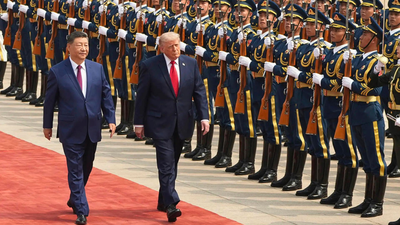
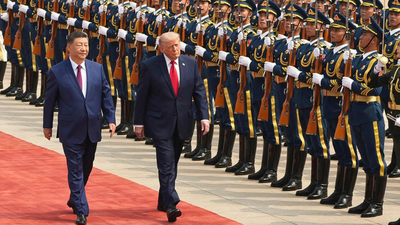
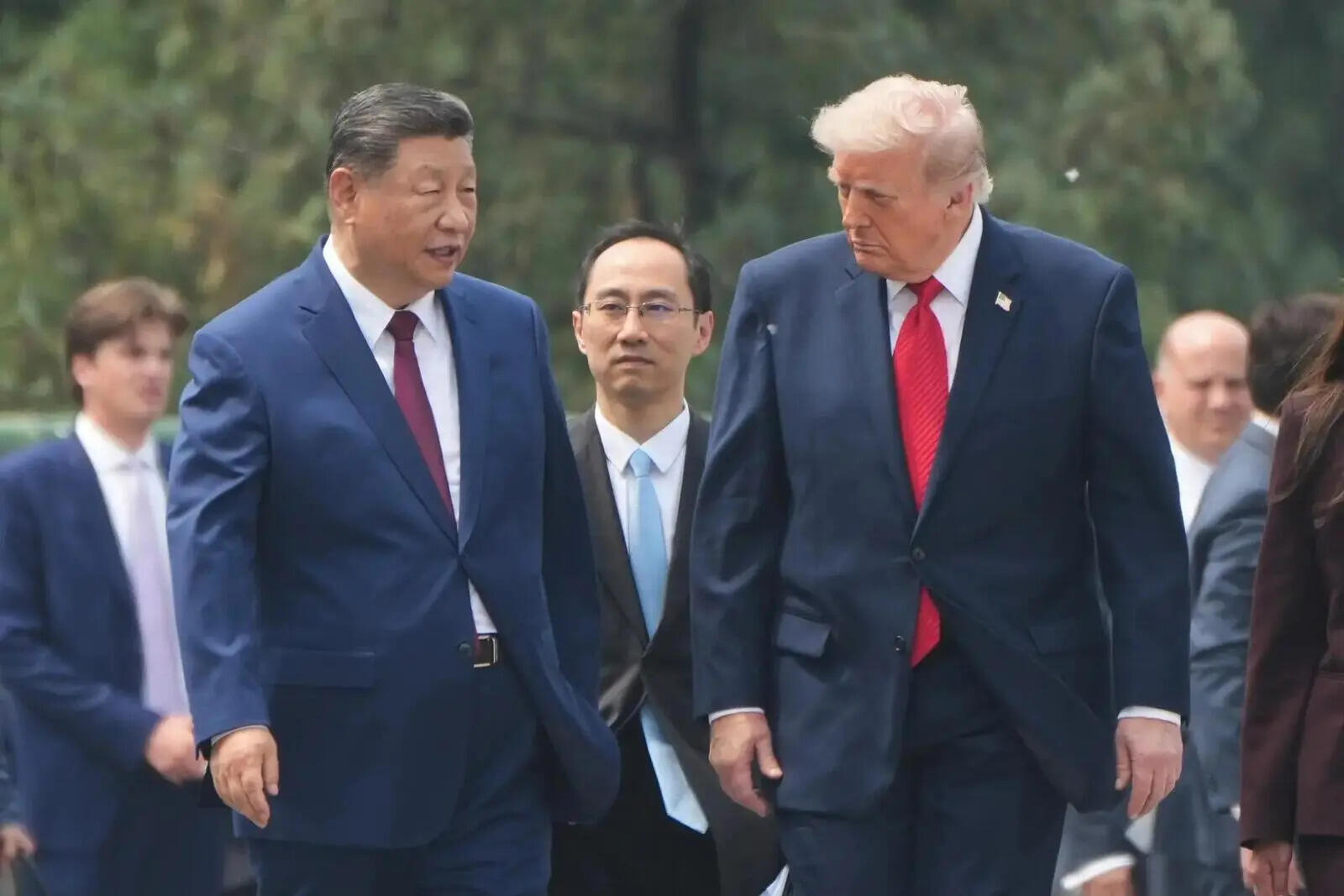
Chinese President Xi Jinping and US President Donald Trump (AP Photo)

“The military is in the clear.”US President’s comment donald trump He arrived almost casually and stood between his Chinese counterpart and the grand ceremony hosted by Xi Jinping in Beijing. Lines of Chinse soldiers stood in perfect formation. Red carpets were spread across the vast expanse of the Great Hall of the People. Children waved flags. Precision, discipline and power were on full display, not subtly, but deliberately, causing Trump to soften a bit from his usual approach.For a president who has often claimed that the US military is the “greatest and the best”, there was something different about Trump’s tone this time: praise mixed with recognition that the global military balance is no longer as lopsided as it used to be.For decades after the collapse of the Soviet Union in 1990, Washington stood alone at the pinnacle of global power. America’s military dominance became the defining characteristic of the post-Cold War world. But in Beijing on Thursday, China appeared eager to send a message to Trump and the world that the era may be changing.During the visit, Trump repeatedly praised Xi, calling him a “great leader.” Yet behind the warm words and diplomatic smiles there was a deeper undercurrent: this was not just a state visit. It was a display of China’s confidence, military, technological and geopolitical.And Beijing didn’t stop at symbolism.Even as Trump received military honors, China’s message on Taiwan became extremely clear. Chinese officials warned that US involvement in Taiwan-related matters “could lead to US-China conflict.”This warning comes as tensions around Taiwan continue to increase. The self-ruled island, which is claimed by Beijing but backed militarily and politically by Washington, has fast become the most dangerous fault line in US-China relations.Taiwan retaliated strongly.Taiwan’s Defense Ministry accused China of “military oppression” and gray-zone operations around the island, saying “Beijing officials are currently the only threat to regional peace and stability.” It added that “Beijing has no right to make any claims on behalf of Taiwan at the international level.”But beyond Taiwan, another conflict has quietly revealed how modern geopolitical battles are evolving, and how China’s influence is already spilling over into the future of war.Trump’s military strike against Tehran under “Operation Epic Fury” put the Iran conflict into global focus. War-related reports have repeatedly pointed out that Chinese technology is playing a behind-the-scenes role in strengthening Iran’s military capabilities.The battlefield of the 21st century is no longer determined solely by the size of fighter planes, aircraft carriers or defense budgets. Increasingly, power is being measured through drones, AI systems, cyber capabilities, satellite navigation and precision technology.And in many of those areas, Beijing is increasingly emerging as a serious challenger to Washington.One symbol of that change is the BeiDou Navigation Satellite System, China’s answer to America’s GPS network. Iran has reportedly been using the BeiDou system since 2021 to deploy decoy systems capable of improving drone accuracy and complicating enemy targeting.That description may sound technical. But strategically it is very big.

Trump calm in Xi’s stage show

Trump, in China and in the presence of Xi Jinping, appeared notably more restrained than his usual approach with other world leaders, where he is often more confrontational.From calling Shehbaz Sharif to the mic for praise, gratitude and even publicly criticizing Volodymyr Zelensky over his attire, Donald Trump has often turned diplomatic meetings into headline-grabbing moments marked by sharp exchanges. But with Xi Jinping, the tone has changed.
ap photo

Xi and Trump

Trump has repeatedly praised Xi as a “great leader”, alternating sharp comments with warm language and diplomatic smiles. Yet in a cordial atmosphere, the visit doubled as a carefully choreographed display of China’s military might, technological ambition and growing geopolitical confidence.

China is reshaping conflicts beyond its borders

This shows that China is no longer making weapons only for itself. Its technology is beginning to shape conflicts beyond its borders, being indirectly tested against US military systems in real-world combat situations.The contradiction is amazing.The United States still spends more on defense than any other country in the world. Meanwhile, China holds the largest position in the world Army. But modern warfare is increasingly becoming less about size and more about systems, controlling the algorithms, satellites, drones, data and artificial intelligence behind the battlefield.This is the real competition taking place in Beijing under carefully choreographed handshakes.Not just a rivalry between two countries. But there is a struggle over who will define the next era of global power.

Empty missile compartment behind superpower image

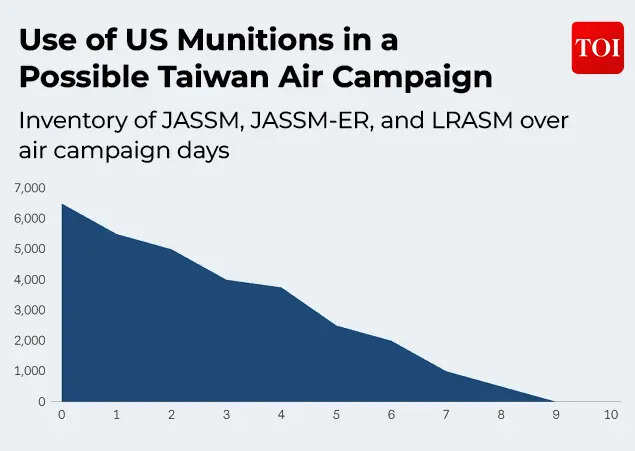
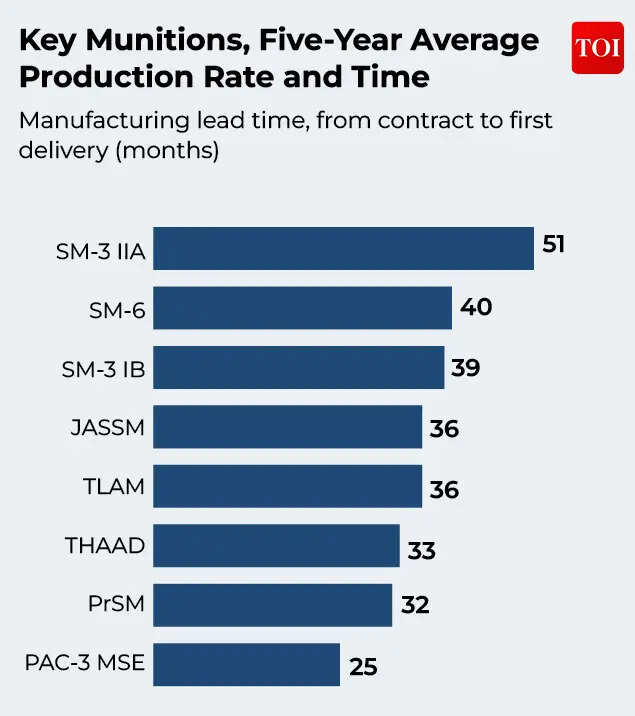
The Iran War exposed both the extraordinary strengths and growing weaknesses of the American military apparatus.US forces fired thousands of missiles, drones, and interceptors with remarkable accuracy during attacks on Iranian bases, command centers, military bases, and weapons facilities. Advanced systems such as Tomahawk cruise missiles, JASSMs, Patriot interceptors and THAAD air defense systems performed effectively.But the scale of the operation raised alarm bells even in strategic circles.According to CSIS’s assessment, the US stockpile of long-range precision munitions was under pressure even before the Iran conflict began. The war only intensified the shortage.The concern is particularly grave because a modern war against China would depend on exactly the same weapons.Unlike conflicts in the Middle East, a Pacific war would involve huge distances, heavily defended airfields, and heavy missile exchanges. In such a scenario, long-range strike systems become the backbone of military operations.

use of American munitions

Problem? America may not have enough of these.The report said that the timeline for production of critical weapons is extremely slow. Some systems take three to four years to build. Replenishment of depleted arms and ammunition stocks is not a quick process.And while US officials publicly insist that the US still has overwhelming military power and is on top of defense spending, strategic analysts fear that a prolonged conflict could rapidly expose the shortfall.

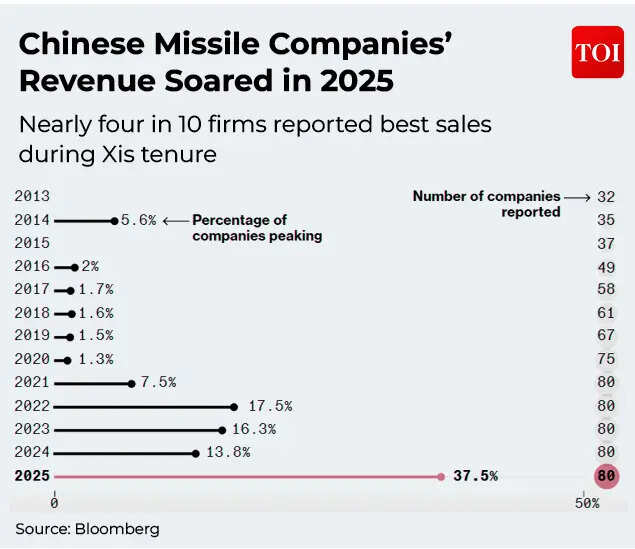
China’s war machine is already on war footing

The speed at which China is expanding its military-industrial capabilities may further increase Washington’s concerns.According to the report, Beijing’s defense industry is already working with a wartime mentality. China is rapidly producing warships, submarines, missiles, aircraft, drones and cyber capabilities in almost every field of warfare.

-

And unlike the United States, which still faces procurement delays and political obstacles, China’s centralized system allows military production to scale up rapidly.The concern is no longer just about the number of tanks or fighter planes.Modern warfare has shifted toward drones, AI-enabled targeting, cyber systems, electronic warfare, satellite navigation, and autonomous platforms. China is moving forward aggressively in many of these sectors.The Iran conflict became a glimpse of that future.Reports on Tehran’s drone and missile operations repeatedly point to Chinese-linked technology. Iran’s use of the BeiDou navigation satellite system improved the accuracy of drones and enabled more sophisticated battlefield deception systems.

-

What once seemed futuristic is now becoming a working reality.Wars are being fought not only with bombs and bullets, but also with algorithms, autonomous systems and satellite networks.

Taiwan became the center of the storm

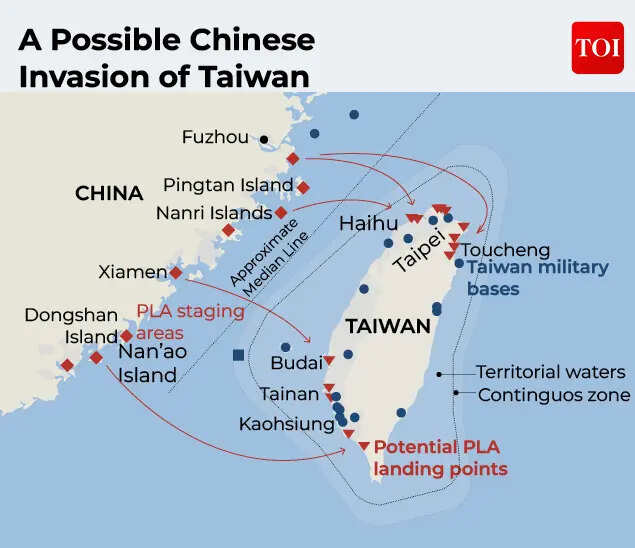
Taiwan is at the center of the US-China rivalry.During Trump’s visit to Beijing, China warned that mishandling the Taiwan issue “could lead to US-China conflict.” Meanwhile, Taiwan accused Beijing of being the “single threat to regional peace and stability”.

taiwan

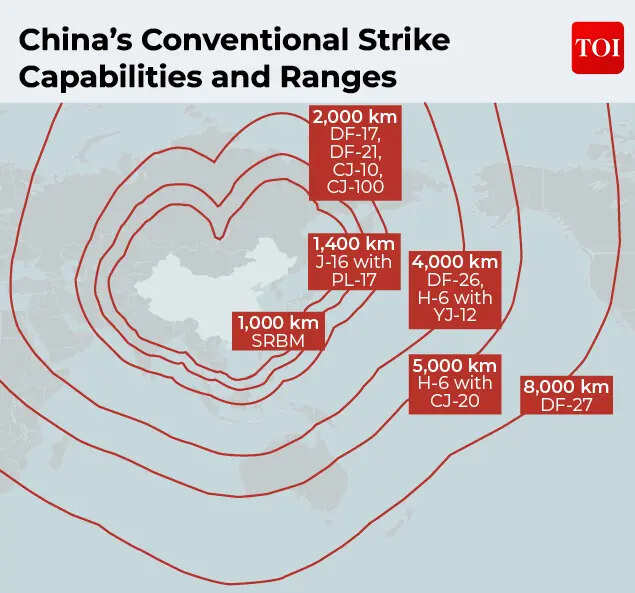
For military planners, Taiwan is no longer just a diplomatic flashpoint. This is the scenario around which the future Pacific war is increasingly being modeled.The CSIS report repeatedly highlights war-game simulations in which the US military eliminated a significant number of long-range missiles within the first week of the Taiwan conflict.Many simulations in Taiwan reportedly lost anti-ship missiles almost immediately.That discovery has strategists deeply concerned because China’s missile systems now threaten large parts of the Indo-Pacific, including US bases in Japan, Guam and the Philippines.U.S. aircraft carriers and destroyers, once symbols of unmatched American power, are now seen as increasingly vulnerable when within China’s missile range.

‘Hellscape’ era of war

The Pentagon’s answer to this growing challenge is an emerging concept known as “hellscape.”The idea is simple but dramatic: turn the Taiwan Strait into a vast maze of drones, underwater systems, unmanned attack vehicles (UAVs) and autonomous weapons that would make any Chinese invasion exceptionally costly.Rather than relying solely on expensive fighter planes or huge warships, the strategy focuses on “precision mass”, large numbers of cheap drones and unmanned systems working together.

-

Military planners believe that future wars will not be won simply by the side with the largest navy or air force, but by the side able to produce and maintain the largest numbers of smart, expendable systems.And here again, China’s manufacturing strength becomes central.The report also warns that the United States and Taiwan may need hundreds of thousands of drones and unmanned systems in any long-lasting Indo-Pacific conflict.The scale was more like industrial warfare than conventional military operations.

America’s industrial wake-up call

Perhaps the most shocking finding of the CSIS report is not about missiles or submarines, but about factories.The report argued that wars between great powers are ultimately won by industrial capacity.It pointed to America’s historic mobilization during World War II and the Cold War, when presidents like Franklin D. Roosevelt and Dwight D. Eisenhower turned the country into a defense production giant.Today, the fear surrounding Uncle Sam remains just as significant because it no longer has the same momentum or industrial urgency.Aircraft maintenance problems, excessive naval deployments, weak Pacific bases and delays in weapons production all point to a stressed system.The report calls for a wartime effort to modernize industrial mobilization efforts, accelerate defense manufacturing, strengthen supply chains, and rapidly expand production of drones, missiles and air defense systems.Because under Beijing’s diplomatic maneuvers, strategic competition is no longer just about who has the stronger military today.It is about who can face the next war tomorrow.


Source link

The deepest ocean trenches: The 5 deepest ocean trenches on Earth, ranked: Why a basin owns every single slot world News

The 5 deepest ocean trenches on Earth: Why a basin owns every single slot
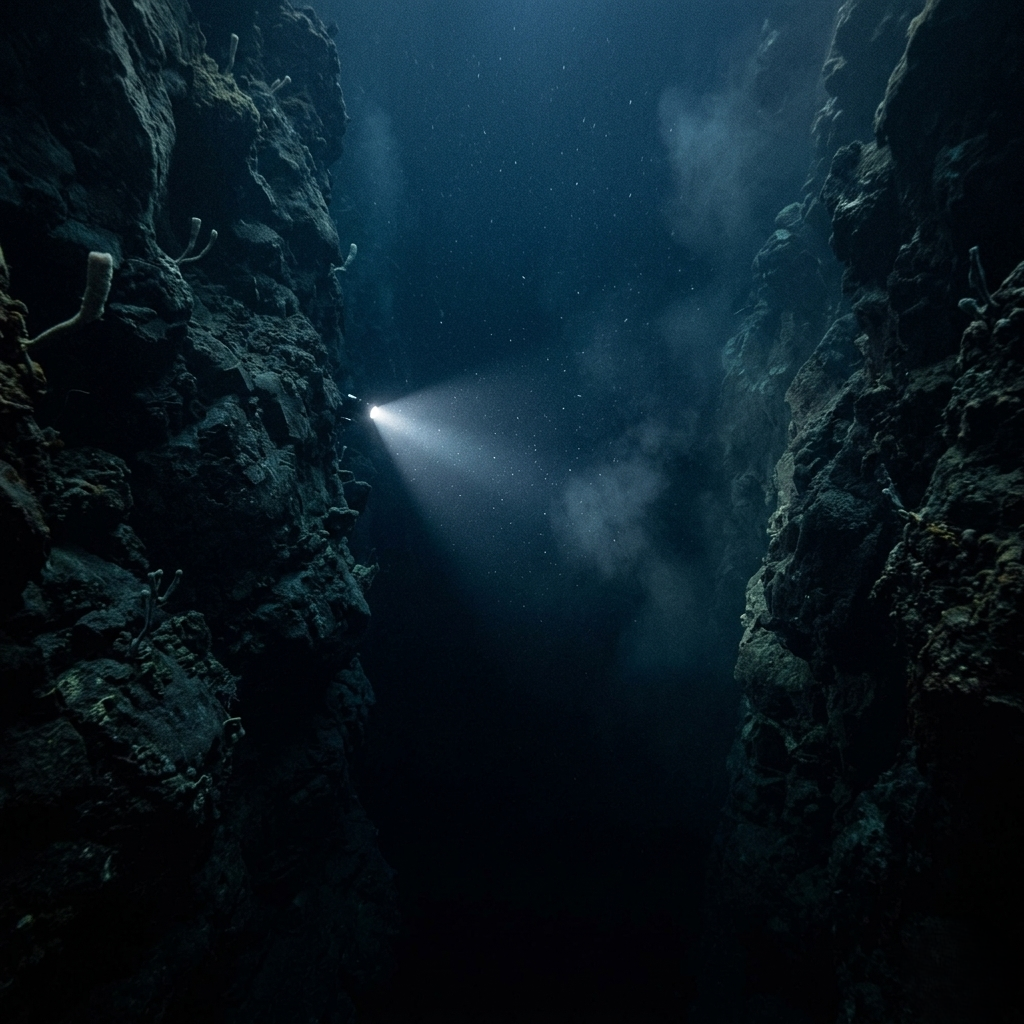
All of Earth’s deepest ocean trenches are located in the Pacific Ocean, the result of intense tectonic plate subduction. Image Credit: Google Gemini

As one considers the deepest parts of our planet, it appears that such depths should be randomly distributed around the Earth’s surface, with perhaps some of the deepest trenches located along the African coast, others near the coasts of Europe, and others along the American coast. Still it is not so.If you want to study the top five deepest regions on Earth, there is no point consulting just any world map. Focusing on just one ocean is enough. In fact, all of Earth’s deepest craters can be found in the Pacific Ocean, turning this vast body of water into a terrifying neighborhood of geological wounds. Such features are not just scratches on the sea floor. Rather, they are the product of a never-ending process of self-transformation occurring within the Earth.Tectonic Wonders of the PacificTo understand why all the deepest points belong to the Pacific Ocean, we must take a closer look at the processes occurring within the Earth. The planet’s outer layer, known as the Earth’s crust, is made up of large puzzle pieces or tectonic plates. These plates are involved in a fierce battle for supremacy in the Pacific region.When an oceanic plate collides with a lighter continental plate, it does not collide with it at all. It dives rapidly beneath it and falls straight into the Earth’s warm mantle. This process is known as subduction, and the exact point where the plate bends and dives gives rise to an oceanic trench.Because these intense collision zones surround the Pacific Basin, it has become the ultimate factory for the deep ocean depths. According to a historical overview by Woods Hole Oceanographic InstitutionThese trenches represent the most powerful plate interactions on Earth. They are surface manifestations of a planet swallowing its own crust.The following is a comparison of the five deepest trenches in the world, based on verified measurements of their depth.1. the Mariana TrenchLeading this group is the Mariana Trench, which can be found in the western Pacific Ocean. It is the heavyweight champion when it comes to deep sea trenches. At its deepest point, Challenger Deep, the height of the bottom reaches 11,034 meters. Even if we turned the majestic Mount Everest on its head and dropped it into this abyss, its summit would still be filled with thousands of meters of water.2. Tonga TrenchThe Tonga Trench, located in the southwestern part of the Pacific Ocean, is considered the second deepest trench on Earth, with a depth of more than 10,800 meters. The Tonga Trench is characterized by its rate of descent, which is very rapid. The reason for this is the high speed of collision between the tectonic plates here.

gemini_generated_image_q7jdvrq7jdvrq7jd

These trenches, such as the Mariana and Tonga, form where oceanic plates dive beneath continental plates, creating geological wounds. Image Credit: Google Gemini

3. philippine trenchAt a staggering depth of over 10,500 metres, the Philippine Trench is another deep trench found in the western Pacific Ocean, characterized by steep edges created by a complex system of intersecting tectonic plates. The geometry involved is extremely sharp, creating deep cuts in the ocean crust.4. Kuril-Kamchatka TrenchThis huge trench is included in the list of trenches whose depth exceeds 10,500 meters, making it almost equal to the Philippine Trench. Located in the northwestern region of the Pacific Ocean, the trench extends to the Kuril Islands and includes continuous subduction zones.5. Kermadec TrenchCompleting the list at number five is the Kermadec Trench, which plunges more than 10,000 meters deep into the southwestern Pacific Ocean. Working in conjunction with the Tonga Trench System, the Kermadec becomes the last buttress point for this southern chain of extreme underwater geology, showing us that when it comes to the Pacific’s claim on underwater geology, that claim cannot be disputed.How do these findings reshape our geographical thinking and what do they mean scientifically?This comprehensive study of the top five places reshapes our understanding of the meaning of geography. Extreme underwater environments are not a unique phenomenon in the world.But then, determining the direction of these alien scenarios is no easy task. From extensive research conducted by National Centers for Environmental Information at NOAAThis makes it clear that obtaining accurate results under extensive water depths is no easy task. Sound waves are sent out from the ocean floor through ships, but factors such as water pressure can cause inaccurate readings.Therefore, it should not be surprising that modern oceanographers do not use accurate readings for such second-place trenches.However, what is known about these trenches is that they are dynamic and are not simply dead zones. These trenches hold within them clues to how Earth sustains itself, recycles itself, and even how life might persist on other frozen moons. The answer lies in the depths, but until then it seems that all answers are safely locked away in the depths of the Pacific Ocean.

Source link