A priest by day, a wrestler by night: Meet the Mexican hero who raised money for an orphanage by fighting in wrestling rings world News
A priest by day, a wrestler by night: Meet the Mexican hero who raised money for an orphanage by fighting in wrestling rings

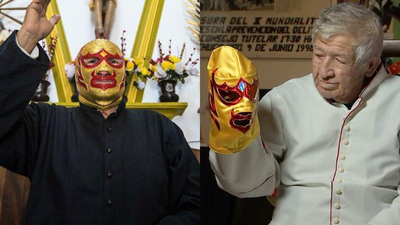
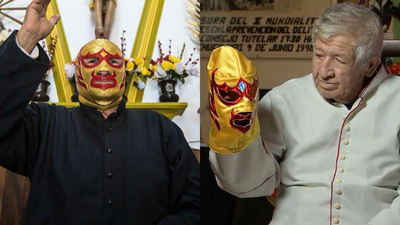
Inside crowded Mexican wrestling arenas filled with roaring fans, glowing masks and flying body slams, one masked fighter harbored a secret far more unusual than his opponents. Known in the ring as Fray Tormenta, the man behind the red and yellow mask was actually a Catholic priest. During the day, he preached sermons and cared for vulnerable children. At night, he puts on brutal Lucha Libre wrestling matches to earn money for an orphanage he struggles to run. His extraordinary double life ultimately made him one of Mexico’s most unlikely folk heroes, blending faith, charity and professional wrestling in a story that later inspired films, documentaries and international fascination.

The priest behind the wrestling mask

Long before he became Fray Tormenta, Sergio Gutiérrez Benítez lived a difficult and unstable life. Born in Mexico in 1945, he reportedly struggled with poverty and crime during his youth and spent time getting involved in gangs and theft before eventually changing direction.According to interviews and biographical accounts, a spiritual transformation led him toward theological studies and eventually becoming a Catholic priest. He was appointed in the 1970s and began working in some of the poorest communities in Mexico, where he encountered large numbers of abandoned and vulnerable children.This experience had a deep impact on him. Many children lacked stable homes, education, or even regular meals. Determined to help, he established shelter and orphanage programs near Mexico City. But soon running them became financially burdensome.At the time, the orphanage depended heavily on donations, and resources were often scarce. The cost of food, school supplies, clothing, medical care, and housing continued to rise. Looking for a way to quickly generate income, Gutiérrez turned to one of Mexico’s most popular forms of entertainment: lucha libre wrestling.Lucha libre has long been a cultural phenomenon in Mexico. In contrast to American wrestling, Mexican lucha libre is particularly noted for its masked wrestlers, fast-paced acrobatics, and dramatic characters inspired by folklore, heroes and villains.Since masks already played such an important role in wrestling culture, Gutierrez realized he could compete anonymously while continuing his work as a priest.He adopted the name “Fray Tormenta”, meaning “Frayer Storm”, and began training as a wrestler despite little professional experience.

living two completely different lives

Fray Tormenta’s routine became extraordinary even by wrestling standards. During the day, he performed religious duties, celebrated mass, and worked with children in an orphanage. At night, he traveled to wrestling venues, where he fought physically punishing matches to excite the crowds.The contrast between the two worlds made his story remarkable. In one setting, he wore priestly attire and preached. In another, he wore a brightly colored mask and exchanged punches, slaps and flying strikes inside wrestling rings.For years he kept his wrestling identity hidden from many people associated with the church. The mask provided him privacy and protected him from criticism while he continued to support the orphanage through wrestling income.Eventually, however, his identity became widely known, making him a national curiosity and later an international symbol of unconventional charity work.
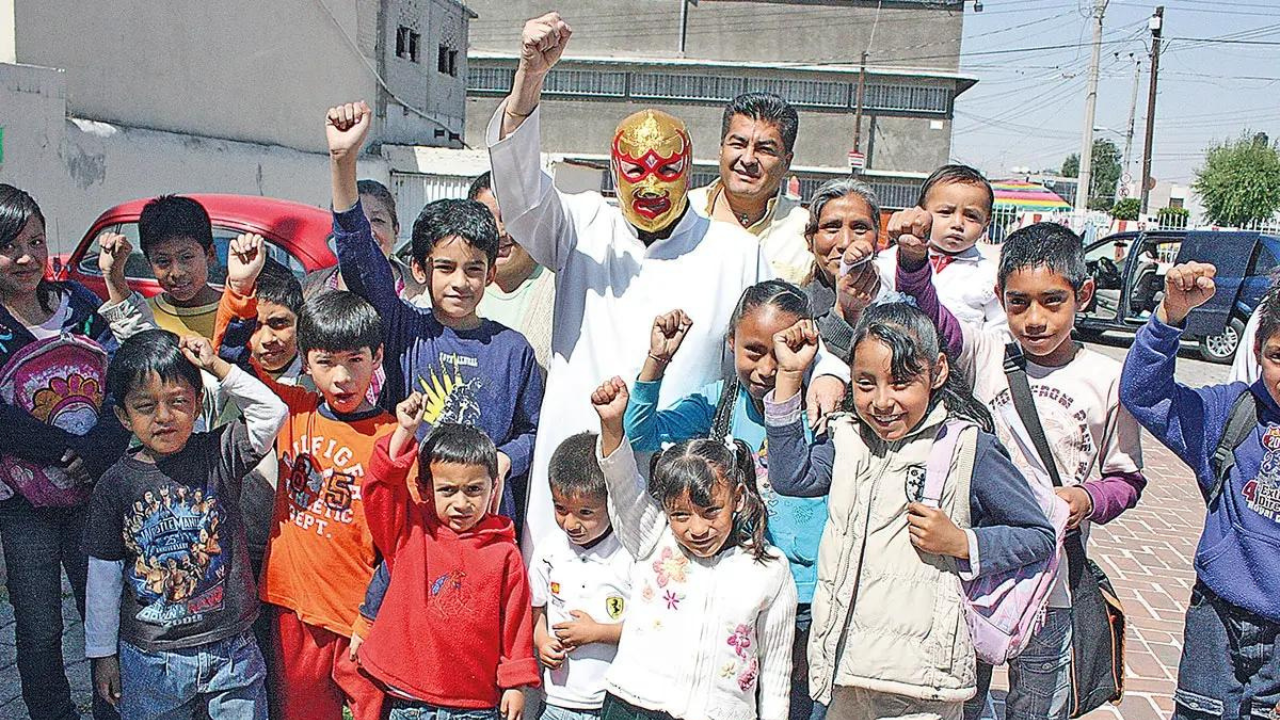
A priest by day, a wrestler by night: Meet the Mexican hero who raised money for an orphanage by fighting in wrestling rings

The orphanage that became his life’s mission

Fray Tormenta has said in interviews that helping children was the real purpose of his wrestling career. Reports vary on the exact numbers, but many accounts state that he helped support and educate hundreds of children over several decades.The shelters associated with their work became homes for children facing abandonment, domestic violence, addiction in families, and extreme poverty. Some former residents later described him as a strict but deeply committed father figure.The money earned through wrestling helped provide food, clothing, school tuition, books, medical treatment, housing, and expansion of orphanage facilities. Wrestling was never just entertainment for him. Each match became a way to keep the shelter running and ensure the children’s safety and access to education.Even when years of wrestling began to cause injuries, he reportedly continued to compete because the orphanage still needed financial support.

Importance of wrestling masks

In Mexican Lucha Libre, masks hold immense cultural meaning. They often represent identity, mystery and honor. Wrestlers traditionally fiercely guard their masked identities, and losing the mask in a particular match can be considered extremely humiliating.Fray Tormenta’s red and yellow mask eventually became iconic in Mexican pop culture. Beyond symbolism, it also served a practical purpose by initially helping to separate his religious life from his wrestling career.As his fame grew, the mask became a symbol of sacrifice and resilience rather than simply secrecy.Today, replicas of his mask are sold in wrestling markets and tourist areas throughout Mexico.

‘How real it was’nacho libre‘Connection?

The unusual story of Fray Tormenta eventually attracted global media attention and inspired documentaries, books, and comic adaptations. His life also helped inspire the 2006 comedy film Nacho Libre Jack Black.Most of the details in the film were fictional for humor and entertainment, but the central idea of ​​a Catholic priest secretly becoming a wrestler to support the children came directly from Fray Tormenta’s real-life experiences.Unlike the exaggerated comedy version, the real story was based on decades of commitment to poverty, social work and helping underprivileged children.

Becoming a folk hero beyond wrestling

Although Fray Tormenta eventually retired from active competition, he remains a respected figure in both wrestling and charitable circles. His life story stood out because it crossed boundaries that are rarely seen together: religion, sports, violence, social work and entertainment.In Mexico, where Lucha Libre wrestlers often become larger-than-life cultural icons, Fray Tormenta occupied a unique position. He was not performing just for fame or titles. They struggled as wrestling became a financial lifeline for the children who depended on them.Over time, the masked priest became a greater figure than just a wrestler. He became a symbol of how desperation, compassion, and a determination to protect others can sometimes lead to unconventional paths.
Source link

‘An ideal relationship’: Book claims French President Emmanuel Macron exchanged private messages with Iranian actress Golshifteh Farahani. world News

'An ideal relationship': Book claims French President Emmanuel Macron exchanged private messages with Iranian actress Golshifteh Farahani

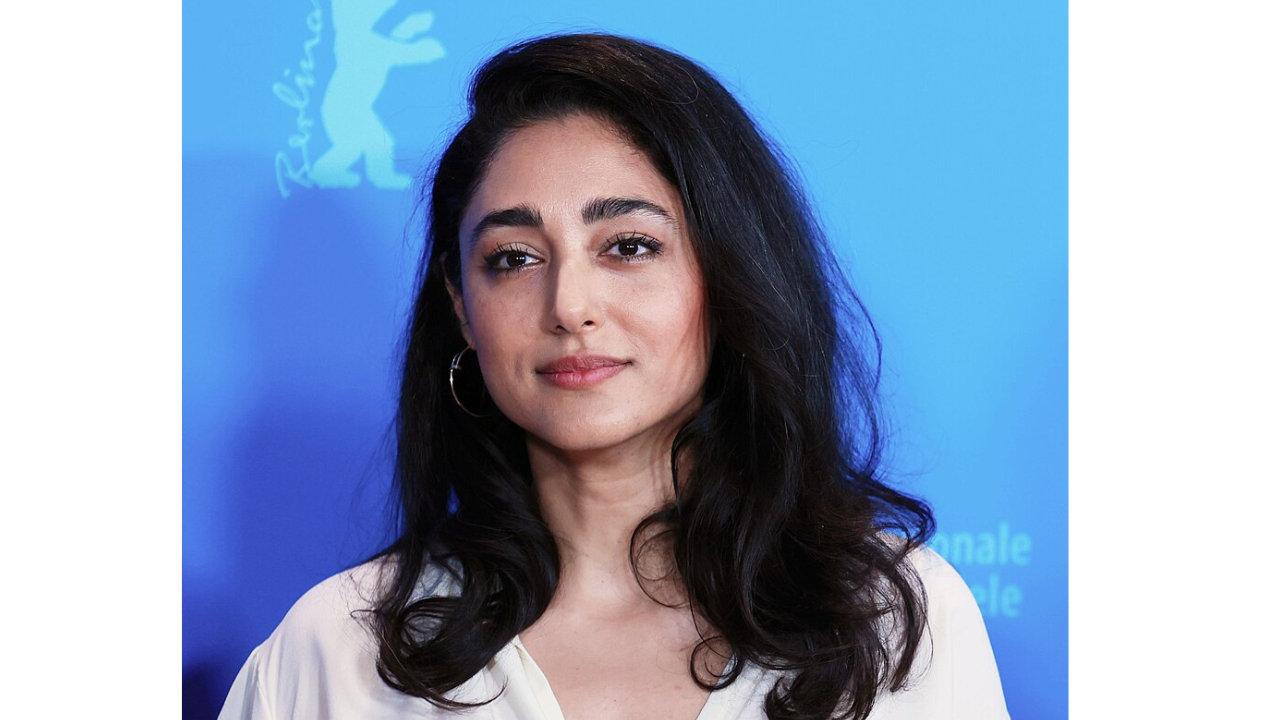
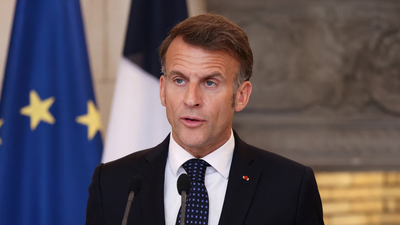
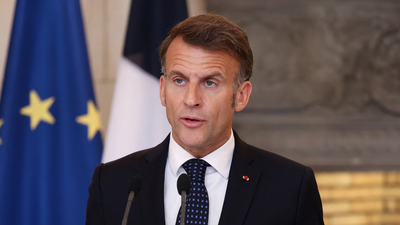
A recently published French political book has sparked controversy after claiming the French President Emmanuel Macron Exchanged private messages with Iranian-French actress Golshifteh Farahani As part of what the author describes as a “platonic relationship”. The allegations appear in Un couple (près) parfait (“An Almost Perfect Couple”), written by journalist Florian Tardif, and have attracted international attention because the book also links the alleged exchange to a 2025 viral incident involving Macron and the first lady. brigitte macron Boarding a plane in Vietnam. However, no independently verified evidence supporting claims of a romantic or inappropriate relationship has been publicly released.

claims made in the book

These allegations have been made by Florian Tardif, political correspondent of the French magazine Paris Match. In his book, Tardif claims that Macron had personal exchanges with Farahani for months, and describes the relationship as emotional but “spiritual”.According to excerpts cited by French and British media, the author has accused Brigitte Macron of discovering messages sent by the president to the actress, which reportedly said, “I find you very beautiful”. Tardif has publicly defended the book, saying that the material was based on conversations with sources close to the presidential couple.However, screenshots of the alleged messages, official documents or independently verified evidence have not been publicly released.

Iranian actress Golshifteh Farahani

Iranian actress Golshifteh Farahani.

How was the Vietnam plane crash linked?

The book attracted widespread attention as it attempts to explain a viral incident involving the French President and First Lady during an official visit to Vietnam in May 2025.Footage filmed as the presidential plane arrived in Hanoi showed Brigitte Macron suddenly pushing or hitting Macron as he stood near the plane’s door. The video quickly spread online and sparked widespread speculation on social media.At the time, Macron dismissed the incident as playful behavior between a married couple and described online reactions as exaggerated. French authorities later confirmed that the footage was authentic, after initial attempts by some commentators to question the video.Tardif’s book claims the argument was linked to Brigitte Macron’s alleged viewing of messages involving Farahani during the flight. According to the author, tensions had risen between the couple before they exited the plane.

Strong denial from Macron’s allies

People close to Brigitte Macron have completely rejected the allegations mentioned in the book. French media reports, quoting members of the first lady’s entourage, said the claims were “categorically denied”.Sources close to Brigitte Macron reportedly refuted the idea that she regularly checked her husband’s phone and rejected suggestions that Farahani had any role in the strain on the presidential couple’s relationship.No official statement from the Elysee Palace has confirmed the book’s claims.

Golshifteh Farahani’s response

Farahani has previously dismissed rumors of an affair with Macron. The actress, who left Iran years ago and later settled in France, has spoken out about online gossip about her public life in previous interviews and dismissed speculation about any romantic relationship with the French president.Farahani, known internationally for films such as Extraction, Patterson and Pirates of the Caribbean: Dead Men Tell No Tales, has long attracted significant media attention due to both his acting career and his outspoken criticism of the Iranian government.The controversy is largely based on claims made in Tardif’s book and unnamed sources cited by the author. Neither the leaked messages nor certified documents supporting the allegations have been made public. The story remains a subject of political-media speculation rather than an established factual scandal.

Source link

The ancient city of Troy took more than 4,000 years to rebuild itself World News

The ancient city of Troy was rebuilt on its own over 4,000 years
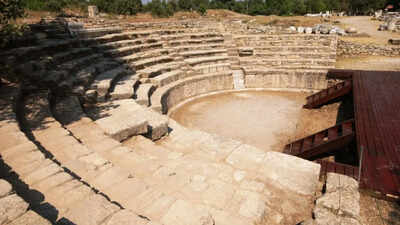
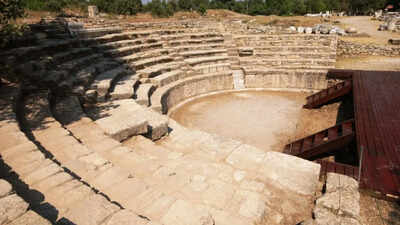
PC: UNESCO World Heritage

The landscape surrounding Troy does not immediately suggest a single ancient city preserved in isolation. The ground rises gradually at Hisarlik, a mound whose size is reduced by nature due to repeated human occupation. The stone walls are completely visible next to broken foundations of different eras. In some parts of the Earth there are traces of different settlements for centuries. What remains there today is the result of constant reconstruction over a long stretch of history rather than the remains of a civilization frozen in time.The archaeological site represents over 4,000 years of occupation. The mound preserves evidence of several major settlement phases superimposed on each other, creating an unusually dense historical record in northwestern Turkiye near the Dardanelles.

How ancient city of troy became a layered archaeological site

Troy expanded through accumulation. The earlier settlements did not disappear completely when later communities arrived. Structures collapsed, walls were buried, fires left debris in their wake, and new buildings slowly rose above the remains. Over the generations, the ground level rose on its own, turning the settlement into a layered mound.According to the report of UNESCO World HeritageThe site contains “several layers of settlements”, each reflecting a different historical phase. Earlier structures became buried beneath later constructions as alterations were made to houses, walls and public spaces over time. Some layers reveal fortified sections with defensive walls, while others preserve traces of domestic life and changing urban layouts. The impact left by the site is uneven. One section may belong to a Bronze Age settlement while nearby remains indicate a much later period. Time is stuck in one scenario only.

The strategic location that kept the ancient city of Troy alive

Troy’s location explains part of its longevity. The settlement was close to routes connecting the Aegean with inland areas and the waterways around the Dardanelles. Traffic through this region had commercial and military importance for centuries.According to UNESCO reports, the site occupied a location with “control of the Dardanelles”, which helps explain why settlement there continued across different civilizations and historical periods. Even after decline or destruction, the geography remained useful enough for subsequent populations to return. From archaeological point of view continuity is visible. Rather than an isolated historical moment, Troy developed through cycles of reconstruction based on changing societies and regional influence.

The ancient city of Troy highlights changing civilizations over the centuries

Public attention often focuses on the connection between Troy and the ancient epic tradition, especially the stories associated with Homer. Yet the archaeological significance of the site extends far beyond literary interpretation.As noted, Troy has “considerable scientific importance” due to the long cultural sequence preserved within the mound. These remains provide evidence of changing settlement patterns, architectural styles and forms of urban organization over thousands of years. Some layers suggest a period of prosperity and expansion. Others indicate reconstruction after destruction. Infections do not always clear up or go away easily. That complexity is part of what makes the site unique.

The ancient walls of Troy reveal the city rebuilt from generation to generation

The ruins visible at Troy represent only part of the history of the settlement. Much of its significance lies below the surface, where successive occupations were deposited over time. Each generation slightly altered the site, leaving fragments that were later buried under new construction.According to the UNESCO report, the remains of Troy document “continuous habitation” over several periods. Walls from different centuries now stand close to each other because later settlements reused them and built on top of earlier foundations rather than completely clearing them. Today the site reflects that long continuity. Walls from different centuries stand close to each other, sometimes overlapping, sometimes separated only by thin layers of earth. The result is less like a ruined city and more like a stacked history of human habitation slowly built into the landscape.

Source link

Harsh Kumar Patel seeks quashing of conviction in case related to freezing death of Indian family at US-Canada border

हर्षकुमार पटेल ने अमेरिका-कनाडा सीमा पर भारतीय परिवार की ठंड से हुई मौत से जुड़े मामले में दोषसिद्धि को रद्द करने की मांग की है

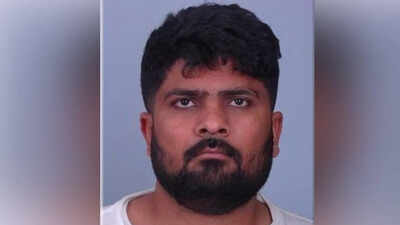
Harshkumar Patel has asked the US court to quash his conviction

A US court has been asked to overturn the conviction and sentence of Harsh Kumar Patel, the man found guilty in a human trafficking case related to the freezing death of an Indian family of four near the Manitoba-Minnesota border in 2022.Patel was convicted in 2024 and sentenced to more than 10 years in prison. He has filed an appeal, arguing that legal errors affected his trial. He is now representing himself after raising concerns about his attorney last year, according to court documents submitted to the U.S. Court of Appeals.The filing claims there were problems with how the jury was instructed and how the sentence was imposed. Patel has asked the court to vacate his conviction in all cases or overturn selected charges and send the case back for retrial.Patel and his co-defendant, Steve Shand, were convicted by a federal jury in Fergus Falls, Minnesota in November 2024. It took jurors less than 90 minutes to convict both men on multiple charges related to bringing immigrants into the US illegally, transporting them and profiting from the operation.The case stems from a tragic incident in January 2022, when a family from Gujarat froze to death while attempting to trek from Manitoba to Minnesota during a severe blizzard. The victims included 39-year-old Jagdish Patel, his 37-year-old wife Vaishali, their 11-year-old daughter Vihangi and their three-year-old son Dharmik. Their bodies were later found in a snow-covered field about 12 meters from the US border.The temperature dropped to -23 C that night, while wind chill made conditions feel closer to -35 to -38 C. The family had walked for hours in deep snow wearing little clothing before slowly dying from the cold.Patel was identified as the organizer of the smuggling network that hired Shand, a Florida resident, to transport the migrants after they entered the US. Shand was arrested the same night after being found in a snow-trapped van with other Indian nationals near the Minnesota border. He was later sentenced to six and a half years in prison, followed by supervised release.Separately, Shand last month turned to an appeals court seeking to overturn his conviction and sentence. His filing argues that the traffic stop that led to his arrest was unlawful and challenges the sentencing decision, specifically the finding that he was responsible for the deaths of an Indian family who died while crossing the ice.It also said that Shand “was ignorant of it and powerless to control it.” [human smuggling operation] The leader’s decision to stay in a family with young children in unsuitable weather conditions.A judge had earlier rejected a request to order an acquittal or a retrial in April 2025, finding that the evidence against both men was sufficient.

Source link

Top 10 countries with most gold in 2026: USA on top, China and India on top in global ranking | world News

Top 10 countries with most gold in 2026: USA on top, China and India on top in global ranking

Gold is one of the safest forms of investment in the world as it acts as an insurance instrument against inflation, foreign exchange risk and political instability. It is very normal for a country to have some amount of gold in its foreign exchange reserves. Gold remains an extremely important component of a country’s financial strategy, and many countries do not have substantial gold reserves, according to data available in the first quarter of 2026. In terms of gold reserves, the United States tops the list, followed by Italy, China, India and Japan, which fall in the category of Europe and Asia. Countries like Poland, Türkiye, Kazakhstan and Uzbekistan are among the developing countries that continue to invest in gold as part of their diversification efforts.According to World Atlas and World Gold Council, it reflects not only strength in terms of economics but also effective management and strategic use of finance. The list below mentions the top 10 countries with gold on May 5, 2026.

list of countries with the most gold reserve 2026

Post
Country
Gold Reserves (Tons)
1 United States of America 8,133.46
2 Italy 2,451.84
3 China 2,313.46
4 India 880.52
5 Japan 845.97
6 poland 581.64
7 turkey 534.85
8 Uzbekistan 415.54
9 kazakhstan 353.59
10 united kingdom 310.29

World’s largest gold reserves by country

United States – 8,133.46 tonnes

The United States holds the largest reserves of gold in the world, enjoying a dominant presence in worldwide monetary supremacy. It has reserves of more than 8,000 tonnes of gold. This huge amount of gold is kept in secure safes like Fort Knox, New York Federal Reserve Bank and the like. Gold serves as a fundamental underpinning of the United States economy.

Italy – 2,451.84 tonnes

Italy is at second place in the list, which has gold reserves of more than 2,400 tonnes. Italy’s ranking is attributed to its history of accumulating gold rather than purchasing it. Italy makes very strategic use of its gold reserves to maintain its financial integrity in Europe. It serves as a protection for Italy despite any economic turmoil and the country’s high national debt.

China – 2,313.46 tonnes

China is committed to continuously increasing its gold reserves and by the first quarter of 2026 it had accumulated more than 2,300 tonnes of gold. One of the most active central banks in increasing its gold reserves in recent years has been the People’s Bank of China. The move is part of a broader effort to reduce dependence on the dominance of the US dollar and increase financial autonomy.

India – 880.52 tonnes

India ranks very high in the list of developing countries when it comes to gold reserve balance. In the year 2026, India had more than 880 tonnes of gold in its reserves. The Reserve Bank of India in its efforts to diversify its foreign exchange reserve balance has been continuously adding more and more gold to its gold reserve balance. Gold holds great importance in Indian culture and economics; Therefore, it is considered an asset in every sense. The growing Indian economy and high demand for gold imports into the country have made it increasingly important in terms of the precious metal.

Japan – 845.97 tonnes

Japan has huge reserves of gold, about 846 tons, even though Japan has one of the most sophisticated financial systems in the world. Gold reserves in Japan are mostly held for the purpose of instilling confidence in the system as the Japanese economy relies heavily on exports, meaning the country has huge foreign exchange reserves primarily denominated in foreign currencies, especially US dollars.

Poland – 581.64 tonnes

Poland can now be considered among the top countries that have rapidly increased their gold reserves in Europe. The country now claims more than 580 tonnes after increasing its gold reserve levels over the past few years. This is a result of the country’s effort to achieve some degree of self-reliance and ensure their financial stability. The National Bank of Poland is acquiring gold in an effort to reduce its dependence on foreign currency.

Turkey – 534.85 tons

Gold reserves in Türkiye exceed 534 tons, which shows that Türkiye takes a very flexible approach when managing reserves. Gold reserves in Türkiye have seen both increases and changes due to economic conditions and currency fluctuations. Gold is used by the Central Bank of the Republic of Türkiye as a stablecoin during inflation and foreign exchange challenges. What makes Türkiye’s gold policy extraordinary is that some of its gold is managed through commercial banking.

Uzbekistan – 415.54 tonnes

Uzbekistan can be considered one of the best examples of countries possessing gold in relation to its economic strength. With over 415 tonnes of gold in its reserves, strong domestic production helps Uzbekistan hold significant amounts of gold in its central banks. Gold has played an important role for Uzbekistan in maintaining financial stability and earning money through exports. Using gold as a means of increasing economic sovereignty and stabilizing its currency has been a smart move by the government.

Kazakhstan – 353.59 tonnes

Kazakhstan has gold reserves of over 353 tonnes, supported by its significant mining sector. The National Bank of Kazakhstan has historically followed a policy of hoarding domestically produced gold. This strategy helps the country maintain strong financial resilience while taking advantage of its natural resource base. Gold also plays an important role in protecting the economy from fluctuations in global commodity prices and external financial shocks. Kazakhstan’s position as a major gold producer ensures a stable supply that supports its long-term reserve strategy.

United Kingdom – 310.29 tonnes

The United Kingdom has gold reserves of about 310 tonnes, which is actually low considering its maximum quantity at any time in history. A large portion of the United Kingdom’s gold reserves are held in the vaults of the Bank of England, and these vaults also serve as a hub for gold trading globally. The United Kingdom reduced its gold reserves significantly during the early 2000s, but has kept them stable since then. London is still an important city when it comes to the international gold trade.

Source link

Quote of the Day by David Lloyd George: “Don’t be afraid to take a big step if a signal is given. You can’t cross the ditch in two small jumps.” | world News

Quote of the Day by David Lloyd George:
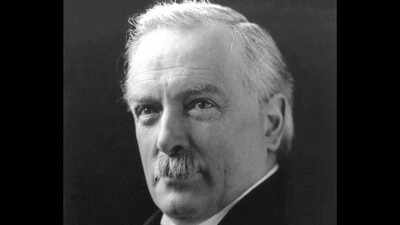
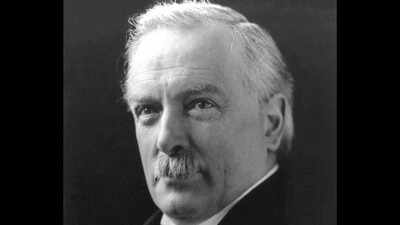
David Lloyd George (Image: Wikipedia)

Almost everyone has had a moment when they realized that a small change was no longer enough.A person keeps talking about quitting a bad job but never actually resigns. Someone spends years saying they want to move abroad, start a business, lose weight, write a book, or end a relationship that clearly stopped working long ago. Plans live on in conversations, notes apps, and late-night thoughts. The real action never quite arrives.Perhaps that’s why this old quote by David Lloyd George is still circulating on the Internet more than a century later.It doesn’t feel soft or comfortable. There is no complex philosophy hidden in it. The line works because the image immediately seems real. A vast gap cannot be crossed halfway. Small jumps may seem safe, but they still leave the person stuck in place.And honestly, modern life seems to be full of people standing on the edge of these kinds of “trenches.”

Quote of the Day by David Lloyd George

“Don’t be afraid to take a big step if given a signal. You can’t cross a chasm in two small jumps.”

Who was David Lloyd George?

David Lloyd George was one of Britain’s most famous political leaders and served as Prime Minister during the First World War. Born in 1863, he was known for his fiery speeches, quick wit and willingness to take political risks that many others avoided.He was brought up in Wales and came from a fairly modest background compared to many politicians of his era. This probably later shaped some of his political views. Lloyd George pioneered welfare reforms, pensions and labor protections at a time when Britain was rapidly changing due to industrialization and social unrest.Historians still debate parts of his legacy. Some people considered him talented and fearless. Others felt he was too unpredictable or overly ambitious. Anyhow, he has rarely been described as vigilant.That personality is very clearly visible in this quote.

What does David Lloyd George’s quote mean?

This quote is really about those moments where hesitation stops helping.Lloyd George compares difficult decisions to standing in front of a vast abyss. If the difference is small, small steps taken carefully may work. There is a big difference. After all, one has to fully commit and take the leap.This idea applies to more situations than just politics.A person may spend years trying to “slowly” leave a career they hate and become more exhausted each year. Another person may know that their business is failing, but keeps making small adjustments rather than facing reality head-on. People do this emotionally too. Difficult conversations are delayed. Big elections get postponed. Life remains stuck in limbo.The strange thing is that small leaps often seem useful at first. They create a sense of movement without requiring actual exposure.But sometimes nothing really changes.It seems that behind Lloyd George’s words lies an uncomfortable truth.

Why does the quote sound oddly modern?

The quote is old, but it feels like it was written for the Internet age.Today people live in constant uncertainty. Careers change rapidly. Entire industries appear and disappear within a decade. A person may spend years studying for a profession, only to realize that the market has completely changed.Social media perhaps adds another layer to this. Every day, people watch others announce major life decisions online. One person travels countries. Another left a corporate job to start a café. Someone launches a YouTube channel after years of hesitation. Have unlimited visibility of other people taking risks.This creates a strange mixture of inspiration and anxiety.Experts who study workplace trends often report that younger generations now change careers far more frequently than previous generations. The idea of ​​staying in a predictable role for forty years no longer seems realistic for many people.In that kind of world, the Lloyd George quote suddenly sounds very fresh again.

Why do people postpone big decisions for so long?

Fear clearly plays a role.Yet, it is not always the fear of failure. Sometimes people are more afraid of embarrassment than failure. It’s one thing to fail personally. It feels very bad to fail publicly in front of friends, relatives or social media followers.Maybe this explains why so many people stay stuck in situations they already know aren’t working.A familiar problem may feel safer than an uncertain future.Psychologists have talked for years about how humans naturally prefer predictability, even when the predictable situation is making them unhappy. The brain likes routine because routine feels controllable. Big decisions completely shatter that sense of control.And big changes in life rarely come cleanly or organically.People leaving a job usually already feel intimidated. Entrepreneurs often admit that they didn’t know whether things would be successful or not. Even successful people, later describing their “big leap” moments, often admit that they were internally nervous at the time.Confidence usually comes later. That part gets edited out with motivational stories.

How to apply this quote in daily life

The quote does not mean that people should make rash decisions overnight. Lloyd George was not saying that every dramatic leap automatically leads to some good place.The important phrase is “if any indication is given.”In other words, when the situation is already clear.A student preparing for competitive exams may eventually realize that consistent effort is no longer enough. Someone trying to improve their health may understand that temporary motivation won’t solve long-term habits. A person stuck in an unhappy environment may recognize that the endless waiting is silently making things worse.Quotes become useful in such moments.This begs a difficult question: Are small adjustments really helping, or are they simply delaying needed action?Maybe that’s why people keep sharing the line online. Most readers can immediately connect it to something personal in their lives.

The Internet Loves This Quote for a Reason

Some quotes disappear after a few years because they seem outdated or overly dramatic. It survived because the metaphor is so simple that almost anyone can understand it immediately.A huge difference. Two small jumps.Failure becomes apparent even before the punishment is over.Social media also rewards quotes that feel empowering. Lloyd George’s line almost creates a scene from a movie in the reader’s mind. A man standing on the edge of something huge, knowing that hesitation will not solve the problem.That image sticks.There is another reason why this quote continues to circulate. Modern culture constantly encourages people to dream big while also making them afraid of making mistakes. That contradiction creates paralysis. People want change, but they also want guarantees before taking action.Life rarely gives such guarantees.

Why will this quote probably never disappear?

Some proverbs survive because they describe enduring parts of human behavior.Fear of uncertainty is one of them.Every generation faces moments where the safe option gradually stops working. Details change over time. One era is related to industrial change, the other to artificial intelligence, social media pressure or unstable job markets. The emotional experience underneath remains surprisingly similar.People still hesitate before taking big decisions. They still wait for the right time. They’re still hopeful that small adjustments will resolve situations that perhaps require something bigger.This is what makes Lloyd George’s quote feel timeless. It doesn’t promise success or pretend that bravery is easy. It simply points out what most people already know deep down.Some gaps in life cannot be crossed halfway.

Source link

Foreign trafficking and child sexual abuse materials: Iranian citizen pleads guilty in New York court to two serious federal crimes

विदेशी तस्करी और बाल यौन शोषण सामग्री: ईरानी नागरिक ने न्यूयॉर्क की अदालत में दो गंभीर संघीय अपराधों के लिए दोषी ठहरायाThe defendant was identified as Sharon Gohari. He is a naturalized American citizen who lived between Iran and Nassau County, New York.Authorities said Gohari operated a long-running scheme from at least December 2020 to May 2025, in which he received payments from Iranian citizens and others seeking to enter the U.S. illegally. He arranged and facilitated their travel, including assisting with visa applications through the Mexican Embassy in Iran and organizing travel into the US through Mexico and other transit countries.Gohari worked with associates in Iran and elsewhere and charged thousands of dollars per client. At least one person he assisted was accused of having ties to Iran’s Islamic Revolutionary Guard Corps (IRGC), which the US State Department designates as a foreign terrorist organization. The man was later detained by US border officials.During the investigation, federal agents also found child sexual abuse material on Gohary’s phone, including several videos depicting the rape of children. Some of the material included children as young as five years of age.Investigators found hundreds of images and videos on his devices, showing women in public places, including trains and cafes in New York City, which were recorded without his knowledge. Some photographs were taken at very close range or were taken in such a way that the victims were being stalked. Gohari shared some of this content with foreign accounts, including those based in Iran.In communications following receipt of the child sexual abuse material, Gohari expressed his intention to find a sexual partner in a high school.This case involved both immigration-related crimes and child exploitation crimes. The alien trafficking charge carries a mandatory minimum sentence of three years in prison and a maximum of 10 years, while the child sexual exploitation material charge carries a mandatory minimum sentence of five years and a maximum of 20 years. A verdict on sentencing will be announced at a later date.


Source link

Immigration lawyer defends H1-B visas, says India’s ‘strong’ education system gives workers edge over Americans

आव्रजन वकील ने एच1-बी वीजा का बचाव करते हुए कहा कि भारत की 'मजबूत' शिक्षा प्रणाली श्रमिकों को अमेरिकियों पर बढ़त देती है

Immigration lawyer Deepika Singh says Indians have educational edge over Americans

A Silicon Valley immigration lawyer has argued that Indian professionals on H-1B visas have an edge over some US workers because of India’s “strong” education system. This argument is a long-standing one in the debate over foreign workers in the US tech industry.Bay Area immigrant advocate speaking about the role of Indian immigrants in the US economy Deepika Singh He said the Indian community has played a major role in the development of the country through education, hard work and leadership in business.In an interview with GB News and US correspondent Steven Edginton, Deepika said: “I think, the Indian community has really helped the development of America, just because we come with a lot of academics, right? All Indians are highly educated, and I think we have always made a huge contribution to the American economy. If you look at many of our big companies, a lot of the CEOs are Indian.The discussion focused on the long-running dispute over H-1B visas, which allow US companies to hire skilled foreign workers, particularly in the technology sector. Most of the applicants for these visas are Indians or Chinese. MAGA supporters claim that such visas reduce opportunities for American workers.Asked by Singh whether Indian workers on H-1B visas are doing jobs that Americans cannot do, he said some foreign workers actually have advantages related to India’s educational culture.Deepika said, “Some of them, yes. The education system in India is very strong. About me too, the focus has always been on academics, right? For us, when we were in school, our parents would say, ‘Hey, everything else can be taken care of, but just focus on your studies, right? So I think Indians are born like that. We adapt ourselves to quick learning, we can learn things easily.’She said: “I think the salary levels and all that… I would say we have a stronger education when it comes to learning, right? I think yes, Indians have an edge over some other applicants when it comes to filing for H-1B.”Singh rejected the notion that immigrants are displacing American workers. He said outsourcing and overseas appointments are only business decisions.She said: “There is a business justification for outsourcing jobs to India or sending work back to India, right? You should need it. I’m an American, I come to work on a daily basis, I do my job. I don’t feel like I’ve replaced an American worker here. I’ve come here, I’ve worked, I’ve gone through the whole system, and I’ve adapted to the environment, and I’m still working.”In September 2025, US President Donald Trump introduced a major policy change, imposing a fee of $100,000 on new H-1B visa petitions filed for workers outside the US. This was a huge jump from the earlier cost of a few thousand dollars.

Source link

Don Tzu vs. ‘Philosopher King’ Xi: Decoding the worldviews of Donald Trump and Xi Jinping world News

Don Tzu vs. 'Philosopher King' Xi: Decoding the worldviews of Donald Trump and Xi Jinping
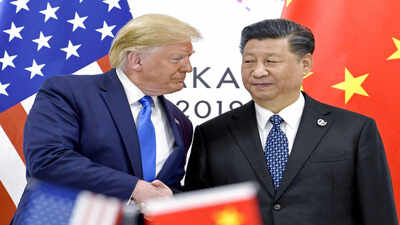
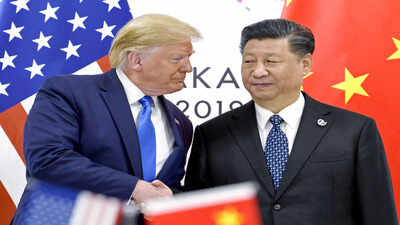
FILE – President Donald Trump, left, shakes hands with China’s President Xi Jinping during a meeting on the sidelines of the G-20 summit in Osaka, Japan, on June 29, 2019. (AP Photo/Susan Walsh, File)

In April, a particular meme took over the Chinese Internet: Don Tzu. an illustration of donald trump And Sun Tzu, it imagined the 47th President of the United States as a strategic sage whose wisdom somehow escaped both grammar and causality. The meme was filled with Trumpian aphorisms on “winning”, including gems like “Break the enemy’s blockade by blocking the enemy’s blockade”, “If you don’t know what you’re doing, neither does your enemy”, and “You can’t lose if you don’t have a goal.” Sun Tzu wrote The Art of War. Don Tzu appears to have written The Art of What Is Happening?The meme worked because it revealed something real about how Trump uses power. He does not practice strategy in the old sense with principles, discipline, patience and a clearly defined end position. If one is generous, his genius lies in turning confusion into leverage. He makes so much noise that everyone else has to explain it. He declares victory before the war, during the war, after the war and sometimes instead of the war. In the Trumpian universe, the declaration is not a description of reality. There is an effort to change this.Which brings us to the man standing across the table. If Trump is Don Tzu, Xi Jinping The philosopher is the king. A recent New York Times report on Xi behind closed doors described a ruler who has no close domestic rivals, who is willing to preach to weaker leaders, and who models himself on ancient Chinese rulers who combined political authority with civilizational learning. Don Tzu is funny because he turns strategy into nonsense. Xi is annoying because he turns other people’s nonsense into proof of his own seriousness. Trump moves into politics like a man convinced the room exists because he has entered it. Xi approaches politics like a man who is convinced that this room has existed for 5,000 years and is patiently waiting for everyone else to figure out the correct form of address.

art of winning without any consistency

Trump’s philosophy is often mistaken for the absence of philosophy, but if practiced with enough confidence the absence can become a system. Every problem becomes a deal, every deal becomes a performance, every performance needs a winner, and the winner, ideally before even checking the paperwork, is Donald Trump.

trump vs xi

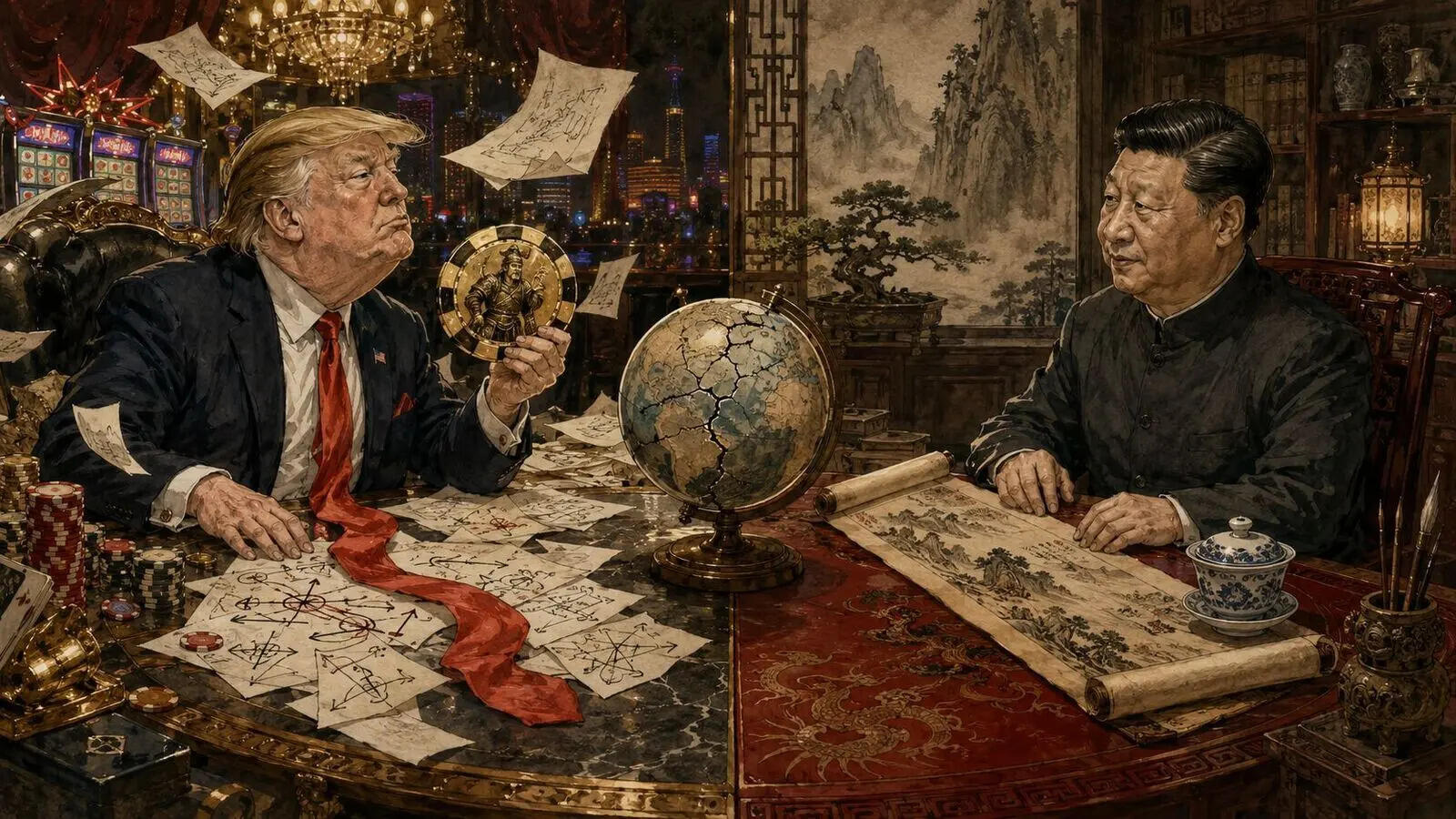
That’s why Trump’s foreign policy has always had the air of a casino floor where there’s also a house, a bouncer, and a guy selling souvenir steaks near the exit. Alliances are unpaid invoices. Trade deficit is an insult. Summits are televised manhood competitions in which someone has to come forward afterward and tell the camera that the conversation was historic, beautiful, and very strong. Form is more important than substance because form is substance.Trump’s inconsistency has political utility because it defies explanation. Allies, enemies, markets, bureaucrats, generals and journalists spend enormous energy trying to figure out whether his latest statement is policy, provocation, bargaining chip, grievance, brain freeze or some previously unseen fifth state of the matter. If you don’t know what you’re doing, your enemy doesn’t know either. If there is no stated objective, there can be no failure. If reality contradicts the statement, reality may be accused of liberal bias.

uses of she and order

Xi appears to have already understood Trump, though not with admiration. In details of Xi’s last meeting with Barack Obama in Lima in 2016, Trump had shocked the world by winning the US presidential election, and Xi was shocked that American voters could choose such an unconventional person. Obama tried to portray Trump’s rise as the result of American economic frustration, including anger over lost manufacturing jobs and intellectual property theft. Xi was reportedly angry. He put down his pen, folded his hands and uttered a line that sounded less like diplomatic analysis than a verdict carved on a palace wall: If an immature leader throws the world into chaos, the world will know who to blame.The moment is significant because it reflects Xi’s view of Trump, America and the consolidation of democracy. Trump was proof that the American system has lost the ability to filter seriousness, that democracy can turn outrage into leadership, that the liberal order has given rise to a man who treats institutions as props and norms as traps. For a leader who has spent years presenting China as stable, disciplined and historically consistent, Trump’s rise was a gift from the gods of comparative politics. Beijing did not need to make any arguments about Western disarray. America had exported the live stream.Xi’s political performance is built around the opposite proposition: chaos is Western, order is Chinese, and history has finally found its adult superintendent. The Chinese Communist Party claims legitimacy not just from revolution or economic development, but from its role as custodian of Chinese history. Xi has intensified that claim. He speaks as if China is not simply a modern nation-state, but a civilization that was temporarily out of whack for a few centuries and is now regaining its rightful place in the universe. During Obama’s 2014 visit to Beijing, aides were expected to discuss the South China Sea. Instead, Obama and Xi reportedly had a long conversation about whether an individualist society and a collectivist Confucian society could be compatible. That was politics conducted as a study of civilization.

How do they treat the middle powers?

The difference between Trump and Xi in their dealings with middle powers is highlighted with unusual clarity. Trump treats the middle powers like supporting actors in a drama of American grievances. Canada, Denmark, NATO allies and trading partners are often included not as diplomatic entities with their own constraints and dignity, but as extras in White House productions about American strength. The Greenland case is the clearest example of this. Trump’s recurring interest in acquiring or controlling the autonomous Danish territory turned an ally’s sovereign question into a dominance ritual, forcing the islanders and Denmark to explain that they were not distressed assets on a golf-course balance sheet. Trump’s approach is pressure attached to a microphone. He doesn’t just want concessions; He wants other countries to be forced to obey him.

chaos vs order

Xi’s style of behavior toward middle powers is distinct, though not necessarily soft in substance. He doesn’t need a carnival. He prefers controlled rooms, stern smiles and reprimands as protocol. exchange with 2022 justin trudeau remains the clearest example. Xi confronted the Canadian leader at the G20 in Indonesia after details of their previous conversation emerged in the media. Xi told Trudeau that this was not appropriate and not how the negotiations were conducted. Trudeau tried to explain that Canada believes in open dialogue and agree-to-disagree diplomacy. Xi cut him off, said he should first create conditions, shook his hand and left.That brief exchange contained the grammar of Xi’s power. He was not objecting to just a leak. He was objecting to the violation of hierarchy. Speak in the right room. Raise objections in the right tone. Do not embarrass the Sovereign in public. Mark Carney’s account of his meeting with Xi points in this direction. According to Carney, Xi spent the first part of their conversation explaining how he wanted the personal relationship to work. The message, as Carney explained, was simple: No surprises, be direct, raise the issues privately and don’t lecture me in public.So the difference is sharp. Trump humiliated the middle powers by publicly applying pressure; Xi disciplines protocols by sanctifying them. Trump uses them to demonstrate that America can still push. Xi uses these to demonstrate that China should not be talked about as if it were another country.

complaint and destiny

His criticisms of democracy are similarly revealing. Trump’s criticism is emotional. Democracy is legitimate when it loves it, questionable when it rejects it and sacred when it returns it to power. Xi’s criticism is historical. Joe Biden has reiterated Xi’s statement in which he said that democracy cannot survive in the 21st century because consensus is very difficult and autocratic rule can escalate rapidly. For Trump, democracy is a test of loyalty. For Xi, it is a museum exhibit: perhaps brilliant, certainly interesting, but too slow for the coming century.His foreign policies flow naturally from these dispositions. Trump wants deals. Xi wants architecture. Trump wants obvious concessions: purchases, tariff relief, the promise of factories, a handshake that can be sold to voters. Xi wants slow and deep changes: acceptance of China’s red lines, respect for its status, and recognition that Taiwan is not just a flashpoint but a sacred question of national integrity. Trump’s time horizon is the news cycle, market reaction, and rallying applause. Xi’s time horizon is the Party Congress, the five-year plan and the historical arc. Trump wants the trophy. Xi needs a map.

chaos of the new world

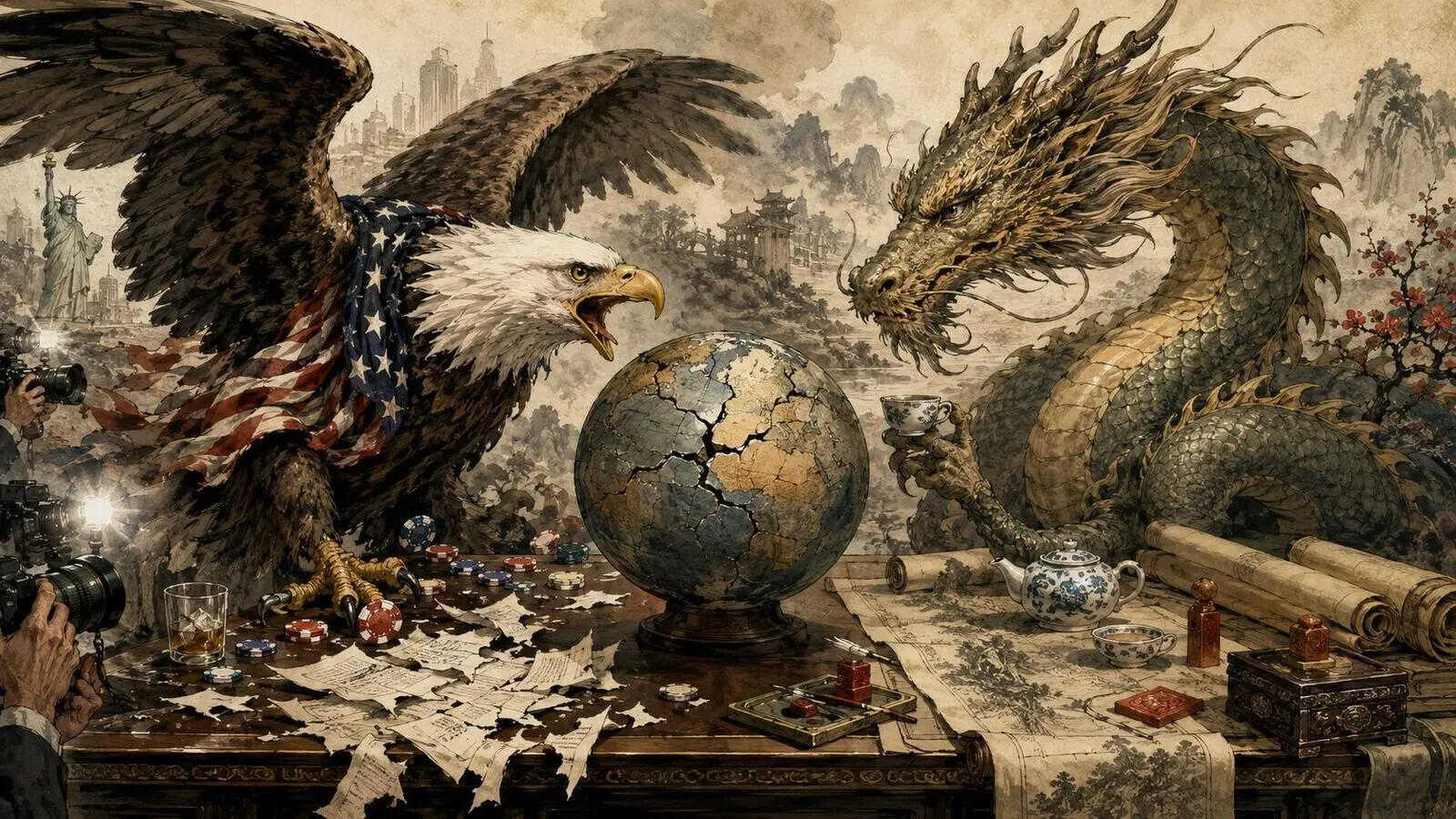
The easy read is that Trump and Xi are opposites: Trump is anarchy, Xi is order; Trump improvised, Xi planned; Trump shouted, Xi was lecturing; Trump is the casino, Xi is the court. It’s more disturbing to read in depth. They are rival answers to the same crisis. Both have emerged in an era when the old liberal order no longer commands automatic trust. Both speak on complaints. Both distrust barriers. Both privatize power. Both view rules as tools created by others for their own benefit.The difference is in the method. Trump wants every morning to start with his mood. Xi wants every century to start from China. Trump insisted on reality and twisted it. Xi twisted reality by historicizing it. Trump turns politics into a spectacle so attention becomes a privilege. Xi turned politics into destiny, so power became an inevitability.Don Tzu and the philosopher King Xi are what happens when the old world loses faith in its own rules. A man says there are no rules, only winning. Another says there are rules, but China wrote them before you were born. The rest of the world sits between them, waiting to know whether the future will be shaped by the man who treats geopolitics like a casino, or by the man who treats it like a dynasty with broadband.

Source link

The underground secret world of Mexico City: ancient temples, ritual skulls and a lost civilization that still lurks beneath modern streets. world News

The underground secret world of Mexico City: ancient temples, ritual skulls and a lost civilization still hidden beneath modern streets

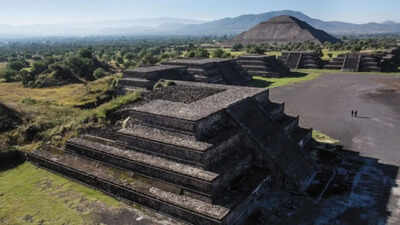
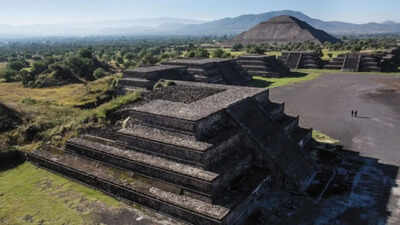
Beneath Mexico City’s modern skyline, something old still quietly exists. On the surface, it is a crowded capital full of traffic, offices and constant movement. But just a few meters below, another world appears to exist, one almost frozen in time. Ancient temples, burial courtyards, carved stones and ceremonial remains are hidden beneath layers of concrete and history. It is not visible in everyday life, yet keeps emerging in bits and pieces. Workers digging foundations often find unexpected traces of the past. Archaeologists say the city feels like a living archive, where every excavation can open a new chapter of an old civilization that never completely disappeared.

Tenochtitlan’s buried history under modern Mexico City development

The center of Mexico City is located directly above what was once the Mexica capital of Tenochtitlan. It was a powerful and highly organized city built on islands in a lake. Experts suggest that it was one of the most advanced urban settlements in the Americas before the Spanish conquest. After the arrival of the Spaniards, much of the old city was destroyed or buried under new construction. Churches, palaces, and roads were built directly on sacred Mexica sites. Over time, the original city became hidden under the growing colonial capital.According to the BBC report, even today traces of that ancient world continue to emerge. Archaeologists working near the historic center have discovered temple platforms, ritual objects, and the remains of ceremonial structures. These discoveries show that large parts of the ancient city are still untouched by modern buildings. It is a layered landscape where the past and the present lie virtually on the same ground.

The underground temple beneath the Metropolitan Cathedral of Mexico City

The most fascinating example of this hidden history is located beneath the Metropolitan Cathedral in Mexico City. Archaeologists have found remains associated with the Templo Mayor, the main religious center of the Mexica civilization. This temple was once in the center of Tenochtitlan and was dedicated to powerful gods. Today, parts of its base still exist underground, just beneath busy streets and religious buildings.Tourists can now take guided tours of these underground places. As they descend below ground level, the noise of the city subsides, replaced by stone walls and ancient foundations. Some people find this experience disturbing, while others find it extremely fascinating. Experts say these underground remains help reconstruct how the ancient city was once organized. They also show how deeply connected modern Mexico City is to its pre-Hispanic past.

Find skull racks, ball courts and rituals beneath Mexico City

Over the years, excavations have revealed surprising and sometimes shocking findings. Archaeologists have unearthed a large rack of skulls, which is believed to have been used for ritual performances. Hundreds of skulls were found arranged in structured patterns, suggesting that they were once part of a ceremonial forum. Nearby, the remains of a ball court were also discovered, where the ancient Mesoamerican ball game was played using heavy rubber balls and physical skill.Other discoveries include religious offerings placed near the temple stairs. These include animal bones, shells, coral and carefully arranged objects. Some discoveries reveal connections to important rulers of the Mexica civilization. Experts believe that further structures, including possible tombs, may still be hidden beneath the city. Each excavation appears to add another piece to a much larger puzzle that is still far from complete.

The sinking city reveals secrets beneath Mexico City

Mexico City’s geological foundation is difficult, making the process more challenging. Mexico City lies at the former bottom of a lake that is slowly sinking at different rates in different places. Buildings lean, roads crack, and underground utilities begin to stir. According to archaeologists, due to constant shaking of the foundation, some buried artefacts get exposed.Today, technological advancements are used to survey underground areas through radar and 3D scanners. Despite technological advances, digging is done manually because signals can be misinterpreted. Some artefacts from the colonial period can be considered old.

Everyday life on a buried civilization in Mexico City

What makes Mexico City unusual is how everyday life runs directly over this hidden history. People travel, shop and work without realizing that they are walking on one of the most important archaeological areas in the world. Subway stations sometimes display ancient symbols, and in some underground areas parts of pre-Hispanic structures are visible behind glass panels.Experts say this constant overlap between past and present gives the city a unique identity. It is not just a modern capital, but also a place built on centuries of layered civilization. The remains of Tenochtitlan are no different from those of today’s Mexico City. They are part of it, yet influencing its structure and story.Ultimately, Mexico City feels like a place where two timelines exist at once. One appears, one gets buried. And yet, much of that ancient world remains undiscovered, waiting quietly beneath the streets for the next accidental discovery.

Source link