


Operation Sindoor: From the first missile to the ceasefire call: How Operation Sindoor began, one attack at a time india news

“A short while ago, the Indian Armed Forces launched Operation Sindoorattack on terrorist infrastructure Pakistan and Pakistan-occupied Jammu and Kashmir,” the Defense Ministry said in a statement issued at 1.44 pm on May 7, 2025.“In total, nine (9) sites have been targeted,” the statement said, while clarifying that no Pakistani military installation was attacked and that the operation was “focused, measured and non-tense in nature.”Today marks one year of ‘Operation Sindoor’ in India and it is still seen as a defining moment in the country’s counter-terrorism doctrine, which was a rapid military response launched after the April 22 Pahalgam terrorist attack in which 26 people were killed. The operation, conducted in a quick span of 25 minutes between 1.05 am and 1.30 am on May 7, targeted terrorist infrastructure linked to Lashkar-e-Taiba, Jaish-e-Mohammed and Hizbul Mujahideen.April 22: Pahalgam attack shocked the countryThe series of incidents started on April 22, 2025 in Baisaran Valley of Pahalgam. What is usually known as a beautiful tourist meadow became the site of one of the deadliest terrorist attacks in Kashmir since Pulwama in 2019.Militants affiliated with The Resistance Front (TRF), an affiliate of Pakistan-based Lashkar-e-Taiba, entered a civilian area, reportedly separated victims on the basis of religion and killed 26 people, including a Nepalese national. The attack sparked outrage across India and was condemned by world leaders.23–24 April: India downgrades ties with PakistanExternal Affairs Minister S Jaishankar, Foreign Secretary Vikram Misri and External Affairs Ministry spokesperson Randhir Jaiswal briefed the media about New Delhi’s measures.India downgraded diplomatic ties with Pakistan, suspended the Indus Water Treaty, sealed the Attari-Wagah border, declared Pakistani diplomats persona non grata and suspended visas for Pakistani citizens. India also conducted naval missile tests and large-scale Indian Air Force exercises.A day later, during a rally in Madhubani, Bihar, Prime Minister Narendra Modi vowed action, saying, “India will identify, trace and punish every terrorist and their supporters.” Pakistan retaliated diplomatically by suspending visas for Indians, closing its airspace to Indian-operated aircraft, freezing trade and suspending the Simla Agreement.April 27–30: War clouds loomAddressing the nation during Mann Ki Baat on 27 April, Modi said, “Today as I speak to you in Mann Ki Baat, there is deep pain in my heart. The terrorist attack in Pahalgam on 22 April has pained every citizen of the country.” On April 30, Pakistan claimed that India was preparing military action. Pakistan’s Information Minister Ataullah Tarar said that Islamabad had “credible intelligence” that India intended to launch a military operation within 24–36 hours.
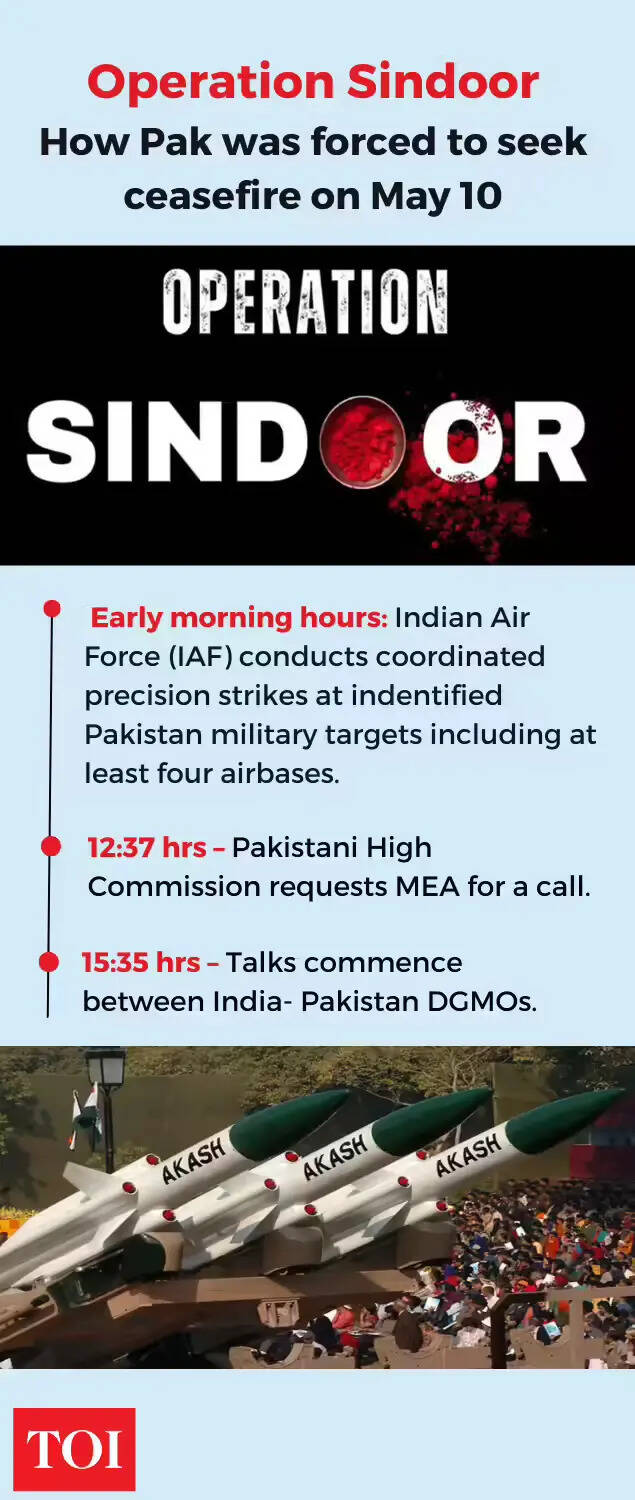
7 May: Operation Sindoor beginsIn the early hours of 7 May, India launched Operation Sindoor from Indian soil, targeting nine terrorist camps in Pakistan and Pakistan-occupied Kashmir. The tri-service operation conducted from Indian soil targeted nine terrorist camps linked to Lashkar-e-Taiba (LeT), Jaish-e-Mohammed (JeM) and Hizbul Mujahideen in Pakistan and Pakistan-occupied Kashmir (PoK).Foreign Secretary Vikram Misri, Wing Commander Vyomika Singh and Lieutenant Colonel Sophia Qureshi later briefed the media and reiterated that the strikes were “concentrated and non-tense”.Wing Commander Vyomika Singh said, “nine terrorist camps were targeted and destroyed” in direct retaliation to the Pahalgam attack. “The targets of Operation Vermillion were based on credible intelligence and locations were selected to avoid damage to civilian infrastructure and loss of civilian life,” he said.The operation was carried out in a quick period of 25 minutes between 1.05 am and 1.30 am.Lieutenant Colonel Sophia Qureshi later elaborated on the nine terror sites affected:
- Shawai Nala Camp, Muzaffarabad (PoK): A LeT training facility linked to the Sonamarg and Gulmarg attacks as well as the Pahalgam attack in 2024.
- Muridke, Pakistan: A key terror center where 26/11 attackers Ajmal Kasab and David Headley were trained.
- Sarjal Camp, Sialkot: A Lashkar-e-Taiba hideout located about 6 km inside Pakistan, linked to attacks on Jammu and Kashmir police personnel.
- Markaz Ahle Hadith, Barnala (PoK): A center for weapons, IEDs and jungle warfare training.
- Markaz Abbas, Kotli (PoK): Camp used for training suicide bombers.
- Mahmuna Joya Camp, Sialkot: A Hizbul Mujahideen control center linked to operations in the Kathua-Jammu belt and the Pathankot airbase attack.
- Markaz Subhan Allah, Bahawalpur: Headquarters of Jaish-e-Mohammed.
- Syedna Bilal Camp, Muzaffarabad: A Jaish weapons and explosives training facility.
- Maskar Raheel Shahid Gulpur Camp, Kotli: A LeT camp linked to the 2023 Poonch attack and 2024 pilgrimage bus attack.
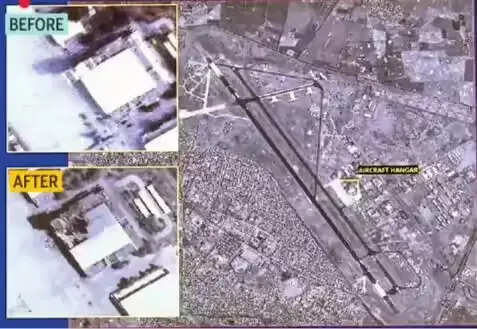
Mock drills were also conducted in several Indian cities including Delhi, Chandigarh and Varanasi to prepare citizens for any stress.In the days that followed, India intercepted Pakistani drones at 36 locations from Jammu and Kashmir to Gujarat. Prime Minister Narendra Modi later described the operation as the “new normal” and said India would continue to respond to terrorism “in the language they understand”.7-8 May: Pakistan’s drone attack and India’s responsePakistan responded with drone strikes and heavy shelling along the Line of Control (LoC), leading to a sharp rise in tensions between the two countries.On the night of 7 and 8 May, Pakistan attempted multiple airspace violations along India’s western border and launched about 300–400 drones at 36 locations, targeting military infrastructure. Indian forces intercepted and neutralized several drones using both kinetic and non-kinetic systems.Foreign Secretary Vikram Misri said India’s response had been “precise” and “non-tense”, emphasizing that only terrorist infrastructure was targeted. He also condemned Pakistan’s attacks which killed 16 civilians in Jammu and Kashmir.Lieutenant Colonel Sophia Qureshi explained the scale of the Pakistani attack during a media briefing. He said, “On the night of May 7 and 8, the Pakistani Army violated Indian airspace several times along the entire western border with the intention of targeting military infrastructure. Not only this, the Pakistani Army also opened fire with heavy caliber weapons along the Line of Control.”“Around 300 to 400 drones were used for infiltration attempts at 36 locations. Indian armed forces shot down many of these drones using kinetic and non-kinetic means,” he said.Qureshi said the purpose of the large-scale air intrusion appears to be to test India’s air defense network and gather intelligence.“The probable purpose of such large-scale air infiltration was to test air defense systems and gather intelligence. Forensic investigation of the drone debris is being done. “Initial reports suggest they are Turkish Assisgard Songer drones,” she said.May 9: India increased retaliatory actionIndia launched a major retaliatory strike on 9 May after Pakistan targeted Indian military positions. IAF drone strikes destroyed Chinese-origin HQ-9 surface-to-air missile and radar system in Lahore. Other locations targeted include Rawalpindi, Gujranwala, Attock, Bahawalpur, Miyano and areas near Karachi.Earlier in the day, Pakistan attempted to attack Indian Air Force bases in Awantipora, Srinagar and Uttarlai as well as Army installations in Jammu, Amritsar, Jalandhar, Bathinda and Chandigarh. India’s multilayered air defense network, led by the S-400 ‘Triumph’ missile system, intercepted the attacks.Lt Col Qureshi said Pakistan “used drones, long-range weapons, munitions and fighter aircraft to attack Indian military sites.” “Pakistan tried to intrude by air at more than 26 locations and they damaged our equipment and personnel at air force bases in Udhampur, Bhuj, Pathankot and Bathinda,” he said.“They used high-speed missiles at 1:40 am to target the airport in Punjab. They also attacked health facilities and schools,” he said. He further said that Pakistan targeted army hospitals in Srinagar, Avantipur and Udhampur.Meanwhile, the Border Security Force (BSF) said Pakistan initiated “unprovoked firing” on BSF posts in Jammu sector. BSF said, “Terrorist launch pad at Luni, District Sialkot opposite Akhnoor area was completely destroyed by BSF. Our resolve to protect India’s sovereignty remains unwavering.”May 10: Declaration of ceasefire, then violationIndia confirmed that the Directors General of Military Operations (DGMOs) of the two countries have agreed to stop all military activities on land, air and sea.Foreign Secretary Vikram Misri said Pakistan’s DGMO contacted his Indian counterpart at 3.35 pm on May 10, following which both sides agreed to stop all firing and military operations from 5 pm IST.But after a few hours, explosions were heard again in Srinagar and surrounding areas. Jammu and Kashmir Chief Minister Omar Abdullah reacted sharply on social media, posting, “What happened to the ceasefire? Explosions heard all over Srinagar!!! This is not a ceasefire. Air defense units have just been opened in the middle of Srinagar.”Complete blackout imposed in Rajasthan’s Barmer and Jaisalmer; Firozpur, Pathankot, Moga, Fazilka and Patiala in Punjab; Ambala in Haryana; And Jammu, Kathua, Nagrota, Rajouri and Anantnag in Jammu and Kashmir.The situation has become normal in the states bordering India-Pakistan. The armed forces caused significant damage to Pakistani military assets during the three-day confrontation. DGMO Lieutenant General Rajiv Ghai said that 35-40 Pakistani army personnel were killed. Defense Minister Rajnath Singh later said that more than 100 terrorists were killed during Operation Sindoor.May 12-13: PM Modi addressed the nationOn 12 May, Prime Minister Modi addressed the nation for the first time since the operation began, and dedicated Operation Sindoor to “every mother of our country, every sister of our country.” A day later, Pakistan confirmed that 11 of its military personnel were killed and 78 injured in the Indian strikes.One year later: a new theoryMonths after the operation, Army Chief General Upendra Dwivedi described the military phase of Operation Sindoor as an “88-hour” campaign and warned Pakistan against repeating “something so barbaric” again.A year later, the Indus Waters Treaty remains suspended, reflecting India’s firm position that “terrorism and talks cannot go together”.In his Independence Day speech in 2025, PM Modi had said, “India has now decided that blood and water will not flow together.” The suspension of the treaty is one of the biggest strategic shifts in India-Pakistan relations in decades. This agreement, signed in 1960, governed the sharing of the waters of the Indus River System, including the Indus, Jhelum, Chenab, Ravi, Beas and Sutlej rivers.As India marks one year of Operation Sindoor, the operation is being seen as a turning point in New Delhi’s approach towards cross-border terrorism, establishing what the government has repeatedly described as the “new normal” in India’s security doctrine.