Gold Price Prediction Today: Will gold prices continue to rise? Key levels to keep an eye on for the week of May 25, 2026

Gold Price Prediction Today: Will gold prices continue to rise? Key levels to keep an eye on for the week of May 25, 2026
The recent bounce from the ₹139,000-140,000 Fibonacci support zone has shifted the momentum back in favor of the buyers. (AI image)

gold price prediction today: : Manav Modi, Senior Analyst, Commodity Research, Motilal Oswal Financial Services Ltd, says that despite some correction, gold prices are broadly bullish.Despite the sharp corrective phase seen during April, gold continues to trade within a broad bullish framework. The recent bounce from the ₹139,000-140,000 Fibonacci support zone has brought the momentum back in favor of buyers, with prices now settling above the important 0.5 retracement level near ₹150,000. Technically, the market is attempting to form a higher base while remaining above the Bollinger Bands midline, indicating a revival in trend strength.Fibonacci retracement structure highlights ₹154,700-156,500 as immediate resistance cluster near 0.618 and 0.786 retracement zones. A sustained breakout above ₹161,500 could trigger fresh momentum towards ₹164,000 and eventually ₹170,000 psychological zone. The Bollinger Bands are gradually widening again after the contraction, which suggests an extension of volatility and the possibility of a directional move in the coming sessions.On the downside, ₹155,000 remains the key pivot support for the week, followed by ₹150,000 which is aligned with the 50% retracement and previous breakout bases. Any close below ₹150,000 may turn weak and ₹146,000-142,000 levels may become exposed again. The candlestick structure currently reflects consolidation following a strong recovery spike, with the market attempting to transition from correction to accumulation. The overall bias remains cautiously bullish, while prices remain above the Bollinger Mid Band and the Fibonacci support zone.Gold prices rose earlier this week as optimism over a potential US-Iran peace deal weakened the dollar and Treasury yields, giving a boost to the precious metal. Expectations of easing tensions in the Middle East and the reopening of shipping routes across the Strait of Hormuz have tempered inflation fears linked to higher oil prices. However, uncertainty remains over Iran’s nuclear program and ongoing disagreements over the Fed’s interest rate trajectory with new Fed Chair Kevin Warsh being sworn in. Markets now await US GDP data and further geopolitical developments, while expectations of at least one Fed rate hike this year continue to support volatility in bullion markets.(Disclaimer: The recommendations and views given by experts on the stock market, other asset classes or personal finance management tips are their own. These opinions do not represent the views of The Times of India.)

Source link

Scott Remmer: He charges $180 an hour and parents are still lining up: Meet America’s only full-time spelling bee coach, who has trained champions like Dev Shah world News

He Charges $180 an Hour and Parents Still Line Up: Meet America's Only Full-Time Spelling Bee Coach, Who Has Trained Champions Like Dev Shah

Inside crowded convention halls, hotel conference rooms and late-night Zoom classes, one man has quietly become one of the most powerful figures in American competitive spelling. Scott Raymer charges families up to $180 an hour to prepare children for the Scripps National Spelling Bee and is widely believed to be the only full-time specialized spelling-bee coach in the country. His students include champions like Dev Shah and Faizan Zaki. What was once seen as an elite academic competition has evolved into an increasingly professional world of high-pressure preparation, advanced linguistic strategies and premium coaching. At the center of it all is Scott Raymer, a man who many families believe can turn the kids into national champions.

The Spelling Bee Coach Who Charges $180 an Hour

Long before he became one of the most recognized names in competitive spelling, Scott Raymer was a competitor himself. He competed in the national spelling bee until 2008 and placed fourth in his final appearance.According to Raymer, that experience stayed with him long after the competition ended. What started as a passion for words and language gradually evolved into a full-time profession based entirely on training elite young spellers.Born and raised in the suburbs of Cleveland, Raymer later earned a bachelor’s degree from Yale University in 2016 and a master’s degree from the University of Cambridge a year later.While still a teenager, she published her first spelling-bee guidebook, Words of Wisdom: Keys to Success in the Scripts National Spelling Bee. Over time, he expanded into full-time teaching and eventually moved to Mexico City, where he now coaches students remotely in spelling, language, writing, and test preparation.Remmer’s reputation grew because of one thing above all else: results. According to a report by the Associated Press, he has trained five national spelling bee champions and worked with at least 29 contestants during each of the last four national competitions. As the bee approaches its final rounds each year, many of the competitors are often current or former Raymer students.The most famous names associated with them are Dev Shah, who won the national title in 2023, and Faizan Zaki, who won in 2025. Former champion Anamika Veeramani was also one of the early winners trained by him.His visibility in the spelling world became so strong that championship photos often showed Raymer standing with winning contestants holding copies of his spelling-bee guidebook.

Why do parents pay up to $180 an hour?

Elite spelling coaching has quietly become a serious business in the United States. Raymer reportedly charges up to $180 for an hour-long private lesson. In some cases, he also receives performance-based bonuses tied to competition wins. According to the Associated Press, Faizan Zaki’s father said that Remar received 7% of the champion’s prize money after his 2025 victory.Despite the high prices, many parents continue to seek him out because of his track record.Students and families say their lessons go far beyond simple memorization. Rather than simply drilling down vocabulary lists, Raymer teaches language origins, pronunciation systems, spelling structures, root words, and linguistic patterns in many languages. Its purpose is to help competitors understand unfamiliar words logically during competitions, even if they have never encountered them before.Proponents say the approach gives students a deeper understanding of the language and a competitive advantage during tough times.

An intense coaching style that divides opinion

However, not everyone believes that the system is entirely positive. Former students and parents interviewed by The Associated Press described Remmer’s teaching style as highly demanding and academically intensive. Some said that young students struggled with the pressure and eventually moved on to other tutors who provided a more comfortable learning environment.Even some supporters acknowledged that Raymer set excessive expectations for middle-school-aged contestants.Former finalist Simone Kaplan described her as a “true logophile” who aggressively motivates students to maintain their level of linguistic knowledge. Remmer himself admits that he tries to adapt his methods to different personalities and learning styles, although he acknowledged that it is not always easy to balance intensity and encouragement.

How spelling bees became ultra-competitive

The rise of coaches like Scott Raymer reflects a larger change taking place within competitive spelling. Over the past decade, spelling bees in America have evolved from relatively straightforward academic competitions to highly specialized competitions involving years of preparation, advanced linguistic analysis, and extensive historical word databases.Many top competitors now work with multiple coaches and spend years studying etymology, language systems, and pronunciation rules at an elite level.The change accelerated following the famous 2019 “Octo-Champs” event, when eight contestants tied for first place after the competition eliminated prepared word lists. Since then, families and competitors have viewed spelling bees as more like typical sports or music competitions than traditional school activities.

The debate around specific spelling coaching

The increasing commercialization of spelling bees has also sparked debate about fairness and accessibility. Some parents and former competitors argue that expensive coaching creates advantages for wealthy families who can afford private tuition and intensive preparation. Alternative coaches often charge much lower rates, with some former competitors teaching students for around $50 to $75 per hour.Others argue that coaching itself is not the deciding factor and that the real work still comes from the students.The Scripps National Spelling Bee does not officially endorse private coaching, but organizers acknowledge that coaching has become a common part of the modern competition landscape.Executive Director Corey Loeffler said achievements are ultimately up to the children and still depend heavily on discipline, study habits and long-term dedication.In many ways, Scott Raymer represents the new era of American competitive spelling, where vocabulary, language patterns, and childhood competitions have become part of a much larger high-performance ecosystem.

Source link

‘Don’t take it so sentimentally’: CJI Surya Kant on petition against cockroach Janata Party india news

'Don't take it so sentimentally': CJI Surya Kant on the petition against Cockroach Janata Party
CJI Surya Kant (PTI photo)

New Delhi: Responding to a PIL filed by a lawyer against the cockroach Janata Party, Chief Justice of India (CJI) Surya Kant on Monday said, ‘Don’t make it so emotional.’The petition filed in the Supreme Court alleged that despite the CJI’s clarification on the controversial ‘cockroach’ remark, a distorted and malicious narrative was being pushed to defame the judiciary.The CJI said there was no serious urgency in the matter and the top court would examine the petitions at an appropriate time.One of the PILs has sought directions to ban exchange of courtrooms for commercial purposes and also sought a CBI inquiry into the allegations related to fake law degrees.Another PIL sought a CBI probe into the activities of the ‘Cockroach Janata Party’ (CJP), a satirical online campaign that came to light after the CJI’s ‘cockroach’ remark triggered widespread debate on social media.The CJI later clarified that his remarks – which were allegedly aimed at people entering the legal profession with “bogus and bogus degrees” – were taken out of context and misrepresented.What started as an online satire initiative has since transformed into a widespread expression of digital dissent and youth frustration, with the platform relying on memes and sharp political commentary to highlight concerns such as unemployment, exam paper leaks and the state of education.Meanwhile, the CJP website was taken down on Saturday, with founder Abhijit Deepke accusing the government of displaying “dictatorial behaviour” in a post on Twitter. He further alleged that he had received death threats after the campaign and claimed that, instead of taking action against those responsible for the irregularities in the examination, the authorities were targeting the satire movement itself.The platform has over 22 million followers on Instagram, rapidly gaining popularity among Millennials and Gen Z users. The organization had recently launched an online campaign demanding the resignation of Education Minister Dharmendra Pradhan over alleged systemic lapses in the education sector and the NEET-UG 2026 paper leak controversy.According to posts shared through backup social media accounts, the movement said it had crossed “one million registered cockroaches” within a week.

Source link

Shabong’s breakthrough moment: Meghalaya midfielder Ricky Shabong named in India’s Unity Cup roster; Ready to fill India’s midfield void. football news

Shabong's breakthrough moment: Meghalaya midfielder Ricky Shabong named in India's Unity Cup roster; Ready to fill India's midfield void
Punjab FC midfielder Ricky Shabong has moved closer to his dream of representing India. (Photo/Agency)

Meghalaya has always lagged behind its neighbors Manipur and Mizoram in terms of producing national team footballers. But it seems that more young footballers are representing India across the age groups and promising to wear the senior national team jersey one day. And the closest to that privilege is Punjab FC player Ricky Shabong, who was included in Khalid Jameel’s probables list for the 4-nation Unity Cup in London.“It has been my dream to wear the national team jersey ever since I started playing. That’s been my goal,” Shabong told TOI after receiving the news of his call-up.With Mohun Bagan super giants withdrawing seven of their players from the national camp on Saturday, and East Bengal asking injured Anwar Ali to avoid the trip, the Meghalaya midfielder’s dream looks closer than before.“I have played for age groups. But now that I have been selected for the senior team, I am really excited and want to fight more to represent my country and make my mother, father and everyone who supported me proud.” the 23-year-old said.

Source link

Strait of Hormuz: Hormuz control: Iran says management of Strait is ‘legal right’ amid ceasefire talks with US

Hormuz control: Iran says management of Strait is 'legal right' amid ceasefire talks with US

A senior adviser to Iran’s supreme leader Mojtaba Khamenei has claimed that Tehran has the legal right to manage the Strait of Hormuz, one of the world’s most strategically important oil shipping routes, as nuclear talks between Iran and the United States enter a critical phase.Mohsen Rezaei, the former head of Iran’s Islamic Revolutionary Guard Corps (IRGC) and an adviser to supreme leader Ali Khamenei, said on Sunday that Iranian control of the strait would “ensure national security” and end what he described as “50 years of insecurity in the Gulf”, according to Iran’s Tasnim news agency.Rezaei also indicated that Tehran is simultaneously conducting military preparations and diplomacy amid the current tensions.“Today our fighters have their hands on the trigger and our negotiators are working to secure the rights of the Iranian people,” he said. “The war is being managed on both fronts.”The comments come as US-Iran talks appear to be approaching a crucial stage. US President Donald Trump said via Truth Social on Saturday that “the final aspects and details of the deal are still under discussion, and will be announced soon.”According to multiple US and Iranian media reports, negotiators are working on a proposed memorandum that could create a framework to end months of conflict, reopen the Strait of Hormuz and potentially ease restrictions on Iranian shipping.Reports suggest that the issue of Iran’s highly enriched uranium stockpile will be addressed separately within a period of 30 to 60 days.US Secretary of State Marco Rubio, speaking during his visit to India, indicated that further progress in the talks could emerge by Sunday.The Strait of Hormuz remains one of the world’s most important maritime chokepoints, where a significant portion of global oil and gas shipments pass through the narrow waterway linking the Persian Gulf to international markets.

Source link

Supreme Court: Tvisha Sharma case in Supreme Court: Suspicious death, dowry allegations, CBI investigation – what happened so far. india news

Tvisha Sharma case in Supreme Court: Suspicious death, dowry allegations, CBI investigation - what has happened so far?

New Delhi: The Supreme Court Now, it has taken suo motu cognizance of the death of Noida-based model-turned-actor Tvisha Sharma, a development that has elevated the case from a local criminal investigation to a national judicial inquiry. The case, which began with the 26-year-old’s death under suspicious circumstances at her in-laws’ house in Bhopal on May 12, has since snowballed into allegations of dowry harassment, competing claims of suicide and murder, forensic controversies, protests, arrests, court battles and demands for a CBI probe.The CJI-led bench is expected to hear the case on Monday as investigators are probing whether Tvisha died by suicide or whether her death was linked to dowry-related abuse and dishonesty.

How did the matter begin?

Tvisha Sharma married a lawyer Samarth Singh in December 2025 after an engagement ceremony held at a flat in Noida in May that year. After marriage, she moved to Katara Hills, Bhopal, where Samarth lived with his family. Samarth is the son of retired district judge Giribala Singh.The matter came to light on May 12, when Tvisha was found dead in her in-laws’ house. Almost immediately, conflicting versions emerged about what happened in the final hours before his death.CCTV footage of the house became one of the earliest and most closely examined pieces of evidence. The footage reportedly shows Twisha walking up towards the terrace. About an hour later, three people were seen attempting CPR before he was taken down. However, the footage did not capture what happened on the rooftop, leaving a significant gap in the timeline.That missing period became the focus of the investigation.

Suicide claim vs dowry death allegation

While the accused family’s side maintained that Twisha died by suicide, her family alleged that she was made a victim of dowry harassment and that her death was not natural or voluntary.Tvisha’s relatives said that they saw injury marks on her body and believed that she was mentally and physically abused after the marriage. He rejected the suicide story and demanded that the police investigate the case as a dowry death.“We have filed an application for a second postmortem of Tvisha before the concerned magistrate in Bhopal,” her lawyer said.The family also alleged that Twisha was under constant pressure since her marriage and claimed that dowry-related demands were made.As public attention to the case increased, the investigation increasingly revolved around three questions: whether Twisha died by hanging, what caused the injuries found on her body, and whether the sequence of events described by the accused family matched the forensic evidence.

Those messages which deepened the suspicion

The case drew widespread attention over Twisha’s alleged final messages, which her family and supporters described as evidence that she was in distress before her death.One message repeatedly highlighted in reports reads: “I’m trapped brother. Just don’t get trapped.”This message became one of the defining lines of the case and was widely quoted by those who alleged that Twisha was facing emotional pressure inside her marital home.Her family argued that the message reflected her fear and desperation in the days before her death.

Medical findings and first postmortem

The initial postmortem was conducted at AIIMS Bhopal. Doctors said that the cause of death appeared to be hanging. However, reports also mention injuries on Twisha’s body, complicating the picture.Later reports stated that the autopsy observed multiple antemortem injuries and that samples were preserved for toxicology and forensic examination. Investigators were also looking into blunt-force injuries.The existence of injuries became the main basis for the family’s demand for a second autopsy. Questions were raised about whether the injuries were consistent with suicide or whether they pointed to an attack before death.

FIR, CBI investigation and police investigation

On May 15, the police registered an FIR against Samarth Singh and his mother Giribala Singh under provisions related to dowry death and harassment.A day later, a six-member Special Investigation Team (SIT) was formed to investigate the case. The investigators began analyzing CCTV footage, digital evidence, mobile phone records and communication exchanges.Police also investigated the final hours before Twisha’s death and attempted to reconstruct the activities inside the house.Samarth Singh remained missing for several days during the investigation. Police later announced a reward for information leading to his arrest, which increased public attention to the case.On Friday, the Madhya Pradesh government recommended the case to the CBI. Investigators are expected to independently examine both versions through hospital records, consultation documents, WhatsApp conversations and witness statements to establish the exact circumstances surrounding the alleged MTP (medical termination of pregnancy) and whether it coincides with any change in Twisha’s emotional state.

what did the in-laws say

Tvisha’s mother-in-law Giribala Singh, a retired district judge, strongly denied all allegations of dowry harassment.Responding to the allegations, he had said, “Her allegations are completely baseless. Why would we ask for a dowry of Rs 2 lakh when we ourselves had given her Rs 7.5 lakh? It makes no sense.”He also questioned the speed and direction of the police investigation.“I think the police acted hastily under pressure from these people and because of all these WhatsApp messages and allegations, which have no real basis,” he said.In another statement he said, “Our lawyers will explain everything. Where have the charges been framed? The case is still at the discharge stage.”The accused family said the case was motivated by public pressure and emotional reactions rather than verified evidence.

Court proceedings and demand for second autopsy

As the investigation progressed, the case rapidly reached the court.Giribala Singh got anticipatory bail, but Bhopal sessions court rejected the bail plea of ​​Samarth Singh. Around the same period, Twisha’s family intensified their campaign for a second autopsy, arguing that the first postmortem had left important questions unanswered.Later the Madhya Pradesh High Court directed that a second postmortem be conducted as soon as possible.AIIMS Delhi constituted a four-member medical board to conduct the second autopsy in Bhopal. The move was considered significant because it brought an outside medical panel into the highly contested forensic controversy.

Demonstration outside CM residence and demand for CBI investigation

Tvisha’s family also protested outside the Madhya Pradesh Chief Minister’s residence after they were reportedly unable to meet him.The protests focused on two demands: a second postmortem and an independent investigation by the Central Bureau of Investigation (CBI).Family members argued that the investigation required external monitoring due to the stature and legal background of the accused family.As the case gained popularity, it also sparked widespread public debate about dowry laws, protection of women within marriage, and the treatment of alleged victims in public discussion after death.

Samarth Singh’s surrender and police remand

Another major twist in the investigation came when Samarth Singh was taken into custody after reaching the court premises in Jabalpur.Later he was sent on seven-day police remand for questioning.His detention marked a significant development as investigators were now able to directly interrogate the main accused, while awaiting further forensic findings from second postmortem and laboratory examinations.

Second postmortem and cremation

Following directions from the High Court and the involvement of the AIIMS Delhi Medical Board, the second autopsy was conducted in Bhopal.Twisha’s father expressed hope that a second investigation would help uncover the truth behind his daughter’s death.After the second postmortem was completed, Tvisha’s body was cremated in Bhopal.The findings of the second autopsy are expected to play a key role in determining whether the prosecution moves forward primarily on the dowry death theory, allegations of abetment of suicide or claims related to possible murder.

Supreme Court took suo motu cognizance

The latest and most significant development came when the Supreme Court took suo motu cognizance of the case.The move elevated the case from a state-level criminal investigation into a nationally watched judicial proceeding. The Supreme Court’s intervention comes amid persistent questions over forensic evidence, allegations of dowry harassment, police management of the case and demands for an independent investigation.

where does the matter stand now

Tvisha Sharma’s case currently rests on three competing pillars.The first family alleges that Tvisha was tortured for dowry and died under suspicious circumstances after being pressurized by her in-laws.Second, the accused family’s categorical denial that any dowry demands or abuses have occurred, as well as their claim that the allegations are baseless and motivated by external pressure.Third, there is the ongoing forensic and judicial process, which has already resulted in an FIR, formation of an SIT, bail proceedings, a second autopsy ordered by the court, police custody of the husband and now the intervention of the Supreme Court.The central unanswered questions remain the same: what exactly happened in the final hours before Tvisha Sharma’s death, how the injuries to her body came to be, and whether the evidence ultimately supports the theory of suicide, dowry death, or something more serious.


Source link

Akshar Patel backs SRH to win IPL 2026 title

Delhi Capitals captain Axar Patel has backed Sunrisers Hyderabad to win the Indian Premier League title this year. Speaking after the team’s final league-stage match of the season, Axar said SRH’s explosive top order makes them one of the most dangerous teams in the competition and warned that they will be difficult to stop if their batsmen fire in the playoffs.

Sunrisers Hyderabad confirmed their playoff qualification With a resounding 55-run win over Royal Challengers Bangalore In their final league stage game. Playing against the table-toppers at the Rajiv Gandhi International Stadium in Hyderabad, SRH produced one of their most complete performances of the season and finished third in the standings.

SRH will now face Rajasthan Royals in the eliminator on May 27 at the Mullanpur Stadium, New Chandigarh.

“I think SRH are a strong team. When their top three score runs, they look like a strong unit,” Axar Patel told the broadcaster after Delhi Capitals’ match against Kolkata Knight Riders.

A season of learning for Akshar Patel

Delhi Capitals finished IPL 2026 finished sixth with 14 points from 14 matches. The team suffered a major slump midway through the tournament and failed to recover in time to remain in the playoff race.

Although Delhi ended the season on a positive note by winning their last three matches, it was not enough to make the top four, extending their playoff drought to five consecutive years.

Reflecting on the campaign, Akshar admitted that Delhi failed to take advantage of key moments during the tournament.

Axar said, “You have to accept your mistakes and then you realize what else you can do. A match here or there is fine. We have played good cricket, but if we had grabbed the key moments in one or two games, things would have been different.”

Delhi particularly struggled in the middle stages of the tournament, losing consecutive games against Punjab Kings and Royal Challengers Bangalore. His fielding lapses and inability to make stops at crucial moments repeatedly cost him valuable points.

A defining moment of their season came against Gujarat Titans, when DC failed to chase down a modest target David Miller refused to give strike to Kuldeep Yadav in the last over. Of the match.

Those moments gradually weakened Delhi’s confidence and the team eventually bowed out before their final league game.

“I have learned a lot about myself. It is a high-pressure tournament and you have to take care of everyone. You need to be in good mental condition because if you are not, you get frustrated and take wrong decisions. I try to stay calm. Even when I get frustrated, I try to calm myself down and then keep others calm as well,” Akshar concluded.

RCB, Gujarat Titans, Sunrisers Hyderabad and Rajasthan Royals qualified for the playoffs this season. While RCB will face Gujarat Titans in Qualifier 1, SRH will face Rajasthan Royals in the Eliminator. The winner of the Eliminator will face the loser of Qualifier 1 in Qualifier 2, and the winner of that clash will advance to the final on May 31 at the Narendra Modi Stadium in Ahmedabad.

ipl 2026 | ipl schedule | ipl points table | ipl player stats | purple cap | orange cap | ipl video | cricket news | live score

– ends

published by:

Sabyasachi Chaudhary

Published on:

May 25, 2026 10:23 IST

Source link

The ‘Euphoria’ season finale took a big twist after Nate Jacobs’ shocking fate changed everything.

'Euphoria' season finale takes a big turn when Nate Jacobs' shocking fate changes everything

spoiler ALERT: This article contains spoilers and key details from the season finale of the series ‘Euphoria’. If you haven’t seen it yet, reader discretion is advised.‘Euphoria’ is known for its willingness to push the boundaries of narrative with its intense drama, complex characters and shocking plot developments. The series has built a reputation for presenting emotionally devastating moments that leave viewers shaken. Now, the show’s final episode delivers one of the most unexpected twists yet, with a major character dying and several storylines taking a turn.Once again, Rue Bennett ends an episode of ‘Euphoria’ in trouble, but one of her high-school classmates is in an even worse situation. Zendaya’s character has had a tough season, most recently narrowly avoiding hitting her head with a polo mallet. Now, however, she is in danger of being caught attempting to rob the drug cartel Rue was attempting to help, after Faye (Chloe Cherry) is advised that Wayne (Toby Wallace) wants Rue dead, she pounces on him and yells at everyone to wake up.

Nate Jacobs’ tragic end in ‘Euphoria’ episode 7

It’s Nate Jacobs (Jacob Elordi) who ends the episode having actually passed away, seemingly unharmed, as we see his wife Cassie (Sydney Sweeney) crying over his body. Nate Jacobs has changed a lot since high school. The character who, in the show’s first two seasons, generates most of the show’s intrigue and danger due to his barely controlled anger, is let down by life. His failures in business and debts to creditors leave him with a weak, sad resignation letter.The usurers holding Nate hostage for a $1 million loan have him buried in a shallow grave with little access to the outside world, giving Cassie three days to raise the money to buy her freedom. Once Cassie tries to get out of it, she asks Maddy (Alexa Demi), who asks Alamo (Adewale Akinnuoye-Agbaje), who shows up at the drop site and shoots one of the loan sharks, ending the standoff. However, a rattlesnake comes through the vent and bites Nate before Cassie can reunite with him, rendering the entire effort in vain.

Cassie’s transformation in ‘Euphoria’

One might wonder at the fact that Maddie helps Cassie, given that her hasty decision in the previous episode to leave OnlyFans in pursuit of a legitimate acting career cuts off a vital stream of income for her ambitious manager. Cassie is fired from “LA Nights” because production has decided it doesn’t want the hassle of explaining its star’s previous work.Cassie executes a clever plan with actor Dylan Reed (Homer Gere), who had shared scenes with her before her firing. On a date with Dylan, she gets him drunk, has sex with him and while he’s in a post-coitus haze, steals his phone to post from his Instagram about how remarkable Cassie is in bed. All the while, a morbid reminder of the suffering continues elsewhere: Nate’s frozen finger sits in Dylan’s icy water, unnoticed.

Ali’s journey towards liberation in ‘Euphoria’

In a signature ‘Euphoria’-narrated flashback, we see Ali (Colman Domingo) during his journey to find sobriety. After an explosive fight with his wife, Ali moves into a flophouse with a character played by Natasha Lyonne. Later, as he steps up, we see him attempting to sponsor other addicts, especially during the dark days of COVID when in-person meetings are closed.Ali is now trying to do the same for Rue once again, although he realizes it is going to be an increasingly challenging fight.

Rue’s spiritual awakening threatens her existence

Rue, after seeing a burning bush as a sign, tells Ali that she has heard the voice of God, telling her, “I hear your screams, I feel your pain; have faith and I will take you out of Egypt and I will take you to the promised land.” In his relationship with faith, Rue finds a new understanding that anything is possible.This newfound confidence may be the reason why Rue plays an increasingly complex game between the two rival cartels, now working to convince Laurie (Martha Kelly) that Alamo distrusts him because he knows his true loyalty lies with Laurie. To reward Rue’s alleged willingness to switch sides, the cartel threatened him with violence before cutting his palm with a knife. Rue attempts to rob her in the middle of the night with Faye’s help, but the condition of the safe, which only contains IDs and no money, convinces Faye that Rue has been lying the whole time. Her scream alerts everyone, putting Rue in immediate trouble as the season reaches its final stages.

Source link

India can always count on me: Donald Trump india news

India can always count on me: Donald Trump

New Delhi: India and the US have never been closer, US President Donald Trump told Sergio Gore amid the US Independence Day celebrations, ‘Freedom 250’, which was also attended by the Secretary of State. marco rubio and External Affairs Minister S Jaishankar, and asked the ambassador to tell PM Narendra Modi that he is a “big fan”.Gore’s direct access to the US President as an inner circle loyalist was evident as he managed to call Trump in the middle of the program in which AR Rahman performed his chartbusters.“India can count on me 100%. If they ever need help, they know where to call. Right here they call. We’re doing well. We’re setting records. We have a record economy, a record stock market and everything India wants to achieve. I’m a big fan of Prime Minister Modi,” Trump said in his call with Gore.When Gore asked Trump if he had a message for Rubio, Trump said, “He’s the greatest. He’s going to be the greatest Secretary of State in American history… Say hello to PM Modi and tell him I’m a big fan of his.”Rubio later said that although the US had many great ambassadors, he was not aware of anyone who was a better event planner.Gore said an interim trade agreement between the countries would be signed in a few weeks. “Since I arrived in New Delhi just five months ago, we have announced an interim trade agreement, which we hope will be signed in the next few weeks. India has been invited, accepted and included in Pax Silica, and commercial diplomacy is at a record high,” he said.

Source link

IHC Film Festival celebrates cinema that is rooted in lived realities, regional identity and artistic integrity: KG Suresh | hindi movie news

IHC Film Festival celebrates cinema that is rooted in lived realities, regional identity and artistic integrity: KG Suresh

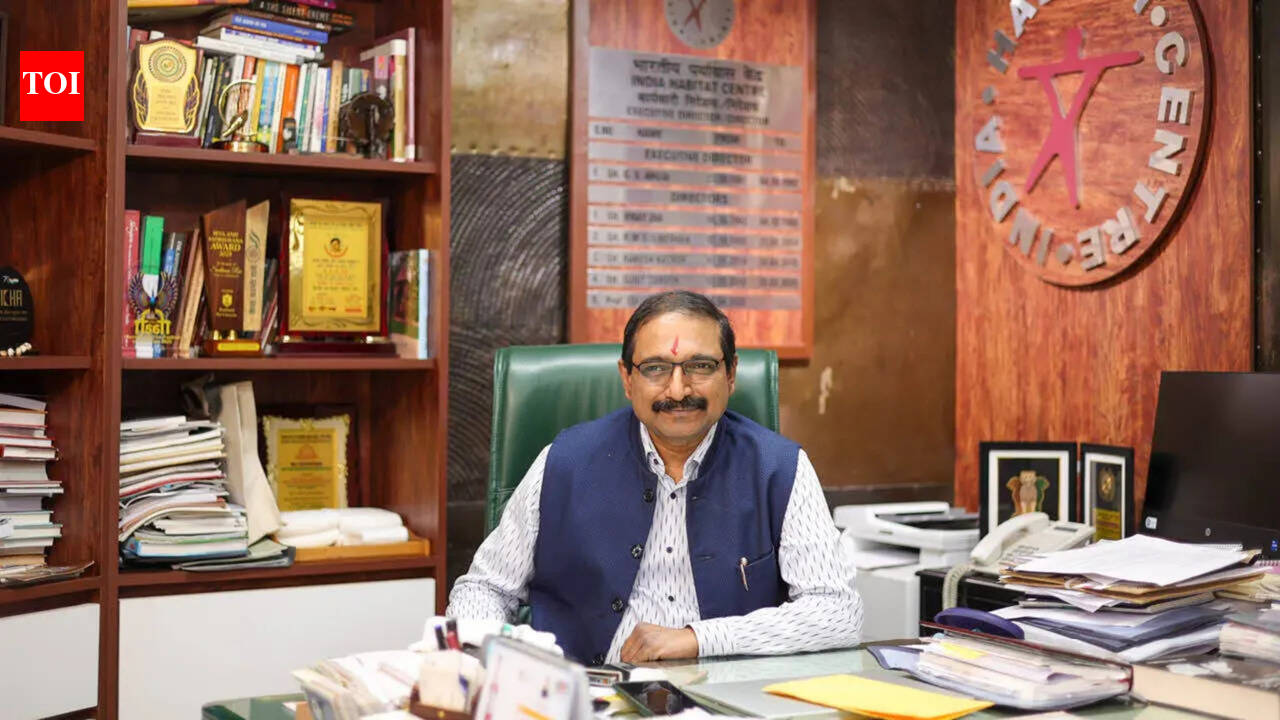
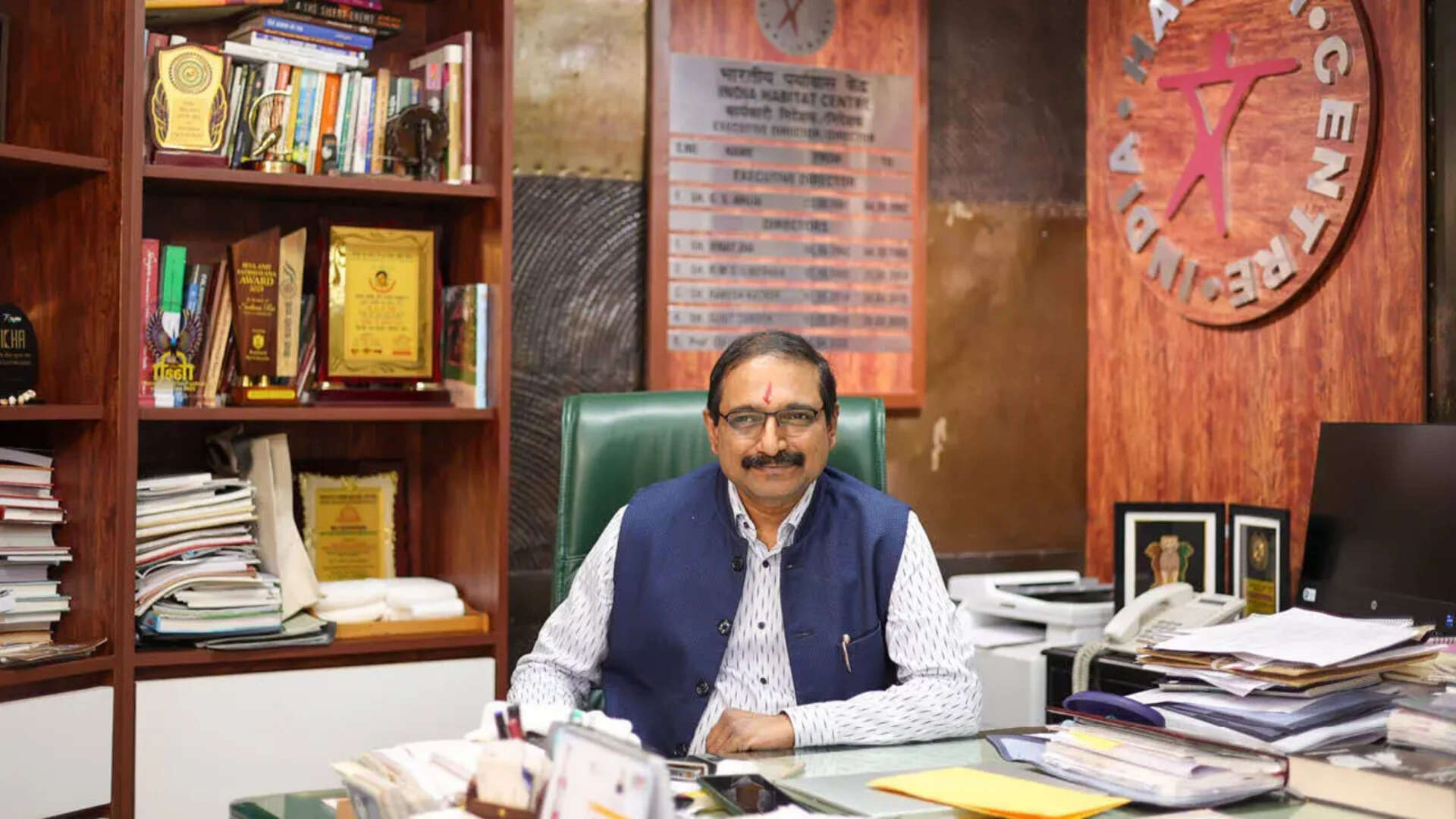
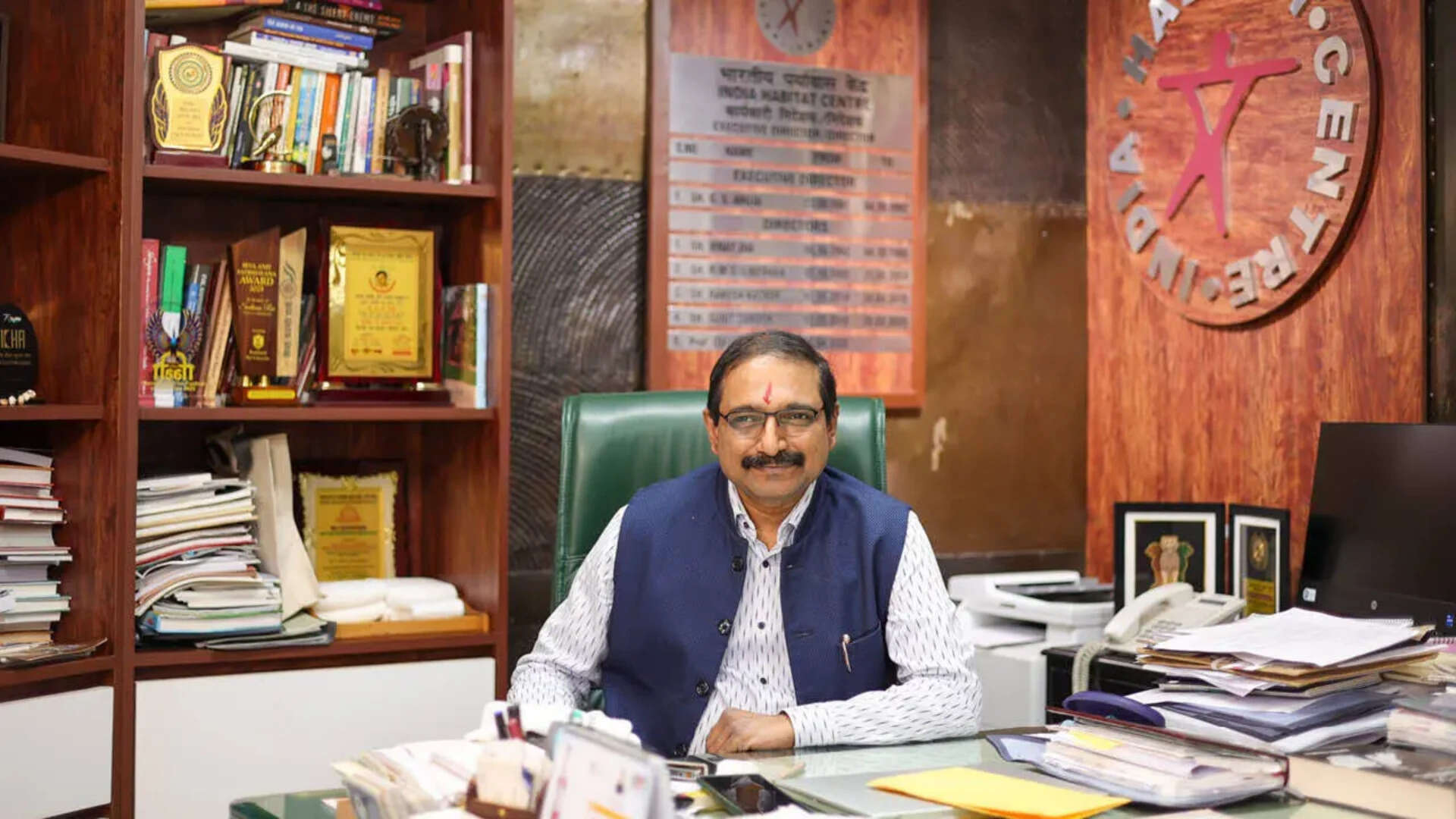
As the Habitat Film Festival 2026 brings together restored classics, regional cinema and contemporary independent films from across India, KG Suresh reflects on the growing relevance of the festival in the OTT era, the importance of preserving India’s cinematic diversity and why mass film viewing remains important. In this interview, the Director of India Habitat Center discusses HFF’s evolving cultural vision and this year’s key highlights.What do you think keeps HFF a constant with viewers?The Habitat Film Festival continues to resonate as it offers something that is increasingly rare today – a space for meaningful cinematic engagement. In the age of algorithm-driven viewing and fragmented attention, HFF brings audiences back to the collective experience of watching stories together in the theatre. The festival celebrates cinema that is rooted in lived realities, regional identities and artistic integrity. Over the years, audiences have relied on HFF for carefully curated programming that transcends trends and gives visibility to the voices of India’s diverse cultural landscape. Be it a restored classic or a bold independent debut, each film at HFF invites reflection, conversation and emotional engagement.

KG Suresh

KG Suresh

This year’s edition restores classics such as Umrao Jaan And quietly quietly With contemporary independent voices. Was this association intentional to create a dialogue between nostalgia and new-age storytelling?Absolutely. The idea was to create a conversation between generations of cinema. Restored classics like Umrao Jaan And quietly quietly These are not just nostalgic experiences; They remind us of the richness of Indian storytelling tradition, music, performance and cinematic craft. as well as contemporary films such as Moham, Tighi, Elysian Fields, VanyaAnd Maliput Melodies Representing a fearless new wave of storytellers engaged with changing social realities and personal narratives. By juxtaposing these films, HFF creates a cinematic bridge where audiences can see both continuity and evolution in Indian cinema. The retrospective of Ritwik Ghatak is a major highlight of the festival. Why do you think his cinema remains so emotionally and politically relevant today, especially for young audiences?Ritwik Ghatak’s cinema remains extremely relevant as his films speak to displacement, identity, memory, alienation and the human cost of social upheaval – themes that continue to resonate deeply even today. like movies Meghe Dhaka Tara, soft myrrh, subarnarekhaAnd Jukti Takko R Gappo These are not merely historical works; They are emotionally urgent reflections on fractured societies and personal resilience. Young audiences today are increasingly drawn towards emotionally honest and politically conscious cinema and Ghatak’s work offers exactly that. His poetic visual language and deeply human storytelling continue to inspire filmmakers and audiences alike.HFF 2026 showcases films from 20 languages ​​and regions. How important is a festival like this in preserving linguistic and cultural diversity within Indian cinema?India’s greatest cinematic strength lies in its linguistic and cultural diversity, and festivals like HFF play a vital role in preserving and celebrating that plurality. This year’s festival brings together stories from Malayalam, Marathi, Tamil, Khasi, Karbi, Bhojpuri, Manipuri, Assamese, Oriya, Kannada, Bengali and many other languages. These films carry with them unique cultural memories, oral traditions, local histories and social concerns that do not always find a place in mainstream distribution networks. HFF gives these stories a national platform and encourages audiences to connect with cultures beyond their immediate surroundings. In many ways, the festival becomes a meeting place of India’s many cinematic identities.Independent cinema is finding new audiences digitally today, yet the theatrical community scene remains irreplaceable. How does HFF attempt to recreate that collective cinematic experience?Digital platforms have certainly expanded access to independent cinema, which is extremely valuable. However, there is something inescapable about watching a movie collectively – sharing silence, laughter, discomfort and emotion with a room full of strangers. HFF recreates that experience by curating screenings that encourage dialogue and conversation. Many screenings are followed by conversations with filmmakers, actors, critics, and scholars, giving audiences the opportunity to engage more deeply with the work. This reaction may be seen during screening such as Moham’s, Gondhal And suede bondaWhere the audience stayed long after the credits started, discussing the themes, performances and personal interpretations. That sense of community is at the heart of the festival experience.As well as screenings, the festival also features talks, masterclasses, exhibitions and filmmaker interactions. Was the idea to establish HFF not just as a film festival but as a larger cultural movement?very much so. HFF has always viewed cinema as part of a larger cultural ecosystem rather than as a separate medium. This year’s program includes filmmaker talks, a conversation on animation storytelling with Dhvani Desai and Murtaza Ali Khan, a masterclass by Kamakhya Narayan Singh, documentary showcase, book discussion and an exhibition of iconic Hindi film posters and archival material in collaboration with IGNCA. The intention is to create a comprehensive cultural environment where cinema intersects with history, literature, music, visual culture and public discourse. More than a festival, HFF becomes a living space for ideas, artistic exchange and collective reflection.Many of this year’s films are based on personal, political and socially rooted narratives. Do you think Indian audiences today are becoming more open to layered and introspective storytelling?Yes, very much. Today’s audiences are far more eager and receptive to nuanced storytelling than they are often given credit for. There is a growing appetite for films that go beyond formula and engage honestly with questions of identity, memory, gender, ecology, displacement and social change. movies like white snow, indomitable, Kaumudi, Theatre: Myth of RealityAnd whisper of the mountains Reflect this shift toward layered, introspective narratives rooted in specific social realities. What is encouraging is that audiences are not only watching these films but also actively engaging with them through discussions and critical conversations.

KG Suresh

KG Suresh

Source link