Why did Congress choose VD Satheesan instead of KC Venugopal?

10 days of 'brainstorming' for Kerala's 'Simhasanam': Why Congress chose VD Satheesan over KC Venugopal

New Delhi: After 10 days of intense deliberations, lobbying and internal brainstorming, Congress On Thursday, the suspense over the post of Chief Minister of Kerala finally ended with the election of VD Satheesan for the top post.Satheesan emerged victorious in a closely watched leadership battle against senior leader KC Venugopal And Ramesh Chennithala weighed the alliance equations, grassroots sentiments, public perception and electoral calculations by the Congress high command before arriving at the final decision.Although Venugopal was seen as a strong contender with the support of a large section of MLAs and the party leadership in Delhi, several political factors ultimately tilted the balance in Satheesan’s favour.Satheesan, being a vocal and visible critic of the Pinarayi Vijayan-led LDF government, also worked heavily in his favour. Although the Congress had never formally presented its chief ministerial face before the elections, Satheesan had gradually emerged as the public face of the opposition against the Left Democratic Front government over the past five years.Satheesan also had the direct support of grassroots Congress workers. In the days following the election results, party workers openly campaigned for him to be made Chief Minister, arguing that the leader who led the election battle should also lead the government.One of the most important reasons was the stance adopted by key allies of the Congress-led United Democratic Front (UDF), especially the Indian Union Muslim League. The IUML, which has 22 MLAs in the 102-member UDF alliance, strongly supported Satheesan and saw the alliance’s landslide victory as an vindication of his leadership over the past five years as opposition leader.The Kerala Congress (Joseph) and the Revolutionary Socialist Party also supported Satheesan, strengthening his position within the alliance.The Congress leadership knew that ignoring IUML’s stance could lead to complications for the new government. IUML has long served as one of the strongest grassroots allies of the Congress in Kerala and has played a major role in Rahul Gandhivictory from Wayanad in 2019 and 2024, and the subsequent by-election victory of Priyanka Gandhi Vadra from the constituency.Within a section of the party, there was uneasiness over Venugopal, considered close to Rahul Gandhi, joining the race for the top post even though he had already indicated during the campaign that he was not seeking the post. Many activists believed that ignoring Satheesan after the UDF’s sweeping mandate would amount to denying him political credit for the victory.The Congress’s recent struggle in assembly elections in several Hindi-speaking states during Venugopal’s tenure as AICC organizing secretary also became a topic of discussion among leaders and workers in Kerala.Internal pressure was also visible at the constituency level. Several newly elected Congress MLAs, identified as supporters of Venugopal, reportedly faced opposition from local party workers. Some MLAs had to cut short their tours after the elections amid criticism from activists and social media campaigns questioning Satheesan’s opposition.Youth Congress leaders like Shafi Parambil and Mathew Kuzhalandan were also criticized online by party workers, who portrayed them as leaders going against the people’s mandate.Another important factor behind the Congress’ decision was the possibility of multiple by-elections if Venugopal had been selected as the Chief Minister.As the sitting Lok Sabha MP from Alappuzha, Venugopal will have to resign from Parliament and contest assembly by-elections within six months to remain chief minister. His resignation from the Lok Sabha would also trigger another parliamentary by-election.Within the UDF, there were concerns about forcing voters to go to fresh elections so soon after the assembly elections, especially at a time when the alliance was trying to consolidate its political gains.Congress leaders were also conscious of the political risks involved in contesting the by-election for a sitting chief minister. Even though Venugopal would have likely contested from a reserved Congress seat, party leaders did not want to bring avoidable uncertainty into the new government.Public perception also worked heavily in Satheesan’s favor.He was one of Vijayan’s sharpest critics and often targeted the LDF government on issues related to governance and corruption. Satheesan also built his image as a strong supporter of secular politics in Kerala.At a time when many Congress leaders avoided directly confronting controversial comments made by influential Hindu community leaders, Satheesan repeatedly warned against efforts to polarize Kerala politics. Vellapalli Natesan and G. By openly challenging leaders like Sukumaran Nair, he gained support among sections who saw him as a leader willing to take political risks.During the campaign, Satheesan also made a high-profile political announcement, stating that he would end his political career if the UDF failed to cross 100 seats. The alliance eventually easily surpassed that figure, cementing his image as a confident campaign leader.Even though Venugopal reportedly had the support of most Congress MLAs and had close ties with the central leadership, the delay in announcing the chief ministerial face reflects the party’s attempt to strike a balance between organizational control and political realities at the ground level.Satheesan, a six-time MLA from Paravur in Ernakulam district, was ultimately seen as a candidate with wide public acceptability, strong coalition support and deep grassroots support.Soon after being elected, Satheesan attempted to convey a message of unity within the party and praised both Venugopal and Chennithala.Satheesan said after the announcement, “I don’t see this post as a personal achievement… It was Venugopal who coordinated all the activities (and) his support was huge. Chennithala is also my leader.”“I will take them all into my confidence,” he said, adding, “I want the support of people from every section of the society… Only collective effort can create a new Kerala. No one can do it alone…”Venugopal also publicly accepted the decision and supported the party line.“Satheesan has been appointed chief minister. I was saying that the decision of the high command will be accepted and it is my responsibility to ensure that the decision is respected and implemented,” he told reporters.Satheesan’s rise to the top post has also been marred by years of internal political fighting within the Kerala Congress. After missing out on a ministerial berth in the cabinet headed by Oommen Chandy in 2011 and later losing the race for the post of Kerala Pradesh Congress Committee chief in 2016, Satheesan once again found himself in a tough competition against senior leaders like KC Venugopal and Ramesh Chennithala.Despite leading the Congress-led UDF to a landslide victory in the assembly, Satheesan was reportedly not the party high command’s automatic choice for the post of chief minister. Party insiders pointed to familiar concerns that had surfaced during earlier leadership contests, including his strained relationship with influential community lobbies, limited support within sections of the national leadership, and his outspoken political style, which often irritated even his own party leaders.In 2011, when Satheesan was denied a ministerial berth in the Oommen Chandy government, his “attitude” was widely cited as a reason in party circles. Unlike many leaders who actively sought support from influential community organizations such as the Nair Service Society, Satheesan was seen as reluctant to engage in lobbying for positions, a quality that contributed to his image as an independent-minded but uncompromising leader.However, the real test for Congress in Kerala will begin after the celebrations. The past 10 days have exposed the depth of factional friction within the party, even amid its biggest victory in the state in a decade. For now, Satheesan has moved quickly to show unity and Venugopal has publicly accepted the high command’s decision. However, senior leader Chennithala has not been active since the CM’s announcement.In the coming days, as Satheesan forms the government, it will be worth watching whether all the frontrunners fall in line to ensure a stable UDF government for five years, or whether the Kerala Congress faces a Karnataka-style feud similar to the rivalry between Siddaramaiah and DK Shivakumar.

Source link

China hands Donald Trump a reality check about its rise

The art of taking a knee: China hands Donald Trump a reality check about his rise

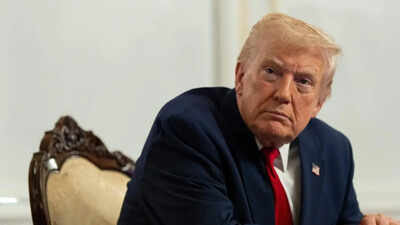
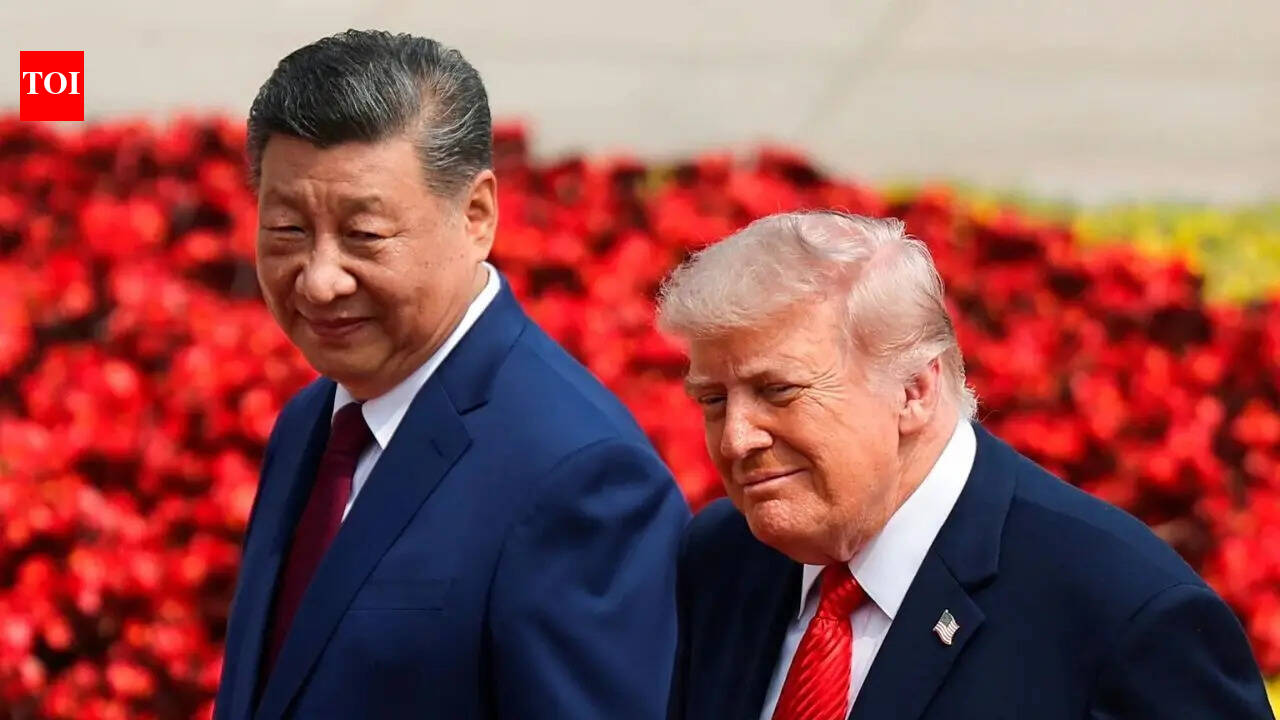
TOI correspondent from Washington: If symbolism is the first language of diplomacy, then US President Donald Trump’s visit to Beijing this week was akin to the geopolitical translation of a changing world order: a confident, assertive China speaking as an equal – if not superior – power to an American president who is increasingly eager for accommodation rather than confrontation.Summit between US President and Chinese leader Xi Jinping On Thursday, it came across not as a meeting between an existing superpower and a challenger, but between a cautious petitioner and an overbearing host. In carefully choreographed remarks, Xi invoked the “Thucydides trap” — the theory that war often erupts when a rising power threatens to displace an established one — while cautioning Washington against mishandling Taiwan. In contrast, Trump lavished praise on Xi, praising future trade deals and emphasizing agricultural purchases, investment and trade access. The contrast was impressive not only in tone but also in substance. China’s official readout of the meeting prominently featured Xi warning that Taiwan remains “the most important issue in China-US relations” and that “Taiwan independence” and peace in the Taiwan Strait are “as incompatible as fire and water.” Beijing also stressed its opposition to the “militarization of the Strait” and cited tensions over Iran’s closure of the Strait of Hormuz due to the US-Israeli attack on Iran. However, the White House readout left out Taiwan entirely. Instead, the US account highlights economic cooperation, Chinese purchases of US agricultural products, market access for US companies, cooperation on fentanyl, and expanded trade relations. Trump declared that relations would be “better than ever” and spoke of a “great future”.The divergence underlined what many analysts see as a dramatic reversal in US-China relations.For years, Washington’s bipartisan foreign policy establishment positioned China as a revisionist challenger and the US as a status quo power to set the terms of engagement. But as Trump’s tariff offensive failed to sway Beijing and China weaponized its dominance over rare earths supply chains, the optics in Beijing suggested a different reality: China appears increasingly comfortable setting red lines while Washington seeks stability and economic relief.Xi gave special importance to the invocation of Thucydides’ trap. The phrase originates from the ancient Greek historian Thucydides, who described the Peloponnesian War and famously wrote that it was “the rise of Athens and the fear it inspired in Sparta” that made conflict inevitable. In recent years, political scientist Graham Allison popularized the concept in his 2017 book Destined for War, which argued that the structural rivalry between rising China and the established United States risked catastrophic conflict if not carefully managed.Xi has referenced the concept before, but his use of it in Trump’s presence carries unmistakeable symbolism. Xi declared, “Changes not seen in a century are accelerating.” “China and the United States need to overcome the Thucydides Trap and join hands to create a future.”The subtext was clear: Beijing is no longer talking as a junior player seeking accommodation under the US-led order. It is increasingly being talked about as a peer power and pushing Washington to adjust to the multipolar reality.Trump, meanwhile, seemed eager to do exactly the same. Rather than revive the strident rhetoric that once defined Republican China policy, Trump adopted the language of managed coexistence. Xi told him, “There are no winners in a trade war – Trump had not publicly opposed it.”This change has notably silenced many China supporters within the Republican Party. Figures who once warned of existential competition with Beijing have largely fallen silent as Trump moves toward what some analysts describe as a “commander in peace” pragmatism toward China, even while projecting military might against smaller adversaries elsewhere.“Donald Trump is a dove in chief,” former Pentagon official Dan Blumenthal recently said in Politico. “He wants stability. He is very influenced by Chinese power and he does not believe that we are in any position to win the strategic competition at this time.”That assessment is reinforced by a stream of recent intelligence and military analyzes that paint a troubling picture for Washington. The Joint Staff’s intelligence directorate warned its chairman, Gen. Dan Cain, that China was selling weapons to key Middle Eastern partners while US stockpiles meant to protect Gulf allies were depleted during the Iran conflict, according to a report revealed this week. The analysis reportedly worried Pentagon officials because Beijing was effectively arming countries that Washington itself was struggling to defend.China has expanded its role as an emergency energy supplier after Iran’s closure of the Strait of Hormuz disrupted global markets – despite tensions. Beijing has reportedly stepped up to provide energy assistance to all US treaty allies or strategic partner countries, including Australia, Thailand and the Philippines. The intelligence assessment concluded that China had “seized in the 39-day conflict to expand its military, economic and diplomatic influence around the world.This influence is increasingly visible not only in the Gulf region but across Africa, where Chinese infrastructure financing and security partnerships are outpacing US involvement. Washington’s decades-old alliances are showing strain amid Trump’s tariff threats, erratic diplomacy and transactional foreign policy style.Even the atmosphere at the Beijing summit reflected the changed balance. Trump, as usual, using his trademark hyperbole, told Xi that the US CEOs accompanying him – including Elon Musk and Tim Cook – had come to China to “pay respects”. Xi responded with cool composure.Where Trump was personal and flattering, Xi remained measured and institutional. While Trump praised the relationship, Xi spoke of “strategic stability,” “managed competition” and the need for both powers to work “in the same direction.”It was less the chemistry of two friends than the choreography of two powers accepting a changing hierarchy – with Beijing growing increasingly confident that history, economics and strategic momentum were leaning in its favor.

Source link

Court order to bring back 55-year-old Colombian woman, sent to DRC

Big blow to Trump's deportation to third country: Court order to bring back 55-year-old Colombian woman, sent to DRC
A judge ordered the US to bring back a Colombian woman who was deported to the DRC despite Congo refusing to accept the 55-year-old woman.

The Donald Trump administration’s third country deportations, a new policy he came up with where a migrant is sent to a third country where he has no ties, suffered a major setback after a federal judge on Wednesday ordered the administration to bring a Colombian woman back to the US. Adriana María Queiroz Zapata, 55, was deported to the Democratic Republic of Congo, although the DRC refused to accept her. US District Court Judge Richard J. Lyons for DC ordered the woman to be brought back as soon as possible and ordered the Trump administration to provide a status update by 5 pm Friday on steps taken to facilitate her return, The New York Times reported.Queiroz Zapata entered the United States in August 2024 after fleeing Colombia and his former partner, a man bound by the Colombian National Police. She received a court order not to send her back to Colombia because she might face abuse at home. The Trump administration sought a third country to deport Queiroz Zapata, but the DRC refused to formally admit him in April because the country could not adequately guarantee the necessary medical assistance, the document said. The woman has diabetes, hyperlipidemia and hypothyroidism.Two days after the DRC’s denial, Queiroz Zapata was placed on an expulsion flight from the US to the DRC on April 16, where he remains today.“The government deported him to the DRC anyway,” the judge wrote. He added, “Therefore, sending the plaintiff to the DRC was probably illegal.” The judge said Queiroz Zapata was “likely to succeed” in his argument that deporting him to the DRC was “likely to violate the Immigration and Nationality Act.”The judge wrote, “There is no question that Plaintiff meets the irreparable harm standard. She has been deported to a country that refused to accept her because they could not provide adequate medical care.” “As a result, he faces daily risk of medical complications, up to and including death.”

Source link

Kalyan Banerjee returned as Chief Whip of Lok Sabha

ममता बनर्जी ने टीएमसी रैंक में फेरबदल किया: कल्याण बनर्जी लोकसभा के मुख्य सचेतक के रूप में लौटे

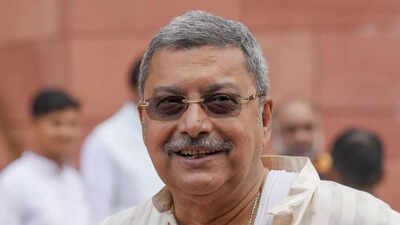
Kalyan Banerjee (Image/PTI)

New Delhi: Former Chief Minister of West Bengal Mamata Banerjee on Thursday appointed Kalyan Banerjee as its new chief whip Trinamool Congress Kakoli Ghosh replaces Dastidar in the Lok Sabha. The announcement was made during an internal meeting of party MPs held at Mamata Banerjee’s residence in Kalighat, as the party leadership sought to regroup after the recent election shock in West Bengal. Kalyan Banerjee, who was removed from the post last year amid internal turmoil within the party following a public spat with Krishnanagar MP Mahua Moitra, has now been brought back at a time when TMC Trying to stabilize his organization and parliamentary strategy.The reshuffle was seen by party insiders as a sign that the leadership continued to value political aggression and loyalty during difficult times. In recent months, Kalyan Banerjee has emerged as one of the most vocal legal and political faces of the party, actively defending TMC in court battles and public confrontations during the election period.While the party retained Abhishek Banerjee as party leader in the Lok Sabha and Shatabdi Roy as deputy leader, Kalyan Banerjee’s withdrawal was considered the most important organizational decision taken during the meeting.According to party sources, the Kalighat meeting appeared to be a re-unification exercise after the party’s defeat, with discussions on maintaining unity and rebuilding morale among MPs and workers, PTI reported.Many leaders reportedly saw the move as recognition of Kalyan Banerjee’s aggressive role in protecting the party politically and legally. “Leadership values ​​those who stand up and fight in difficult times,” a senior TMC MP said after the meeting.During the meeting, Mamata Banerjee reportedly urged MPs to stay connected to their constituencies and maintain coordination with the local leadership as the party attempts to overcome one of its toughest political phases in years.Addressing the MPs, Abhishek Banerjee alleged that the TMC has fought not only the BJP but the ‘entire machinery’ deployed by the saffron party during the elections. He also claimed that there were irregularities during the counting and alleged that TMC counting agents faced restrictions at several centres.Later, TMC MP Sayoni Ghosh made defiant remarks, claiming that the party is not afraid of setbacks.He said, “TMC is not one to get scared or back down. Mamata Banerjee is a lioness, a fighter – she was here before and she will be here too. This vote is not the mandate of the people. The people of West Bengal did not want Mamata Banerjee’s government to be removed.”

Source link

The math genius who solved a 100-year-old problem and turned down a $1 million prize and the Fields Medal

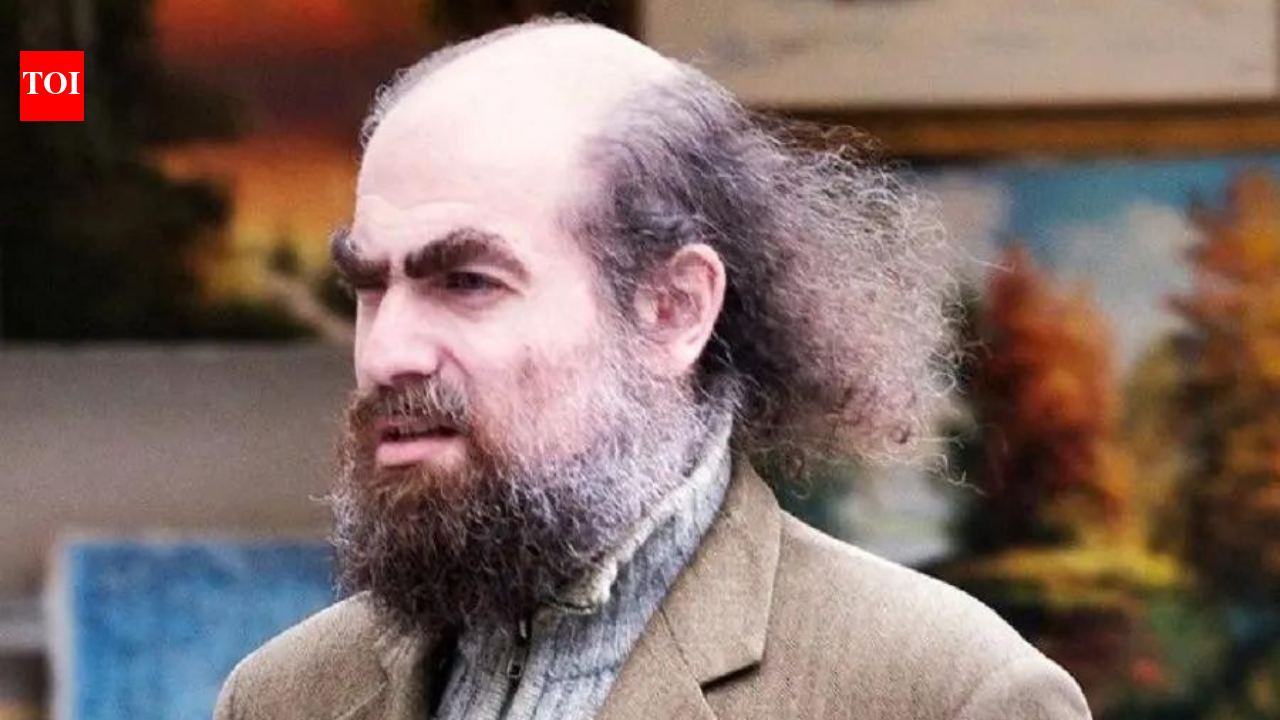
Meet Grigory Perelman: The math genius who solved a 100-year-old problem and turned down a $1 million prize and the Fields Medal

In a world where scientific breakthroughs often bring fame, wealth and global recognition, Grigory Perelman chose a completely different path. The Russian mathematician stunned the academic world after solving the Poincaré conjecture, one of the most difficult unsolved problems in mathematics, which had remained unanswered for almost a century. But what made Perelman even more fascinating was what happened next. He declined the prestigious Fields Medal in 2006 and later also declined the Clay Mathematics Institute’s $1 million Millennium Prize, thus shying away from international fame and becoming one of the most enigmatic figures in modern mathematics.

Grigory Perelman solved a hundred-year-old problem

The Poincaré conjecture was proposed by the French mathematician Henri Poincaré in 1904 and soon became one of the most important unresolved questions of topology.Topology is often described as the study of shapes and spaces. The hypothesis focused on understanding the fundamental structure of three-dimensional spaces and whether certain shapes can be mathematically transformed into a sphere.For decades, this problem puzzled some of the world’s greatest mathematicians. Its difficulty became famous in academic circles and solving it was considered one of the greatest possible achievements in mathematics.In 2000, the Clay Mathematics Institute included the conjecture among its seven Millennium Prize problems, each with a $1 million reward for its correct solution.

Grigory Perelman

How did Perelman solve the impossible problem?

Perelman built on earlier research developed by mathematician Richard S. Hamilton, who introduced a geometric method known as the Ricci flow.Ricci flow can be imagined as a process that gradually smoothes out irregular geometric shapes over time. Hamilton’s work laid the foundation for attacking the Poincaré conjecture, but several major technical hurdles still remain unresolved.Between 2002 and 2003, Perelman published a series of papers online through the arXiv preprint server rather than in traditional academic journals. In those papers, he addressed remaining problems and provided a proof for the conjecture.The mathematics community initially reacted cautiously because the proof was highly complex. Teams of experts spent years reviewing every detail before finally confirming that Perelman’s work was correct.His proof was later recognized as one of the greatest mathematical achievements of the modern era.

Rejecting the Fields Medal

In 2006, Perelman was awarded the Fields Medal, often considered the highest honor in mathematics and often compared to the Nobel Prize for the field.But Perelman refused to accept this.He did not attend the International Congress of Mathematicians in Madrid and became the first person in history to decline the Fields Medal.According to reports and interviews, Perelman felt uncomfortable with the culture of fame surrounding academic success. He also believed that Richard Hamilton should have been given more recognition for developing the original ideas behind the proof.His refusal shocked the mathematics world, where such honors are usually considered career-defining achievements.

Rejecting the $1 million Millennium Prize

Perelman surprised the world again in 2010 when he declined the $1 million Millennium Prize awarded by the Clay Mathematics Institute.After years of verification the institute officially recognized his proof of the Poincaré conjecture, making him the first and so far the only mathematician to solve one of the seven Millennium Prize problems.Yet Perelman refused to pay the money.Reports at the time revealed that he no longer wanted public attention and had become increasingly disillusioned with academic politics. Some accounts also indicated that he disagreed with how credit for the discovery was distributed within the mathematics community.His rejection of both the Fields Medal and the million-dollar prize turned him into an almost legendary figure beyond academic mathematics.

Life away from fame and public attention

After his success, Perelman largely withdrew from public academic life. He reportedly resigned from the Steklov Institute of Mathematics in St. Petersburg and avoided interviews and conferences.Over the years, occasional reports emerged about his quiet life in Russia, often describing him traveling on public transportation or shopping in ordinary neighborhoods.Unlike many globally recognized scientists, Perelman showed little interest in building a public image, business opportunities, or celebrity status. His refusal to participate increased the public’s fascination with him due to the media attention associated with his discovery.Perelman’s story goes far beyond mathematics as it challenges modern ideas about success and recognition.Most groundbreaking discoveries are closely linked to fame, awards, financial rewards, and institutional prestige. Perelman rejected almost all of them, despite solving one of the most important mathematical problems of the last century.For many, he became a symbol of intellectual independence – someone motivated solely by a desire to solve difficult problems rather than money or public praise.More than two decades after his proof transformed mathematics, Grigory Perelman remains one of the most enigmatic geniuses of the modern era.

Source link

Indian man confronts Texas whistleblower Sarah Gonzales over H-1B allegations, calls her unemployed

'You're talking nonsense': Indian man hits back at Texas whistleblower Sarah Gonzales over H-1B allegations, calls her unemployed
Indian man silences Sara Gonzales for H-1B attack, calls her unemployed.

Texas journalist Sarah Gonzales, who started ‘exposing’ H-1B fraud in her state, which even resulted in some action from the government, took aim at ‘Great America Technologies’ for her latest video. But it turned into a fight between Gonzales and Nagarjuna Reddy Sakam, who is listed as the director of the company – Nagarjuna patiently talked to Gonzales and answered all his questions and also identified her as the woman who visits H-1B establishments and creates nuisance.Gonzales said the company was founded in 2017 and at that time, Lakshmi Chaitanya Bogula was named as the director. Later her husband Nagarjuna became a director. But they do not have an office at their address, their telephone number does not work and there is no information on their website, Gonzales claimed before surprising Nagarjuna at his home address.Nagarjuna told that his company is small and it is going through a change in address. It does not have many H-1B workers and they work for different clients. He told Gonzales that he is not doing business on H-1B but that he is a green card holder and has the rights to it.Nagarjuna called out Gonzales for talking nonsense targeting the Indian community and told him that USCIS and the government are there to investigate if any fraud has occurred. “Don’t you have a job?” Nagarjuna asked, saying he would file a lawsuit against Gonzales because he was not doing anything illegal.After the controversy, Gonzales visited the new address that Nagarjuna had provided him, and said that it was a co-working space and there was no one there. Gonzales again called Nagarjuna and pressed him for the public access files. The phone conversation also turned into a fight as Nagarjuna said he had called 911 and the police were coming.

US entrepreneur says company is doing nothing wrong

American entrepreneur James Blunt, who frequently comments on immigration issues, said he investigated the company and found nothing wrong. The company is a consultancy that recruits people for clients. Blunt said that if a self-proclaimed whistleblower like Gonzales shows up on private property, the owners should first ask for identification, deny entry and then record the conversation.Sara defended what many on social media called ‘invasion’ and said that Nagarjuna talked to her for 15 minutes and turned away after “he realized he was trapped, then he asked us to leave, and we did”.

Source link

Italian Open: Jannik Sinner unbeaten, overtakes Novak Djokovic to set Masters world record before French Open

Jannik Sinner has reached a new level in men’s tennis, producing a season of consistent dominance that has now seen him overtake Novak Djokovic’s long-standing Masters 1000 record. The World No. 1 extended his winning streak at Masters events to a record-breaking 32 consecutive wins, surpassing Djokovic’s previous best of 31 and overtaking legends like Roger Federer (29) and Rafael Nadal (23) in the all-time standings.

The milestone came during his latest surge in Rome, where Sinner defeated Andrey Rublev to book a place in the Italian Open semi-finals. They needed just one hour and 31 minutes to win the quarter-finals 6–2, 6–4 at the Campo Central on Thursday, 14 May.

After the win, Sinner reiterated that he does not chase records but focuses on his journey. He stressed recovery as the top priority before their next match, highlighting the emotional challenge of competing on home soil and calling it a “win-win” day after a strong performance.

“I don’t play for records. I just play for my story. Also it means a lot to me, but there is another opponent tomorrow. We will play in different conditions. It will be a night match. Let’s see. The top priority for me now is to try to recover as much as possible physically.”

“We’ll see how it goes. Emotionally, it takes a lot of time playing here on home ground. At the same time, I’ll definitely try to do my best. We’ll see how it goes. Either way it’s a win-win situation for me in any case. Today was a good day,” he said.

How the papacy brought down Rublev

From the start, Sinner dictated the game with deep, heavy groundstrokes that pushed Rublev back from the baseline. The Russian attempted to impose himself with his trademark forehand power, but Sinner’s defensive excellence and ability to redirect momentum consistently neutralized the threat. The key moments came on the return, where Sinner repeatedly targeted Rublev’s second serve to create early break opportunities.

Once in control, the sinner never let go. He disrupted Rublev’s rhythm with depth, variation and sharp angles, leading to errors from the backhand wing. Even when Rublev tried to increase the aggression in the second set, Sinner’s efficiency on the first serve and ability to make cool decisions under pressure kept him firmly ahead.

The victory moved Sinner closer to a rare milestone, career Golden Masters, achieved by winning all nine ATP Masters 1000 events. He is now just two wins away from becoming the second player in history behind Djokovic to complete that set, further underscoring the scale of his dominance on the ATP Tour.

– ends

published by:

Sabyasachi Chaudhary

Published on:

May 14, 2026 19:26 IST


Source link

CBI arrests two more accused in Maharashtra; the number increased to 7

NEET-UG paper leak: CBI arrests two more accused in Maharashtra; the number increased to 7
NEET-UG paper leak: CBI arrests two more accused in Maharashtra; The number increased to 7 (Image credit: PTI)

New Delhi: The Central Bureau of Investigation has arrested two more accused in connection with alleged irregularities in the NEET-UG 2026 paper leak and conducted searches at 14 locations across the country in the last 24 hours.The two arrested accused are Dhananjay Lokhanda of Ahilyanagar, Maharashtra and Manisha Waghmare of Pune, Maharashtra. The total number of arrests in the case has now reached seven.The CBI had registered the case on May 12 based on a written complaint by the Department of Higher Education of the Education Ministry regarding alleged irregularities and paper leak in the conduct of the NEET-UG 2026 examination on May 3.The FIR was registered for offenses under the Indian Justice Code including criminal conspiracy, cheating, criminal breach of trust, theft and destruction of evidence, offenses under the Prevention of Corruption Act and offenses under the Public Examinations (Prevention of Unfair Means) Act, 2024.So far, the CBI has arrested seven accused in the case – three from Jaipur, one from Gurugram, one from Nashik, and the latest two from Pune and Ahilyanagar. Many other suspects are still being interrogated.The agency has also conducted searches at several places across the country. During the search and arrest, several incriminating materials and electronic devices including mobile phones have been seized.The CBI is coordinating with the Rajasthan Special Operations Group, which conducted the initial investigation in the case, and is tracing all the leads through extensive technical and forensic analysis.

NTA canceled the exam, exam will be held again

The Center on Tuesday canceled the NEET-UG 2026 exam held on May 3 amid allegations of paper leak and announced that the exam will be re-conducted on dates to be notified separately.NTA said the decision was taken after examining the inputs in coordination with central agencies and findings shared by law enforcement agencies raising concerns over the integrity of the examination process.Federation of All India Medical Associations has moved the Supreme Court challenging “systemic failure” National Testing Agency In conducting NEET-UG 2026 examination.Students across the country have protested against the decision to re-conduct the examination. NSUI workers protest at Shastri Bhawan in New Delhi, protesters were seen climbing the barricades.

Source link

PFA chief warns stars could be ‘too tired’ for 2026 World Cup amid busy calendar

'खिलाड़ी सांस नहीं ले पा रहे': पीएफए ​​प्रमुख ने चेतावनी दी कि व्यस्त कैलेंडर के बीच 2026 विश्व कप के लिए सितारे 'बहुत थके हुए' हो सकते हैं

FIFA World Cup 2026 (via Getty Images)

The 2026 World Cup is still weeks away, but concerns about player fatigue, extreme weather conditions and football’s increasingly crowded calendar are already dominating conversations behind the scenes.The elite players are heading into another expanded World Cup after tough domestic campaigns filled with league matches, European competitions and international fixtures. FIFA expanded the tournament from 32 to 48 teams starting in 2026, expanding the competition to 104 matches to expand the game globally, generate more revenue, and create more qualification opportunities for countries in Asia, Africa and North America.But with clubs and governing bodies adding more games to an already overloaded calendar, there are growing fears that football’s biggest stars are being pushed beyond physically sustainable limits.

‘The World Cup will become survival of the fittest’

According to an exclusive report of mirrorMaheta Molango, chief executive of the Professional Footballers’ Association, revealed that players have already discussed the possibility of taking action because they feel they are being “pushed to the limits”. Molango warned that there is a risk in this summer’s tournament thinking less about quality and more about physical stamina. “The World Cup should be the culmination of a dream but the reality is it will be survival of the fittest. That’s not right,” Molango said. “Let’s get to the root of the problem. It can’t be survival of the fittest. Now you see games that are not won by the best team, they are won by the fittest team.

Maheta Molango

Professional Footballers’ Association CEO Maheta Molango/Image: PFA

“Players are superheroes. They get paid very well, too.” But this does not mean that they should be pushed to the limits from a human perspective. Molango also warned that tired players ultimately harm the quality of the game. “There’s a real risk to the player. And for those who don’t care, there’s a real risk to the product because people will pay thousands of pounds to watch them ‘walk’.”

fifa world cup 2026

fifa world cup 2026 groups/fifa

He said that modern football players are becoming increasingly aware of their collective impact and are no longer willing to quietly accept every scheduling demand placed on them. “Maybe players need to self-regulate. I’m not going to play in the friendly you’ve organised. “The authorities have decided to encroach, we live in a world of goons and they think you can just get your way. “But unfortunately, people don’t realize that they’re dealing with humans and that humans are not as stupid as they think. They understand the power of collectivity. They are not fools. They are smart and active.”

Van Dijk, Rice and Europe’s most accomplished stars

This concern is supported by workload figures in Europe’s biggest leagues. According to Opta data, 19 Premier League players have already surpassed 4,000 minutes in all competitions this season before reaching the World Cup. virgil van dijk He currently leads Europe’s five major leagues in minutes played for Liverpool with 4,761 minutes, while teammate Dominik Szoboszlai is fourth with 4,556 minutes.

uk premier league soccer

Liverpool’s Virgil van Dijk warms up before the English Premier League football match between Everton and Liverpool on Sunday, April 19, 2026 in Liverpool, England. (AP Photo/Ian Hodgson)

Aston Villa’s Morgan Rodgers is the highest-ranked English player on the list with 4,382 minutes played, while Declan Rice has already accumulated 4,246 minutes during Arsenal’s marathon campaign. Players from Newcastle United, Crystal Palace and Nottingham Forest are also ranked highly due to European football and international commitments. Last year, a FIFPRO report on player workload criticized an “unprecedentedly long and congested season” and recommended a mandatory four-week off-season along with the winter break. In September 2024, Rodri had already warned that the player was “close” to action after playing a 63-game season for Manchester City. Later that month, he tore his ACL. Molango said many players are now privately acknowledging warnings they were previously reluctant to face. “I was talking to a player who said to me: ‘I don’t drink, I don’t go out, I couldn’t do anything else to keep fit but I’ve been injured.’ “He said to me, ‘You were right! We had heard about the calendar when you came to see us two years ago, but… you were right.'”

Fear about heat, dry pitches and World Cup conditions

In addition to the rush for stability, players are also concerned about the physical conditions awaiting them in the United States. Molango took part in the Premier League summer series in the US last year and described the temperatures as worrying. “I went to a game in Philadelphia at 3 o’clock in the afternoon and I couldn’t breathe because of the temperature,” he said. “The games were going on continuously and the difference between the early and late games was like night and day.”

WCup Stadium Prep Soccer

Water grass spraying during pitch installation for the FIFA World Cup 2026 at NYNJ Stadium in East Rutherford, NJ, on Thursday, May 7, 2026 (AP Photo/Yuki Iwamura)

He also revealed that several players participating in the Club World Cup had complained directly to him about the conditions. “I’ve talked directly to players who told me they can’t breathe. The grass is so dry because they’re American football pitches. You go to Atlanta and the pitch is so dry. They’re not playing NFL.” Chelsea’s Enzo Fernandez previously described the temperatures at the Club World Cup as “unbelievable” and “dangerous”, admitting it was making him “really dizzy”. Molango acknowledged that FIFA had adjusted some kick-off times and locations after receiving concerns, but stressed that the problems were not over.

Players are becoming more willing to push back

Molango also pointed to a previous standoff in Spain as evidence that players are increasingly willing to refuse participation if they feel decisions are harming them. “La Liga has done a great job over the last few years,” he said. “They wanted to play a game in Miami. They did their usual thing and decided to go ahead. The players simply said that we are not going. Ultimately the game was cancelled. “This should have been a warning to football. If the players are not there. There is no game. They need to understand what the players think.” The PFA chief believes today’s generation of football players is more socially aware, more connected to the wider football pyramid and more aware of their long-term responsibility to the game. “You need to remember that most of them come from the football pyramid. Even from the national team. harry kane Leyton has played for Orient. I don’t have to explain to him what it means. I don’t have to explain it to Kyle Walker. Declan Rice was rejected from an academy. “They get it. Jude Bellingham played in the Championship with Birmingham City. I don’t need to tell them what it means.” Molango also touched on the mentality within the women’s game. “I loved one expression from Sherni. ‘We want to leave the shirt in a better place.’ “The Kim Littles, Leah Williamson. It’s not just about them. They want to leave a legacy and leave the shirt in a better place. “It wasn’t necessarily the case 20 years ago.”

‘Everyone forgets the 68 games’

One of Molango’s biggest concerns is how quickly public expectations outstrip the physical costs of the modern football schedule.Using Declan Rice as an example, Molango warned that players could be mentally and physically exhausted at the World Cup after marathon club seasons lasting almost 70 games.“Who will sympathize with Declan Rice?”. Molango asked.“Everyone forgets 68 games. If he’s lucky he can win 68 games even before the World Cup. Who remembers that? Nobody. They’ll be busy saying: We need to win the World Cup.”

uk league cup soccer

Arsenal’s Declan Rice reacts after losing the English League Cup final football match between Arsenal and Manchester City on Sunday, March 22, 2026 in London. (AP Photo/Richard Pelham)

The PFA wants limits imposed on annual match totals, stricter rules for back-to-back seasons and guaranteed rest periods. “The data says 50 to 60 games a year max. That’s 45 back-to-backs max. At least one month’s rest each summer. “But they say, ‘Sorry, but the calendar is off until 2030.’ But when it comes to adding games, there is no problem. But when it comes to reducing games, it stops. Molango concluded with a warning aimed directly at football’s governing bodies. “The days of considering players as the weakest link are over. They are the strongest link.”

Source link

5 snake-filled waters in Queensland surrounded by rainforests and wetlands

5 snake-filled waters in Queensland surrounded by rainforests and wetlands

Queensland’s waterways run through rainforests, floodplains, mangrove systems and heavily populated coastal areas, creating habitats where the snakes are active year-round. Warm temperatures and frequent rainfall support large populations of fish, frogs and small mammals, which naturally attract predators to rivers, lakes and tidal channels. Some species live close to freshwater environments while others move between estuaries and coastal waters. Sightings are not uncommon in northern parts of the state, especially after storms or in humid conditions when the reptiles become more active near the surface. Although many snakes avoid people whenever possible, some of Queensland’s waterways have developed a reputation for frequent encounters due to their surrounding environments and the wildlife they support.As reported worldatlas, Check out the list below of 5 snake-filled bodies of water in Queensland.

5 snake-filled rivers and wetlands in Queensland that look beautiful but hide danger

1. Daintree River

Daintree River

PC: Wikipedia

The Daintree River flows through dense tropical rainforest where dense vegetation extends right to the water’s edge. Fallen branches, mangrove roots and shady banks create suitable shelter for the many snake species that hunt near waterways. During the wet season, snakes are often seen wandering along muddy banks or resting close to low branches above the river. Conditions become even busier after rainfall when rising water levels drive animals to new areas. Tour operators in the area regularly mention sightings of snakes along with crocodiles, especially during the warmer months when reptile activity increases in the rainforest and surrounding wetland systems.2. Lake Placid

Lake Placid

PC: Wikipedia

Lake Placid near Cairns appears calm for much of the year, although the surrounding environment supports a steady presence of reptiles. The warm shallows attract frogs and fish, providing reliable hunting areas for snakes that live close to freshwater habitats. Dense vegetation around parts of the shoreline allows them to move quietly without much risk. People using quieter parts of the lake for fishing or walking sometimes report seeing snakes crossing narrow stretches of water or resting near the reeds. Visibility increases during the wet season when humidity increases, and wildlife in nearby connected waterways becomes more active.3.Brisbane River

brisbane river

PC: Wikipedia

The Brisbane River flows through urban areas, although in many stretches there are still mangroves, wetlands and high river banks that support native reptiles. It is more common to see snakes in quiet areas away from busy pedestrian areas, especially after periods of flooding. Heavy rains may force snakes from hiding places into parks, drains and residential areas adjacent to river systems. Different habitats exist along the river depending on distance from the coast, allowing many species to occupy different areas. Residents living near bushland corridors or flood-prone areas sometimes encounter snakes roaming in backyards following storms and hot seasonal conditions.4. Hinchinbrook Channel

Hinchinbrook Channel

PC: Wikipedia

Hinchinbrooke Channel lies between the mainland and Hinchinbrooke Island, which is surrounded by mangroves, tidal flats and tropical vegetation. The warm coastal waters support marine life that attracts sea snakes to the channel throughout the year. Unlike land species, sea snakes spend most of their lives in water and are made to swim through tidal currents. People usually encounter them accidentally near fishing areas, boat ramps or nets rather than along the shoreline. Despite being highly venomous, they rarely approach humans intentionally. Their presence reflects the healthy marine ecosystem that continues to support fish populations within the channel.5. Fitzroy River

fitzroy river

PC: Wikipedia

The Fitzroy River system extends across central Queensland and passes through wetlands, agricultural fields and floodplain environments where reptiles are common. Seasonal rains alter the river dramatically, forming temporary ponds and flooding grasslands that attract frogs and small animals. Snakes often pursue these feeding opportunities in shallow water and low vegetation along river banks. During warm evenings, movement becomes more noticeable around isolated patches of dense plant cover. Residents and farmers near the river sometimes report an increase in the number of sightings after storms, when rising waters push wildlife into surrounding lands. The large river system allows different snake species to inhabit different habitats throughout the region.

Source link