
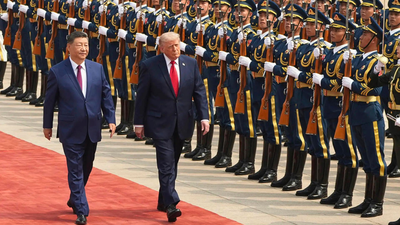

Why did we see a restrained Trump in China?
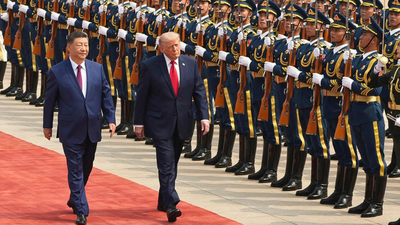
Chinese President Xi Jinping and US President Donald Trump (AP Photo)
“The military is in the clear.”US President’s comment donald trump He arrived almost casually and stood between his Chinese counterpart and the grand ceremony hosted by Xi Jinping in Beijing. Lines of Chinse soldiers stood in perfect formation. Red carpets were spread across the vast expanse of the Great Hall of the People. Children waved flags. Precision, discipline and power were on full display, not subtly, but deliberately, causing Trump to soften a bit from his usual approach.For a president who has often claimed that the US military is the “greatest and the best”, there was something different about Trump’s tone this time: praise mixed with recognition that the global military balance is no longer as lopsided as it used to be.For decades after the collapse of the Soviet Union in 1990, Washington stood alone at the pinnacle of global power. America’s military dominance became the defining characteristic of the post-Cold War world. But in Beijing on Thursday, China appeared eager to send a message to Trump and the world that the era may be changing.During the visit, Trump repeatedly praised Xi, calling him a “great leader.” Yet behind the warm words and diplomatic smiles there was a deeper undercurrent: this was not just a state visit. It was a display of China’s confidence, military, technological and geopolitical.And Beijing didn’t stop at symbolism.Even as Trump received military honors, China’s message on Taiwan became extremely clear. Chinese officials warned that US involvement in Taiwan-related matters “could lead to US-China conflict.”This warning comes as tensions around Taiwan continue to increase. The self-ruled island, which is claimed by Beijing but backed militarily and politically by Washington, has fast become the most dangerous fault line in US-China relations.Taiwan retaliated strongly.Taiwan’s Defense Ministry accused China of “military oppression” and gray-zone operations around the island, saying “Beijing officials are currently the only threat to regional peace and stability.” It added that “Beijing has no right to make any claims on behalf of Taiwan at the international level.”But beyond Taiwan, another conflict has quietly revealed how modern geopolitical battles are evolving, and how China’s influence is already spilling over into the future of war.Trump’s military strike against Tehran under “Operation Epic Fury” put the Iran conflict into global focus. War-related reports have repeatedly pointed out that Chinese technology is playing a behind-the-scenes role in strengthening Iran’s military capabilities.The battlefield of the 21st century is no longer determined solely by the size of fighter planes, aircraft carriers or defense budgets. Increasingly, power is being measured through drones, AI systems, cyber capabilities, satellite navigation and precision technology.And in many of those areas, Beijing is increasingly emerging as a serious challenger to Washington.One symbol of that change is the BeiDou Navigation Satellite System, China’s answer to America’s GPS network. Iran has reportedly been using the BeiDou system since 2021 to deploy decoy systems capable of improving drone accuracy and complicating enemy targeting.That description may sound technical. But strategically it is very big.
Trump calm in Xi’s stage show
Trump, in China and in the presence of Xi Jinping, appeared notably more restrained than his usual approach with other world leaders, where he is often more confrontational.From calling Shehbaz Sharif to the mic for praise, gratitude and even publicly criticizing Volodymyr Zelensky over his attire, Donald Trump has often turned diplomatic meetings into headline-grabbing moments marked by sharp exchanges. But with Xi Jinping, the tone has changed.
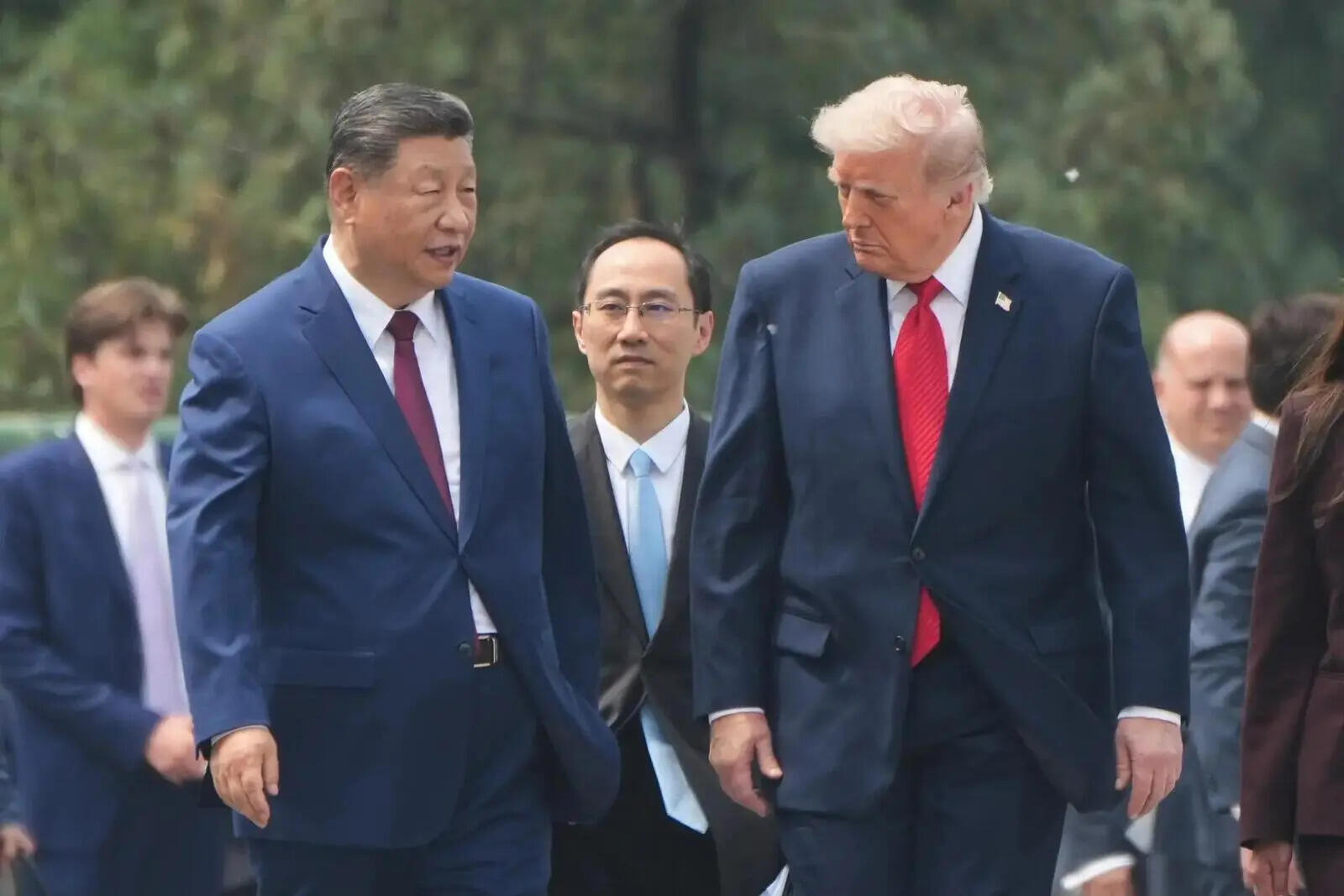
Xi and Trump
Trump has repeatedly praised Xi as a “great leader”, alternating sharp comments with warm language and diplomatic smiles. Yet in a cordial atmosphere, the visit doubled as a carefully choreographed display of China’s military might, technological ambition and growing geopolitical confidence.
China is reshaping conflicts beyond its borders
This shows that China is no longer making weapons only for itself. Its technology is beginning to shape conflicts beyond its borders, being indirectly tested against US military systems in real-world combat situations.The contradiction is amazing.The United States still spends more on defense than any other country in the world. Meanwhile, China holds the largest position in the world Army. But modern warfare is increasingly becoming less about size and more about systems, controlling the algorithms, satellites, drones, data and artificial intelligence behind the battlefield.This is the real competition taking place in Beijing under carefully choreographed handshakes.Not just a rivalry between two countries. But there is a struggle over who will define the next era of global power.
Empty missile compartment behind superpower image
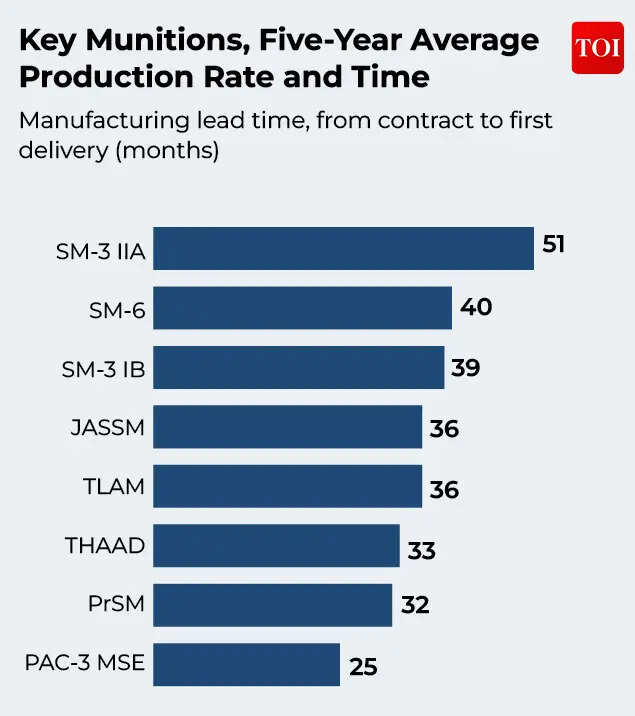
The Iran War exposed both the extraordinary strengths and growing weaknesses of the American military apparatus.US forces fired thousands of missiles, drones, and interceptors with remarkable accuracy during attacks on Iranian bases, command centers, military bases, and weapons facilities. Advanced systems such as Tomahawk cruise missiles, JASSMs, Patriot interceptors and THAAD air defense systems performed effectively.But the scale of the operation raised alarm bells even in strategic circles.According to CSIS’s assessment, the US stockpile of long-range precision munitions was under pressure even before the Iran conflict began. The war only intensified the shortage.The concern is particularly grave because a modern war against China would depend on exactly the same weapons.Unlike conflicts in the Middle East, a Pacific war would involve huge distances, heavily defended airfields, and heavy missile exchanges. In such a scenario, long-range strike systems become the backbone of military operations.
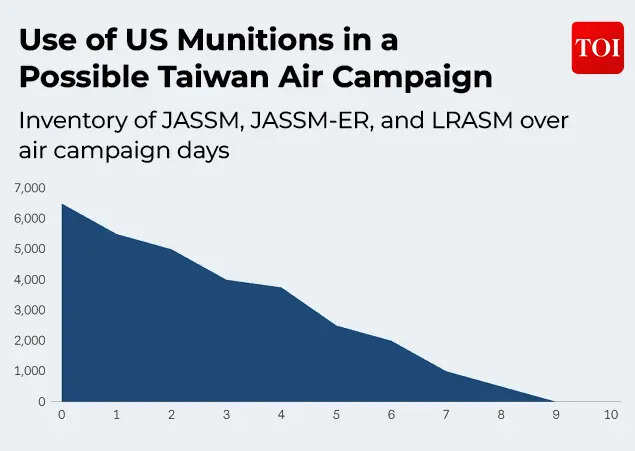
Problem? America may not have enough of these.The report said that the timeline for production of critical weapons is extremely slow. Some systems take three to four years to build. Replenishment of depleted arms and ammunition stocks is not a quick process.And while US officials publicly insist that the US still has overwhelming military power and is on top of defense spending, strategic analysts fear that a prolonged conflict could rapidly expose the shortfall.
China’s war machine is already on war footing
The speed at which China is expanding its military-industrial capabilities may further increase Washington’s concerns.According to the report, Beijing’s defense industry is already working with a wartime mentality. China is rapidly producing warships, submarines, missiles, aircraft, drones and cyber capabilities in almost every field of warfare.
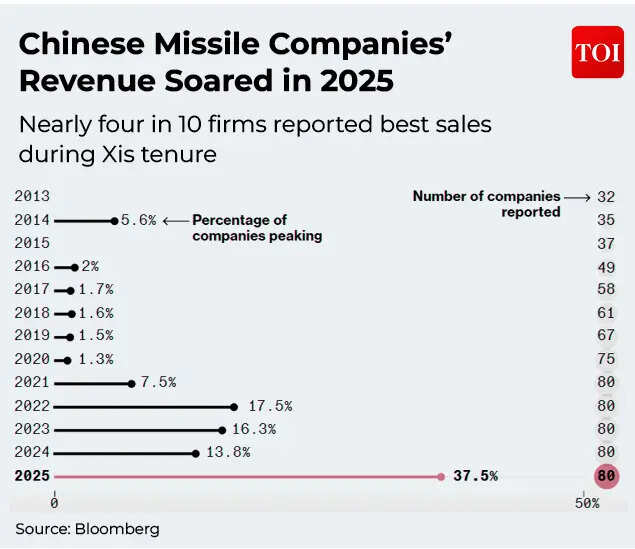
And unlike the United States, which still faces procurement delays and political obstacles, China’s centralized system allows military production to scale up rapidly.The concern is no longer just about the number of tanks or fighter planes.Modern warfare has shifted toward drones, AI-enabled targeting, cyber systems, electronic warfare, satellite navigation, and autonomous platforms. China is moving forward aggressively in many of these sectors.The Iran conflict became a glimpse of that future.Reports on Tehran’s drone and missile operations repeatedly point to Chinese-linked technology. Iran’s use of the BeiDou navigation satellite system improved the accuracy of drones and enabled more sophisticated battlefield deception systems.
What once seemed futuristic is now becoming a working reality.Wars are being fought not only with bombs and bullets, but also with algorithms, autonomous systems and satellite networks.
Taiwan became the center of the storm
Taiwan is at the center of the US-China rivalry.During Trump’s visit to Beijing, China warned that mishandling the Taiwan issue “could lead to US-China conflict.” Meanwhile, Taiwan accused Beijing of being the “single threat to regional peace and stability”.
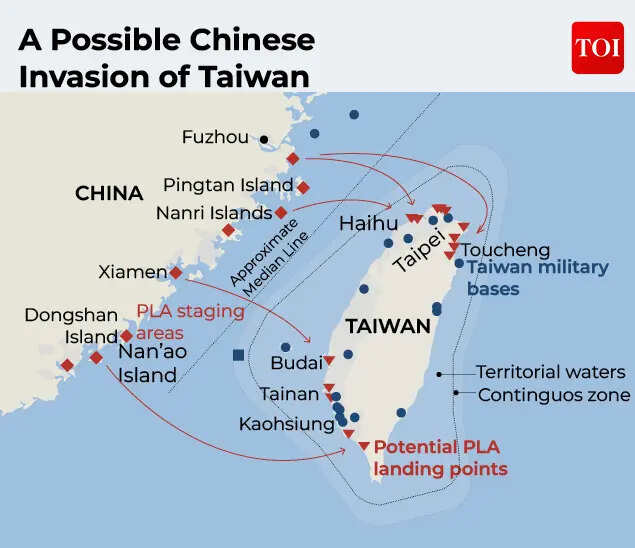
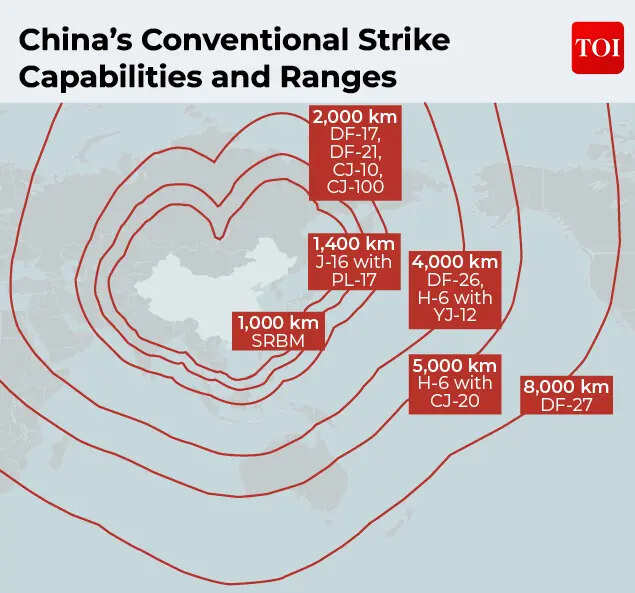
For military planners, Taiwan is no longer just a diplomatic flashpoint. This is the scenario around which the future Pacific war is increasingly being modeled.The CSIS report repeatedly highlights war-game simulations in which the US military eliminated a significant number of long-range missiles within the first week of the Taiwan conflict.Many simulations in Taiwan reportedly lost anti-ship missiles almost immediately.That discovery has strategists deeply concerned because China’s missile systems now threaten large parts of the Indo-Pacific, including US bases in Japan, Guam and the Philippines.U.S. aircraft carriers and destroyers, once symbols of unmatched American power, are now seen as increasingly vulnerable when within China’s missile range.
‘Hellscape’ era of war
The Pentagon’s answer to this growing challenge is an emerging concept known as “hellscape.”The idea is simple but dramatic: turn the Taiwan Strait into a vast maze of drones, underwater systems, unmanned attack vehicles (UAVs) and autonomous weapons that would make any Chinese invasion exceptionally costly.Rather than relying solely on expensive fighter planes or huge warships, the strategy focuses on “precision mass”, large numbers of cheap drones and unmanned systems working together.
Military planners believe that future wars will not be won simply by the side with the largest navy or air force, but by the side able to produce and maintain the largest numbers of smart, expendable systems.And here again, China’s manufacturing strength becomes central.The report also warns that the United States and Taiwan may need hundreds of thousands of drones and unmanned systems in any long-lasting Indo-Pacific conflict.The scale was more like industrial warfare than conventional military operations.
America’s industrial wake-up call
Perhaps the most shocking finding of the CSIS report is not about missiles or submarines, but about factories.The report argued that wars between great powers are ultimately won by industrial capacity.It pointed to America’s historic mobilization during World War II and the Cold War, when presidents like Franklin D. Roosevelt and Dwight D. Eisenhower turned the country into a defense production giant.Today, the fear surrounding Uncle Sam remains just as significant because it no longer has the same momentum or industrial urgency.Aircraft maintenance problems, excessive naval deployments, weak Pacific bases and delays in weapons production all point to a stressed system.The report calls for a wartime effort to modernize industrial mobilization efforts, accelerate defense manufacturing, strengthen supply chains, and rapidly expand production of drones, missiles and air defense systems.Because under Beijing’s diplomatic maneuvers, strategic competition is no longer just about who has the stronger military today.It is about who can face the next war tomorrow.

Bar Council of India has sought information from West Bengal Bar Council about the practice status of the former CM.
 “MS. Mamata Banerjee Served as the Chief Minister of West Bengal from 2011 to 2026. “Having regard to the constitutional public office held by him during the said period, and without expressing any opinion on the permissibility or otherwise of such presence at this stage, the Bar Council of India requires the factual position of his enrolment, practice, suspension, if any, and resumption, to be verified from your records,” the BCI said in a statement.It listed 9 indicators to be submitted to the State Bar Council by May 16, 2016. The details sought were I. If he is enrolled with the West Bengal State Bar Council, his enrollment number. II. The date of his enrollment in the State Bar Council of West Bengal. iii. Whether his name currently continues in the State List of Advocates maintained by the West Bengal State Bar Council. iv. Whether he had given any notice of voluntary suspension/suspension of practice/ceasing of practice at any time during his tenure as Chief Minister of West Bengal. If any such notice was given, the date when it was received by the State Bar Council, along with a copy of the relevant application/notice and order/noting, if any. vi. Whether any application/information was subsequently submitted by him for resumption of practice. Seventh. If so, the date of such application/information for resumption of practice, and whether it was accepted/taken on record by the State Bar Council. viii. Whether any certificate of practice/relevant practice-status record in his/her favor is available with the State Bar Council, and whether he/she is presently valid, active, suspended or otherwise. nine. Whether any other record, information, communication, order or entry exists regarding his authority to practice during or after his tenure as Chief Minister.The Bar Council of India further directed that the information given should be based on “contemporaneous official records” maintained by the West Bengal State Bar Council, including enrollment registers, state roll records, practice certificate documents, inward registers, records relating to suspension or cessation of practice, resumption records and relevant file notings or orders. It also sought certified copies of all relevant documents duly certified by the Secretary of the State Bar Council as well as details regarding page references, entry dates, internal diary numbers and custody of original records. The BCI asked the State Bar Council to provide certified copies of all supporting documents, correspondence files, inward registers and any other relevant records available with it relating to enrollment, suspension, discontinuance or resumption of practice. Furthermore, the Secretary is directed to certify that the copies furnished are “true copies of the original records made in the ordinary course of official business” and that the original documents have been preserved for inspection, if necessary. Pending the filing of the reply, the BCI also ordered that all original records relating to the case be preserved “in their present form” and no “alteration, correction, overwriting, interpolation or reconstruction” shall be made except in accordance with law and under intimation to the Bar Council of India. The State Bar Council has been asked to give its reply within two days of receiving the letter.
Mamta in lawyer’s garb
Mamata Banerjee on Thursday appeared in the Calcutta High Court in full lawyer attire, wearing a black lawyer’s coat and a white band over her trademark white saree with a blue border, to argue a PIL related to alleged post-poll violence in the state following the recently concluded assembly elections.She appeared before a division bench of Chief Justice Sujoy Paul and Justice Partha Sarathi Sen and presented photographs and a list of those allegedly killed in the violence. During the hearing, he urged the court to “protect the people of Bengal” and accused the authorities of failing to act against the attacks, looting and alleged intimidation taking place in various parts of the state.Heavy sloganeering broke out inside the court premises amid heightened political tension following his appearance in the High Court. Trinamool CongressBJP got defeated in the assembly elections. This PIL was filed by lawyer Sirsanya Banerjee, son of senior Trinamool Congress leader and lawyer Kalyan Banerjee.

These 5 evergreen shrubs make front entry beds look great all year long.

While a backyard flower border serves a completely different purpose than a front entry bed, it should look neat from the street, be framed next to the front door, and be balanced even without flowering plants. This is why evergreen shrubs are important components of foundation plantings.Flower beds provide color for only one season, while evergreens add structures that allow garden beds to remain useful year-round. As various gardening experts have noted, evergreen shrubs serve as the “framework” of the garden as they provide shape and interest year-round.Landscapers often use evergreen shrubs to keep front garden plants from looking abandoned when all the flowers are gone for the season. The key here is to choose low-maintenance shrubs that complement the home and don’t expand their space.Importance of evergreen shrubs front entry bedThe front yard is constantly visited by passersby who view it daily, whether walking on the sidewalk or from a car, porch, or window. Improper planting will make the entire façade look incomplete after the flowers fade.Evergreen shrubs solve this problem because they will retain their form even in winter or during dormant periods. Penn State Extension advises that shrubs should add more than just flowers for more than one season.In particular, there is no better place to place them densely than around the entryway. Shrub beds along sidewalks or patios can become crowded if plants grow too tall or irregularly. Therefore, it is always advisable to choose dense or medium-sized evergreen shrubs for most entrances.Compact boxwood maintains the structure of the bedsThe use of boxwood for front entry doors is quite common due to its naturally neat shape. Dwarf types will be perfect for lining walkways and stairs. Homeowners often replant boxwood to maintain a formal effect without confusion. For those looking for low-maintenance options, boxwood lookalikes, like Japanese holly, are available. Various gardeners suggest compact evergreen shrubs for front entrance design all year round.

The easiest way to keep your entry garden looking neat and clean all year round. Image credit – Wikimedia
Colorful euonymus require no flowersCompact euonymus shrubs have become popular because of their color retention without any flowers. Euonymus are shrub species with golden or white edges and green leaves that add color to otherwise dull entry spaces.Flowers are present only during certain seasons. Euonymus shrubs, on the other hand, remain colorful most of the year. Various guides mention that euonymus shrubs can be easily shaped by pruning.These plants work well near porches, mailboxes and front sidewalks where homeowners want definition in their yards without creating large hedges.Inkberry Holly for Country YardsInkberry holly has recently grown in popularity in the United States because it forms an evergreen base but helps create a landscape that includes more natives.Unlike many traditional hollies, the Inkberry variety has less sharp leaves and a naturally round shape. according to University of Maryland ExtensionNative evergreen shrubs such as inkberry can be used in sustainable landscapes.The Inkberry variety of shrub can handle wet soils more efficiently than most other evergreen shrubs.Lavender adds softness and speedLavender is officially a small evergreen or semi-evergreen shrub in many warm USDA zones. One advantage it has is the softness and mobility that other dense bushes lack.This is how lavender makes a difference. A front garden created using only clipped bushes can look stiff and formal. Adding lavender will help its silvery foliage and seasonal blooms, along with its texture, last for many months.According to many gardening guidelines, mixing evergreen foliage with seasonal foliage creates layers rather than a rigid design.Osmanthus brings fragrance and densityCompact osmanthus shrubs are excellent for warmer regions of the US. These shrubs have dense evergreen leaves and fragrant flowers that appear almost cryptically.They are similar to classic hedging shrubs in their form but are easier to maintain and prune. Osmanthus is often used near entryways because its aroma is noticeable when someone passes by.The most common mistake made by homeownersThe most common problem with front garden beds is improper spacing between plants. When you buy bushes from a nursery they may look small but soon, they spread out quite a bit.According to various studies, plants grow by their maturity rather than the size of their pot. Plants crowded into a small space will eventually become too many leaves that will block windows and spill over paths. Proper technique should be to plant less bushes with repetition. This method results in a more polished and professional garden.Why is evergreen architecture always a winning concept?Even if a great entry garden includes flowers, they will die at some point. And this is why evergreen structure never fails.This provides form, consistency and stability to the design throughout the season. Even though flowers can be an attractive focal point for many weeks, it is the evergreen structure that makes your garden complete.

The deepest ocean trenches: The 5 deepest ocean trenches on Earth, ranked: Why a basin owns every single slot world News

As one considers the deepest parts of our planet, it appears that such depths should be randomly distributed around the Earth’s surface, with perhaps some of the deepest trenches located along the African coast, others near the coasts of Europe, and others along the American coast. Still it is not so.If you want to study the top five deepest regions on Earth, there is no point consulting just any world map. Focusing on just one ocean is enough. In fact, all of Earth’s deepest craters can be found in the Pacific Ocean, turning this vast body of water into a terrifying neighborhood of geological wounds. Such features are not just scratches on the sea floor. Rather, they are the product of a never-ending process of self-transformation occurring within the Earth.Tectonic Wonders of the PacificTo understand why all the deepest points belong to the Pacific Ocean, we must take a closer look at the processes occurring within the Earth. The planet’s outer layer, known as the Earth’s crust, is made up of large puzzle pieces or tectonic plates. These plates are involved in a fierce battle for supremacy in the Pacific region.When an oceanic plate collides with a lighter continental plate, it does not collide with it at all. It dives rapidly beneath it and falls straight into the Earth’s warm mantle. This process is known as subduction, and the exact point where the plate bends and dives gives rise to an oceanic trench.Because these intense collision zones surround the Pacific Basin, it has become the ultimate factory for the deep ocean depths. According to a historical overview by Woods Hole Oceanographic InstitutionThese trenches represent the most powerful plate interactions on Earth. They are surface manifestations of a planet swallowing its own crust.The following is a comparison of the five deepest trenches in the world, based on verified measurements of their depth.1. the Mariana TrenchLeading this group is the Mariana Trench, which can be found in the western Pacific Ocean. It is the heavyweight champion when it comes to deep sea trenches. At its deepest point, Challenger Deep, the height of the bottom reaches 11,034 meters. Even if we turned the majestic Mount Everest on its head and dropped it into this abyss, its summit would still be filled with thousands of meters of water.2. Tonga TrenchThe Tonga Trench, located in the southwestern part of the Pacific Ocean, is considered the second deepest trench on Earth, with a depth of more than 10,800 meters. The Tonga Trench is characterized by its rate of descent, which is very rapid. The reason for this is the high speed of collision between the tectonic plates here.

These trenches, such as the Mariana and Tonga, form where oceanic plates dive beneath continental plates, creating geological wounds. Image Credit: Google Gemini
3. philippine trenchAt a staggering depth of over 10,500 metres, the Philippine Trench is another deep trench found in the western Pacific Ocean, characterized by steep edges created by a complex system of intersecting tectonic plates. The geometry involved is extremely sharp, creating deep cuts in the ocean crust.4. Kuril-Kamchatka TrenchThis huge trench is included in the list of trenches whose depth exceeds 10,500 meters, making it almost equal to the Philippine Trench. Located in the northwestern region of the Pacific Ocean, the trench extends to the Kuril Islands and includes continuous subduction zones.5. Kermadec TrenchCompleting the list at number five is the Kermadec Trench, which plunges more than 10,000 meters deep into the southwestern Pacific Ocean. Working in conjunction with the Tonga Trench System, the Kermadec becomes the last buttress point for this southern chain of extreme underwater geology, showing us that when it comes to the Pacific’s claim on underwater geology, that claim cannot be disputed.How do these findings reshape our geographical thinking and what do they mean scientifically?This comprehensive study of the top five places reshapes our understanding of the meaning of geography. Extreme underwater environments are not a unique phenomenon in the world.But then, determining the direction of these alien scenarios is no easy task. From extensive research conducted by National Centers for Environmental Information at NOAAThis makes it clear that obtaining accurate results under extensive water depths is no easy task. Sound waves are sent out from the ocean floor through ships, but factors such as water pressure can cause inaccurate readings.Therefore, it should not be surprising that modern oceanographers do not use accurate readings for such second-place trenches.However, what is known about these trenches is that they are dynamic and are not simply dead zones. These trenches hold within them clues to how Earth sustains itself, recycles itself, and even how life might persist on other frozen moons. The answer lies in the depths, but until then it seems that all answers are safely locked away in the depths of the Pacific Ocean.

Video: Mamata Banerjee in lawyer’s gown faces sloganeering in Calcutta High Court during hearing of post-poll violence case. india news

New Delhi: Former Chief Minister of Bengal Mamata Banerjee She faced heavy sloganeering in the Calcutta High Court on Thursday when she appeared as a lawyer in a public interest litigation (PIL) related to alleged post-poll violence following the recently concluded assembly elections in the state.Wearing the traditional black advocate jacket and white collar-band over her signature white saree with blue border, Banerjee appeared before a division bench of Chief Justice Sujoy Paul and Justice Partha Sarathi Sen to argue the case.The PIL was filed by Sirsanya Banerjee, son of a high court lawyer and senior advocate and four-time advocate Trinamool Congress MP Kalyan Banerjee. Sirsanya Banerjee recently contested the assembly elections from Uttarpara in Hooghly district on a Trinamool Congress ticket, but she lost to BJP candidate and former NSG commandant Dipanjan Chakraborty by over 10,000 votes.As Banerjee walked through the court complex dressed in lawyers’ attire, slogans were raised against her amid heightened political tension following the assembly election results in which the Trinamool Congress lost power. Bharatiya Janata Party.During the hearing, Banerjee reportedly presented photographs before the bench and alleged that “even children and women are not spared”. He also submitted a list of ten people who were allegedly killed in the post-poll violence.He said before the court, “My humble request is that please protect the people of Bengal. This is not a bulldozer state.”He further alleged that houses and offices were being occupied and looted in front of the police and claimed that the authorities had failed to intervene. “Everything is being done in the presence of police,” he said. He said people are entitled to have their voices heard, even if you are demolishing an unauthorized structure.Banerjee urged law enforcement agencies to step up action against those involved in the violence, arguing, “Once something happens, they won’t investigate? There is no police.”Reacting to her court appearance, the Trinamool Congress, in a post on Twitter, said Banerjee had “once again shown what really sets her apart”.“She never abandons the people of Bengal in their time of need. She never stops fighting for truth, justice and constitutional values. And time and again, she rises above the politics of hate with unparalleled compassion, courage and conviction,” the party said.The party further said, “Whether confronting the injustice of SIR or standing strong against the uncontrolled conduct of the BJP, she continues to prove that there is no leader like her in the country today.”Earlier this year, Banerjee had also appeared in the Supreme Court during the hearing related to the Special Intensive Review (SIR) case in West Bengal, where she briefly addressed the bench headed by Chief Justice of India Surya Kant, although she did not appear as a lawyer in that case.In the recently concluded assembly elections, Banerjee was defeated by current Chief Minister Suvendu Adhikari from Bhawanipur assembly constituency by a margin of over 15,000 votes. Following the defeat, Governor RN Ravi dissolved the previous assembly, thereby ending the Banerjee-led cabinet.

On the delay in Surya and Trisha’s ‘Karuppu’, RJ Balaji said, ‘My eyes are filled with tears.’ tamil movie news

actor-director RJ Balaji Got emotional after ‘Karuppu’ could not be released as per plan on Thursday morning. The much-awaited Suriya starrer was scheduled to be released in theaters in Tamil Nadu and other states with a special 9 am show. But many morning shows were suddenly canceled due to last-minute financial and release issues. Fans who came all the way and even bought tickets for the first day of release were left disappointed. In this period of chaos and despair, RJ Balaji posted an emotional video message from his car, in which he personally tearfully apologized to his fans and viewers. His emotional reaction quickly went viral on social media and attracted sympathy from film lovers and Suriya fans.
RJ Balaji’s emotional video statement goes viral
In the emotional video, RJ Balaji said that he never thought that the situation would become so difficult. Struggling to control his emotions, he apologized to the audience who had come to the theaters early in the morning in hopes of celebrating the film’s release. He said emotionally, “Watching movies is usually a way for people to escape from their personal problems and stress. But instead, we have now created more frustration and pressure for fans.” He also said, “I sincerely apologize to all the people who came to watch the film from Tamil Nadu, Kerala, Andhra and all places.” The actor-director further revealed that many people were working continuously behind the scenes to resolve the issue and release the film as soon as possible.
Debate broke out on RJ Balaji’s allegations!
RJ Balaji also talked about the struggles faced by the team during the production and release of the film. He said that he strongly believed that May 14 would become a memorable day for the film. He shared, “I was confident that this film would achieve great success. Now my eyes are filled with tears because of this pain.” One line from his speech in particular caught the attention of fans online. “I used to say ‘Karuppu varan, vazhi viduven,’ but many people are still blocking the way,” he said emotionally. He also praised Suriya for standing by the team during this difficult moment and said that the actor was personally making great efforts to resolve the issue quickly.
‘Karuppu’ team hopes for a smooth release soon
‘Karuppu’ stars Suriya in the lead role and Trisha Krishnan plays the female lead. RJ Balaji plays an important negative role in the film, while the music is composed by Sai Abhyankar. The film has been promoted as a mass commercial entertainer with action, emotions and social themes. Although there was a feeling of disappointment among his fans due to the delay in the release of the film, they still extended their support to him through social media platforms. In his emotionally packed video, he concluded by saying that all the efforts will be worthwhile once ‘Karuppu’ is released.

FIFA World Cup: Madonna, Shakira and BTS to headline halftime show before final
FIFA confirmed on Thursday that global music icons Madonna, Shakira and K-pop supergroup BTS will lead the first halftime show during the FIFA World Cup 2026 Finals at MetLife Stadium on July 19.
The historic show, curated by Chris Martin, marks a significant change in the presentation of FIFA’s showpiece event, bringing the World Cup final closer to the entertainment spectacle associated with the Super Bowl in the United States.
FIFA President Gianni Infantino announced the line-up via social media, saying that the performance would unite “music, football and a shared commitment to improving the lives of children around the world”.
“The FIFA World Cup 2026 Final halftime show will be a truly special moment,” Infantino said, confirming that the event will support the FIFA Global Citizen Education Fund, which aims to expand access to education and football for children around the world.
The 2026 World Cup, co-hosted by the United States, Canada and Mexico, will run from June 11 to July 19 and will feature 48 teams for the first time. FIFA expanded the tournament to 104 matches from the previous 64, while introducing an additional knockout round.
The inclusion of a halftime concert during the final may also extend the traditional 15-minute interval, although FIFA has not yet confirmed the exact duration of the break.
Halftime entertainment has long been a staple of major American sporting events, especially the Super Bowl. Madonna previously headlined the Super Bowl halftime show in 2012, while Shakira performed with Jennifer Lopez in 2020.
FIFA already used the concept during last year’s Club World Cup final at MetLife Stadium, where Chelsea won over Paris Saint-Germain with performances from Doja Cat, J Balvin and Thames.
The 2026 edition is expected to be the biggest World Cup in history, with matches spread across venues in the United States, Canada and Mexico before culminating in the final in New Jersey.
– ends
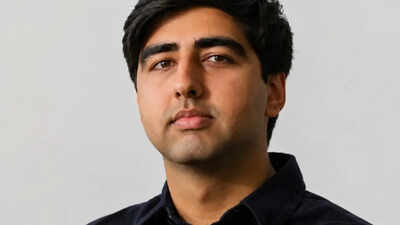
Surya Midha: Meet Surya Midha: The 22-year-old college dropout AI founder who became a billionaire faster than Mark Zuckerberg | world News
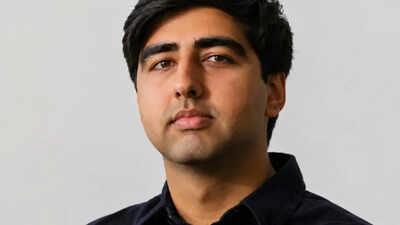
At age 22, most people are still trying to finish university, secure their first steady job, or decide what they really want to do in life. This is why the story of Surya Midha has attracted so much global attention. The Indian-origin entrepreneur based in San Francisco, California reportedly became one of the world’s youngest self-made billionaires after the rapid growth of his artificial intelligence startup Mercor, reports Forbes. What makes this achievement even more remarkable is that Midha became a billionaire at an even younger age than Mark Zuckerberg. His journey from college dropout to tech billionaire has quickly become one of the most talked-about startup success stories of 2026, especially as the AI industry is expanding at an extraordinary pace.
How Surya Midha’s Mercor AI recruitment turned into a billion dollar opportunity
Mercor was founded in 2023 by Surya Midha along with his friends Brendan Foody and Adarsh Hiremath. The trio reportedly shared an interest in technology, debating, and entrepreneurship before deciding to start their own company during the growing artificial intelligence boom.The platform helps companies find employees who can contribute to artificial intelligence research, AI model training, technological development, and related projects. What made the startup stand out was its heavy use of artificial intelligence during the recruitment process. According to reports, the platform uses AI systems to conduct interviews, assess skills, evaluate candidates, and match people with companies more efficiently than traditional recruiting methods. Mercor has reportedly positioned itself as a fast and scalable solution for companies struggling to quickly hire qualified talent.
How Mercor went from startup to tech giant in just a few months by 2025
Mercor’s growth during 2025 reportedly surprised even seasoned investors in the technology sector. The company’s annual revenue grew from about $100 million at the beginning of the year to nearly $500 million within a few months, Forbes reports. The growing demand for AI services encouraged major investors to invest significant money in the company. By the end of 2025, Merker is reportedly set to reach a valuation of around $10 billion. That valuation instantly turned all three founders into billionaires, while they were still only 22 years old.Surya Midha currently serves as the company’s president after reportedly transitioning from his previous role as chief operating officer. Reports show that each co-founder owns about 22% of Mercor, giving them massive individual wealth as the company continues to grow. According to recent estimates, Midha’s real-time net worth is believed to be around $2.2 billion as per Forbes report on 14 May 2026.
Surya becomes a billionaire at a younger age than Midha Zuckerberg
One of the reasons why Surya Midha’s success story has gone viral online is because of the comparisons with Mark Zuckerberg. Zuckerberg became a billionaire at the age of 23 following the explosive rise of Facebook, now known as Meta. Reportedly, Midha crossed this milestone at the age of just 22.The comparison highlights how quickly the AI industry is generating enormous wealth for young entrepreneurs. During the social media era, companies like Facebook transformed the Internet. Today, artificial intelligence seems to be creating a new generation of ultra-young tech billionaires even faster.
How Surya Midha went from being a student to a startup founder during the AI boom
Midha reportedly studied at Georgetown University before deciding to drop out of college and focus entirely on the startup. Leaving university is always a big gamble, especially in a competitive industry like technology. For many young entrepreneurs, especially students interested in artificial intelligence, Midha’s story represents the growing belief that age no longer limits success in the startup world. Technology, AI tools, and access to global investment networks have reportedly made it possible for young founders to scale companies faster than ever before.

EC announces Phase 3 of SIR: 16 states, 3 UTs to be covered – see list india news

New Delhi: The Election Commission on Thursday announced the conduct of the third phase of Special Intensive Review (SIR) covering 16 states and 3 Union Territories. The Election Commission said that Himachal Pradesh, Jammu and Kashmir and Ladakh will not be included in this.“The Election Commission of India has directed to conduct Special Intensive Review (SIR) in 16 states and 3 Union Territories (UTs),” it said in a statement.“With this, the SIR of the electoral roll will cover the entire country except Himachal Pradesh, Jammu and Kashmir and Ladakh in the third phase. The SIR schedule for these three States/UTs will be announced later, after the completion of the second phase of census in these three States/UTs and due consideration of the weather in the upper reaches/snow covered areas.”It further said, “Approximately 59 million voters were covered in the first two phases of SIR in 13 States/UTs as on the date of order of SIR in the respective States/UTs, over 6.3 lakh BLOs and over 9.2 lakh BLAs appointed by political parties were covered in various stages of the SIR process.”The election body informed that during the third phase of SIR, more than 3.94 lakh Booth Level Officers (BLOs) with the support of 3.42 lakh Booth Level Agents (BLAs) nominated by political parties, will conduct door-to-door visits to reach out to 36.73 crore voters during the counting phase.

Sun transits Taurus in May 2026: Stability is tested by Uranus and Saturn in each sign

From May 15 to June 15, 2026, the Sun will enter Taurus from Aries. This changes the mood immediately. Aries are sharp, direct, impatient, and action-driven. Taurus is slow, steady, and more concerned with money, comfort, security, food, family values, and long-term stability. So this one month period is not about rushing into everything. It’s about asking a very practical question: What is really stable in my life, and what only looks stable from the outside?Why is the Sun isolated in Taurus in 2026?This year, Sun is not moving alone in Taurus. Uranus is already in Taurus, so this transit brings unexpected changes around money, comfort, routine, relationships, and personal values. Taurus generally likes predictability, but Uranus doesn’t let things stay too stable. Saturn in Pisces also casts its third aspect to Taurus, adding pressure, discipline, and reality checks. For about half of this transit, Mercury also joins Taurus, so money talks, business decisions, negotiations, documents, and practical interactions become more important. Venus, the lord of Taurus, will also be in conjunction with Jupiter during this period, which brings love, finance, comfort, luxury and assistance in relationship development. Therefore, this month brings both opportunities and improvements.
ARISFor Aries, this transit directly activates money, savings and self-esteem. You may feel the need to spend, earn, invest or restructure finances. Thoughts of sudden expenditure or sudden earning can both arise. Don’t make impulse purchases just to feel in control. Offer water to the Sun in the morning and keep a clear limit on expenditure for this month.TAURUSFor Taurus, this becomes a personal reset. Confidence, presence, health, identity and decision-making abilities come into focus. You may feel restless, even though you usually prefer stability. Uranus may inspire you to change something about your lifestyle or image. Remain calm. Walk barefoot on the grass and avoid unnecessary insistence in personal matters.GeminiThis transit works peacefully for Gemini. Patterns of sleeplessness, anxiety, overthinking, and hidden stress may become more visible. You may feel tired without understanding the reason. Don’t burden yourself mentally too much. Reduce screen time before sleeping and light a ghee lamp in the evening for peace.cancerFriendships, networks, and long-term goals become active for Cancerians. Some people may come closer while some equations may suddenly feel distanced. Don’t trust every group plan too emotionally too quickly. Feed the birds regularly and be selective about who has access to your energy.leoCareer becomes important for Leo. Visibility increases, but so does the pressure. You may get responsibility, attention or sudden professional changes. Do not react with ego at the workplace. Feed jaggery to the cow on Sunday and keep every business commitment realistic.VirgoFor Virgo, this transit opens up learning, travel, faith, and long-term direction. You may reconsider your belief system or feel drawn toward spiritual study. A travel or learning opportunity may come suddenly. Journal daily and avoid being too rigid in any one approach.LibraThis is a deep transit for Libra. Shared money, debt, investments, taxes, trust and emotional vulnerabilities come to the fore. Avoid casual lending or taking secret financial decisions. Soak feet in salt water once a week and keep financial matters transparent.scorpioFor Scorpio, relationships become the main focus. There may be sudden changes in marriage, partnership, business collaboration and commitment related conversations. Speak thoughtfully as Mercury will make conversations important. Offer rose water in a temple and avoid giving sharp reactions in close relationships.archerFor Sagittarius, there is a need to improve routine, work habits and health. Irregular eating, poor sleep, or burnout patterns may appear. This is a good month to get the basics right. Keep a fixed waking time and do not skip meals.CapricornLove, creativity, children, and self-expression become active for Capricorn. Unexpected romantic or creative developments may arise. Do not control your emotions too much. Spend time in the morning sunshine and allow yourself to enjoy something without any guilt.AquariusHome, family, property and emotional foundation become important for Aquarius. There may be a sudden domestic change or family conversation. Keep your home clutter free and spend time consciously with elders or parents.PiscesCommunication, siblings, short travels and decision making abilities become active for Pisces. Words will carry weight, so avoid speaking emotionally in a hurry. Chant Aditya Hridayam once a week and think before replying to sensitive messages.This article is written by Siddharth S Kumar, Registered Pharmacist, Astro Numerologist, Life & Relationship Coach, Vastu Expert, IKS Expert, I Ching Expert, Energy Healer, Music Therapist, Author of “Think Like a Sage Lead Like a CEO” series and Chief Astro Strategy Officer (CASO), Numrovani.