
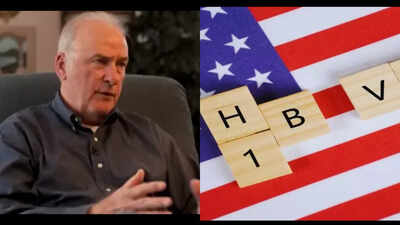

‘Indians are hiring Indians’: Former Google contractor says he was asked to train his replacement
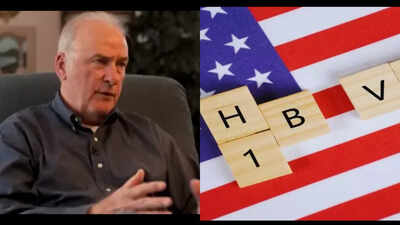
A former Google contract employee told GB News how his team’s jobs moved to India, Ireland and the Philippines.
Stephen Vivian, a former Google contractor, said it was rude, harsh and inhumane when he was asked to train his replacement and sent his entire team’s jobs to India, the Philippines and Ireland. Vivian said this for an H-1B documentary for GB News, in which American techies who lost their jobs due to H-1B and mostly Indians were interviewed. The documentary also aimed to explore the difference in appointment patterns after individuals of Indian origin became CEOs of top companies.Vivian said that she discovered that whenever an Indian is hired, they share confidential interview questions with other Indians and the network flourishes in this ‘dishonest’ way.A former FedEx employee anonymously told GB News that things gradually began to deteriorate after Raj Subramaniam became CEO, as a downsizing program was underway. There was a lot of offshoring and their jobs also went to India. He said there were several managers on his team, and one of them, he thought, was visiting family in India but the manager was actually training replacement American workers in India.Indian-origin lawyer Navdeep Member, who was interviewed for the documentary, said that the CEO being of Indian origin has no impact on the appointment because the CEO does not know who is being appointed and these decisions are taken by lower level employees. But he confirmed that many tech workers go back to India as part of offshoring. Life in India is much better than the US as there are many domestic workers to be found there, Mimber said, adding Indians are moving back because they are getting the same pay with the same employers working from India.In the documentary, immigration expert Rosemary Jenks said that President Donald Trump cannot completely stop H-1B visas because Congress has started the program, but at least Trump has taken a disincentive step by imposing a fee of 100 thousand dollars on all new H-1B entries from outside the US. But this did not reduce the numbers because foreign students who are already in the US are not subject to the new fees and enter the job market through the OPT program.
India tells China to introspect on the reputational cost of supporting terror exporter Pakistan. india news
New Delhi: Amid reports of China providing technical assistance to Pakistan in the military conflict that followed India’s Operation Sindoor last year, the government urged China to introspect about the potential reputational cost of supporting terrorist infrastructure. The Ministry of External Affairs (MEA) said the reports only confirmed what was already known.“Operation Sindoor “There was a precise, targeted and calibrated response to the terrorist attacks in Pahalgam, aimed at destroying the state-sponsored terrorist infrastructure operating out of and at the behest of Pakistan,” External Affairs Ministry spokesperson Randhir Jaiswal, while responding to questions about China’s support to Pakistan at a media briefing, said.A State Department spokesperson said, “It is for nations that hold themselves responsible to decide whether supporting efforts to protect terrorist infrastructure affects their prestige and reputation.”Last week, reports from Beijing said that China had confirmed that it had provided on-site technical assistance to Pakistan during the conflict with India in May last year. The confirmation was based on an interview broadcast by China’s state broadcaster CCTV with Zhang Heng, an engineer at the Chengdu Aircraft Design and Research Institute of Aviation Industry Corporation of China, a key developer of China’s advanced fighter aircraft and unmanned aerial vehicle designs.The Hong Kong-based South China Morning Post, citing CCTV, reported that Zhang had provided technical assistance to Pakistan during the four-day war last May. The Pakistan Air Force operates a fleet of Chinese-made J-10CE jets, manufactured by China’s subsidiary Aviation Industry Corporation of America.
Lok Adalat for check bounce cases on May 30, July 18. chandigarh news
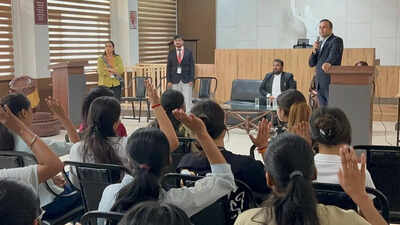
Panchkula: : Special Lok Adalats for check bounce cases under Section 138 of the Negotiable Instruments Act will be held on May 30 and July 18 at the District Court premises here.This announcement was made by Chief Judicial Magistrate and Secretary, District Legal Services Authority (DLSA) Ajay Kumar Ghanghas during a legal awareness camp organized at Swami Devi Dayal Law College on the occasion of International Technology Day.Addressing students and teachers, Ghanghas highlighted the growing role of technology in the legal system and said it has made justice delivery faster, more transparent and accessible.He encouraged the students to use technology responsibly in legal education and awareness initiatives. An interactive session was also organised.Resource Person Rajat Handa, Panel Advocate, DLSA Panchkula spoke on digital literacy and use of e-courts and online legal services.Ghanghas also briefed the participants about the Special Lok Adalats and the “Samdhaan Samaroh” initiative of the Supreme Court, which aims to promote mediation and reduce pendency of cases.

Sikh man in Canada says he was denied police exam because of Kirpan: ‘My dream is shattered’

Jaspal Singh Gill said his dream of becoming a police officer was “broken”
A Winnipeg man has sparked a debate over religious freedom by claiming he was barred from taking a police recruitment exam because he was carrying a Sikh kirpan.Jaspal Singh Gill said his dream of becoming a police officer was “shattered” when he was allegedly asked to remove a ceremonial dagger before sitting for the Winnipeg Police Service recruitment exam.“A Winnipeg man says his religious rights were violated because he was not allowed to bring his ceremonial dagger to a Winnipeg Police Service recruitment exam. He is apologizing and says he may file a complaint with the Manitoba Human Rights Commission,” CTV anchor Daniel Helmerson said in introducing the report.Gill says he comes from a family of police officers in India and it had been his long-time ambition to join the force.“My goal was to become a police officer like my father and grandfather. […] I was told I couldn’t bring it [the kirpan] Inside. This is a violation of my religious rights,” he said.According to Gill, recruitment staff told him he would not be allowed to sit for the exam unless he removed the kirpan, which Sikhs are required to wear as part of their faith.“My long-time personal goal was to join the police service as my grandfather and father were police officers in India,” Gill said.He added, “The recruiting officer came up to me and told me, like, you have to take off your saber to take the test.”The Kirpan is one of the five ‘K’s’ in Sikhism and is considered a sacred article of faith symbolizing courage, justice and the duty to protect others. It resembles a small dagger but Sikhs claim that it is not intended to be used as a weapon.“We wear it to symbolize our courage and our responsibility to fight against injustice,” Gill said.Gill said he refused to remove the saber and instead decided to leave the examination centre.He said, “I had to do that, like my dream was shattered at that time. I believe it is discrimination because all the other participants were allowed, but I was not allowed just because I was wearing a kirpan, which is a symbol of faith in Sikhism.”In a statement to CTV News, the Winnipeg Police Service defended its actions, saying the Sikh applicant was offered a compromise of putting the dagger aside until the exam was over.A police spokesperson said, “We welcome applicants from diverse backgrounds and religious communities. The option to safely store the saber for the duration of the examination has been accepted by many applicants in the past and has enabled them to complete the testing process.”But Gill argued that his Charter rights had been violated and pointed to previous Supreme Court of Canada decisions protecting the wearing of sabers in public places.“Khalsa is allowed to wear kirpan in court, is allowed to wear kirpan in assembly, is allowed to wear kirpan in domestic flights,” he said.Legal expert Neil MacArthur, a professor at the University of Manitoba, said Gill may have strong grounds if he takes legal action.“Given that we have a Supreme Court precedent that was pretty clear, I think his chances in the court process are probably pretty good,” MacArthur said.Gill said he has already contacted a local MLA and filed a freedom of information request to learn more about the police service’s policy. Despite the controversy, he insists that he has not given up on his goal of becoming a police officer.

2 out of 5 Pakistanis sent to 25-day custody for terrorist acts in Jammu and Kashmir. india news

Jammu: A Jammu court on Monday sent five people, including two Pakistani nationals, to 25-day judicial custody. NIA matter related to terror activities.Earlier, police checking paraphernalia for terror activities had intercepted a bike in Srinagar and seized a grenade and 15 bullets from the possession of Mohammad Naqib Bhat.During their interrogation, four more accused, including two Pakistani nationals, were arrested under the Arms Act, UAPA and Explosive Substances Act in connection with terrorist activities.

Now, door-to-door ration delivery for 80+ people. patna news

Patna: The state government is considering doorstep delivery of PDS ration for beneficiaries above 80 years of age and Food and Consumer Protection Minister Ashok Chaudhary on Tuesday directed officials to examine the feasibility of the proposal.Chairing a review meeting on departmental plans, procurement operations, Public Distribution System (PDS) and consumer protection initiatives, Ashok asked officials to prepare a proposal to start a pilot project for home delivery of food grains to older people.He said the government would consider statewide implementation based on the outcome of the pilot project.Ashok also directed the officials to complete the work of issuing new ration cards within the stipulated time limit and ensure complete transparency in the process. He directed the department to fill the vacancies in fair price shops under PDS within the stipulated time limit.The Minister asked Bihar State Food and Civil Supplies Corporation to ensure timely supply of quality food grains in prescribed quantity to the beneficiaries and warned of strict action against careless transporters.“Timely distribution of food grains to beneficiaries is the department’s top priority and negligence in this regard will not be tolerated,” Ashok said.He also asked the officials to explore construction of warehouses under public-private partnership (PPP) model to strengthen food grain storage capacity in the state.Senior officials including Secretary Abhay Kumar Singh, Special Secretary Upendra Kumar and Bihar State Food and Civil Supplies Corporation Managing Director Sunil Kumar participated in the meeting and reviewed the status of ongoing departmental programs and initiatives.

Foreign student enrollment in US universities fell 20% due to ‘restrictive government policies’: Report

US universities are seeing a decline in enrollment of foreign students, with experts warning that the decline could be even greater as Donald Trump’s harsh immigration policies reshape the country’s higher education system.A new report released Monday found that international student enrollment for the spring 2026 semester has declined by 20% compared to the same period last year. The study was conducted by international education groups including NAFSA and surveyed 149 universities and colleges across the US.More than 60% of institutions said they have recorded a low number of foreign students in both undergraduate and postgraduate programmes. Undergraduate enrollments were even more impacted, with universities experiencing an average decline of 24%.The figures have worried teachers, who fear the US is becoming a less welcoming destination for foreign students under Trump’s increasingly restrictive immigration agenda.Already, international student arrivals to the US in August are down 19% from last year, including returning students. Overall international student numbers fell by 1.4% last autumn, the first decline in three years. New foreign student enrollments for autumn 2025 fell by 17%.Analysts believe the latest figures could indicate an even bigger recession in the future because many of the students currently enrolled applied before the Trump administration implemented many of its harshest policies.“As long as the administration acts as if it is in a world full of enemies, it will have a serious impact on student numbers,” said Simon Marginson, professor of higher education at the University of Oxford and founding director of the Center for Global Higher Education.The report found that 84% of US institutions blamed “restrictive government policies” for enrollment declines.Since returning to office for a second time, Trump has expanded travel restrictions affecting more than a dozen countries, tightened student visa rules and increased scrutiny on foreign applicants, particularly Chinese students. The administration has also adopted aggressive deportation measures, including detaining some international students and canceling thousands of student visas, which were later reinstated.“The administration’s demonstrative display of hostility toward foreign students, including street seizures of students and forcibly expelling those on the data base for minor misdemeanors such as parking fines, has damaged awareness in the international market,” Marginson said.“Even in a more favorable environment, such perceptions take years to correct and the environment is not very favorable right now.”Universities are now beginning to feel the financial pressure. International students often pay full tuition fees, making them a major source of revenue for many institutions.NAFSA estimates that a 17% decline in new foreign student enrollments for autumn 2025 could cause universities to lose more than $1 billion in revenue. California, Massachusetts and New York are expected to take the biggest financial hit.Some universities have already started cutting costs. DePaul University in Chicago has reportedly instituted a hiring freeze, cut executive pay and restricted spending after a 30% drop in international enrollments. Other institutions, including the University of Southern California and Northwestern University, have also slashed budgets and cut jobs amid broader financial pressures.In addition to finances, the US may also fall behind academically as highly qualified foreign students are increasingly choosing universities elsewhere.The US, UK, Canada and Australia have long dominated the international education market, but Asian universities are now catching up. The report found that 82% of institutions in the Asia-Pacific region recorded growth in undergraduate international enrolments, while almost half of European institutions also saw growth.Countries including Malaysia, Thailand, Singapore, Japan and South Korea have all reported increases in the number of Chinese students in recent years.China itself is emerging as a strong global education hub, helped by low tuition costs, growing research investment, and scholarship programs for students from Asia and Africa.
‘Bad days for you… you know who’: Himanta-Suvendu’s friendship catches attention at Assam government’s swearing-in ceremony. india news
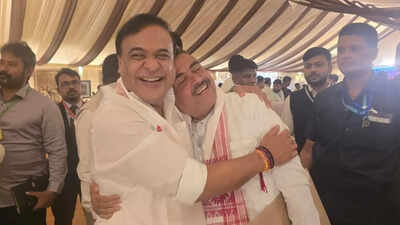
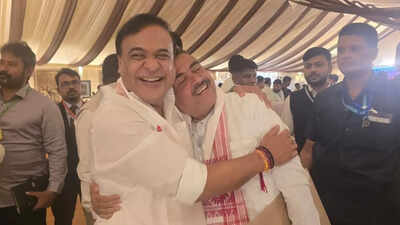 Himanta Biswa Sarma And West Bengal Chief Minister Suvendu Adhikari shared a happy moment from the swearing-in ceremony of the Assam government. Along with the talks, both the leaders also pointed towards the problem of infiltrators, possibly a common problem of both the states.Pictures posted by Suvendu Adhikari onThe conversation became a talking point when Himanta Biswa Sarma, in a mocking comment on the officer, said: “Bad days…(you know who).”Adhikari responded in the same vein, writing: “No prizes for guessing, I guess,” followed by a smiling emoji, taking a direct dig at West Bengal Chief Minister Mamata Banerjee without naming her.The moment comes at a time when both Assam and West Bengal have seen infiltration as a major political and administrative concern. Sarma has consistently kept Assam’s crackdown on illegal immigration at the center of his government’s agenda, while Adhikari has stepped up the BJP government’s rhetoric around border security, demographic change and alleged cross-border infiltration after becoming the chief minister of West Bengal.The public cordiality between the two leaders comes as an effort to present a coordinated eastern regional narrative around national security and identity politics.The talks also highlighted the growing political rapprochement between the BJP governments in Assam and West Bengal, with both leaders projecting themselves as key faces of the party’s campaign against infiltration in eastern India.
IPL 2026: Kagiso Rabada enters exclusive IPL club with historic powerplay bowling feat cricket news

Kagiso Rabada continued his sensational IPL 2026 campaign with another devastating spell with the new ball, dismantling the Sunrisers Hyderabad top order and leveling up with some of the greatest powerplay bowling sessions in the history of the tournament. Rabada took 4-0-28-3 against SRH in Ahmedabad on Tuesday, proving once again why he has been the most destructive fast bowler of the season with the new ball. South African fast bowler out Abhishek Sharma, Ishan Kishan And Smaran Ravichandran left Hyderabad in complete disarray during a brutal powerplay burst.
With those wickets, Rabada now has 16 wickets inside the powerplay this season, equal to the second-highest tally recorded in a single IPL edition. Only Mohammed ShamiThe players who took 17 powerplay wickets in IPL 2023 are ahead of him. Most wickets in powerplay in an IPL season:
- 17 – Mohammed Shami (2023)
- 16 – Michelle Johnson (2013)
- 16- Trent Boult (2020)
- 16*- Kagiso Rabada (2026)
Rabada is also ahead in IPL 2026 powerplay wicket chart Bhuvneshwar Kumar, jofra archer And Mohammad Siraj.Most wickets in powerplay (1-6 overs) in IPL 202616 – KG Rabada (ER: 9.03)*12 – Bhuvneshwar Kumar (ER: 6.91)9 – Jofra Archer (ER: 9.36)9 – Mohammed Siraj (ER: 7.36) The effect of Rabada’s magic was immediate. SRH were reduced to just 34/4 in the first six overs, which was their second-lowest powerplay score of IPL 2026 and the first time they lost four wickets inside the powerplay this season. After Gujarat Titans scored 168/5 thanks to half-centuries from Sai Sudarshan and Washington Sundar, Rabada ensured that SRH never chased the target. He removed Abhishek Sharma with extra pace and bounce before trapping Ishan Kishan during SRH’s desperate attempt to rebuild. Rabada then completed another breathtaking opening spell by dismissing Smaran Ravichandran, which tore apart Hyderabad’s aggressive batting line-up. Throughout IPL 2026, Rabada has consistently attacked with raw pace, formidable length and relentless accuracy, often making situations irrelevant. Against SRH, he once again showed why Gujarat Titans have one of the most dangerous pace attacks in the tournament.
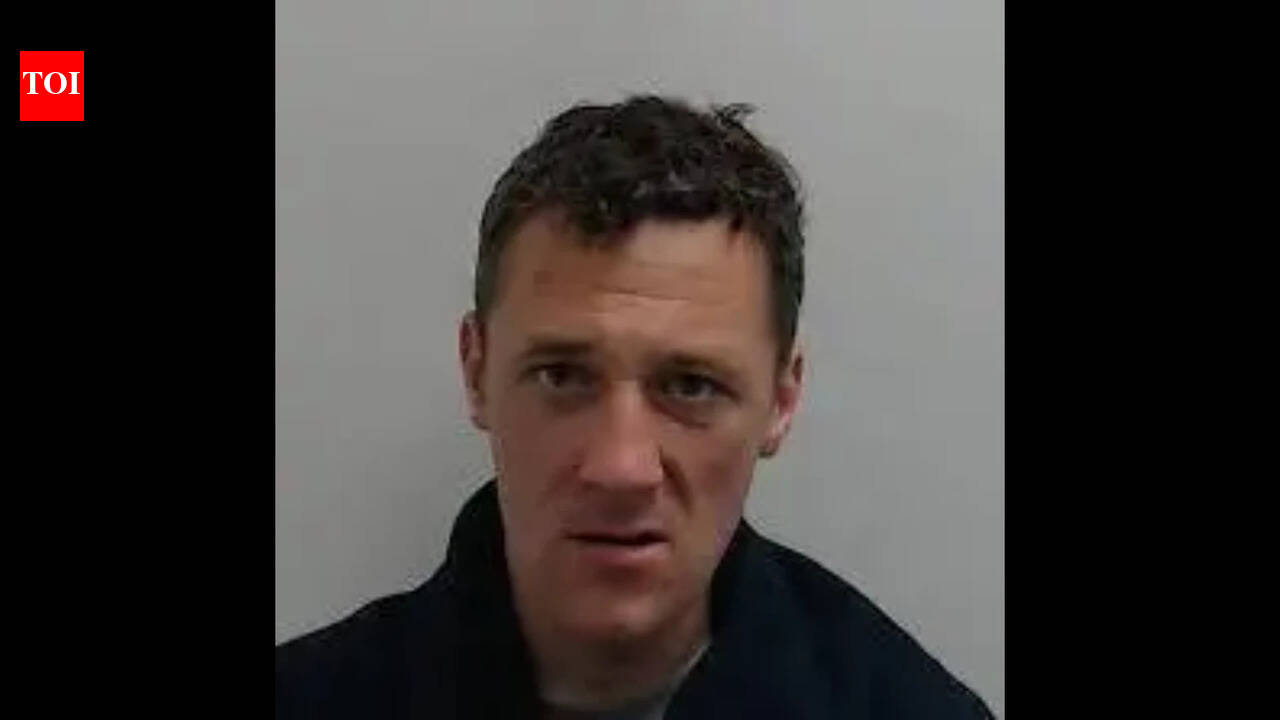
British man jailed after sexually assaulting two women on packed rugby train

Jamie Muir. Image: British Transport Police
A man who sexually assaulted two women on a crowded train to Edinburgh has been jailed for nine months after pleading guilty to both attacks. Jamie Muir, 33, of Dunfermline in Fife, carried out the attack on November 16, 2025, as the train was packed with passengers heading to watch the rugby match between Scotland and Argentina at Edinburgh’s Murrayfield Stadium.According to Sky News, Muir attended the service in Inverkeithing and positioned himself behind the two women. Within minutes of the train leaving the station he began attacking both victims, while using the crowd around him to hide what he was doing.During the attack a woman confronted him. Muir apologized and told her that he did not know where she was. Other passengers intervened and forced him off the train at the next stop at North Queensferry. The two women drove to Edinburgh Waverley and reported the incident to officers waiting at the station.The British Transport Police launched an investigation and shared photographs of Muir with other forces to identify him. When officers finally arrested him he said he was feeling unwell at the time.Muir pleaded guilty to two counts of sexual assault at Dunfermline Sheriff Court. He was sentenced on 29 April and also put on the sex offenders register.DC Crawford Gillies, of British Transport Police, said: “Muir’s actions were opportunistic and disgusting so I am very pleased with the sentence he has been given which should give him ample time to reflect on his actions. There is no place for this type of behavior anywhere on the railway network and we take every report of this type of behavior seriously.”The case has been closed as Muir is now serving his sentence.