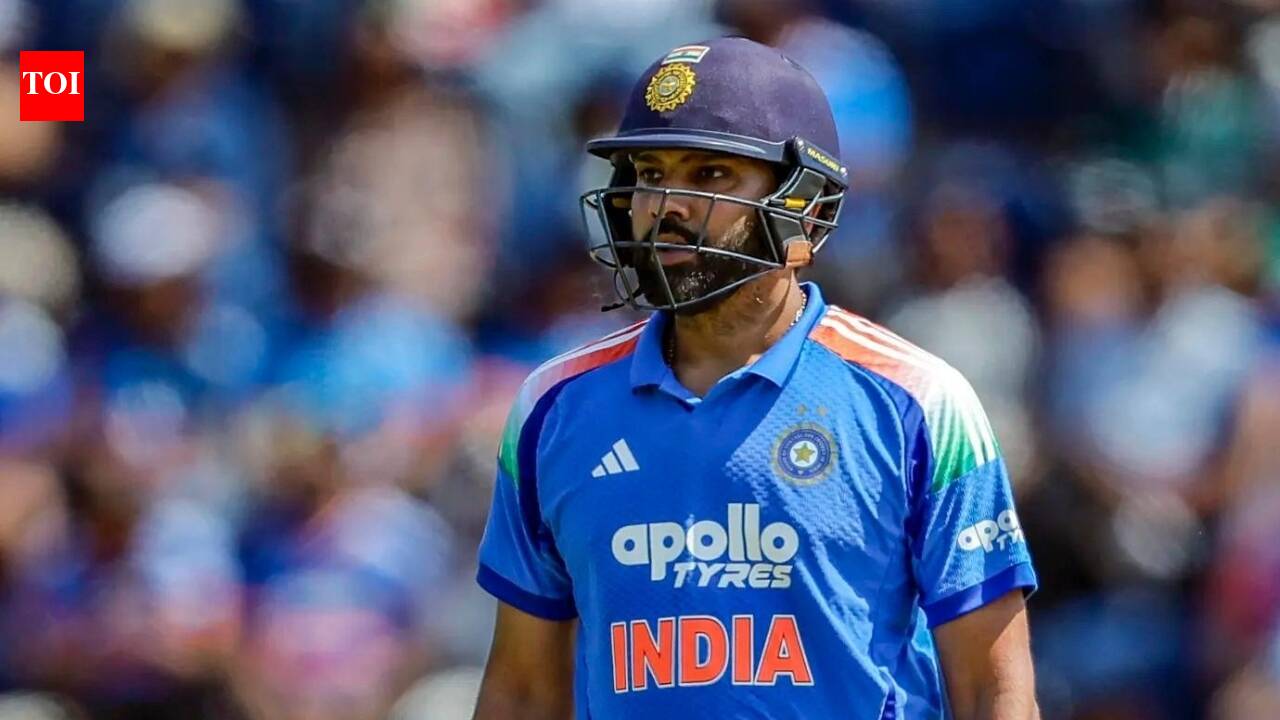
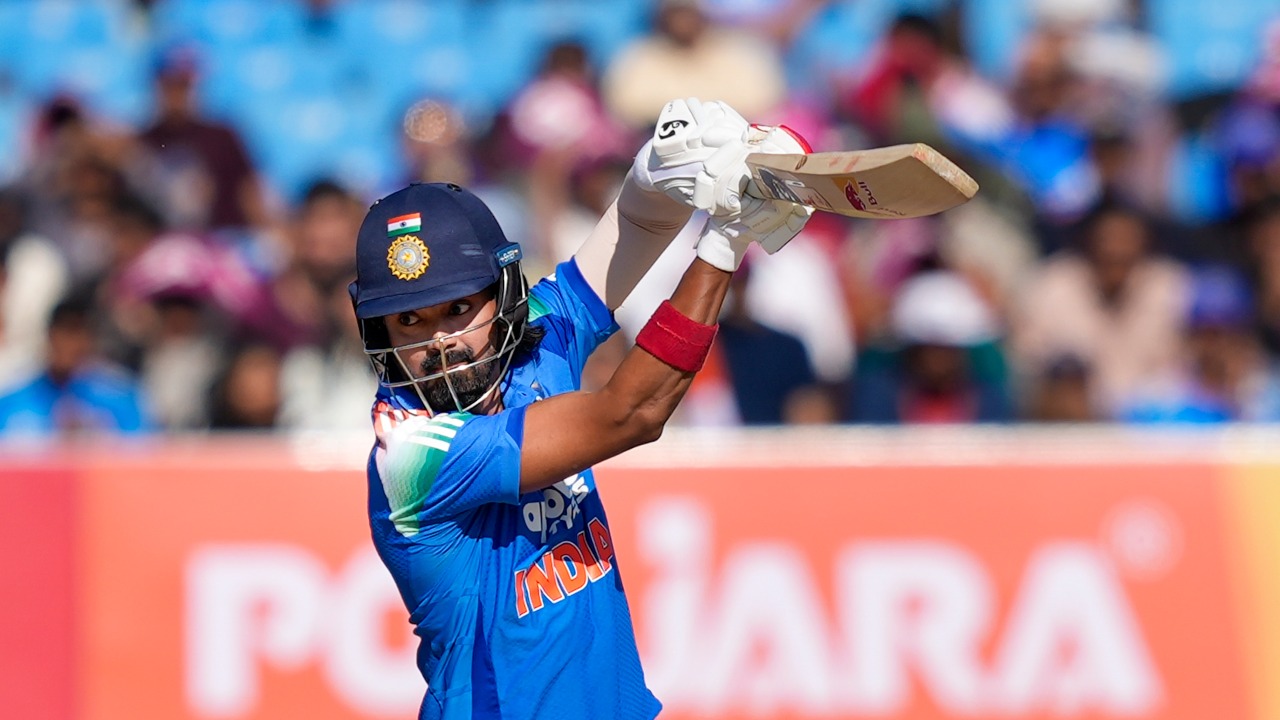
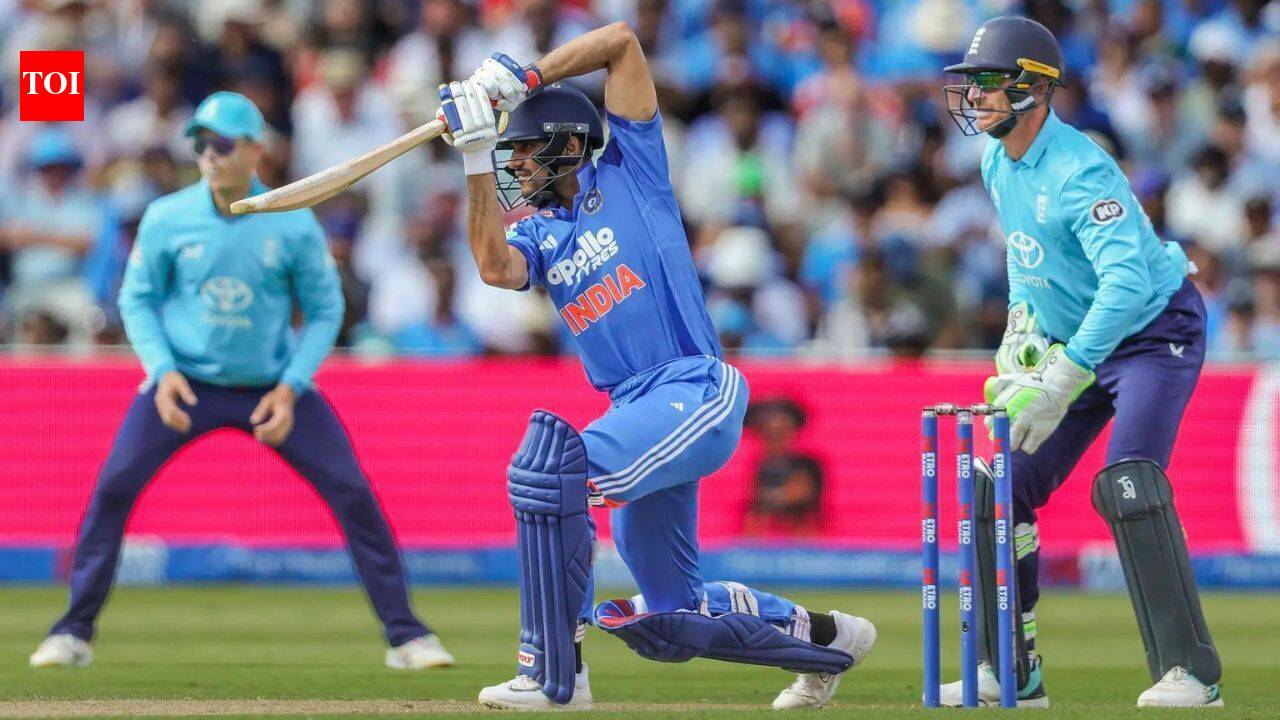
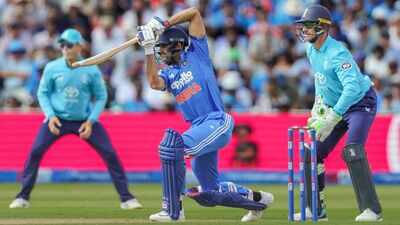
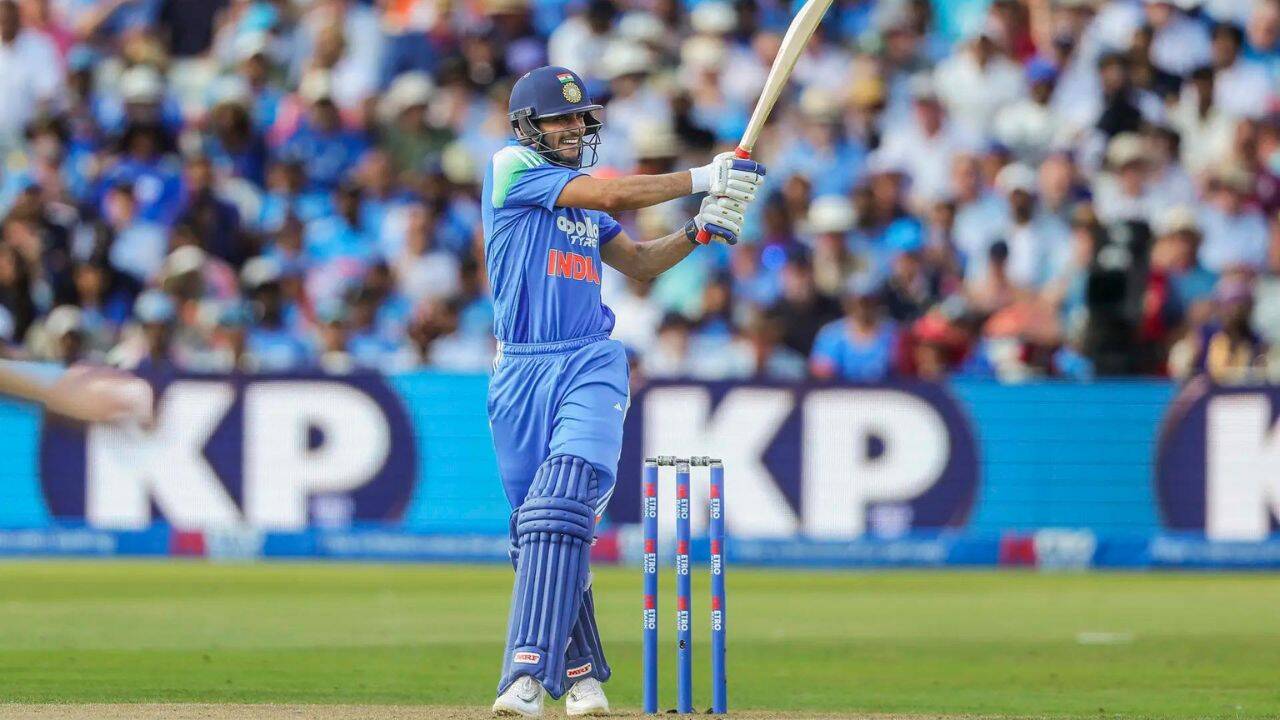
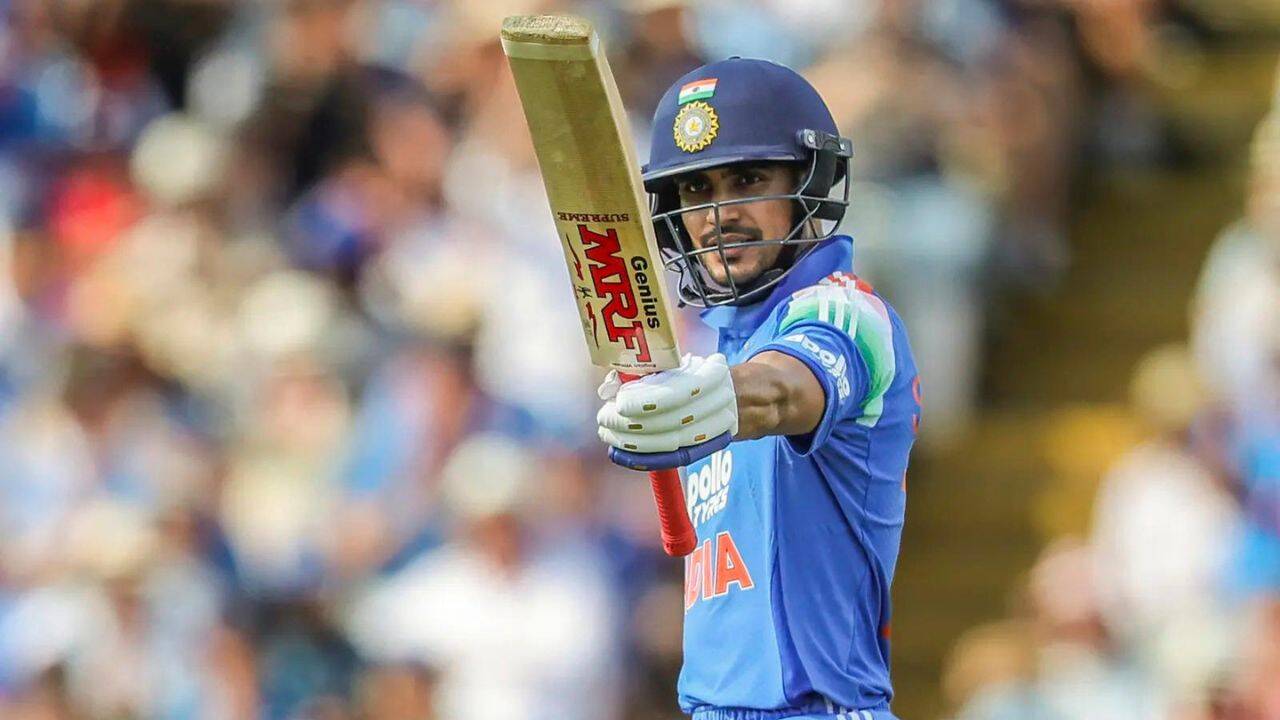
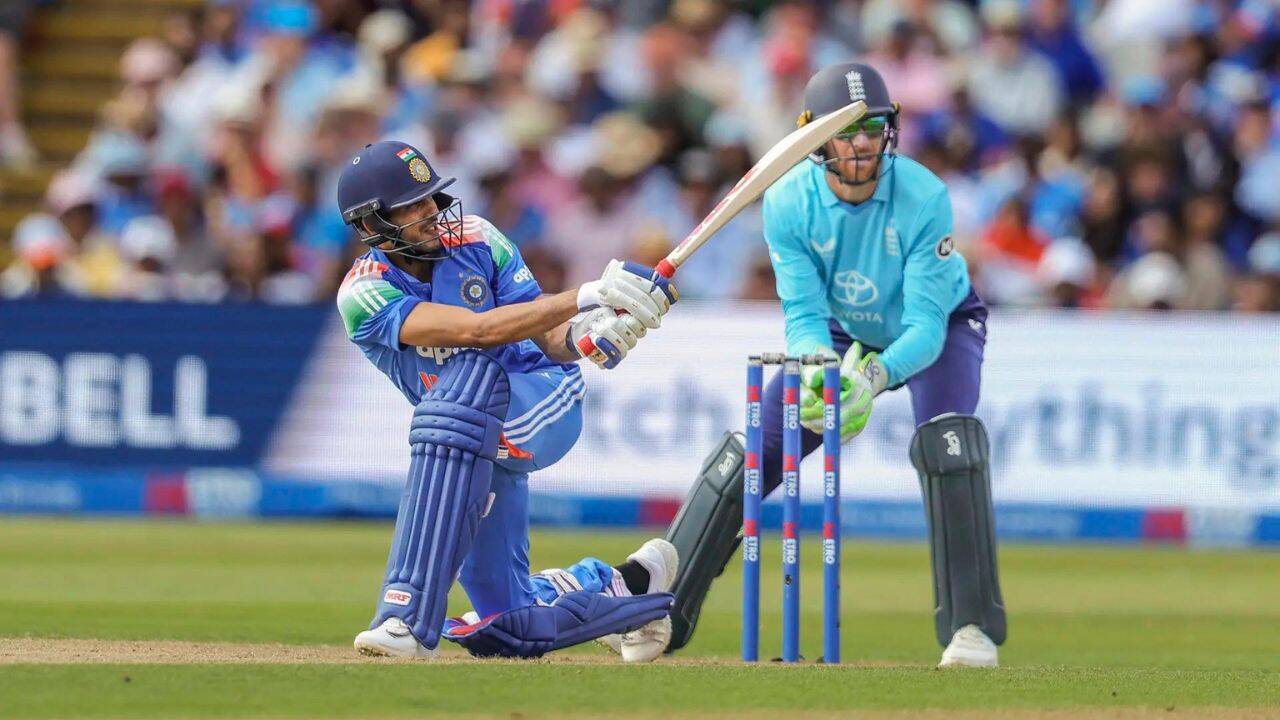
India’s batting coach Sitanshu Kotak supported Rohit Sharma Despite the opener’s poor return in the ongoing ODI series against England, he said there is no pressure on a player like him and he can play a different innings in the series decider at Lord’s.Rohit’s struggles were visible in the second ODI in Cardiff on Thursday, where England won by four wickets to level the three-match series 1-1. The openers never looked settled, scoring just 10 runs off 18 balls by the end of the powerplay, as India reached 61/1. He eventually scored 26 runs from 47 balls before being dismissed attempting a sweep against Will Jacques. Rohit’s performance in ODIs this year has not been good. In eight matches, he has scored only one half-century and his average is 30.12. Speculation has intensified over whether the selectors could drop the former Indian skipper ahead of the 2027 ODI World Cup, with Kotka asked after the Cardiff defeat if Rohit’s place could be examined after Sunday’s final ODI.Kotak said after the match, “I don’t think a big player like Rohit can feel the pressure.”“He’s too good a player to feel that way. Yes, he hasn’t scored in two games. I don’t think it makes any difference. But even today it felt like he was going to get a good innings but that’s OK.” [that he didn’t get a big score]”While Rohit was finding it difficult to move forward, the captain Shubman Gill Made a fast start before being dismissed after scoring 31 runs off 30 balls. Virat Kohli He made a positive start, hitting three fours in his first 11 balls, as the England bowlers struggled with their lengths early on on a pitch that offered little variable bounce.Also read: Rohit Sharma not automatically selected after Lord’s ODIKotak dismissed suggestions that Rohit was struggling and said the opener could make a comeback in the final ODI at Lord’s.“On one [given] Today, I have seen a lot of batsmen, they don’t get the pace they are looking for and that can happen,” Kotak said.“You can see [a] Completely different innings of Rohit Sharma at Lord’s. I wouldn’t use the word struggle, but maybe the shot he usually plays above, which tends to have a double bounce, maybe he felt it was not comfortable.“Shubman got a fast start, then Virat got a fast start, but he [Rohit] Maybe the balls did not come in his slot.“You can definitely see completely different innings from a player like Rohit and I have seen that happen with many batsmen. So it is not just Rohit. I wouldn’t use the word that he was struggling.”India looked headed for a big score after reaching 178/3, with Kohli making 65 Shreyas Iyer scored the highest 66 runs. However, the innings lost momentum after Kohli’s dismissal as India slipped to 193/7 before ending on 233.England achieved the target with four wickets remaining and leveled the three-match ODI series 1-1. The decisive match will be played at Lord’s on Sunday.
Brief Scores: England (235/6 in 44.1 overs) beat India (233/4 in 44 overs) by four wickets in Cardiff to level the three-match ODI series 1-1.
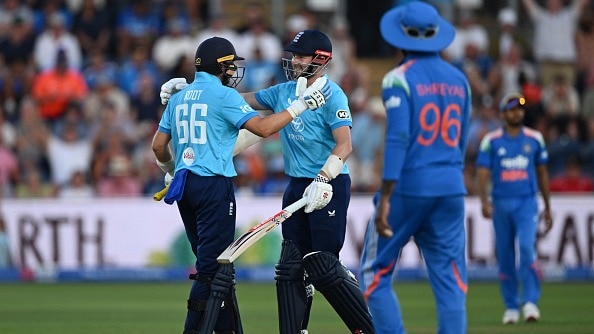
Joe Root was out after scoring an unbeaten 99, but England cruised to a four-wicket win over India in the second ODI at Sophia Gardens in Cardiff on Thursday as the hosts leveled the three-match series 1-1.
After England’s pace attack bowled out India for 233 runs in 44 overs, Root played another measured innings to guide the hosts to victory with 20 balls to spare. He became the first England batsman to finish an ODI innings unbeaten on 99 and only the 17th player overall to be stranded on that score.
More importantly for England, Root made sure of the three-match series leading up to the decider at Lord’s on Sunday.
Harry Brook’s decision to bowl first proved decisive as England’s fast bowlers did not allow India to hold on for long. Jofra Archer and Gus Atkinson took three wickets each, while Saqib Mahmood took two, as the hosts shared nine of the 10 wickets that fell. India had two batsmen score half-centuries and looked well set for a strong total, before another familiar collapse left them on a total that always looked within England’s reach.
Shubman Gill set the initial pace by playing a quick inning of 31 runs in 30 balls, but at the other end, Rohit Sharma’s difficult phase continued in this format. The former skipper struggled to rotate the strike, being tied down for long periods by England’s disciplined bowling and eventually making 26 off 47 balls before attempting to sweep Jos Buttler off Will Jacks. It was another innings in which Rohit never looked settled, allowing Gill to do most of the early scoring before Virat Kohli arrived at the crease.
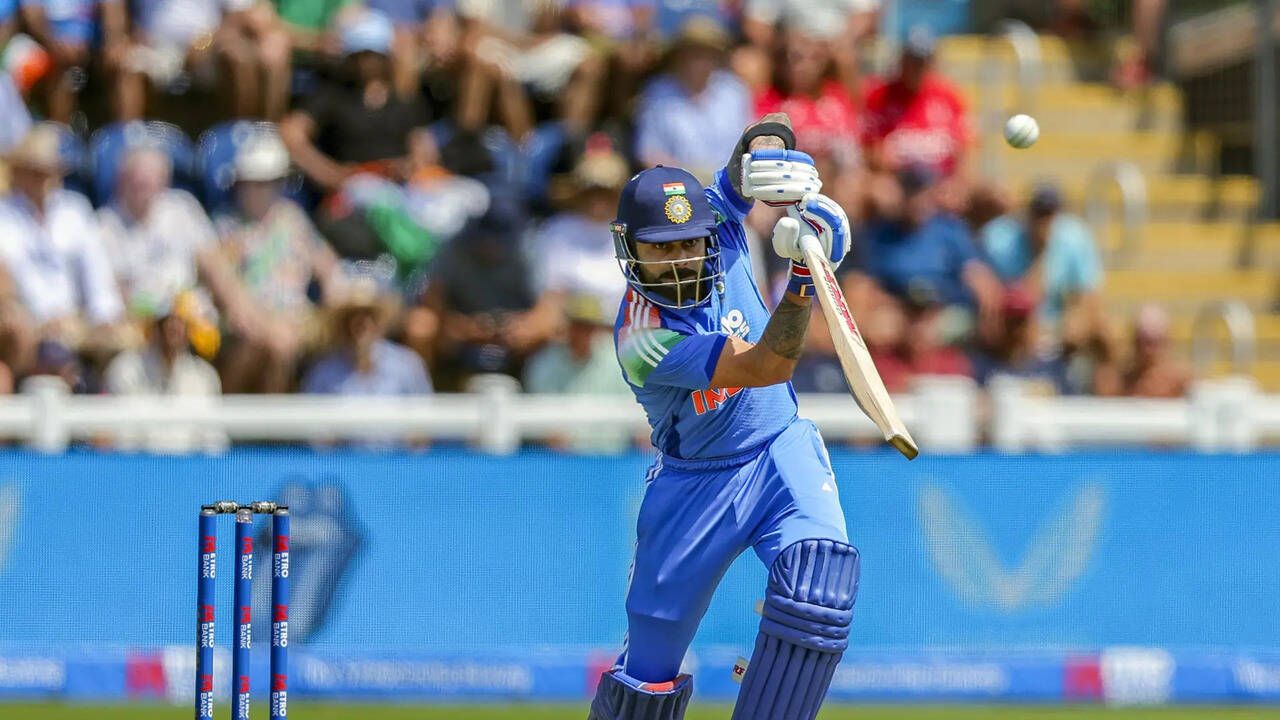
However, Kohli looked far more confident than in recent weeks. He drove fluently down the off side, was quick to catch any overpitched ball and handled Archer’s pace with aplomb during a fine innings of 65 from 66 balls. At the other end, Shreyas Iyer scored 66 runs in 71 balls and once again showed why he has become India’s most reliable middle-order batsman in this format. England tested him consistently with the short ball, but he responded with authority, pulling Archer for six to complete another half-century.
Their partnership put India back in control after the fall of early wickets and at 179 for four, the visitors looked set for a total of over 250. However, England took back the initiative through Archer. The fast bowler extracted extra bounce from a back-of-the-length delivery to edge Kohli and that breakthrough led to a collapse that India could not stop.
Washington Sundar took two, Axar Patel took one and Shivam Dubey was out for zero, leaving England’s lower middle order in tatters. India lost four wickets for just 15 runs in 26 balls, destroying the platform built by Kohli and Iyer. Bumrah’s unbeaten 20 took the total to 233, but it already looked 30 or 40 runs short of what India looked capable of posting by the innings break.
Archer took 3 for 47, Atkinson took 3 for 50 and Mahmood took 2 for 52 as England’s fast bowlers chased down the target with another disciplined performance.
India’s defense could not have got off to a better start. Bumrah dismissed Ben Duckett with the first ball of the innings, hitting an outside edge which Ishan Kishan accepted comfortably behind the stumps, before Prasidh Krishna dismissed Jacob Bethel with a maiden over to reduce England’s score to 11 for two.
However, those early successes brought Root to the crease sooner than England expected. The former skipper handled the pressure without changing his approach, first rebuilding with Harry Brook and then forging crucial partnerships with Will Jacks and Sam Curran. He never let the asking rate become an issue, constantly rotated the strike and capitalized on it whenever India made a mistake.
Root’s innings was not built on a barrage of boundaries. Nine fours punctuated an otherwise patient innings, with most of his runs coming through quick running and intelligent placement between the wickets. Every partnership achieved the target and every quiet phase was followed by another phase of accumulation, leaving India searching for wickets that never came.
Gus Atkinson eventually settled the match by hitting a six off Bumrah, completing the chase with 20 balls remaining and Root remaining unbeaten on 99 runs. The missed century was a statistical oddity rather than the story of the evening as England responded impressively to their defeat in the series opener and headed to Lord’s for Sunday’s decider.
For India, Kohli’s return to form and another assured innings from Iyer were encouraging signs, but Rohit’s continued struggles and Kohli’s collapse after his dismissal once again exposed the weakness of the batting order. In contrast, England were performing well with the ball and were composed in their chase, with Root once again providing the calm mind around which the innings revolved.
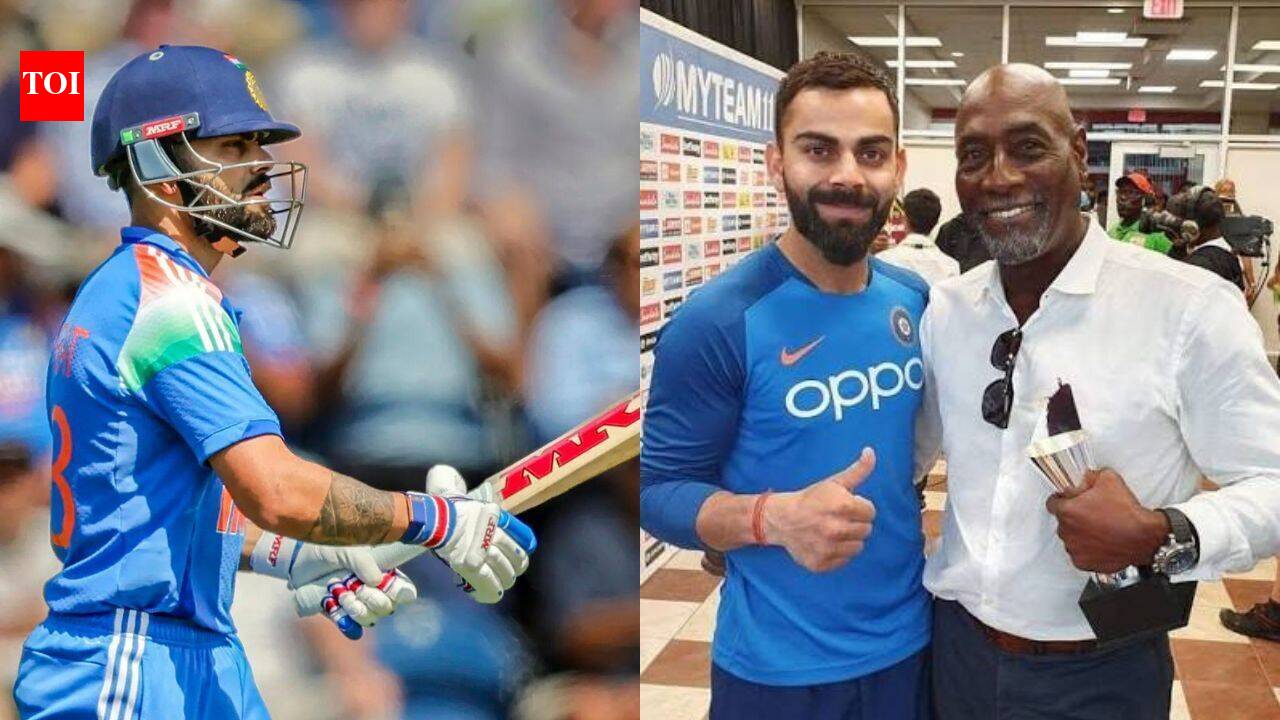
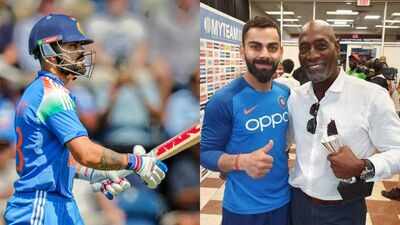
Virat Kohli He continued his fine record against England by scoring another half-century during the second ODI at Sophia Gardens in Cardiff on Thursday. Indian batting star reached the milestone in spectacular fashion, helping India stay in control after early defeat Rohit Sharma.Kohli completed his half-century with a trademark straight drive off Sam Curran in the 27th over. The spectacular boundary not only took him to the historic feat but also garnered a thunderous applause from the Cardiff crowd, with the former India captain raising his bat to welcome the applause. This innings made Kohli’s 14th score of 50 or more in ODIs against England, which includes three centuries. With this, he equaled West Indies legend Viv Richards for the joint second highest score of 50 plus against England in ODI cricket. Only Sri Lankan great Kumar Sangakkara, with 15 such scores, is ahead of the Indian batsman.The milestone came on the first ball of the 27th over when Kohli ground down Curran for four straight runs. Kohli’s good innings of 65 runs in 66 balls ended in the 32nd over when he was caught by Adil Rashid off the bowling of Jofra Archer, taking India’s score to 178/4.Earlier, England captain Harry Brook won the toss and decided to bowl first. India were forced to make one change as KL Rahul missed the match due to illness, paving the way for Ishan Kishan to be included in the playing eleven. England also made two changes, including fast bowlers Saqib Mahmood and Gus Atkinson in place of Josh Tongue and Liam Dawson.India lead the three-match ODI series 1-0 after winning the opening match by six wickets.
The White House has confirmed that US President Donald Trump will attend the FIFA World Cup final between Argentina and Spain at the New York-New Jersey Stadium on Sunday, July 19.
White House press secretary Carolyn Leavitt announced Trump’s plans during a press conference on Thursday, saying the president is hoping to bring down the curtain on what the administration described as a historic tournament in the United States.
“We’re looking forward to the final game on Sunday, and I know the President is looking forward to attending,” Leavitt told reporters.
“Their presence will limit what is most visible, most secure and most most successful world cup in American history.”
Levitt said he did not know whether Trump would support Argentina or Spain in the finals, joking that reporters should ask the president directly.
“I’m sure he’ll have a funny answer for you,” she said.
The White House also confirmed that Trump will attend a FIFA reception at Trump Tower in New York City on Friday before the final.
Trump will present the FIFA World Cup trophy
The development comes after FIFA President Gianni Infantino earlier revealed that Trump would present the FIFA World Cup trophy to the winners after Sunday’s final.
Speaking to Fox & Friends, Infantino confirmed that he and Trump would jointly present the trophy to the winning captain, a departure from recent FIFA tradition where the FIFA president alone presented the World Cup trophy.
“We will enjoy the final together with the president and hand over the trophy to the winner,” Infantino said.
“We’re together all the time.”
The joint presentation will be different from the previous two Men’s World Cups. At Qatar 2022 and Russia 2018, Infantino personally handed the trophies to the winning captains, while his predecessor Sepp Blatter also oversaw previous presentations during his tenure.
However, heads of state have presented the World Cup trophy in the past. Queen Elizabeth II presented the Jules Rimet Trophy to England captain Bobby Moore after England’s victory in 1966, while King Juan Carlos of Spain presented the trophy to Italy captain Dino Zoff after the 1982 World Cup final.
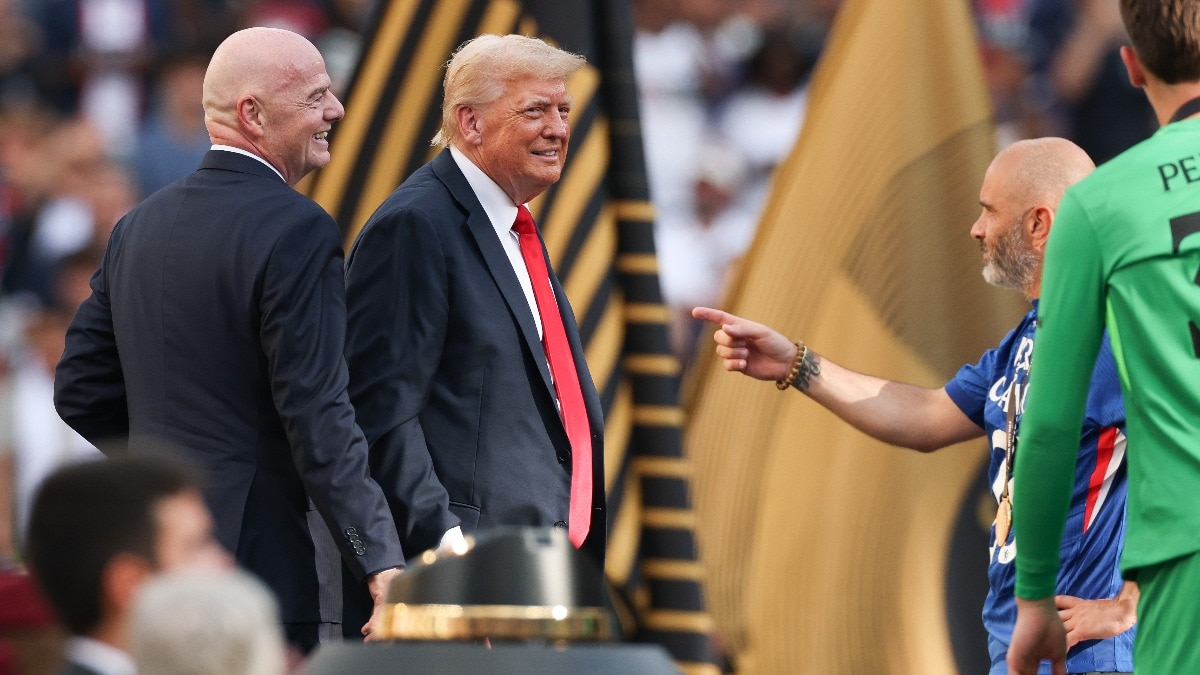
Trump’s role at Sunday’s ceremony comes less than a year after his appearance FIFA Club World Cup Final in New JerseyWhere Chelsea defeated Paris Saint-Germain. The US President presented the trophy to Chelsea captain Reece James, but remained on the podium during the team’s celebration, attracting widespread attention after appearing with the excited players rather than leaving the stage before lifting the trophy.
Virat Kohli Added another milestone to his illustrious career during the second ODI against England and surpassed the Australian great ricky ponting Becoming the fifth most capped player in the history of international cricket. The match marked Kohli’s 561st international appearance, taking him ahead of Ponting’s 560 matches. Only four players are now above the former Indian captain in the all-time list, while Sachin Tendulkar holds the record.
Most International Presentations
player
Duration
Matchbox
Sachin Tendulkar
1989-2013
664
Mahela Jayawardene
1997-2015
652
Kumar Sangakkara
2000-2015
594
Sanath Jayasuriya
1989-2011
586
Virat Kohli
2008-2026
561
ricky ponting
1995-2012
560
ms dhoni
2004-2019
538
Kohli celebrated this historic achievement with another composed innings and scored 65 runs from 66 balls before falling. jofra archer For the second consecutive ODI in the series. Archer was again brought into the attack to break India’s growing partnership, bowling a back-of-the-length delivery that forced Kohli to pull at the wrong time. The ball flew off the top edge and Adil Rashid raced past third man to complete a comfortable catch. Before getting out, Kohli played an important role in stabilizing India’s innings. He first added 60 runs Rohit Sharma After the opener scored 26 runs, before making a partnership of 67 runs. Shreyas Iyer To put India in a commanding position. Kohli achieved another remarkable feat with his half-century. This was his 14th score of 50 or more in ODIs against England, tied with West Indies legend Viv Richards for the second highest score against the opposition. Only Kumar Sangakkara, with 15 fifty-plus scores against England, is ahead of the Indian batting star. Kohli’s latest milestone underlines his remarkable longevity across all formats. Since making his international debut in 2008, the 37-year-old has scored over 28,000 international runs and has become one of the few cricketers to appear in over 560 matches for his country.
India made one change to its playing eleven for the second ODI against England after wicketkeeper-batsman KL Rahul was ruled out due to illness. Ishan Kishan returned to the side as his replacement after England won the toss and elected to bowl first at Edgbaston on Wednesday.
Captain Shubman Gill said India would have also chosen to bowl first, but was happy with the team’s performance in the series opener, where they secured a comfortable win.
Gill said at the time of the toss, “We should have bowled first as well. In the last match we almost played a great game and hopefully we can do it again today.” “KL is ill, so he won’t be able to play and Ishan Kishan will be back.”
Gill credited India’s fast bowlers for turning the game around after England threatened to build momentum during the powerplay.
“They played six or seven good overs in the powerplay before putting us under pressure. The way the fast bowlers came back and took wickets in the middle overs was worth watching,” he said.
The India captain is also keen to return to familiar surroundings, having previously represented Glamorgan in county cricket.
England captain Harry Brook said the hosts decided to bowl after assessing the surface.
“There’s a nice even spread of grass out there. Hopefully we can get a little bit of seam movement and swing forward,” Brooks said. “We just need to perform a little better. We fought well in the last game and took it deep, and we want more of the same.”
England made two changes, bringing in Gus Atkinson and Saqib Mahmood in place of Josh Tongue and Liam Dawson as they added more pace to their attack.
England (Playing XI): Ben Duckett, Jacob Bethel, Joe Root, Harry Brook (c), Jos Buttler (w), Sam Curran, Will Jacks, Gus Atkinson, Jofra Archer, Adil Rashid, Saqib Mahmood.
For the first time, three batsmen scored centuries in the same men’s T20 match as Washington Freedom completed the most successful chase in T20 history by defeating defending champions MI New York by six wickets in Eliminator 1 of MLC 2026 at the Oakland Coliseum on Tuesday.Nicholas Pooran, Andries Goss and Steven Smith all reached three figures in a game that rewrote several T20 records. While Pooran scored a century in 31 balls – the fastest century in Major League Cricket history – Goss and Smith responded with centuries each in 40 balls, as the Freedom chased 267 to book a place in Eliminator 2, where they would face the San Francisco Unicorns. The winner will take on LA Knight Riders in the MLC 2026 final.For most of the evening, MI looked set for a New York win after Pooran and Kieron Pollard dominated the Freedom attack. Pollard also crossed the mark of 1,000 sixes in T20 cricket during his innings of 64 runs in 25 balls, while Pooran took his team in complete control by storming the bowling.However, the game turned after the magic of Rachin Ravindra’s ball. Introduced when MI New York was 211 for 3 after 13 overs, Ravindra took 4 for 28 despite bowling only the 14th, 16th, 18th and 20th overs. His wicket slowed down the scoring as MI New York ended at 266 for 9 rather than making an even bigger score.Washington Freedom, chasing the target, got off to a bad start as Shakib Al Hasan took two hits with the new ball in their first two overs, leaving them at 10 for 2. From there, Goss and Smith took control.The pair played each other shot for shot and added 241 runs in just 89 balls for the third wicket, which is the joint second highest partnership for any wicket in men’s T20 cricket. Both completed their centuries in 40 balls.Freedom eventually completed the chase of 267, which is the most successful run chase in T20 history, surpassing Punjab Kings’ target of 265 against Delhi Capitals in the IPL earlier this year.The match also became the first men’s T20 match to have three individual centuries. Goss and Smith’s centuries while chasing are only the second instance of two batsmen scoring centuries while chasing in a T20 match. Pooran and Smith became the fourth pair of captains to score centuries in the same men’s T20 game.
It’s like a script has been rejected by a Bollywood production house for being completely unbelievable. A 20-year-old, extremely introverted Lionel Messi is staring at a plastic blue tub containing a five-month-old baby. The young footballer is extremely shy, he doesn’t understand how to hold the baby; The child is unaware that the hands steadying him belong to the man who will redefine the global game. Argentina 2-1 England: match report
That was December 2007. The photographer, Joan Monfort, was trying to navigate a tricky charity calendar shoot for Diario Sport and UNICEF. The child’s parents had won a lottery in the working-class neighborhood of Rocafonda. There were no grand omens, no cinematic flashes of lightning; Just a nervous young star and a bouncing baby.
Fast forward 19 years, and that same kid is standing on the opposite side of the pitch at the 2026 World Cup final.
The sports world has seen its fair share of poetic analogies, but the impending showdown at New Jersey’s MetLife Stadium Lionel Messi’s Argentina And Lamin Yamal’s Spain is beyond simple coincidence. It seems like a cosmic setup. When Yamal’s father discovered the long-forgotten photo, it was treated as a fascinating piece of trivia: a beautiful, fleeting Internet moment.
Lionel Messi with young Lamin Yamal in a photoshoot in 2007. (Image: Instagram/@hustle_hard_304)
Today, as both men prepare to step out for football’s biggest match, that image has transformed from a quaint relic to an undeniable historical prelude. This is a literal prelude to the final passing of the torch.
If this were a movie, the montage would be breathtaking. On one hand, you have the magnificent twilight of an absolute master. Since conquering his last summit clash in Qatar, Messi has spent this tournament guiding Argentina with the quiet authority of a man who has nothing left to prove yet refuses to stop winning, inch by inch. Their comeback in the semi-final against England, inspired by two brilliant assists from Messi to dismantle the Three Lions, was proof enough that the magic has not completely worn off. He has already entered the final by scoring eight goals in this campaign alone.
On the other side is Kishori Yamal who has shattered the very concept of developmental timeline. is already Defeated France 2-0 in the semi-finalsWhere his relentless high pressing directly forced a game-opening penalty, he plays with the same joyous, low-center-of-gravity that characterized Messi’s own success in the mid-2000s. Crucially, the 18-year-old boasts an incredible streak: every one of his 12 career starts for Spain at major tournaments has resulted in a win.
La Masia Academy graduates
What makes this clash truly extraordinary is their shared footballing DNA. Both talents were forged in exactly the same crucible: Barcelona’s famous La Masia academy. It was here that Messi learned to choreograph his greatness, and it was here, years later, that a young Yamal was polished into a diamond. The final is not just a battle of nations; It is a grand exhibition of the Blaugrana philosophy on the grandest stage imaginable.
Commentators will inevitably present this showpiece as a battle between the disciple and the deity, the anointed successor, the creator. The Spanish press would insist on the mythology of “bath water baptism”, jokingly suggesting that Messi unknowingly passed his talent on through a UNICEF washcloth.
Yet, beneath the hyperbole there actually lies a deeper sports narrative. Football rarely allows such a neat finish. Usually, generations remember each other for a few years. Pelé never played Maradona; Maradona has never faced Messi in a competitive showpiece. The timelines usually overlap without colliding at an absolute peak. But here, the twilight of one of the greatest careers in modern history coincides perfectly with the dawn of football’s next generation phenomenon.
For Messi, it is the last defense of his realm against an eccentric man who has literally been cradled in his hands before the journey has even begun.
The sentiment will be gone when the whistle blows in New Jersey. Tactical battles will dominate, the pressure will be suffocating and the romanticism of 2007 will give way to the harsh reality of 90 minutes on the world’s grandest stage. But whatever the end result, the narrative has already come full circle.
You can write a more elaborate, dramatic script than you can imagine, but reality has already defeated the playwrights. 19 years ago, a shy boy from Rosario blessed a baby in a plastic tub.
On Sunday, they play on opposite sides of the pitch for the biggest prize in world football.
Indian captain Shubman Gill plays a shot during the first ODI against England at the Edgbaston Stadium in Birmingham on Tuesday. (ANI photo)
TimesofIndia.com in Cardiff:Shubman Gill He revealed that he was forced to retire due to a cramp problem during the first ODI between India and England in Birmingham on Tuesday. Before leaving the field, India captain Gill scored an unbeaten 80 and shared a crucial partnership with his deputy Shreyas Iyer. After his dismissal in the middle, quick wickets of Iyer and KL Rahul made things worrying for the visitors, but washington beautiful And Axar Patel ensured that his captain’s hard work did not go in vain as India registered a six-wicket win at Edgbaston. Speaking to BBC Test Match Special, Gill said he hoped to be fit for the second ODI at Sophia Gardens in Cardiff on Thursday. His behavior when leaving Birmingham and again on the eve of the second ODI in Wales, where the weather had been hot since last week, showed he was fit and keen to go into this important series.During the opening ODI of the three-match series, when India chased 259, Gill and Iyer stitched a crucial partnership of 101 runs off 103 balls but took the game away from the hosts. However, before this, India had lost the wickets of Rohit Sharma (11) and Virat Kohli (5) cheaply, due to which England seemed to have the upper hand. India’s two great batsmen had returned to the pavilion and the scoreboard read 48 runs for 2 wickets in 8.3 overs.
Shubman Gill played a stormy innings of 80 runs in the first ODI against England.
Shreyas Iyer, who had made a disappointing start to his tenure as T20I captain in Ireland and England, joined Gill in the middle, with the challenge being to absorb pressure rather than worrying about the required run rate, which was still below one run per ball.During his 75-ball 80, which included 11 fours and a six, Gill spent 120 minutes at the crease. Instead of motoring during the powerplay, the 26-year-old opted to withstand the pressure from pace bowlers Jofra Archer and Josh Tongue. On a surface that was providing support to the fast bowlers, both Gill and second opener Rohit Sharma decided to bide their time. The first innings had already shown that the pitch was helping the new ball bowlers with pace, variable bounce and lateral movement.While Rohit remained the more cautious of the two, Gill carried out his innings and chase to perfection. After starting his innings with two consecutive fours, Gill remained largely quiet for the next 13 balls and scored just four runs during this period. As England continued to pace, including Sam Curran, Gill was content to settle for singles and dots.
Indian captain Shubman Gill celebrated his half-century during the first ODI against England at the Edgbaston Stadium in Birmingham on Tuesday. (ANI photo)
When the strategy changed, Gill took Adil Rashid, Jacob Bethel and Will Jacques. Liam Dawson was also brought into the attack. Sweep towards backward square leg in the 21st over. In the next over, Gill played a brilliant inside-out loft over extra cover for another boundary.More fittingly, and showcasing the best of his repertoire, seconds after receiving treatment for cramps from the physio, he played a sweep to square leg off Jack for another boundary. Even though the problem persisted, there was no reduction in Gill’s pace. Instead, he continued to take singles and doubles by pushing the ball to long-on and long-off.What sets Gill apart as a chase master is not just his ability to attack when needed and rotate the strike when needed. This is his ability to score without forcing, consistently taking aerial routes and using the off-side field intelligently.
Indian captain Shubman Gill plays a shot during the first ODI against England at the Edgbaston Stadium in Birmingham on Tuesday. (ANI photo)
Of Gill’s 11 fours, five were hit on the off side and six on the leg side. His only six off Josh Tongue went past the deep backward square leg boundary. The cut shot was his most useful stroke, scoring 16 runs including two fours.With Gill’s availability for the second ODI not yet clearly confirmed, it is difficult to find someone who has mastered the art of chasing Virat Kohli like Gill has.Gill’s innings at Edgbaston was a reminder that the pursuit of the best ODI target is rarely based on relentless aggression. Instead, they demand clarity of thought, adaptability, and the confidence to trust the process. On a pitch where survival was more important than quick scoring, Gill judged the conditions better than anyone. He attacked only when the game allowed him to and ensured that India never missed the target.The spasm may have deprived him of his worthy end, but the work was already done. It was another innings that cemented the fact that at just 26, Gill is fast emerging as the standard-bearer for India’s next generation of ODI batting.
Some people lose a yard of speed. Others realize that the body no longer keeps the same promises it used to. For most, this is where greatness begins to fade.
Lionel Messi has spent the last few years adapting to the pressures of football.
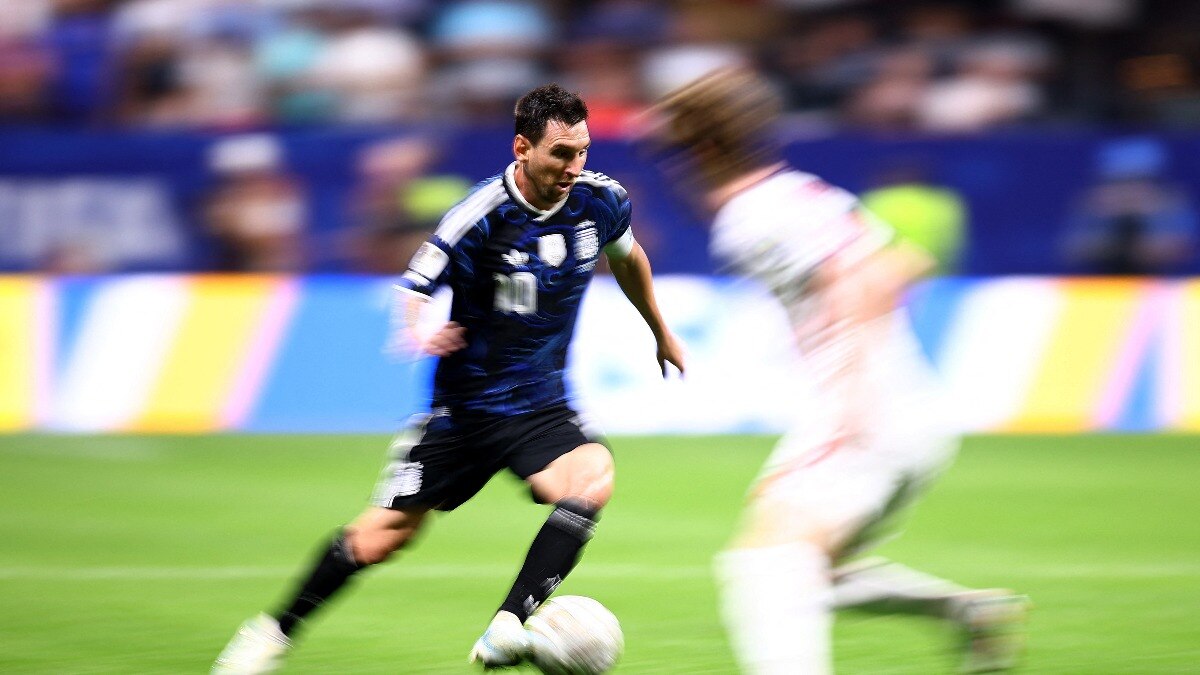
When the final whistle echoed around Atlanta, The 39-year-old player fell to his knees before his teammates ran towards him. It was a familiar image in an unfamiliar way. Football has given Messi almost everything to win, yet another World Cup semi-final has still left him emotionally exhausted.
The whole time Messi was surrounded by emotions. (Photo: Reuters)
Four years after completing football in Qatar, eight Ballon d’Ors, countless trophies and almost every individual honor imaginable, Messi still looked like a man who had just experienced something completely new.
England deserve huge credit for the way they handled it before intermission. Thomas Tuchel had resisted the temptation to employ a traditional man-marker, instead telling Elliot Anderson to stay close whenever Messi dropped inside, while Jude Bellingham and Declan Rice occupied the space around him. Argentina still enjoyed plenty of possession, but it came up very short in the areas where Messi usually dictates matches. By half-time he had barely made any meaningful attempts at goal and England were becoming increasingly confident that they had found a way to keep him at bay.
The feeling was further strengthened when Anthony Gordon headed Morgan Rodgers’ cross past Emiliano Martínez just after the restart. England had the lead, Argentina suddenly had a problem to solve and Messi still had not imposed himself on the game in the way everyone had expected before kick-off.
How did Messi change the game?
For nearly an hour, England had every reason to believe that their plan was working. Messi was kept away from the areas where he usually does the most damage, Argentina struggled to create anything of real note, and Tuchel’s team looked comfortable with playing on their own terms.
Anthony Gordon’s goal reinforced that feeling.
England eventually got the breakthrough, but gradually defending it became a different challenge altogether. Instead of continuing to press harder, they retreated a few yards, closing the space between the lines and inviting Argentina to take more of the ball.
That’s a gamble you can’t take against someone with the footballer intelligence of Messi, and he noticed it almost immediately.
Rather than continuing to wander into the crowded central areas, where Anderson, Rice and Bellingham had spent an hour closing him down, he moved wide towards the right touchline and began asking England individual questions. Every time he took possession, another white shirt came out to meet him. Every time this happened, another pocket would open somewhere.
Messi’s change in playing style took England completely out of the game. (Photo: Reuters)
Argentina just kept coming.
Crosses became more frequent, even more so after the arrival of De Paul, passing became quicker and England found themselves defending deeper than at any stage of the evening. Jordan Pickford was arranging bodies inside his six-yard box more often than he would have liked, while Messi was seeing the ball more and more. Throughout, he had touched it 94 times, enough to leave his mark on almost every meaningful Argentina attack.
Then came the equalizing goal, a worthy reward for a sustained shift by Argentina’s number 10.
Receiving possession on the right side, Messi resisted the temptation to cross quickly into the area. He waited. England’s midfield is in disarray. Then Enzo passed to Fernandez, who was perfectly positioned on the edge of the box. Fernandez still had a lot of work to do as he pushed his way past Pickford, but it had already started long before the shot was fired.
Messi himself never found the net. His expected goals barely reached 0.01, a figure almost unheard of for a player who arrived in Atlanta as the tournament’s leading scorer. Yet the data that mattered lay elsewhere. They created four chances, two of them clear cut, and each one of them seemed to push England a step closer to their penalty area.
By then even his drops were looking different.
There was a time when Messi used to dribble to beat defenders. Against England, he dribbled to move them. The nine successful dribbles out of 11 attempts were less about flashy feet and more about creating angles, buying another second and opening up another passing lane. This football was played at England’s pace rather than England’s pace.
That patience decided the match.
In stoppage time, with extra time looming, Messi somehow managed to keep the ball alive before lifting a teasing cross towards the far post. Lautaro Martínez did the rest, but like most nights in Argentina, the move began with Messi seeing a possibility that no one else had seen so quickly.
Now when we analyze football IQ, this performance from the 39-year-old could easily be a top 5 example for you.
The legs no longer allow him to dominate every minute of every match, so he has become incredibly selective about when to speed up the pace and when to slow everything down. It is now less about beating defenders but about manipulating them, forcing opponents into positions where they do not even realize they have strayed before the decisive close.
He finished the night without adding to his eight goals this World Cup.
He hardly needed it.
art of adaptation
The version of Lionel Messi wearing Argentina’s number 10 today bears little resemblance to the teenager who first burst onto the scene at Barcelona or even the ferocious goalscorer who found the net 91 times in a calendar year.
At that time, football revolved around his speed. The defenders knew what was coming and still couldn’t stop the impossible dribble, the slaloming run and the breathtaking finish.
But father time eventually catches up with every footballer. Messi is not every footballer.
As explosive racing became more selective, his understanding of the game became more acute. Over the years, arguably one of the greatest goalscorers of his era quietly became its greatest orchestrator.
That development has become one of Argentina’s greatest strengths. Lionel Scaloni no longer asks Messi to continue every attack from beginning to end. Alexis Mac Allister, Enzo Fernandez, Rodrigo De Paul and Julian Alvarez take on a lot of the responsibility in the running, allowing their captain to save his energy before deciding when to speed up and slow down the game.
Wednesday night was another masterclass in that restraint.
Messi completed all 120 minutes without looking like the busiest player on the pitch. Yet when the crucial moment came he joined them both. Two assists took his World Cup tally to a record 12, along with 21 goals in six tournaments, figures that begin to illustrate his impact on football’s biggest stage.
One more to go, Leo
The reward for another masterclass is the biggest test of them all.
Spain await in Sunday’s final, which will bring together the most complete team of the tournament and the player who has spent two decades redefining greatness.
This passing of the torch is a fascinating experience. The man who defined Barcelona for a generation now stands between Spain’s rising stars and football’s biggest prize.
Messi was Barcelona for almost two decades. On Sunday, he will come up against the club’s new standard-bearers Lamine Yamal, Pau Cubarsi and Dani Olmo, three players who are taking Spanish football into the next era, while the man who inspired so many of them is shaping the present.
Will Messi lead Argentina to consecutive World Cup titles? (Photo: Reuters)
If England proved anything in Atlanta, it was that keeping Messi quiet for an hour is no guarantee of the survival of the other 30. He no longer bends the game to his will with consistent dribbles or explosive movement. Instead, he waits, watches and, when the time comes, quietly tilts the tie in Argentina’s favour.
Can Spain’s midfield handle it? Do Rodri, Pedri or perhaps Fabian Ruiz have what it takes to stop him? History shows that this is often easier said than done.