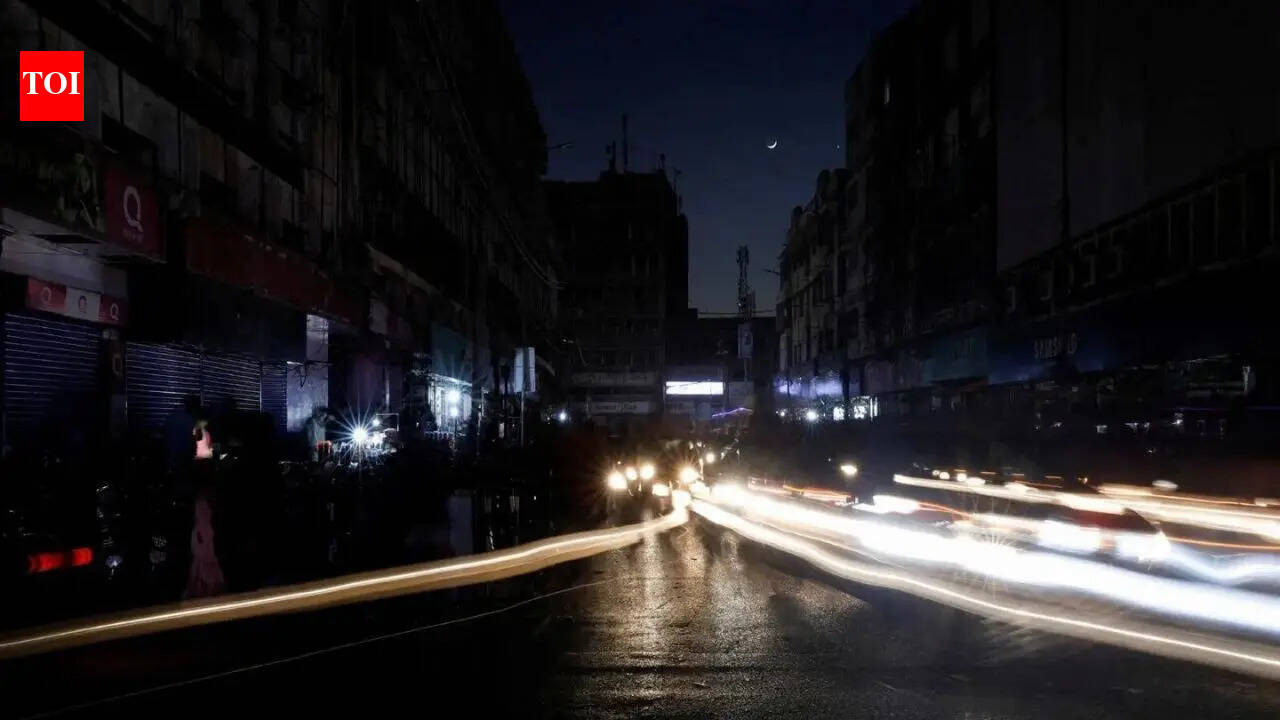
Pakistan orders early market closure as energy costs rise amid US-Iran conflict (Image credit: ANI)
Authorities have imposed early closing hours for businesses in Pakistan’s capital Islamabad in an effort to curb energy consumption amid rising fuel prices due to the ongoing conflict in the Middle East.Under the revised schedule, markets, shops and shopping malls will now have to close by 8 pm, while restaurants, bakeries, grocery stores and other food shops can remain open till 10 pm. The new rules came into effect as part of a broader austerity drive.New times announcedIslamabad district administration headed by Deputy Commissioner Irfan Memon announced the revised business hours on social media.“District Administration Islamabad has implemented revised business operating hours as part of the ongoing austerity measures, effective from today (June 1, 2026),” the administration said in a post on Twitter.Officials clarified that marriage halls, mandaps and other event venues should also be closed by 10 pm. However, essential services including hospitals, pharmacies, petrol pumps, dairy shops, sports facilities, call centers and IT firms serving international customers are exempted from the restrictions.These measures also apply to events and gatherings held on private properties.Energy costs trigger austerity measuresThe sanctions were first imposed in March after the Iran-linked conflict disrupted regional energy markets and sent fuel prices soaring.Islamabad responded by implementing power-saving measures, including reducing business hours, to reduce power consumption and ease pressure on public finances.Pakistan, which is heavily dependent on imported fuel, has been particularly sensitive to fluctuations in global energy prices.effect of Strait of Hormuz crisisThe ongoing conflict has disrupted supplies through the strategically important Strait of Hormuz, one of the world’s busiest energy transit routes.The disruption has increased transportation costs and put pressure on energy-importing economies across Asia.The move is expected to face opposition from traders and business owners, many of whom argue that the evening hours account for a significant portion of daily sales.
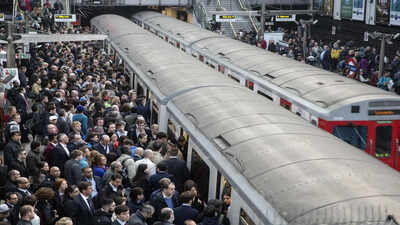
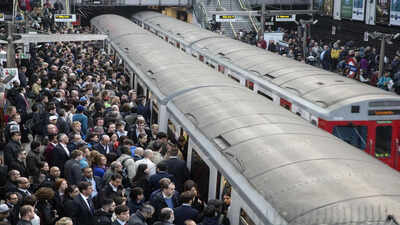
Fresh strike hits London Tube network, with passengers facing delays / Image: File
The morning rush hour came with fewer trains, longer queues and growing frustration across London as Tube drivers launched a new 24-hour strike, disrupting journeys for thousands of passengers across the capital.The walkout, which began shortly after midnight on Tuesday, June 2, has affected parts of the London Underground network and reignited controversy over proposed changes to drivers’ working patterns. With another strike planned for later this week, passengers will face disruption until negotiators reach a conclusion.The industrial action began shortly after midnight and came after last-minute negotiations between the National Union of Rail, Maritime and Transport Workers (RMT) and Transport for London (TfL) failed. The dispute centers on a voluntary four-day working week scheme for Tube drivers, a proposal unions say could lead to longer shifts, increased fatigue and potential safety concerns.The strike is the first of two planned walkouts this week, with a second 24-hour strike scheduled for Thursday, June 4, unless a breakthrough is made in ongoing talks.
Which lines are affected?
Transport for London warned passengers to expect significant disruption throughout Tuesday, with some routes suspended entirely and others operating reduced services.According to TfL, there are no services on the Circle Line and parts of the Metropolitan and Central lines, while the Piccadilly Line has also been severely affected. Services on other routes are running but at reduced frequencies, with trains starting late and ending earlier than usual. Commuters have been advised to complete the journey before 9 pm and expect limited services before 6:30 am.The strike has also affected travel to major destinations including Heathrow Airport, with the Piccadilly line one of the most affected routes. Instead passengers are directed to the Elizabeth Line, National Rail services and the Airport Coach Link.
Why are London drivers striking?
At the center of the controversy is a proposal by Transport for London to introduce a voluntary compressed four-day working week for Tube drivers.TfL argues that the arrangement will remain optional and could improve work-life balance while reducing overall weekly working hours. However, the RMT says members have raised serious concerns about longer daily shifts, less flexibility, driver fatigue and the safety implications of working long hours in a safety-critical role.After five hours of talks at the Conciliation Service Center on Monday, the two sides failed to reach an agreement.An RMT spokesperson said TfL had not provided adequate assurances in relation to concerns about fatigue, shift length and workplace safety. TfL responded by expressing disappointment that strike action was continuing despite repeated assurances that the proposed four-day week would remain voluntary.
official statement
A spokesperson for Transport for London said the organization would make every effort to keep services running and minimize disruption to passengers for the duration of the strike. TfL also reiterated that it is keen to continue discussions with union representatives.Meanwhile, a spokesman for Sadiq Khan’s office urged both sides to continue talks, warning that industrial action has a serious impact on Londoners, businesses and commuters across the capital.The Mayor’s Office said its priority is to keep London vibrant while encouraging negotiated solutions between parties.
what happens next?
Although Tube services are expected to return to normal on Wednesday, passengers may experience residual delays even after the network has recovered. Another strike is scheduled for Thursday, June 4, raising the possibility of further disruption this weekend.At the moment, London’s transport network is under pressure as passengers look for alternative routes via buses, the Elizabeth Line, Docklands Light Railway, London Overground and National Rail services, all of which are operating as normal.With talks expected to continue, attention now turns to whether union leaders and transportation officials can reach an agreement before Thursday’s planned walkout. Until then, thousands of Londoners will face another day of uncertainty on one of the world’s busiest urban transport systems.
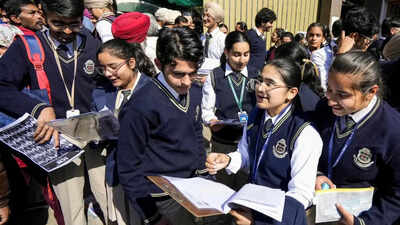
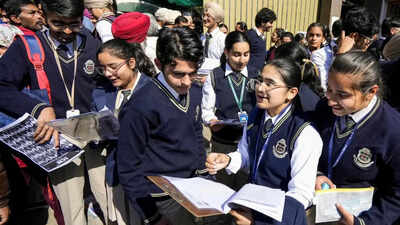
New Delhi: The Central Board of Secondary Education (CBSE) on Tuesday opened the online portal for Class 12 students to apply for verification of issues and revaluation of answers found in the scanned copies of their evaluated answer sheets. This facility, available only to students who have already received scanned copies of their answer sheets, will be open till midnight on June 6.CBSE announced that Aadhaar verification has been introduced as a mandatory security measure in the latest registration process.The notice said that in cases where children do not have an Aadhaar number, the Aadhaar details of a parent, relative or legal guardian can be used in their place. However, it is mandatory that the name, date of birth and gender entered in the system must exactly match that of the person whose Aadhaar number is being provided.
How to apply for revaluation?
Announcing the launch of the portal, CBSE said students can log in through their accounts on the board’s website and select one or both of the services depending on their requirements. The board has clarified that candidates will be required to enter the Aadhaar number while accessing the portal. In cases where a student’s own Aadhaar is unavailable, the Aadhaar name, date of birth and gender entered in the application must match that of the person whose Aadhaar number is being used.The board said students can seek correction of issues identified in the scanned copies of answer sheets or request revaluation of specific answers if they are not satisfied with the assessment. After completion of the process CBSE will scrutinize the requests and declare the result.No offline applications will be accepted and requests submitted after the prescribed deadline will not be considered, the board said.The fee for verification of problems in scanned answer sheets has been fixed at Rs 100 per answer sheet, while revaluation will cost Rs 25 per question. Payment can be made through UPI, Credit Card, Debit Card or Net Banking.
verification issues
Students can apply for resolution of problems noticed in the scanned copies of their evaluated answer sheets, including:
missing pages
Supplementary sheet missing
missing map or graph
blurred pages
Wrong answer sheet uploaded
Evaluation was done on the basis of a different question paper set
CBSE said that students can select multiple issues and subjects in a single application. However, only one application will be allowed for verification of issues.The Board has advised the candidates to ensure that all the requests are included before clicking on the “Freeze and Proceed to Payment” option, as the details cannot be modified later. Applications will be considered submitted only after successful online payment.
What are the rules for revaluation?
Students can also apply for revaluation of one or more questions in multiple subjects by providing details like question number and page number.CBSE said that all desired requests should be incorporated before final submission, as only one revaluation application will be allowed. Once the application is submitted and payment is initiated, no edits can be made.The board said that revaluation requests will be processed only after successful online payment through the portal.
Important FAQs Answered
Who can apply for verification or revaluation?Only those students are eligible who have already received the scanned copies of their evaluated answer sheets.When is the application window open?From 2nd June to 6th June 2026 till midnight.Can applications be submitted offline?No, the entire process including fee payment is online.What documents are required for login?Students will need their Aadhaar number to access the portal.Can students apply for multiple subjects?Yes. Multiple topics and requests can be included in a single application.Can details be changed after submission?No, once the “Freeze and Proceed to Payment” button is clicked, the details are locked and cannot be edited.How many applications are allowed?Only one application each is allowed for verification and revaluation of issues.What are the fees?Rs 100 per answer sheet for verification of questions and Rs 25 per question for revaluation.How can students track their requests?After submission, students can download their application form and monitor its status through the portal.
Image: Korazim Excavation Team/Israel Nature and Parks Authority
The most recent archaeological discovery, which was made in northern Israel, comes from the amazing discovery of a gem by a 12-year-old boy, who found it when he took part in an excavation project in Korazim National Park. The archaeological gem was a very rare Niccolo gem believed to be 1,500 years old, dating back to the Roman or Byzantine period. It is speculated that the gem may have been part of a jewelery piece which will shed light on ancient jewelery craftsmanship. Some of the areas of research in which the new discoveries are of interest include Biblical archaeology, ancient gems, Roman jewellery, Byzantine artefacts, Chorazim archaeology, Galilee history and New Testament archaeology.
How a 12-year-old boy discovered a rare 1,500-year-old gem in Korazim National Park
It was discovered by 12-year-old Alon Horowitz in a community excavation event organized in Korazim National Park in Israel’s Upper Galilee region. The excavation is being carried out with the help of archaeologists and scholars, working in collaboration with local heritage agencies and universities. According to authorities, the gem is a Niccolo stone, which is actually an agate that is distinguished by its appearance and was favored by the Romans and Byzantines for jewellery. This stone dates back to between the first and sixth centuries AD.It is rare to find such precious items as gems were considered highly prized and precious items. In fact, they will be passed on to family members in future generations. This gives archaeologists the opportunity to study the use of personal jewelery in the ancient world of the Near East.
Chorazim and its relation to biblical history
Chorazim, also known as Chorazin, is one of the most important archaeological sites in the Galilee region. “According to everything known from an archaeological point of view, it seems likely that Chorazin should be one of the places established by the migration of Jews to the Galilee region,” claims Zeev Yeivin Israel Antiquities Authority.The Jewish settlement, which dates back to ancient times, is referred to in the Bible as one of the cities that Jesus criticized for refusing to accept his teachings. Today, Korazim has preserved the remains of an active Jewish community, including synagogues, bathrooms, houses, and agricultural buildings.According to the official website of the Israel Nature and Parks Authority, Korazim is one of the best-preserved ancient Jewish villages located along the Sea of Galilee. Artifacts found during archaeological excavations at the site include various coins, pottery fragments, glass products, and agricultural products.
What this discovery reveals about ancient life in Galilee
According to archaeologists, small discoveries like gems provide information about the lives of people living in ancient cities. Jewelery was often associated with social status, commercial relations and culture. The discovery of a gem from the Roman or Byzantine era at Chorazim points to the region’s connections to wider Mediterranean trade networks, suggesting that there were links between this community and wider economic development.Speaking to Israeli National News, Dr. Dror Ben-Yosef, renowned archaeologist and heritage officer for the Northern District of the Israel Nature and Parks Authority, said, “It is quite unique and interesting to find such a gem in the context of archaeological excavations in the Land of Israel. We run educational excavations in national parks and heritage sites, which, in addition to being scientific research, is an essential educational pillar aimed at creating a personal connection between youth and our common past. Have to install.“Public archeology programs are equally important. Excavations that involve the public allow members of society, including children, to get involved in the excavation process itself.As stated Israel Nature and Parks AuthoritySuch projects are beneficial for the conservation of cultural heritage and promoting community participation in archeology and history.
Importance of this archaeological discovery
Although the stone itself does not seem very large, its importance cannot be underestimated. Indeed, any object found in Korazim contributes to the understanding of how people lived at that time. Helping historians, archaeologists and Biblical scholars gain insight into the life, trade and social interactions that took place in one of the most historically significant places ever known.Finding this Niccolo gem may also serve as a reminder that sometimes the most interesting archaeological finds can turn up in unexpected places, even from a 12-year-old boy.
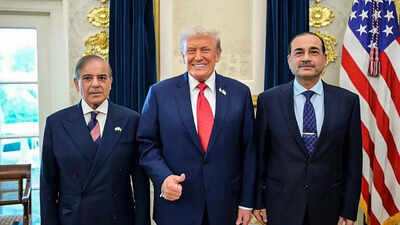
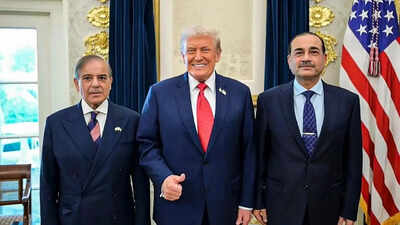
Donald Trump with Pakistan PM Shehbaz Sharif and Army Chief Asim Munir (PTI file photo)
According to public disclosures filed under the US Foreign Agents Registration Act (FARA), Pakistan’s fragile economy is spending an estimated $900,000 every month on lobbying efforts in the United States, bringing its annual outlay to around $10–12 million.This expenditure has come at a time when Pakistan is facing increasing economic challenges. Water crisis deepens after India suspends Indus Water Treaty pahalgam terrorist attackThe country has also been affected by the rising prices of fuel and LPG after the Iran war.Pakistan is struggling with a heavy debt burden and is dependent on the support of the International Monetary Fund (IMF). Despite securing a bailout package, the economy remains vulnerable to recurring fiscal pressures, foreign exchange shortages and sluggish growth.The FARA filings paint a picture of a broader influence campaign aimed at strengthening Islamabad’s position in Washington even as it faces economic and diplomatic challenges domestically.The revelations reveal a network of lobbying firms that were employed to improve Pakistan’s position on issues ranging from security cooperation and trade to broader diplomatic access.Foreign affairs expert Robinder Sachdev told news agency ANI that the scale of Islamabad’s lobbying effort reflects its determination to secure access and influence in Washington.Sachdev said, “Recent reports indicating a $1.2 million contract are not unusual for Washington. All foreign governments retain lobbyists at various times.”“According to public FARA data, Pakistan is currently spending around $900,000 every month on lobbying. This includes a $50,000 per month contract for meetings involving the interior minister and another company charging $250,000 per month to resolve trade issues.”Sachdev also noted that a lobbying firm hired in October at $25,000 a month recently had its contract increased to $1.2 million, highlighting Pakistan’s growing urgency to strengthen its image and influence in Washington.The documents also raise questions about the claims of Pakistan Army Chief Asim Munir. Speaking at a function at the General Headquarters (GHQ) in Rawalpindi, Munir claimed that India had sought mediation through the United States during the military tension between the two countries.“India expressed its desire for US-led mediation, which Pakistan accepted in the interest of broader regional peace,” Dawn News quoted Munir as saying.However, FARA filings reviewed by ANI show that Pakistan stepped up its lobbying efforts in Washington at the same time as India was carrying out military operations. Operation Sindoor.Between May 6 and May 9 last year, Pakistani representatives recorded about 60 conversations with officials and lawmakers on Capitol Hill, the Pentagon and the US Treasury Department. These activities took place during Operation Sindoor, India’s military response to the Pahalgam terror attack.After suffering a major setback during Operation Sindoor, Asim Munir also made frequent visits to the US in an attempt to gain more recognition and to get Donald Trump’s “pat on the back”, to be seen as the MAGA supremo’s “favorite field marshal”.While Pakistani lobbyists were actively engaging with US policy makers, Indian armed forces were carrying out strikes on key terrorist targets harbored by Pakistan.Last year, India carried out precision strikes on nine key terror targets linked to Lashkar-e-Taiba, Jaish-e-Mohammed and other Pakistan-based terror outfits. When Pakistan interfered in India’s counter-terrorism operations, New Delhi escalated its response by targeting key Pakistani military installations, including the strategically important Noor Khan and Rahim Yar Khan airbases.The FARA revelations indicate that even though Pakistan’s military leadership exuded confidence in public, its lobbying teams in Washington were working intensively behind the scenes during periods of military tension.
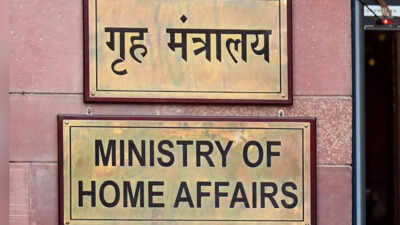
According to an official gazette notification issued by the Ministry of Home Affairs (MHA) on Monday, foreign nationals coming to India will now have to complete their registration before the expiry of 180 days from arrival in the country if they wish to extend their stay.Taking a strict stance on delayed registrations, the notification said that registration after the stipulated period will be allowed only in emergency circumstances. The new provision replaces the earlier rule which allowed registration within 14 days after the expiry of the 180-day period from arrival in India.The Home Ministry notified the Immigration and Foreigners (Amendment) Rules, 2026 under Section 30 of the Immigration and Foreigners Act, 2025. The amended rules came into force with immediate effect and revised registration timelines, emergency provisions, reporting requirements and appeal mechanisms.Clarifying the provisions relating to the status of children and citizenship, the notification said that the requirement of registration will not apply where one of the parents is an Indian citizen and wishes to retain the Indian citizenship of the child under the Citizenship Act, 1955.However, if a child acquires foreign citizenship while living in India, one of the parents must inform the registering officer within 30 days of such acquisition.The notification also modifies certain reporting requirements, standardizing compliance timelines to a 24-hour window.In a significant procedural change, the amended rules introduce a digital appeal mechanism. Persons aggrieved by the directions issued by the civil authorities may file an appeal before the Commissioner, Bureau of Immigration within 30 days through a designated online portal.As per the rules the Commissioner has to provide an opportunity of being heard to the party concerned and endeavor to dispose of the appeal by passing a reasoned order within 60 days from the date of receipt of the appeal.The amendments aim to streamline compliance processes, tighten norms for delayed registration, and strengthen monitoring of immigration-related processes.
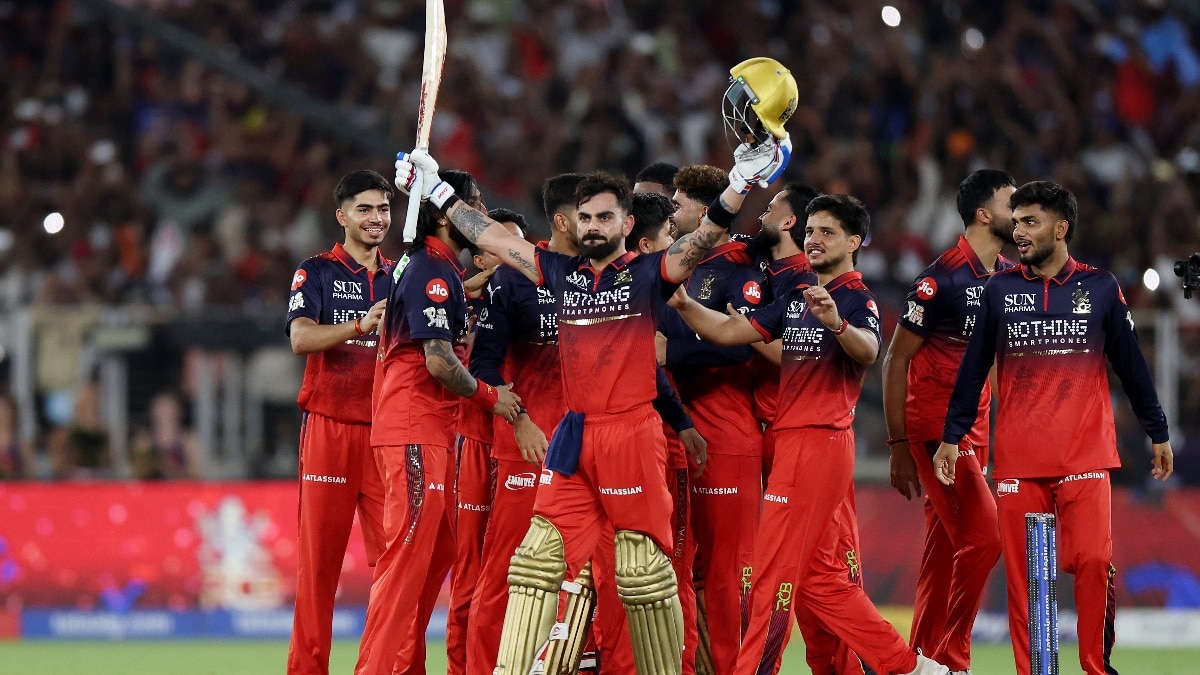
The report was lodged. The last line was sent to my colleagues at the desk, the laptop was closed. There were still a few balls left in the IPL 2026 final, and I had already reached for the binoculars because when Royal Challengers Bangalore crossed the line, there was only one place worth looking at.
I trained him well before hitting the winning six. He scored 75 runs in 42 balls, hitting nine fours, three sixes, the last of which achieved the target with two overs remaining. And then I waited.
He gave a flying kiss towards the stand where Anushka Sharma was sitting. He raised his bat briefly towards the crowd. And then he proceeded to shake hands, first with opponents, then with teammates, like a man who knew all along how the evening would end. I held the binoculars on him, waiting for the knees to bend, the chest to open, for the Kohli I knew to walk in.
He did not arrive.
The thing about Virat Kohli is that he celebrates wickets as if he has won the World Cup. Arms outstretched, chests puffed out, roaring at no one but everyone, as if the act of a batsman losing his stumps is the most momentous event in human history. It’s instinct, not performance – or perhaps, with Kohli, the two have always been the same thing. For seventeen years at Royal Challengers Bangalore, that intensity was the heartbeat of the franchise. When he got hurt, the team got hurt. When he wanted it, you could feel it from the stands.
That’s why anyone watching closely on television or from the press box in Ahmedabad spent most of it IPL 2026 The final search for that guy and finding someone else entirely.
To understand why this matters, you have to be in the same stadium twelve months ago.
In 2025 final against punjab kingsKohli started crying even before the last ball was bowled. Standing along the boundary rope, he sank to his knees, tears flowing from his eyes. It wasn’t a celebration, not yet. It was a release from the burden of 17 years, the accumulated pressure of four runner-up finishes and a franchise that took everything it had and kept demanding more.
AB de Villiers came on this occasion. Chris Gayle too. Both were invited on the stage. The broadcaster was not able to take his eyes off Virat. Rajat Patidar was the captain, but everyone knew that the night belonged to someone else.
This was a relief. Pure, carefree, respite 17 years in the making.
What unfolded in 2026 was absolutely cool. Before the final, Kohli met AB de Villiers for a brief personal chat, this time for broadcasting duties. A hug, a few words. This was its limit. The pre-match ceremony was of Patidar. The post-match ceremony was also of Patidars. And when the trophy was taken out, it was Patidar who had to guide it.
Before he could pick it up, Kohli appeared in the middle of the stage. During the victory party, Kohli was seen in the loudest voice of the entire evening, dancing with my wife. On the field, he seemed to be making himself smaller, as if vacating the space he usually filled by nature required conscious effort.
Those who followed RCB throughout the tournament saw the same quality in training. He completed his job at the nets without any ceremony and went back to the dugout. He was present without imposing. He scored runs as usual, But the story of the tournament revolved around him rather than around him – Eight different players won Player of the Match throughout the campaign, and on the day of the final Patidar turned 33, becoming only the third captain after MS Dhoni and Rohit Sharma to successfully defend an IPL title.
Did Kohli do what Dhoni and Rohit did not do?
Now think about that comparison for a moment.
Dhoni rebuilt CSK in his own image so thoroughly that the franchise and the individual became, effectively, a single entity. Rohit did the same in five titles with Mumbai Indians – patient, composed, unmoving at the center of everything. It was never a failure of generosity on his part. The club’s identity was always, integrally, theirs, and so the question of retreat never arose. He remained in the headlines because he had no place else to go.
Both franchises are paying for it now. Mumbai Indians spent most of IPL 2026 searching for an identity Change of leadership to Hardik Pandya, have yet to assemble a coherent team in the image of anything. CSK without Dhoni fit and available, Had to face his own crisis. For the first time in the tournament’s history, three consecutive years went by without any of them winning the title. The machine outnumbered the men, but only just – and without any clear idea of what it is when they are not there. It is in this context that what Kohli has done has its full significance.
He was unquestionably the best player in the final: 75 not out, player of the match, the winning six off his bat. But zoom out and the picture is even clearer: 675 runs at an average of over 50 in the entire tournament, a strike rate of 165.84, and a complete abandonment of the anchor role he once regarded as a professional credit.
He attacked from the very first ball, relied on the innings to take risks and quietly did more for this team than just the statistics. There was not a single moment of looking at me involved with any of them.
Later, he spoke with the clarity of a man who had really shrugged off the need to be the sole engine: “Even tonight, I know it’s a chase, and they probably want to get me out early, but I had full confidence that even if I get out early, we have a champion team that will get the job done. When you have that kind of confidence, you can go out there and really take on the bowlers.”
In other words, he was free, because he chose to make himself replaceable. In the words of R Ashwin, he became “a mentor figure, a big brother and the alpha who allowed others to lead.”
“Virat Kohli is an alpha, yet he took a step back like an elder brother and let Rajat lead”
R. Ashwin blamed five people (including Virat Kohli) for RCB’s incredible performance in the last 2 years:
AB de Villiers, watching from the commentary box at the exact moment Kohli scored the winning runs, came up with the description that says it best:
“There is a lot of peace in the camp. They came here with a mission and executed it to perfection. From top to bottom, clear plans were handed down to each member.”
This is what RCB never had before – not a star, they always had one of those, but a structure that could breathe without him at the centre. Dhoni and Rohit shaped their franchise with equal depth and with equal devotion. But his success did not separate him from the identity he created. Their success made them a franchise. When the transformation came, she had nothing to keep her shape.
Kohli, by a strange twist, escaped that trap after 17 years of failure. He never got the chance to build an empire, so there was no one to protect him. When success came, it came as a collective release rather than a personal coronation, and he understood, perhaps better than anyone, that it had to stay that way.
Virat Kohli has now won two titles in two years. (Image: Reuters)
Advertisements will always want his face. The dressing room, by its own sober choosing, doesn’t need it. The franchise was always a man. Then Virat changed the script.
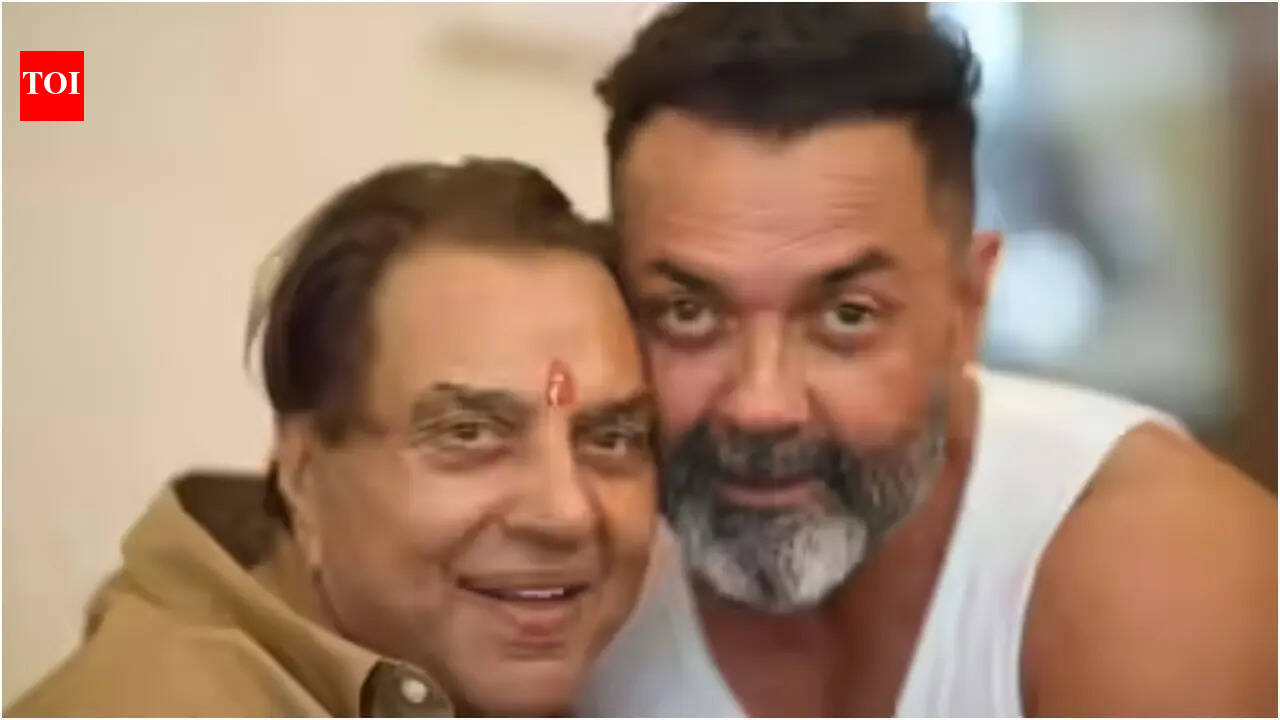
Bobby Deol breaks down in tears as he remembers his late father Dharmendra in Aap Ki Adalat and says “nobody” can play him in his biopic – not even he or Sunny Deol. He also defended Dharmendra’s nature and described him as a person with a golden heart. Bobby’s next film Anurag Kashyap’s Bandar will be released this Friday.
After the demise of the veteran actor Dharmendra Over the past year, his family and devoted fans have been mourning the irreplaceable void left behind. his son bobby deol He has often expressed his grief publicly, often becoming emotional whenever he speaks about his late father.
Bobby Deol says no one can play Dharmendra’s character on screen
During his recent appearance on Aap Ki Adalat, Bobby was asked by an audience member who he thought could play his late father Dharmendra in the possible biopic. When he was asked to choose between himself and his elder brother sunny deolWithout a moment’s hesitation Bobby replied, “Nobody.” Overcome with emotions, he added, “No one can ever be like him. No one can ever be like the person he was.”
Bobby Deol defends his father’s actions
Another audience member reportedly narrated stories of Dharmendra losing his temper and attacking people who misbehaved. Bobby didn’t hesitate in defending his father and presented a side of the story that many people may not know about. “Dad was the kind of person who could never tolerate anyone speaking unfairly or disrespectfully. He would actually raise his hands and hit hard. But later, he would bring the same person in, feed them, give them milk, buy new clothes for them. That’s the kind of guy he was,” Bobby said.He further said, “I always felt bad whenever he hit someone. I was never like that. Since childhood, I have seen that I never felt the need to raise my hand on anyone and I don’t even like doing it.”
Bobby Deol’s next film: Anurag Kashyap’s ‘Bandar’
On the professional front, Bobby Deol will be seen in director Anurag Kashyap’s next MonkeyIt is going to be released in theaters this Friday. The film, inspired by real events, had its world premiere at the Toronto International Film Festival in 2025, where it attracted considerable attention. written by underworld, fogAnd flying punjab Author Sudeep Sharma And Abhishek BanerjeeThe film includes many actors including Bobby Deol, Sanya Malhotra, Sapna Pabbi. Saba AzadRaj B Shetty, Riddhi Sen, Indrajit Sukumaran, Jitendra Joshi, Nagesh BhosleAnd Ankush Gedam.
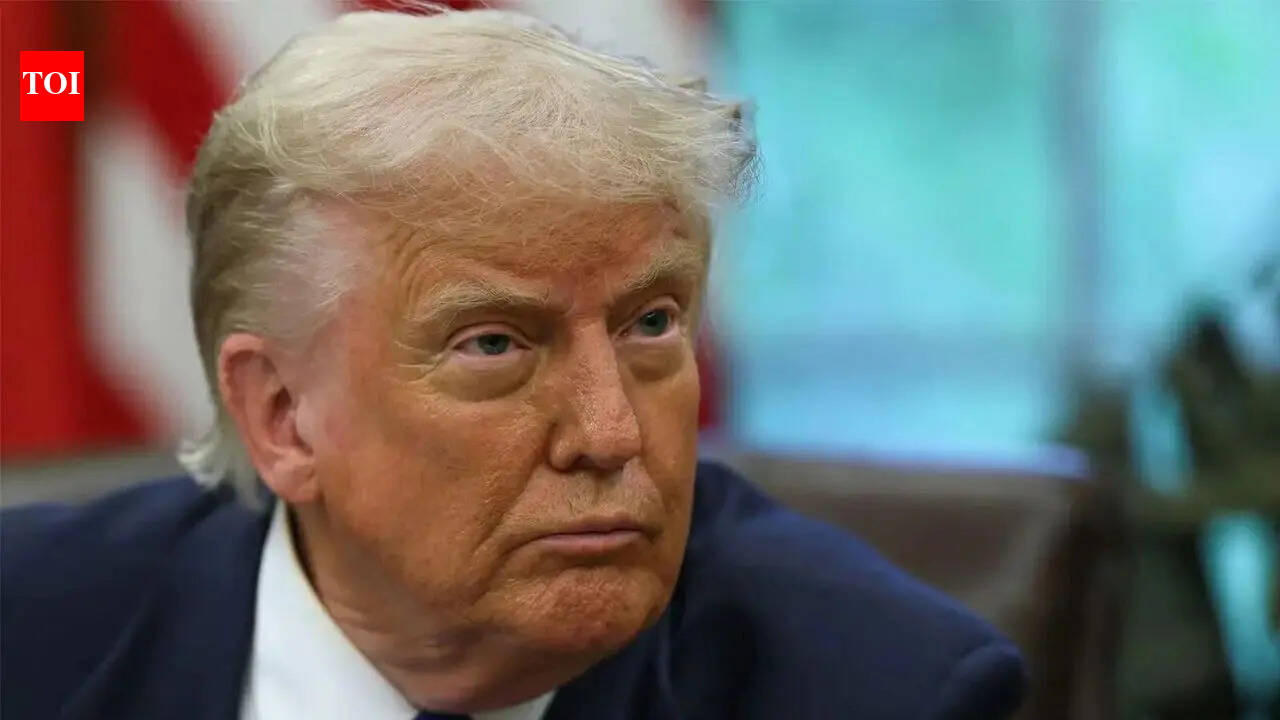
us President donald trump Said on Monday that talks with Iran were continuing “at a brisk pace” despite the latest firing, which has tested the fragile ceasefire between the two sides.“Negotiations with the Islamic Republic of Iran continue at a rapid pace,” Trump wrote on Truth Social.A ceasefire signed nearly two months ago after several weeks of fighting has come under fresh strain as US and Iranian forces launched attacks over the weekend and also on Monday. The latest attacks have raised concerns that the ceasefire could break down and derail ongoing diplomatic efforts.Trump also said he had spoken with Israeli Prime Minister Benjamin Netanyahu and representatives of Hezbollah amid rising tensions in Lebanon.“I had a very productive conversation with Israeli Prime Minister Bibi Netanyahu, and no troops will go to Beirut, and any troops that are on the way have already been turned back,” he wrote.Trump said that Hezbollah has agreed to stop attacks on Israel. “They agreed that all firing would stop – Israel would not attack them, and they would not attack Israel,” he said.Earlier, Trump told NBC News that Washington had not been formally informed about Iran’s reported decision to suspend talks.“I think if they have completed the conversation then it’s OK,” he said. He also said that Tehran has not officially informed the US about such a decision.Trump said, “But they have not informed us about it. That does not mean that we will go and start dropping bombs everywhere.”This development comes as Israel continues its military campaign in Lebanon. Over the weekend, the Israeli military carried out its deepest incursion into the country in 26 years. On Monday, Netanyahu ordered attacks on Hezbollah-controlled southern suburbs of Beirut, signaling a further escalation in the conflict.Trump’s call with Netanyahu came shortly after those attacks began.Meanwhile, Iran said it had stopped exchanging messages with Washington through intermediaries after the attack on Lebanon.Iranian Foreign Minister Abbas Araqchi said on X, “The ceasefire between Iran and the US is clearly a ceasefire on all fronts, including Lebanon. Its violation on one front is a violation of the ceasefire on all fronts. The US and Israel are responsible for the consequences of any violation.”
New Delhi: Concerned over the possibility of patients getting infected with HIV and viral hepatitis through unsafe medical procedures, the National Medical Commission (NMC) has directed medical colleges across the country to tighten injection safety practices, warning that such infections are completely preventable but can occur if basic safety measures are ignored.In a nationwide advisory, the medical education regulator said unsafe injection practices could lead to outbreaks of blood-borne infections, including HIV, hepatitis B and hepatitis C, and asked institutions to ensure strict compliance with infection prevention and control norms.The Commission has ordered all medical colleges to use only sterile, single-use needles and syringes and strictly prohibit their re-use under any circumstances. It has also directed hospitals to strengthen hand hygiene practices and ensure proper segregation and disposal of injection-related waste.Calling patient safety a “non-negotiable mandate”, the NMC said there should be zero tolerance for practices like re-use of syringes, unsafe vial sharing, recycling of needles and improper disposal of sharps.This advice is important as India administers millions of injections every day in public and private health facilities. Public health experts have long warned that a single lapse in injection safety could expose many patients to potentially life-threatening infections.To further reduce the risks, the NMC has advised medical colleges to gradually adopt safety-engineered auto-disable syringes that cannot be reused. The institutions have also been asked to conduct periodic training and competency assessments for healthcare workers handling injections and other invasive procedures.The regulator has directed hospitals to report any clusters of needle-stick injuries and infections for investigation. Hospital authorities have also been asked to ensure post-exposure prophylaxis for healthcare workers as per National AIDS Control Organization (NACO) guidelines and conduct regular audits through infection-control teams.The advisory underscores the growing concern among health officials that preventable health care-associated infections remain a threat to patient safety and that strict adherence to standard protocols is the most effective defense against the transmission of blood-borne diseases.