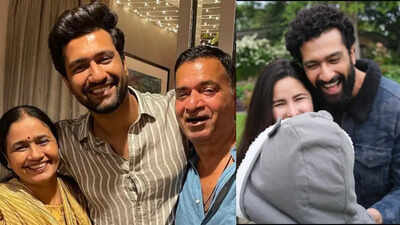
Vicky Kaushal says he was heartbroken when he returned to work after the birth of son Vihaan, but after becoming a father he appreciates his parents more. hindi movie news

Vicky Kaushal says he was heartbroken when he returned to work after the birth of son Vihaan, after becoming a father he appreciates his parents more

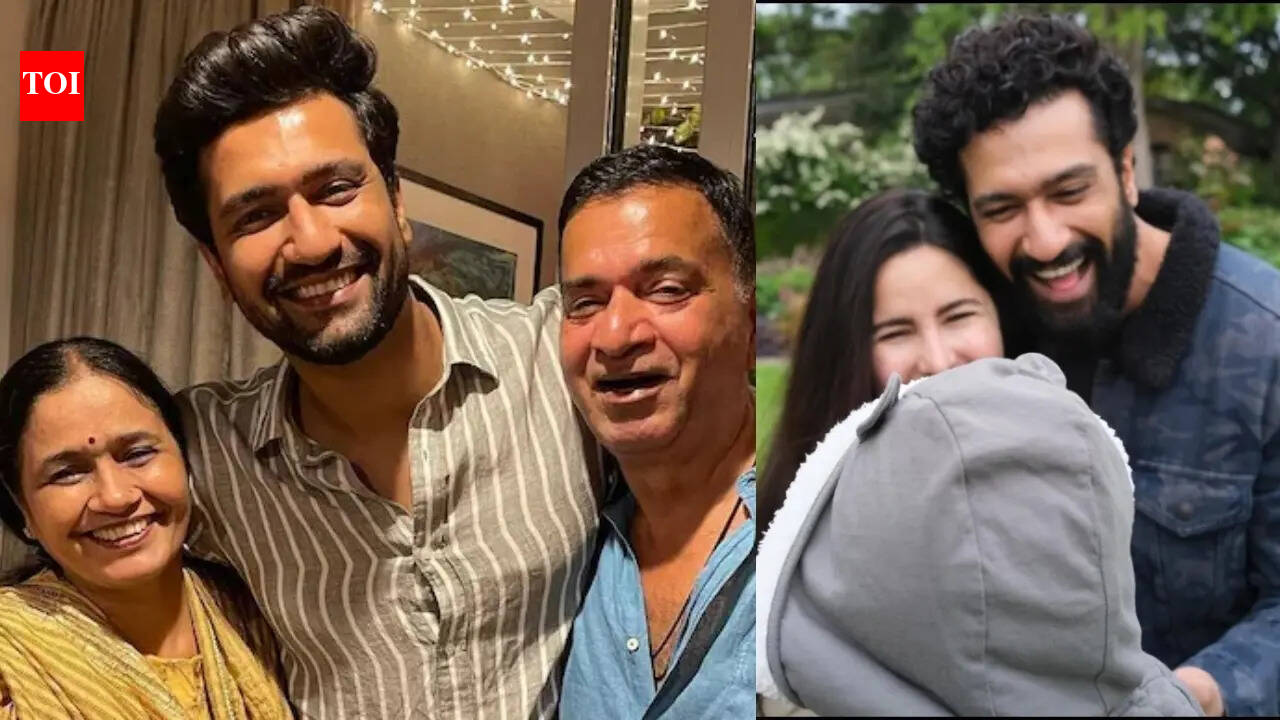
Since welcoming your first child Katrina Kaif last year, Vicky Kaushal Discovering a whole new side of life. The actor, who became father to son Vihaan Kaushal on November 7, 2025, recently talked about the lessons that fatherhood has taught him and how it has changed his approach towards parenting.Vicky reflected on the values ​​his parents instilled in him and admitted that becoming a father has given him a deeper appreciation for their efforts.Vicky said in an interview with The Nod Mag, “When I look back at my upbringing, I realize a lot of things he was right about. We weren’t growing up financially. So, there was pressure. But he was responsible for instilling the right values ​​in me.” The actor revealed that raising his son has made him realize the importance of leading by example rather than just giving advice. “It happens to me at the most random moments [instilling the right values] Now I have a responsibility towards my son,” he added, “He will learn by watching how his parents are thinking, talking and behaving. So, I realized that whatever you want to see reflected in him should come through your actions rather than words.”Vicky also opened up about the emotional challenges that come with becoming new parents. After taking a six-week break from work after Vihaan’s birth, the actor had to leave home for a four-day shoot around 230 kilometers away. He admitted that the separation was more difficult than he expected. He said, “My heart sank. It was hard.” This experience helped him understand the feelings that parents often talk about as their children grow up.“There are so many new emotions that come up almost on a daily basis, because being a parent is new to me. I understand now when other people say ‘Man, the baby is growing up so quickly’. And I’d think, ‘What are you talking about? Your baby is still a year old.’ Now I understand,” the actor mentioned.On the professional front, Vicky was last seen Laxman Utekar‘Chhaava’, with Rashmika Mandanna. He is currently busy shooting for Sanjay Leela Bhansali’s *Love & War*, which also stars Alia Bhatt and Ranbir Kapoor and marks their reunion with both the actors on screen.

Source link

Ukraine drone attacks: Ukraine drones attack St. Petersburg oil terminal, naval base, while Russia reports 8 civilians killed in bus attack

Ukrainian drones hit St. Petersburg oil terminal, naval base, while Russia reports 8 civilians killed in bus attack
Ukrainian drone attacks St. Petersburg oil terminal

Ukraine carried out one of its deepest drone strikes inside Russia overnight, targeting energy and military facilities in St. Petersburg as the city prepared to host President Vladimir Putin’s major economic forum.Meanwhile, Russian officials accused Ukraine of carrying out a separate drone attack on a passenger bus in the Russian-controlled part of the Donetsk region, killing 8 people and injuring several more.The strikes came hours after a deadly wave of Russian missile and drone attacks on Ukrainian cities, reflecting an intensifying tit-for-tat campaign that has deepened the war in the two countries’ territory.Ukrainian long-range drones attacked an oil terminal and military facilities in St. Petersburg, Russia’s second-largest city, causing a temporary airport closure and disrupting communications ahead of the annual St. Petersburg International Economic Forum (SPIEF), according to news agency AP.Ukrainian President Volodymyr Zelensky said the drone flew more than 1,000 kilometers to attack the St. Petersburg oil terminal.Video shared by Ukrainian officials showed thick black smoke rising from the facility. According to news agency AFP, smoke was visible from the conference venue where the delegates had gathered.

Ukraine claims attack on naval base, warship

Zelensky said Ukrainian drones also targeted the Kronstadt naval base, home to Russia’s Baltic Fleet. The Ukrainian military later claimed that it had attacked the Boiki corvette, causing a massive fire on the warship.The commander of Ukraine’s drone forces posted footage he said showed an attack on a ship at a naval base.Russian officials confirmed that infrastructure in St. Petersburg was damaged, but did not provide details. Governor Alexander Beglov said no casualties were reported.The strike disrupted operations at St. Petersburg’s main airport, with flights suspended for several hours overnight. According to news agency AP, mobile internet services were also temporarily restricted.Zelensky described the attacks as part of Ukraine’s strategy of “long-range sanctions” aimed at Russian military and energy infrastructure.“Ukraine’s long-range sanctions plan is being implemented exactly as needed to bring peace closer,” he said.

SPIEF Forum opens in the shadow of war

These attacks coincided with the inauguration of SPIEF, often referred to as the “Davos of Russia”. The forum remains one of Moscow’s most important economic events despite most Western investors leaving following Russia’s invasion of Ukraine in 2022.

Ukrainian drone strikes St. Petersburg oil terminal ahead of 'Russian Davos'

Putin is expected to deliver a keynote speech on Friday. Nearly 20,000 participants from 130 countries are expected to attend this year’s gathering.Kremlin spokesman Dmitry Peskov vowed to respond to the Ukrainian attacks.“Our responses will be systemic in nature,” he told reporters.The Kremlin also said it was continuing to fight to prevent such drone attacks in Ukraine.

Russia blames Ukraine for deadly bus attack

According to Reuters, Russia-based Donetsk leader Denis Pushilin said a Ukrainian drone attacked the bus as it stopped to pick up passengers in Yenakiyev.Pushilin said eight civilians were killed and 11 were injured.Kiev did not immediately comment on the allegation. Like Russia, Ukraine also denies deliberately targeting civilians.Russian investigators opened a criminal case over what they described as a “terrorist attack”.Russian Foreign Ministry spokeswoman Maria Zakharova accused Ukraine of waging a “campaign” against civilians, while Special Ambassador Rodion Miroshnik alleged that Kiev was attempting to intimidate residents in Russian-controlled areas.

growing drone war

The latest attacks come amid a sharp increase in long-range attacks by both sides.According to the AP, Russia launched 198 drones into Ukraine overnight, while Russian officials said their air defenses intercepted 354 Ukrainian drones in several areas.The exchange came after a major Russian missile and drone attack on Ukraine on Tuesday, which killed at least 23 people and injured more than 130.Fighting continued even on the front lines. Ukrainian officials said Russian strikes killed civilians in the Kherson, Sumy and Kharkiv regions, while Russian-established officials reported casualties in occupied eastern Ukraine.With battlefield lines largely static and drone warfare increasingly shaping the conflict, both Moscow and Kiev are relying more on long-range strikes aimed at military infrastructure, energy facilities and logistics networks far from the front.

Source link

Why is TMC’s rebellion about Abhishek Banerjee and not about Mamata? india news

Why is TMC's rebellion about Abhishek Banerjee and not about Mamata?

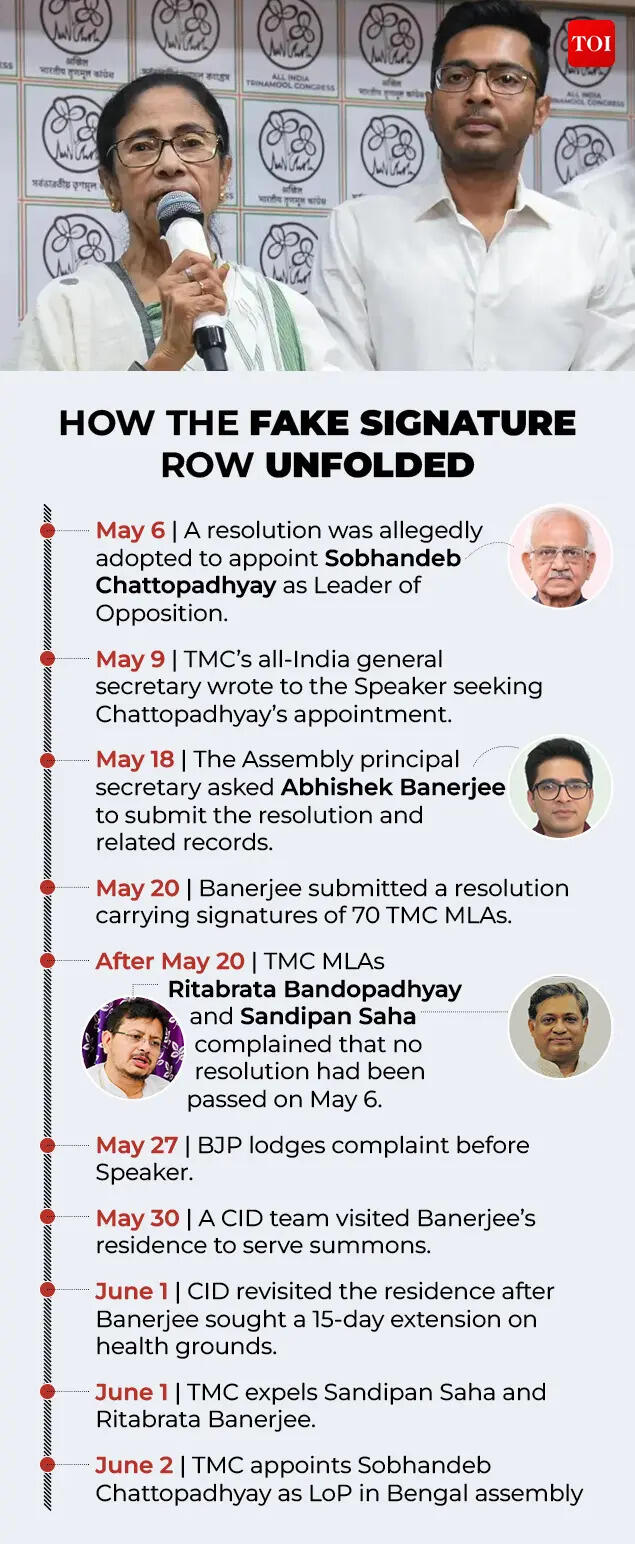
New Delhi: Internal rebellion Trinamool Congress The dispute between the (TMC) has deepened since last week, with rebel MLAs supporting expelled leader Ritabrata Banerjee for the post of leader of the opposition and it being compared to the Shiv Sena split in Maharashtra.But a closer look reveals that the rebellion may be less challenging Mamata Banerjeeand much more about questioning the leadership of and the growing authority of his nephew and political successor, Abhishek Banerjee.At first glance, this development appears to be a direct challenge to the TMC leadership. A group of rebel MLAs have questioned the validity of the party’s decision-making process, accusing the leadership of preparing a proposal on the appointment of the leader of the opposition and openly flouting the official line.Yet the rebels have been careful about one thing: they have avoided attacking Mamata Banerjee herself.Even after his expulsion, Ritabrata Banerjee has not presented himself as a rival to the TMC supremo. Instead, their fight focuses on how decisions are being taken within the party and who is exercising authority in the name of Mamata Banerjee.The letter submitted by the rebel camp to Assembly Speaker Rathindra Bose reportedly recognizes Mamata Banerjee as its leader, even as it challenges the party’s official position on the opposition leadership.The immediate trigger of the crisis explains this clearly.A controversy erupted over the appointment of the opposition leader after TMC national general secretary Abhishek Banerjee informed the Speaker about the party’s decision. Ritabrata Banerjee and Sandipan Saha challenged that process, alleging that no such resolution was passed in the legislature party meeting and that many signatures were fake.Therefore, the controversy is not about Mamata Banerjee’s leadership. This is on the authority exercised by Abhishek Banerjee and the functioning of the organization under him.

Time

Notably, even TMC’s defense on the appointment of Leader of Opposition focuses on the communication made by Abhishek Banerjee to the Speaker. Party leaders have repeatedly argued that his letter is the only valid document before the Assembly, putting Abhishek at the center of the confrontation.This is why the latest developments may be seen by many as a proxy fight over succession.For years, Abhishek Banerjee has been widely seen as the political successor to Mamata Banerjee. He has emerged as the key strategist, chief campaigner and organizational face of the party after Mamata. As his influence grew, concerns grew among sections of the older leaders who felt that they were increasingly sidelined.The current rebellion appears to have brought those tensions out into the open.After the party expelled Ritabrata Banerjee, he pointed out the sharp difference between Mamata and Abhishek. “The party has expelled me, but I believe I am still with TMC…Abhishek Banerjee is a nobody in the 18th West Bengal State Legislative Assembly,” he told reporters.However, when he was asked about Mamata Banerjee, his tone was completely different.“Mamata Banerjee is a big leader. I may have been expelled from the party, but I have not lost respect for her.” She’s still my leader,” he said.Ritabrata also made fun of Abhishek’s political troubles after his election defeat and the subsequent signature controversy. Referring to the protests against the TMC leader, he quipped to reporters: “At least people are not shouting ‘thief, thief’ at me.”However, his criticism of Abhishek was not triggered by the current crisis.In recent months, Ritabrata has emerged as one of Abhishek Banerjee’s most vocal internal critics. He questioned the increasing role of advisors and strategists in party affairs and criticized excessive centralization of decision making.Following the party’s electoral setback, he publicly expressed concern over whether a handful of advisers had become more influential than grassroots leaders. Although Abhishek was not always named directly, the criticism was widely interpreted as targeting the leadership structure associated with him.This helps explain why the rebels’ confrontation is centered on decisions conveyed by Abhishek Banerjee rather than Mamata Banerjee herself.The political mathematics may also seem obvious.Mamata Banerjee remains the party’s biggest mass leader and most recognizable face. Challenging him directly risks alienating a large section of TMC workers and supporters.For dissident leaders, challenging Abhishek allows them to present their revolt not as a revolt against the party founder, but as a fight against a leadership style, an organizational model and, ultimately, a succession process that has intensified after the assembly election defeat.This is what makes the current crisis important.Regional parties across the country have often struggled during succession changes. Bal Thackeray and the NCP’s internal fight over succession ultimately led to the Shiv Sena’s split, with Sharad Pawar showing how questions of inheritance can quickly become questions of power.It appears that TMC is now facing its own version of that dilemma.Now the question before the party is not whether Mamata Banerjee remains its undisputed leader. There seems to be very little disagreement on that issue.The more important question is whether Abhishek Banerjee can achieve the same level of acceptance across the organisation.The answer will determine whether the current rebellion remains an isolated act of dissent or becomes a broader challenge to the party’s organizational structure and succession planning.

Source link

AFCAT 2 Merit List 2025 Released: 744 Candidates Made It – Check Toppers, How to Check Result

AFCAT 2 Merit List 2025 Released: 744 Candidates Made It - Check Toppers, How to Check Result

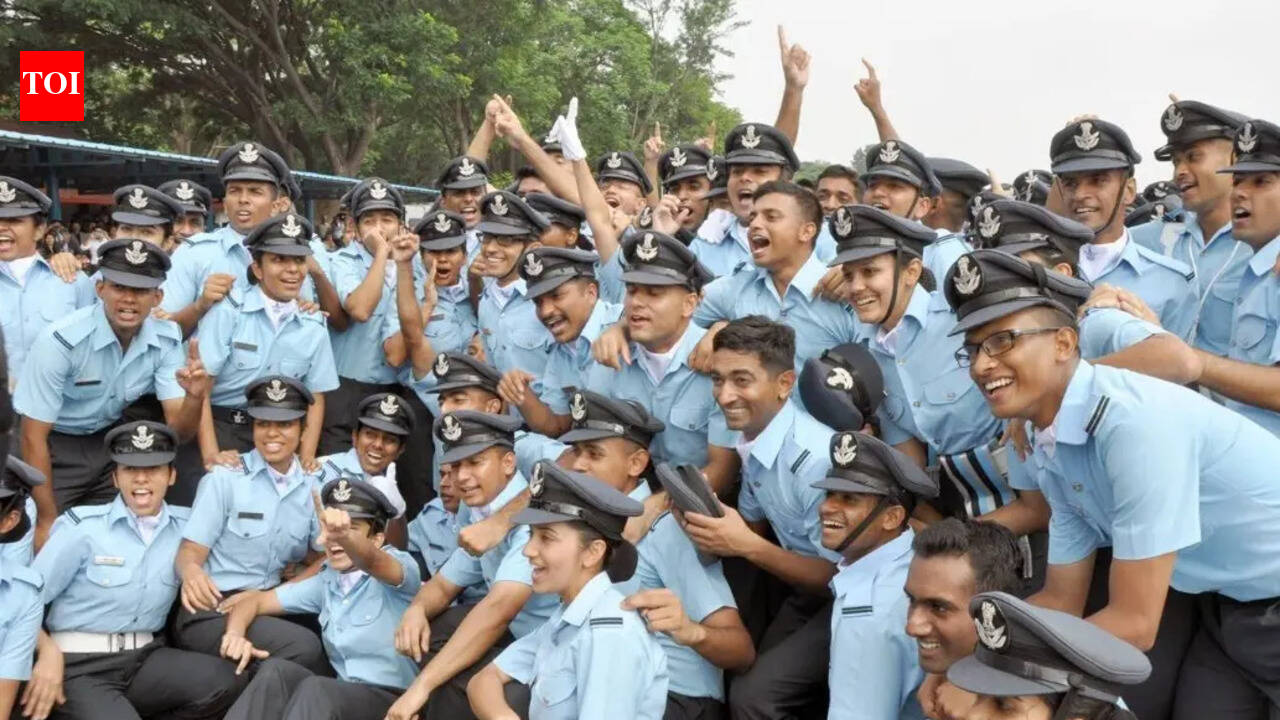
Indian Air Force (IAF) has released the AFCAT 2 2025 merit list for the courses commencing in June 2026 at the Air Force Academy (AFA).Candidates who have completed the Air Force Selection Board (AFSB) process can now check their name and rank in the merit list released by IAF.As per the list, a total of 744 candidates have been included in various admission categories. The merit list includes 380 candidates from AFCAT male category, 226 from female category, 106 from Aeronautical Engineering (AE) branch, 23 from NCC Special Entry category and nine from Service Entrance Commission category.Being included in the merit list does not automatically guarantee admission to the course. Final selection will depend on medical fitness, eligibility status and availability of vacancies.Among the top ranked candidates, Alok Singh topped the AFCAT men’s category, while Mehakpreet Kaur topped the women’s category.In the AE branch, Saurabh Saini secured the highest rank among male candidates, while Suhani topped the female category.In the NCC Special Entry category, Rahul Kumar topped among male candidates, while Riddhi Malhotra stood first among female candidates. Pradeep Kumar secured the top rank in the Service Entry Commission category.Candidates whose name is in the merit list are advised to keep checking the official Indian Air Force updates regarding the next steps of the admission process.

How to Check AFCAT 2 Merit List 2025

Candidates should follow the steps given below to check their result.

  • go to officer AFCAT website
  • Visit the “What’s New” section on the homepage
  • Click on the link titled “Order of Qualification of All AFSB Recommended Candidates: June 26 Course”.
  • Merit list PDF will open
  • Press Ctrl+F to search and enter your roll number
  • Download and save PDF for future reference

Source link

Henry Novak: The Sikh man who murdered Henry Novak was booked in 2023 for allegedly stealing ceremonial blades from a gurudwara. world News

Sikh man who murdered Henry Novak was reported in 2023 for allegedly stealing ceremonial blades from a gurudwara

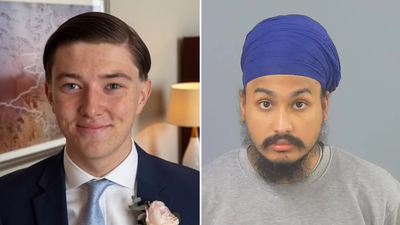
A Sikh man jailed for the murder of an 18-year-old student in Southampton has previously been reported to police over the alleged theft of a ceremonial religious blade, the Daily Mail reports.Vikram Digva, 23, was jailed for life after being found guilty of murdering 18-year-old Henry Novak with an eight-inch saber in Southampton city center in December 2025.Members of Southampton’s Sikh community contacted police over the alleged theft of a ceremonial Shastar blade worth approximately £1,000 in July 2023.The blades were reportedly taken from Gurdwara Khalsa Darbar in Southampton, where Digwa and his brother were teaching Gatka, a traditional Sikh martial art involving the display of weapons.A source at the gurudwara said Digva was dismissed as a gatka instructor in August 2023 and the alleged theft was later reported to the police.“We sacked him as a Gatka teacher in August 2023 and then I reported him to the police for stealing Shastra worth about £1,000, which was bought with community money,” the source told the Daily Mail.No charges were filed in connection with the alleged incident.Digwa’s mother Kiran Kaur, 53, was also convicted of assisting an offender after prosecutors said she removed the murder weapon from the scene of the stabbing.Sentencing Degua to life in prison, Judge William Mousley Casey told the defendant he had “brought shame to your family and your religion”.The judge also said he was satisfied that Henry Novak “did not say anything racist” during the encounter and rejected a significant portion of DeGava’s account of the events leading up to the fatal stabbing.

Source link

Jos Buttler: ‘Imagine that pressure at the age of 15’: Jos Buttler opens up on Vaibhav Suryavanshi fever cricket news

'Imagine that pressure at the age of 15': Jos Buttler opens up on Vaibhav Suryavanshi fever
Vaibhav Suryavanshi (ANI photo)

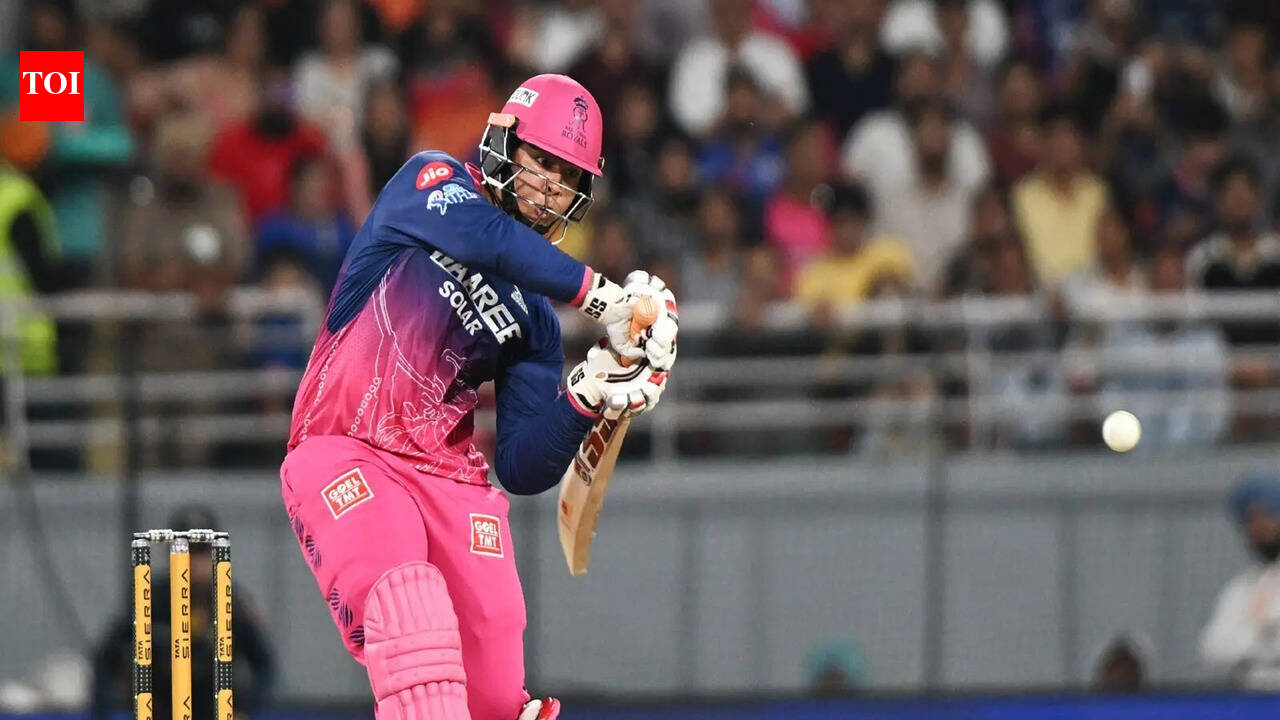
Royal Challengers Bangalore may have retained the IPL trophy, but according to former England captain and Gujarat Titans wicketkeeper-batsman jos buttlerOne teen eclipsed every other story in the tournament. Speaking on the YouTube podcast For the Love of Cricket, Buttler reflected on the recently concluded IPL 2026 season and had special praise for 15-year-old Vaibhav Suryavanshi, whose remarkable campaign captured the imagination of cricket fans around the world. Discussing RCB’s successful title defense and their defeat to Gujarat Titans in the final, Buttler made it clear that Suryavanshi’s performance stands above everything else. “RCB won the trophy and they are the story of the IPL. But Vaibhav is almost the IPL this year. He is the story of the tournament. MVP, 700-plus runs and a faster strike rate than everyone else. It was amazing to watch,” he said. Although Rajasthan Royals were not involved in the title match, Suryavanshi was present at the Narendra Modi Stadium for the final on Sunday. The teenage sensation watched the match with ICC President Jay Shah before receiving five major individual awards for a season which saw several records. Their numbers reflect the scale of their dominance. Suryavanshi scored 776 runs at a whopping strike rate of 237.3 during the season and cleared the ropes 72 times. His performances earned him the Orange Cap, Most Valuable Player Award, Emerging Player Award, Super Striker Award and the distinction of finishing as the leading six-hitter of the tournament. Former England fast bowler Stuart Broad believes that the influence of this young player has extended far beyond the IPL. Broad suggested that Suryavanshi could be the first cricketer to achieve worldwide fame before earning an international cap. “I said in my last podcast that I have never seen a player become an international star without playing international cricket. In England, people are talking about him. They may not even be IPL fans, but they are saying, ‘Oh my God, have you seen Sooryavanshi? He is incredible.’ He has become a world star. “Not like Kohli or anything, but he is probably the first player to become a world star without playing international cricket,” Broad said. Butler also told how tremendous the popularity of Suryavanshi has become in India. Recalling the Rajasthan Royals match in Kolkata, he said it was impossible for the young player to ignore the crowd’s support. “His influence in India is huge. He is the guy everyone is talking about. I was talking to Manoj Badale, the former owner of Rajasthan Royals, who told me that in Kolkata, half the stadium had turned up to see Vaibhav and they were all wearing his RR jersey. “Imagine the pressure as a 15-year-old when you get off the bus and look, but he has soaked it all up. And when he bats, I don’t know whether Rajasthan Royals have done it or in the tournament, but there is a song for him, this Suryavanshi song, which plays when he is attacking you.” The former England captain then admitted that he would be keen to see the teenager join India’s squad for the five-match T20 series in England next month, even if England’s bowlers may not welcome that prospect. “I hope to see him in England. Well, maybe not for our bowlers. But it will be worthwhile because you can see it among the players and the support staff. Everyone is keen and I want to see this guy.” Whether that opportunity will come remains uncertain. Suryavanshi is set to feature in the upcoming India A ODI tri-series, a competition selectors are reportedly looking at as a key assessment before discussing a possible T20I debut during the England tour.

Source link

India’s population changes: from baby boom to fertility challenges. india news

Baby boom ends, India's population test now begins

“Whatever you can say that is true about India, the opposite is also true.” The old Joan Robinson line still works because India have a way of defeating neat summaries. Most national averages come with broad patterns, outliers, and caveats.The latest sample registration system data is one such mirror. The SRS, India’s official large-scale system for tracking births and deaths, gives annual estimates of fertility and mortality. At first glance, the headline number is simple: India’s fertility has fallen below replacement level. But a closer look reveals a more unequal country. Some parts of India are already in the low fertility zone. Some of it is still above replacement. Cities are reducing fertility on a large scale, but urban Bihar is not following this scenario. Higher-order families are having fewer children, but the social consequences of smaller families are just beginning. Fewer infants are dying, but the first weeks of life remain a danger zone. And while births are now much more frequent within the hospital system, deaths are not.For years, the policy conversation moved between two extremes, fear of too many births and celebration of a young workforce. A youth population can become a dividend only if it is properly trained and empowered. Meanwhile, populations with low fertility bring their own demands, such as pensions, care for the elderly, chronic disease treatment and migration plans. Both have their own challenges.We look at five data points from the SRS data that shed light on various such issues.

averageness hides anxiety

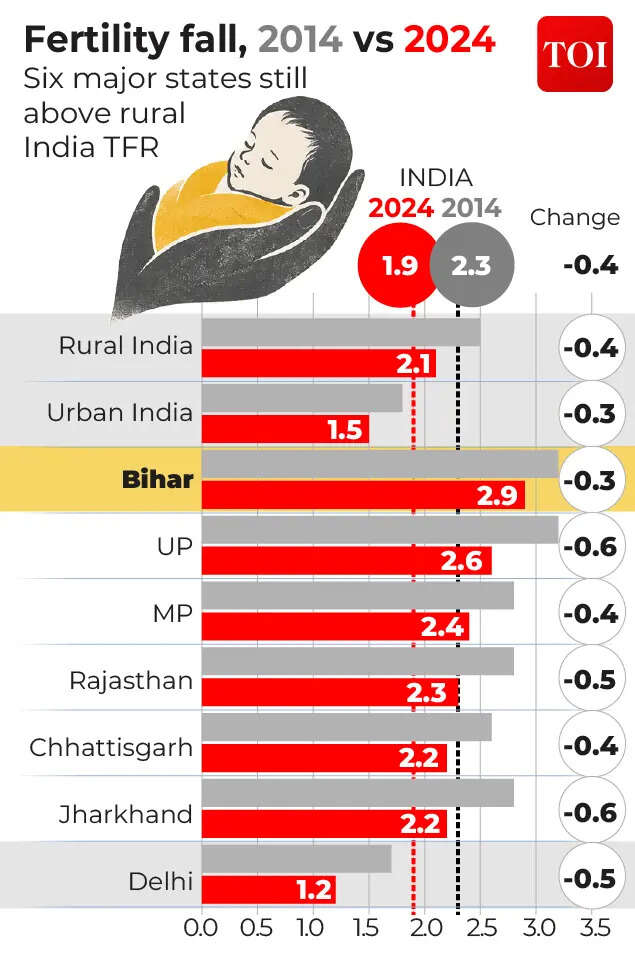
India’s total fertility rate, or TFR, is now 1.9. TFR means the average number of children a woman is expected to have in her lifetime, based on current fertility rates. India’s TFR in 2014 was 2.3. Rural India has come down from 2.5 to 2.1. Urban India has gone from 1.8 to 1.5. In demographic language, India is below replacement fertility. To put it plainly, the baby boom is over.But the national average is just the beginning. Bihar is still at 2.9. Uttar Pradesh is at 2.6. Madhya Pradesh is at 2.4. Rajasthan is at 2.3. Chhattisgarh and Jharkhand are at 2.2. Delhi, a city-state, sits at the other end of the spectrum at 1.2. The World Bank has warned that South Asia is not creating enough jobs for its working-age population, especially youth and women. When above-replacement fertility is concentrated in a few poor states of India, the policy challenge is obvious.

fertility comparison

Bihar exception

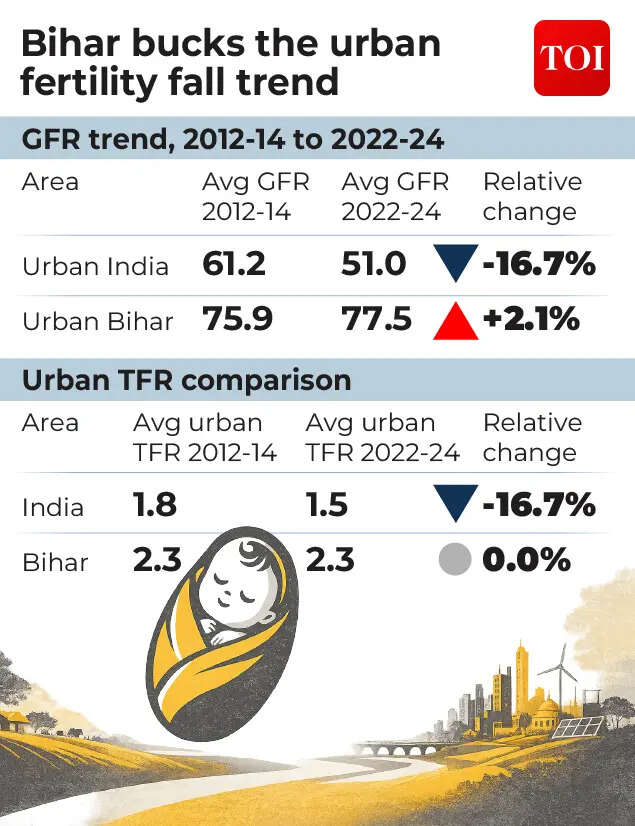
The second data comes from urban India, where a different story emerges. The common belief is that once people move to cities, families become smaller because parents want to invest more in fewer children. Across India, this overarching story persists. Urban India’s average general fertility rate, or GFR, fell from 61.2 births per 1,000 women aged 15-49 in 2012-14 to 51.0 in 2022-24. GFR measures the number of live births in a year per 1,000 women in the reproductive age group of 15–49 years. Here, live births means children born alive, which is the basis used to calculate fertility and mortality rates.But Bihar has broken this pattern. During the same period, the average GFR of urban Bihar increased from 75.9 to 77.5. One year’s data makes the difference even more stark. In 2024, the GFR of urban Bihar was 80.3, while that of urban India was 49.8.

Bihar exception

birth ladder is getting thinner

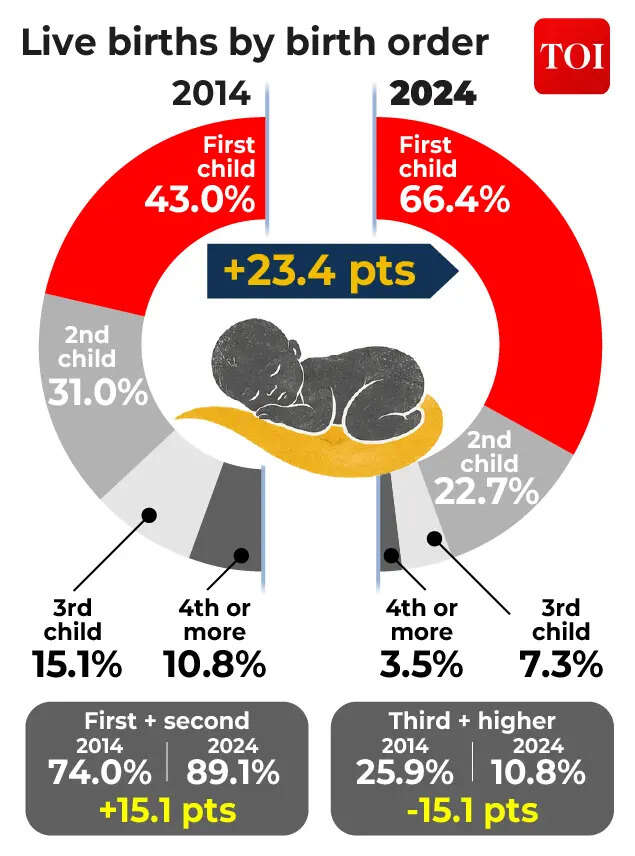
The third innings is less surprising, yet perhaps the most important. In 2014, 43% of live births in India were first-born children. By 2024, their number will rise to 66.4%. Third and higher order births fell from 25.9% to 10.8%. The fourth or higher birth rate fell from 10.8% to 3.5%.This does not mean that every family is stopping at one or two children. This means that the births that are taking place now are similar to the first and second births. The old ladder, third child, fourth child, fifth child, is getting thin. This is a much bigger social change than it first appears. Fewer children means parents invest more in each child. Education becomes a heavy condition. The underlying assumption that children will automatically become old age security for parents also begins to weaken.

birth ladder

The first week remains a matter of concern

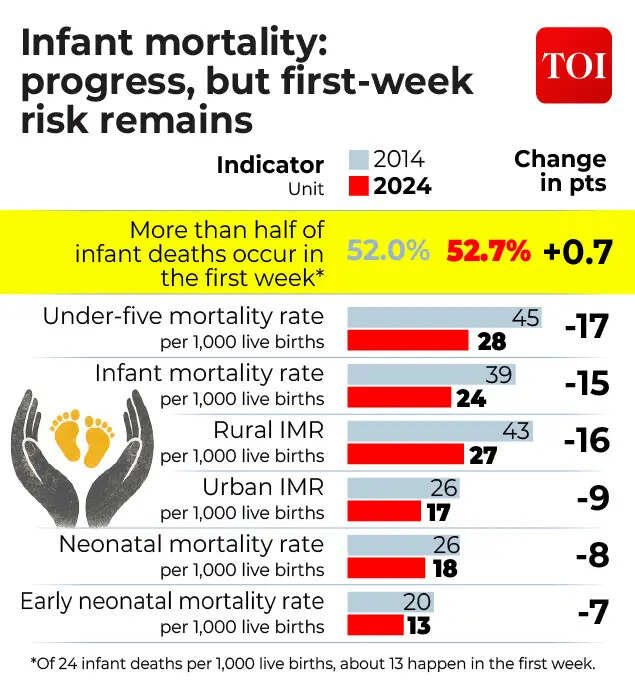
The fourth number is about survival. Here India has made real progress.Infant mortality rate to decline from 39 deaths per 1,000 live births in 2014 to 24 in 2024. Infant mortality rate, or IMR, means the number of deaths of children under one year of age per 1,000 live births. Rural infant mortality rate fell from 43 to 27. The urban infant mortality rate fell from 26 to 17. The mortality rate for children under five fell from 45 to 28. The under-five mortality rate, or U5MR, means deaths before the age of five per 1,000 live births. These are not mere statistics. They mean that children who once would have died are now alive.But the first week is the most worrying part.

first week anxiety

In 2014, 52% of infants died in the first week. In 2024 it was 52.7%. This means that, of the infants who die before turning one year old, more than half die in the first week. Infant mortality rates have declined in India, but those deaths that do occur still occur near birth. World Health Organization It is said that the first month of life is the most sensitive period for a child’s survival. UNICEF describes the first 28 days, known as the neonatal period, as the most vulnerable time for a child’s survival. India’s data fits that global warning.

Hospitals see births, miss deaths

Number five is the most frightening. It’s about how many deaths went unnoticed. At birth, the system is now in place. In 2014, 78.5% of live births received delivery care in government or private hospitals. By 2024 this will increase to 95.4%. Delivery in government hospitals increased from 52% to 71.7%.At the time of death, the system is much less visible. In 2014, 42.6% of deaths had medical assistance sought in government or private hospitals before death. In 2024 this figure was 40.2%. The category of “untrained workers, no medical care and others” increased from 22.4% to 45.5%.Now the chance of a baby being born under hospital care is much higher than that of a person dying under hospital care. WHO’s civil-registration framework states that information on births, deaths, and causes of death is central to public-health planning. If death occurs outside of formal care, the system may forget not only the person but also the cause.As India moves into its next phase of growth as one of the world’s largest economies, many issues will require high-level attention. The SRS, like all good data, is merely a reflection. What India wants to see in this will decide what happens next.

Source link

Pancreas Cancer: Most People Ignore Its Signs Until It’s Too Late: Why Pancreas Cancer Is So Hard to Detect

Most people ignore the signs until it's too late: Why pancreatic cancer is so hard to detect
Pancreatic cancer is often called one of the deadliest cancers in the world, not because a cure does not exist, but because the disease is usually detected too late.

Some diseases come with clear warning signs. A persistent cough, visible lump, or unexplained bleeding should prompt people to seek medical attention immediately. Pancreatic cancer behaves differently.It develops into an organ that most people rarely think about. The pancreas is located inside the stomach, behind the stomach and in front of the spine. Because of this location, growing tumors remain hidden from both patients and doctors during routine physical examinations.Dr. Jagannath Dixit, Principal Consultant – Department of Surgical Oncology and Program Director – Robotics, Manipal Hospital, Yelahanka, highlighted, “Let’s start with the number that keeps most people from getting colds. Pancreatic cancer The five-year survival rate is about 12%. For reference, breast cancer sits at about 91%. The difference isn’t primarily about treatment – ​​it’s about timing. By the time most people realize they have it, it’s too late to do much about it.”The challenge is not just to cure the disease. The challenge is to detect it before it spreads.according to US National Cancer InstitutePancreatic cancer remains one of the leading causes of cancer-related deaths because it is often diagnosed at an advanced stage.

Symptoms that mimic everyday problems

One reason pancreatic cancer remains hidden is that its early symptoms rarely appear worrying.Feeling tired after a long week. Mild stomach discomfort after meals. Small amount of unexplained weight loss. Change in appetite. Many people dismiss these symptoms because they can be caused by dozens of harmless conditions.Dr. Dixit explained, “Here’s the cruel part: The early symptoms of pancreatic cancer are the same things you’d ignore on a busy Tuesday. A little fatigue. Some vague stomach discomfort. You may have lost a little weight, but you’ve still been eating less lately. No one goes to their doctor for this.”The problem is that while patients are trying to explain away these symptoms, the cancer is already progressing.More noticeable warning signs such as jaundice, severe back pain, dark urine, pale stool, or significant weight loss often appear much later.As Dr. Dixit said, “The disease has usually been spreading silently for months, sometimes years, until something worrisome becomes apparent—jaundice, severe back pain, significant weight loss.”This is why pancreatic cancer has earned a reputation as one of the most difficult cancers to detect in its early stages.

pancreatic cancer

Hidden inside the body and known to cause vague symptoms that can be easily mistaken for everyday health problems, pancreatic cancer often grows quietly for months or years before being diagnosed.

Why is there no simple screening test yet?

Many cancers benefit from established screening programs. Cervical cancer can be detected through screening tests. Colon cancer can be identified through colonoscopy. Mammography is done in breast cancer.Pancreatic cancer is different.There is currently no screening test widely recommended for the general population. according to nihEarly pancreas lesions often do not produce symptoms and may not show up on standard imaging tests. Dr. Dixit explains that many pancreatic cancers begin as microscopic precancerous changes known as pancreatic intraepithelial neoplasia (PanIN). These lesions are extremely difficult to detect. “There is no routine screening for pancreatic cancer, the way there is for colon or cervical cancer. No annual scans, no standard blood tests.”This means that many patients are only diagnosed when the tumor has grown large enough to affect nearby blood vessels, nerves or organs.By then, treatment options become quite limited.

New technology offers hope, but it’s still not enough

Medicine has made significant advances in detecting pancreatic cancer.High-resolution CT scanning remains the basis of diagnosis. Endoscopic ultrasound can identify some small tumors that may not be visible on conventional imaging. Specific procedures can also help doctors examine the pancreas and surrounding structures more closely.Researchers are now exploring artificial intelligence tools that can identify subtle patterns on scans before tumors are obvious to the human eye.Dr. Dixit said, “Artificial intelligence is also entering the picture. Algorithms trained on thousands of scans can now flag subtle changes that radiologists might miss – patterns that can give early signs of cancer months before visible tumors form.”Still, experts caution that many of these innovations are in the research stage and not yet widely available in everyday clinical practice.At the moment, technology is improving the odds, but it doesn’t solve the problem.

pancreatic cancer

Experts say improving awareness, understanding risk factors and investing in better early detection tools are among the most important steps in changing outcomes for patients.

what can people do right now

One of the most frustrating realities about pancreatic cancer is that there is no guaranteed way to prevent it. However, experts say there are steps that can reduce the risk and improve the chances of early diagnosis.Smoking is one of the strongest known risk factors. Maintaining a healthy weight, being physically active, carefully managing diabetes, and limiting excessive alcohol consumption can also help reduce risk.People who have a strong family history of pancreatic cancer should discuss genetic counseling and special monitoring programs with their healthcare providers.Perhaps most importantly, persistent symptoms should not be ignored just because they seem minor.This long-lasting feeling that something is “not quite right” is noticeable, especially when symptoms continue for weeks or gradually get worse.As Dr. Dixit explains, pancreatic cancer is often successful because it remains hidden. Noticing unusual changes in the body can sometimes be the first opportunity to uncover what’s going on beneath the surface.Meaningful progress is being made through research, precision medicine and multidisciplinary care. Yet until early detection becomes more reliable and accessible, pancreatic cancer will continue to challenge patients and doctors alike.Tragedy is not just illness. This is the time when it is allowed to grow without attention.Medical experts consultedThis article includes expert inputs shared with TOI Health:Dr. Jagannath Dixit, Principal Consultant – Department of Surgical Oncology and Program Director – Robotics, Manipal Hospital, Yelahanka.The input was used to explain why pancreatic cancer is often detected at an advanced stage, the subtle symptoms that often go unnoticed, the challenges doctors face in identifying tumors early, and the importance of timely medical evaluation and emerging diagnostic tools to improve outcomes.

Source link

Meet Avni Ahuja: Indian-origin MIT student wins prestigious Henry Ford II Scholar Award for engineering excellence and leadership

Meet Avni Ahuja: Indian-origin MIT student wins prestigious Henry Ford II Scholar Award for engineering excellence and leadership
Avni Ahuja (right) received the Henry Ford II Scholar Award.

of indian origin MIT Graduate Avani Ahuja has received the prestigious Henry Ford II Scholar Award. The honor is one of the institution’s top honors for undergraduate engineering students and celebrates academic excellence, leadership and future promise. During her tenure at MIT, Ahuja conducted research in power electronics, robotics, and women’s health technologies. He also received the prestigious Barry Goldwater Scholarship in 2025. ​​This autumn she will begin her PhD in power electronics at MIT with plans to explore applications in health care and women’s health research.

Avni Ahuja receives one of MIT’s top engineering honors

The Henry Ford II Scholar Award is presented to a senior undergraduate student who demonstrates exceptional academic achievement and strong leadership potential in engineering and society.The award places Ahuja among a select group of MIT students who are recognized not only for their academic performance but also for their potential to make significant contributions to the engineering profession.Reflecting on the honor, Ahuja said, “I am honored and humbled to receive this award. It was especially an honor to meet Dean Hammond.”

Research that helped earn the award

Ahuja’s undergraduate career was marked by research in several engineering disciplines.His most recent work in the Kode Research Group focused on capacitive wireless power transfer. This technology could eventually be used to wirelessly charge electric vehicles and power implantable medical devices.He also conducted robotics research under Professor Sangbae Kim, whose laboratory is known for advanced legged and bio-inspired robots.Ahuja described research as one of the defining aspects of his MIT experience.“My most important experiences at MIT have included being involved in research, whether it was women’s health research under Professor Canon Dagdeviren in the MIT Media Lab, robotics research under Professor Sangbae Kim, or power electronics research under Professor Samantha Codey.”His ability to work in health care technologies, robotics, and electrical engineering helped establish him as one of MIT’s most accomplished undergraduate researchers.

Her work in women’s health technology

One of Ahuja’s strongest interests is women’s health research.She worked with Professor Canon Dagdeviren at the MIT Media Lab where she contributed to projects focused on medical technologies for women.According to MIT his research included work related to a wearable breast ultrasound patch designed to make breast cancer screening more accessible.The experience inspired his long-term goal of applying engineering innovations to health care challenges.“I hope that one day after completing my PhD, I will be able to apply power electronics to the field of women’s health research,” she said.

The Goldwater Scholarship added to his growing list of accomplishments

Ahuja was selected as a 2025 Barry Goldwater Scholar before receiving the Henry Ford II Scholar Award.The scholarship is considered one of the most prestigious graduate awards in science, engineering and mathematics in the United States. Only a few hundred students are selected across the country each year.This recognition highlighted both his research achievements and his potential as a future engineer and researcher.

What’s next for Avni Ahuja?

Ahuja will remain at MIT this fall as a PhD student in power electronics within the Department of Electrical Engineering and Computer Science.His future work will focus on power electronics and exploring opportunities to apply those technologies to health care and medical devices.He has also expressed interest in pursuing a long-term career in research and education.

life beyond the laboratory

Along with her engineering studies, Ahuja remained active in campus life through events like MIT Oms MIT Live and even line dancing classes.“I’ve also really enjoyed getting involved in extracurricular opportunities on campus, whether it’s participating in the MIT Oms through MIT Live or taking line dancing lessons in the Student Center,” she said.Ahuja also completed a minor in gender studies and credits professors Hafsa Arain and Mara Gubar for broadening her perspective.“As a gender studies minor I have to thank Professor Hafsa Arain and Professor Mara Gubar for offering me amazing WGS and CMS classes that have truly changed the way I think about the world around me.”

The gurus who shaped his journey

Ahuja credits several mentors and faculty members for supporting her throughout her tenure at MIT.He thanked Professor Samantha Codey, Professor Maria Yang and Professor Canon Dagdeviren, along with graduate students Colin Marcus and Sarah Fernandez and Associate Dean Kimberly Benard.“I also want to thank the entire Code Research group for being a great support system,” she said.As she prepares to begin her PhD, Ahuja’s accomplishments are already placing her on MIT’s list of rising young engineers whose research interests span power electronics robotics and women’s health care innovation.

Source link

‘New generation of leaders’: Cockroach Janata Party appoints three spokespersons. india news

'Leader of the new generation': Cockroach Janata Party appointed three spokespersons
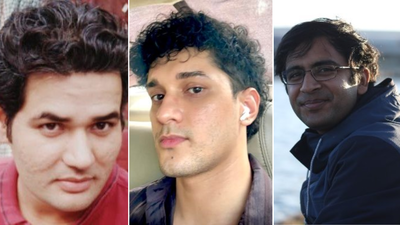
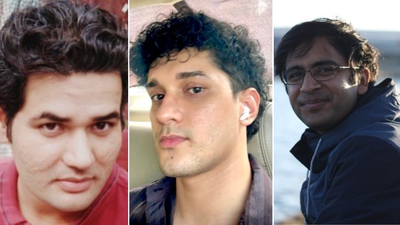
Vijeta Dahiya, Saurav Das and Ashutosh Ranka

New Delhi: Cockroach Janata Party announced three spokespersons on Wednesday, a day after worker and teacher Sonam Wangchuk What started out as one of the country’s biggest internet sensations decided to join what has since evolved into a unique political structure.CJP, which started as a viral online phenomenon before gaining popularity across the country, was named Saurav DasVijeta Dahiya and Ashutosh Ranka are its official spokespersons.In the announcement, CJP also reiterated its ambition to reshape the political discourse in India.Posting from an AlternativeThe development comes days after founder Abhijit Deepke announced that he would be returning from the United States on June 6.Continuing to criticize the Center and demand the resignation of the Union Education Minister, Dipke called on supporters to join what he described as a mass movement. Dharmendra Pradhan On the NEET-UG fiasco.

Source link