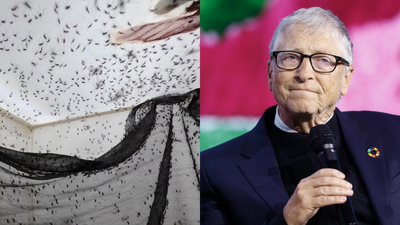
PM Modi got F-16 escort as soon as he reached UAE in the first phase of his five-nation tour.

Watch: PM Modi gets F-16 escort as soon as he reaches UAE in the first leg of his five-nation tour

New Delhi: Prime Minister Narendra Modi arrived in the United Arab Emirates on Friday on the first leg of his five-nation tour and received a ceremonial escort from UAE F-16 fighter jets as his plane entered Emirati airspace.Upon arrival in Abu Dhabi, Modi was given a guard of honor before beginning the high-level event with UAE President Mohammed bin Zayed Al Nahyan.The two leaders are expected to discuss bilateral cooperation in areas including energy, trade, investment and regional development. According to the Ministry of External Affairs, issues of mutual international interest will also be included in the discussion.Modi’s UAE visit is part of a broader five-nation tour from May 15 to May 20, which will include the UAE, Netherlands, Sweden, Norway and Italy. The visit aims to strengthen India’s partnership in trade, technology, clean energy, innovation and green development.Ahead of the visit, the Federation of Indian Export Organizations described the visit as coming at a “crucial juncture” for India’s strategic and economic relations with Europe and the Gulf region.FIEO President SC Ralhan said, “The Prime Minister’s high-level engagement with the leadership of the UAE and key European countries underlines India’s growing stature as a reliable economic partner and key driver of global growth. The visit is expected to create ample opportunities for Indian exporters in various sectors including engineering, clean energy, technology, pharmaceuticals, food processing, textiles, logistics and digital trade.”The exporters’ body also said that the UAE remains one of India’s most important trade and investment partners and continues to act as a gateway for Indian exports to West Asia and Africa.Ahead of Modi’s arrival, UAE Minister of State for International Cooperation Reem Al Hashimi described the prime minister as a “true treasure” for the leadership and people of the emirate.Speaking to ANI, Al Hashimi said India-UAE relations are set to touch “new heights” in trade and technology and said Modi’s visit will continue the momentum created by recent high-level exchanges between the two countries.After concluding the UAE leg of the visit, Modi will visit the Netherlands from May 15 to 17, where he is scheduled to meet Dutch Prime Minister Rob Jetton and hold talks with King Willem-Alexander and Queen Maxima. There are expected to be discussions on semiconductors, green hydrogen, innovation, defense and water management.

Source link

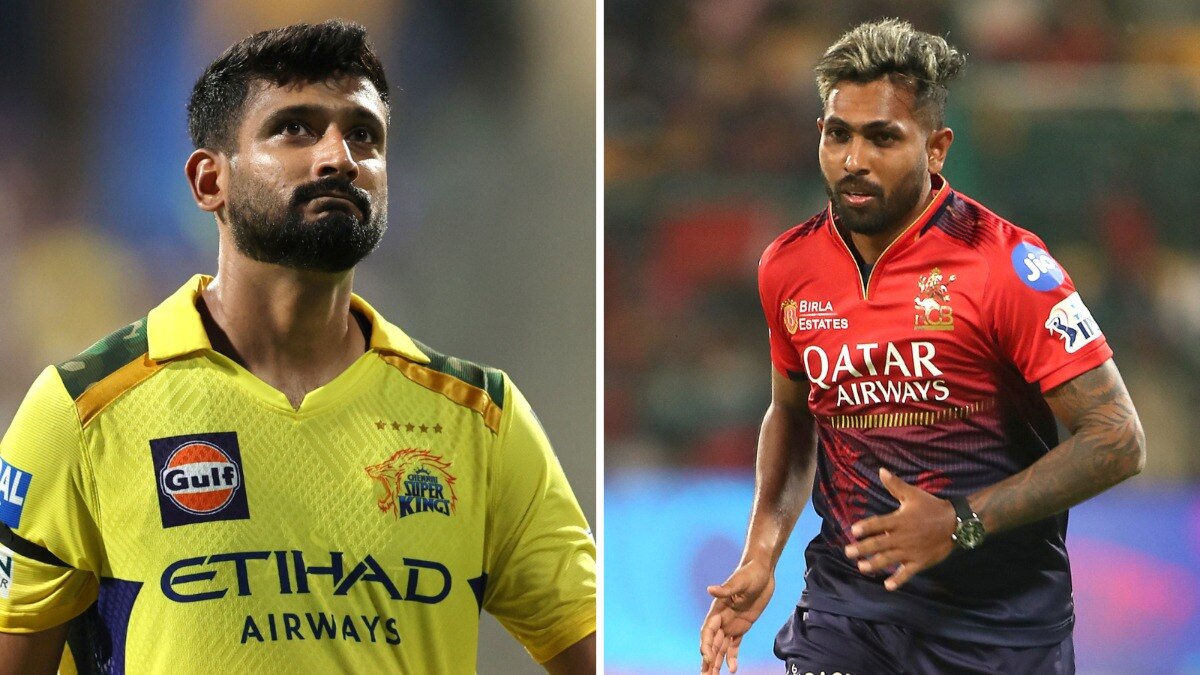
IPL 2026: CSK and RCB sign injury replacements for Khaleel Ahmed, Nuwan Thushara

Chennai Super Kings and Royal Challengers Bangalore have officially secured mid-season player replacements for the remainder of the IPL 2026 season. These changes come after frontline bowlers Khaleel Ahmed and Nuwan Thushara were ruled out due to completely contrasting and dramatic circumstances.

To strengthen their bowling attack ahead of the crucial business end of the tournament, Chennai Super Kings have signed domestic medium pacer Kuldeep Yadav for a fee of Rs 30 lakh. Meanwhile, Royal Challengers Bangalore have decided to strengthen their squad by signing experienced English fast bowler Richard Gleeson for an impressive sum of Rs 1.6 crore.

Who is Kuldeep Yadav, Richard Gleeson?

Kuldeep Yadav is a domestic medium fast bowler Who made his mark in the cash-rich league for the first time IPL Debut for Rajasthan Royals in 2021. Although he has limited experience in the high pressure of the tournament, having played only three games for the Rajasthan franchise, Chennai Super Kings will be looking to utilize his skills as a key team option.

On the other endD, Richard Gleeson brings a wealth of international and franchise experience to the Bengaluru camp. The English speedster has represented his country in six T20 Internationals and has taken nine wickets during this period. Importantly, Gleeson is no stranger to the intense atmosphere of the Indian Premier League. He has prior experience of representing both Chennai Super Kings and Mumbai Indians during the 2024 and 2025 editions of the league, playing two games for Chennai and one for Mumbai.

Khalil, what happened to Thushara?

The need for Chennai Super Kings to delve into the replacement market arose after their key left-arm fast bowler Khaleel Ahmed was sidelined. Khaleel officially ruled out of the remainder of IPL 2026 After suffering a serious injury during the team’s high-octane clash against Kolkata Knight Riders at Chepauk on April 14.

The injury occurred during a crucial stage of the match and immediately set off alarm bells within the Chennai dugout. It has since been revealed that Khalil has suffered a serious quadriceps injury that will require an extensive period of rehabilitation, dealing a major blow to a franchise that had relied heavily on him for early successes.

In Bengaluru camp, departure of Sri Lankan fast bowler Nuwan Thushara arrives With a completely different kind of drama. Thushara has officially withdrawn his legal case against Sri Lanka Cricket, bringing an abrupt end to a high-profile controversy regarding his participation in IPL 2026.

The fast bowler had earlier dragged the national board to the Colombo District Court after SLC refused to grant him the required no objection certificate to play in a foreign league. The board had barred his travel after he failed to meet the newly introduced fitness standards, especially the mandatory 2-km race test.

Thushara initially argued that the decision was unfair to his career, especially as his Rs 1.60 crore contract with Royal Challengers Bangalore was affected. However, with much of the IPL season already over, his legal team advised the court that there would be no practical benefit in continuing the fight.

The court later rejected the petition, following which Thushara issued an apology.

ipl 2026 | ipl schedule | ipl points table | ipl player stats | purple cap | orange cap | ipl video | cricket news | live score

– ends

published by:

Amar Panikkar

Published on:

May 15, 2026 14:59 IST

Source link

Nintendo may come to India with a console that will turn ten years old next year

Nintendo may come to India with a console that will turn ten years old next year
A Nintendo logo (file image)

Here’s a sentence that makes no sense and yet might actually be true: Nintendo is planning to launch the Switch 1 in India. Switch No 2. Original. Console which came out in 2017. One that has been available grey, modded and second-hand in the market for more than a decade.According to sources who spoke to the DeZero Podcast under anonymity, a February or March 2027 window is being targeted, with Reddington handling distribution on the ground. The price being quoted is around Rs 20,000. First-party titles are also part of the plan—Breath of the Wild and Mario Kart are early speculations. Pricing on software? No one knows yet.

House of Mario is run by a very small team from India

The people making these decisions are not full-fledged regional offices. DeZero’s sources describe Nintendo’s India operation as consisting of three or four Japanese executives and one Indian who moved to Tokyo and is working with them. It’s a small team for a big market, and what they’ve landed on is the official launch of a console that people are already starting to feel nostalgic about.To understand why the timing seems bad, consider this: According to Nintendo’s own financial results, the Switch 2 sold nearly 20 million units globally in its first fiscal year. This is not yet part of India’s conversation. Not officially anyway. Rishi Alwani, who closely covers the gaming industry through his 0451 newsletter, has accurately discovered that the gray market stock of the Switch 2 is already running at Rs 58,000 to Rs 65,000 in India.If Nintendo Shows Up, Here’s the Fine PrintSwitch consoles are already floating around in unofficial channels. The original Switch is so old that it can hardly be resold anymore – a used Switch sells for Rs 20,000-25,000 in good times. The price of the light is around Rs 20,000. The price of OLED is Rs 35,000. So Nintendo’s official India entry gives you a brand new base Switch 1 that costs almost the same as the second-hand original, available gray, modded, and sometimes even cheaper with a ton of games. Of course, it’s not a terrible deal. It’s not particularly exciting either.There’s no Indian eShop confirmed, no Switch Online gift cards at retail, and there’s the real possibility of a region lockout given what Nintendo did with Tencent in China. Distributor of choice, Redington has had a complicated relationship with gaming retail in India – Alwani’s 0451 newsletter notes that Redington and gaming retail have a history together in India, and it’s not one that most store owners take kindly to – the availability of Xbox, or lack thereof, tells that story well.This does not mean that the launch will not make any difference. Nintendo’s official presence means shelf space, visibility, and the kind of awareness that the gray market quietly never built. A person walking into a brick-and-mortar electronics store today doesn’t necessarily know that there are gaming consoles worth considering besides the PlayStation. This changes when there is a box with a price tag on the shelf.But Nintendo’s biggest competition in India at the moment is not PlayStation. Its own hardware is already here, already sold, already in people’s hands. For Rs 20,000, it would be nice if they at least came up with a 10th anniversary special edition. Something to make the occasion feel intentional rather than casual.

Source link

54-year-old imam who claimed to have ‘jinn powers’ jailed for life for abuse crimes against women and girls

54 वर्षीय इमाम, जिन्होंने 'जिन्न शक्तियों' का दावा किया था, उन्हें महिलाओं और लड़कियों के खिलाफ दुर्व्यवहार के अपराधों में आजीवन कारावास की सजा हुई

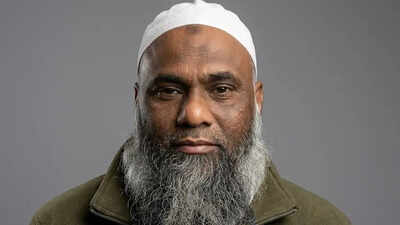
London imam, 54, jailed for life for abuse against women and girls / Image: File

A former east London imam who used claims of “supernatural powers” to molest and sexually abuse women and children has been jailed for life in one of Britain’s most disturbing abuse cases in recent years.Abdul Halim Khan, 54, was sentenced at Snaresbrook Crown Court after pleading guilty to 21 sexual offences, including multiple counts of rape and child rape committed over almost a decade. Prosecutors said the attacks occurred between 2004 and 2015 and involved seven victims, some of whom were as young as 12 years old.The former imam, who lives in Bethnal Green, abused his position as a trusted religious figure within the Muslim community to target vulnerable women and girls. Investigators said he convinced some victims that he had supernatural powers and claimed he could be disguised as a “jinn”, a spirit referred to in Islamic tradition, during the attacks.Judge Leslie Cuthbert sentenced Khan to life imprisonment with a minimum of 20 years for what he described as a “monstrous” abuse of trust. At sentencing, the judge said that Khan “behaved as if you were untouchable” while exploiting victims who had trusted him because of their religious status.

How do the Imams claim to control the victims?

The case shocked prosecutors because of the manner in which Khan allegedly molested the victims.According to the Crown Prosecution Service and the Metropolitan Police, Khan persuaded the women and children to meet him alone in flats, isolated areas and secluded locations. Once there, he sexually assaulted or raped them, claiming supernatural forces were involved.Some victims were reportedly told that they could be harmed through “black magic” if they spoke publicly about the abuse. Others feared that if they came forward they would face social stigma or that their families would be harmed within the community. Prosecutors said those fears allowed Khan to continue crimes for years without being detected.Police described the former imam as a “violent criminal” who deliberately used religion, fear and emotional control to silence his victims.During the trial, jurors heard how Khan systematically targeted women and girls who trusted him as a faith leader. Prosecutors argued that his respected public image allowed him to operate without suspicion for years.The crimes include:

  • nine cases of rape
  • Five cases of rape of a girl below 13 years of age
  • Two cases of sexual assault of a child under 13 years of age
  • Four cases of sexual harassment
  • one count of assault by penetration

Police laud victims for breaking silence

Investigators said the case depended largely on the courage of the victims, who finally decided to talk to police after years of trauma and silence.The Metropolitan Police said that many victims had suffered the emotional effects of abuse for years before being able to report what happened. Detectives praised him for helping to ensure a conviction despite the difficulty of reliving deeply traumatic experiences.The case has once again reignited a wider conversation in Britain about abuses by authorities and the dangers of unchecked power within religious or community institutions.Child protection experts say perpetrators in positions of authority often rely on fear, shame and community pressure to prevent victims from speaking out. The Khan case has also reignited discussion over how allegations of abuse are handled within close-knit communities and whether victims receive adequate protection and support when they come forward.Online reactions following the sentencing showed widespread anger, with many social media users expressing surprise at the scale of the abuse and the length of time it allegedly continued unchecked.

Trust, Power and Community Safety

Abdul Halim Khan’s sentencing is likely to be one of Britain’s most high-profile abuse cases involving a religious figure this year.For many observers, the case goes beyond an individual conviction. It has become part of a broader national debate about safeguarding failures, abuses of authority and the barriers victims still face when reporting sexual violence.Across the UK, several landmark abuse scandals over the past two decades have exposed how predators exploit positions of trust, including religious authority, education, community leadership and care systems, to manipulate vulnerable victims while avoiding investigation, sometimes for years.In Khan’s case, prosecutors said the abuse continued for years as victims were left feeling isolated, frightened and powerless.The life sentence handed down at Snaresbrook Crown Court brings criminal proceedings to a close, but for survivors, the emotional impact of the abuse is likely to last.

Source link

After NEET UG paper leak, Education Minister Dharmendra Pradhan announces computer-based exam from next year

NEET UG पेपर लीक के बाद, शिक्षा मंत्री धर्मेंद्र प्रधान ने अगले साल से कंप्यूटर आधारित परीक्षा की घोषणा की

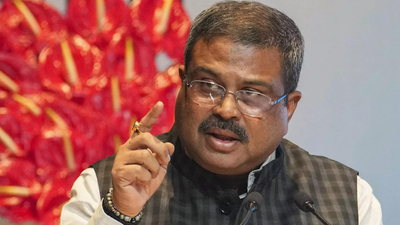
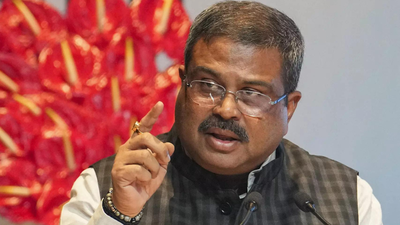
Dharmendra Pradhan (PTI file photo)

New Delhi: Union Education Minister Dharmendra Pradhan announced on Friday that NEET UG exams will be computer-based from next year, while clarifying on alleged irregularities in the exam, saying the government has “zero tolerance towards malpractices.His announcement came days after the huge uproar following the NEET UG 2026 exam paper leak.Dharmendra Pradhan said, “The root cause of this was OMR and hence, from next year the exam will be conducted in Computer-Based Test (CBT) mode.”Pradhan said National Testing Agency A complaint was received soon after the exam and an investigation was immediately initiated.He said, “The new dates for re-examination have been announced as June 21… The exam was held on May 3 and on May 7, NTA received a complaint that the guess paper contained some questions which were present in the question paper this time. The Higher Education Department immediately initiated an investigation and handed it over to the government agency… They contacted the state agencies and by May 12, we had confirmation that, under the guise of a guess paper, the actual exam questions had indeed been leaked…”Explaining the logic behind the decision, he said, “We did not want any deserving student to be deprived of his or her rights due to conspiracies by fake candidates or conspiracies of the education mafia… This decision has given rise to two different opinions across the country – especially within the student community. We accept and respect both these viewpoints. We consider it our responsibility to find a solution to this situation.”..”Pradhan said, “We have zero tolerance towards malpractices and this is a long battle against the exam mafia… Various social media handles are trying to spread misinformation, the system is being challenged and in view of this, the investigation has been handed over to the CBI, which has initiated immediate action. It will go to the depth of the violations…”

Should the government take strict action against exam irregularities?

He said, “We will not allow any malpractice this time… We are very sad and concerned about all the candidates, but in the national interest we had to take this difficult decision…”Meanwhile, NTA announced earlier in the day that the NEET UG re-exam will now be held on Sunday, June 21. The decision comes amid widespread criticism and backlash over alleged flaws in the conduct of the exam and handling of the complaint process.

Source link

8 charts that tell the 3-year story behind PM Modi’s austerity appeal

The reason for India’s dollar drought – most visible in the weakening value of the rupee – does not lie in the events of the past few months. This has been going on for about three years, and has now been pushed to crisis point due to the Iran conflict and changes in US trade policies.
For decades, the value of the rupee (called the exchange rate) was a simple tug of war between the products we imported (oil/gold) and the products we exported. This is called trade balance. But, in India’s case, it meant ‘trade deficit’ as we imported more than we exported. However, since the 1990s, and especially in the last two decades, the mathematics has become more complex.

Source link

Buckingham Palace hosts historic meeting between King Charles and New Zealand’s Maori Queen

बकिंघम पैलेस ने किंग चार्ल्स और न्यूजीलैंड की माओरी रानी के बीच ऐतिहासिक बैठक की मेजबानी की

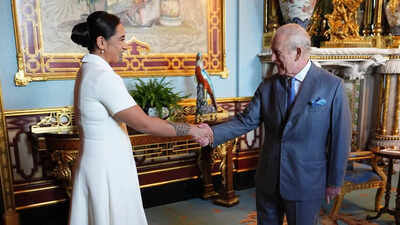
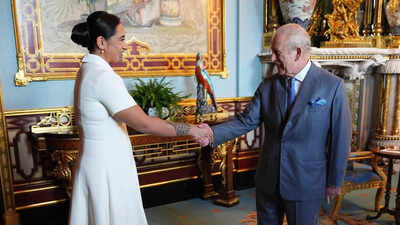
The world watches the Māori Queen meet King Charles during a historic visit to London / Image: @TheRoyalFamily

Buckingham Palace witnessed an extraordinary royal moment this week when New Zealand’s Maori Queen, Ngā Wai Hono i Te Puu, met King Charles III during a historic visit to London that is now capturing the attention of the entire Commonwealth.The audience marked the first official Buckingham Palace meeting between the British monarch and the young Māori queen since she ascended the Kingitanga throne in 2024 following the death of her father, King Tuhetia. At just 29 years old, she has quickly become one of the world’s most-watched indigenous leaders, and her appearance with King Charles has sparked huge interest in both New Zealand and the UK.Photos released from the palace showed the two leaders chatting warmly during a week packed with royal events in London. Although formal on the surface, for many watching closely this meeting holds a much deeper significance.For Māori communities, it represents a continuation of a centuries-old relationship between indigenous leaders and the British Crown. For royal audiences in Britain, it offered a brilliant glimpse of how the modern monarchy is increasingly engaging with Indigenous voices, youth leadership and environmental issues.The meeting comes at a time when discussions over colonial history, treaty rights and representation have become more prominent in the Commonwealth.

Why does the Maori Queen’s visit matter?

The Māori Queen’s visit was not just about royal tradition or formal photographs.Behind the palace walls, discussions reportedly focused on issues shaping the future of younger generations, including climate challenges, indigenous leadership, economic opportunities and youth empowerment.According to representatives of the Kingitanga movement, Ngā wai Hono i Te Po used the visit to highlight how indigenous knowledge and modern global leadership can work together in tackling major world issues.This message appears to closely match King Charles’s long-term interests. Long before he became monarch, Charles spent decades advocating for environmental protection, sustainability, and interreligious dialogue. Palace observers noted the apparent overlap between the king’s priorities and the Māori queen’s growing international platform.The time of the meeting is also important.New Zealand is approaching the 200th anniversary of Te Tiriti o Waitangi in 2040, the treaty signed between Māori chiefs and representatives of the British Crown that still shapes political and social debate today. Questions of indigenous rights, treaty obligations and national identity continue to dominate public conversation in New Zealand, giving the Buckingham Palace meeting additional symbolic importance.

Prince William meets young Maori entrepreneurs

The Māori Queen also chatted with Prince William at Windsor Castle in another historic moment during her UK visit, before meeting King Charles.Their discussions reportedly focused on young people, environmental action and indigenous-led initiatives, topics that were becoming central to the younger generation of royal diplomacy.Four Māori young entrepreneurs were invited to Britain along with the Queen to events involving The King’s Trust, the charity founded by King Charles almost 50 years ago. Using the opportunity to showcase Māori innovation and community-driven businesses, the group attended high-profile events at Buckingham Palace and the Royal Albert Hall.The presence of young Māori business leaders added a modern edge to the royal visit and reflected the Māori Queen’s broader focus on creating opportunities for younger generations rather than relying solely on formal tradition.The generational shift is one reason the Queen has attracted global attention since taking over the throne last year. In contrast to older royalists primarily concerned with protocol, Ngā wai Hono i Te Po represents a youthful leadership style that blends indigenous tradition with modern activism, diplomacy and global outreach.

future commonwealth relations

Many people in Britain found the photographs of Buckingham Palace different from those of ordinary royal visitors.There was history in the room, but there was also a sense of change.The meeting reflected how relations between the Crown and Indigenous communities are evolving in the modern era. In countries belonging to the Commonwealth, debates over colonial history, reparations, cultural recognition and indigenous representation continue to rage. Against that backdrop, the sight of King Charles welcoming the Māori Queen had both symbolic and political significance.This moment also highlighted the changing face of imperial diplomacy.Rather than focusing solely on kingship and ceremony, modern royal engagements are increasingly centered around social impact, climate issues, youth opportunities, and cultural identity. The Māori Queen’s visit to London brought all those themes together in one of Britain’s most historic royal settings.For Buckingham Palace, it was another reminder that the monarchy’s global relevance depends on how it engages with the rapidly changing Commonwealth.For the Māori Queen, it was a defining international moment, placing her firmly on the world stage.

Source link

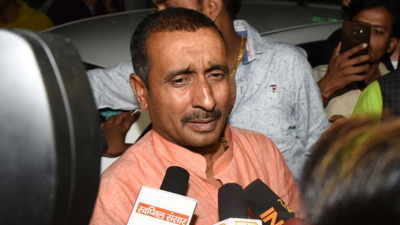
Supreme Court sets aside Delhi HC order suspending life sentence of Kuldeep Singh Sengar

उन्नाव बलात्कार मामला: सुप्रीम कोर्ट ने कुलदीप सिंह सेंगर की आजीवन कारावास की सजा को निलंबित करने के दिल्ली HC के आदेश को रद्द कर दियाSupreme Court on Friday set aside the Delhi High Court order suspending the life sentence of former BJP MLA Kuldeep Singh Sengar in the 2017 Unnao rape case and directed the high court to hear the case afresh.A bench of Chief Justice of India Surya Kant and Justice Joymalya Bagchi asked the high court to try to decide within two months Sengar’s appeal against his conviction and life imprisonment, PTI reported.The bench said if the high court is unable to decide the main appeal expeditiously, it should pass an order on the petition seeking suspension of Sengar’s sentence before the commencement of summer vacation.The Supreme Court clarified that it was not expressing any opinion on the merits of the case and said that the High Court was free to consider the matter afresh.The CJI also asked the high court to reconsider the issues of whether an MLA can be treated as a public servant for prosecution under the Protection of Children from Sexual Offenses (POCSO) Act.On December 29 last year, the apex court had banned Delhi High Court Ordered suspension of Sengar’s sentence and directed that he shall not be released from custody.Earlier, the Supreme Court had postponed the hearing on CBI’s petition challenging the suspension of Sengar’s life sentence to the first week of May.In its order dated December 23, 2025, the Delhi High Court had said that Sengar was convicted under Section 5(c) of the POCSO Act, which deals with aggravated sexual harassment by a public servant, but observed that an elected representative does not fall within the definition of “public servant” under Section 21 of the Indian Penal Code.The High Court had suspended Sengar’s jail sentence pending his appeal, noting that he had already spent seven years and five months in jail.The order was criticized by various sections of the society, while the victim, her family and activists also protested against the relief given to Sengar.

Source link

‘Doesn’t look like an interesting actor’

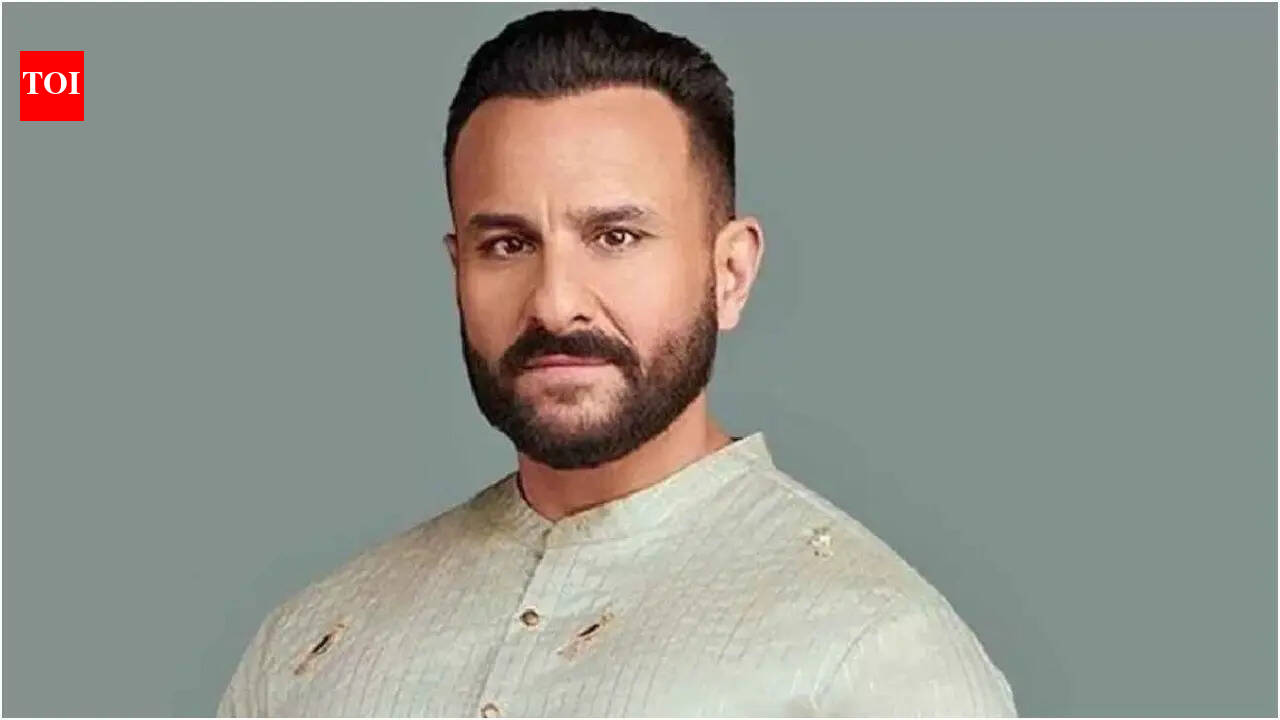
Saif Ali Khan reveals how his mother Sharmila Tagore inspired him to step up his game: 'Not feeling like an interesting actor'

saif ali khan Has said that it took him a long time to make his mark as an actor. Things started to change when he played the character of Sameer in the 2001 film ‘Dil Chahta Hai’ directed by Farhan Akhtar. After that, he became known as the stylish, modern man of Bollywood. But ten years ago, a very different kind of film showed a tougher and more serious side of him, which he later took forward in ‘Laal Kaptaan’ (2019), ‘Sacred Games’ and his new film ‘Kartavya’.

Saif Ali Khan looks back at the key achievements of his career

In an interview with Screen, Saif said, “When you look at his career, not everything is highlights. There are some highlights, and that’s quite good. Omkara is definitely something I’m proud of. Sacred Games in a way even more so. I don’t think there’s any connection between the two, but when you look back at some of the work that comes out in glitter letters, they stand out.”

The wake up call that changed Saif Ali Khan

The actor did not find this side of himself. It features a direct conversation with his mother, the veteran actor sharmila tagoreTo open his eyes. Saif recalls, “There was a time when he told me that you don’t look like a very interesting actor. You have to balance your choices and think more creatively. That was when I started taking things a little more lightly.” He doesn’t remember exactly when it happened, “It took a while, and there were a few phases”, but he has previously shared that it started when he told his mother he was excited to shoot a movie in France. He did not share his enthusiasm. Sharmila asked, “When will you tell me that you are playing an interesting role?” Saif takes it in good spirit and understands where she was coming from. “He saw more potential,” admits Saif with a smile. So, she was signaling me to wake up.”Saif argues, “I don’t know whether this should be seen as a relief or not.” He adds, “There have always been all kinds of filmmakers. There are some commercial people who have an eye on the Friday numbers, which means it requires a certain kind of energy, whatever it is, I don’t know. But then there are filmmakers with a more artistic scope, who had no option but to release their films that way.”

Why Saif Ali Khan thinks streaming is a game changer?

Saif believes that streaming has given filmmakers a new way to tell stories. He calls it “an important, alternative expression” given to some of these filmmakers. For them, it opens the door to stories that may never make it to the big screen. He further added, “There are some movies I would love to work on that people wouldn’t give a chance to release in theaters. But I think Netflix and other streaming platforms also want you to be entertained, so it’s ultimately competitive.”

Source link

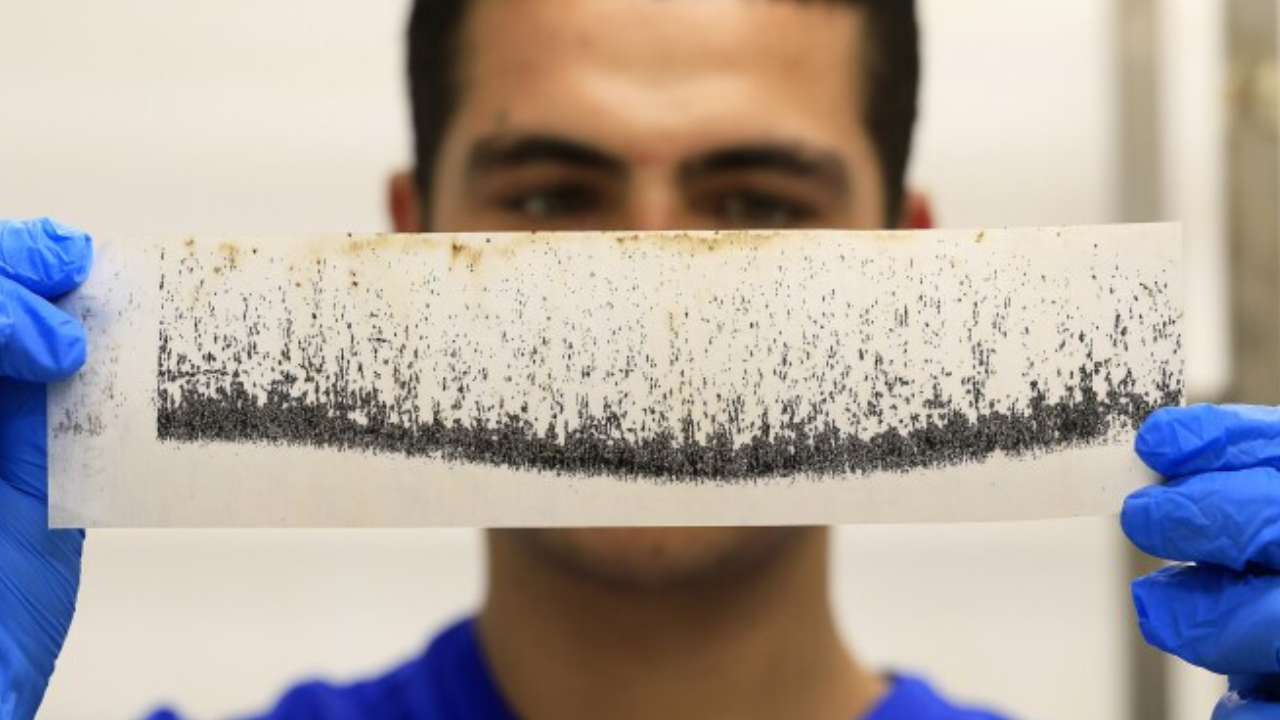
Why does a Bill Gates-backed insect factory release 30 million mosquitoes every week?

Why does a Bill Gates-backed insect factory release 30 million mosquitoes every week?

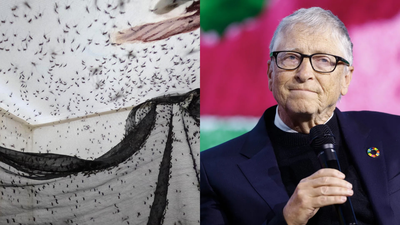
Inside Medellín, Colombia, scientists are breeding millions of mosquitoes every week and then deliberately releasing them into the environment. At first, this may seem strange, especially since mosquitoes are known to spread dangerous diseases. But researchers say these insects are actually being used to prevent the spread of diseases like dengue, Zika, chikungunya and yellow fever. The project, partially supported by the Bill & Melinda Gates Foundation and supported by the World Mosquito Programme, produces approximately 30 million mosquitoes every week. These mosquitoes carry a harmless bacteria called Wolbachia, which makes it very difficult for the virus to spread from mosquitoes to humans.

Inside the world’s largest mosquito factory backed by Bill Gates

The Medellin facility is one of the largest mosquito breeding centers in the world, producing millions of mosquitoes every week as part of an unusual public health mission. Scientists there mainly breed the Aedes aegypti species, which is known to spread diseases like dengue, Zika and chikungunya. Inside temperature-controlled laboratories, researchers carefully monitor every stage of the insects’ life cycle, from eggs and larvae to adult mosquitoes, before preparing the insects for release into nearby communities.What makes these mosquitoes different is a naturally occurring bacteria called Wolbachia. Scientists found that when Aedes aegypti mosquitoes carry Wolbachia, they are much less likely to spread the dangerous virus to humans. Mosquitoes are not genetically modified. Instead, researchers introduce the bacteria into mosquito eggs under laboratory conditions and then breed future generations with the same traits.Once released into the wild, these mosquitoes begin to mate with local mosquito populations, allowing the Wolbachia bacteria to spread naturally over time. As more mosquitoes carry the bacteria in an area, fewer are able to spread viruses like dengue. Researchers say the goal is not to eliminate mosquitoes completely, but to gradually replace populations of more dangerous mosquitoes with less harmful ones. That’s why scientists consider this program different from traditional pesticide spraying, which focuses on killing insects directly.Mosquitoes are released using several methods. In some neighborhoods, residents find small containers filled with naturally occurring mosquito eggs. In other areas, adult mosquitoes are released from vehicles or special containers. The local community is also extensively involved in the program, with residents helping scientists monitor mosquito populations and installing mosquito nets around their neighbourhoods.The project gained worldwide attention after Bill Gates visited the facility and later described it as one of the most promising new approaches to fighting mosquito-borne diseases. Today, the Medellín mosquito factory has become a symbol of how scientists are trying to fight global disease outbreaks by using biology rather than relying solely on chemicals and pesticides.Researchers say the goal is not to increase mosquito populations forever, but to gradually replace disease-carrying mosquitoes with less harmful ones.

Inside the world's largest mosquito factory backed by Bill Gates

The project has shown promising results

Studies from different countries have revealed encouraging results. In Indonesia, areas where Wolbachia mosquitoes were released showed a large reduction in dengue infections and hospital visits.Researchers in Colombia have also noted a sharp decline in dengue cases since the program began in Medellín in 2015.Scientists believe this method could become an important tool for countries where mosquito-borne diseases affect millions of people every year.

Conspiracy theories surrounding the Mosquito Project

The mosquito release program has also become the subject of online conspiracy theories, with viral social media posts claiming that the insects are “mutant mosquitoes”, part of secret experiments, or linked to population control efforts. After video and photos from the Colombian facility circulated online, some posts also suggested that the mosquitoes were deliberately genetically engineered to spread diseases.Scientists and health organizations involved in the program reject those claims. Researchers say the mosquitoes are not genetically modified and instead carry Wolbachia, a naturally occurring bacteria that is already found in many insect species. Experts say that this project is designed to reduce the spread of diseases like dengue and Zika.

A hope for global disease control

Mosquito-borne diseases infect millions of people every year, especially in tropical countries. Traditional methods such as chemical spraying and fumigation have struggled to completely stop outbreaks.Researchers believe that Wolbachia-based mosquito control could offer a safe and long-lasting solution. Rather than eliminating mosquito populations entirely, this method aims to make them less dangerous to humans.That’s why the Medellín mosquito factory has become an important symbol of a new approach to public health, where scientists are using biology to fight some of the world’s fastest-spreading diseases.


Source link