Political storm in Jammu and Kashmir after Mehbooba reviews AIIMS project. india news
Political storm in Jammu and Kashmir after Mehbooba reviews AIIMS project

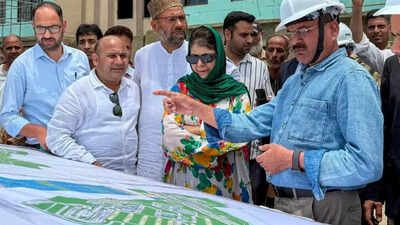
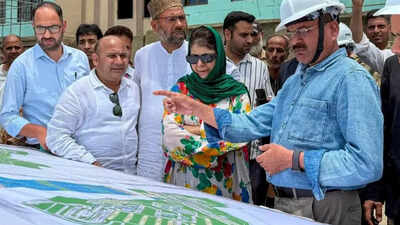
Srinagar: PDP chief visits mehbooba mufti His visit to Awantipora in Pulwama on Friday for an upcoming AIIMS and his review of the project with officials has sparked a political storm in Jammu and Kashmir, with the ruling NC alleging that the Center has taken this step at a time when it has intensified its demand for restoration of the state.National Conference (NC) spokesperson Tanveer Sadiq accused the BJP-led Center of using the PDP to create political backlash against the Omar Abdullah-led government. The allegations intensified when former CM Mehbooba spoke to Union Health Minister JP Nadda after the review and requested him to expedite the work.The PDP hit back, saying that a government with a comfortable majority should not feel threatened by a visit to a public health project site, and that it should be concerned about patients in Kashmir who are still waiting for access to a major healthcare institution.Jammu and Kashmir got two AIIMS under the Pradhan Mantri Swasthya Suraksha Yojana (PMSSY) in 2015. While the one at Samba in Jammu is operational, the Awantipora facility is under construction. Both projects started in 2019.The Awantipora project has repeatedly missed completion dates and the new deadline is December 2026. Visiting the site, Mehbooba recalled that her father Mufti Mohammed Sayeed, as CM, had conceived the project. This prompted the PDP – which counts the region as a stronghold – to accuse the Omar-led government of failing to effectively monitor and expedite the project.However, NC suspects a bigger conspiracy in Mehbooba’s visit. National Conference spokesperson Sadiq said, “When we passed an autonomy resolution in the Jammu and Kashmir Assembly after the 1996 elections, Delhi countered it by helping the PDP emerge as an alternative political force. Now when we have decided to go to New Delhi to protest for the restoration of the state, the Center has once again roped the PDP into it by arranging a briefing for Mehbooba.”Jammu and Kashmir’s Health Minister, NC’s Sakina Itu claimed that Mehbooba is working at the behest of the Centre. Itu said, “Which center of power in Delhi is directing these works? It is ironic that the people who caused the AIIMS project to proceed at an extremely slow pace are now trying to claim ownership of its progress. The fact is that the project is moving towards completion because of the commitment of CM Omar’s government.”PDP hit back at the claims. Party functionary and Mehbooba’s daughter Iltija Mufti recalled that the NC government had publicly criticized the location of the Awantipora project and had “cautiously avoided the review meeting from 2024 to delay the inauguration of the institute”.Pulwama PDP MLA Waheed Para accused Omar of not giving priority to the project. Like Iltija, Parra claimed that Omar had commented last year that the site was selected due to political considerations during the PDP’s tenure.People’s Conference chief and MLA Sajjad Lone criticized Mehbooba’s review, calling it “nothing less than a constitutional crisis”. Lone said, “I cannot believe that the CM has not reacted to an incident that further weakens the already weakened power structure of Jammu and Kashmir.”
Source link

Mirra Andreeva channels Roger Federer’s inner self to French Open glory

Mira Andreeva was not herself on Saturday. Andreeva’s fans noted her early career that she often seemed to lack the emotional control necessary for consistent winning at the Grand Slam level.

While on tour as a teenager, she sometimes expressed frustration when matches seemed out of her control. Small dips in pace often create visible irritation, whether through body language, hasty decision-making, or moments of audible self-criticism between points.

Earlier this year at Indian Wells, he broke a racket during his third-round exit and expressed his frustration towards the crowd. A few weeks later, she also cried after losing to Marta Kostyuk in the final of the Madrid Open.

But Mira Andreeva who Moved to center court against Maja Chwalinska Was different. She was calm, almost immovable, remaining calm even when the momentum threatened to take her away. Nothing seemed to disturb its rhythm or clarity.

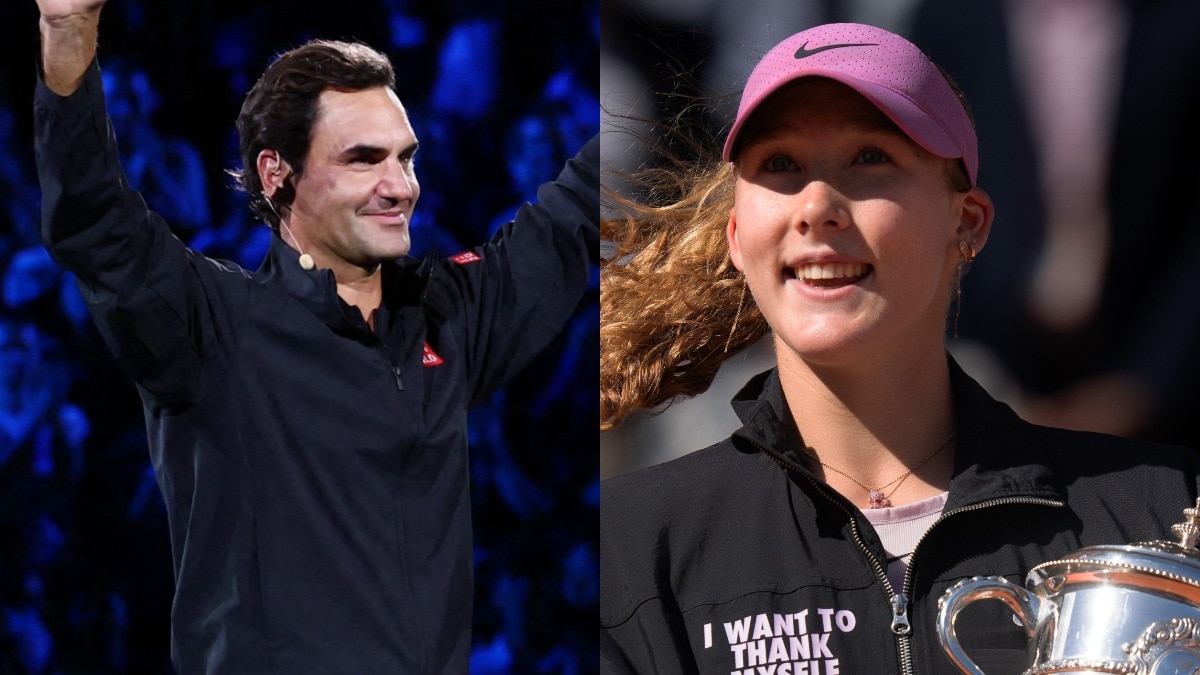
She was calm and patient, as if in a meditative state, showing no signs of nervousness even when Chwalinska broke her serve three times. On the big day, it almost felt as if Roger Federer took over the court through Mirra Andreeva, epitomizing his trademark calmness under pressure.

And why not? Meera, in a way, was trying to emulate her idol. Result: First Grand Slam title.

federer inspiration

Mira Andreeva said that she took inspiration from Roger Federer. Courtesy: Reuters

Federer is remembered for his cool, collected, ice-cold presence on the court, especially in high-pressure moments. However, early in his career, he admitted to being more emotional, sometimes losing control, throwing the racket and showing obvious frustration during matches.

Over time, he worked on refining his temperament and learned to channel those emotions in a more controlled and productive way. Federer has always been a source of inspiration for Mira. Seeing his composure under pressure reinforced the belief that a stable mindset can be as important as technical skills in achieving success.

Mira said after the match, “I’ve watched a lot of Roger’s matches here. Obviously I’ll never have the same aura – no one will have the same aura, but I wanted to try to imitate the way he behaves on the court, because I love watching how he played.”

Federer himself has described his mental approach as a balance between fire and ice: fire is his desire to win, and ice is his ability to accept mistakes and remain calm under pressure. At Roland Garros, Mira held that same duality, there was fire in her heart to finally taste Grand Slam success, and ice in her veins to carry her across the finish line.

mindset reset

Mira Andreeva changed her mindset with the help of her psychologist. Courtesy: Reuters

Controlling natural instincts is never easy, especially during adolescence when emotions run high. For most players, that instability often spills over onto the court under pressure.

However, for Mirra, this change felt less like a technical adjustment and more like an internal shift driven by inspiration. The Russian player, who has spoken openly about his struggles with emotions on the court, said his move toward calm, controlled behavior was not driven by tactical changes, but by a deliberate choice in mindset and temperament.

“Well, I wouldn’t say there was any big reset or something that I decided to completely change or change the approach to the matches. There was nothing like that,” Meera said.

Read this also Mirra Andreeva wins French Open trophy twice in strange upset: Watch

Advice from her psychologist also helped Meira ahead of the high-voltage semi-finals and final, conditions that were unfamiliar to her, having never experienced success at that stage in a Grand Slam before.

Mira credited her psychologist, saying that she spoke to him in a 20 to 25-minute call before both the semi-finals and the final, and said that those conversations helped her unlock a strong fighting spirit within herself.

“I just decided that, as my psychologist says, you can always choose how you will be on the court and how you will play as well as who you will be as a person. So I just decided to choose to be a fighter,” Mira said.

the journey begins now

Mira Andreeva will now look to make an impact on grass at Wimbledon. Courtesy: Reuters

Till Saturday, Mira was not a Grand Slam champion. She won WTA 1000 titles in Indian Wells and Dubai last year, but a Grand Slam title is a different challenge altogether. When she defeated Aryna Sabalenka in the Roland Garros quarterfinals In 2024, her clay-court ability was already evident.

That promise has now turned into reality after two years. Becoming the youngest female player to win a French Open title since Monica Seles in 1992 underlines how far she has come since her Grand Slam debut in 2023.

But the challenge begins now. In less than a month, Mira will step into Wimbledon under completely different circumstances. Grass remains an unfamiliar surface for her, with no run beyond the quarter-finals in this event so far. Later this year, she also awaits the US Open, a tournament where she has never advanced beyond the third round.

There is still a lot left for the Russian teenager. Coco Gauff won her first Grand Slam at the US Open 2023 before adding the Roland Garros title last year, showing the value of versatility on different surfaces.

Mirra will now be expected to build on that same adaptability, developing into a player no longer defined by emotional vulnerability or inconsistency, but by flexibility and control, someone who is a threat on every surface she plays on.

– ends

published by:

Sabyasachi Chaudhary

Published on:

June 7, 2026 05:00 IST

Source link

I don’t make music to chase trends or ideas: Raghu Dixit hindi movie news

I don't make music to chase trends or ideas: Raghu Dixit
Raghu Dixit, known for his folk-influenced festival sound, discusses his journey from microbiology to music, influenced by Bharatanatyam and oral traditions. He shares insights on composing for films vs. independent music, managing mental health, and staying authentic. Dixit also reflects on his marriage with Varijashree Venugopal and the deeply personal inspiration behind his new song ‘Amma’.

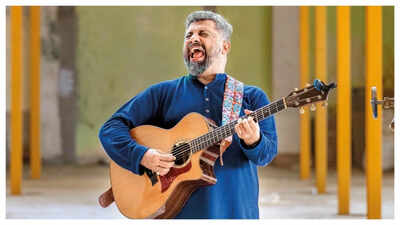
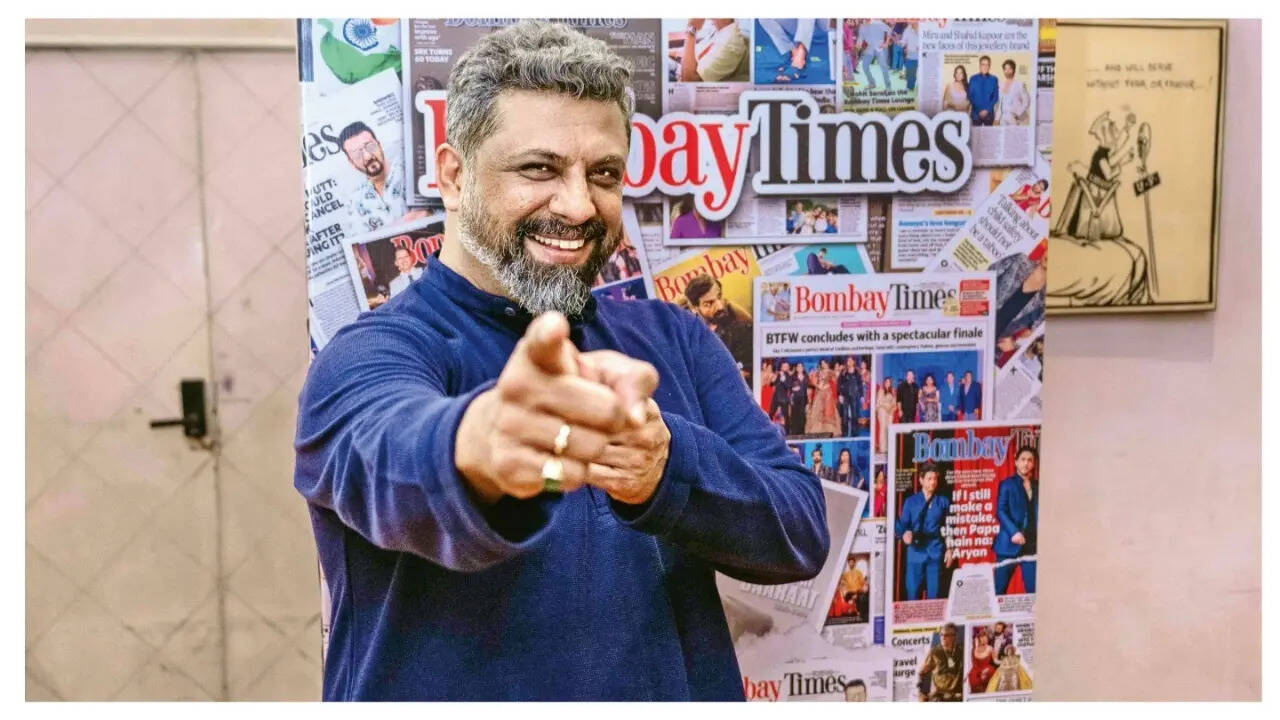
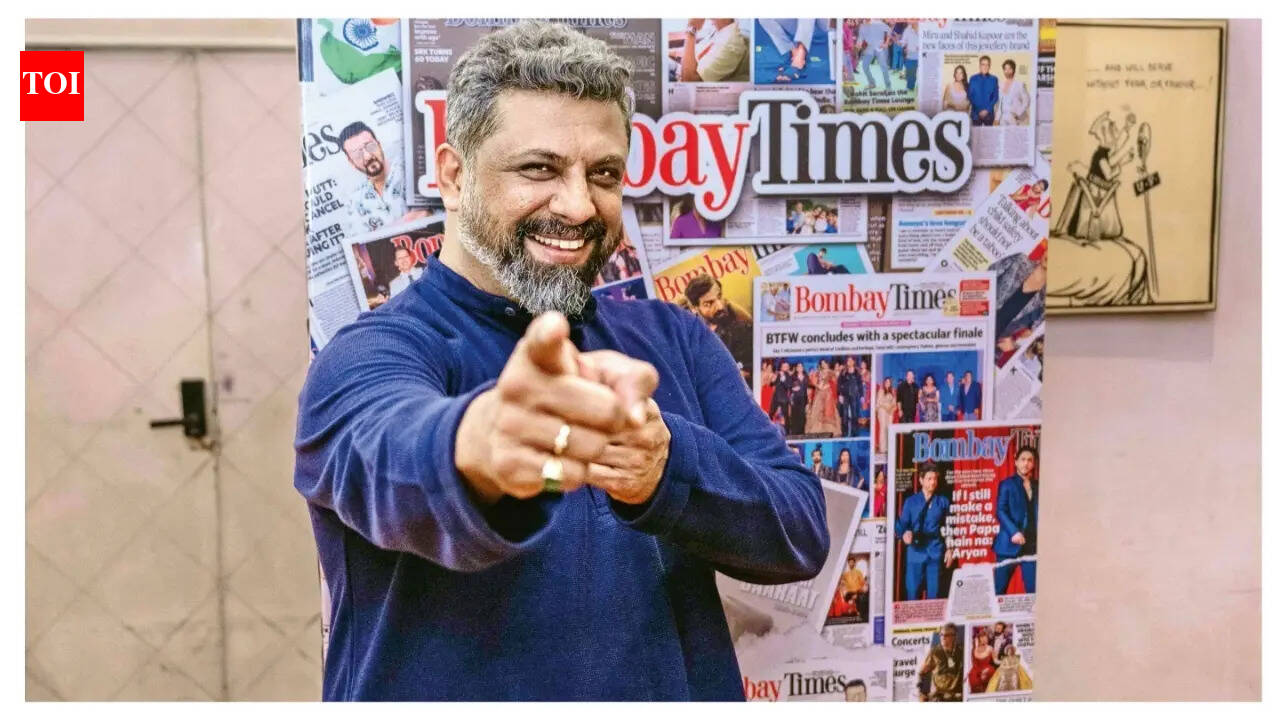
He is the man who made folk music feel like a celebration, raw and raw. Raghu DixitThe Bengaluru-born singer-songwriter, whose soulful compositions resonate in living rooms and concert stages alike, has spent decades crafting a sound that is distinctly his own. From the soaring romanticism of Banjara to the yearning wanderlust of Ambar, from the playful irreverence of Shugal Laga Le to the charming charm of bewakoofi, their music has a way of making you feel at home in your own skin. Trained in Bharatnatyam, schooled in microbiology, and inspired by the rich oral traditions of Indian folk, Raghu Dixit defies easy categorization, and perhaps, that is his strength. We sat down with the artist to talk music, marriage, mental health and his deeply moving new release Amma. Part…Before music became your full-time identity, you studied microbiology. Was there a defining moment when you realized that science was no longer enough and music was where you really belonged? I don’t think there was any dramatic turning point. Music was always present in my life, even when I was studying microbiology. Over time, I realized that whenever I was making or performing music, I felt completely alive. Alive in a way nothing else made me feel. Eventually, that feeling overcame me (smiles). You trained in Bharatanatyam for about 18 years. How has that discipline shaped the way you compose, perform, and even approach rhythm and storytelling today?Bharatnatyam gave me discipline long before music became my profession. When you train in classical dance for so many years, you develop a deep respect for rhythm, structure, discipline, practice. Even today, I think everything you see and hear on my stage comes from dance. Bharatanatyam teaches you that emotions are not just expressed through words, it actually lives in the space between them. That understanding continues to shape everything I create. You have carved a niche for yourself in independent music while also working in films and Bollywood. Like Raghu Dixit, how differently do you approach composing music for cinema versus composing purely musically?In films you are telling someone else’s story. Which in turn is a kind of sum total of his life experiences. The song has to serve the story, the character, the emotion of that particular moment on the screen. Whereas independent music is yours, you are you, your story. It comes directly from your own experiences, questions, and feelings. I enjoy both because they challenge different parts of me creatively. One teaches cooperation and restraint, the other allows complete honesty and independence. In good measure they are both incredibly satisfying professions.Over the years, you’ve spoken openly about dealing with creative blocks and mental health struggles. How has that journey evolved for you, and what has it taught you about maintaining creativity without losing yourself in the process?For a long time, I thought creativity should come from constantly pushing yourself. But eventually I realized that if you don’t take care of yourself emotionally and mentally, creativity also suffers. That difficult period taught me the importance of slowing down and being kind to myself. Being content is an incredibly difficult thing to do. This doesn’t just happen. You must complete it. And when you do that, the art flows naturally; This is not a job anymore. Today, I feel like the music that comes from me is much more honest.In the age of viral trends and loud music consumption, you’ve continued to be rooted in folk influences and live instruments. Have you ever felt pressure to reinvent yourself for a new audience, or has authenticity always been your greatest support?I believe development is important, but it should happen naturally. Not to satisfy some instinct or pursue helpless thoughts. That’s not my jam. Folk music and live instruments are not an aesthetic choice for me, they are deeply connected to who I am and where I come from. The audience may change, the stage may change, but honesty in music always finds its audience. I make music to satisfy myself, my creative urges, if people like it too, that’s a welcome bonus.You married a Grammy nominated singer and flutist Varijashree Venugopal Last October. How has sharing your life with someone who deeply understands music and artistry affected you personally and creatively?Vaari is undoubtedly a great artiste but she is the greatest companion. Sometimes. Duration. His work reflects his life, his existence. And it’s really an honor to be a part of it. Vaari is an extraordinary human being of immense depth, and it is always inspiring to be with that kind of artistry. Her world is very different from mine and I think it’s that connection that makes things so interesting and constantly inspiring for both of us.

mixcollage-07-june-2026-07-03-AM-5423

Your latest release ‘Amma’ – what was the emotional or musical starting point behind the song, and what part of it feels most personal to you?The song started from a very quiet but extremely painful realization – that I had forgotten to acknowledge my mother when talking about the people who shaped my life. That moment stayed with me for a long time. Musically, I wanted ‘Amma’ to feel intimate and vulnerable, almost like a conversation, and a kind of confession rather than a performance. The most personal part of it is probably its honesty. It comes from a very real place. Over the past few days we’ve played it all around the world to all kinds of people, young and old, with different cultures, languages ​​and musical tastes. The one thing that everyone had in common was that there were tears. It’s not just because of the lyrics, it’s the feeling. Mother means the same to all of us and somewhere deep down and the things I have said in the song are the same things we all want to say to our mothers. It is the most personal and the most universal at the same time.

Source link

At about 50%, no. Deaths without medical care have increased rapidly since 2020. india news

At about 50%, no. Deaths without medical care have increased sharply since 2020

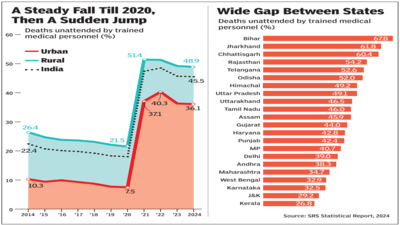
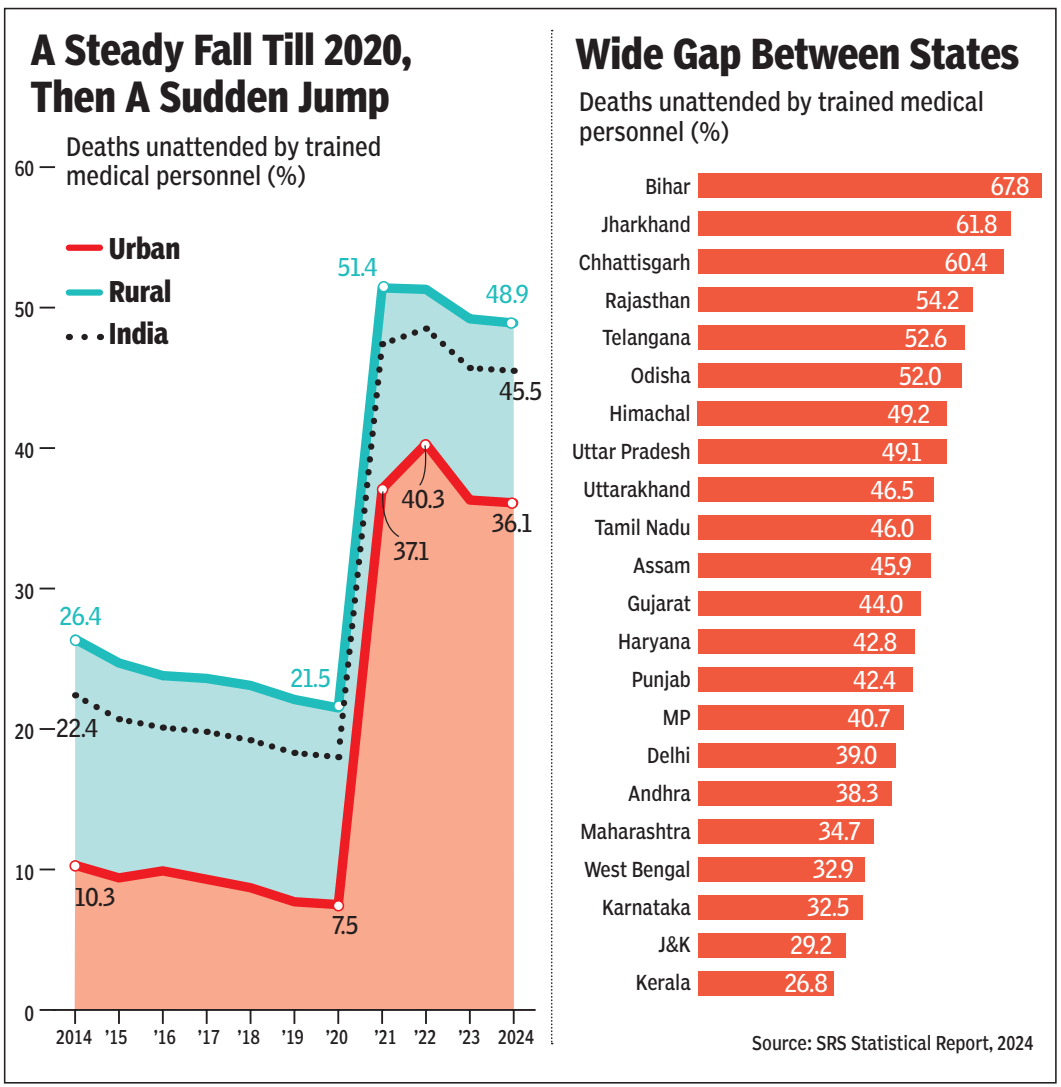
According to the latest Sample Registration System (SRS) statistical report, almost half of all deaths recorded in 2024 occurred without medical attention from a trained professional. Such deaths accounted for 45.5% in 2024 – more than double the 18% recorded in 2020 – and remain close to half of all deaths since 2021.This category includes people who did not receive any medical assistance at the time of death, or who were cared for only by an untrained person. In practice, this often indicates deaths occurring at home or outside formal medical care, although the place of death is not mentioned.The sudden and sustained surge is difficult to explain from published data alone. The increase in such deaths may reflect poor access to health care, high costs of treatment or weak enforcement of death reporting. But the scale and speed of the increase after 2020 also raises the possibility of changes in the way medical presence at death is classified or reported. TOI sought comment from the office of the Registrar General of India, which conducts the SRS, but did not receive any response.

Bihar tops in deaths without medical care

The rural-urban divide supports the possibility that access to health care plays a role. In 2024, the proportion of deaths without trained medical care was significantly higher in rural areas, 48.9%, than in urban areas, 36.1%.This pattern has been consistent since 2014 and is applicable in all states.

.

.

State-level data also shows wide variation. The proportion of deaths without trained medical care in 2024 was lowest in Kerala, at 26.8%, and Jammu and Kashmir, at 29.2%. The percentage was highest in Bihar at 67.8%, Jharkhand at 61.8% and Chhattisgarh at 60.4%. This trend is surprising as it comes after years of expansion in hospital infrastructure, health insurance schemes and public health programs across the country.Nearly a quarter of all deaths in 2024, or 24.7%, occurred in government hospitals, down slightly from the 27% recorded in 2014.From 2014, the share of deaths in government or private hospitals has steadily increased until 2020, when 30% of deaths occurred in government hospitals and 19% in private hospitals. Since then it has fallen.Overall, the share of deaths in government and private hospitals in 2024 was broadly similar to 2014 levels. But where medical help was received from a “qualified professional”, the proportion of deaths fell sharply – from 35% in 2014 to 14% in 2024.Public health experts say the findings underscore persistent inequities in access to health care, especially in rural and poor areas.

Source link

Quote of the Day by Billie Eilish: ‘Words are more powerful than some noise. The noise won’t last long…and people don’t realize it’

Quote of the Day by Billie Eilish: 'Words are more powerful than some noise. The noise won't last long...and people don't realize it.

Billie Eilish has always been quite open about her songwriting process and has always been quite adamant about paying more attention to the words rather than the extraneous beats that accompany the lyrics. This quote from the day she was just 15 years old is a reminder of how important it is to focus on what’s most important, regardless of the noise, expectations, and trends around us. He said, “Words are more powerful than some noise. The noise won’t last long. Songs are very important, and people don’t realize that.”

Quote of the Day by Billie Eilish

“Words are more powerful than some noise. The noise won’t last long. Songs are very important, and people don’t realize that.”The famous pop singer said these words during an interview with NME in 2017. It was around the same time that the singer released her first EP titled ‘Don’t Smile at Me’. During the interview, he talked about his brother, Finneas, and his songwriting skills. However, the young singer’s words resonate much deeper.

What does quote mean?

The singer talks candidly about the importance of words in life and how there can be different ‘noises’ all around us. The ‘Ocean Eyes’ singer’s quote is about understanding that beyond ‘trendy’ music, words matter most.Linking this to her ability in songwriting, the singer shares that there can be noisy, distracting things around us. However, it is up to us to accept it and look beyond it. The noise is superficial, catchy and temporary; However, on the other hand, words hold truth, vulnerability, and shared human experience.Relating the quote to everyday life, it is up to us as human beings to focus on the words, the things that really matter, and look beyond the catchy noise, i.e., Those trends that the world chases every second, those societal expectations that already seem to be imposed on you, no matter who you are.The main thing to take away from this quote is the realization that we often let this ‘noise’, or these social norms, dictate our lives. As she says, “People don’t realize this”, she explains that we often forget to look beyond our own perspective and understand that we can have autonomy, and we can focus on the things, on the words, that really matter.

More About Billie Eilish

Billie Eilish is one of the most successful and young pop artists in the music industry at the moment. He started his career by releasing songs and renditions on a popular free music website. His hit song, ‘Ocean Eyes’, which is also an example of how he focused the song primarily on the lyrics rather than the background music, became a viral sensation and brought the singer into the market.When she released songs like ‘Bellyache’ and ‘Idon’twannabeyouanymore’ with her first EP, more and more people started joining the singer’s fan circle. It was in 2019, when he released his debut studio album ‘When We All Fall Asleep, Where Do We Go?’ ‘Bad Guy’ was released with. This officially put her on the map and made her one of the strongest competitors against other singers in the industry.During her career, she has already managed to achieve some major achievements. One of the biggest events comes from 2020, when the singer became the second-youngest artist to win all the major Grammy Awards for which she was nominated that night, including Best New Artist, Album of the Year, Record of the Year, and Song of the Year. Not only this, but he has also received the Academy Award for Best Original Song for the theme song ‘No Time to Die’ from the James Bond film.On the latest work front, Eilish collaborated with award-winning director James Cameron to release her concert documentary titled ‘Billie Eilish: Hit Me Hard & Soft – The Tour Live in 3D’. His last album was released in 2024 with ‘Eat Me Hard and Soft’.

Source link

Prime Minister reiterated the need to ‘bring more momentum’ to reforms in the EAC meeting. india news

PM reiterates need to 'bring more momentum' to reforms in EAC meeting
Prime Minister Narendra Modi met the Economic Advisory Council to discuss boosting India’s economic growth.

New Delhi: Prime Minister Narendra Modi Met members of the Economic Advisory Council on Saturday and underlined the need for further reforms for the second consecutive day.“Chaired the meeting of the Prime Minister’s Economic Advisory Council. Various issues related to India’s economic transformation and long-term development priorities were discussed. He also shared the outlook on adding more momentum to the reform journey and ensuring ‘ease of living’ as well as ‘ease of doing business’, he wrote on social media.Hours after the GDP numbers were released on Friday, Modi had underlined the need to make life easier for citizens and businesses. A few weeks ago, reforms in ministries were the main focus of conversation during the Council of Ministers meeting.Although he has signaled his government’s intention to pursue what he described as a “reform express”, the emphasis has repeatedly come amid global headwinds that are expected to weigh on economic activity. Government officials say economic activity has been steady so far, the fourth quarter shows GDP growth West Asia 7.8% despite conflict – the highest among major economies.Data from across industries – from auto to cement, Purchasing Managers Index, e-way bills and GST collections – indicate that the momentum has continued in the current financial year. Demand for work in MNREGA fell to -35.5% in April, marking the 10th consecutive monthly decline.While some FMCG players had reduced pack sizes fearing a slowdown in demand, consumer activity indicates that purchasing has not been affected, and has picked up in some sectors. But the Center is keeping all policy tools at the ready as it seeks to deal with the possibility of a weak monsoon, which could dampen demand and increase inflation in some sectors. The RBI and the government assess that inflation will remain within the tolerance range.

Source link

Afghanistan Test: Cricket fans avoid AC and the test for the latest chapter in history. | ludhiana news

Afghanistan Test: Cricket fans avoid AC and the test for the latest chapter in history.
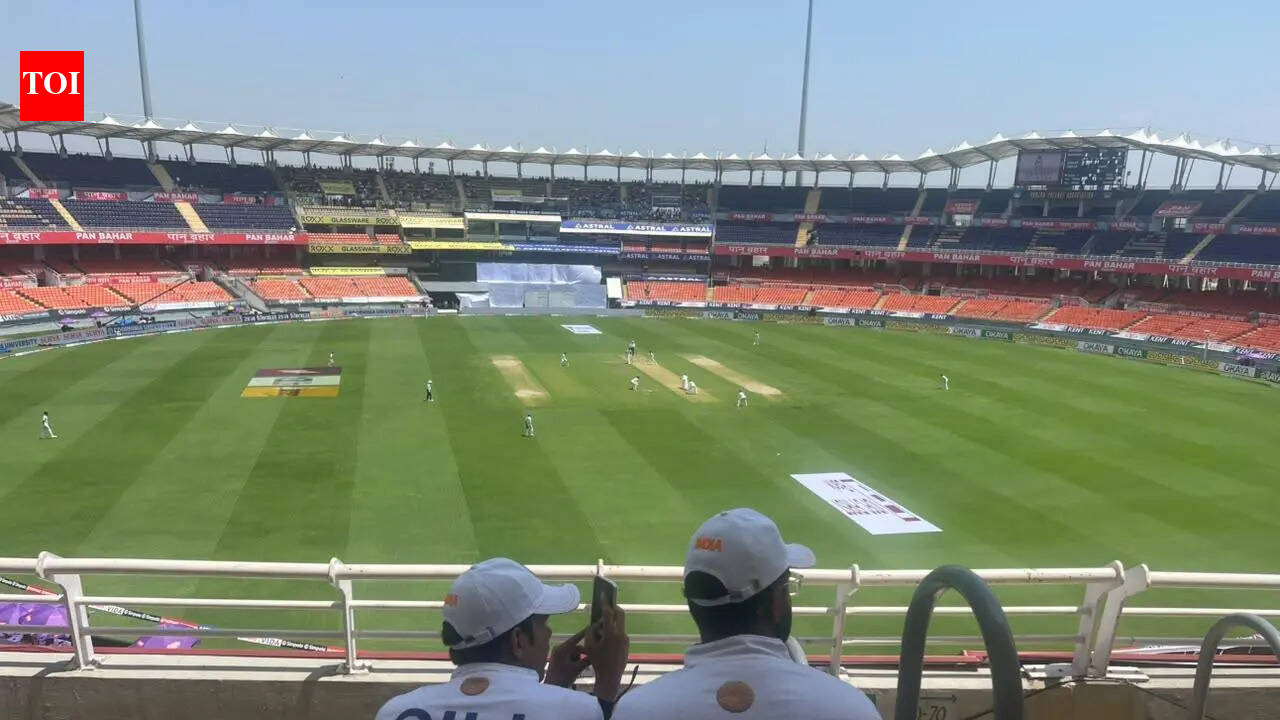
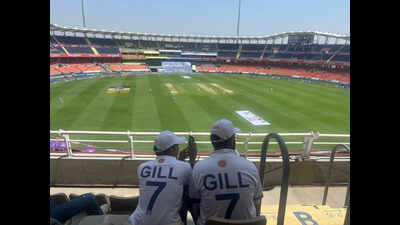
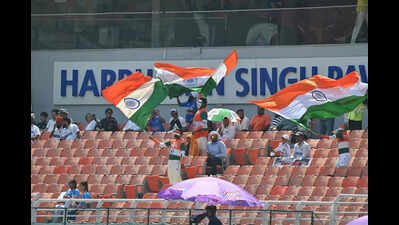
Shubman Gill’s fans during the India-Afghanistan cricket test match in Mullanpur, New Chandigarh.

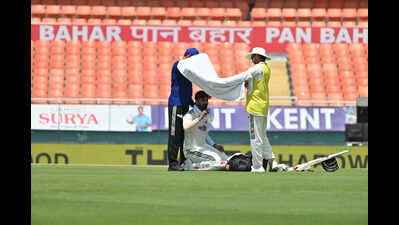
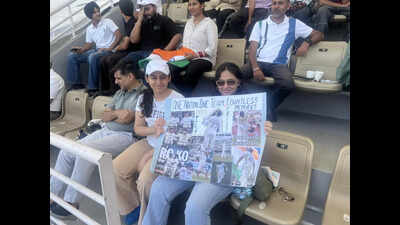
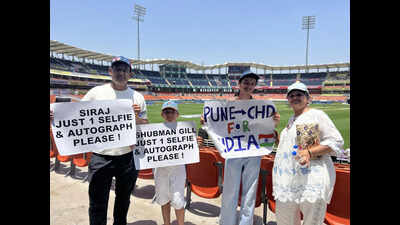
New Chandigarh: : From an Afghan student cheering on his childhood friends to a family flying 1,500 km from Pune, die-hard fans turned away air conditioning and study guides to witness cricket history, turning the venue’s first Test match into a vibrant, multi-national carnival.Businessmen and engineering students from England skipped exams and braved 40°C heat to watch local favorites Shubman Gill And KL Rahul scored centuries and crushed a tiring Afghan attack on the very first day.The eclectic, international crowd that turned out for the India-Afghanistan clash in Mullanpur transformed the stadium into a mosaic of hand-painted placards, jersey-wearing fans and inter-continental harmony.Among the first to arrive was 25-year-old Khyal Mohammad, an Afghan MBA student at Chandigarh University who had moved 830 km from Kabul for his studies. Initially the only Afghanistan supporter in his block, Mohammad – who counts Afghan national players Nangyal Kharotai and Zia Sharifi as personal friends – was soon joined by a contingent of compatriots.“There was a time when we supported other teams because we didn’t have any,” Mohammed said. “It feels good to support myself now.”The allure of the five-day game proved stronger than the academic deadlines for a group of third-year engineering students from Andhra Pradesh. While studying at Lovely Professional University in Jalandhar, nine classmates traveled to New Chandigarh right in the middle of their university exams.“We love cricket and we had to watch Test cricket live,” said Venkateshwarlu, 21, who had bought tickets mainly to watch Indian batsman KL Rahul, who was visiting from Karnataka.This match was played for the first time for many people in the stands. A family of four traveled nearly 1,500 kilometers from Pune to fulfill their daughter’s passion for sports, while twin sisters from Delhi Public School, Chandigarh spent the entire day designing a giant stadium poster.Even international corporate travelers got caught up in the local excitement. Two British officials on a business trip to India made an unscheduled visit to Mullanpur to experience first-hand the unique atmosphere of regional Test cricket.All the sacrifices and gambles paid off with Indian dominance having a front row seat as home captain Shubman Gill took India to 368 for 3 at stumps. The opening day proved the enduring magic of the five-day game, a return to tradition after a long season IPL20 over slam blast.

Source link

On the founding ground, CJP held its first protest in the capital. india news

On founding land, CJP holds its first protest in the capital

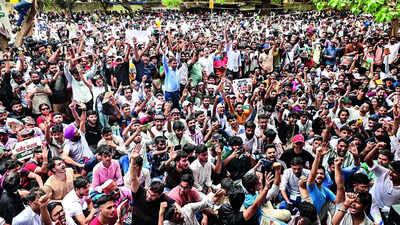
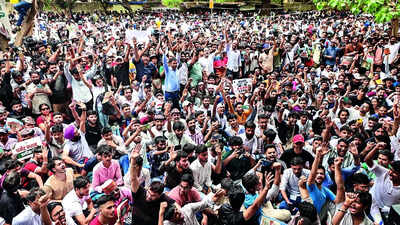
New Delhi: What started as a satirical online reaction to comments he made regarding the Chief Justice of India spilled onto the streets of the capital on Saturday, three weeks later, with cockroach Janata Party (CJP) founder Abhijit Dubey leading a protest demanding the resignation of Union Education Minister Dharmendra Pradhan over alleged irregularities in the examinations.While the protest passed off peacefully, with a large turnout, the CJP said it would wait for a week for the Center to sack Pradhan or seek his resignation. “If no action is taken, this movement will spread across the country,” a CJP statement said.Posting visuals of the packed protest site on his social media handle, Dipke wrote: “They said cockroaches will not come to the ground”.Dipke reached Delhi from Boston on Saturday morning. Supporters were asked to gather outside the Parliament Street police station, but the call was modified after the police gave permission for the protest at Jantar Mantar even before Deepke exited the IGI.

Not just Gen Z, crowds from different generations also gather at CJP protests

The supporters had by then started gathering outside the Parliament Street police station and were asked to move to Jantar Mantar through repeated announcements by the police. There was heavy police deployment, including RAF personnel, and several layers of barricades around the area. Water sprinklers were on standby.As the hours passed the crowd increased. By 11 am the site was completely packed. This is known as the Gen Z movementHowever, the protests at Jantar Mantar attracted people across generations. Apart from school children and college students, parents, job aspirants, working professionals and older people also joined the movement. Common perception: The system has become increasingly unresponsive, and repeated exam leaks have undermined public confidence in institutions. Senior citizens, professionals and children of farmers came from different states to participate in it.Environment activist Sonam Wangchuk was also present along with CJP members and supporters. Wangchuk had earlier announced that he would fast for six weeks if Dipke was arrested.People gathered peacefully carrying the tricolor, copies of the Constitution and other books, and placards demanding accountability. Many participants wore cockroach masks, carried flowers and wore T-shirts bearing the movement’s symbol. As supporters waited for Deepke’s arrival, slogans of “Vande Mataram”, “Shame” and “Dharmendra Pradhan resign” echoed at the venue. The demonstration also received support from university campuses, with members of various student unions and student groups coming out in support.The protest ended at around 3.30 pm after Deepke’s health deteriorated.The BJP called it “negative politics”, while the Congress said its youth wing had done a lot for the welfare of students. The movement has been supported by AAP, Samajwadi Party, Trinamool Congress, Shiv Sena (UBT), and Left parties, among others.Pandurang Jadhav, 50, who traveled more than 1,300 km from Pune to take part in the protests, said he fears for the future of his two sons, aged 17 and 21. “My children have lost faith in the system. Every few months there is some controversy – sometimes paper leaks, sometimes glitches in the CBSE system. I have come here for their future,” said Jadhav, a financial analyst.Sajeev Kumar, 24, from Jaunpur, said he changed several trains and traveled for about 10 hours for the protest.The youngest participant was Abhimanyu of class three who wore a cockroach-style face mask and came with his elder brother. “All I know is that the paper was leaked and responsibility for it should be taken and the education minister should resign,” he said.Many participants described the protests as extending beyond exam leaks.For 83-year-old retired driver Itwari Lal Mathur, the issue was very personal. “Young people are losing hope. Children are suffering because of these failures. Who will bring back the lives lost due to such pressures?”There was brief chaos at the protest site when some people allegedly raised slogans against CJP supporters. Police personnel intervened and detained three people.

Source link

IND vs AFG: Sriganganagar’s Manav Suthar ends Rajasthan’s 12-year Test drought. cricket news

IND vs AFG: Sriganganagar's Manav Suthar ends Rajasthan's 12-year Test drought

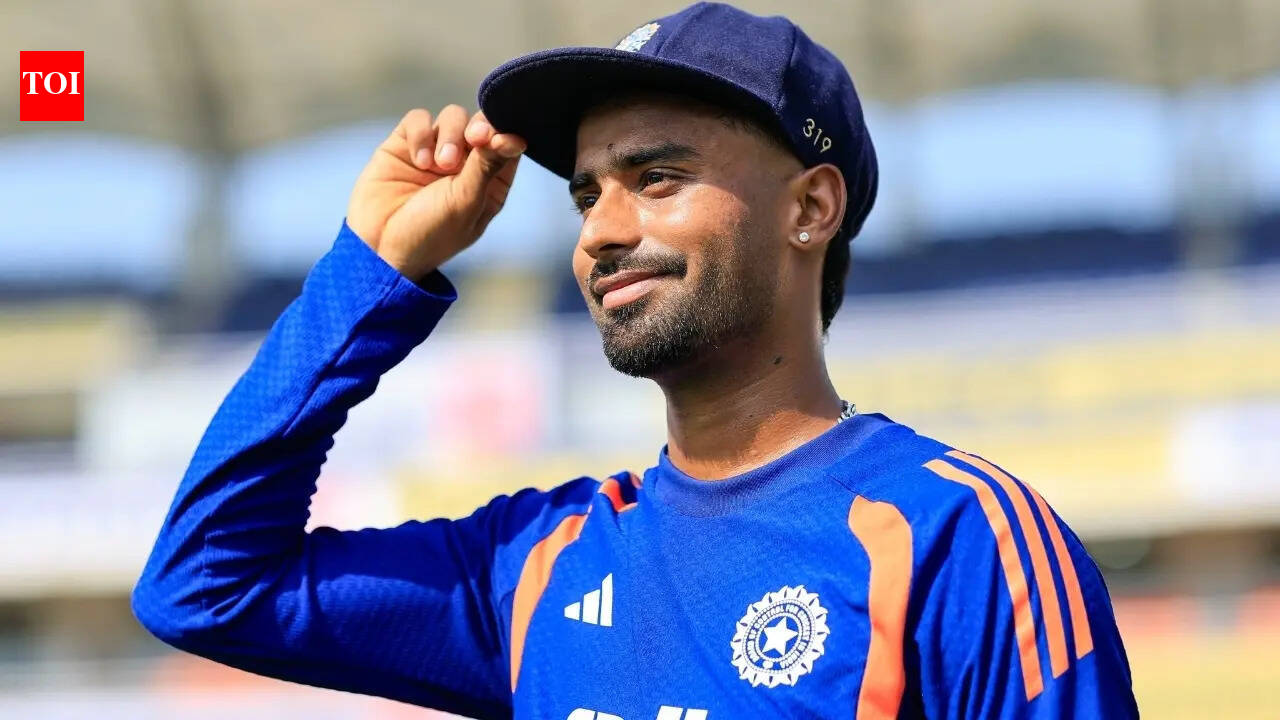
Jaipur: The wait lasted for over a decade, but the dry spell for Rajasthan’s cricket fraternity finally ended on a historic Saturday morning in New Chandigarh. Ever since Pankaj Singh stepped into ancient India, no cricketer from the state has won the coveted Test cap. After a gap of 12 years, the desert state is back in the Test arena thanks to young left-arm spinner Manav Suthar from Sriganganagar.With this monumental feat, 23-year-old Manav entered an elite club, and became only the fifth cricketer from the state to represent the state in Test cricket after the great Salim Durani, Hanumant Singh, Parthasarathy Sharma and Pankaj Singh.Long before the national selectors took notice, the foundations for this historic moment were being laid in the home trenches. Vineet Saxena, former Rajasthan player and coach of the senior men’s team in the 2022-23 season, remembers a quiet morning ranji trophy The match of that year when he got his first glimpse of a human during a competitive game.“He was the guy who was getting players out in defense and slip,” recalls Saxena.For a seasoned guru like him, the wickets on the scorecard can sometimes be misleading, but the technical precision of dismissals reveals the bowler’s true ability. Saxena explains that what really makes Manav an exceptional left-arm spinner is his ability to fundamentally outwit batsmen, defeating them when they are actively trying to protect their stumps.“So generally, when we look at a bowler, the numbers don’t really indicate the way he is taking wickets. But if a bowler is getting the batsman out in his defence, it means that bowler has really good quality,” the former state coach said.Not only did his tactical brilliance catch everyone’s attention, but the incredible physical attributes of his bowling also caught everyone’s attention. Suthar had an innate ability to manipulate the ball in the air, giving it a heavy turn that became a nightmare for the home batsmen.“The other thing I noticed is the revs he puts on the ball, it’s amazing,” says Saxena. “In our language, we say the ball is spinning and flowing, and cutting through the surface. So it has to do with the revs he is able to impart on the ball. That’s something special he has.”That special quality came into reality during Manav’s second Ranji Trophy season in 2022-23. The young spinner tore apart the opposition lineup, taking 39 wickets in just six matches at an incredible economy of 2.90, including two five-wicket hauls and a match-winning ten-wicket haul.Yet, what makes Suthar the ideal modern cricketer, and why many are already looking at him as a potential successor to Ravindra Jadeja, is his immense all-round ability. Suthar was never satisfied with being a one-dimensional expert.“In one game that season, he took five wickets against Pondicherry and missed a century. So it would have been a big achievement,” says Saxena. “He can develop into a good all-rounder. And even in batting, what I saw at that time was that he was very eager to learn. So his mentality and attitude was the same.”Naturally, any young left-arm orthodox spinner who can bat and score massive runs at the domestic level will immediately be compared to Jadeja. As Manav officially begins his Test journey, the hype is palpable, but Saxena urges a balanced perspective while validating the young player’s immense talent.“Jadeja is probably one of India’s greatest all-rounders. So I think it would be wrong to compare humans with them at the moment. Man has to go a very long way to accomplish this,” says Saxena.Suthar’s adaptability became even more evident when he converted these red-ball performances into high-risk white-ball cricket. Saxena recalls how effortlessly the spinner held his own against some of the most dangerous, established pinch-hitters in the country, proving that he is a genuine all-format asset.“Facing a star-studded Mumbai team in the practice games ahead of the Mushtaq Ali Trophy in Ahmedabad, he produced an extraordinary performance against Shivam Dube. Despite Dube’s notorious dominance over left-arm spinners, he reduced the all-rounder’s scoring rate to under a run-a-ball and ended it by dismissing him. That fearlessness was not a one-off,”When the tournament officially began, Manav made his T20 debut against Madhya Pradesh as an impact player, tasked with containing the in-form Venkatesh Iyer.“Iyer is a good striker of the ball. In that game, he scored almost 60 runs off 30 balls. Of those, against Manav, it was just run-a-ball, and Manav bowled him around 8 to 10 balls. So even against pinch hitters, he was able to stop them. He has that skill for T20s as well. He is an all-format player, it’s not like he can only survive in the longer format,” he added. Said.

Source link

Councilors visited garbage centers for Green Chandigarh. | Chandigarh news

Councilors visited garbage centers for Green Chandigarh.

Chandigarh: The Municipal Corporation on Saturday conducted an extensive field tour of the city’s primary solid waste management infrastructure for municipal councilors.Organized as a key initiative of the Environment Week, this educational visit aims to give public representatives a first-hand look at local sanitation facilities and deepen their understanding of the newly implemented solid waste management rules.The delegation inspected the city’s central dumping site, the main waste processing plant and several localized material recovery facilities. During these site visits, the technical teams briefed the politicians about the scientific methods currently being deployed by the Corporation to handle waste separation, mechanical processing, recycling and final environment-friendly disposal.The highlight of the tour took place at the special Pink Material Recovery Facility, where councilors spent time interacting directly with the all-female workforce. The visiting officials praised the staff for their accuracy in resource recovery and formally honored them for their daily commitment to keeping the city clean.Joint Municipal Corporation Commissioner Balbir Raj emphasized that field exposure is important for building administrative capacity and helping elected leaders take better-informed policy decisions. He said achieving long-term sustainability largely depends on engaging stakeholders at every stage of the process.Following the visit, municipal officials issued a public appeal urging residents to take the responsibility of separating their household waste at source. The officials emphasized that citizen cooperation is the most important factor in conserving the environment and maintaining the civic beauty of Chandigarh.

Source link