For the first time, the President and the Prime Minister will come together to participate in the second anniversary program of my government. bhubaneswar news

In a first, President, Prime Minister will come together to attend second anniversary celebrations of Majhi government
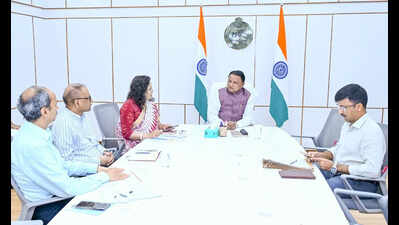
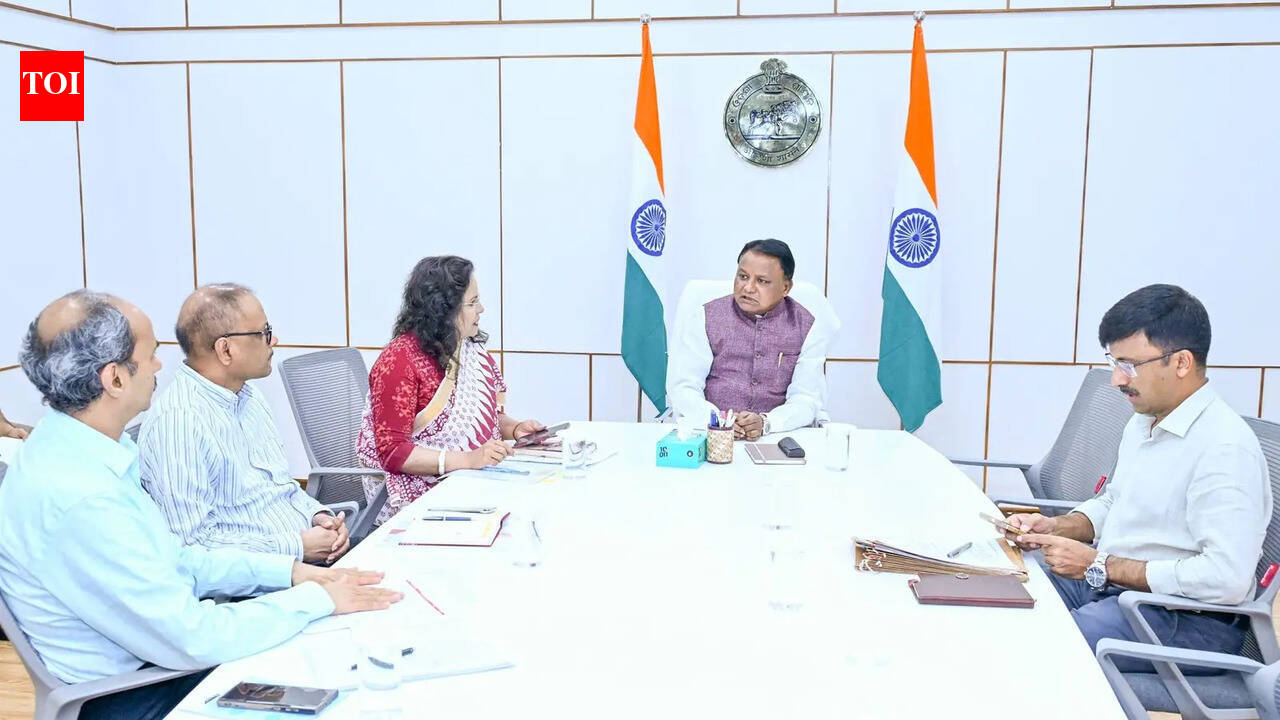
Chief Minister Mohan Majhi reviewed preparations for the second anniversary celebrations of his government in Bhubaneswar on Tuesday.

Bhubaneswar: President Draupadi Murmu and Prime Minister Narendra Modi Will attend an event together for the first time Odisha To mark the celebration of two years of the Mohan Charan Majhi-led BJP government in the state. A government official said that on June 20, President Murmu and PM Modi are going to inaugurate and lay the foundation stone of several important projects for Odisha at Rairangpur in Mayurbhanj district.Majhi, who completed two years in office on June 12, chaired a high-level preparatory meeting at Lok Seva Bhawan for the successful implementation of the anniversary programme, which will culminate in a huge public meeting to be addressed by the President and the Prime Minister.The Chief Minister directed the officials to ensure security arrangements at the venue, facilities for the general public attending the meeting and adequate parking arrangements. Since both President Murmu and PM Modi will attend the event, the CM stressed the need to organize the event smoothly and directed officials to pay special attention to it.Mayurbhanj MP Naba Charan Majhi said the President will be on a two-day visit to her hometown Rairangpur from June 19, while the Prime Minister is scheduled to visit on June 20.Sources said he would inaugurate a stadium in Rairangpur and several other projects for the state besides projects for Paharpur, Murmu’s in-laws’ village. The dignitaries will also flag off the new Puri-Koraput train via Sambalpur and inaugurate several upgraded railway stations as Amritbharat stations in different parts of the state.From Odisha, PM Modi will fly to Kolkata to lead the major national function international yoga day President Murmu is likely to return to Delhi on June 21.It may be mentioned here that the Prime Minister had also attended the first anniversary celebrations of the Majhi government in Bhubaneswar on June 20 last year and inaugurated and laid the foundation stone of development projects worth over Rs 18,600 crore. This will be Modi’s eighth visit to Odisha in two years and his first visit this year after the formation of the BJP government in Odisha.

Source link

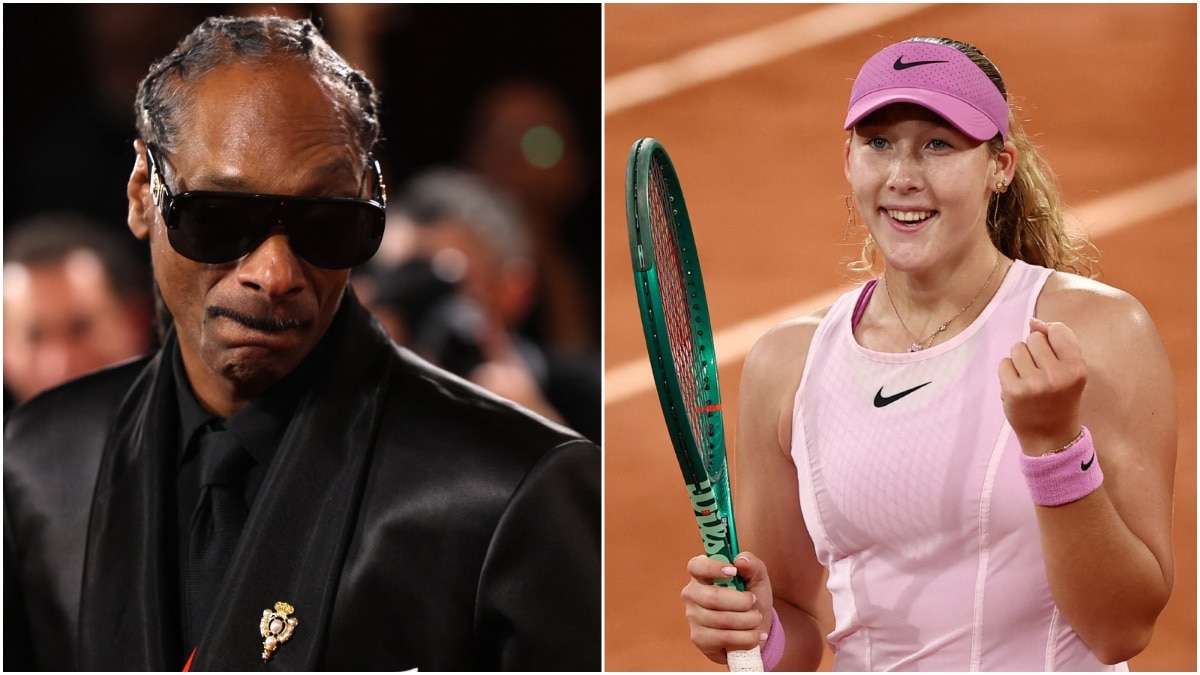
French Open: 19-year-old Mira Andreeva always thanks herself at Slams and reveals Snoop Dogg inspiration

Russian teenager Mira Andreeva reached her second French Open semi-final by defeating Romanian veteran Sorana Cristea 6-0, 6-3 under closed doors at the Court Philippe-Chatrier on Tuesday. The 19-year-old, seeded eighth, needed just 56 minutes to book her place in the last four, cementing her position as a major contender for a maiden Grand Slam title.

With this win Andreeva achieved her 19th match win at Roland Garros. The milestone catapulted her into the record books, setting a new benchmark for the most women’s singles match wins at the French Open by a teenager in the 21st century.

Andreeva previously reached the semi-final stage in Paris in 2024 at the age of 17.

snoop dogg mantra

Beyond her record-breaking tennis, Andreeva charmed the Paris crowd by explaining the viral post-match tradition of thanking herself along with her team and fans during trophy presentations. The teenager revealed that the ritual was lifted directly from American rap icon Snoop Dogg’s famous Hollywood Walk of Fame speech.

“At first, when I said it in a speech, I saw Snoop Dogg say it when he was receiving an award,” Andreeva said during her on-court interview.

“So the first few times, I stole it to make a joke. But then I realized it’s really true. We have to thank ourselves for the work we do on the court, how much we sacrifice, how much we practice and how much we put in.”

strategic dominance

It was in the quarter-finals that the young Russian demonstrated tireless accuracy. Andreeva completed the opening set in just 24 minutes, leaving the 36-year-old Cirstea, playing her final season on the tour, desperately searching for momentum. Andreeva consistently punished weak balls and converted six break points throughout the match.

Cristea offered tentative resistance in the second set and earned an early break to draw at 3-3. However, Andreeva reasserted her dominance and took the match by breaking the Romanian twice.

When asked if her exceptional court vision was a learned trait, Andreeva indicated that it was largely innate.

She commented, “From a very young age I felt like I was studying the game.” “I never knew it was anything special.”

Andreeva dominated the power game and hit her first serve at will, while Cirstea struggled on her second serve, earning less than 20 percent of her points.

Andreeva will face Ukraine’s Marta Kostyuk in the semi-finals. Marta defeated compatriot Elina Svitolina in three sets in the second women’s singles quarterfinal on Tuesday.

– ends

Published on:

June 2, 2026 18:11 IST


Source link

‘Before I leave the stage…’: Missouri Muslim student claims principal withheld her diploma because she spoke out about ICE, Palestine

'Before I leave the stage...': Missouri Muslim student claims principal withheld her diploma because she spoke out about ICE, Palestine
Clayton teen says she was denied a diploma because she talked about ICE and Palestine in her welcome speech.

Leanne Hijaz, a Muslim student of Palestinian origin from Clayton High School, Missouri, said her principal was not giving her a diploma because she gave a controversial graduation speech, which was also interrupted by her principal. During Clayton High School’s graduation ceremony on Thursday, May 28, Leanne Hijaz gave the welcome address and as she reached the closing remarks of her speech, Hijaz began speaking about U.S. Immigration and Customs Enforcement and Palestine.“Before I leave the stage, I have to say one last thing. Every single person here has a voice; we have the privilege of using it when millions of people around the world are suffering and struggling to be heard. Be it the millions of people suffering in Palestine, Sudan, Congo, Afghanistan and many other countries around the world, or the families being torn apart by ICE. These are not just an issue there; As I speak, they are happening there, they are happening right here. My point is that we have not been given a voice to be silenced,” she said.While the event was being livestreamed, it was captured on camera that a woman, the principal, was seen stopping Hijaz.After that video went viral, Hijaz admitted that the ending of his speech was spontaneous and not pre-approved.Hijaz said, “I was extremely afraid to say something and wasn’t really planning on doing so, but I had a lot of support from the friends and family around me and they encouraged me to say something.” “I didn’t say everything I wanted to say, but I said a lot.”Johnston County Public Schools said students were required to submit their comments in advance of graduation, and one student deviated from what was pre-approved by administrators, WRAL reported. The district said, “School administrators intervened to maintain the integrity and focus of the program in real time. This action was not about limiting any student’s voice, but about ensuring that the school-sponsored program remained consistent with its intended purpose.”Johnston County Public Schools did not specifically state that Hijaz’s diploma was withheld as a result of the speech.

Source link

CBSE debacle: Center transfers chairman, secretary; Panel to scrutinize procurement of OSM services india news

CBSE debacle: Center transfers chairman, secretary; Panel to examine procurement of OSM services

New Delhi: Coming into action, the government on Tuesday directed the Central Board of Secondary Education (CBSE)CBSE) Two top officials amid controversy over the board’s new on-screen marking (OSM) system.CBSE chairman Rahul Singh and secretary Himanshu Gupta have been transferred, while a committee has been formed to probe the purchase of the OSM facility.(This is a developing story)

Source link

How Bihar is converting public infrastructure into clean energy. patna news

How is Bihar converting public infrastructure to clean energy?

Patna: : Bihar The solar energy journey is no longer limited to home rooftops. Across the state, government buildings, irrigation networks, reservoirs and public infrastructure are being converted to sources of clean energy, marking a decisive shift away from reliance on fossil fuels.At the heart of this transformation is the Jal-Jeevan-Hariyali Mission, under which Bihar Renewable Energy Development Agency (BREDA) has already equipped more than 12,800 government buildings with solar energy. Through the first two phases of its grid-connected rooftop programme, the state has created approximately 115 MW of decentralized solar capacity, reducing the burden on the conventional thermal power grid while reducing the cost of electricity for public institutions.More importantly, the initiative has transformed from a project to a policy. Incorporating renewable energy into Bihar’s future development model, solar infrastructure is now mandatory for all new government buildings. About Rs 575 crore was invested in the first two phases.The next phase promises to be even more ambitious. according to Rahul KumarDirector of BREDA and Managing Director of NBPDCL, the state aims to install 500 MW of rooftop solar capacity on government buildings through the Renewable Energy Services Company (RESCO) model. The objective is clear – to achieve almost complete solar coverage of public infrastructure within the next five years and establish a strong foundation for Bihar’s clean-energy ambitions by 2030.The scale of progress is already visible. Patna leads the state with 1,701 solar-powered government buildings, followed by Purnia with 1,635 and Rohtas with 1,056. Together, they explain how public infrastructure is becoming a key driver of Bihar’s renewable energy transition.Yet Bihar’s solar strategy extends far beyond rooftops. Unlike states like Rajasthan and Gujarat, Bihar faces a unique challenge – the lack of large tracts of barren land suitable for utility-scale solar projects. As a result, the state has adopted a diversified approach, identifying suitable locations in districts such as Aurangabad, Banka, Jamui and Gaya for large-scale establishments.The proposed 150 MW solar park in Aurangabad is a major milestone. Spread over 500 acres and costing about Rs 1,000 crore, the project will include battery storage capable of storing up to 20% of the electricity generated, helping address the intermittent nature of solar power.At the same time, the major Kajra solar project in Lakhisarai has come into operational mode. 185 MW of solar capacity supported by battery storage has already been added in the first phase, slated for February 2026. The second phase, to be completed by January 2027, will further strengthen the project and increase storage capacities.Recognizing the limitations of land availability, Bihar is also exploiting its water resources. A 10 MW floating solar project at Phulwariya Dam in Nawada is nearing completion, based on earlier floating installations in Darbhanga and Supaul. Such projects maximize energy production without competing for agricultural land.The state is also investing in long-term energy storage as well. The two proposed pumped storage projects in Nawada, with a combined capacity of 2,120 MW and an estimated cost of Rs 12,000 crore, are currently under survey.Along with these efforts, Bihar is pursuing feeder-level solarization under the PM-KUSUM scheme. Power purchase agreements for 456 MW across 175 solar plants have already been signed, the initiative aims to shift agricultural irrigation systems towards dedicated solar power.Together, these projects reveal a larger vision. Bihar is not just adding renewable energy capacity; It is redesigning its energy architecture. Combining rooftop solar, utility-scale projects, floating plants, battery storage and agricultural solarization, the state is building a diverse and resilient clean-energy ecosystem capable of fueling sustainable growth for decades to come.

Source link

Karishma Vijay: ‘I’m not doing very well’: UK-based entrepreneur and The Apprentice winner Karishma Vijay opens up about mental health struggles world News

'I'm not doing very well': UK-based entrepreneur and The Apprentice winner Karishma Vijay opens up about mental health struggles

Indian-origin entrepreneur and The Apprentice winner Karishma Vijay became emotional and cried while talking about physical insecurities and mental health struggles, saying that the pressure of a life-changing year has left her exhausted.The 29-year-old won a £250,000 investment from Alan Sugar for her skincare brand Kishkin after winning The Apprentice earlier this year. Since then, she’s moved house, expanded her business, gotten engaged, and started planning her wedding.In an emotional Instagram reel, Karisma admitted that despite her professional success, she has neglected her well-being.“Life may look great on social media but the Godly truth is that I’m not doing very well,” she said.He described balancing content creation, business operations, marketing campaigns, interviews, podcasts, and public appearances while building his company.The entrepreneur said the demands of his career have taken a toll on both his physical and mental health.She said, “I’m the heaviest I’ve ever been. My body is my biggest insecurity, but not because of my curves or the number on the scale. It’s because I’m 20 and I’m always tired.”Karishma also recalled a period about a year ago when she felt more confident in her body and her fitness journey. She said that due to work pressure and personal commitments, she gradually started losing the healthy routines she had worked hard to create.“I was performing for myself for the first time and now I’m back for the first time,” she said.“With everything going on in my life, I don’t know if I could do it all again.”Despite her struggles, Karisma said she plans to prioritize her well-being by returning to the gym, exercising regularly and being more conscious about her health.After this post, support from followers started increasing and many people encouraged her to focus on herself.One user wrote, “Please take care of yourself first.”Another commented: “It’s hard when life gets stressful, trust me. But now you need to take time for yourself.”

Source link

Electricity consumption increased by about 11% year-on-year in May. india news

India grapples with extreme heat as record power demand puts power grid under severe stress

Photo credit: IANS

New Delhi: Electricity consumption in May increased by nearly 11% year-on-year due to hot weather conditions across the country throughout the month, which led to increased use of air conditioners in domestic and commercial sectors.Grid India data showed that 165 billion units (BU) of electricity was consumed in May this year, compared to 148.7 BU in the same month last year. Consumption increased by over 7% compared to April, which saw consumption of 154 BU.According to the India Meteorological Department (IMD), the number of heat wave days in the second fortnight of May was higher than in previous years, resulting in increased power demand. Demand began rising on May 11 and reached a record high of 270.8 GW on May 21, surpassing the previous all-time high for four consecutive days. However, it witnessed a steady decline in the latter half of the month. Before May, the highest electricity demand was recorded at 256.1 GW on April 25.There were 10 days in May when the maximum demand was more than 250 GW. Last May, bad weather kept power demand under control and crossed the 230-GW mark only twice during the month. Peak demand in May 2025 was 231 GW, while the season’s highest demand was recorded in June at 242.7 GW. The total power consumption in June 2025 was 150 BU.The government has predicted a scorching heat this year due to El Nino conditions, with power demand likely to be higher in June. However, maximum demand this month is unlikely to set another record, as the southwest monsoon is expected to reach Kerala in the next few days.

Source link

Why do Indian women wear nose rings, anklets and toe rings? The hidden meaning and truth behind these centuries old traditions

Why do Indian women wear nose rings, anklets and toe rings? The hidden meaning and truth behind these centuries old traditions

India is a country of traditions and even the smallest jewelery has a deep meaning attached to it. Indian women have been wearing nose rings, anklets and anklets for centuries, not only for beauty but also for cultural, emotional and symbolic reasons. These jewelery are not just fashion accessories; They are tied to identity, marriage, health beliefs and spirituality. Although many traditions have changed in modern times, this jewelery still holds a special place in Indian culture.

Meaning behind nose ring

Image: Canva

21 May 2026 | 15:04

What’s the one thing that women get tired of being asked about?

Nose ring, also known as ‘Nath’, is one of the most beautiful jewelery worn by Indian women. It is a symbol of grace, beauty and tradition in most parts of India. Brides wear decorated nose rings, especially at weddings; They are an important symbol of marriage and celebration. Many traditional beliefs also link nose earrings to women’s health. According to old cultural ideas and practices inspired by Ayurveda, left nostril piercing was believed to help women’s reproductive health and reduce discomfort during childbirth. Although modern medical science does not firmly confirm these claims, the belief remains tenable in many communities.Nose rings also have emotional significance. In some families, it represents family pride, tradition, and a woman’s connection to her roots. Today, many women wear nose rings as a fashion choice while also appreciating their cultural significance.

Anklet: Sound of Grace and Presence

Image: Canva

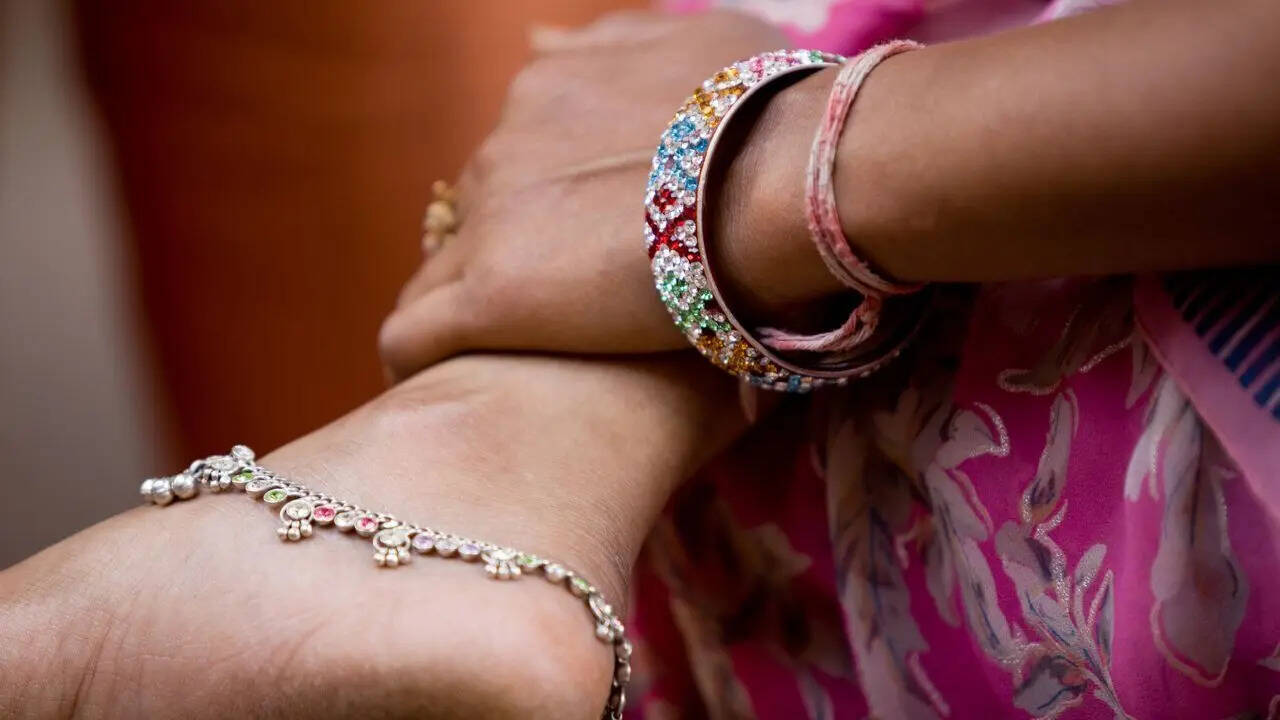
Anklets, known as ‘payal’, are another traditional jewelery worn by Indian women. Their light tinkling sound has long been associated with beauty and femininity. In olden times, the sound of the anklet would also announce the arrival of someone in a room, showing respect in homes where women would often enter quietly. Silver anklets are particularly popular as gold is traditionally considered sacred and is not usually worn below the waist. Payal’s melodious voice is often associated with happiness and positive energy in homes.People have made many assumptions about health and anklets. Anklets are worn around the ankles. Some people think that the way the anklet rotates and applies pressure to the skin may help with blood circulation or keep the body energetic. These ideas are based more on cultural consideration than on confirmed medical science. Anklets also mean looking good, feeling happy and being yourself. Many girls wear anklets because they want to remember the old ways and also want to look stylish with modern clothes.

Nettle in toe: symbol of marriage and commitment

Image: Canva

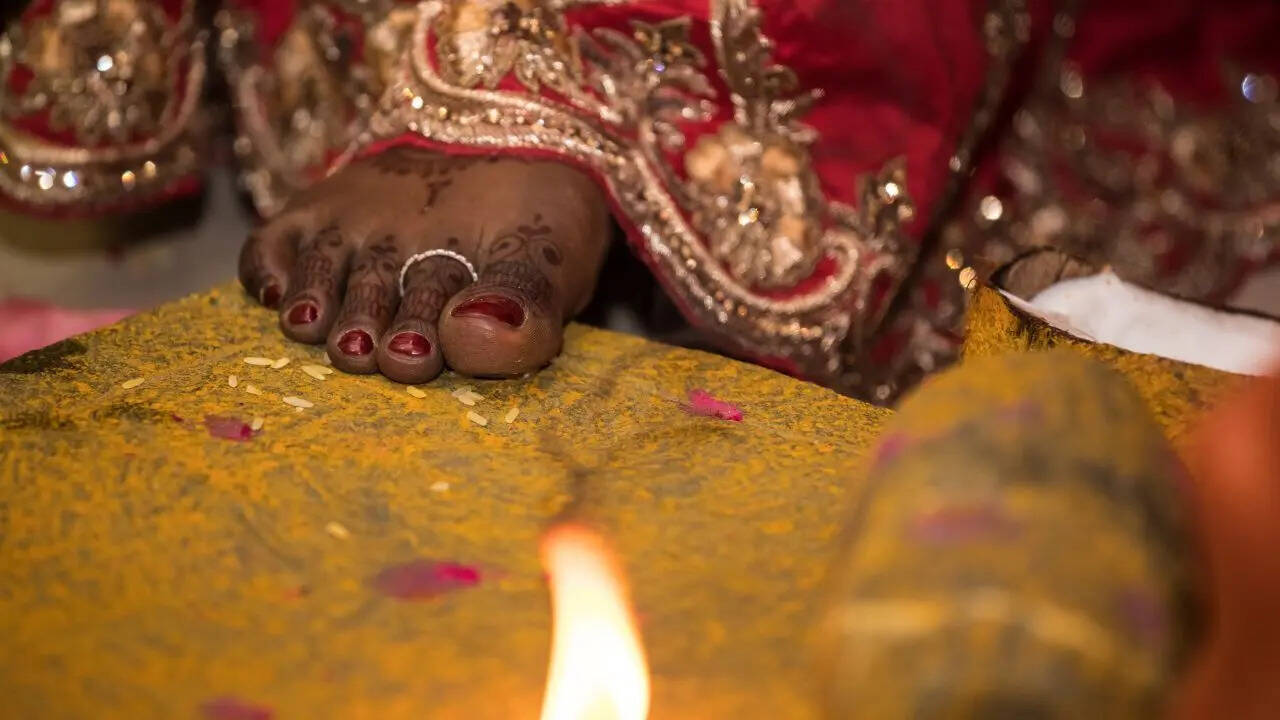
People in India have toe rings, which they call ‘Bichhiya’. These toes are really important when it comes to marriage. Married Indian women wear silver rings to show their commitment to their husbands, similar to wedding rings worn in Western countries. Usually, when someone gets married, people give these rings as gifts and women wear them on the toes of both the feet.Many people believe that wearing a toe ring benefits women’s reproductive health. According to traditional beliefs, toe rings exert gentle pressure on certain nerves associated with the uterus and menstrual cycle, which may support fertility and overall well-being. However, these beliefs are based on cultural traditions and are not strongly supported by modern medical science. Nevertheless, nettle has great importance in Indian culture. For many women, they are not just jewelery but symbols of tradition, marriage and cultural identity, meaning much more than their appearance.Above all, toe rings symbolize responsibility, love and a new phase of life. They remind women of their connection to family and marriage and reflect tradition and identity.

more than jewelry

Image: Canva

Nose earrings, anklet chains and toe rings are not just jewellery. They tell stories of culture, values ​​and beliefs passed down from one generation to the next. These traditions have feelings, memories and meanings that go beyond appearances. Today many women wear them as a mix of tradition and fashion. Some people wear them to celebrate their culture, and others just like the way they look. Whatever the reason, these jewelery still have a certain timeless charm.They remind us that in Indian culture, jewelery too has a voice – a voice that speaks of identity, love, beauty and tradition, a voice that continues to shine across generations.

Source link

A 2,000-year-old Roman gold mine found buried beneath a Spanish mountain reveals how ancient engineers moved millions of tons of earth. world News

2,000-year-old Roman gold mine found buried beneath Spanish mountain reveals how ancient engineers moved millions of tons of earth

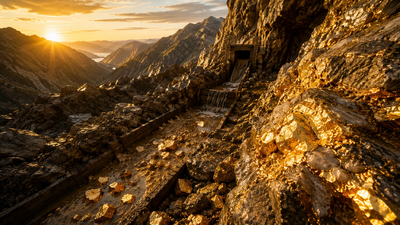
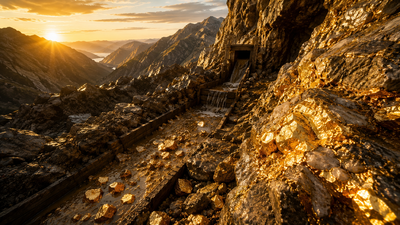
For decades, archaeologists suspected that a strange landscape hidden in the Spanish Pyrenees was more than just a product of nature. Deep trenches, artificial ravines and vast excavated areas point to a forgotten human story buried beneath the mountains. Now, researchers have confirmed that the site, known as Guilleteras d’Ol in northeastern Spain, was a Roman gold mine about 2,000 years ago. The discovery of an ancient reservoir preserved beneath layers of sediment has provided the strongest evidence yet that Roman engineers used sophisticated hydraulic mining techniques to extract precious metals, reshaping entire mountains in the process and removing millions of tons of earth without modern machinery.

The Spanish mountain that hid the secret of a Roman gold mine

Located in the Cerdanya valley near the border between Spain and France, the Guilleurs d’All appears at first to be a rugged mountain landscape shaped by natural forces. A closer examination reveals something different.Archaeologists have identified a network of narrow ditches, cut slopes and large excavation fronts spanning the site. One of the most notable features is a circular excavation about 300 meters wide, a scale that immediately suggested human intervention.Researchers from the University of A Coruña and the University of Barcelona concluded that these features were created by Roman miners who transformed the landscape in search of gold. Their findings indicated that the site was part of a carefully planned mining operation rather than a small-scale prospecting effort.

A unique water-powered system is used to extract gold.

Instead of digging deep underground tunnels, Roman miners relied on hydraulic mining, a technique that used water as a powerful excavation tool.The process involved collecting large amounts of water in reservoirs and directing it through channels toward gold-rich sediment deposits. When released, the water broke up soil, gravel and loose rock, causing the material to flow downstream. Workers could then separate the tiny gold particles from the sediment.This method allowed the Romans to efficiently process huge quantities of earth. It also reduced the need for extensive underground excavation, making it particularly useful in mountainous areas where gold was scattered in ancient sediment layers.The newly confirmed mine shows how advanced Roman engineering had become by the height of the empire.

Buried reservoir that solved a centuries-old mystery

While archaeologists long suspected that the site was Roman, its age was difficult to prove.That changed during excavations conducted between 2010 and 2022, when researchers discovered an ancient reservoir buried beneath centuries of sediment. The structure measured approximately 4.5 meters wide and 1.5 meters deep and was strengthened by a dam made of large stone blocks.The reservoir once stored and controlled water used during mining operations. After the site was abandoned, layers of sediment gradually settled on its floor, preserving a record of its history.To determine when the reservoir was last used, the researchers used Optically Stimulated Luminescence (OSL) dating, a technique that measures the last time quartz grains were exposed to sunlight.The results showed that the hydraulic system was abandoned between the late 2nd and early 3rd centuries, placing the operation firmly within the Roman era.

The Romans moved a surprising amount of earth.

The scale of the mining complex is one of the most notable findings of the study.Researchers estimate that about 2 million cubic meters of earth was displaced during mining activities. Depending on the density of the material, this represents several million tons of sediment moved using little more than gravity, water, and human labor.Even today, the scars left by the operation are visible across the mountain. The dug trenches and ravines continued to shape the landscape for nearly two millennia, even after Roman workers abandoned the site.Although smaller than Las Médulas, Spain’s most famous Roman gold mine, Guilletera d’Oll demonstrates that similar mining techniques were used in many areas of the empire.

Pyrenean gold is hinted at in ancient texts

Historical sources had already suggested that the Pyrenees contained valuable gold deposits.The Roman writer Pliny the Elder described the mineral wealth of the area, while the poet Martial noted the gold associated with the area around the Roman settlement of Iulia Libica.The newly confirmed mine is close to Iulia Libica, the only known Roman city in this part of the Pyrenees. Researchers believe that the settlement may have played an important role in organizing mining operations and managing the local economy.Additional archaeological discoveries support this connection, including a metallurgical workshop found at El Castellot de Bolvir and a gold bracelet recovered from a nearby Roman cemetery.The discovery provides more than evidence of a forgotten gold mine. It offers a glimpse of the technological capabilities and economic priorities of the Roman Empire.Mining was an important source of wealth that helped finance military campaigns, public works, trade networks, and royal administration. The ability to construct reservoirs, channels and large-scale hydraulic systems in remote mountainous environments highlights the extraordinary engineering skills developed by Roman societies.The discovery also reveals how well the empire exploited natural resources, spreading complex industrial activities across areas that might otherwise have seemed isolated from the ancient world.

A hidden chapter of Roman engineering is revealed

The mountains of northeastern Spain have hidden this story for nearly 2,000 years. What once appeared to be an unusual landscape shaped by erosion is now recognized as the legacy of one of the most sophisticated mining operations of the ancient world.Thanks to the discovery of the buried reservoir and modern dating techniques, archaeologists can finally confirm that Roman engineers transformed this remote valley into a vast gold-extraction complex. Their achievement serves as a reminder that long before modern machinery came into existence, ancient civilizations were already capable of moving mountains in search of precious resources.

Source link

Ebola outbreak: India sends 43 tonnes of aid to Africa CDC in second relief tranche. india news

Ebola outbreak: India sends 43 tonnes of aid to Africa CDC in second relief tranche

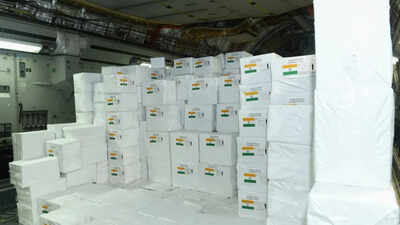
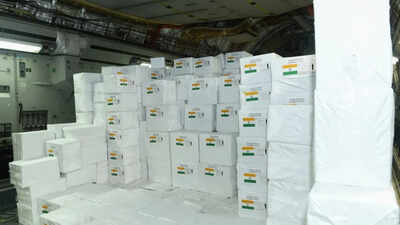
New Delhi: India has sent the second tranche of emergency medical assistance worth 43 tonnes to the Africa Centers for Disease Control and Prevention (Africa CDC) to strengthen Ebola response efforts across the African Union, the Ministry of External Affairs (MEA) said on Monday. The consignment, sent to Kampala, Uganda following a request by the African Union Commission, includes protective equipment, diagnostic and surveillance equipment, medicines and other critical health supplies.The latest shipment is scheduled to arrive in Kampala on June 2 and will be formally handed over to Africa CDC. According to the Ministry of External Affairs, the consignment includes protective gear, diagnostic and surveillance equipment, sample transport kits, infection prevention supplies, medicines and nutritional supplements, which are aimed at enhancing public health preparedness and strengthening Ebola response capacities.External Affairs Minister S Jaishankar announced the dispatch on social media platform X, sharing pictures of the consignment.“India has sent the second tranche of medical assistance to Africa CDC, including protective gear, diagnostic and surveillance equipment, medicines and supplements. Confident that this 43-tonne consignment will further strengthen public health preparedness and enhance Ebola response capacities across the African Union,” he wrote.This assistance is part of India’s response to the African Union Commission’s appeal for support in combating the Ebola outbreak and strengthening regional health systems.Before the latest shipment, India had already delivered an initial tranche of emergency assistance to Uganda. The first consignment, weighing about 2.5 tonnes, was sent on May 24 and included protective gear, medical monitoring equipment, essential medicines and nutritional supplements.The Ministry of External Affairs said the larger second tranche was raised after Africa CDC submitted a more detailed assessment of its operational needs. The expanded assistance package was designed to meet immediate needs related to disease surveillance, diagnosis, patient care and infection control.India’s assistance comes as African health authorities continue efforts to contain the Ebola outbreak and improve preparedness against the spread of the disease across the continent. This support also reflects New Delhi’s broader commitment to public health cooperation with African countries through bilateral and multilateral partnerships.

Source link