Gujarati footprint in Singapore’s 200-year journey. ahmedabad news
Gujarati footprint in Singapore's 200-year journey
200 years of Gujarati heritage in Singapore

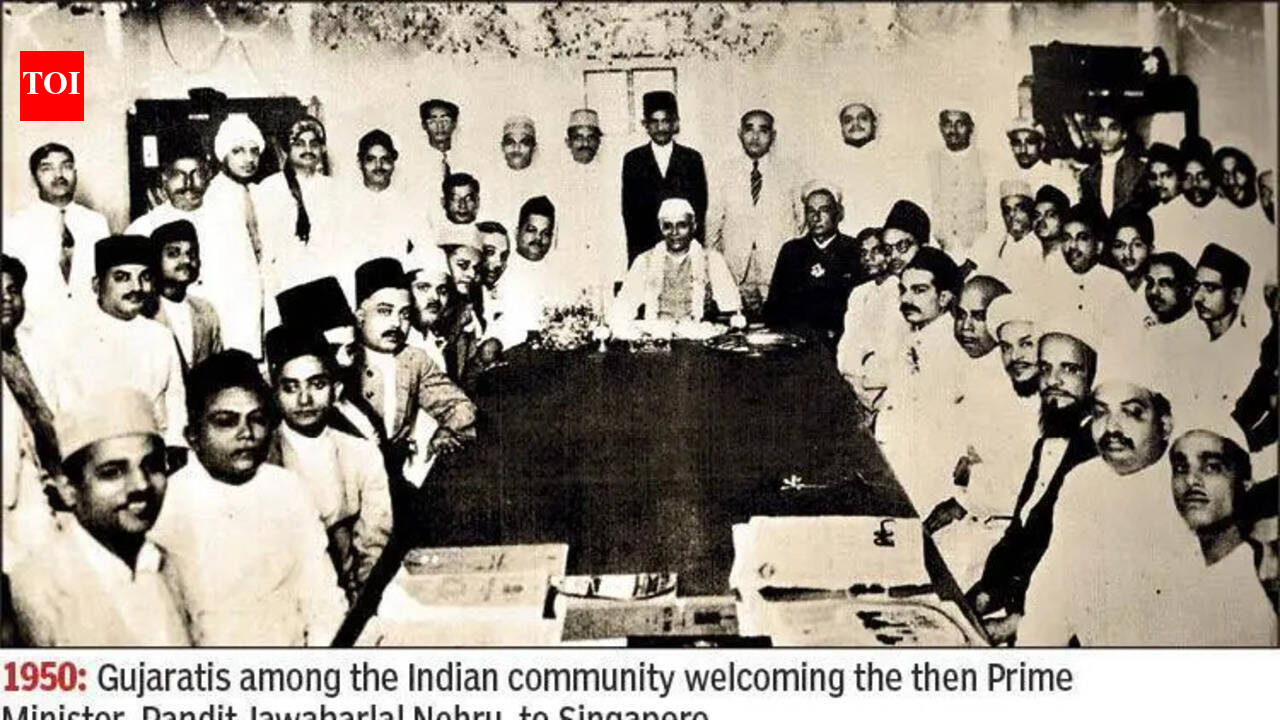
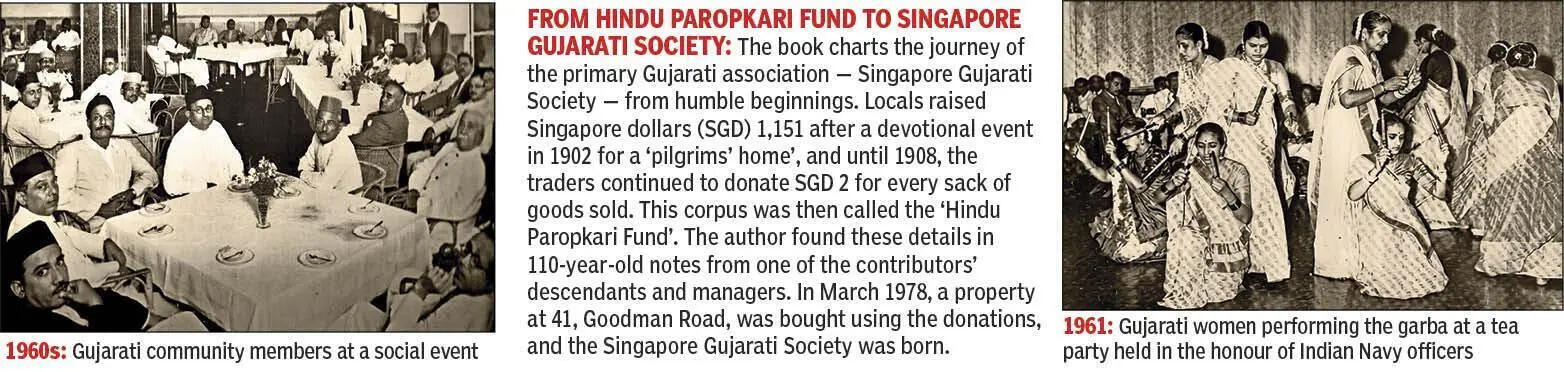
Ahmedabad: It is believed that the first Gujarati-speaking people to set foot in today’s Singapore were traders who accompanied British officer Stamford Raffles, who wrested Singapore from local rulers and laid the foundation of the city-state in 1819. Parul Trivedi-Shah, in her recently published book, “A Legacy in the Lion City: History of the Gujarati Community in Singapore”, writes that these traders were Parsi employees of Jumsetji Jijibhoy & Company, whose ships plied the Maritime Silk Road.As the book, supported by Singapore’s National Heritage Board, carefully chronicles more than 200 years of the community’s footprint on the city-state, what impresses is the tenacity of the early residents who built businesses, weathered the Japanese invasion of the island, and yet maintained a presence not only in business – their primary specialty – but also in the arts and literature, politics and public life, and education and philanthropy, which are closely linked with Singapore’s history.“I met with elderly community members, acquired historical records, correspondence and old documents to piece together the experiences of early residents – for example, Nagaradas Purushottamdas is believed to be the first known Gujarati Hindu to migrate to Singapore in the mid-1880s. His brothers Vadilal and Ojamshi also joined him in 1894,” says Trivedi-Shah.
290526-Gujarati in Singapore3.jpg

200 years of Gujarati heritage in Singapore

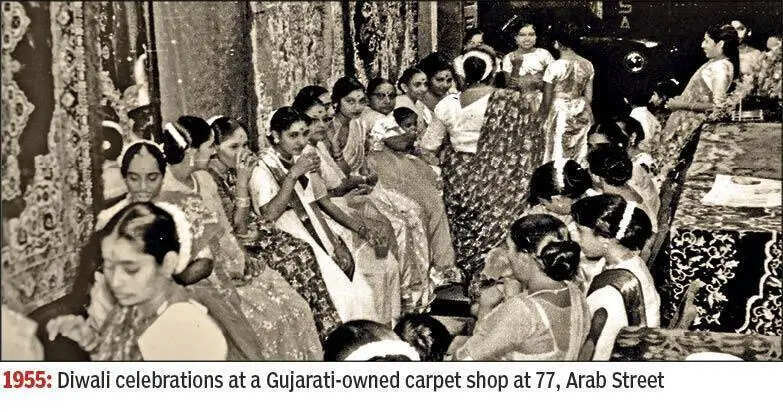
Harakhchand Shah’s handwritten notes of 1894 describe the steamer’s route from the east coast of India to Penang in Malaysia and eventually to Singapore, strategically located on the straits linking the ‘spice islands’ to international maritime trade.History also shows that the enterprise transcended the boundaries of religion or caste: from Gujarati Sunni Muslims who arrived in Singapore in 1837 to Dawoodi Bohras in the 1860s and Banias in the 1880s, every community had a role. The Parsis, Muslims, Hindus and Jains who made the island their home base, and the Gujarati community of 4,000–5,000 members today, are a testament to the vibrancy of the culture, celebrate Diwali and Navratri and actively participate in Singapore’s social and political affairs.

290526-Gujarati in Singapore.jpg

200 years of Gujarati heritage in Singapore

Trivedi-Shah says, “Singapore has seen businessman Neil Parekh and academician Professor Kalyani Mehta nominated to Parliament, in addition to a number of prominent doctors, businessmen, artists and professionals, who are gaining prominence in Singapore society. The Singapore Gujarati Society serves as a hub of activities, including organizing community and social activities, while the Singapore Gujarati School teaches the Gujarati language to children.” “Gujarat is the land of lions, and Singapore is known as the City of Lions. Thus, it is a unique blend of beliefs and identities.”
290526-Gujarati in Singapore4.jpg

200 years of Gujarati heritage in Singapore

Source link

87-year-old Florida man dies after Tesla on Autopilot mode crashes into pond

87-year-old Florida man dies after Tesla on Autopilot mode crashes into pond

A Florida man died when his Tesla left the roadway while operating in Autopilot mode, struck a power box and plunged into a pond.The fatal crash happened near Tampa last month at about 8:10 p.m. The Florida Highway Patrol said an 87-year-old man was driving a Tesla Model Y when the vehicle left the road east of Infinite Drive before entering a nearby pond and becoming completely submerged. Emergency personnel removed both occupants from the vehicle and took them to the hospital. The driver later died from his injuries, while the 75-year-old woman traveling with him survived without any life-threatening injuries. The Tesla was operating with Autopilot at the time of the accident. However, investigators have not said how they determined the system was activated or what caused the vehicle to go off the road.The speed limit in the area is 30 mph. Officials have not said whether speed, a medical emergency, driver actions or the vehicle’s systems played a role in the incident. It is also unclear how long the Tesla remained underwater before rescuers arrived.The identities of the driver and passenger have not been released and the investigation is ongoing.The crash has again drawn attention to Tesla’s driver-assistance technology, which has faced increasing legal and regulatory scrutiny in recent years.In a separate case in Florida, a federal judge recently upheld a $243 million jury verdict related to a 2019 crash involving a Tesla Model S equipped with Autopilot. The crash occurred in Largo and killed 22-year-old Naibel Benavides Leon and seriously injured her boyfriend, Dylan Angulo. Jurors awarded $200 million in punitive damages to the victims and their families.Tesla argued during the trial that the driver was responsible and said it planned to appeal the verdict. The company has consistently stated that Autopilot requires active driver supervision and is not designed to replace human attention behind the wheel. The electric car maker has faced several lawsuits related to its driver-assistance features.Tesla CEO Elon Musk continues to promote the future of autonomous driving technology.“Ten years from now, probably 90% of all distances driven will be driven by AI in a self-driving car. In 10 years it will be quite typical to actually drive your own car,” Musk said during a video appearance at the Samson International Smart Mobility Summit in Tel Aviv last month.

Source link

Iran and UAE expected to attend BRICS cultural conference amid tension in West Asia. india news

Iran and UAE expected to attend BRICS cultural conference amid tensions in West Asia

New Delhi: Amid ongoing tensions in West Asia, Iran and the United Arab Emirates are expected to join fellow BRICS members at the bloc’s second Cultural Working Group meeting in Varanasi on June 4-5. The conference will discuss the theme “Building Resilience, Innovation, Collaboration and Sustainability” with Artificial Intelligence and the repatriation of cultural property among the priority areas for discussion and consensus building.The Varanasi meeting is being considered important to pave the way for the ministerial talks to be held in Bhopal in August, with the Culture Ministry hoping that the members will be able to reach a consensus and give a statement on the thematic areas. The upcoming Working Group meeting assumes significance in the current geopolitical context, as it is taking place in the backdrop of the West Asia crisis. The first BRICS Culture Working Group meeting was held in virtual mode on 29-30 April. After the second meeting of the grouping in Varanasi, the third meeting of the CWG will be held in Bhopal on August 5-6, followed by the BRICS Cultural Fest on August 6-7 and the BRICS Culture Ministers’ Meeting (CMM) on August 7 and 8, also in Bhopal, Culture Secretary Vivek Aggarwal highlighted at a press conference. He also shared the roadmap and priority areas. The deliberations of the 2026 BRICS Culture Working Group are structured around three key thematic priorities: ‘Creative economy, cultural and creative industries, copyright and artificial intelligence’, ‘Cultural heritage protection and return of cultural property’ and ‘Culture, climate and sustainable development’.“These priorities reflect a commitment to innovation, ensuring ethical use of technology in cultural sectors, preserving cultural diversity, advancing heritage conservation and restoration cooperation, and engaging with the post-2030 global sustainable development agenda,” the culture ministry said in a statement.India has consistently played an active role in advancing cultural cooperation within BRICS. The Ministry of Culture hosted the BRICS meetings of Culture Ministers under the Indian chairmanship in Goa in 2016 and New Delhi in 2021, and is again playing a leading role in this strategic role in 2026.The BRICS Culture Working Group, which derives its mandate from the Agreement between the Governments of BRICS member states on cooperation in the field of culture signed in 2015, has over the years expanded cooperation in cultural heritage, creative industries, films, museums, archives and digital cultural ecosystems.BRICS brings together Brazil, Russia, India, China, South Africa, Egypt, Ethiopia, Iran, Saudi Arabia, the United Arab Emirates and Indonesia as full members, with 10 partner countries joining in 2025. The Group represents a platform for multilateral cooperation across the political and security, economic and financial, and cultural and people-to-people pillars, collectively advancing a more inclusive and equitable international order.

Source link

Around 150 players have become free agents amid uncertainty over the league due to the ISL contract crisis.

Nearly 150 Indian Super League players, including more than 20 currently or recently in the national team, have had their contracts terminated with various clubs, with their futures in uncertainty due to the disruption in the top tier of the country’s domestic structure.

The contracts of these players expired on Sunday and there is uncertainty everywhere as the tussle continues between the All India Football Federation (AIFF) and the clubs over the future of the ISL next season.

After the Master Rights Agreement (MRA) between the AIFF and its former commercial partner FSDL expired last December, the 2025–26 season was delayed and each of the 14 teams played a round-robin league instead of a home and away format.

Players are now free agents and can be signed by any team. AIFF has set the starting date for registration of players by various clubs from June 12 to August 31.

The players whose contracts expired on Sunday include India captain Sandesh Jhingan (FC Goa) and his national team defensive partner Rahul Bheke (Bengaluru FC).

Mohun Bagan super giants, who finished runners-up in the recently concluded season, are set to ask the AIFF about the next ISL season, whether it will be a full-fledged one or a smaller league like 2025-26. They will decide on the budget for the new season and sign players accordingly.

“We will ask the AIFF how they will run the ISL and make their budget accordingly,” a club source told PTI on condition of anonymity.

MBSG are set to release foreign players Tom Aldred, Dimitri Petratos and Jason Cummings.

A former official said the players would suffer the most, although clubs would also be affected financially.

“This is a serious situation in the ISL and Indian football. The players will suffer the most. Since they are free agents, their negotiating power is less and clubs can offer lower fees for them when they sign contracts. Under normal circumstances, players have bargaining power, but that may not be the case in this current situation,” the official said.

“Players are at a disadvantage and are likely to be exploited. In the case of many players, clubs will not even receive transfer fees, so they will become financially poorer.”

The official said that many players from the north-eastern part of the country, especially Manipur and Mizoram, will suffer due to the uncertainty in the ISL.

“There are a lot of players from the North-East in ISL clubs. These players have come out of their states to play for big clubs and in the ISL and to earn money to support their families back home. So, the uncertainty in getting a club to play will weigh heavily on them.”

Regarding a new commercial partner for the ISL, Genius Sports had emerged as the highest bidder in March, promising Rs 2,129 crore annually for the next 15+5 years.

But ISL clubs have proposed a different model. They want the highest bidder (Genius Sports) to remain only as the league’s data and technology partner.

The clubs want to keep 90 percent of the “economic interest in the league structure”, and the AIFF the rest.

A meeting between ISL clubs and AIFF top officials in Kolkata last month had failed to break the deadlock.

During the AIFF Special General Body meeting in Kolkata last month, it was decided that the Executive Committee will have the power to discuss and deliberate on the new MRA.

Thus, the final decision on the new commercial partner will have to be taken by the AIFF General Body later.

– ends

published by:

-Saurabh Kumar

Published on:

June 1, 2026 23:38 IST

Source link

Two injured in clash over fishing rights in Ganga barrage area. kanpur news

Two injured in clash over fishing rights in Ganga barrage area

Times News NetworkKanpur: A clash broke out between two groups over fishing rights in the Ganga Barrage area under Kohana police station area, in which two cousins ​​were seriously injured. The accused allegedly opened fire and brandished swords to dominate the area, although official confirmation regarding the firing is yet to be received. Police have arrested five accused in this case.The incident took place at gate number 10 of the barrage, where Shubham alias Maka, a member of the fishing mafia and a resident of Machhwa Nagar in Old Kanpur, said that he had gone there with his cousin on Monday morning. Coronation To the fish. Meanwhile, some people from Rampur village reached the spot. They reportedly objected to the fishing, began abusing both the men and claiming exclusive rights to fish in the area.The accused allegedly threatened to kill him if he returned there again for fishing. When both of them protested, the accused attacked them with rods, sticks and sharp weapons. Shubham and Abhishek were seriously injured in the attack. According to eyewitnesses, during the dispute, some accused were waving swords and weapons in an attempt to intimidate and spread panic.Hearing the noise and fighting, nearby villagers reached the spot. Seeing themselves surrounded, the accused opened fire in the air and fled from the spot. The incident spread panic in the area. On receiving information, police reached the spot and sent the injured to the hospital for treatment. A video of the incident went viral on social media.

Source link

Quote of the Day by Sigmund Freud: “The virtuous man is as satisfied in dreaming as the wicked man is in real life.” |

Quote of the Day by Sigmund Freud:
Sigmund Freud (Credit: Bateman/Getty Images)

Freud’s quotes continue to appear in online feeds, quote pages, and short comment columns, often removed from any comprehensive explanation. It travels well because it’s small and a little fussy. There is no clear moral compass within it, just a comparison that seems incomplete. This line is usually presented as a reflection on virtue and behavior, although it sits more comfortably in a psychological discussion than in moral storytelling. Freud’s work often deals with the ideas of hidden desire and unconscious thought, so readers connect this statement to those broader themes. Nevertheless, the quote itself does not present any definite conclusion. It leaves a gap between imagination and action and asks the reader, without saying so directly, to think about what separates the two in actual human behavior.

Today’s Quote by Sigmund Freud

“A virtuous person is satisfied by dreaming what an evil person does in real life.”

What is the meaning behind the quote Sigmund Freud

The meaning of the quote is in a place that is not entirely moral and not entirely psychological. This suggests that people who are seen as virtuous are not necessarily devoid of difficult or deep thoughts. Instead, those thoughts may reside inside the mind, where they are experienced but not acted upon. In contrast, the so-called evil person is described through action, where the same inner impulses are expressed in the real world.Reading this shifts the focus away from the label and toward the process. What matters is not just what appears in the mind, but what survives the internal filtering that occurs before behavior occurs. That filtering is rarely simple. It is shaped by fear of consequences, personal boundaries, social rules, and sometimes just timing. Freud’s framing, at least as this quote is commonly understood, sits closer to that messy place where thought is still forming and has not yet settled into action or sobriety.It also has a sober implication. The imagination becomes a holding field for those impulses that do not materialize. This is not presented as good or bad, merely as how the mind manages itself when conflicting thoughts appear at the same time.

Inner life and behavior run on different tracks

Human behavior does not follow a straight path from thought to action. It shifts, pauses, redirects and sometimes stops altogether. An idea can appear and disappear without leaving any trace in practice. In other cases, it may persist in the mind for a longer period of time and be worked upon internally before it goes away on its own.Freud’s psychological approach often focused on this uneven movement within the mind. This quote reflects the feeling of disconnect between what is experienced internally and what is ultimately visible externally. People can have thoughts that never become actions, and those thoughts don’t always define what they do in the real world.This difference is not unusual. This is part of normal mental life. Most decisions are not immediate reflections of thoughts but are the results of internal interactions that are not fully visible even to the person experiencing them. The quote sits where behavior is only the final stage of a long internal process that remains mostly hidden.

Imagination as internal processing space

Imagination plays a calming role in how people deal with internal impulses. This allows ideas to exist without needing to become actual work. Freud’s broader ideas about the mind often considered imagination and dreaming as part of normal psychological processing rather than as something distinct or unusual.Imagination can manifest in small and mundane ways in everyday life. Responses to a situation may come up mentally before they are spoken or may not be spoken at all. A scenario may be replayed in the mind without any intention of acting on it. These moments are brief and often forgotten, but they are part of how the mind handles pressure, curiosity, or conflict.In that sense, “dreaming” in the quote does not refer only to sleep. It points to a vast inner space where thoughts can exist safely without any consequences. That space becomes important when certain impulses cannot or should not be translated into action in the outside world.

Moral labels lose clarity in psychological terms

When the quote is viewed through a psychological lens, moral categories begin to seem less stable. It becomes difficult to clearly differentiate the idea of ​​a virtuous person and an evil person. Both are said to have inner experiences. The difference is what happens next.Freud’s work often avoided simple moral sorting and instead focused on variation in internal processing. People differ in how they manage impulses, not necessarily whether those impulses are present or not. Some thoughts are assimilated, some are redirected and some become actions. That limitation makes behavior more situational than fixed.This does not remove moral judgment, but rather complicates it. Behavior is still visible and accountable, yet it may not represent the entire internal picture. The statement sits without resolving that tension.

Freud’s broader idea of ​​unconscious influence

Freud’s psychological theory is often associated with the idea that not all mental activity is conscious. The unconscious part of the mind contains material that is not directly accessible but still shapes reactions, emotions, and decisions in indirect ways.In that context, the quote can be read as pointing to shared internal content between individuals, even if it appears different in practice. This does not suggest equality, but it does suggest that the inner life is broader than the outer action.This broader framework makes behavior look less like a single decision point and more like the result of multiple internal pressures that are not always visible. Thoughts, memories, emotional reactions, and learned patterns all contribute to how an action is ultimately formed, or not formed at all.

Modern life and the divide between private thought and the public self

In modern settings, it is easy to see the difference between inner experience and outer expression. People present themselves in controlled ways in professional environments, social interactions, and digital spaces. What is shown is often filtered and adjusted.Also, internal thought remains less structured. It can change rapidly and does not follow the same rules of public behavior. This creates a disconnect between how a person appears and what he personally experiences.Freud’s observation fits this reality because it does not assume that external behavior completely reflects internal life. Instead, it suggests that internal processes are always larger than what is visible. Modern context is not needed to understand the quote, but modern life makes alienation more visible in everyday situations.

The quote is being misinterpreted as a simple moral judgment

The quote is often treated as a straightforward moral comparison, but that reading is limited. Freud’s comprehensive approach to psychology did not limit people into fixed moral categories. It focuses more on internal variation and psychological structure.Another common misconception is considering imagination as intention. From a psychological point of view, imagining something does not automatically lead to a desire to act. Mental activity may be experimental, symbolic, or temporary, without being linked to behavior.It is also important that the quote not be read as a denial of responsibility. Actions still matter because they affect others in real and measurable ways. Citation is more about what exists before the action, not about removing the consequences from the action.

Other famous quotes from Sigmund Freud

  • “Latent emotions do not die. They are buried alive and come out later in different ways.”
  • “Dreams are often the royal road to the unconscious.”
  • “We are never so helpless in the face of suffering as in the case of love.”
  • “Most people don’t really want freedom because freedom involves responsibility.”
  • “Looking back, struggles often turn out to be some of the most formative periods of life.”

Source link

Fuel-efficiency test: ‘AC-on, AC-off’ mileage test mandatory for new cars from next April | india news

'AC-on, AC-off' mileage test mandatory for new cars from next April

New Delhi: From next April, all car manufacturers will be required to conduct fuel-efficiency and mileage tests for new vehicle models in two conditions: with the air conditioning system on and with it off, according to a notification issued by the road transport ministry on Sunday.TOI has learned that for existing models, manufacturers may be given a few additional months to comply with the new testing requirements.The move aims to provide more realistic and accurate mileage figures to customers, thereby improving transparency, helping buyers make better purchasing decisions. The testing criteria will be applicable to both internal combustion engine (ICE) vehicles and electric vehicles (EVs). Currently, car manufacturers in India declare fuel-efficiency figures based on tests conducted with the AC system off.Earlier, the ministry had proposed to implement the new testing regime from October this year. However, after consultation with the automobile industry, revised timelines for the new models have now been notified. Industry insiders said manufacturers have asked for additional time for existing models, and timelines for those vehicles are expected to be announced soon.After conducting the test, car manufacturers and importers will have to provide details of mileage with AC on and without AC in the vehicles’ user manual and on their website.Carmakers were citing European norms where only mileage without AC is taken into account, but Indian conditions are different and this has prompted the government to bring in new norms.

Source link

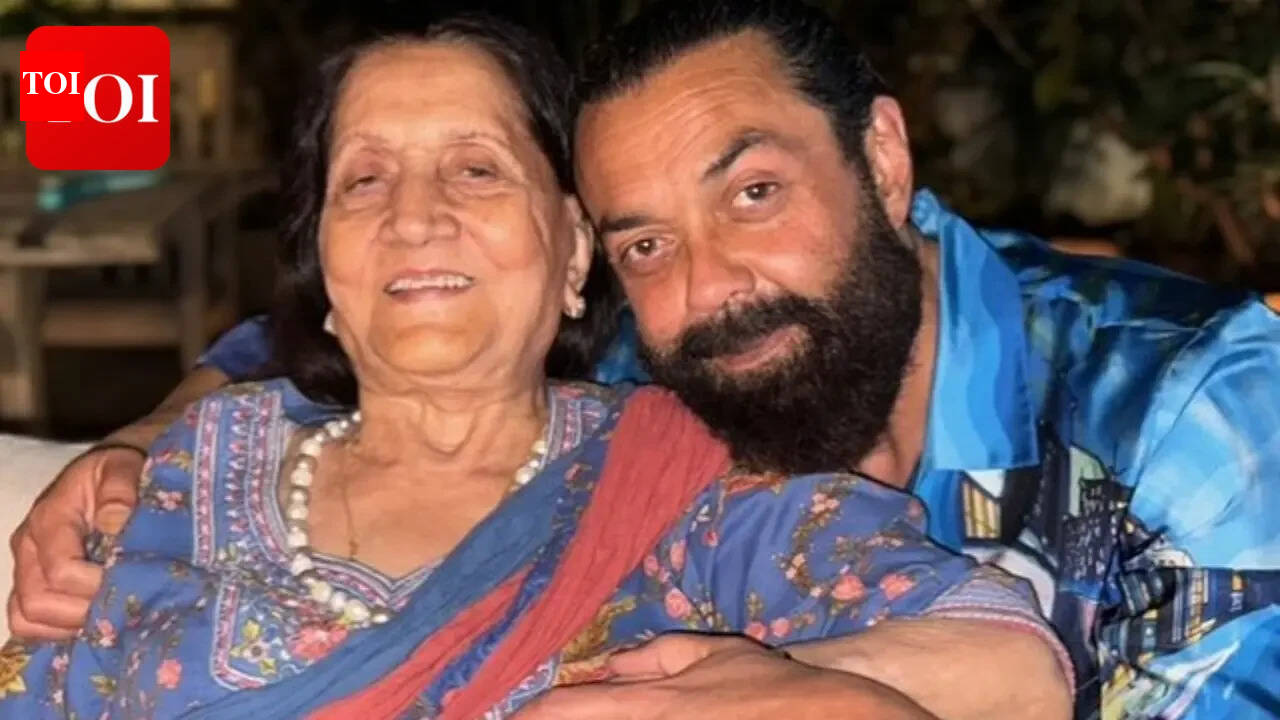
Bobby Deol recalls being beaten by mother Prakash Kaur for speaking Hindi in English-medium school: ‘Chappals were her weapon’

Bobby Deol recalls being beaten by mother Prakash Kaur for speaking Hindi in English-medium school: 'Chappals were her weapon'

Bobby Deol recently opened up about his childhood and revealed how his mother Prakash Kaur used to discipline him for not taking his studies seriously. Appearing in AAP Ki Adalat, Bobby shared several amusing memories of his school days, admitting that he was never fond of attending classes and often got into trouble at home because of it.Bobby and his elder brother, Sunny Deol, have often spoken about their mother’s strength and dedication in raising a family with late superstar Dharmendra. While she was a caring parent, Bobby revealed that she was also the disciplinarian at home.

‘I was beaten a lot for not going to school’

During the conversation, host Rajat Sharma commented that Bobby was reportedly good in studies. The actor immediately rejected this claim.“Absolutely not,” said Bobby.He further said, “I used to be beaten a lot for not going to school. In fact, I did not like going to school. And my problem was that when I was young, I mostly spoke in Hindi. Since the school was English medium, my mother used to get complaints from the school that if your son talks in Hindi, then you should put him in Hindi medium.”The actor said that complaints at school often led to scolding at home. However, eventually he worked hard to improve his English and became so comfortable with the language that he now thinks mostly in English.

‘My mother used to take me to school beating me’

Recalling one particularly memorable incident, Bobby shared how his mother would sometimes discipline him on the way to school while he was driving him.“So sometimes, early in the morning, fortunately my house was nearby, so my mother would beat me and take me to school,” he said.The actor also recalled an encounter he had with his school principal, which made things worse for him.“One day the principal was standing there, he looked at my mother and said, ‘Your son doesn’t want to study, take him back right now.’ I immediately realized that she shouldn’t have said that, because she took me back home, beating me again the whole way.’“She mostly used to beat me with slippers, it was her perfect weapon,” Bobby said with a laugh.

Deol family and Bobby’s upcoming films

Dharmendra and Prakash Kaur married in 1954 and have four children – Sunny Deol, Bobby Deol, Vijeta Deol and Ajita Deol. Later Dharmendra married Hema Malini in 1980.On the work front, Bobby will next be seen in Bandar directed by Anurag Kashyap. The action thriller is scheduled to release in theaters on June 5. He is also a part of Alpha, which stars Alia Bhatt and Sharvari in the lead roles.

Source link

Asylum rejection without interview? Trump administration moving to speed up deportation cases under new plan

Asylum rejection without interview? Trump administration moving to speed up deportation cases under new plan

According to a report cited by CBS News, the Trump administration is preparing a new immigration policy that could reject asylum seekers without even an interview.The proposed rule was developed by the Department of Homeland Security (DHS). Under the plan, U.S. Citizenship and Immigration Services (USCIS) officials will be allowed to deny applications if they believe the claims were filed more than a year after the applicant entered the US. This would circumvent the long-standing practice of conducting interviews in almost all asylum cases before making a decision.Applicants whose cases are rejected under this process will later be deported by immigration courts, where they must argue their case in a formal legal setting.US immigration law generally prohibits asylum applications filed more than one year after entry, although there are some exceptions. These included serious medical issues, ineffective legal advice, or applicants who were minors traveling alone. The proposed regulation would still allow officers to pursue cases for interview if they feel an exception applies.However, the main change is that officers will be able to rely solely on paperwork to reject cases that fall outside the legal time limits, rather than interviewing applicants as part of the initial review.A USCIS spokesperson said the administration is considering various ways to deal with the growing backlog of asylum cases.“This will allow USCIS to avoid wasting time on asylum applications it would otherwise refer to immigration proceedings and will allow illegal aliens to have their claims heard by a judge,” the spokesperson said.The statement also said the backlog was a result of what it described as “the Biden administration’s dangerous open border policies” and that the government was reviewing options to address the more than one million pending claims.The proposal has raised concerns among immigration advocates, who warn it could push people into deportation proceedings without being given a fair chance to explain delays in filing their claims.Conchita Cruz, co-executive director of the Asylum Seeker Advocacy Project, said there are often legitimate reasons why asylum seekers miss the one-year deadline.“The government will change the rules for immigrants who have often been going through a complex immigration process for many years,” he said.Under US law, most people on US soil can request asylum, even if they entered the country illegally. However, they must prove that they are fleeing persecution based on factors such as race, religion, nationality, political opinion or membership of a particular social group. People who are granted asylum can stay in the US permanently, while people who are denied asylum are deported.The asylum system has faced increasing pressure in recent years, with government data showing that USCIS had a backlog of 1.5 million applications as of last year. Immigration courts under the Justice Department are also dealing with a backlog of about 3.3 million cases, including 2.3 million asylum-related claims. Delays could encourage immigrants who may not be eligible for protection to remain in the country until their cases are processed.The Trump administration has also made agreements with other countries to accept deported asylum seekers, including the “safe third country” arrangement, which requires applicants to seek protection outside the US, sometimes in countries with controversial human rights records.The administration has previously put a hold on asylum applications under specific circumstances, including from an Afghan asylum seeker linked to the attack on two National Guard soldiers in Washington, DC, last year. That ban was later eased but will continue to apply to applicants from the 39 countries listed under the travel ban proclamation.

Source link

‘Hard work, not sycophancy, will help Congress reconnect with people at the grassroots’: Rahul Gandhi tells party leaders. india news

'Hard work, not sycophancy, will help Congress reconnect with people at the grassroots': Rahul Gandhi tells party leaders

New Delhi: In an effort to revive the organizational strength of Congress, party leaders Rahul Gandhi Party sources on Monday told district presidents that hard work and direct public engagement rather than sycophancy will help the party grow, as they urged party leaders to reconnect with people at the grassroots level.Addressing the concluding session of the 10-day training camp of Congress district presidents of Rajasthan and Delhi in Pushkar, Gandhi praised mutual coordination. Rajasthan Congress Congress leaders described the working relationship between the State Congress Committee leadership and the opposition leader as a positive example for the party, PTI reported.He described Rajasthan Congress chief Govind Dotasara and leader of opposition in the state assembly Tikaram Juli as the “Jai-Viru duo”.Internal discord was seen in the Congress camp in Rajasthan Ashok Gehlot And Sachin Pilot Before his defeat in the 2023 assembly elections.The leader of opposition in the Lok Sabha said party workers should remain connected to public issues and stand with the poor and marginalized people in cases of injustice.Sources said he spent more than five hours in the camp and held dialogue sessions on organizational strength, teamwork, ideology and public outreach.Gandhi urged the district presidents not to limit themselves to organizational roles but to have direct contact with the citizens. He said that it is necessary to restore public confidence to strengthen the Congress and increase its support base.He said growth within the party should be based on commitment and service rather than personal loyalty to senior leaders. Gandhi also called for a focus on issue-based politics and strong engagement with the people, which he described as the BJP’s story.Rajasthan Congress President Govind Dotasara gave a presentation on organizational work and efforts to strengthen the party at the grassroots level.Leader of Opposition Tikaram Julie said that the 10-day camp under the “Organization Creation Campaign” will infuse new energy into the organization in Rajasthan.District presidents and senior Congress leaders from Rajasthan and Delhi participated in the training camp.

Source link