A year later, the line remains dangerously thin.
There has been a little change in Pahalgam Civil Hospital. Medical care is still conducted within five cramped rooms. Doctors consult outpatients while paramedics confine themselves to X-rays and ECGs. Outside, three ambulances – an increase of exactly one vehicle since the massacre – are parked on a strewn lawn. When it rains, the ground turns into mud, blocking the entrance.
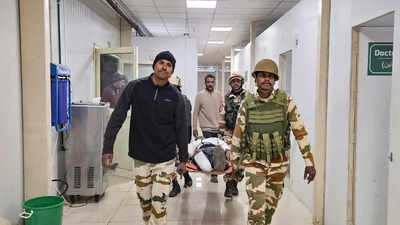
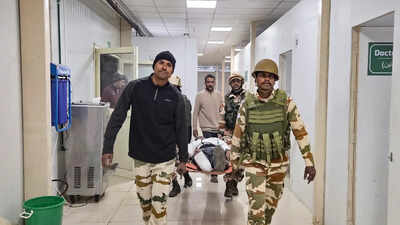
The tragedy forced serious reforms. As reinforcements arrived from across South Kashmir, staff pulled the beds into a hollow, unfinished three-storey building next door. They used a hall shell to pile the dead. Today, that building remains a concrete structure, held up by bureaucratic gridlock, while the primary clinic struggles to breathe.
The limitations of the facility belie the scale of its responsibility. Pahalgam is not a sleepy village. It is a global destination and spiritual gateway. In 2024, Pahalgam hosted 11.9 lakh tourists and more than 5 lakh Amarnath pilgrims – many of whom required treatment for high-altitude illnesses. The hospital also serves 2 lakh residents of the area.
A 2021 plan to upgrade the site to a 50-bed sub-district hospital exists only on paper. Sanctioned staff posts are lying vacant. The skeleton team – a surgeon, an anesthetist, a gynecologist, and seven paramedics – regularly referred critically ill people to the Government Medical College in Anantnag, miles away.
Delay is a game of finger pointing. Health officials blame the Roads and Buildings (R&B) department for the slow pace of construction. R&B officials claim that they are facing a loss of approximately Rs 4.3 crore. “We’ve added another floor,” said an R&B executive. “Construction of the lift and internal work is pending. If the health department releases funds, we can commission the building within six months.”
As another tourist season approaches and the Amarnath Yatra approaches, Pahalgam’s primary protection against tragedy remains five rooms and a promise. The hall that once held 26 bodies is still empty, waiting for paint and electricity that never came. For now, the urgency of that April evening has been replaced by the slow rot of neglect.