
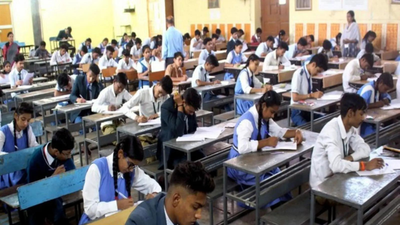

CBSE to bring in 3-language rule in Class 9 from July; no board exams for class 3
New Delhi: CBSE has decided to implement the new three-language rule for class IX from the session 2026-27. From July 1, 2026, under the National Education Policy (NEP) 2020 and National Curriculum Framework 2023, all Class 9 students will have to study three languages, of which “at least two are native Indian languages”.CBSE, in its May 15 circular, said students choosing a foreign language “can do so as a third language only if the other two languages are native Indian languages, or as an additional fourth language”.
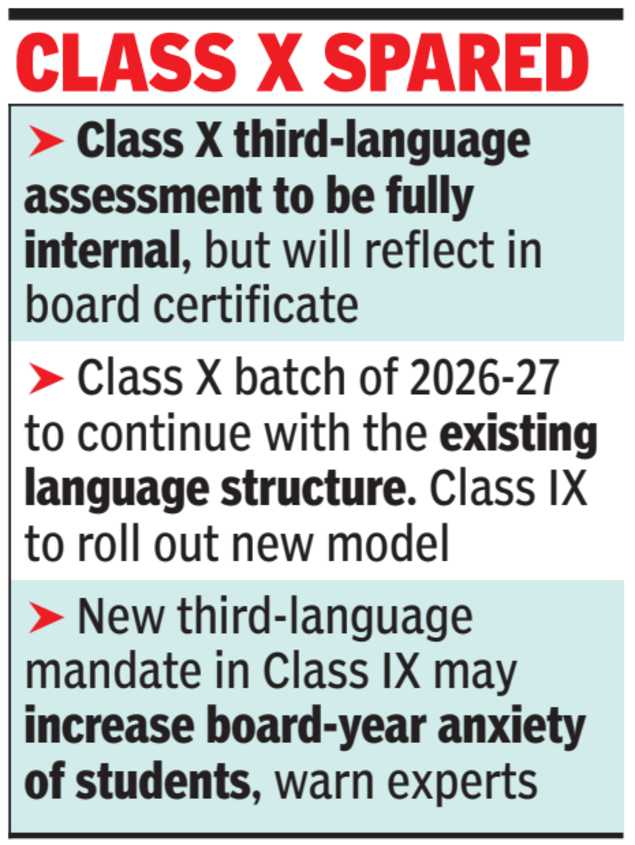
The board also announced relief measures for students by removing formal board exams for third language.“No board examination will be conducted for R3 (third language) at the Class 10 level. All assessments for R3 will be entirely school-based and internal,” the circular said.However, the performance “shall be duly reflected in the CBSE certificate.” CBSE said the revised plan follows a “transitional approach” as the academic session has already started in April 2026. The current Class X batch in 2026-27 will continue under the earlier language structure extended from Class IX onwards.Former principal and policy analyst Ashok Pandey said the emphasis on multilingualism was in line with the NE approach, but he cautioned that introducing a third language requirement in Class IX at this stage could create anxiety among students already entering board years. “Board years demand stability and confidence. Such reforms are implemented gradually and group-wise, giving adequate preparation time to schools, teachers and learners,” he said.Pandey said many CBSE schools have so far followed a language structure combining foreign languages like French, German or Spanish along with English, Hindi or the regional language. “Educational changes are successful through thoughtful change management, not just on the strength of good intentions,” he said, adding that schools are still dealing with teacher availability, timetable restructuring, curriculum alignment and assessment models even in classes VI to VIII.