
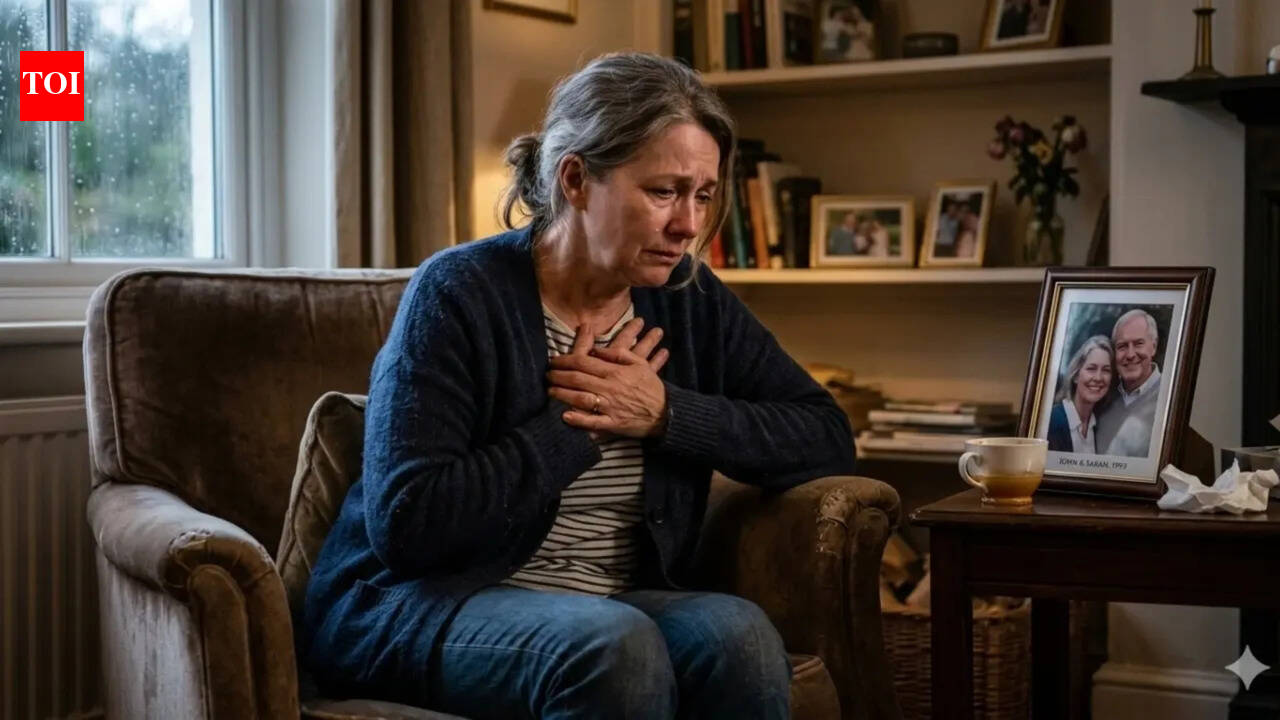

Can ‘Broken Heart Syndrome’ be cured? The woman who contracted the disease after her mother’s death took part in the trial of a new drug.
People have always said that heartbreak really hurts. Poets like this idea. Movies depend on it. Doctors used to roll their eyes and call it rhetoric. But here’s the big deal: Heartbreak as learned by modern medicine can actually break your heart, at least for some people.This year, researchers in the UK began the first large drug trial for the bizarre and devastating “broken heart syndrome” (real medical name Takotsubo cardiomyopathy).
Woman suffering from ‘broken heart’ syndrome: What happened?
Brenda Young, a 57-year-old social worker from Aberdeenshire, Scotland, had her life changed last November when she felt an “intense, massive pain in the middle of my chest” just minutes after watching her mother die.“I just remember thinking, ‘This can’t be happening, not today,'” she told scientists at the University of Aberdeen, as reported by People. “I knew something was really wrong.”That terrible pain in the chest took him to the hospital. At first, doctors thought it was a classic heart attack. But his tests told a different story.She’s been diagnosed with Takotsubo cardiomyopathy, a rare condition where major emotional or physical stress basically causes your heart to stop. Instead of the artery being blocked, the heart muscle itself suddenly weakens. Brenda is now part of a long, complex study underway in several countries, which may eventually uncover a real treatment. For heart doctors, this is a big deal: After so many years, no one has understood why it happens or how to fix it.
What ‘broken heart syndrome ‘?
If you want science: In the ’90s, Japanese doctors named it octopus tentacles (“takotsubo”) because of the strange way the heart changes shape during an attack. This phenomenon is usually caused by stress – losing a loved one, divorce, scary health news, accidents, money problems, even big surprises (good or bad). Sometimes, if pure joy triggers it, people call it “happy heart syndrome.”The theory is that your stress hormones (like adrenaline) flood your system, and the heart can’t handle the surge. It stops pumping properly — thinking fast, severe chest pain, trouble breathing, dizziness — symptoms that look exactly like a heart attack. Many people go to emergency care because, for all they know, it could actually be a heart attack.But with broken heart syndrome, the arteries are not blocked. The muscles simply wear out, usually bouncing back in a week or two. Still, doctors warn that it’s not as harmless as it seems. Complications can include heart failure, irregular heartbeat, blood clots, and, on rare occasions, it can be fatal.Strangely it is women who are most affected by this; About 90% of diagnosed cases occur in women over the age of 50. The thinking is that hormonal changes probably play a big role, but scientists are still trying to figure out why.Currently, there is no direct treatment for broken heart syndrome. Doctors do what they can: beta blockers, blood thinners, things you would use for any other type of heart problem, and just try to help people recover. But an actual, proven treatment? He is still missing.
Inside the unprecedented test
According to The Guardian and the BBC, this new study is looking to see if a targeted therapy can do what no one else has done so far: control inflammation, help the heart heal, and prevent people from contracting the syndrome again. Researchers say it was ignored for too long, because people usually recover quickly. But now, we know that in some patients the symptoms persist for months, even years: fatigue, anxiety, their heart is actually not working properly. Sometimes it also comes back.What is really being called attention to is the mind-body connection. Emotional Trauma and Your Heart: It is impossible to suddenly ignore the relationship. Chronic stress already increases the risk of heart disease, stroke and inflammation. Takotsubo is like the intense end of that: pure emotion that causes real, lasting change of heart in a matter of hours.In Brenda’s case, sudden grief triggered a chemical meltdown. For some people, losing someone causes a storm of stress hormones so intense that it can instantly disrupt heart function.But one of the hardest things is that most patients end up feeling discouraged. People still don’t fully believe that sadness alone can land you in the hospital. The symptoms seem to be “all in your mind” – except they’re not. Doctors can actually see the damage from scans and blood tests. The “broken heart” syndrome is no longer a poetic metaphor. This is a medical fact.
the way forward
This month, researchers at the university announced the start of a seven-year study funded by the National Institute for Health and Care Research (NIHR).Scientists will assess whether a class of drugs that relax blood vessels, called renin-angiotensin system (RAS) inhibitors, could be an effective long-term course of treatment for broken heart syndrome.Young is now set to become one of about 1,000 takotsubo patients from 40 hospitals taking part in the world’s first clinical trial for broken heart syndrome with the University of Aberdeen in Scotland.Meanwhile, Professor Dana Dawson, chair of cardiovascular medicine at the University of Aberdeen, is leading the study.Researchers now hope that testing the new drug may eventually help change understanding of the syndrome from an unusual medical curiosity to a treatable heart disorder.That’s why this trial is a big deal. Scientists want to take it from weird curiosity to a treatable, real thing — another way to remind us that what happens inside your head can change your body in ways we’re just beginning to understand.