

UP ranks second in electricity consumption amid summer, but is facing interruption in supply. india news
Lucknow: As summer temperatures rise, Uttar Pradesh has emerged as the country’s second highest power consuming state after Maharashtra, highlighting both the scale of demand and the strain on power infrastructure. However, the increase in consumption has also been accompanied by widespread curtailments, particularly due to shutdowns at several thermal power plants, which have disrupted supplies in rural areas across the state.The situation was reviewed in a meeting chaired by Chief Minister Yogi Adityanath on Sunday.A presentation by Uttar Pradesh Power Corporation Limited (UPPCL) revealed that between May 20 and May 22, the state consistently recorded the second highest power demand in the country. On May 22, Uttar Pradesh met a peak demand of 30,476 megawatts (MW), lagging behind Maharashtra’s 31,103 MW but ahead of major states like Gujarat, Tamil Nadu and Rajasthan. Officials said the highest demand typically occurs in June, suggesting the power system could face even greater pressure in the coming weeks.
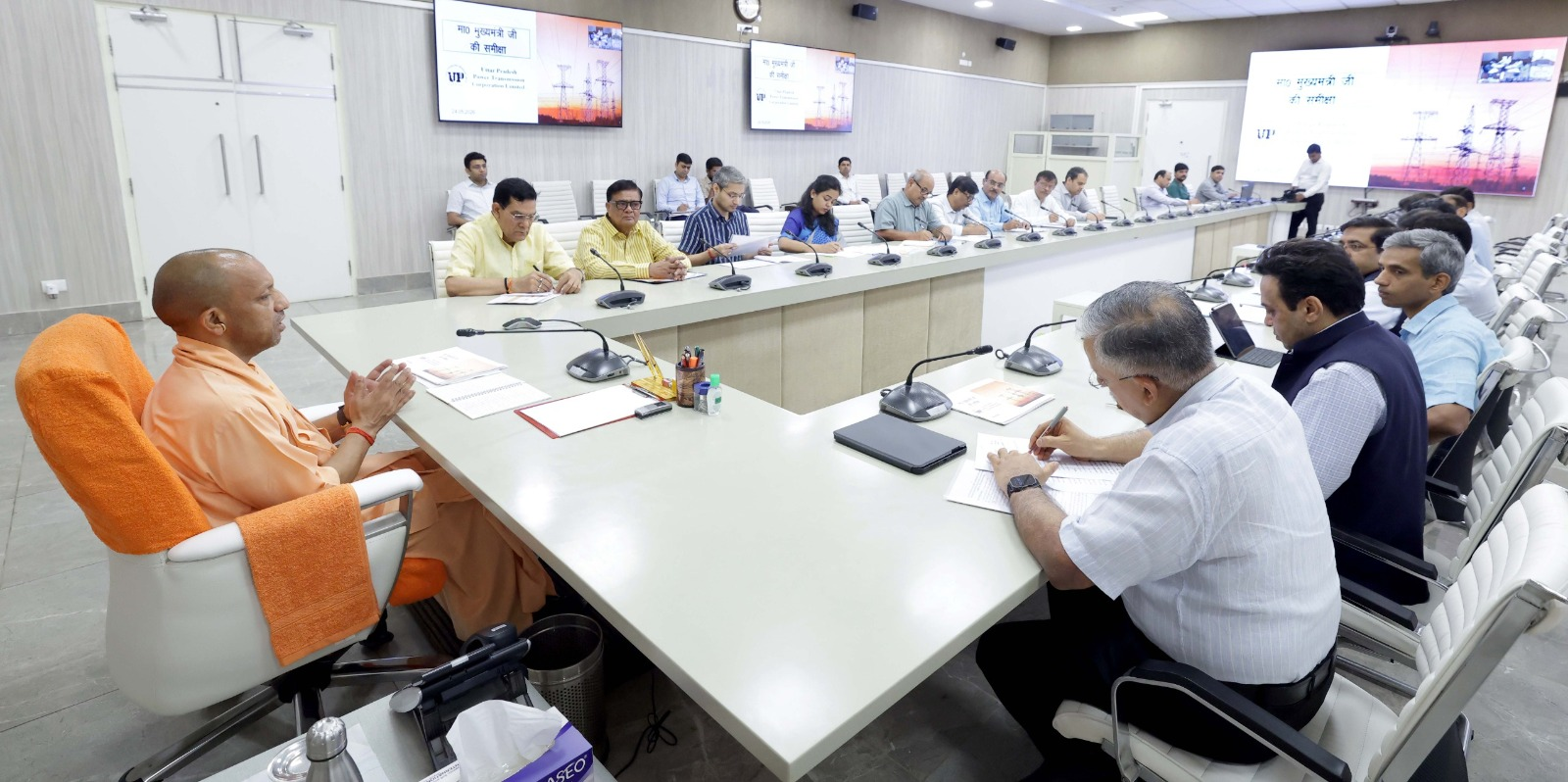
A meeting was held under the chairmanship of Chief Minister Yogi Adityanath on Sunday to discuss the situation of demand and supply of electricity.
Despite meeting high demand levels, the state has struggled to ensure consistent supply. The power generation capacity was adversely affected by curtailments ranging from 2,638 MW to 4,529 MW per day between May 15 and May 22, the report said. The most severe disruption occurred on 20 May, when the outage affected 4,529 MW of power, causing a power outage of about six hours and 48 minutes in rural areas. Even on May 22, supply to rural consumers was disrupted for about four hours.UPPCL attributed the crisis primarily to the closure of 11 major thermal power stations during May. Many major units remained inactive for extended periods.The Ghatampur thermal power station with a capacity of 660 MW was closed for 18 days, while the Lalitpur plant of the same capacity was closed for 11 days. JSW-owned KSK Mahanadi plant (1,000 MW) was unavailable for 10 days. Other affected units include Obra B (200 MW) for about 9.5 days, Anpara D (500 MW), Obra C (660 MW) for eight days, Anpara TPS (201 MW) and Jawaharpur TPS (660 MW) for shorter periods. These prolonged outages significantly reduced the availability of electricity at times of peak demand.Reacting to the situation, Uttar Pradesh State Electricity Consumers Council president and Central Advisory Committee member Avadhesh Kumar Verma welcomed the Chief Minister’s intervention but accused power corporation officials of negligence in thermal plant maintenance, coal management and system expansion. He demanded immediate restoration of all closed units along with a concrete long-term plan to strengthen the power infrastructure of the state.Verma alleged that the state’s transmission and generation capacity has not expanded in proportion to the growing demand and claimed that there is now a mismatch of more than 20 million kilowatts between demand and available system capacity. He also expressed concern over the shortage of manpower due to retrenchment of contractual employees in the power sector.The report further details how the combination of rising temperatures and plant outages has increased the strain on the electricity network.To manage the shortage, officials informed the Chief Minister that Uttar Pradesh has entered into power banking arrangements with 12 states and agencies. Under these agreements, the state has secured 4,663 million units (MU) of power assistance, of which Karnataka’s contribution is 805 MU, Jammu and Kashmir’s 762 MU and Tamil Nadu’s 725 MU.However, officials said such support has declined compared to last summer, with many states opting to sell power on power exchanges to take advantage of higher demand and prices. To bridge the immediate gap, the state is also pursuing short-term procurement and direct negotiations with other sectors to arrange additional 700 to 1,000 MW during peak hours.