
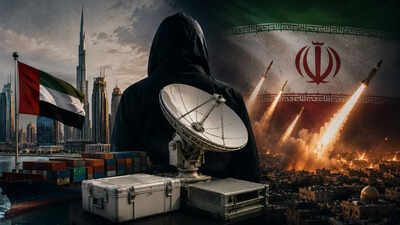

Iran secretly bought Chinese satellite technology through UAE – then attacked Abu Dhabi: report
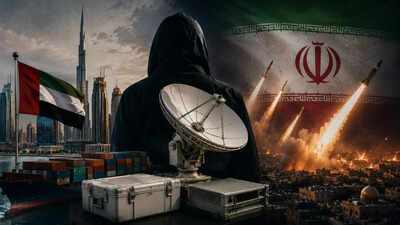
Iran’s elite Revolutionary Guards used a UAE-based procurement network to secretly acquire advanced Chinese satellite communications equipment linked to Tehran’s drone and missile program, according to leaked commercial and shipping records reviewed by the Financial Times.The revelations reveal how a company operating out of the United Arab Emirates helped supply sensitive communications technology to the same branch of the Islamic Revolutionary Guard Corps that later launched a massive bombardment of the Gulf state with drones and missiles during Iran’s retaliation against US-Israeli attacks. The documents also highlight the sophisticated methods used to conceal the final destination of shipments and avoid investigation despite years of Western sanctions targeting Iran’s military procurement apparatus.Records show that in late 2025, the IRGC Aerospace Force acquired military-grade Chinese satellite antenna equipment through Teleson, a company based in the emirate of Ras Al Khaimah. The equipment, manufactured in China, was shipped from Shanghai and via Dubai’s Jebel Ali container port before ultimately reaching Iran.The UAE later became a major target of Iran’s retaliatory campaign following US-Israeli attacks on Iranian assets. According to the report, Tehran launched more than 2,800 drones and missiles at the Gulf state, including in attacks on civilian locations.These revelations are particularly sensitive given Abu Dhabi’s traditionally hardline stance towards Tehran. Yet despite political tensions, the UAE has long remained an important commercial hub for Iranian businesses operating offshore. Analysts have repeatedly warned that the country’s vast free trade zones, where oversight can be weak, create opportunities for sanctions avoidance and illicit procurement networks.According to invoices, customs declarations, packing lists and freight records seen by the FT, Teleson arranged the delivery of a 4.5 meter motorized satellite antenna manufactured by Chinese manufacturer Starwin. The consignment, weighing approximately 1.8 tonnes, was described in customs records as “antennas and accessories”.The equipment was initially transported on the Chinese container ship Zhong Gu Yin Chuan from Shanghai to Dubai’s Jebel Ali Container Terminal 1. Shipping records reviewed by the newspaper show the ship arrived in Dubai on August 28, where it offloaded containers later collected by an Iranian ship named Rama III.Documents indicate that Rama III stopped at the same pier on 23 November and departed a day later carrying a shipment to Iran.However, an FT analysis of marine GPS data and satellite imagery shows that the Iranian ship deliberately transmitted false navigational information in an apparent attempt to conceal its activities.According to the report, GPS signals from the Rama III indicate that the ship moved away from the Gulf and stopped briefly near Oman. But satellite imagery reportedly taken on November 25 showed that the ship did not exist at the coordinates sent to nearby ships.The discrepancy strongly suggests that the ship was “spoofing”, a deceptive maritime practice in which ships transmit false location data to disguise their true routes and destinations.On November 29, satellite images captured a ship matching the size, shape and appearance of Rama III berthed at Iran’s Shahid Razai port in Bandar Abbas. The same port was listed in the shipping documents as the final delivery destination for the consignment.The shipment was sent to Ertebat Faragostar Kish (EFK), an Iranian telecommunications company. According to a contract reviewed by the FT, Telesan purchased equipment on behalf of EFK for a project involving another Iranian entity, Saman Industrial Group.The U.S. Treasury approved the subpoena in December 2023, alleging that the company acted as a commercial front for the Aerospace Force Self-Sufficiency Jihad Organization, the research and development wing responsible for the Guard’s ballistic missile, drone and electronic warfare programs.US officials have accused Saman of helping Iran acquire drone-related technology through intermediary companies operating in multiple jurisdictions. The alleged devices included antennas, servomotors and other components applicable to unmanned aerial vehicles.The European Union has also sanctioned the Self-Reliance Jihad organization, accusing it of supplying Iranian drones to Russia.The EFK itself is not currently subject to Western sanctions.The shipping agent handling the Iranian side of the transaction was identified on the bill of lading as Blue Calm Marine Services. The US had imposed sanctions on the company in 2023, accusing it of facilitating shipments to another entity linked to the Iranian Defense Ministry’s missile propellant development program.Teleson publicly describes itself as a UAE-based supplier of fixed and mobile satellite communications systems in the Middle East and North Africa, providing services “from design to installation and commissioning”.Neither Teleson nor the UAE Foreign Ministry responded to FT’s questions regarding the allegations. Iran’s embassy in London also did not respond.The report adds to growing scrutiny over technology transfers involving China supporting Iran’s military infrastructure. Last month, the FT reported separately that the IRGC Aerospace Force had secretly acquired a satellite launched by Chinese company The Earth Eye. The satellite was reportedly used to monitor US military bases and Gulf infrastructure before the attacks in March.Earlier this month, Washington imposed sanctions on The Earth Eye for allegedly supporting Iranian military operations.The US State Department said, “The United States will continue to take action to hold China-based entities accountable for their support of Iran.” “Targeting U.S. service members and partners will not go unanswered.”The revelations are likely to raise concerns among Western governments over Iran’s use of Gulf commercial hubs and international logistics networks to evade sanctions imposed on its military procurement ecosystem. The revelations could put renewed pressure on the United Arab Emirates to tighten oversight of companies operating within its free trade zones, amid fears that sensitive military technology is flowing to Iran despite years of sanctions and surveillance efforts.